Author: Alistair Nunn

Seven Brides for Seven Brothers (1954)

Seven Brides for Seven Brothers (1954)

Gentle fun from more innocent times, in an impressively high-kicking Western musical

Director: Stanley Donen

Cast: Jane Powell (Milly), Howard Keel (Adam), Jeff Richards (Benjamin), Julie Newmar Dorcas), Matt Mattox (Caleb), Ruta Lee (Ruth), Marc Platt (Daniel), Norma Doggett (Martha), Jacques d’Amboise (Ephraim), Virginia Gibson (Liza), Tommy Rall (Frank), Betty Carr (Sarah), Russ Tamblyn (Gideon), Nancy Kilgas (Alice)

Glance at any list of odd things to adapt into a musical, and you might well find The Rape of the Sabine Women. You’ve got to admire the idea of shifting a Roman legend of horny menfolk grabbing armfuls of women from the Sabine tribe to carry them to Rome to make homes and babies, into… a primary-coloured, hi-kicking, cosy Western musical. Sure, parts of Seven Brides of Seven Brothers look rather awkward today but there is an innocent sense of good-fun (not to mention a sweet lack of sex in any frame) about the whole thing that still makes it rather charming today.

Out in Oregon in 1850, the Pontipee brothers are rough-living guys out in the sticks, who can’t imagine needing a woman in their lives, except maybe to cook and clean. That certainly seems to be what oldest brother, Adam (Howard Keel), has in mind when he marries Milly (Jane Powell). She is shocked to discover he sees her role solely in the kitchen and the laundry. Milly decides she’s not having this, pushing the brothers to clean up their home and acts. Much to their surprise, the brothers like clean living and fall in love with six more women in town (and they with them!). Shame they’re so inept at courtship they decide (much to Milly’s shock) the best way to get a wife is to grab a woman and bring them back home, just like those ‘sobbin’ women’ of yore.

You can see the trickier content there, but Stanley Donen’s film is so good-natured you can imagine its makers being baffled that anyone today could have an issue with it. We can address an elephant in the room: the kidnapping scenes – the Pontipee brothers throwing blankets over the women’s heads, chucking them over their shoulders and making for the hills – play uncomfortably today when framed for laughs. But these are men who, when they arrive home, are gosh-darn-it furious with themselves for not grabbing a priest so they could marry these women at once and immediately sleep in the cold barn to preserve the ladies’ dignities. Seven Brides for Seven Brothers is really a sort of fairy tale rather than a dance-filled Stockholm Syndrome drama, the beauties falling in love with the (not very beastly) beasts.

Take that mindset, and Seven Brides for Seven Brothers is gentle fun, more focused on its bright primary colours and superb dance sequences than any look at gender roles. Choreographed by Michael Kidd, the film is stuffed with imaginative showpieces showcasing the skills of its mostly professional-dancing cast. A pre-barn-raising dance turns into a competitive barn dance, with dancers throwing themselves into a myriad of possible positions, leaping over planks and swinging partners in wild circles (the film uses every inch of the Cinemascope framing – God alone knows what the 4:3 version Donen also had to shoot looks like). Every time the film kicks into dance mode, you are generally in for an impressively athletic treat.

The cast (except, noticeably Jeff Richards) are all strong dancers – or in the case of Russ Tamblyn so athletic it hardly matters – allowing Kidd to push the dance envelope. His choreography also conquers his initial concern: how believable would it be for rough-tough woodsmen like this to confidently trip the light fantastic at the drop of a hat? Its solved, in many cases, by using the sort of everyday jobs (like woodcutting in one single-take sequence) these boys would be doing as the framing device of the choreography. That and a wittily done sequence where Milly teaches her new brothers-in-law some basic dance steps only for them to find they actually enjoy kicking their heels.

Its one of several witty sequences, that serve to generally puncture for laughs the masculinity of this clan of brothers. Milly’s arrival, finding her new brothers-in-law are all strangers to the razor and the bath, then finds her tour of the house has to work around an on-going fight between these lads which her new husband all but ignores. By the time Milly is flipping over the dinner table after the brothers dive into her prepared meal with all the grace of a bunch of frat boys on a night out, you’re with her. In fact, Seven Brides could be a sort of Taming of the Shrew in reverse, where our heroine trains decency, politeness and basic interpersonal skills into the men. And, since Jane Powell’s firm-but-fair Milly is the most unfairly put-upon person in the film, we instantly side with her.

Instead, it’s Howard Keel’s (with his distinctive gloriously low voice) Adam who needs to be made to see sense: first to understand there is more to marriage than a servant-with-benefits, and secondly that other people’s feelings need consideration. Much of the drive for this change is Milly – the importance of her character being the main reason writer Dorothy Kingsley was recruited to bulk up her part from Albert Hackett and Frances Goodrich’s earlier drafts. Similarly, the seven brothers switch from punch-first braggarts to figures reminiscent of Snow White’s dwarfs in their eagerness to please Milly (even, during the barn-raising sequence, they politely back away from all provocations from the jealous townsmen until they are finally pushed too far by the townsmen’s rudeness to others).

In this framework, we are never in doubt that their brides-to-be are, in fact, not unhappy at being carried away by these men. There is no sense of danger in Seven Brides: no doubt that it’s not all going to turn out well. A large part of this gentle tone is due to Stanley Donen’s warm, witty direction. (Donen was heartbroken the budget wouldn’t stretch to Oregon location shooting, although the backdrops used throughout are hugely impressive). It generally looks like a film everyone had huge fun making – and that warmth, along with the brightly coloured shirt humble-pie-ness of it all, has meant it remains all jolly good fun today.

September 5 (2024)

September 5 (2024)

Well-made reconstruction of a seminal moment, that avoids all the awkward questions it raises

Director: Tim Fehlbaum

Cast: Peter Sarsgaard (Roone Arledge), John Magaro (Geoffrey Mason), Ben Chaplin (Marvin Bader), Leonie Benesch (Marianne Gebhardt), Zinedine Soualem (Jacques Lesgards), Georgina Rich (Gladys Deist), Corey Johnson (Hank Hanson), Marcus Rutherford (Carter Jeffrey), Daniel Adeosun (Gary Slaughter), Benjamin Walker (Peter Jennings)

There is only one thing we really remember about the 1972 Munich Olympics. This celebration of sport, meant to mark Germany’s re-emergence from the shadow of the Holocaust, saw 11 members of the Israeli Olympics team taken hostage and murdered by Black September, a Palestinian terrorist group. The entire kidnapping played out on international TV, the inadequacy of the German police response cripplingly obvious to millions of viewers around the world. September 5 focuses on the ABC Sports team that switched from covering Mark Spitz to one of the first primetime terrorist acts.

Journalists in films tend to either be heroic strivers after truth or scum-bag bin-searchers. September 5 is very much in the first camp, chronicling with documentary precision the professionalism and dedication involved in bringing this story to the world. The story is as terribly involving as the dreadful events it covers on fuzzy long-distance footage. But September 5 struggles when it tries to capture why it’s telling a story that has already been expertly told before (not least in Kevin MacDonald’s superb Oscar-winning documentary One Day in September). What point is September 5 trying to make, either about media or terrorism? It’s not clear to me.

Fehlbaum’s film is as expertly assembled as the swiftly cut-together sports action the team excelled at. The production and sound design faultlessly bring to life the atmosphere of a claustrophobic TV control room. It has a loving eye for the detail of how 70s television was made – you’ve got to admire the practical details of how live coverage was water-marked, clunky cameras were wheeled into position, squabbles were carried out over limited satellite windows and on-the-hoof re-wiring was made to hook up journalists on phones for live broadcast. A parade of strong actors deliver clipped professionalism and anxious strain – Sarsgaard, Magaro, Chaplin and Benesch are all great.

But it fumbles when it addresses the moral issues. Fundamentally, September 5 doesn’t know how to handle the complex ethical balance journalism straddles, between covering events like this and giving the terrorists exactly what they want. After all, as it’s pointed out, there’s a reason Black September targeted the most public event in the world (and why they made demands they surely knew Israel would never accept). They wanted mass coverage: and ABC gave it to them. By September 6, the whole world knew what Palestine was: it’s striking how many of the ABC crew are unfamiliar not only with the sort of fundamentals even a child today knows about the Middle East conflict but how some of them even have to double-check what exactly the word “terrorism” means.

On top of that, the extended media coverage, in some ways, even helped the terrorists. Not least their ability to switch on the TVs in their captured rooms in the Olympic Village and watch live footage of the Munich police’s ham-fisted preparations to storm the building. There is chilling realisation in the control room that the terrorists are also watching their coverage, but the debate about what to do in response to this is light. In fact, much of the conclusion is that the inept German police (who eventually burst into the control room, pointing machine guns wildly, demanding the feed is cut) are really to blame since they forgot to cut the building’s power.

Either way, September 5 doesn’t question the fact that the ABC team encouraged journalist Peter Jennings to remain hidden in the village so he could carry on phoning in live updates, or that they forged an ID for a junior member of the team so could pass as a US athlete and smuggle camera footage in and out of the park. Or that they tune into a police scanner to follow and report on the Munich police’s plans. It also skirts questions of ratings – a clear motivation to keep the cameras rolling – and how this meant ABC had an awkward intention overlap with Black September.

There is no question though that the crew care deeply about the athlete’s fate. Ben Chaplin’s character (an American Jew, who lost family in the Holocaust) goes farthest in constantly reminding the team they are covering the fates of real people here, urging restraint in the coverage. September 5 skirts overt commentary on the Middle East, but raises interesting questions over the characters’ (all of them old enough to remember World War Two) perceptions of Germany and the lingering guilt of that nation (very well captured by Leonie Benesch’s awkward translator).

But when given (false) confirmation that the attempt to free the hostages at the airport has succeeded, it’s the temptation of a scoop that sends the news out on the air. (This moment of mistaken celebration allows September 5 to squeeze in its moments of congratulation for the team’s excellent job before the tragic ending.) Sure, the characters look sickened when they realise their mistake – but does the fact they were given false information really matter more than the fact their motivation was because they wanted to break the story first?

September 5 never really explores these moral questions. It settles for stating them – as Benesch’s character does, describing how she and other reporters hustled at the airport for a scoop, while people literally died a few kms away. It ends with a confusing series of captions, stating this was the first time a terrorist attack was broadcast live and 900 million people watched. It’s hard to escape the feeling that the 900 million figure is being used to celebrate the coverage, rather than reflecting on the fact it taught terrorist groups large scale actions capture attention.

September 5 is on the brink of making a more interesting point, that this was a turning point where getting the story out was more important than the implications of telling the story: that transmitting sensitive information or being too quick to broadcast major headlines was the first stride on a slippery slope that led to the generally awful state of the media today. It’s not a point September 5 is interested in making.

Don’t get me wrong. The Black September attack was an atrocity and ABC’s coverage of its was expert journalism. But you can also argue it shows how journalists can disconnect what they are doing from its real-world impact. But September 5 is silent on how Black September’s success in turning their cause into international news. Or that, thanks it changed the playbooks of terrorist organisations all over the world. None of these interesting, but challenging, ideas get any airtime in this well-made reconstruction.

Le Samouraï (1967)

Le Samouraï (1967)

Melville’s iconic and enigmatic hitman film is the epitome of stripped-back cool

Director: Jean-Pierre Melville

Cast: Alain Delon (Jef Costello), François Périer (Superintendent), Nathalie Delon (Jane Lagrange), Cathy Rosier (Valérie), Jacques Leroy (Man in the passageway), Michel Boisrand (Bartender), Jean-Pierre Posier (Olivier Rey), Catherine Jourdain (Hatcheck girl), André Salgues (Mechanic)

Every professional has his own code, his way of going about business. Why should a hired killer be any different? Jef Costello (Alain Delon) kills for money, but follows his own samurai-inspired code, going about his assignments with methodical preparation and ritualistic regularity, with his hands always covered with white gloves and his fedora at just the right angle. Le Samouraï is partly about how far Costello will go to follow his self-appointed rules. What about when a nightclub hit goes wrong, the piano-playing witness Valérie (Cathy Rosier) may or may not be protecting him, the investigating Superintendent (François Périer) is sure it’s him and the man who hired Jef decides he’s a loose end that needs tying up?

All this comes together in Melville’s stripped back, effortlessly cool mix of Hollywood noir and French New-Wave existentialism shot in a series of chilled greys that makes the film feel like a slice of monochrome 40s throwback. It’s Melville’s mix of the observational, forensic cinema of the likes of Bresson, told with the poetry of Cocteau and with more than a splash of Hawks. It makes for a film quite unlike many others, which sometimes has the logic of a dream, where the hero dresses like he’s stumbled in from Raymond Chandler and lives by a code encapsulated by an opening Bushido quote that Melville made up. It also cemented the filmic idea of the hitman as a mix of sociopath and poet, a consummate professional endlessly attractive in his unflappability sticking loyally to his personal code that shaped everything from Forsyth’s Day of the Jackal right up to John Wick.

Melville’s direction is pin-point perfect, every moment perfectly framed to bring just the right measure of cool and chill. It could almost be a silent – there is no dialogue for the first ten minutes and the dénouement returns to silence as we attempt to fathom Jef’s final cryptic motives – and Melville shoots the careful, forensic detail of Jef’s life with hypnotic mastery. Watching Jef go about, with (mostly) unflappable calm, the preparatory steps for a killing is gripping: stealing a car with a huge ring of possible ignition keys, buying weapons, dressing to perfection, scouting out the territory. It’s a film that’s endlessly fascinated with procedure: it gives almost the same time to the police’s less successful attempts to bug Jef’s apartment, in what becomes a game of move and counter-move.

It’s also a film that builds suspense through the gradual accumulation of facts and events. Jef’s hit in the club sees is no wham-bam affair, but filmed like a prowling tiger in its terrain, with Jef move from room-to-room mapping out his escape route. Two confrontations with a rival hitman, sent by his employers, masterfully feature slow build-ups to sudden bursts of action. An attempt by the police to trail Jef on the Metro cuts superbly back and forth from the police control room, the policemen following Jef to Jef himself, small moments shifting the advantage in the chase here and there.

In a superb performance of unreadable motives and feelings, Alain Delon creates a character who would leave a profound influence on every film hitman to follow. Jef is a man as distant, featureless and anonymous as his apartment (which is grey, contains only the most basic furniture and no possessions at all beyond his caged bird which is as much as an early warning system as pet). He buries himself in his role, keeps all other people distant (his girlfriend, played by Delon’s then wife Nathalie seems to mean little to him other than as an unshakable alibi source via her jealous fiancée) and seems devoid of emotion. It’s hard to imagine him expressing attachment for anyone or anything else (does he really feed that bird?). He’s cool though, because very few characters are as seemingly certain of who or what they are than Jef.

Which is going to be shaken when employers, witnesses and others start to break the expectations of his code. How far does Jef’s personal code of honour, loyalty to contracts and refusal to create collateral damage stretch? His killings are conducted in person – with paid targets greeted with an almost polite apology. But when his employers break the deal, targeting him – it seems nothing will shake him from extracting retribution. The only person who attracts anything approaching his anger is his mysterious employer – witnesses of his crime, other hitmen, the police are all just doing their job like him: but for the boss who broke his word, no threat or bribe will stop Jef. Sticking to the letter of his word is behind the film’s enigmatic ending and you could see the film’s conclusion as the perverse logical end of a philosophy of absolute honour.

Melville’s film drips in classic Americana cool, alongside it’s very Parisian locations. Jef can chew hard-bitten dialogue like a gumshoe and treat his girlfriend with a high-handed dismissiveness that fit him into a host of noirs. Really of course, Jef would be easily caught: despite the struggles of witnesses to identity him, could he look more distinctive in his fedora and Bogart raincoat? Not to mention those attention drawing gloves, that he whips off on completion of the killing to leave fingerprints everywhere? That sort of logic doesn’t matter in a film where it feels like the world is moving forward with the grim, inescapable inevitability of a dream.

There is, among the detailed realism a real sense of the unreal about Le Samouraï right from the start with Melville’s distinctive sharp zoom-in-then-out on Jef’s bed as he sits blowing cigarette smoke in the air. The witness, Valérie, has an unreal, ethereal quality about her, unshaken by seeing Jef at work and drawing him deeper into a situation full of traps and danger like some sort of angel of death. (There is a fair bit of Orphée in Le Samouraï, with an enigmatic hero drawn tighter and tighter into a world of strange rules and hard to predict outcomes). Melville’s film casts such a hypnotic magic that you even forget no real adherent to a Samurai code would ever kill for money.

It comes together in a super-cool, cut-back film of strikingly beautiful noirish images in a world seemingly with no colour at all. But also, a film that is surprisingly complex, considering its enigmatic hero, whose actions and decisions remain open to interpretation and discussion. It’s a film of fascinating contradictions, shot with observational realism but with the logic and unreality of a dream, mixing pulpy thrills with existential pondering. Its absorbing, magisterial and quite unlike almost anything else you could name.

Three Coins in the Fountain (1954)

Three Coins in the Fountain (1954)

The first big travelogue hit, full of beautiful images and a nice song – and almost no plot

Director: Jean Negulesco

Cast: Clifton Webb (John Frederick Shadwell), Dorothy McGuire (Miss Frances), Jean Peters (Anita Hutchins), Louis Jourdan (Prince Dino di Cessi), Rossano Brazzi (Giorgio Bianchi), Maggie McNamara (Maria Williams), Howard St. John (Burgoyne), Kathryn Givney (Mrs. Burgoyne), Cathleen Nesbitt (Principessa)

Did you ever visit the Eternal City and wondered why the Trevi Fountain seems to be full of small change? Well, a large chunk of the responsibility probably lies with this film. Three Coins in the Fountain, the very first Cinemascope travelogue super smash, meanders from our heroes chucking a coin into the fountain in line with the local myth that it means they will, one day, return to Rome. I can’t blame them – pretty sure I did the same when I was there. Whether many people have ever tossed a coin wishing to return to Three Coins in the Fountain is another question.

But Three Coins in the Fountain, a picturesque romance as shallow as the fountain itselfmade the idea internationally famous (it doesn’t trouble itself, by the way, with the fact only two of them actually toss a lira in). The story from there is as thin as paper. Our three leads are American secretaries: Frances (Dorothy McGuire) works for famed expat author John Frederick Shadwell (Clifton Webb) whom she secretly loves, Anita (Jean Peters) is seeing out her final weeks in the American embassy before flying home to a fictional fiancée, training up her replacement Maria (Maggie McNamara). Anita can’t afford to marry her Italian translator beau Giorgio (Rossano Brazzi) with his family of thousands to support. Maria sets her cap at Prince Dino (Louis Jourdan), ruthlessly researching and copying his views and opinions on everything from art to playing the piccolo.

Will these three relationships end well? What do you think! Drama in any case largely takes a complete back seat to the film’s main focus: filling the screen with the gorgeous architecture of Rome (and Venice as a two-for-one, thanks to a brief stop-off in Dino’s private plane) and basically giving the American cinema-going public a mouth-watering chance to see in glorious technicolour sights they had only previously seen in black-and-white photos. If 20th Century Fox and director Jean Negulesco didn’t have some shares in the Italian tourist industry squirreled away somewhere, I’ll eat my Panama hat.

Surely one of the most forgettable Best Picture nominees of all time, Three Coins in the Fountain did win two Oscars for its most memorable features. The first was Milton Krasner’s picture-postcard cinematography, making Rome look like the sort of place you’d jump on the first plane to get to. The other was Jule Styne and Sammy Cohn’s charming little ditty Three Coins in the Fountain (the velvet vocals of a surprisingly unbilled Frank Sinatra must have helped here). You can enjoy the finest moments of each in the film’s opening three minutes that plays the entire song (endlessly refrained again throughout the film) while the camera glides through the most beautiful sights of Rome. Truthfully, the rest of the running time is more of the same with added soap suds.

The plot lines are so slight and insubstantial it almost feels mean to poke critical holes in them. Few moments in this film ever ring true, but then this is the sort of luxurious fairy tale where American secretaries live in what seems to be a five-star hotel with panoramic views and work jobs that are really just time-fillers for their real quest of finding husbands. (The sexual politics of Three Coins in the Fountain, where women can’t imagine any other life horizon than typing up a gruff employer’s dull thoughts, and dream of swopping that for setting up house-and-home for a wealthy man, is as dated today as Anita and Maggie seemingly working for the 50s equivalent of USAID). Three Coins in the Fountain knows though the romantic plots are just there to keep us occupied between the postcards, and so long as they don’t offend or bore the viewer they’ve done their job.

Dorothy McGuire invests all the charm she can in playing a role written as a fussy busy-body interfering in her friend’s romantic lives and pining for Clifton Webb’s John Patrick Shadwell but seems oblivious to the fact that he is all too clearly coded to be what gossip columnists of the day called ‘a confirmed bachelor’. Their resolutely sexless ‘companionship’ contrasts with Jean Peter’s Anita giving a lusty fire to her flirtation with Giorgio (an underused Rossano Brazzi, who got a much better go round at this sort of thing in David Lean’s vastly superior Summertime). Various artificial obstacles are placed in their way (a modern film, unburdened by the Hays Code, would have leaned more into hints of a pregnancy scandal in Anita’s otherwise inexplicable decision to leave Rome).

Finally, Maggie McNamara gives a lightness of touch to a hilariously transparent campaign of romantic deception launched by Maria to win the heart of Prince Dino. Dino is, of course, deeply hurt that ‘the only woman I can trust’ has been lying to him – but I couldn’t help but feel most men at the time would jump like Casanova in heat on a woman who smilingly repeated back their own opinions to him with total conviction. Louis Jourdan, like Clifton Webb, charmingly offers up the sort of Euro-charm he was called to produce for most of the 50s.

There are amusing moments in Three Coins. Webb (clearly having a nice holiday in between dialling in his trademarked waspy socialite) is always pretty good value, and his arch glance through Maria’s charade is as grin-inducing as Frances being seen as so destined to become a frustrated spinster that Shadwell’s maid gives her a cat so she won’t be alone. Giorgio’s family eagerness to practically shove Anita into a wedding dress the second they meet her is almost as funny as watching the clueless Anita fail to control Giorgio’s truck as it rolls wildly downhill (inexplicably she tries to put it into gear rather than, oh I don’t know, hitting the brakes…)

But moments like this are few and far between in an otherwise gentle amble through the tourist hotspots of Rome. (The Venice shots, hilariously, see all the actors appear in brief scenes in front of projected images – clearly just the camera crew got that trip.) Negulesco keeps it all flowing forward like the pro he was, but by the time it ends you’ll be left with a vague longing to stroll around the streets of one of the world’s most beautiful cities – and only a vague idea about whether there was any other point to the film you just watched.

Hard Truths (2024)

Hard Truths (2024)

Leigh encourages us to take a deeper, more considered look at the people around us

Director: Mike Leigh

Cast: Marianne Jean-Baptiste (Pansy), Michele Austin (Chantelle), David Webber (Curtley), Tuwaine Barrett (Moses), Ani Nelson (Kayla), Sophia Brown (Aleisha), Jonathan Livingstone (Virgil)

Sometimes the world all gets too much for all of us. But it’s pretty much always too much for Pansy (Marianne Jean-Baptiste). A stay-at-home wife to plumber Curtley (David Webber), mother to shy, unambitious Moses (Tuwaine Barrett), pretty much everything enrages Pansy, who responds to virtually everything around her with unbridled rage and accusatory rants. She’s completely different to her sister Chantelle (Michele Austin), a motherly hairdresser with two ambitious daughters Kayla (Ani Nelson) and Aleisha (Sophia Brown) with whom she has a warm loving relationship. What made one sister easy-going and the other someone who could literally pick a fight in an empty room?

The sharpest part of Mike Leigh’s small-scale, but deeply engaging, family story is encouraging us to take a longer look at a person who, at first, is almost unbearable. To find in them vulnerabilities and fears that makes us understand and feel sorry for them. But, make no mistake, Pansy is a tough person to spend time with. Brought to life in an astonishing, visceral, deeply raw performance by Marianne Jean-Baptiste, most of the film’s opening half hour is spent establishing Pansy’s kneejerk aggression which she uses to deal with everything around her.

Jean-Baptiste launches into these furious rants with the sort of all-consuming energy that feels like you’ve been punched back in your seat, while her all-in commitment even raises a chuckle or two at the unadjusted fury of Pansy’s words. Every encounter ends in Pansy either letting rip or almost deliberately escalating everyday moments into confrontations. She tears a strip off a shop assistant in a furniture store, seemingly for no reason. She confronts a shopping till assistant and two other people in a supermarket queue. She begins a slanging match with another driver over a parking space. At dinner she barely gets a fork-full of food into her mouth, so intent is she on condemning the rest of the neighbourhood while her husband and son keep their heads down and silently eat the meal she prepared. Compared to Chantelle’s warm home life and bubbly, chatty interaction with her customers, our sympathies lie with those who have to deal with Pansy.

But the brilliant thing in here, and in Jean-Baptiste’s fragile desperation and terror just under the surface, is that Leigh’s film unpacks this to make clear it stems from an inability to deal with the world: a fear that has turned Pansy into someone who instinctively attacks first before when she feels threatened (which is all the time). Pansy clearly suffers from some sort of deep anxiety mixed with OCD. She’s terrified of germs, barely able to touch items she hasn’t personally cleaned. Her house is antiseptic, devoid of personal items. She seems totally at a loss with how to talk to people, interpreting every approach as an implicit threat and is deeply lonely under her aggression. This is the anger of someone who is scared literally all the time, who can’t deal with the pressures of the world and has retreated into a defensive cocoon to drive everyone away.

Jean-Baptiste’s performance grows, deepens and peels away layers of Pansy to become richer and richer as Leigh’s perfectly placed, deceptively slight film gently spreads itself out. Pansy is convinced the world is dangerous, certain that everyone hates her, only married her husband (who gives her no emotional support what-so-ever and silently expects meals when he gets home) because she was afraid of dying alone. She can’t sit in a room without cleaning it, can’t bring herself to put on dentist goggles someone else might have used and is nearly paralysed with fear at the thought of touching a bunch of shop wrapped flowers. To her the world is a continuing, never-ending, terrifying struggle and it has turned Pansy into a woman constantly desperate and scared. Worst of all, Pansy knows this isn’t ‘normal’, that things which incapacitate her with fear don’t even cause other people to bat an eye – and she doesn’t understand why she is like this. This emotion pours out of Jean-Baptiste in a riveting, hugely affecting second act, playing out like a deeply moving emotional breakdown.

The catalyst is the mother’s day commemoration she and Chantelle share for their mother, a woman Chantelle remembers with deep fondness and love: but whom Pansy remembers only as a woman who expected Pansy to sacrifice her own education and interests to look after Chantelle and bring money into the home. Pansy references a childhood love of mathematics that was never encouraged – the sort of natural skill you can imagine someone somewhere on a spectrum like Pansy is would have had a real passion for – which for her summarises how opportunities were never meant for.

Our sympathies slowly, but noticeably shift. Pansy can’t do what the rest of do, put aside or forget the things that upset us. Hard Truths suggests sometimes we do that too easily: Chantelle’s daughters experience tough, unpleasant days at work but come together for drinks to say how great their careers are. Others deal with painful encounters – like the bullying Moses endures – by retreating into silence. Pansy though is aware she cannot deal with situations, cannot understand herself or why she is the way that she is – and, it’s clear, doesn’t like herself either. More and more we agree with Chantelle, who can’t understand why she married the unsupportive, monosyllabic Curtley (who treats his eager apprentice with dismissive disinterest and barely acknowledges Chantelle’s family showing its not fear of Pansy that keeps him sullen and silent at home).

It’s a masterful part of this wonderful, small-scale but deeply heart felt film from Leigh. Jean-Baptiste’s performance is one of the ages, but Michele Austin gives a highly emotive performance with a charm that hides an inner steel. It’s a beautifully assembled, wonderfully acted, highly intelligent film from an accomplished director who encourages the viewers to look as closely at characters – their complexities and virtues as well as their flaws – with the same patience and regard as he has spent his career doing.

Nosferatu (2024)

Nosferatu (2024)

Eggers’ wonderfully atmospheric remake is creepy, haunting and quite extraordinary

Director: Robert Eggers

Cast: Bill Skarsgård (Count Orlock), Lily-Rose Depp (Ellen Hutter), Nicholas Hoult (Thomas Hutter), Aaron Taylor-Johnson (Friedrich Harding), Willem Dafoe (Professor Albin Eberhart von Franz), Emma Corrin (Anna Harding), Ralph Ineson (Dr Wilhelm Sievers), Simon McBurney (Herr Knock)

Robert Eggers dreamed so long of his own version of FW Murnau’s seminal vampire film (and Bram Stoker copyright infringement) Nosferatu, it was originally announced as his second film. We had to wait a bit longer, but it was well worth it. Eggers’ experience helped him create a film infinitely richer than I suspect he would have made ten years earlier. Nosferatu is an astonishing, darkly gothic, richly rewarding film, glorious to look at and a fiercely sharp exploration of the subtexts of both sources. It can never match the original’s seminal impact, but celebrates and elaborates it.

The story hasn’t changed dramatically from the one Murnau ripped off from Stoker. In Wisborg, junior solicitor Thomas Hutter (Nicholas Hoult) leaves his beloved wife Ellen (Lily-Rose Depp) for Transylvania and a lucrative land deal with the mysterious Orlock (Bill Skarsgård) that could lead to a comfortable life for him and his new wife. Unfortunately, there are three things he doesn’t know: firstly, the Orlock is a ravenously cruel vampire, with extraordinary supernatural powers; second his employer Knock (Simon McBurney) is an occultist worshiper of Orlock; thirdly, Orlock has used his mental powers for years to terrorise and groom Ellen from afar and Hutter’s presence is the final step in his scheme to control her. It won’t be long until a deadly curse plagues Wisborg.

Egger’s dark (but extremely beautiful) gothic film drips with atmosphere, gloomy shadows rolling over its elaborate sets, the drained out night-time shots reminiscent of the tinted black-and-white beauty of the original. The entire film is soaked in love for silent-era horror, with homages to Murnau, Dreyer, Sjöström and so many others I couldn’t begin to spot them all – though I loved Orlock’s gigantic shadowy hand creeping Murnau’s Faustus-like over Wisborg. The film drowns in folk horror, from its snow-capped Transylvanian countryside dripping in unspeakable hidden evils to the unreadable motives of a mysterious Transylvanian village.

At its heart is an exploration of the sexual undertones of the vampire legend. Orlock’s assaults leave his victims are overwhelmingly sexual, with Orlock’s body thrusting forward while he drains the blood of his groaning victims. That’s not to mention Orlock’s revolting sexual manipulation of Ellen. Nosferatu leans heavily into Stoker’s dark sexual awakening subtext. Orlock’s psychological manipulation has left Ellen traumatised, torn between dark sexual desires and romance with Hutter. Nosferatu opens with a dark (dream?) sequence, as Ellen rises with sensual sighs from sleep, drawn towards Orlock’s seductive shadow in sheet curtains, before joining him outside for something that looks an awful lot like sex before Eggers cuts with a jump scare shot, our first glimpse of Orlock.

This is an Orlock radically different from Max Schreck’s original. While he shares his long nails and angular posture, here he is no-more-or-less than a decayed, rotting corpse. His body is covered in sores of decayed skin, with everything (including his penis) halfway to the compost heap, his bony legs and hips positively skeletal. There are homages to his Vlad the Impaler roots, from his fur-lined uniform coat (that like the rest of him has seen better days) to his surprisingly well-groomed moustache. But there isn’t a trace of the handsomeness of so many Draculas – this Orlock is possibly even more repulsive to look at than the rat-faced monstrosity of the original.

Skarsgård’s make Orlock a truly ruthless figure, delighting in his natural cruelty. With Hutter his looming, shadowy menace offers not a jot of home comforts, working to terrify a man who he sees as a perverse romantic rival. (His hallucinatory blood-sucking assault on Hutter is filmed in a manner reminiscent of rape). Throughout, he treats almost everyone he encounters with contempt and lofty disgust and takes a sadistic delight in torturing Ellen’s friend Emma Harding’s family, culminating in a truly shocking scene of grizzly horror. While the original Orlock was almost feral, like his rats, this one is a monstrous decayed sorcerer with a never-ending hunger and sadistic desire to play with his food.

He also has something the original never had: a voice. Skarsgård spent weeks in training to develop this (digitally unaltered) vocal range, a rolling bass-rumble which wraps itself around a raft of Dacian dialogue. Eggers’ gives him immense supernatural skills, in a film dripping with occult magic. Simon McBurney’s Knock (a remarkable performance) is a lunatic drowning in it: covered with dark markings, biting the heads of pigeons and communicating with Orlock by sitting naked in a Pentecostal star. His brain has been flushed out by Orlock’s mental power (who treats him like dirt) and the vampire’s hypnotic voice overwhelms the senses: just a few sentences drains Hutter of willpower (Nicholas Hoult’s fear is so palpable here you could almost touch it). Orlock’s malign influence can twist people or make them suddenly ‘wake’ with no idea of where they’ve been.

The power of his influence twists and distorts emotionally and physically. Lily-Rose Depp captures all this in a remarkable physical and vocal performance, as Ellen falls victim to Orlock’s mental manipulations. Depp throws herself into the most violent fits since Linda Blair: her body spasming, her voice distorted into an Orlock-mirroring gurgle, her eyes rolling back, her inhibitions falling away and blood weeping from deeply disgusting places, especially her eyes. Depp’s performance is extraordinarily committed, her fear and self-disgust at her manipulated sexuality (eekily from childhood) by the Count as tender as he hatred of him is sharp and all-consuming.

It’s never clear how far the vampire wants to screw Ellen, and how far he wants to consume her (Eggers even suggests, towards the end, that Orlock may even welcome his own destruction – perhaps the rapacious hunger is too much?). What is different from the original is Orlock and the plague he brings with him are different. While the original was a destructive force of dark nature, this Orlock is focused exclusively on punishing Ellen, with a literal plague striking down Wisborg.

In the face of this beast, the powers of science and reason are powerless (as Aaron Taylor-Johnson’s delicately performed Harding discovers, refusing to believe until its far too late). Like Murnau’s original, the powers of science and reason (such a key weapon against the vampire in Stoker) are useless. Even rationalist Dr Sievers (a fine performance by Ralph Ineson, channeling Peter Cushing and Michael Hordern) – a man so calm even the insanity of Knock can’t flap him – chucks in the towel and calls in Willem Dafoe’s barnstorming Professor von Franz (here considerably more effective than his counterpart), a scientist turned alchemist with deep occult knowledge.

But it can’t change the fact this is not a war between two sides, but a deeply personal struggle between Orlock and Ellen, with Hutter torn between them. Eggers’ focus on this personal story at the heart of a dark twisted legend adds a genuine freshness – and makes a superb counter-balance to the lashings of gothic horror the film soaks in. It makes for a superb remake that contrasts and comments on the original while telling its own story of dark, corrupted manipulation. Eggers’ direction is faultless in its atmospheric unease and there are superb performances from Skarsgård, Depp, Hoult and the rest. It’s a powerful work, overflowing with silent horror atmosphere while also feeling very modern that has the potential to haunt our nightmares as much as the original.

Last Year at Marienbad (1961)

Last Year at Marienbad (1961)

Ultimate arthouse film, designed to reward constant analysis and interpretation with no answers

Director: Alain Resnais

Cast: Giorgio Albertazzi (X), Delphine Seyrig (A), Sacha Pitoëff (M)

If there is one film that could practically stand as a dictionary definition of art-house cinema, it might be Last Year at Marienbad. A striking collaboration between director Alain Resnais and novelist Alain Robbe-Grillet, is puts the vague in Nouvelle Vague (French New Wave to you and me). Last Year at Marienbad is a film almost unlike any other, a work of art that lays itself out in front of you and asks you to bring your own viewpoint to bear to decide what (if anything) it’s actually about. You could call it a riddle wrapped in a mystery inside an enigma (to borrow a phrase from Churchill – and lord knows what he would have made of it).

Last Year at Marienbad is set in a sprawling, Versailles-like palace (which might be a hotel), where grand, art-laden corridors go on forever, every room drips with fine details the grounds are mini-countries and opulent, geometric designs fill ever corner of the building. Within this, a parade of people dressed in evening finery move like impassive robots, uttering flat banalities and either moving slowly between rooms or standing impassively like statues. Among these strange, ghost-like figures a man (Giorgio Albertazzi) waylays a woman (Delphine Seyrig) and tells her a year earlier they met somewhere else (possibly Marienbad, but could have been Frederiksbad, Karlstadt or Baden), fell in love and planned to elope a year later. She doesn’t remember him at all. He spends the film trying to persuade her. Another man (Sacha Pitoëff), who might be her husband, engages the first in a mathematical card game (nim) which he defeats him at constantly.

If that sounds sparse, it’s because a plot description barely functions for a film so wilfully oblique it’s about whatever you decide it’s about. Resnais and Robbe-Grillet’s purpose perhaps can be seen when our two could-be lovers discuss a classical statue. (In a neat touch, the statue itself was specially carved for the film). Their conversation revolves around different interpretations of what these Roman (or Greek) figures are doing: is the man protecting the woman from walking into danger? Is the woman protecting the man? Are they in love? Are they arguing? Why is there a dog sitting at her feet, looking away? This conversation is framed through a series of lingering shots from multiple angles, that invite us to bore our eyes into the statue and decide for ourselves.

And that’s basically the film in microcosm. It’s a series of beautifully haunting images and scenes, shot by a gliding camera and accompanied by Francis Seyrig’s hypnotic score, that invites the views to stare at this film like they would a painting in a gallery and spot as many (or as few) tiny details as they like and see if it changes their view of the artist’s overall intention. Last Year at Marienbad, in effect, nearly defies any sort of logical criticism. What you take out of depends entirely on what you put in. Which is to say, it’s as perfectly legitimate to say it’s a pile of pretentious, piss-taking piffle as it is to call it a gorgeous, transcendent piece of art that leaves you thinking for days.

Everything is designed to leave things open to question, with the normal rules of logic and cinematic structure routinely discarded. Characters will be in frame at the start of the shot and then, as the camera drifts away from them, suddenly appear in another (impossible) location – for example one shot starts with X at a card table, then drifts across the room to the doorway to see him enter.

The people move like functional props, or bored actors trotting through their marks. There is barely a facial expression or jot of intonation in anyone. They stand mutely to attention, or shift through a senseless parade of conversations, waltzes and card games. There is a ghostly, dream-like, never-world quality to the entire hotel (it’s influence on The Shining – from Resnais’ controlled, Steadicam style shots, to the haunting sense that mankind has no agency or influence in the building – is really clear). It’s as cold as a block of marble, and the people often feel like statues that have walked off their pedestals into the world.

Locations are inconsistent and change all the time: Resnais shot the film in multiple palaces and stitched the locations together, hiding cuts with carefully placed objects (in one instance A walks down a corridor seemingly in one shot, but Seyrig is actually walking through about three totally different locations). The pattern, design and contents of rooms change (A’s bedroom shifts through myriad designs and layout, most noticeable in its constant swopping between either a mirror or a painting above the mantelpiece). An exterior balcony next to that statue subtly changes location as well (and even appears as a detailed landscape painting).

Everything shifts, twists and contorts all the time as if the film reforms depending on the angle you are looking at it from. The hotel could be a purgatory or a dream. It could be a half-formed memory. X could be an Orpheus striving to save his Eurydice. Or a self-aware film character. Or a trapped dead soul. A could be an amnesiac, a fantasy figure, a ghost, a part of X’s psyche. M could be her husband, X’s alter-ego, death or a complete stranger. Every single interpretation is legitimate and you could pull out different moments to support any one of them.

Myself, I saw it as like a dive into X’s memories. Everything about the shifting scenery, strange dis-jointed logic of the film moving seemingly at random between past and present, the repetitions and reframings of the same conversations, seemed like a man sifting his memories. X even stops and argues against certain scenes (‘It didn’t happen like that.’) There are hints of a dark trauma: repeated shots of A cowering in her room, brief moments of shock, tears and her pulling away from X. We see multiple hints of A’s death, including a possible shooting by M. I started to think this was X reframing his memories to absolve himself: that after rejection by A, he assaulted her in some way, she committed suicide (the opening play the characters are watching is Romers based on Ibsen’s play about a man haunted by the suicide of his wife). X is now forcing his memory to adjust this into a tragedy where he was the victim – and as part of that must persuade A she loved him.

But that’s just my view. You could just as well say X is so bored watching Romers, he makes up a whole fantasy based on it to keep himself entertained (inevitably, the set of the play changes completely whenever we see it). I do think it interesting most 60s criticism took X completely at his word as a victim, while more recent criticism has often cast X as an unreliable narrator (if that term has any meaning here). What matters more is whether you are intrigued enough to find dwelling on what this all means (the way we dwell over a Picasso) worth your time. For me it unquestionably is.

Reversal of Fortune (1990)

Reversal of Fortune (1990)

Irons Oscar-winning turn is the stand-out of an otherwise dry picture lacking in energy

Director: Barbet Schroeder

Cast: Glenn Close (Sunny von Bülow), Jeremy Irons (Claus von Bülow), Ron Silver (Alan Dershowitz), Annabella Sciorra (Sarah), Fisher Stevens (David Marriott), Uta Hagen (Maria), Jack Gilpin (Peter MacIntosh), Christine Baranski (Andrea Reynolds), Stephen Mailer (Elon Dershowitz), Felicity Huffman (Minnie)

It was a trial that engrossed America in the early 80s. Did Claus von Bülow (Jeremy Irons), second husband of millionaire Sunny von Bülow (Glenn Close), pump her full of insulin and leave her on the floor of their ensuite to die? Sunny von Bülow, in a permanent vegetative state, narrates this tale Joe-Gillis-style from her coma as Claus is convicted of her attempted murder and hires law professor Alan Dershowitz (Ron Silver) to appeal. But did Claus do it, or is he the victim of public perception?

Of course, no one can know (Sunny even tells us in voiceover, if we want the answer, we’re going to have to wait until we see her wherever she happens to be now). Answers are not on the cards for Reversal of Fortune, which struggles to find something engaging enough to take their place. With some decent lines and striking moments, it focuses on a long breakdown of the might-have-beens, disputed facts and point-of-views of those involved, leaving it up to you to decide if Claus is just a European eccentric with an unfortunate manner and sense of humour or a cold-hearted killer who twice attempted to murder his wife for her money.

Your interest in this will be roughly proportional with how engaging you would find a true crime podcasts without any expert debate. As a rundown of the core facts, it often settles for a series of rather dry scenes of Dershowitz’s legal team reading to each other the various ins-and-outs of the prosecution case, poking holes where needed. There is a singular lack of energy about this, despite the film’s, in many ways admirable, decision to focus on the nitty gritty of cases being built instead of showpiece court confrontations. What Reversal of Fortune fails to do is make this collection of facts and arguments compelling. There are very few scenes of questioning witnesses, consulting experts or uncovering evidence – no investigative energy so crucial to making this sort of film work.

On top of this, it’s hard not to take the film with a pinch of salt, since it takes its entire perspective from Dershowitz, a lawyer who (for all his work for those on Death Row) has shown himself more-and-more as being at least as interested in self-promotion as he is in justice, taking on any case if it brings media prominence. After all, he rolled from von Bülow to representing OJ Simpson, Harvey Weinstein and Jeffrey Epstein. The biggest argument against Bülow’s innocence today might be to say “take a look at that client list”.

Reversal of Fortune walks a fine line between acknowledging Dershowitz’s ambition, while stressing his moral unease. Ron Silver is very good at Dershowitz’s showmanship, self-conscious scruffiness and room-controlling charisma. He has slightly less scope to explore Dershowitz’s moral flexibility: Reversal of Fortune argues it’s important to protect the civil rights of rich people, to prevent precedents hurting the rights of those who can’t afford a houseful of lawyers to pick holes in their cases. Reversal of Fortune further weights the deck to make us see Dershowitz heroically by fictionalising an actual a Death Row case he’s worked on alongside the investigation, representing two young men who broke their criminal father out of prison (who later went on to kill someone). In the film several facts about this case are changed from reality to make them more noble and sympathetic, most crucially changing the race of those involved from white to Black and radically reducing the number of murders involved (as well as not mentioning they also broke another convicted murderer out of prison).

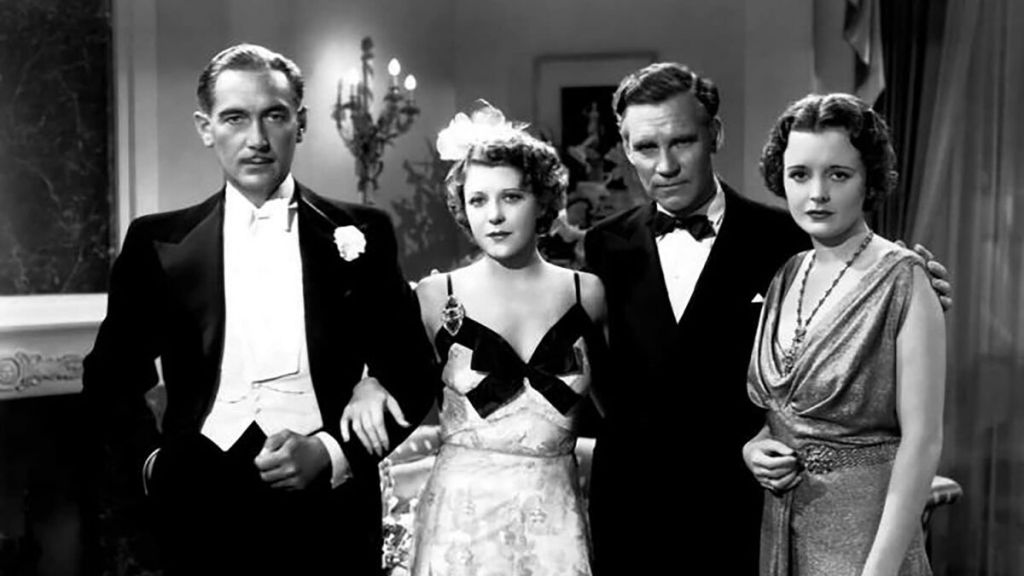
The real strength of Reversal of Fortune is the Oscar-winning performance of Jeremy Irons as Bülow. This was a perfectly fitting, gift of a part for Irons – did they tell him to be as Jeremy Irons as possible? His performance is sly and darkly witty. Bülow is forever making poor taste puns about his possible crimes that Irons’ savours like mouthfuls of the richest caviar. It’s a performance of arch strangeness, Irons playing Bülow as a man so unreadable, taking such a naughty delight in the side benefits of being accused of a crime (he jubilantly states at one point he never before got such good tables in restaurants), so full of elegant European-gentility, he just looks naturally guilty to the parade of straight-shooting American citizens with the power of life and death over him.

Irons’ is also masterful at suggesting this unflappable, dark humour and quirk is actually a desperate front for a man deeply scared but used to hiding his real feelings. Irons suggests Bulow is genuinely using this facade to control his fears and keep him in fighting. The key to the character is nerve: it’s what he describes backgammon as being about, poo-poohing the idea that it’s down to luck, saying winners hold their guts in place. It’s the key to his whole character, the same gambling guts what he’s banking on to get him through this (someone actually guilty would never behave like this right?), and Irons simultaneously plays this front and keeps the frightened man underneath constantly present.

It’s a fascinating, funny, hugely enjoyable performance that lifts the entire film which struggles and slackens the second Irons leaves the screen. Aside from him – and Glenn Close’s arch narration (her agent did fine work nailing her top billing for this) – Reversal of Fortune is a surprisingly dry, rather slowly paced film which, while it is mercifully light on speculation, is also unfortunately light on drama.

The Lives of a Bengal Lancer (1935)

The Lives of a Bengal Lancer (1935)

Old-school adventure mixes with some slightly dated Imperial attitudes in a film that’s still good fun

Director: Henry Hathaway

Cast: Gary Cooper (Lt McGregor), Franchot Tone (Lt Forsythe), Richard Cromwell (Lt Stone), Guy Standing (Colonel Stone), C. Aubrey Smith (Major Hamilton), Douglass Dumbrille (Mohammed Khan), Monte Blue (Hamzulla Khan), Kathleen Burke (Tania Volkanskaya), Colin Tapley (Lt Barrett), Akim Tamiroff (Emir), J Carroll Naish (Grand Vizier)

Tales of adventure and derring-do in the British Empire were meat and drink for generations of schoolboys. Few adventures were as well known as The Lives of a Bengal Lancer, a stirring tale of three lieutenants in the Bengal Lancers who become fast friends while defending Queen and country. We’ve got decent, impulsive but luckless McGregor (Gary Cooper), upper-class joker Forsythe (Franchot Tone) and eager-to-please Stone (Richard Cromwell), whose also the son of commanding officer Colonel Stone (Guy Standing). They go up against Oxford-educated Mohammed Khan (Douglass Drumbille), who schemes to seize an ammunition shipment. Can our heroes face down dastardly natives, exotic tortures and desperate escapes? All in a day’s work for a Bengal Lancer.

The Lives of a Bengal Lancer was a big hit on release, despite sharing nothing except the title, location and general theme with the semi-autobiographical novel from former-lancer Francis Yeats-Brown. It’s rollicking adventure and the boys-own mateyness of its leads, sparked a wave of spiritual follow-ups set everywhere from the Canadian mountains to the deserts of Africa. It scooped seven Oscar nominations and was celebrated as one of the greatest adventures on screen. Unfortunately, it’s not as fondly remembered now with its uncritical celebration of colonial India, spiritual links to Kipling’s White Man’s Burden and the fact Hitler of all people named it his one of his favourite film, loving its celebration of how a few white men could ‘protect’ (control) millions of natives.

It’s fair to say you have to close your eyes to some of this stuff when watching The Lives of a Bengal Lancer today. Otherwise you might flinch at our heroes threats to various squirming, cowardly Islamic rebels that if they don’t confess they’ll be sown inside a pig skin (even in 1935, outraged questions were raised about this in Parliament). You need to roll with Douglass Drumbille blacking-up as the well-spoken Mohammed Khan (not just him: nearly all the Indian characters are men-in-face-paint and for good measure our heroes also black-up to disguise themselves). There isn’t a second’s questioning about the morality of Empire and the implicit suggestion runs throughout that the Indian people should be grateful the British were there to run their country for them.

But put all that to one side, and The Lives of a Bengal Lancer is still rather fun. One of the factors making it easier to bench your misgivings is that, really, this film isn’t really interested in India or the themes of Empire anyway. For starters, all three of our heroes are played by Americans making no effort to hide their transatlantic accents (McGregor is suggested as being ‘Scotch Canadian’, but a few words of Cooper’s awful Scottish accent makes you relieved he didn’t bother to keep it up). Any insight into British-Indian relationships is extremely brief. The film is clearly shot in California, in locations identical to the sort of Westerns Hollywood was churning out. And a Western is what Bengal Lancer really is.

Our three heroes do feel more like cowboys shooting the breeze for large chunks of the film rather than army officers. Although there have been criticisms of the leads – Cooper in particular, probably because an actor so iconically American feels strange as an oddly accented Brit – all three of give entertaining, complementary, performances. Cooper is strongly charismatic, rather charming in his earnest attempts to do the right thing and his luckless incompetence at anything that isn’t soldiering (a running joke sees him building up increasing tab in a series of ill-considered bets with the good-at-everything Forsythe). But when action comes calling, McGregor is courageous, quick thinking and selfless. It’s immediately clear why Cooper essentially replayed versions of this relatable role several times. Franchot Tone is equally fine as the witty, smooth Forsythe who never takes anything seriously until things are really serious. Cromwell does sterling work as the naïve Stone.

Most of the film works because we end up liking these three characters – just as well since most of the first half is essentially watching them go about their daily tasks: riding, cleaning horses, heading out on patrol, shooting the breeze in the barracks. There is a small character-led crisis over whether the ram-rod Colonel Stone (a suitably dry Guy Standing) will accept his puppy of a son, but the biggest action drama in the first half is a wild boar hunt that nearly goes terribly wrong. If we didn’t enjoy Forsythe and McGregor deliberately rubbing each other up the wrong way, between teasing and taking a big-brother interest in Stone, we’d struggle to enjoy the rest of the film.

The second half is where the real action kicks in. During a dinner where our heroes dress up in native garb to make nice with a local Emir, Bengal Lancer throws in a bizarre Mata Hari figure, in the mysterious Russian Tania (Kathleen Burke). It’s not a remote surprise she ends up being no-good, or that the disillusioned Stone is swiftly honey-trapped into imprisonment by Dumbrille’s vaguely-motivated smooth-talking villain (it’s hilariously ironic that the villain is the most cut-glass Brit in the film). McGregor and Forsythe don Indian disguise – against orders naturally – to do what men do, which is stand by their friends.

A parade of exciting set-pieces follow thick-and fast, culminating in an impressively staged battle with towers toppling in explosives, machine gun fire spattering left-right-and-centre and our heroes literally coming to blows over who gets to make a heroic sacrifice. We get there via dastardly torture – Bengal Lancer coined the famous “We have ways of making men talk line” – as Mohammed Khan employs bamboo sticks under the fingernails (thankfully shown largely in shadow and Cooper’s stoic grimaces) to get information from our heroes. It’s all part of these men being forged by fire into exactly the sort of hardened men-of-combat we need to protect a frontier.

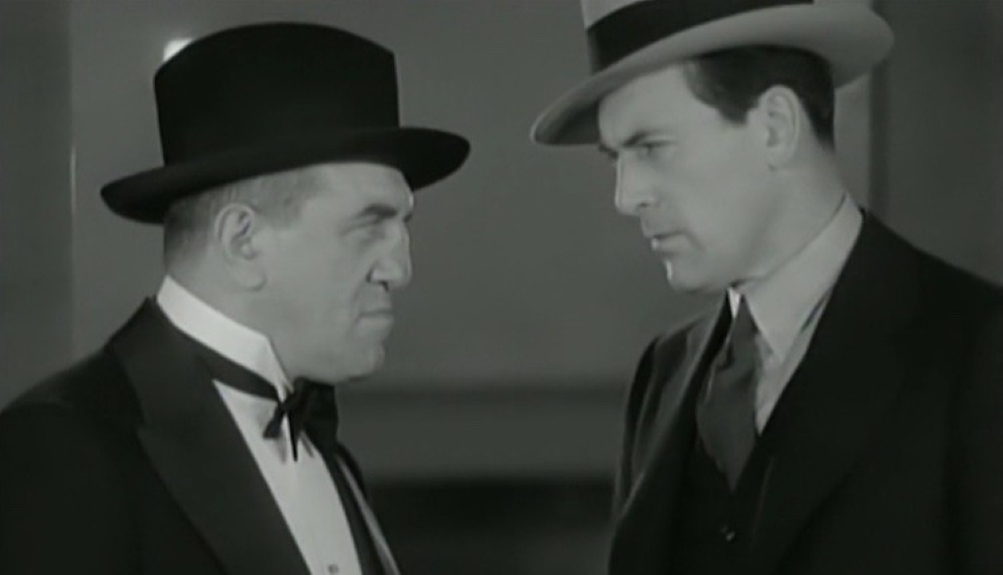
The Bengal Lancers ride in towards the end like the cavalry, and the air of a Western in Red Coats sticks with Lives of a Bengal Lancer throughout. Sure, it combines this with the stench of White Man’s Burden and an attitude of edgy distrust of foreigners, but The Lives of a Bengal Lancer is also riotous, old-fashioned fun, well shot and charismatically played. It might be a rather slight action-adventure fable, and sure its politics have not aged well, but it is still fun.

Emilia Perez (2024)

Emilia Perez (2024)

Controversial arthouse film which clumsily tries to do to many things, many of them not well

Director: Jacques Audiard

Cast: Zoe Saldaña (Rita Mora Castro), Karla Sofía Gascón (Emilia Pérez/Juan “Manitas” Del Monte), Selena Gomez (Jessi Del Monte), Adriana Paz (Epifanía Flores), Édgar Ramírez (Gustavo Brun), Mark Ivanir (Dr. Wasserman)

Sometimes a film comes along that manages to annoy everyone. Emilia Pérez seems to have achieved that unwanted goal. Jacques Audiard’s Cannes Jury Prize winner is a wild, audacious piece of film-making that misses as much as it hits. It’s also been bashed as a musical full of people who can’t really sing, denounced as transphobic, and savaged by Mexicans. Perhaps Emilia Pérez shows us the downside when an auteur French director works with Netflix who accidentally promote what would have otherwise been a little-seen arthouse film into the heart of a culture war. I don’t think Emilia Pérez intends to be racist or transphobic (but yeah most of the cast can’t sing), but it does deal with these issues at times very clumsily. It’s also a curious mish-mash that places a transitioning character in a traditional “hard-to-escape-your-past” plot.

That transitioning character is Emilia Pérez (Karla Sofía Gascón), formerly a notorious drug-lord. With the (initially coerced) aid of crusading lawyer Rita Mora Castro (Zoe Saldaña), Emilia succeeds in faking her death, moving her family to Switzerland to protect them, extricating a fortune from her criminal empire and flying to Israel for her operation. Four years later, Emilia finds she can’t live without her children and Rita is roped back into retrieve her wife Jessi (Selena Gomez) and kids and move them in with their “aunt” Emilia. Simultaneously Emilia, wanted to be cleansed of her criminal past, starts a foundation to “discover” the graves of those killed in Mexico’s drug wars. But returning to a world she left behind only makes it harder for Emilia to escape her criminal past.

Emilia Pérez: an Audiard crime story with songs! Audiard described it as an opera fantasia, and I feel it was his intention for nothing in it to be treated as traditionally “real”. The characters frequently burst into song or throw themselves into dream-like dance sequences to express complex feelings. Aside from the film’s explosive, guns-blaring conclusion, filmed on isolated, dusty, abandoned houses and roads, key scenes are tightly shot on sparse sets with very little back lighting, giving them a dreamy black-box effect. Emotions are as heightened as the (sometimes clumsy) lyrics and the film throws itself into every dialled-up event with a comic-book energy.

All of which means Emilia Pérez is an acquired taste and, like many ambitious films that zig when they should zag, fails as often as it hits the jackpot. Its finest scenes are the key song-and-dance numbers, all left in the hands of Zoe Saldaña (excellently torn between idealism, fear, cynicism and regret with complex feelings about her dubious employer). Saldaña is a dynamic and fearless dance performer, throwing herself into synchronised movements through a Mexican market in the film’s opening “El Alegato” and dominating the film’s central show-piece, an athletic, sensual dance around and over tables at a charity ball in “El Mal”.

But even Saldaña falls foul of the film’s largest musical failing: with the exception of Selena Gomez (who struggles with a Mexican accent so terrible, even non-Spanish speakers can tell it’s awful) no one in the cast can really sing. Criticism like that somehow feels shallow when you apply it to an arthouse film, but it’s legitimate. The cast largely go for fast-paced, Henry-Higgins-ish, rhythmic speaking, big on husky intensity but not exactly something you would sit and listen to. Gascón is a particularly poor singer, especially noticeable with the operatic high notes she is frequently given. Even the controversial AI-upgrade her voice was given in post-production can’t help her.

Throw into that the clumsiness of some of the lyrics. For a film dealing with as sensitive an issue as this, are lyrics like “Man to woman or woman to man? Man to woman. From penis to vagina” really a good idea? Is a song about Emilia’s son singing about how her smell reminds him of his Dad (body smell being a hot topic for this community) tasteful? Since this issue (the perception of bodily odours) is a key issue for the trans community, writing a whimsical song about it rather suggests Audiard and team didn’t really do enough to wrap their heads around controversial issues.

Perhaps that’s because Emilia Pérez is, at heart, a classic “just when I thought I was out…” movie that tries to spice up the formula by having its gangster character be a trans woman (the partial implication of a sex change being a type of disguise is another hot-topic issue the filmmakers should have got themselves familiar with). It does, I think, make for a fresh take to see even incredibly macho, hardened killers can have longings like Emilia – and Gascón’s performance is actually at its best showing the fear that lies below the aggression before Emilia’s transition, and when embracing her tearful joy at the success of her operation. But the point remains this is a film not looking to make a real statement on transgender issues, or even demonstrating any real interest in the experience of being trans. It is instead just using a trans identity as a new context for a familiar “starting a new life” storyline. With minimal changes, Emilia could have undergone extensive plastic surgery or gone into witness protection and it would have made few changes to plot or themes.

It is interesting to get a trans character who is not always completely sympathetic (although I get that the community find it a blow upon a bruise to finally get a film with a trans lead, and she’s as a morally questionable and unlikeable as this). Emilia’s desire to restart her life away from crime is fatally undermined by refusing to make the sacrifices needed. Slowly she drags her family back in (passing herself off, Mrs Doubtfire-like, as her own sister), reconnects with the criminal underworld (albeit for humanitarian reasons) and reverts to the threats and violence she used in her old life (when, let’s not forget, she had a plastic bag slammed over Rita’s head to motivate her).

Emilia Perez also never explores the outrageous moral stance of a murderer in a new life, using their knowledge to “help” their victims by “discovering” the graves of people she ordered put in the ground. In fact, the only person affected by Emilia’s past crimes whom the film shows her encountering is the widow of an abusive husband (who is actually grateful to the gangsters for saving her the trouble). It scrupulously avoids any contact with, say, a grieving relative of one of her past victims. Similarly, the film avoids engaging with Emilia’s appalling emotional manipulation of her family. Karla Sofía Gascón gives a committed performance, but she is not able to coalesce all these complicated feelings into a character that feels real and the film constantly veers awkwardly between giving her implied criticism and absolution.

Audiard offering not exactly the most flattering image of Mexico was the final nail in the film’s coffin, even if to be honest it’s his nationality as the face of a film about Mexico (Paz is the only Mexican involved) that has probably raised most hackles. Emilia Pérez has moments where Audiard’s impressive film-making stands out, a dance number captures your imagination or there is a flash of compelling acting. But then it will segue into the sort of scenes we’ve seen in hundreds of crime movies, or songs so out-there they raise the wrong sort of gasps. Emilia Pérez might not be intentionally trying to be racist or transphobic, but it certainly handles both themes with real clumsiness. Fundamentally, it’s a traditional plot told in an outlandish style, over-exposed into a world of criticism that Audiard (who has basically apologised if people don’t like the movie) and his collaborators just weren’t ready for. The film itself? Good moments, bad moments, but not worth all the fuss.