
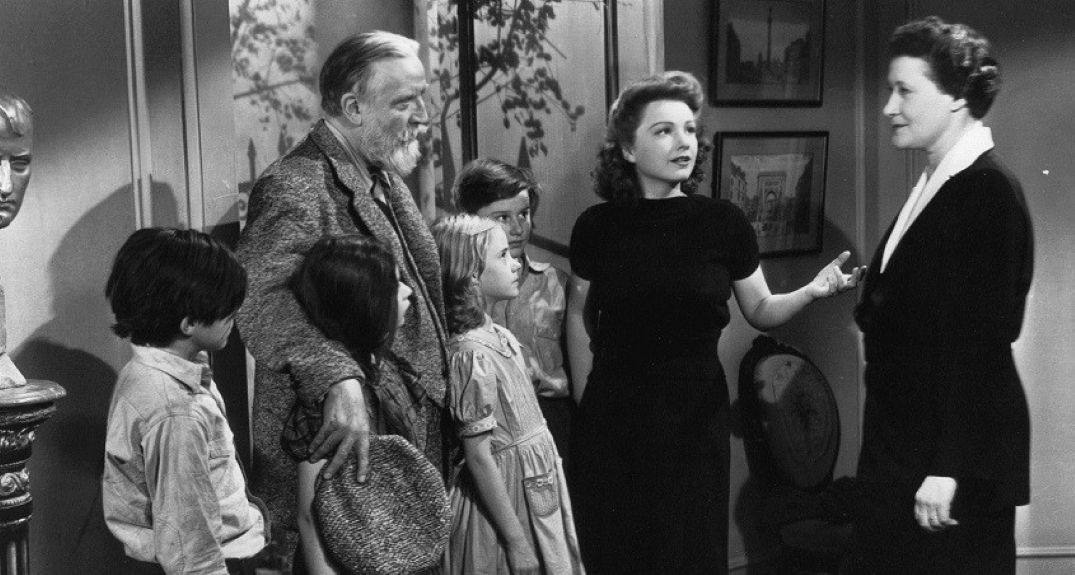
Tag: Odette Myrtil

The Pied Piper (1942)

The Pied Piper (1942)

A perfectly judged star vehicle, very slight and competent but entertaining enough

Director: Irving Pichel

Cast: Monty Woolley (Howard), Roddy McDowell (Ronnie), Anne Baxter (Nicole Rougeron), Otto Preminger (Major Diessen), J. Carrol Naish (Aristide Rougeron), Lester Matthews (Mr Cavanaugh), Jill Esmond (Mrs Cavanaugh), Peggy Ann Garner (Shelia), Merril Rodin (Willem), Maurice Tauzin (Pierre), Fleurette Zama (Rose), Marcel Dalio (Focquet), Odette Myrtil (Madame Rougeron), Marcelle Corday (Madame Bonne)
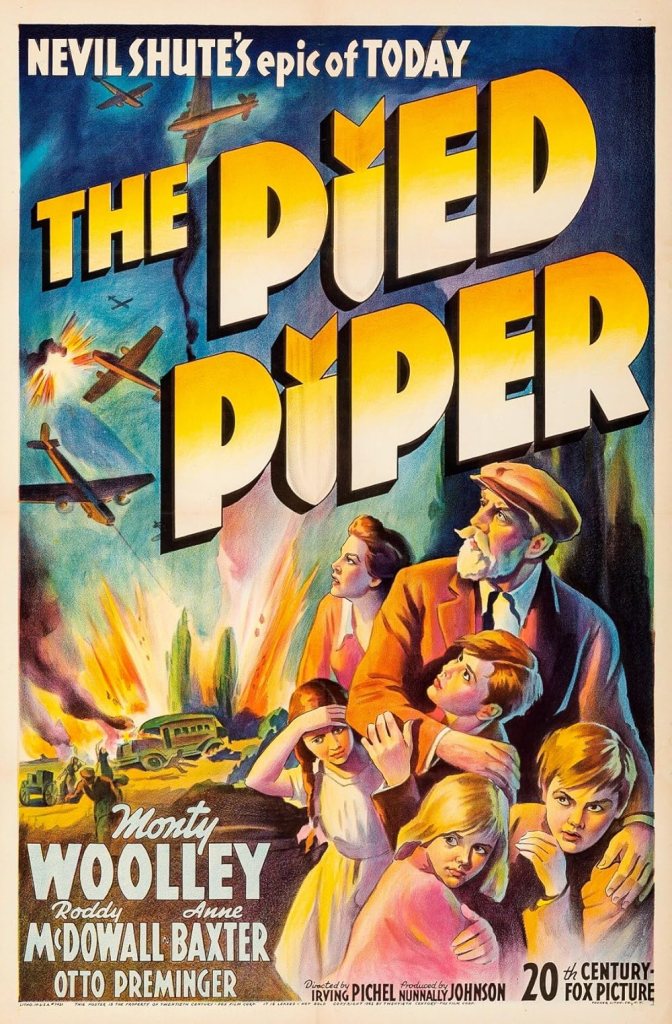
Talk about a part tailor-made for its lead. We need a curmudgeonly old duffer, with the twinkly charm of an avuncular uncle and a secret heart of gold – get Monty Woolley on the blower! In this Nevil Shute adaptation, he plays Howard, caught up in the 1940 German invasion of France while on a fishing holiday. With great reluctance, he agrees to escort Ronnie (Roddy McDowell) and Shelia (Peggy Ann Garner), children of a League of Nations diplomat, across France. Along the way, as well as dodging the Germans, he picks up a shell-shocked French orphan and a scrawny Dutch child and recruits the help of an old ‘acquaintance’ of his son, Nicole (Anne Baxter). Will Howard dodge the Germans and escape?

Woolley eases into this crusty old-timer with consummate ease – after all it’s essentially a twist on his star-making turn in The Man Who Came to Dinner, and Howard might as well be the twin of Since You Went Away’s Colonel Smollett. But he can sell the heck out of characters like this, duly picking up an Oscar nomination. Introduced reluctantly helping Shelia with her homework – a running gag is Howard’s complete lack of knowledge of American geography, insisting Rochester is a state – he’s prickly around the kids, but not too prickly. Leaving us in no doubt that his gruff distance will soon melt on the road. Which of course it does, despite the occasional abrupt grumbling.

Not least since Woolley brings out a tender concern at how these kids are being exposed to the horrors of war. Little flashes of sadness as they see a dead body for the first time, and the sad understanding that crosses his face when he inspects the shell-shocked Pierre. Howard has a hard-won understanding of war, Woolley stiff of lip as he confesses the death of his RAF pilot son, mixed with pride that it took ‘three of them’ to take him down. It’s clear shepherding these children becomes, for him, the war service he was considered too old to do. We already know he’s got a determined never-say-die spirit, imperiously telling a surrender-monkey who joins him to listen to Churchill (a truly terrible voiceover impersonation) that he best never speak to him again.

Woolley is front-and-centre of nearly everything good in The Pied Piper, an otherwise fairly straight-forward mix of road movie, family adventure and war movie. It’s got a smoothly adapted script by Nunnally Johnson and competent, if uninspiring, direction by Irving Pichel. I found the film’s recurrent use of various predictable refrains – most irritatingly ‘Twinkle, twinkle little star’ – incredibly grating after a while. Most of The Pied Piper is all too obviously shot on studio sets, spiced up with the odd piece of stock footage. (Not surprisingly, considering it was shot while the world was tearing itself apart). Following in the spirit of its woeful Churchill radio impersonator, there are some desperately wobbly plane models super-imposed over a bombing raid on an evacuation convoy. It’s a swift and pacey film – but also a rather slight one.

Because The Pied Piper is only willing to go so far in showing the horrors of war. It will let its precocious children see a dead body but not us. The sense of peril, about what might happen to Howard if caught, isn’t quite there. Perhaps because it’s somehow implausible that anyone caught on the French-Swiss border in 1940 would think their best option was crossing occupied France rather than shooting across the border to Switzerland (those League of Nation parents must have been kicking themselves). The danger of Nazi pursuit only kicks in half-way through the film – until then, Howard doesn’t even bother to conceal his nationality. It’s not helped by The Pied Piper (like most 40s war films) totally failing to wrap its head around what a concentration camp is.

There is an episodic feeling to the film’s half, before most of the second half settles into a single location, with our heroes under the thumb of Otto Preminger dutifully trotting out one of his occasional angry Nazis. Along the way they pick up Anne Baxter, wrapping her tongue around an “ooo la la” accent that sticks out even more when several other members of the cast (including Marcel Dalio as a defiant fisherman) are actual refugee expats. But then part of the film’s family appeal is there isn’t too much peril.

The final act does introduce some – the introduction of a firing squad threat feels suddenly quite extreme – but also resolves all problems with the sort of contrivance that feels a bit like the story has been painted into a corner and without any other way to get out of it. There is a romantic innocence to it in some ways, the hope that any character could have a secret, sentimental weakness that might make them do a good thing. And the capture of our heroes does allow Woolley to showcase another weapon in his arsenal, his ability for proud, stiff-backed defiance in the face of evil.

The Pied Piper is sweet, charming, flies by quickly and offers a perfect, tailor-made star turn. The kids, thankfully, manage to not be too grating (in fact you even kind of wish Roddy McDowell and Peggy Ann Garner were given more to do). It’s a surprise to find a story so slight as this breathing in the vaulted air of the Oscar Best Picture short list, but it’s hard to argue against the relief of watching everyday heroism in the midst of war.

Kitty Foyle (1940)

Kitty Foyle (1940)

Odd romantic fable, with a star-turn, that doesn’t seem to fully realise how judgemental and puritanical it is

Director: Sam Wood

Cast: Ginger Rogers (Kitty Foyle), Dennis Morgan (Wynnewood Strafford), James Craig (Dr Mark Eisen), Eduardo Ciannelli (Giono), Ernest Cossart (Pop), Gladys Cooper (Mrs Strafford), Odette Myrtil (Delphine Detaille), Mary Treen (Pat), KT Stevens (Molly)

“Ginger Rogers did everything Fred Astaire did…[but] backwards and in high heels”. So goes the famous quote about the famed dance pairing. But Ginger Rogers also did something Fred Astaire never did: she won an Oscar. That was Best Actress for Kitty Foyle, a reminder that Rogers was the girl-next-door who was a fine actor, accomplished dancer and natural comedienne. Rogers is great in Kitty Foyle, an otherwise fairly average, at times painfully dated ‘women’s picture’ where flashes of wit conceal character flaws the film is unaware of and a series of frequently depressing messages about love and women’s choices.

In the early 1930s, Kitty Foyle (Ginger Rogers) is a young Philadelphia woman enjoying the opportunities the new world of emancipation gives her. Working as a secretary for a small magazine, she and its editor Wynnewood Strafford IV (Dennis Morgan) fall in love – but he lacks the courage to propose to a woman far below his family’s social standing. Moving to New York, Kitty works in a fashionable department store and meets with Dr Mark Eisen (James Craig). The two begin a tentative relationship – until Wyn returns and proposes, which Kitty eagerly accepts.

However, since the film plays out in flashback from 1939, we already know the Wyn-Kitty marriage is doomed to divorce since Wyn is re-married (with a kid!). Indeed, we’ll learn Kitty left her marriage because she felt the social differences between her and Wyn were insurmountable, in her (secretly) divorced state becoming engaged to Dr Mark. Kitty Foyle plays out a cliffhanger question: which of these two men will Kitty choose? Of course, there is zero tension in this decision – is there any chance at all that in a Production Code film, Kitty will choose a rich married family man over a hard-working doctor who we are introduced to tending to the poor of New York gratis?

Nevertheless, Kitty Foyle is structed through a series of snow globe-inspired flashbacks, narrated by Kitty’s reflection (who objects to herself being tempted by Wyn’s offer – hammering home the implicit moral judgement the film soaks in, even Kitty’s reflection thinks she’s a hussy). These snow-globe framed flashbacks are one of the most interesting things about Kitty Foyle today – largely because, if you think of 40’s snow globe flashback films your mind immediately turns to Citizen Kane (both from RKO!). It’s hard not to wonder if Orson Welles and/or Herman J. Mankiewicz remembered the device when they put their script together?

The other most interesting thing about Kitty Foyle is that neither Kitty nor the film can even pretend to raise much interest in its Code-approved romantic figure, Dr Mark. Fair enough, since Dr Mark is a crushing prig and self-important bore. Played with a humour-free smugness by James Craig, he’s the sort of guy who enjoys sitting on buses passing superior medical opinions about those around him. On his first date with Kitty, he unilaterally cancels a dinner to sit at home and play cards – which he later reveals was a moral test for all his first dates to see whether a potential partner is a gold-digger (it’s amazing he’s single). We get very little sense he is remotely interested in the real Kitty, instead preferring an idealised version of her as a potential assistant-in-all-but-name. In nearly every sense, he’s is the sort of stuffy, self-important, worthy man most comedies of the era saw the heroine’s apologetically jilt to enjoy true love with Cary-Grant.

Of course, Wyn is no Cary Grant. Played by Dennis Morgan with a wonderful sense of shallowness, he’s far too easily-led behind his charm for that. Wyn is a weak man, who struggles to take responsibility for (or make) his own choices. That doesn’t change the fact that Kitty has a passion for him she never once raises for Dr Mark. Kitty Foyle essentially agues his weakness and social status as the scion of a banking family (he is, we are not allowed to forget, the third man to bear the name Wynnewood Stafford), could never make him an appropriate match for the reassuringly middle-class Kitty.

There is a real inverted snobbery around Kitty Foyle, where the upper-classes of Philadelphia (represented, among others, by Gladys Cooper as Wyn’s imperious mother) can only-just-about suppress their discomfort about Kitty’s lower standing. (Their suggestion, when presented with the fait accompli of Kitty-Wyn’s marriage is to suggest Kitty attends a finishing school). Saying that, the family don’t object to the marriage and (in their own way) their suggestions are based around helping Kitty. The two-way snobbery is neither they nor Kitty can imagine a middle-ground: she is just as adamant she will not change anything about herself, as they can’t imagine accommodating her middle-class interests. The film wants us to blame Wyn for his upper-class background and spreads a depressing message that the classes should never mix.

Brutal assumptions people make about each other are at the heart of Kitty Foyle – and the film has absolutely no idea about this. The film never once questions the character flaws of certainty that lead Kitty, Wyn and Mark to all reach (false) conclusions about others. Kitty brutally decides, no matter what Wyn says, that she will divorce him because she doesn’t believe he will give him his wealth. And maybe she’s right – but she never asks him and makes a series of selfish decisions about their life that he has every right to be at least involved in. Kitty Foyle sees absolutely no issue with this, which you can bet its bottom dollar it would if the shoe was on the other foot. The is probably the only romance from Hollywood’s golden age that condemns true love in favour of cold-headed pragmatism and sensible (not passionate) choices.

All of this doesn’t mean that Ginger Rogers isn’t very good, as she carries virtually single-handedly the whole film. Kitty is feisty, determined, smart, shrewd, funny and brave. It gives her opportunities for light comedy and serious emotions. She’s very funny in comedy sequences, such as Kitty’s accidental pressing of the burglar alarm rather than stock room button on her first day on the job in a New York department store (I blame the woeful design flaw in putting these poorly-labelled buttons right next to each other!). But she’s also quietly heart-breaking in the film’s final segment where she faces a series of painful events. Rogers invests these with a quietly melancholic sadness laced with real dignity. It’s a fine performance that lifts an otherwise mediocre film.

It’s also a mediocre film that opens with a jaw-droppingly anti-feminist sequence to explain why girls are working. A series of silent flashbacks play out in silent-film-style dumb-show openly mocking suffragettes and the misguided passions of women for freedom that took them away from a live of ease being looked after by doting husbands. The whole point seems to be how unwise they were to fight to be foisted into a world of hard work and not being given a seat automatically on public transportation. It left me wondering how far into this script Katherine Hepburn got before she turned it down?