
A perfectly judged star vehicle, very slight and competent but entertaining enough
Director: Irving Pichel
Cast: Monty Woolley (Howard), Roddy McDowell (Ronnie), Anne Baxter (Nicole Rougeron), Otto Preminger (Major Diessen), J. Carrol Naish (Aristide Rougeron), Lester Matthews (Mr Cavanaugh), Jill Esmond (Mrs Cavanaugh), Peggy Ann Garner (Shelia), Merril Rodin (Willem), Maurice Tauzin (Pierre), Fleurette Zama (Rose), Marcel Dalio (Focquet), Odette Myrtil (Madame Rougeron), Marcelle Corday (Madame Bonne)
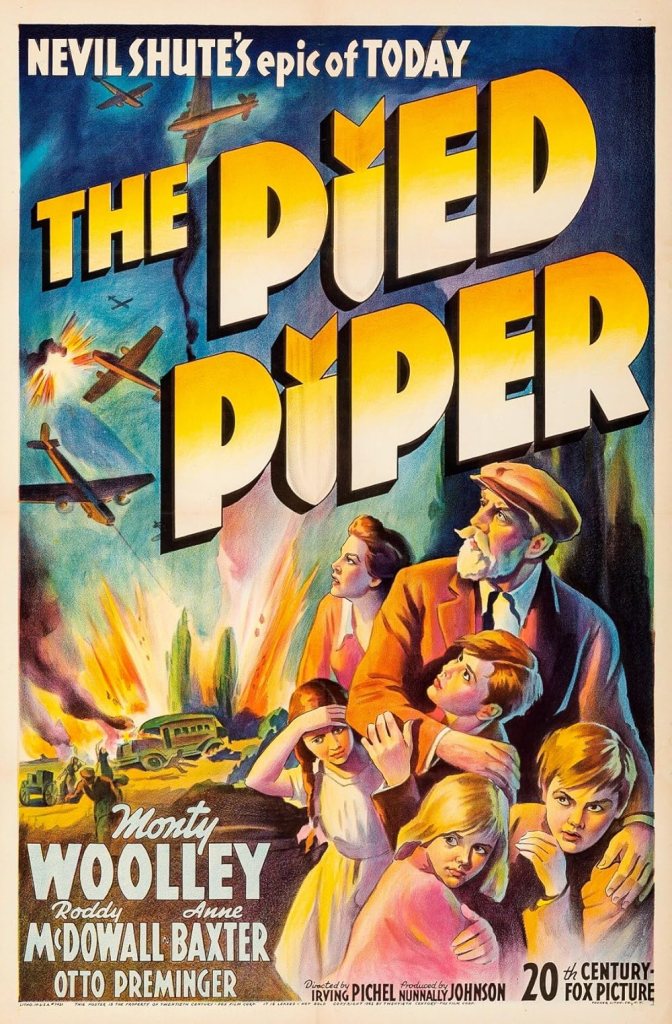
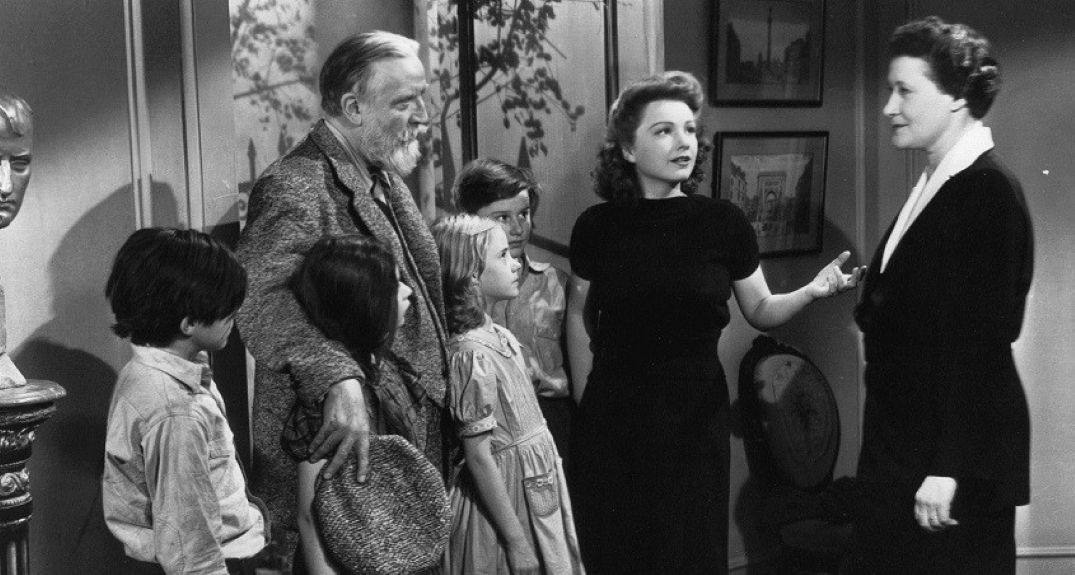
Talk about a part tailor-made for its lead. We need a curmudgeonly old duffer, with the twinkly charm of an avuncular uncle and a secret heart of gold – get Monty Woolley on the blower! In this Nevil Shute adaptation, he plays Howard, caught up in the 1940 German invasion of France while on a fishing holiday. With great reluctance, he agrees to escort Ronnie (Roddy McDowell) and Shelia (Peggy Ann Garner), children of a League of Nations diplomat, across France. Along the way, as well as dodging the Germans, he picks up a shell-shocked French orphan and a scrawny Dutch child and recruits the help of an old ‘acquaintance’ of his son, Nicole (Anne Baxter). Will Howard dodge the Germans and escape?
Woolley eases into this crusty old-timer with consummate ease – after all it’s essentially a twist on his star-making turn in The Man Who Came to Dinner, and Howard might as well be the twin of Since You Went Away’s Colonel Smollett. But he can sell the heck out of characters like this, duly picking up an Oscar nomination. Introduced reluctantly helping Shelia with her homework – a running gag is Howard’s complete lack of knowledge of American geography, insisting Rochester is a state – he’s prickly around the kids, but not too prickly. Leaving us in no doubt that his gruff distance will soon melt on the road. Which of course it does, despite the occasional abrupt grumbling.
Not least since Woolley brings out a tender concern at how these kids are being exposed to the horrors of war. Little flashes of sadness as they see a dead body for the first time, and the sad understanding that crosses his face when he inspects the shell-shocked Pierre. Howard has a hard-won understanding of war, Woolley stiff of lip as he confesses the death of his RAF pilot son, mixed with pride that it took ‘three of them’ to take him down. It’s clear shepherding these children becomes, for him, the war service he was considered too old to do. We already know he’s got a determined never-say-die spirit, imperiously telling a surrender-monkey who joins him to listen to Churchill (a truly terrible voiceover impersonation) that he best never speak to him again.
Woolley is front-and-centre of nearly everything good in The Pied Piper, an otherwise fairly straight-forward mix of road movie, family adventure and war movie. It’s got a smoothly adapted script by Nunnally Johnson and competent, if uninspiring, direction by Irving Pichel. I found the film’s recurrent use of various predictable refrains – most irritatingly ‘Twinkle, twinkle little star’ – incredibly grating after a while. Most of The Pied Piper is all too obviously shot on studio sets, spiced up with the odd piece of stock footage. (Not surprisingly, considering it was shot while the world was tearing itself apart). Following in the spirit of its woeful Churchill radio impersonator, there are some desperately wobbly plane models super-imposed over a bombing raid on an evacuation convoy. It’s a swift and pacey film – but also a rather slight one.
Because The Pied Piper is only willing to go so far in showing the horrors of war. It will let its precocious children see a dead body but not us. The sense of peril, about what might happen to Howard if caught, isn’t quite there. Perhaps because it’s somehow implausible that anyone caught on the French-Swiss border in 1940 would think their best option was crossing occupied France rather than shooting across the border to Switzerland (those League of Nation parents must have been kicking themselves). The danger of Nazi pursuit only kicks in half-way through the film – until then, Howard doesn’t even bother to conceal his nationality. It’s not helped by The Pied Piper (like most 40s war films) totally failing to wrap its head around what a concentration camp is.
There is an episodic feeling to the film’s half, before most of the second half settles into a single location, with our heroes under the thumb of Otto Preminger dutifully trotting out one of his occasional angry Nazis. Along the way they pick up Anne Baxter, wrapping her tongue around an “ooo la la” accent that sticks out even more when several other members of the cast (including Marcel Dalio as a defiant fisherman) are actual refugee expats. But then part of the film’s family appeal is there isn’t too much peril.
The final act does introduce some – the introduction of a firing squad threat feels suddenly quite extreme – but also resolves all problems with the sort of contrivance that feels a bit like the story has been painted into a corner and without any other way to get out of it. There is a romantic innocence to it in some ways, the hope that any character could have a secret, sentimental weakness that might make them do a good thing. And the capture of our heroes does allow Woolley to showcase another weapon in his arsenal, his ability for proud, stiff-backed defiance in the face of evil.
The Pied Piper is sweet, charming, flies by quickly and offers a perfect, tailor-made star turn. The kids, thankfully, manage to not be too grating (in fact you even kind of wish Roddy McDowell and Peggy Ann Garner were given more to do). It’s a surprise to find a story so slight as this breathing in the vaulted air of the Oscar Best Picture short list, but it’s hard to argue against the relief of watching everyday heroism in the midst of war.

