Author: Alistair Nunn

Catch Me if You Can (2002)


Leonardo DiCaprio lives out his fantasies in Catch Me if You Can

Director: Steven Spielberg

Cast: Leonardo DiCaprio (Frank Abagnale Jnr), Tom Hanks (Agent Carl Hanratty), Christopher Walken (Frank Abagnale), Nathalie Baye (Paula Abagnale), Amy Adams (Brenda Strong), Martin Sheen (Roger Strong), James Brolin (Jack Barnes), Nancy Lenehan (Carol Strong)

Conmen. You wouldn’t want to meet one but they don’t half make for great stories: largely because tell a great one. Watching cons has the same tension as watching a high-wire artist: will they slip? We all like to think we could fool people if we wanted to – and the movies give us a chance to watch someone else live those fantasies for us.

Frank Abagnale Jnr (Leonardo DiCaprio) was a teenager who was a natural at the arts of the short and long con, as well as an accomplished forger. The film tells the story of his late teens and early twenties when, as well as impersonating a senior paediatrician and a junior district attorney, Abagnale stole almost $3 million from Pan Am by impersonating a pilot and forging checks between 1963 and 1969. Hanks plays Carl Hanratty, the dedicated FBI investigator on the case.

What’s great about this film is that, by and large, it isn’t trying to be a lot more than an entertainment. In fact, Spielberg deliberately shoots the film in a low key, unflashy style that puts the focus on the story and acting. And there is something hugely entertaining about the chutzpah of conmen, particularly those who are only fleecing huge businesses, which this film really understands and taps into. It’s probably Spielberg’s funniest “comedy”.

It’s witty throughout with a sly sense of humour. In his roles as both doctor and lawyer, Abagnale is shown carrying out research by watching TV shows and reading pulp novels – and then repeating their clichés, to the bemusement of those around him (but he delivers it with such confidence it still works). I also enjoyed the fact that his chosen careers (air pilot, doctor, lawyer) are all approached with the same naive understanding a kid would have for what the job involves (and DiCaprio’s look of childish terror slipping past his adult facade watching a plane take off from the cockpit and when asked for his opinion on the treatment of an injured child at a hospital are endearingly genuine). The film is told with a great deal of bounce and lightness, taking on the structure of a Wil-E Coyote/Roadrunner chase cartoon, with Hanratty defeated several times by Abagnale’s confident sleight of hand.

The script does have depth to it, rooting Abagnale’s actions in his trauma from a broken family and witnessing his father’s humiliating fall into poverty after charges of tax evasion. The film suggests this to be the main motive for Abagnale’s actions – a misguided attempt to redeem his father and take back what was taken from him. This theme of a son trying to win his father’s respect gives the film a heft that balances the fluff – especially as it’s clear the son has taken many of the wrong lessons from his father’s life on the edges of legality. It’s helped in this respect by a wonderful performance of twinkly charm and fatherly pride by Christopher Walken, combined with a sly sense of roguishness.

Leonardo DiCaprio is the motor that really makes this film work. His boyish good looks are perfect for this and he has both the confidence to convince as a trickster and the vulnerability to be the young boy underneath. As such he has the lightness of touch that the story needs and the acting chops to convey the inner pain Abagnale is working so hard to soothe. He’s also effortlessly charming and endearing here, surely the perfect traits of a con man.

For the rest of the cast, Tom Hanks very generously plays second banana as the investigator and gives the role a strong sense of the surrogate father. Amy Adams in one of her first roles is wonderfully sweet as Abagnale’s fiancée, totally unaware that he is a 17 year old kid. Martin Sheen and Natalie Baye also give good performances.

The film is a light and frothy confection that shades in just the right amount of nuance and depth to make us care for its lead character. With John Williams’ zippy score and its luscious recreation of the late 1960s, it’s also a film in love with the vibrancy of the era. A terrific unpretentious entertainment, it’s not one of its director’s great works, but it might be one of his most joyful.

The Desert Fox (1951)


James Mason rides into action as a sympathetic Nazi

Director: Henry Hathaway

Cast: James Mason (Field Marshal Erwin Rommel), Jessica Tandy (Lucie Rommel), William Reynolds (Manfred Rommel), Cedric Hardwicke (Dr Karl Strölin), Luther Adler (Adolf Hitler), Everett Sloane (Gen. Wilhelm Burgdorf), Leo G. Carroll (Field Marshal Gerd von Rundstedt), George Macready (Gen. Fritz Bayerlein), Richard Boone (Capt. Hermann Aldinger), Eduard Franz (Col Claus von Stauffenberg)

It’s pretty astonishing when you think about it that less than six years after World War II ended, Hollywood produced a film about one of Germany’s leading generals which painted him in a largely positive light. Even more of a surprise is that this was a box-office hit. But then this film was designed to be a step towards reconciliation – especially with one eye on the Cold War and the need for Germany as an ally.

James Mason (brilliant in one of his most iconic roles) plays Rommel, with the film beginning just as the tide of war turns in Africa at El Alamein. Of course, this allows a lot of talk of Rommel being a noble fighter and brilliant general, without having to awkwardly show him chasing the Sixth Army across Africa! From his defeat to Montgomery (unseen but often referenced), Rommel slowly loses his faith in Hitler, realising the Fuhrer cares little for the lives of his soldiers. Gradually he becomes closer to the conspirators of the July 1944 bomb plot to assassinate Hitler. When it fails, he is given the choice: suicide and a hero’s funeral or execution as a traitor for him and his family.

The film is notable for opening with an exciting James Bond-style action sequence, a 1941 raid by British commandos on Rommel’s HQ (codenamed Operation Flipper), designed to grab the viewer’s attention – and to provide the action in a war film that otherwise has virtually no combat in it. It’s a terrific opening that immediately establishes the importance Rommel holds. The Desert Fox was one of the first films to use this device of an action prologue to open the story – the sort of thing James Bond has since mastered.

From there, Hathaway’s journalistic film (much of the World War II footage is reused from newsreels) is very smoothly and professionally directed, turning the last few years of Rommel’s life into a classic morality tale. Whether this is completely true or not (more recent research on Rommel suggests he was a much more enthusiastic early supporter of the Nazi party than suggested here), there seems little doubt that he was at the very least sympathetic to the July 1944 bomb plot. Rommel here is a man who sees the light too late – and pays a heavy price.

Nunnally Johnson’s well-researched and tight screenplay focuses on conversations and political manoeuvering, with Rommel presented as apolitical and straight shooting, clumsily working through debates he lacks the political sophistication to understand. Johnson’s script also provides excellent opportunities for sparkling cameos. Leo G. Carroll is particularly good as Rommel’s frustrated and cynical superior, but there are also stand-out performances from Everett Sloane as a lackey from High Command and a memorable cameo of controlled ranting extremity from Luther Adler as Hitler.

The film, though, is carried by James Mason’s subtle and sympathetic performance. Mason has the charisma, his upper class manner perfect for the military man, but he isn’t afraid to play both positive and negative. So we get his arrogance and wilful blindness, showcased in scenes where is passionate defence of Hitler is as much an attempt to persuade himself as others. But we also see his loyalty to his men and the tenderness of his relationship with his wife (played well by Jessica Tandy). Mason’s performance is compelling and soulful.

It’s not a perfect film. There are some slightly clumsy links at the start back to the source book written by Brigadier Desmond Young, who served in North Africa. Young cameos at the start in reconstructions of his meeting-at-a-distance with Rommel and his post-war research. Narration from the book is a worked into the film – and having heard the real Young speak, its mid-Atlantic tone is rather jarring. The narration often serves as a transition from event to event, but this is never completely smooth, meaning there are some odd jumps.

But it’s a very decent, very professionally done piece of film making. Its version of Rommel isn’t seen as the whole story today (there is a whole historiographical argument about the “Rommel Myth” of the man as an apolitical soldier or willing accomplice), but it’s very consistent within the film. Very well acted and scripted and very professionally directed, it’s a political film cunningly disguised as a war film, which does a very good job of creating the atmosphere of Nazi Germany and in re-creating historical events and has an excellent lead performance from James Mason.

The General's Daughter (1999)


Probably one of the most subtle moments from Travolta’s appalling star vehicle about rape

Director: Simon West

Cast: John Travolta (Chief Warrant Officer Paul Brenner), Madeleine Stowe (Chief Warrant Officer Sarah Sunhill), James Cromwell (Lt. General Joseph Campbell), Timothy Hutton (Col. William Kent), Leslie Stefanson (Captain Elisabeth Campbell), Clarence Williams III (Col. George Fowler), James Woods (Col. Dr. Robert Moore)

The General’s Daughter is a mundane thriller from the late 1990s, now largely forgotten and quite rightly too. Travolta plays an army Warrant Officer, called in to investigate the rape and murder of the daughter of a decorated Army general (played in his best martinet style by James Cromwell). He works with a female Warrant Officer (Madeleine Stowe) with whom he has Unresolved Sexual Tension. Investigations quickly reveal of course that virtually everyone on the base seems to have had some sort of intimate relationship with the victim.

It’s a pretty straight-forward investigative thriller, but it takes a rather unpleasant leering interest in its victim, with the camera lingering frequently too long on her naked body – even during a rape scene the camera and direction invites the audience to admire the victim’s body: “Sure this is awful, but look ain’t she got great legs!”. Revelations that the victim has a sex dungeon, and indulged in sadomasochistic sex with several people, immediately lead our heroes to state that of course “the circumstances of her death are linked to her life” or words to that effect. In fact, the whole film has a slightly unpleasant air of exploitation about it.

Even more unsettlingly after that, the film-makers strap the fig-leaf of social concern over their film with an end card that mouths platitudes about female soldiers and asks us to pat ourselves on the back about the rise in number of female soldiers and the steps taken to prevent rape occurring in the army again. A bit rich from a film that has taken an ogling fascination in its victim as sexual figure throughout the film.

So let’s be charitable and say its attitudes are a bit dated, and that it does sort of try to say something at the end (however ham-fistedly). It’s still not that good a movie. I’ll give it a point for the fact that I didn’t guess the final killer (though I really should have done), although my wife and I managed to predict pretty much everything else between us. And its attempts to tuttingly wag its finger at the army’s attitude to female soldiers are totally undermined by its pervy aesthetic and grimy, exploitative subject matter.

Travolta throughout aims for cocky maverick but comes across more as a complete cock. His chemistry with Stowe is pretty much zero, which is appropriate as that is the same level of interest I had in their ill-defined past relationship. James Woods phones in another of his quirky wackos, James Cromwell is pretty decent as the General. The best performance probably comes from Clarence Williams III as a hero-worshipping adjutant.

The first twenty minutes of the film are a showpiece for an out-of-shape Travolta to rough up a few suspects and to give him “a very personal motivation” for the case (which almost suggests a guy can’t be expected to care that much about a rape victim unless he had met and flirted with her in advance) – it could effectively be skipped to be honest. The rest of the plot is as basic, half thought-out and mildly tasteless as the film itself. If you wanted to make a film about promoting the rights of women in the army, then this was almost a textbook example of how not to do it.

Eddie the Eagle (2016)


Some more comic escapades in the not-really-true-at-all film of Eddie the Eagle’s life

Director: Dexter Fletcher

Cast: Taron Egerton (‘Eddie’ Edwards), Hugh Jackman (Bronson Peary), Iris Berben (Petra), Keith Allen (Terry Edwards), Jo Hartley (Janette Edwards), Tim McInnerny (Dustin Target), Mark Benton (Richmond), Jim Broadbent (BBC Commentator), Christopher Walken (Warren Sharp), Rune Temte (Bjørn), Edvin Endre (Matti Nykänen)

Watching Eddie the Eagle, it’s interesting to think that Edwards was ahead of his time. An unqualified ski jumper with a certain natural talent and a lot of dedication, his unspun, naïve enthusiasm effectively made him a perfect YouTube sensation, 15 years before that term existed. His joyous reactions and “just pleased to be here” manner while coming last in two ski-jumping competitions at the Olympics meant the public couldn’t get enough of him (then or now it seems) and he’s probably about the only thing anyone can really remember about the 1988 Winter Olympics.

I found my heart completely unwarmed by this lamely predictable film, a virtual remake of Cool Runnings and Rocky, which can barely move from scene to scene without tripping over clichés. In other sports films, the snobbery against the underdog feels unjust because we know they deserve to be there. Edwards doesn’t deserve to be there, and doesn’t prove himself anything other than a brave novelty act. Perverse as it sounds, the one area where the film deviates from its predictable formula is the part that makes everything else not really work.

It’s not a particularly funny film. That may be partly because every single comic beat in it is taken from somewhere else, but joke after joke falls flat. Scenes meander towards limp conclusions that can be seen coming a mile off. Every single character is either a cliché, mildly annoying or both. Jackman strolls through the film barely trying. Taron Egerton plays Eddie as virtually a man child, a naïve mummy’s boy, an innocent in the world of men, curiously sexless, but a cheery enthusiast with a never-say-never attitude. However, I often found him less endearing and more mildly irritating.

Virtually nothing in the film is actually true. This doesn’t necessarily matter, but I felt it made the film slightly dishonest. It leaves us with the impression Edwards was set to go on to success in his career – he wasn’t. It doesn’t mention the Olympic committee changed the rules to prevent amateurs taking part in this highly dangerous sport at this level. It doesn’t even begin to mention that almost the entire cast are invented supporting characters, or that many of the real characters (such as Edwards’ father) have had their personalities totally reimagined.

It also reshuffles the truth to make Edwards seem far more incompetent and unlikely than he actually was. In reality an accomplished amateur athlete and skier who just missed the Olympic team, he’s here reinvented as a barely proficient, uncoordinated klutz, a buffoon on skis. Egerton’s otherworldly naivety (at times his childish outlook on the world borders on the mentally deficient) is to be honest rather grating. By hammering up his ineptitude, it’s hard to really think that he should be clinging to these dreams that he’s not suited to perform.

Channel 4 run a TV reality ski-jump show called The Jump. Several celebrities who have taken part in it have suffered serious injuries. With that in mind, is it really wrong to wonder if a sport isn’t right in saying “the unqualified and the amateur shouldn’t be attempting this”? Yes the Olympics is partly about competing in the right manner – but shouldn’t that mean also protecting people from themselves?

The one slightly brave move the film makes is to briefly toy with the idea that Edwards is fundamentally misguided. Before the Olympics begins, his trainer pleads with him to continue his training, wait four years and qualify as a proper athlete rather than a novelty, to have a future of several Olympics rather than cheating into one. Edwards (and the film) ignores him, but I found I was thinking “you know what, he’s right”. The film never manages to remove from Edwards the whiff of the joke act.

I’ve been incredibly hard on this film – it’s not like it’s trying to do anything serious or meaningful. It just wants to tell a nice story about a nice guy. It prides itself on being a bland formulaic piece of film making. But I didn’t find it moving or heartwarming and I didn’t warm to Edwards. I admire his determination, but he’s like those deluded singers chasing their dream on X Factor. The characterisation of Edwards makes him hard to relate to and his final “success” doesn’t mean anything as the film never escapes the feeling that he is being laughed at rather than with. Add the fundamental dishonesty of the film and I found it really unsatisfying.

Give it a miss. Watch Cool Runnings instead. That’s full of invention too of course, but the invention is truer to the facts and the spirit of the truth, and the film itself is far funnier and more satisfying than this one.

The Odessa File (1974)


Jon Voight narrowly misses a train in The Odessa File

Director: Ronald Neame

Cast: Jon Voight (Peter Miller), Maximilian Schell (Eduard Roschmann), Maria Schell (Frau Miller), Mary Tamm (Sigi), Noel Willman (Franz Bayer), Derek Jacobi (Klaus Wenzer), Shmuel Rodensky (Simon Wiesenthal), Peter Jeffrey (David Porath), Klaus Löwitsch (Gustav Mackensen), Kurt Meisel (Alfred Oster), Günter Meisner (General Greifer)

One of the best thriller writers in the game is Frederick Forsyth. He never gets quite the credit he deserves, probably because he’s a very safe writer and he has certain character formulas which he reuses over again. But what his plots lack in depth, they more than make up for in the gripping intensity and extreme readability. A Forsyth plot barrels along and doesn’t let you rest for a minute.

The Odessa File is an adaptation of Forsyth’s journalistic style thriller, exploring the shady world of former Nazi war criminals, now hiding in new identities in positions of influence throughout the German republic. Set in 1963, Peter Miller (Jon Voight) is an idealistic young investigative journalist, who finds the diary of a recently deceased Holocaust survivor. Horrified by the stories of the Holocaust, Miller decides to hunt down the “Butcher of Riga” Eduard Roschmann (Maximilian Schell playing a real war criminal), a renegade Nazi recently spotted alive by the writer shortly before his death.

The Odessa File is an episodic film that carefully follows Miller’s investigation, at first alone, later as an undercover operative for Israeli intelligence. Each scene takes us step-by-step closer towards the final target (Roschmann), which means each scene introduces new characters and locations. The one consistent note we have is Voight, who is pretty good as the driven, idealistic (and arrogant) Miller, and he holds the film together rather well. Each of the tense set-ups works well as a self-contained little story, although it does mean that the overall arc of the film is less engaging than it should be. However, you are invested in wanting the investigation to succeed.

This is partly because the black and white flashbacks to the Holocaust are surprisingly effective from a film from the 1970s. Atrocities are implied and sensitively shown, in an unsensational way, but remain very affecting. Schell’s bombastic acting style also really works as a fanatical and sadistic Nazi (it also works very well in the film’s final confrontation). Combine this with the well-written, unembellished readings from the diary (good work from Cyril Shaps as the voiceover artist) and the film very sensitively establishes its anti-Nazi credentials early on.

Where it doesn’t really work is its whole Odessa plot. The shadowy group of Nazis proves laughably easy to penetrate. The network is then blown wide open seemingly within hours. There is a sub plot about the Nazis supplying missiles to Nasser to fire at Israel which is totally unclear (it has something to do with the factory Roschmann is now running). In fact, the whole organisation’s structure is unclear and the film lacks a real face for its antagonists. The film barrels along fast enough that you don’t notice it too much when viewing it, but reflecting on it afterwards everything makes slightly less sense, and the contrivances become far more glaring.

Other than Miller (whose motives the film is deliberately obscure about) not many of the other characters get a look in. In particular the female characters are little more than ciphers or “stop reading about the Holocaust and come to bed” girlfriends. The Nazis are all pretty interchangeable, although Noel Willman brings a nice sense of menace to a Nazi fixer. The strange intermixing of real and imaginary characters (including Simon Wiesenthal) is also a little odd.

But the story is exciting enough, and Voight’s earnest performance makes you care about Miller enough, that you’ll enjoy watching it. It’s not a classic like The Day of the Jackal (a perfect cinematic expression of Forsyth’s forward motion as a writer) but it’s going to keep you entertained for a couple of hours.

SPOILERS AHEAD FROM HERE!
I also think the final revelation of Miller’s motives is bungled and undermines the anti-Nazi message. It turns out Miller is primarily motivated by concluding Rorschmann murdered his father during the war. This immediately trivialises the horrors of the Holocaust – yeah, it was bad, but you can’t expect someone to go to all this trouble to hunt a bad man for that alone can you? It’s a problem in the book as well, but at least there, more weight is given to Miller’s anger at the war. Here he drops a few lines about the evils of Nazism, but it never quite snaps together.

This is a good, decent, sharp thriller – but it has its chances to be more than that, and it misses them.


Khartoum (1965)


Charlton Heston takes aim in a rare moment of action in Khartoum

Director: Basil Dearden

Cast: Charlton Heston (General Charles Gordon), Laurence Olivier (The Mahdi), Richard Johnson (Colonel John Stewart), Ralph Richardson (William Ewart Gladstone), Alexander Knox (Sir Evelyn Baring), Johnny Sekka (Khaleel), Nigel Green (General Wolseley), Michael Hordern (Lord Granville), Peter Arne (Major Kitchener), Zia Mohyeddin (Zobeir Pasha), Douglas Wilmer (Khalifa Abdullah) 

For me you can’t really beat a big epic film. I love their sweeping vistas, the larger than life personalities, the luxurious running times and the vast array of Brit actors you inevitably find filling out the cast list. There is a lovely Sunday afternoon cosiness about a good epic and, since Hollywood spent large chunks of the end of the 50s and the 60s churning them out, historical events and personages replayed in sweeping panovision, there are plenty to watch.

Khartoum takes as its topic the siege of Khartoum and the death of its commander General Charles Gordon (played here by go-to actor for the big epic, Charlton Heston). Part of the now largely forgotten Sudanese war of the 1870s-80s, the siege was conducted by forces led by The Mahdi (Laurence Olivier) a man convinced that he was a reborn messenger of Muhammed.

Khartoum is a film that means well, but it’s a rather stodgy, po-faced history lesson that struggles with the fact that sieges are rather dull eventless things. Combine this with most of the film’s subplot following faithfully recorded political events back in the UK, and it hardly makes for a event filled spectacular. Instead it’s a slightly muddy lecture, interspersed with invented meetings between characters (Gordon and Gladstone; Gordon and The Mahdi twice!) in which they eloquently talk at each other, mouthing out the writer’s careful research, but give us no real insight into the times or the impact events had on the future.

It’s also rather routinely directed, without any flair or dynamism. It’s clearly aiming to be another Lawrence of Arabia, with everything from its music score to the lingering shots of the desert all aping Lean’s masterpiece. An opening narration (by an uncredited Leo Genn) even mulls over Egyptian and Sudanese history, while lovingly showing the viewer some postcard shots of various Nile attractions, seems particularly dry and dusty.

When the film does allow moments of action (which all seem ill-placed in this seriously serious film) they are rather flat and dull. The final attack on Khartoum has a suddenness about it that works well for the overwhelming force of The Mahdi’s army – and the death of Gordon (inspired by George William Joy’s painting) is rather affecting (although the real Gordon allegedly went down all guns blazing) but this is a film far happier with conversation.

What does work in the film, surprisingly, is Heston, who underplays as an enigmatic Gordon, a quiet, unknowable man addicted to the limelight, a serene soldier with a love of peace and religion, a man of the cloth and accomplished solider. Heston allows his natural charisma to do a lot of the work, and he clearly feels a certain empathy with Gordon, gracing the film with the same determined leadership of the general. Heston is an easy actor to mock, his granite face made for legends, but he’s a quietly assured here.

Olivier’s performance is inevitably more troublesome today, the great man dressed up in blackface and a rum accent as The Mahdi. In fact, as per Hollywood films of the time, most of the major Sudanese characters are played by British actors in blackface. Of course it would never happen today – and it’s tricky not to either gasp or snigger at  Olivier’s first scenes – but looking past that first shock (and his opening speech – “Ohhhhh my belovvvvveed” is too much), Olivier gives a detailed study in ambitious fanaticism which is even more relevant in the age of Al-Qaeda. It’s uncomfortable to see, and Olivier allows the mannerisms too much rein (in particular compared to Heston’s confident underplaying) but it’s a decent performance.

I’ll always have a soft spot for this film as it allows us the chance to see Ralph Richardson as Gladstone, one of my favourite historical figures, and one of the two greatest English statesmen (with Robert Peel) of the 19th century. Richardson would have been brilliant in The Gladstone Story (sadly never made) and he brings to life much of the political scheming back home in Blighty, as a Machiavellian version of the Grand Old Man. Anyway, he’s terrific and the various cabinet room debates are some of the most interesting parts of the film.

It’s a shame that the films gets bogged down too early in Sudanese and Egyptian politics (and still manages to muddle the viewer), before settling into the siege from where, interspersed with slightly repetitive conversations. It’s clear where the film is going, but there isn’t the doom laden dread about this that the film needs. This is a shame, as this story of a colonialist, in love with a colony, killed by colonists while trying to protect other colonists, has a lot to potentially say about the modern world (both now and in the 60s) – it just doesn’t manage to say them.

Note: I was struck in the film by how dangerously many of the horses were thrown about or tackled by soldiers in the battle scenes. “Surely that can’t be safe” I thought as a man knocked over a galloping horse by jumping and tackling its head. Sure enough it wasn’t: allegedly 100 horses bought the farm for this film.

Exodus: Gods and Kings (2014)


Brothers in arms? Christian Bale and Joel Edgerton struggle for chemistry

Director: Ridley Scott

Cast: Christian Bale (Moses), Joel Edgerton (Ramesses II), John Turturro (Seti I), Aaron Paul (Joshua), Ben Mendelsohn (Hegep), Maria Valverde (Zipporah), Sigourney Weaver (Tuya), Ben Kingsley (Nun), Indira Varma (High Priestess), Tara Fitzgerald (Miriam), Hiam Abbass (Bithiah), Dar Salim (Khyan)

There is something quite reassuringly old fashioned about Biblical story films. They have a sweet Sunday reliability about them, an old-fashioned bombastic self importance, mixed with spectacle and often heavy-handed moral messages. They are just quite fun. Biblical epics have always been popular with Hollywood as there can never be any judgement passed on the amount of violence and sex the stories often contain as, hey, it’s all in “the good book”. It worked for Cecil B DeMille and it continues to work today.

Exodus: Gods and Men is an exception to this rule of Hollywood Bible stories because it is neither fun, nor does it have a clear message. It seems to have been made by people doing their very best to pretend the story of Moses has as little to do with the Bible as possible. In effect, if God is the star of the Bible, then this is an adaptation that tries to minimise the star as much as possible. The story has beats (probably the most interesting parts) where Moses and God warily question each other’s motives, but these scenes don’t have enough weight to them, the philosophical arguments are never clearly expressed. Bluntly, if Scott (an aethist) and Bale (a man who described Moses as “one of the most barbaric figures that I ever read about”) don’t have any connection to the story and its themes – why should we?

Exodus is instead a feeble attempt to recapture the magic of Gladiator. Firstly it is an astonishingly badly written film, full of tin-eared, clumsy dialogue (“Listen, from an economic standpoint alone, what you’re asking is problematic to say the least” is Rameses’ response to the let-my-people-go message of Moses). Secondly, it makes little or no attempt to build up its characters. It’s aiming for a “brothers divided” plotline with Moses and Rameses – but neglects to ever show these characters as friends at any point. From the start they are divided, with the introduction of a stupid prophecy plotline at the start of the film existing only to justify a dull battle, a stylistic retread of the Gladiatoropening battle. Having failed to show any reason why these two characters should ever care for each other, the film settles into familiar patterns: Rameses the jealous, petty tyrant, Moses the gruff man with a temper, hiding his morality. Not once is there the feeling of a fractured relationship.

Exodus is also highly confused about its feelings towards Christianity. God is literally voiced by a petulant child. Simultaneously Scott also seems keen to attribute as many of the plagues and partings of the red sea as he can to pseudo-scientific reasons – so some sort of meteor causes a tsunami to part the red sea, crocodiles going crazy leads to the Nile turning into a river of blood, that sort of thing. The most interesting moments involve the debates between Moses and God, the vengeful lord favouring shock and awe over Moses’ long-term guerrilla campaign. There are moments here where the film touches upon a point, questioning if God even needed Moses in the first place. But it never really tackles it properly. I suspect we are supposed to see meaning in the weight given to the point that Hebrew means “he who wrestles with God” and see Moses as a man struggling to understand God’s plans for him – but this never really comes together coherently.

Leaving aside all that, it’s a plain badly structured film. From the pointless opening battle scene, screen time is lavished on massive events, but no time is spent on the characters and motivations. Dialogue scenes seem rushed and heavily cut. As such, bizarrely, the film seems both very long and too abrupt. Characters come and go – Bens Mendelsohn and Kingsley drift in and out of the story, Aaron Paul has barely a line of dialogue and Sigourney Weaver’s character seems little more than a cameo. Bale barely moves out of first gear as Moses, Edgerton does his best with a character that is laughably one-note. The film tries to do far too much, without making us invest in anything that is happening.

Instead there are big events, beautiful photography (you’d expect nothing less from Scott) and little else going on. Plagues in themselves are not interesting – people are, and if the characters aren’t developed as people, we can’t be interested in seeing events happen to them. If the film had something unique to say about religion (as it tries to do at times) it might have survived, but instead it’s a rather portentous action film that isn’t about anything – it’s not clear what we are supposed to think of God, it’s not clear what motivated Moses, we’re not clear how he feels about his mission.

Under the surface of Exodus are the beats you need to make an interesting film. A streamlined film that chose to do one thing could probably have done it well. But the storytelling and plotting are so fudged that the film just rolls from spectacle to spectacle, with no heart.

Selma (2014)

Martin Luther King fights the good fight

Director: Ava DuVernay
Cast: David Oyelowo (Martin Luther King), Tom Wilkinson (President Lyndon B. Johnson), Carmen Ejogo (Coretta Scott King), Andre Holland (Andrew Young), Tessa Thompson (Diane Nash), Giovanni Ribisi (Lee C. White), Lorraine Toussaint (Amelia Boynton Robinson), Stephan James (John Lewis), Wendell Pierce (Hosea Williams), Common (James Bevel), Alessandro Nivola (John Doar), Tim Roth (George Wallace), Oprah Winfrey (Annie Lee Cooper)

Tragically, for a while this film seemed to be most famous for being the poster child for “Oscar-Gate” or hashtag oscarssowhite (sorry hashtags are not my thing). Selma was the film that should have been littered with nominations. Instead it got just two – one for Picture, one for Best Song. Of the many, many snubs the most shocking were Ava DuVernay and David Oyelowo, particularly as other contenders up for the awards had certainly done inferior work that year . This film, however, categorically demands to be remembered in its own right – it is a fine, very moving piece of work, a dynamic history lesson that avoids preaching from a pulpit.

A lot of this comes down to the breathtaking work from David Oyelowo, who delivers one of those performances where the actor seems to transcend his skin, not just imitating Martin Luther King but inhabiting him, exploring and expressing every depth and shade. It’s a performance that stands comparison with Daniel Day-Lewis’ Abraham Lincoln. Oyelowo’s King is a big hearted, patient man but also a shrewd political player, a family man who betrays his wife, a political campaigner who holds the big picture and the small in his mind. It’s a totally committed performance that is intensely respectful without ever feeling hagiographic.

Oyelowo’s performance also immeasurably helps the film’s structure, as this is a biography that focuses on one single key moment in its subject’s life, rather than attempting to cover the whole lot in one 2-3 hour sitting. I rather like this, as the important thing about these biopics is to understand the person at the centre, not just to tick off events in their life. Anyway this film focuses on three months in 1965: King is campaigning for equal voting rights, and planning a high-profile march across Alabama from Selma and Montgomery to pressure President Lyndon B Johnson to promote the Voting Rights Act.

This is a very powerful film, humming with a constant sense of the deep rooted injustice and oppression in America at this time. It makes no compromises in showing the violence meted out to Black Americans, but it’s the day-to-day injustice that DuVernay shows particularly well: in the opening scene, Annie Lee Cooper (played by producer Oprah Winfrey) has her carefully prepared application to vote cruelly dismissed by a smalltown clerk, gleefully and casually exploiting a succession of legal loopholes to thwart her. It’s a simple scene but amazingly powerful in its casual (unspoken) racism, and it brings to life in a few strokes the day-to-day experience of millions of people at this time.

It’s also a beautifully shot film, that uses the real-life location of the Selma bridge spectacularly. An assault on the first attempted march by mounted policeman, shrouded in tear gas, is deeply moving in its simplicity, the camera catching the brutal overreaction of the police with a journalistic eye (Wendell Pierce as Hosea Williams is particularly impressive in the build-up to, and aftermath of, this sequence). Other moments of violence are equally shocking, but DuVernay never over-eggs the moment, allowing the events and the story to speak for themselves. We know how terrible some of these events are, and how disgusting the treatment of Black Americans was – the film never uses music or editing to hammer it home to us.

The film ends on the kind of high note you can only feel when injustice has been overcome and decent people triumph (punctured, DuVernay acknowledges, by the fates of some of the characters,  revealed at the end of the film. More than one of these is a gut punch – not least the death of King himself three years later). But it’s never twee, preachy or a history lesson. Instead it’s a living, breathing expression of a moment in history that wraps you up in its story. Oyelowo is of course outstanding, but there is some excellent support, not least from Carmen Ejogo as his wife Coretta (overlooked at the time, but outstanding), Andre Holland, Stephen James, Lorraine Toussaint and Common as King’s fellow Civil Rights leaders. Tom Wilkinson adds a lot of depth to a sometimes thinly written Johnson, while Tim Roth translates his contempt for George Wallace in a performance of slappable vileness. A beautiful and marvellous film.

Money Monster (2016)


A bad day at the office was ahead for George Clooney

Director: Jodie Foster

Cast: George Clooney (Lee Gates), Julia Roberts (Patty Fenn), Jack O’Connell (Kyle Budwell), Dominic West (Walt Camby), Caitriona Balfe (Diane Lester), Giancarlo Esposito (Captain Marcus Powell)

For as long as there has been TV, then the world of Film has looked down its nose at the mass market medium. “It’s in your homes! It makes you dumber! It stops you caring!” Set a film in a TV studio and it’s a fair bet that, before long, some shallow media types will appear, a dramatic on-air event will take place, a shallow man will rediscover his soul and the camera will cut back to punters at home watching the drama as if they it was just part of the show.

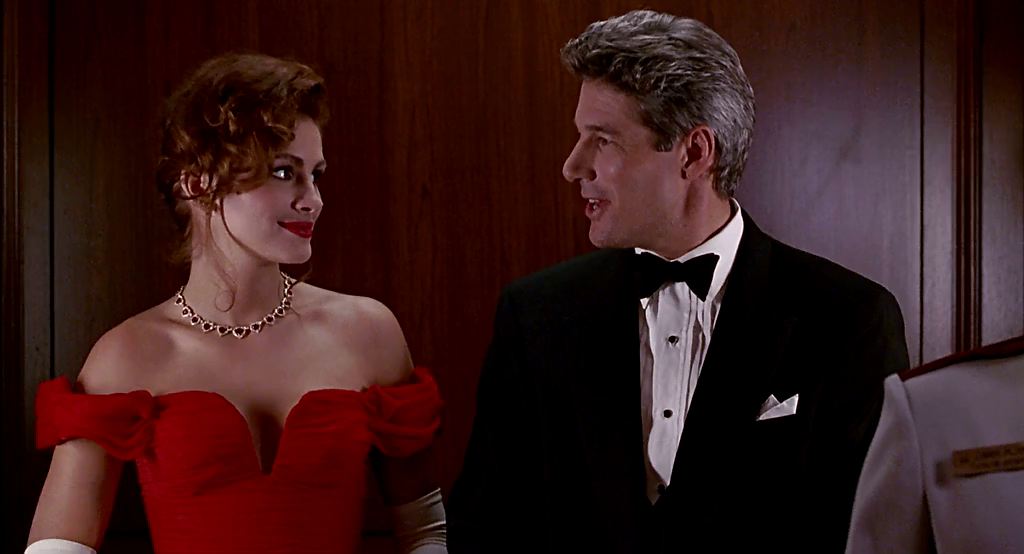
All this is exhibited to its full in Money Monster, a passably entertaining hostage drama set in the studio of a fictional Wall Street themed entertainment and “news” show. Lee Gates (George Clooney) is a shallow, image and money-obsessed TV personality taken hostage after a desperate grief-stricken viewer Kyle Budwell (Jack O’Connell) loses his life savings on one of Gates’ tips. However, with the prodding of his director Patty (Julia Roberts), Gates slowly begins to rediscover his journalistic integrity.

Watching the film when it rather heavy-handedly enters into the world of media satire, it’s pretty hard not to remember better films in the same genre. Network covered much of this ground so well 40 years ago, it’s almost not been necessary to watch another film about the manipulation of the media. The Truman Show so successfully skewered the thoughtless collaboration of the watcher at home, that this film’s attempt feels like a rather mundane repeat.

Saying that, George Clooney does a grand job of portraying the shallow, media man re-discovering his depths – although lord knows he’s played this sort of part often enough to do it standing on his head. But he gets the dark comedy of it, and he is also able to deliver on the growing decency and integrity of the character. Julia Roberts is pretty good as a confident professional who has allowed her principles to slide for too long. In this illustrious company, Jack O’Connell more than holds his own, delivering brilliantly as a desperate and angry man.

The hostage taking sequences are quite well done, and threaded in well with the general satirical air of the film. At two key moments during the crisis, the film successfully pulls the rug out from under the feet of the viewer by delivering a different outcome than we might have expected. It’s probably when the film is most effective. It also does a good job threading many of the themes, locations and characters that will become important by the end of the film into its opening moments – many of them done so gently, you won’t even notice until they become important later.

The dark satire around the uncaring nature of big business and its lack of principles also hits more than a few familiar beats (big business being another thing multi-million film companies love to lay into), but this side of the plot is interesting enough – and I didn’t quite work out how the dodgy dealing had worked out. The final reveal and confrontation around this is well staged. It doesn’t tell you anything new, or present its old points in a unique or intriguing new way, but it does it in an entertaining way.

The film generally deserves some congratulation for its staging – Foster directs with a tightness and the flimsy conception of the film is delivered in a taut 85 minutes (almost in real time) which certainly means it doesn’t outstay its welcome. The acting is decent and the points it makes are well delivered, no matter how familiar they are. The film effectively plays with and changes your views on its characters over the course of its runtime. Honestly there are worse ways you can spend an hour and a half. It’s just not something that is going to stick with you for long.

The Peacemaker (1997)


Clooney and Kidman flee an exploding cliché

Director: Mimi Leder

Cast: George Clooney (Lt. Col. Thomas Devoe), Nicole Kidman (Dr. Julia Kelly), Marcel Iureş (Dušan Gavrić), Aleksandr Baluev (Gen. Aleksandr Kodoroff), Rene Medvešek (Vlado Mirić), Armin Mueller-Stahl (Col. Dimitri Vertikoff) 

In the late 1990s, Steven Spielberg, music tycoon David Geffen and the former chairman of Disney Jeffrey Katzenberg banded together to pool their knowledge and resources to found their very own film studio, DreamWorks. Excitement abounded – what would be the first film released from DreamWorks? How would all that genius and experience express itself? The answer was The Peacemaker.It’s a film cobbled together, Frankenstein-like, from bits and pieces of other movies. Russian separatist soldiers steal nine nuclear warheads. The USA immediately leads efforts to locate these bombs, their efforts spearheaded by a maverick Army colonel (George Clooney) uneasily paired up with a by-the-book White House Nuclear Weapons expert scientist (Nicole Kidman). The trail leads them to dodgy Eastern-European officials playing both  sides  shoot outs in picturesque locations such as Vienna and non-descript ex-Soviet republics, and  a cat and mouse chase in New York for a man on a very personal mission of revenge.

It’s quite something, an achievement almost, to sit down and watch a film and see nothing original in it at all. That’s the case with The Peacemaker: there is literally nothing in this film that you won’t have seen in any action film made between 1980 and 2000. It’s such a perfect capturing of clichés and tropes it could almost work as a time capsule piece. A reasonably film literate person could probably take a decent stab at writing down the plot of the film in advance with nothing more than a cast list and brief one-line synopsis.

It’s also fun now to see Clooney and Kidman play such dumb, by-the-numbers roles like this, having seen how far both of them have come since the 1990s. Back then, Kidman was best known for being Mrs Tom Cruise and Clooney as the star of ER struggling to break Hollywood. Both of them go through the motions with assurance, though Clooney is basically Doug Ross in an army uniform while Kidman plays a sort of Hepburnish scientist, overtly unimpressed (but secretly very impressed) by her macho comrade. There is a retrospective interest seeing them in something you can’t imagine either of them touching with a barge-pole today.

The film is routinely directed by Leder, then a staple on ER’s director payroll, with a habit of expressing the same clichés over and over again. Most of the action sequences lack any real flair, though a truck chase is reasonably well done and the final half hour chase around New York works well enough.

The plot is straight forward, although like many of these things it doesn’t really make any sense at all when you sit down and think about it (twice I think I’ve watched this in my life, and I still don’t understand how the baddies fund their operation). But everything has a back-of-a-fag-packet briefness to it, not least the yawningly familiar tale of our heroes slowly growing to respect each other. In fact the most original beat of the film is probably that they don’t end the film locking lips.

I guess you could say The Peacemaker is exactly the sort of safely dull, totally forgettable, paint by numbers bland piece you could expect a fledgling studio to dip its toes into the water with. It goes with the sort of formulaic familiarity that’s worked for countless films in the past. It’s inoffensive enough and (good judgement by them) they snagged two actors whose fame has increased exponentially since the making of the film, meaning it will always have a lifespan on TV repeats. DreamWorks went on to much better things than this TV-Movie of the week, but at least this one-for-the-money job is okay, you won’t mind wandering in and out of the room while it’s on, and you might even enjoy some of its spirited retreads of worn clichés.