Author: Alistair Nunn

Zero Dark Thirty (2012)


Zero Dark Thirty tries to raise questions and views, but dodges many of them

Director: Kathryn Bigelow

Cast: Jessica Chastain (Maya), Jason Clarke (Dan), Jennifer Ehle (Jessica), Mark Strong (George), Kyle Chandler (Joseph Bradley), James Gandolfini (CIA Director), Stephen Dillane (National Security Advisor), Harold Perrineau (Jack), Mark Duplass (Steve), John Barrowman (Jeremy), Joel Edgerton (Patrick), Chris Pratt (Justin)

Zero Dark Thirty is a deeply troubling film: a journalistic investigation into the hunt for Bin Laden, shot with an action thriller film ethos. It wears its factual accuracy and research with an ostentatious pride on its sleeve, but ducks out of making any judgement on the issues it presents, as if afraid to pollute the events it displays with editorialising. But some events demand discussion and a point of view: as one critic said, you wouldn’t make a film about slavery that focuses on the cotton output. Similarly, a film that drives us towards the killing of the vile Bin Laden should also challenge us more about the methods used to capture him, the extent to which we “became what we hunted”.

And I don’t buy that the film is challenging us to recognise this ourselves. It starts with recordings from the 9/11 flights (a moment which made me feel uneasy to say the least and many family members were also unhappy with), its lead character Maya is caught up in two bombings and an assassination attempt, her best friend (well played by Jennifer Ehle) is killed in a suicide bombing. All of this, along with the film’s omission of any exploration of the terrorists themselves, is encouraging us to look at a particular side of the argument. Cementing this is the end of the film which, despite caveats, has a “mission accomplished” feeling – it may not be flag waving, but it does want us to feel the professionalism of a job well done, reinforced by the tearful release of 12 years of tension from Maya. We are not being encouraged to question the attitudes or assumptions of the characters in front of us; we are being steered towards a particular view of these characters and events. Without an explicit endorsement, but implicit suggestions that ends may well have justified means.

Of course, 9/11 was an abomination – but setting the deck the way the film does means it makes it easier to condone the terrible things that the CIA do in this film to get the results it got. That’s the problem with the film’s “stanceless stance” – its patting itself on the back for not taking sides means it doesn’t acknowledge any depths to its facts, it gives no context. There are many, many issues and motivations, from both sides, behind the events we see here – but we don’t learn anything about any of them. Instead the film is like a Wikipedia page with brilliant photography and editing: a skilfully presented PPT deck that shows us what happens, but doesn’t feel like it tells us anything about why or how it happened.

Torture is of course the main issue here. The film opens with a gruelling extended torture sequence of almost 25 minutes. The information it yields directly is questionable, but it does eventually lead to a crucial name, which is backed up later by Maya watching videos of others undergoing “extreme interrogation” and saying the same name. Now, torture in something like 24 feels different: there at least (a) the whole world was a cartoon, (b) the danger was immediate (“a nuclear bomb will go off in thirty minutes dammit!”) and (c) there was a sense of conflict in its perpetrators. Neither is the case here.

That’s not a defence of 24, but here it’s full on psychological and physical assault over a sustained period of time with no identified imminent threat and no real sense that the torturers feel they are doing anything wrong (I guess the film is suggesting they have become deadened to it, but still would it hurt to say something along those lines?). And it actually happened, and not just to bombers and terrorist kingpins, but (in this film) to couriers and bankers. Surely that demands some sort of acknowledgement in the film that it was wrong? Instead the film fudges this and the torture of suspects is shown to contribute in some way to the successful delivery of Bin Laden; there is no real questioning of whether the value of the information it directly obtained justified its use.

Part of the problem of the film is that it was originally commissioned as a film about the hunt for Bin Laden – the US actually finding him rather screwed up the narrative. There are elements of that original film in there: a hunt for a chimera, an obsession with one man that blinds us all to the bigger picture: “You’re chasing a ghost while the whole fucking network grows all around you” Kyle Chandler’s character cries out with frustration at one point. Maya (and the film) slaps him down – it never questions whether Bin Laden was worth the focus and expense. But it hints at the repurposed nature of the film, which would have had to tackle this question head on before Bin Laden was found. Was this the best use of their efforts? Was there a benefit to the war on terror outside of the satisfaction of punishing Bin Laden? How in control was Bin Laden of the jihad by then?

It feels to me that this film is two films uneasily mixed together. One film wants to explore the nature of obsession, and wants to question if it’s worth catching one man at the cost of diverting attention from hundreds of others. The other film is a triumphant story of patience and dedication rewarded. You can’t help but feel that a film released prior to Bin Laden’s killing might have been a more interesting and profound piece of work, which could have looked at the nature and cost of obsession. Instead, history itself pushes the film into saying “well it had ups and downs but the ends justified the means eventually”.

None of this doubt about the final film is of course an apology for the appalling crimes of Bin Laden and his followers. And Zero Dark Thirty is, however you cut it, a very well made film and Bigelow is an extremely good director. Jessica Chastain invests a character almost devoid of personality, about whom we learn almost nothing, with an emblematic depth that makes her feel like a profound embodiment of American determination and will, like some sort of morally conflicted female Gary Cooper. The film also does feel like it has something to tell us about an America under siege – although again, by shying away from editorialising, it loses the chance to present a specific commentary on how 9/11 affected the country, and its sudden sense of vulnerability and unease in the world.

It’s a troubling film, a film that seems to be dodging taking a moral stand on areas. It could still have said “some of things that were done were bad but the end result was good”: that would have been fine. But by not making any statement at all, it feels like it’s dodging the issue, not challenging us.
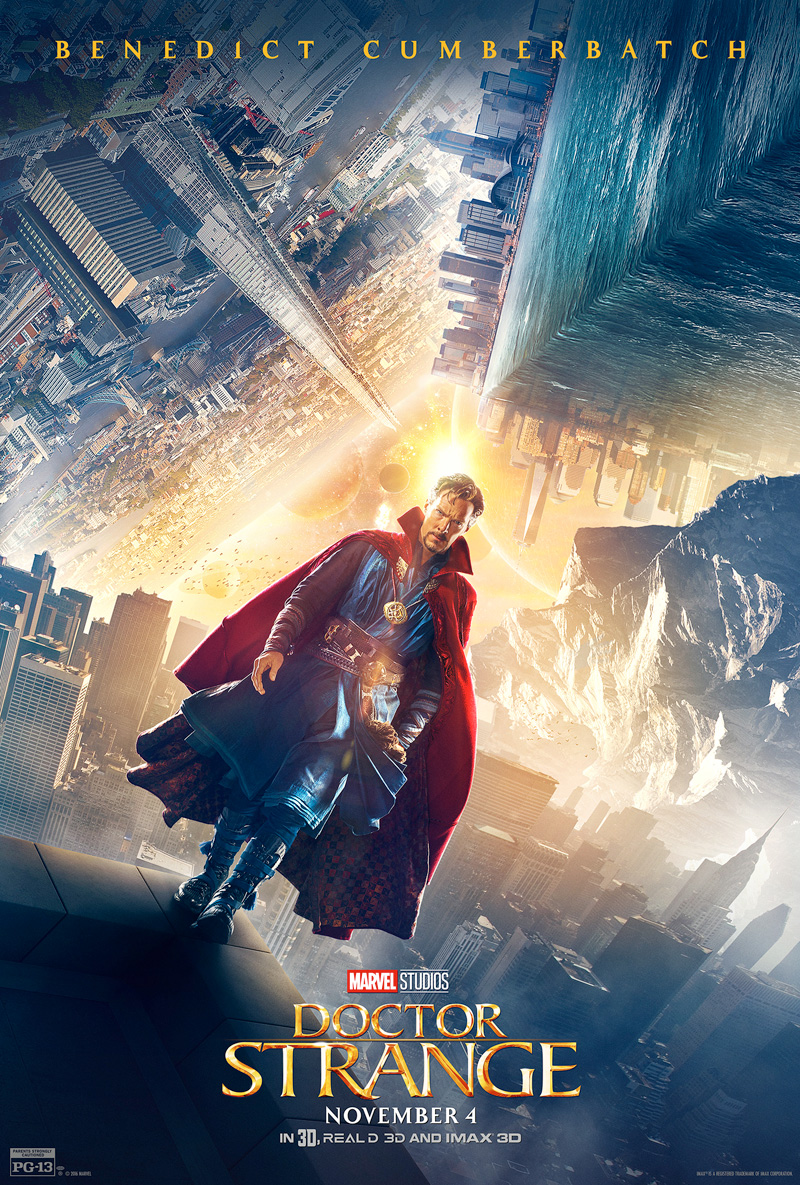
Doctor Strange (2016)


Benedict Cumberbatch goes into battle with magic. Silly but in a good way.

Director: Scott Derrickson

Cast: Benedict Cumberbatch (Dr Stephen Strange), Chiwetel Ejiofor (Karl Mordo), Rachel McAdams (Christine Palmer), Mads Mikkelsen (Kaecilius), Tilda Swinton (The Ancient One), Benedict Wong (Wong), Michael Stuhlbarg (Dr Nicodemus West), Benjamin Bratt (Jonathan Pangborn)

Arrogant surgeon (is there any other kind in the movies?) Stephen Strange (Benedict Cumberbatch) loses the fine motor control of his hands after a car crash caused by his reckless driving. With science unable to find a cure, he travels across the world to find another solution, eventually joining a secret group of sorcerers, led by The Ancient One (Tilda Swinton), who use energy from parallel universes to perform feats of magic in our world. Trained by Karl Mordo (Chiwetel Ejiofor) he is absorbed into a clash between the sorcerers and a rogue former protégé of The Ancient One, Kaecilius (Mads Mikkelsen) who wants to destroy the boundaries between worlds and unleash chaos.

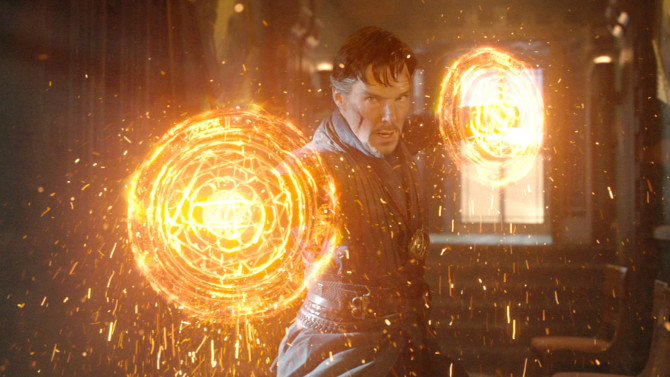
In a film franchise that threatens to get increasingly samey, Doctor Strange is in many ways a breath of fresh air. Its twisting, mind-bending special effects (part Escher, part Inception) are stunning and showcase a great deal of visual and narrative imagination in the film, immediately making it look different from the dozens of city-smashing films we’ve seen in the Marvel franchise. It’s also told with a fair amount of wit, tongue-in-cheek beats and some lovely sight gags (Strange’s Cloak of Levitation is clearly inspired by the Carpet from Aladdin). This lightness of touch is essential to stop this concept feeling silly: with a more po-faced style this story, full of magic and things like “the Eye of Agamatto”, would have stumbled over its own ridiculousness.

This is however pretty close to being the best comic-book origins film, and certainly in the top five of this franchise. For a start, despite the visual glory, it feels like a focused more personal story: there are only really 6-7 characters (compare that to the sprawling cast of Captain America: Civil War), and the real heart of the film is the lead character’s struggle to overcome an existential crisis and find a new purpose while rediscovering his humanity. Even the final confrontation is a spin on the formula, avoiding city-wrecking super-punches in favour of intelligence and humour saving the day. It still crams in the action, and the characters are still cartoons made flesh, but at least they have been given a real depth here. There is an emotional weight to the story that makes you care about Strange and his world.

No actor right now is better able to embody intellectual brilliance matched with cool arrogance and societal disconnection than Benedict Cumberbatch. So in many ways, Strange is a part that falls well within his comfort zone. But Cumberbatch shows he can carry a major motion picture by making Strange a charismatic lead who grows and develops. Strange is deliberately unlikeable at first, but Cumberbatch invests him with an underlying vulnerability and a cocky charm that is increasingly broadened and shaded as the film progresses. Almost without realising it, you find yourself actually rather liking him halfway through (while still happy to give him a smack in the mouth for his cockiness). Cumberbatch is in almost every scene and carries the film effortlessly.

The film is dominated by it’s lead character, but gives moments to the rest of the cast. Tilda Swinton overcomes the controversy of her casting by investing The Ancient One with both a serene wisdom with dark hints of anger and impatience bubbling under the surface. Ejiofor is good as an increasingly disillusioned mentor and Wong has some great comic beats. Mads Mikkelsen, one of the greatest actors in the world, is rather wasted as a villain who never becomes quite as interesting as you’d hope. Most misused is Rachael McAdams, whose character serves very little purpose other than “ex-girlfriend” – even the director, in an interview, described her role as being there to love him, so that we can see why we should love him.

It’s still a Marvel film, and it still follows the Marvel formula, however newly presented it might be. The arc of despair, rejection, slow progress, revelation, disillusionment, rallying and overcoming personal problems is pretty recognisable from everything from Thor to Iron Man. But it is enough of an inversion, it’s got a good enough script, it’s directed with enough focus on character as well as action, and it has a sufficiently good leading actor to lift and elevate the whole idea into something that feels richer while keeping it entertaining. It’s a very good comic book movie, and it’s trying to do something different, And it mostly succeeds.

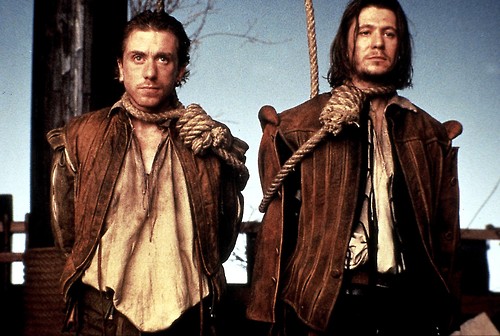
Rosencrantz and Guildenstern are Dead (1990)


Tim Roth and Gary Oldman are our bewildered heroes in Stoppard’s classic play

Director: Tom Stoppard

Cast: Tim Roth (Guildenstern), Gary Oldman (Rosencrantz), Richard Dreyfuss (Player King), Iain Glen (Hamlet), Ian Richardson (Polonius), Joanna Miles (Gertrude), Donald Sumpter (Claudius)

The original production of Rosencrantz and Guildenstern are Dead made Tom Stoppard a sensation overnight. It’s a dazzling high-wire act of theatrical and artistic invention that deconstructs both Hamletand the nature of theatre itself.

The events of Hamlet are re-told from the mis-understood perceptions of Rosencrantz (Gary Oldman) and Guildenstern (Tim Roth). Their time is spent in discussions about life and struggling to understand their role in both. Throughout, they are prodded towards understanding they are just plot devices by the Player King (Richard Dreyfuss). This film essentially replicates large chunks of the play, with a few humorous editions and revisions and drops it from its theatrical home onto the big screen.

The acting from Roth and Oldman is terrific. The friendship between the actors really comes across in their chemistry with each other, and both are clearly relishing the script. The characters are a brilliant contrast: Roth’s Guildenstern is the bossy, confident driving force who is not as intelligent or incisive as he thinks he is; Oldman’s Rosencrantz is a sweet, passive savant-like follower with flashes of insight he isn’t quite capable of understanding. Both have excellent comic timing, Oldman in particular making his character completely endearing. They also have an affinity with the language that makes the more reflective passages highly engaging. Even if the film isn’t perfect, you should watch it for these two performances – cast against type (neither of them is thought of as a comic actor, or associated with either Shakespeare or scripts like this) both actors are sensational, surely one of the best pairings for any production.

The rest of the cast is also strong. Richard Dreyfuss (a late addition) is witty, larger than life and also subtly sinister as the Player King. Some of the “clips” of Hamlet we see could have made an excellent production, with Glen, Richardson, Sumpter and Miles all giving very strong performances.

Tom Stoppard directed the film at least partly because he felt if he didn’t no-one would. Clearly his experience with actors throughout a lifetime has really paid off, as judging from the excellent performances. What he doesn’t quite have is either a true sense of filmic pace or a real ease with using the camera. Scenes work individually, but the play feels like a series of sketches. So the scenes with the coin tossing, or the questions game (a link below), or the sequences where the players recreate the plot of Hamlet work very well. But the actual plot (such as it is) of the play doesn’t always quite hold the attention – it’s slow paced and the overall impact never equals the sum of those parts.

The attempts to open the play out also don’t really work. The actors move from location to location in Prague castle and some scenes are shot outside, but it feels like just moving stuff from inside a theatre to outside. Other than that it’s basically a staging of the play exact – without really changing or replacing the meta-theatrical devices of the play with filmic contrasts, it feels much more like the filming of a stage production. Saying that, the changes Stoppard made to the script got a mixed reception, but many of them work quite well: in particular a running joke of Rosencrantz accidentally discovering or inventing concepts as wide ranging as the hamburger and Newtonian physics (only to have these discoveries dismissed or ignored by the impatient Guildenstern) frequently raise a smile.

So it’s a stagy and slightly slow piece with some wonderful scenes but overall can outstay its welcome. It’s very clever of course, but that cleverness is so tightly linked to the nature of theatre that its impact can never be the same in another medium. But it has some wonderful scenes and two brilliant performances in the title roles. If you have any interest in theatre or Shakespeare, or admire either of the two leads, watch it. But maybe take an interval.

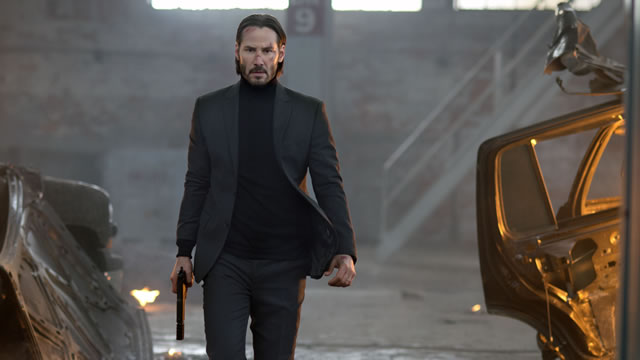
John Wick (2014)


Keanu Reeves: Architect of violence in this witty pulp thriller

Director: Chad Stahleski, David Leitch

Cast: Keanu Reeves (John Wick), Michael Nyqvist (Viggo Tarasov), Alfie Allen (Iosef Tarasov), Adrianne Palicki (Ms. Perkins), Bridget Moynahan (Helen Wick), Dean Winters (Avi), Ian McShane (Winston), John Leguizamo (Aurielo), Willem Dafoe (Marcus), Lance Reddick (Charon)

When B-list movie-making works, it can be a treat. John Wick is such a film. Set in a very distinctive criminal underworld, the recently widowed super assassin John Wick (Keanu Reeves) has left the life of crime behind but is dragged back in when the son (Alfie Allen) of a Russian mafia kingpin (Michael Nyqvist) murders his dog, a final gift from his wife. Wanting revenge for the loss of his last link with his wife, Wick undertakes a roaring rampage of revenge.

John Wick is a film all about momentum. It’s sharp and brutal, with fights and events piling on top of each other. However, it’s also a film told with quite a bit of wit and imagination – it’s got a cool sense of humour, and presents a tongue-in-cheek view of its super assassin story. The film’s pace and immersive action is punctured regularly and very effectively with amusing moments that really hit home. The idea of the criminal underworld having its own secret code, rules, havens and even currency is several times expanded wittily to bring an everyday element into the extraordinary. As an exercise in briefly and simply “building a world” you could look at few better examples than the script for this film.

Keanu Reeves is actually a fine choice for the lead role. His limitations as an actor have always been based above all in his flat and unmodulated Dude voice, so it’s only at moments of vocal emotion (there is one such angry outburst that he struggles with in the film) where even the audience feels that awkwardness of watching an actor at the limits of their range. But his best quality has always been his inherent lovability. As an audience member, you can’t help but care about him. Combine that with his physical brilliance and you have the perfect combination required for this role: you can believe totally in him as a ruthless killer, while also feeling a great deal of affection for him.

With Reeves’ physical abilities, the fights are then very well framed to showcase the fact that the actor is doing the stunts himself. If Quantum of Solace is perhaps the most inept example of high-cut frenetic action, this is at the other end of the scale totally. Simple, clear camera set-ups allow us to follow what happens at all times. Establishing shots and tracking shots show us exactly what is going on and where. This means you can relax and settle into the crackingly efficient violence that fills the film. The fights are inventive, shot with wit, and highly enjoyable in their execution without being excessively bloody or violent. The calm angles and stable camera serve to really accentuate the speed of those in the fights, making the fights visually very original. Despite the enormous body count, it never revels in violence. The patient build up to the first burst of violence also serves to really bond us to Wick’s backstory and his grief at his loss.

However, it’s not perfect. Strangely, despite the fact that the film is quite short, it’s still too long. There is a natural culmination point in the film at the end of Act Two that feels like a very natural, thematic stop point. Act Three resets the table hurriedly to reposition another character as a principal villain and to bring us another confrontation: this time however, the motives are less clear, and the action  just a little too much more of the same. It feels less witty and original than some of the other sequences in the film and to be honest I felt my attention drifting it a bit; the motivation for the final clash just isn’t there in the way it is with the initial enemies.

But this is a very enjoyable piece of pulpy film making, its wit and imagination embraced by some very enjoyable performances from the actors. The fight scenes not only have a unique look to them, they get the balance exactly right between violence and enjoyment. It’s almost the definition of a guilty pleasure .

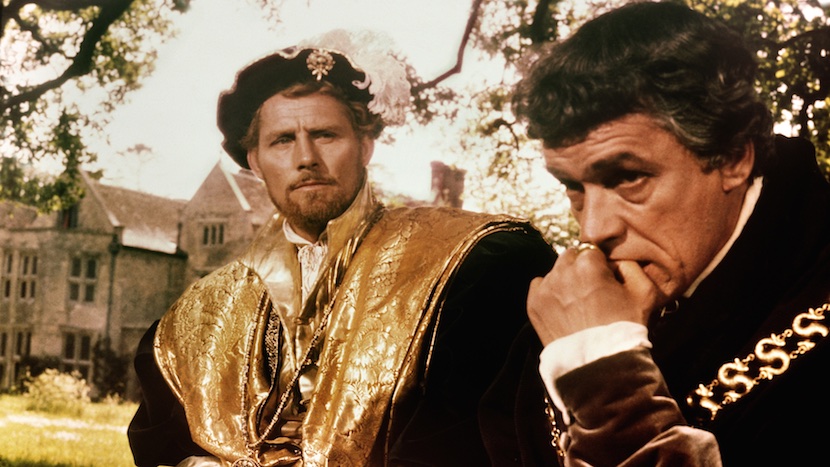
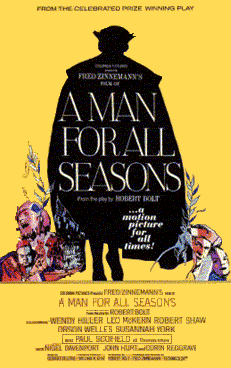
A Man For All Seasons (1966)


Paul Scofield ways up a difficult demand from a not-so merry monarch

Director: Fred Zinnemann

Cast: Paul Scofield (Sir Thomas More), Wendy Hiller (Alice More), Robert Shaw (Henry VIII), Orson Welles (Cardinal Wolsey), Leo McKern (Thomas Cromwell), Susannah York (Margaret More), Nigel Davenport (Duke of Norfolk), John Hurt (Richard Rich), Corin Redgrave (William Roper), Colin Blakely (Matthew)

Writing these film reviews is sometimes harder when it’s a film you know so well. I was probably in my very early teens when I first saw this and I’ve seen it dozens of times since. I know all the scenes, all the beats, and I love it. This is a brilliant film, and its depth, richness and intelligence are ingrained. It’s a wonderfully written, played and directed piece that transforms a historical event from a history lesson into an endlessly relevant and affecting parable.

Paul Scofield (simply becoming the man) is Sir Thomas More. With Queen Catherine unable to bear Henry VIII (Robert Shaw) a son, wheels are in motion to ditch the Queen and marry the king to Anne Boleyn (a split second cameo from an unpaid Vanessa Redgrave, making you believe in a moment Anne could split a kingdom). More, however, can’t agree to the divorce – his faith in the Catholic church is non-negotiable, and the church won’t recognise the marriage. So while the rest of the kingdom falls in line, More is arrested and takes refuge in his complete silence – having never spoken of his reasons, he can never be tried for them.

Re-watching this masterful film for the first time in a few years on a newly released, fully restored Blu-ray, I was immediately reminded what a thoughtful, interesting and enjoyable film it is. Having read the play again, I genuinely think (and I’m not alone) Bolt’s script is superior to the original. Several changes have been made, most notably the removal of the “Common Man”, a theatrical device whereby one actor played all the smaller working class roles, while delivering a commentary on the action. It’s a very theatrical device, which Bolt believed wouldn’t work on screen, but its removal also purifies the story, tightens the focus and allows us to focus on More. The commentary on More’s conflicted character is instead provided by Paul Scofield’s superlative performance in close-up. Bolt also removed much of the political background, making the film more of a parable of conscience rather than a “history play”.

The film is a beautiful celebration of old-fashioned Hollywood film making. Fred Zinnemann is sometimes forgotten today, extremely unfairly for a man with a hugely impressive back catalogue. A Man for All Seasons was perfect for a director whose best work saw one man stand alone against a system – be that at Pearl Harbour or the Wild West. Zinnemann was an “actor’s director”, and draws out a series of impressive performances. But his often simple set-ups never feel staged.

He and John Box (production designer) understand the power of claustrophobia, of life and death conversations in small rooms – from Wolsey’s imposing red office that seems an extension of his personality, to Cromwell’s poky office and More’s cell, the sense of being trapped builds throughout the film. By contrast, the final courtroom’s spaciousness only underlines the fact that it’s a fix. Throughout the film looks wonderful and its spare score is a beautiful Tudor-style series of compositions that carry a perfect pitched of awe and doom. It’s so beautiful (and often overlooked) I’ve put a link to the opening here.

 In fact, Zinnermann constructs the film throughout with wonderful beats and telling shots. The first appearance of Henry VIII, his head obstructing the sun, More blinking looking up, is one of the best visual impressions you’ll see of the Icarus nature of the Tudor court. A beautiful cut takes us from More (in a windswept garden, a lovely commentary on the turbulence of his life) wondering if he can find a way to sign the oath, to a shot of the view from behind his prison bars – pages and pages of story told to us in one simple cut. Later, from the same position, we’ll see a whole year pass by in a few moments – simple, unfussy, very effective. The film is packed with small, subtle moments like this that never intrude by themselves, but build to create the effect of the film wonderfully.

And this is a great film, there’s no doubt about that. The story is surprisingly simple, but Bolt and Zinnermann make it feel truly universal: the man against the state, the individual standing for what he believes is right despite all the pressure bought to bear against him. It’s a timeless parable and could be applied to virtually any time or place you could name. It’s also extremely well written: nearly every other line is memorable, the speeches are extraordinary. Every moment of reflection and observation sounds (and is) universal in its application. Its straightforwardness also helps make the story very moving, and it successfully carries out the trick of telling a movie about a saint while making him a living, breathing man we can relate to.

Of course, a large part of its success is due to Paul Scofield’s performance in the lead role. Honed after years of performing the role, it’s again almost hard to talk about individually as Scofield is so central to the film; talking about its success is in many ways to talk about Scofield’s success. Scofield’s performance is one where the actor disappears and the character remains: his More is totally real. You feel throughout not only his dignity and wisdom and his sharply defined sense of private and public morality – but also his warmness, his wit, his benevolent regard for people and those around him. He’s a caring master and friend – but not a push-over; and is adamantine in his decisions. Scofield is also able to show the contradictions of the man: a private man who cannot give up the lure of the limelight. Every beat of the performance is brilliantly observed, a list of highlights would fill a book. He carries the entire film from start to finish and never lets it slip for a second.

He’s helped by some wonderful support (and it’s a testimony to his generosity as an actor that he cedes the screen several times). Robert Shaw’s Henry VIII is a scene stealing tour-de-force. It’s up there with Robert Duvall’s Kilgore as cameos that wrench control of the movie. He’s on-screen for about 12 minutes, but he perfectly captures Henry’s charisma and his childish temper and fury. He’s intelligent (but not that intelligent – I love his sulky response when he is quickly bested by Margaret More in knowledge of Latin) and friendly but not that friendly – the sort of man who literally rips flowers from a tree to show someone how beautiful they are: destruction and excitement combined in one moment. You totally believe that this is a man who could shatter a country in a fit of pique.

Wendy Hillier also deserves notice for what might be the trickiest role in the film as Lady Alice, a woman who lives happily in the shadow of her husband. Ill-educated and lacking any understanding of her husband, it’s a part that could be almost yokel like. But Hillier brings it a world of dignity and fiery defiance, and she brings a completely convincing fury to Alice as she rails against  injustice. The final scene between her and More is a masterclass from both of simple, uncomplicated love that has held two people with very little in common together for a lifetime.

There is literally not a bad performance in this film. Every actor is perfectly cast and completely understands their roles. Nigel Davenport masterfully portrays the pride and dimness that lies under Norfolk’s bluff domineering persona. John Hurt nails Rich’s weakness, selfishness and greed and layers it with a convincing note of underlying self-loathing: a star marking performance. Orson Welles seems to have prepared his whole life for the bloated, corrupt Wolsey. Leo McKern (the only other cast member from the original production) invests Cromwell with a low viciousness and a deadly political savvy that is based exclusively on realpolitik and devoid of decency. Susannah York, Corin Redgrave and Colin Blakely all also excel.

Historically, the character of More has faced far more criticism and scepticism recently. Several historians have bought attention to More’s rigid Inquisition-like Catholicism and his willingness to execute heretics; Hilary Mantel’s equally brilliant Wolf Hall was partly written as a response to Bolt’s presentations of More and Cromwell, lauding the latter at the expense of the former.

But these controversies are not what this film is about – and it’s never trying to be a history lesson. It presents its version of the story on its own terms (very little is ever leaned about the “King’s Great Matter” or the reasons for it) – instead, like The Crucible, it turns a historical event into a deeply moving and profound parable. In doing this it transcends being a simple recounting of events, and instead becomes an independent work of art. Historical accuracy is of no relevance to the audience when viewing Henry IV Part 1: it is of no matter here either, and is something the film never claims. And it’s all the better for it. Still one of my all-time favourites.

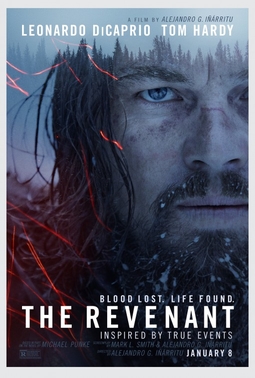
The Revenant (2015)

Leonardo DiCaprio conquers the wilderness

Director: Alejandro González Iñárritu

Cast: Leonardo DiCaprio (Hugh Glass), Tom Hardy (John Fitzgerald), Domhnall Gleeson (Andrew Henry), Will Poulter (Jim Bridger), Forrest Goodluck (Hawk), Duane Howard (Elk Dog), Arthur Redcloud (Hikuc), Melaw Nakehk’o (Powaqa), Grace Dove (Glass’s wife), Lukas Haas (Jones), Paul Anderson (Anderson)

The Revenant may have been one of the hardest films ever made. Iñárritu’s bleak survivalist masterpiece may not be the easiest watch – and certainly not the most fun – but it is something really unique and interesting, an attempt to completely submerse the audience in one character’s experience, with little interest in narrative, context or characterisation.

In 1823, Hugh Glass (Leonardo DiCaprio) is mawled by a bear while leading a group of trappers away from an Indian ambush. Slowing the rest of the men down, he is left in the care of a small party led by Fitzgerald (Tom Hardy). Fitzgerald abandons Glass to save his own skin – murdering Glass’ young son, he leaves Glass for dead, alone in the frozen wilderness.

This is a true experience film, that’s probably easier to admire and respect than it is to love, or even enjoy. As a technical accomplishment it is outstanding: it looks absolutely fantastic. Apparently all lit by natural light, the film has a dusk/dawn beauty to it throughout its running time that perfectly captures the harshness of the setting. The camera also unstintingly follows the burdens of its central character, close and personal with the action, often using hand held and Steadicam to throw us into the action: the three major “action” sequences have an almost unbearable intensity to them.

Iñárritu’s direction is masterful – this is a splendidly directed piece of cinema, a bravura display of accomplishment, which has the confidence to largely not draw attention to itself. In fact, that’s a major strength of the film – its technical brilliance, its striking editing and wonderful photography all serve the purpose of bringing us closer to the experience of Glass, throwing us into the world. The opening attack of the Indians on the trapper probably deserves a host of Oscars by itself, a frighteningly vivid, desperate conflict that the film throws the viewer right into the middle of. Similarly the fateful bear attack has a brutal efficiency about it that makes the viewer feel every bite and blow on DiCaprio’s battered body.

It’s well known that Leonardo DiCaprio won the Oscar for his role in the film. Possibly this was as much (if not more) a testament to his fierce commitment to this role than the actual performance. There is certainly no debate about that. Never mind the freezing cold conditions, DiCaprio spends a third of the film bound to a filthy stretcher before being swept down rapids, eating a raw fish from a lake, and climbing naked inside the guts of a dead (hopefully prop) horse… Throughout all this, a combination of his isolation and wounds means he says very little, but only growls and groans. It’s not an acting performance in the sense of a character creation – you learn very little about Glass, and other than his strength of will and hunger for revenge, little of what motivates him – but it is a complete physical performance. And DiCaprio probably deserves some sort of reward for leaving nothing in the dressing room in playing it.

The “character” acting is left far more to Tom Hardy as the weak, arrogant, blindly wilful Fitzgerald. Hardy’s performance was a little overlooked here, but it’s as fiercely committed as DiCaprio’s and, in many ways, is a more complex and intriguing character – a man with the force of will to lead but without the courage and integrity that makes a true leader of men. Yes he mumbles the dialogue – at times I did find it a little unclear what he was saying – but it is a very accomplished exercise in character creation from slight material. The rest of the cast are all equally strong – Will Poulter is terrific as a naïve Bridger, as is Domhnall Gleeson as the rigid Captain.

But the film is possibly so triumphant in its mise en scene that it overpowers the themes and narrative of the film. It is surprisingly easy to forget that Glass is a man powered by revenge, so completely is the focus on his survival. His past grief over his deceased wife is murky and unclear on first watching, not enough focus or context given to it by Iñárritu’s storytelling. Many of the “narrative” encounters that Glass has over the film are not particularly new or unique. Iñárritu’s film here is not really about the story, but the telling of it. And in focusing on the detail of delivering the story, it loses the heart and investment that a real story needs. Glass’s journey is terrible, his suffering huge, his perseverance and will striking – but I can’t say that I felt particularly emotionally involved with his struggle or got a sense of his emotional pain.

As such, this increasingly becomes a film that is easier to respect and admire than it is to love. Despite DiCaprio’s commitment and bravery as an actor, Glass is largely an enigma and the film itself is an immersion in an environment rather than a piece of drama. As a viewing experience it grips during its duration, but I’d be fascinated to see when I watch it again, will this be enough to make it last? Will a familiarity with the story allow the themes it attempts to deal with – revenge, grief etc. etc. – come out more strongly? Either way, any film that requires a second viewing is one that deserves recommendation.

Match Point (2005)


Love and lust collide in Woody Allen’s bizarrely classless Britain

Director: Woody Allen

Cast: Jonathan Rhys Meyers (Chris Wilton), Scarlett Johansson (Nola Rice), Emily Mortimer (Chloe Hewett Wilton), Matthew Goode (Tom Hewett), Brian Cox (Alec Hewett), Penelope Wilton (Eleanor Hewett), Ewen Bremner (Inspector Dowd), James Nesbitt (Detective Mike Banner), Rupert Penry-Jones (Henry), Margaret Tyzack (Mrs Eastby), Alexander Armstrong (Mr Townsend)

Match Point was originally intended to be filmed in New York, but Woody Allen could only raise the cash in Britain – so the location was shifted to London. The effect is a little bit like Julian Fellowes switching Downton Abbey to become a kitchen-sink drama in Liverpool: research has been done, the facts are all ticked off, but the understanding of the people and their situation just isn’t there. Maybe Allen should have hired Fellowes as a consultant. At least Fellowes could have told him an upper-class Covent Garden opera buff probably isn’t going to be in raptures about Andrew Lloyd-Webber’s The Woman in White.

Chris Winter (Jonathan Rhys-Meyers) is a tennis pro, now making a living as a coach in an upmarket London club. He coaches Tom Hewitt (Matthew Goode), and they discover a shared love of opera. Soon Chris is a regular visitor to the Hewitt family, a suitor and later husband to Tom’s sister Chloe (Emily Mortimer) and an employee at his father’s big city firm. He has everything he wants – except for Nola Rice (Scarlett Johnasson), Tom’s American actress fiancée…

The film was critically acclaimed in America but received a much more muted response here in Blighty. I can see why. Allen’s main problem is that he is tone deaf to the class hierarchy in this country. As such, he creates a Britain here that is close to something we would recognise, but subtly off. Chris is clearly from a lower social class than the family he marries into, he’s employed as a coach in a tennis club and he’s clearly less well travelled than the others. The family he marries into has a massive country house with servants, goes shooting at the weekend, runs a huge London business – it’s a modern day Downton Abbey.

If the same story was created by a British writer and director, Chris would clearly be presented as an ambitious, even ruthless, social climber looking to move up the ladder by doing everything he can to marry into a rich family and inveigling himself into their lives. Allen, however, doesn’t present the relationship like this – in fact, watching the film, I think it’s clear that he doesn’t really realise that Chris and his in-laws are in a totally different social class. He treats them all as if they are basically social equals, with money the only difference between them. For the British this just doesn’t fit in at all with our experience of the class system in this country – we know the Hewetts and Chris would always be aware of the social background difference between them, and that someone would comment upon it during the course of the film. No-one ever does. Class remains unmentioned. For a British person this just isn’t right.

So the “tragedy” if you like (or character flaw) of Chris should be that he is drawn sexually towards Nola Rice, despite it flying against his ambitions for moving upwards in his class. Instead, Allen’s script treats it solely as an affair of passion: the fact that the two “outsiders” in the social class (the working-class Irish boy and the American actress) are drawn to each other isn’t commented upon at all. The Hewetts are more suspicious of Rice because she’s an American and an actress, but the fact she (like Chris) doesn’t have a penny isn’t an issue. There is a lot of fertile ground here that any British director or writer would just know – but Allen fundamentally just doesn’t get it: he thinks the Hewetts are middle class not the loaded 1%+.

Of course, some of the problems are connected to Jonathan Rhys Meyers in the lead part. Watching him in this film, I can’t help but feel this is a solid 7/10 performance by an actor who normally bats a 5-6: he’s doing some of his best work on film, but his inadequacies as an actor can’t be overcome. It’s the eyes and voice for me: there just never seems much going on behind the eyes, and his unmodulated voice doesn’t bring any shading to his line deliveries. Chris should have the air of a slightly ruthless, ambitious but charming social climber – think Dennis Price in Kind Hearts and Coronets – but this is out of his range. Instead Chris is just a sort of blank that you can impose their own ideas on: it sort of works for the film, but it misses dozens of possibilities. He does well with the second half of the film and his guilt about the murder is well played, but it’s simply less subtle acting than is called for in the first half. He’s an average actor giving a performance above himself here.

Scarlett Johansson fares much better as a character who changes and develops dramatically over the course of the film, from mysterious, confident, sexy girlfriend to needy, frustrated, betrayed mistress. It’s a dramatic development throughout the film that is so skilfully done, it never feels jarring. Much of the cast is also strong: Matthew Goode is a real stand-out as Chris’ subtly spoilt brother-in-law, as is Emily Mortimer as a happy wife who never wants to think about the lie her life is. Rupert Penry-Jones and Margaret Tyzack have great cameos among the all star British cast.

The film takes place in a picture-postcard London (all the great sights are ticked off), and Allen directs with his traditional unfussy camera work. There is a certain pleasure to seeing big name British comic actors in tiny roles throughout (Paul Kaye, Mark Gatiss, Steve Pemberton and Alexander Armstrong among others pop up in small roles).

Allen doesn’t understand Britain like he does Manhattan, but that doesn’t mean it isn’t a decent film. The story’s theme of luck or chance vs fate doesn’t quite coalesce for me, but the feeling of events closing in on Chris late in the film does work very well, and I certainly felt the tension of whether Chris would get away with his eventual crime (even if I never really quite cared for Chris himself). Allen rates this as his favourite of his own films – which I guess goes to show you are never the best judge of your own work.

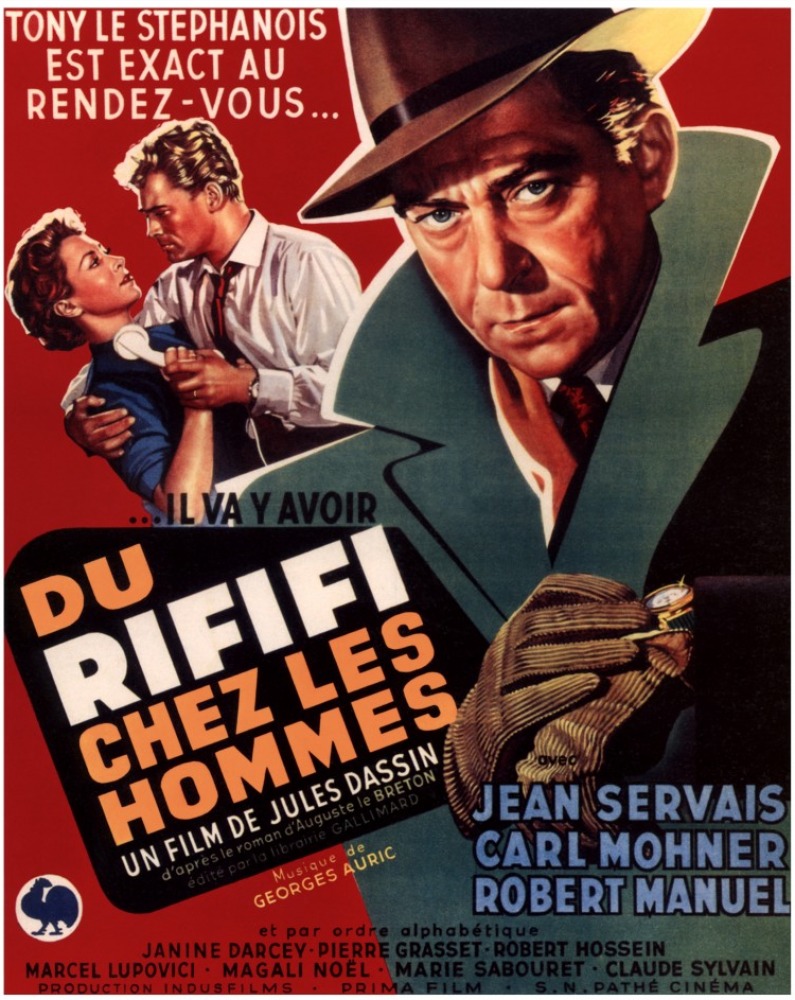
Rififi (1955)


Master thieves at work!

Director: Jules Dassin

Cast: Jean Servais (Tony “le Stéphanois”), Carl Möhner (Jo “le Suédois”), Robert Manuel (Mario Ferrati), Jules Dassin (César “le Milanais”), Magali Noël (Viviane), Claude Sylvain (Ida), Marcel Lupovici (Pierre Grutter), Robert Hossein (Rémy Grutter), Pierre Grasset (Louis Grutter), Marie Sabouret (Mado), Janine Darcey (Louise)

After you’ve spent some time watching some pretty duff films, finally sitting down and watching a masterpiece of any genre is a complete relief. That’s pretty much what this film is. Which is particularly interesting when you learn the film is based on a book that Dassin (it’s director) described as one of the worst books that he had ever read. He took the job only because (with his blacklisting in Hollywood) he was worried he would never work again, and only on condition that he could completely restructure the original script.

Newly released from prison, Tony (Jean Servais) is approached to take part in a smash-and-grab raid on a jewellery store by his old criminal contacts. He rejects the idea, but after discovering his former lover has left him for a gangster rival in his absence he changes his mind, on condition that the smash-and-grab plan is replaced by a complex operation that will clear out the shop’s safe containing over 250 million Francs’ worth of jewels. But in the criminal underworld, they discover there are always bigger fish circling to take their cut by any means they can.

I watched this film three days ago, and its effect was so lasting I feel almost as if I have watched it several times in my mind’s eye since then. Jules Dassin, an under-rated director, has a mastery of visual language and tense narrative that burns nearly every single scene into your retina. Rififi is a technically assured, dazzling piece of cinema that gives heft and weight to a simple story, and also has something interesting to say about human nature and the codes that dictate the lives of thieves.

Any discussion of the film probably needs to start with its highlight: a 28 minute sequence detailing the robbery itself, told in near silence and shot with forensic detail. In fact, so intelligently thought-through was this scene that in many countries it earned the film a ban, as it was feared it was too much of a “how-to” guide for thieves. The scene is a unique creation of Dassin’s – the comparative scene in the book is no more than 2-3 pages. Here it’s a quarter of the movie.

The scene is blisteringly tense, and the decision to keep the action silent means every single noise (a piano key, the whirr of a drill, the bang of a hammer) carries huge tension. There is, as many reviewers have noted, no particular reason for the thieves to keep to strict silence – but it’s dynamite cinema. Dassin combines this tension with a delighted observance of the ingenuity of these criminals. Everyday items are brilliantly repurposed to perform specific tasks (I particularly enjoyed the use of an umbrella as a vital tool). Dassin celebrates the effectiveness and skill of these burglars, and their technique and skill is infectiously entertaining.

Dassin probably invented the genre of the heist movie here – and he encourages us to feel a delight in the accomplishment and ambition of the heist. But he also reminds us that these are criminals: weapons are banned as they will guarantee a long prison stretch; the couple whose house they invade are ruthlessly chloroformed and tied up; a policeman is bludgeoned as part of the get-away. In the third act of the film we see that Tony in particular is no shrinking violet when it comes to violence.

The build-up to the heist establishes each of the characters clearly, along with the flaws that will revisit them later: Tony makes enemies too easily, Jo’s loyalty affects his judgement, Mario is too happy-go-lucky, César has a weakness for women. A number of sequences show us the gang’s preparations – from hours of surveillance, to an amusing sequence where they experiment with methods to beat the store’s top-of-the-line alarm before a moment of inspiration hits them.

The third act of the film however takes us into a dark exploration of the loyalties and codes of honour that govern the criminal underworld. Tony’s enemies try to muscle in on the proceeds, leading to a series of increasingly violent episodes, as move and counter move is made to secure control of the funds. Here Dassin again pulls no punches – we have swearing, we have murder, we have a strung-out junkie kidnapping a child in return for a free hit – and it’s brilliantly put together.

It also tells us something. Tony has a code – and whether we agree with it or not, he’s faithful to it. Dassin himself plays the man whose fondness for a vain singer will leak out the plot details (it’s a lovely performance – and the man who was blacklisted must have had some delight here in playing a grass) and the confrontation scene with Tony is great: “I really liked you” Tony states sadly and regretfully: that doesn’t change his mind. Tony’s rival Grutter lacks even Tony’s sense of fairplay and his ruthlessness puts the other gangsters into perspective and questions Tony’s ideas of a code of honour among thieves: Grutter is a success precisely because he doesn’t give a toss about that sort of thing.

If the film has a flaw, it’s in its treatment of the female characters. Although Dassin arguably suggests that in this mileu many of them are just powerless passengers swept along by the actions of their men, they still seem less than fully formed characters, defined by simple character traits (Louise is a mother, Viviane is shallow, Ida is a flirt). The one dull section of the film follows Viviane singing in a nightclub – a scene introduced solely to drop the title and explain its meaning.

The film is also, at best, neutral in what it expects us to make of Tony brief whipping (off-screen) his ex-girlfriend Mado with a belt, after she betrays him with the gangster Grutter. Particularly as Mado seems to believe herself at fault rather than Tony. The scene is more about Tony – it’s his feeling of powerlessness that the camera focuses on – and Mado seems to shrug off the three blows she receives as just the price of living. Ah well, that’s the fifties for you I guess. And it’s not as if Tony – a moody man perfectly capable of cold blooded killing later – is a saint in any case. We also have the balance of Jo and Mario’s loving regard for their wives – and César’s misguided affection for Viviane.

And of course Tony our “hero” is certainly an anti-hero. In his first scene he’s stroppily demanding “in” on a poker game he doesn’t have the funds for. He’s demanding and surly with everyone except his godson. He is ruthless when he needs to be. Jean Servais’ crumpled, baggy face and dead-eyed stare genuinely make him look like a man who has spent five years inside. His adherence to his moral code is so rigid no level of regret will stop him punishing those whom he deems have deserved death. Dassin also undercuts his potential tragic greatness, as trivial events – a missed phone call principally – lead him to destruction. 

The film’s final sequence is inspired, and again wordless. A dying man races a car through the city to return a child to his mother. Is it devotion to the child? Does he want to get the money back to the only family he has? Has he accepted death? Is he racing for a chance of living? Around him the camera whirls, the editing is frantic and the child cavorts in the car oblivious of the danger. It’s a sequence that is both moving and strangely profound. It’s the final masterstroke in a film full of them.

Rules of Engagement (2000)


Our heroes “Can’t Handle The Truth!” That’s okay though they don’t need to deal with it

Director: William Friedkin

Cast: Tommy Lee Jones (Col Hays Lawrence “Hodge” Hodges II), Samuel L. Jackson (Col Terry L. Childers), Guy Pearce (Maj Mark Biggs), Ben Kingsley (Ambassador Mourain), Bruce Greenwood (National Security Advisor Bill Sokal), Anne Archer (Mrs. Mourain), Blair Underwood (Capt Lee)

Jones and Jackson together! At least that was the cry at the time for this morally repugnant military courtroom drama. On a mission to rescue an ambassador from an embassy under siege, after a few marines are wounded (three are announced later as KIA), Jackson’s Colonel fires on a crowd of protesting civilians (a scheduled protest that has gone out of hand) killing 83 and wounding dozens more. Horrified, the suits at home decide to put him on trial for murder. Jones is his alcoholic (for plot reasons) lawyer, who tries to uncover the truth around a missing surveillance video which may (or may not) prove the crowd was armed.

This was a film that I think I’ve hated more and more since I watched it. In its defence: Friedkin directs the opening embassy siege well. The siege itself (denounced as racist at the time) comes across as enormously prescient considering the Arab Spring etc that we’ve seen since. Jones is pretty good, I guess, despite looking far too old for the part (he’s only two years younger than his supposed mother!). Jackson does the fireworks that are asked of him. It’s pretty well filmed in general.

Everything else in this film leaves a taste like three-week-old field rations. The courtroom dynamics are boring. The film doesn’t want Jackson to be a villain so repositions Greenwood and Kingsley’s characters as villains. Despite their best efforts, any sane person watching this film could not defend Jackson’s character’s actions here. The logic of the courtroom is ridiculous: a non-existent video tape overrules all other evidence, including a complete lack of bullet holes from guns from the street direction? I suppose you could argue the film wants us to make our own judgement on subjective recollections: but its stirring music and heroic worship of Jackson tell us firmly who we should be believing here. Basically the message seems to be: Embassies are American soil, raise a gun at them and you deserve everything you got coming.

The film tries to stack the decks overwhelmingly in support of its central character, but it just leaves an unpleasant taste in the mouth. For a start, our hero is cleared on a technicality – “There must be a surveillance tape and that tape might have cleared the Colonel so you should let him off” – that we are meant to cheer, but is in fact exactly the sort of closed ranks, protect-our-own cover-up that the supposedly villainous National Security Adviser denounces in the first place. It’s not even a good argument: all the actual available evidence clearly shows he’s guilty and Jackson even admits it on the witness stand! Ever heard of the Amritsar massacre? It’s a comparable event to this and one of our most shameful colonial actions. On the logic of this film it should be our finest hour.

On top of that, the film asks us to believe that a proportional response to being under fire from gunmen in a crowd full of civilians (including women and children) is to fire automatic weapons directly into the crowd. But that’s fine because Jackson’s character has a dream where he sees the Yemeni civilians all shooting up at him (didn’t see that the first time you showed it Friedkin!) including the photogenic one-legged girl the film has gone back to several times. So you go Samuel! Shoot up that crowd!

I could go on with the wonky morals of this horrible little film. The first thing we see Jackson’s character do on screen was to execute an unarmed prisoner (our hero, ladies and gentlemen!). Naturally the film has to exonerate him for this, so we have the Vietnamese officer who witnessed this turn up at the courtroom and say he would have done the same, then have the two of them tearfully salute each other outside the courtroom. So that’s fine then. It’s just another part of the film’s unpleasant attitude that you can’t even begin to question right or wrong in combat because, man, you weren’t there. Well I’m sorry but that doesn’t wash.

What is the moral of this unpleasant story? Well it seems to be that you can do almost anything you like so long as you can argue you have in someway saved lives (especially if they are American lives). Oh and that by extension, 1 American Marine’s life is worth just about 28 Yemeni lives. Go figure.

Primal Fear (1996)


Richard Gere prepares an impossible defence for unbalanced Edward Norton. Twist ahoy!

Director: Gregory Hoblit

Cast: Richard Gere (Martin Vail), Laura Linney (Janet Venable), John Mahoney (John Shaughnessy), Alfre Woodard (Judge Shoat), Frances McDormand (Dr Molly Arrington), Edward Norton (Aaron Stampler), Terry O’Quinn (Bud Yancy), Andre Braugher (Tommy Goodman)

Courtroom dramas are the bread and butter of film drama. You get to deal with good vs evil, right vs wrong – and you even have two advocates on each side there duelling it out on camera for you. Primal Fear came at a time when John Grisham and his like were ruling the bestseller charts, and it’s a fine demonstration of that very late 80s to mid 90s genre: the all-star court case film.

After the murder of a beloved archbishop in Chicago, bloodied altar-boy Aaron Stampler (Edward Norton) is found near the scene. There seems no doubt that he’s guilty. Top city lawyer Martin Vail (Richard Gere) takes his case for the publicity of a big trial, but finds himself believing the boy to be innocent. As the trial begins though, Vail’s psychiatric investigation reveals Stampler has a split personality – his gentle main persona and a violent defensive personality, “Roy”, who admits to the crime.

This is an advanced, well-written trial thriller which, through a combination of some neat lines and some very good performers, manages to bring a lot of life and originality to what could have been a collection of stock characters. Instead, each character in the film feels real and their actions seem part of a coherent personality. The mechanics of the plot also move very smoothly, with a well-handled twist. And as a bonus it has something to say about human nature, about our need to believe in something and how easy it is to tell lies about ourselves and believe them from others.

The film is shot with a good eye for grimy real-life locations and muddy shade-of-grey morality. Hoblit’s direction is crisp and straightforward and he avoids getting any pyrotechnics in the way of the actors – here the performances are the special effects. It’s also a brilliant twist movie that doesn’t telegraph the fact it contains a twist until it suddenly pulls the rug out from under your feet. Hoblit doesn’t give us any advantages over the characters and has the restraint not to show his hand too early – instead he sucker punches us with a sudden downer ending. It’s a masterpiece of genre craft film-making.

Richard Gere at first glance is playing well within his range – a smirking hotshot focused on the win, willing to defend anyone and anything. However, what Gere does really well here is play his persona as an actual persona of the character. The “real” Martin Vail, it becomes clear, is actually almost naïve in his underlying faith in the justice system. He has a touching faith in people and the twist of the film works because we believe how much Vail unwittingly allows himself too be manipulated and conned. He’s the sort of true believer who can playfully mock his faith because his belief in it is absolute. It’s even more crushing, then, when that faith is so cruelly used and abused. The final shot of him alone on the street all but screams “My God, what have I done?”.

But though this film has some of Gere’s best work, this is Ed Norton’s movie. Incredibly, this was Norton’s first ever film, and he seizes the film absolutely by the scruff of the neck. Re-watching the film now, it’s less of a surprise when Aaron’s “Roy” personality bursts out – Norton is so well known now you are almost waiting for him to really let rip – but he nails the contrasts between the stammering, gentle Aaron and the ferocious Roy. You always know which one he is at any time – and even better than that, Norton drops subtle hints throughout to set up the film’s twist (which I won’t give away). His performance is largely a triumph of masterful control of acting tricks and a brilliant demonstration of range, as well as a swaggering display of confidence, rather than a subtle piece of character work, but it’s still an absolute knock out for all that – and totally believable.

Strong performances also come from Laura Linney, making an awful lot of the role of Gere’s courtroom nemesis and part-time lover. Andre Braugher is particularly good as an investigating officer. Alfre Woodward is stern and authoritative but fair minded and just as the judge. Frances McDormand makes what could have been a wet liberal doctor feel like a genuinely caring and dedicated intelligent professional. There isn’t a weak link in the cast, and every character beat feels well observed and natural. How many genre films have failed to manage that?

It all works extremely well and offers all the courtroom fireworks you could want with maximum efficiency. All the actors are working at the top of their game, and the direction keeps the action taut and intriguing. Here’s the thing: the plot makes little sense if you think about it, and Norton’s plan depends on so many variables he could never have known that it would success. But the film is made with such confidence and assurance that it never really matters. The twist still has a lot of impact today – and the film bravely offers no happy endings, only hammers home the system’s corruptness. A very good example (perhaps one of the best) of the courtroom genre.