Category: British royalty

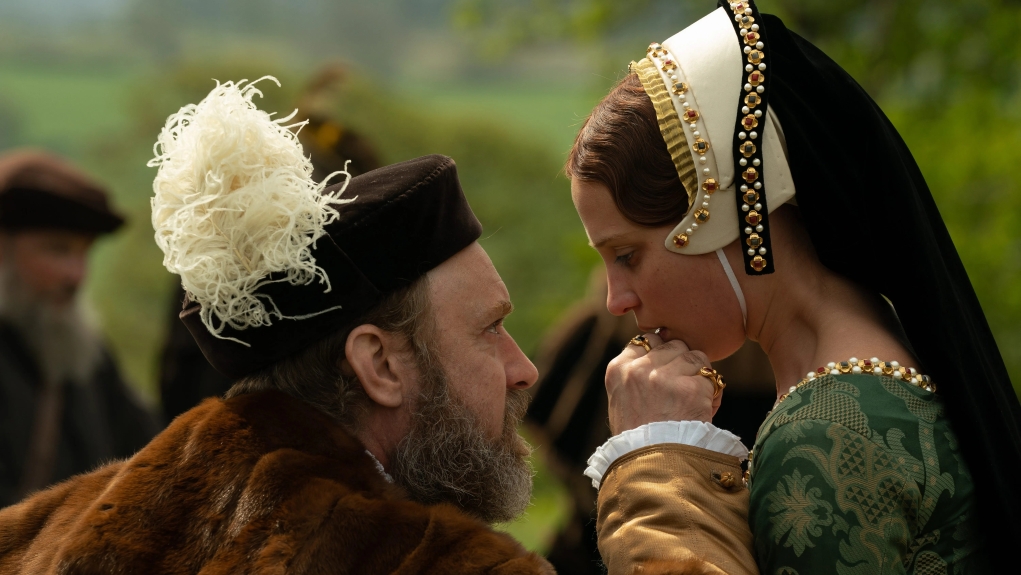
Firebrand (2024)

Firebrand (2024)

Atmospheric film attempts to redefine Katherine Parr, but fails to make a successful dramatic case

Director: Karim Aïnouz

Cast: Alicia Vikander (Katherine Parr), Jude Law (Henry VIII), Eddie Marsan (Edward Seymour), Sam Riley (Thomas Seymour), Simon Russell Beale (Bishop Stephen Gardiner), Erin Doherty (Anne Askew), Ruby Bentall (Cat), Bryony Hannah (Ellen), Junie Rees (Princess Elizabeth), Patsy Ferran (Princess Mary)

For years people had this muddle-headed idea that Henry VIII was a jolly fat-man with a charmingly eccentric habit of constantly marrying the wrong woman. In fact, this homicidal tyrant was one of history’s definitive arseholes, his hands scarlet red with the blood of anyone who annoyed him (including at least two of his wives). His last wife, Katherine Parr, is similarly often remembered as a dutiful matron than a dynamic and intelligent woman (who wrote a book on theology and ruled as regent for several months).

Firebrand is a noble attempt to challenge that narrative, drawing focus towards Katherine Parr’s (Alicia Vikander) zeal for religious reform and the near-fatal attention it brought her from the hard-core traditionalists around Henry VIII (Jude Law) not least Bishop Stephen Gardiner (Simon Russell Beale). This reimagining of the final months of Katherine Parr’s marriage to the bloated tyrant tries its very best to reclaim her as a major figure in the founding of the Church of England and if, in the end, it doesn’t quite manage this, it’s still good to have Katherine reclaimed from history’s trivia corner – and links her closely to the eternally popular Elizabeth I (poor Mary remains a dowdy fanatic, played by a gloomy looking Patsy Ferran – feminist sympathy can only go so far.)

Aïnouz does give Firebrand a freshly claustrophobic and sinister feel behind the costume details (bringing the sort of outsider eye that Kapur bought to Elizabeth). It has an imposing, doom-laden score of moody strings and sudden, discordant noise, frequently presenting the English countryside not as lush environment, but misty place pregnant with unknown menace. It’s a fine mood setter for a land where reformist religious practices are ruthlessly suppressed by a religiously conservative king (Henry’s only interest in reform being what he personally could get out of it – in his case a divorce and a mountain of monastery cash).

In the candlelit gloom of the court, the capricious king makes life as unpredictable and dangerous as he is. Henry is accompanied everywhere by a group of fawning hangers-on, whose job is to whooping up the court to collapse into hysterics whenever the king says anything approaching a joke. The most effective thing about Firebrand is it’s presenting of a Henry VIII who is one part Harvey Weinstein to two parts Josef Stalin. Jude Law gives a masterclass in preening cruelty and psychopathic bullying, as man so used to getting what he wants even the slightest suggestion he can’t sends him into a spiral of spittle-flecked rage. Firebrand plays up his corpulence, the suppurating stench of his ulcers (Law, in method style, wore a cologne that stank of piss during filming) making this king a million miles from the broad-shouldered Holbein image.

Henry paws openly at attractive court ladies and delights in humiliating those around him. He uses physicality as a weapon of control, constantly grasping people by the fae or neck to draw them towards him. Law is superbly cruel and domineering, while being pathetically needy, demanding complete and total affection from his wife and yo-yoing between randy affection and assault if he doubts for a second anything other than her complete devotion.

If only the film was able to make as compelling a case for Katherine Parr’s undoubted qualities, as it does for the King’s negatives. Alicia Vikander has a hard job – Katherine is rarely, if ever, not under observation so must constantly hide her thoughts and emotions behind a stoic shield. But it’s a shield that partly deadens her performance. Firebrand only finds a few moments, at its start, for Katherine to truly be herself, in the presence of Erin Doherty’s passionate firebrand Anne Askew (whose Protestantism overlaps with a socialistic political view which doesn’t quite ring true for Tudor England).

Vikander and Doherty’s relationship is one of the film’s most interesting, with more than a hint of romance between these two reformers, one who has never compromised and another who compromised so much she literally married her persecutor. Aside from that, Vikander has to work hard to try and communicate her fierce commitment to reform behind her eyes – something that’s a lot harder than using her skill at telegraphic her hatred and fear of Henry. Her management of the king does provide moments of interest, notably a fascinating sequence when Katherine publicly humiliates a potential mistress in order to re-spark the king’s interest in her (Henry, like other egotists, liking nothing more than young women fighting over him).

But Firebrand struggles to translate Katherine’s religious views into either something politically compelling or dramatic. Instead, it largely resorts to working hard to tell usthat Katherine was a feminist icon, the inspiration for Elizabeth I and the true mother of the Church of England – rather than showing it. It also has to awkwardly rework the actual historical events to facilitate this.

As such, we have her roundly rejecting the advances of Sam Riley’s lecherously ambitious Thomas Seymour (in real life she immediately married him on Henry’s death – showing even intelligent people can fall for terminally selfish idiots), arrested, imprisoned and threatened with burning (in real life Katherine avoided this by publicly submitting utterly to Henry’s ‘superior’ judgement in all things religious) and an optimistic ending of her and Elizabeth planning a feminist protestant utopia (as opposed to Elizabeth’s affair with Seymour that permanently fractured their relationship). Firebrand ends with a paean to how Parr’s writing laid the foundations of Anglicanism, which feels quite a reach to make from one book.

Strangely however, the film’s biggest historical deviation of fact – her final solving of her Henry problem – despite being a clearly fictional flourish is surprisingly satisfying (not least because of the vileness of Law’s Henry) and manages to ring spiritually true for what a parade of people (and Katherine as well probably) would have liked to do to the murderous maniac if given the chance. But it’s also too little, too late in a film that otherwise is a little too dry, a little too lacking in narrative drive. For all it wants to build up the reputation of Katherine Parr, it gives Vikander far too little meaty content to really play with while ceding much of the interest to its wallowing in the cruelty of the king.

Scoop (2024)

Scoop (2024)

Interview dramatisation which mostly fails to turn news into drama, making empty points

Director: Philip Martin

Cast: Gillian Anderson (Emily Maitlis), Keeley Hawes (Amanda Thirsk), Billie Piper (Sam McAlister), Rufus Sewell (Prince Andrew), Romola Garai (Esme Wren), Richard Goulding (Stewart MacLean), Amanda Redman (Netta McAlister), Connor Swindells (Jae Donnelly), Lia Williams (Fran Unsworth), Charity Wakefield (Princess Beatrice)

It was one of those interviews that shook the world – largely because it was such car-crash TV. Prince Andrew (played, under layers of effective make-up, by Rufus Sewell) desperately wanted to distance himself from the Jeffrey Epstein scandal and BBC’s Newsnight was seen as the most appropriate outlet for a reputation-restoring chat with a proper journalist, Emily Maitlis (Gillian Anderson). The interview was booked by producer Sam McAlister (Billie Piper) – whose book Scoops inspired this – and advocated for by Andrew’s senior advisor Amanda Thirsk (Keeley Hawes). The revelation of Andrew’s priceless mix of out-of-touch privilege and shallow dimness, combined with his inability to understand the impact on anyone but himself, consigned him to royal oblivion.

Scoop tries its best to turn the behind-the-scenes story into drama – but, to be honest, it comes across as a hugely underwhelming Frost/Nixon-lite. It’s hard not to feel an episode of Netflix’s The Crown would have dealt with this with more depth and interest than this manages. Scoop commits the cardinal sin of any “plucked-from-the-TV-headlines” biopic: all its most interesting parts are pitch-perfect recreations of an interview you can watch at your leisure on YouTube. Once you’ve got over how well Anderson and Sewell have captured their subjects, that’s basically it.

That’s Scoop all over. It’s a film that’s all flash and no substance. Martin and screenwriter Peter Moffat work overtime to suggest that this interview was a seismic piece of journalism, a sort of David-v-Goliath reveal. It ends with the Newsnight team giving themselves a self-congratulatory round-of-applause for “having given a voice to the victims” – a bit rich considering neither the interview or this film gives them much more than a second or two. Maitlis and co are shown to be trembling with nerves before interviewing this Royal Spare who no-one ever took particularly seriously (as McAlister bluntly tells him at one point), something which feels a bit odd since we are repeatedly told Maitlis has quizzed Bill Clinton among a score of other names.

There is a Spotlight-ish attempt to show the Newsnight team verifying some facts before the interview takes place – Scoop is one of the few films you’ll see where a paparazzi photographer, played as a cheeky wideboy by Connor Swindells, presented as a noble crusader for the truth – but it never rings true. No real facts about the Andrew-Epstein case were either unknown, in dispute or revealed during the interview. Andrew wasn’t even undone because of “gotcha” questions: it was because he performed so catastrophically badly, painting himself as the “real victim” and revealing he existed in a reality no ordinary person could begin to recognise.

There is very little drama in Scoop. Based on McAlister’s book, Scoop is duty-bound to place her as centrally as possible. Problem is the slogging hard-work of building trust over time to land big interviews is quite undramatic. Instead, the film boils McAlister’s work down into a chance email, a pub chat and a bit of Hollywoodish-straight-talking from McAlister during a meeting with the prince. This sells her skills short. In fact, unlike Frost/Nixon which got chunks of drama out of the will-they-won’t-they dance to set-up the interview, Scoop gives the impression everyone wanted it to happen. In fact, it makes it look so straight-forward, you end up thinking McAllister’s bitter colleague might be right – how highly skilled is her job?

The desire to centralise McAllister creates further problems: their nominal lead’s key involvement ends before the stuff the film is really interested in (the interview) even begins prepping. Scoop falls back on plucky outsider to keep her involved, retrofitting McAllister (a producer with nine year’s experience with world leaders) into a working-class outsider, who needs to force herself into “the room where it happens”. Problem is as soon as she’s in the room, McAlister has nothing to say or do (one suspects the whispered legal battles connected with a rival mini-series on the same subject stopped the writing of any McAllister-ish insight here, for fear it would be promptly denied by the Maitlis-backed rival production).

McAlister becomes a side-bar, a largely silent background character in her own story. Not quite the message that the film wants to promote on female empowerment (even if her bosses are all women). There are similar odd notes in here. Amanda Thisk’s colleague, an aggressive male we are clearly not meant to sympathise with, resigns when the interview is agreed saying it’s a terrible idea. Scoop paints him as a chauvinist bully, furious at being over-ruled by a woman – problem is he’s right. The most effective moment on this subject is arguably more about privilege in general, as Andrew demeans a female cleaner for incorrectly sorting his teddy bear collection. As mentioned the actual victims remain voiceless and nameless on the margins, barely meriting even a post-credits mention.

Perhaps the real problem with Scoop is it wants to be an All the President’s Men style journalism film but the interview was really a soapish showbiz story. There is not investigation, no wrongs bought to light. There is no gladiatorial duel (compare to Frost/Nixon). Andrew essentially commits reputational suicide in front of his stunned opponents, when confronted with fairly routine, fact-based questions. It’s not like toppling someone really important – and the film is so careful about legal implications it avoids putting any stance on what Andrew may or may not have done, knowingly or otherwise.

What the film doesn’t want to say is that Newsnight landed a big hit by giving us exactly the sort of easy-to-digest, car-crash, celeb news it’s staff start the film scorning. Now a film embracing that would be interesting! In the film McAlister says they need to rejuvenate the programme, to stop talking in an echo-chamber to the Metropolitan elite on subjects like Brexit but focus on the things people really care about and challenge its viewers with positions that differ from their own. Was this story about Prince Andrew in any way at all an answer to that challenge? No. Did it change the world? No. Did it really deserve a film – and that rival three-part series? Scoop never suggests it does.

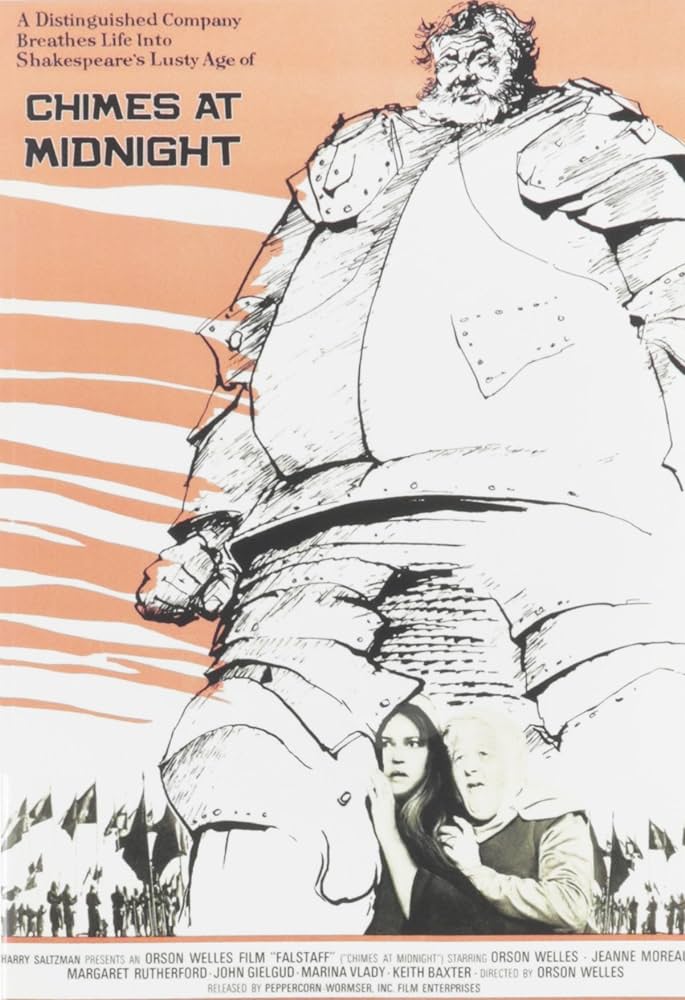
Chimes at Midnight (1965)

Chimes at Midnight (1965)

Welles reimagines Shakespeare’s Henry IV as a melancholic tribute to lost glories

Director: Orson Welles

Cast: Orson Welles (Sir John Falstaff), Keith Baxter (Prince Hal), John Gielgud (King Henry IV), Margaret Rutherford (Mistress Quickly), Jeanne Moreau (Doll Tearsheet), Alan Webb (Justice Shallow), Norman Rodway (Henry Percy “Hotspur”), Walter Chiari (Justice Silence), Michael Aldridge (Pistol), Tony Beckley (Poins), Charles Farrell (Bardolph), Patrick Bedford (Nym), José Nieto (Northumberland), Fernando Rey (Worcester), Keith Pyott (Lord Chief Justice), Andrew Faulds (Westmoreland), Mariana Vlady (Lady Percy), Ralph Richardson (Narrator)

For decades Sir John Falstaff was the part Welles couldn’t get out of his head. He’d already made two attempts at re-working the first Henried for the stage, with Age of Kings in the 30s (where Welles played Falstaff in his twenties) and Chimes at Midnight in 60’s Dublin with Welles again as Falstaff and Keith Baxter as Hal in what would be Welles final stage performance. Welles was fascinated with the roistering knight so when he was offered a film of Treasure Island by a Spanish producer, he agreed on condition he could make Chimes at Midnight at the same time with the same cast. Naturally, this being Welles, not a frame of Treasure Island was made, but with Chimes at Midnight he created possibly his most influential Shakespearean work.

Surely, it’s no coincidence the two literary characters Welles felt the closest affinity to was the windmill-tilting wandering fantasist Don Quixote and the mountain of rogueish humour and memories of Golden Years long-gone, Sir John Falstaff. Welles arguably altered the interpretation of the Fat Knight for generations. Before Welles, he was a “Hail Fellow, Well Met” comic, the exuberant force-of-nature Prince Hal must sadly cast aside for the throne. But Welles knew, like few others, what a wasteland missed opportunities, lost glories and achievements-that-never-were lay behind the raconteur. His Falstaff might be cheeky and sometimes jolly, but he’s also a mountain of melancholy, a playboy with no achievements, his glory days long gone. Even without the rejection, there is no future for Falstaff, only hazy memories of a past long gone.

Chimes at Midnight brilliantly repackages, recuts and recombines several Shakespeare plays (not just Henry IV Parts 1 and 2 but also Merry Wives of Windsor, Henry V and touches of Richard II) to reframe this story around Prince Hal and Falstaff and away from both Henry IV and the politics of rebellion (not embodied by Norman Rodway’s bombastic Hotspur). Structure is imaginatively reworked, with Part 2’s recruiting scenes appearing before Part 1’s Battle of Shrewsbury and ingenious touches such as Henry V’s decision to “enlarge that man who railed against our person” retroactively applied to Falstaff rather than a nameless offender.

Welles makes Falstaff a mix of terrible influence and proud parent – no coincidence that a half-smile of pride crosses his face when Hal finally dismisses him. They banter and bounce off each other, but there is a world-weariness. Baxter’s Hal is beginning to focus his mind on the responsibilities that come with the throne. Falstaff alternates between awareness and denial that their salad days are on borrowed time. Strikingly, both of their most prominent soliloquies are overheard by the other. Hal’s secret plans to reform as King is delivered with steely regret by Baxter, while Falstaff stands a short distance behind him; later Falstaff’s mocking of honour in the aftermath of Shrewsbury is impatiently half-listened to by a Hal already starring towards the future. These are two characters who know each other, their flaws and their ruthlessness, more than they might like.

Chimes at Midnight is Welles’ lament not just for Falstaff but for the whole idea of a Merrie England. The film is a set in a wintery land, covered in cold snow and deeply unwelcoming. Mistress Quickly’s inn is a run-down building in farmland, Henry IV’s breath can be seen in his chilly castle, Silence and Falstaff huddle around a flickering fire after a wintery walk. There is a tiredness around the antics of Falstaff’s gang. Falstaff responds to Doll Tearsheet’s attentions with an impossibly weary “I am old Doll, I am old”. We are living in the winter of a whole way of life, which Hal will comprehensively kill off in favour of realpolitik. The days of dreamers like Welles-Falstaff are numbered.

Welles stresses these differences by shooting events in various locations in strikingly different ways. The Boar’s Head Tavern uses more fluidic camera-work, with events frequently happening in multiple plains – characters appear above others on balconies or at the head of stairs – with the action filled with raucous, swiftly choreographed interplay. This contrasts with the Cathedral-like classicism of Henry IV’s court. Where the Boar’s Head is confined and intimate, Henry IV’s medieval palace has towering stone walls, beams of light flowing down from large windows, courtiers still and quiet while Henry effectively speaks to himself, the exact opposite of the boisterous egalitarianism of The Boar’s Head. Justice Shallow’s ramshackle home of bittersweet memories sits somewhere between the two, where the melancholy Falstaff is closest to Henry’s regrets.

Chimes at Midnight is filled with this sort of superb visual language. The film’s centrepiece is a truly impressive set-piece of cinematic flourish, the Battle of Shrewsbury. A masterclass in fast editing, quick cuts and brilliant framing (that makes 200 extras look like a thousand) this scene captures in microcosm the film’s theme of the death of old-fashioned principles. It starts with a knightly charge and degenerates into mud-strewn, brutal hand-to-hand combat with death agonising and swift. You can see the roots here of Saving Private Ryan, with Welles not using cutting, adjusted film stock and montage to create something really visceral and even shocking, as bodies are forced into the mud or cry out in agony – and our fat ‘hero’ trembles and hides to avoid the barbarity.

This is certainly Welles’ finest acting performance in his Shakespeare films. While always a more limited actor than remembered (a combination of laziness and stage fight), Welles was born for this role. His Falstaff builds off an element of self-portrait: a man still capable of lighting up a room with humour (as seen in his delightful ‘mock trial’ of Hal) but who knows he has achieved only a fraction of what might have been (never before have references to Falstaff’s past glories felt more sad) and that only the march towards death awaits. No wonder Keith Baxter’s excellent Hal, clinging to the last chance to let his hair down, is torn somewhere between love, pity and good-natured contempt for this man. The interplay between the two is perfectly pitched.

Chimes at Midnight is filled with rich performances. It may also be Gielgud’s finest Shakespeare performance on film, his rich, fruity tones turning monologues into musings on self-doubt and regret, distancing the coldly austere king even more from the boisterous knight. (That voice is also a gift for the other actors: Welles, Baxter and Rodway all showcase impersonations of Gielgud’s distinctive voice.) This Henry is so full of doubt, bordering on contempt, for his son he may even believe Falstaff’s claims to be the true killer of Hotspur. Rutherford is wonderful as Quickly, earthy and caring; Rodway, from charging across the battle to impulsively springing out of his bath to meet a messenger clutching only a towel makes a superb contrast with Baxter’s calculating prince. Webb’s disappointed Shallow and Moreau’s kindly Doll also make an impact.

Chimes at Midnight’s main impact though is to reimagine these plays in a highly influential way – just look at the BBC’s more recent The Hollow Crown where the Henry IV productions are so indebted to Chimes it might as well be a remake, while Branagh’s Henry V is virtually a tonal sequel. Rarely again would these be plays seen as near-comedies with a sad-but-necessary final act. Instead, they became sadness-tinged meditations of lost chances and missed opportunities, with productions set not in Olivier-style pageantry, but Wellesian chill.

It’s a film tinged with melancholy, so it’s also fitting that as well as a swansong for a lost time, a “Merrie England” past where everything was possible and the future was golden, it’s also the last narrative film completed by Welles (all others would be either documentaries or filmed lectures). When Falstaff, thanked but coldly dispatched, exits clinging to the fantasy of a glorious return but heading towards death, it’s hard not to see Welles himself shuffling away, never again to persuade a young prince (or film producer) to give him a chance again. It’s a moving metatextual ending to a film that reinvents Shakespeare and expertly exploits the tools of cinema.

The Private Life of Henry VIII (1933)

The Private Life of Henry VIII (1933)

Carry on Henry as Korda’s comedic historical epic cements the popular perception of the monarch

Director: Alexander Korda

Cast: Charles Laughton (Henry VIII), Elsa Lanchester (Anne of Cleves), Binnie Barnes (Katherine Howard), Merle Oberon (Anne Boleyn), Wendy Barrie (Jane Seymour), Everley Gregg (Catherine Parr), Robert Donat (Thomas Culpeper), Franklin Dyall (Thomas Cromwell), Miles Mander (Wriothesley), Laurence Hanray (Thomas Cranmer), John Loder (Thomas Peynell)

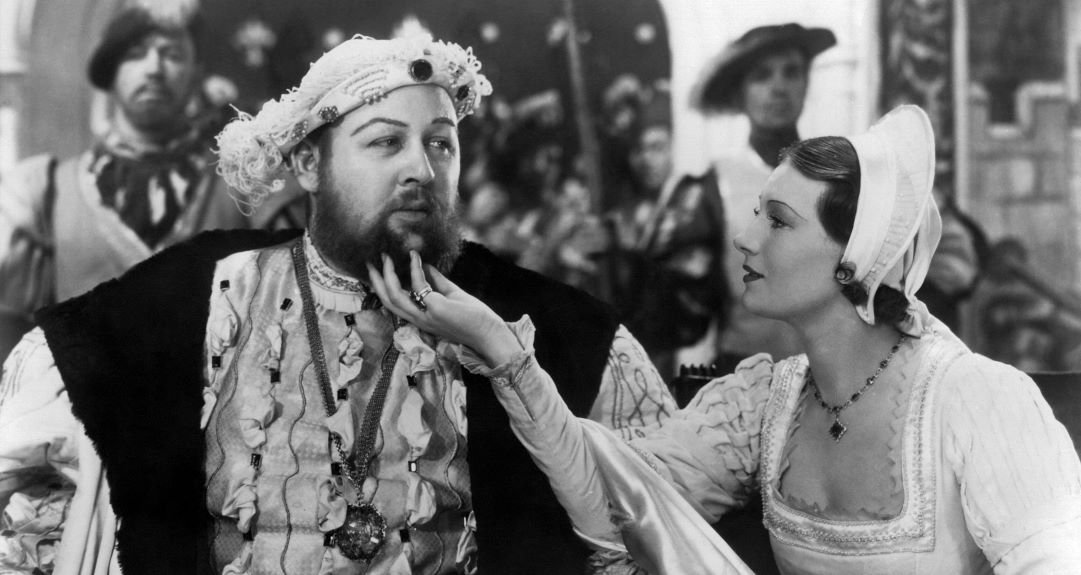
“A Great Guy With His Chopper” was the tag-line for Carry On Henry starring Sid James as a smirking, rogueish Henry. But it might as well have been the tag-line for this Oscar-winning film, that pretty much cemented the public’s perception of Henry VIII as a lusty, fun-loving king, chucking chicken legs over his shoulder when he wasn’t busy marrying wives. Korda’s handsomely filmed Tudor epic is more knock-about farce than history but was the then most successful British film ever (the first to be nominated for Best Picture) and scooped an Oscar for Laughton as the Merrie Monarch.

The Private Life of Henry VIII skips over the meat of most Henry flicks. Catherine of Aragon is dead (the films comment on her in the opening credits describes her story as being “of no particular interest”, news to scholars of the English Reformation) and with Anne Boleyn (Merle Oberon) prepping for her head to be lopped off with a sword. From there history is left firmly behind as Bluff Hal flirts with Catherine Howard (Binnie Barnes) – who has eyes for his pal Thomas Culpeper (Robert Donat) – marries Anne of Cleves (Elsa Lanchester) who uggs up to get out of it – and ends up as a hen-pecked old guy under a blanket, bossed around by Catherine Parr (Everley Gregg).

For those interested in history, don’t expect to find out anything here. Despite walk-on parts for the headline names of the Henrician reign (Cromwell, Cranmer and others dance around the margins) and some impressive sets and Holbein-influenced costumes, this is really a cheeky-comedy, popping gags at the monarch’s famed lothario. Just as well then that the gags are all pretty good, the pace kept up and the energy of all involved adds hugely to the sense of fun.

A lot of that is, of course, led by Laughton as Henry VIII. Laughton charges around, hand on hips, legs splayed and peppers every other line with outbursts of crude laughter and childish tantrums. Laughton, in short, has a whale of time, piling into every scene with lusty relish. There is a twinkle in his eye throughout even the film’s most laboured gags (the sequence of Henry spitting and throwing food over his shoulder while bemoaning “There’s no delicacy nowadays…Manners are dead!” would easily outstay its welcome without his delighted playing of it).

What’s also striking about Laughton’s performance is the depth he gives it under the humour. Korda’s film wants us to enjoy the outlandish, larger-than-life qualities of the king, but it’s not afraid to look at the darker soul below the surface of the man many call “England’s Stalin”. Laughton’s Henry is a man who greets news of Jane Seymour’s death with a few brief seconds of sadness, before a shrug of the shoulders and a cheerful enquiry about his son. His tantrums and egotism constantly dance on the edge of tyranny. He manhandles lords and servants, screams and stamps when he doesn’t get his own way and shows not a jot of remorse or guilt at the deaths he causes (he’s even seen impatiently tapping a window waiting for the sword to fall on Anne).

Despite this though, you still sort of end up feeling sorry for him. Perhaps because Laughton manages to also make him feel strangely naïve and trusting for all his school-boy bluster. Henry is torn apart with grief at the betrayal of Catherine and Culpeper (something he really should have spotted as it is almost literally going on under his nose). Korda presents a few fairly serious scenes, after a lot of comedic banter, with Henry first assaulting those bringing him the news and then collapsing into a shuddering mess of tears. A beautifully-framed shot in his chapel, shows Henry berating himself for the faults of Catherine, Laughton’s tear-stained face communicating his “mea culpas” with a soft, regret-filled quietness.

But what’s stuck in the public perception is the comedy. The film’s finest – and central – sequence covers the short marriage with Anne of Cleves, inevitably played by Elsa Lanchester. She delivers a superb performance of physical and verbal comedic charm. Henry famously was ‘unattracted’ to Anne (I’ve always believed this syphilitic, obese, gouty man just couldn’t blame himself for his inability to get it up so claimed it was the woman’s fault). Legend of Anne’s ugliness have cruelly stuck, but the film presents it as a rather amusing pantomime of fake stumbles and gurning faces used by Anne to save herself from one-day heading to the block under this tyrant.

Laughton and Lanchester’s natural chemistry (the first of their multiple collaborations on screen) sees the real-life husband-and-wife at complete ease and the wedding-night game of cards are the most relaxed and hilarious in the whole film. “The things I do for England…” Henry mutters, but there is a suspicion these two are much better suited than history assumes.

Korda pulls this altogether into a true crowd-pleaser. There is a farcical energy to the crowds providing a wry commentary on the executions. The film is crammed with some gorgeous sets – Laughton’s first entrance is a straight-restaging of Holbein. A sequence where Henry utterly fails to sneak into Catherine Howard’s bed-chamber (due to guards announcing “the King!” around every corner) is quite wonderfully staged. The cast are very fine: Merle Oberon makes a huge amount of Anne’s shrewdness (in the film’s most historically accurate sequence), Robert Donat is very charismatic as Culpeper, Binnie Barnes suitably flirty and empty-headed as a sex-pot Catherine Howard (even if she is considerably older then the real Catherine).

The Private Life of Henry VIII pulls all its material together into a luscious farce, with the odd serious moment, that might not make any sense at all when compared to history but makes a lot of sense when you compare it to stage farce. This was the first – and best – Carry On Henry.

The Lost King (2022)

The Lost King (2022)

Bizarre, grudge-settling comedy-drama that celebrates amateurism and hates experts

Director: Stephen Frears

Cast: Sally Hawkins (Philippa Langley), Steve Coogan (John Langley), Harry Lloyd (Richard III), Mark Addy (Richard Buckley), Lee Ingleby (Richard Taylor), James Fleet (John Ashdown-Hill), Bruce Fummey (Hamish), Amanda Abbington (Shelia Lock)

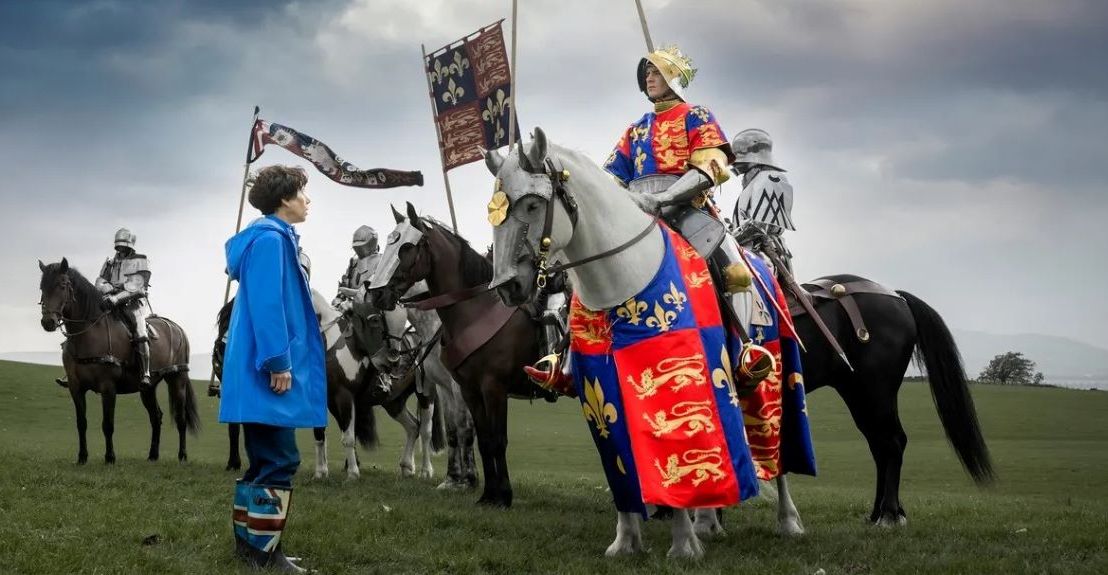
In 2012 the world’s media descended on Leicester after the body of King Richard III was discovered in priory turned car park. Richard III had long had passionate supporters – Ricardians – who rejected the idea that the man Shakespeare turned into Britain’s most hated monarch was anything of the sort. It was one of those fans, Philippa Langley (Sally Hawkins), who researched for 20 years to find evidence for where he was buried and became the public face of the search through ratings-winning television documentaries and writing a best-selling book.

All of this is rejigged in a silly, sentimental, bizarre film that repositions Langley as an inspired amateur butting heads with the self-promoting professionals of Leicester University. I suppose there is something ironic in a film which insists someone had their reputation sullied in the name of drama, itself sullies peoples names in the name of drama. (Richard Taylor, the deputy registrar of Leicester, here portrayed as a sexist, elitest self-promoter who mocks the disabled, has openly declared his intention to sue). The Lost King wants to be an affectionate Ealingesque comedy of the triumph of the little guy. It’s actually got an uncomfortable feeling of grudges being settled and a stench of Brexity anti-intellectualism.

Fascinatingly the anti-intellectualism even extends to Langley herself. Remember that 20 years of research? All deleted in this film. Here Langley is a working mum, suffering from ME (the film draws vague parallels between this and Richard’s scoliosis) who one day stumbles into a performance of Richard III and basically falls in love with the dead king. She pops down to a second-hand bookshop, buys eight books on Richard and in a few months is digging up the car park. It’s as if the idea she spent time in archives, triple checking sources, studying maps etc. would somehow have been “cheating” – that we could only root for her if she was an amateur, “one of us” who makes her (always correct) decisions purely on gut instinct.

But it fits with a film that portrays Leicester University as a sort of scheming club of middle-managers and moustachio-curling villains. No one from the university can so much as draw breath without disparaging “that woman” as an obsessive weirdo. They batter everyone with their expertise, arrogantly dismiss any ideas they don’t have themselves and stand around growling so Langley can puncture their pretention with her common-sense wisdom. Case in point: she suggests they overlay a modern map of Leicester over a medieval map to check locations. First they object, then look at her like she’s split the atom. Of course, they are right to object: medieval maps are hand-drawn approximations often more based on aesthetics than accuracy. But that doesn’t matter to the film, which of course immediately shows the two maps lining up in microscopic detail. If only 500 years’ worth of scholars could have thought of that, eh?

Embodied by Lee Ingleby’s Richard Taylor as a number-crunching obstructive bureaucrat who does everything he can to steal the credit (honestly, if you are going to take this kind of pop at a regular person at least change his name), Leicester University are unilaterally baddies. All this score-settling seems to have come from Langley’s resentment at not being invited to speak at a couple of press conferences. No matter that TV documentaries and books made her name synonymous with Richard III to anyone who really cares (even the film can’t pretend it’s telling “an untold true story”). This is a film with an axe to grind – so much so that the eventual discovery of Richard becomes secondary to this mud-slinging as Langley rebukes Taylor publicly (inevitably shaming him into silence) for equating disability with wickedness and cutting her out of meetings.

What’s particularly odd about The Lost King is that the film ends up painting Langley as exactly the kind of un-credible crank its villains (villainously) see her as. Having removed all her rigorous research, it replaces it with Having A Feeling. This is communicated visually with Langley communing regularly with a vision of Richard III, personified by the actor from the play she saw. Langley chats to this vision with the breathless excitement of a giddy teenager, and he helps her discover reams of facts, not least a bizarre moment of ecstasy when she spots an “R” in the car park and just knows Richard is under there.

Harry Lloyd is all adrift in this bizarre part and its main impact is to raise unfortunate giggles and make Langley look exactly like the sort of person you wouldn’t invest tens of thousands of pounds in. Mind you, Langley here is way more competent than any other Ricardian society member, all of whom are portrayed as cranks and pub bores, talking as if they only discovered famous primary sources this week, and utterly unable to even tie their own shoelaces until Langley sails in and discovers the king’s body in about ten minutes.

Hawkins plays a part firmly in her wheel-house, as an eccentric but determined woman in love with a ghost, while co-scriptwriter Steve Coogan generously writes himself a “stop reading Holinshed and look after the kids” role as her supportive ex-husband. Langley, like other characters, bends and changes according to the needs of the scene but is always the hero. When the script needs her to be a determined leader, she won’t take no for an answer. When it needs her to be oppressed by those nasty Leicester professionals, she won’t say boo to a goose. (Similarly, Mark Addy’s archaeologist yo-yos between dismissive of Langley to affectionately supportive almost scene-to-scene.)

The Lost King wants to be a triumphal little-guy film, but actually it has an unpleasant air to it. It feels like a massive grudge being publicly settled. It belittles and ignores expertise, patience and research in favour of gut instinct and amateurism. It bizarrely paints its lead character as a mixture of oddball weirdo, genius and saintly crusader. It’s also neither dramatic nor funny (except accidentally). It’s a bad film.

Murder by Decree (1979)

Murder by Decree (1979)

Sherlock Holmes investigates Jack the Ripper in this overlong but enjoyable Doyle pastiche

Director: Bob Clark

Cast: Christopher Plummer (Sherlock Holmes), James Mason (Dr John Watson), David Hemmings (Inspector Foxborough), Susan Clark (Mark Kelly), Frank Finlay (Inspector Lestrade), Anthony Quayle (Sir Charles Warren), Donald Sutherland (Robert Lees), Geneviève Bujold (Annie Crook), John Gielgud (Lord Salisbury)

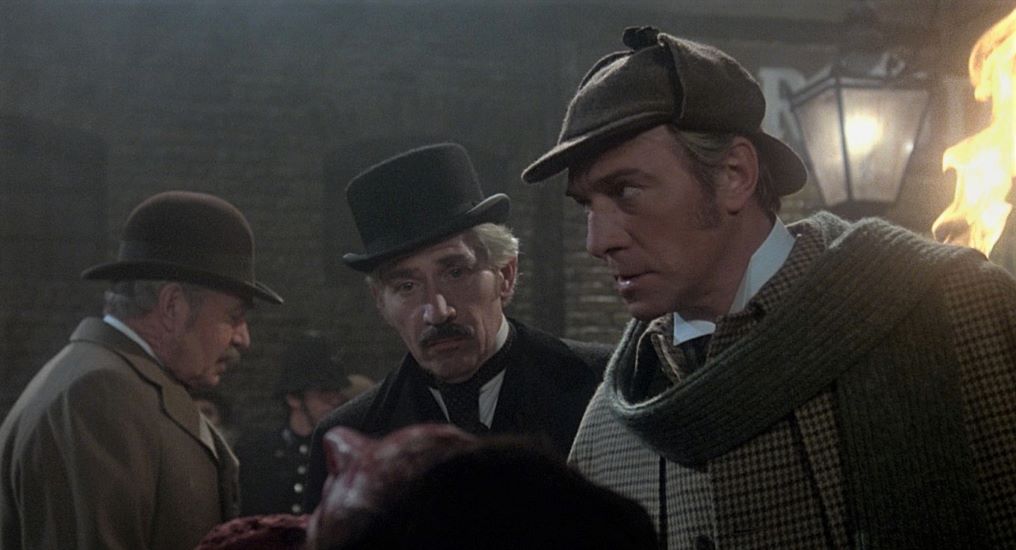
In the world of Sherlock Holmes pastiches, it’s a popular sub-genre: Sherlock Holmes vs Jack the Ripper. How would Holmes have taken on the murderer who has baffled generations since those brutal Whitechapel killings in 1889? Murder by Decree explores the idea, mixing Conan Doyle with a deep dive into (at the time) the most popular theory in Ripperology, the Royal Killings (Murder by Decree indeed!).

It’s all pulled together into a decent, if over-long, film, shot with sepia-toned stolid earnestness by Bob Clark. With its fog-ridden Whitechapel sets (carefully built but always strangely empty), heavy-duty actors sporting large sideburns, wavy-screen flashbacks and carefully unimaginative framing, there is something very old-fashioned about Murder by Decree. That also extends to its Ripper theory, steeped in a very 70s class-conscious conspiracy. The film pads out its two-hour run time with many a POV shot of the Ripper prowling the streets, which bring to mind Jaws and slasher horror films of the time.

Where Murder by Decree does stand out is in its imaginative characterisation of Holmes and Watson. They are presented as affectionate friends – Mason’s older Watson has a sweet indulgent elder-brother feeling to him, giving Plummer’s sparkly Holmes plenty to tease and bounce off. They split the casework between them – Watson is an equal partner, even if Holmes does the brainwork – and use their strengths to complement each other (notably, Watson frequently distracts people so Holmes can interrogate a witness more closely). They genuinely feel like long-term friends (there is a delightful sequence where Holmes is so distracted by Watson’s attempt to fork a pea, that he squashes it onto the fork – to be met with a forlorn “you’ve squashed my pea” from Watson, who likes the peas intact so they “pop in my mouth”).

They are dropped into the middle of a very much of-its-time Ripper theory. Murder by Decree centres on the theory that the murders were ordered (the film reluctantly suggests tacitly) by the establishment to cover up the secret marriage of Prince Edward, Duke of Clarence to a Whitechapel woman, Annie Crook. This alleged marriage produced a baby, and a royal doctor, sheltered by a Masonic conspiracy, sets about eliminating everyone who knows the truth. Of course, it’s almost certainly bollocks – but with its mix of secret societies, Royals, a lost heir and the rest, it’s an attractive story.

It gains a lot from the performances of the two actors. James Mason flew in the face of then popular perception by presenting a quick-witted, assured Watson, more than capable of looking after himself (he bests a blackmailing pimp in a street fight and is very comfortable with guns – far more than the reticent Holmes). He’s still the classic gentlemen, who loves King and Country, but also shrewd, brave, loyal, able to win people’s trust and look at a situation with clear eyes.

With Christopher Plummer, Murder by Decree has one of the all-time great Sherlock Holmes. Plummer’s Holmes is refreshingly un-sombre, twinkly with a ready wit, who loves teasing Watson (cleaning his pipe with Watson’s hypodermic needles) and delights in his own cleverness. But Plummer takes Holmes to places no other film Holmes goes. The case as a devastating effect on him: he weeps at the fate of Annie Crook (consigned by conspirators to a slow death in an asylum) and furiously attacks her doctor. When the conspiracy is unmasked, he emotionally confronts the Prime Minister and berates himself for his failures. There is a depth and humanity to Plummer’s Holmes unseen in other versions, a living, breathing and surprisingly well-adjusted man, unafraid of emotion.

Sadly, the film takes a little too long to spool its conspiracy out. Rather too much time is given to an extended cameo by Donald Sutherland as a pale-faced psychic who may or may not have stumbled upon the killer. There are a lot of unfocused shots of that killer, all swollen black eyes and panting perversion. It relies a little too much on a Poirot-like speech from Holmes at the end explaining everything we’ve seen. But there are strong moments, best of all Geneviève Bujold’s emotional cameo as the near-catatonic Annie Crook, cradling in her arms a memory of her stolen child.

There are many decent touches. The film is open in its depiction of the filth and squalor of life in Whitechapel – a pub is an absolute dive, and the women pretty much all look haggard and strung out. It has a refreshingly sympathetic eye to the victims, with Holmes denouncing the attitudes of both Government and radicals (looking to make political hay from the killings) who see them as lives without intrinsic worth. Holmes places no blame or judgment on them, or the choices life has forced on them, which in a way puts him (and the film) quite in line with modern scholarship (even if there is the odd slasher-style shot of mangled corpses).

The main issue is the film never quite manages to come to life. It’s a little too uninspired, a bit too careful and solid where it could have been daring and challenging. There are good supporting roles: Finlay is a fine low-key Lestrade (at one point persistently raising his hand to ask his superior permission to speak) while Gielgud sells the imperious Lord Salisbury. There is enough here for you to wish the film just had a bit more of spark to lift it above its B-movie roots. But in Plummer and Mason it has a Holmes and Watson to treasure – and for that alone it’s worth your time.

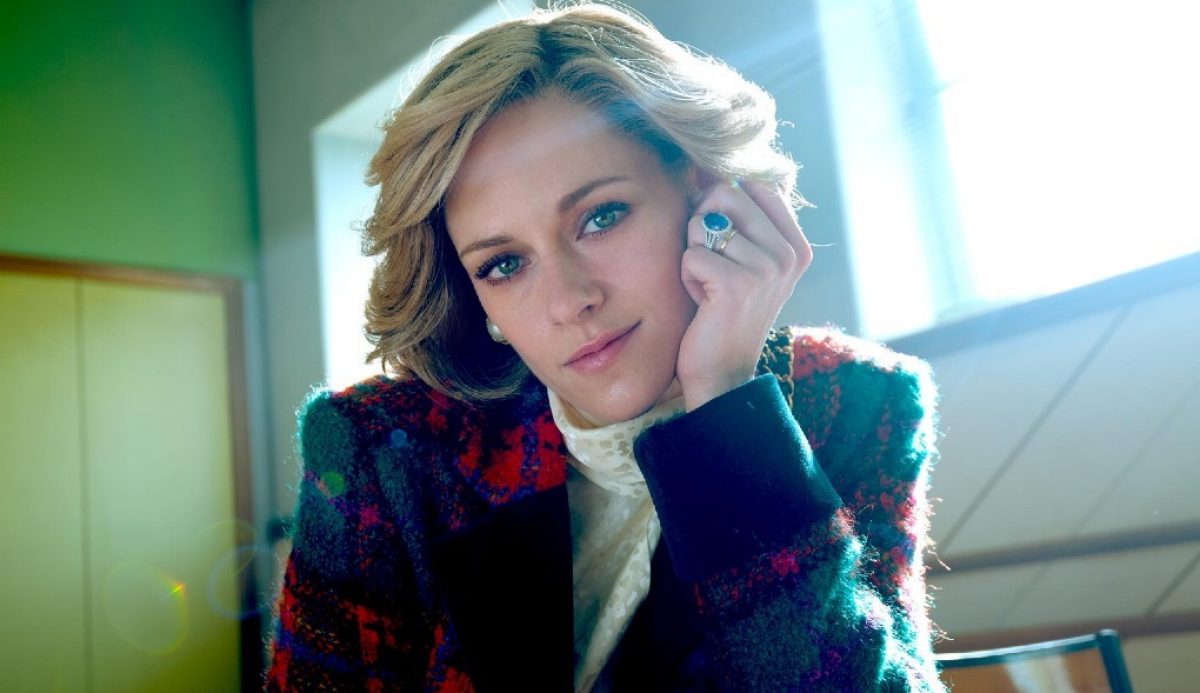
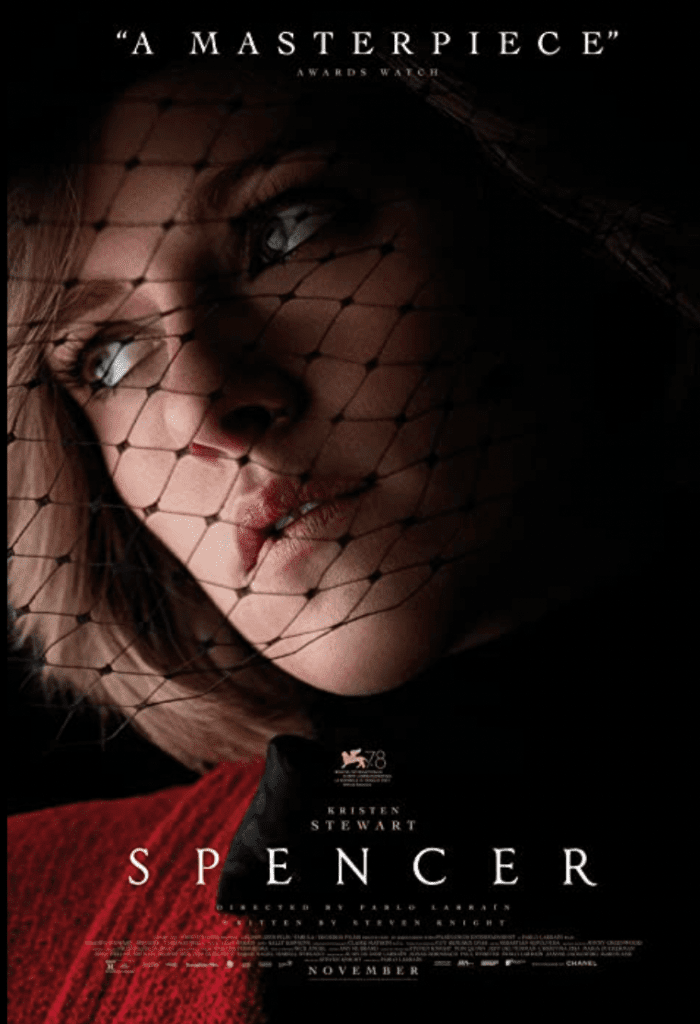
Spencer (2021)

Kristen Stewart channels the People’s Princess in Spencer

Director: Pablo Larrain

Cast: Kristen Stewart (Diana, Princess of Wales), Timothy Spall (Major Alistair Gregory), Jack Farthing (Prince Charles), Sean Harris (Chef Darren McGrady), Sally Hawkins (Maggie), Jack Nielsen (Prince William), Freddie Spry (Prince Harry), Stella Gonet (Queen Elizabeth II), Amy Manson (Anne Boleyn)

There is no more famous fairy-tale-gone-wrong in history than Prince Charles and Diana. It’s been explored in countless books, memoirs and films. It’s the meat of Netflix’s The Crown. Interest in it has been rekindled again after Prince Harry’s royal resignation. It’s a fable (also what this film claims to be, based, it claims, on “a true tragedy”) that will only become more of a legend. At its centre is Diana, a figure idealised and enshrined by a tragic early death, who had all the warmth, lovability and public humanity the more reserved Charles lacked. Diana’s romanticism has always helped her be remembered as the hero of this tragedy, with Charles the villain. You’ll see no difference in opinion here. Spencer is a fantastia on Diana that feels like it has been squeezed out of the pages of a host of sentimental pro-Diana memoirs from the likes of Paul Burrell.

Set over a three-day Christmas holiday at Sandringham, around 1991, the film follows a disastrous holiday of psychological depression, despair and isolated crisis for Diana (Kristen Stewart) as her marriage to Charles (Jack Farthing) finally, irretrievably, collapses. Over those days, Diana hides in her room, throws up meals, is treated with stony silence from the Royal family and quietly bullied by Sandringham equerry Major Gregory (Timothy Spall). Her only friends are besotted loyal dresser Maggie (Sally Hawkins) and avuncular chef Darren (Sean Harris) and her only moments of happiness are with her two young sons, giving her the only taste she has of a normal life.

If there is one thing Spencer does very well, it is giving an insight into how overbearing and crushing depression can be. Diana is erratic, frequently tearful, prone to fantasies and suffers through prolonged periods of self-loathing, exhibiting as chronic vomiting after every meal and possible self-harm. Stress makes her sharp and waspish with those she doesn’t trust and almost overwhelmingly needy with those she does. Larrain visualises this with muted pallets and drained colours, showing this world in the same oppressive, depressing light as Diana see it, while Johnny Greenwood’s excellent score makes superb use of a series of unsettling chords to constantly put us ill at ease.

The downside is, the film so completely consumes the Diana-side only, that it feels like being crushed to death by a collapsing mountain of “People’s Princess” bargain-bucket memoirs. Diana is always the victim and never at fault. The film takes an idealised view of her as “one-of-us” chewed up and spat out by an uncaring system, with the Windsors as monstrous gargoyles. (A bit rich considering she’s the daughter of an Earl). Charles is cast firmly as a cold-fish and villain, heartlessly openly carrying on an affair, gifting the same pearls to Camilla as he does Diana. Where Diana is warm and playful with the children, Charles is cold and authoritative, angrily tutting at William’s failures at shooting. Where she has a natural touch with people, Charles is cold and dictatorial.

It is, basically a one-sided vision of this story. That would be fine if the film had suggested that what we are seeing is Diana’s depression-filtered perception of the world – her perception told her surroundings were like, cold, cruel and oppressive. But there is no suggestion that we are seeing this, no extenuating circumstances or slight doubts raised to suggest that there may be different interpretations of these events or that there were two people in this marriage, both in different ways at fault.

It’s something The Crown has carefully – and skilfully – done, by demonstrating these are two people never in love with each other in the first place, with no common interests and outlooks. Spencer could have delved more into helping us understand how this situation came about. It isn’t interested in doing this: as far as the film is concerned, Charles is an unfaithful bastard (Jack Farthing’s channels his Warleggen from Poldark, playing every scene with a razor-blade growl) intent on gaslighting his wife. It doesn’t seem fair.

And lord knows, I’m sorry for Diana who should never have agreed to marry a man she was unsuited to and in love with another woman from day one. There is a film to be made (eventually) about Diana which explores the fascinating puzzles in her identity. The woman who loathed the press but also was an expert manipulator of public opinion, who yearned for privacy but loved public and private devotion. Spencer doesn’t explore any of this, instead presenting a simplified, romantic vision of a woman exactly as you would expect to see from a cliched TV movie. At heart, in fact, that’s what Spencer is – a slushy made-for-TV-movie shot like an arthouse film.

That’s perhaps why its full of such ridiculous flourishes. We’ve obviously talked about the stone-cold Royals. We get cod psychology – “Where the fuck am I?” are Diana’s opening lines, hammering home for us (in case we are about to miss it) that her tortured psychology is the heart of the film. As the Royal Court arrives at Sandringham, their cars drive over the dead body of a pheasant – symbolism you see! Diana reads a book about Anne Boleyn – and sure enough she is soon literally communing with a ghost of the beheaded Queen, both of them claiming themselves as victims of a cruel king who loved someone else. Everything in the film is heavy-handed and designed to push Diana as the faultless victim and the Royals as scowling monsters.

Kirsten Stewart gives a decent impersonation of Diana – vocally she’s spot-on – but for me she struggles in the shadow of Emma Corrin’s extraordinarily transformative work in The Crown – a show that also gained a lot more emotional insight into this story than the film even begins to achieve. It’s shot with a real arthouse style, but at heart it’s a silly and shallow film that never tries to understand either Diana’s inner life or how her marriage became what it was.

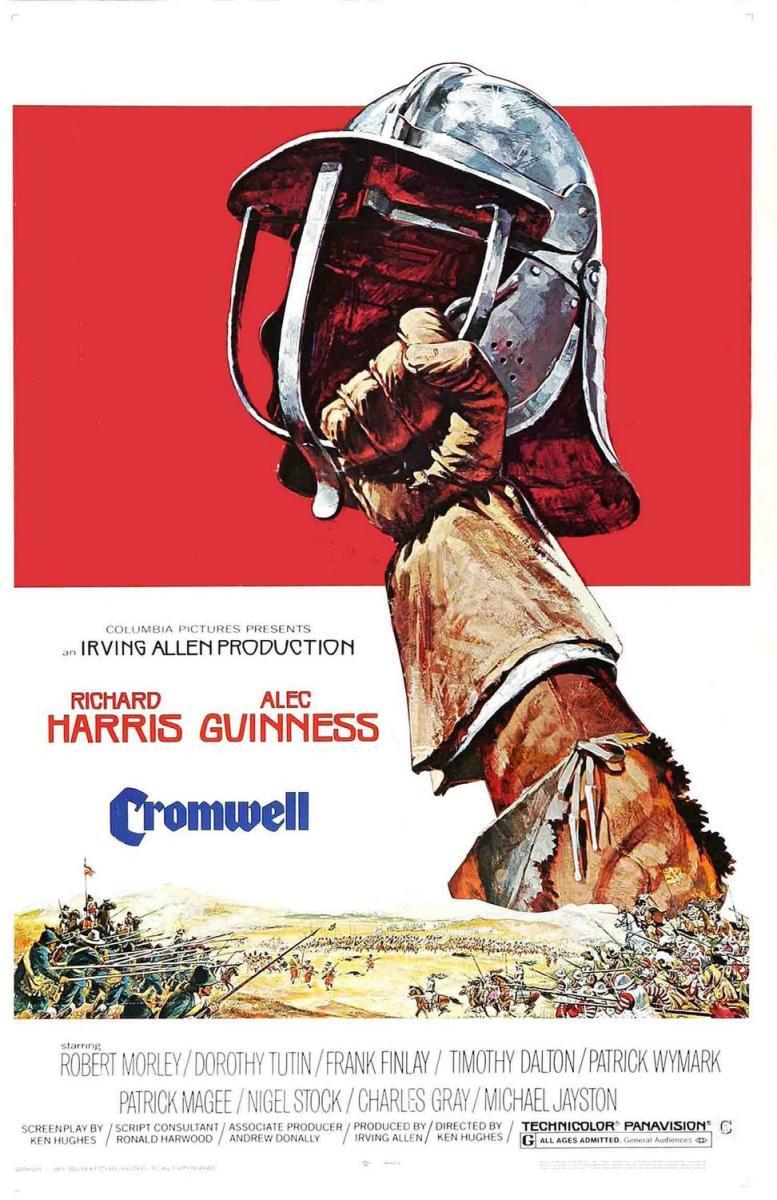
Cromwell (1970)

Cromwell image
Richard Harris let loose the revolution in Cromwell

Director: Ken Hughes

Cast: Richard Harris (Oliver Cromwell), Alec Guinness (King Charles I), Robert Morley (Earl of Manchester), Dorothy Tutin (Queen Henrietta Maria), Frank Finlay (John Carter), Timothy Dalton (Prince Rupert), Patrick Wymark (Earl of Strafford), Patrick Magee (Hugh Peters), Nigel Stock (Sir Edward Hyde), Charles Gray (Earl of Essex), Michael Jayston (Henry Ireton), Douglas Wilmer (Sir Thomas Fairfax), Geoffrey Keen (John Pym), Stratford Johns (President Bradshaw)

How much does history actually matter when you watch a historical film? We all know we aren’t watching a documentary don’t we? It’s worth bearing in mind when watching Cromwell a film which would probably be in the running for “least historically accurate film of all time”. But despite that, it’s entertaining and gets quite close to some of the spirit of the times – even if it changes most of the facts. It probably as well deserves notice for being one of the very few films to offer a sympathetic portrait of Oliver Cromwell – not a guy it’s easy to like.

It’s the 1640s, and England is a mess. Charles I (Alec Guinness) has been ruling the country directly, without involving Parliament, for over ten years. But now the money is gone and he needs Parliament to raise some more cash. Problem is, Parliament is more interested in pushing a defence of its own prerogatives rather than simply putting more money into the King’s pocket. Among the leaders of the Parliamentary campaign is Oliver Cromwell (Richard Harris), and he is not the man to take any false promises from the king. Before we know it, the country has tipped into civil war – and now it’s up to Cromwell to create a Parliamentarian army that is capable of defeating the King and bring democracy to the nation.

Ken Hughes film offers some plenty of scope and drama, even if is old-fashioned (even a little Victorian) in its Wrong-but-Wromantic Cavaliers and Right-but-Repulsive Roundheads (to mis-quote 1066 And All That). It’s a strange topic for a historical epic (it took years to get the funding) – but it looks fabulous and has a wonderful score that really embraces the religious music of the time.

What it gets right is the passion and the fire that people felt at the time for questions of politics and religion. The film frequently features heated debates (even if the dialogue is often more ticking boxes than inspired) that the actors invest with real force. Its view of events is of course truncated and at times simple (it is, after all, trying to cover around ten of the most tumultuous years in British history in about two hours), but it focuses on trying to get the spirit of things right.

A large part of this is Richard Harris’ firey performance in the lead role. There is, it has to be said, a cosmic irony in Cromwell, the least popular British leader in Irish history, winds up being played so sympathetically by one of the most famous Irish actors of all time. Sure, the real Cromwell would have hated being played by an Irishman and a Catholic (Cromwell was surprisingly inclusive at the time, but had no truck with either group). But then Cromwell would also have loved being portrayed as a mixture of George Washington and Cincinnatus (the Roman general who left his plough to assume supreme command when the nation needed him, only to retire again to obscurity). This Cromwell is bullheaded, but determined to do what’s best for the nation, with personal ambition not even a consideration. He’s the one true, selfless man in a revolution of violence.

In fact, Cromwell was sorely tempted by the eventual offer to be King (something he laughs off here). He also undoubtedly was touched heavily by ambition, while his attempt to turn the Protectorate into a hereditary office was a disaster that doomed the Republic (surely George Washington learned a few lessons from him). But, deep down, Cromwell was sincere – a guy who largely said, and did, what he meant. It’s that sense of morality that Harris gets very well here. And, while its easy to poke fun at those hoarse tirades Harris is frequently called on to deliver, this sort of intemperate ranting (laced with Biblical language and a strong sense of moral superiority) were pretty much central to Cromwell’s personality.

It makes for a very different hero, even if the film is determined to turn Cromwell into the only decent man in the Kingdom. Cromwell, in real life, never retreated from politics to return to his farm as he does in the latter part of the film (he actually spent this time on brutal campaign in Ireland, something the film mentions only vaguely in passing). But there is no doubt Cromwell would have believed he was the guy selected by providence to save the nation – and that idea the film channels very well. In fact, Cromwell gives you a pretty decent idea of what Cromwell might have been like – and a pretty accurate picture of who Cromwell wanted to be – even if the things it shows you only have a passing resemblance to what happened.

It’s a key directive throughout Ken Hughes’ film, which feels free to distort historical events willy-nilly (see more below). But there is a sort of truth in spirit, if not in fact – from the heated debate in Parliament, to the mixture of frantic panic and regimented order in the battles (one particularly good shot positions the camera under a charging horse, which makes a cavalry charge suddenly feel horrifyingly visceral). Sure it’s arranged into a much more simple black-and-white story, but it works.

A similar trick also works for its portrayal of Charles I. This is probably one of Guinness’ most over-looked performances. His Charles is a weak, indecisive man who confuses stubbornness and pride for moral strength. Softly spoken when calm, he collapses into heavily Scots accented rage when riled and his politeness is a only a shield for bitterness and vexation. He routinely shirks responsibility for his actions and spreads the blame around everyone but himself. Again, it might not all be accurate, but you can’t imagine this is far off from the actual King.

Historically though, so much of the film is wildly inaccurate. Many of these changes are done to increase the importance of Oliver Cromwell early in the Parliamentarian campaign. To scratch the surface: Cromwell – a minor figure until quite late into the war – was not one of the five members Charles marched to Parliament to arrest (neither was Henry Ireton). He certainly didn’t – and neither did anyone else – remain sitting when the troops arrived and set a motion in place protecting MPs. He never met the King before the war. Cromwell is later made C-in-C of the Parliamentarian army – an office actually given to Fairfax. The film’s depiction of the Battle of Naseby flips the numerical advantage exactly to favour Charles rather than Cromwell. Far from providing the key damning evidence at Charles’ trial, Hyde fled the country with Prince Charles.

But this is a fiction, rather than drama. Even if the facts it presents are largely nonsense, it gets a lovely sense of the divided loyalties and tensions that existed during this period. The performances are often quite broad – Robert Morley simpers and sneers as an opportunistic Manchester, Patrick Wymark growls and splutters as Strafford while Timothy Dalton goes way over the top as a foppish Prince Rupert – but some, such as Michael Jayston’s firebrand Ireton or Nigel Stock’s tortured Hyde (historical nonsense as his storyline is) are rather good.

And it’s hard not to like a film where the lead actor is going at it such great guns that you can actually hear his voice disappearing into a rasp. Cromwell doesn’t have much relation to the facts, but deep down it does seem to understand the man Cromwell wanted to be. And, on that level, it feels truthful and heartfelt – and that’s partly why it remains entertaining and why I remain rather fond of it.

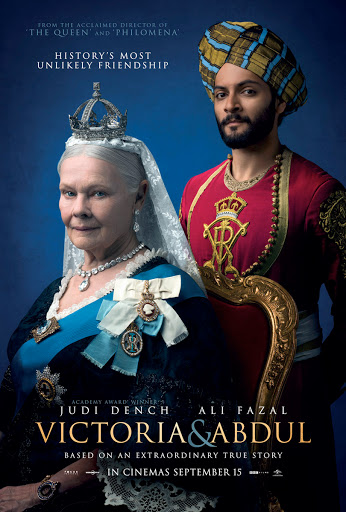
Victoria and Abdul (2017)

Victoria and Abdul
Judi Dench and Ali Fazal forge an unlikely friendship in the tame heritage flick Victoria and Abdul

Director: Stephen Frears

Cast: Judi Dench (Queen Victoria), Ali Fazal (Abdul Karim), Tim Pigott-Smith (Sir Henry Ponsonby), Eddie Izzard (Prince Albert), Adeel Akhtar (Mohammad Bakhsh), Michael Gambon (Lord Salisbury), Paul Higgins (Dr James Reid), Olivia Williams (Baroness Spencer), Fenella Woolgar (Harriet Phipps), Robin Soans (Lord Stamfordham), Simon Callow (Giacomo Puccini)

In the last decade of her life, Queen Victoria (Judi Dench – who else?) makes an Indian servant, Abdul Karim (Ali Fazal), one of her closest friends and advisors. As Victoria and Abdul become closer, the rest of the court are outraged – bad enough that the Queen is spending all this time with an over-promoted servant, but an Indian as well?!

The fundamental events of Victoria & Abdul are true. There was a man called Abdul Karim – and Victoria did raise him from servant to a confidant. He did cause conflict in the royal household and was finally sent back to India after her death, after surrendering most of his papers. But Victoria & Abdul repackages this friendship into a cosy, Sunday-afternoon entertainment, bereft of depth. And carefully works on the rough surfaces to make the story smooth and easy to digest.

The film is clearly trying to ape the success of Mrs Brown – a far more intelligent and emotionally complex (if similarly heritage) film that looked at Victoria’s previous all-consuming friendship with a male servant, John Brown. But that film didn’t close its eyes to the negatives of such relationships, as this one does. It made clear royal attention can be fickle – and being elevated above others can help make you your own worst enemy. In that film, after a honeymoon, the friendship declines into one of residual loyalty but reduced affection. It’s a realistic look at how we might lean on someone at times of grief, but separate ourselves from them later. Victoria & Abdul takes only one lesson from Mrs Brown: that a close bond between monarch and commoner is heart-warming.

The film in general is in love with the idea that if the Queen could only speak directly to her people, the world would be a better place. It presents a Victoria stifled by court procedure who knows very little about her empire and is constrained by the courtiers around her. It wants us to think that if the Queen took direct rule, she’d be kinder, wiser and more humane. That this figurehead symbol could craft a better British Empire if she was an absolute monarch.

Unfortunately, it doesn’t work. This romantic view of “Victoria the Good” is comforting stuff, but undermined even within the film by our introduction to the Queen at a royal dinner, where Victoria stuffs food down herself so quickly that mountains of untouched food goes uneaten on the plates of the other diners (as all plates are removed the moment she is finished). And despite being told that the Koh-i-noor diamond was stolen by the British (to her surprise), she still doesn’t think twice about wearing it later in the film while in the midst of her Indian passion. And while the real Victoria loathed the racist attitudes of some at her court, she still clearly sees herself as a paternalistic mother figure for India, which could of course never be able to make its own decisions about things.

Not that the film is interested in tackling more complex ideas of the position of India and its independence. It’s similarly confused by Abdul himself. In a more interesting film, Abdul would have been partly naïve servant and partly charming rogue. He very carefully spins an invented story of himself as a teacher and thinker (he’s actually a clerk from a fabric office) and it would have been interesting to see his building of a relationship with Victoria at least partly being based on self-gain. He certainly gains an awful lot from her – from his own carriage on her train to a home and his own servants. It would have been possible to have this side of him and still have his loyalty and friendship to the Queen being genuine. But it’s too much for the film to tackle.

An Abdul who was consciously playing a role of exotic thinker might have come across as a scam-artist – but would have given the film a lot more to play with, when the royal court is full of people positioning and presenting themselves for influence. Adeel Ahktar’s fellow-servant Mohammed even suggests in one scene that this is what Abdul is doing – and good luck to him. But the film is scared that this could be seen as endorsing the court’s fears about Abdul. So the character is neutered into nothing: he becomes exactly the sort of empty “exotic”, free of opinion and character, that filled out the extras list of a 1940s epic. He has no agency, never makes any decision or expresses any opinion. And his feelings for Victoria are presented as totally genuine which, combined with his foot kissing, turns him into someone who looks and feels really servile.

This is because the film wants to tell the story of a perfect friendship, with the British upper classes as the hissable baddies (never mind that no one is more upper class than Victoria). Never mind that Abdul’s action will indirectly condemn Mohammed to death in the British climate – or that while Abdul rises, Mohammed becomes his servant, still consigned to sleeping on the floor of his railway carriage. We learn nothing about Abdul. How did this clean-living saint become riddled with the clap? Why did he die so young? Did he really think nothing of the riches and honours Victoria showered him with? We don’t have a clue.

Instead the film keeps it simple with goodies (Victoria and Abdul) and baddies (almost everyone else). The most politically astute character, Mohammed, disappears and never allows things to get unpleasant. Jokes of the courtiers standing around aghast saying things like “Now he’s teaching her Urdu” are repeated multiple times. They’re fun, but it substitutes for dealing with the real issues.

It all has the air of ticking boxes. Frears’ direction is brisk, efficient and free of personality. Dench is great, but she could play this role standing on her head while asleep. Pigott-Smith (in his final role) is fine but Farzal has nothing to work with and Izzard provides a laughable pantomime role of lip-smacking villainy as the future Edward VII. The finest performance – handling the most interesting material – is from Ahktar. He’s the only character who seems to place what we see here in any form of context. Other than that, this film is just a string of very comforting heritage ideas, thrown together with professionalism but a total lack of inspiration.

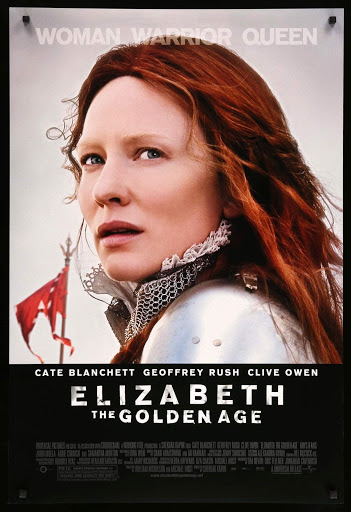
Elizabeth: The Golden Age (2007)

Elizabeth the golden age
Cate Blanchett returns as Elizabeth I in the slightly underwhelming Elizabeth: The Golden Age

Director: Shekhar Kapur

Cast: Cate Blanchett (Elizabeth I), Geoffrey Rush (Sir Francis Walsingham), Clive Owen (Sir Walter Raleigh), Abbie Cornish (Bess Throckmorton), Samantha Morton (Mary Queen of Scots), Jordi Molla (King Philip II), Susan Lynch (Annette Fleming), Rhys Ifans (Robert Reston), Eddie Redmayne (Anthony Babington), Tom Hollander (Amias Paulet), David Threlfall (John Dee), Steven Robertson (Sir Francis Throckmorton), Adam Godley (William Walsingham), Laurence Fox (Sir Christopher Hatton), William Houston (Guerae de Espes)

Its 1585 and the reign of Elizabeth I (Cate Blanchett) has seen England enter a Golden Age. But tensions are rising with the Spanish and their king Philip II (Jordi Molla). The Spanish plot to replace the protestant Elizabeth on the throne with the catholic Mary Queen of Scots (Samantha Morton), sending their agents (including the likes of Rhys Ifans and Eddie Redmayne) to England to ferment rebellion. Can Elizabeth’s trusted advisor Sir Francis Walsingham (Geoffrey Rush) root out this potential rebellion? Or could this be a trap to lure England into a naval war with Spain and its chilling armada of ships?

Elizabeth: The Golden Age is a late sequel to the more influential Elizabeth, which mixed in the ruthlessness of The Godfather, with a sprinkling of sex in a darkly tinged Elizabeth England which seemed to drip conspiracy (setting the tone for costume dramas for the next ten years at least). Compared to its original, Elizabeth: The Golden Age seems a much more traditional piece of filmmaking. It’s luscious and handsomely filmed, with the darkness and oppression of the original replaced with golden hued lighting, sumptuous (Oscar-winning) costumes and some very impressive set-designs, all of which help to point up the glamour of the past in a way that seems much more similar to a 1970s epic than the more inventive work of the original.

It’s a part of the film’s idea of the country now enjoying the glory Elizabeth’s reign has bought, with the dark corridors replaced by the bright lights of peace and opulence. The film’s reimagining of Tudor history does still present some interesting perspectives, not least in the character of Elizabeth. Now firmly in middle-age – and committed to a life of celibate singledom – Cate Blanchett’s regally imperious Elizabeth is still emotionally vulnerable with a deep sense of longing in her. Unable to live the life of romantic freedom she could in her youth, she now lives an emotional life vicariously through her ladies in waiting, particularly Abbie Cornish’s sharp and knowing Bess Throckmorton.

This focuses on Elizabeth alternating between encouraging and discouraging (due to her own half-realised romantic longing) a romance between Bess and famed explorer Walter Raleigh. Played by Clive Owen at his most buccaneering (with an accent that playfully lies between Norfolk and New England, suggesting the American accent came from Raleigh), Raleigh bewitches the Queen with exciting tales of abroad – but with her unable to flirt with him fully as she wishes, Bess is encouraged to dance intimately with him among other romantic gestures. The most important thing throughout for Elizabeth is that it is she controls and dictates the relationship – and when the couple start to make their own decisions, it leads to disaster.

It’s all part of Michael Hirst’s (here sharing script writing duties with William Nicholson) imaginative reinvention of Tudor history (remixed into an exciting version of what could have happened). This also comes together very nicely in an interesting conspiracy thriller take on the Babington plot and the goals of the Spanish to use it to manipulate both Elizabeth and Mary Queen of Scots. The film is at its strongest when playing with historical expectations.

However, too often it plays into the sort of “Britain Triumphant” nonsense that made Michael Gove on release (and you imagine Laurence Fox today – here popping up as Christopher Hatton) thrilled. The British characters – Elizabeth, Raleigh, Walsingham – are brave, charismatic, ingenious and attractive. The villainous Spanish are thick-lipped, spittle flecked, bad-haired meanies with Philip II literally a sinister limping hunchback. No scene in Spain is complete without dark lighting, chanting monks, massive crucifixes and a general air of oppression. When ships sink, the camera doesn’t miss the chance to capture a crucifix sinking to the bottom of the briny. The Babington conspirators plot out of a dyers shop, where blood red dye drips all around them. The plot culminates in a “just missed her” point blank gun confrontation (the film’s most silly flourish). Subtle it ain’t.

And also it feels more Little Englander than its predecessor. Whereas the first film saw as much darkness and dirty dealing among the British as it did Europe, this film feels like a “Britain Stands Alone” against treacherous, lecherous, sanctimonious (or all three) Europeans. Sure the Armada was a terrific win for Britain – here with much of the credit reassigned to Raleigh who steers fire ships into the path of the Spanish ships (Drake is reimagined as a lumpen bureaucrat dazzled by Raleigh’s pizzazz) – but it owed as much (as even the Tudors themselves admitted) to the weather and luck as it did bravery and skill. Unlike the first film, Elizabeth: The Golden Age seems determined to define European and Catholic as suspiciously “other”. It makes for a less rewarding film.

And a less interesting one. For all its playing with psychology, this is a very much more traditional costume drama, celebrating Merrie Olde Englande where the original film challenged us to question our expectations. Kapur and Hirst settle for spectacle and style, over drama and truth. Blanchett is impressive as always – and the rest of the cast very sound – but this is a sequel that only lives as a counterpoint for the original.