Category: Comedy

La Ronde (1950)

La Ronde (1950)

Ophüls masterful film is a cheeky end-of-pier comedy in smart clothes and subtle musing on filmmaking

Director: Max Ophüls

Cast: Anton Walbrook (Master of Ceremonies), Simone Signoret (Léocadie, the Prostitute), Serge Reggiani (Franz, the Soldier), Simone Simon (Marie, the Chambermaid), Daniel Gélin (Alfred, the Young Man), Danielle Darrieux (Emma Breitkopf, the Married Woman), Fernand Gravey (Charles Breitkopf, the Husband), Odette Joyeux (Anna, the Young Woman), Jean-Louis Barrault (Robert Kuhlenkampf, the Poet), Isa Miranda (Charlotte, the Actress), Gérard Philipe (the Count)

La Ronde is the sort of film many would describe as elegant and sophisticated, with its Edwardian Viennese setting, gorgeously expansive costumes and luxuriant sets. Which is perhaps part of Max Ophüls’ joke: because, in many ways, La Ronde is a sublimely naughty end-of-the-pier show where a suave Master of Ceremies (a gloriously arch Anton Walbrook, standing in for Ophüls himself), manipulates events and people to present a chain of sexual encounters that eventually loop back round through the partners to the prostitute (Simeone Signoret) who started it all. Only of course she didn’t start it, since Walbrook’s MC instructed her exactly which soldier she was to invite for a romantic knee-trembler. La Ronde is a sex comedy of manners – but it’s also an intriguing commentary on the act of film-making.

Walbrook’s MC is essentially the film’s director. He all but tells us this, as Ophüls camera (in one of the director’s signature long, roving camera moves) tracks him walking in evening garb in front of what looks suspiciously like a painted backdrop… and then is immediately revealed to indeed be one as Walbrook guides us past a film camera onto another set, changes his clothes and begins handing out instruction to actors. Over the course of the film, Walbrook will guide characters between sets (through a blatant back-stage area), take on a series of small roles to directly intercede in the action and even snip out the film of La Ronde’s most smutty part. He’ll even cue the sun to rise. Walbrook’s archly artificial performance is crammed with assurance, charm and a supremely entertaining streak of naughtiness: for what is a film director but a sort of enthusiastic child who enjoys playing out his stories for us.

It makes sense that La Ronde takes place in a curiously artificial world, that often seems to be only populated by whichever pair of lovers Walbrook happens to have introduced. Its design echoes the circular narrative of the piece. Ophüls camera frequently moves through circular tracking shots, while the frame is stuffed with circles. From the merry-go-round the MC rides on, circles are everywhere: courtyards and rooms are circular, stair-cases and walkways roll round on themselves, characters are framed through chandeliers or circular gaps in ormolu clocks. The set seems to loop around as much as the story does, characters being forced into rotation, as if they were constantly riding the merry-go-round (which indeed we see, at one point, kitted out with a whole dinner service) not in control of their own fate but driven forward by endless momentum.

It’s an endless momentum that crashes only once, the MC’s roundabout breaking down when a young lover suffers from a bout of impotence. It’s telling that, during this sequence, we get the closest we get to an adult conversation between two lovers, Daniel Gélin’s eager-to-please young man and the relaxed worldliness of Danielle Darrieux’s married woman. Just as it’s telling that the only encounter not punctuated by sex, but instead by an earnest conversation that there are more important things in a marriage than the buzz of passion, is between Darrieux and Fernand Gravey’s fusty but strangely vulnerable Husband. Aside from that, these encounters have a constant frission of desire beneath them, only rarely punctuated by more complex emotions.

In fact, there is something very stereotypically French about a film that essentially says a constant parade of sexual encounters between willing partners is perfectly harmless, so long as eyes are open and honesty prevails. It’s also striking how, from encounter-to-encounter, characters switch from seduced to seducer.  Simone Simon’s Chambermaid goes from the arms of Serge Reggiani’s enthusiastic soldier (whose interest in her declines almost immediately after the deed), to shamelessly provoking the lust of Gélin’s young man who then immediately, enthusiastically, courts Darrieux. Odette Joyeux coquettishly plays along with Gravey’s extra-marital tumble and then finds herself swept up with Barrault’s poet who is putty in the hands of Miranda’s actress.

It all eventually loops us back round to Simone Signoret’s prostitute: and if there is anything in La Ronde about the cost of love, it seems fitting it should be connected to the loneliness of the only person to whom this is a professional obligation rather than a choice. Signoret makes the woman surprisingly melancholy and regretful, more desperate perhaps than anyone else for a taste of genuine connection: be it from Reggiani’s soldier (to whom she offers a free romantic encounter, which he only accepts so long as it doesn’t involve a ten minute walk to her apartment) or later from Philipe’s count, where she seems not even surprised that he awakens claiming to not remember a thing about the night before. La Ronde bookends a frequently light, sexy, cheeky film with its most tragic character (another sign of Signoret’s skill at pained neglect).

Aside from this, it’s a surprisingly light, playful and cheeky confection – one which relies on its impact from the masterfully graceful filming it receives from Ophüls, at the top of his game here. No point is made too forcefully, every scene smoothly but relentlessly builds towards a comic highlight, each shot is framed to perfection, from the gliding tracking shots to the Dutch angles and circulatory framing. This is a director’s film like few others: so, its immensely fitting it should, with Walbrook’s character, effectively make the director the key character, delightedly telling us every part of his design, guiding our eyes where to look and manipulating and positioning the other characters so they add to our enjoyment. There are few films quite like La Ronde in that all this is done with an astonishing lightness of touch. Nothing here is to be taken too seriously, or to be hammered home too hard. Instead, it’s a whimsical naughty story intended to leave you with a grin on your face when you recount it to friends.
Mickey 17 (2025)

Mickey 17 (2025)

Indulgent, over-long satire that mixes painfully obvious political targets with on-the-nose comedy

Director: Bong Joon-Ho

Cast: Robert Pattinson (Mickey 17/Mickey 18), Naomi Ackie (Nasha Barridge), Steven Yeun (Timo), Toni Collette (Ylfa Marshall), Mark Ruffalo (Kenneth Marshall), Patsy Ferran (Dorothy), Cameron Britton (Arkady), Daniel Henshall (Preston), Stephen Park (Agent Zeke), Anamaria Vartolomei (Kai Katz), Holliday Grainger (Red Haired recruiter)

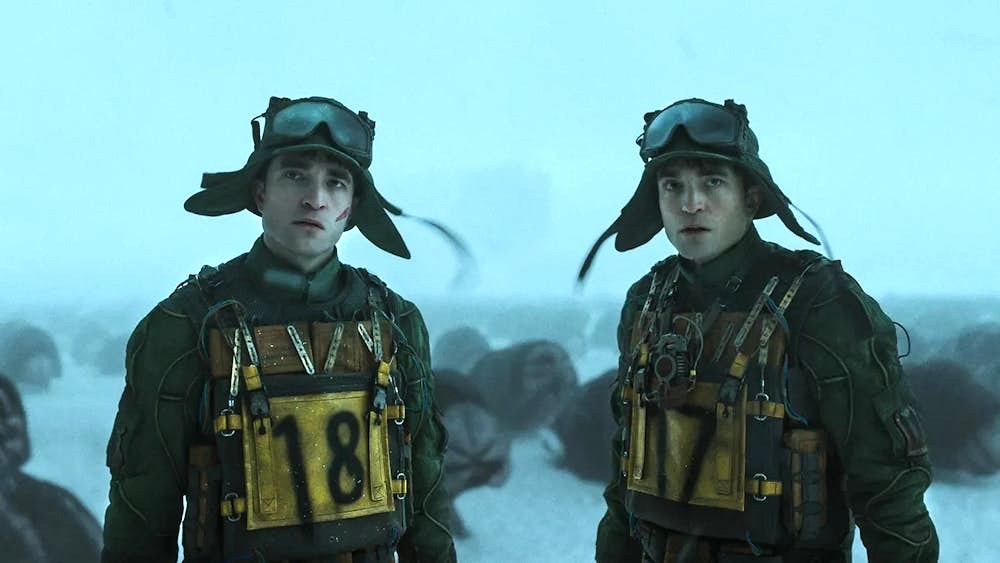
In 2050, everyone on the colony ship to the planet Niflheim has a job. Even a washed-up loser like Mickey (Robert Pattinson). His job is the most loserish of all: he’s an ‘expendable’, hired to die repeatedly in all forms of dangerous mission or twisted scientific and medical experiments, with a new body containing all his backed-up memories rolling out of the human body printer. The one rule is there can never be more than one Mickey at a time – so it’s a problem when 17 is thought dead and the more assertive 18 is printed: especially as they are flung into a clash between the colonisers and Niflheim’s giant grub-resembling lifeforms ‘Creepers’. Can Mickey(s) prevent a war that the colony’s leader, a failed politician and TV-star Kenneth Marshall (Mark Ruffalo) and his socialite wife Ylfa (Toni Collette), want to provoke?

It’s all thrown together in Bong Joon-Ho’s follow-up to Parasite which trades that film’s sharp, dark social satire and insidious sense of danger for something more-like a brash, loud, obvious joke in the vein of (but grossly inferior to) his Snowpiercer. Mickey 17 is awash in potentially interesting ideas, nearly all of which feel underexplored and poorly exploited over the film’s whoppingly indulgent runtime of nearly two-and-a-half hours, and Bong lines up political targets so thuddingly obvious that you couldn’t miss these fish-in-a-barrel with a half-power pea-shooter.

Mickey 17 actually has more of a feel of a director cutting-lose for a crowd-pleaser, after some intense work. Mickey 17 is almost a knock-about farce, helped a lot by Robert Pattinson’s winning performance as the weakly obliging Mickey 17 who grows both a spine and sense of self-worth. A sense of self-worth that has, not surprisingly, been crushed after a lifetime of failure on Earth leads him to series of blackly-comic deaths (the film’s most successful sequence) that has seen him irradiated and mutilated in space, gassed with a noxious chemical, crushed, incinerated and several other fates.

Not surprisingly, there is a bit of social commentary here: Mickey is essentially a zero-hours contract worker, treated as sub-human by the businessmen and scientists who run this corporate-space-trip. It’s an idea you wish the film had run with more: the darkly comic idea of people so desperate to find a new life that they willingly agree to have that life ended over-and-over again as the price. It’s not something Mickey 17 really explores though: right down to having Mickey sign on due to his lack of attention to contract detail (how interesting would it have been to see a wave of migrant workers actively pushing for the job as their only hope of landing some sort of green card?).

Mickey 17 similarly shirks ideas around the nature of life and death. Questions of how ‘real’ Mickey is – like the Ship of Theseus, if all his parts are replaced is he still the ship? – don’t trouble the film. Neither does it explore an interesting idea that each clone is subtly different: we’ve already got a clear difference between the more ‘Mickey’ like 17 and his assertively defiant 18, and 17 references that other clones have been more biddable, anxious or decisive. Again, it’s a throwaway comment the film doesn’t grasp. Neither, despite the many references to Mickey’s unique experience of death (and the many times he is asked about it) do questions of mortality come into shape: perhaps because Mickey is simply not articulate or imaginative enough to answer them.

Either way, it feels like a series of missed opportunities to say something truly interesting among the knock-about farce of Mickey copies flopping to the floor out of the printer, or resignedly accepting his (many) fates. Especially since what the film does dedicate time to, is a painfully (almost unwatchably so) on-the-nose attack on a certain US leader with Mark Ruffalo’s performance so transparent, they might as well have named the character Tonald Drump. Ruffalo’s performance is the worst kind-of satire: smug, superior and treats it’s target like an idiot, who only morons could support. It’s a large cartoony performance of buck-teeth, preening dialogue matched only by Toni Collette’s equally overblown, ludicrous performance as his cuisine-obsessed wife.

Endless scenes are given to these two, for the film to sneer at them (and, by extension, the millions of people who voted Trump). Now I don’t care for Trump at all, but this sort of clumsy, lazy, arrogant satire essentially only does him a favour by reminding us all how smugly superior Hollywood types can be. So RuffaTrump fakes devout evangelical views, obsesses about being the centre of attention, dreams of his place in the history books while his wife is horrified about shooting Mickey because blood will get on her Persian carpet. It’s the most obvious of obvious targets.

It’s made worse that the film’s corporate satire is as compromised and fake as the conclusion of Minority Report. It’s a film where a colonialist corporate elite defers to a preening autocrat, keeps its colonists on rationed food and sex and sacrifices workers left-and-right for profit. But guess which body eventually emerges to save the day? Yup, those very corporate committee once they learn ‘the truth’. Mickey 17 essentially settles down into the sort of predictably safe Hollywood ending, with all corporate malfeasance rotten apples punished. For a film that starts with big anti-corporate swings, it ends safely certain those in charge will always do the right thing when given the chance.

Much of the rest of Mickey 17 is crammed with ideas that usually pad out a semi-decent 45 minute episode of Doctor Who. Of course, the deadly, giant insect-like aliens are going to turn out to be decent, humanitarian souls – just as inevitable as the mankind bosses being the baddies. It’s as obvious, as the film’s continual divide of its cast list into goodies and baddies.

Mickey 17’s overlong, slow pacing doesn’t help. An elongated sequence with Anamaria Vartolomei’s security guard who has the hots for Mickey 17 (every female in the film, except maybe Collette, fancies him proving even losers get girls if they look like Robert Pattinson) could (and should) have been cut – especially as that would also involve losing an interminable dinner-party scene with Ruffalo and Collette. The final sequence aims for anti-populist messaging and action – but is really just a long series of characters saying obvious things to each other. Despite Pattinson’s fine performance – and some good work from Ackie – Mickey 17 is a huge let-down which, despite flashes of Bong’s skill, feels like a great director cruising on self-indulgent autopilot, taking every opportunity for gags over depth or heart. Not a success.

Hold Back the Dawn (1941)

Hold Back the Dawn (1941)

A potentially cynical drama becomes a sweet romance, with three excellent lead performances

Director: Mitchell Leisen

Cast: Charles Boyer (Georges Iscovescu), Olivia de Havilland (Emmy Brown), Paulette Goddard (Antia Dixon), Victor Francen (Professor van der Luecken), Walter Abel (Inspector Hummock), Curt Bois (Bonbois), Rosemary DeCamp (Berta Kurz), Eric Feldary (Josef Kurz), Nestor Paiva (Fred Flores)

Refugees flock at the USA-Mexican border, desperate to squeeze into the Land of the Free, only to meet with a stringent border control and tight rules on immigration quotas. No, it’s not a story from today – it’s from the 1940s, with Mexico awash with refugees from Europe, fleeing Hitler. But the USA only has a certain quota of refugees it will accept from each country – and Romanian Georges Iscovescu (Charles Boyer) finds he’s got no less than a five to eight year wait before his quota number will come up. His ex-flame Anita (Paulette Goddard) suggests there might be a way around this: if Georges can get married to an American citizen, he will fly through the border on a green card. Georges sets his eye on spinsterish teacher Emmy Brown (Olivia de Havilland) marrying her in a whirlwind romance – only to find feelings of guilt and growing affection for Emmy making his plan more difficult.

Hold Back the Dawn is well-assembled, well-paced mix of romance and black-comedy which pulls its jet-black punches in favour of a more conventional happy ending. Perhaps that’s why it was the last Billy Wilder script (working with regular collaborator Charles Brackett) he didn’t direct himself. You can imagine a director as prone to the cynical as Wilder, may not have settled quite as happily for the more optimistic and reassuring film Hold Back the Dawn becomes. Wilder was also unhappy with how he felt the film pruned back the more cutting political criticism of America’s immigration policy. As a refugee from Hitler himself, Wilder knew of what he was talking about.

However, that’s not to say Hold Back the Dawn isn’t awash with Wilder and Brackett’s patented mix of waspish character comedy and sharp dialogue tinted with more than a touch of arch cynicism. Mitchell Leisen’s success here, is to smooth the wheels to allow enough of this mix of black and absurdist humour to carry through a film you feel the studio has attempted to shoe-horn into being a conventional ‘love conquers all’ narrative (not least with its ending, which has the look and feel of a mix of hurried re-shoots and re-purposed footage to create a late upbeat ending, filmed after de Havilland was no longer available from her loan from Warner Brothers).

Hold Back the Dawn doesn’t shirk on the vicious, oppressive cycle of being stuck in a holding pattern waiting to be allowed into the US. Georges only gains his room in the overstuffed hotel because the previous tenant hangs himself (the manager matter-of-factly says he’ll have the room ready shortly). There is quite a lot of both dark humour (from Georges and Anita’s nakedly opportunist cadism) to little touches of high farce (a pregnant woman gaming the system to give birth on US soil) and the faintly surreal (a would-be refugee who might just be a descendant of honorary US citizen Lafayette). Throughout most of Hold Back the Dawn this never feels out of keeping with the slow-burning romance between Georges and Emmy.

A lot of this is also due to Charles Boyer’s highly successful performance in the lead role. Few actors were as skilled at mixing suave European class and louche rotter-ness than Boyer, and Georges is a gift of a part. A playboy stuck in a boring, dead-end purgatory of a town (one he aimlessly walks around time and time again to kill the hours), Boyer makes Georges believable charm personified – certainly enough to back the film’s implication he keeps himself afloat as a gigolo for tourists. Boyer’s arch voiceover relays every-step of the nakedly self-centred plan he initiates to squirm his way over the border. His performance is full of charm, tender shyness and love-struck adoration to Emmy, punctured throughout by Boyer’s canny side-eye to check on the effect of his shameless lies (there is a glorious moment when Boyer checks himself and cocks an eye when walking down a street, to make sure Emmy is following him).

The character works though because Boyer is a master at balancing this ruthless, self-serving charm with a general decency just below the surface that, no matter how hard he tries, he can never quite dampen down. It excels in the film’s middle act as the couple’s ‘spontaneous’ (so Georges can escape the notice of Walter Abel’s excellently shrewd immigration inspector) honeymoon in Mexico. Boyer brilliantly demonstrates through the slightest of vocal inflections and subtle shifts in body language (there is a point during a village fiesta where his face lights up with a genuine smile the like of which we have never seen before) that make us totally believe this is a man who, much to his surprise, is actually falling in love.

It helps with this that he shares scenes with such a winning presence as Olivia de Havilland as Emmy. Oscar-nominated, de Havilland takes a role (a spinsterish frump, who has never been loved) that could be ridiculous and makes it utterly and completely real. Throughout Georges initially cynical courting, there is a little sense of doubt throughout in de Havilland’s manner (she knows instant love is too good to be true), but such is her loneliness we can see and feel her willing herself into belief. As she does so, de Havilland lets the shy Emmy flourish into a woman of greater confidence, wit and burgeoning sexual desire (hilariously, the increasingly shamed Georges begins to event injuries to put off the consummation of this marriage). De Havilland makes Emmy a living, breathing person, someone miles away from the joke she is set up as initially: instead she is a genuine, true-hearted, increasingly brave woman whose decency and sense of warmth we grow to love as much as Georges does.

She makes an excellent contrast with Paulette Goddard’s ruthlessly amoral Anita. In one of her finest performances outside of her work with Chaplin, Goddard makes Anita utterly ruthless in seeking out what she wants and full of a hilariously honesty about her willingness to use anyone and anything to get it. She’s Georges even darker reflection, Goddard’s dialogue awash with brutal firecracker one-liners. But even she is capable at points of depth, a late act of petty cruelty awakening in her underlying feelings of sympathy and empathy that seem to surprise even her. It’s a lovely performance of darkly comedic ruthlessness.

These three leads all elevate a film that at times compromises on its vision of the harshness of the system these people are all stuck in. Hold Back the Dawn doesn’t want to make a statement as such – it wants to offer a more reassuring vision of hope and decency. This it does well: the film is even built around Georges pitching it as a possible film project to the actual Mitchell Leisen (effectively playing himself, on set shooting a real film with the real Veronica Lake and Brian Donlevy). After a start that suggests something darker and more dangerous, it ends as a comforting and safe picture – but one that works extremely well.

The Exterminating Angel (1962)

The Exterminating Angel (1962)

Buñuel’s unique party-gone-wrong is a fascinating mix of comedy, surrealism and satire

Director: Luis Buñuel

Cast: Silvia Pinal (Leticia, “The Valkyrie”), Jacqueline Andere (Alicia de Roc), José Baviera (Leandro Gomez), Augusto Benedico (Dr. Carlos Conde), Enrique Rambal (Edmundo Nóbile), Luis Beristáin (Cristián Ugalde), Antonio Bravo (Sergio Russell), Claudio Brook (Julio), César del Campo (Colonel Alvaro Aranda), Rosa Elena Durgel (Silvia), Lucy Gallardo (Lucía de Nóbile), Enrique García Álvarez (Alberto Roc)

Imagine a party so good, you couldn’t bear to leave. Sounds great, right? Now imagine a party that wasn’t even that good, but you couldn’t leave anyway. A dinner party with the hoi polloi that locks you into a seemingly never-ending parade of days (or weeks) where you and everyone else were physically incapable of stepping over the threshold of the room you’re in. All of you forced to live in a tiny space, on top of each other, none of you having a clue why you can’t leave or why this is all happening. Imagine that, and you’ve got Buñuel’s The Exterminating Angel, a surrealist-tinged, open-ended mystery of a film that presents its situation and leaves you to make of it what you will.

Returning to Mexico after comprehensively incinerating his nascent re-alignment with Spanish cinema with Viridiana (a film made in Catholic Fascist Spain that mocked both the fascists and the Church), Buñuel creates a haunting elliptical masterpiece by harnessing an idea so compelling it’s been recycled, reframed and reexplored by countless films after.  It’s an idea that has soaked into horror, of being trapped by some unknown force in a single place, unable to break free. It’s also sparked satire with its depiction of the thin veil of smug self-satisfaction over the bourgeoisie that collapses under the strain of covering primitive, violent instincts.

The Exterminating Angel tips us off from the start that we won’t be settling down to watch any old dinner party. As the guests assemble, the staff at the grand town house are practically falling over themselves to flee, as if subconsciously aware there is something wrong in the house. Buñuel throws the viewer off from the start by deliberately repeating scenes – a repetition so on-the-nose, that when watching I actually doubted myself about whether I had just seen what I thought I saw. We see the guests arrive – and make a forlorn call for their coats to be taken – twice in quick succession. It’s so blatant, even Buñuel’s editor gave him a panicked phone call about the ‘error’ just before the film’s opening!

Later the micro-repetitions of scenes, interactions and lines will pile up (it’s a film that rewards constant reviewing) making the whole set-up even more disconcerting. Two characters introduce themselves to each other three times, each time with a different emotional mood (from friendly to outright hostile). The same dinner toast will be greeted with rapture then complete indifference. Two couples will echo the same conversation. Oblique points about freemasonry and current affairs will be made over and over. Is Buñuel suggesting the whole whirligig of the social situation is just a slightly pointless merry-go-round where the same old bullshit happens over-and-over again and essentially means nothing? Sure, the characters notice they are literally trapped in the same room, but really aren’t they just metaphorically trapped in the same old rooms all the time?

Nevertheless, as the dinner party winds down, everyone is far too polite (or far too concerned with appearances) to openly say they feel like its physically impossible for them to cross the threshold and leave. Instead, the hosts quietly grumble that no-one seems to know when to go as the clock ticks into the wee small hours and the middle-class types here settle down in armchairs, on sofas or even on the floor to sleep. Come the next morning, polite embarrassment prevents anyone from saying exactly why they are still here. In fact, everyone promptly makes politely meaningless excuses about why they aren’t quite ready to leave yet: they’ve not had breakfast, nanny will look after their children, they don’t need to be anywhere quite yet.

In fact, I’m not sure anyone openly says they ever feel trapped. It’s like social faux pas everyone is horrified of pointing out. Not a surprise really as everyone here is from the height of professional society: doctors, conductors, army officers, businessmen, society grande dames. None of them wants to stand out like some panicked rube thrown by odd sensations. Instead, everyone slowly settles down into working around this bizarre situation no one wants to talk about. A cupboard is tacitly turned into a toilet. The food is carefully rationed. A water pipe is tapped into so everyone can drink. Sleeping areas are claimed. No one tries to solve the problem, because even acknowledging the problem feels like a cheeky liberty.

It leads into an increasingly fascinating blend of horror, dark satire and surrealist black comedy that Buñuel skilfully builds. A few shots show us the threshold of the room from the next room (a lush ballroom), and there are cuts to a crowd of rubber-neckers outside the house) who also cant enter. But otherwise, it’s all in this one room and as time – and the guests lose all track of that – drags on, the bonds of society both loosen under the polite instincts. Tempers fray, but there remains a formality even as the ravenous guests rip apart (off camera) and cook a sheep that wanders into the room. Some guests take advantage of the proximity to indulge in voyeuristic perversions, but when arguments erupt they are resolved with a Victorian duel mind-set. Only towards the end, as the world really fragments, does the danger of real violence (a suggested lynching of those judged responsible) flare up.

Buñuel would criticise himself later for not going far enough (if you want an idea of relatively tame he later thought it was, he argued cannibalism was one of the things he should have explored). But the fact that much of the behaviour remains grounded, recognisably stuck in a rut of upper-class restraint makes the film more effective. (Or as restrained as a party, where the cancelled ’entertainment’ at the original dinner was an unspecified event involving a tame-ish bear and three sheep, can be). Somehow, if the guests had regressed into the most animalistic behaviour possible, the film might have lost some of its enigmatic quality. As it happens, the fact the guests can never quite escape the trappings of their social rules makes it even more unsettling. It means that threats – such as the ferocity behind the ‘I’ll kill you’ response to a joke about someone being pushed out of the room – carries even more of a shock.

Buñuel throws in the odd surrealistic touch – after all he always claimed a dream sequence was in there when he had run out of ideas. We get two, one revolving about a nightmare of a disembodied hand moving freely around the house (it must be some sort of joke from Buñuel that the hand itself is the least convincing rubbery affair you can imagine) and later a sequence of disconnected images superimposed over a cloud filled sky. The film’s conclusion suggests a deadly, ever-expanding loop, based around the fact the characters suffer but learn nothing from it.

You can argue that The Discreet Charms of the Bourgeoisie, by allowing more physical freedom to its characters, allowed even more surreal, fascinating and intriguing exploration of the repressions, lies and hypocrisies of bourgeoisie life. But The Exterminating Angel has a claustrophobic horror to it, and the pressure cooker bubbling just below the surface of these trapped characters exposes class tensions in superbly unnerving ways. It makes for an expertly executed, shrewdly vicious social satire that lifts a lid on the many petty behaviours that govern so much of our lives. And it’s a mark of genius that you cannot imagine anyone other than Buñuel making it.

The Talk of the Town (1942)

The Talk of the Town (1942)

Overlooked but delightful comedy with three star actors at the absolutely charming top of their game

Director: George Cukor

Cast: Cary Grant (Leopold Dilg), Jean Arthur (Nora Shelley), Ronald Colman (Professor Michael Lightcap), Edgar Buchanan (Sam Yates), Glenda Farrell (Regina Bush), Charles Dingle (Andrew Holmes), Clyde Fillmore (Senator Boyd), Emma Dunn (Mrs Shelley), Rex Ingram (Tilney), Leonid Kinskey (Jan Pulaski)

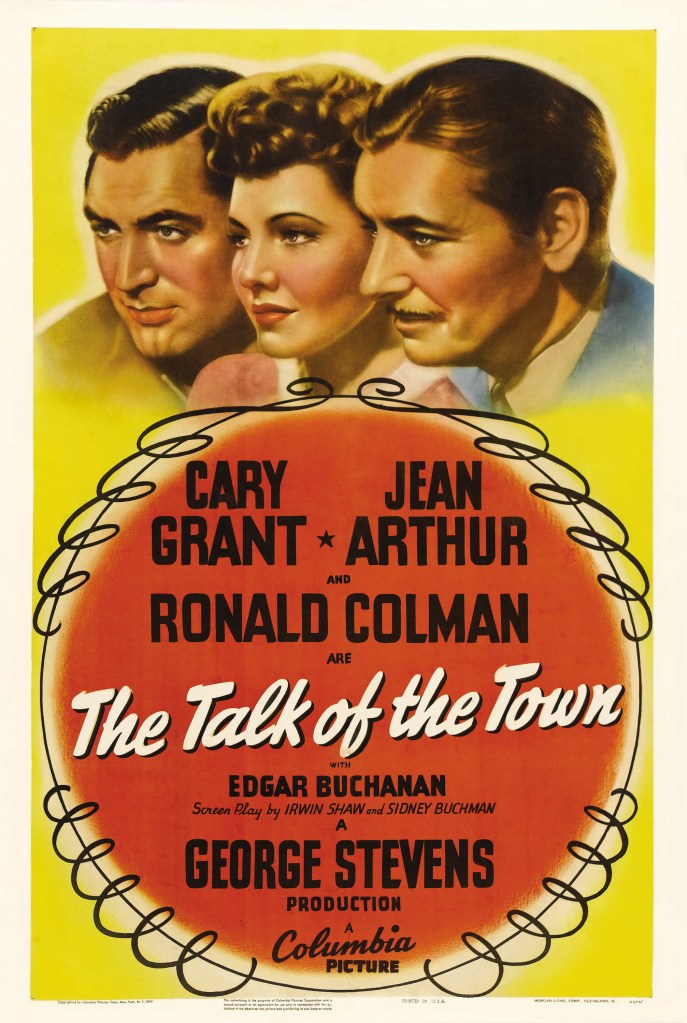
Leopold Dilg (Cary Grant) is in a heck of a fix. A passionate campaigner for worker rights, all fingers point straight at him when a local factory burns down leaving an unpopular foreman dead. Dilg rather than wait in the slammer for an inevitably (fatal) sentence, he escapes and find refuge in the country cottage of former schoolmate Nora Shelley (Jean Arthur). Problem is Nora has sublet her cottage to straight-as-a-die legal professor Michael Lightbody (Ronald Colman), in the running for the Supreme Court. With Dilg passing himself off as a gardener, can he and Nora convince the ultra-serious Lightbody there has been a miscarriage of justice?

The Talk of the Town is a hugely enjoyable comedy with more than a pinch of social commentary, that gives three charismatic stars tailor-made roles under the assured hand of a skilled director. It’s a great mix of genres: it opens like a dark thriller, segues into an odd-couple-house-share comedy via a romantic-love-triangle, transforms again into a slightly zany detecting comedy with road-trip vibes and wraps up as courtroom drama with a Capraesque speech and happy ending. The fact all this hangs masterfully together makes The Talk of the Town stand out as a consistently surprising and enjoyable comedy, full of zip and smart, funny lines.

Stevens choreographs the film superbly, specifically in its initial set-up where the three lead characters weave in and out of each other’s lives in the house. Initially Grant hides in the attic – signalling from a window his desire for food (an excellent running gag is the amount Grant’s character enthusiastically eats), with Arthur going to acrobatic lengths to hide his presence from Colman. You can imagine other films getting an entire hour out of this: The Talk of the Town is brave enough to shake-up this set-up within twenty minutes, as Grant nonchalantly wanders downstairs to introduce himself, quick thinkingly introduced as a gardener by an as-surprised-as-us Arthur.

It’s a surprise, but a perfect one – after all it would be hard easy to consider Colman’s character a head-in-the-clouds dullard if he had been fooled for long by Arthur’s increasingly unusual behaviour. And The Talk of the Town needs us to like and respect all three of these characters, to root for all of them. What better way, but to get them rooting for each other?

The odd houseshare comedy that takes over Talk of the Town is all about its principles effectively falling in love with each other (there is a thruple version of Talk of the Town waiting to be made). Grant learns to respect Colman’s self-effacing, shy wit. Colman learns to enjoy Grant’s instinctive intelligence. Both of them find deeper feelings growing for Arthur’s feisty Nora, just as she finds herself drawn to the charm, good nature and honesty of the other two. Talk of the Town becomes delightful as we watch the three of them eat meals together, play chess and chat about the law late into the night. Few films have shown as skilfully friendships organically growing.

The tension that takes over is whether outside forces will tear this friendship apart. Namely, if Colman finds out Grant’s identity will he swop from buying Borscht for his friend (sweetly, Colman remembers a throwaway comment about exactly how much he likes it) to being duty bound to shopping him to the cops? Grant and Arthur are aware of the danger: they’ve been drop-feeding references to the unsound accusations against Grant throughout, all while desperately making sure he never sees Grant’s mugshot photo in the papers (right up to pouring eggs over the front page) – the way Colman eventually finds this out is a beautifully done reveal.

All of this entirely relies on three actors at the top of their game. Grant seems, at first, an odd choice for a worker’s rights campaigner, but this is one of his lightest, most overlooked performances: wry, knowing and playful. Arthur is excellent as the electric centre of this love triangle, energetically torn between two very different men and terrifically determined under the occasionally scatty surface. Colman is dapper, upper-class charm to a T, but full of egalitarian charm and surprisingly willing to begin to question his own views in conversation with others.

Colman’s initial rigidity is represented – in a plot point that’s slightly on-the-nose (literally) – by his goatee, which he wears as a metaphorical shield between him and the world (it’s also another neat running gag, as it garners endless unflattering comments). When Colman inevitably shaves it off (a moment so overplayed, his trusted valet breaks down in tears at the sight) it’s a sign that he has accepted there is more to the law than just its letter. It plays into the film’s final shift, as Colman fills the final act with a passionate speech to silence a crowded courtroom ready for a judicial lynching (hilariously littered with direct quotes from his Grant’s character).

Much to my surprise, the social commentary and democratic praise never outweighs the comedy. The film gives space to earnest debate, but still has time for a madcap chase that ends with Colman hiding up a tree from police dogs. Stevens successfully mixes styles, from Fritz Lang thriller to Preston Sturges comedy to a mix of Hitchcock and Capra. Stevens fuses all these together perfectly, making a film funny, exciting when it needs to be, but always engaging with characters you really root for.

The Talk of the Town is overlooked but a very well-made treat and an exceptional showcase to three charismatic, hugely engaging actors. It marries comedy and social commentary extremely well (it even has a Black character in Rex Ingram’s wise valet whose race is incidental to his personality, quite a thing in the 40s) and bowls along with a huge sense of fun. It’s definitely worth seeking out.

On the Town (1949)

On the Town (1949)

Hugely enjoyable musical, fast-paced, funny and crammed with excellent song-and-dance routines

Director: Stanley Donen, Gene Kelly

Cast: Gene Kelly (Gabey), Frank Sinatra (Chip), Betty Garrett (Hildy Esterhazy), Ann Miller (Claire Huddesen), Jules Munshin (Ozzie), Vera-Ellen (Ivy Smith), Florence Bates (Madame Dilyovska), Alice Pearce (Lucy Shmeeler)

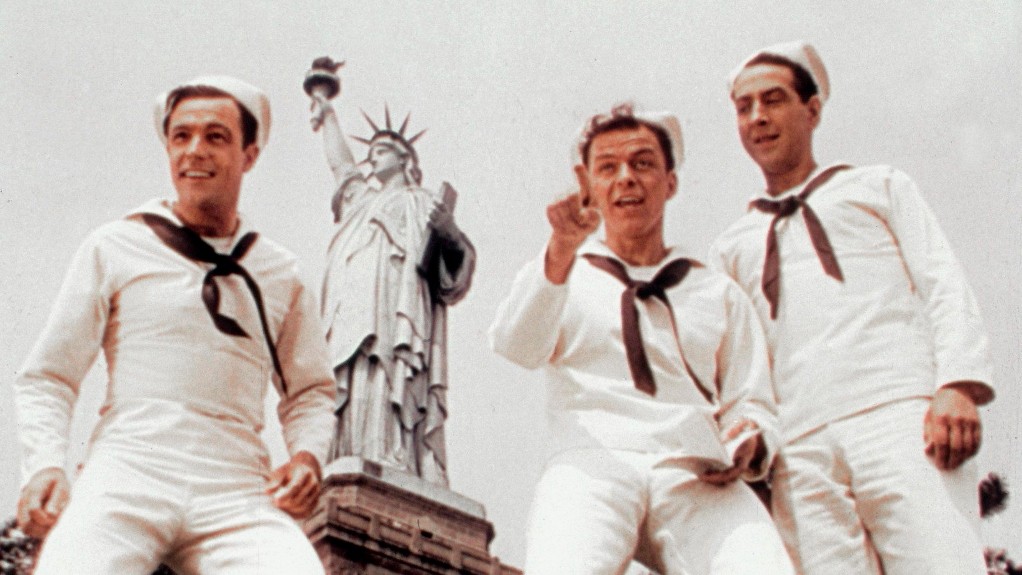
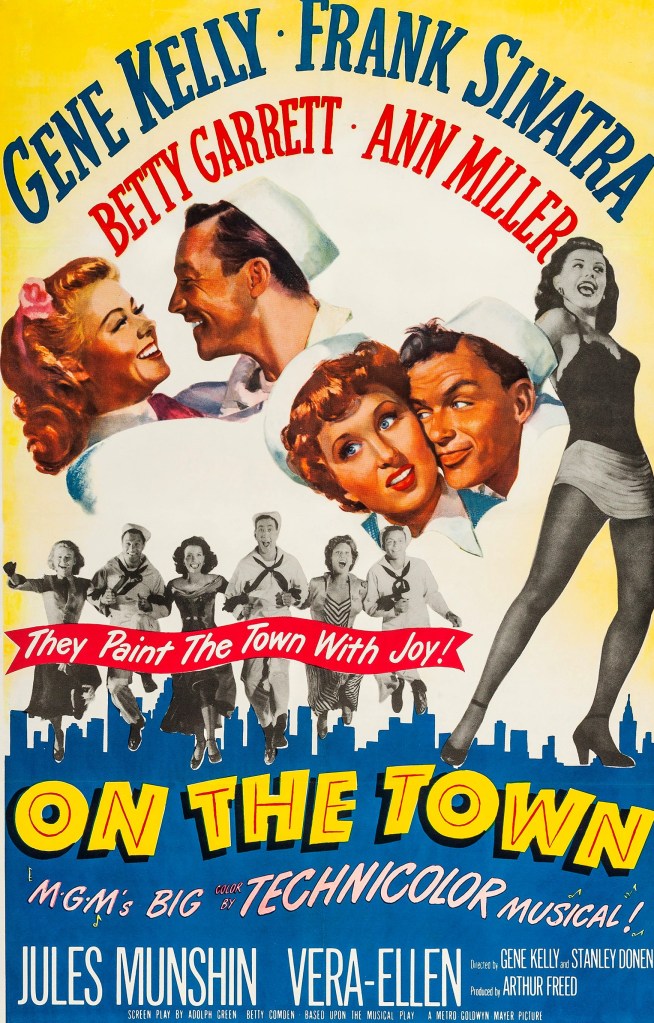
I assume Freed, Donen and Kelly re-watched Anchors Aweigh and said ‘There’s a good idea in here… but we can do better’. They certainly did with On the Town – and it surely helped that they seized on Leonard Bernstein’s hit Broadway musical with its book by Betty Comden and Adolph Green, for a pacier, funnier, more focused version of a very similar story. Once again, Gene Kelly and Frank Sinatra (now accompanied by third banana Jules Munshin) are sailors enjoying leave (this time in New York) and looking for romance. And they find it, with Gabey (Kelly) star-struck by Vera-Ellen’s Ivy Smith (who he mistakes for a celebrity), Chip (Sinatra) falling for flirtatiously voracious taxi-driver Hildy (Betty Garrett) and Ozzie (Menshin) inexplicably charming glamourous anthropologist Claire (Ann Miller). These three couples spend a fab 24 hours, getting in-and-out of scrapes and falling in love.

It’s all gloriously entertaining, zipping by in 90 pacey minutes with assured, dynamic and engaging direction by Stanley Donen that crams the film with zip and an enormous sense of fun. Donen’s first credit saw him handling much of the visuals and camerawork, while co-director Kelly took on the choreography. It made for a fantastic teaming, and it’s striking how much energy and visual panache Donen bought to the musical (again, compared to the more staid direction and visual compositions of Anchors Aweigh). Donen cuts the film tightly, never lets scenes out-stay their welcome, cuts tightly to the beat (the opening song New York, New York shifts excitingly from location to location during its performance) and crafting visual set-pieces that were exciting to watch (crane shots, tracking shots) while never compromising the view of the dancing.

On the Town also had the advantage of some fabulous source material. Interestingly, Freed and musical director Roger Edens were sceptical about whether Bernstein’s original score (with its artful repeated refrains) was accessible enough to appeal to audiences (not to mention many of the numbers in the musical were not a good fit for their cast). It was decided to junk a huge portion of Bernstein’s score (only four songs remain), a decision that led to him boycotting the film – but meant they could combine the best of his work with the sort of song-and-dance material that played to its star’s strengths.

And the film has several stand-out sequences, most notably of course that ‘New York, New York’ opening. Kelly and Donen pitched heavily to be allowed to shoot on location in New York and were granted ten days of location footage. It makes a huge impact to the number, allowing Donen to give it a grounded and vibrant mood. On the Town helped set the template for future films for fast-paced location shooting in bustling locations: driven by the fact Sinatra’s fame meant inconspicuous camera set-ups for quick shots was essential to avoid attracting crowds. (The only scene that shows the problems the film had with longer set-ups was the shot of the gang dancing in front of the Rockefeller centre, the balcony above the statue packed with rubber-necking fans).

There are also great song-and-dance scenes which utilise the strength of all the film’s performers. ‘Prehistoric man’ is suitably zany, ‘You’re awful’ a lovely song-showcase for Sinatra and Garrett, ‘On the Town’ and ‘You Can Count on Me’ fantastic toe-tapping showcases. It’s a parade of hugely engaging, dynamic musical numbers which are immensely fun to watch. It’s more than enough to make you forgive Kelly’s continued desire to prove himself a ballet dancer (On the Town shoves in a day-dream, silent ballet set-piece ‘A Day in New York’ which is an impressive showpiece for Kelly, even if it’s the only number that slows the film down rather than keeping the comic and narrative pace up).

On the Town also has a punchy series of funny lines, clever comic set-pieces and jokes from Comden and Green (it’s Dinosaur/Dinah Shaw mishearing gag is a real stand-out). Of course, narratively On the Town is completely barmy, much of the drama revolving around Ozzie’s accidental destruction of a Brontosaurus skeleton in the Natural History Museum and a resulting on-and-off again Keystone Kops style series of chases. The film zips along with such pace and wit that you happily swallow bizarre ideas (such as Ozzie, in a surprisingly vertigo inducing moment, hanging off the side of the top of the Empire State Building) and shameless coincidences.

But it’s knock-about fun and zany, nonsense plotting actually makes it all the more entertaining to watch. The film’s constant reminders of how far we into this strange 24-hour leave period works very well to give a sense of momentum to events and there is a more than a bit of Hays Code baiting naughtiness, not least in the clear implication that Chip and Hildy (in particular) and Ozzie and Claire spend most of the afternoon going at it great guns while claiming to Gabey that of course they spent the time searching the libraries and museums of New York for Ivy.

On the Town has its cast of musical stars nearly at their peak. Kelly’s dancing and choreography is energetically perfect as always and he fully embraces the charismatic romantic naivety of this would-be player Gabey. Sinatra is much more assured and comfortably witty than in many other musical roles. He also has excellent chemistry with Betty Garrett’s hilariously eager Betty. Ann Miller is wonderfully endearing and funny as Claire. Alice Pearce is surprisingly affecting in a role that initially suggests it might be a one-joke loser, as Ivy’s blousy single flatmate. Vera-Ellen may not have the charisma the role needs but is very sweet. Only Jules Munshin is trying too hard with some aggressively enthusiastic gurning.

Kelly later said On the Town might not have been the best musical they ever made, but it was the one when pretty much everyone involved was at the peak of their powers. He might well be right. On the Town is a slick, sleek and highly enjoyable confection that makes for perfectly entertaining Sunday afternoon viewing.

Seven Brides for Seven Brothers (1954)

Seven Brides for Seven Brothers (1954)

Gentle fun from more innocent times, in an impressively high-kicking Western musical

Director: Stanley Donen

Cast: Jane Powell (Milly), Howard Keel (Adam), Jeff Richards (Benjamin), Julie Newmar Dorcas), Matt Mattox (Caleb), Ruta Lee (Ruth), Marc Platt (Daniel), Norma Doggett (Martha), Jacques d’Amboise (Ephraim), Virginia Gibson (Liza), Tommy Rall (Frank), Betty Carr (Sarah), Russ Tamblyn (Gideon), Nancy Kilgas (Alice)

Glance at any list of odd things to adapt into a musical, and you might well find The Rape of the Sabine Women. You’ve got to admire the idea of shifting a Roman legend of horny menfolk grabbing armfuls of women from the Sabine tribe to carry them to Rome to make homes and babies, into… a primary-coloured, hi-kicking, cosy Western musical. Sure, parts of Seven Brides of Seven Brothers look rather awkward today but there is an innocent sense of good-fun (not to mention a sweet lack of sex in any frame) about the whole thing that still makes it rather charming today.

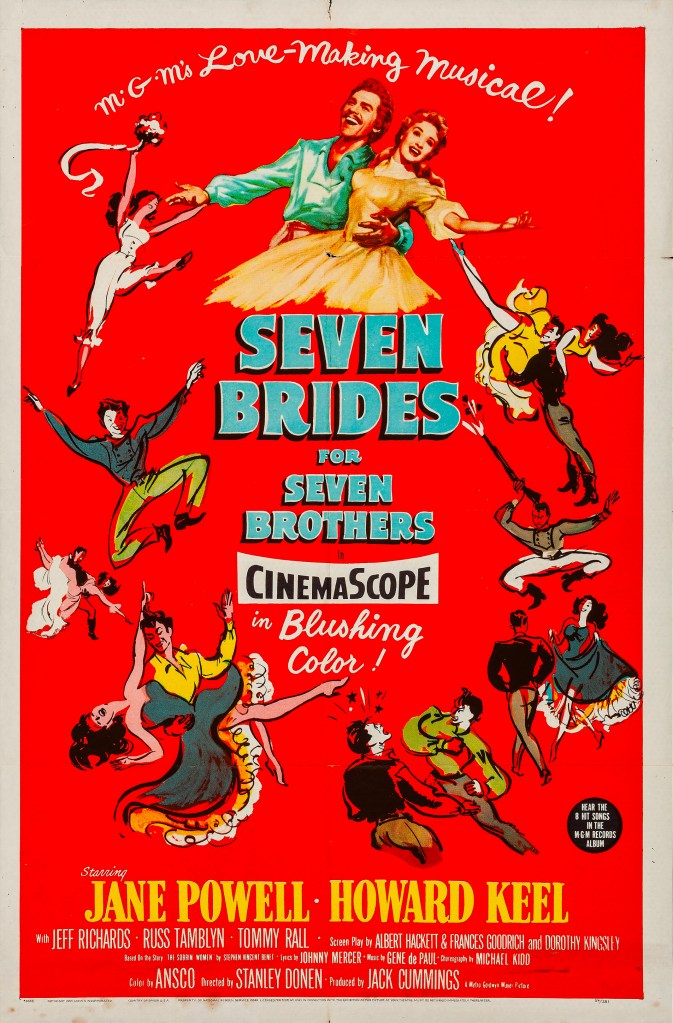
Out in Oregon in 1850, the Pontipee brothers are rough-living guys out in the sticks, who can’t imagine needing a woman in their lives, except maybe to cook and clean. That certainly seems to be what oldest brother, Adam (Howard Keel), has in mind when he marries Milly (Jane Powell). She is shocked to discover he sees her role solely in the kitchen and the laundry. Milly decides she’s not having this, pushing the brothers to clean up their home and acts. Much to their surprise, the brothers like clean living and fall in love with six more women in town (and they with them!). Shame they’re so inept at courtship they decide (much to Milly’s shock) the best way to get a wife is to grab a woman and bring them back home, just like those ‘sobbin’ women’ of yore.

You can see the trickier content there, but Stanley Donen’s film is so good-natured you can imagine its makers being baffled that anyone today could have an issue with it. We can address an elephant in the room: the kidnapping scenes – the Pontipee brothers throwing blankets over the women’s heads, chucking them over their shoulders and making for the hills – play uncomfortably today when framed for laughs. But these are men who, when they arrive home, are gosh-darn-it furious with themselves for not grabbing a priest so they could marry these women at once and immediately sleep in the cold barn to preserve the ladies’ dignities. Seven Brides for Seven Brothers is really a sort of fairy tale rather than a dance-filled Stockholm Syndrome drama, the beauties falling in love with the (not very beastly) beasts.

Take that mindset, and Seven Brides for Seven Brothers is gentle fun, more focused on its bright primary colours and superb dance sequences than any look at gender roles. Choreographed by Michael Kidd, the film is stuffed with imaginative showpieces showcasing the skills of its mostly professional-dancing cast. A pre-barn-raising dance turns into a competitive barn dance, with dancers throwing themselves into a myriad of possible positions, leaping over planks and swinging partners in wild circles (the film uses every inch of the Cinemascope framing – God alone knows what the 4:3 version Donen also had to shoot looks like). Every time the film kicks into dance mode, you are generally in for an impressively athletic treat.

The cast (except, noticeably Jeff Richards) are all strong dancers – or in the case of Russ Tamblyn so athletic it hardly matters – allowing Kidd to push the dance envelope. His choreography also conquers his initial concern: how believable would it be for rough-tough woodsmen like this to confidently trip the light fantastic at the drop of a hat? Its solved, in many cases, by using the sort of everyday jobs (like woodcutting in one single-take sequence) these boys would be doing as the framing device of the choreography. That and a wittily done sequence where Milly teaches her new brothers-in-law some basic dance steps only for them to find they actually enjoy kicking their heels.

Its one of several witty sequences, that serve to generally puncture for laughs the masculinity of this clan of brothers. Milly’s arrival, finding her new brothers-in-law are all strangers to the razor and the bath, then finds her tour of the house has to work around an on-going fight between these lads which her new husband all but ignores. By the time Milly is flipping over the dinner table after the brothers dive into her prepared meal with all the grace of a bunch of frat boys on a night out, you’re with her. In fact, Seven Brides could be a sort of Taming of the Shrew in reverse, where our heroine trains decency, politeness and basic interpersonal skills into the men. And, since Jane Powell’s firm-but-fair Milly is the most unfairly put-upon person in the film, we instantly side with her.

Instead, it’s Howard Keel’s (with his distinctive gloriously low voice) Adam who needs to be made to see sense: first to understand there is more to marriage than a servant-with-benefits, and secondly that other people’s feelings need consideration. Much of the drive for this change is Milly – the importance of her character being the main reason writer Dorothy Kingsley was recruited to bulk up her part from Albert Hackett and Frances Goodrich’s earlier drafts. Similarly, the seven brothers switch from punch-first braggarts to figures reminiscent of Snow White’s dwarfs in their eagerness to please Milly (even, during the barn-raising sequence, they politely back away from all provocations from the jealous townsmen until they are finally pushed too far by the townsmen’s rudeness to others).

In this framework, we are never in doubt that their brides-to-be are, in fact, not unhappy at being carried away by these men. There is no sense of danger in Seven Brides: no doubt that it’s not all going to turn out well. A large part of this gentle tone is due to Stanley Donen’s warm, witty direction. (Donen was heartbroken the budget wouldn’t stretch to Oregon location shooting, although the backdrops used throughout are hugely impressive). It generally looks like a film everyone had huge fun making – and that warmth, along with the brightly coloured shirt humble-pie-ness of it all, has meant it remains all jolly good fun today.

To Be or Not To Be (1942)

To Be or Not To Be (1942)

Hilarious Lubitsch comedy that walks a fine line between the dark horrors and absurdities of Fascism

Director: Ernst Lubitsch

Cast: Carole Lombard (Maria Tura), Jack Benny (Joseph Tura), Robert Stack (Lt Stanislav Sobinski), Felix Bressart (Greenberg), Lionel Atwill (Rawitch), Stanley Ridges (Professor Alexander Siletsky), Sig Rumann (Colonel Erhardt), Tom Dugan (Bronski), Charles Halton (Dobosh), George Lynn (Actor Schultz), Henry Victor (Captain Schultz)

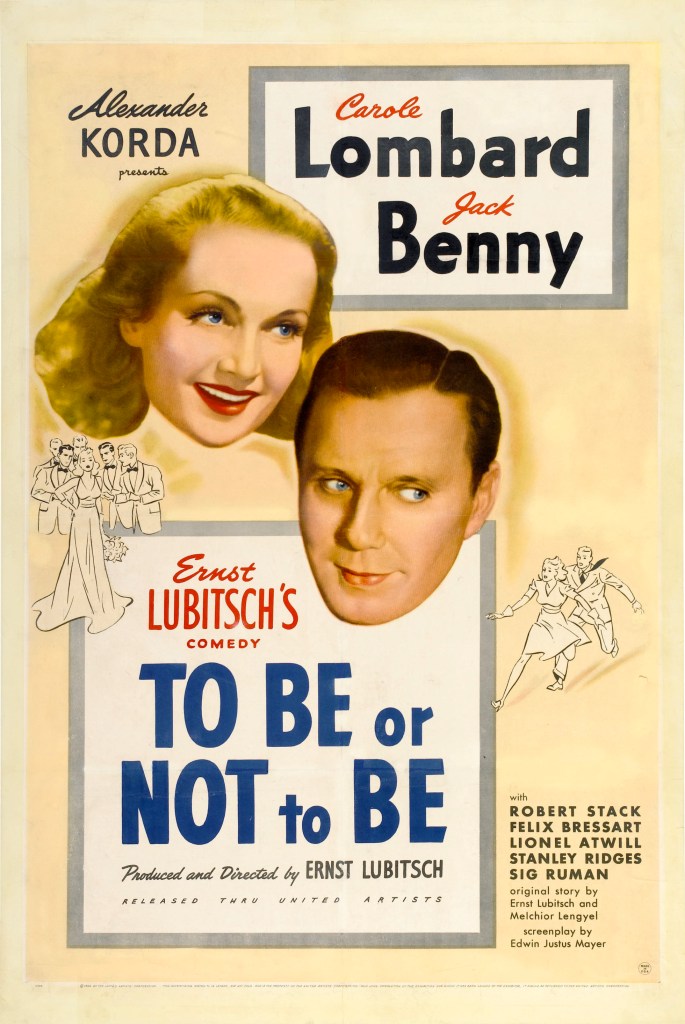
Is there a setting less likely for the famous Lubitsch Touch than war-torn Warsaw? To Be or Not To Be is a farce set at the most serious of times, sharp-paced, smooth and very funny. But it’s also about how the sort of playful, civilised class of eccentric free-spirits that Lubitsch excelled at can win through, even at the most dreadful of times against barely-sane bullies. What To Be or Not To Be does best – as well as make you laugh – is give you hope there is some light at the end of the tunnel.

The Turas – husband and wife Joseph (Jack Benny) and Maria (Carole Lombard) – are the (self-proclaimed) most famous actors in Poland. But the season 1939 is tough: their latest play Gestapo (a piss-take of course) is canned because the government is worried it might upset Hitler. Joseph revives his Hamlet and Maria uses the start of his ‘To Be or Not To Be’ soliloquy as the perfect time to entertain her current lover Lt Sobinski (Robert Stack) in her dressing room. Flirtations like this get left behind after the Germans invade, Sobinski flees to join the RAF and the theatre is shuttered.

For most of that, To Be or Not To Be fits neatly into the Lubitsch Touch. The Tura’s – with their fast-talking wit and casual attitude to sexual fidelity – are not a million miles from Trouble in Paradise’s con artists. Joseph’s principal concern isn’t that his wife might be walking out with someone else, but that someone is walking out of his performance (the worst fate imaginable!). The company are a parade of theatrical hams (Lionel Atwill’s grandiose Rawich can never resist padding his role) or spear-carrying dreamers, like Felix Bressart’s Greenberg (dreaming of Shylock). These are all denizens of Lubitsch Land, and it’s all wonderfully funny, soaked in Lubitsch’s love for actors and theatre.

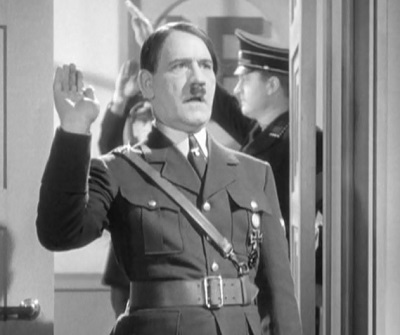
But the world they are about to step into is entirely different. Lubitsch opens the film with a hilarious misdirection: first it seems Hitler (Tom Dugan) himself is walking around Warsaw, before cutting to Jack Benny in Nazi uniform (a sight so shocking to Benny’s Jewish Polish Dad, he walked out and had to be coaxed by his son back in to finish watching it). But the conversation we hear – with its parade of nervous ‘Heil Hitlers’, ridiculous bribing of a small child with a toy tank – is slightly too absurd and, by the time Dugan’s Hitler enters with a proud ‘Heil myself!’ it becomes clear we’re watching rehearsals for Gestapo (at the end of which Dugan’s Bronski heads out into Warsaw to prove he can pass as Hitler).

It’s a fabulous lead into what we can expect for the rest of the film, which sees the actors swopping identities and character with desperate abandon as they get trapped into an espionage plot. In Britain Sobinski is rightly suspicious of Polish exile Professor Siletsky (Stanley Ridges), largely because he’s never heard of Maria Tura. With Siletsky carrying information to Warsaw that could shatter the resistance, Sobinski smuggles himself back into Poland and loops the actors –especially Joseph – into a complex, improvised deception scheme to get the deadly information back, save the resistance and dodge the real Gestapo under ruthless but desperate Colonel Erhadt (Sig Ruman).

To Be or Not To Be ups its gear into one of the wildest, riskiest and outrageous farces of all time. Jack Benny is front-and-centre as the vain-but-decent Tura, roped into impersonating first Erhardt to Siletsky, then Siletsky to Erhardt, with the help and hindrance of the company (many of whom, especially Rawitch, still instinctively take every chance to expand their roles). Benny’s comic timing throughout is exquisite, using every inch of his gift for comic vanity, brilliantly bouncing from assurance to barely concealed panic (usually when his pre-prepared lines run out). While working overtime to do the right thing, neither he – nor Carole Lombard’s beautifully performed Maria – step to far from the sort of flirtatious, catty banter that wouldn’t be amiss in a Noel Coward comedy.

Lubitsch’s film is in-love with actors, showing them as instinctively decent and brave, while also being squabbling, competitive misfits either pre-occupied with themselves (from Joseph unable to imagine anything worse than a bored audience, to a rehearsing Rawich not even noticing he has walked into a light backstage) or dreaming of glories to come. Sure, he has fun with their reliance on a script – Joseph runs out of lines so quickly as Erhadt he is hilariously reduced to simply saying over and over again “So they call me Concentration Camp Erhadt”, inevitable raising the suspicions of Siletsky – but at the same time in this crazy, dangerous world, the theatre is a bastion of civilisation.

Civilisation is of course in danger from the worst of the worst. Lubitsch is the comic director, par excellence but he is not afraid to dramatically shift tone and style throughout. The war action, as shells rain up towards Sobinski’s plane, would not look out of place in an action film. Sobinski’s attempt to contact the resistance could be dropped in from a Hitchcock thriller. When a Fritz Lang-inspired chase of Siletsky through a dark theatre is called for, Lubitsch goes entirely straight. The subtle threats behind Siletsky’s attempted seduction of Maria are quietly chilling if you stop to listen (Siletsky is the only character neither funny or on some level ridiculous, as if he has walked in from a serious thriller). There are moments in To Be or Not To Be that are surprisingly tense: when guns are pulled, we know having seen them used earlier that lives are at risk.

The most controversial element of To Be or Not To Be is whether Nazi occupied Poland is a suitable topic for comedy – and lines from Edwin Justus Mayer’s exceptional script like “What [Joseph] did to Shakespeare, we are now doing to Poland” feel close to the bone today. Lubitsch was of course not to know that plans were already being formed forthe Holocaust. But he had been the literal face of Hollywood Jewish corruption in the Nazi’s deplorable The Eternal Jew and the vileness of Nazism was familiar to him. He acknowledged it with Siletsky, the dogmatic, obsessed Nazi (who even dies with the word Heil on his lips). Erhardt brags about the powers of life and death he holds and casually talks of torture and executions. To Be or Not To Be couldn’t picture the evils of mechanised death, but Lubitsch knew the people he was dealing with.

He also knew nothing punctures evil like mockery – and, like most bullies, many Nazis were small, pathetic people. Erhadt – superbly played as a wide-eyed, panicked middle-manager and deadly dispenser of punishments by Sig Rumann – might be dangerous, but he’s also a twitchy, clueless idiot, blaming his subordinate for all his mistake (it’s part of the film’s joke that Joseph’s suave Erhardt feels more convincing than the bug-eyed ignoramus himself). The Nazis are small-minded bullies, with their continued parroting of Heil Hitler and kneejerk obedience to orders (up to jumping out of a plane). Lubitsch treats Nazism seriously while showing how ludicrously puffed-up and stupid it is.

It’s a fine tight rope walk, which echoesThe Great Dictator – but without Chaplin’s heartfelt, fourth-wall plea for peace and understanding. To Be or Not To Be manages to make identity switching farce a sort of commentary on how the Nazis are incapable of questioning the reality they are ordered to accept. Lubitsch shows Nazism as a cult diametrically opposite to the more libertine, bickering and free-minded actors. As such, it’s a valuable reminder in war time that we can prick the pomposity of tyrants by hitting them where it hurts them most: in their pride.

A Real Pain (2024)

A Real Pain (2024)

Delightful and enjoyable character study, slight but very well acted by well-cast leads

Director: Jesse Eisenberg

Cast: Jesse Eisenberg (David Kaplan), Kieran Culkin (Benji Kaplan), Will Sharpe (James), Jennifer Grey (Marcia), Kurt Egyiawan (Eloge), Liza Sadovy (Diane), Daniel Oreskes (Mark)

Life is tough. David (Jesse Eisenberg), a new father and successful seller of internet advertising space, finds social situations incredibly challenging. They aren’t a problem for his cousin Benji (Kieran Culkin), an impulsive, charming but troubled man who sits somewhere on an undiagnosed spectrum. The two were once as close as brothers, but growing up (as far as you can say Benji has) led to them drifting apart. After their death of their Holocaust-surviving grandmother – who Benji felt was closer to him than anyone – they travel to Poland, as part of a Holocaust-themed tour group, to commemorate her.

Eisenberg’s film is a witty, heartfelt, sharply scripted character study that’s slight on plot, but works very effectively as slice-of-life film-making. A Real Pain isn’t about solving problems, but acknowledging them (or not). It looks at how challenging and complex life, with its different ages and the changes those inflict on us and those around us, can be overwhelming. Above all, it’s an involving and engaging exploration of the relationship between two people who could not be more different, but are (or were once) held together by deep, unbreakable bonds.

This is despite sometimes finding the other person both loveable and deeply frustrating. That best sums up Benji, a charismatic man who feels things very, very deeply – and doesn’t see any reason to filter those feelings. In a fabulous, magnetic performance, Kieran Culkin makes him a guy who is fun personified until he isn’t. Benji connects with the tour group in a way David can’t: at their first meeting he absorbs details about them with a passionate interest, he ropes them into confidences and larking around for photos, he makes them laugh. He’s memorable, fun and lights up a room.

But he’s also deeply troubled. There is clearly some form of mental health issue with Benji – anything from Tourettes to autism via ADHD. Benji is scrupulously, passionately honest all the time. Which is fine when he is joking around: much more of a problem when he explodes in a furious tirade about the dark-irony of a Jewish Holocaust tour-group travelling first class on a Polish train. His explosions of passionate, vigorous outrage often showcase his failure to understand basic social norms (those rules that govern how far we go when we are annoyed), meaning he often ends up pushing things like a five-year-old who doesn’t realise the impact of his words.

He’s a man who always displays what he feels: after visiting a concentration camp he literally shakes with uncontrollable sobbing; when he wants a moment’s reflection in a graveyard from tour guide James (an excellently restrained, very funny Will Sharpe) he’ll launch into a massively critical tirade about James losing the ‘real people’ behind a blizzard of historical facts. But, strangely, during this passionately felt but excessive tirade (which is excruciatingly embarrassing), he’ll be as equally genuine when he praises James’ tour as he was when lambasting the picture-postcard view of the Holocaust he feels the tour can get lost in. And you can’t help but feel that he has a point, that the link between tourism box-ticking and real historical life-and-death is a bit uncomfortable. But you probably wouldn’t express it at such awkward, skin-crawling length as Benji does.

Culkin’s performance has echoes of his role in Succession – Benji shares Roman Roy’s impulse control, bouncy lack of focus and disregard for what people think about him (although, unlike Roman, that’s more because he genuinely can’t seem to understand people might respond to stuff differently to how he would). But Culkin also mines Benji’s vulnerability and desperation for affection. He’s a loud, bouncy man because he’s terribly, deeply lonely. He frequently wraps David in affectionate laddish embraces as if he’s scared he’ll run away. He clings to the memory of his bond with his grandmother and is distressed at a casual statement from David that suggests it might not have been as close as he believes. He constantly keeps on the go, seeking out new people and experiences, because he’s clearly deeply distressed at the idea of being alone with his own thoughts.

It makes him a fascinating contrast with David, who seems at first more nervous and anxious than Benji but turns out to be far better adjusted – just forgettable opposite the electric Benji. It’s a great performance by Eisenberg, nervous, twitchy and flummoxed by the world. David behaves like most of us would: nervous about Benji’s exhibitionism, worried about what people think about him and anxious about the people he loves. Sure, there’s a bit of Woody Allen-ish comedy to David (the sort of guy who leaves innumerable voicemails whenever there is the slightest change to his travel plans), but he feels like a real guy trying to make the general pressure of life work.

And a lot of that pressure comes from what a joy and a burden Benji can be. Benji can make him laugh but no-one else, but who (as he confesses in a stand out, single-take emotional speech by Eisenberg) he switches between wanting to be him (who wouldn’t want to make friends that easily?) and hating him (who wouldn’t be frustrated by a guy as unpredictable as that?). But, above all, he’s anxious and worried about a cousin who can’t look after himself and secretly struggles the daily turmoil of real life. It’s a whole extra burden he’s carrying, worrying about what this unpredictable, troubled man might do to himself.

Eisenberg’s leans into a thematic idea that the responsibility to life a happy, pain-free life is even more pressure-inducing for Jewish people living in the shadow of these unspeakable horror. There are teasing moments where this processing a traumatic legacy among the mundane burdens of life, looks like it might drop into place – from the second generation American immigrant couple who feels it’s their duty to live a good life, to the Rwandan convert Eloge (very well played by Kurt Egyiawan) who finds a peace in Judaism he’s never found elsewhere – but somehow it never quite clicks into focus. 

A Real Pain is a film stronger on the small details than thematic big pictures.  It wonderfully stages this very male relationship, where both men focus on shared memories and banter so they don’t need to talk about real feelings. And it gives plenty to celebrate in this delightful character study of two complex characters excellently played by Eisenberg and Culkin (Eisenberg has written two perfect roles for actors with very specific ranges). It’s a very intimate character study that makes you think about how each of us try to cope with everyday burdens, packed with moments that will make you both laugh and think. Eisenberg but just be an even better writer-director than he is actor.

Bride of Frankenstein (1935)

Bride of Frankenstein (1935)

Whale’s sequel is a masterclass in how more can sometimes be more, a delightful black-comedy

Director: James Whale

Cast: Boris Karloff (Frankenstein’s monster), Colin Clive (Baron Henry Frankenstein), Valerie Hobson (Elizabeth Frankenstein), Ernest Thesiger (Dr Pretorius), Elsa Lanchester (Mary Shelley/The Bride), OP Heggie (Hermit), Gavin Gordon (Lord Bryon), Douglas Walton (Percy Shelley), Una O’Connor (Minnie), EE Clive (The Burgomaster), Dwight Frye (Karl), Ted Billings (Ludwig), Reginald Barlow (Hans)

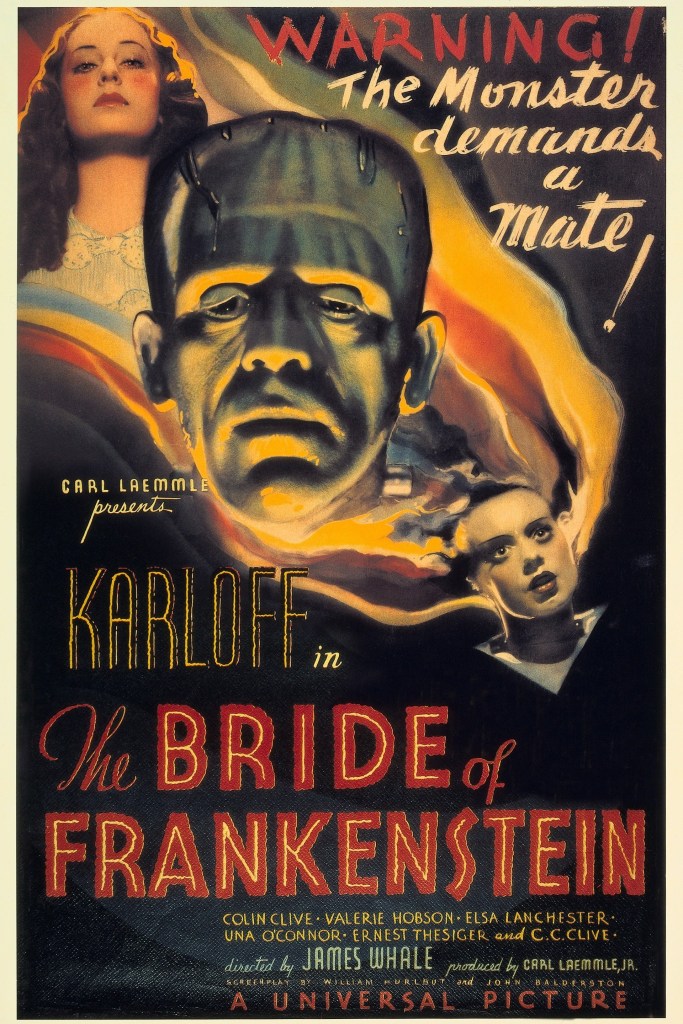
What does every studio want after a mega hit? A sequel of course! Directors are never more powerful then when studios will let them do pretty much whatever they want so long as they get another shot at capturing body-sparking lightening in a bottle one more time. James Whale and gang came back for Bride of Frankenstein and produced a classic, more entertaining than the first film, a barmy, balls-to-the-wall piece of nonsense where logic is thrown out, sly jokes abound and the meter is dialled well up to camp. Bride of Frankenstein is exactly the “memorable hoot” Whale wanted to make, and proof that perhaps he had not “drained the well” after all.

Bride of Frankenstein kicks off pretty much where Frankenstein left off – requiring some fast thinking since the creature (Boris Karloff) ended that film incinerated in a burning windmill. Turns out he actually hid in the water-logged basement, emerging to stumble into violence from villagers terrified at this bolt-necked giant’s existence. Meanwhile, a chastened Henry Frankenstein (Colin Clive) swears he’s out of the reanimation game… only to be dragged back in by his old mentor (presumably a different one to the first film’s Waldmann) the creepy Dr Pretorius (Ernest Thesiger). Pretorius has been experimenting with creating life, and he wants a whole race of these people – so he’ll need a bride for the creature, to get that ball rolling. While the creature fights and flies, Pretorius and Frankenstein fire up the generator and get ready to stitch.

There is more than a little bit of black humour to Bride of Frankenstein, a film Whale clearly never intended to be taken seriously. It’s combined with more than a touch of camp and sprinklings of the absurd with general utter indifference to any rules of time, setting or location. Whale’s gothic world is whatever and whenever he needs it to be at any point. If that means the creature is chucked in a medieval cell one minute and Dr Pretorius is using a telephone to call his underlings the next, that’s fine. Logic is already all over the place, since it opens with Mary Shelley, her husband Percy and Bryon in full period costume recapping the first movie, despite that film being littered with no-end of what would be to them unimaginable technical possibilities.

Whale buttresses his fantasia on Frankenstein by pruning out, probably, the last couple of elements of the book he liked but hadn’t used: the creature’s ability to speak, it’s time out at the secluded hut of a blind man and (of course) the concept of a bride being resurrected. But then Whale also pours all his love into Ernest Thesiger’s sinister and delightfully eccentric Dr Pretorius, the sort of larger-than-life character who leaves all reality behind. Thesiger has a whale of the time, sucking on the sarcastic dialogue like a lemon and delighting in playing the sort of amoral mad man (he even makes Frankenstein look sane) who brings a picnic to a grave-robbing and uses a tomb as a table.

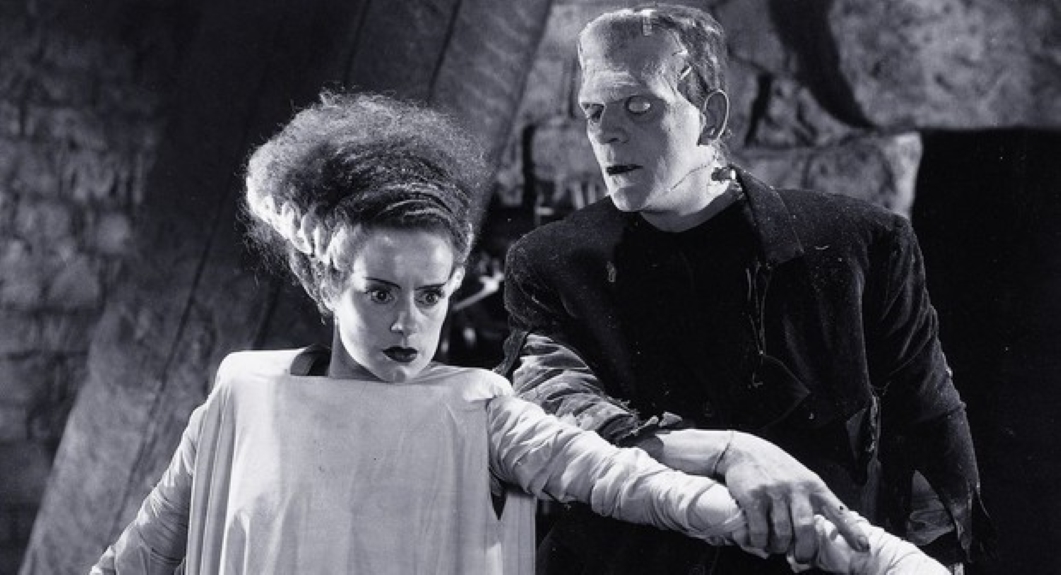
Pretorius’ swiftly brow-beats Frankenstein into saddling back up. Colin Clive – who broke his leg shortly before filming, requiring him to do nearly all his scenes sitting down – is surprisingly restrained, with the old madness only coming to the fore in the Bride’s birthing scene. That birthing scene is a brilliant expansion of the first film, Whale using the increased budget to expert effect to take us up onto the roof of the laboratory, expanding the detail shown of the mechanics of the experiment (Whale uses Dutch angles to dial up the general air of creepy weirdness and clearly was inspired by Metropolis) and launching a creation even odder than the original. As before the design work is exquisite: the Bride – wonderfully played with a ear-piercing screech (based on the swans near her London home) by Elsa Lanchester, her white high-lit hair a masterpiece of memorable, blackly-comic imagery. The Bride makes such a lasting impression, it’s a shock to realise she’s in it for less than five minutes.

Did Whale intend anything to be taken seriously? He tips the wink with Una O’Connor’s opinion-dividing performance of shrieking, Oirish panic as the villager who discovers the surviving creature. Pretorius is introduced showcasing his collection of miniature living people in jars (a bishop, a devil, a mermaid, a queen and a randy Charles Laughton-channelling Henry VIII) the sort of head-turningly bizarre scene that leaves you both delighted and shaking your head in amazement. There is something hilariously odd about the creature being introduced to those human vices, smoking and drinking. Whale was surely chortling to himself at the thought of the creature contentedly blowing smoke circles with the blind hermit or eagerly knocking back a glass with Pretorius.

It’s remarkable that despite this strong leaning into comedy, Bride of Frankenstein still manages to find the humanity in the persecution of the monster. Chased down (once again) by a wild, the creature is tied down to a pole and lifted up, his body unmistakenly in a crucifixion pose. The film’s emotional centrepiece is his sojourn with the blind hermit. It’s impossible not to see more than a touch of Whale’s experience of persecution for his homosexuality in the tender staging of these scenes, two men living contentedly together only to have their partnership condemned the moment the real world intrudes. The gentleness of these scenes becomes very affecting, not least since this is the first (and last) time the creature is treated like a person rather than a monster.

Karloff is, as before, excellent in the lead role – despite his worries about the creature’s mystery being sacrificed on the altar of his fumbling, toddler-like speech. He makes the creature, even more than before, someone reaching out for warmth and connection, disgusted at his own monstrous nature and whose delight at the idea of a bride is strangely touching. (Bride of Frankenstein – a title even name checked at one point by Pretorius – cemented the popular confusion about whether the creature or his creator is ‘Frankenstein’). It’s the monster who also emerges at the film’s conclusion as the closest thing we have to a moral force.

Really Bride of Frankenstein shouldn’t work as half as well as it does. It’s part horror, part black comedy, part farce with scenes that shift from tragedy to knock-about satire. But it’s superbly assembled by Whale – at the top of his game here – and barrels along at such speed (sustained by superb performances, in particular from Karloff, Lanchester and Thesiger creating a portrait of monstrously soft-spoken camp for the ages) and with such full-blooded commitment at every moment that the film never once sinks. It is such a gloriously entertaining, wildly committed piece of pulpy film-making that it’s hard to imagine it could have been done better. And it certainly was the last word in what to do with the monster on-screen, that saw him embrace fear, love, comedy and tragedy all in one go. He probably should have stayed with the dead.