Tag: Glenda Farrell

Lady for a Day (1933)

Lady for a Day (1933)

Capra’s charming comedy is really a sort of proto-Ealing film, and certainly a lot of fun

Director: Frank Capra

Cast: Warren William (Dave the Dude), May Robson (Apple Annie), Guy Kibbee (Henry D Blake), Glenda Farrell (Missouri Martin), Ned Sparks (Happy Maguire), Jean Parker (Louise), Barry Norton (Carlos), Walter Connolly (Count Romero), Nat Pendleton (Shakespeare), Halliwell Hobbes (Butler), Hobart Bosworth (Governor)
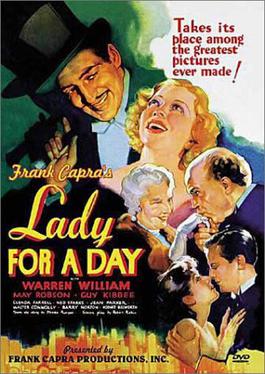
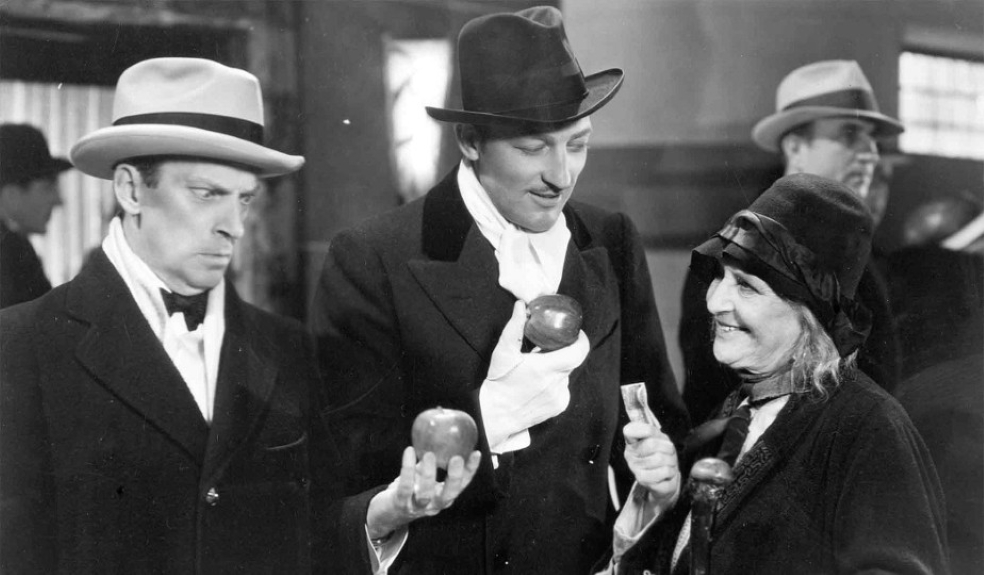
Based on a short story called Madame La Gimp (probably wise to change that title), Frank Capra’s Lady for a Day (for which he received his first Oscar nomination) fits neatly into his wheelhouse in one sense with its feel-good, comic sentimentality. But it also feels rather like an Ealing film made before the studio even existed. It’s a film where ordinary folks, some of them not exactly saints, with a mix of cunning and luck, run circles around the powers that be in the name of a good cause. It’s also a sharp, witty, fast-paced comedy with a happy ending. It’s a real crowd-pleasing comedy.

Apple Annie (May Robson) is an ageing fruit seller in New York City, who has seen better days but now lives in a rundown flat. But she’s doesn’t want the daughter, who she gave up for adoption decades ago, to know that. Using headed notepaper from a posh hotel, she has spun her a story for years that Annie is a well-to-do society figure in the Big Apple. So, it’s a disaster when daughter Louise (Jean Parker) writes back saying she’s engaged to the son of a Spanish count and is bringing him to New York to meet her mother. Apple Annie’s story seems doomed – but her salvation is that she is the lucky charm of rogueish gambler gangster Dave the Dude (Warren William) who never does a deal without buying one of her apples first. Can Dave ‘s money and his crew – with the help of a borrowed apartment – act out her fantasy for real?

Lady for a Day becomes a charming, fast-paced, semi-farce with Dave’s rough-and-tumble crew constantly trying to keep a step ahead of Louise’s prospective husband and father-in-law finding out the truth. They are helped by a large group of semi-vagrants from Apple Annie’s neighbourhood, all presented with an endearingly, non-patronising sense of supportive community. This leads to a constant parade of hustling their visitors from place-to-place, intercepting phone calls to the Spanish consulate and roping in a parade of New Yoick hustlers to play society grandees at a soiree. All of this while trying to stay one step ahead of the police and press, who are both convinced if the Dude is chucking this much money and people around, he must be planning a big score.

It’s the sort of charm you can’t imagine being allowed to fly even a year later: gangsters who don’t for a single-minute consider renouncing their life of making money from illicit deals (among other things), presented as put-upon, but-decent guys, bending over backwards to make an old woman’s dream come true. Lady for a Day doesn’t for a second suggest there should be a price to pay for their naughty day jobs. ‘Worse’ than that, in true Earling style, it presents the police chasing after them as dumb flat foots, hopelessly clueless and off-the-pace. Hard to believe the Hays Code passing that.

But it really works here, especially since Capra directs with phenomenal zip and wit. You could imagine a version of Lady for a Day weighted down in cheap sentimentality (in fact, you don’t need to – Capra made it in 1961 calling it A Pocketful of Miracles), but instead this is genuinely funny with well-drawn characters. Warren William is very good as the increasingly put-upon Duke, who can’t believe he’s been pulled into funding this good deed, but commits to it with world-weary resignation. He ‘sparks’ brilliantly off Ned Sparks’ rat-a-tat, cynical fixer flummoxed by his boss turning ‘Father Christmas’ but as determined to deliver on the deal as he would be on any other criminal enterprise.

And refreshingly Lady for a Day’s plot still has an air of criminal enterprise about it. They aren’t above threatening Halliwell Hobbes’ excellently dry butler with a bit of physical harm if he doesn’t play his part to perfection (doesn’t stop Hobbes getting in a cuttingly witty line about Sparks’ poor grammar). When a trio of journalists cause problems, they kidnap them (only for a few days they promise!). Difficult people are quietly strong-armed out of the way. Capra – working with a typically excellent Robert Riskin script – gets the tone just right, with just enough whimsical, Wildean farce.

This also plays into several set-pieces. The planning of the elaborate soiree is a particular gem. Packed with a parade of gamblers, tough guys and molls – all lacking even a drop of sophistication – they are carefully given a named role (one of them protests playing the Secretary of Defence – “a secretary is a secretary”) and a single line of high-styled dialogue, which they require hours of careful coaching to not fumble. The entire idea is excellent and superbly executed. Their dialogue is all provided by Guy Kibbee’s (quite excellent here) English gent-turned pool hustler, ‘playing’ Annie’s husband and enjoying a taste of the high life – while, in another memorable scene, discovering his pool hustling skills are more than a little helpful to the cause.

The film also works because it has a lovely, heartfelt performance by May Robson (Oscar nominated) as Annie. There is a wonderful Dickensian quality to Robson, with Apple Annie a Mrs Gamp with a tragic past (there are several references that she was once a lot more affluent than shifting apples on the street). Robson makes her sweet but sparky but never loses track of her vulnerability and fear that the truth may be discovered. She makes the character feel real and grounded, meaning the scenes with her daughter (which could have tipped into sentimentality) are genuinely quite touching.

It’s another successful beat in a fast-paced film that is entertaining, genuinely quite heart-warming and stuffed with excellent performances from a parade of studio players grabbing the sort of roles they wouldn’t normally get by the scruff of the neck. With its compassionate regard for the little guys, while not presenting either vagrants patronisingly or gangsters naively, it constantly entertains. It’s got a pre-Code daring about it (there is a neat joke about a gay hairdresser and a hint that Annie had her child out of wedlock, neither of which would have flown years later) and in its comic wit and fast-paced energy it’s one of Capra’s finest. Sure, it ends before Annie has to return to her previous life (and I’ve no idea what they would do if Louise visited again) but the film is as much about spinning a charming fantasy for us as it is for the characters.

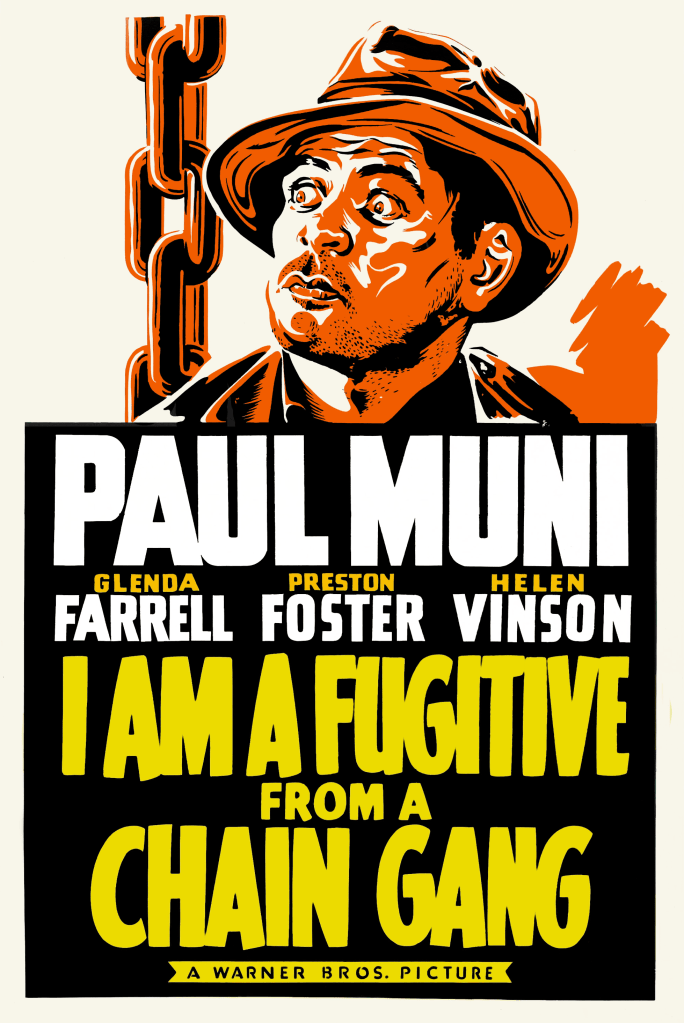
I Am a Fugitive From a Chain Gang (1932)

I Am a Fugitive From a Chain Gang (1932)

Pioneering social issues film remains an impressively mounted film, made with real passion

Director: Mervyn LeRoy

Cast: Paul Muni (James Allen), Glenda Farrell (Marie), Helen Vinson (Helen), Noel Francis (Linda), Preston Foster (Pete), Allen Jenkins (Barney Sykes), Berton Churchill (Judge), Edward Ellis (Bomber Wells), David Landau (Warden), Hale Hamilton (Reverend Allen), Sally Blane (Alice), Louise Carter (Mrs Allen)

What are prisons for? Just punishment or should they encourage reform and change? To many in the South, its clear prisons were solely about the former and had nothing to do about the latter. That, in fact, you couldn’t reform a criminal – after a prison sentence he would always inevitably come back for more. I Am a Fugitive from a Chain Gang, based on a true story, is all about exploring a dehumanising system designed to turn men into working animals, beaten for looking the wrong way. No chance of a pardon, just chain men to each other, shove a pickaxe in their hand and give them a thrashing if they stop swinging it against a rock for more than second.

Based on a memoir by Robert Burns, James Allen (Paul Muni) returns from fighting in World War One with dreams of becoming an architect. Instead, he finds the American workplace is not a welcoming place for a flood of returning soldiers, drifting from state to state for work. Until, in an unnamed Southern State, he accidentally ends up in the middle of a $5 theft and is sentenced to ten years on a chain gang. The prison is a hotbed of inhumanity, with prisoners frequently beaten, dehumanised and all but worked to death. After a year he escapes and finds his way to Chicago where he reinvents himself as a successful surveyor – only, years later, for a bitter wife to expose his secret. Can he trust the Southern State that his sentence will be commuted if he agrees to return and give himself up?

I Am a Fugitive from a Chain Gang was one of the first – and probably one of the best – 1930s social issues films. It’s a surprisingly hard-hitting look at a cruel system, which (although keen to make our hero an unwitting participant in a minor crime, rather than clearly guilty like Burns) passes a sympathetic eye on criminals, asking us to question whether, whatever their crimes, they deserve this system. A system where prisoners can be randomly thrashed near to death by a thick leather belt, where pausing at work will lead to an instant beating. Where a prisoner tied to a post by his neck is such an everyday occurrence, the film is happy to throw it away in a passing shot. It makes a strong case that how we treat prisoners says as much about us as I does them – and that, sadistic wardens quickly become little better than the men they guard.

LeRoy’s film also makes a strong argument that we talk-the-talk but rarely walk-the-walk when it comes to supporting servicemen. James Allen returns a decorated hero – but his family, former employer and patronising reverend brother assume he will happily return to grunt work on the production line. War has expanded his horizons and ambitions, given him the skills to better himself. No one wants to hear it. He’s not alone: many drifters are ex-servicemen and when he tries to pawn his medals a pawnbroker sadly shows him a bucket full of worthless service decorations. It’s an indication that everyone has an assigned role and place and they shouldn’t for one minute expect to step outside this.

It’s no wonder that the prison sentence treats men like animals – a point LeRoy makes by cutting between donkeys and men both being chained up ready for a day’s work. IAAFFACG makes clear in this system all men are equal in their inequality, cutting back and forth from Black to white prisoners as they are prepare for the days work. (The film does make clear there is a higher number of Black prisoners than white). Allen protests at first, but learns to shrug his shoulders and turn away like the rest do. A freed prisoner showcases this indifferent acceptance of suffering, leaving at the same time as a deceased one, hitching a ride on the cart sitting merrily on a fellow worker’s coffin, striking a match for his cigarette on it. LeRoy shoots the prison beds where the men sleep chained together with a forbidding moodiness and the wide-open spaces where they slave in the beating sun with a scale and sense of heat bearing down on us.

Allen won’t be beaten though. His escape is a beautifully filmed and edited sequence, show-casing the film’s triumphant use of sound. LeRoy’s camera tracks both Allen and pursuers as they flee through the undergrowth, adding pace and intensity to the sequence, soundtracked to the bark of the hounds following him. It’s a sound you really notice disappear when Allen hurls himself into a river, using a reed as an air pipe, hiding feet away from his pursuers, in a series of underwater shots that have a haunting power. It’s superbly done, full of tension and fear.

Escaped, first thing James does is buy a suit and have a shave. Instantly he is above suspicion – even while he is perfectly described be a flatfoot cop sitting next to him in the barbers, not a trace of suspicion is placed on to him (thanks for the ‘close shave’ Allen drily says). Now looking like a respectable middle-class sort, James Allen – under his new name of Allen James – suddenly finds opportunities heading his way, moving quickly up the chain at his new job in Chicago. In this world, outward appearances make the man: and a guy in a new suit is always going to get the sort of attention a down-and-out can only dream of.

So much is Allen now an ideal prospect, he is blackmailed into marriage by Glenda Farrell’s hard-faced Marie, a decision that will bite him hard when he makes eyes years later at the sweet Helen (Helen Visnor). He’s pulled back into the world he thought he had left behind, only to find its not changed at all: to the ‘justice’ system his new professional achievements count for not a jot. To them he’s still the same subhuman scum he was before, an even harsher regime swiftly initiated to drive any vestige of humanity from him, even in the face of a national campaign.

At the centre of this film is a superb performance by Paul Muni. Sure, you can see touches of Muni’s love for melodrama, the odd overdone reaction. But this is an emotionally raw, deeply touching performance. Muni gives Allen a superabundance of energy, enthusiasm and hope at the film’s start all of which slowly drains away. The horror builds behind his eyes: it’s no surprise that, re-sentenced to the chain gang, Muni’s face crumbles into genuinely affecting tears of fear and hopelessness. Slowly, despite himself, Allen becomes the toughened, cynical, damaged man the system assumes he was at the start, strangling the hope and optimism that characterised him at the start. It’s a sensitive, deeply humane performance, of humanity being chiselled away.

It results, of course, in the film’s striking (and famous) closing shot, the now fugitive Allen whispering from the shadows, all chance of making an honest life gone. IAAFFACG has already symbolically shown how this system has twisted Allen: having dreamed his whole life of being a bridge builder, one of his final acts in the film is to destroy a bridge as part of a desperate escape. IAAFFACG doesn’t overegg its social commentary, but leaves a strong and lasting impression of how treating men like animals becomes a self-fulfilling prophecy. Leave them no choice and a man must turn to crime: it’s as true for abandoned veterans as it is for chain-gang criminals. In making an appeal for a fairer, kinder world, IAAFFACG doesn’t miss that we are a long way from it right now.

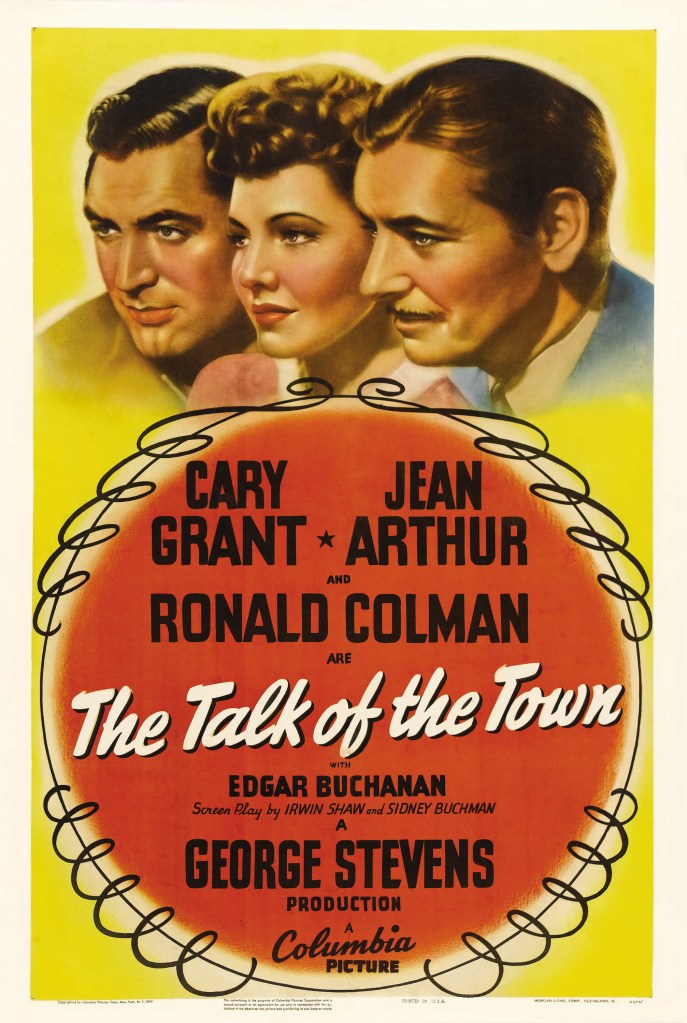
The Talk of the Town (1942)

The Talk of the Town (1942)

Overlooked but delightful comedy with three star actors at the absolutely charming top of their game

Director: George Cukor

Cast: Cary Grant (Leopold Dilg), Jean Arthur (Nora Shelley), Ronald Colman (Professor Michael Lightcap), Edgar Buchanan (Sam Yates), Glenda Farrell (Regina Bush), Charles Dingle (Andrew Holmes), Clyde Fillmore (Senator Boyd), Emma Dunn (Mrs Shelley), Rex Ingram (Tilney), Leonid Kinskey (Jan Pulaski)

Leopold Dilg (Cary Grant) is in a heck of a fix. A passionate campaigner for worker rights, all fingers point straight at him when a local factory burns down leaving an unpopular foreman dead. Dilg rather than wait in the slammer for an inevitably (fatal) sentence, he escapes and find refuge in the country cottage of former schoolmate Nora Shelley (Jean Arthur). Problem is Nora has sublet her cottage to straight-as-a-die legal professor Michael Lightbody (Ronald Colman), in the running for the Supreme Court. With Dilg passing himself off as a gardener, can he and Nora convince the ultra-serious Lightbody there has been a miscarriage of justice?

The Talk of the Town is a hugely enjoyable comedy with more than a pinch of social commentary, that gives three charismatic stars tailor-made roles under the assured hand of a skilled director. It’s a great mix of genres: it opens like a dark thriller, segues into an odd-couple-house-share comedy via a romantic-love-triangle, transforms again into a slightly zany detecting comedy with road-trip vibes and wraps up as courtroom drama with a Capraesque speech and happy ending. The fact all this hangs masterfully together makes The Talk of the Town stand out as a consistently surprising and enjoyable comedy, full of zip and smart, funny lines.

Stevens choreographs the film superbly, specifically in its initial set-up where the three lead characters weave in and out of each other’s lives in the house. Initially Grant hides in the attic – signalling from a window his desire for food (an excellent running gag is the amount Grant’s character enthusiastically eats), with Arthur going to acrobatic lengths to hide his presence from Colman. You can imagine other films getting an entire hour out of this: The Talk of the Town is brave enough to shake-up this set-up within twenty minutes, as Grant nonchalantly wanders downstairs to introduce himself, quick thinkingly introduced as a gardener by an as-surprised-as-us Arthur.

It’s a surprise, but a perfect one – after all it would be hard easy to consider Colman’s character a head-in-the-clouds dullard if he had been fooled for long by Arthur’s increasingly unusual behaviour. And The Talk of the Town needs us to like and respect all three of these characters, to root for all of them. What better way, but to get them rooting for each other?

The odd houseshare comedy that takes over Talk of the Town is all about its principles effectively falling in love with each other (there is a thruple version of Talk of the Town waiting to be made). Grant learns to respect Colman’s self-effacing, shy wit. Colman learns to enjoy Grant’s instinctive intelligence. Both of them find deeper feelings growing for Arthur’s feisty Nora, just as she finds herself drawn to the charm, good nature and honesty of the other two. Talk of the Town becomes delightful as we watch the three of them eat meals together, play chess and chat about the law late into the night. Few films have shown as skilfully friendships organically growing.

The tension that takes over is whether outside forces will tear this friendship apart. Namely, if Colman finds out Grant’s identity will he swop from buying Borscht for his friend (sweetly, Colman remembers a throwaway comment about exactly how much he likes it) to being duty bound to shopping him to the cops? Grant and Arthur are aware of the danger: they’ve been drop-feeding references to the unsound accusations against Grant throughout, all while desperately making sure he never sees Grant’s mugshot photo in the papers (right up to pouring eggs over the front page) – the way Colman eventually finds this out is a beautifully done reveal.

All of this entirely relies on three actors at the top of their game. Grant seems, at first, an odd choice for a worker’s rights campaigner, but this is one of his lightest, most overlooked performances: wry, knowing and playful. Arthur is excellent as the electric centre of this love triangle, energetically torn between two very different men and terrifically determined under the occasionally scatty surface. Colman is dapper, upper-class charm to a T, but full of egalitarian charm and surprisingly willing to begin to question his own views in conversation with others.

Colman’s initial rigidity is represented – in a plot point that’s slightly on-the-nose (literally) – by his goatee, which he wears as a metaphorical shield between him and the world (it’s also another neat running gag, as it garners endless unflattering comments). When Colman inevitably shaves it off (a moment so overplayed, his trusted valet breaks down in tears at the sight) it’s a sign that he has accepted there is more to the law than just its letter. It plays into the film’s final shift, as Colman fills the final act with a passionate speech to silence a crowded courtroom ready for a judicial lynching (hilariously littered with direct quotes from his Grant’s character).

Much to my surprise, the social commentary and democratic praise never outweighs the comedy. The film gives space to earnest debate, but still has time for a madcap chase that ends with Colman hiding up a tree from police dogs. Stevens successfully mixes styles, from Fritz Lang thriller to Preston Sturges comedy to a mix of Hitchcock and Capra. Stevens fuses all these together perfectly, making a film funny, exciting when it needs to be, but always engaging with characters you really root for.

The Talk of the Town is overlooked but a very well-made treat and an exceptional showcase to three charismatic, hugely engaging actors. It marries comedy and social commentary extremely well (it even has a Black character in Rex Ingram’s wise valet whose race is incidental to his personality, quite a thing in the 40s) and bowls along with a huge sense of fun. It’s definitely worth seeking out.