Category: Costume drama

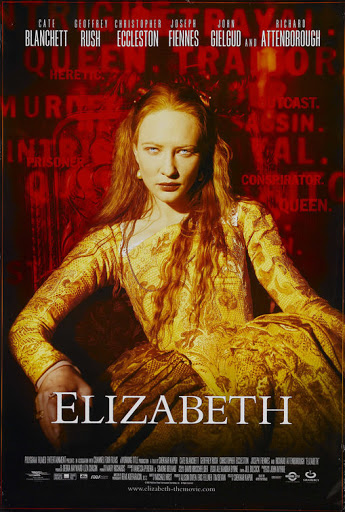
Elizabeth (1998)

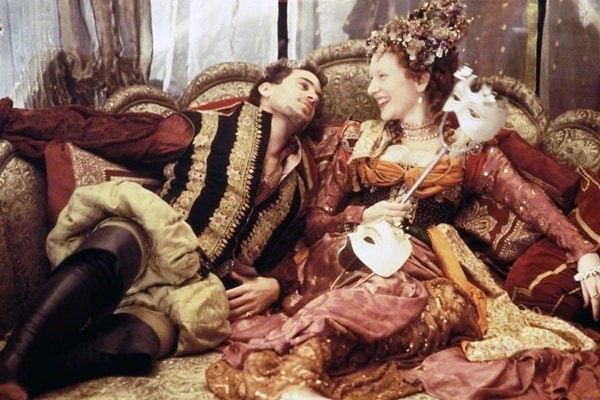
Joseph Fiennes flirts with a regal Cate Blanchett in this landmark Tudor history flick Elizabeth

Director: Shekhar Kapur
Cast: Cate Blanchett (Elizabeth I), Geoffrey Rush (Francis Walsingham), Joseph Fiennes (Robert Dudley, Earl of Leicester), Richard Attenborough (Lord William Cecil), Christopher Eccleston (Duke of Norfolk), Kathy Burke (Mary I), Fanny Ardant (Mary of Guise), Vincent Cassel (Duke of Anjou), Eric Cantona (French Ambassador de Foix), Emily Mortimer (Kat Ashley), Kelly Macdonald (Isabel Knollys), John Gielgud (Pope Pius V), Daniel Craig (John Ballard), James Frain (Alvaro de la Quadra), Edward Hardwicke (Earl of Arundel), Jamie Foreman (Earl of Sussex), Terence Rigby (Bishop Gardiner)

Not many people would think of Elizabeth as being an influential film. But I would say the roots of all modern costume drama can be found in this British Tudor epic. Classic costume drama before had seen the focus on “thees and thous”, Greensleeves, lovely costumes, well-lit sets and a certain grandeur. Elizabeth re-set the table. Mixing The Godfather with Elizabeth R, Elizabeth turned costume drama into a world of dark schemes, political intrigue, violence and lashings of sex and passion. It would leave prestige Hollywood dramas of the 70s and 80s behind and turn costume drama into something far darker, grittier and sexual than ever before.

The film follows the early years of the reign of Elizabeth I (Cate Blanchett). The queen is young, naïve and passionate. She’s well educated and smart, but still impulsive and too much in thrall to her emotions. She’s far too open about her sex-filled love affair with Robert Dudley (Joseph Fiennes), new-made Earl of Leicester, and too inexperienced to heed the advice of either William Cecil (Richard Attenborough), who is pushing her towards the middle-ground of European alliances, or Francis Walsingham (Geoffrey Rush), who argues for Elizabeth to lead a strong nation, willing to take on its enemies. Conspiracies whirl around the court, as disaffected Catholics led by the Duke of Norfolk (Christopher Eccleston) plot to seize the crown and restore the “true religion”.

Elizabeth’s style is triumphant. Many of the scenes take place in dimly lit halls at court, and candlelit private chambers. The palace is seemingly made of nooks and crannies where conspirators and lovers can silently retreat and keep their intentions secret. The music – wonderfully composed by David Hirschfelder – is a mixture of urgent marches and murky sounding chords, which brings a watery effect to the soundtrack, as if every moment could twist into swamp-like traps of treachery. The film is briskly cut, frequently jump-cutting and putting together impressive montages of conspirators or events. 

The film starts with such a montage of protestants being burned: moving swiftly from a death warrant being stamped, to heads being brutally (and bloodily) shaved to an overhead shot of the cart carrying the martyrs to their deaths, culminating in their cries as the fires reach hold and finally overwhelm the soundtrack. It’s a sign straightaway that this will be very different from the traditional taste and decorum of a costume drama – and this film won’t flinch away from the grimness. Shekhar Kapur’s direction throughout is stylish, dynamic and uses editing and cinematic tricks to great effect (if at times with a little too much flash).

And the film is soaking in political intrigue – conspiracies and plots swell and unfold, with the film finally culminating in a clearly Godfather-esque purge of the Queen’s enemies. This is Tudor drama as Mafia flick, the lords of England little better than the heads of the five families, and Elizabeth the young heir they underestimate at their peril. It takes historical action and brings it definitely into a very modern feeling conspiracy thriller, using cinematic tricks and good editing to break away from the more staid period pieces of the 1970s into something much darker and atmospheric.

That also carries across into its exploration of sex, something that has got even more play in costume dramas since. It’s odd to think that the film was quite controversial at the time for showing Elizabeth and Dudley engaged in a passionate sexual affair, or for suggesting that the Queen “became a virgin” as part of piece of political showmanship. The film fronts and centres the young naivety of Elizabeth and her all-consuming fascination with Dudley – well played by Joseph Fiennes as a part romantic dreamer, part tragic weakling – and her slow realisation that there is no place for romance and passion in the world of being a queen.

Because the film is also a coming of age drama: how did Elizabeth become the Greatest Tudor Monarch? Cate Blanchett is inspired casting choice, dominating the film with a multi-faceted performance that sees Elizabeth change from an excited young girl into the distant authoritarian figure. Blanchett gets to play it all here, showing her impressive range, charting this changing personality as not always linear – so a scene of giddy romance can be followed by her sharpness when challenging the lords of England over matters of religion and then back to weakness. While you can argue the film undermines Elizabeth’s intelligence (particularly early on) what it does capture supremely well is her determination and her wilfulness. It also triumphantly turns her into a very human figure, Blanchett brilliantly showing a character forcefully – and consciously – reshaping herself to meet the demands of her office.

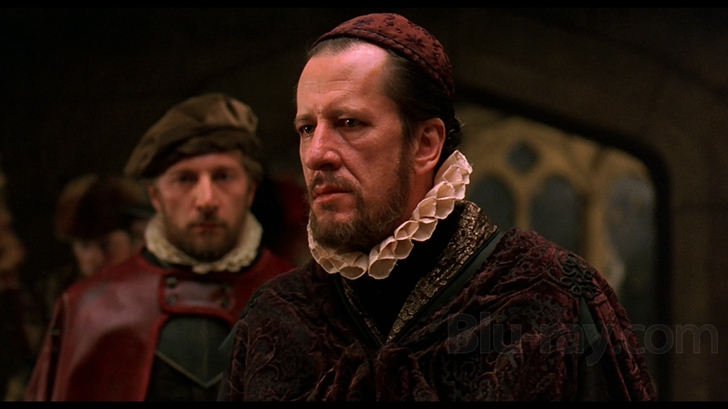
Around Blanchett, Kapur assembles possibly one of the most eclectic casts in history. Can you think of another film where you could see John Gielgud one scene and Eric Cantona the next? Richard Attenborough and Angus Deayton side-by-side? Fortunately, the core roles are played by assured and impressive performers. Eccleston makes for a wonderfully imperious, self-important Norfolk. Cassel goes gleefully over-the-top as the camp Anjou. Frain, Craig and others excel in early roles. The pick of the lot is a mesmeric performance by Rush as the sinister but loyal Walsingham, an eminence grise willing to work things in the background Elizabeth wants but cannot ask for, a wartime consigliere, several steps ahead of the rest and whose loyalty to Elizabeth is matched only by his ruthlessness.

Historically the film has only a passing resemblance to reality. Elizabeth’s political astuteness was sharper from the first than the film gives her credit for (although, as its aim is to stress how humanity must be sacrificed for power, there are artistic reasons for this). Bishop Gardiner, leader of the anti-Elizabeth church faction, had died during the reign of Mary I. Cecil is played as an unimaginative old man, when he was in fact in his thirties when Elizabeth came to the throne, and her most trusted and wisest advisor. Numerous events are telescoped and combined – the Ridolfi plot which (roughly) climaxes the film took place 14 years into Elizabeth’s rule, not within at most a year. The film ends with a series of historical captions, not a single one of which is actually true. Michael Hirst’s script plays fast and loose with history (and with the odd dodgy line along the way) but he’s got a flair for bringing out the drama.

But does it matter? After all, who really looks to films for their history lessons? What Elizabeth is trying to do is to turn history into cinema, and this it does to glorious effect. It also managed to change our idea of what a “history film” was. After Elizabeth, history dramas would turn increasingly into darker tales, tinged with sex and conspiracy. But this film remains one of the best, directed with real flair and style by Kapur and powered by a superb performance by Cate Blanchett. Elizabeth gets more or less everything (apart from the facts of course) stylishly right and tells English history with gripping and entertaining intensity.

Barry Lyndon (1975)

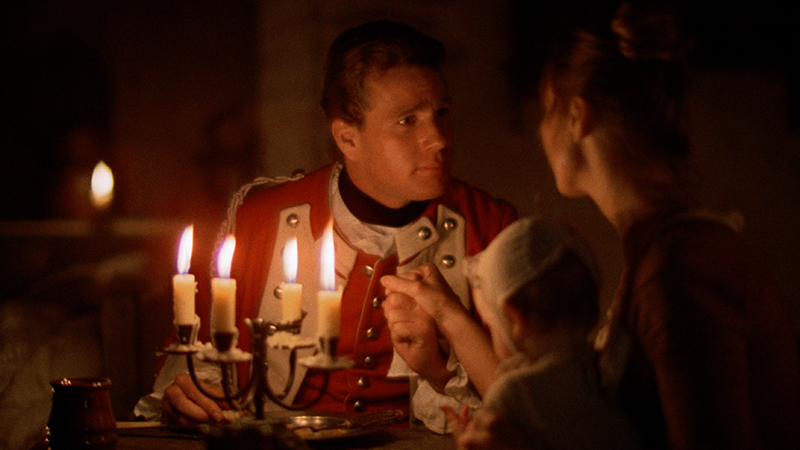
Ryan O’Neal is Barry Lyndon in Kubrick’s brilliantly distant epic

Director: Stanley Kubrick

Cast: Ryan O’Neal (Redmond Barry), Marisa Berenson (Lady Lyndon), Michael Hordern (Narrator), Patrick Magee (Chevalier du Balibari), Hardy Krüger (Captain Potzdorf), Marie Kean (Belle Barry), Gay Hamilton (Nora Brady), Godfrey Quigley (Captain Grogan), Murray Melvin (Reverend Samuel Runt), Steven Berkoff (Lord Ludd), Frank Middlemass (Sir Charles Reginald Lyndon), Leon Vitali (Lord Bullingdon), Leonard Rossiter (Captain John Quin), André Morell (Lord Wendover), Anthony Sharp (Lord Hallam), Philip Stone (Graham), Arthur O’Sullivan (Captain Feeney)

Kubrick has been criticised as a director more interested in style and the technical tricks of cinema than emotion, and there is perhaps no argument for the prosecution than Barry Lyndon. It now seems to the cineaste’s choice du jour as the greatest Kubrick film (probably partly because it is less well-known). Barry Lyndon however is like an exercise in all Kubrick’s strengths and weaknesses, a film that you can admire at great length while simultaneously caring very little about anything that happens in it.

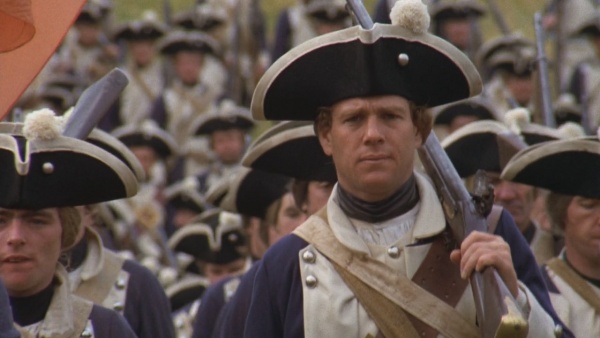
Based on a William Makepeace Thackeray (although it feels in spirit only), Barry Lyndon tells the story of Irish chancer Redmond Barry (Ryan O’Neal) in the mid eighteenth century. Fleeing Ireland after (he believes) killing an English officer in a duel, Barry goes from the British arm to the Prussian army, to card-sharping the courts of Europe to marrying into the aristocracy, as husband to Lady Lyndon (Marisa Berenson). But, however hard he tries, it’s difficult for an Irish chancer to be accepted by the British aristocracy, particularly when he suffers from the vocal hatred of his wife’s son Lord Bullingdon (Leon Vitali). 

Kubrick spent several years carrying out research for an epic biopic of Napoleon (he had Ian Holm lined up for the lead role – Holm read multiple biographies and spent months working on a script with Kubrick). The flop of Waterloo (with a deliciously hammy Rod Steiger as Napoleon) killed off the chances of that film making it to the screen. Never-the-less Kubrick now had a vast archive of research for the period – and how easy it was to shift the focus of this research back a few decades. Thackeray’s novel was his chance to put all this to use – and allow Kubrick to indulge what had become a passion for the style of the era.

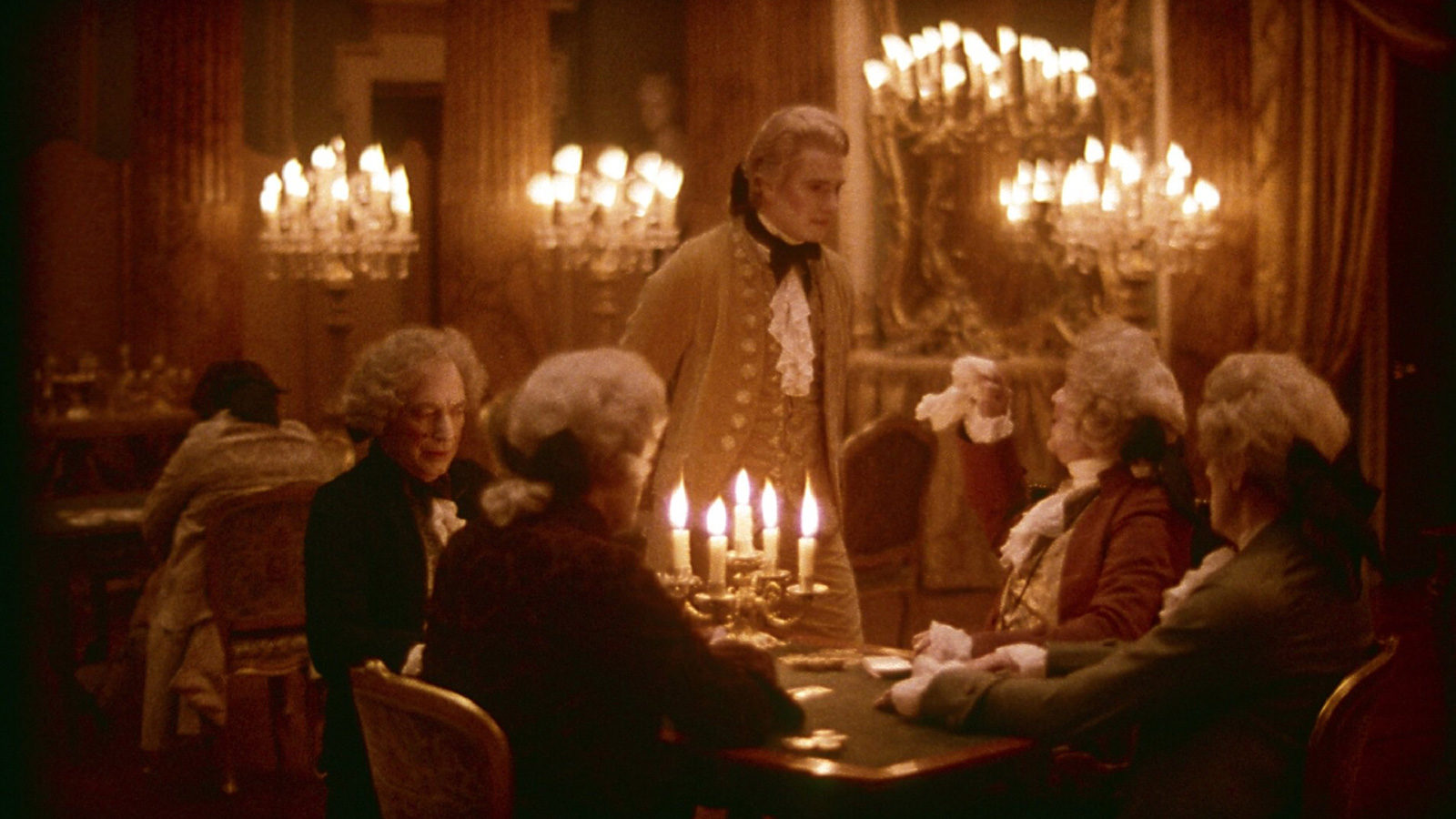
Barry Lyndon won four Oscars – and all in the areas where the film deserves unqualified praise. This is a stunningly beautiful piece of work, surely a contender for one of the most strikingly gorgeous films ever made. Ken Adam’s set design utilises a superb range of locations across the UK, dressed to breath-taking effect. The costumes, completely accurate to the period, are exquisitely detailed (Milan Canonero and Ulla-Britt Söderland) and lusciously mounted. Leonard Rosenman’s score is a wonderful riff on a range of masterpieces from classical music, including Handel, Bach, Schubert and Mozart.

Most strikingly Kubrick decided to film as much as possible with natural lighting only, rather than the vast array of lighting bought in for most films. This was part of Kubrick’s intention to avoid any sense of the studio to his film – everything was to be shot on location and to help immerse the viewer in the detail of the period. Shots were framed to imitate artists of the period, in particular Hogarth. Evening scenes were shot lit only by candle-light, leading to truly stunning images, simply superbly lit. John Alcott’s photograhy utilised (and I’m serious here) NASA designed cameras used for the moon landings to capture images in such low light. Visually, Barry Lyndon may be one of the most perfect films ever made. It’s wonderful – and any doubts that Kubrick is not a true master of cinema should be dismissed.

But Kubrick’s problem, as always? He’s a technocrat artist who lacks some soul. So much time and energy has been expelled on the visuals and the design – the film took almost a year to shoot – that, while you are constantly almost hypnotised by its sublime imagery, it slowly occurs to you that you couldn’t care less about most of the events that happen in it. For all the film’s great length and beauty, it’s a cold and distant film. Kubrick turns Thackeray’s rogueish comic tale – a picaresque dance – into a chillingly sterile meditation on fate, with Barry transformed from a rogue and chancer into a lifeless, passive figure to whom things happen rather than ever attempting to instigate them. 

Is this Kubrick’s idea of humanity? Perhaps it suits the director who was the great master of intricate design and traps, that he would be tempted to turn this story into one where humans are just another piece of set dressing moved around and manipulated by an unseen force (fate, or rather a director?). The distancing effect is further by super-imposing an all-knowing narrator over the events, who frequently pre-empts what will happen and stresses the powerlessness of men. (On a side note, the book is narrated by Barry as were early screenplay drafts – perhaps the idea of O’Neal’s flat voice narrating so much of the action horrified Kubrick. It’s a definite improvement to get Michael Hordern’s tones talking to us for three hours.)

Perhaps though, the failure to capture any sense of Thackeray’s satirical wit, is a sharp reveal of Kubrick’s own inability to appreciate comedy – without the guiding hand of a Peter Sellers to support him. The problem is exacerbated by Ryan O’Neal in the lead role. Kubrick was ordered to hire one of the top ten box office draws of 1972 in the lead role – alas only O’Neal and Redford were the correct age and sex, and Redford (first choice) could never see himself as an Irishman masquerading as an Englishman. So O’Neal got the job – and the film is a damning indictment of his lack of charisma, flat and dry delivery and inability to bring life and energy to the proceedings (although O’Neal has blamed the editing partly for this, as well as the extended shoot). The film helped put an end to O’Neal’s career as a star (already on the wane) – and he is the film’s greatest weakness, in a role that needed more of the impish charm of Malcolm McDowell (although the lead actor from any of Kubrick’s films would have been superior). O’Neal’s presence turns Barry into a character we care nothing for, in a story already coldly distant.

O’Neal is also not helped by Kubrick’s utilising again his great love of striking British character actors – every role is filled with a recognisable face from 1970s British film and TV, each bringing colour and vibrancy to their (often brief) scenes. From Leonard Rossiter – weasily as you’d expect – as the captain Barry thinks he kills, through Patrick Magee’s ambivalently sinister Chevalier, Marie Kean’s loving mother, Murray Melvin’s obsequious priest, Godfrey Quigley’s matey army officer there is not a weak turn elsewhere in the movie. Leon Vitali brings real depth and energy into the film late on as Barry’s son-in-law and hated rival. Even Marisa Berenson – reduced to a dozen lines at most – makes an emotional impression as a woman trapped into serving the needs of the men in her life.

All these actors however are revolving in a movie that gets stuck and overwhelmed in its own grandeur and beauty. There are many wonderful sequences – with the film bookended by two duelling sequences that explore the strange rules and conventions with this society with a vicious black humour. Kubrick’s points about the oppressive insularity of the establishment – and the amount of forgiveness it has for its own, compared to the instant judgement of the outsider – are generally well-made, but are at times so laced with the director’s own cynical views of humanity in general (an increasingly clear trait in his later work) that they carry little impact. Despite this the film is never less than strangely captivating, even if its very easy to let it drift past you rather than invest in it.

But above all, while the film is stunning and the direction of Kubrick near faultless, the film itself gets so close to a great painting that it becomes something you hang on the wall to admire, but not to invest in. Kubrick couldn’t match his genius with the sort of emotion or wit that the story needed (much as it’s vastly superior to Tom Jones, that film gets closer to the spirit of authors like Thackeray than this ever does). Instead, he creates a coldly sterile world, like a perfect experiment in form and style that totally forgets such trivial elements as character and story. For all the film is full of character and events, you’ll find you care very little about them – and that the brilliance of Kubrick is only a partial consolation for that loss.

Dangerous Liaisons (1988)

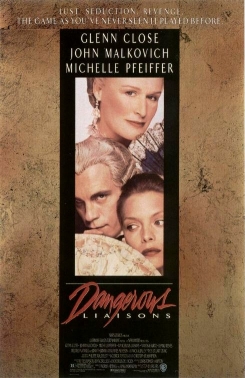
Glenn Close and John Malkovich play games of lust and sex in Dangerous Liaisons

Director: Stephen Frears

Cast: Glenn Close (Marquise Isabelle du Merteuil), John Malkovich (Vicomte Sébastian de Valmont), Michelle Pfeiffer (Madame Marie du Tourvel), Uma Thurman (Cécile de Volanges), Swoosie Kurtz (Madame de Volanges), Keanu Reeves (Raphael Danceny), Mildred Natwick (Madame du Rosemonde), Peter Capaldi (Azolan), Valerie Gogan (Julie)

Christopher Hampton’s adaptation of Pierre Choderlos de Laclos Les liaisons Dangereuses had been a stunning success in the West End and on Broadway – so a film adaptation of this lusciously set story of sex was inevitable. Stephen Frears’ film keeps the story grounded in its setting of pre-Revolutionary France, but deliberately encourages a modern looseness, even archness, from its actors that makes it feel grounded and modern.

The Marquise du Merteuil (Glenn Close) and Vicomte de Valmont (John Malkovich) are two French aristocrats who fill their time with seductions and sexual manipulation of other people, while conducting a dance of attraction around each other. Du Mertuil wants revenge against her ex-lover by getting Valmont to seduce the lover’s innocent intended bride Cécile de Volanges (Uma Thurman). But Valmont is more interested in setting himself the challenge of seducing the unimpeachable Madame du Tourvel (Michelle Pfeiffer) – du Merteuil so convinced the task will be impossible that she bets him if he seduces du Tourvel, she will sleep with him as well. These games of sexual manipulation develop with disastrous consequences for all involved, as unexpectedly real emotions of love and affection intrude on the heartlessness and contempt.

Frears’ film won three Oscars for its most striking elements: production design, costumes and Hampton’s script. Hampton’s script provides a series of striking scenes and tongue-lashing dialogue for its stars. Meanwhile the film looks marvellous, it’s use of French locations superb in creating the world of decadence that these characters move in, while the costumes are so strikingly, elaborately intricate they practically become characters themselves. The film opens and closes with scenes of dressing and de-dressing: the opening sequence shows Merteuil and Valmont being dressed in their elaborate finery, a sequence uncannily reminiscent of knights being dressed for war, ending with shots of their defiantly cold faces starring down the lens. The film bookends this with the film’s key survivor, brokenly wiping away from their made-up “public face” probably forever. It’s a film that uses the intricacy of the period, to strongly suggest modern, dynamic tones and emotions. 

The film is shot with a series of tight shots, intermixed with the odd long shot, that is designed to bring us in close with the film’s serial seductions and envy-powered clashes. This brings us straight into the middle of the events, giving them an immediacy and suddenness that makes this feel like anything but a traditional costume drama. Seductions have a steamy immediacy, while the growing moments of tension in the relationship between Mertuil and Valmont is similarly bought in close to us, to allow us to see the mix of emotions these two have for each other – both a deeply, unexpressed, love and a strange sense of loathing linked together with a possessive jealousy.

Frears makes marvellous use of mirrors in the film. These reflective surfaces appear in multiple shots and frequently expand the world, mirrors reflecting characters as others discuss them, or forcing into shot (usually between two other characters) the subject of conversations. They reveal (to the viewers) eavesdroppers hiding and, in one striking shot, as Valmont and Mertuil’s latest lover argue she is framed in reflection hanging above them on the wall mirror. There’s a reason why one of the film’s final sequences revolves around the smashing of a mirror in grief. 

The film’s modernism also stems from its use of very modern American actors – apeing the success of Milos Forman’s Amadeus – with everyone using their own accents. Glenn Close is superb as Mertueil, a woman projecting a cold, manipulative authority but does so to suppress and hide her own emotional vulnerability. Mertueil has convinced herself that she is a champion of her sex, but her every action seems to be motivated by finding indiscriminate revenge on all those who have found the sort of happiness she has been denied (or denied herself). Close lets little moments – wonderfully captured by the intimacy of Frears’ camerawork – where moments of micro-emotions and pain flash briefly across her face, only to be wiped away.

Malkovich is an unusual choice as Valmont – and his serpentine swagger and arch mannered style at first feels quite a disconnect with a character renowned as the most successful lover in France. But Malkovich’s eccentricity, his very oddity, in a way makes him believable as a man women would find intriguingly irresistible. Malkovich, while naturally perfect for the coldness of the character, is also highly skilled at expressing the slow, non-continuous growth of conscience and feeling in Valmont, as his feelings for Tourvel dance an uncertain line between manipulation and genuine feeling – and while his confused feelings for Mertuil alternate from possessive devotion to revulsion.

The whole cast respond well to Frears guidance, and his ability to draw relaxed performances from an odd selection of actors. Michelle Pfeiffer is particularly fine in a role that on paper could be very dull – the perfect, kind woman – but which she invest with such a seam of emotional truth and longing for deeper connections, combined with naked emotional honesty that she becomes the most compelling character in the film. Uma Thuman is very good as a naïve young girl, Kurtz and Natwick suitably arch as society bigwigs, Peter Capaldi creepily willing as a manipulative servant and even Keanu Reeves has a certain sweetness about him, even if he is at the height of his “Woah” dudeness.

The film’s principle problem is perhaps the very archness and coldness that makes it affecting. While it’s intriguing and intelligent, it is never perhaps as engaging as it should be and its characters are so jet-black, deceitful and cruel that it becomes hard at points to really invest in this chilling story of unpleasant people using other unpleasant people and manipulating innocent ones. It becomes a film easier to admire, perhaps carrying too much of the freezing chill of imperial French greed and selfishness. Come the denoument for all the skill it is played with the actors, it is hard to feel your emotions invested or your heart moved by any of the fates of the characters. Perhaps, in presenting a heartless world of selfishness and lies, it does its job too well.

Tom Jones (1963)

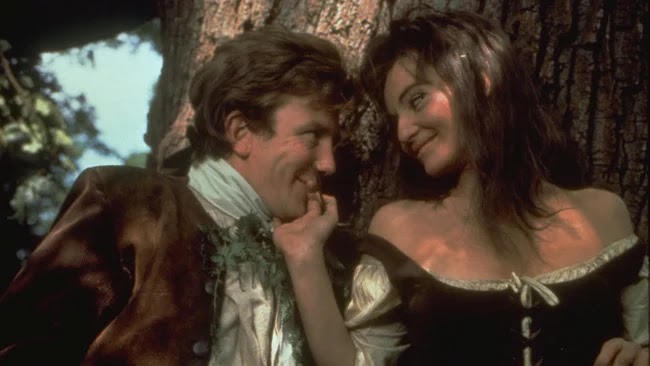
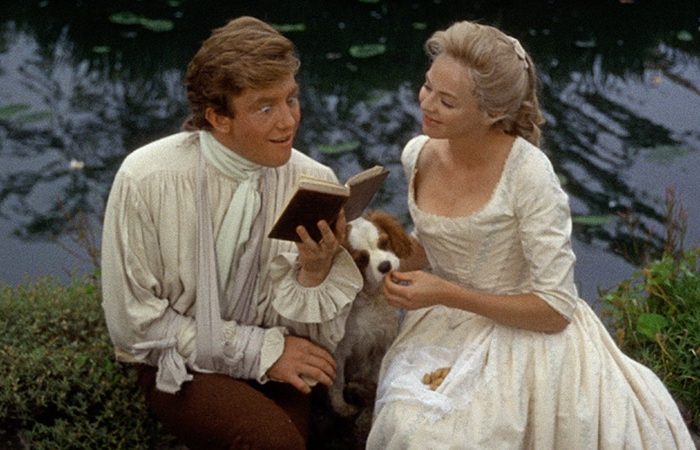
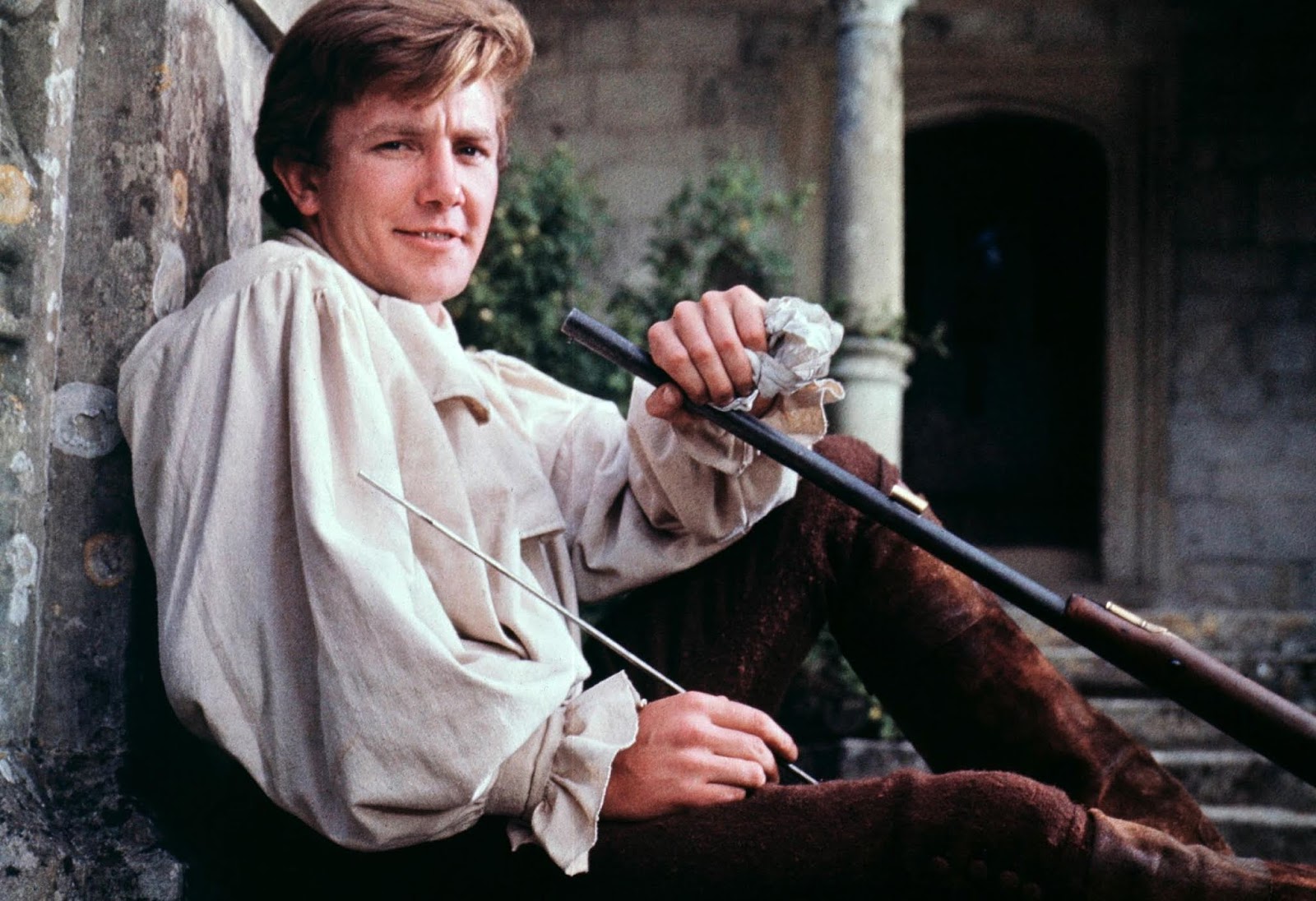
Albert Finney flirts with Diane Cilento (among many, many others) in Oscar winner Tom Jones

Director: Tony Richardson

Cast: Albert Finney (Tom Jones), Susannah York (Sophie Western), Hugh Griffith (Squire Western), Edith Evans (Miss Western), Joan Greenwood (Lady Bellaston), Diane Cilento (Molly Seagrim), George Devine (Squire Allworthy), David Tomlinson (Lord Fellamer), Rosalind Atkinson (Mrs Millar), Wilfrid Lawson (Black George), Rosalind Knight (Mrs Fitzpatrick), Jack Macgowan (Patridge), Freda Jackson (Mrs Seagrim), David Warner (Blifil), Joyce Redman (Mrs Waters/Jenny Jones), Rachel Kempson (Bridget Allworthy), Peter Bull (Thwackum), Angela Baddeley (Mrs Wilkins), Julian Glover (Northerton)

In early 1964, America was at the height of Beatlemania. Everything about Swinging Sixties London was the height of cool, so what better way to reflect that at the Oscars than naming Best Film of the previous year as being Tom Jones, the film that turned Henry Fielding’s work into the epitome of the era’s vibe. Watching Tom Jones today is a cruel reminder that generally nothing dates as hard or as fast as cutting-edge film techniques, and that time is often not kind to comedy. But Tom Jones was the first truly British film to lift Best Picture since Olivier’s Hamlet in 1948, so it was a sign of the short-lived all-conquering cool of British culture.

Adapted with a frenetic style from Henry Fielding’s novel, the film follows the trials and tribulations of Tom Jones (Albert Finney), adopted by Squire Allworthy (George Devine) after he is found abandoned on Allworthy’s bed as a baby. Growing up, Tom is a roisterer and rodgerer (especially keen on rodgering) but fundamentally decent, in love with Sophia Western (Susannah York) and the target of jealous rumours from his cousin Blifil (David Warner, looking a bit lost in his film debut). Banished as a result of Blifil’s schemes, he journeys to London encountering adventures along the way, not least a night of bliss with a Mrs Waters (Joyce Redman) who may (or may not) be his mother. Will Tom be able to prove his innocence, win the love of Sophia and escape his destiny of being “born to hang”?

Tony Richardson came to Tom Jones fresh from directing several searching, morally complex kitchen-sink dramas – and basically seemed determined to cut loose with this film by having fun. What he comes up with is an explosion of multiple different styles, from silent film to sped-up Benny Hill chases. Not a single editing or camera trick is unused, with the film stuffed to the gills with fades, wipes and freeze frames. Richardson basically used every single trick in the book. He was also lucky to have a perfectly judged score from John Addison (winning an Oscar).

It makes for a frenetic and fast-paced film, in love with its own 60s cool of anarchic comedy, sexual liberation and tongue-in-cheek lack of reverence all washed down with a bucket load of thigh-slapping bawdiness. It’s a film that’s inordinately pleased with itself, using Fielding’s interventionist narration style as the licence to break the fourth wall frequently and introduce a dryly hammy voiceover from Michael MacLiammóir. All of this was seen as the height of daring film-making back in the day – especially since Hollywood expected literary adaptations to be treated with reverence rather than as a high-brow Carry-On. But it’s dated badly.

Its smug, overbearing sense of zeitgeist cool comes across terrifyingly passé today, and the film’s daring use of every single cinema style makes it tonally feel like a complete mess. Richardson will segue from farce straight to an immersive hunting sequence where we are invited to feel every moment of the blood lust and violence, straight to a pastoral sequence showing the courtship of Tom and Sophia in glorious countryside.

Richardson himself – despite winning Best Director for his very self-consciously flashy work – also had mixed feelings about the film, recutting it shortly after its Oscar win into a shorter version which remains the version most people have seen today. He said of it that it “felt incomplete…and botched in much of its execution…whenever someone gushes to me about Tom Jones, I always cringe little inside”.

It’s a fair assessment of a film that is all flash – and way too much of it – and so little substance that it frequently becomes trite, smug and unpleasant to watch. John Osborne’s script (which apparently he submitted than refused to redraft) is in all honesty a mess (much of it was rewritten on set while the narration was a post-production addition to make it all make sense), with barely any quotable lines, and whatever skill the film has is all in the telling and the editing. 

Did Richardson take the whole thing as a lark and then work out later on that comedy is harder than it looks? The entire film was a complete mess on set – several errors were in fact left in the film (such as Western falling off his horse due to Griffith’s drunkenness) and then turned into jokes through the voiceover. There is a slight air from all involved that this isn’t proper film-making, that this is just one to flog for a bit of cash. Its Oscar win is inexplicable, but can be chalked up to a horrendously weak year at the Oscars.

Albert Finney goes through the entire film on autopilot – little matter than it made him a star – and he seems a curious choice for a young lover, throughout the film he channels instead a sort of horny Arthur Seaton. Finney thought the entire thing bosh and a waste of his talents – an attitude that does come across on the screen. Lightness is not always Finney’s strength, and his distant disengagement with the film becomes more striking with every viewing. 

Many of the rest of the cast mug shamelessly. Hugh Griffith bizarrely landed an Oscar nomination for a performance of gurning over-the-top mania. The film had three nominations for Best Supporting Actress: Edith Evans emerges best, although she could play this domineering Mrs Western standing on her head; Diane Cilento brings an attractive lightness to buxom Molly while Joyce Redman is good value and gets the film’s most famous sequence, a slobbery eating sequence with Finney where food is consumed in a very suggestive way as foreplay. Arguably the best supporting roles come from Joan Greenwood as the sexual but cruel Lady Bellaston and George Devine as the decent Squire Allworthy (the only character who isn’t some sort of caricature).

Tom Jones is most of all a memento of a particular brand of fast-paced, technique heavy, manic sixties comedy. It made a lot of money and won a lot of awards, so led to a torrent of similar films from bawdy Hogarthian costume dramas to sex comedies in modern London with naïve but well-endowed young men. Richardson and co. should have credit for catching this vibe first – but it makes for an odd experience today, like a slightly uncomfortable museum piece.

Gigi (1958)

Louis Jourdan forms an unusual romance with Leslie Caron’s Gigi

Director: Vincente Minnelli

Cast: Leslie Caron (Gigi), Louis Jourdan (Gaston Lachaille), Maurice Chevalier (Honoré), Hermione Gingold (Madame Alvarez “Mamita”), Eva Gabor (Liane d’Exelmans), Jacques Bergerac (Sandomir), Isabel Jeans (Aunt Alicia), John Abbott (Manuel)

In 1958 Gigi was littered with Oscars, winning all nine of its nominations to become one of the most successful films at the ceremony ever. It’s bizarre considering this is a run-of-the-mill musical with all the production values you would expect from an Arthur Freed production, but not really anything special compared to several other films from the same stable. It’s one of those moments when you remember Singin’ in the Rain didn’t even get nominated for Best Picture

Anyway, based on a book by Collette, Gigi deserved some sort of award for sneaking under the Hays code a story about a young girl training to be a courtesan, and the heartless playboy her family want her to seduce. Leslie Caron is Gigi, while the man who she has a sisterly affection for is Gaston (Louis Jourdan), the man around town bored with all the artificiality around him. Both Gigi and Gaston are heavily guided by their mentors: in Gigi’s case her grandmother, famed former courtesan Madame Alvarez (Hermione Gingold), in Gaston’s his uncle Honoré (Maurice Chevalier) a charming old rake. Everyone wants the two of them to become lovers, but do Gigi and Gaston want the sort of relationship of convenience their mentors expect?

That the film exists at all is a triumph of careful negotiation between Freed and the Hays Code, not usually open to films about high-class prostitutes and their marks. It does make for an occasional bit of confusion from the viewer – and a truncated plot as key ideas are circuited around (or over) – but also marvellous scenes, well written by Alan Jay Lerner, where Madame Alvarez and her sister (and courtesan trainer) Aunt Alicia (Isabel Jeans) discuss Gigi having “matured” to the correct age to become Gaston’s mistress by using unfinished sentences and raised eyebrows.

It makes for a slightly odd viewing experience today, especially with our far more enlightened views of the role women can have in society. The film mines comic material out of Gaston’s jilting of an unfaithful mistress (including Honoré toasting him for having driven the poor girl to attempted suicide after her public humiliation), while the comedic training sequences as Alicia attempts to turn Gigi into every man’s dream of the perfect mistress carries more than a whiff of exploitation today. But the film comes from a different r time, where such matters wouldn’t have occurred to either audiences or film makers.

Theres is a similar vibe in the film’s now most notorious sequence (and its opening) as Maurice Chevalier’s Honoré introduces the film and its world by crooning “Thank Heaven For Little Girls”. It’s a great catchy song (wonderfully delivered by Chevalier) but its lyrics thankful that “little girls get/Bigger every day”, matched with the septuagenarian Chevalier leering at a group of schoolgirls playing in the park, carry more than a whiff of the paedophile today. 

While you could say that this is all part of Minelli and Lerner’s intentions – that under the elaborate design of the film, there runs an undercurrent of selfish men carelessly using women for their own entertainment and many women enabling and encouraging this – it’s presented with such lightness, froth and charm that any potential darkness underneath it gets lost all together. Instead, its charming outer confection tends to obscure the difficult morals under the surface and prevents the viewer from engaging with them.

And the film’s design is what it’s really about. The first major musical to be shot largely on location – compare to An American in Paris which recreated the city of romance on a sound stage – its camera work is fairly reserved and focused on admiring the sets and locations more than providing a bit more to really engage the eye with. The design is impressive, mixing art nouveau and Cecil Beaton’s elaborate style, and the sets and costume (all Oscar-winning of course) really impress, even if the opulence ends up becoming overwhelming, not least with the overpowering reds that fill Gigi’s rooms. Minelli’s love of opulence and art ends up crushing the film.

That design also overwhelms the character. It’s telling that among its nine nominations, not a single one was for acting. Leslie Caron and Louis Jourdan do perfectly acceptable jobs, but their characters are not particularly interesting. Surprisingly for a musical – one starring Leslie Caron! – there is no dancing either. The film really misses the presence of people like Gene Kelly, the kind of leading man or woman who could carry a film on charisma. The real charisma comes from Chevalier (the one surprise to miss an Oscar nomination), who is so perfect as Honoré, so charming and dry (and who delivers his songs so well) that the film flags dramatically when he is absent (which he is for much of the final act). But the film misses a real heart.

It makes for a film that looks good, but is more a triumph of style and ingenious storytelling than it is storytelling with impact. Its Oscar win is perhaps a tribute to its faultless opulence and big budget spectacle. Because, boiled down to it, it’s a film with a story that hinges slightly on things that aren’t exactly tasteful revolving around people who aren’t very interesting. It has some good songs and moments from the Alan Jay Lerner script, but there is a reason this Best Picture winner has stuck in the collective memory so little, despite its record-breaking haul.

A Room with a View (1985)

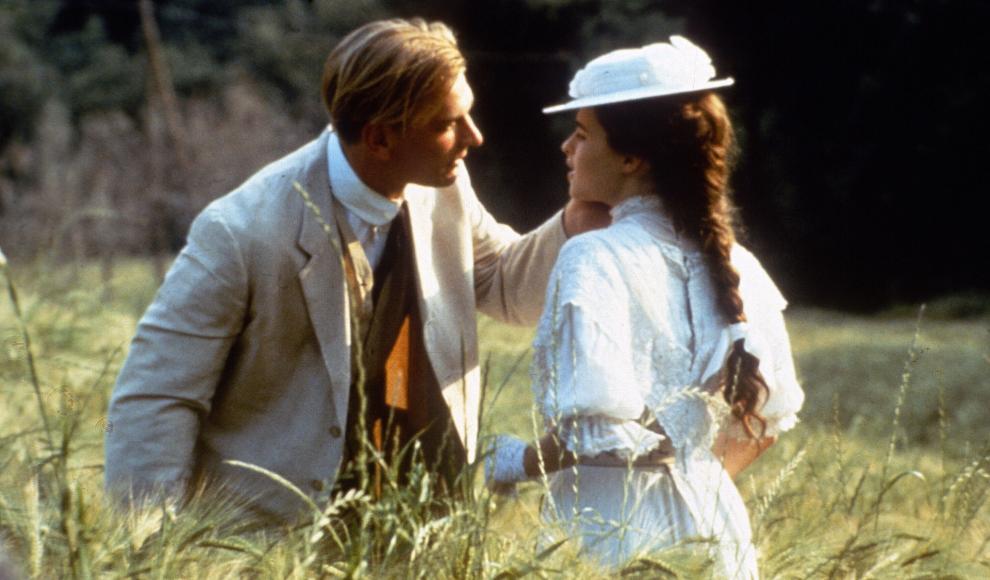
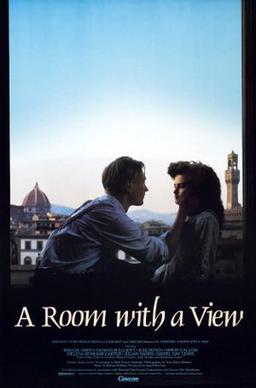
Julian Sands and Helena Bonham Carter find romance from A Room with a View

Director: James Ivory

Cast: Helena Bonham Carter (Lucy Honeychurch), Julian Sands (George Emerson), Maggie Smith (Charlotte Bartlett), Denholm Elliott (Mr Emerson), Daniel Day-Lewis (Cecil Vyse), Simon Callow (Reverend Beebe), Rosemary Leach (Mrs Honeychurch), Rupert Graves (Freddy Honeychurch), Patrick Godfrey (Reverend Eager), Judi Dench (Eleanor Lavish), Fabia Drake (Miss Catherine Alan), Joan Henley (Miss Teresa Allan), Amanda Walker (Cockey Signora)

Merchant-Ivory are the gold standard, practically synonymous with costume drama in the 80s and 90s. This really began with A Room with a View, their first true sensation, a box-office smash that won the BAFTA for Best Film and three Oscars. It practically defined what to expect from a Merchant-Ivory production: a classily made slice of English literature, with a wonderful cast of top British talent, tastefully directed with a sly observational wit for the foibles of the British class system. No one does such things better than Merchant-Ivory, and maybe only Howards End and The Remains of the Day did Merchant-Ivory better than A Room with a View.

Based on EM Forster’s novel (and that novel, largely thanks to this film, is probably now his best loved work), the film is set in Italy and England during the early 1910s. Holidaying in Florence, Miss Lucy Honeychurch (Helena Bonham Carter) and her chaperone cousin Charlotte Bartlett (Maggie Smith) are given poor rooms in their hotel – and accept an offer to swap (for the eponymous room!) with Mr Emerson (Denholm Elliott) and his romantic son George (Julian Sands). George, a free spirit, finds himself romantically drawn towards Lucy (and she to him), but something about the free Italian air frightens Lucy, and she withdraws and returns to England where she becomes engaged to the prig’s prig Cecil Vyse (Daniel Day-Lewis). However, when the Emersons rent a house near her home in Surrey she finds herself slowly drawn back once again towards George.

A Room with a View is the perfect expression of delicate, well-judged film-making, with James Ivory marshalling his precise judgement to create a luscious and involving reconstruction of the novel, which carefully layers its social and emotional observation with a dry wit. Ivory is a master of allowing the novel – and the film – to speak for itself, not intruding with flourishes but allowing the camera to hold moments. He captures wonderful moments of slightness: who can forget the camera holding on a rejected Cecil as he takes a moment to calm himself, then sits and begins to systematically retie his shoe laces? It’s a gentle, unforced moment of direction but it’s what makes the film work. 

And the careful grace and stateliness of much of A Room with a View is part of the film’s point. All this taste and manners, all this finery and wonderful design, is of course a trap. It’s precisely this pristineness and neatness that inhibits people from following their hearts, from actually having a bit of carpe diem. It’s telling that one of the film’s most striking moments involves George, Lucy’s brother Freddy and churchmen Mr Beebe going skinny-dipping (with long-shot full frontal nudity). There is something joyous for these men to literally cast off (for a few minutes) the shackles of society to just muck around in the all-together. And it’s a sort of exuberant liberal freedom you just don’t see in other parts of the film.

The film’s main theme is to see if Lucy will discover – and accept – enough about herself to follow the sort of romantic longings she feels within herself or if she is going to knuckle down and conform. Italy is a perfect sign of this – it’s hot, temperamental, the people wear their passionate hearts on their sleeves (whether that’s making-out in a carriage in front of uptight churchmen or stabbing each other in the piazza) – and it’s all that energy and lust for life that Lucy seems unsure about, but which George is chasing after. And it’s difficult to cast aside the rules you have grown up with – and scary – to find something a bit freer. Although I think you could criticise Ivory’s neat competence for failing to really visually get a contrast in look between Italy and England.

The film is blessed with a superb cast of British character actors. Helena Bonham Carter is excellent (in only her second film role) as a young woman who knows her mind but doesn’t want to follow it to its logical ends, part independent and free-thinking but also putting a constant block on her own instincts. Julian Sands as George does a decent job, although already the film (by far and away the best part he ever got) exposes his studied woodenness and flat, uninteresting voice and he often seems straining for a sort of depth and Byronic passion that is slightly beyond his range.

Maggie Smith and Denholm Elliott were both Oscar nominated, and both bring their A-game to the roles. Smith is perfect as a spinster who slowly reveals she has more sense of life’s lost opportunities than expected (even if the part is one she could play standing on her head), while Elliott gets lot of scene-stealing mileage from a sweetly eccentric Mr Emerson. Simon Callow, also in his second film role, probably gives his best (and most intriguing performance) as Mr Beebe the affable but subtly sleazy clergyman.

The film is however stolen by Daniel Day-Lewis as Cecil Vyse (originally offered his choice of parts between George and Cecil). A Room with a View opened the same day as My Beautiful Laundrette in the States and audiences were amazed that the same actor could play a self-important prig and a gay, punk fascist. Day-Lewis is the embodiment of fastidious preciseness, a man so studied in every second that each movement seems planned, with no touch of spontaneity. He even kisses Lucy with a carefully placed precision. He’s arrogantly certain of his place in the world and every moment of his life has been planned in advance with careful exactitude.

It’s the jewel in the crown of this perfect costume drama. Merchant and Ivory had longed to film the works of EM Forster for decades, and had to wait until King’s College, Cambridge (the rights holders) had someone in place who actually liked films until it was considered. They expected the main interest to be around Howards End (don’t worry its time would come!) and A Passage to India. But in A Room with a View, Merchant Ivory felt there was an unappreciated gem. They were right.

Bram Stoker's Dracula (1992)

Gary Oldman prowls the night as Bram Stoker’s Dracula

Director: Francis Ford Coppola

Cast: Gary Oldman (Count Dracula), Winona Ryder (Mina Murray), Anthony Hopkins (Professor Abraham van Helsing), Keanu Reeves (Jonathan Harker), Richard E. Grant (Dr Jack Seward), Cary Elwes (Lord Arthur Holmwood), Billy Campbell (Quincy P Morris), Sadie Frost (Lucy Westenra), Tom Waits (Renfield)

In the 90s Francis Ford Coppola planned a series of high Gothic films of classic monster stories, kick starting the plans with his own production of Dracula (the only other film that came of this was Kenneth Branagh’s equally operatically overblown Mary Shelley’s Frankenstein). Going back to the story of the original novel (more or less), Coppola presented a deliberately high-intensity, theatrical, over-the-top version of Stoker’s tale that becomes as overbearing as it is visually impressive.

In 1462 Vlad the Impaler (Gary Oldman) renounces God and becomes Dracula, after false news of his death leads to his wife (Winona Ryder) committing suicide and being damned by the church. Over four hundred years later, the immortal vampire Dracula plans to travel to England, with his plans unwittingly aided by his solicitor Jonathan Harker (Keanu Reeves). His interests are peaked all the more when he sees a picture of Harker’s fiancée Mina (Winona Ryder again) – the reincarnation of his dead wife. Dracula heads to England, preying on Mina’s friend Lucy (Sadie Frost) leading to an alliance of Lucy and Mina’s friend, led by Professor van Helsing (Anthony Hopkins) to combat Dracula’s villainy and save Mina from her own dark temptations to join the besotted Vampire.

Coppola’s film doubles down on Gothic romance, thundering through the action with everything dialled up to 11. The (rather good) score hammers home every beat, the camera swoops and zooms through a parade of tricks, wipes and dynamic angles with cross fades frequently throwing two images on screen at the same time. It makes for a sensual – in more ways than one – overload, but also a rather oppressive viewing experience, with no respite or sense of calm but every single scene delivered with stomach churning acceleration.

It’s a film directed with a deliberate operatic style, that celebrates (and makes no attempt to hide) its set-based theatricality. The opening sequence sets the tone with its Kurosawa inspired costumes in front of an Excalibur style blood-red sky, with battle scenes (and impalings) staged as an elaborate puppet show. Oldman – with a hammy Eastern European accent that you could wade through like treacle – then rages and roars over his wives crumpled body, stabbing a cross that leaks blood all while images are cross-cut showing his wives demise and the beginnings of his own monstrous transformation. The film doesn’t ease up from there.

To be honest Coppola massively over-eggs the pudding, producing an over-blown monstrosity of a film that shouts and shouts and shouts and drains all subtlety from every frame. In particular the sexual undertones of Vampirism – and the harsh male judgement of female sexuality – that the book explores are placed unsubtly front and centre. Every vampire attack is presented as a positive ravishing, Frost and Ryder writhing orgasmically (poor Frost has to undergo the indignity of being humped and bitten by a Dracula in part human-part wolf form) while boobs are left on display after every single assault. From an early scenes that sees Lucy and Mina gawping at a pornographically illustrated Arabian Nights, we are left in no doubt that IT’S ABOUT SEX YOU KNOW.

Coppola shows no restraint at all in his directing, which leaves nothing to the imagination, and ends up leaving the actors adrift between a film that is part serious attempt to film the book and part ludicrous bodice ripper, like the cheapest 60s salacious horror film from the worst excesses of Hammer.

It certainly leaves the actors adrift. Oldman gives it a go with gusto, even if he seems completely lost as to what tone this character should hit (is he a monster, a lost soul, a conflicted lover, a megalomaniac – who knows?). Anthony Hopkins channels Orson Welles with the sort of ham that was to become more-and-more his go to in later years. Winona Ryder does her best with a role that oscillates wildly between Good Girl and Minx. She’s saddled with an English accent, which restrains like a straitjacket. Tom Waits has fun as the insane Renfield (here imprisoned in a crazy asylum that resembles a medieval dungeon).

The rest of the performances are pretty much abysmal. Poor Keanu Reeves is left ruthlessly exposed, horrendously miscast as a stiff-upper lip English lawyer in a performance that surely goes down somewhere in history as one of the worst ever. His acting here would barely scrap by in a school play, his delivery of the dialogue wooden beyond belief and some talcum powder added to his hair for the film’s later sections only makes him look ridiculous. Reeves is a decent performer in the right role, but he was never worst case than this. But then the rest of the cast are pretty much just as bad: Frost is out-right awful, hopelessly unable to make Lucy anything other than a slut, while Grant, Campbell and Elwes are all wooden and dull to a man.

The film does get some points for reverting closer to the plot of the book – unlike many versions – although the addition of the love story between Dracula and Mina is marred by tonal problems and the utter lack of chemistry between Oldman and Ryder (they famously fell out on set and the film never recovers). Coppola directs the film with no discipline at all, and no sense of balance between spectacle and story. While it has many merits in its design – it won no less than three Oscars and the costumes, make-up for Oldman and much of its look and style are flawless – it’s basically a pretty over-bearing and dreadful film that shouts at the viewer so long and so hard that it becomes easier in the end to laugh at it rather than with it. A sad misfire.

Portrait of a Lady on Fire (2019)

Noémie Merlant and Adèle Haenel are part of an illicit affair in Portrait of a Lady on Fire

Director: Céline Sciamma

Cast: Noémie Merlant (Marianne), Adèle Haenel (Héloïse), Luàna Bajrami (Sophie), Valeria Golino (The Countess)

There have been several well-known, successful films made that have focused on male gay couples but, perhaps because female directors are simply fewer in number, there have been fewer films that have focused on lesbian love stories. Portrait of a Lady on Fire is a triumphant course correction to this, a film that is both a beautiful artistic statement and also a deeply moving and involving romance drama, subtly and truthfully told. 

Marianne (Noémie Merlant) is a young female artist in late eighteenth-century France, who is summoned to an isolated island to paint the daughter of a Countess (Valeria Golino). The daughter – Héloïse (Adèle Haenel) – has been plucked from her chosen life in a convent after the death of her sisterm and is now set to marry a Milanese nobleman. A painting of her is needed to “seal the deal”. Problem is, Héloïse refuses to sit for any artist – so Marianne is to pretend to be her companion in order to study her and paint her from memory. However, as the trust between the two women grows, Marianne confesses to Héloïse – and destroys the painting – an action that finally leads to her agreeing to sit for a new painting. As the Countess leaves the two women alone on the island with just a maid, Sophie (Luàna Bajrami), the painting continues – as does the bond between them.

Sciamma’s film is beautifully made, an artistic triumph of intense feeling that helps us forge a deep emotional bond with these two women. Sciamma uses mid shots and close-ups for almost 70% of the film, an effect that brings the women’s faces – and the often micro-emotions that cross them – into sharp focus, as well as building a stunning sense of intimacy between them and the audience, as if we are pressed close up against them. It allows us as well to really feel the growing physical closeness between the two women, as they more and more share the frame. 

Sciamma only breaks away from these to longer shots when the camera moves outside of the house – to capture the women walking to and from the house across the island’s beach – or when disagreement has broken between them. The effect is stunning, totally immersive, and allows the two actresses to beautifully convey a deeply felt courtship that takes well over half the film to flower into an actual relationship after a prolonged, hesitant, second-guessing courtship.

Noémie Merlant is wonderful as Marianne, the artist who has struggled all her life as a woman in a man’s world, restricted by what she is and is not allowed to paint (from themes to nude men – which are of course out). Marianne is a woman with a thick skin, who is careful to avoid opening herself up, but eager to form a bond beyond this. The “artist” of the relationship, she has spent her life observing the world but only rarely allowed herself to be part of it. Her quietness is neatly contrasted with Héloïse’s more noticeable immediate chill, which is itself a careful shield from a world where she has no choices, but reveals a deep longing for emotional and intellectual freedom and a humming tenderness and gentleness. It’s an equally superb performance from Adèle Haenel.

Both women are struggling to express themselves in a men’s world. A man hardly speaks in the entire film (and other than in the film’s opening and coda, they don’t even appear) but the presence of men hangs over the entire film. The little commune of independence that Marianne, Héloïse and Sophie form – a very equal, comfortable naturalness where they cheerfully exchange roles, with the maid relaxing while the mistress cooks – can only exist while men are distant. The judgements and decisions of men affect all their lives – from Marianne’s painting to Sophie’s pregnancy, which the women work together to avert. 

When we do see men they are distant and selfish. On the boat over to the island at the start of the film, not a single man lifts a finger to save her painting gear after it is dropped in the ocean (forcing Marianne to dive in herself); at the film’s conclusion, the male servant who arrives promptly takes the centre of the kitchen and demands to be served dinner. The women’s enjoyment of leading their own lives – from their relationship, to Marianne’s triumphant decision to sketch a recreation of Sophie’s abortion, capturing a moment no man would ever choose to paint (or have a clue how to) stresses that, never mind sexuality, women got to make very few decisions of their own in the eighteenth century.

But it’s the relationship that is central, and it’s beautifully and organically developed with an immensely involving delicacy. Every beat is perfectly placed and the effect is overwhelmingly emotional. Sciamma uses music only three times in the film: once Marianne’s enthusiastic to recreate Vivaldi on a harpsichord for Héloïse’s enjoyment early in the film (a touching sign of her eagerness to share her passions), again for a haunting but beautiful moment of singing from a group of peasant women on the beach, and finally a powerful echo of the movie’s first use of music, surely bound to take its place as one of the great endings of film. 

For the titular painting itself, the one that captures Marianne’s feelings about Héloïse rather than the one she paints for the suitor, it appears only briefly on screen and we never see its creation. What we see is the moment that inspired it – a Héloïse so wrapped up in Marianne that she never even notices her dress catch fire in a bonfire on a beach – and it’s that which is truly important. At that moment we know everything about what that moment means to both women, and the force of a love that will last the lifetime of both women and shape their emotions and lives in profound ways. Sad, beautiful, joyful, triumphant Portrait of a Lady on Fire is a great piece of film-making.

Little Women (2019)

March Sisters: Assemble! For Greta Gerwig’s superlative adaptation of Little Women

Director: Greta Gerwig

Cast: Saoirse Ronan (Jo March), Emma Watson (Meg March), Florence Pugh (Amy March), Eliza Scanlen (Beth March), Laura Dern (Marmee March), Timothée Chalamet (Laurie), Meryl Streep (Aunt March), Tracy Letts (Mr Dashwood), Bob Odenkirk (Father March), James Norton (John Brooke), Louis Garrel (Professor Friedrich Bhaer), Chris Cooper (Mr Laurence)

Spoilers: Such as they are but discussion of the film’s ending (or rather Greta Gerwig’s interpretation of it) can be found herein…

There are few novels as well beloved as Louisa May Alcott’s Little Women. So much so – and so successful have been the numerable adaptations, not least Gillian Armstrong’s 1994 version – that it’s hard to see what a new adaptation could bring to the story that hasn’t been covered before. A new window on the story is triumphantly found though in Greta Gerwig’s fresh and vibrant adaptation, blessed with some terrific performances, and telling its own very distinctive version of the story.

Gerwig’s version crucially starts off in the sisters’ adult lives: Jo (Saoirse Ronan) in New York struggling to make it as a writer, while Meg (Emma Watson) nurses the ill Beth (Eliza Scanlon) back home with Marmee (Laura Dern), and Amy (Florence Pugh) encounters their childhood friend Laurie (Timothée Chalamet) in Paris. This is intercut with the story of their growing up in Massachusetts, with the past story line eventually catching up with the present day. 

If that sounds like it should make the story hard to follow, don’t worry – this is astonishingly confident work from Gerwig, wonderfully directed with zest, fire and imagination (making her exclusion from the Best Director list at the Oscars even more inexplicable – chalk that up I guess to sexism against pictures about “girls” and the fact it’s not as overtly flashy as the rest of this year’s nominees). This takes a familiar book, and fires it up with all the energy of independent, modern cinema, creating something that feels hugely fresh and dynamic. The cross cutting between the two timelines work beautifully – not only is it always perfectly clear, but it also makes for some wonderful contrasts between events in the past and present. None less than the recovery of Beth from TB being followed (with an almost shot-by-shot echo in its filming) by the reactions to Beth’s death. Inventions like this add even greater depth and meaning to the moments and hammer home some terrific emotional high points. 

Gerwig’s style throughout the film invests the story with a great energy, particularly in creating the warm bohemian attitude of the March family. This really feels like a family – conversations between them are fast, people talk relaxedly over each other, the chemistry is completely real, and the camera captures in its movement the warmth and energy of these characters who are completely comfortable in each other’s presence. It’s no surprise that Laurie is taken so quickly with this family, or wants to be part of it. Gerwig invests the family with a dynamic, excited sense of freedom and urgency. Helped by the warm glow that the childhood sections of the film are shot with, these scenes hum with a glorious sense of familial warmth and excitement. 

The camera often moves with careful, but perfectly planned, movement through scenes, mixed in with moments of fast movement – following Jo through streets, or the playful exuberance of Jo and Laurie’s first meeting (and dance) at a society ball. It’s a vibe that carries across to the performances, anchored by Saoirse Ronan’s fabulous performance as Jo. Fervent, intelligent, idealistic but also stubborn, prickly and difficult, Ronan’s Jo carries large chunks of the film, with the character skilfully mixed in with elements of Louisa May Alcott. Ronan most impressively suggests a warmth and familial love for Laurie at all times, that never (on her side) tips into a real romantic feeling. She also has superb chemistry in any case with the excellent Timothée Chalamet, who is just about perfect as a dreamy, but quietly conventional in his way, Laurie.

Gerwig’s primary rejig – and a reflection of the new structure she is chosen – is to allow more screen time to Amy, usually the least popular of the four sisters. She’s also helped by a sensational performance by the Oscar-nominated Florence Pugh as Amy, who not only plays a character perfectly from her mid-teens to her early twenties, but also invests the character with huge amounts of light and shade. The film gives a great deal of time to Amy’s time in Paris – her frustration with living in Jo’s shadow, her longing for her own artistic career (and recognition of her conventional talent – brilliantly established by a wordless glance Pugh gives an impressionist painting compared to her own literal effort) and her own romantic feelings and dreams. Cross cutting this with her past actions – her more temperamental and less sympathetic moments (burning Jo’s book!) that have pained generations – gives the audience far more sympathy and understanding for her. Pugh is also pretty much flawless in the film.

There are a host of superb performances though, with Watson capturing the duller sense of conventional duty in Meg, but spicing it with a sad regret for chances lost; Laura Dern is wonderfully warm as Marmee, but mixes in a loneliness and isolation below the surface; Chris Cooper and Meryl Streep sparkle in cameos. There is barely a false step in the case.

All the action eventually boils towards the ending – and Gerwig’s bravest and most unconventional decisions, in subtly adjusting the final conclusion of the story. At first it seems that the cross cutting of the story has short changed heavily the Bhaer-Jo relationship (Bhaer appears only in the first half an hour of the film and the end), as it cannot lean too heavily on romance when many in the audience will still be expecting a Jo-Laurie match up. 

But Gerwig actually uses this as a skilful deconstruction of the novel. Always feeling that Alcott desired Jo to be a single author – but inserted the marriage to Bhaer at the end to help sell the book – Gerwig effectively has Jo do the same thing. At a crucial moment in the final scenes, we cut to Jo negotiating with her publisher (a droll cameo by Tracey Letts), who insists on a happy ending. Cue a “movie style” chase to intercept a departing Bhaer (shot with the golden hue of the past, while Jo’s meeting with the publisher has the colder colours of the present). Our final shot shows Jo watching her book being printed, cross cut with a golden hued vision of “Jo’s” school with husband in tow. 

It’s a genius little touch, as it’s subtle enough to allow viewers to take the happy ending as it appears in the surface, but smart and clever enough to make the movie unique and different from the other versions (and that ending from the 1994 version is hard to top!). It may undermine the final relationship – and offend those who like the idea of Jo deciding she wants something different than she at first thought – but in its freshness it can’t be challenged. It also makes for a film from Gerwig that is both fresh and exciting and also bracingly and thrillingly in love with Alcott and her work.

The Age of Innocence (1993)

Daniel Day-Lewis and Michelle Pfeiffer have a love that cannot survive the morals of society in The Age of Innocence

Director: Martin Scorsese

Cast: Daniel Day-Lewis (Newland Archer), Michelle Pfeiffer (Countess Ellen Olenska), Winona Ryder (May Welland), Miriam Margolyes (Mrs Mingott), Geraldine Chaplin (Mrs Welland), Michael Gough (Henry van der Luyden), Richard E. Grant (Larry Lefferts), Mary Beth Hurt (Regina Beaufort), Robert Sean Leonard (Ted Archer), Norman Lloyd (Mr Letterblair), Alec McCowen (Sillerton Jackson), Sian Phillips (Mrs Archer), Jonathan Pryce (Rivière), Alexis Smith (Louisa van der Luyden), Stuart Wilson (Julius Beaufort), Joanne Woodward (Narrator), Carolyn Farina (Janey Archer)

In 1870’s New York, Newland Archer (Daniel Day-Lewis), is a fastidious connoisseur of the arts, part of the super-rich elite of New York society. He’s engaged to be married to young May Welland (Winona Ryder), but finds his world view and values turned upside down when he meets May’s cousin, the Countess Ellen Olenska (Michelle Pfeiffer). Ellen is a scandalous figure, a woman separated from her philandering European husband, trying to make her way in New York society. Newland and Ellen are irresistibly drawn together, but do they have a chance to be together in the oppressive society of the New York upper classes?

That’s one question. The one more people were asking was: how would Scorsese follow up Goodfellas? Probably very few people would have bet on an adaptation of Edith Wharton’s The Age of Innocence. In fact, in 1993, there was more than a little annoyance among some viewers at the idea of the master of gangster movies, the guy who directed Raging Bull and Taxi Driver, turning his hand to the realm of Merchant Ivory. The film bombed at the box office – but did it deserve that reaction? Was Scorsese a director out-of-place?

Well the reaction is slightly unfair, because The Age of Innocence is a marvellously filmed, exact, brilliantly constructed piece of film-making, that so lays on the opulence and wealth of New York society that it turns everything in the film into feeling like a gilded cage. That’s a cage carefully controlled and monitored by the inmates, with their strict, inflexible rules about every single social interaction, unbreakable rules of decorum and etiquette covering everything, with any deviation from these rules met with instant expulsion. Put it like that, and this doesn’t sound a million miles away from the gangster families Scorsese is more associated with.

Inspired by the films of Powell and Pressburger in its intricate construction, and flashes of artifice in filming and editing, as well as its rich colour palette, with touches of everyone from Visconte, Ophüls, Truffaut to name but a few, this is a film-maker’s love letter to cinematic classics. A beautiful sequence of Newland watching Ellen from behind and a distance on a jetty, yearning for her to turn around before a boat passes a lighthouse, using that landmark as the point when he will stop looking and accept something is not to be. The scene is bathed in a Jack Cardiff-ish red, with the objects in the light given a sharp definition in contrast to the colours. It’s a beautiful image, and one of several that run through the film. Inspired by paintings of the era, Scorsese also layers in Viscontish scenes of opulence, with The Leopard very much in mind as every detail of the vast wealth, and huge accumulation of objects in every room of these people’s houses, seems to crush and entrap the people in them. The rooms themselves become metaphors of the oppressive, rule-bound society the characters are trapped in, like the people have been designed to fit into the rooms rather than vice versa. The one exception is Ellen’s rooms, which have a sense of personality to them.

This marvellous construction – with its beautiful photography, inspiring design and costumes – contains a storyline of frustrated love, a love triangle between three people where the man has to make a choice between what he wants and what is expected of him. Newland Archer clearly loves Ellen in a way he can never love May – indeed, he is dismissively cruel in his thoughts towards May, who he clearly considers nothing more than an extension of the mindless gilded objects of beauty around him, a woman he sees as lacking an imagination or daring. In Ellen, he sees far more opportunities for a world of change, of difference, or being something he does not expect. She is far more of a free-spirit, a more bohemian figure, confident in herself and something far more modern than May, who is very much a product of her time and place.

The film, carefully demonstrates the growing unease and unsettlement of Archer as he begins to feel things he has never done before, to start to react and aim for a style of living he would never previously consider. All his life before now is a careful studying and collection of moments, or savouring experiences in the way that a collector would place them in a glass box. From seeing only the moments of plays he wishes to see, to carefully collecting shipments of books from London and reading the choice moments, Archer is a coldly controlling figure who believes he guides and directs his own life. Ellen not only demonstrates to him that in many ways he is as conventional as anyone else, but also that there are other options in his life. Archer struggles to build the emotional language that he needs in order to express these feelings bubbling in him – key moments indeed seem reminiscent of the operas that this New York society spends so much time watching, and it is only late in the film in little, genuine moments of affection can he find something real.

Scorsese’s film artfully and carefully shows this developing affection between the two, a love that the two of them speak of surprisingly early, but fail to find a genuine way of expressing it. The film captures the attempt by New York society at the time to be more British than the British, and the hidebound restrictions this brings. Scorsese uses cinematic tricks to show Archer’s striving to escape. Spotlights zero in on Archer and Ellen in the middle of society, as if to drain out all other moments. Letters from his respective love interests are delivered with the actors addressing the camera, as if speaking to Archer direct. Flashes of screen colour cover key cuts, as if all this colour was just on the edges of his life but he is unable to access them. He is a man who feels himself trapped and committed to one form of life, but who still feels the longing for another.

The Age of Innocence is a beautifully made film, but there is a coldness to it. Perhaps this is why it doesn’t quite capture the heart in the way of other films. So much as Scorsese captured the cold and restrictive world of this society, that it seems to permeate the film and make the whole thing somehow colder and more restrictive. There is such artistry and effort in the film-making, that the film seems a coldly detailed piece of art. Perhaps this is why the use of narration – beautifully spoken by Joanne Woodward – becomes overbearing here in the way it doesn’t in other Scorsese films. It’s another distance from the entire experience, as if the film is keeping the audience at arm’s length as much as society is. 

Daniel Day-Lewis’ performance is expertly assembled, a masterful, brilliantly observed, intricately detailed masterclass in micro-expression, of layered frustrations and repression. But it’s such a marvellously constructed, detailed and well observed performance that it feels a masterful piece of art to be admired rather than loved. For all the film centres Archer in the story, he is a hard man to care for or invest in. Pfeiffer gives a wonderful performance as the far freer, intelligent and daring Ellen – but there is a slight lack of spark between them, for all the brilliance of both actors the feeling of an overpowering, obsessive love just doesn’t quite come out of the picture.

This coldness of the construction, carries through every frame. It is perhaps an easier film to admire than love, for all its brilliant construction. It is perhaps too successful in establishing the sharp rules of its society, and does not invest enough time in looking at the raw passions that bubble under the surface of its characters. It never quite explores the inner life of its characters, and they remain slightly distant objects from us. To be fair, this works very well in some cases: Winona Ryder as May carefully plays her hand throughout the film, so that it is a shock in the final scenes where she reveals depths of determination, strength of character and manipulation that far dwarf anything Archer is capable of. Where he is a man with a wistful longing for what he wants, but lacks the will to take it, she knows what she wants and is determined to take it.

The film uses its mostly British cast very well, their understanding of period and these sort of society rules crucial to its success. Margolyes, Wilson and McCowen in particular are very impressive as very different types of society bigwigs. Scorsese’s film contains many other things to admire, but it’s such a wonderfully made piece of film-making, so overburdened with intelligent interpretation of the novel that it fails to make a real emotional connection with the viewer. You will respect and enjoy scenes from it, but perhaps find its running time as overbearing as the characters find the society they are in, and eventually find yourself needing to come up for air.