Category: Directors

Amsterdam (2022)

Amsterdam (2022)

Lots of quirk, whimsy and smugness, not a lot of interest or dynamism in this satirical mis-fire

Director: David O. Russell

Cast: Christian Bale (Burt Berendsen), Margot Robbie (Valerie Voze), John David Washington (Harold Woodsman), Robert De Niro (General Gil Dillenbeck), Chris Rock (Milton King), Rami Malek (Tom Voze), Anya Taylor-Joy (Libby Voze), Zoe Saldana (Irma St Clair), Mike Myers (Paul Canterbury), Michael Shannon (Henry Norcross), Timothy Olyphant (Tarim Milfax), Andrea Riseborough (Beatrice Vandenheuvel), Taylor Swift (Elizabeth Meekins), Matthias Schoenaerts (Detective Lem Getwiller), Alessandro Nivola (Detective Hiltz), Ed Begley Jnr (General Bill Meekins)

David O Russell’s has made a niche for himself with his ensemble awards-bait films, filled with touches of quirk and offering rich opportunities for eccentric, showy performances from actors. Some of these have walked a fine line between charm and smugness: Amsterdam tips too far over that line. Like American Hustle it’s a twist on a real-life event (opening with a pleased with itself “A lot of this really happened” caption) but, unlike that film, it fails to insert any compelling storyline, settling for a whimsical shaggy-dog story that frequently grinds to a halt for infodumps or lectures.

Set in 1933, just as Roosevelt has taken office, it follows three friends who formed a friendship for life in post-war Amsterdam. They are: wounded veterans doctor Burt Berendsen (Christian Bale) and lawyer Harold Woodsman (John David Washington) and socialite-artist-turned-nurse Valerie Voze (Margot Robbie). Berendsen and Woodsman lost touch with Valerie in the 1920s, but now they are all bought together after the murder of their respected former commander as part of a plot from various nefarious types to overthrow the government in a fascist-inspired coup.

Sounds gripping right? Well, Amsterdam fails to find any urgency in this. In fact, details of this plot and the political context it’s happening in are sprinkled around the film as if Russell kept forgetting what the film was supposed to be about. It’s almost as if he stumbled on an unknown piece of American history – a rumoured coup attempt, thwarted by being denounced by the ex-Marine General approached to lead it (here represented by De Niro’s ramrod straight General Dillenbeck) – but got more and more bored with it the longer he spent on it.

Instead, his real interest is in the faint overtones of Jules et Jim style thruple between Berendsen, Woodsman and Voze (though this is American not French, so any trace of homoeroticism is dispatched, despite the obvious bond between the two men). The most engaging part of the film is the Act two flashback to these three healing, dancing and bonding in post-war Amsterdam, in a “our troubles are behind us” bliss. Even if it’s self-satisfied in its bohemianism.

To be honest, even then, they have an air of smugness behind them. They pass the time singing improvised nonsense songs based on words pulled out of a hat and playfully posing in Valerie’s modernist artwork. Valerie is played with almost enough charm by Robbie for you to overlook she is a standard Manic Pixie Dreamgirl, the sort of babe who pulls shrapnel from bodies to turn it into artistic tea-sets as a commentary on the madness of war. She and Woodsman form a relationship (with the married Berendsen as a sort of – well I’m not sure what, but definitely not a sexual third wheel) and these blissful Amsterdam days are the times of their life. Russell is so keen for us to know it, that all three pop up in short cutaways at key moments to whisper “Amsterdam” direct to the camera, an affectation that fails to deliver the spiritual impact its straining for.

It’s better than the shaggy dog story around the conspiracy that fills the 1930s part of the storyline. This remains so poorly defined, that Bale has to narrate a concluding slideshow of clips and fake newsreel and newspaper coverage to explain what on earth has just happened. The lack of clarity about the stakes – and the general lack of seriousness or urgency anyone treats them with –fails to provide any narrative oomph. Instead, it drifts along from casual meeting to casual meeting, every scene populated with a big-name actor showboating.

There is a lot of showboating in this film. Bale, an actor with an increasingly worrying tendency for funny voices and tics, fully embraces the facially scarred, glass-eye wearing Berendsen, perpetually stooped with a war wound and prone to fainting from pain-killer overuse. It’s a showy, actorly performance with a licence to go OTT. Bale does manage to invest it with an emotional depth and vulnerability, but there’s more than an air of indulgence here.

Most of the rest follow his lead. Malek and Taylor-Joy sink their teeth into a snobby socialite married couple. Rock essentially turns his role as a veteran into a less sweary extension of his stand-up act. Myers and Shannon seize with relish roles as ornithologist spies (is this meant to be a joke about the origins of the James Bond name from the author of a bird-spotting guidebook?) Poor John David Washington ends up feeling flat with his decision to underplay (like he’s in a different movie) and only De Niro really manages to feel like anything other than an actor on holiday.

Russell wants to make a point about the continual corruption of the rich and how their hunger for more power will never be sated. There are some half-hearted attempts at attacking racism, with the ill treatment of black veterans, but it lacks bite or edge. His attempts to draw parallels with Trump are all too clear, but the film largely fails to integrate these ideas into the film. In fact, it ends up relying on voiceover lectures from Bale about dangers to democracy. It ends up like being hectored by an angry socialist after a student revue night.

The film is shot with a series of low angle shots and medium and close ups that eventually made me feel like I was watching it from the bottom of a well. A vague sepia-ish tone is given by Emmanuel Lubezki, but the film looks flat and visually uninteresting (so much so I was stunned to see $80million had somehow been blown on it, despite most of the cast working for scale). It drifts towards a conclusion, without giving us anything human to invest in (as Russell managed so well in Silver Linings Playbook or The Fighter) or providing the sort of caper enjoyment he delivered in American Hustle. Instead, it’s oscillates between smug and dull.

The Great Dictator (1940)

The Great Dictator (1940)

The Little Tramp takes down Hitler in this iconic satire on the dangers of over-mighty strong-men

Director: Charles Chaplin

Cast: Charles Chaplin (Jewish barber/Adenoid Hynkel), Paulette Goddard (Hannah), Jack Oakie (Benzino Napolini), Reginald Gardiner (Schultz), Henry Daniell (Garbitsch), Billy Gilbert (Herring), Maurice Moscovich (Mr Jaeckel), Emma Dunn (Mrs Jaeckel), Grace Hyle (Madame Napolini), Carter de Harven (Bacterian ambassador), Bernard Gracey (Mr Mann)

They were born four days apart and had the two most famous moustaches of the 20th century. There the similarities end. One became the world’s most beloved comic, the other its most reviled bogeyman. Chaplin and Hitler were bound together in people’s minds for a decade before Chaplin turned his revulsion at Hitler into satire: The Great Dictator sees him play both a version of his Little Tramp (here reimagined as a Jewish barber) and a version of the Fuhrer (as a temper-tantrum-throwing, hatred-spewing, lunatic). But it also sees Chaplin effectively playing himself, capping the film with a famous humanitarian appeal to the audience for a little peace and understanding.

The Great Dictator is, just about, a comedy. A Jewish barber (Chaplin) serving in the front lines for Tomania during World War One, saves the life of officer Schultz (Reginald Gardiner) but loses his memory. In a veterans’ hospital for 20 years, he emerges into a radically different Tomania, now an anti-Semitic, fascist dictatorship ruled by the barber’s doppelganger Adenoid Hynkel (Chaplin again). Hynkel rants and raves about racial purity and Tomanian expansion and his stormtroopers march through the Jewish ghetto. The barber is saved from death, first by Hannah (Paulette Goddard) and then by Schultz, now a senior leader in the new Tomania. But, as Hynkel eyes up an invasion of neighbouring Osterlich, what role can the barber play in stopping his plans?

Chaplin said later, if he had known the horrors Hitler’s regime would perpetrate, he would never have made the film. That would have robbed us of one of the sharpest, most astute satires of power-hungry radicalism ever made. But Chaplin made his stinging assault on Hitler – painting him as both ludicrous and insanely dangerous – at a time when Hollywood was still nervously appeasing Germany to keep access to its film market, before the true horrors were known.

Chaplin’s film is chilling enough with what it does know. Its depiction of bullying stormtroopers is deeply unsettling, for all they are also comic buffoons. These jackbooted bullies march into the ghetto, swiftly escalating from daubing “Jew” on shop windows to beating and shooting innocents. Hynkel casually orders the execution of thousands and day-dreams of a world where Jews are no more. We see Jews brutalised. Chaplin doesn’t pull punches in demonstrating fascism is a dangerous cancer in the world, or that the likes of Hynkel are appalling in their ruthless heartlessness.

That makes it a mark of genius that Hynkel is also the centre of a ridiculous farce painting him as inept, childish and laughable. Chaplin achieves this by masterfully channelling Hitler’s mannerisms – no less than you would expect from the most gifted physical comedian in history. We are introduced to Hynkel at a Nuremberg-style rally, delivering a speech in a hilarious mix of gobbledegook and random German words (“Werner Schnitzel!”) delivered with a perfect parody of Hitler’s physicality. (Marking the film’s careful balance between jokes and seriousness, this includes a spit-flecked rant against “Der Juden”). His grandiosity is further punctured with coughing fits and clumsiness.

That’s nothing to what we see of Hynkel off-stage. Prone to carpet-chewing rants, prat-fall prone with the manner of a bitter, insecure teenager, Hynkel is a bully elevated into a position of power, clinging to the trappings of office to give him a feeling of personal worth. Residing in a presidential palace that’s a perfect parody of Speer’s grandiose architecture, Hynkel is both laughable and deeply dangerous. Chaplin gets this mixture of the sublimely ridiculous and terrifying in every scene: most notably in Hynkel’s famous dance with an inflated globe. He bounces and cavorts with this like a romantic lover (appropriately themed to Wagner) – but it all grows out of his near sexual excitement at the idea of conquering and purifying the world of Jews (and brunettes).

The Great Dictator bursts that globe, but it also bursts the bubble of puffed-up strong men in a way that’s still highly relevant today. Hynkel and fellow dictator Napolini (a perfect capturing of Mussolini’s mannerisms, mixed with a “mamma-mia” accent from Jack Oakie) are both buffoons, who can’t even co-ordinate shaking hands in between their ludicrous salutes. These buffoons have the power and coldness to kill millions, but are both idiots. Napolini’s state visit is a hilarious game of one-up-manship, from Hynkel’s feeble attempts to intimidate Napolini in his office, to the two of them pathetically pumping their barber chairs higher and higher (to insane levels) to try and look the tallest. They even engage in a childish food fight while bickering over who will have the right to invade Osterich. Vanity, childishness and homicidal nation-destroying all hand-in-hand.

To counter his brilliant deconstruction of Hitler, Chaplin deployed his Little Tramp character in a new guise, here re-imagined as a Jewish barber, but with the same mix of good intentions and bumbling clumsiness. There is classic Chaplin business – his shaving of a client perfectly in time to Brahm’s Hungarian Dance No 5 is pretty much perfection – but also darker material. The Barber is saved from lynching, nearly gets roped into a suicide attack on Hynkel and winds up in a concentration camp. This is the Tramp’s war: his decency used to point-up the hideousness of Hynkel even more.

And, in case we miss the point, Chaplin plays a third character in the final five minutes. With Hynkel in prison (mistaken for the Barber), the Barber-as-Hynkel takes his place to speak to Tomania. He’s got the Barber’s soul, Hynkel’s appearance… but his words are Chaplin’s. Talking direct to camera – just as the Barber glances at the fourth wall throughout – Chaplin makes an impassioned plea for peace, like the curtain speech of a classical actor. He was begged not to do it (it later lead to him being denounced as a Commie) – but Chaplin was making the film to make this point. It was all very well to make Hynkel look stupid, but equally important to put forward an alternative vision, one of hope and faith in mankind’s decency. The speech may be on the nose (probably a little too much), but Chaplin delivers it with the intensity of someone who passionately believes every word he is saying – and at least it serves as a culmination of themes and ideals the entire film espouses among the jokes, rather than a blast from the blue.

The Great Dictator is over-long (at over two hours), and some of its comic moments are more successful than others. But the sequences that deconstruct Hitler are almost perfect (and feature superb support from Daniell and Gilbert as lupine Goebbels and cry-baby Goering parodies) and the film balances hilarious farce, biting political wit, and an earnest despair at the horrors of dictatorship with just the right touch of hope.

Chaplin’s genius combined with his passion created a landmark, brave film. Few others could have balanced its tonal shifts with such deft skill and perhaps no other performer could have been both so funny and so appallingly destructive. Hitler banned the film, but succumbed to curiosity and arranged a private screening. No one knew what he thought of it – but he watched it twice.

Summertime (1955)

Summertime (1955)

An independent woman finds romance in Venice in this luscious travelogue, one of the best of its genre

Director: David Lean

Cast: Katharine Hepburn (Jane Hudson), Rossano Brazzi (Renato de Rossi), Darren McGavin (Eddie Yaeger), Jane Rose (Mrs McIlhenny), Mari Aldon (Phyl Yaeger), Macdonald Parker (Mr McIlhenny), Gaetano Autiero (Mauro), Jeremy Spender (Vito de Rossi), Isa Miranda (Signore Fiorini)

American spinster Jane Hudson (Katharine Hepburn) has dreamed of her holiday-of-a-lifetime in Venice for as long as she can remember. So long in fact, that she wants to capture every single minute on camera and not miss a single sight in the gloriously romantic city. But there is more in this canal city than she expected, something her life of proud, self-sufficient, isolation has had little of: romance – namely from antiques dealer Renato (Rossano Brazzi), the two of them thrown together by chance, in a meeting of hearts and minds.

Summertime was, surprisingly, referred to by David Lean as his personal favourite of his films. It feels like an odd choice: the final film shot in the period between his ever-green 1940s British classics (and Summertime has echoes of Brief Encounter, from love affairs to train stations) and the super-epics that would fill the rest of his career. But, in its patient, quiet and slightly sad look at the continuous presence of regret in our lives and our feelings of loneliness, it perhaps speaks of something in the soul of this surprisingly vulnerable great director.

It won’t have hurt either that Lean himself fell in love with Venice during the shooting of the film. Summertime is very much in the genre of “romantic holiday travelogue” so beloved of the 1950s, when it was practically de rigeur to send glamourous Hollywood stars to exotic locations to conduct star-cross’d love affairs. Summertime might just be the finest of these, combining one of Hollywood’s all-time greats with a director and cameraman who made the setting truly cinematic, rather than the holiday snaps the journeymen who shot similar films reduced the locations to.

I’ll admit it helps I love Venice as well (and it’s amazing, watching this, how little the city has changed in the past 70 years). But Lean and gifted photographer Jack Hildyard shoot it with an intimate wonder. We follow Hepburn down the city’s winding streets and across its many bridges with a close intimacy that doesn’t shy away from the bustle of the city. A beautiful moment sees the camera slowly reveal the appearance of the St Mark’s Square campanile through an arched streetway. Carefully cut imagery flicks over striking features of Venetian architecture. Lean and Hildyard make the city feel like both a dream of a destination, but also a real, organic place, full of delightful nooks and crannies. It’s a masterclass in how to shoot a city both for impact and truth.

It’s a backdrop for an affecting, low-key, character study that gains hugely from the intelligent, emotionally precise performance from Hepburn. No actress in Hollywood could convince more as a woman full of enough brio and confidence to be very comfortable in her own solitude. The brilliance of Hepburn though is to play this all as a carefully maintained front shielding a loneliness she is always aware of but doesn’t want to acknowledge. It’s there from her compulsive need to make conversation with a fellow passenger (a lovely uncredited cameo from André Morell) on the train into the city, or with the people she meets at her hotel. The desire for human contact fills the easy rapport she builds with street urchin Mauro (a lovely performance from Gaetano Autiero) or the awkwardness she feels sitting alone in the bustle of St Mark’s.

It’s why romance – or perhaps the lack of it in her life – creeps up on Jane. Her first chance encounter with Renato is at a café in St Mark’s when he signals down the waiter she’s struggled to catch the eye of, leaving her discombobulated and uncomfortable, as if surprised that a man has taken even a passing interest in her, and uncertain how to respond. She retreats and sit on the canal-side, her eyes caught by a lion-headed drain that water laps in and out of. Perhaps only Hepburn could turn such a small moment into one of such profound passing reflection – and Lean shoots it with a beautiful simplicity.

The relationship slowly builds as she happens to chance on Renato’s antiques shop and he sells her an 18th-century Venetian red glass goblet. Hepburn has a beautifully sensitive, almost girlish tentativeness to her as they walk idly together the next night through the streets. After they kiss under a bridge, she impulsively mumbles she loves him and then runs, as if she was startled by her own confession. The next night she prepares to meet him with a pampering session not out of place in a teen drama, sitting waiting for him with a giddy excitement.

As her beau, Rossano Brazzi has a wonderful unknowable quality to him. There are touches of his own sensitivity and isolation. There is also the worry, as he sits with cosmopolitan ease at a café table or (possibly) flogs Jane a worthless red glass goblet (she later discovers they are ten a penny, though he swears his is a genuine antique) that he could be a heartless roué. Jane worries it as well. But does she care? After all, this is a holiday-of-a-lifetime and perhaps a love affair is just part of that. It might well be the same for Renato: like Brief Encounter, two lonely people who recognise qualities in each other come together for a brief time, to find a little comfort. Let the fireworks explode (which Lean literally does in one more-than-suggestive cross-cut late in the film).

Summertime is very romantic, but it’s also very true. Both Jane and Renato know exactly what they are getting going into this: a blissful moment in time, but not a lasting commitment. There is something very true about this: and a pleasing acknowledgement that independence isn’t a condition to be fixed, but a state that allows bursts of companionship in between voyages of self-contentment. It’s mixes this with touches of humour (Hepburn sportingly performs a pratfall into the Venetian water – although it left her with an eye infection that troubled her for the rest of her life).

It’s possibly the finest travelogue romance ever made, very well paced and gently but handsomely filmed by Lean. Hepburn gives a stunningly intelligent, gentle and wise performance and its honest look at loneliness and passing regret at that loneliness – but still being contented at the choices you have made in life – also make it perhaps one of the most realistic and true-to-life.

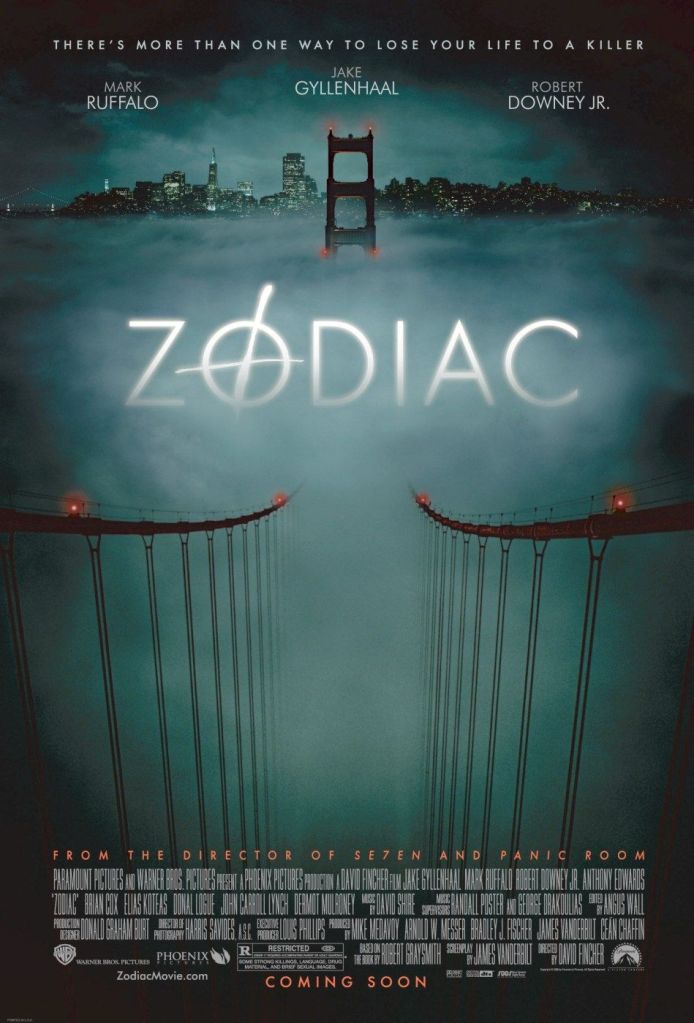
Zodiac (2007)

Zodiac (2007)

A chilling chronicle of the hunt for a serial killer told with a superb mix of journalism and filmic flair

Director: David Fincher

Cast: Jake Gyllenhaal (Robert Graysmith), Mark Ruffalo (Inspector Dave Toschi), Robert Downey Jnr (Paul Avery), Anthony Edwards (Inspector Bill Armstrong), Brian Cox (Melvin Belli), Elias Koteas (Sergeant Jack Mulanax), Donal Logue (Captain Ken Narlow), John Carroll Lynch (Arthur Leigh Allen), Dermot Mulroney (Captain Marty Lee), Chloë Sevingy (Melanie Graysmith), John Terry (Charles Thieriot), Philip Baker Hall (Sherwood Morrill), Zach Grenier (Mel Nicolai)

It’s one of the great unsolved mysteries of American history, like San Francisco’s version of Jack the Ripper. For a large chunk of the late 60s and early 70s, a serial killer known only as “the Zodiac killer” murdered at least five (and claimed 37) innocent people, all while sending mysterious, cipher-filled letters to San Francisco newspapers, taunting police and journalists for failing to catch him and threatening further violent acts. The investigation sifted through mountains of tips and half clues but only produced one possible suspect, Arthur Leigh Allen: though no fingerprint or handwriting match could conclude a case.

The story of the hunt for this elusive killer, stretching into the 1980s and concluding with another dead-end coda in 1992, is bought to the screen in a film from David Fincher that expertly mixes cinematic flair with journalistic observation. Channelling All the President’s Men and 70s conspiracy thrillers as much as it does the dark obsession of Fincher’s Seven, Zodiac is a master-class not only in the bewildering detail of large-scale investigations (in the days before computer records and DNA evidence) but also the grinding, destructive qualities of obsession, as those hunting the Zodiac killer struggle to escape the shadow of a case that grows to dominate their lives.

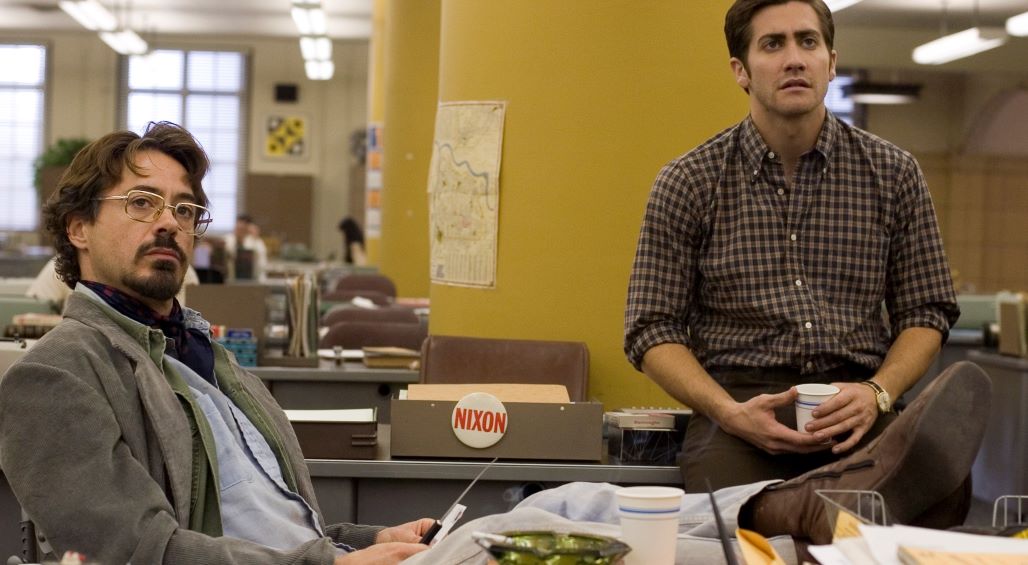
Zodiac focuses on three men, all of whom find their lives irretrievably damaged by their investigation. At first, it seems the drive will come from Robert Downey Jnr’s Paul Avery. Avery is the hard-drinking, charismatic, old-school crime correspondent on the San Francisco Chronicle. In a performance exactly the right-side of flamboyant narcissism, Downey Jnr’s Avery is a man who likes to appear like he takes nothing seriously, even while the burden of the case (and a threat to his life from the Zodiac killer) tips him even further into a drink habit that is going to leave him living in a derelict houseboat, in a permanent state of vodka-induced intoxication.

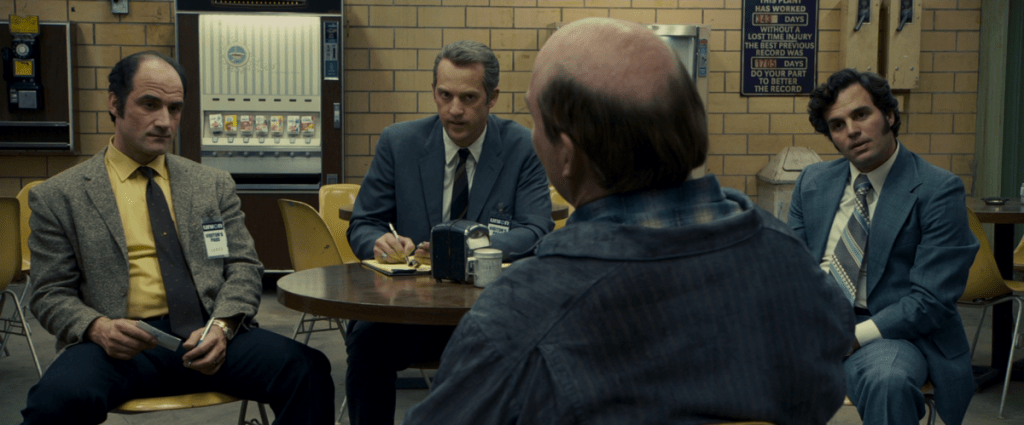
The second is Inspector Dave Tosci, a performance of dogged, focused professionalism from Mark Ruffalo. He’s confident he’ll find his man, and will go to any lengths to do it, staying on call night and day, and hoarding facts about the case like a miser. He relies more than he knows on level-headed, decent partner Bill Armstrong (played with real warmth by Anthony Edwards). Tosci’s self-image and belief slowly crumble as every lead turns dead end, every gut instinct refuses to be backed by the evidence. The killing spree becomes his personal responsibility, a cross he bears alone for so long that when a belated letter from Zodiac surfaces in 1978, his own superiors believe Tosci sent it in some vain attempt to keep a cooling case alive.

Our third protagonist, present from the arrival of the very first Zodiac letter at the door of the Chronicle, is Jake Gyllenhaal’s Robert Graysmith. A quiet, studious, teetotal political cartoonist who is literally a boy scout, Graysmith spent a huge chunk of the 70s and 80s trying to crack the case, eventually turning his investigation into a best-selling book. It’s Graysmith who becomes the focus of Fincher’s investigation of obsession. The glow of monomania is in Gyllenhaal’s eyes from the very start, as the cipher and its deadly message spark a mix of curiosity and moral duty in him. He feels compelled to solve the crime, but it’s a compulsion that will overwhelm his life. The Zodiac is his Moby Dick, the all-powerful monster he must slay to save the city. (“Bobby, you almost look disappointed” Avery tells him, when Avery suggests some of the Zodiac’s murderous claims are false, as if reducing the wickedness of the Zodiac also reduces the power of Graysmith’s quest.)

The real Graysmith commented when he saw the film, “I understand why my wife left me”. It’s a superb performance of school-boy doggedness, mixed with quietly fanatical, all-consuming obsession from Gyllenhaal, as the film makes clear how close he came (closer than almost anyone else) to cracking the case, but nearly at the cost of his own sanity. Graysmith pop quizzes his pre-teen children on the case over their breakfast (a far cry from, at first, his instinct to shield his son from the press coverage) and as he becomes increasingly unkempt, so his house more and more becomes a mountain of boxes and case notes.

It’s the secondary theme of Zodiac: how obsession doesn’t dim, even when events and evidence drop off. The second half of the film features very little new in the case (which peaked in the early 70s) but focuses on the lingering impact of the ever more desperate and lonely attempts to solve it. Armstrong, the most well-adjusted of the characters, perhaps knew it was a hopeless crusade when he threw his cards in and left the table after a few years to spend time with his children while they grew up. Avery cashes out as well – even if his health never recovers. Tosci is cashiered from the game, and even Graysmith finally realises the impact on him.

That second half of the film is long. Too long. It also, naturally, leaves us with no ending – a sad coda that hints at the guilt of primary (only) suspect Arthur Leigh Allen, but gives us (just like the surviving victims) no closure. It’s fitting, and deliberate, but still the only real flaw of Zodiac is that, at 150 minutes, it’s too long. The deliberate draining of life from the case, like a deflating balloon, also impacts the narrative, which consciously drops in intensity (and, to a degree, interest – despite Gyllenhaal’s subtle and complex work as Graysmith). It’s even more noticeable considering the compelling flair with which Fincher delivers the first half of his scrupulously researched film.

Fincher and screenwriter James Vanderbilt spent almost 18 months interviewing everyone involved with the case. Nothing was included in the film unless it could be verified by witnesses. That included the crimes of the Zodiac: only attacks where there were survivors are shown, the only minor exception being Zodiac’s murder of a taxi driver (where only distant eye-witnesses were available) – even then, every event is confirmed by ballistics and no dialogue is placed into the mouth of the victim. The film also acknowledges the unknown nature of the Zodiac killer: each time the masked killer appears in recreations of his crime he is played by a different (masked) actor, subtle differences in build, tone of voice and manner reflecting the contradictory eye-witness statements. These chilling scenes are shot with a sensitivity that sits alongside their horrifying brutality. Fincher felt a genuine responsibility to reflect the horror of what happened, but with no sensationalism.

Instead, he keeps his virtuoso brilliance for the investigation. The newspaper room filling with the super-imposed scrawl of the Zodiac killer, while the actors read out the words. Restrained but hypnotic editing, carefully grimed photography, camera angles that present everyday items in alarming new ways, a mounting sense of grim tension at several moments that makes the film hard to watch. A superb sequence surrounding the Zodiac’s demand to speak to celebrity lawyer Melvin Belli (a gorgeous cameo from Brian Cox), first on a live TV call-in show, then in person (a “secret meeting” swamped by armed police, which Zodiac, of course, doesn’t turn up to). This is direction – aided by masterful photography (Harris Savides) and editing (Angus Wall) – that immerses us in a world (like drowning in a non-fiction bestseller), while never letting its flair draw attention to itself.

Zodiac was a box-office disappointment and roundly forgotten in 2007. It’s too long and loses energy, but that’s bizarrely the point. It implies, heavily, that Allen (played with a smug blankness by John Carroll Lynch) was indeed the killer, but doesn’t stack the deck – every single piece of counter evidence is exhaustingly shown. In fact, that’s what the film is: exhaustive in every sense. It leaves you reeling and tired. It might well have worked better, in many ways, as a mini-series. But it’s still a masterclass from Fincher and one of the most honest, studiously researched and respectful true-life crime dramas ever made. And just like life, it offers neither easy answers, obvious heroes or clean-cut resolutions, only doubts and lingering regrets.

Sunrise: A Song of Two Humans (1927)

Sunrise: A Song of Two Humans (1927)

The visual language of cinema is redefined for Hollywood, with this expressionistic, fairy-tale, silent masterpiece

Director: FW Murnau

Cast: George O’Brien (The Man), Janet Gaynor (The Wife), Margaret Livingston (The City Woman), Bodil Rosing (Maid), J Farrell MacDonald (Photographer), Ralph Sipperly (Barber), Jane Winton (Manicurist), Arthur Housman (Obtrusive gentleman), Eddie Boland (Obliging gentleman)

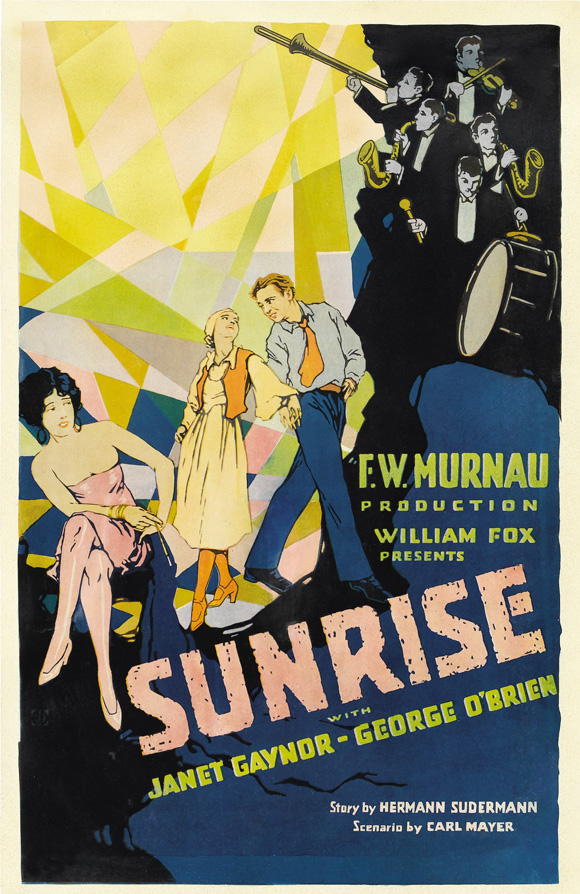
It’s 1928 and Hollywood has a neat idea. How about an annual awards ceremony toasting the best the industry has produced in the last year? But how on earth do you decide the “best” film? Isn’t comparing war films to arthouse films like comparing apples and oranges? The solution? An award for Outstanding Production and another for Best Unique and Artistic Picture. FW Murnau’s revolutionary silent movie, Sunshine: A Song of Two Humans, was the first and last winner of the latter category: a movie so technically inventive and astonishingly cinematically literate that its influence has seeped into almost every frame of footage shot by the movies ever since.

It would be fair to say Sunrise is less a narrative, more a quiet piece of expressionist art. Its plot is incredibly slim, essentially a fairy tale. In an unspecified country village (presumably in America, but it might as well be from the Brothers Grimm), a married man (George O’Brien) falls in lust with a floozy from the big city (Margaret Livingston). Before he can take the infatuation any further than canoodling by a country lake, he’s got to get rid of his wife (Janet Gaynor). He takes her out on a boat, planning to “get her drowned”, but can’t go through with it. She works out his intent though and runs. He follows her and they wind up in the big city, where a series of encounters helps them remember they actually do love each other. When they return to the village, she briefly seems lost in a genuine boating accident, before a fairy tale ending.

That’s what Sunrise is: a fairy tale. Murnau aimed at universality in his film. Namesless every people and generic, fantastic locations. A dreamlike structure and pace. It would have a monster who becomes a prince, a damsel in distress who saves the day and a wicked “crone” who wants to shatter their happiness. This is all part of turning it into a universal fable. It makes for a beautiful simplicity in narrative that is surprisingly effective if you surrender yourself to it. No one is going to mistake it for Tolstoy or Zola (for all it’s Therese Raquin remix), but you might just mistake it from something from Hans Christian Anderson.

This atmosphere benefits even more from Murnau’s artistry. One of the true founding fathers of cinema, Murnau believed in the power of images. (He died with the advent of sound – somehow that seems sadly fitting for a director whose poetic visual power would have sunk forever under the fixed rigidity of Hollywood movie cameras capturing sound.) Sunrise has fewer intertitles than almost any other silent movie. Most are concentrated in the film’s first 20 minutes, establishing plot and character. Then it relies almost entirely on the power of images.

Sunrise may be a slight story, but cinematically it’s a heavyweight. Today, transitions, flashbacks, montages, superimposed images and vivid panoramas are just part and parcel of film. But many of these techniques date from the work of Murnau, and Hollywood really woke up to them with his first American film. Sunrise is immaculately shot – photographers Charles Rosher and Karl Struss would also win one of those Oscars – a series of beautifully composed images, with a free flowing camera that looks normal today but reinvented the industry back then. Few other films, except maybe Citizen Kane, can claim to be as influential on cinematic technique.

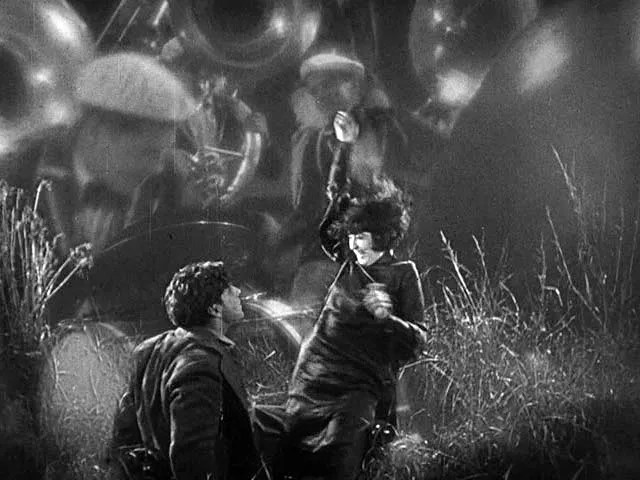
Look at the opening montage of the big city. What seems like a straightforward fixed shot was a triumph of invention. The city was a carefully constructed set, with the shot combining forced perspective of a model train, dwarf extras and intelligent angles and camera positioning to create a vibrant, overhead shot of city life quite unlike anything anyone had seen before. (Rochus Gleis’ Oscar-winning art design is superb.) The city, when we see it in more depth, is a fascinating collection of architectural influences contrasting beautifully with the village’s homespun ruralism.

The camerawork and editing is sublime, its use of superimposed images truly extraordinary. As the man meets his fancy woman by a lake, they lie back and look at the stars. Above them, in the night sky, images of the city are imposed that stress its energy, excitement and raw sex appeal (can-can dancers and the like). It’s almost like our lovers are watching an actual movie.

Later the imposition will be reversed: after reconciling in the city, man and wife walk down a busy street – without a cut, as they walk, the street fades away and is replaced by the country fields of their home. In most cases, the imagery throws the character’s inner longings up on the screen for the viewer to digest. It doesn’t stop there. Images at various points show the city woman imposed standing behind the man as he debates killing his wife (again those inner thoughts given visual life). As the man lies back on his bed and stares at his wife, water is superimposed on top of him – it’s clear what he is thinking.

Murnau shoots with an expressionistic, early-morning brilliance, the man working home from his assignation – his slumped back and shoulders (George O’Brien joked his back did most of the work) telling us everything about his mood, in contrast with the brilliance of the surroundings, which we realise he finds as overwhelming as we do (he even gets slightly lost in the frame).

The possible drowning is a masterclass in cutting – moving swiftly from the man’s furrowed brow, as he builds up to what he must do, and the wife’s growing realisation of what he has in mind. A big part of the film’s poetic beauty is how this point of no return is an entrée to a love story. Reunited in the city, the two walk into a church and witness a wedding: the ceremony reminds them of the one they once shared, and Murnau captures the two of them emerging from the church just before the married couple, cementing the rebirth of their marriage. It’s an overwhelmingly optimistic view of love and the durability of the human spirit.

The film’s long second act of hijinks in the city can strain the patience of some. It’s effectively the couple’s second honeymoon, from having their photos taken (a candid moment of genuine love) to dancing at a Moulin Rouge style club where the man captures an escaped pig (yes seriously). It’s dreamlike (the camera work, especially in the club, reflecting this) but undoubtedly low on plot and drama. But it’s charming in its simplicity and in Murnau’s little touches of wit – the couple’s attempt to hide a damaged statue in the photographer’s studio is surprisingly funny.

It all leads us back to the narrowly averted tragedy of the final act as – irony of ironies – the newly reconciled couple are swept up in a genuine storm on the river that nearly sweeps the wife to her death. The man is distraught – so much so his homicidal rage is often overlooked him. Anyone seriously considering bumping his wife off is not well adjusted, and his reaction to the presumed loss of his wife it to attempt to strangle his lover.

This doesn’t intrude on the optimism of the tale and Murnau’s desire to present a fairy-tale like restoration of domestic bliss (after all, darker things happen in Brothers Grimm), all of which ends with an art deco sunset that kisses the frame. O’Brien’s body language may seem crude today, but it perfectly communicates the tempest at the heart of the man’s doubt. Gaynor has a beautiful innocence to her (she won an Oscar as well). Together they play enraptured love without being cloying, and are equally convincing during the rage and accusation.

Murnau, inexplicably, didn’t get an Oscar (not even a nomination), but Sunrise is a testament to his artistic brilliance with cinema. Effectively, he created a new grammar for this language, a superb use of visuals, effects, editing and production to lift a slight story into the realms of high art. Which is what Sunrise is: an arthouse poem, a visual feast that will linger with you long after its runtime has elapsed. Its influence has touched so many parts of cinema, that you might wonder today what all the fuss is about. But everything from your arthouse darling to your favourite Marvel blockbuster owes Sunrise a debt.

The Fighter (2010)

The Fighter (2010)

A fighter has a title shot, in a surprisingly heartwarming film about the importance of family, no matter how messed up it is

Director: David O Russell

Cast: Mark Wahlberg (Micky Ward), Christian Bale (Dicky Eklund), Amy Adams (Charlene Fleming), Melissa Leo (Alice Eklund-Ward), Jack McGee (George Ward), Frank Renzulli (Sal Lanano), Mickey O’Keefe (Himself)

Everyone loves Rocky. We all want to that local-hero-turned-good, the guy who went the distance. Lowell, Massachusetts had that in Dicky Eklund. Eklund, a minor pro-boxer, once went the distance against Sugar Ray Leonard in 1978 (he argues he knocked him down, although many are convinced Leonard slipped). “The Pride of Lowell” then became… a crack addict, tumbling from disaster to let-down, helping and hindering the career of his brother, fellow boxer Micky Ward.

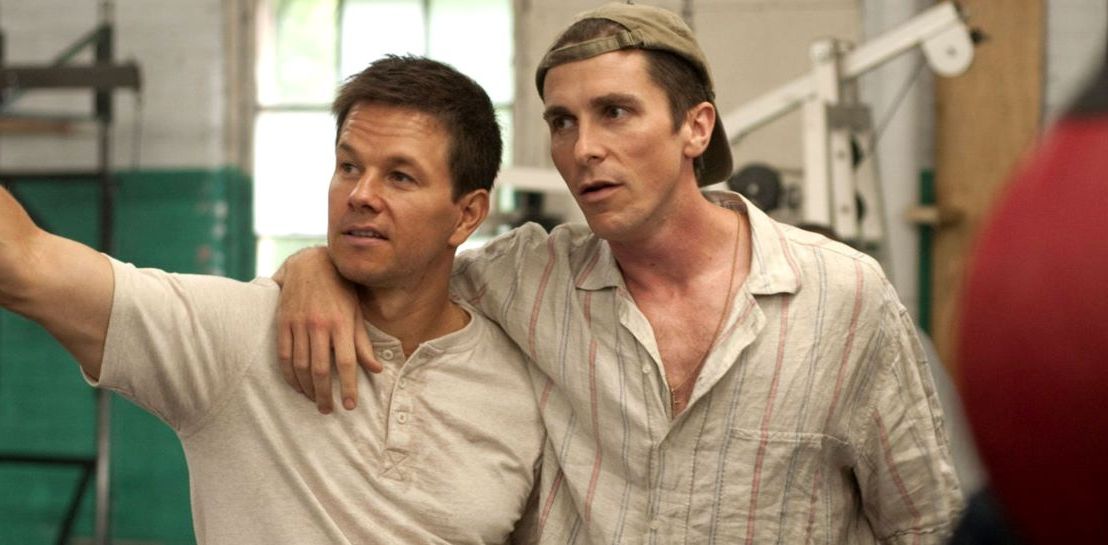
The story of the two brothers – leading up to Ward’s eventual title shot in 1997 – comes to the screen in Russell’s affectionate, if traditional, boxing drama, long a passion project of Mark Wahlberg who plays Micky. Wahlberg kept himself in boxer-condition for years as he dreamed of making the film, recruiting director and cast and producing the film. The fine, sensitive film we’ve ended up with is a tribute to his commitment and producing skills, while the fact that Wahlberg casts himself in the least dynamic part is a nice sign of his generosity.

Because it’s only really on the surface a Micky Ward film. Sure, the film follows the vital events in his life. It opens with him bashed up in a mis-match, filling his role as a “stepping stone” fighter, someone the future champs flex their muscles against. We follow his struggles to escape from under the thumb of his large brash family – above all his bombastic, domineering mother Alice (Melissa Leo). He forms a relationship with ambitious-but-caring Charlene (Amy Adams), moves up the ranking, lands that title shot, fights the big bout. But it never quite feels like Micky is the star.

Because, really, this feels like it’s about Dicky Eklund working out the first act of his life is over, and trying to find if he has what it takes to start a second, more humble, one. The film opens with Dicky followed by an HBO crew for a fly-on-the-wall documentary. Dicky’s convinced himself it’s to chart his boxing come-back. It’s actually about the horrific impact of crack addiction. Dicky is a strung-out, unreliable junkie, living on past glories but screwing up everything he touches, being enabled by the fawning worship of his mother and sisters, who still worship him as the families main event (and continue to do so, even as Micky rises to title shot). The film’s heart is Eklund sinking to rock bottom and realising he has forced the compliant Micky into playing a subservient role in his own life.

Perhaps it feels like a film more focused on the remoulding of this charming but selfish figure because of the compelling performance of Christian Bale. Starving himself down to match Eklund’s wizened, strung-out physique (he’s still got the boxer moves, but his body has wasted away) is a day’s work for a transformative actor like Bale. But this isn’t just a physical performance, but a deep immersion into the personality of a person who almost doesn’t realise until it is too late how fundamentally flawed he is. Bale’s a ball of fizzling energy and electric wit coated in a lethargic drug-induced incoherence. His energy is frantic but uncontrolled, wild and mis-focused. It’s a superb, heartfelt performance of loveable but dangerous uselessness that nabbed Bale an Oscar.

But what makes The Fighter a surprisingly warm film is that, for all his many flaws, selfishness and self-obsession, Dicky genuinely cares for his brother. He wants the best for him, he believes in and loves him. Much of the power of Bale’s performance comes from the fact he never forgets this, even when Dicky is at his worst. In fact, Russell’s whole film works because that warmth and love everyone feels for Micky is never forgotten and never weaponised by Russell into helping us make moral judgements about the characters. Nor does it forget that Micky may sometimes hate his family, but he never stops loving and needing them.

A weaker film would have stressed the trailer-trash greed of Melissa Leo’s Alice. Leo (who also scored an Oscar and famously dropped the f-bomb on live TV, condemning the ceremony to a permanent time delayed broadcast ever since) is in many ways playing an awful character: controlling, nakedly favouring Eklund over his brother, quick to judge, rude and aggressive. She’s never truly likeable – but Russell’s film understands everything she does is motivated by love. She genuinely wants the best for Micky, even while she pushes him into bad fights and never listens to him. She tries to protect him, and expresses this in destructive selfishness.

In many ways she’s just like Micky’s girlfriend Charlene, who recognises early that Micky’s family (who have turned him into a timid hen-pecked type) can’t be trusted to run his whole career, but who also subtly pushes herself into Alice’s place as the leading decision-making influence in his life. Very well played by Amy Adams (who lost the Oscar to Leo), Charlene is smart, sexy, loving but just as determined that it’s her way or the highway.

What Micky needs to do, the film carefully (if rather safely) outlines, is take the best qualities of all his influences. It’s Eklund’s “job” to realise Micky needs everyone he loves singing from the same hymn-sheet. It needs compromise and putting other people first. It makes for a nice little paean to the importance of family relationships, founded on forgiveness and admitting when you are wrong. Micky forgives his mother and brother for their selfishness: they, in turn, acknowledge their mistakes. Eklund is crucial here: Bale is again superb as a man who suddenly realises pride has nearly ruined his life and embraces the junior role in the relationship with his brother.

Sure, none of this reinvents this wheel, but it still makes for engaging and rather sweet drama. Russell mixes it with some neat stylistic flourishes that don’t overwhelm the film. It’s shot with an edgy, handheld immediacy reflecting its street roots. The fights are shot with old TV cameras, so that invented footage can fuse with 90s HBO coverage. Russell of course gets great performances from his actors, as he always does.

The Fighter is in many ways predictable. But it wears its heart very much on its sleeve, and Wahlberg deserves credit for assembling it and for giving a quiet, generous performance at the centre of it. And the film’s commitment to the idea that, no matter the problems in our families, we can all find the courage to admit our mistakes and pull in the same direction remains heartwarming.

Love Affair (1939)

Love Affair (1939)

Two people in love, separated by circumstance, in this film of two halves: one comedy, one sentimental

Director: Leo McCarey

Cast: Irene Dunne (Terry McKay), Charles Boyer (Michel Marnay), Maria Ouspenskaya (Michel’s Grandmother), Lee Bowman (Kenneth Bradley), Astrid Allwyn (Lois Clark), Maurice Moscovich (Maurice Cobert)

In many ways you could say Love Affair was the turning point in Leo McCarey’s career. For years in silent films and the early talkies he had been one of Hollywood’s leading comedy directors, the quick-witted master of the improvisational pun. But there was a second McCarey: the devout Catholic, concerned about social issues. The McCarey who light-heartedly complained when was given an Oscar for The Awful Truth rather than his heartfelt critique of elderly care, Make Way For Tomorrow. This McCarey increasingly leaned into well-meaning, sentimental dramas.

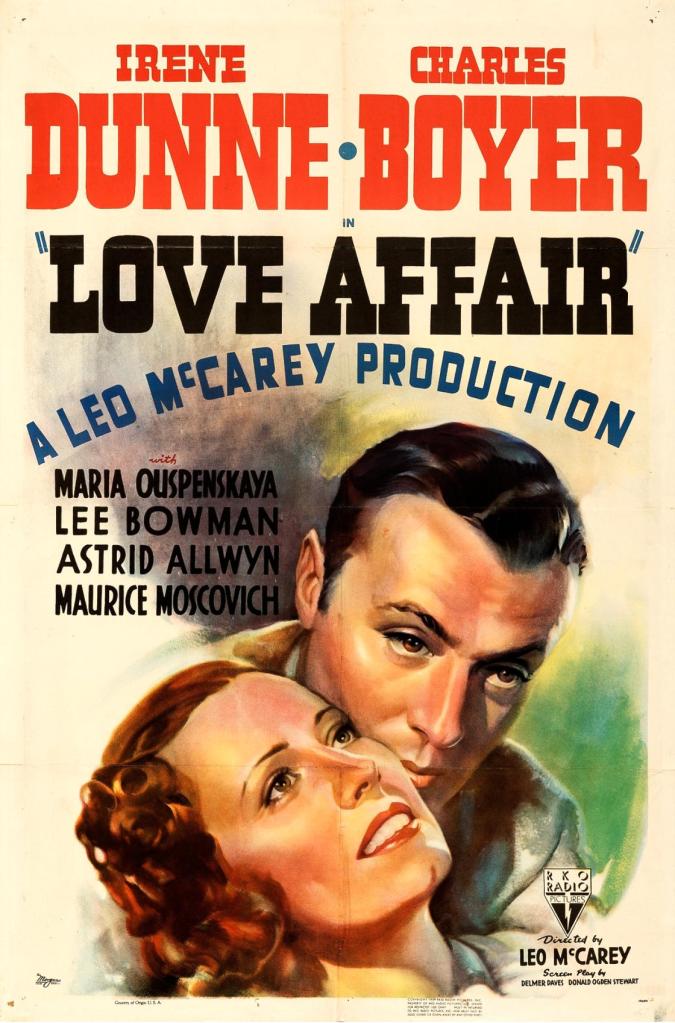
So why is Love Affair a turning point? Because the first half is a charming, funny, sexy meet-cute: and the second a well-meaning but sentimental love story that pulls two people apart. Those meet-cuters are famous Parisian playboy (he’s basically a gigolo) Michel Marney (Charles Boyer) and nightclub singer Terry McKay (Irene Dunne). They meet on a trans-Atlantic liner and fall in love. Problem is they are both engaged to others (both of them rich), waiting for them in New York. Should they decide to chuck it in and be together, they arrange to meet six months later at the top of the Empire State Building. Come the day, Michel waits – but on the way there, Terry is hit by a car and possibly left paralysed. She doesn’t want to tell him. He thinks she never planned to show up. Will they ever be together?

That car crash is the pivot in a film that feels like two genres surprisingly successfully wedded together. Love Affair is a great idea (so good in fact that McCarey remade it about 20 years later as An Affair to Remember), a romantic story with all the joy and vibrancy of a couple finding each other and falling in love, then the painful sting of tragic circumstances pulling them apart. It manages to be sweetly funny and then more or less manages to land just the right side of sentimental (though, lord, it skates near to the edge).

You go with that more overtly manipulative conclusion though, since the subtle comedic and romantic manipulation of the first half is so well done. McCarey encouraged his actors to improvise: filming started with McCarey sitting at a piano, plinking keys, waiting for inspiration to jazz up the script. It’s an approach many actors found challenging (Cary Grant nearly had a meltdown at first on The Awful Truth). But he found the perfect pairing with Boyer and Dunne.

Of course, Irene Dunne was a veteran. An actress far too overlooked today, Dunne flourished under McCarey’s style. Here she’s gloriously warm, sexy and charming. Terry McKay has a very dry (at times almost slightly smutty) wit; she’s absolutely no fool, but also kind, caring and considerate. Dunne sparkles every time she steps in front of the camera, displaying the sort of comic timing you can’t buy (her teasing glances at Michel during their first meeting, when she accidentally reads a telegram all about his sexual exploits at Lake Como, are to die for). But her face also lights up with a genuine radiance as she finds herself falling in love.

She also sparks wonderfully with Charles Boyer. Another overlooked star of 1930s Hollywood, Boyer was desperate to work with McCarey. He found the improvisational style awakened a relaxed, playful element in his acting that helped make Michel exactly the sort of dreamboat you could imagine falling in love with on a cruise. Boyer was also a superb reactor, his face able to communicate anything from growing interest, to delight and also piety, pain and disappointment. Boyer’s comic timing, like Dunne’s is faultless. Like her, he also effortlessly shifts to drama in the second half, expertly demonstrating the maturity of a playboy into someone generous and understanding.

With these two actors, McCarey couldn’t go too far wrong. Their natural ease with each other makes for wonderful chemistry. They are two people who progress naturally from teasing, to enjoying each other’s company, to realising they enjoy each other’s company way too much. Today, Love Affair can look a little tame – they don’t even kiss (although one shot of crashing waves, cutting to them opening a door on the boat to walk along the deck together, is rather suggestive). But the point is that this is love not an affair (or an affair about love). The feelings they develop for each are genuine and, bless them, they don’t want to corrupt it with behaviour that could compromise them.

Tellingly their love is cemented during a stop off in Madeira, where they visit Michel’s aunt (played by an archly eccentric Maria Ouspenskaya). She welcomes them into her home, bonds with Terry, and Michel shows Terry a far different side to himself than his playboy persona: a thoughtful artist. McCarey even shoots them together (in a beautifully lit scene by photographer Rudolph Maté) in a chapel, kneeling side-by-side at the altar. Could McCarey make the endorsement of their love more clear?

Perhaps he felt he needed to, since the screenplay was controversial. The Hays Code had no intention of allowing a film showing two engaged people walking out on their partners. Perhaps that’s why they needed to be “punished” with that sudden car crash. The second half is less successful: maybe because I find the “I can’t ruin his life by making him look after me in a wheelchair” a little too on the nose. Boyer and Dunne play the hell out of it: Dunne is quietly crushed under a surface of charm and what-will-be-will-be. Boyer tries his best to hide his pain, but still searches for some of what he’s lost in his new career as an artist.

Of course, the truth will out – and it will end happily. But there’s a little too much sentiment in the second half, after the heartfelt romancing of the first. A little too much put-a-brave-face-on-the-pain, a few too many contrivances to maintain the illusion (of course they go to the same play on Christmas Eve!). There are too many sickly sweet scenes of Dunne singing with the kids at the orphanage she’s recuperating at (a ghastly advance warning of McCarey’s tedious Going My Way). But it just about works, because we really care about Terry and Michel. We want them to be together, come what may.

Love Affair can be a mixed bag, but it’s got two wonderful performances for Boyer and Dunne (she was nominated, he was robbed) and McCarey manages to juggle comedy, romance, sweetness and a little touch of sadness. It’s a luscious romantic film, even while you see it manipulating you – and for that, it will always give you a great deal of pleasure.

Thirteen Lives (2022)

Thirteen Lives (2022)

A real life rescue attempt that defied belief is bought to the screen with gripping power and skill

Director: Ron Howard

Cast: Viggo Mortensen (Richard Stanton), Colin Farrell (John Volanthen), Joel Edgerton (Dr Richard Harris), Tom Bateman (Chris Jewell), Pattarakorn Tangsupakul (Buahom), Sukollawat Kanarot (Saman Kunan), Teerapat Sajakul (Captain Anand), Sahajak Boonthanakit (Governor Narongsak Osatanakom), Vithaya Pansringarm (General Anupong Paochinda), Teeradon Supapunpinyo (Ekkaphon Chanthawong), Nophand Boonyai (Thanet Natisri), Paul Gleeson (Jason Mallinson)

In Summer 2008 one story gripped the world. In Thailand on June 23rd, 12 members of a boys’ junior football team and their coach Ekkapon Chanthawong (Teeradon Supapunpinyo) were stranded underground in the Thum Luang caves by flooding. Rescue attempts would call for an international effort: Thai Navy Seals, American military, the local community and a team from the British Cave Rescue Council pooled talents and knowledge to help save the boys before they drowned, suffocated or starved to death.

It’s bought to the screen in Ron Howard’s gripping true-life disaster film, Thirteen Lives, a scrupulously respectful yet compelling dramatisation reminiscent of his Apollo 13: it wrings maximum tension from a story nearly all of us know the outcome of. Just like that film, it superbly explains the huge obstacles the rescuers faced – the near impossibility of navigating the flooded caves, the onslaught of water, the claustrophobic underwater conditions, the panic-inducing nightmare of swimming through kilometres of tight space for inexperienced divers…

Each of these is swiftly but carefully explained, before Howard focuses on the international effort resolving them. Onscreen graphics – in particular a map of the route through the cave complex, including distances and time spent travelling underwater (over four hours) – help us understand every inch of the journey and its implications. Carefully written scenes avoid the trap of exposition overload while making the dangers of an hours-long swim through dark, flooded tunnels clear.

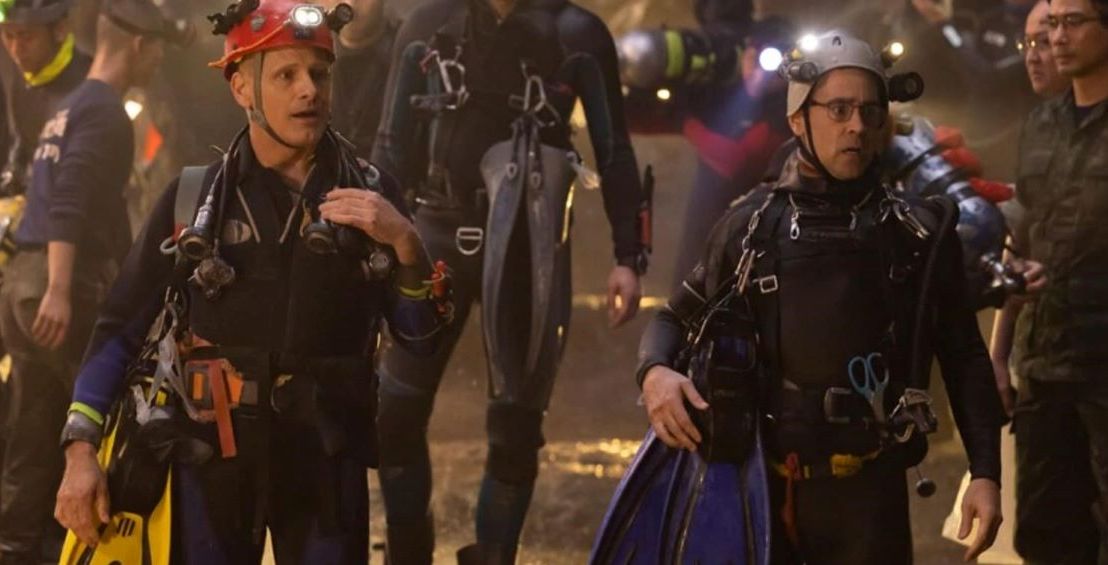
Howard skilfully goes for show-not-tell where he can. The gallons and gallons of water running down the mountain and into the caves in the monsoon conditions are made abundantly clear. The first expedition of experienced cavers Richard Stanton (Viggo Mortensen) and John Volanthen (Colin Farrell) is staged in careful detail: the sharp currents, confined conditions (some parts of the cave are almost impassable – particularly when dragging two oxygen cylinders), the inability to see where you are going, the hours of oppressive time spent underwater.

In case we in are any doubt of how difficult any rescue will be, we see Stanton take a stranded rescue worker a short distance underwater: the man panics, nearly drowns them both and then nearly kills himself trying to surface. The eventual plan – to sedate each boy and have an experienced rescue diver carry him out – is as carefully explained as is its risk (if the dose is not exact, suffocation or panic induced drowning can and will occur). Howard’s careful, unflashy but captivating filming of the rescue attempt that follows is nail-biting and deeply moving.

Not least, because the film doesn’t shy away from the terrible risks. The accidental drowning of Navy Seal Saman Kunan – tragically volunteering from retirement – is sensitively, heartbreakingly handled. Every character is painfully aware of the dangers: Teeradon Supapunpinyo’s coach begs the families to forgive him for putting their children at risk (the children fall over themselves to praise him for saving their lives, in a heart-rending scene). Tom Bateman’s (fabulous) Chris Jewell breaks down in relief, guilt and a fear after he briefly panics during the rescue (no one blames him for a second – they all know each of them has been seconds away from the same countless times). This is a film that understands heroism is not square jawed machismo, but a grim awareness of the risks and a determination to not let that analysis stop you from helping those in need.

But Thirteen Lives is very pointedly not a white saviour story. It’s a story of teamwork and skills coming together: the British and Australian divers join a rescue effort being led by Thai Navy Seals, supported by local Thai officials. All of them are vitally assisted by a Thai water engineer who travels a huge distance to the site to help, and who brings vital knowledge, but can’t succeed without a local man who knows the terrain and a team of ordinary volunteers.

A triumphalist story would have opened and closed with one of our British heroes – the coolly professional ex-firefighter Stanton perhaps – and had them learning lessons and rising to the challenge. This film starts with the boys’ plans for a birthday party, and closes with the eventual much-delayed party. As soon as it’s revealed they are alive inside the cave complex, the film returns to them time and again and stresses their role was in many ways the hardest of all: trapped, lonely, terrified and slowly starving and suffocating, powerless to do anything. Howard’s film never forgets it is their story, or the courage they showed.

Equally, the film  doesn’t forget the role of ordinary people. Thirteen Lives is full of people unquestioningly making sacrifices, putting themselves in danger or working at the limits of endurance to help. It’s not just the divers who carried the boys out who saved them. It’s the Thai farmers, living in poverty, who willingly agree that their farmlands (and crops) be destroyed by redirected water flow from the mountain to buy the boys time. The Thai volunteers battling for days with sandbags, pipes and eventually bamboo funnels against a never ending waterflow.

In this the British team are another group of (admittedly more prominent and vital) experts, volunteering their skills. Their presence is at first resented by the Thai Navy Seals – do they fear a white saviour story as well? – who feel a personal duty to rescue the children. Such clashes are not glossed over – but Howard’s film demonstrates the growing respect between them. The Seals are superb divers: but less experienced in the caving conditions the British team practically live in. The British are experts, but strangers in this land.

As those divers – this is surely the first Hollywood blockbuster to feature a hero from Coventry – Mortensen and Farrell are superbly committed and human. (There is a British delight to be had from their discussion of the merits of custard creams.) Mortensen is the hardened realist: he is sceptical that the impossible can be achieved and is firm that he won’t allow himself or others to undertake suicidal efforts. Farrell is great as his counterpart, determined to leave no one behind. Both actors spark wonderfully off each other – and their commitment, and that of the rest of the cast,  to filming in these punishing conditions is stunning.

Thirteen Lives is a superb reconstruction of an incredible story, that wrings the maximum drama from an international sensation. It carefully celebrates internationalism and co-operation (its dialogue is largely not in English) and the struggles of the highly professional to find solutions to insurmountable problems. Channelling all Howard’s skills with biography, against-the-odds survival stories and ability to draw committed performances from actors, it’s his finest film in a decade and a worthy spiritual follow-up to Apollo 13.

The Ghost Writer (2010)

The Ghost Writer (2010)

Conspiracies, lies and dirty politics surround a politician who definitely isn’t Blair in Polanski’s superb thriller

Director: Roman Polanski

Cast: Ewan McGregor (The Ghost), Pierce Brosnan (Adam Lang), Kim Cattrall (Amelia Bly), Olivia Williams (Ruth Lang), Tom Wilkinson (Professor Paul Emmett), Timothy Hutton (Sidney Kroll), Jon Bernthal (Rick Ricardelli), Tim Preece (Roy), Robert Pugh (Richard Rycart), David Rintoul (Stranger), Eli Wallach (Old Man), James Belushi (John Maddox)

An American publishing company is in dire straits. They’ve paid a fortune for the autobiography of former British Prime Minister Adam Lang (Pierce Brosnan), once seen as a visionary liberal idol but now blamed for a deeply controversial war in Iraq (sound familiar?). Problem is his trusted aide Mike McCara – who is actually writing the book – has been found drowned on Martha’s Vineyard where Lang, his wife Ruth (Olivia Williams) and staff are staying. The book needs to be finished in a month – but it’s in an unpublishable mess. Who ya gonna call? A Ghost writer (Ewan McGregor) of celebrity memoirs to finish the job of course. But will the Ghost resist trying to investigate whatever McCara uncovered in Lang’s life that may have led to his suspicious death?

Adapted from a novel by Robert Harris – who turned from a strong supporter of Blair, to terminally disenchanted – The Ghost Writer comes to the screen as a superbly controlled, perfectly placed piece of tight-wound tension from Roman Polanski, that mixes wonderful elements of Hitchcockian menace and Seventies conspiracy thriller, not to mention lashings of his own Chinatownbut here switched to the doom-laden drizzle of New York, rather than the sunkissed glory of California.

Set on a grim, grey and foreboding Martha’s Vineyard (although, for obvious legal reasons, actually filmed in Potsdam), Polanski lets every scene grow in unsettling tension. Very little explicit is every said, but danger from unknown, unseen forces is a constant presence. Accompanied by a Herrmann-esque score from Alexandre Desplat (also with a hint of a twist on Jerry Goldsmith’s work on Chinatown), this is film made with such calm, patient authority that its exudes engrossing tension. Polanski employs some beautiful touches, worthy of Hitchcock: from the Ghost, uncertain if he is being followed when boarding a car ferry, making a desperate run for freedom; to a wonderful tracking shot at a book launch that follows a note containing a vital reveal, passed from hand to hand through a crowd to the guilty speaker.

The Ghost Writer also has neat moments of dark comedy which also feels reminiscent of Hitchcock’s ability to mix dark chuckles with oppressive tension. The Ghost’s recruitment as a writer – and his hilariously frank suggestion that political memoirs are boring beyond belief – is a lovely lightly comic entrée that completely fails to prepare us for the conspiracy thriller that follows in all the right ways. Stuck in Lang’s house on Martha’s Vineyard, the Ghost tries to secretly download a copy of the memoir he is only allowed to read under supervision: his attempt coincides, to his terror, with what turns out to be a test of the alarm system. In the background of a shot during a monologue from Lang, a worker struggles with wearied patience to clean the wind-filled grounds of leaves, constantly, dutifully, collecting them back up as they blow away.

These moments of lightness make the dark even blacker. We are constantly left guessing as to who knows what. Was McCara murdered? What mysteries lie in Lang’s university past that McCara considered so important? Lang and his wife oscillate from welcoming to coldly distant. Particularly so with Ruth Lang, a superb performance from Olivia Williams. Ruth has, quite possibly, been the power behind the Lang throne, but now seems less sure of where she stands. She’s tense, without making clear why and at times painfully blunt. Suffering no fools, brittle, sharply intelligent, coldly determined, her surprisingly vulnerability draws the Ghost in, despite him knowing its “a bad idea”.

But then The Ghost makes more than a few bad ones. Perhaps because he gets fed up with people thinking he’s stupid and is too keen to prove them wrong. Ewan McGregor is wonderful as a man who spends most of his time wearily ignoring digs at the fact he’s best known for ghosting the autobiography of a celebrity chef. The Ghost – as in Harris’ book he remains un-named, suitable for a man whose job is to pretend to be his client – seems to be a disconnected observer, but emerges as a dogged detective – even if he is painfully out of his depth and acting way beyond his expertise. He becomes increasingly panicked at the terrifying world of international politics and espionage, like a beginner swimmer dropped in the deep end, while unable to stop himself digging further, like picking at a scab.

The film picks at its own scab with the legacy of Blair. Brosnan’s confident, charismatic performance captures an impression of Blair while never trying to be an impersonation. He perfectly conveys the easy charm and casual but shallow warmth of the professional politician, but the slightest scratch of the surface reveals a man who feels hard-done-by and undervalued and sick of being judged for making the tough calls. Polanski allows him moments of sympathy: it’s hard not to see his point when he makes the case for what many would call intrusive security and the self-righteousness of his persecutor, former foreign secretary Ryecart (Robert Pugh, channelling Robin Cook) hardly warms the viewer (or the Ghost) to him.

The Ghost Writer manages to make its political parallels – especially about Iraq – pointed but not too heavy handed. (There is a lovely performance from David Rintoul as a calmly spoken former-army type who turns out to be a rabid anti-war protester). It imaginatively fictionalises a version of history, humanising characters who could otherwise be crude caricatures. The cast are wonderful and this is an intelligent, gripping, classic conspiracy thriller. Mastered by Polanski, who assembles the film with such control that it takes a cold grasp of your heart without ever seeming to overwork itself. As the credits roll, Polanski having left us with a poetically tragic image of pages blowing emptily in the wind on a London street, you’ll realise how the quiet doom so expertly built could only have led to one thing. The Ghost shoulda forgot about it: its Chinatown.

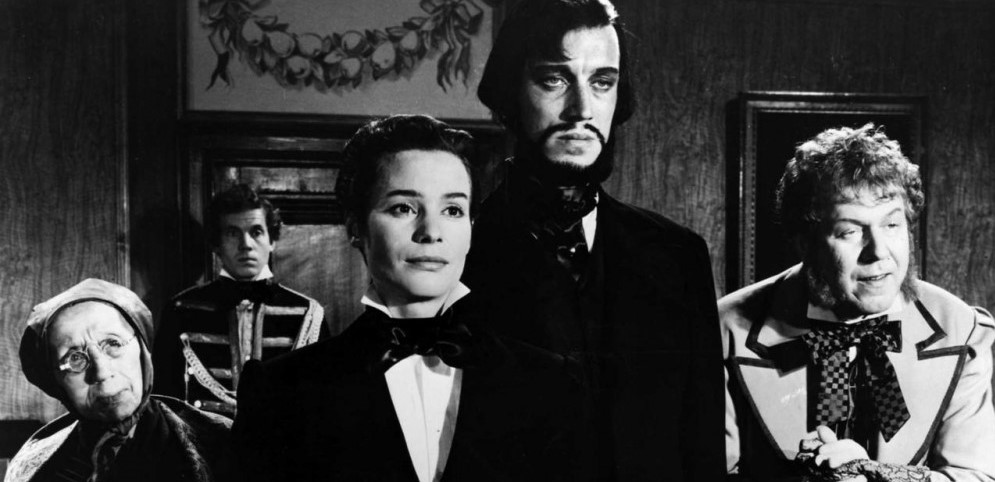
The Magician (1958)

The Magician (1958)

Illusion, faith and rationalism are all explored in Bergman’s fascinating musing on performance

Director: Ingmar Bergman

Cast: Max von Sydow (Albert Emanuel Vogler), Ingrid Thulin (Aman/Manda Vogler), Gunnar Björnstrand (Dr. Vergerus), Naima Wifstrand (Granny Vogler), Bengt Ekerot (Johan Spegel), Bibi Andersson (Sara), Birgitta Pettersson (Sanna), Gertrud Fridh (Ottilia Egerman), Lars Ekborg (Simson), Toivo Pawlo (Police Superintendent Starbeck), Erland Josephson (Consul Egerman), Åke Fridell (Tubal), Sif Ruud (Sofia Garp), Oscar Ljung (Antonsson), Ulla Sjöblom (Henrietta Starbeck), Axel Düberg (Rustan)

He who tells the truth may be the greatest liar. So thinks Mr Aman (Ingrid Thulin), in the carriage carrying him and the rest of Albert Emmanuel Volger’s Magnetic Health Theatre to a performance in a village in nineteenth-century Sweden. It’s fitting for Aman to thinking about it, since he’s actually Vogler’s wife Manda. The mute Vogler (Max von Sydow) claims powers of healing and mesmerism. But perhaps he’s making it up? If we peek behind the curtain, what is the truth?

Peeking behind the curtain is exactly what their clients want to do. The troupe is due to perform before a trio of rationalists, practically falling over themselves to debunk every step Vogler takes. Dr Vergerus (Gunnar Björnstrand) is a chilly health official who only believes what his own hands touch. Consul Egerman (Erland Josephson) wants to prove it’s rubbish to his wife Ottila (Gertrude Fridh), while Police Superintendent Starbeck (Tovio Pawlo) is a swaggering bully who just likes making people feel small. But can the imperious Vogler turn the tables on these would-be myth busters?

Bergman first struck upon the idea for The Magician after observing how much audiences at the theatre wanted to go backstage and meet the actors – and how they were invariably disappointed when they did at how everyday it was. Based on a GK Chesterton play, The Magician is a multi-layered musing on the relationship between performance and viewing, and the conflict between rationalism and faith. At heart it sympathises with the plight of the performer, presenting their work to an unsympathetic, uninterested, unengaged and unimpressed audience.

The theatre troupe look all sorts of glamourous, with the eccentric costumes and their intriguingly unknowable personae. They offer a carnival of the weird and wonderful that fascinates the rationalists, in spite of how much they want to debunk it. But, as they strip down the acts, they find plainer, simpler, less mysterious people below. Despite their eagerness to know how the trick is done, they are disappointed to find out. They barely watch the acts, or listen to the skill of the performers, because they are focused on unpicking the minutia and detail (Bergman having a pop at pretentious critical writing like the material here perhaps?).

Our rationalists are, to a man, an unpleasant, smug and often insufferable bunch. They have a clear world view and anything unscientific doesn’t fit in it: even God is “totally out of date”. Tovio Pawlo’s Starbeck is a crude, jumped-up bully, who feels barely more than a step or two higher up the social pyramid than Vogler. Egerman (a wonderfully nervy and insecure Erland Josephson) is so in awe of facts and statistics he can barely think for himself. Really controlling things is Dr Vergerus, a masterful performance of arrogance and self-satisfaction masquerading as open-minded scientific enquiry from Gunnar Björnstrand.

Far from inquiring, Vergeus’ mind is rigidly closed to anything outside of his world view. People are categorised and little more than objects of curiosity – he even speaks (ominously it turns out) of an eagerness to dissect Vogler. Flashes of the supernatural or inexplicable are met with blank terror which Vergeus swiftly covers with cold impassivity. He has made up his mind well before Vogler arrives. Like the rest of the rationalists, he preaches absolute truth but only on his own terms.

And perhaps he’s right to, in a way. The troupe are liars – but at least they are honest about it. They claim magical skills of healing and love potions (“what the bottle looks like and the colour” is far more important than the contents) which they merrily flog to the credulous. Their magic tricks are dressed up in elaborate costumes and quasi-mystical business. Their promoter Tubal (another impressive, bombastic performance for Bergman from Åke Fridell) shamelessly peddles exaggerated stories of their mastery. They may be a glamourous, but they are also cheap.

And then of course there is Vogler, who has practically dressed himself as a prop. Coated in pale make-up, Fu Manchu facial hair and a flowing black wig, von Sydow presents Vogler as an enigmatic showman. Bergman makes fabulous use of his riveting stare – surely he doesn’t need any flim-flam to hypnotise when he can glare at you like that. There is a sadness to Vogler though: his faith in himself has gone. Encountering a dying actor on the road (a neat cameo from Bengt Ekerot – and a nice call-back to his and von Sydow’s Seventh Seal team-up), Vogler’s face leans forward in fascination, curiosity and a strange longing as the actor faces death, as if he is longing to touch powers beyond once more. Manda is adamant his powers used to be real, but behind the contemptuous and defiant stare it’s unclear if Vogler knows where he is going.

Not that it matters. He’s still got the star quality to leave Mrs Egerman weak at the knees, desperate to seduce him to touch a part of his magic. And the powers are still there – even in their first meeting, Vegeus feels a flash of discomfort as Vogler’s fixed stare causes his mind to drift (a fear he dismisses in seconds). Its only as Bergman’s film strips down the performance qualities of Vogler – his costume, his make-up, his stage persona – and leaves an off-duty actor, that the dark fascination of his clients finally snaps all together into smug, rationalist contempt.

But that’s not before Vogler turns the table on Vergeus with an unsettling confrontation in a locked loft, after a performance seems to have gone disastrously wrong. It’s Vogler’s intimidating “real performance” to prove he and his troupe can still engross and deceive their audiences. This horror-tinged, mesmeric sequence of reflections, shadows, distant sounds and small movements is another reminder of what a master of the cinema of terror Bergman could have been (imagine he had joined von Sydow for The Exorcist!). It’s a superb sequence that almost shakes Vergeus’ faith in his certainty, before becoming another confirmation of how dismissive audiences are when they find out how the trick was done (no matter the impact it had on them at the time).

The Magician isn’t perfect. The middle of the film spends a little too long with the servants in the belly of the house (a Bergman trope of delight for the love of simple, everyday pleasures among the working classes). But its exploration of rationalism and artistry is fascinating. There are masterful performances (in addition to the earlier named, Ingrid Thulin is outstanding). But there is a lingering sense underneath that perhaps Bergman is gently accusing us of being little better than the rationalists, eager to know how cinema works but then talking it down when we find out. Which I suppose means a review of it rather makes his point.