Category: Directors

Odd Man Out (1947)

James Mason is wounded and on the run in Odd Man Out

Director: Carol Reed

Cast: James Mason (Johnny McQueen), Kathleen Ryan (Kathleen Sullivan), Robert Newton (Lukey), Robert Beatty (Dennis), Cyril Cusack (Pat), FJ McCormick (Shell), William Hartnell (Fencie), Fay Compton (Rosie), Denis O’Dea (Inspector), WG Fay (Father Tom), Maureen Delaney (Theresa O’Brien), Dan O’Herlihy (Nolan), Elwyn Brook-Jones (Tober)

Is it set in Belfast, or is it set in Purgatory? We follow in the footsteps of Johnny McQueen (James Mason), a leader of “the organisation” (the IRA by another name), on the run in an Irish city with a bullet buried in him. With the police looking to bring him to book, Johnny has to find his way to safety – easier said than done when pain and blood-loss keeps you moving between consciousness and collapse. Is this Johnny’s dying fever dream? It’s a tempting interpretation of Carol Reed’s stunning Odd Man Out (the first of a hat trick of masterpieces from Reed over three years, the others being The Fallen Idol and The Third Man).

It’s a perfect marriage of styles. It opens with a sense of documentary realism that would do Rossellini proud, the camera flying over its unnamed Irish city. As we dive into the house where Johnny and his cell are hiding out, planning a robbery for much-needed funds, the film tips into a marriage of noir and classic gangster film. After the disastrous robbery, where Johnny shoots a man dead in a scuffle, the film becomes more and more an impressionistic series of vignettes as an at-times delirious Johnny stumbles from encounter to encounter, meeting a host of people who help or hinder him, many of whom want him for their own ends (from reward to bizarre artistic inspiration). All this is intermixed with his own increasingly tenuous grip on reality, some scenes floating and soaring with Johnny’s own fantasies and visions as the bullet in him slowly drains his lifeforce.

As Reed’s film increasingly moves into a world that is a few degrees less real than our own, you could argue that perhaps Johnny was dead from the start. That this is his own journey through some sort of Dante-inspired purgatory. His own odyssey, where he will encounter some who want to save him and others who want to damn him.  Reed brilliantly helps us share Johnny’s vulnerability by taking the film ever more off-balance. From Johnny’s visions of the past in the air raid shelter where he takes shelter we spiral down into a surreal bombed out house and an ending that has the sniff of Greek tragedy.

No wonder Johnny feels disconcerted, as this is a rag-tag city with its own rules. Half under construction, half well-established, where the streets are a mix of cars and horse-drawn cabs, Johnny’s journey takes him from dotty housewives to tramps to saviour priests and Dickensian artists. As his fever takes hold, so does the bizarreness of his settings, until he finds himself in an abandoned grand house leaking snow from outside, being painted by a drunken artist who wants to capture the moment of death on his canvas. It’s a million miles from the forensic reality of the robbery that the film started with. Yet it never feels out of place.

A large part of that is because of how brilliantly the film invests us in Johnny’s journey – with Reed’s inspired camera-work and story-telling pulling us into his experience. James Mason spends large chunks of the film in silence, but his performance is extraordinary. A man who seems partly aware that he’s dying, guiltily wanting to know if the man he shot died. Who even from the start seems to have lost his purpose, doubting if violence can bring the results “the organisation” wants, dazzled by sunlight after years in prison, who leads his cell through habit rather than inspiration. Mason’s brilliance here is capturing the very essence of suffering humanity, a confused and frightened man who struggles to understand what is happening around him. Buffeted by events, he’s sympathetic because he never feels in control.

Partly that’s because death feels like its always been waiting for Johnny. You can see it from the start, as he sits in his hide out wondering what its all been for. Kathleen (well played by an impressionable Kathleen Ryan) can’t get death off her mind as she talks about finding and saving Johnny or dying with him. Sympathetic priest Father Tom (a devout WG Fay) just wants to have the chance to save his soul. There is a sense of inevitability about the film – helped by Mason’s crumbling weakness – that destruction is coming and nothing can avoid it.

Reed’s film also has a brilliant sense of the compromises and shady questions of right-and-wrong. Johnny is a murderer and a terrorist – even if he also is a man plagued with doubt. Kathleen is a romantic and a fanatic. Hotel owner Theresa plays both ends against the middle. The coppers will do their duty, but they don’t seem vindictive, just determined to do what they must. There are no clear moral answers in this film, everyone has shades of grey.

It all combines together into one of the most inventive, dynamic and compelling British films of the 1940s by a director who was entering a purple patch where he could claim to be the greatest director in the world. This is a perfect fusion of styles – part realist, part impressionist – that puts you into a cold reality before tipping us into a poetic never-world where the boundary between life and death seems blurred. With a superb performance from Mason (and the rest of the cast), this is still one of the all-time greats.

A Soldier's Story (1984)

Howard E Rollins Jnr investigates a racially motivated murder with a difference in A Soldier’s Story

Director: Norman Jewison

Cast: Howard E Rollins Jnr (Captain Davenport), Adolph Caesar (Sergeant Waters), Art Evans (Pvt Wilkie), David Alan Grier (Cpl Cobb), David Harris (Pvt Smalls), Dennis Lipscomb (Captain Taylor), Larry Riley (CJ Memphis), Robert Townsend (Cpl Ellis), Denzel Washington (Pfc Peterson), William Allen Young (Pvt Henson)

A Louisiana military base, 1944. A company of black soldiers prep for Europe to fight for Uncle Sam. All that is put on hold when hard taskmaster Vernon Waters (Adolph Caesar), their sergeant, is shot outside the base. Black JAG officer Captain Richard Davenport (Howard E Rollins Jnr) arrives to investigate the murder – to the hostility of his fellow officers, who are unused to saluting a black man as the common soldiers are. But is Waters murder the result of racism from the town? Or is it due to the tensions within the platoon?

Jewison’s adaptation of a notable stage success by Charles Fuller is a professionally mounted, sharp film – nominated for Best Picture in 1984, but largely forgotten since – that while never quite inspired, does provide plenty of insightful racial commentary on America. It never quite manages to come together as a film – and at times its pace is still better suited to the theatre than the movies –but it counterbalances this with its strength of good acting and an underplayed anger at divisions in America.

Racism is at the heart of the film. Many types of it. Jewison’s opening sequence – depicting Davenport’s arrival on the bus – provides us plenty of sightings of America’s apartheid, segregation being clearly visible in shops, benches and the bus itself. Davenport is addressed as “boy” and instinctive racial unease and disgust is in the eyes of every townsperson we meet. The officers range from paternalistic to patronisingly contemptuous of their men. Every element of the base is designed to remind the soldiers of their second-class status. Davenport is only with great reluctance allowed the trappings of his fellow officers. The film ends with a march of the soldiers towards war – a war they are volunteering to fight in, to protect a country that sees them as less-than-human.

But at its heart this is a film about the real insidious horror of racism. How it can turn someone against themselves. Because the real racial villain, it becomes clear, was actually Sergeant Walters himself. Played with a tightly-wound, self-loathing resentfulness by Adolph Caesar (repeating his stage role and Oscar nominated), Walters loathes the black men under his charge. He sees them as embodying the elements of black culture that (he believes) has led to them being treated so poorly by the whites. He hates their choices in music, in food, the way their talk. Most of all he hates the late Private CJ Memphis (Larry Riley), a good-natured, music-playing, sweet soldier who he believes embodies all the casualness and simplicity that he believes his people need to put them behind them to gain respect.

It’s Fuller’s brilliant insight that the most insidious thing about racism is that it is about creating barriers and hatreds – and it can lead to a black man loathing himself and his own people for not being white. Bad enough that the rest of society is against black people: worse that it is also secretly encouraging them to turn on each other. The tensions in the company all stem from Walters barely concealed unease at his colour, and his fury that his men don’t feel the same way.

Unwrapping in a series of flashbacks as Davenport investigates, the film reveals a fascinating series of tableau that demonstrates the confusion in Walters’ psyche and the impact it has on others. In a society where everything is all against them – as Jewison’s film is at pains to show – these are people who should be sticking together. Instead Walters crusade is to turn them against themselves and each other – to deny who they are in an attempt to become their oppressors. The quest for an acceptance that Walters eventually realises will never happen.

Because, as he bitterly states, no matter how much blood a black man sheds for America, no matter what sacrifices he makes – to many he will still be an “other”. Someone who the people of Louisiana are happy to have fight for them, but wouldn’t share a park bench with. These destructive attitudes are there as well in Davenport’s attempts to investigate, butting up against resentment from junior officers who can’t stomach being spoken to like this by a black man. Howard E Rollins Jnr plays the role with a terrific cool underneath which lies a tightly-controlled fury (he rather effectively channels Poitier in In the Heat of the Night).

A Soldier’s Story is crammed with some wonderful and challenging insights into race. It has a wonderful cast – Art Evans and a young Denzel Washington also stand-out – and a real sense of moral outrage at the evil of racism. What it sometimes lacks is the energy and dynamism the story needs to carry more immediate impact. Too often the film feels a little too safe, a little too conventional to really grip. It wraps up things with a rather conventional feel-good position (with Davenport and Dennis Lipscomb’s Captain Taylor coming to a soapy ‘mutual respect’ position). With the pace slightly off, it can drag at times. However, it’s insight can’t be doubted: it will certainly make you consider that the impact of racism can be even deeper and more damaging than the obvious, initial signs.

Charlie Wilson's War (2007)

Charlie Wilsons war
Tom Hanks and Philip Seymour Hoffman plot to bring down communism in the misfiring satire Charlie Wilson’s War

Director: Mike Nichols

Cast: Tom Hanks (Congressman Charlie Wilson), Julia Roberts (Joanne Herring), Philip Seymour Hoffman (Gust Avrakotos), Amy Adams (Bonnie Bach), Ned Beatty (Congressman Doc Long), Christopher Denham (Michael G Vickers), Emily Blunt (Jane Liddle), Om Puri (President Zia-ul-Haq), Faran Tahir (Brigadier Rashid), Ken Stott (Zvi Rafiah), John Slattery (Henry Cravely)

Did Congressman Charlie Wilson (Tom Hanks) end the Cold War? Well no, of course he didn’t. But he might just have managed to make the US notice that Afghanistan had the potential to be the USSR’s very own Vietnam. Despite his reputation as a playboy, Wilson had a shrewd understanding of geopolitics and – encouraged by millionaire backer Joanne Herring (Julia Roberts) and helped by firey CIA agent Gust Avrakotos (Philip Seymour Hoffman) – arranges for money and arms to be pumped into the Afghan Mujahideen throughout the 1980s. Shame that funding stopped just as the Taliban emerged into the power vacuum.

There is a compelling film to be made here around how the US’s short-sighted policies in Afghanistan during the 1980s led to catastrophic implications in the 2000s. This isn’t that film. Instead Nichols – with some playful rat-a-tat dialogue from Aaron Sorkin – settles for a political caper, which only nods vaguely at the future disaster of 9/11 in favour of a feel-good, against-the-odds triumph. It’s a massive shame, as a third act which really embraced how policy failures in Afghanistan contributed to the rise of the Taliban and Al-Queda could have been compelling and thought provoking.

Watching this film you could come away with no real idea why the fighters the Wilson works so desperately to get defensive anti-aircraft missiles to, would end up recruiting young men to fly planes into buildings. The film nods at this, with Wilson failing to raise even a paltry million for investment in education and healthcare in Afghanistan post-Soviet occupation (after raising billions for weapons to fight the Soviets). But we don’t get a sense of the bigger picture here. How did hatred for the Russians, with the Americans as allies, flip into fury at the West? The film doesn’t want to think about it.

Instead this is a light bit-of-fluff. It’s a comic drama of the sort Hollywood loves: the playboy with immense depth. The hero whose heart melts at a refugee camp and dedicates himself to helping people. The film uses as a framing device a medal ceremony, with Wilson being praised for his vital role in bringing about the defeat of the USSR. It’s all feel-good – and for all we see at the end a brief moment of Wilson in tears at his failure to ‘finish the job’ by offering real hope to the Afghans – and that doesn’t feel like the whole story.

There is plenty of comedy though, even if the political awareness is light. Gust and Charlie’s first meeting is a well-staged farce of Wilson juggling geopolitics with heading off oncoming scandal, that requires Gust to frequently step in and out of his office as two different conversations take place. Comic material is mined from Wilson’s handpicked office staff of attractive women who, contrary to expectation, turn out to be brilliantly insightful and hyper-competent. CIA agent Gust is a gift of a role for Philip Seymour Hoffman (who is great fun) as a foul-mouthed, just-this-side-of-OTT maverick who genuinely cares about his job.

Hoffman fares better than the other two leads, both of whom feel miscast. The casting of Hanks and Roberts seems designed to keep a film that could have been a sharp attack on America’s world policy feeling as cosy as possible. After all, this is America’s uncle and America’s sweetheart: they couldn’t be part of geopolitical shenanigans! Sadly, Hanks doesn’t have the touch of smarm and cocksure lightness with depth the part needs (Tom Cruise would have been better). Julia Roberts seems too wholesome for a sexual femme fatale (Michelle Pfeiffer would have been better).

Nichols does keep the pace up and his direction is assured and professional. But this is a strange and toothless film which, after the initial energy of Wilson managing to get the funding the Afghans need, has no idea where to go. So instead it slowly drains out to nothingness. A late scene as Gust explains the dangers of abandoning Afghanistan to the Taliban to Charlie (with the accompaniment of plane sounds on the soundtrack) hints at the film this could have been. But instead, this sticks for being a romp about how an unexpected hero changed the world. The fact it was partly for the worse doesn’t fit this narrative.

Midnight Special (2016)

Michael Shannon is the loyal dad in Midnight Special

Director: Jeff Nichols

Cast: Michael Shannon (Roy Tomlin), Joel Edgerton (Lucas), Kirsten Dunst (Sarah Tomlin), Adam Driver (Paul Sevier), Jaeden Lieberher (Alton), Sam Shepard (Pastor Calvin Meyer), Bill Camp (Doak), Scott Haze (Levi), Paul Sparks (Agent Miller)

At some point around its original release, someone attached the label “Spielberg-esque” to Midnight Special. I suppose this may be due to its father-son central relationship and its rough similarities to Close Encounters. But it’s a label that does the film no favours. JJ Abrahms would create a Spielberg-esque film, but Jeff Nichols? Pull the other one. Instead Jeff Nichols creates a sci-fi film that wilfully avoids explanations and turns its back as often as it can on any sentimentalism. It’s more like James Cameron crossed with existential philosophy. It certainly won’t be offering up easy entertainment.

Roy Tomlin (Michael Shannon) is on the run from the law with his son Alton (Jaeden Lieberher), helped only by his friend Lucas (Joel Edgerton). Alton has mysterious powers – glowing eyes, elements of telekinesis and the ability to intercept electrical signals – that have made him a target for everyone from the government to a cult that has kept him under lock and key for years, believing he holds the key to surviving the inevitable apocalypse. Alton has an aversion to sunlight which means our heroes can only travel at night, heading towards a secret location, trying to stay one step ahead of the dangerous figures following them.

Nichols film is almost too elliptical for its own good. But then I think this is partly Nicholls point. He’s looking to subvert a few expectations here. To create a sci-fi, other-world chase movie that’s wrapped itself up in enigmas. Sadly, I think to have enigmas like this become truly engaging, you need to form a connection with the film itself – and Midnight Special fails too much here.

It keeps its cards extremely close to its chest – it only begins to dive into any sort of explanation about what’s going on over halfway into the film, and even then this is kept vague and undefined. There is virtually no exploration given of most of the characters of their backstory, bar a few key points. It’s a chase movie which frequently slows down to a crawl. It’s a science fiction film that’s largely confined to the ‘real’ world. It’s a father-and-son on the run film, which separates these two characters for a large chunk of its runtime. All this makes it very difficult to form an emotional attachment with, in the way you do with, say, Close Encounters or The Terminator (both of which leave traces in this film’s DNA).

Not that I think Nicholls will mind, as this is an attempt to do something different, more of an existential musing on humanity. Its unfortunate that this was exploration of personal regrets and tragedies against a backdrop of earth-shattering sci-fi revelations was done more absorbingly in Arrivalamong others. Compared to that, Nicholls film seems almost a little too pleased with its deep (and in the end slightly empty) mysteries and its opaque characters, many of them defined more by actions and plot functions rather than personality traits.

There’s strong work from Shannon as a father desperate to do the right thing and Lieberher as young boy who becomes calmer and more in control as the film progresses. But we never quite learn enough – or understand enough – about either of them to really invest in their fates.

And without that investment, its hard to worry in the same way about what might happen to them – or to really care about the revelations they are seeking to discover by the films conclusion. The film could counterbalance this if the ideas behind it were fascinating enough. But I am not sure they are. It touches upon questions of faith, parental love, destiny and human nature – but it studies them like they were under a microscope. Ideas are there to be excavated from it, but that doesn’t always make for great story-telling. Take the cult: there are fascinating ideas about the honesty (and pervasions) of faith, contrasting this perhaps with the overwhelming faith the father has in his son’s fate. The film introduces this – and then doesn’t really give it any depth.

It’s a problem all across the film. It’s partly a meditation on human progress and enlightenment – but the film never makes a compelling case or intellectual argument about it. Again there’s some great opportunities here, not least with Adam Driver’s fine performance as a sceptic turning believer – but it even that plotline eventually gets reduced to simply allowing someone to move from A to B for plot purposes. The film – for all the skill it’s made with and the obvious talent of Nicholls – is cold and distant.

And a cold and distant film is eventually going to get that reaction from a lot of its audience. Those who can see its merits, but never engage with it – or care about it – enough to really seek it out.

Nashville (1975)

nashville header
Robert Altman’s sprawling classic takes on a whole city in the brilliant Nashville

Director: Robert Altman

Cast: David Arkin (Norman), Barbara Baxley (Lady Pearl), Ned Beatty (Del Reese), Karen Black (Connie White), Ronee Blakley (Barbara Jean), Timothy Brown (Tommy Brown), Keith Carradine (Tom Frank), Geraldine Chaplin (Opal), Robert Du Qui (Wade Cooley), Shelley Duvall (Martha), Allen Garfield (Barnett), Henry Gibson (Haven Hamilton), Scott Glenn (Pfc Kelly), Jeff Goldblum (Tricycle Man), Barbara Harris (Winifred), David Hayward (Kenny), Michael Murphy (John Triplette), Allan F. Nicholls (Bill), Dave Peel (Bud Hamilton), Cristina Raines (Mary), Bert Remsen (Star), Lily Tomlin (Linnea Reese), Gwen Welles (Sueleen Gay), Keenan Wynn (Mr Green)

Robert Altman’s magnum opus, Nashville has the city has its set and, seemingly, its entire population as the cast. Over the course of a few days, Nashville charts the interweaving lives of a host of people making (or trying to make) a living in the home of country and western and the hangers on and fans flocking around the edges. Meanwhile a presidential campaign plays out, trying to recruit stars as fund-raisers.

You could say that, on the surface, Nashville isn’t really about anything. Certainly, it’s plot (such as it is) is more based on observing our characters interacting with and responding to events. Wonderfully rich short stories overlap each other, the focus mothing smoothly from one and another. It’s not really grounded in an overarching plot, such as McCabe and Mrs Miller or The Long Goodbye. In many ways its more similar to M*A*S*H, an experience piece trying to capture the thoughts and emotions of a particular moment of time. It’s that which I think is the heart of it. Nashville is about very little, but really it’s about everything – and it’s one of the most enlightening and vital studies of twentieth century America you are ever going to see. A rich and fascinating insight into a particular point in history, in a country rife with tensions.

You can’t escape that Nashville takes place in an America under the shadow of traumatic events. The 1970s (and the legacy of the 1960s) has pulled America further apart than ever. It’s a country struggling with a wave of assassinations, still deeply scared by the sacrifice of JFK (several characters, most notably Barbara Bexley’s permanently intoxicated Lady Pearl, reflect on the loss of innocence that came with it). Scott Glenn’s uniform clad army private is only the most visual reminder that the country is being ripped apart by Vietnam. Bubbling racial tensions are captured by short-order cook Wade (a lovely performance by Robert Du Qui) who angrily denounces black country singer Tommy Brown (a suave Timothy Brown) as an Uncle Tom.

Politically, America isn’t heading anywhere. The film is continuously framed by a car literally driving around in circles, blaring out meaningless platitudes straight from the lips of Hal Phillip Walker a third-party Presidential candidate who is against a lot of stuff (lawyers in congress and the Election College) but doesn’t seem to be ‘for’ anything. His smooth advance man John Triplette (Michael Murphy, quietly unimpressed by the music stars around him) drums up musicians to appear at a benefit – not one of whom even ask about the politics of the man they are being asked to endorse. Nashville isn’t a film that feels particularly enamoured either with politics or the level of our engagement with it.

Instead there is a new religion in town: fame. The musicians of Nashville at the time were unhappy with the film, feeling that Altman planned an attack on their industry. Altman is, of course, smarter than this. Of course, there are some satirical blows landed – but the film has respect and admiration for artists with genuine talent. Its real criticism is for fakes and poseurs (of which more later). But for the talents at the centre, sure they are flawed – but there is a respect for their skills and genuineness that keeps the film relatable. (Altman would be far more vicious when he turned his eyes to Hollywood with The Player).

The artists at its heart are flawed but human. Haven Hamilton (a grandiose Henry Gibson) may be a blow-hard reactionary, but his patriotic pride and sense of personal responsibility is genuine (late in the film he will ignore a serious injury to show concern for others). At the film’s centre is fragile super-star Barbara Jean (a delicate Ronee Blakely), the beloved super-star teetering on the edge of a dangerous breakdown, overwhelmed with the pressures of fame and expectation. A lonely person, reduced to trying to communicate her unease to her audiences in rambling monologues. Looking for a human connection she’s unable to make elsewhere (this makes for a neat contrast with her rival, Karen Black’s bubbly but coolly distant Connie White who knows where to draw the line between public and private).

This humanity also makes for intriguing personal dilemmas. Singing trio Tom (a swaggering Keith Carradine), Bill (a frustrated Allan F Nicholls) and Mary (a saddened Cristina Raines) are in the middle of a love triangle (caused by Mary’s love for Tom, who loves the attention but doesn’t return the favour). Made more tense by Tom’s desire to go solo, the couple’s tensions are never firmly resolved – part of Altman’s avoiding of neat endings. Tom himself, in many ways a shallow lothario, is also shown to be feeling the same loneliness and emptiness as others.

It’s interesting that the film’s warmest character, Lily Tomlin’s Linnea, lies half-way between the world of the music and the world of normal life. A dedicated performer of gospel with an all-Black choir, Linnea also works tirelessly at home to support her two deaf children (who attract very little interest from their father, would-be fixer Ned Beatty). Linnea though is never portrayed as someone trapped in her life, in the way others are, but in complete acceptance – and even contentment – with her lot. Similar to Keenan Wynn’s grieving husband, desperate for his niece to engage with her aunt’s illness, the film’s real warmth is for those people grounded in real-life worries.

The film’s real fire is saved for the shallow wannabes that flock around the edges. The music stars may be flawed but they have talent (as witnessed by the film showcasing almost an hour of musical performance in its runtime – all the songs written and performed by the stars). Shelley Duvall’s would-be groupee is hilariously empty-headed and selfish. Ned Beatty’s greasy-pole climbing political animal is ridiculously pompous. At the top of the pile is Geraldine Chaplin’s reporter, an empty headed fame obsessive, hilariously fawning to the rich and famous and abrupt and rude to ‘the staff’, pontificating emptily in a car junkyard. Is she even a real reporter or just a fantasist?

Altman’s film also finds time for two very different women trying to find fame in this heartland of country and western. Sueleen Gray (Gwen Welles) is a waitress carefully cultivating all the patter of a star, but lacking the key attribute – talent. So desperate is she to ‘make it’ that she is willing to be exploited for a big chance, with only Wade having the decency to tell her she should cut her losses (advice she bats away in anger). By contrast, Barbara Harris’ Albuquerque, running from her husband to find fame, has the talent but never gets the opportunities – until of course at the very end (and it’s the result of the tragic fate of another woman whose doomed fate hangs over the film).

Nashville is a rich character study, but all these characters link back into an America at a turning point in its cultural history. Detached and disillusioned with politics, this is a country that is starting to see fame – and the indulgence of your own passions and desires – as the new religion. A religion that attracts both wannabes and also stalkers and dangerous obsessives (at least two of whom populate the film, one with fatal consequences). In this world, as idealism dies and is replaced by cynicism, people start to check out and either engage more with their own problems or yearn to change their lives and become something else. Altman’s film captures this moment in time personally, as well as being a compelling melting pot of stories. A rich, multi-layered tapestry – of which a review can only scratch the surface – it’s a great film.

The Last Picture Show (1971)

last picture show header
Timothy Bottoms, Jeff Bridges and Cybil Shepherd are making the best of small-time life in The Last Picture Show

Director: Peter Bogdanovich

Cast: Timothy Bottoms (Sonny Crawford), Jeff Bridges (Duane Jackson), Cybill Shepherd (Jacy Farrow), Ben Johnson (Sam the Lion), Cloris Leachman (Ruth Popper), Ellen Burstyn (Lois Farrow), Eileen Brennan (Genevieve), Clu Gulager (Abilene), Sam Bottoms (Billy), Randy Quaid (Lester Marlow), Gary Brockette (Bobby Sheen)

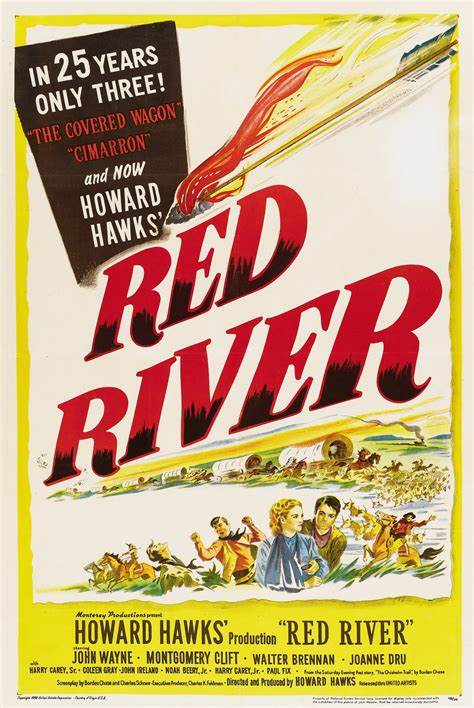
“Anarene, Texas, 1951. Nothing much has changed…” So went the tagline for Peter Bogdanovich’s The Last Picture Show. Change, or rather the lack of it, is the heartbeat of this film. It’s small time (fictional) Texas town isn’t a million miles from the Wild West dustbowls. You feel nothing has really changed for decades, the same faces in the town have just got older. But the tagline suggests that, in many ways, the 1950s were not that different from the progressive 1970s. Sex and scandal lie under the surface of the town, with the inhabitants having little to distract them from boredom other than seducing each other. Unlike the sort of traditional films shown in the picture show – Father of the Bride or Red River – this town is just drifting, a change in America both round the corner but also feeling like something that would slide off the town like water from a duck’s back.

The film largely follows three high schoolers are preparing for graduation. Sonny (Timothy Bottoms) and Duane (Jeff Bridges) are on the town’s useless high school football team (a uselessness no-one will let them forget). Duane is dating Jacy (Cybil Shepherd), a woman just discovering the power of her looks – and Sonny longs for her himself. Instead, Sonny starts an affair with Ruth Popper (Cloris Leachman), the overlooked, lonely housewife of his football coach. Romantic entanglements abound, but life drifts on with the younger generation thinking sometimes of the future, but really repeating the mistakes of the older generation – people like Jacy’s cynical mother Lois (Ellen Burstyn) and the owner of the town’s pool-hall, cinema and diner, the fading conscience of the town Sam the Lion (Ben Johnson).

Bogdanovich’s film was a sensation when it was released, a key part of the New Wave films in Hollywood. It has lasted, in the way other films from the period haven’t, because it has a subtly simple but compelling story, shot as a perfect fusion of French New Wave styles with John Ford and Orson Welles inspired classicism. Bogdanovich’s film buffery is obvious from every frame – not just from the film posters announcing what is being shown at the picture palace, but also from its loving use of French-style realism and lack of glamour, set and framed in the Fordian style, often stressing isolation, intercut with homages to Kane, The Magnificent Ambersons and Touch of Evil.

And in it we have a series of young people who seem to have no idea either where they, or the world is heading. Timothy Bottoms acts with such effortless naturalism, it’s easy to forget he is even acting at all. It’s a perfectly judged performance of a very normal young man, low on aspiration and inspiration, selfish in the way the young are but full of passion and regret. Jeff Bridges is similarly brilliant, playing a not-particularly smart (or particularly successful) school sports star in a performance completely free of any condescension or camera winking, but played with a charming honesty. These are supremely normal young men. Generally decent, well-meaning and naïve, not knowing what it is they want or need from life. They would fit as neatly into 1971, with their dreams, as they do in 1951. Especially as Duane packs off to head to Korea (no real difference from Vietnam).

And a lot of these dreams revolve around sex – and often sex with Jacy. Cybil Shepherd was a sensation on the film’s release, seen as the ultimate late-teen temptress and sexpot. But in fact, Jacy is (in her way) as much of an innocent as the others. She’s a woman only just discovering her own passions and longings. Who doesn’t want to become the jaded figure her mother has become – but working out the easiest way to get what she wants (be that a better boyfriend, better chances or even just some attention) is through using her physical attributes. Her sexual experimentation is, in a way, liberating – and just another attempt to find an answer to her own aimlessness. Sure – encouraged by her mother – she doesn’t invest anything emotionally in these entanglements. But is it really all that different from Sonny’s own using of Ruth Popper?

Ruth Popper is emblematic of the sadder older generation in the town. You can imagine they must have had hopes and dreams – or were once as breezily uncaring – as the younger generation. But they’ve found out, just as they will, that things don’t change. That you can blink and find yourself twenty years down the line, unhappy and lonely in a place you can’t seem to escape.

Cloris Leachman is outstanding as Ruth (she won an Oscar), the only person in the all the film’s couplings that we see expressing tenderness and vulnerability (in a film full of sexual encounters, the most intimate thing we see is her combing Sonny’s hair). She dares to slowly open herself up emotionally to believing in Sonny – to seeing their affair as more than just the booty call it starts as, but as something with a future. From the tearful fragility of her first scenes – her buttoned up matronly appearance, making her look far older than she is – she blossoms into a warmer, excited, person. It makes her inevitable betrayal by Sonny all the more heart-wrenching – along with her self-loathing fury that closes the film.

All the adults are drifting through the same disappointing life. Ellen Burstyn (also nominated) is wonderful as Jacy’s mother, who continually defies expectations. This mother is unfazed by her daughter sleeping with her lover, suggests that she might as well experiment sexually so she can find out it’s not all that and carries a revelation of deep loss and personal tragedy that only comes to light late in the film but is there in the character from the start. Other adults seem equally aware of their pointlessness: the coach is a repressed homosexual, the English teacher seems resigned to teaching Keats to bored students, Jacy’ father is a blow-hard nobody, Sonny’s father is a stranger to him. Only Eileen Brennan (excellent) motherly waitress still seems to have some hope.

Sonny’s surrogate father – and the heart of the film – is local businessman Sam the Lion. Johnson is superb, gifted a surprisingly small number of scenes but which establish both his moral force and his position as a link to a halcyon days past in America that might not really exist. Bogdanovich gives Johnson a knock-out speech (surely what won him the Oscar) – an Everett-Sloane-in-Kane inspired remembrance of a relationship from long ago, where the world seemed full of hope and opportunity, that perhaps get closest to defining the film’s sad reflection on how little those two things actually seem to exist in the present.

But it’s also about the temptation of memory. Bogdanovich’s masterpiece (it was all downhill in his career from here), The Last Picture Show knows only too well how quickly we realise life is a confusing, compromised mess. And the film, for all its old-school Hollywood style, is all about the past being just as a confusing, empty, sex-filled place of loss as the present is. Things have always been like this – and they probably always will. Welcome to Anarene. Nothing has changed.

Victoria and Abdul (2017)

Victoria and Abdul
Judi Dench and Ali Fazal forge an unlikely friendship in the tame heritage flick Victoria and Abdul

Director: Stephen Frears

Cast: Judi Dench (Queen Victoria), Ali Fazal (Abdul Karim), Tim Pigott-Smith (Sir Henry Ponsonby), Eddie Izzard (Prince Albert), Adeel Akhtar (Mohammad Bakhsh), Michael Gambon (Lord Salisbury), Paul Higgins (Dr James Reid), Olivia Williams (Baroness Spencer), Fenella Woolgar (Harriet Phipps), Robin Soans (Lord Stamfordham), Simon Callow (Giacomo Puccini)

In the last decade of her life, Queen Victoria (Judi Dench – who else?) makes an Indian servant, Abdul Karim (Ali Fazal), one of her closest friends and advisors. As Victoria and Abdul become closer, the rest of the court are outraged – bad enough that the Queen is spending all this time with an over-promoted servant, but an Indian as well?!

The fundamental events of Victoria & Abdul are true. There was a man called Abdul Karim – and Victoria did raise him from servant to a confidant. He did cause conflict in the royal household and was finally sent back to India after her death, after surrendering most of his papers. But Victoria & Abdul repackages this friendship into a cosy, Sunday-afternoon entertainment, bereft of depth. And carefully works on the rough surfaces to make the story smooth and easy to digest.

The film is clearly trying to ape the success of Mrs Brown – a far more intelligent and emotionally complex (if similarly heritage) film that looked at Victoria’s previous all-consuming friendship with a male servant, John Brown. But that film didn’t close its eyes to the negatives of such relationships, as this one does. It made clear royal attention can be fickle – and being elevated above others can help make you your own worst enemy. In that film, after a honeymoon, the friendship declines into one of residual loyalty but reduced affection. It’s a realistic look at how we might lean on someone at times of grief, but separate ourselves from them later. Victoria & Abdul takes only one lesson from Mrs Brown: that a close bond between monarch and commoner is heart-warming.

The film in general is in love with the idea that if the Queen could only speak directly to her people, the world would be a better place. It presents a Victoria stifled by court procedure who knows very little about her empire and is constrained by the courtiers around her. It wants us to think that if the Queen took direct rule, she’d be kinder, wiser and more humane. That this figurehead symbol could craft a better British Empire if she was an absolute monarch.

Unfortunately, it doesn’t work. This romantic view of “Victoria the Good” is comforting stuff, but undermined even within the film by our introduction to the Queen at a royal dinner, where Victoria stuffs food down herself so quickly that mountains of untouched food goes uneaten on the plates of the other diners (as all plates are removed the moment she is finished). And despite being told that the Koh-i-noor diamond was stolen by the British (to her surprise), she still doesn’t think twice about wearing it later in the film while in the midst of her Indian passion. And while the real Victoria loathed the racist attitudes of some at her court, she still clearly sees herself as a paternalistic mother figure for India, which could of course never be able to make its own decisions about things.

Not that the film is interested in tackling more complex ideas of the position of India and its independence. It’s similarly confused by Abdul himself. In a more interesting film, Abdul would have been partly naïve servant and partly charming rogue. He very carefully spins an invented story of himself as a teacher and thinker (he’s actually a clerk from a fabric office) and it would have been interesting to see his building of a relationship with Victoria at least partly being based on self-gain. He certainly gains an awful lot from her – from his own carriage on her train to a home and his own servants. It would have been possible to have this side of him and still have his loyalty and friendship to the Queen being genuine. But it’s too much for the film to tackle.

An Abdul who was consciously playing a role of exotic thinker might have come across as a scam-artist – but would have given the film a lot more to play with, when the royal court is full of people positioning and presenting themselves for influence. Adeel Ahktar’s fellow-servant Mohammed even suggests in one scene that this is what Abdul is doing – and good luck to him. But the film is scared that this could be seen as endorsing the court’s fears about Abdul. So the character is neutered into nothing: he becomes exactly the sort of empty “exotic”, free of opinion and character, that filled out the extras list of a 1940s epic. He has no agency, never makes any decision or expresses any opinion. And his feelings for Victoria are presented as totally genuine which, combined with his foot kissing, turns him into someone who looks and feels really servile.

This is because the film wants to tell the story of a perfect friendship, with the British upper classes as the hissable baddies (never mind that no one is more upper class than Victoria). Never mind that Abdul’s action will indirectly condemn Mohammed to death in the British climate – or that while Abdul rises, Mohammed becomes his servant, still consigned to sleeping on the floor of his railway carriage. We learn nothing about Abdul. How did this clean-living saint become riddled with the clap? Why did he die so young? Did he really think nothing of the riches and honours Victoria showered him with? We don’t have a clue.

Instead the film keeps it simple with goodies (Victoria and Abdul) and baddies (almost everyone else). The most politically astute character, Mohammed, disappears and never allows things to get unpleasant. Jokes of the courtiers standing around aghast saying things like “Now he’s teaching her Urdu” are repeated multiple times. They’re fun, but it substitutes for dealing with the real issues.

It all has the air of ticking boxes. Frears’ direction is brisk, efficient and free of personality. Dench is great, but she could play this role standing on her head while asleep. Pigott-Smith (in his final role) is fine but Farzal has nothing to work with and Izzard provides a laughable pantomime role of lip-smacking villainy as the future Edward VII. The finest performance – handling the most interesting material – is from Ahktar. He’s the only character who seems to place what we see here in any form of context. Other than that, this film is just a string of very comforting heritage ideas, thrown together with professionalism but a total lack of inspiration.

Equus (1977)

Equus (1977)

Clumsy adaptation that presents theatrical invention with the heavy-hand of realism

Director: Sidney Lumet

Cast: Richard Burton (Dr Martin Dysart), Peter Firth (Alan Strang), Colin Blakely (Frank Strang), Joan Plowright (Dora Strang), Harry Andrews (Harry Dalton), Eileen Atkins (Hesther Saloman), Jenny Agutter (Jill Mason)

In a parallel universe somewhere, there is a film version of Equus that doesn’t have a single horse in it. It’s probably a better version than this. Peter Shaffer’s stage play was a sensation in the 1970s in the West End and on Broadway – but Lumet’s film robs it of the mystique that made it work, by introducing a (literally) brutal realism. This helps reduce the play into being a quite self-important piece of cod-psychology, with ideas that increasingly seem more simplistic the longer the play lasts.

Dr Martin Dysart (Richard Burton) is a depressed and discontented child psychologist, who is struggling with a general sense of ennui, not sure what is life is for and stuck in a loveless, functional marriage. These feelings grow in him, as he begins to work on the case of Alan Strang (Peter Firth), a troubled young man who blinded an entire staple of horses in a seemingly random act of brutality. What were the deep-rooted psychological problems that caused Alan to carry out this senseless attack? And, by curing it, will Dysart remove from Alan anything that makes him unique?

Shaffer’s stage play used a combination of impressionistic moments, and mime artists, to create the impression of the horses that dominate the imagination (and desires) of Strang. Moments of horse riding (or eventual blinding) were presented symbolically. Meanwhile, Dysart functions as a quasi-narrator, delivering long speeches to the audience on the case, it’s causes and (increasingly) his own feelings of inadequacy and emptiness. It’s a tightrope, that manages to prevent the at-times portentous dialogue and student psychology from seeing either too self-important or slight. Lumet loses this mesmeric suggestiveness, doubling down on its pomposity. It makes for a bit of a mess.

I can totally see why, on film, it was felt necessary to go for real horses. However, it just plain doesn’t quite work. Watching a nude Peter Firth hug, stroke and eventually ride a horse until he reaches an orgasm mid-canter, might have had a sort of magic acted out on stage with dumb-show, puppets and actors as horses. On film, it’s tiresome and suddenly way too much. That’s as nothing compared to the decision to stage the blinding of the horses at the film’s end by showing us in graphic detail a sickle plunging into the eyes of alarmingly real-looking horses, blood pouring across Firth’s face. As that’s (pretty much) the last impression left on the audience for the film, rather than swept up in symbolism you’ll feel grossed out by the graphic violence. It’s not good for the play.

In fact, overlong and too full of speeches and not enough scenes, you watch this and start to wonder if Equus was much cop in any case. Certainly, the way it’s staged here doesn’t work. When Shaffer worked with Milos Forman on Amadeus that play was radically re-worked, extended and remodelled into an actual film that shared lines and DNA with the play, but was a very different beast. Equus is basically pretty close to an exact filming of the stage script, except on location. The show-stopping speeches by Dysart – brilliantly delivered by Burton as they are – come across heavy-handed, portentous and (in the end) off-putting and alienating.

That’s to mention nothing about the plays take on sex and psychology which feels very tired. Needless to say, Strang’s problem is rooted in his relationship with his parents (they fuck you up, you know). His mother (played with wound-up tension by Joan Plowright) is a holier-than-thou type who thinks sex is something a little dirty, while his father (an equally buttoned-up Colin Blakely) is a deeply repressed man who thinks sex is something to be ashamed off. Bound that up with the parents clashes about religion and you wind up with a boy who sublimates his sexual feeling into a confused horse worship, laced with religious overtones.

Which all sounded more daring then than perhaps it does now. Now this sort of sexual confusion (various theories suggest that the young Colin felt his first ever sexual longings after sharing a ride on a horse with a young man and – ashamed of these homosexual yearnings – transferred the association with sex from the man to the horse) was familiar then – it’s pretty much the first thing we look for now. And the insights the play offers around this, don’t carry nearly enough impact or insight to make you feel you are learning something. Anger, frustration, impotence, fear and shame all rear their heads as expected.

Saying that, Peter Firth – who originated the role at both the National and on Broadway – is excellent as Strang. It’s a full-bloodied, committed performance – but also one that is packed with an acute empathy and insight, a sensitive empathy and vulnerability that makes Strang deeply sympathetic even when he is at his most odd.

Richard Burton – who lost his final Oscar bid with this film – is also very good as Dysart. The rich Burton voice is perfectly used for Dysart’s monologues (all filmed in one day, in consecutive order, by Lumet). Burton’s puffy, unhealthy face also matches up perfectly with the sadness and resignation in Dysart – qualities that Burton again brilliantly conveys, his eyes brimming with regrets and his voice catching behind it oceans of confusion, sorrows and self-accusation. It’s one of Burton’s greatest performances, the ideas and elaborate language being a gift for an actor like him who worked best when challenged with complex material.

Unfortunately, the play itself is bogged down in a grimy, unattractive literalism that grinds the life out of it and ends up making it look very slight (this isn’t helped by its huge length). While the acting is very good – Jenny Agutter is also excellent as a young woman whose attempted seduction of Strang triggers a breakdown – the direction is leaden and the play ends up feeling histrionic and simplistic rather than engrossing and insightful.

Children of Men (2006)

Clive Owen and Claire-Hope Ashitey could be the last hope for mankind in the masterful Children of Men

Director: Alfonso Cuarón

Cast: Clive Owen (Theo Faron), Julianne Moore (Julian Taylor), Claire-Hope Ashitey (Kee), Michael Caine (Jasper Palmer), Chiwetel Ejiofor (Luke), Charlie Hunnam (Patric), Pam Ferris (Miriam), Peter Mullan (Syd), Danny Huston (Nigel)

Children of Men was overlooked on release. But the more it ages, the more it clearly hasn’t aged it at all. Criminally ignored at the major awards, this might well be the finest film of 2006 and certainly one of the best movies of the noughties. Rich in thought-provoking content and cinematic skill, this is truly great-film-making from Alfonso Cuarón. Dark, grim, edgy but also laced with hope, faith and kindness, Children of Men grows in statue with each viewing, rewarding you more and more.

It’s 2027 and the world has gone to hell. Mysteriously mankind became infertile 18 years ago, and faced with the despair that the extinction of the human race is inevitable, society has collapsed. Cities lie in ruins and war has torn countries apart: Britain “stands alone”, one of the few with a functioning government – even though that government is a totalitarian, nationalist police state. Aggressive campaigns are waged against refugees from around the world, who are herded into hellish concentration camps. In this chaos, Theo (Clive Owen) is a disaffected civil rights activist, now plodding through a dead-end job and smoking weed with his friend, ex-newspaper cartoonist Jasper (Michael Owen). All this changes when he is entrusted by his activist/’terrorist’ estranged wife Julian (Julianne Moore) to protect Kee (Claire-Hope Ashitey) who carries inside her something that could change the whole of humanity: an unborn child.

Today Children of Men seems alarmingly prescient. In a world of migrant crises, Brexit, Trump and coronavirus (the film even refers to a flu pandemic of 2008!) the vision of the future it presents seems only a few degrees away from our reality. Rather than a hellish view, it seems more and more like something that could happen. Everything is worn out and grubby. Streets are lined with rubbish, buildings coated with graffiti. Televisions and advertising screens alternate between demands to report immigrants with promotions for “Quietus”, a suicide pill. Fences, armed police, barbed wire and crowds of filthy, terrified and brutalised people are common. Humanity has given-up: there is no hope in the world.

It’s that collapse of any sense of hope and optimism that has driven this collapse of society in Cuarón’s vision. In a world where the extinction of mankind is inevitable, what’s the point contributing to society or worrying about your legacy or the future? Why preserve anything when no-one will be around to see it in a hundred years? By such fragile threads, does society hold itself together. The crushing depression of knowing you live in the final days of humanity is everywhere. There is not a single person alive in their teens: a fact hammered home by the characters visiting a deserted and derelict school. Everyone has lost any sense of purpose, with life a grim daily grind.

Perhaps that’s also why physically the world hasn’t changed much. Unlike most “future set” dramas, this view of 2027 could be 2006, just dirtier and with a few more electronic screens (in fact this has helped hugely in not dating the film). It’s like all life has stagnated. And liberals like Theo have turned into apathetic drunks, drifting blithely through life not bothering to engage or change anything about the shit show all around them

All this makes the film sound impossibly grim – and Cuarón is superb in building this world (including the genius stroke of never explaining, even in the smallest detail, what has caused this pandemic of infertility – the film is refreshingly free of any clumsy scene setting) – but it works because it’s a film laced with hope and a belief in the fundamental goodness of people. The story has overtones of a religious fable: Theo and Kee as a sort of Joseph and Mary travelling to protect an unborn child whose birth could save the world. Specially composed choral music, rife with religious overtones, underplays key moments and scenes subtly leaning into this spiritual journey.

And the goodness that people find in themselves is inspiring. Theo, brilliantly played by Clive Owen who has just the right dissolute cynicism hiding crusading courage, may have given up but actually he’s a deeply empathetic and caring man. Animals instinctively love him. He’s a natural protector, who shows concern in all sorts of ways for people him, who puts himself at risk to protect people and refuses to ever accept defeat. But he’s a million miles away from a super-man, getting increasingly dishevelled, bashed and brutalised, while his struggles with footwear (he carries out action sequences  wearing just socks, then flip-flops and finally barefoot) is both a neat little gag and also a sign of how vulnerable he is in this dangerous world.

Cuarón’s film builds brilliantly on his empathy to carefully and beautifully build the growing understanding and trust between Theo and Kee (equally well played by Claire-Hope Ashitey). Again, it stems first from his protectiveness (Theo also works hard to protect people around him from disturbing sights, twice urging Kee not to look back and that whoever has been left behind is fine), but also from her instinctive trust in him as a good man and above the only one who seems to have her interests at heart (everyone else is concerned only with what Kee can symbolise – Ejiofor’s vigilante Luke can’t even get the sex of the baby right). Kee is vulnerable, but strong and determined, someone trying to carry the burden of being the hope of mankind.

She’s also brilliantly a member of the very migrant community that the government is trying to destroy. Cuarón’s film wants us all to remember that we are all the same deep down, that what happens to one affects us all. The horrors of what the British government are doing in the war-torn slums of migrant prisons (all of Bexhill has become a lawless hell hole, where executions and riots are daily occurrences) reek of everything from Auschwitz to Guantanamo. But amongst these migrants come the only strangers who seek to help Theo and Kee out of simple goodness and humanity. Strangers put themselves at huge risk, and in many cases sacrifice their lives, to help them. It makes a stark contrast with the revolutionaries who claim to fight for the migrants (but show no compunction in shooting them when needed), but really are only interested in their own selfish battles with no understanding of the bigger picture.

This bigger picture is very much like the thematic richness of the film that was missed on its released. It’s almost a victim of its own technical brilliance, which attracted much more attention at the time. Cuarón constructs several sequences to appear as single-takes, and the stunning camera work really helps establish this grimy, brutal world. It’s a wonderfully immersive film, a technical marvel. Every single part of the photography and design is pitch-perfect, and the key sequences are stomach-churningly tense, inspired by everything from The Battle of Algiers to A Clockwork Orange.

But the film works because it is underpinned by faith and trust in the human spirit. Mankind is being challenged like never before, but Cuarón shows us that the human spirit can survive. That simple acts of kindness can still happen. That there is a chance of hope. The final conclusion of the film is both sad but also upliftingly hopeful. Cuarón’s direction is just-about perfect, as are the performers (not just Owen and Ashitey but also an almost unrecognisible Caine as an ageing Hippie). With its acute and brilliant analysis of humanity – both in its grimness and capacity for goodness and selflessness – and with its prescient look at how easily our world could collapse, Children of Men is vibrant, brilliant, essential film-making.

The Agony and the Ecstasy (1965)

Rex Harrison and Charlton Heston debate the creation of art in The Agony and Ecstasy

Director: Carol Reed

Cast: Charlton Heston (Michelangelo Bounarroti), Rex Harrison (Pope Julius II), Diane Cilento (Contessina Antonia Romola de’Medici), Harry Andrews (Donato Bramante), Alberto Lupo (Duke of Urbino), Adolfo Celi (Giovanni de’Medici), Venantino Vanentini (Paris De Grassis), John Stacey (Giulano da Sangallo)

Call a film The Agony and the Ecstasy and you are tempting fate with the critics. Make your recurring dialogue phrase “When will you make an end?” and you are practically writing the negative headlines for them. Your enjoyment of The Agony and the Ecstasy is pretty going to be pretty much directly linked to your level of interest in Renaissance art, the Sistine Chapel and stodgy Hollywood epics. Don’t care for any of those? This probably isn’t the film for you. For me, I love the first two – and I have a terrible weak spot for the third. I know (trust me, I know) films like this aren’t that good really, but they go about their epic work with such earnestness that they always suck me in.

The film, an adaptation of a doorstop novel by Irving Stone, tells the story of Pope Julius II (Rex Harrison) commissioning Michelangelo (Charlton Heston) to paint the Sistine Chapel. It’s a job which Julius expects will be done and dusted in a couple of months: instead it takes almost four years (and that’s just the ceiling, the film doesn’t even cover the artist moving on to The Last Judgement!). Rejecting the original concept, Michelangelo decides to turn fresco painting on its head: and so one of the greatest masterpieces of all time is born.

The Agony and the Ecstasy lost a bucket load of money (despite this is hoovered up five Oscar nominations, most of which focused on its strengths, above all, it’s 1:1 recreation of the Sistine Chapel which is progressively covered in paint as the film progresses). It more often than not tips somewhere between documentary and reverence of God, the Church, the Artist or all three at once. The first 12 minutes of the film is literally a documentary, a run-down of the artist’s career with mid-Atlantic voice-over and reverential visual slide-show of the artist’s greatest hits.

Once the action starts, all too often the film heads into “men in tights” territory, a stilted, personality-free Hollywood version of the Renaissance, all primary colours and dubbed European actors. Directing, with a smooth emptiness, is Carol Reed. Remember when Reed made films like The Third Man and Odd Man Out? How could the man who made films as original and dynamic as those close out his career making such middle-of-the-road fare as this and Oscar-winner Oliver? Reed delivers by-the-numbers. From swelling chords of Alex North’s well-judged score at our first sight of the interior of the (unpainted) Sistine chapel to the pristine pictorial pleasantry of the marble quarry Michelangelo retreats to, there is not a single unique or interesting shot in the film.

The closest the film gets to visual dynamism is the half-way point as Michelangelo heads to the mountains for inspiration, to see the clouds form themselves into (what we recognise as) the Creation fresco from the chapel. But then perhaps Reed reckoned he couldn’t bring us anything as visually striking as the ceiling (and to be fair who can?). So, the film doesn’t compete.

Instead it settles down into demonstrating the mechanics of how the ceiling is completed. While you could get a good dig in here that we see a real time painting of the ceiling, in fact I felt this demonstration of how you go about transferring a design to a ceiling was fascinating. Certainly, you can see why it takes a burden on Michelangelo. The film builds some nominal drama about whether it will ever be finished: but since it’s clear Julius (who at times is a bit of a “why I oughta…” boss, frustrated but amused by a protégé’s shenanigans) and Michelangelo (tempestuous of course, as artists are) have no intention of not finishing it, it’s pretty manufactured. But it doesn’t matter because this is really a story of the glory of fine art – and the burdens of its creation. And on that score it’s very successful and, for all its earnestness, very effective.

Charlton Heston gives a fine performance as the great artist. While there is no hint of Michelangelo’s probable sexual flexibility – Heston claims to have done his research and decided there was no way any of that was going on in the artist’s life – we do get a lot of his prickly bitterness (his surviving correspondence is a never ending stream of bitching about money and barely a mention of art theory, a sign if ever I saw one that great artist’s need to balance the books like the rest of us). Heston’s grandness may seem at time like he is as carved out of marble as the subject’s work (after all this is the actor cast as Moses based on his physical similarity to Michelangelo’s carving), but he does convince.

Rex Harrison has the juicier part as the war-like Pope, the Prince of both the Church and Realpolitik. Harrison famously declined to grow the beard that Julius was famed for, but he captures the brusque playfulness of this man who remodelled the Papacy as a political force. His scenes carry energy and wit in a way most of the rest of the film lacks.

Overall though the film, I am well aware, is (ironically) as slow as watching paint dry. But yet, it pushes my buttons and I rather like it. Again, it’s probably a bias coming into it. And I forgive it a lot for a beautifully judged and played scene where Julius and Michelangelo study the creation fresco and its meanings for faith. It’s wonderfully written and played and carries a profound spiritual intellect. This is when the film comes to life – it’s gives serious space to proper discussions on questions of art and faith, which is often rewarding.

Sure, it sits within a film that is often dry and old-fashioned. But when it zeroes in on the painting itself: how it came about, its inspiration and its meaning – it carries a real impact. It’s a flawed film: but I find myself with a very soft spot for it.