Category: Directors

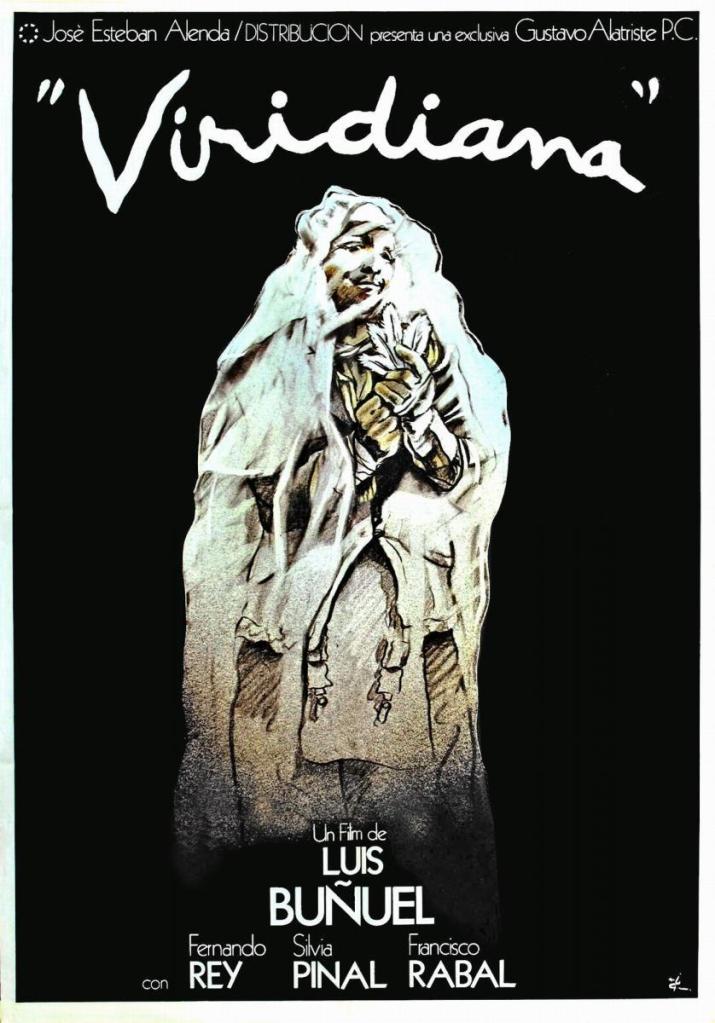
Viridiana (1961)

Viridiana (1961)

Luis Buñuel’s brilliant, multi-layered satire is a superb, darkly hilarious, masterful film

Director: Luis Buñuel

Cast: Silvia Pinal (Viridiana), Francisco Rabal (Jorge), Fernando Rey (Don Jaime), Margarita Lozano (Ramona), Victoria Zinny (Lucia), Teresita Rabal (Rita), José Calvo (Don Amalio), José Manuel Martín (“El Cojo”), Luis Heredia (“El Poca”), Joaquín Roa (Don Zequiel), Lola Gaos (Enedina), Juan García Tiendra (“El Leproso”)

In the 1960s, Luis Buñuel was invited back Spain after years of creative exile to spearhead a new wave of Spanish filmmaking. He produced a film that not only bit the right-wing hand that fed it, it snapped it clean off and chewed it up. Viridiana must have been the last thing the authorities had in mind. Gloriously exposing the guilt and vanity of the upper classes and charity, it was lambasted by the Catholic church for blasphemy and showed an organised world teetering on the brink of chaos, with the powerful either perverts or playboys, the poor singularly ungrateful for the paternalistic patronage they receive and our lead character a hopelessly naïve former nun. Not surprisingly it was instantly banned and Buñuel never made a film in Spain again.

Viridiana (Silvia Pinal) is our naïve nun, called to her uncle Don Jaime’s (Fernando Rey) home for one last visit before her confirmation. Don Jaime though has plans: Viridiana has an extraordinary resemblance to his late wife and Don Jaime intends to first get her to cos-play his wife and then marry him. Or failing that, to drug her and rape her. Guilt stops him from the rape – but doesn’t stop him from claiming he did it, a lie he instantly (fatally) regrets but which leads her to abandon her dreams of becoming a nun. In the aftermath, Viridiana and her cousin (Jaime’s bastard son) Jorge (Francisco Rabal) divide the estate, with Viridiana aiming to continue her religious ideals through excessively generous charity with quietly resentful local paupers, who she has a vision of turning into a religious commune. It does not turn out well.

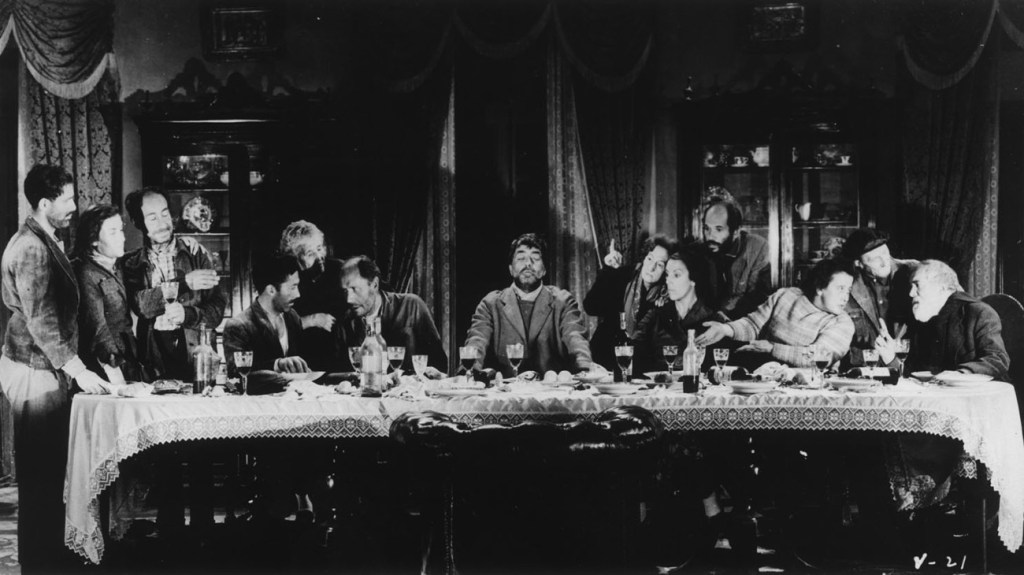
Viridiana benches much of the surrealism of Buñuel’s most famous work, but it loses none of his acute social satire and ability to inject the absurd with sharp dark humour. It makes Viridiana a startingly complex work, brilliantly assembled by an artist where every frame has a different idea, all of which comes together into a darkly entertaining whole. Its not hard to see why the strictly Catholic Fascist Spain found the film so outrageous, with its mocking of religious imagery (from the crucifix that becomes a flick knife to the famous scene of the paupers forming a drunken, pose-perfect, tableau of Da Vinci’s The Last Supper), it’s acknowledgement of a host of fetishes and perversions among the upper-classes (orgies, feet, hinted necrophilia, incest) and the utter ineffectiveness of any system, no matter how charitable, to control the human spirit, with the poor frequently resentful under their veneer of deferential gratitude.

Viridiana splits neatly into two acts, both revolving around a complex relationship with guilt and how it guides our actions. Don Jaime (a superb performance of corrupted grandeur from Fernando Rey) is a lonely man, plagued with guilt and regret over his wife’s death, locking himself away in a time-locked country pile like a perverted Miss Havisham. In private he fetishistically admires her clothes (which he blasphemously keeps like holy relics) and admires his feet in her shoes. He’s fascinated by Viridiana’s resemblance to his late wife and fantasises that she might be persuaded to renounce the cloth to live as his wife.

With the convenience of his servant Ramana – an equally lonely, repressed soul tenderly played with a burgeoning sexual desire by Margarita Lozano – he guilt-trips Viridiana into dressing for one night in his wife’s bridal clothes, drugs her drink and takes her to bed. He even arranges the sleeping Viridiana into the exact pose his wife had when she was before him, adding hints of necrophilia to an already disgusting assault. Shame stops him from committing the deed and guilt then corrupts both of them. Don Jaime at his selfish lie, Viridiana at her indirect role in her uncle’s death and the forced abandonment of her vocation.

Inheriting her uncle’s home, alongside playboy cousin Jorge (Jaime’s bastard son, who he has barely met), Viridiana redirects this guilt into a commune for the poor and needy, where charity, work and faith sit side-by-side. Her efforts to essentially introduce a benign feudal church-system contrasts with Jorge’s modernising efforts, introducing electricity and other mod-cons. Buñuel demonstrates the discomfort of these two worlds with a beautifully assembled scene where Viridiana’s leads a group pray intercut with a series of shots of acts of manual labour (hammers smashing walls, cement splatted on bricks etc.), making he prayer meeting (which we know the attendees think is a pile of bunkum) seem even more outdated and ineffective.

Viridiana isn’t cruel about these characters though – it looks at them as real people, with faults and virtues, some good some bad. It’s also remarkably clear-eyed about charity. There is something performative about Viridiana’s efforts, as well as a clear sense it is as much for her (subconsciously – she’s too naïve for cynicism) as it is the welfare of the beneficiaries. Those beneficiaries are a brilliant series of pen portraits of people who take offered charity, but resent the paternalistic attitudes that come with it. The working classes are not passively grateful for religious charity – but they are smart enough to take a meal ticket. No wonder the church was furious: Viridiana ruthlessly exposes the lip-service the downtrodden give religious charity, while refusing to reshape their lives and views according to instruction.

The peasants remain earthy, irreverent and full of their own pleasures and prejudices. Despite Viridiana’s best efforts they abuse a (possibly leperous) beggar, tying a cowbell to him so they can hear him coming. When left alone in the grand house, they do what many of us might well do in their place: like teenagers resentful at their parents, they throw a drunken party and trash the place. Viridiana’s ‘dinner-party’ scene is Buñuel’s masterclass in riotous joy that slowly turns darker and more dangerous. Mockery leads to over-indulgence, anger and eventually violence. Viridiana will discover to her cost her attempts at kindness has done nothing to change their basic characters and it is as likely for someone to be downtrodden and deeply unpleasant as it is for them to be decent.

Charity in Viridiana doesn’t really change the world. It can improve lives, but not the system. And using it to shape people into what you want them to be is doomed to failure. The peasants are (mostly) not bad people, they just don’t feel want to reshape themselves into pious substitute nuns for Viridiana as a pay-off for room and board. Jorge is distressed to see a working dog tied to a cart and forced to run alongside it. He impulsively buys the dog – which to its original owner is not a pet but a working animal that must own its keep. Jorge clearly feels good about saving this dog: but seconds after he walks away with it, Buñuel pans across to another identical dog running behind a cart. Who was this charity for? The dog or for Jorge? The peasants of Viridiana? And did this one act change anything? And for some charity is entirely self serving: Viridiana visits Don Jaime solely out of thanks for his charity in paying for her time in the convent – surely an act only carried out for Jamie’s own perverted reasons.

None of this is what the Church or Spanish state wanted to hear. A downtrodden class that isn’t grateful to its leaders for lifting them up, but resents them for their patronising strictures. Lords of the manor, one of whom is a lonely pervert, the second a libidinous playboy who sleeps with multiple women. A deeply religious woman, who is completely naïve and fails utterly. And an ending – an ending Buñuel was ordered to change from the script and in doing so made even more suggestive and blasphemous – that implies the household will settle into a sexual menage.

It’s brilliantly, pointedly not what he was asked for – and stunning condemnation of the flaws in an entire system, caught in a brilliant parable. It’s superbly directed by Buñuel, by now a master of camerawork and editing with a beautifully judged performance by Silvia Pinal who makes Viridiana someone we deeply admire even as every decision she makes seems doomed for disaster. It’s a fiercely challenging, involving and complex work and infinitely rewarding for reviewing and patient consideration – no wonder Spanish critics later named it the greatest Spanish film ever made.

Dodsworth (1936)

Dodsworth (1936)

A marriage disintegrates in this richly mature, non-judgemental film one of the best of the decade

Director: William Wyler

Cast: Walter Huston (Sam Dodsworth), Ruth Chatterton (Fran Dodsworth), Paul Lukas (Arnold Iselin), Mary Astor (Edith Cortright), David Niven (Captain Lockert), Gregory Gaye (Kurt von Obersdorf), Maria Ouspenskaya (Baroness von Oversdorf), Odette Myrtil (Renée de Penable), Spring Byrington (Matey Pearson), Harlan Briggs (Tubby Pearson), Kathryn Marlowe (Emily), John Payne (Harry)

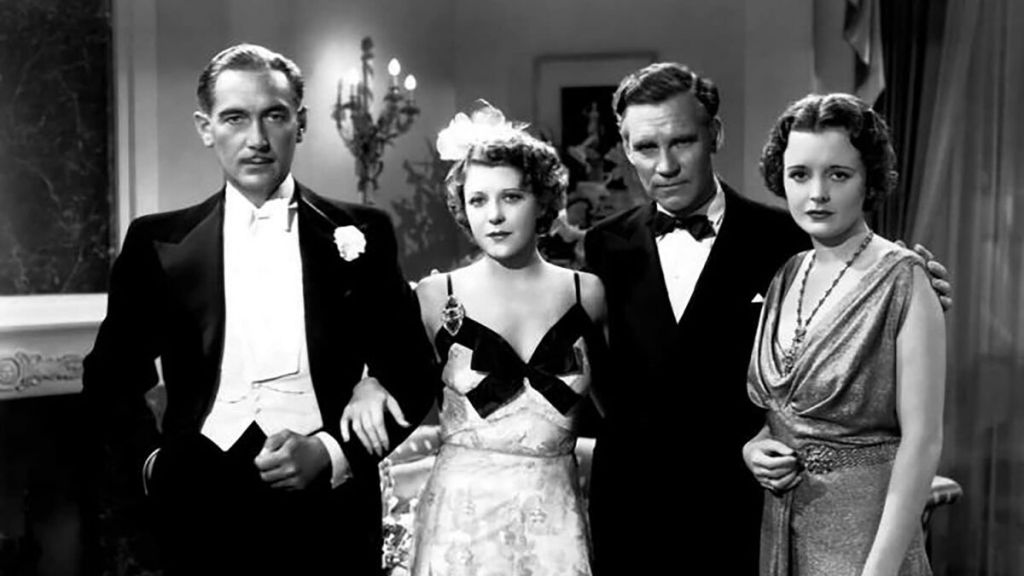
Marriage is tricky. In the hustle and bustle of everyday life, bringing up a family, running a business and rushing between social events, what if you don’t notice you don’t have much left in common? That’s the theme of Dodsworth, one of the most strikingly modern of 1930s films, that tackles the breakdown of a marriage in a surprising subtle way, avoiding the sort of moral punishment and condemnation you’d expect from the production code. Combined with sharp writing, fine acting and some fluidly creative direction from William Wyler, and you have an overlooked classic.

Dodsworth kicks off with the retirement of car entrepreneur Sam Dodsworth (Walter Huston). Having sold his successful independent factory to a major business, Sam is now effectively retired and suggests that he and his wife Fran (Ruth Chatterton) take that trip to Europe they’d always discussed but never had time to do. The trip, however, starts to reveal fractures in their relationship. Fran isn’t ready to ‘rush towards old age’ like she feels Sam, with his touristy longings and interest in engineering mechanics is. She wants to be part of society and feel the excitement of flirtations (and more) with rakeish European types (from David Niven to Paul Lukas to Gregory Gaye), while Sam ticks off the sites and sits in cafés. Sam, it turns out, has far more in common with Naples-ex-pat Edith (Mary Astor) – but feels duty bound to do whatever he can to preserve his marriage with Fran.

It’s all adapted from Sinclair Lewis’ doorstop novel, skilfully boiled down into a clear dramatic journey by Sidney Howard, from his own theatre adaptation (which also starred Huston). It becomes both slightly sad, watching two people drift apart, while also offering rich vestiges of hope of what the future can hold if you dare to take a chance. It mixes this with dry wit, scenes of compelling narrative interest and an insightful look at two people effectively going through different types of life crisis during a ‘once in a lifetime’ journey. Because nothing can disrupt your thinking about your own life more than changing nearly everything about it in one swift barrage of events.

It’s assembled into a richly involving whole by William Wyler, who lands the film just the right side of melodrama. From the opening shot, tracking towards Sam’s back as he leans against a window looking out over the factory which gave his life meaning, there is a quiet air of its characters living in denial of their own melancholy. Part of Sam is already wondering what on earth he’s going to do without his factory – its why he immerses himself in the most banal details of the sights they will see in Europe, or the engineering of their cruise ship.

Sam feels his journey will give him new opportunities, but it often sees him uncertain and slightly adrift, from not knowing how to tip waiters to finding his mid-Western mindset unable to compute the sexually liberal rules of European high society. Fran claims the journey abroad will mean leaving behind the oppressive parade of the over familiar social scene in their small town. It quickly turns out, she’s only be bored of their small circle not the glamour of social events.

Sam is played with real skill and under-played grace by Walter Huston in one of his finest performances. He’s an overwhelmingly decent man, self-made, confident but hesitant and uncertain out of his element. There’s a fuddy-duddy quality to him you can understand Fran finding grating, but he’s also capable of genuine, unfiltered enthusiasm (watch his joyful spotting of a famous lighthouse during their journey – which hilariously he nearly misses while checking his watch – and the eagerness which he tries to share this with an irritated Fran and a politely bored Niven). What’s superb about Huston’s performance is the awkwardness, shyness and even timidity he brings to a successful man, the quiet air of confused anxiety behind Sam as his certainties melt away.

Both Sam and Fran are convinced everything between them is fine, constantly speaking (increasingly dutifully) about their love, as if trying to convince each other even as it starts to fall apart. Their home already feels invaded by their daughter and her husband, who absent-mindedly serves himself drinks from Sam’s cabinet. They’re in completely different mindsets. Fran is constantly embarrassed by her husband’s tendency to hickness. Sam feels Fran’s upper-class ‘friends’ wouldn’t look twice at her without the cash she can flash. Fran is horrified by Sam’s whimsical statement that they will soon ‘be a couple of old Grandparents’. She’s young at heart, being wooed and won’t give that up.

From a ship-bound flirtation with David Niven’s suave playboy where she seems shocked at his implication that they can take things further (Sam doesn’t help by telling her she only has herself to blame), she swiftly begins an all-but-open affair with Paul Lukas’ smooth gentleman (with Sam turning an embarrassed third-wheel blind eye) even sending Sam home to extend her holiday privately, while he fields awkward questions from their family and re-directs his inner fury at his public cuckolding into grumpy rants about other’s scrabble games covering his desk and fussily reaching for his Encyclopaedia to prove trivial discussion points.

By the time Ruth has convinced herself divorce will lead, inevitably, to a glorious new marriage with much younger aristocrat Gregory Gaye, she’s at the centre of an increasingly delusional mid-life crisis, full of false claims about her age and built on fantasies. Ruth Chatterton is very good, neatly bringing to life a woman who can’t face the idea of becoming old. The film (while siding with Sam) never fully condemns her for her behaviour – even if it maintains an American suspicion of her wealthy European upper classes. In fact, it’s very hard not to feel sorry for Fran when her lover’s mother (played by an imperiously shrewd Oscar-nominated Maria Ouspenskaya) punctures her delusions about the likely future of a relationship with her feckless son.

It’s all beautifully framed by Wyler. How can you not admire the lingering shot of Fran reading a telegram from Sam and letting Lukas’ Iselin set fire to it, the camera following the paper as the wind blows it across the balcony floor to disintegrate like the Dodsworth marriage? Dodsworth is full of such beautifully subtle moments, its imagery (and Oscar winning sets) wonderfully establishing a world in transit as much as the Dodsworths. Wyler also evens the score at points: Sam remains largely sympathetic, but its possible to be irritated by his naïve dullness, just while the frequently infuriating Fran is relatable in tragic fear that her life is behind her.

It’s this mature view of people drifting apart, making mistakes and not always being condemned that makes Dodsworth such a richly intelligent film. Sam would certainly by more happy with Edith (a very moving performance from Mary Astor), just as Fran would be better off without Sam. Dodsworth is largely refreshingly free of the sort of Puritan punishments other films dealing with similar themes would use under the Production Code. Instead Dodsworth is a superbly acted, directed and written melodrama with a serious tone that remains richly rewarding viewing.

A Place in the Sun (1951)

A Place in the Sun (1951)

A great Hollywood romance obscures darker, more sinister implications that its makers seem unaware of

Director: George Stevens

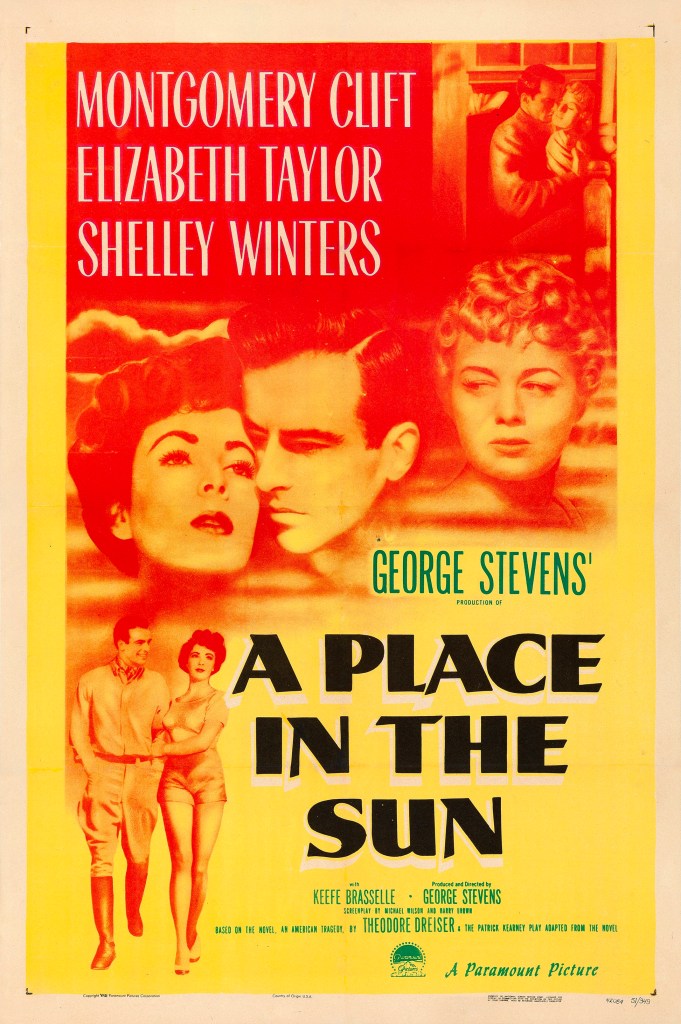
Cast: Montgomery Clift (George Eastman), Elizabeth Taylor (Angela Vickers), Shelley Winters (Alice Tripp), Anne Revere (Hannah Eastman), Keefe Brasselle (Earl Eastman), Fred Clark (Bellows), Raymond Burr (DA Frank Marlowe), Herbert Hayes (Charles Eastman), Shepperd Strudwick (Tony Vickers), Frieda Inescort (Ann Vickers)

It’s based on Theodore Dreiser’s An American Tragedy, but in some ways it feels like very British. After all, few American films are more aware of class than A Place in the Sun and there is something very British about a working-class man pressing his nose up against the window of the wealthy and wishing he could have a bit of that. In some ways, A Place in the Sun’s George Eastman is a more desperate version of Kind Heart’s and Coronets Louis desperate to be a D’Ascoynes or a murderous version of Room at the Top’s Joe Lampton not wanting his girlfriend to get in the way of wooing a better prospect. The most American thing about A Place in the Sun it is that what would be a black comedy or a bitter drama in Britain, becomes a tragic romance in George Steven’s hands.

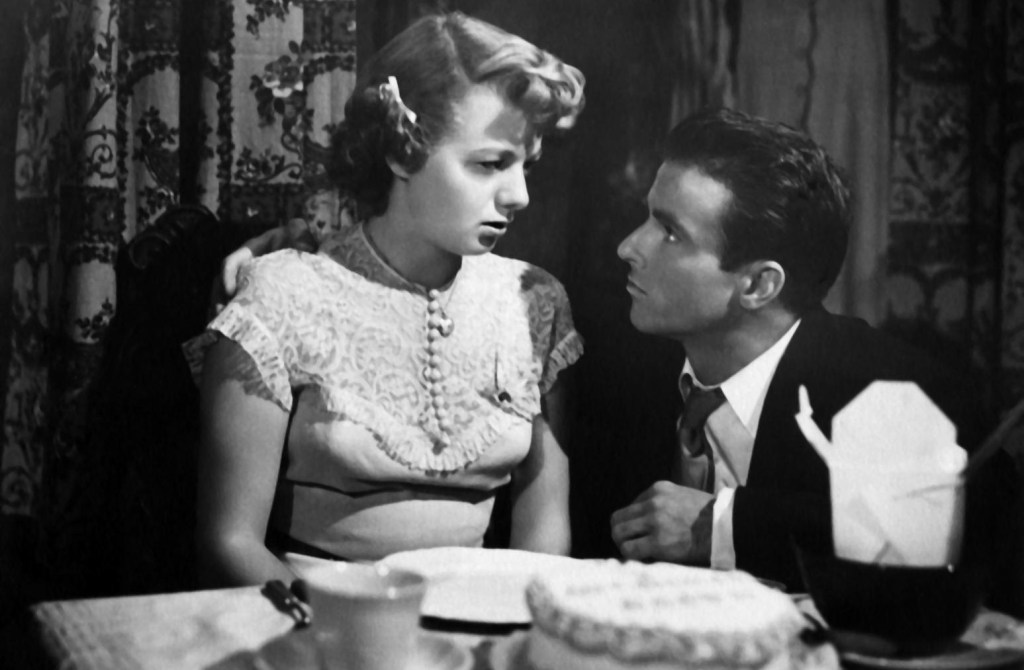
George Eastman (Montgomery Clift) is from the black sheep working-class side of the Eastman clan, rather than the factory-owning elite side who live among the city’s hoi polloi. George is gifted an entry-level grunt job in the factory but works hard for progression. He absent-mindedly dates production line co-worker Alice (Shelley Winters), who thinks he’s the bee’s knees. Unfortunately for her, George meets Angela Vickers (Elizabeth Taylor), daughter of the wealthy Vickers family, and they fall passionately in love. Just as Alice announces she’s pregnant and asks when George will do the decent thing. Can George thread this needle, rid himself of Alice and marry the willing Angela? Perhaps with the help of the Eastman’s lake side house and Alice’s inability to swim?

You can see the roots of a cynical tale of opportunism and ambition there, but A Place in the Sun wants to become a luscious romance. It is shot with radiant beauty by William C. Mellor, bringing us sensually up-close with Clift and Taylor whose chemistry pours off the screen. It’s soundtracked by a passionately seductive score by Franx Waxman. As we watch these two fall into each other’s arms, the film tricks us (and, I think, itself) into thinking these two lovers deserve to be together. And, by extension, everyone would be much better off if Shelley Winter’s gratingly needy Alice, who can’t hold a candle to Elizabeth Taylor’s grace, charm and beauty, just disappeared. Before we realise it, we and the film are silently rooting for a man with fatal plans to rid himself of this encumbrance.

What’s striking reading about A Place in the Sun is that Clift felt Eastman, far from a sympathetic romantic, was an ambitious social-climber (much like his role in The Heiress) too feckless, weak and cowardly to face up to his responsibilities. Clift’s performance captures this perfectly: at the height of his method-acting loyalty, Clift is sweaty, shifty and increasingly guilt-ridden with Alice, awkwardly mumbling platitudes rather than talking (or taking) action. It’s actually a superb performance of people-pleasing weakness from Clift. Eastman always says what those around him want to hear, whether it overlaps with what he believes or not. He can say sweet nothings to Alice and romantic longings to Angela. This is a great performance of an actor being, in many ways, more clear-eyed than the film about what the story is really about: a man who decides the best way to deal with the inconvenience of a pregnant girlfriend is to drown her.

What Clift didn’t anticipate is how much the power of photography and editing (not to mention the radiance of his and Taylor’s handsomeness) would mean many viewers would end up rooting for the selfish romantic dreams of this weak-willed heel. Steven’s film turns the Clift-Taylor romance into a golden-age Hollywood dream. Taylor, at her most radiant, makes Angela possibly the nicest, kindest, most egalitarian rich girl you can imagine. Their undeniable click is there from their first real encounter (Angela watching George absent-mindedly sink a cool trick shot at an abandoned pool table – how many takes did that take?). The sequences of these two together play out like a classic idyll, from slow-dancing at glamourous parties to lakeside smooching. Everything about what we are seeing is programming us to root for them – and I’m not sure Stevens realises the implications.

If we are being encouraged to relate to Clift and Taylor, everything in Shelley Winter’s Alice is designed to make us see her not want to be her. Winters lobbied for the part, desperate for a role to take her away from shallow romantic parts – ironically her success pigeon-holed her to dowdy, needy second-choice women, deluded wives and desperate spinsters. But she’s superb here, making Alice just engaging enough for us to imagine George would take a break from his self-improvement books, but also so fragile and needy we can believe she’d become both increasingly desperate and annoying. Angela, dancing radiantly at parties, is who we want to be: Alice, sitting up late in her cramped flat with a try-hard birthday dinner and carefully chosen gift waiting for the arrival of an indifferent George, is who we fear we are. If movies are an escape, we don’t choose her.

Steven’s film makes Alice’s pregnancy more and more a trap. (The film carefully skirts the much discussed but never named abortion option). When on the phone together, the camera tracks slowly into George as he huddles against a wall mumbling, the film’s world shrinking with his. In one of the film’s many beautifully chosen Murnau-inspired super-impositions, Alice appears like a ghost over George and Angela at the river. Alice’s increasingly fractious demands that George do his duty and marry her, with increasingly wild threats of social disgrace interspersed with her grating, desperate neediness makes us cringe with him. Possibly because we worry we’d be like her.

A Place in the Sun makes us root for a man plotting murder and guilty, at the very least, of manslaughter. That could make it the most subversive romance of all time – if it wasn’t for the fact that, even in the end, George is presented as the real victim. Even a priest gives him only a few words of criticism, while George is not even punished by losing the love of the faithful and trusting Angela. Even if George didn’t push Alice in, he also didn’t lift a finger to save her life. In the trial, Raymond Burr’s showboating DA helps us pity George as he presents a version of that fateful boat trip that we know isn’t true but is only a few degrees more horrible than what George actually did. Even his guards feel sorry for him, and Steven’s clunkily intercuts between George’s dutifully honest working-class family and the wealth of his rich uncle’s circuit to hammer home the tragedy.

Did Stevens realise all of this as he made the film? I’d argue possible not: that he was as much sucked into the romance as the viewing audience. But some American movies embrace optimism – and an American tragedy in that world is lovers kept apart. A British tragedy is an ambitious man destroying himself and others. There is a smarter, more ruthless film to be made from the material of A Place in the Sun. One where Clift’s George is a truly heartless go-getter and both Alice and Angela are different types of victim. And that would be American to: it would be one which consciously shows us how our longing for fairy tales and the American Dream can lead to perverse, outrageous outcomes. That film would be a masterpiece, rather than the unsettling work A Place in the Sun actually is.

On the Town (1949)

On the Town (1949)

Hugely enjoyable musical, fast-paced, funny and crammed with excellent song-and-dance routines

Director: Stanley Donen, Gene Kelly

Cast: Gene Kelly (Gabey), Frank Sinatra (Chip), Betty Garrett (Hildy Esterhazy), Ann Miller (Claire Huddesen), Jules Munshin (Ozzie), Vera-Ellen (Ivy Smith), Florence Bates (Madame Dilyovska), Alice Pearce (Lucy Shmeeler)

I assume Freed, Donen and Kelly re-watched Anchors Aweigh and said ‘There’s a good idea in here… but we can do better’. They certainly did with On the Town – and it surely helped that they seized on Leonard Bernstein’s hit Broadway musical with its book by Betty Comden and Adolph Green, for a pacier, funnier, more focused version of a very similar story. Once again, Gene Kelly and Frank Sinatra (now accompanied by third banana Jules Munshin) are sailors enjoying leave (this time in New York) and looking for romance. And they find it, with Gabey (Kelly) star-struck by Vera-Ellen’s Ivy Smith (who he mistakes for a celebrity), Chip (Sinatra) falling for flirtatiously voracious taxi-driver Hildy (Betty Garrett) and Ozzie (Menshin) inexplicably charming glamourous anthropologist Claire (Ann Miller). These three couples spend a fab 24 hours, getting in-and-out of scrapes and falling in love.

It’s all gloriously entertaining, zipping by in 90 pacey minutes with assured, dynamic and engaging direction by Stanley Donen that crams the film with zip and an enormous sense of fun. Donen’s first credit saw him handling much of the visuals and camerawork, while co-director Kelly took on the choreography. It made for a fantastic teaming, and it’s striking how much energy and visual panache Donen bought to the musical (again, compared to the more staid direction and visual compositions of Anchors Aweigh). Donen cuts the film tightly, never lets scenes out-stay their welcome, cuts tightly to the beat (the opening song New York, New York shifts excitingly from location to location during its performance) and crafting visual set-pieces that were exciting to watch (crane shots, tracking shots) while never compromising the view of the dancing.

On the Town also had the advantage of some fabulous source material. Interestingly, Freed and musical director Roger Edens were sceptical about whether Bernstein’s original score (with its artful repeated refrains) was accessible enough to appeal to audiences (not to mention many of the numbers in the musical were not a good fit for their cast). It was decided to junk a huge portion of Bernstein’s score (only four songs remain), a decision that led to him boycotting the film – but meant they could combine the best of his work with the sort of song-and-dance material that played to its star’s strengths.

And the film has several stand-out sequences, most notably of course that ‘New York, New York’ opening. Kelly and Donen pitched heavily to be allowed to shoot on location in New York and were granted ten days of location footage. It makes a huge impact to the number, allowing Donen to give it a grounded and vibrant mood. On the Town helped set the template for future films for fast-paced location shooting in bustling locations: driven by the fact Sinatra’s fame meant inconspicuous camera set-ups for quick shots was essential to avoid attracting crowds. (The only scene that shows the problems the film had with longer set-ups was the shot of the gang dancing in front of the Rockefeller centre, the balcony above the statue packed with rubber-necking fans).

There are also great song-and-dance scenes which utilise the strength of all the film’s performers. ‘Prehistoric man’ is suitably zany, ‘You’re awful’ a lovely song-showcase for Sinatra and Garrett, ‘On the Town’ and ‘You Can Count on Me’ fantastic toe-tapping showcases. It’s a parade of hugely engaging, dynamic musical numbers which are immensely fun to watch. It’s more than enough to make you forgive Kelly’s continued desire to prove himself a ballet dancer (On the Town shoves in a day-dream, silent ballet set-piece ‘A Day in New York’ which is an impressive showpiece for Kelly, even if it’s the only number that slows the film down rather than keeping the comic and narrative pace up).

On the Town also has a punchy series of funny lines, clever comic set-pieces and jokes from Comden and Green (it’s Dinosaur/Dinah Shaw mishearing gag is a real stand-out). Of course, narratively On the Town is completely barmy, much of the drama revolving around Ozzie’s accidental destruction of a Brontosaurus skeleton in the Natural History Museum and a resulting on-and-off again Keystone Kops style series of chases. The film zips along with such pace and wit that you happily swallow bizarre ideas (such as Ozzie, in a surprisingly vertigo inducing moment, hanging off the side of the top of the Empire State Building) and shameless coincidences.

But it’s knock-about fun and zany, nonsense plotting actually makes it all the more entertaining to watch. The film’s constant reminders of how far we into this strange 24-hour leave period works very well to give a sense of momentum to events and there is a more than a bit of Hays Code baiting naughtiness, not least in the clear implication that Chip and Hildy (in particular) and Ozzie and Claire spend most of the afternoon going at it great guns while claiming to Gabey that of course they spent the time searching the libraries and museums of New York for Ivy.

On the Town has its cast of musical stars nearly at their peak. Kelly’s dancing and choreography is energetically perfect as always and he fully embraces the charismatic romantic naivety of this would-be player Gabey. Sinatra is much more assured and comfortably witty than in many other musical roles. He also has excellent chemistry with Betty Garrett’s hilariously eager Betty. Ann Miller is wonderfully endearing and funny as Claire. Alice Pearce is surprisingly affecting in a role that initially suggests it might be a one-joke loser, as Ivy’s blousy single flatmate. Vera-Ellen may not have the charisma the role needs but is very sweet. Only Jules Munshin is trying too hard with some aggressively enthusiastic gurning.

Kelly later said On the Town might not have been the best musical they ever made, but it was the one when pretty much everyone involved was at the peak of their powers. He might well be right. On the Town is a slick, sleek and highly enjoyable confection that makes for perfectly entertaining Sunday afternoon viewing.

I’m Still Here (2024)

I’m Still Here (2024)

Subtle, low-key but powerful condemnation of oppression with a fabulous lead performance

Director: Walter Salles

Cast: Fernanda Torres (Eunice Paiva), Selton Mello (Rubens Paiva), Guilherme Silveira (Marcelo Rubens Paiva), Antonio Saboia (Adult Marcelo Rubens Paiva), Valentina Herszage (Vera Paiva), Maria Manoella (Older Vera Paiva), Luiza Kosovski (Eliana Paiva), Marjorie Estiano (Older Eliana Paiva), Barbara Luz (Nalu Paiva), Gabriela Carneiro da Cunha (Older Nalu Paiva), Cora Mora (Maria Beatriz Facciolla Paiva), Olívia Torres (Older Maria Beatriz Facciolla Paiva), Pri Helena (Zezé), Fernanda Montenegro (Older Eunice Paiva)

In 1970 Brazil was controlled by a military dictatorship who tried to hide their unjust and violent methods from the public eye. Many people were taken from their homes to never be seen again, such as Rubens Paiva (Selton Mello), a former congressman and political opponent. Now working as a civil engineer, he is taken from his home by plain clothes military officers to help with unspecified enquiries. His wife Eunice (Fernanda Torres) is later also arrested, along with her teenager daughter, questioned and imprisoned for over a week then released with no word of Rubens fate. Eunice is left, bereft of answers as to what has happened to her husband, holding their family together, struggling for decades to try and get some sort of news of her husband’s fate.

Walter Salles’ heartfelt film captures the struggle of a whole nation to find answers in the story of one family – a story that achieved national fame in Brazil. And one personally known to Salles, who was himself (as a kid) a guest in the Paiva’s home and knew Rubens, Eunice and their children. His determination to tell this story with the dignity and truth it deserves is a major part of I’m Still Here’s success. It also gains real power from the focus it gives to the enduring difficulty of calmly, methodically rebuilding your families life in the face of terrible tragedy. As the title says, in many ways I’m Still Here is about persisting in the face of oppression, not letting your family collapse, to not just accept the new life forced on you, to carry on and not crumble.

It does this by keeping the film surprisingly low-key. I’m Still Here deals in subtle intimidation, the velvet glove, more than it does the iron fist. The threat of approaching oppression is signalled subtly by the military helicopters flying loudly over Eunice’s head while she swims in the film’s opening. Her older daughter is part of a general stop-and-search out with friends that carries more than an air of possible violence. When the military police arrive, dressed informally, it’s not clear at first they are there to arrest Rubens. They are scrupulously polite and deferential and only show flashes of firmness (insisting no one else leave the home). The dictatorship’s method is to hide its brutality behind a screen of everyday politeness.

Salles condemns it using the same weapons, where the film’s underplaying helps it carry even more emotional force. There is very little in the way of either triumphal emotional beats or show-stopping speeches and no moments of horrific violence. Instead, this is a film where the triumph is dealing with your pain in such a way to protect what you can of your children’s innocence and defend what you have left. Fernanda Torres’ exceptional performance works on the basis of its quietness, its refusal to exhibit the wild emotional volatility others expect, but is full instead of the resolute determination to carry on in the face of everything life has to throw at you.

Torres’ performance is a masterclass in the small and subtle. This is a mother putting on a front of normality, only sharing a few words with her older daughters because the sheer danger of what is happening is not for ‘the ears of the little ones’. She is determined to protect as much normality for her young children as she can, and if this means she must hide in her husband’s office to shed a few tears before returning to fix her daughter’s doll and prepare her children for bedtime, she will. Because collapsing into grief and guilt is exactly what the dictatorship wants: it wants people cowed and scared, so Eunice will smile in the face of overwhelming adversity and pain.

It’s telling that I’m Still Here’s focus is less on Eunice’s campaign – of which we see very little: a few meetings, a photoshoot and a final reveal – and instead the quiet drama of salvaging a personal life from a world upside down. With her husband disappeared, Eunice literally cannot access their shared bank account (even when it is whispered to her that Rubens is dead, she still would need a formal death certificate to do this), with most of their savings tied up in a huge track of land Rubens had planned to develop. Suddenly their house, near to the beaches of Rio, can no longer be an open-doored haven: the location of a key that can lock their car gate turns from being forgotten to being essential. Throughout these quiet obstacles, you feel Fernanda Torres’ Eunice eternally stamping down the immense pressure to simply scream her pain and frustration out for all to hear.

There is a true nobility in this lowkey bravery. Only moments of horror creep in, such as the murder of a family pet. It feels particularly noble since, along with Eunice, we have seen a glimpse of the horrors. I’m Still Here’s prison sequence sees Eunice and her daughter escorted to a military facility with black bags over their head, for days of relentlessly focused interrogation in rooms devoid of daylight. For over a week Eunice only gains information about her daughter from snatches of clues from a sympathetic guard and listens from her cell to screams in a prison where even frequent washing can’t remove all the blood from the floor. This dictatorship hides its brutality, but only slightly, and if some of its agents seem polite they still unquestioningly follow cruel orders.

I’m Still Here flourishes in its focus on the everyday work to hold things together, that it almost doesn’t need its two codas one set in 1996 the other in 2014. But these briefer moments do provide true moments of power: the first seeing Eunice finally getting a copy of her husband’s certificate and the final featuring a powerful cameo from Fernando Montenegro (Torres’ mother) as an aged Eunice who, suffering from Alzheimers, finally lets a flash of her pain cross over her face. And while they seem at times to be gilding the lily, their presence re-enforces the courage involved in simply carrying on and preserving in the face of oppression, even over the course of many decades.

It’s that power that makes I’m Still Here, a quiet and unflashy film told with remarkable restraint, as effective as it is. Directed with a subtle but heartfelt hand by Salles, it also allows Fernanda Torres the room for a restrained but deeply moving performance that throbs with humanity. It’s quietness and calm in the face of oppression makes it a powerful indictment of dictatorship.

Empire of the Sun (1987)

Empire of the Sun (1987)

Beautifully shot version of Ballard’s semi-biographical novel with a superb lead performance

Director: Steven Spielberg

Cast: Christian Bale (Jim Graham), John Malkovich (Basie), Miranda Richardson (Mrs Victor), Nigel Havers (Dr Rawlins), Joe Pantoliano (Frank Demarest), Leslie Phillips (Mr Maxton), Masatō Ibu (Sergeant Nagata), Robert Stephens (Mr Lockwood), Takatarō Kataoka (Young pilot), Emily Richard (Mary Graham), Rupert Friend (John Graham), Ben Stiller (Dainty), Paul McGann (Lt Price)

JG Ballard was 12 when he was sent from Shanghai to a Japanese internment camp in 1943 for the remainder of the Second World War. His experiences formed the basis for his novel, Empire of the Sun. The key difference being that, unlike him, young Jim Graham (an incredible Christian Bale) is separated from his parents, falling under the duelling influences of charmingly callous grifter Basie (John Malkovich) and compassionate Dr Rawlins (a very good Nigel Havers), switching between starving trauma and boyish excitement at the explosions of war around him.

Empire of the Sun was originally due to be a David Lean project, before he handed the reins to producer Steven Spielberg. Keen to echo one of his idol’s works – keen to make a film that could sit alongside The Bridge on the River Kwai – and clutching an excellent Tom Stoppard adaptation, Empire of the Sun becomes a grand epic, gorgeously filmed by Allen Daviau. But it also a strangely under-energised affair. It has flashes of powerful emotion, moments where it is profoundly sad and moving. But it’s also an overlong film that struggles to fully commit to a young boy’s emotionally confused reaction to war.

On its release, Empire of the Sun suffered in comparison to Hope and Glory. Unlike Spielberg, John Boorman’s presented a deeply personal, autobiographical view of war through his own memories. Boorman, remembering his own experiences, was not afraid to present war as a child might see it: the grandest game in the world. It’s something Empire of the Sun struggles to process, awkwardly struggling to fuse Jim’s romantic view of the camp as a home full of adventure and its neighbouring airstrip being lined with fighter planes he worships, with his understanding that the guards are dangerous temperamental bullies prone to violence. There is something in this difficult to manage balance between childish wide-eyed excitement and terror at war that Spielberg can’t quite master.

Which isn’t to say there’s not a lot to admire in Empire of the Sun. Visually it’s a wonder, from its early green fields and blue-sky framed shots of the Shanghai British community to the increasingly yellow-filtered bleakness of the punishing, drought packed prison camp and death march that is the eventual fate of the internees. If anything, the film is a little too strong on the desolate beauty of the POW camp, the grand visuals sometimes making an awkward fit with its tale of childhood trauma. John William’s overly grand score – too reminiscent of the adventures of previous Spielberg films – also doesn’t quite work, overpowering moments of the film that should feel more subtle.

This visual and aural grandness would work, if Spielberg could commit to Jim’s frequent view of war as a grand game. After all, separated from his parents in Shanghai he cycles anywhere he wants. In the camp, he cosplays as an American pilot and charges around with the breathless energy of a kid at summer camp. To him, an attack on the airfield becomes a glorious fireworks show. Spielberg is more comfortable with the scenes showcasing Jim unquestionable distress (in particular, a teary breakdown over his inability to remember his parent’s faces). It’s a film that wants to be a survivor’s story amongst suffering, but in which the lead spends a great deal of time enjoying his situation.

Empire of the Sun can’t quite wrap its head around Jim’s psychology, never quite willing to commit to the perspective of a naïve child who can’t quite understand the real horror of the situation he’s in, even while death piles up around him. It’s more comfortable with familiar coming-of-age tropes, such as the early stirring of Jim’s sexuality with Miranda Richardson’s alluringly distant Mrs Victor. (Richardson is very good as this society grand dame, fonder of Jim than she admits).

None of this though is to bring into any question the breathtakingly mature performance by future Oscar-winner Christian Bale (Spielberg’s greatest directorial feat is the unstudied naturalness he helps draw out of Bale). Bale’s performance does a lot to square the circle of Jim’s excitement with the fragile trauma under the surface, almost more than the film does. If there is one thing Spielberg’s film does get, thanks to Bale, it’s a child’s inexhaustible reboundability. Jim is never quite spoiled by his experiences: shaken yes, but still a kind, imaginative child with a relentless optimism. Bale’s performance is highly nuanced, the flashes of pain and panic very effective, the subtle hardening of his survival instinct very well judged.

Bale’s stunningly mature performance powers one of Empire of the Sun’s strongest themes: Jim’s subconscious quest for substitute parents. Barely able to remember his real parents, Jim looks to other adults to fill the gap, while lacking the maturity to judge who is appropriate and who not (he even allows himself to be ‘renamed’ from Jamie to Jim). This brings out a strong Oliver Twist subplot, with Jim fixing himself onto an amoral American Fagin. John Malkovich gives a serpentine menace to the amoral Basie, the grifter who always comes out on top, demonstrating just enough affection for Jim while never leaving you in doubt he’d eat the boy alive if circumstances called for it.

With so many strengths, it makes it more of a shame Empire of the Sun doesn’t quite click. It’s at least twenty minutes too long, dedicating too much time to larger scale moments which, while impressively staged, distance us from the heart of the movie. It works best with smaller personal moments, even within its epic sequences. The Japanese army marching into Shanghai is masterfully staged, but it’s the terror of Jim as he loses his parents in a surging crowd that carries the real impact. Similarly, Jim watching the A-bomb explode, light flowing across the screen, has a silent power. Some moments capture the changing world in microcosm brilliantly: Jim’s discovery that his parent’s staff are looting his home, has the maid respond to his anger by calmly walking across the room and slapping him. This moment captures the fall of everything Jim has known perfectly.

You wish there was more of these smaller, more intimate moments in Empire of the Sun – just as you wish that the film was more slimmed down, more focused and better able to engage with the complex child’s perspective that could simultaneously love and hate the way. Spielberg’s film despite its many strengths and virtues, isn’t quite willing to do that.

Seven Brides for Seven Brothers (1954)

Seven Brides for Seven Brothers (1954)

Gentle fun from more innocent times, in an impressively high-kicking Western musical

Director: Stanley Donen

Cast: Jane Powell (Milly), Howard Keel (Adam), Jeff Richards (Benjamin), Julie Newmar Dorcas), Matt Mattox (Caleb), Ruta Lee (Ruth), Marc Platt (Daniel), Norma Doggett (Martha), Jacques d’Amboise (Ephraim), Virginia Gibson (Liza), Tommy Rall (Frank), Betty Carr (Sarah), Russ Tamblyn (Gideon), Nancy Kilgas (Alice)

Glance at any list of odd things to adapt into a musical, and you might well find The Rape of the Sabine Women. You’ve got to admire the idea of shifting a Roman legend of horny menfolk grabbing armfuls of women from the Sabine tribe to carry them to Rome to make homes and babies, into… a primary-coloured, hi-kicking, cosy Western musical. Sure, parts of Seven Brides of Seven Brothers look rather awkward today but there is an innocent sense of good-fun (not to mention a sweet lack of sex in any frame) about the whole thing that still makes it rather charming today.

Out in Oregon in 1850, the Pontipee brothers are rough-living guys out in the sticks, who can’t imagine needing a woman in their lives, except maybe to cook and clean. That certainly seems to be what oldest brother, Adam (Howard Keel), has in mind when he marries Milly (Jane Powell). She is shocked to discover he sees her role solely in the kitchen and the laundry. Milly decides she’s not having this, pushing the brothers to clean up their home and acts. Much to their surprise, the brothers like clean living and fall in love with six more women in town (and they with them!). Shame they’re so inept at courtship they decide (much to Milly’s shock) the best way to get a wife is to grab a woman and bring them back home, just like those ‘sobbin’ women’ of yore.

You can see the trickier content there, but Stanley Donen’s film is so good-natured you can imagine its makers being baffled that anyone today could have an issue with it. We can address an elephant in the room: the kidnapping scenes – the Pontipee brothers throwing blankets over the women’s heads, chucking them over their shoulders and making for the hills – play uncomfortably today when framed for laughs. But these are men who, when they arrive home, are gosh-darn-it furious with themselves for not grabbing a priest so they could marry these women at once and immediately sleep in the cold barn to preserve the ladies’ dignities. Seven Brides for Seven Brothers is really a sort of fairy tale rather than a dance-filled Stockholm Syndrome drama, the beauties falling in love with the (not very beastly) beasts.

Take that mindset, and Seven Brides for Seven Brothers is gentle fun, more focused on its bright primary colours and superb dance sequences than any look at gender roles. Choreographed by Michael Kidd, the film is stuffed with imaginative showpieces showcasing the skills of its mostly professional-dancing cast. A pre-barn-raising dance turns into a competitive barn dance, with dancers throwing themselves into a myriad of possible positions, leaping over planks and swinging partners in wild circles (the film uses every inch of the Cinemascope framing – God alone knows what the 4:3 version Donen also had to shoot looks like). Every time the film kicks into dance mode, you are generally in for an impressively athletic treat.

The cast (except, noticeably Jeff Richards) are all strong dancers – or in the case of Russ Tamblyn so athletic it hardly matters – allowing Kidd to push the dance envelope. His choreography also conquers his initial concern: how believable would it be for rough-tough woodsmen like this to confidently trip the light fantastic at the drop of a hat? Its solved, in many cases, by using the sort of everyday jobs (like woodcutting in one single-take sequence) these boys would be doing as the framing device of the choreography. That and a wittily done sequence where Milly teaches her new brothers-in-law some basic dance steps only for them to find they actually enjoy kicking their heels.

Its one of several witty sequences, that serve to generally puncture for laughs the masculinity of this clan of brothers. Milly’s arrival, finding her new brothers-in-law are all strangers to the razor and the bath, then finds her tour of the house has to work around an on-going fight between these lads which her new husband all but ignores. By the time Milly is flipping over the dinner table after the brothers dive into her prepared meal with all the grace of a bunch of frat boys on a night out, you’re with her. In fact, Seven Brides could be a sort of Taming of the Shrew in reverse, where our heroine trains decency, politeness and basic interpersonal skills into the men. And, since Jane Powell’s firm-but-fair Milly is the most unfairly put-upon person in the film, we instantly side with her.

Instead, it’s Howard Keel’s (with his distinctive gloriously low voice) Adam who needs to be made to see sense: first to understand there is more to marriage than a servant-with-benefits, and secondly that other people’s feelings need consideration. Much of the drive for this change is Milly – the importance of her character being the main reason writer Dorothy Kingsley was recruited to bulk up her part from Albert Hackett and Frances Goodrich’s earlier drafts. Similarly, the seven brothers switch from punch-first braggarts to figures reminiscent of Snow White’s dwarfs in their eagerness to please Milly (even, during the barn-raising sequence, they politely back away from all provocations from the jealous townsmen until they are finally pushed too far by the townsmen’s rudeness to others).

In this framework, we are never in doubt that their brides-to-be are, in fact, not unhappy at being carried away by these men. There is no sense of danger in Seven Brides: no doubt that it’s not all going to turn out well. A large part of this gentle tone is due to Stanley Donen’s warm, witty direction. (Donen was heartbroken the budget wouldn’t stretch to Oregon location shooting, although the backdrops used throughout are hugely impressive). It generally looks like a film everyone had huge fun making – and that warmth, along with the brightly coloured shirt humble-pie-ness of it all, has meant it remains all jolly good fun today.

Le Samouraï (1967)

Le Samouraï (1967)

Melville’s iconic and enigmatic hitman film is the epitome of stripped-back cool

Director: Jean-Pierre Melville

Cast: Alain Delon (Jef Costello), François Périer (Superintendent), Nathalie Delon (Jane Lagrange), Cathy Rosier (Valérie), Jacques Leroy (Man in the passageway), Michel Boisrand (Bartender), Jean-Pierre Posier (Olivier Rey), Catherine Jourdain (Hatcheck girl), André Salgues (Mechanic)

Every professional has his own code, his way of going about business. Why should a hired killer be any different? Jef Costello (Alain Delon) kills for money, but follows his own samurai-inspired code, going about his assignments with methodical preparation and ritualistic regularity, with his hands always covered with white gloves and his fedora at just the right angle. Le Samouraï is partly about how far Costello will go to follow his self-appointed rules. What about when a nightclub hit goes wrong, the piano-playing witness Valérie (Cathy Rosier) may or may not be protecting him, the investigating Superintendent (François Périer) is sure it’s him and the man who hired Jef decides he’s a loose end that needs tying up?

All this comes together in Melville’s stripped back, effortlessly cool mix of Hollywood noir and French New-Wave existentialism shot in a series of chilled greys that makes the film feel like a slice of monochrome 40s throwback. It’s Melville’s mix of the observational, forensic cinema of the likes of Bresson, told with the poetry of Cocteau and with more than a splash of Hawks. It makes for a film quite unlike many others, which sometimes has the logic of a dream, where the hero dresses like he’s stumbled in from Raymond Chandler and lives by a code encapsulated by an opening Bushido quote that Melville made up. It also cemented the filmic idea of the hitman as a mix of sociopath and poet, a consummate professional endlessly attractive in his unflappability sticking loyally to his personal code that shaped everything from Forsyth’s Day of the Jackal right up to John Wick.

Melville’s direction is pin-point perfect, every moment perfectly framed to bring just the right measure of cool and chill. It could almost be a silent – there is no dialogue for the first ten minutes and the dénouement returns to silence as we attempt to fathom Jef’s final cryptic motives – and Melville shoots the careful, forensic detail of Jef’s life with hypnotic mastery. Watching Jef go about, with (mostly) unflappable calm, the preparatory steps for a killing is gripping: stealing a car with a huge ring of possible ignition keys, buying weapons, dressing to perfection, scouting out the territory. It’s a film that’s endlessly fascinated with procedure: it gives almost the same time to the police’s less successful attempts to bug Jef’s apartment, in what becomes a game of move and counter-move.

It’s also a film that builds suspense through the gradual accumulation of facts and events. Jef’s hit in the club sees is no wham-bam affair, but filmed like a prowling tiger in its terrain, with Jef move from room-to-room mapping out his escape route. Two confrontations with a rival hitman, sent by his employers, masterfully feature slow build-ups to sudden bursts of action. An attempt by the police to trail Jef on the Metro cuts superbly back and forth from the police control room, the policemen following Jef to Jef himself, small moments shifting the advantage in the chase here and there.

In a superb performance of unreadable motives and feelings, Alain Delon creates a character who would leave a profound influence on every film hitman to follow. Jef is a man as distant, featureless and anonymous as his apartment (which is grey, contains only the most basic furniture and no possessions at all beyond his caged bird which is as much as an early warning system as pet). He buries himself in his role, keeps all other people distant (his girlfriend, played by Delon’s then wife Nathalie seems to mean little to him other than as an unshakable alibi source via her jealous fiancée) and seems devoid of emotion. It’s hard to imagine him expressing attachment for anyone or anything else (does he really feed that bird?). He’s cool though, because very few characters are as seemingly certain of who or what they are than Jef.

Which is going to be shaken when employers, witnesses and others start to break the expectations of his code. How far does Jef’s personal code of honour, loyalty to contracts and refusal to create collateral damage stretch? His killings are conducted in person – with paid targets greeted with an almost polite apology. But when his employers break the deal, targeting him – it seems nothing will shake him from extracting retribution. The only person who attracts anything approaching his anger is his mysterious employer – witnesses of his crime, other hitmen, the police are all just doing their job like him: but for the boss who broke his word, no threat or bribe will stop Jef. Sticking to the letter of his word is behind the film’s enigmatic ending and you could see the film’s conclusion as the perverse logical end of a philosophy of absolute honour.

Melville’s film drips in classic Americana cool, alongside it’s very Parisian locations. Jef can chew hard-bitten dialogue like a gumshoe and treat his girlfriend with a high-handed dismissiveness that fit him into a host of noirs. Really of course, Jef would be easily caught: despite the struggles of witnesses to identity him, could he look more distinctive in his fedora and Bogart raincoat? Not to mention those attention drawing gloves, that he whips off on completion of the killing to leave fingerprints everywhere? That sort of logic doesn’t matter in a film where it feels like the world is moving forward with the grim, inescapable inevitability of a dream.

There is, among the detailed realism a real sense of the unreal about Le Samouraï right from the start with Melville’s distinctive sharp zoom-in-then-out on Jef’s bed as he sits blowing cigarette smoke in the air. The witness, Valérie, has an unreal, ethereal quality about her, unshaken by seeing Jef at work and drawing him deeper into a situation full of traps and danger like some sort of angel of death. (There is a fair bit of Orphée in Le Samouraï, with an enigmatic hero drawn tighter and tighter into a world of strange rules and hard to predict outcomes). Melville’s film casts such a hypnotic magic that you even forget no real adherent to a Samurai code would ever kill for money.

It comes together in a super-cool, cut-back film of strikingly beautiful noirish images in a world seemingly with no colour at all. But also, a film that is surprisingly complex, considering its enigmatic hero, whose actions and decisions remain open to interpretation and discussion. It’s a film of fascinating contradictions, shot with observational realism but with the logic and unreality of a dream, mixing pulpy thrills with existential pondering. Its absorbing, magisterial and quite unlike almost anything else you could name.

Hard Truths (2024)

Hard Truths (2024)

Leigh encourages us to take a deeper, more considered look at the people around us

Director: Mike Leigh

Cast: Marianne Jean-Baptiste (Pansy), Michele Austin (Chantelle), David Webber (Curtley), Tuwaine Barrett (Moses), Ani Nelson (Kayla), Sophia Brown (Aleisha), Jonathan Livingstone (Virgil)

Sometimes the world all gets too much for all of us. But it’s pretty much always too much for Pansy (Marianne Jean-Baptiste). A stay-at-home wife to plumber Curtley (David Webber), mother to shy, unambitious Moses (Tuwaine Barrett), pretty much everything enrages Pansy, who responds to virtually everything around her with unbridled rage and accusatory rants. She’s completely different to her sister Chantelle (Michele Austin), a motherly hairdresser with two ambitious daughters Kayla (Ani Nelson) and Aleisha (Sophia Brown) with whom she has a warm loving relationship. What made one sister easy-going and the other someone who could literally pick a fight in an empty room?

The sharpest part of Mike Leigh’s small-scale, but deeply engaging, family story is encouraging us to take a longer look at a person who, at first, is almost unbearable. To find in them vulnerabilities and fears that makes us understand and feel sorry for them. But, make no mistake, Pansy is a tough person to spend time with. Brought to life in an astonishing, visceral, deeply raw performance by Marianne Jean-Baptiste, most of the film’s opening half hour is spent establishing Pansy’s kneejerk aggression which she uses to deal with everything around her.

Jean-Baptiste launches into these furious rants with the sort of all-consuming energy that feels like you’ve been punched back in your seat, while her all-in commitment even raises a chuckle or two at the unadjusted fury of Pansy’s words. Every encounter ends in Pansy either letting rip or almost deliberately escalating everyday moments into confrontations. She tears a strip off a shop assistant in a furniture store, seemingly for no reason. She confronts a shopping till assistant and two other people in a supermarket queue. She begins a slanging match with another driver over a parking space. At dinner she barely gets a fork-full of food into her mouth, so intent is she on condemning the rest of the neighbourhood while her husband and son keep their heads down and silently eat the meal she prepared. Compared to Chantelle’s warm home life and bubbly, chatty interaction with her customers, our sympathies lie with those who have to deal with Pansy.

But the brilliant thing in here, and in Jean-Baptiste’s fragile desperation and terror just under the surface, is that Leigh’s film unpacks this to make clear it stems from an inability to deal with the world: a fear that has turned Pansy into someone who instinctively attacks first before when she feels threatened (which is all the time). Pansy clearly suffers from some sort of deep anxiety mixed with OCD. She’s terrified of germs, barely able to touch items she hasn’t personally cleaned. Her house is antiseptic, devoid of personal items. She seems totally at a loss with how to talk to people, interpreting every approach as an implicit threat and is deeply lonely under her aggression. This is the anger of someone who is scared literally all the time, who can’t deal with the pressures of the world and has retreated into a defensive cocoon to drive everyone away.

Jean-Baptiste’s performance grows, deepens and peels away layers of Pansy to become richer and richer as Leigh’s perfectly placed, deceptively slight film gently spreads itself out. Pansy is convinced the world is dangerous, certain that everyone hates her, only married her husband (who gives her no emotional support what-so-ever and silently expects meals when he gets home) because she was afraid of dying alone. She can’t sit in a room without cleaning it, can’t bring herself to put on dentist goggles someone else might have used and is nearly paralysed with fear at the thought of touching a bunch of shop wrapped flowers. To her the world is a continuing, never-ending, terrifying struggle and it has turned Pansy into a woman constantly desperate and scared. Worst of all, Pansy knows this isn’t ‘normal’, that things which incapacitate her with fear don’t even cause other people to bat an eye – and she doesn’t understand why she is like this. This emotion pours out of Jean-Baptiste in a riveting, hugely affecting second act, playing out like a deeply moving emotional breakdown.

The catalyst is the mother’s day commemoration she and Chantelle share for their mother, a woman Chantelle remembers with deep fondness and love: but whom Pansy remembers only as a woman who expected Pansy to sacrifice her own education and interests to look after Chantelle and bring money into the home. Pansy references a childhood love of mathematics that was never encouraged – the sort of natural skill you can imagine someone somewhere on a spectrum like Pansy is would have had a real passion for – which for her summarises how opportunities were never meant for.

Our sympathies slowly, but noticeably shift. Pansy can’t do what the rest of do, put aside or forget the things that upset us. Hard Truths suggests sometimes we do that too easily: Chantelle’s daughters experience tough, unpleasant days at work but come together for drinks to say how great their careers are. Others deal with painful encounters – like the bullying Moses endures – by retreating into silence. Pansy though is aware she cannot deal with situations, cannot understand herself or why she is the way that she is – and, it’s clear, doesn’t like herself either. More and more we agree with Chantelle, who can’t understand why she married the unsupportive, monosyllabic Curtley (who treats his eager apprentice with dismissive disinterest and barely acknowledges Chantelle’s family showing its not fear of Pansy that keeps him sullen and silent at home).

It’s a masterful part of this wonderful, small-scale but deeply heart felt film from Leigh. Jean-Baptiste’s performance is one of the ages, but Michele Austin gives a highly emotive performance with a charm that hides an inner steel. It’s a beautifully assembled, wonderfully acted, highly intelligent film from an accomplished director who encourages the viewers to look as closely at characters – their complexities and virtues as well as their flaws – with the same patience and regard as he has spent his career doing.

Nosferatu (2024)

Nosferatu (2024)

Eggers’ wonderfully atmospheric remake is creepy, haunting and quite extraordinary

Director: Robert Eggers

Cast: Bill Skarsgård (Count Orlock), Lily-Rose Depp (Ellen Hutter), Nicholas Hoult (Thomas Hutter), Aaron Taylor-Johnson (Friedrich Harding), Willem Dafoe (Professor Albin Eberhart von Franz), Emma Corrin (Anna Harding), Ralph Ineson (Dr Wilhelm Sievers), Simon McBurney (Herr Knock)

Robert Eggers dreamed so long of his own version of FW Murnau’s seminal vampire film (and Bram Stoker copyright infringement) Nosferatu, it was originally announced as his second film. We had to wait a bit longer, but it was well worth it. Eggers’ experience helped him create a film infinitely richer than I suspect he would have made ten years earlier. Nosferatu is an astonishing, darkly gothic, richly rewarding film, glorious to look at and a fiercely sharp exploration of the subtexts of both sources. It can never match the original’s seminal impact, but celebrates and elaborates it.

The story hasn’t changed dramatically from the one Murnau ripped off from Stoker. In Wisborg, junior solicitor Thomas Hutter (Nicholas Hoult) leaves his beloved wife Ellen (Lily-Rose Depp) for Transylvania and a lucrative land deal with the mysterious Orlock (Bill Skarsgård) that could lead to a comfortable life for him and his new wife. Unfortunately, there are three things he doesn’t know: firstly, the Orlock is a ravenously cruel vampire, with extraordinary supernatural powers; second his employer Knock (Simon McBurney) is an occultist worshiper of Orlock; thirdly, Orlock has used his mental powers for years to terrorise and groom Ellen from afar and Hutter’s presence is the final step in his scheme to control her. It won’t be long until a deadly curse plagues Wisborg.

Egger’s dark (but extremely beautiful) gothic film drips with atmosphere, gloomy shadows rolling over its elaborate sets, the drained out night-time shots reminiscent of the tinted black-and-white beauty of the original. The entire film is soaked in love for silent-era horror, with homages to Murnau, Dreyer, Sjöström and so many others I couldn’t begin to spot them all – though I loved Orlock’s gigantic shadowy hand creeping Murnau’s Faustus-like over Wisborg. The film drowns in folk horror, from its snow-capped Transylvanian countryside dripping in unspeakable hidden evils to the unreadable motives of a mysterious Transylvanian village.

At its heart is an exploration of the sexual undertones of the vampire legend. Orlock’s assaults leave his victims are overwhelmingly sexual, with Orlock’s body thrusting forward while he drains the blood of his groaning victims. That’s not to mention Orlock’s revolting sexual manipulation of Ellen. Nosferatu leans heavily into Stoker’s dark sexual awakening subtext. Orlock’s psychological manipulation has left Ellen traumatised, torn between dark sexual desires and romance with Hutter. Nosferatu opens with a dark (dream?) sequence, as Ellen rises with sensual sighs from sleep, drawn towards Orlock’s seductive shadow in sheet curtains, before joining him outside for something that looks an awful lot like sex before Eggers cuts with a jump scare shot, our first glimpse of Orlock.

This is an Orlock radically different from Max Schreck’s original. While he shares his long nails and angular posture, here he is no-more-or-less than a decayed, rotting corpse. His body is covered in sores of decayed skin, with everything (including his penis) halfway to the compost heap, his bony legs and hips positively skeletal. There are homages to his Vlad the Impaler roots, from his fur-lined uniform coat (that like the rest of him has seen better days) to his surprisingly well-groomed moustache. But there isn’t a trace of the handsomeness of so many Draculas – this Orlock is possibly even more repulsive to look at than the rat-faced monstrosity of the original.

Skarsgård’s make Orlock a truly ruthless figure, delighting in his natural cruelty. With Hutter his looming, shadowy menace offers not a jot of home comforts, working to terrify a man who he sees as a perverse romantic rival. (His hallucinatory blood-sucking assault on Hutter is filmed in a manner reminiscent of rape). Throughout, he treats almost everyone he encounters with contempt and lofty disgust and takes a sadistic delight in torturing Ellen’s friend Emma Harding’s family, culminating in a truly shocking scene of grizzly horror. While the original Orlock was almost feral, like his rats, this one is a monstrous decayed sorcerer with a never-ending hunger and sadistic desire to play with his food.

He also has something the original never had: a voice. Skarsgård spent weeks in training to develop this (digitally unaltered) vocal range, a rolling bass-rumble which wraps itself around a raft of Dacian dialogue. Eggers’ gives him immense supernatural skills, in a film dripping with occult magic. Simon McBurney’s Knock (a remarkable performance) is a lunatic drowning in it: covered with dark markings, biting the heads of pigeons and communicating with Orlock by sitting naked in a Pentecostal star. His brain has been flushed out by Orlock’s mental power (who treats him like dirt) and the vampire’s hypnotic voice overwhelms the senses: just a few sentences drains Hutter of willpower (Nicholas Hoult’s fear is so palpable here you could almost touch it). Orlock’s malign influence can twist people or make them suddenly ‘wake’ with no idea of where they’ve been.

The power of his influence twists and distorts emotionally and physically. Lily-Rose Depp captures all this in a remarkable physical and vocal performance, as Ellen falls victim to Orlock’s mental manipulations. Depp throws herself into the most violent fits since Linda Blair: her body spasming, her voice distorted into an Orlock-mirroring gurgle, her eyes rolling back, her inhibitions falling away and blood weeping from deeply disgusting places, especially her eyes. Depp’s performance is extraordinarily committed, her fear and self-disgust at her manipulated sexuality (eekily from childhood) by the Count as tender as he hatred of him is sharp and all-consuming.

It’s never clear how far the vampire wants to screw Ellen, and how far he wants to consume her (Eggers even suggests, towards the end, that Orlock may even welcome his own destruction – perhaps the rapacious hunger is too much?). What is different from the original is Orlock and the plague he brings with him are different. While the original was a destructive force of dark nature, this Orlock is focused exclusively on punishing Ellen, with a literal plague striking down Wisborg.

In the face of this beast, the powers of science and reason are powerless (as Aaron Taylor-Johnson’s delicately performed Harding discovers, refusing to believe until its far too late). Like Murnau’s original, the powers of science and reason (such a key weapon against the vampire in Stoker) are useless. Even rationalist Dr Sievers (a fine performance by Ralph Ineson, channeling Peter Cushing and Michael Hordern) – a man so calm even the insanity of Knock can’t flap him – chucks in the towel and calls in Willem Dafoe’s barnstorming Professor von Franz (here considerably more effective than his counterpart), a scientist turned alchemist with deep occult knowledge.

But it can’t change the fact this is not a war between two sides, but a deeply personal struggle between Orlock and Ellen, with Hutter torn between them. Eggers’ focus on this personal story at the heart of a dark twisted legend adds a genuine freshness – and makes a superb counter-balance to the lashings of gothic horror the film soaks in. It makes for a superb remake that contrasts and comments on the original while telling its own story of dark, corrupted manipulation. Eggers’ direction is faultless in its atmospheric unease and there are superb performances from Skarsgård, Depp, Hoult and the rest. It’s a powerful work, overflowing with silent horror atmosphere while also feeling very modern that has the potential to haunt our nightmares as much as the original.