Category: Directors

The Hobbit: The Desolation of Smaug (2013)


Martin Freeman does some good work in one of the rare moments where the film actually does a scene from the original book

Director: Peter Jackson

Cast: Martin Freeman (Bilbo Baggins), Ian McKellen (Gandalf), Richard Armitage (Thorin Oakenshield), Benedict Cumberbatch (Smaug/Necromancer), Evangeline Lilly (Tauriel), Luke Evans (Bard), Lee Pace (Thranduil), Stephen Fry (Master of Lake Town), Orlando Bloom (Legolas), Graham McTavish (Dwalin), Ken Stott (Balin), Aidan Turner (Kili), James Nesbitt (Bofur)

The Hobbit films are an interesting opportunity to watch a team try to recapture lightening in a bottle. The Lord of the Rings films were not just a hit – they were a cultural phenomenon and changed the lives of nearly everyone involved in their production. For many of the actors it will be the first line of their obituary. The Hobbit followed the same shooting plan (two years in New Zealand, three films shot back to back) but somehow it didn’t manage to recapture the same magic. It still made squillions of dollars of course, but it’s not as loved as the first trilogy.

Of course the main problem with this is that the three films were (let’s be honest) a rather bloated inflation of a pretty short kids’ book into almost 8 hours of film making. The Desolation of Smaug is one of the biggest victims of this aggressive padding, as action sequences are crammed into to fill up the running time, at the cost of those moments of character development that made the first trilogy such a rewarding investment (and even made the first film an enjoyable experience for all its faults).

This film is all too aware that it is a “big film” and a guaranteed box-office smash, so gives us the action it thinks the punters want. Strangely it all feels more like a contractual obligation (“Peter we need more Tolkien. Three more to be exact. Do what you have to do!”) – what it probably needed (as did the whole trilogy) is a new pair of eyes on it, a fresh take, rather than Jackson having to go back to the well. To be fair Jackson acknowledged this, and tried to hire Guillarmo Del Toro to direct the trilogy (still credited as creative consultant).

The action sequences in this film bizarrely expand moments from the book with overblown padding – they are invariably the duller parts of the film. In that I’ll include the ludicrous semi-comic barrel escape of the dwarves (turned from floating down the river to a chase orgy of Dwarves-Elves-Orc conflict) and the overextended attempt to dispose of Smaug in the Lonely Mountain (again marked by unbelievable acts of athleticism and derring-do which seem so out of step I wonder if we are meant to take them seriously). Add in the huge amount of action given to Jackson-favourite Legolas and we have an awful lot of dull, over-choreographed action padding out a very slim story (no more than 6 chapters of the original book). What the makers seem to feel are the film’s tentpole highlights are in fact the sags in the fabric.

It’s a shame because the moments where the film does hew more closely to the story of the book are easily the best bits. The confrontation between Bilbo and Smaug is the film’s real highlight (helped by Benedict Cumberbatch’s superb vocal work as the self-satisfied fire breather), and (with some tweaks) it’s pretty much straight out of the book. The material in Laketown is faithful enough to the tone of the book, while adding depth to its story and the life of the town so that you invest in its fate (Luke Evans does a good job with surprisingly little as Bard). The inclusion of Beorn the shapeshifter I could have done without (one for the fans) and stupid as the spider attack is, at least it was in the original book. But the more the film starts to focus away from the dwarf plotline and onto elf politics or the terribly vague rise of Sauron story, the less it holds your attention.

Bless him, by 2013 Jackson was probably the only person on the planet excited by seeing Orlando Bloom in a film. The acrobatic elf has all the depth and interest of a cartoon character, while his now heavily over choreographed fight scenes seem to be taking place in a different universe from the first trilogy. In fact, all the scenes involving the elves are deathly dull and add very little to the plot, little more than limp attempts to tie in the LOTR story more fully into The Hobbit. This focus on Legolas also steals screen time from the dwarves, making many of them little more than extras in their own story.

The problem with ramming so much action and extra plot in to link the films into LOTR is that we don’t get the time with the characters we need in order to feel the necessary concern for them. The main problem here is that there are too many characters. There are three people who can claim to be the lead in this film (Bilbo, Gandalf and Thorin). Behind them there are at least 10 prominent supporting characters and behind them at least another 12 small but important characters. That’s 25 characters the film needs to be juggle – in other words about 6.5 minutes each if you divide it equally. Jackson does a decent job with juggling these it has to be said – but it’s still way too many. I challenge any non-Tolkien fan to successfully identify pictures of all 13 dwarves without prompts.

It’s a shame as there are some very good performances in this. Martin Freeman continues to be perfect for the lead role, decent, brave and resourceful (but with small flashes of “ring addiction”); Ian McKellen of course just is Gandalf; controversial as her extended storyline is, I rather liked Evangeline Lilly’s performance; Ken Stott does a lot with limited screen time as Balin. Richard Armitage demonstrates his star charisma again as Thorin, a complex part he invests with a Shakespearean gravitas: in this film Thorin is at times kindly, stubborn, generous, selfish, patient, temperamental, a warm friend, a deeply suspicious comrade – Armitage holds all these threads together brilliantly. Honestly the guy is an absolute star.

Overall, I enjoyed Desolation much more than I remember doing in the cinema. Perhaps it helps that I’ve seen all three films, and understand more where this film is going. It’s still an overblown, overstuffed piece of work that doesn’t have the sense of soul that LOTR has. It mistakes high octane action for human interest and struggles to make all the characters in the film make an impression. A braver adaptation would have reduced the number of dwarves – but I can just imagine the riot from the book fans… What this film really is, of course, is 4-5 really good scenes, surrounded by padding to boost the running time – but those scenes (Smaug and Bilbo, Thorin confronting the people of Laketown, the few quiet talking bits) are very well done, and they just about make the film work. On repeated viewings you’ll find yourself drifting out to make a cuppa during the barrel chase. But you’ll certainly be in your seat when Bilbo first enters the Lonely Mountain’s treasure store. And its miles better than what was to come.

Catch Me if You Can (2002)


Leonardo DiCaprio lives out his fantasies in Catch Me if You Can

Director: Steven Spielberg

Cast: Leonardo DiCaprio (Frank Abagnale Jnr), Tom Hanks (Agent Carl Hanratty), Christopher Walken (Frank Abagnale), Nathalie Baye (Paula Abagnale), Amy Adams (Brenda Strong), Martin Sheen (Roger Strong), James Brolin (Jack Barnes), Nancy Lenehan (Carol Strong)

Conmen. You wouldn’t want to meet one but they don’t half make for great stories: largely because tell a great one. Watching cons has the same tension as watching a high-wire artist: will they slip? We all like to think we could fool people if we wanted to – and the movies give us a chance to watch someone else live those fantasies for us.

Frank Abagnale Jnr (Leonardo DiCaprio) was a teenager who was a natural at the arts of the short and long con, as well as an accomplished forger. The film tells the story of his late teens and early twenties when, as well as impersonating a senior paediatrician and a junior district attorney, Abagnale stole almost $3 million from Pan Am by impersonating a pilot and forging checks between 1963 and 1969. Hanks plays Carl Hanratty, the dedicated FBI investigator on the case.

What’s great about this film is that, by and large, it isn’t trying to be a lot more than an entertainment. In fact, Spielberg deliberately shoots the film in a low key, unflashy style that puts the focus on the story and acting. And there is something hugely entertaining about the chutzpah of conmen, particularly those who are only fleecing huge businesses, which this film really understands and taps into. It’s probably Spielberg’s funniest “comedy”.

It’s witty throughout with a sly sense of humour. In his roles as both doctor and lawyer, Abagnale is shown carrying out research by watching TV shows and reading pulp novels – and then repeating their clichés, to the bemusement of those around him (but he delivers it with such confidence it still works). I also enjoyed the fact that his chosen careers (air pilot, doctor, lawyer) are all approached with the same naive understanding a kid would have for what the job involves (and DiCaprio’s look of childish terror slipping past his adult facade watching a plane take off from the cockpit and when asked for his opinion on the treatment of an injured child at a hospital are endearingly genuine). The film is told with a great deal of bounce and lightness, taking on the structure of a Wil-E Coyote/Roadrunner chase cartoon, with Hanratty defeated several times by Abagnale’s confident sleight of hand.

The script does have depth to it, rooting Abagnale’s actions in his trauma from a broken family and witnessing his father’s humiliating fall into poverty after charges of tax evasion. The film suggests this to be the main motive for Abagnale’s actions – a misguided attempt to redeem his father and take back what was taken from him. This theme of a son trying to win his father’s respect gives the film a heft that balances the fluff – especially as it’s clear the son has taken many of the wrong lessons from his father’s life on the edges of legality. It’s helped in this respect by a wonderful performance of twinkly charm and fatherly pride by Christopher Walken, combined with a sly sense of roguishness.

Leonardo DiCaprio is the motor that really makes this film work. His boyish good looks are perfect for this and he has both the confidence to convince as a trickster and the vulnerability to be the young boy underneath. As such he has the lightness of touch that the story needs and the acting chops to convey the inner pain Abagnale is working so hard to soothe. He’s also effortlessly charming and endearing here, surely the perfect traits of a con man.

For the rest of the cast, Tom Hanks very generously plays second banana as the investigator and gives the role a strong sense of the surrogate father. Amy Adams in one of her first roles is wonderfully sweet as Abagnale’s fiancée, totally unaware that he is a 17 year old kid. Martin Sheen and Natalie Baye also give good performances.

The film is a light and frothy confection that shades in just the right amount of nuance and depth to make us care for its lead character. With John Williams’ zippy score and its luscious recreation of the late 1960s, it’s also a film in love with the vibrancy of the era. A terrific unpretentious entertainment, it’s not one of its director’s great works, but it might be one of his most joyful.

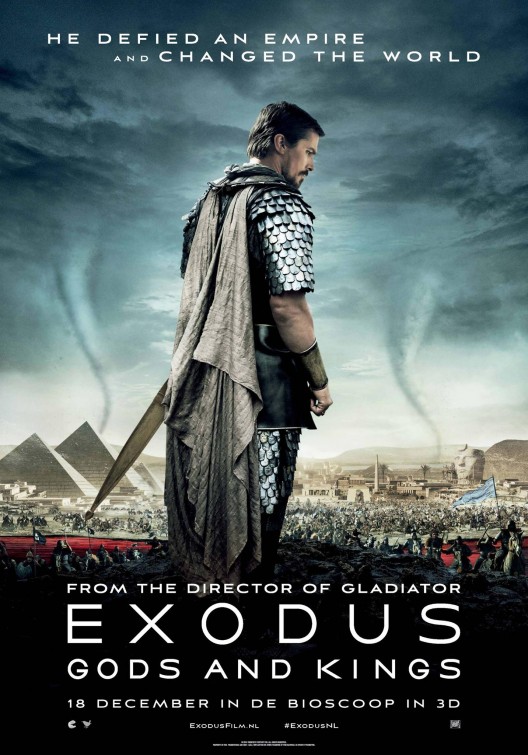
Exodus: Gods and Kings (2014)


Brothers in arms? Christian Bale and Joel Edgerton struggle for chemistry

Director: Ridley Scott

Cast: Christian Bale (Moses), Joel Edgerton (Ramesses II), John Turturro (Seti I), Aaron Paul (Joshua), Ben Mendelsohn (Hegep), Maria Valverde (Zipporah), Sigourney Weaver (Tuya), Ben Kingsley (Nun), Indira Varma (High Priestess), Tara Fitzgerald (Miriam), Hiam Abbass (Bithiah), Dar Salim (Khyan)

There is something quite reassuringly old fashioned about Biblical story films. They have a sweet Sunday reliability about them, an old-fashioned bombastic self importance, mixed with spectacle and often heavy-handed moral messages. They are just quite fun. Biblical epics have always been popular with Hollywood as there can never be any judgement passed on the amount of violence and sex the stories often contain as, hey, it’s all in “the good book”. It worked for Cecil B DeMille and it continues to work today.

Exodus: Gods and Men is an exception to this rule of Hollywood Bible stories because it is neither fun, nor does it have a clear message. It seems to have been made by people doing their very best to pretend the story of Moses has as little to do with the Bible as possible. In effect, if God is the star of the Bible, then this is an adaptation that tries to minimise the star as much as possible. The story has beats (probably the most interesting parts) where Moses and God warily question each other’s motives, but these scenes don’t have enough weight to them, the philosophical arguments are never clearly expressed. Bluntly, if Scott (an aethist) and Bale (a man who described Moses as “one of the most barbaric figures that I ever read about”) don’t have any connection to the story and its themes – why should we?

Exodus is instead a feeble attempt to recapture the magic of Gladiator. Firstly it is an astonishingly badly written film, full of tin-eared, clumsy dialogue (“Listen, from an economic standpoint alone, what you’re asking is problematic to say the least” is Rameses’ response to the let-my-people-go message of Moses). Secondly, it makes little or no attempt to build up its characters. It’s aiming for a “brothers divided” plotline with Moses and Rameses – but neglects to ever show these characters as friends at any point. From the start they are divided, with the introduction of a stupid prophecy plotline at the start of the film existing only to justify a dull battle, a stylistic retread of the Gladiatoropening battle. Having failed to show any reason why these two characters should ever care for each other, the film settles into familiar patterns: Rameses the jealous, petty tyrant, Moses the gruff man with a temper, hiding his morality. Not once is there the feeling of a fractured relationship.

Exodus is also highly confused about its feelings towards Christianity. God is literally voiced by a petulant child. Simultaneously Scott also seems keen to attribute as many of the plagues and partings of the red sea as he can to pseudo-scientific reasons – so some sort of meteor causes a tsunami to part the red sea, crocodiles going crazy leads to the Nile turning into a river of blood, that sort of thing. The most interesting moments involve the debates between Moses and God, the vengeful lord favouring shock and awe over Moses’ long-term guerrilla campaign. There are moments here where the film touches upon a point, questioning if God even needed Moses in the first place. But it never really tackles it properly. I suspect we are supposed to see meaning in the weight given to the point that Hebrew means “he who wrestles with God” and see Moses as a man struggling to understand God’s plans for him – but this never really comes together coherently.

Leaving aside all that, it’s a plain badly structured film. From the pointless opening battle scene, screen time is lavished on massive events, but no time is spent on the characters and motivations. Dialogue scenes seem rushed and heavily cut. As such, bizarrely, the film seems both very long and too abrupt. Characters come and go – Bens Mendelsohn and Kingsley drift in and out of the story, Aaron Paul has barely a line of dialogue and Sigourney Weaver’s character seems little more than a cameo. Bale barely moves out of first gear as Moses, Edgerton does his best with a character that is laughably one-note. The film tries to do far too much, without making us invest in anything that is happening.

Instead there are big events, beautiful photography (you’d expect nothing less from Scott) and little else going on. Plagues in themselves are not interesting – people are, and if the characters aren’t developed as people, we can’t be interested in seeing events happen to them. If the film had something unique to say about religion (as it tries to do at times) it might have survived, but instead it’s a rather portentous action film that isn’t about anything – it’s not clear what we are supposed to think of God, it’s not clear what motivated Moses, we’re not clear how he feels about his mission.

Under the surface of Exodus are the beats you need to make an interesting film. A streamlined film that chose to do one thing could probably have done it well. But the storytelling and plotting are so fudged that the film just rolls from spectacle to spectacle, with no heart.

Selma (2014)

Martin Luther King fights the good fight

Director: Ava DuVernay
Cast: David Oyelowo (Martin Luther King), Tom Wilkinson (President Lyndon B. Johnson), Carmen Ejogo (Coretta Scott King), Andre Holland (Andrew Young), Tessa Thompson (Diane Nash), Giovanni Ribisi (Lee C. White), Lorraine Toussaint (Amelia Boynton Robinson), Stephan James (John Lewis), Wendell Pierce (Hosea Williams), Common (James Bevel), Alessandro Nivola (John Doar), Tim Roth (George Wallace), Oprah Winfrey (Annie Lee Cooper)

Tragically, for a while this film seemed to be most famous for being the poster child for “Oscar-Gate” or hashtag oscarssowhite (sorry hashtags are not my thing). Selma was the film that should have been littered with nominations. Instead it got just two – one for Picture, one for Best Song. Of the many, many snubs the most shocking were Ava DuVernay and David Oyelowo, particularly as other contenders up for the awards had certainly done inferior work that year . This film, however, categorically demands to be remembered in its own right – it is a fine, very moving piece of work, a dynamic history lesson that avoids preaching from a pulpit.

A lot of this comes down to the breathtaking work from David Oyelowo, who delivers one of those performances where the actor seems to transcend his skin, not just imitating Martin Luther King but inhabiting him, exploring and expressing every depth and shade. It’s a performance that stands comparison with Daniel Day-Lewis’ Abraham Lincoln. Oyelowo’s King is a big hearted, patient man but also a shrewd political player, a family man who betrays his wife, a political campaigner who holds the big picture and the small in his mind. It’s a totally committed performance that is intensely respectful without ever feeling hagiographic.

Oyelowo’s performance also immeasurably helps the film’s structure, as this is a biography that focuses on one single key moment in its subject’s life, rather than attempting to cover the whole lot in one 2-3 hour sitting. I rather like this, as the important thing about these biopics is to understand the person at the centre, not just to tick off events in their life. Anyway this film focuses on three months in 1965: King is campaigning for equal voting rights, and planning a high-profile march across Alabama from Selma and Montgomery to pressure President Lyndon B Johnson to promote the Voting Rights Act.

This is a very powerful film, humming with a constant sense of the deep rooted injustice and oppression in America at this time. It makes no compromises in showing the violence meted out to Black Americans, but it’s the day-to-day injustice that DuVernay shows particularly well: in the opening scene, Annie Lee Cooper (played by producer Oprah Winfrey) has her carefully prepared application to vote cruelly dismissed by a smalltown clerk, gleefully and casually exploiting a succession of legal loopholes to thwart her. It’s a simple scene but amazingly powerful in its casual (unspoken) racism, and it brings to life in a few strokes the day-to-day experience of millions of people at this time.

It’s also a beautifully shot film, that uses the real-life location of the Selma bridge spectacularly. An assault on the first attempted march by mounted policeman, shrouded in tear gas, is deeply moving in its simplicity, the camera catching the brutal overreaction of the police with a journalistic eye (Wendell Pierce as Hosea Williams is particularly impressive in the build-up to, and aftermath of, this sequence). Other moments of violence are equally shocking, but DuVernay never over-eggs the moment, allowing the events and the story to speak for themselves. We know how terrible some of these events are, and how disgusting the treatment of Black Americans was – the film never uses music or editing to hammer it home to us.

The film ends on the kind of high note you can only feel when injustice has been overcome and decent people triumph (punctured, DuVernay acknowledges, by the fates of some of the characters,  revealed at the end of the film. More than one of these is a gut punch – not least the death of King himself three years later). But it’s never twee, preachy or a history lesson. Instead it’s a living, breathing expression of a moment in history that wraps you up in its story. Oyelowo is of course outstanding, but there is some excellent support, not least from Carmen Ejogo as his wife Coretta (overlooked at the time, but outstanding), Andre Holland, Stephen James, Lorraine Toussaint and Common as King’s fellow Civil Rights leaders. Tom Wilkinson adds a lot of depth to a sometimes thinly written Johnson, while Tim Roth translates his contempt for George Wallace in a performance of slappable vileness. A beautiful and marvellous film.

Sleepy Hollow (1999)


Rumours that Johnny Depp is tapping into his eccentric style are of course unfounded

Director: Tim Burton

Cast: Johnny Depp (Ichabod Crane), Christina Ricci (Katrina Van Tassel), Michael Gambon (Baltus Van Tassel), Miranda Richardson (Lady Van Tassel), Casper Van Dien (Brom Van Brunt), Jeffrey Jones (Reverend Steenwyck), Richard Griffiths (Magistrate Philipse), Ian McDiarmid (Dr. Thomas Lancaster), Michael Gough (Notary Hardenbrook), Christopher Lee (Burgomaster), Christopher Walken (The Headless Horseman), Claire Skinner (Beth Killian) 

Tim Burton’s films often take on a larger-than-life quality, an overblown fanciful journey into a world that is a few degrees off from our own. So a bizarre ghost story about a headless horseman lopping off bonces left, right and centre, in an isolated town that feels more like a construct from a series of other films than any sort of real place, probably suits him perfectly.

After a series of murders via decapitation in the small town of Sleepy Hollow, Iachobad Crane (Johnny Depp) is called from New York to investigate. An eccentric (what else, it’s Depp) moderniser, Crane believes in logic and forensic investigation and is having none of the fears of the townspeople that the murders are being committed by a headless ghost. However he soon changes his views…

This adaptation bears little or no resemblance whatsoever to the original source material, bar a few homages, one or two brief scenes and a few character names. Burton, indeed, seems to have no interest in it at all: what he is interested in doing is paying homage to high-blown Hammer horror films from the 60s and 70s. Whether you enjoy this largely depends on whether you were a fan of either Burton or this style of film-making going into it.

I found the film rather too arch throughout – from the stylised performances of the actors, through to the slight tongue-in-cheek tone. It’s not particularly scary at any point, despite the blood and gore – largely because nothing ever feels real, there’s no sense of dread or peril. Heads are lopped off with an almost comic athleticism, bouncing around floors or rotating on necks. Only one sequence – the murder of a family – carries any real sense of unease about it. The rest of the film is one not-particularly-witty black comedy, in which a lot of time and talent seems to be invested in something not particularly interesting.

Depp is of course perfectly suited to this, his “look at me” acting style springing to the fore as Crane. As usual he overloads the character with quirks and mannerisms, the sort of tricksy emptiness it’s easy to mistake for great acting. The rest of the cast go about their business with a trained professionalism. However, despite the array of British acting talent on display, in truth none of them make much of an impression, with the exception of a nice cameo from Alun Armstrong as a senior New York policeman, and Miranda Richardson who has fun with her role as a sinister housewife with hidden depths.

The awards attention for the film focused on its finest aspects – its look and design. The production design of the film is impressively constructed and the artificial look of the exterior sets actually fits in very nicely within the world of the film. Emmanuel Lubezki’s photography also looks fantastic, shooting the film with a slightly off colour, 70s style that adds a vibrant red to the large amount of blood on screen. Costumes and other technical aspects are also impressive. The film looks fantastically striking, like a brilliantly designed coffee table book – and has about as much plot as one. It’s my problem with Tim Burton – this whole “unique vision” of his, often seems to be an excuse for littering his films with in jokes, arch design and stylisation and leaving out the things we actually care about, like characters, emotion and drama.

In the end, it’s really not a lot more than a joke, a pastiche of a certain genre of film that seems much more like one for the fans than a joke that we can all take part in. I’m aware not liking it throws me open to accusations of not “getting it” or expecting more from it, but I basically didn’t really find the joke funny enough. Its arch style make it hard to relate to, and despite the clear enjoyment of all involved, not a lot of the wit behind the scenes is clear in the final product. With nothing to really invest in, a rather sudden ending and a mood throughout that is trying to be creepy rather than genuinely so. Don’t expect a retelling of its plot around a camp fire to awaken too many goosebumps.

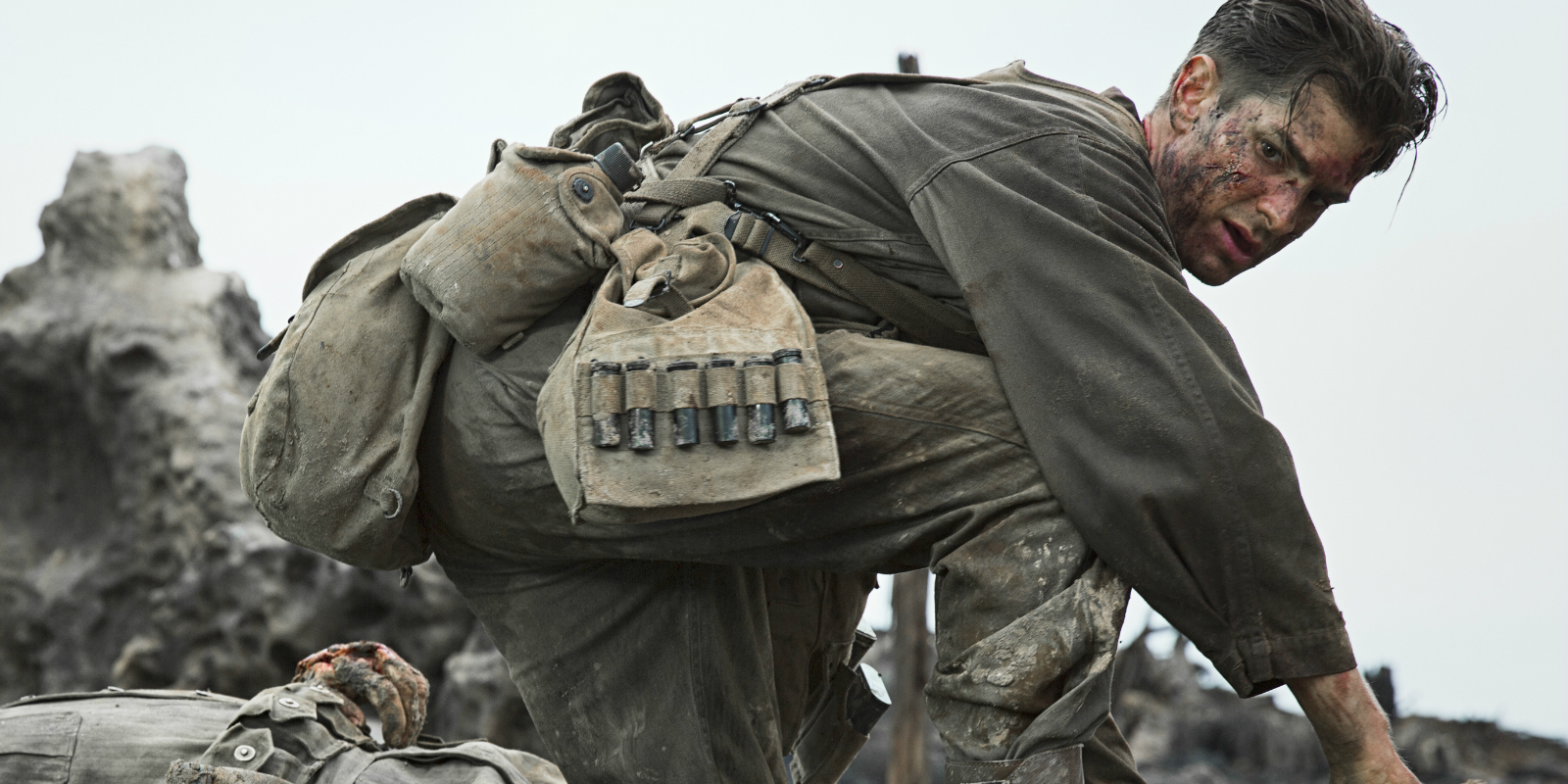
Hacksaw Ridge (2016)


Andrew Garfield embodies true heroism in Mel Gibson’s war drama

Director: Mel Gibson

Cast: Andrew Garfield (Desmond Doss), Vince Vaughn (Sergeant Howell), Sam Worthington (Captain Glover), Luke Bracey (Smitty Riker), Teresa Palmer (Dorothy Schutte), Hugo Weaving (Tom Doss), Rachael Griffiths (Bertha Doss), Ryan Corr (Lieutenant Manville).

There is a slight odour hanging over Hacksaw Ridge. Few Hollywood superstars fell as hard and as far as Mel Gibson has done in the past few years. As such, the fact that this film has been such a critical and commercial hit is being seen as redemption. While I’m not sure any film could really be that, it’s certainly a clear expression of many of the things that made him a successful superstar – a  carefully made blockbuster that tells a simple story, in a way that mixes sentiment and violence, built around a hero it is impossible not to admire and respect.

Desmond Doss (Andrew Garfield) is a young Virginian, deterred from violence early in his childhood, who volunteers for service in the Second World War, willing to do everything he can to support the war effort except hold a rifle and take a life. Instead, inspired by his fiancée (a nurse) he wants to serve as an army medic – to do his bit for his country, while standing by his principles. Needless to say his decision is not greeted warmly by his army comrades – but  at the Battle of Okinawa, as his unit goes into service, he proves his heroism saving lives during the Battle of Hacksaw Ridge.

Firstly, before going any further into the merits of the film, Andrew Garfield’s performance in the lead role is extraordinarily good in its simplicity, straightforwardness and aw-shuckscharm. Never once does his guilelessness and honesty ever become wearing – instead (and Gibson’s direction helps) he is a man you immediately root for, who you can respect without him feeling perfect. It’s a terrific performance, respectful and admiring but also real. Gibson’s camera showcases his heroism in an unfussy way, avoiding too many directing flourishes – which makes these scenes of life-saving all the more inspiring. A perfect match of actor and role.

There are also plenty of fine supporting performances – Hugo Weaving is very good as Doss’s  shell shocked father, barely able to understand his emotions, with Rachael Griffiths similarly good as his caring mother. Sam Worthington gives perhaps a career best performance as Doss’ captain. Even Vince Vaughan, while sometimes trying too hard as a gruff sergeant, quickly settles into giving one of his finest performances. Teresa Palmer is very sweet as Doss’ fiancée. In fact, there is not a bad performance in it.

But what of the film? Perhaps only Mel Gibson could direct a film that is simultaneously a celebration of pacifism and an endorsement of righteous war. This is perhaps one of the most visceral war films you are likely to see, with bullets ripping bodies in half, the camera unflinchingly recording every injury in gory detail. Say what you like about Gibson, but as an ‘experience’ film maker he is extraordinarily good – he knows how to immerse the audience in ways few others do. He also brilliantly shows both the terror of combat and the courage of soldiers. His staging of the war is tense and gripping, without being sensationalist. In fact, I don’t hesitate to place its depiction of war up there with Saving Private Ryan, combining the savagery of combat with the uplifting courage of a man who only went there to save lives.

Surprisingly one of the strengths of Gibson’s film-making is that he is a very simplistic story teller. His films are morality tales of right and wrong. His heroes, be they William Wallace or Jesus Christ, have overcome burdens to build peaceful homes before a call of duty shatters their world. In a way, that makes Desmond Doss a perfect match for him. The structure of the film, and the familiar beats in the first half of the film, ticking off influences on Doss’ life with a straightforwardness bordering on cliché, all work because they are presented with a guileless genuineness. Gibson successfully establishes a character who feels like an ordinary man who goes on to place himself in an extraordinary position.

Gibson’s simplicity as a story-teller has its drawbacks in the presentations of the antagonists in the film. The Japanese are presented as little better than a faceless horde, a fanatical band of killers, consumed with ruthlessness and lacking all sense of moral decency. Of course, that is to be expected from seeing the film solely from the Western side. But it sits slightly uncomfortably in a film that want to endorse Doss’ values. There are touches of even-handedness – a moment where Doss treats a terrified Japanese soldier in a bunker, or references to a few of the enemy that he lowered off the cliff (although Gibson isn’t afraid to have a soldier bluntly state “They all died” when asked what happened to them). But in a film that claims pacifism is something to admire, showing one half of the conflict as almost universally unfeeling monsters doesn’t always sit right.

This conflict between pacifism and righteous war, is one the film struggles with throughout. If anything it wants to have its cake and eat it too. It wants us to acknowledge the principle of pacifism as a good thing. But it’s also almost scared of being accused of presenting any idea that might be accused of detracting anything from the heroism of the generation that fought the Second World War.

How Doss squared his moral beliefs with helping the men alongside him to carry on killing is none of my business. It’s certain Doss is a far wiser, braver and kinder man than I could ever hope to be, and his actions were genuine, decent, honest and in keeping with his personal morality. I don’t understand his thinking, but that doesn’t matter and the film knows it doesn’t  matter, that we don’t need to completely understand to respect. The film wisely avoids any hokey scenes where Doss explains his convictions. It presents what Doss did as a fact, and says to us “here it is”. The man was involved in a hellish war, but he did what he believed was the right thing to do, and he saved dozens of lives doing it. If we can celebrate the actions of the men on the Normandy beaches fighting Nazism, or the pilots of the Battle of Britain, then we certainly can salute Gibson for bringing to the world’s attention this honourable, decent, brave and above all genuine man.

For all his faults, this film proves Gibson is a first rate filmmaker. Here,  he has made a moving war film that, although it seems to be trying to be many things to many people, still manages to contain a moral message and highlights a man who deserves to be remembered. It may have confusion at its heart about its true attitude towards war – but I believe it does have that heart in the right place, is trying to send a positive message to the world, and is a highly impressive and compelling piece of filmmaking.

Jackie (2016)


Jackie Kennedy patrols a White House she will soon be forced to leave behind

Director: Pablo Larrain

Cast: Natalie Portman (Jackie Kennedy), Peter Sarsgaard (Bobby Kennedy), Greta Gerwig (Nancy Tuckerman), Billy Crudup (The Journalist), John Hurt (Father Richard McSorley), Max Casella (Jack Valenti), Richard E. Grant (William Walton), John Carroll Lynch (Lyndon B. Johnson), Beth Grant (Ladybird Johnson), Caspar Phillipson (John F. Kennedy)

“Ask ev’ry person if he’s heard the story

And tell it strong and clear if he has not,

That once there was a fleeting wisp of glory

Called Camelot.”

Or so sang King Arthur in Alan Jay Lerner’s musical Camelot. It’s apt as it’s a musical cue Jackie returns to several times in this thought-provoking, if rather stately, film that with one eye looks to sharply critique the legend building of American political history, while with the other staring with adoration at the very legacy at its centre.

The film follows, in a slightly non-linear fashion, the period of time from Kennedy’s assassination through to his state funeral and Jackie Kennedy’s departure from the White House (although other scenes feature Jackie during the presidency, most notably her filming of A Tour of the White House in 1962, a TV special the film lovingly recreates with a mixture of existing and newly-created footage and audio). The framing device is an interview Jackie gives with an unnamed journalist, set after the events of the film, in which she alternates between frank honesty and careful legacy building – all the time stressing she will decide what is, and is not, printed.

The film is a both a careful deconstruction of legacy building and a celebration of it, with Jackie Kennedy portrayed as a contradictory figure – keen to give her husband a place in history and, at times, resentful of the impact of public interest in her life. In a neat scene, Jackie Kennedy asks the driver of her husband’s hearse if he has heard of the last two Presidential victims of assassination, William T. McKinley or James Garfield. He knows neither. When asked if he has heard of the first, Abraham Lincoln, he of course is able to name check victory in the civil war and the abolition of slavery. It’s a sharp reminder of the work she must do for her husband’s legacy, with his achievements ranking nowhere near Lincoln’s.

The films suggests throughout that the planning of the funeral was focused on giving Kennedy (and by extension Jackie and her children) a permanent place in American folk-lore. It’s why the reprise of Camelot works in the film – it’s sums up the attitudes of America an administration that has indeed lived on as a short time of hope, with Kennedy as the lost Golden Boy. The appropriateness of the song is something the film manages to both use and comment upon – and which it also manages to make feel fresh, despite the fact the “Camelot” has been a nickname for the Kennedy White House ever since the 1960s.

Simultaneously, though, it is a film that lingers with wide-eyed wonder on JFK himself, and which presents LBJ as a far more corrupted and overtly political figure compared to the reverence the film feels for his predecessor (his serial womanising is given only a brief mention by Jackie during her conversation with her priest). Kennedy (played by an actor with a remarkable physical and vocal similarity) is always a romantic figure, his motivations or his achievements very rarely questioned. He’s filmed like the very romantic hero, which the film is half encouraging us to question that he was – and I’m not sure this is deliberate.

The film is acute and quietly non-judgemental throughout the scenes covering the assassination, reaction and funeral plans. So much so, that the framing device of the journalist (Billy Crudup in a thankless part, scruffily dressed, alternately arch and adoring) seems like it belongs in another, dumber, movie – as if we needed Jackie to give voice to her feelings, to actually speak words stressing her power and determination in shaping what is printed about her husband, in order to understand it. It’s an obvious, TV-movie framing device that really adds very little.

This is largely because Natalie Portman gives such a sensational performance in the lead role. As to be expected, it is a brilliant capturing both of Kennedy’s vocal and physical mannerisms. But more than that, it is also a sharp performance of deeply confused grief and guilt over her husband’s fate, mixed with a public strength (at times bordering on furious anger) in her determination to plan a funeral she felt befitted her husband’s status. Weak as the journalist scenes are, she dominates them with her skilful portrayal of a woman split between a need for intimate confession and determination to maintain control over the story.

Portman’s performance also provides the emotional anchor to scenes that could otherwise be careful reconstructions. The assassination itself (filmed within the car) has rarely seemed so immediate – and the camera largely sticks with Portman’s stunned, terrified face throughout the long drive to the hospital. Her combination of lost alienation, bewilderment and shock equally dominates the rushed inauguration of Johnson, while scenes of her returning to the White House to finally remove her blood-stained clothing shimmer with emotional intensity. It’s a film that captures the stunned sense of alienation from reality that comes after undergoing any major, life-changing event.

The film has a ghostly, elegiac mood. Larrain uses rather murky photography effectively throughout the film. The slightly grainy focus given to the general world of the film allows sharper primary colours to stand out at key moments. The Oscar-nominated score for me was, however, far too insistent – a series of sharp notes and discordant sounds mixed with mournful refrains. It draws too much attention to itself and makes the same point too many times to be effective. I suspect its a score that might work better in isolation. Far better are the quiet and controlled shots of Jackie walking listlessly through a deserted White House, or the careful mixing of the tragic and the mundane (when selecting a positon in Arlington for her husband, she has to ask a companion to slow down as her shoes keep getting stuck in the mud).

It’s an intelligent, thought-provoking and adult piece of film-making, that carefully avoids passing judgement or making pronouncements. I can’t decide if it’s a film that can’t make up its mind about events, or if it challenges us to make up our mind for ourselves. Either way, Portman gives an extraordinary performance and is well supported by the rest of the cast, in particular John Hurt who gives a charming, witty performance as the Priest who Jackie allows herself (for a moment) to be completely honest with. A dynamic and interesting addition to JFK films, that manages to find a new angle and even some new ideas from well-worn ground.

La La Land (2016)

Emma Stone and Ryan Gosling literally dance the night away

Director: Damien Chazelle
Cast: Ryan Gosling (Sebastian Wilder), Emma Stone (Mia Dolan), John Legend (Keith), Rosemarie DeWitt (Laura Wilder), Finn Wittrock (Greg Earnest), JK Simmons (Bill) 

WARNING: SPOILERS AHEAD!

Okay this review will discuss the plot of the film in some detail, including the ending so if you want to avoid hearing more(and I think the film is best enjoyed as an experience if you don’t know what happens at all) don’t read on.

A sweeping camera carries us over a freeway. The drivers honk horns and impatiently stare at the gridlock. Then the camera hones in one woman who starts to sing. Then others join in. The camera never cuts as the singing and dancing spreads around the whole freeway. Through the number, it follows people back into their cars and then settles on a woman reading over her audition piece. It’s a bravura moment, an ambitious piece of cinematic daring. It tells us that we are in for a ride. We get on.

Seb (Ryan Gosling) and Mia (Emma Stone) are early-30-somethings in Los Angeles. She is trying to make it as an actress (and this film really shows the soul-destroying nature of auditions), he dreams of opening a jazz club. Their paths cross a few times, until they meet at a party where he is performing as part of a terrible covers band. They flirt, they fall in love. But can true love survive the ups and downs of life?

Firstly, Chazelle directs wonderfully and Gosling and Stone are radiant in these roles. Emma Stone gives the sort of performance that makes her automatically popular: Mia is warm, funny, kind but also slightly prickly and lacking in confidence about making that big break. Seb is engaging, animated, confident but also slightly distant, standoffish with an intensity behind his eyes. Both actors carry the whole film – this is almost a two hander, as virtually no other actor has more than a few minutes of screen time – and are simply brilliant, capturing that mix of Hollywood magic and real-life tension that the film mixes together throughout its running time.

Very rarely have I seen a film before that I think caught the magic of falling in love as effectively as this one did. The third of the film given to the courtship between Gosling and Stone’s characters is sweet, endearing, heart-warming and rings very true. It has exactly the right sense of tentativeness and uncertainty alongside the natural chemistry between the two leads, that sense of nervousness because you are not sure if the other person is feeling what you are feeling. This portion of the film brilliantly succeeds in getting the viewer to invest in this relationship between the two characters.

Chazelle also fills the frame at this point with some of the best Hollywood old-school musical magic: the song-and-dance routines really work here, giving visual expression to the high flung emotions of our heroes (the sequence at Griffith observatory is the obvious highlight here, but the relationship is handled so well that their first date at the cinema beforehand feels overwhelmingly sweet and real). It’s never cloying and for a film that (certainly during this section) is a real confection, that is quite some achievement.

And that’s the first point in the film where it could stop. But this is a film where Chazelle wants to combine the high concept of cinema with the difficult reality of real life. So what this film is really about is not romance but the sometimes painful truth that relationships, for a number of reasons, don’t always work out. That even the most perfect couple can, for reasons of career, ambition or due to just everyday mistakes, end up drifting apart, even if they still remain deeply emotionally attached to each other. What Chazelle does so well is that seeing these two slowly work towards breaking up isn’t traumatising or unbearably sad – it seems natural and real, something almost inevitable. In fact we can all see the mistakes happening, the ill thought out angry words, the events missed, we can see where it is going, but the underlying affection and love between the two characters is still there, so there remains the hope that they will conquer this “sticky patch” as per hundreds of films before.

Chazelle teases us – and there are several moments again where the film could stop that would leave the audience with optimism that a future reconciliation will occur, or that they will rekindle that initial spark. A possible ending is before the five year time jump that covers the final five minutes: Mia and Seb sit after her last audition. Neither of them are sure what will happen next, but both of them confess they will always love the other.

Many films would end here, and we could interpret what will happen next. Chazelle takes us forward five years for a beautifully moving bittersweet coda (heavily inspired by the end of An American in Paris), where we see both have achieved their ambitions – but not with each other. Mia is married with a young child, Seb seemingly single. Mia finds herself in Seb’s bar on opening night. Their eyes meet across the room and the whole cinema seems to crackle with the emotion – we know in seconds that they still devoted to each other, and regret consumes the room. Seb begins to play their love theme on the piano… Chazelle then gives us a masterful flashback to their first meeting and a wordless, music and dance accompanied replay of the entire film with every mistake corrected, showing them the life they could have had. It’s a beautiful tease – is this a dream? Was the film we watched a dream? Chazelle could leave us at the end of this sequence and allow us to make up our mind. Instead we return to the bar, as Mia leaves. They catch each other’s eyes and smile. It’s a smile that says love, it says happiness for the other but it also carries regret and acknowledgement that they may never see each other again. It’s a beautiful moment, profoundly true and moving and perfectly encapsulates our regret for the road not taken.

Chazelle’s La La Land was a passion project for the director, and his passion for it is clear. It’s beautifully filmed, hugely affecting, and the song and dance moments will put a smile on your face as well as being moving. Your response to it will be affected by how you respond to the mixing of Hollywood glamour with kitchen-sink reality. My wife was jarred by the fact that the film seems to promise the happy ending that old-school musicals so regularly delivered, but then inverts the concept at the end. I, however, found the ending perfect, and the bittersweet sadness of the road not taken in life (a life where other dreams and ambitions are achieved) very moving.

It’s a film that asks us to question our decisions and place values on dreams and ambitions. I’d need to see it again to decide how successfully it does this: in the real world Mia achieves her dreams and is unwilling to sacrifice them to be just a partner to Seb. In the dream sequence, Seb drops his dreams to support Mia, and the film may be suggesting that two ambitious people in a difficult world like this will struggle to be mutually successful. However, it is also clear that one of the things drives Mia away from Seb is his own drift away from immediately pursuing his dream, by signing on for years of touring with a band playing music he hates. What is the message here? Is there a message? Or is the message that life is never clean, never easy, and that having dreams in an adult world will always complicate lives? It’s a question I look forward to addressing when I watch this wonderful film again. It’s too early to say if this is a classic, but it will do until the next classic comes along.

Touch of Evil (1958)

Orson Welles investigates (though the real mystery is probably Charlton Heston’s Mexican heritage)

Director: Orson Welles
Cast: Charlton Heston (Ramon Miguel Vargas), Janet Leigh (Susan Vargas), Orson Welles (Police Captain Hank Quinlan), Joseph Calleia (Pete Menzies), Akim Tamiroff (Uncle Joe Grandi), Marlene Dietrich (Tanya), Joanna Cook Moore (Marcia Linnekar), Ray Collins (District Attorney Adair), Mort Mills (Al Schwartz), Dennis Weaver (Night Manager)

Has any director ever cast himself in such a physically unflattering role as Welles takes on here? Hank Quinlan is a grotesque, sweaty, grossly obese, lame, mumbling copper with a hinterland of loneliness in his past and a background of missed chances. Yet despite this, it’s Quinlan’s film and despite the terrible things he does in the film (kidnap, two murders, suspect framing) it’s very hard not to feel empathy and sorrow for him. Welles’ immense charisma as a performer is a large part of this, but I think he also recognises the sadness of being the genius who has surrounded himself with mediocrities, the man who knows he could have achieved more in life but for whatever reason never did. If that’s not Welles’ career, what is?

Of course Quinlan isn’t actually the lead. Charlton Heston, curry-coloured but otherwise actually pretty good, plays Vargas, a Mexican law agent (“He don’t look like a Mexican” Quinlan correctly observes) with a new American wife, caught up in an investigation into a bombing of an American citizen in a US-Mexico border-town. Quinlan investigates, finds his culprit quickly and produces evidence – evidence Vargas knows for a fact wasn’t there minutes ago. Accusations of corruption fly and, before you know it, Quinlan (a man flirting with corruption) is forced into alliance with a jumped-up Mexican gang leader to frame Vargas for corruption via implicating his wife in drugs and murder.

The plot, however, largely takes second place to Welles’ virtuoso film-making. The opening sequence of the film – an extended three and a half minute single take that tracks in and out of streets, from close-ups to crane shots – has an astonishing “how did they do that?” quality. But it’s matched by Welles’ brilliance with both actors and camera placement during the equally long continuous takes set in bomb suspect Sanchez’s apartment. He’s adept at jinglingly unsettling imagery, with the murder scene 2/3rd of the way through the film almost queasily twitchy in its fragmented shooting style. The final sequence of the film, as Vargas tracks Quinlan through a filthy oil yard, should be silly but is completely compelling.

Welles of course dominates the film as Quinlan. I love the half smile on his face as his praises are sung by besotted partner Menzies early in the film – the “aw shucks, are you talking about me?” non-modesty – but I also adore the unspoken sadness of his early scene with Dietrich, where he sadly attempts to flirt with this (presumably) lost love (we are never told for certain) only for her to literally not recognise him. Quinlan in many ways is a good copper – he frames the guilty, he doesn’t take bribes, he is reasonably loyal – but he’s also selfish, egotistical and needs the adoration of his position to fill the void in his life. He’s a man who’s corrupt almost without realising it, who sinks into bemused maudlin depression when accused without even recognising that he is in fact guilty.

There are some other equally strong performances in the film. Heston of course looks ridiculous – but look past that and this is one of his best performances, Vargas demonstrating the stand-up, straight-shooting honesty of many of Heston’s roles, combined with arrogant short sightedness and narrow minded determination. Janet Leigh is also absolutely terrific as his wife, despite being saddled with a bizarre subplot of being terrorised in a motel. A note for trivia fans – Leigh actually broke her arm before shooting and it’s in a cast throughout the movie bar one shot (where she doesn’t move her arm) – you can’t spot it until you know.

I was particularly enthralled by a beautiful performance of hero-worship from Joseph Calleia as Menzies, Quinlan’s adoring partner whose entire life has been one of loyal service to Quinlan. In many ways he is the moral centre of the film, and as the film shifts its focus to Quinlan, so it equally explores the changes in how Menzies views his boss. Akim Tamiroff gives a lovely performance of puffed up pomposity as a ridiculous small time gangster with a dodgy wig. Dennis Weaver’s hotel manager is an eccentric collection of manners that is more likely to split opinions, but he doesn’t half go for the oddness. Marlene Dietrich is marvellous in her few brief scenes.

Touch of Evil is one of those films that lingers with you and rewards constant reflection and rewatching. I re-watched large chunks of it again immediately the next morning. As a piece of film making it’s a master class, an immersive, tightly framed, wonderfully shot film that brilliantly uses its filthy, litter strewn locations. The acting is terrific and the final moments strangely moving. Welles was a terrible self-promoter and later he ballooned to the very Quinlan proportions that padding and make-up create here. But when he was on his game, and fully focused, he was terrific. As is the film, which is surely one of the greatest (and last) film noirs ever.

CODA: The coda to this? Of course Welles wasn’t fully focused. He cut the film once, then shot off to Mexico to explore a new film possibility. Studio hands recut the film again. Welles sent a famous 58 page memo suggesting changes. Most of them got ignored for the third cut. Three versions of the film now exist – the two studio recuts and a 1998 recut using the memo (Welles’ original was wiped). I watched the 1998 recut. But it’s always the problem with Welles – a man I always felt who largely lacked the focus to actually finish something. The film bombed on release. Welles never worked in Hollywood again.

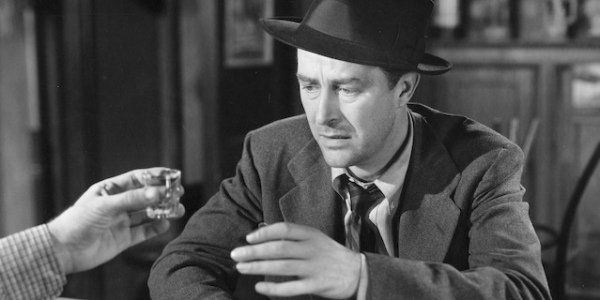
The Lost Weekend (1945)

One more for the road: Ray Milland spend the rest of his life reassuring people he wasn’t an alcoholic. Talk about the film that keeps on giving.

Director: Billy Wilder
Cast: Ray Milland (Don Birnam), Jane Wyman (Helen St. James), Philip Terry (Wick Birnam), Howard da Silva (Nat), Doris Dowling (Gloria), Frank Faylen (‘Bim’ Nolan)

It opens like a counter view of the American Dream: a long pan down through the New York skyline. A voiceover leads us through the window (via a shot of a bottle hanging out of the window) onto a pair of brothers packing for a weekend away. Only of course the bottle is really the third character here, and it’s all that one of the brothers has on his mind.

The Lost Weekend is simply that: a long weekend in which we see alcoholic would-be author Don Birnam (Ray Milland) lie, cheat and steal with a shabby English charm through the bright lights of the city, occasionally resolving to quit the demon booze, but constantly drawn back by its siren charm. Other characters drop in and out of his story: an almost fanatically supportive girlfriend Helen (Jane Wyman), his weary brother Wick (Philip Terry), an ambiguousbartender (Howard da Silva – very good), a naïve hooker (Doris Dowling – innocent in the way only Hollywood golden age hookers can be) and finally a truth-telling male nurse Bim (Frank Faylen).

Probably what’s most remarkable about this film is that it was made at all, especially considering that this was when Hollywood’s “morality” dictates ruled. Film historians have suggested that Wilder’s introduction of an obvious hooker, and the suggestions of the Nurse’s homosexuality, so focused the Hays Code’s attention that they let slide that the central character is a lying, shifty drunk who feels only slight shame and very little regret for his actions, and whose announcement at the end that he has changed is potentially just the beginning of another cycle of sobriety in the addicted alcoholic.

Wilder’s genius here in filming is, instead of judging him or pitying, the camera sticks firmly with Don and makes us a co-conspirator in his low cunning and desperation to obtain alcohol. Don is a man who, during the course of the film, pawns several valuable possessions (some not his own), trashes his own apartment in search of booze, fleeces money from people with sympathetic-sounding grandiose stories, and is reduced to attempting public theft. But instead of placing us in the perspective of the (overly) saintly girlfriend frustrating us by striving to reform Don, we stick with Don and are invited to see those standing between him and the booze as the antagonists that Don perceives them to be.

Wilder also skilfully suggests that the same earnest help that Helen (and to a lesser extent Wick) are piling on Don is actually contributing to pushing him further into desperate addiction by smothering him. Don doesn’t seem to be ready to listen to anyone until, sunk to near rock bottom and hospitalised in the drunks’ ward, nurse Bim tells him out right that he is a self-destructive loser who is controlled by his addiction (I’ll also point out this doesn’t stop Don trying to bribe him to facilitate his escape from the ward). I’m also going to mention here a popular theory from film critics that Bim is a figment of Don’s imagination (his name is a near anagram of Don’s, he talks only to Don in the film, seems to know everything about Don’s inner thoughts, and his coded homosexuality links to Don’s own suggested homosexuality in the original book – the underlying cause of his addiction).

The film also has a wonderful noirish quality, capturing of the seedy world of the drunk: the bars and pawnshops that are Don’s world, and the impressionistic lighting used to dramatise Don’s drunken states. In one shot I particularly enjoyed, Don searches desperately for a bottle he hid while drunk the night before – he can’t remember where he hid it because he was pissed, but we know it’s hidden in the lightshade. The camera frames Don and his search with the lampshade constantly in shot above him. A later agonising sequence captures a hideously hungover Don staggering down Third Avenue to reach the pawnbrokers – only to find on arrival (in another moment of black comedy that permeates the film) that it, and all other pawnbrokers, are closed for the day.

The film wouldn’t work though without the excellent performance of Ray Milland in a role that he never matched again. Milland, an ex-pat Welshman with a theatre background, has just the right edge of shabby nobility to make you believe that everyone would continue to find this man endearing and constantly want to give him that second, third, fourth chance. Milland and Wilder are also not afraid to show us that Don’s only real creativity with language comes from drink – his inspired, poetic speeches grow with fervour the more beer he consumes, while his attempts to write without a drink get little further than the front page. Don is sympathetic to us, because I feel we all recognise our failures in him and our self loathing. Hating Don would almost be like hating ourselves – after all who hasn’t looked at their life and thought (to quote another classic) “I coulda been a contender”?

Brilliantly directed and with a fantastic central performance, this is perhaps one of the most empathetic films made about addiction. It’s not perfect – Wilder I think does his best to suggest that the rather sudden happy ending could be the start of another cycle of recovery and collapse, but I’m not sure if there is quite enough in the film to suggest this. Similarly Jane Wyman’s loving girlfriend is so cloyingly devoted you can well imagine she would drive a man to desperation – it’s a very dated character, and hard for a modern viewer not to see her as a facilitating doormat. But all that aside, this is a film packed with beautiful moments, great images and a knock-out performance by Milland. Recommended!