Category: Family drama

Fences (2016)

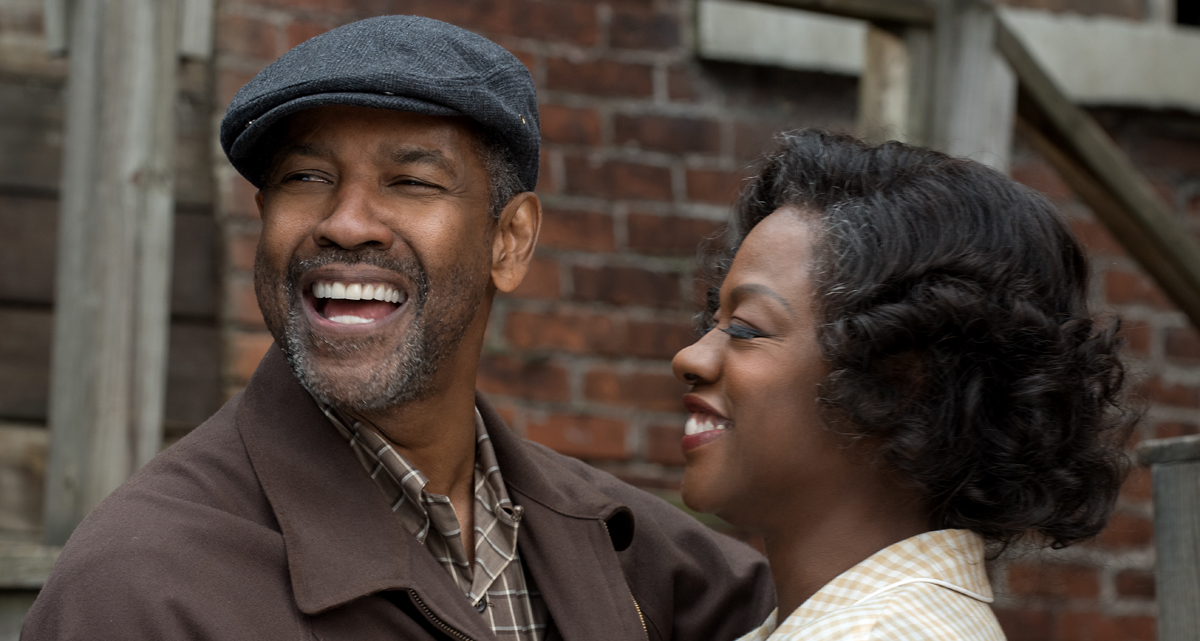
Denzel Washington and Viola Davis triumph in an overly theatrical version of August Wilson’s Fences

Director: Denzel Washington

Cast: Denzel Washington (Troy Maxson), Viola Davis (Rose Lee Maxson), Stephen McKinley Henderson (Jim Bono), Jovan Adepo (Cory Maxson), Russell Hornsby (Lyons Maxson), Mykelti Williamson (Gabriel Maxson), Saniyya Sidney (Raynell Maxson)

Pittsburgh in the 1950s. Troy Maxson (Denzel Washington) works as a garbage collector after his dreams of becoming a professional baseball player came up against the colour bar. Troy lives with his second wife Rose (Viola Davis). Troy had a troubled upbringing, turning to crime (and serving time in prison – lost time Rose quietly believes may have had more of an impact on his failed baseball career) and claims to have beaten Death in a wrestling match. Proud of his self-made status and certain, always, that he is right, Troy has difficult relations with his two sons Lyons (Russell Hornsby), a musician he believes is forever sponging money and Cory (Jovan Adepo), a teenager being scouted by an American Football team.

Fences follows a couple of years (with a coda that jumps forward five years) in the lives of these characters, and principally the impact that Troy’s mixture of pride, selfishness and bull-headed self-righteousness has on the family. It’s adapted from August Wilson’s award-winning stage-play, with a script prepared before his death by the playwright himself (earning him a posthumous Oscar nomination). Washington, Davis and most of the cast all starred in a hugely successful Broadway production of the play a few years before, and the film is a careful restaging of this production.

Perhaps a little too careful. If there is a problem with Fences, it is that it falls rather awkwardly between two stools. It’s neither particularly filmic – few of the scenes have been adjusted from the single-set locations of the play, and it’s filmed with an unobtrusive conventionality that makes it look and feel pretty similar to watching a National Theatre Live production – nor is it sufficiently theatrical. I can well imagine the power – and they are undeniably powerful – performances by the cast, principally Washington and Davis, would have blown you away live: but on screen, they can’t quite capture that same impact, in a film that feels slightly constrained by its theatricality.

Most of this comes from Washington’s determination that Wilson’s words would be the star, and all other factors in the production would service that. To that end, the film is a clear success – and you can’t argue Wilson doesn’t deserve a certain reverence, particularly as transfers of his plays to film had been almost non-existent before Fences. Wilson’s plays have rarely crossed the Atlantic, so watching this – a play I was not familiar with – I was enraptured by the working-class poetry of Wilson’s language, not to mention the empathy with which he explores his characters.

At the heart is Troy, a fascinatingly flawed human being. Played with huge charisma, which masks a deep bitterness, cynicism and self-pity, by Denzel Washington, Troy manages to be both admirable and destructive at the same time. You can’t not admire the way he has built his own life from scratch, or the “go-out-and-grab-it” balls that helps him become the first black garbage truck driver in Pittsburgh. He’s witty, warm-hearted and loves his family deeply. He’s also domineering, proud and so convinced his view is right that he sees no problem with cheating on his wife or forcing his children, often against their will, to conform with exactly his ideas of how they should live their lives.

So, he’ll tell his son that because Troy’s dreams of becoming a professional sportsman came to nothing, so will his: so there isn’t even any point trying. He loves his mentally handicapped brother Gabe (Mykelti Williamson), and rages at the Government that failed to support this wounded veteran – but he also takes Gabe’s disability payout and uses it to buy himself a house and charge Gabe rent for living in it. He’ll talk endlessly about putting duty and family first – but that fence of the title, which Rose asks constantly him to build, is a job he’ll put off time and time again in favour of holding court in his backyard. Troy’s built the family – but he’s also the main factor holding it back from moving forward any further. He’s a classic tragic figure.

Equally superb is Viola Davis as Rose, endlessly patient and caring, holding the entire family together and quietly and carefully cleaning up after Troy’s outbursts or bad temper. Davis won the Oscar, and Rose is a dream of a part a woman who closes her eyes to problems, believing she lives a perfect family life, until it is too late. When finally confronted with the selfishness of Troy’s actions, Davis’ emotional devastation – her resentment and fury at having benched her own dreams and desires to service Troy – is hugely moving, perfectly showcasing Davis’ skill to play deep emotions while simultaneously holding those emotions in.

These two actors are both extraordinary – and there are also fabulous performances from Henderson, Adepo, Williamson and Hornsby. What stops it from being an outstanding film though is that its more of a theatrical event pushed into a cinema. With the majority of the scenes taking place in Troy and Rose’s backyard, you can picture the single-set theatre production. The camera moves calmly from close-up to medium shot but does very little else. Very little has also been changed or reworked in the play – compare to Arthur Miller’s reworking of The Crucible or Peter Shaffer’s re-imagining of Amadeus for the screen. It’s a film with a slightly worthy, mission quality to it. But as a showcase for the play – and the performances – it’s very fine.

Shang-Chi and the Legend of the Ten Rings (2021)

Simu Liu deals with father-son issues in Shang-Chi and the Legend of the Ten Rings

Director: Destin Daniel Cretton

Cast: Simu Liu (Shang-Chi), Awkwafina (Katy), Meng’er Zhang (Xu Xialing), Tony Leung (Xu Wenwu), Fala Chen (Ying Li), Michelle Yeoh (Ying Nan), Ben Kingsley (Trevor Slattery), Benedict Wong (Wong), Florian Munteanu (Razor Fist)

Thousands of years ago Xu Wenwu (Tony Leung) discovered ten rings which gave him immortality and power. Sadly, he used these powers for evil – until in 1996 he falls in love with Ying Li (Fala Chen), the powerful guardian of a mystical village he has searched hundreds of years for. They have two children – but after she dies, Wenwu returns to darkness and trains his son Shang-Chi to become an assassin. Aged 14, Shang-Chi flees: ten years later, Shaun (Simu Liu) works as a hotel valet with his best friend Katy (Awkwafina), both accomplished students with no aims in life.

All that changes when his father’s heavies attack them in San Francisco, stealing the mysterious pendant Ying Li gave to her son. She also gave a pendant to his sister Xu Xialing (Meng’er Zhang) – so Shang-Chi and Katy head to Macau to find her. But Xu resents Shang-Chi for abandoning her and has trained herself into the martial super-fighter her father would never allow her to become.

Shang-Chi and the Legend of the Two Rings is a curiously mixed bag. First the good: it’s a huge amount of fun. There are some cracking gags and some of the fight scenes have to be seen to be believed. In particular, an early fight scene on a San Francisco bus is an absolute belter. A whirligig of movement, flicks, kicks and punches in, on and around a bendy-bus, using bars, doors, windows and bells to imaginative effect. Hugely exciting, its something the rest of the film struggles to live up to – although a vertigo inducing scaffolding bound fight in Macau comes close.

The film is also built around engaging characters. Shang-Chi is charmingly played by Simu Liu as a very reluctant hero, an extremely polite, decent guy with a wistful wish to just mess around and not grow up, but determined to do the right thing when pushed. He’s very well matched with Awkwafina, extremely funny but also heartfelt as his best friend, great with the one-liners but handling the serious content very well. The film dances rather neatly along a line of not-quite-deciding if these old friends are a potential romantic couple as well, which actually makes for a rather sweet dynamic.

Unfortunately, where the film is a bit weaker is in making it clear exactly what the character arc, or goal, for Shang-Chi is. While this is partly the intent of the film – he has, after all, effectively been drifting through life for a decade – the lack of a really compelling story line or a powerful sense of motivation from Shang-Chi slightly weakens the story. We never really quite get a grip on him as a character, other than knowing he’s a decent guy, out of his depth.

That’s partly because the film invests so much depth into his father, played superbly by Tony Leung making his English-language debut. Wenwu is conflicted, traumatised and motivated by a desire to bring his family together, unable to see that children’s upbringing has made them confused and vulnerable rather than strong. In every scene, I always understand what Wenwu wants and where he is going in a way I don’t with the hero – and this somehow feels the wrong-way round. Effectively, Wenwu is the protagonist of the movie, and Shang-Chi never quite steps up to take his place.

Instead, Shang-Chi has a fairly conventional “Daddy’s issues” plot line – can he overcome his fear and respect for his wicked father? I’d point out that his sister – well played by Meng’er Zhang – has exactly the same issue, but the film isn’t interested in her solving them, focusing instead on the father and son confrontation. Essentially, thematically, not a lot in Shang-Chi and the Legend of the Ten Rings is actually that new – it’s a fairly familiar coming-of-age Superhero origins story, with the loss of a parent and a clash with the surviving parent thrown into the mix.

Not that there is anything too wrong with that when it’s done well. Most of the film is done well, with jokes and fine set-pieces. Ben Kingsley enjoys himself hugely reprising his deluded actor from Iron Man 3. The film quite effectively builds in a Chinese aesthetic – large chunks of the dialogue is in Mandarin – and riffs charmingly off Chinese myths and legends and kung-fu inspirations. The Ten Rings themselves are barely explained at all, but an end-of-credits scene shows this was intentional.

Its weakest section is of course when we get to the final confrontation. This is a CGI over-loaded smack-down between two huge special effects – and carries significantly less impact than the emotional clash between father and son the film has been building towards. A braver film would have left it there without the CGI monsters – but the Marvel films have always been convinced that spectacle is what people want, and I guess they’ve not got much wrong so far.

Shang-Chi and the Legend of the Ten Rings introduces a charming hero, but by the end of the film I still wasn’t quite sure who he was or what he wanted from life. Maybe that doesn’t matter since sequels are inevitable, but there is something amiss when the villain makes such a dominant impression that he takes over the film, as Tony Leung does here. Fun, but a little too long and a little lacking in focus.

Vera Drake (2004)

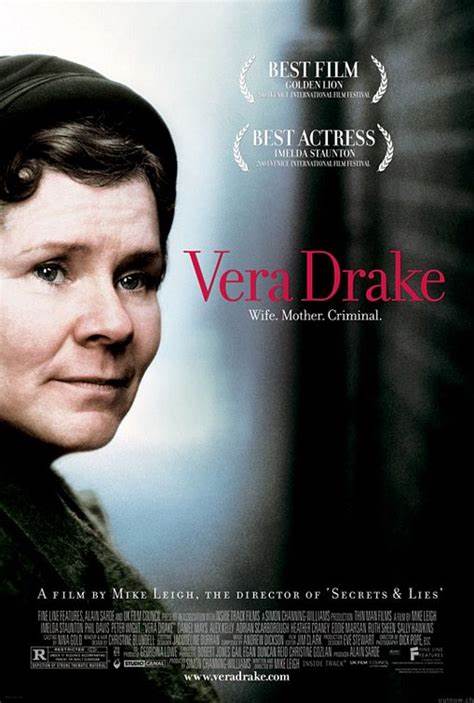
Phil Davis and Imelda Staunton are superb in Mike Leigh’s masterpiece Vera Drake

Director: Mike Leigh

Cast: Imelda Staunton (Vera Drake), Phil Davis (Stan Drake), Peter Wight (Inspector Webster), Daniel Mays (Sid Drake), Alex Kelly (Ethel Drake), Eddie Marsan (Reg), Adrian Scarborough (Frank Drake), Heather Craney (Joyce Drake), Sally Hawkins (Susan Wells), Ruth Sheen (Lily), Lesley Sharp (Jessie Barnes), Liz White (Pamela Barnes), Martin Savage (Sergeant Vickers), Helen Coker (WPC Best), Vincent Franklin (Mr Lloyd), Lesley Manville (Mrs Wells), Jim Broadbent (Judge)

If you passed her on the street, you’d be sure to say hello and she’d be sure to ask after your family – and really mean it. She has a kind word for everyone and never thinks about herself. And, as far as the law is concerned, she’s a multiple murderer. Vera Drake mixes warmth and goodness with anger at social injustice and is stuffed with perfectly observed detail and marvellous acting. It might just be Mike Leigh’s masterpiece. Certainly, few other of his films carry such an emotional wallop.

In London in 1950, Vera Drake (Imelda Staunton) spends her life helping those around her and is a devoted wife and mother. But what her husband Stan (Phil Davis) and children Sid (Daniel Mays) and Ethel (Alex Kelly) don’t know is that for decades she has been “helping young girls out” who find themselves unwillingly in the family way. All Vera wants to do is help – but with abortion illegal, her actions are a ticking timebomb, which explodes when Vera is arrested.

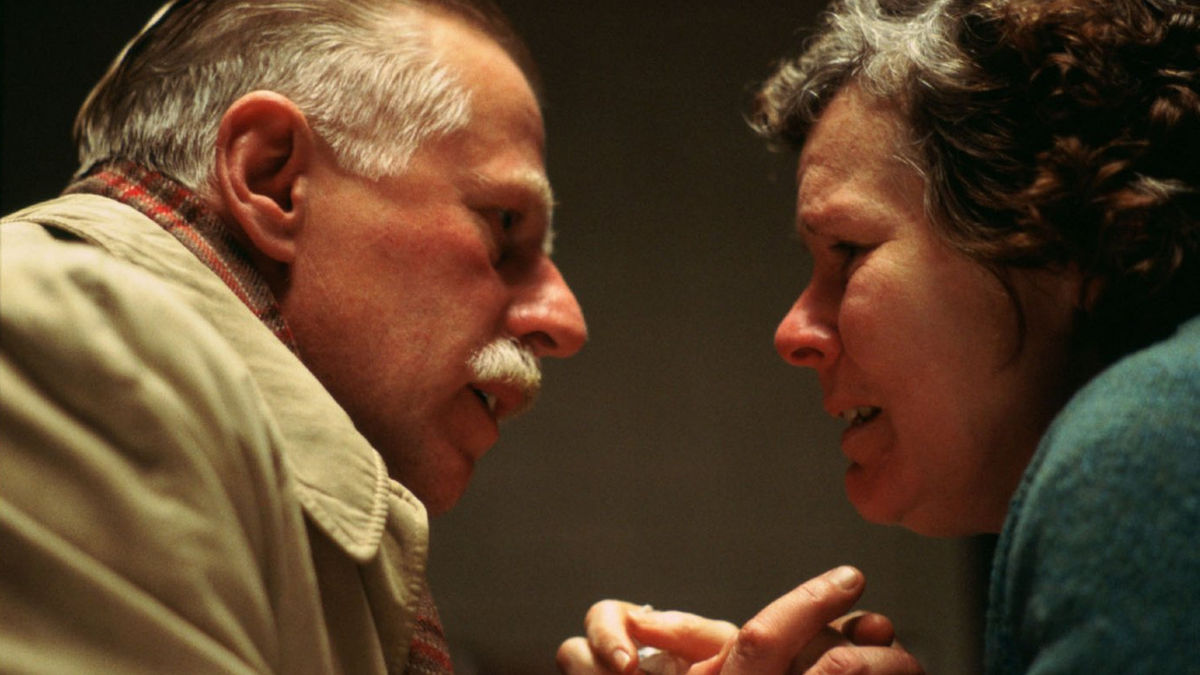
Vera Drake is a film about “the family way” – in every sense. Leigh’s unique film-making technique is familiar now: long weeks of research and intensive, improvisational rehearsals help the actors to create fully-fleshed characters who they know so well, they can predict their reactions in any circumstances. During rehearsals, none of the actors in the family knew Staunton was playing an abortionist until the actors playing the police knocked on the door mid-rehearsal – and even Staunton was completely unaware she was to be arrested. The genuine shock the actors felt feeds this intensely powerful scene – and every moment that follows.

In perhaps no other film has Leigh’s technique been more successful: every single character feels completely and utterly real. You could look in any direction and find a character with such a rich hinterland you want to know their stories. Just as intriguing films could be formed around the lives of the young women Vera helps out – Sinead Matthews ‘very young woman’ (and the boyfriend who waits outside), Tilly Vosburgh as a mother of seven with a sick husband, Rosie Cavaliero as a nervous married woman or Vinette Robinson’s scared Jamaican girl – as has been about Vera.

These women have fallen through the cracks – unable to support a family, but deprived any chance of making choices about themselves and bodies. There is a clear social gap – Sally Hawkins gives a sensitive, gentle performance as an upper-class woman, raped by her boyfriend, who obtains an abortion through psychiatric loopholes available only to the rich. No fault of hers – you can imagine she’d be horrified at how others suffer – but for the poor, their only option is Vera. It’s a huge flaw in the system – and removing Vera won’t solve the ‘problem’. It only means women will turn with more desperation to the sort of uncaring sleazy abortionists Denholm Elliott played in Alfie.

The film works because of its tenderness and the raw emotion of the performances. Leigh’s camera is a largely stationary and observatory, but that immerses us in the domestic charm of the first half as much as it does the horrifying coldness of the legal system in the second half. The Drake family home is small and cramped, reflecting their poverty, but also because it feels stuffed with love. Their children – the extremely shy Ethel and her outgoing son Sid – both reflect their intensely loving home, and her husband Stan is full of kindness, generosity and decency.

Leigh carefully demonstrates the warmth of this family. There’s a tear-inducingly sweet romance between Eddie Marsan’s Reg (a beacon of human decency) and the shy Ethel. Stan’s brother Frank (Adrian Scarborough, marvellous) and middle-class wife Joyce (Heather Craney, wonderfully torn in her feelings) struggle to conceive a child. The family laugh and joke together, every day ending in smiles and expressions of love. It’s beautifully immersing and deeply moving – and makes the wait for this world to shatter even more dreadful.

As Vera, Imelda Staunton gives an astonishing performance. A quiet, polite, open-hearted lady whose greatest pleasure is other people’s happiness. Leigh’s film follows her acts of caring around the community – cleaning neighbours houses, looking after her ill mother, inviting lonely newcomer Reg to dinner – showing she applies the same heart-felt but unshowy care to those, as she does to her abortions. It’s twenty minutes before we see one of these, and what’s striking is the well-practised calmness Vera goes about this work, carefully repeating the same reassuring instructions. She never asks for anything (the posh doctor treating Sally Hawkins’ character takes £100). Lily, who puts her in touch with those in need, has no qualms charging £2 without Vera’s knowledge.

Then the arrest comes. This sequence – and the rest that follows – is frankly extraordinary. Staunton’s face when she sees police is a heart-breaking thing of wonder – a horrified realisation that what she has dreaded for decades has finally happened and the realisation that the world as she knew it is over. Throughout she is astoundingly fragile. Barely able to speak, mute with shock – and horrified to hear one of her girls nearly died (it’s never revealed what went wrong). Her first thought is the girls health and how this will ruin her family’s celebration of Ethel’s engagement. So warm and joyful has the first half of the film been, we feel the shocking coldness as the law goes about – albeit with a regret, beautifully underplayed by Peter Wight’s sympathetic detective and Helen Coker’s gentle WPC – the black-and-white business of cataloguing wrongs.

Staunton is extraordinary: she shrinks and diminish, terrified and mortified. The reactions of her family – confused then stunned and in some cases appalled – feel immensely true: some jump forward in support, others in anger. Phil Davis’ deeply moving performance sees Stan suppress his anger under love. Mays’ Sid rages, Heather Craney’s Joyce is resentful, Scarborough’s Frank is a pillar of support, Alex Kelly’s Ethel quietly holds her mother and will not her go. The emotion of this is so affecting as it feels so real: when Reg quietly shows his support and later gently says the disastrous post-arrest Christmas is the finest he has ever had, you’ll feel tears spring to your eyes.

The relentless march of the law is chronicled perfectly by Leigh. This is a director at the top of his game, creating a low-key film that switches on a sixpence from warmth and familial love to shattering emotional impact. Staunton’s performance is breathtakingly brilliant, avoiding all histrionics and will break your heart. The entire cast is astounding. The research and filming is exquisite. The film will quietly devastate you, but also remind you that nothing is more reassuring than the fundamental goodness of people. A beautiful, moving, masterpiece of a film.

Chocolat (2000)

Juliette Binoche changes people’s lives with sweet treats in Chocolat

Director: Lasse Hallström

Cast: Juliette Binoche (Vianne Rocher), Judi Dench (Armande Voizin), Alfred Molina (Comte de Reynaud), Lena Olin (Josephine Muscat), Johnny Depp (Roux), Victoire Thivisol (Anouk Roucher), Hugh O’Conor (Pere Henri), Carrie-Anne Moss (Caroline Clairmont), Peter Stormare (Serger Muscat), Leslie Caron (Madame Audel), John Wood (Guillaume Blerot), Elisabeth Commelin (Yvette Marceau), Ron Cook (Alphonse Marceau)

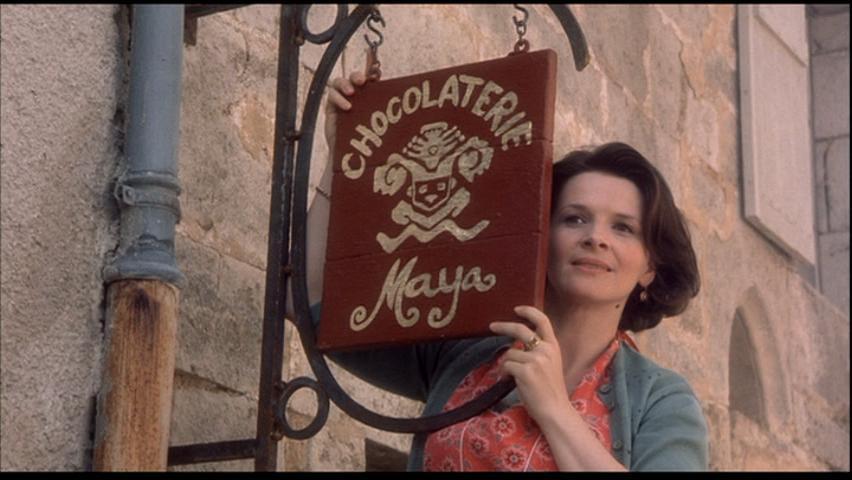
In 1950s France, expert chocolatiere Vianne Rocher (Juliette Binoche), and her six-year-old daughter Anouk (Victorire Thivisol) travel the country following the North Wind accompanied only by Anouk’s imaginary kangaroo. If that sentence alone has too much whimsy for your stomach to take, don’t invest two hours of your time in the rest of the film. Vianne and her daughter rock up in a very traditional town, run by the Comte de Reynaud (Alfred Molina), a stuffed-shirt who won’t admit his wife has left him. The austere Comte is horrified when Vianne’s sweet goodies prove super popular with the townspeople, whose lives suddenly start to change in profound and exciting ways as the quality of the chocolate helps them discover their own suppressed desires.

As if the title alone wasn’t enough of a warning, Chocolat is almost impossibly sweet, like being water-boarded by hot chocolate. Shot in a village that can only be described as chocolate box, it’s twee, sentimental and exhibits practically all the worst elements of cosy women’s fiction. With Miramax muscle behind it, this heavy-going confection briefly persuaded the world it was some sort of easy-going arthouse picture – rather than a smug fable of cliched situations and characters, coated in an unsettling number of scenes of actors eating chocolate with orgasmic grins.

It will not surprise you to hear that Vianne’s arrival in the village is the catalyst for huge change – the sort of change a trailer would surely describe as “their lives were all starters, until she showed them the importance of dessert”. Vianne is played by Juliette Binoche channelling Nigella Lawson as a yummy mummy domestic goddess. Her shop operates with the sort of business model that only exists in escapist fiction: customers spin a sort of Rorschach wheel and whatever they see in the picture decides the chocolate they will buy (no one would dare ask “Do you just have a box of milktray?”). The whimsy is nearly as thick as the molten goodies in the mixing bowl.

The village is stuffed with esteemed actors going through the motions. Judi Dench shows Maggie Smith that she can play crusty-old-women-with-hearts-of-gold as easily as her, as a grandmother who has been refused access to her grandson by his over-cautious mother. (It’s the sort of role people love to see veteran actors do, and duly landed Dench an Oscar-nomination). With some flatly written lines, Dench provides a bit of sparkle in a role she could play standing on her head. Carrie-Anne Moss is pretty good as her daughter, a repressed fusspot, who won’t let her son have fun. John Wood plays a crusty bachelor with the hots for war widow Leslie Caron. You don’t need to be a master confectioner to mix these ingredients together into the expected resolutions.

Hallström keeps events ticking gently along, in a film so soothing it seems designed to help you fall asleep. For a while Hallström was the go-to-guy for middle-brow, unimaginatively “prestige” adaptations of middle-brow, popular novels (this was his second after The Cider House Rules – and he had several to follow – each progressively a bit worse than the one before). The closest genuine emotion comes from Lena Olin’s abused wife of bullying café owner Peter Stormare. Sure, Olin’s problems are solved in about a few minutes, but the threat to her from Stormare is an intrusion of something that feels genuinely dramatic in what is otherwise a souffle. (Olin gets the film’s only memorable line, whacking her husband over the head when he attacks Vianne with the words “Who says I can’t use a skillet”, a line that’s both rather funny and bizarrely out of place.)

Naturally, the stuffy village learning needs to learn to cut lose a bit and embrace life, love and happiness. Alfred Molina’s Comte is the sort of chap who browbeats the local priest (who loves himself a bit of Elvis) into parroting the conservative sermons he’s written for him about the virtue of being miserable. Of course, the Comte is actually a decent guy (when he finds out what a bastard Stormare is, he banishes him at once), just old-fashioned and as much in need of the orgasmic power of chocolate to heal his pain as everyone else. Did Cadburys and Hersheys sponsor this film?

Just when you thought the film’s cosy warmth and supreme heritage gentleness couldn’t get more trying, it tops itself with the arrival of a punch of whimsical Romani people even more smackably smug than Vianne. Worst of all they are led by Johnny Depp at his most lazily teenage dream-boat, sporting a pony-tail and a bizarre Irish accent. He’s even more of a free-spirit than anyone else, strumming his guitar at the drop of his hat. You’ll dream of a hole in his boat taking him to the bottom of the Seine.

It all ends as you might expect: everyone discovers lovely things about themselves and each other, everyone settles down, Depp and Binoche get-it-on (and keep the relationship going as he drifts in-and-out town), the Comte becomes a top bloke and the invisible kangaroo skips away on the North Wind. Eat a box of Quality Street instead.

The Best Years of Our Lives (1946)

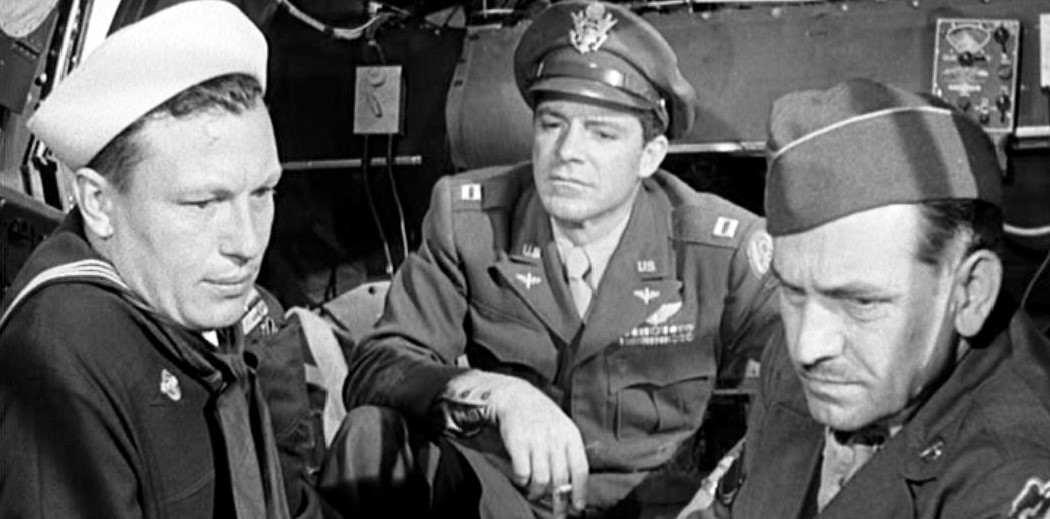
Harold Rusell, Dana Andrews and Fredric March find coming home can be as tough as war in The Best Years of Our Lives

Director: William Wyler

Cast: Myrna Loy (Milly Stephenson), Fredric March (Sgt Al Stephenson), Dana Andrews (Captain Fred Derry), Teresa Wright (Peggy Stephenson), Virginia Mayo (Marie Derry), Cathy O’Donnell (Wilma Cameron), Harold Russell (PO Homer Parish), Hoagy Carmichael (Butch Eagle), Gladys George (Hortense Derry), Roman Bohnen (Pat Derry), Ray Collins (Mr Milton)

Three men return from the Second World War. They’ve changed, but everything around them seems the same. How do they even begin to adjust when no one really understands what they’ve been through? The Best Years of Our Lives was a sensation when it was released, speaking to a whole country reeling from the shock of war. Many films focus on the gruelling experience of war, but few take on the struggle to find a place for veterans and help them reintegrate into normal life.

Our three veterans all meet at the airport, trying to home to the same small (fictional) city in the Midwest. Normally they would probably have never met: but war has given them a shared bond they will find hard to replicate back home. Al Stephenson (Fredric March) is a banker, who has developed something of a drinking problem to the surprise of his wife Milly (Myrna). Fred Derry (Dana Andrews) was a café worker who became an Air Force Captain – but finds that doesn’t interest employers back home. He also now has nothing in common with the flighty, flirty wife Marie (Virginia Mayo) he married before shipping out – and far more in common with Al’s thoughtful daughter Peggy (Teresa Wright). Homer Parish (Harold Russell) lost both his hands, replaced with mechanical hooks. Can he overcome the adjustments – and allow himself to be loved by Wilma (Cathy O’Donnell)?

What The Best Years of Our Lives explores brilliantly is how quick we are to praise heroes, but how slow we can be to offer them practical help and support. These problems aren’t just restricted to an unlucky one or two – the film goes out of its way to demonstrate the problem is universal. Our three leads are from different services, and radically different walks of life: an important businessman who served as a sergeant, a wash-out who found a purpose in the air force and an athletic sailor who returns without his hands. Rich or poor, it’s tough to find your place whoever you are.

Wyler shoots all this with a documentary realism, with extensive use of deep focus photography. It helps make this a frequently moving film. It sometimes feels like Wyler just captured real events. Flying home our heroes see “people playing golf like nothing happened”. They are all so nervous going home that both Al and Homer both suggest going for a drink rather than leave the cab they are sharing. Everyday problems about going to the office or looking for a job seem more affecting because we know they’ve come back from the war and don’t deserve knock-backs like this.

The heart of this film is Fred’s struggles to find some sort of purpose on civvie street. War offered more opportunities to him more than anyone else. He is a nobody who became a respected somebody. Now he can’t get a job in a department store. As a potential employer tells him, his CV is stuffed with irrelevant experience and his years out of the job market mean he’s fallen behind the rest. This is how a man with a chest full of medals, winds up serving ice cream and busting a gut trying to flog perfume to housewives who let their children run wild around his stand.

Dana Andrews is the heart of this film, giving a marvellous performance of great depth and sadness. Haunted by nightmares, Fred’s optimism drips away the longer he fails to find proper work. Perhaps most heart-breakingly of all, he increasingly makes himself the target of his dry wit. By the time he has surrounded to the indignity of taking back his old soda jerk job (and reporting to the spotty kid who used to be his assistant), Fred is disparagingly belittling his own wartime accomplishments.

If someone as matinee idol handsome, with a wonderful war record, as Fred can’t get ahead, what chance does anyone have? Fred’s wife (Virginia Mayo, marvellously smackable as this shallow girl) isn’t even interested in him, only the idea of him – begging him to wear his uniform (medals and all) for as long as possible so she can show him off like a new handbag. Fred is knocked back so many times, he comes to believe he deserves it. In a beautiful scene, late in the film, he walks through a field covered in old air force bombers. It’s a striking visual metaphor – one Fred is all too aware of – that he’s as much on the scrap heap as them.

The Best Years of Our Lives shows time and again how quick we are to forget. Al is hauled over the coals for offering a loan to a collateral-free GI who wants to start a farm. But Al feels a loyalty to men like this – and he recognises, unlike his superiors, there are qualities you just won’t find in a bank account. Homer is confronted at Fred’s workplace by an arrogant anti-Commie, who suggests the entire war was a waste of time, spent fighting the wrong foes. Calling Homer “a sucker” for losing his hands in the wrong war leads to a fight – and Fred losing his job for punching the guy out. Where is the sense of debt to these people?

Homer not only has to deal with disability – but also the metallic claws which get him all the wrong attention. The army trained him how to use the claws – but as Al observes, watching Homer’s awkward homecoming “couldn’t train him to put his arms round his girl”. They can solve the practical problem, but there is no support for actually coming to terms with the emotional impact.

Homer is played by real-life veteran paraplegic (and non-actor) Harold Russell, in a poignantly sincere, unstudied performance. It becomes even more heart-breaking, as his torment clearly rooted in Russell’s own experiences. When Homer demonstrates to Wilma how vulnerable he is without his hands –  if a door shuts, he’s trapped in a room, he can’t dress himself– it’s almost unbearably sad (O’Donnell is equally good in this scene). Russell’s simple, matter-of-factness is more moving than any histrionics.

The only plot that doesn’t get fully explored is Al’s implied drinking problem. He gets pissed the first night home (and his wife comments several times on his growing reliance). Everything to Al feels a little different – his kids are older, his bankwork seems stuffier. Today the film would dive more into Al’s probable survivor guilt. But Al makes a stand when others won’t to help his veterans – and March has a superb, low-key speech at a banquet in his honour where he vows to invest small loans into returning GIs. The film also gently probes – and in some ways leaves open – the ongoing problems he and Milly (warmly played by Myrna Loy) have had in their marriage, problems which Al’s absence and drinking have not helped solve.

Wyler pulls these threads together in a restrained style that largely avoids melodrama (though Hugo Freidhofer’s score is frequently overblown – Wyler apparently hated it). Instead, dilemmas are grounded in reality. Al might like Fred, but the last thing he wants is for Fred to get his daughter Peggy (Teresa Wright in a gentle, touching performance) caught up in a divorce. In a perfect example of Wyler’s restrained, documentary style, Al and Fred have a quiet man-to-man discussion, before Fred calls Peggy to see he can’t see her anymore. He does this in the back corner of the frame while the foreground shows Al listening to Homer and his uncle play the piano. It’s a perfect example of the way Wyler uses deep focus to give the film a fly-on-the-wall quality.

There is something extraordinarily modern about The Best Years of Our Lives. It feels calm and un-histrionic – and of course many veterans still struggle today. The camera feels observational and unobtrusive and the characters respond to situations in a very natural way. It’s also helped by the wonderfully natural acting. It all comes together in a film that is important without feeling like it’s trying to be important. An observant, sensitive exploration of the experience of veterans (made by a veteran), that never feels false and looks at our world with affection but realism.

Hannah and Her Sisters (1986)

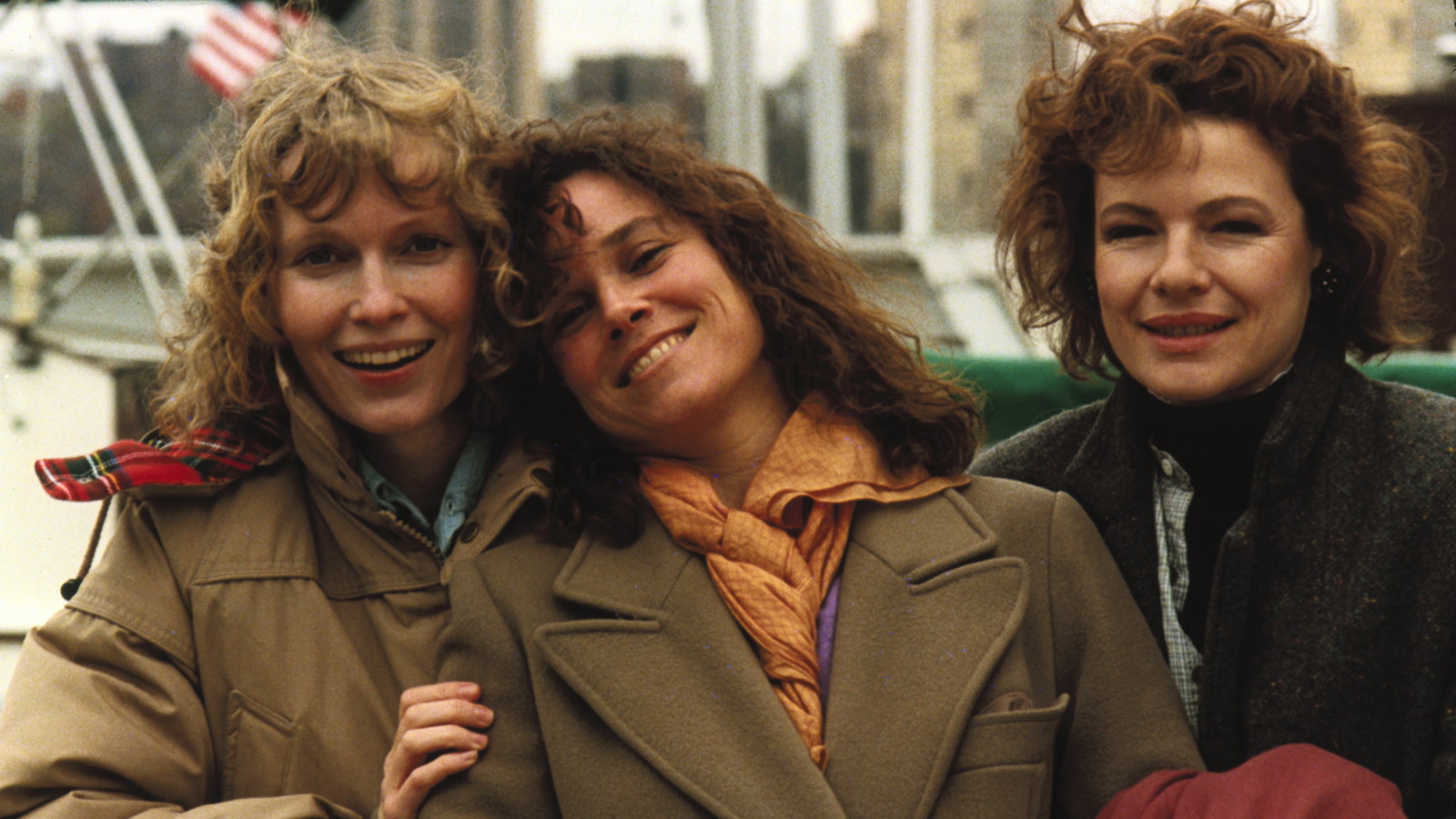
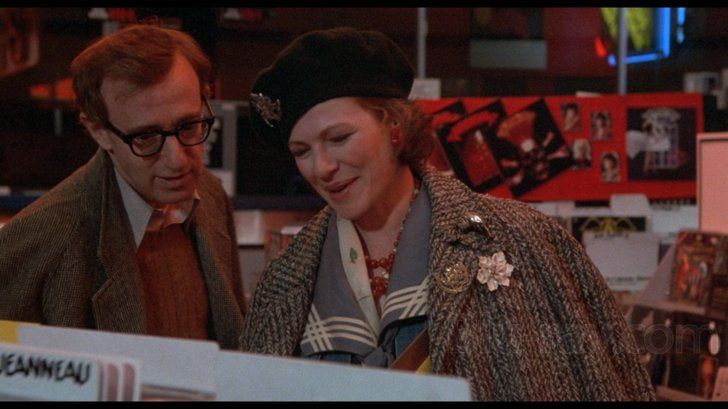
Mia Farrow, Barbara Hershey and Dianne Wiest are Hannah and Her Sisters one of Allen’s finest films

Director: Woody Allen

Cast: Woody Allen (Mickey), Michael Caine (Elliot), Mia Farrow (Hannah), Carrie Fisher (April), Barbara Hershey (Lee), Lloyd Nolan (Evan), Maureen O’Sullivan (Norman), Daniel Stern (Dusty), Max von Sydow (Frederick), Dianne Wiest (Holly), Sam Waterston (David)

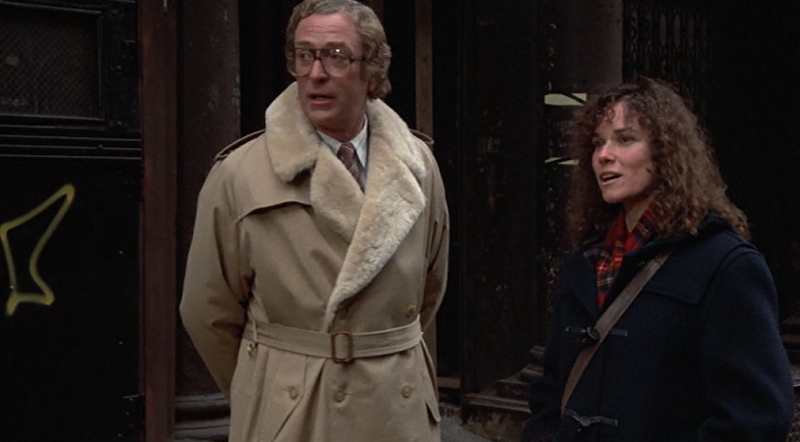
Hannah (Mia Farrow) is divorced from Mickey (Woody Allen) and happily married to Elliot (Michael Caine). Eliot is in love with Lee (Barbara Hershey). Lee is Hannah’s sister. Holly (Dianne Wiest) is considering dating Mickey. Holly is also Hannah’s sister. This whirligig of relationships is the heart of Hannah and Her Sisters, one of Woody Allen’s finest and certainly most humane films. Witty and heartfelt, it’s one of his sharpest scripts, crammed with acute observation and fine gags and is directed with a coolly introspective eye.

Allen splits the film into multiple sections, each opening (like the chapter of a novel) with a quote from the scene we are about to watch. Music plucked from Allen’s beloved classics (most often, and fittingly considering its romance theme, Bewitched, Bothered and Bewildered) frequently bridge scenes. Internal monologues is used often to allow us to explore the inner lives of the characters (the actors do a marvellous job reacting on screen to this internal thought process we are hearing).

The film uses a host of inspirations carefully mixed into Allen’s Manhattan Metropolitan middle-class milieu. The entire film has an autumnal Chekovian feel to it, with a rich sense of lives continuing ‘off stage’ as much as on. While the title obviously echoes Three Sisters, it’s study of romantic and intellectual entanglements overlaps with Chekov, as does the film’s love of wordplay. There are also, of course, echoes of Bergman (with gags) both in the film’s episodic structure but also its framing device of three Thanksgivings dinners, reflecting Bergman’s triumphant Fanny and Alexander.

The most effective thing about the film, in addition to its wit, is the surprising warmth it feels for the characters. Not always in an Allen film does one find the sympathy and empathy so widely spread – there is usually at least one character who is the target for the writer’s scorn. But here, no major character is presented as either the butt of snide humour or sneers. Even von Sydow’s pretentious artist is capable of searing emotional pain, and its hard not to sympathise with him as clients enquire whether his art will fit with their home décor. Each scene carefully balances the perspectives of multiple characters to allow us to relate to what each of them is going through. It’s possibly the largest cast of fully-rounded characters in an Allen film, and his most generous film.

It’s a film that avoids judgement over its characters, despite the frequently terrible and morally troubling things they do. It’s a film that understands the heart is an uncontrollable but resilient muscle, which doesn’t always guide us to the right or the easy things. Of course today, with Allen, you think it’s probably not a surprise he had sympathy with a group of people engaged in relationships that often involve profoundly betraying others. But at least her understands the irresistible urge people have to continue doing things they shouldn’t.

It’s hard not to overlook that the film’s least explored character (despite her multi-layered performance) is Mia Farrow’s Hannah. Poor Hannah, the still, moral centre of the film, is betrayed by both her husband and her sister (to their mutual guilt). Allen leaves her in ignorance – even though she knows something is wrong – and while Allen acknowledges what Elliot and Lee is doing is wrong, he mitigates things by making clear Hannah’s decency and generosity makes her overwhelming. While we see the impact a sudden distance from her husband has on Hannah (in a great shot she talks to him while he is off camera in another room, making her look like she is talking to a wall), Hannah is one of the few characters we don’t get the insight of an internal monologue for, and that feels like an easier way for Allen to maintain our sympathies for others.

The person whose internal monologue we hear the most is her conflicted husband Elliot. Hannah and Her Sisters may be unique in that it has two characters who are clear Allen substitutes. While Allen plays one, Caine is the husband (who looks alarmingly like a prediction of future developments in the Allen-Farrow relationship). Caine is superb, not least because he turns lines you can hear could be delivered with an Allenesque twitchiness, into ones crammed with utter emotional genuineness.

For all that he is a cheat, Elliot is strangely guileless and rather sweet, plagued with guilt and also giddy as a schoolboy, begging Lee to read an ee cummings poem that carries special meaning for him. Caine makes Elliot a genuine human character, a flawed man trying to avoid hurting people (but causing pain everywhere). If Branagh in Celebrity (with his distracting Allen imitation) showed how much of a slave to Allenesque delivery you can become, Caine shows how heartfelt simplicity and underplaying can bring out deeper emotion from Allen’s dialogue. Allen also rather brilliantly directs this abashed dance of attraction: from Caine’s internal monologue telling him to play it cool, moments before he kisses Lee, to the camera framing Frederick’s sketches of a naked Lee directly in Elliot’s line of sight while he tries to think of literally anything else.

Caine also matches superbly with Barbara Hershey, excellent as a woman who feels trapped in her life and drawn to Elliot despite herself. Lee’s current relationship is with Frederick, wittily played in a near parody of Bergmanesque brooding by Max von Sydow, who takes a late lurch into real vulnerability, a pretentious artist who is part-lover-part-tutor and is disconnected from the real world, Lee is virtually his only link left with it. Frederick is clearly a tutor and surrogate parent, as much as a lover to Lee – and that attraction to a figure who can take responsibility in her life is clearly something she’s attracted in Elliot. The slow, guilt-ridden coming together of Elliot and Lee – and the slow deflation of this fling – is the emotional heart of the movie.

The film’s other two arcs provide more of the gags. Woody Allen gifts himself some of his finest comic moments as Hannah’s hypochondriac ex-husband (the second Allen stand-in) undergoing an existential crisis after he discovers he is in fact not dying of a terminal disease. Dianne Wiest is similarly excellent (and also Oscar winning) as Hannah’s unsuccessful sister Holly, a would-be actress too insecure to find success. Wiest is not only funny, but also vulnerable and affecting, as she tries to find her place in the world. In many ways Wiest plays a third version of Allen here, as she becomes a neurotic writer channelling her real life into writing (to the consternation of her sister).

Changing reality into scripts is the only thing awkward about Hannah and Her Sisters today. Hannah and her extended family (and many children) are a thinly veiled portrait of Farrow’s own family (Hannah’s mother is even played by Farrow’s real life mother Maureen O’Sullivan). Like Allen and Farrow, Mickey and Hannah needed to adopt and foster children. And of course Eliot’s affair with Hannah’s sister eerily mirrors Allen’s own affair with Farrow’s adopted daughter, and the film’s sympathy for Elliot sometimes seems like an unsettling excusing of Allen’s future conduct. That’s not even mentioning one of the film’s earliest jokes is Allen’s character complaining about the cutting of a child molestation skit from his Saturday Night Live-ish show (“what’s the problem half the country’s doing it” quips Allen, a joke that doesn’t work today for so many reasons).

But put that aside because, whatever your opinion of Allen, Hannah and Her Sisters is one of his finest films. It’s expertly shot and directed with a real unobtrusive ease (Allen’s innate understanding of this Manhattan world contrasts sharply with how at sea he is in his European movies). The acting is spot on. As well as being very funny, the moral conundrums the film explores are sympathetic and witty, as are the flawed human beings behind them. Possibly his best film.

Minari (2020)

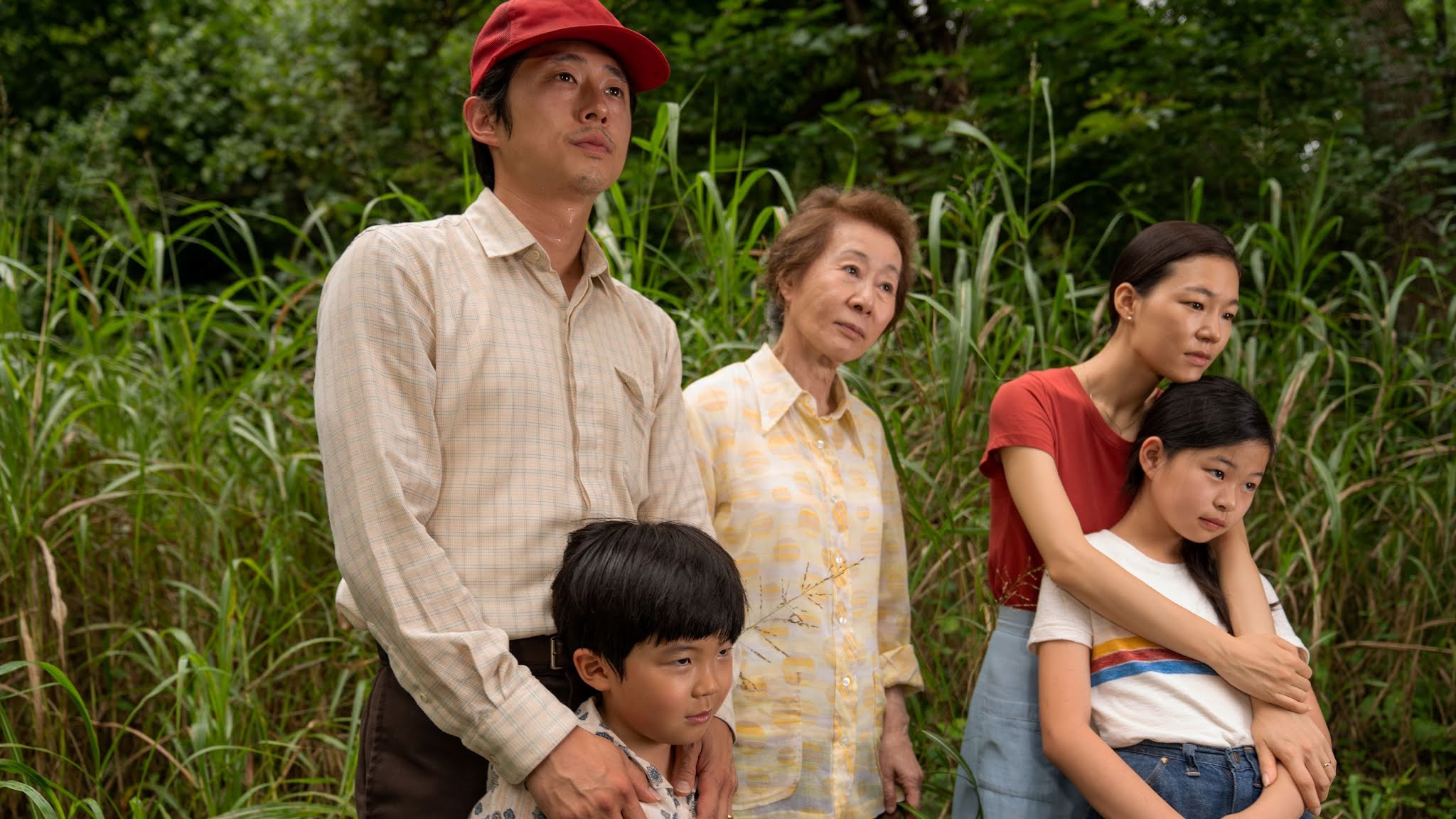
A family struggle against adversity in Lee Isaac Chung’s autobiographical and heartwarming Minari

Director: Lee Isaac Chung

Cast: Steven Yeun (Jacob Yi), Han Ye-ri (Monica Yi), Alan Kim (David Yi), Noel Kate Cho (Anne Yi), Youn Yuh-jung (Soon-ja), Will Patton (Paul)

Lee Isaac Chung grew up in rural Arkansas during the Reaganite 80s, when everyone felt they could live the American dream. His young life – and the experiences of his parents – from the basis of Minari, an emotionally involving, tender and quietly hopeful film about planting a future. The film is named after an obstinate Korean plant which takes root and grows where it can – a struggle the Yi family can sympathise with.

Jacob (Steven Yeun) dreams of building a family legacy, a Korean food farm that will find an eager market among Korean-Americans. His wife Monica (Han Ye-ri) is less than keen, looking with dread at the leaky trailer house her husband has invested their savings in. Nevertheless, Jacob sets about planting with back-breaking dedication, but very little practical knowledge – all while he and Monica continuing working as chicken sorters during the day. Her concerns are not helped by the heart condition of their son David (Alan Kim) – and that they are now over an hour from a hospital. Not even the arrival of Monica’s mother Soon-ja (Youn Yuh-jung) to provide childcare can help reduce the growing tensions in this family.

Although Minari is mostly in Korean, this is a very American tale. Jacob is a man very much trying to live the American dream, building a new business (and life) for his family. Even more American than that, he’s doing it out in the American west, working to conquer land that has beaten several farmers before him. Minari perfectly fuses together a respect for Korean heritage and culture with an inclusive view of the American ideal: that being rewarded for your hard work is something anyone can achieve.

As such Minari repackages many familiar story elements – childhood memories, a bond between an eccentric elderly relative and a child, near biblical struggles against the elements to build a farm, marital problems and fish-out-of-water set-ups – into something that feels fresh and highly engaging. Chung’s involving, carefully intimate direction is crucial to this, his connection with the material helping make it both funny and at times heart-breakingly tragic, while never allowing it to slip from being fundamentally hopeful.

Jacob’s desire to build the farm is both impressively ambitious and strangely irresponsible. Jacob wants to demonstrate his family should have faith in itself, taking immense pride in ‘Korean smart thinking’ as he finds home-made solutions to farming problems. He works with such dedication – frequently to the point of physical exhaustion – that its impossible not to admire him. But as he carries out his improvised fixes – from a well he digs that runs dry to working out how close together he can plant his produce – everything carries an edge-of-your-seat tension, as we are all too aware he’s making it up as he goes. Yeun is excellent as a man afraid of failure, driving himself to do everything he can to escape that fate, but often too blunt and proud to ask for help.

Chung isn’t afraid to demonstrate the damage this can have on a marriage. The couple frequently argue. So much that they seem to have forgotten the romantic moments in Korea that bought them together – hearing ‘their song’ playing, Jacob can’t even remember having heard it. Monica resents a farm she never wanted but feels forced to support. Han Ye-ri is wonderful, beautifully expressing a range of suppressed emotions, her face speaking volumes about her shock on first seeing their new home. The couple move between arguments and silent non-communication as the pressure of trying to make this business work – combined with supporting a family– drives a wedge between them.

Much of this is seen from their perspective of their children, in particular son David (an effectively sweet performance from Alan Kim). Fitting for a film about a director’s memories of his childhood, David is really the main character, with his perceptions and interactions with the other characters driving the narrative. He’s at an age where he is just beginning to understand some of the problems in his life, but still has the joy and sulky stroppiness of a young child.

What becomes the heart of the film is the relationship between David and his newly arrived Grandma, who he ends up sharing a room. David’s hostility to this woman – he’s furious that she’s not like an American, cookie-baking Grandma, instead being too Korean and (according to David) smelly – slowly changes, as she treats him with an honesty he doesn’t get from his tense parents. Any friendship formed over one tricking the other into drinking piss is sure to last!

The Grandma is played, in a scene-stealing performance scooping a truckful of prizes, by veteran Korean actress Youn Yuh-jung. In many ways it’s a simple part – the older family member who says outrageous things, but has a heart of gold – but Youn plays it with a quirk but also an immense sincerity that becomes genuinely moving. Unlike his parents, she encourages David to do things (like running) rather than do as little to preserve his heart. She helps him build his confidence – and finds she has more in common with this bluntly-spoken child than anyone else. In turn she gives him the attention his stressed parents are unable to. It’s not an original role, but it’s quite beautifully judged.

What is (sadly) surprising is that this Korean family finds themselves warmly welcomed into this Christian Arkansas community. I was waiting – as I am sure other viewers have – for a moment of racism or for Jacob to be exploited. Instead, the Yi family are given nothing but support from banks and the church in Arkansas (the only person who does screw the family is an unseen Korean businessman who cancels a crucial order). The family makes friends with local eccentric and Korean war veteran Paul (a jittery but charming performance by Will Patton) who, when he says he’s honoured to be invited to their home, really means it.

This warmth, of people maybe arguing and feuding but coming together and supporting each other, is a big part of what makes this film hopeful. The characters may all make huge mistakes – but they do for the very best of reasons. This is not a depressing film – which considering how much goes wrong, is a surprise. It’s a film where hard work is noble and huge disaster strikes it draws people together not apart. The minari itself is a part of that message of hope: it will grow down by the river, forge a fine crop, and survive all disasters: like family, it’s something we can always rely on.

Cimarron (1931)

Richard Dix strikes a pose as Irene Dunne looks on in the appalling Cimarron

Director: Wesley Ruggles

Cast: Richard Dix (Yancey Cravat), Irene Dunne (Sabra Cavat), Estelle Tayler (Dixie Lee), Nance O’Neil (Felica), William Collier Jnr (The Kid), Roscoe Ates (Jesse Rickey), Stanley Fields (Lon Yountis), Robert McWade (Louis Hafner), Edna May Oliver (Tracy Wyatt), Judith Barrett (Donna Cravat), Eugene Jackson (Isaiah)

The only reason Cimarron doesn’t regularly top polls of the worst Best Picture winners ever made, must surely be because so few people have seen it since 1931. Believe me you are not missing anything. A ponderous, pompous, puff of a movie, Cimarron might have tricked people into thinking it looked radical, daring and inventive at the time – but it’s fooling no-one today.

Over 40 years in Oklahoma, from the Land Rush of 1889, the town of Osage grows from tents and mud hats to a thriving modern 1920s city. Part of the story of the town are the lives of two of its founders, Yancey Cravat (Richard Dix) and his wife Sabra (Irene Dunne). Yancey is a noble, man’s man with wanderlust, who rides into Osage, guns down the bullies and campaigns for the rights of the poor and down-trodden via his newspaper. Sabra picks up the pieces when he wanders off (often years or decades at a time) raising the children, running the newspaper and eventually becoming a congresswoman.

It should be a sprawling epic, but Cimarron is a dull fart of a film that runs out of any narrative drive after its opening hour (which largely focuses on 1889-1893) and collapses into a series of disconnected, uninteresting scenes, very dully filmed, that sees our characters obtain increasing amounts of old age make-up while shedding what little personalities they had to begin with.

Ruggles shoots the film with such tepid flatness, you might as well be in the theatre. Most of the scenes sees the camera set in a static position (to capture the sound – the sound mix on the film, by the way, is appalling making most of the dialogue extremely hard to hear) with scenes taking place in medium shot allowing us to see the sets and follow the actors walking in and out. You might as well be sitting in the theatre – although, if you were, it would be harder to leave.

It’s not helped by the generally terrible acting, pretty much across the board. Irene Dunne just about emerges with some dignity by underplaying and even showcases a surprising amount of feminine independence – even if her character is an insufferable prig, demonstrating flashes of racism as and when the plot requires. But you can at least see why she continued to have a career – just as you can see why this was Richard Dix’s highest profile sound film. Dix doesn’t know whether to go for a declamatory theatrical style or to telegraph every emotion with poses, silent movie style. So, he does both. The result is a ludicrous collection of poses and grandstanding, that his wild eyes, dyed hair and middle-distance starring stance doesn’t help with. It’s a dreadful performance.

It’s fitting it sits in a film as bad as this one. The only moment of invention the film manages is its opening sequence, restaging the Oklahoma Land Rush. This set piece uses an army of carts and horses to restage the entire land grab from start to finish, the camera capturing these waves of prospectors charging into Oklahoma to grab the best bits. Nothing else in the film beats it, not even the gun fight that occurs part way through. Instead, the film degenerates into long, vague scenes, usually centring around a self-important speech of self-righteous bluster from Dix.

Nothing looks more dated in the film than its depiction of anyone not white and Christian. Now I will cut the film a little bit of slack here. It’s clearly trying to make a plea for greater toleration. Dix’s character passionately campaigns for the rights of Native Americans (or “the red men” as he puts it). He treats his black servant Isaiah with love and affection. He defends the Jewish prospectors. This film is trying to push an agenda more advanced than its time. It gets points for that.

It loses them all though for how these characters are presented. The Jewish characters are smiling, wizened Shylocks. The Native Americans are exotics, forever “How”-ing and happily accepting their status as second-class citizens. Worst of all, Yancey’s servant Isaiah is one of the most shockingly racist caricatures put on film. You think Gone with the Wind is bad? Watch this. Isaiah is stupid, muddle-headed, speaks in a clumsy patois, ridiculously fawning, delighted to be a servant and treats the white men like Gods. The film encourages us to chuckle at him, while patting his head with a smiling paternalism. All the tragic death scenes in the world can’t wash the bad taste out of the mouth. Back then it was fairly forward-thinking – today its jaw dropping.

The main problem is the film is a dull, drifting, dawdling mess that goes nowhere and asks us to root for two characters who are both, in their ways, self-important prigs, convinced they are right about everything. It builds to nothing at all, other than mirroring the sort of relentless march of time you’ll experience while watching it. It’s patronising, uninteresting and outstays its welcome. I can’t even work out why it’s called Cimarron (the name of Yancey and Sabra’s son). Is it because it’s a film asking us to think about the future? It can’t be because Cimarron is important – in ten minutes he ages from about 12 to 40. But then the fact the title refers to an empty non-character is somehow fitting for a film that really should be put down at the earliest opportunity.

Mrs Miniver (1942)

Greer Garson and Walter Pidgeon hold the homefront together in Mrs Miniver

Director: William Wyler

Cast: Greer Garson (Kay Miniver), Walter Pidgeon (Clem Miniver), Teresa Wright (Carol Beldon), Dame May Whitty (Lady Beldon), Reginald Owen (Foley), Henry Travers (Mr Ballard), Richard Ney (Vin Miniver), Henry Wilcoxon (Vicar), Christopher Severen (Toby Miniver), Brenda Forbes (Gladys), Clare Sanders (Judy Miniver), Helmut Dantine (German pilot)

Mrs Miniver was made when history was in flux: conceived at the height of the Blitz, shot and then parts re-shot either side of Pearl Harbor and released in 1942 after America had entered the war. A patriotic flag-waver, designed to build American sympathy for a Britain standing alone, it was a huge hit, won Best Picture and had a profound impact on Allied morale (Churchill called it more help to the War effort than a flotilla of battleships). It still carries an inspiring, cockle-warming charm and a hefty emotional punch, made even more affecting by the stoic determination (rather than hand-wringing emotion) every setback is met with.

In a small village just outside London, lives the Miniver family. Kay Miniver (Greer Garson) cares for her family in a large country house. She has three children with architect husband Clem (Walter Pidgeon). Their life is contented – and then war breaks out. Oldest son Vin (Richard Ney) joins the RAF – after falling in love with Carol (Teresa Wright), niece of the local grandee Lady Beldon (May Whitty). Clem joins the ships travelling to Dunkirk. Kay holds the domestic fort, protecting her family from air raids, facing down a German pilot and helping shepherd her small village through the trauma of air raids to something approaching a normal life.

Mrs Miniver is all about that stoic, British stiff-upper-lip attitude, of doing your duty uncomplainingly and quietly. As they said “Britain Can Take It”, and the film is a celebration of the nobility of perseverance. It’s designed to inspire and it does: it’s melodrama played with a low-key reserve, which is genuine and heart-felt. There is a reason Goebbels (and he would know) called this a “refined powerful propagandistic [tool]” – it makes you completely emphasise and relate to its characters. We share their moments of joy just as much as the profound tragedy of their losses.

And there is a lot of loss in Mrs Miniver – way more than you might expect, with the film’s final act throwing at least two painful gut punches you don’t expect. Tragedy touches all of us and war carries away the innocent and undeserving with as much eagerness as it does the militaristic. There seems to be no reason or justice to it – but instead the difficult acceptance of fate and the necessity of being part of a struggle larger than ourselves.

In a powerful speech that concludes the film, the vicar stands in the bombed-out ruins of his local church. It mirrors a scene near the beginning, as he regretfully but with quiet reserve announces the outbreak of war. Now he gives a rousing speech that this is war of all the people, against the tyranny that threatens us, where the dead our mourned but not forgotten. It’s a powerful speech (brilliantly delivered by Henry Wilcoxon), of the painful necessity of duty at the time of war that still stirs (it was distributed nationally by Roosevelt’s insistence).

The stoic, good-natured, supportive community, who protect each other and desperately try to maintain hope and nobility when death could strike at any time, contrasts firmly with the only German we see. A wounded pilot who gains entrance to Kay’s home at gunpoint. Kay calmly disarms him, feeds him and tends to his wounds (after all he is the same age as Vin) – he responds with a vicious speech of violent hate, bragging at the deaths the Luftwaffe have inflicted on Europe. It’s the only time her reserve really breaks, as she slaps him – and even for a moment seems to consider dispatching him. Her delayed shock is clear later when she casually smokes one of Clem’s cigarettes – a mixture of restrained shock, relief, horror and confusion across her face. It’s the closest direct danger comes – and the closest she comes to openly expressing rage and anger at the hand the world has dealt her.

The film revolves around Greer Garson’s (Oscar-winning) performance. Though it’s easy to see Kay as a sort of saint, that’s underestimating the huge burden Garson had: she effectively embodies an entire Homefront of scared people doing their duty. It’s a performance of stiff-upper-lipped warmth, her desperation, fear and protective nature clear in every beat. You can see it in her mix of distracted fear and pride when Vin announces he has joined the RAF, and the front of “everything will be alright” she puts on for the children during an air raid that tears her house apart.

Of course, that disaster is met with a “I always wanted to redo that dining room” fortitude by her husband, Clem. Pidgeon and Garson forged a partnership that would run through several movies here, and spark off each other wonderfully. Pidgeon gives a solid grounding to Garson, while she helps find warmth and humanity in an otherwise distant actor (Pidgeon lacks Peck’s – who he resembles in many ways – ability to convey warmth under reserved dignity). Pidgeon’s stirring sense of duty excels, not least during the Dunkirk sequence.

That sequence is very well executed, a small series of boats gradually growing in size until they fill the Thames. When duty calls, people respond with gusto and pride. Alongside this, normal life continues as much as possible: not even the war will stop the flower show. This remains a heart-warming centre piece – pinched for an episode of Downton Abbey – as Lady Beldon overrules the sycophantic judges and gives the prize to the deserving winner, local station manager Mr Ballard (Henry Travers, sweet but receiving a generous Oscar nomination).

The acting is pretty much spot on. Teresa Wright (Oscar winning) is endearingly genuine and vibrant as Vin’s wife to be (and Lady Beldon’s niece) Carol. May Whitty, channelling those grande-old-dames-with-hearts-of-gold, gets every beat right, from comedy to tragedy, Wilcoxon is marvellous. It’s all so heartfelt and earnest you can overlook the fact most of the (largely American and Canadian) cast go for cod-Brit accents or cliched working class vowels – just as you do the fact that neither the towns or countryside in the film looks particularly British (an opening sequence in London looks plain wrong in every sense).

And you can’t fail be stirred by its celebration of quiet determination and unshowy self-sacrifice. You can certainly argue that it’s not a work of art, like other films nominated that year for Best Picture. But, none of them would have (or continue to have) the emotional impact this has. Sure, it feeds off an American nostalgia for English-country-village life – but it does so with a noble cause. Well-acted, very well directed, it still inspires and continues to provoke pride today.

Cavalcade (1933)

The Marryots and the Bridges face a world in motion in Cavalcade

Director: Frank Lloyd

Cast: Diana Wynyard (Jane Marryot), Clive Brook (Robert Marryot), Una O’Connor (Ellen Bridges), Herbert Mundin (Albert Bridges), Beryl Mercer (Cook), Irene Brown (Margaret Harris), Frank Lawton (Joe Marryot), Ursula Jean (Fanny Bridges), Margaret Lindsay (Edith Harris), John Warburton (Edward Marryot)

Before Upstairs, Downstairs and Downton Abbeythere was Cavalcade. Winning the Best Picture of 1933 (beating out more highly regarded films today – and King Kong wasn’t even nominated!), Cavalcade shows a romantic weakness for dramas about the struggles of the British Upper classes and their servants is nothing new. Based on Noel Coward’s play, it’s a grand, soapy drama that’s been done better since (not least by those two shows) but makes an entertaining genre template.

Carefully ticking off historical events between 1899 and 1933, the film follows the Marryot family – father Robert (Clive Brook), mother Jane (Diana Wynyard) and their two sons Joe (Frank Lawton) and John (Edward Marryot) – and their servants turned pub owners the Bridges – Albert (Herbert Mundin), Ellen (Una O’Connor) and their daughter Fanny (Ursula Jean). From the Boer War via the death of Queen Victoria, the first flight across the Channel, two characters taking an unfortunate honeymoon trip on the Titanic to the First World War, we see how events affect both families (invariably with tragic consequences) as Britain slowly changes.

You can look at Cavalcade and find it hilariously old-fashioned. The accents are so sharply clipped they could be cut-glass, while the working-class characters speak with “evenin’ guv’ner” ‘umbleness. In preparation for the film, the Studio flew a camera team over to film the London production (then hired several of the actors to repeat their roles, including O’Connor) and the film sometimes feels like a slightly stuffy stage production bought to the screen.

This is most noticeable in Diana Wynyard’s performance. She clearly has no idea to act for the camera – and Lloyd didn’t correct her. ‘Asides’ see her frequently turn towards the camera and stare into the middle distance. For the innumerable times she is called onto to weep, she throws herself to the floor dramatically. With her declamatory style, she’s constantly playing to an imaginary back row. It sticks out particularly badly when watching the far more experienced Brook relatively underplay each scene without physically telegraphing every emotion. Surprisingly Wynyard landed an Oscar nomination – but soon left Hollywood and returned to the stage.

The rest of the cast are split between the two approaches, all while balancing the stiff-upper-lipped demands of the script, with its “I must go the war/Don’t go darling/I must they won’t start without me” exchanges (to paraphrase Eddie Izzard). The younger actors – John Warburton and Margaret Lindsay as the young couple booking a berth on the Titanic – offer performances so restrained they feel strait-jacketed. The working-class characters cut lose a little. Una O’Connor is a little broad, but quite engaging while Herbert Mundin gives possibly the best performance as a landlord too fond of his own product. Ursula Jeans makes a fine romantic lead as their daughter, delivering decent renditions of several songs in particular “Twentieth Century Blues”.

Those blues are nominally what the film is about, as the world leaves the Marryots behind. It’s bookended by two New Years –in 1899 and 1933 – during which time the world has changed completely. War has shattered the cosy Victorian status quo, leaving millions dead and the Marryots struggle to recognise this new England. Cavalcade only lightly engages with themes of societal upheaval – probably because it is simultaneously wallowing in so much nostalgia, that Coward’s more sombre ideas would bring the party crashing down.

Instead, Cavalcade luxuriates in nostalgia, loving the idea of a hierarchical, old-fashioned, English world where everyone knows their place (even after leaving their employ, the Bridges treat the Marryots with deference, while the Marryots look at them with a paternal indulgence). But its soapy stories – predictable as they seem to us now – are actually rather effective, and the flashes of genuine emotion (best of all, when Brook’s Robert says farewell to his son as he heads out on “one last patrol” in the last days before the Armistice) are surprisingly effective.

Lloyd’s direction of the larger set-pieces also show an impressive flair. The domestic scenes may seem stagey, but when the camera films a crowd it feels ambitious and dynamic. A huge pier scene with hundreds of men heading to the Boer War is handled very well. Bustling street scenes feel real. Wynyard’s finest moment comes in a crowd scene as she tries to merge into a crowd celebrating the Armistice, while caught up in a personal grief. A montage covering 1918 to 1933 is effective in showing the march of change.

Best of all is a wonderful montage communicating the horrific cost of the First World War. Lloyd presents the war as a never ending stream of soldiers marching into a tunnel. Initially the backdrop around is an English town, with smoking chimneys. This morphs into No Man’s Land, with the chimney smoke becoming explosions. Super-imposed over this are images of soldiers in close-up, at first marching in smiles, then dying at an accelerated rate. Nostalgia turns into Danteish circle of hell, innumerable bodies piling up. It stands out as a moment of expressionist inspiration (and must have had a strong impact on the audience).

It’s the finest moment in Cavalcade, your enjoyment of which will be directly related to how much patience you have with Downton Abbey. Find that an enjoyable diversion (as I do), and you will certainly find something to enjoy in Cavalcade. If Downton’s rose-tinted view of Edwardian social structures puts you on edge, you will struggle. I was pleasantly surprised by how charmed I was by it. And that World War One sequence is worth the price of admission alone.