Category: Family drama

Hannah and Her Sisters (1986)

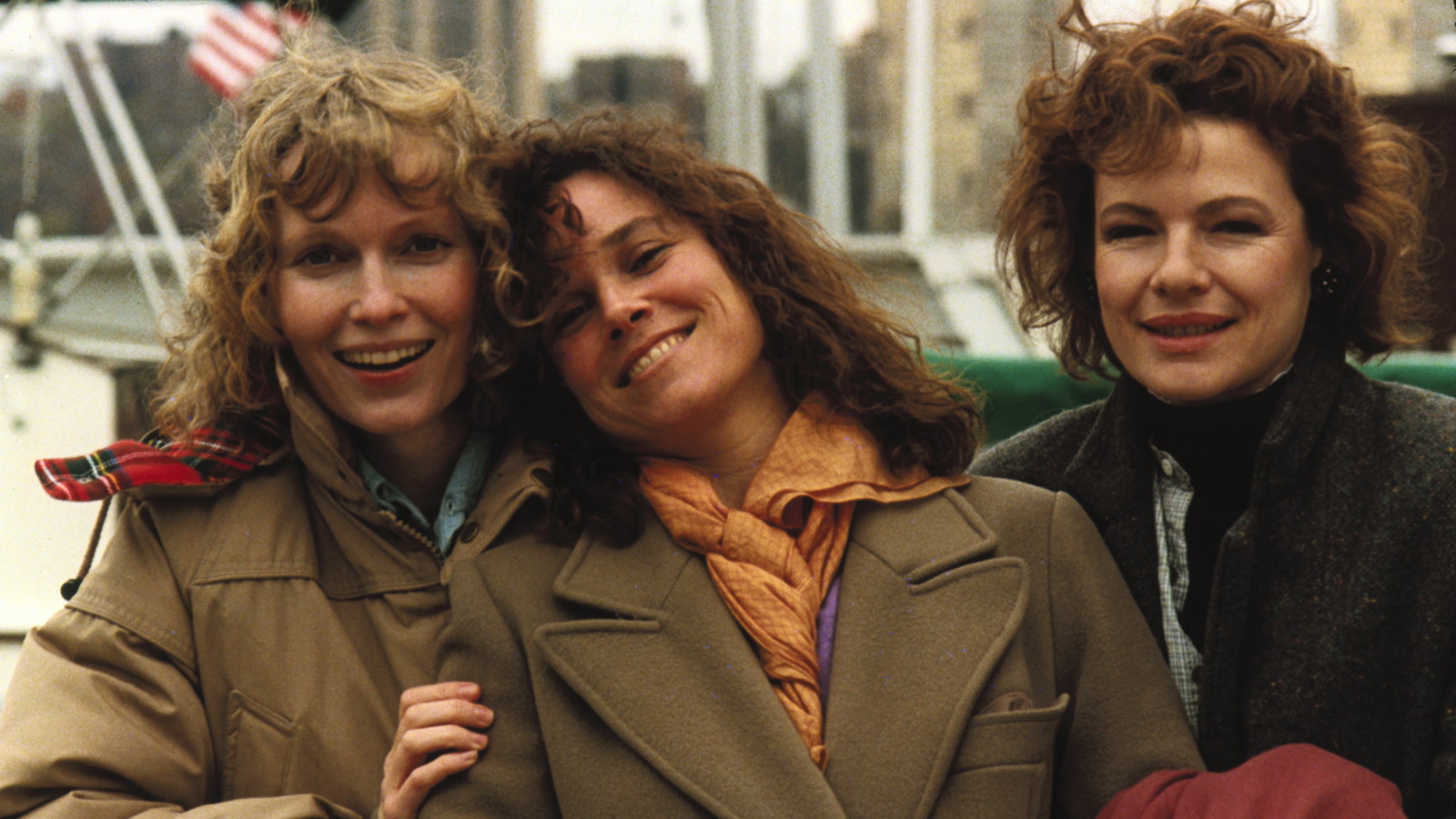
Mia Farrow, Barbara Hershey and Dianne Wiest are Hannah and Her Sisters one of Allen’s finest films

Director: Woody Allen

Cast: Woody Allen (Mickey), Michael Caine (Elliot), Mia Farrow (Hannah), Carrie Fisher (April), Barbara Hershey (Lee), Lloyd Nolan (Evan), Maureen O’Sullivan (Norman), Daniel Stern (Dusty), Max von Sydow (Frederick), Dianne Wiest (Holly), Sam Waterston (David)

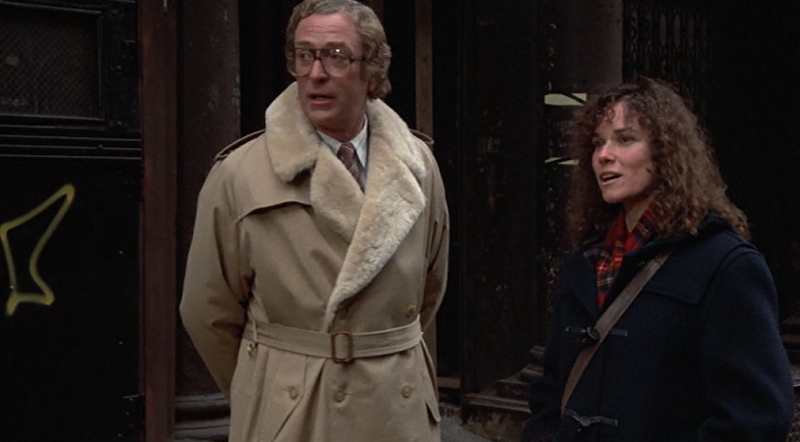
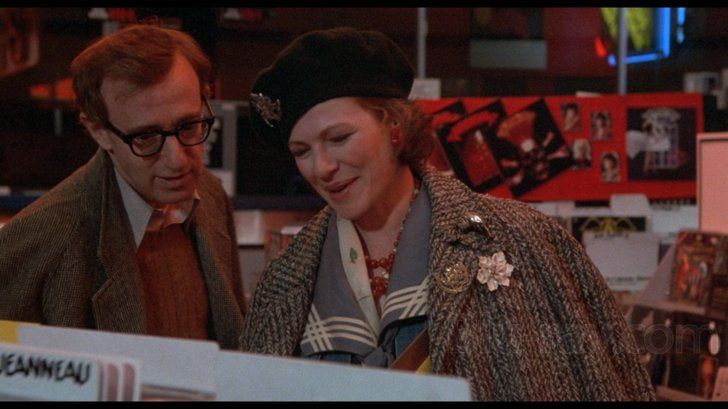
Hannah (Mia Farrow) is divorced from Mickey (Woody Allen) and happily married to Elliot (Michael Caine). Eliot is in love with Lee (Barbara Hershey). Lee is Hannah’s sister. Holly (Dianne Wiest) is considering dating Mickey. Holly is also Hannah’s sister. This whirligig of relationships is the heart of Hannah and Her Sisters, one of Woody Allen’s finest and certainly most humane films. Witty and heartfelt, it’s one of his sharpest scripts, crammed with acute observation and fine gags and is directed with a coolly introspective eye.

Allen splits the film into multiple sections, each opening (like the chapter of a novel) with a quote from the scene we are about to watch. Music plucked from Allen’s beloved classics (most often, and fittingly considering its romance theme, Bewitched, Bothered and Bewildered) frequently bridge scenes. Internal monologues is used often to allow us to explore the inner lives of the characters (the actors do a marvellous job reacting on screen to this internal thought process we are hearing).

The film uses a host of inspirations carefully mixed into Allen’s Manhattan Metropolitan middle-class milieu. The entire film has an autumnal Chekovian feel to it, with a rich sense of lives continuing ‘off stage’ as much as on. While the title obviously echoes Three Sisters, it’s study of romantic and intellectual entanglements overlaps with Chekov, as does the film’s love of wordplay. There are also, of course, echoes of Bergman (with gags) both in the film’s episodic structure but also its framing device of three Thanksgivings dinners, reflecting Bergman’s triumphant Fanny and Alexander.

The most effective thing about the film, in addition to its wit, is the surprising warmth it feels for the characters. Not always in an Allen film does one find the sympathy and empathy so widely spread – there is usually at least one character who is the target for the writer’s scorn. But here, no major character is presented as either the butt of snide humour or sneers. Even von Sydow’s pretentious artist is capable of searing emotional pain, and its hard not to sympathise with him as clients enquire whether his art will fit with their home décor. Each scene carefully balances the perspectives of multiple characters to allow us to relate to what each of them is going through. It’s possibly the largest cast of fully-rounded characters in an Allen film, and his most generous film.

It’s a film that avoids judgement over its characters, despite the frequently terrible and morally troubling things they do. It’s a film that understands the heart is an uncontrollable but resilient muscle, which doesn’t always guide us to the right or the easy things. Of course today, with Allen, you think it’s probably not a surprise he had sympathy with a group of people engaged in relationships that often involve profoundly betraying others. But at least her understands the irresistible urge people have to continue doing things they shouldn’t.

It’s hard not to overlook that the film’s least explored character (despite her multi-layered performance) is Mia Farrow’s Hannah. Poor Hannah, the still, moral centre of the film, is betrayed by both her husband and her sister (to their mutual guilt). Allen leaves her in ignorance – even though she knows something is wrong – and while Allen acknowledges what Elliot and Lee is doing is wrong, he mitigates things by making clear Hannah’s decency and generosity makes her overwhelming. While we see the impact a sudden distance from her husband has on Hannah (in a great shot she talks to him while he is off camera in another room, making her look like she is talking to a wall), Hannah is one of the few characters we don’t get the insight of an internal monologue for, and that feels like an easier way for Allen to maintain our sympathies for others.

The person whose internal monologue we hear the most is her conflicted husband Elliot. Hannah and Her Sisters may be unique in that it has two characters who are clear Allen substitutes. While Allen plays one, Caine is the husband (who looks alarmingly like a prediction of future developments in the Allen-Farrow relationship). Caine is superb, not least because he turns lines you can hear could be delivered with an Allenesque twitchiness, into ones crammed with utter emotional genuineness.

For all that he is a cheat, Elliot is strangely guileless and rather sweet, plagued with guilt and also giddy as a schoolboy, begging Lee to read an ee cummings poem that carries special meaning for him. Caine makes Elliot a genuine human character, a flawed man trying to avoid hurting people (but causing pain everywhere). If Branagh in Celebrity (with his distracting Allen imitation) showed how much of a slave to Allenesque delivery you can become, Caine shows how heartfelt simplicity and underplaying can bring out deeper emotion from Allen’s dialogue. Allen also rather brilliantly directs this abashed dance of attraction: from Caine’s internal monologue telling him to play it cool, moments before he kisses Lee, to the camera framing Frederick’s sketches of a naked Lee directly in Elliot’s line of sight while he tries to think of literally anything else.

Caine also matches superbly with Barbara Hershey, excellent as a woman who feels trapped in her life and drawn to Elliot despite herself. Lee’s current relationship is with Frederick, wittily played in a near parody of Bergmanesque brooding by Max von Sydow, who takes a late lurch into real vulnerability, a pretentious artist who is part-lover-part-tutor and is disconnected from the real world, Lee is virtually his only link left with it. Frederick is clearly a tutor and surrogate parent, as much as a lover to Lee – and that attraction to a figure who can take responsibility in her life is clearly something she’s attracted in Elliot. The slow, guilt-ridden coming together of Elliot and Lee – and the slow deflation of this fling – is the emotional heart of the movie.

The film’s other two arcs provide more of the gags. Woody Allen gifts himself some of his finest comic moments as Hannah’s hypochondriac ex-husband (the second Allen stand-in) undergoing an existential crisis after he discovers he is in fact not dying of a terminal disease. Dianne Wiest is similarly excellent (and also Oscar winning) as Hannah’s unsuccessful sister Holly, a would-be actress too insecure to find success. Wiest is not only funny, but also vulnerable and affecting, as she tries to find her place in the world. In many ways Wiest plays a third version of Allen here, as she becomes a neurotic writer channelling her real life into writing (to the consternation of her sister).

Changing reality into scripts is the only thing awkward about Hannah and Her Sisters today. Hannah and her extended family (and many children) are a thinly veiled portrait of Farrow’s own family (Hannah’s mother is even played by Farrow’s real life mother Maureen O’Sullivan). Like Allen and Farrow, Mickey and Hannah needed to adopt and foster children. And of course Eliot’s affair with Hannah’s sister eerily mirrors Allen’s own affair with Farrow’s adopted daughter, and the film’s sympathy for Elliot sometimes seems like an unsettling excusing of Allen’s future conduct. That’s not even mentioning one of the film’s earliest jokes is Allen’s character complaining about the cutting of a child molestation skit from his Saturday Night Live-ish show (“what’s the problem half the country’s doing it” quips Allen, a joke that doesn’t work today for so many reasons).

But put that aside because, whatever your opinion of Allen, Hannah and Her Sisters is one of his finest films. It’s expertly shot and directed with a real unobtrusive ease (Allen’s innate understanding of this Manhattan world contrasts sharply with how at sea he is in his European movies). The acting is spot on. As well as being very funny, the moral conundrums the film explores are sympathetic and witty, as are the flawed human beings behind them. Possibly his best film.

Minari (2020)

A family struggle against adversity in Lee Isaac Chung’s autobiographical and heartwarming Minari

Director: Lee Isaac Chung

Cast: Steven Yeun (Jacob Yi), Han Ye-ri (Monica Yi), Alan Kim (David Yi), Noel Kate Cho (Anne Yi), Youn Yuh-jung (Soon-ja), Will Patton (Paul)

Lee Isaac Chung grew up in rural Arkansas during the Reaganite 80s, when everyone felt they could live the American dream. His young life – and the experiences of his parents – from the basis of Minari, an emotionally involving, tender and quietly hopeful film about planting a future. The film is named after an obstinate Korean plant which takes root and grows where it can – a struggle the Yi family can sympathise with.

Jacob (Steven Yeun) dreams of building a family legacy, a Korean food farm that will find an eager market among Korean-Americans. His wife Monica (Han Ye-ri) is less than keen, looking with dread at the leaky trailer house her husband has invested their savings in. Nevertheless, Jacob sets about planting with back-breaking dedication, but very little practical knowledge – all while he and Monica continuing working as chicken sorters during the day. Her concerns are not helped by the heart condition of their son David (Alan Kim) – and that they are now over an hour from a hospital. Not even the arrival of Monica’s mother Soon-ja (Youn Yuh-jung) to provide childcare can help reduce the growing tensions in this family.

Although Minari is mostly in Korean, this is a very American tale. Jacob is a man very much trying to live the American dream, building a new business (and life) for his family. Even more American than that, he’s doing it out in the American west, working to conquer land that has beaten several farmers before him. Minari perfectly fuses together a respect for Korean heritage and culture with an inclusive view of the American ideal: that being rewarded for your hard work is something anyone can achieve.

As such Minari repackages many familiar story elements – childhood memories, a bond between an eccentric elderly relative and a child, near biblical struggles against the elements to build a farm, marital problems and fish-out-of-water set-ups – into something that feels fresh and highly engaging. Chung’s involving, carefully intimate direction is crucial to this, his connection with the material helping make it both funny and at times heart-breakingly tragic, while never allowing it to slip from being fundamentally hopeful.

Jacob’s desire to build the farm is both impressively ambitious and strangely irresponsible. Jacob wants to demonstrate his family should have faith in itself, taking immense pride in ‘Korean smart thinking’ as he finds home-made solutions to farming problems. He works with such dedication – frequently to the point of physical exhaustion – that its impossible not to admire him. But as he carries out his improvised fixes – from a well he digs that runs dry to working out how close together he can plant his produce – everything carries an edge-of-your-seat tension, as we are all too aware he’s making it up as he goes. Yeun is excellent as a man afraid of failure, driving himself to do everything he can to escape that fate, but often too blunt and proud to ask for help.

Chung isn’t afraid to demonstrate the damage this can have on a marriage. The couple frequently argue. So much that they seem to have forgotten the romantic moments in Korea that bought them together – hearing ‘their song’ playing, Jacob can’t even remember having heard it. Monica resents a farm she never wanted but feels forced to support. Han Ye-ri is wonderful, beautifully expressing a range of suppressed emotions, her face speaking volumes about her shock on first seeing their new home. The couple move between arguments and silent non-communication as the pressure of trying to make this business work – combined with supporting a family– drives a wedge between them.

Much of this is seen from their perspective of their children, in particular son David (an effectively sweet performance from Alan Kim). Fitting for a film about a director’s memories of his childhood, David is really the main character, with his perceptions and interactions with the other characters driving the narrative. He’s at an age where he is just beginning to understand some of the problems in his life, but still has the joy and sulky stroppiness of a young child.

What becomes the heart of the film is the relationship between David and his newly arrived Grandma, who he ends up sharing a room. David’s hostility to this woman – he’s furious that she’s not like an American, cookie-baking Grandma, instead being too Korean and (according to David) smelly – slowly changes, as she treats him with an honesty he doesn’t get from his tense parents. Any friendship formed over one tricking the other into drinking piss is sure to last!

The Grandma is played, in a scene-stealing performance scooping a truckful of prizes, by veteran Korean actress Youn Yuh-jung. In many ways it’s a simple part – the older family member who says outrageous things, but has a heart of gold – but Youn plays it with a quirk but also an immense sincerity that becomes genuinely moving. Unlike his parents, she encourages David to do things (like running) rather than do as little to preserve his heart. She helps him build his confidence – and finds she has more in common with this bluntly-spoken child than anyone else. In turn she gives him the attention his stressed parents are unable to. It’s not an original role, but it’s quite beautifully judged.

What is (sadly) surprising is that this Korean family finds themselves warmly welcomed into this Christian Arkansas community. I was waiting – as I am sure other viewers have – for a moment of racism or for Jacob to be exploited. Instead, the Yi family are given nothing but support from banks and the church in Arkansas (the only person who does screw the family is an unseen Korean businessman who cancels a crucial order). The family makes friends with local eccentric and Korean war veteran Paul (a jittery but charming performance by Will Patton) who, when he says he’s honoured to be invited to their home, really means it.

This warmth, of people maybe arguing and feuding but coming together and supporting each other, is a big part of what makes this film hopeful. The characters may all make huge mistakes – but they do for the very best of reasons. This is not a depressing film – which considering how much goes wrong, is a surprise. It’s a film where hard work is noble and huge disaster strikes it draws people together not apart. The minari itself is a part of that message of hope: it will grow down by the river, forge a fine crop, and survive all disasters: like family, it’s something we can always rely on.

Cimarron (1931)

Richard Dix strikes a pose as Irene Dunne looks on in the appalling Cimarron

Director: Wesley Ruggles

Cast: Richard Dix (Yancey Cravat), Irene Dunne (Sabra Cavat), Estelle Tayler (Dixie Lee), Nance O’Neil (Felica), William Collier Jnr (The Kid), Roscoe Ates (Jesse Rickey), Stanley Fields (Lon Yountis), Robert McWade (Louis Hafner), Edna May Oliver (Tracy Wyatt), Judith Barrett (Donna Cravat), Eugene Jackson (Isaiah)

The only reason Cimarron doesn’t regularly top polls of the worst Best Picture winners ever made, must surely be because so few people have seen it since 1931. Believe me you are not missing anything. A ponderous, pompous, puff of a movie, Cimarron might have tricked people into thinking it looked radical, daring and inventive at the time – but it’s fooling no-one today.

Over 40 years in Oklahoma, from the Land Rush of 1889, the town of Osage grows from tents and mud hats to a thriving modern 1920s city. Part of the story of the town are the lives of two of its founders, Yancey Cravat (Richard Dix) and his wife Sabra (Irene Dunne). Yancey is a noble, man’s man with wanderlust, who rides into Osage, guns down the bullies and campaigns for the rights of the poor and down-trodden via his newspaper. Sabra picks up the pieces when he wanders off (often years or decades at a time) raising the children, running the newspaper and eventually becoming a congresswoman.

It should be a sprawling epic, but Cimarron is a dull fart of a film that runs out of any narrative drive after its opening hour (which largely focuses on 1889-1893) and collapses into a series of disconnected, uninteresting scenes, very dully filmed, that sees our characters obtain increasing amounts of old age make-up while shedding what little personalities they had to begin with.

Ruggles shoots the film with such tepid flatness, you might as well be in the theatre. Most of the scenes sees the camera set in a static position (to capture the sound – the sound mix on the film, by the way, is appalling making most of the dialogue extremely hard to hear) with scenes taking place in medium shot allowing us to see the sets and follow the actors walking in and out. You might as well be sitting in the theatre – although, if you were, it would be harder to leave.

It’s not helped by the generally terrible acting, pretty much across the board. Irene Dunne just about emerges with some dignity by underplaying and even showcases a surprising amount of feminine independence – even if her character is an insufferable prig, demonstrating flashes of racism as and when the plot requires. But you can at least see why she continued to have a career – just as you can see why this was Richard Dix’s highest profile sound film. Dix doesn’t know whether to go for a declamatory theatrical style or to telegraph every emotion with poses, silent movie style. So, he does both. The result is a ludicrous collection of poses and grandstanding, that his wild eyes, dyed hair and middle-distance starring stance doesn’t help with. It’s a dreadful performance.

It’s fitting it sits in a film as bad as this one. The only moment of invention the film manages is its opening sequence, restaging the Oklahoma Land Rush. This set piece uses an army of carts and horses to restage the entire land grab from start to finish, the camera capturing these waves of prospectors charging into Oklahoma to grab the best bits. Nothing else in the film beats it, not even the gun fight that occurs part way through. Instead, the film degenerates into long, vague scenes, usually centring around a self-important speech of self-righteous bluster from Dix.

Nothing looks more dated in the film than its depiction of anyone not white and Christian. Now I will cut the film a little bit of slack here. It’s clearly trying to make a plea for greater toleration. Dix’s character passionately campaigns for the rights of Native Americans (or “the red men” as he puts it). He treats his black servant Isaiah with love and affection. He defends the Jewish prospectors. This film is trying to push an agenda more advanced than its time. It gets points for that.

It loses them all though for how these characters are presented. The Jewish characters are smiling, wizened Shylocks. The Native Americans are exotics, forever “How”-ing and happily accepting their status as second-class citizens. Worst of all, Yancey’s servant Isaiah is one of the most shockingly racist caricatures put on film. You think Gone with the Wind is bad? Watch this. Isaiah is stupid, muddle-headed, speaks in a clumsy patois, ridiculously fawning, delighted to be a servant and treats the white men like Gods. The film encourages us to chuckle at him, while patting his head with a smiling paternalism. All the tragic death scenes in the world can’t wash the bad taste out of the mouth. Back then it was fairly forward-thinking – today its jaw dropping.

The main problem is the film is a dull, drifting, dawdling mess that goes nowhere and asks us to root for two characters who are both, in their ways, self-important prigs, convinced they are right about everything. It builds to nothing at all, other than mirroring the sort of relentless march of time you’ll experience while watching it. It’s patronising, uninteresting and outstays its welcome. I can’t even work out why it’s called Cimarron (the name of Yancey and Sabra’s son). Is it because it’s a film asking us to think about the future? It can’t be because Cimarron is important – in ten minutes he ages from about 12 to 40. But then the fact the title refers to an empty non-character is somehow fitting for a film that really should be put down at the earliest opportunity.

Mrs Miniver (1942)

Greer Garson and Walter Pidgeon hold the homefront together in Mrs Miniver

Director: William Wyler

Cast: Greer Garson (Kay Miniver), Walter Pidgeon (Clem Miniver), Teresa Wright (Carol Beldon), Dame May Whitty (Lady Beldon), Reginald Owen (Foley), Henry Travers (Mr Ballard), Richard Ney (Vin Miniver), Henry Wilcoxon (Vicar), Christopher Severen (Toby Miniver), Brenda Forbes (Gladys), Clare Sanders (Judy Miniver), Helmut Dantine (German pilot)

Mrs Miniver was made when history was in flux: conceived at the height of the Blitz, shot and then parts re-shot either side of Pearl Harbor and released in 1942 after America had entered the war. A patriotic flag-waver, designed to build American sympathy for a Britain standing alone, it was a huge hit, won Best Picture and had a profound impact on Allied morale (Churchill called it more help to the War effort than a flotilla of battleships). It still carries an inspiring, cockle-warming charm and a hefty emotional punch, made even more affecting by the stoic determination (rather than hand-wringing emotion) every setback is met with.

In a small village just outside London, lives the Miniver family. Kay Miniver (Greer Garson) cares for her family in a large country house. She has three children with architect husband Clem (Walter Pidgeon). Their life is contented – and then war breaks out. Oldest son Vin (Richard Ney) joins the RAF – after falling in love with Carol (Teresa Wright), niece of the local grandee Lady Beldon (May Whitty). Clem joins the ships travelling to Dunkirk. Kay holds the domestic fort, protecting her family from air raids, facing down a German pilot and helping shepherd her small village through the trauma of air raids to something approaching a normal life.

Mrs Miniver is all about that stoic, British stiff-upper-lip attitude, of doing your duty uncomplainingly and quietly. As they said “Britain Can Take It”, and the film is a celebration of the nobility of perseverance. It’s designed to inspire and it does: it’s melodrama played with a low-key reserve, which is genuine and heart-felt. There is a reason Goebbels (and he would know) called this a “refined powerful propagandistic [tool]” – it makes you completely emphasise and relate to its characters. We share their moments of joy just as much as the profound tragedy of their losses.

And there is a lot of loss in Mrs Miniver – way more than you might expect, with the film’s final act throwing at least two painful gut punches you don’t expect. Tragedy touches all of us and war carries away the innocent and undeserving with as much eagerness as it does the militaristic. There seems to be no reason or justice to it – but instead the difficult acceptance of fate and the necessity of being part of a struggle larger than ourselves.

In a powerful speech that concludes the film, the vicar stands in the bombed-out ruins of his local church. It mirrors a scene near the beginning, as he regretfully but with quiet reserve announces the outbreak of war. Now he gives a rousing speech that this is war of all the people, against the tyranny that threatens us, where the dead our mourned but not forgotten. It’s a powerful speech (brilliantly delivered by Henry Wilcoxon), of the painful necessity of duty at the time of war that still stirs (it was distributed nationally by Roosevelt’s insistence).

The stoic, good-natured, supportive community, who protect each other and desperately try to maintain hope and nobility when death could strike at any time, contrasts firmly with the only German we see. A wounded pilot who gains entrance to Kay’s home at gunpoint. Kay calmly disarms him, feeds him and tends to his wounds (after all he is the same age as Vin) – he responds with a vicious speech of violent hate, bragging at the deaths the Luftwaffe have inflicted on Europe. It’s the only time her reserve really breaks, as she slaps him – and even for a moment seems to consider dispatching him. Her delayed shock is clear later when she casually smokes one of Clem’s cigarettes – a mixture of restrained shock, relief, horror and confusion across her face. It’s the closest direct danger comes – and the closest she comes to openly expressing rage and anger at the hand the world has dealt her.

The film revolves around Greer Garson’s (Oscar-winning) performance. Though it’s easy to see Kay as a sort of saint, that’s underestimating the huge burden Garson had: she effectively embodies an entire Homefront of scared people doing their duty. It’s a performance of stiff-upper-lipped warmth, her desperation, fear and protective nature clear in every beat. You can see it in her mix of distracted fear and pride when Vin announces he has joined the RAF, and the front of “everything will be alright” she puts on for the children during an air raid that tears her house apart.

Of course, that disaster is met with a “I always wanted to redo that dining room” fortitude by her husband, Clem. Pidgeon and Garson forged a partnership that would run through several movies here, and spark off each other wonderfully. Pidgeon gives a solid grounding to Garson, while she helps find warmth and humanity in an otherwise distant actor (Pidgeon lacks Peck’s – who he resembles in many ways – ability to convey warmth under reserved dignity). Pidgeon’s stirring sense of duty excels, not least during the Dunkirk sequence.

That sequence is very well executed, a small series of boats gradually growing in size until they fill the Thames. When duty calls, people respond with gusto and pride. Alongside this, normal life continues as much as possible: not even the war will stop the flower show. This remains a heart-warming centre piece – pinched for an episode of Downton Abbey – as Lady Beldon overrules the sycophantic judges and gives the prize to the deserving winner, local station manager Mr Ballard (Henry Travers, sweet but receiving a generous Oscar nomination).

The acting is pretty much spot on. Teresa Wright (Oscar winning) is endearingly genuine and vibrant as Vin’s wife to be (and Lady Beldon’s niece) Carol. May Whitty, channelling those grande-old-dames-with-hearts-of-gold, gets every beat right, from comedy to tragedy, Wilcoxon is marvellous. It’s all so heartfelt and earnest you can overlook the fact most of the (largely American and Canadian) cast go for cod-Brit accents or cliched working class vowels – just as you do the fact that neither the towns or countryside in the film looks particularly British (an opening sequence in London looks plain wrong in every sense).

And you can’t fail be stirred by its celebration of quiet determination and unshowy self-sacrifice. You can certainly argue that it’s not a work of art, like other films nominated that year for Best Picture. But, none of them would have (or continue to have) the emotional impact this has. Sure, it feeds off an American nostalgia for English-country-village life – but it does so with a noble cause. Well-acted, very well directed, it still inspires and continues to provoke pride today.

Cavalcade (1933)

The Marryots and the Bridges face a world in motion in Cavalcade

Director: Frank Lloyd

Cast: Diana Wynyard (Jane Marryot), Clive Brook (Robert Marryot), Una O’Connor (Ellen Bridges), Herbert Mundin (Albert Bridges), Beryl Mercer (Cook), Irene Brown (Margaret Harris), Frank Lawton (Joe Marryot), Ursula Jean (Fanny Bridges), Margaret Lindsay (Edith Harris), John Warburton (Edward Marryot)

Before Upstairs, Downstairs and Downton Abbeythere was Cavalcade. Winning the Best Picture of 1933 (beating out more highly regarded films today – and King Kong wasn’t even nominated!), Cavalcade shows a romantic weakness for dramas about the struggles of the British Upper classes and their servants is nothing new. Based on Noel Coward’s play, it’s a grand, soapy drama that’s been done better since (not least by those two shows) but makes an entertaining genre template.

Carefully ticking off historical events between 1899 and 1933, the film follows the Marryot family – father Robert (Clive Brook), mother Jane (Diana Wynyard) and their two sons Joe (Frank Lawton) and John (Edward Marryot) – and their servants turned pub owners the Bridges – Albert (Herbert Mundin), Ellen (Una O’Connor) and their daughter Fanny (Ursula Jean). From the Boer War via the death of Queen Victoria, the first flight across the Channel, two characters taking an unfortunate honeymoon trip on the Titanic to the First World War, we see how events affect both families (invariably with tragic consequences) as Britain slowly changes.

You can look at Cavalcade and find it hilariously old-fashioned. The accents are so sharply clipped they could be cut-glass, while the working-class characters speak with “evenin’ guv’ner” ‘umbleness. In preparation for the film, the Studio flew a camera team over to film the London production (then hired several of the actors to repeat their roles, including O’Connor) and the film sometimes feels like a slightly stuffy stage production bought to the screen.

This is most noticeable in Diana Wynyard’s performance. She clearly has no idea to act for the camera – and Lloyd didn’t correct her. ‘Asides’ see her frequently turn towards the camera and stare into the middle distance. For the innumerable times she is called onto to weep, she throws herself to the floor dramatically. With her declamatory style, she’s constantly playing to an imaginary back row. It sticks out particularly badly when watching the far more experienced Brook relatively underplay each scene without physically telegraphing every emotion. Surprisingly Wynyard landed an Oscar nomination – but soon left Hollywood and returned to the stage.

The rest of the cast are split between the two approaches, all while balancing the stiff-upper-lipped demands of the script, with its “I must go the war/Don’t go darling/I must they won’t start without me” exchanges (to paraphrase Eddie Izzard). The younger actors – John Warburton and Margaret Lindsay as the young couple booking a berth on the Titanic – offer performances so restrained they feel strait-jacketed. The working-class characters cut lose a little. Una O’Connor is a little broad, but quite engaging while Herbert Mundin gives possibly the best performance as a landlord too fond of his own product. Ursula Jeans makes a fine romantic lead as their daughter, delivering decent renditions of several songs in particular “Twentieth Century Blues”.

Those blues are nominally what the film is about, as the world leaves the Marryots behind. It’s bookended by two New Years –in 1899 and 1933 – during which time the world has changed completely. War has shattered the cosy Victorian status quo, leaving millions dead and the Marryots struggle to recognise this new England. Cavalcade only lightly engages with themes of societal upheaval – probably because it is simultaneously wallowing in so much nostalgia, that Coward’s more sombre ideas would bring the party crashing down.

Instead, Cavalcade luxuriates in nostalgia, loving the idea of a hierarchical, old-fashioned, English world where everyone knows their place (even after leaving their employ, the Bridges treat the Marryots with deference, while the Marryots look at them with a paternal indulgence). But its soapy stories – predictable as they seem to us now – are actually rather effective, and the flashes of genuine emotion (best of all, when Brook’s Robert says farewell to his son as he heads out on “one last patrol” in the last days before the Armistice) are surprisingly effective.

Lloyd’s direction of the larger set-pieces also show an impressive flair. The domestic scenes may seem stagey, but when the camera films a crowd it feels ambitious and dynamic. A huge pier scene with hundreds of men heading to the Boer War is handled very well. Bustling street scenes feel real. Wynyard’s finest moment comes in a crowd scene as she tries to merge into a crowd celebrating the Armistice, while caught up in a personal grief. A montage covering 1918 to 1933 is effective in showing the march of change.

Best of all is a wonderful montage communicating the horrific cost of the First World War. Lloyd presents the war as a never ending stream of soldiers marching into a tunnel. Initially the backdrop around is an English town, with smoking chimneys. This morphs into No Man’s Land, with the chimney smoke becoming explosions. Super-imposed over this are images of soldiers in close-up, at first marching in smiles, then dying at an accelerated rate. Nostalgia turns into Danteish circle of hell, innumerable bodies piling up. It stands out as a moment of expressionist inspiration (and must have had a strong impact on the audience).

It’s the finest moment in Cavalcade, your enjoyment of which will be directly related to how much patience you have with Downton Abbey. Find that an enjoyable diversion (as I do), and you will certainly find something to enjoy in Cavalcade. If Downton’s rose-tinted view of Edwardian social structures puts you on edge, you will struggle. I was pleasantly surprised by how charmed I was by it. And that World War One sequence is worth the price of admission alone.

Terms of Endearment (1983)

Debra Winger and Shirley MacLaine are tempestuous but loving mother and daughter in Terms of Endearment

Director: James L Brooks

Cast: Shirley MacLaine (Aurora Greenway), Debra Winger (Emma Greenway-Horton), Jack Nicholson (Garrett Breedlove), Jeff Daniels (Flap Horton), John Lithgow (Sam Burns), Lisa Hart Carroll (Patsy Clark), Danny De Vito (Vernon Dalhart)

Spoilers: If you can spoil one of the most famous tear-jerkers of all time.

I think its fair to say 1983 was a weak year at the Oscars. The finest film of the year, Ingmar Bergman’s Fanny and Alexander, was a four-hour Swedish saga (and arguably a TV series anyway), wasn’t nominated. The most lasting films of the year, Flashdance, ScarfaceWar Games and Return of the Jedi, were never Oscar bait. Terms of Endearment motored through to hoover up five Oscars – beating out The Big Chill (cut from a similar soapy cloth), The Dresser (a British stage adaptation), The Right Stuff (a slightly cold Mercury programme saga box office flop) and Tender Mercies (a low-key character drama about a Country-and-Western singer that won Robert Duvall an Oscar). By any measure that’s not a list for the ages.

And Terms of Endearment had the added bonus of being the second biggest hit of the year, after Jedi (yes, I know!). It’s a surprise, as this sort of female led drama rarely scoops the big prize – so at least it makes a pleasant change. Terms spools out a collage of scenes (there are sometimes time jumps of years between scenes), chronicling the lives of over-protective, domineering mother-and-free-spirit Aurora (Shirley MacLaine) and her daughter, defiant, at times highly-strung, Emma (Debra Winger). The two have a difficult, though loving relationship, often depending on each other for emotional support – especially in their relationships: Emma’s with feckless philandering English Professor ‘Flap’ Horton (Jeff Daniels) and Aurora’s with playboy retired astronaut Garrett Breedlove (Jack Nicholson). But both come together when tragedy and illness strike.

Watching Terms of Endearment today, it’s often hard to see what the fuss was about. Although it wasn’t the first film to jerk tears via last-act illness (see Love Story), this started a wave of films where illness to a key member of the family (usually a mother) has a devastating, tear-jerking (but often eventually heart-warming) effect on the rest of the family (especially young children). Terms of Endearmentprobably does this better than those that followed, but watching it today its hard not to see it as something a little more familiar than it might have felt at the time.

Brooks’ background was in TV (he had several successful shows on his resume, from The Mary Taylor Moore Show to Taxi – so he certainly knew what the masses liked) and this, his first film, often feels like a cut-down mini-series. It matches exactly the sort of soapy, family saga of several TV epics of the time, and Brooks shoots the film with an unfussy, visually flat series of TV angles (aside from his skill with actors, his directing Oscar is a travesty). With each scene effectively standing alone – its collage effect means the film covers at least 14 years minimum with often only the age of the children any indication that time has passed – it also has a slightly bitty air of something assembled for cutting into episodes or advert breaks.

Not that there is anything particularly wrong with this. But, it does mean the film feels like it meanders along through a series of small crises, designed to be easily digestible. The film has a whimsical lack of directness – not helped by its overbearing (and dated) musical score. It relies strongly on sparky dialogue delivered by a cast who all look like they are having a good time (although, allegedly, they really weren’t with Winger and MacLaine in particular barely on speaking terms when the cameras weren’t rolling).

The main dramas are romantic. Aurora doesn’t quite know how to respond to her feelings for gnarled playboy Garrett. An early date between them hilariously contrasts her ludicrously over-formal clothes and his scruffy indifference. Its a difficult dance between two people who, for various reasons, are scared of commitment. But then Emma has made her own mistakes. She’s married Flip (is there a worse name in cinema?) for independence, but really they have nothing in common – and Flip’s eye quickly goes roving. Emma responds in a way her mother would understand: a potentially ‘first strike’ affair with John Lithgow’s meek bank manager (Lithgow and Winger have a wonderful scene at a diner, where he is almost too scared to touch her hand). You can see both mother and daughter teeing themselves up to make the same mistakes: the generations never learn from each other.

At the heart of the film is the mother-daughter relationship. But for me, this often lacks focus and never really coalesces into something that feels real or emotionally coherent. Now you could say that’s like life – and that’s a fair point – but several of the events feel heightened (particularly those featuring Aurora) and the characters are mutually dependent when the story demands it, and barely in touch when the opposite is needed. It’s easy to feel some connecting thread is being lost in those massive time-jumps. I found it hard to escape the feeling several times that people behave like this in the movies but never in real life.

But then, you get the final thirty minutes which revolves around the cancer diagnosis and eventual death of Debra Winger’s character. Here is where Brook’s flat, unobtrusive style comes into its own, his simple, restrained staging of these scenes making them surprisingly moving and affecting – especially considering the artificiality of some of what we’ve seen so far. For the first time, emotion, truth and earnestness – without too much blatant heart-string tugging – comes into play, and these simple scenes of two mothers saying goodbye to their children and each other end up having real emotional impact – as do the slightly stunned scenes of grief of those left behind.

It’s a shame then that most of the rest of the film before that doesn’t quite connect with me. The film was festooned with Oscars, but naturally the person most responsible for it working – Debra Winger – missed out. Winger is superb here, the only character who feels genuinely true, tender and also flawed in natural ways. She is slightly impulsive but also frightened of change, a character who can shout and rage but also is weak and dependent on emotional bonds. She’s totally believable and I would have loved to see more on her troubled relationships with her kids, and how her eccentric mother has impacted her ability to form bonds with her kids. The film doesn’t go there.

The Oscar went through to Shirley MacLaine who gives a big, showy performance as Aurora – and nabs the “Oscar Clip” moment as she bellows at nurses to give her daughter her medication. MacLaine’s Aurora never for one moment feels like a real person, but instead a novelistic invention of an eccentric mother, thrown on screen. MacLaine plays her to the hilt, but it’s a performance that feels mannered. But she gets the film’s fun moments – and gets to spark off Jack Nicholson who coasted to another Oscar as the sort of horny scoundrel he would play again and again for the much of the next thirty years on screen.

Terms of Endearment has enough in it that, if you like this sort of thing, you’ll love it. Perhaps it does mean more to mothers-and-daughters. I found it at times overly twee and laboured. But I can forgive it a fair bit for how effectively it displays grief – and how brilliant Debra Winger is in it. Over honoured? Sure. But, for its genre, a high point.

American Beauty (1999)

Kevin Spacey and Annette Bening excel in the dated Best Picture winner American Beauty

Director: Sam Mendes

Cast: Kevin Spacey (Lester Burnham), Annette Bening (Carolyn Burnham), Chris Cooper (Colonel Frank Fitts), Thora Birch (Jane Burnham), Wes Bentley (Ricky Fitts), Mena Suvari (Angela Hayes), Peter Gallagher (Buddy Kane), Allison Janney (Barbara Fitts)

Time has not been kind to American Beauty – and I’m not just talking about Kevin Spacey. In 1999, what felt like a timely exploration of male-angst has, over time, looked less prescient and more like the last embers of a generation that thought they were The Graduate’s Benjamin but actually became his parents. Many of the sympathies of American Beauty now feel dated and slightly misguided, or obscure some genuine reflections on its characters. Its satire of consumerism feels trapped in the 90s. But it’s also very skilfully made, often funny, beautifully shot and you can see why it seemed like the next landmark masterpiece of American cinema, an Apartment for the modern age.

In suburbia, Lester Burnham (Kevin Spacey) is a middle-aged, middle-ranking magazine executive, tired of his life, unhappy in his marriage to Carolyn (Annette Bening), a fiercely ambitious real estate agent, and drifting away from daughter Jane (Thora Birch). He is snapped out of his ennui by his infatuation with Jane’s friend and fellow-cheerleader Angela (Mena Suvari). Next thing we know, Lester realises he hates his life, quits his job (blackmailing his boss on the way), buys the car of his dreams and takes a job flipping burgers – to the bewildered frustration of Carolyn, who starts an affair. Meanwhile Jane becomes intrigued by Ricky (Wes Bentley), the film-obsessed and drug-dealing son of their next-door neighbour, homophobic army colonel Frank (Chris Cooper). Oh, and it’s all narrated from beyond the grave by Lester – so we know it won’t end well.

“There is nothing worse than being ordinary” says Ricky at one point. It’s an attitude that underlies the film. American Beauty has that very showbiz attitude that the lives most ordinary people lead must be rather shallow and empty. That there can be no meaning in the life of suburbia, family and 9-to-5 that so many of us lead. A sharper film would have added depth and contrast to this – but American Beauty is a film that, for all its quality, is also very pleased with itself.

American Beauty’s debt to Billy Wilder is central to its DNA. It plays often as a mix of The Apartment and Sunset Boulevard, with Spacey skilfully channelling a twist of Lemmon as Burnham. Saying that, I can’t believe Wilder would have been as easy on Lester as Ball and Mendes are. Surely Wilder would have seen through the self-serving selfishness and sad delusion that underlie Burnham’s mid-life crisis, fuelled by his fears of emasculation.

It’s that fear running through American Beauty and – for all it looks at first like a satire on suburbia – what came out to me on rewatching is that parallel narrative of two men suffering familiar masculine crises. Burnham, the office drone, ignored at work, playing second fiddle to his wife at home. He doesn’t wear the pants anywhere – his wife chooses the music they listen to, the events they go to, she doesn’t even let him drive the car. Teenage dreams of rebelling disappeared. He’s forgotten what it feels like to be a man. Then there’s Colonel Fitts, the man’s man struggling with self-loathing due to his deeply repressed homosexuality. These are fairly conventional stories.

Lester’s story takes centre stage (even the name Lester Burnham is wimpy). Outstandingly played by Kevin Spacey, who was never better or more humane, Burnham is endearing, rather sweet, clutzy but still has that sharp-tongued Spacey sense of wit. The opening sequences perfectly capture Burnham’s Jack-Lemmonish awkwardness, repression, inadequacy and depression. But  if anything, Spacey is almost too sympathetic in the role, masking the selfishness and self-serving nature of Burnham’s mid-life crisis (which is what it is), urging us to celebrate his rules-bucking independence.  The film never gets to grips with the spark for all this being a sexual obsession with a teenage girl.

American Beauty never questions the sleazy corruption of Lester’s fantasy – and is perfectly happy with using his crush as a positive motivation for getting his mojo back, as well as frequently presenting Angela as a Lolita-esque fantasy. He holds back from sex with her when she confesses she is a virgin – but the film offers no “what am I doing” epiphany from Lester (or a realisation that he is about to sleep with someone literally young enough to be his daughter), instead turning this exploitative moment into an expression of some decency in Lester. Sure, it’s great that Lester realises his responsibilities eventually – but even in 1999, we all knew it was wrong for middle aged men to sleep with impressionable school-children.

The fact is that Election, released the year before, had more to say about exactly the sort of underperforming, thinks-of-himself-as-a-failure resentment of men of Burnham’s ilk – the difference being that Matthew Broderick’s Jim McAllister in that film is exposed as a bitter self-serving fantasist, which is what Burnham really is. Burnham’s dying moments may be full of reflections on his wife and daughter – but he ignores them or treats them with scorn throughout the film.

And there isn’t, I feel, a satirical note to this. Instead, the film roots for Burnham strongly, asking us to admire his late life rebellion. Maybe it’s the conservative in me – maybe it’s because I don’t much like The Graduate either – but I don’t feel it. Spacey is great – but Burnham is selfish and embodies a concern in certain men that career-minded women and suburbia were turning them from hunter-gatherers into hen-pecked losers. American Beauty is a direct development of the masculinity crisis films Michael Douglas specialised in throughout the 80s and 90s, of men lost in a world that isn’t 100% about them and what they want any more.

The film’s parallel plot of Fitt’s homosexuality crisis is even more familiar than Burnham’s and hits many expected bases – there are no real surprises here for anyone who has ever seen a film before. It largely works as it is so outstandingly sold by Chris Cooper, who gives a brilliantly rich and raw performance as Fitts.

But its faint whiff of predictability fits alongside a script that is often very rich on dialogue, but has a vein of pretention to it that makes the film feel it’s striving to be important. Ball’s dialogue too often undermines its own points with the stench of pretension. The teenagers in the film fall into broadly predictable cliché. The arty, dreamy ones are profound; the pretty one is shallow and flighty (although, to be fair, is shown to also be vulnerable and scared). Bentley’s character’s faux-artiste musings on the movements of a plastic bag are exactly the sort of pretentious ramblings Ball would later puncture so effectively with the college art classes in Six Feet Under. These scenes have dated terribly and ache with self-importance (and are ripe for parody).

But there is quality here, don’t get me wrong. Spacey is superb, Cooper brilliant. Annette Bening is pitch-perfect as a career-focused woman who lives her life through self-help mantras but is only just holding it together. It’s a shame that, just like Mrs Robinson, the film is so full of sympathy for its male protagonist that it has no time to empathise fully with its female lead.  Mendes directs with a stunning confidence for a first-timer, drawing brilliant performances from the actors as well as bringing a startling originality to the filming (in partnership with Conrad Hall as photographer).

But American Beauty never turns its “look closer” message on itself. It uncritically examines a particular masculine crisis and often makes points that are witty but simple. The final act becomes weighted down with a tiresome “whodunnit?” mystery. The acting, direction and much of the writing is frequently brilliant. But the film itself, as a whole, has not aged as well as we thought it might.

Disobedience (2017)

Rachel Weisz and Rachel McAdams deal with love and faith in Disobedience

Director: Sebastian Lelio

Cast: Rachel Weisz (Ronit Krushka), Rachel McAdams (Esti Kuperman), Alessandro Nivola (Dovid Kuperman), Allan Corduner (Moshe Hartog), Bernice Stegers (Fruma Hartog), Anton Lesser (Rav Krushka), Nicholas Woodeson (Rabbi Goldfarb), Liza Sadoby (Rebbetzin Goldfarb)

After the death of her father, a highly respected member of a Jewish Orthodox community in London, photographer Ronit (Rachel Weisz) returns from New York for his funeral. Estranged from her father, due to her rejection of Orthodoxy, Ronit has been quietly forgotten by her community. She stays with old childhood friends, now married, Dovid (Alessandro Nivola) and Esti (Rachel McAdams) Kuperman. Dovid, her father’s chosen disciple, has been offered his place in the synagogue. Esti is a teacher at the local primary school. However, Ronit and Esti are more than just friends – their love for each other being the unspoken reason for Ronit’s departure.

Disobedience is a tender, thought-provoking exploration of the struggles between faith and love – or rather the longing to be a part of a community, that rejects a big part of who you are. While Ronit is our entry point into this world, the real tragedy here is Esti. Both a believer in Jewish Orthodoxy and a lesbian, Esti has struggled her whole life to find a balance between these two. While Ronit has, to a certain extent, chosen – deciding to leave her family life behind to allow some personal freedom for her bisexuality – Esti has remained and tried to reconcile the contradictions in her life.

What works really well about Disobedience is that it avoids moral judgements. The Orthodox community is never condemned or hold up backward or wicked. Those who live in it may be traditional, but they are not cruel. Ronit felt she had to leave, and there is an awkwardness around her return (and she is not mentioned in her father’s obituary), but apart from a few individuals, the community acknowledges her. This proves especially effectively as it allows the film to focus on a very tenderly drawn love-and-relationship triangle between the three leads, rather than scoring easier political or religious points.

It becomes a beautifully acted depiction of a three close childhood friends who are torn between affection, bitterness and longing for each other. In particular, the love between Ronit and Esti is immediately apparent, but also the tensions of confusion, missed opportunities and confused messages. These are two women deeply in love, but held apart by pressures of their community and conflicts in themselves. Between them falls Dovid, the loyal scholar of Orthodoxy, desperate to make his marriage to Esti work but also feeling a genuine affection to his adopted sister Ronit.

There is no easy answers to this mess – and the film looks carefully at questions of freedom, choice and free will. How can you reconcile your faith and the pressures of your community with the things you want in your heart? How do you compress the guilt when you feel you are forcing choices onto someone you love? How willing are we to sacrifice everything we have grown up with to make our own choices? You’d expect the answers to come down on the obvious sides, but instead Disobedience frequently operates in shades of grey and complex, messy realities. Its endings are open, its conclusions emotionally strong but not clear-cut. It reflects the ambiguity of life in its refusal to supply simple, reassuring endings.

The film is directed, in a muted palette, with great sensitivity and restraint by Sebastian Leilo. The camera has a wonderful eye for passing moments, for suppressed looks of affection. He uses long takes to allow his actors to relax into their performances, helping them create characters who feel extremely natural. The moment when Esti and Ronit finally surrender to their feelings to each other is shot with an urgency and intimacy – which then makes the restraint of much of the rest of the film all the more striking, as reality returns.

He also constantly surprises us, skilfully shifting perceptions from character to character. At first we feel that this is the story of the rebellious Ronit, but as the story progresses Esti emerges as a truly tragic figure, while Dovid is a man holding back huge waves of doubt and uncertainty about the rules that have defined his life.

The three lead actors are wonderful. Weisz is edgy, cagey and unapologetic about the air of rebelliousness she outwardly displays – but its clear that underneath she is full of regret, grief and a powerful sense of loss about the family and love she left behind. McAdams grows in statue from scene to scene as a woman who seems naïve but actually is all-too-aware of the compromises life demands – and has struggled all her life with sexual feelings alien to her culture. Nivola superbly turns a character who could have been an obstructive bore into a man who knows suffering deep down with the knowledge that his functional marriage based on duty will never bring him (or Esti) the happiness he desires.

Disobedience balances these three characters wonderfully. At times it luxuriates too much in its languid pace and stolen, lingering glances – a sense of urgency is often missing. But intelligent, sensitive, respectful and with a respect for faith that many other films would have avoided, it’s brilliantly played and sensitively directed.

The Truman Show (1998)

Jim Carrey starts to wonder if there is more to his life than meets the eye in The Truman Show

Director: Peter Weir

Cast: Jim Carrey (Truman Burbank), Ed Harris (Christof), Laura Linney (Hannah Gill/Meryl Burbank), Noah Emmerich (Louis Coltrane/Marlon), Natascha McElhone (Sylvia/Lauren Garland), Holland Taylor (Alanis Montclair/Angela Burbank), Brian Delate (Walter Moore/Kirk Burbank), Paul Giamatti (Simeon), Peter Krause (Truman’s boss), Harry Shearer (Mike Michaelson), Philip Baker Hall (Network executive), John Pleshette (Network executive)

Have you ever fantasised that your whole life was a movie? It would be great wouldn’t it? You’re the star of every scene, the story lines always have a happy ending and you always emerge as the hero. But what if your life really was a massive TV series? What if everyone you had ever met was an actor playing a role? What if every experience in your life had been carefully scripted? What if nothing you knew was a real or even remotely true? That’s no-where near as fun.

Of course the odd thing today is that I suspect there are more than a few people out there who would still consider that a decent pay-off – even if they couldn’t know that they were on television, at least they would be on it. The Truman Show predated much of the surge of reality TV that was to come in the 00s, when shows like Big Brother made putting everyday (at least at first) people into situations and simply watching what happens became TV gold. Truman Burbank (Jim Carrey) is approaching his 30th birthday. Little does he know that his entire life he’s been at the centre of an elaborate TV show and that the hometown he has never left is a giant self-contained film studio. But as incidents begin to pile up, Truman suddenly questions his reality – while the show’s cast and production team work to keep him in ignorance. After all, we can’t let this ratings cash cow die!

With a precise, sharp and intelligent script by Andrew Niccol, Peter Weir’s film is a triumph. It’s partway between drama and satire, but never lets the one compromise another. It could have become a lumpen message film about the intrusion of media into our lives. Instead it’s an acute satire of TV gone mad, with a very real, sympathetic character who we invest in. Effectively the movie works on the same premise as the fictional TV show: the viewers know the world they are seeing is larger than life, but they know the character of Truman is grounded and true. It works as it bases its satirical attacks around a heartfelt story of a man (unwittingly at first) on a quest for freedom.

It’s two horses the film rides extraordinarily well – and even effectively comments on. Throughout the action we cut to the same regular joes watching the show: people in a bar, security cops, a pair of old ladies on a sofa. These people are aware they are watching a show – and watching a man effectively imprisoned – but have their emotions manipulated with ease, first by the producers then by the excitement of Truman’s very real quest. As they gasp and cheer as Truman works his way out of his prison, there is not a shred of acknowledgement to them that buy ‘booing’ the TV network they should also be booing themselves for watching in the first place. Instead they treat it just as another episode of their favourite show, the celebrations as transient and hollow as their tears of joy as the producers reintroducing Truman’s long-lost father in an attempt to ‘explain’ the strange circumstances he’s seen.

The Truman Show itself takes place in a perfect, unintimidating slice of 50’s inspired nostalgia. It’s a perfect picture of Americana – and its conservatism is itself a satire. Of course the producers set the show in the most cosy, comforting setting they could imagine. The rose-tinted past is always something we turn to for comfort viewing (take a look at the success of Downton Abbey). Alongside that, it’s a world run by advertising: Truman’s wife frequently stops to deliver scripted adverts, singing the praises of household products; a pair of old buffers have the job of pushing Truman up against a different advert hoarding every day; Truman’s friend Marlon praises their beer with every sip.

And in the sky: we have the studio itself, run by the shows creator Christof. Superbly played by Ed Harris, as part hipster artist, part messianic genius (“I am the creator” he tells Truman near the end, his voice coming through a beam of skylight, adding after a half-beat “of a television show”), Christof has carefully plotted Truman’s entire life from birth. He partly sees himself as Truman’s father – but he as much sees Truman as a tool he can manipulate for his own ends. A hands-on show-runner, Christof believes himself a genius whose will cannot be questioned. This softly-spoken dictator is a terrifying insight into what happens when self-appointed artistic geniuses can explore their ideas with no regard for morality and no restraints.

Truman himself is a charming, sweet, decent fellow – I suppose if nothing else Christof has done a superb job of bringing him up. But his entire life is a manipulated lie. The whole town is full of subconscious messages encouraging him to stay – as is the advice from his wife and best friend. Most cruelly of all, he has been deliberately traumatised into a terror of water by being made to feel responsible as a boy for the drowning of his father. Christof even boasts of his ingenuity in this “plot line” to help insure Truman would be too scared to ever consider leaving his home.

Jim Carrey was a revelation as Truman – Weir was the first director to refocus his comic mania into something more intimate and true. The part still makes a lot of hay from Carrey’s rubbery comedic chops – its part of Truman’s charm – but he matches it with a Jimmy Stewartish decency and earnestness. As the illusion begins to crack, his bemusement turns to something between disbelief and anger, but never compromises his humanity. You can see why billions of people watched him – and also understand why a man so accommodating and decent has not questioned his life before. Witty, gentle and human it’s a great performance.

But perhaps the film’s greatest strength is Weir’s sharp, clear-eyed, largely unobtrusive direction. The film makes nifty use of all the thousands of cameras contained in Truman’s world – with shots taken from button cams, CCTV, dashboards and all sorts. Its intermixed with normal camera angles, but gives us a beautiful sense of Truman’s world, and the TV world coming together throughout. The pace of the film is perfect and its slow reveal of information delicately done. Weir’s intercutting between ‘fictional’ and real world is superbly judged and the film wears its satire very lightly as well superbly mixing what could have been a dark film of imprisonment and abuse with a lightness and charm. Above all, it manages to both be a compelling story with a sympathetic hero and a sharp-pronged criticism of the shallowness of media and its viewing public.

It might well have been far too ahead of its time when it was released. It looks smarter and smarter each passing year. Truman’s world is an Instagram paradise, and with social media we’ve got even more used to spending our leisure time looking through other people’s lives rather than our own. It’s all part of what helps make Niccol’s script so sharp and prescient. Directed superbly by Weir and wonderfully acted – perhaps most of all by Harris’ Warhol turned dictator – it keeps you entertained, invested and leaves you cheering. Just like the viewers watching Truman being manipulated. Which makes you realise: is the film attacking its audience as much as anyone else? After all, we’d all watch this stuff in real life: look at how we rubberneck at accidents. What’s wrong with us eh?

Fatal Attraction (1987)

Glenn Close and Michael Douglas embark on a disastrous affair in Fatal Attraction

Director: Adrian Lyne

Cast: Michael Douglas (Dan Gallagher), Glenn Close (Alex Forrest), Anne Archer (Beth Gallagher), Ellen Hamilton Layzen (Ellen Gallagher), Stuart Pankin (Jimmy), Ellen Foley (Hildy), Fred Gwynne (Arthur), Mug Mundy (Joan Rogerson), Tom Brennan (Howard Rogerson), Lois Smith (Martha)

It was one of the biggest hits of the 1980s and was said to bring to life every man’s worst nightmare – which as David Thomson rather astutely put it, probably meant “too many men in the 1980s were worrying about the wrong thing”. Dan Gallagher (Michael Douglas) is a successful, middle-ranking lawyer representing a publishing company. He flirts with editor Alex Forrest (Glenn Close). Then one weekend, when his wife Beth (Anne Archer) is away with their daughter, he spends his time sleeping with her. Problem is, Alex won’t accept it was just a brief fling. Soon she’s calling his office, visiting his wife, claiming to be pregnant as part of a swift descent into furious obsession, demanding Dan leave his family for her. It won’t end well.

Fatal Attraction is a film that is going to struggle the more we move into the #metoo era. While in the 1980s audiences could be expected to be reasonably sympathetic to a man who just wants a bit on the side – and then feels oppressed by the moral consequences that follow – today it’s a bit tricky to feel the same. Put bluntly, Dan is a selfish man who is desperate to be seen to be doing the right thing. And while he realises he’s probably made a mistake after his first one-night stand, he still throws himself into a second day of flirting and sex with Alex (out of a sense of social obligation).

But then Fatal Attraction is a deeply conservative film that plays into feelings of fear and anxiety at the idea of the perfect domestic life being assaulted by an outsider. It portrays the damaging impact on Dan and his family as entirely the responsibility of Alex, instead of admitting that clearly both Dan and Alex are to blame for what happens. Sure, Alex becomes a (literal) bunny-boiler (this film is the origin of the phrase) and later a knife-wielding psychopath. But all this spins out of Dan’s selfishness and his fundamental lack of regard for the feelings of either his wife or Alex (both of whom he wants to think of him as being a good guy – which he probably isn’t).

Dan’s “have his cake and eat it” attitude is the real villain here – and while he is, of course, unlucky to hook up with someone as unbalanced as Alex, any perfectly rounded person would be expected to at least match some of Alex’s reactions. She’s right to say that he is shirking his responsibility, right to say that its wrong for him to use her for a bit of fun and discard her, and she’s right to be disgusted at his automatic offer to pay for the abortion he assumes she will agree to.

A more modern version of Fatal Attraction would probably play out a bit more like the TV multi-perspective drama The Affair (where Dominic West and Ruth Wilson’s characters split the narrative between their very different perspectives on a life-shattering love-affair). It would show more sympathy for Alex’s desperation, loneliness and sadness – and really explore what it is that happened in her past that made her react as extremely to rejection and betrayal as this. And it would have greater criticism for Dan’s cavalier attitude to other people’s feelings.

But then a film like that wouldn’t have been a hit. Glenn Close may not have liked the reshot ending – which came out of test screenings that showed audiences really wanted Douglas to kill that bitch – with Alex entering the Gallagher country home with murder in mind. But the final desperate battle between Dan/Ruth and Alex – and the nuclear family being re-cemented in the shedding of Alex’s blood – was what made the film such a hit. Because who wants the complexity of shared responsibility when “The Other Woman” can literally rise from the dead to strike one final blow before being gunned down?

The film also worked of course due to Glenn Close’s fabulous performance in the lead role. Close worked hard to not position Alex – for all the film aims to do this – as a creepy stalker. Instead she invests her with a righteous fury of a woman who feels she has been terribly wronged, whose every attempt at peace-making has been slapped away and responds with justified anger. There is a real fragility in Close – who consulted psychiatrists to understand Alex’s fragile mindset – and she never lets us forget the pain motivating her actions, even as the film becomes ever more melodramatic and turns her character into more and more of a horror film staple.

Opposite her, Michael Douglas is equally good. This was Douglas’ first in a run of roles where he seemed to embody something in the everyday American-man that lived in terror of female independence and sexuality (he would be terrified on screen by Sharon Stone, Kathleen Turner and Demi Moore over the next seven years). Douglas is great though because while he looks the American dream, he conveys this sense of weakness and compromise. He convinces completely as a rather weak-willed man, terrified of being made to face the consequences of his actions. Archer is also first-rate in a surprisingly low-key role as the wronged wife.

Fatal Attraction starts out as a fascinating look at morality and morals in modern America and ends as a slasher film. A more complex film might have lasted better – even if it wasn’t such a hit – but it throws just about enough depth in there, before the madness descends.