Category: Family drama

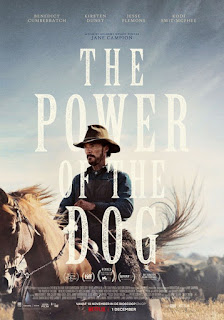
The Power of the Dog (2021)

Power of the Dog header
Benedict Cumberbatch rules his ranch with an iron fist in Jane Campion’s extraordinary The Power of the Dog

Director: Jane Campion

Cast: Benedict Cumberbatch (Phil Burbank), Kirsten Dunst (Rose Gordon), Jesse Plemons (George Burbank), Kodi Smit-McPhee (Peter Gordon), Thomasin McKenzie (Lola), Genevieve Lemon (Mrs Lewis), Keith Carradine (Governor Edward), Frances Conroy (Old Lady), Peter Carroll (Old Gent)

At one point in The Power of the Dog, Phil Burbank, monstrously domineering Montana Rancher, stares out at his beloved hills. Where others see only rocks and peaks, Phil sees how (like a cloud) they form themselves into looking like a howling dog. Seeing things others do not is something Phil prides himself on. It’s also something The Power of the Dog excels out: it’s a continually genre- and tone-shifting film that starts as a gothic, du Maurier-like dance among the plains and ends as something so radically different, with such unexpected character shifts and revelations, you’ll be desperate to go back and watch it again and see if you can see the image of a dog among its rocks.

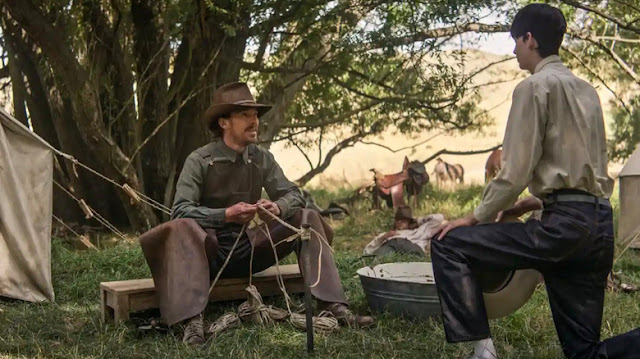
In Montana in 1925, two brothers run a ranch. George (Jesse Plemons) is polite, formal and quiet, seemingly under the thumb of his aggressively macho, bullying brother Phil (Benedict Cumberbatch). Phil is fully “hands-on” on the ranch, priding himself on being able to perform every task, from rope weaving to bull skinning, all of which he learned from his deceased mentor “Bronco” Henry. Things change though when George marries Rose (Kirsten Dunst). Phil takes an immediate dislike to Rose, engaging into a campaign of psychological bullying that drives Rose to drink. However, at the same time a strange bond develops between Phil and Rose’s student son Peter (Kodi Smit-McPhee) – is Phil’s interest in the boy part of a campaign to destroy Rose or are there other forces at work?

Campion’s film (her first in over ten years) is a fascinating series of narrative turns and genre shifts. It opens like a gothic Western. The ranch is a huge, isolated house surrounded by rolling fields and its own rules. Phil is an awe-inspiring, still-living Rebecca with Rose a Second Mrs de Winter having to share a bathroom with the perfect first wife. The psychological war Phil launches against Rose, like a hyper-masculine Mrs Danvers, seems at first to be heading towards a plot where we will see a vulnerable woman either crushed or fighting back. Then Campion shifts gears with incredible professional ease; the kaleidoscope shifts and suddenly our perceptions change along with the film’s genre, which becomes something strikingly different.

This all revolves around the character of Phil. Excellently played (way against type) by Benedict Cumberbatch, in a hugely complex performance, Phil at first seems an obvious character. A bully and alpha male who mocks George as “Fatso”, hurls homophobic slurs at Rose’s sensitive, artistic son and would-be doctor Pete, and treats his duties with such masculine reverence that the idea of wearing gloves to skin a cow or washing the dirt of his labour from him is anathema.

But look at Phil another way and you see his vulnerability. The opening scenes play as a torrent of abuse to George. But look again and you see this is a man desperately trying multiple angles to clumsily engage his brother in joint reminiscences. His emotional dependence on George is so great that they still share a single bedroom in their giant house (and even a bed in a guest house, like Morecambe and Wise) and he weeps on their first night apart. Despite his brutish appearance, his conversation is littered with classical and literary allusions (we discover later he is a Yale Classics graduate). His life is devoid of emotional and physical contact and he maintains a hidden retreat in the woods, a private den the only place we see him relax.

He’s a man clinging desperately to the past. At first it feels like he has never grown up, that he is still a boy at heart. But Campion slowly reveals his emotional bonds to his deceased mentor Bronco (whom he refers to almost constantly in conversation) to be far deeper and more complex than first anticipated. He treats Bronco’s remaining belongings with reverence, maintaining a shrine to him in the barn and cleaning his saddle with more tenderness and care than he feels able to show any human being. The depths of this relationship are crucial to understanding Phil’s character and the emotional barriers he has constructed. His gruff aggression hides a deep isolation and loneliness, feelings Campion explores with profound empathy in the film’s second half.

That doesn’t change the monstrousness of the bullying Phil enacts on Rose. Played with fragile timidity by Kirsten Dunst, Rose becomes so grimly aware of Phil’s loathing that is too paralysed by intimidation to even play Strauss on her newly purchased piano in front of George’s distinguished guests (Phil pointedly plays the music far better on his banjo and takes to whistling in in Rose’s presence) and later tips into alcoholic incoherence.

Despite Dunst’s strong performance, if the film has a flaw it is that we don’t quite invest in Rose enough to empathise fully with her emotional collapse. Both she and George (a fine performance of not-too-bright-decency from Plemons, in the least flashy role) disappear for stretches and play out parts of their relationship off camera, making it harder to bond with them (a bond the earlier part of the film needs). It perhaps might have been more effective to centre the film’s opening act on Rose rather than Phil, allowing us to relate to her better and feel her decline more.

Dunst however nails Rose’s growing fear, desperation and depression while her status as an unwelcome guest is constantly forced on her. Her panic only deepens with the return of her son Peter. This is where the film takes a series of unexpected shifts. To the surprise of all Phil offers to take the sensitive, quiet Pete under his wing: perhaps he’s impressed by Pete’s indifference to the homophobic abuse from the ranch-hands, perhaps he sees a chance to spiritually resurrect his mentor by playing the same role himself to Phil (pointedly, the film implies the younger Phil may not have been dissimilar from Pete). Either way, Campion’s film heads into its extraordinary and deeply impactful second half as an unsettling and uncertain personal drama between two men who seem totally different but may perhaps have more similarities than expected.

As Peter, Kodi Smit-McPhee gives a wonderfully judged performance of inscrutability and reserve. He’s an artistic boy who creates detailed paper flowers and keeps artistic scrapbooks, but can dissect animals without a flinch and snaps the neck of an injured rabbit with ease. He seems alternately devoted to his mother then queasily distant from her, calling her Rose and unsettled by her drunken inappropriateness. His motivations remain enigmatic, just as Phil’s motivations for befriending this isolated and very different boy could fall either way. Smit-McPhee and Cumberbatch are both extraordinarily good in the scenes between this unlikely partnership, and Campion’s artful film keeps us on our toes as to precisely what they want from this friendship. The result is haunting.

It leads into a stunning final act which demands we re-evaluate all we have seen and leaves such a lasting impression I was still re-living the film in my mind days later. Campion’s film is masterfully shot and carries a wonderful atmosphere of intimidation and unease, helped hugely by Johnny Greenwood’s brilliant score with its unsettling piano-inspired cadences. It reinvents itself constantly, Campion’s direction shifting tone and genre masterfully. It’s quite brilliantly acted and provides Cumberbatch in particular with an opportunity he seizes upon to slowly reveal depths of emotion and vulnerability an outwardly straight-forward monster. There won’t be many finer films released in 2021: and this will be a classic to sit alongside The Piano in Campion’s work.

The Farewell (2019)

The Farewell header
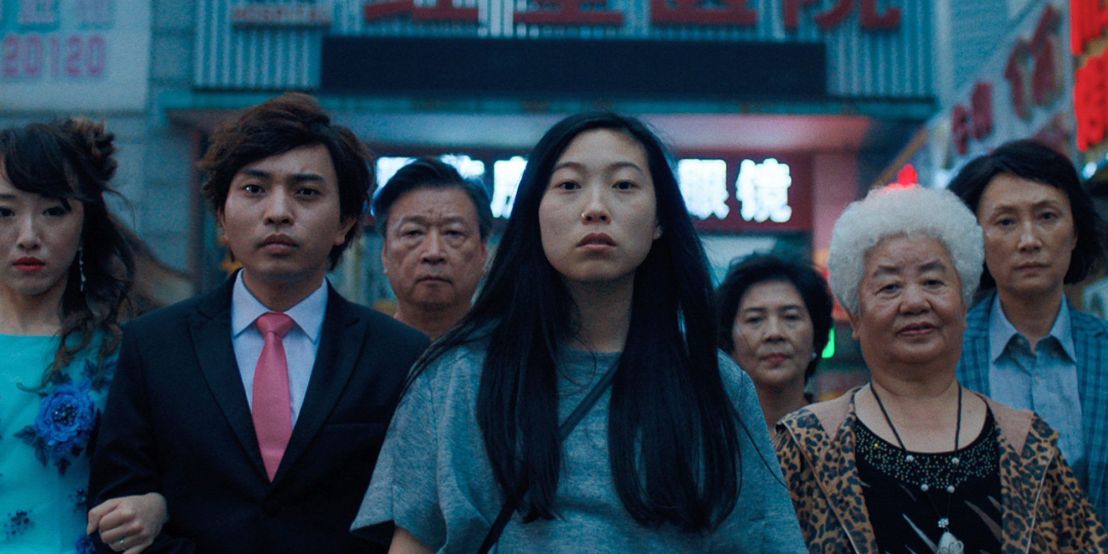
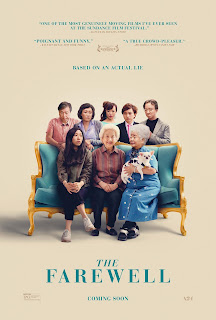
Awkwafina leads an impressive ensemble cast in Lulu Wang’s excellent film

Director: Lulu Wang

Cast: Awkwafina (Billi Wang), Tzi Ma (Haiywan Wang), Diana Lin (Lu Jian), Zhao Shu-zhen (Nai Nai), Lu Hong (Little Nai Nai), Jiang Yongbo (Haibin), Chen Han (Hao Hao), Aoi Mizuhara (Aiko), Zhang Jing (Yuping), Li Xiang (Aunty Ling), Yang Xuejian (Mr Li)

When you have lived your life as part of two different cultures, it can be difficult reconciling them together. It’s something Lulu Wang has personal experience of, born in China and moving to America aged 6. She grew up American, but with a strong Chinese heritage – and a family who held some sharply different cultural expectations than she had grown used to in her adopted country. Wang explores these details with warmth, insight and wit in the semi-autobiographical The Farewell, based on events that happened in her own family.

Billi Wang (Awkwafina) is a young graduate in America, working out what the next step of her life will be. All this is put on hold when she hears from China her paternal grandmother “Nai Nai” (Zhao Shu-zhen) has been diagnosed with terminal lung cancer and has only months to live. As per Chinese custom, the family decide to keep her diagnosis a secret from her so she can enjoy the last few months of her life untroubled by worry and fear. Billi and her parents Haiywan (Tzi Ma) and Lu Jian (Diana Lin) fly to Changchun to attend a hastily arranged wedding of Billi’s cousin – the wedding being an excuse for the family to come together for one last time. But, arriving in Changchun, Billi struggles between her desire to tell Nai Nai the truth and the desire of her family (however difficult they find it) to maintain Chinese cultural beliefs.

In another world The Farewell could have been an out-and-out comedy of cultural clashes and misunderstandings. That’s not to say the film itself doesn’t have a great deal of wit in it. But Wang has directed a sharply intelligent, respectful, compassionate and heartfelt exploration of cultural legacy and split loyalties between them, that refuses easy answers or moral judgements. Instead, it encourages a great deal of thought: what would you do in this situation? Whose values are ‘right’ – those of your adopted home, or those of your family heritage? Is it even right to think in these terms of one being more legitimate than another? How does returning to the country of your birth make you reflect about the things you left behind or have forgotten?

It all comes out beautifully in Awkawafina’s delicate and tender performance as Billi. Returning to China reminds her of parts of her own past she has nearly forgotten. It’s not just changes in the land where she grew up. It’s the memory of that childhood trauma of being taken halfway across the world to a new country, leaving everything she had ever known behind. Of remembering her grandfather died shortly after they left, having been told the same story as Nai-Nai, and she never saw him again. And seeing that whole cycle about to repeat again and struggling to square that with her Western ideal to be open and truthful.

But is that the right thing? For many watching in the West, we will of course assume at first ‘yes’. But, as an English-educated young doctor in a hospital points out, what harm does it really do when you can work instead to make someone’s last few months happy and free of fear? After all, you can’t change the diagnosis. And is, as the film implies, wanting to share the truth as much, if not more, about you more than it is the person you are telling?

After all, it’s not as if the family isn’t torn apart emotionally about the impending loss. Many of them at various points choke back tears and it’s clear the pressure of maintaining the front of the happy wedding is taking its toll on everyone. Billi’s dad and brother drown mountains of beer one night and even take up smoking again. The bride and groom are so distracted by the pressure, Nai Nai worries people will think it’s a shotgun wedding. Billi is even barred at first from the wedding because her family are worried she won’t be able to keep up the pretence that all is well at a joyous celebration.

Billi’s uncle Haibin points out that this ties in with a more Chinese collectivist way of thinking, Death is a terrible burden – surely its better for the whole family unit to share it among themselves rather than force it all onto the sufferer. Nai Nai would certainly agree – it’s revealed during the film she was part of a similar lie to her husband. For our Western eyes, a more individualised view of people having all the choice themselves seems more important, but The Farewell’s strength is showing that such a view – well-meaning as it is – can also be an arrogant imposition of thinking what you instinctively believe is more legitimate than another cultures.

It’s a fascinating insight into discussions and conflicts that must be occurring in families all over our newly shrunk globe. And this might make it sound like a tough film to watch, but it’s not. It’s manages also to be wonderfully warm and life-affirming and if it tugs the heartstrings, its because Wang directs it with such truth and empathy for all the characters. Their little idiosyncrasies ring very true and the film is crammed with moments of small but truthful family humour.

It’s also superbly performed. Awakwafina is excellent. Zhao Shu-zhen manages to transcend the cliché of the larger-than-life older woman, by making Nai Nai a force of nature, but also wise and gentle with a slight air of determined sadness. Tzi Ma and Diana Lin are wonderful as Billi’s parents, quietly juggling their own mixed feelings. The film mines some gentle humour from how Billi’s family Westernised ways have made them, at times, strangers in China and the actors all achieve the difficult feat of actually feeling like a real family on screen – private jokes, natural warmth, and an emotional short-hand.

The Farewell is a gentle, charming but very thought-provoking movie that asks intriguing questions about multi-cultural families and the difficulties second-generation migrants have with balancing the culture of their ancestors with the world they have grown up in. With plenty of humour and an abundance of warmth, it’s got something for everyone.

The Father (2020)

Olivia Colman and Anthony Hopkins excel in Florian Zeller’s sublime The Father

Director: Florian Zeller

Cast: Anthony Hopkins (Anthony), Olivia Colman (Anne), Rufus Sewell (Paul), Imogen Poots (Laura), Olivia Williams (The Woman), Mark Gatiss (The Man)

Is there any worse nightmare than the thought of losing your mind? Worse of all, to lose your mind in stages: to be aware, in every moment, that things are not as they should be, that people and places no longer seem to fit your memory of them. That you can walk into a room and completely forget why or meet someone close to you and have no a clue who they are. It’s an unimaginable condition to go through – and the subject of Florian Zeller’s exceptional adaptation of his award-winning play, The Father.

Anthony (Anthony Hopkins) is a retired engineer slowly succumbing to dementia. Events are increasingly confusing to him. Is he living in his own flat, or is he living with his daughter Anne (Olivia Colman)? Is Anne moving to France or not? Is she married to Paul (Rufus Sewell) or not? Where is his other daughter who looks so like a woman who may-or-may-not be his new carer, Laura (Imogen Poots)? From moment-to-moment Anthony struggles with confusion, rage and fear as the world constantly fails to coalesce into a meaningful picture, but instead remains a fragmented jumble.

That’s the brilliance behind Zeller’s adaptation of his own award-winning play. It captures the perspective of the world for those suffering from dementia in a way no film has done before. The play’s timeline is disjointed in an almost Nolan-esque way, and it’s not clear whether we are watching ‘real’ events’ or if all of these events are memories of Anthony’s which dementia has shuffled, reordered and recast. Either way, the film constantly refuses to allow you any grounding from scene-to-scene, and refuses to present clear answers (although you can infer much).

Even the sets betray us. From to scene to scene the apartment is redressed, sometimes in subtle ways, sometimes in jarringly different ways. The same fundamental layout sees every room constantly redesigned. Sometimes it could be Anthony’s apartment. Sometimes Anne’s apartment. Sometimes a mix of the two. Sometimes it’s a hospital, in others a retirement home. Often it might be a combination of one or more of these locations all at once. The style of decoration is inconsistent, the furniture changes, pictures move, even the colours of bedsheets change. Every single scene disorientates us: it’s only a movie for us, but for Anthony this is his life.

In fact, if The Father has a filmic influence, interestingly it’s a horror-film. Anthony is a man trapped in a situation where he knows everything is wrong, but can never fully understand why, or get people to listen to him. Often the camera catches discomfort and fear on Hopkins’ face, and it’s clear he neither knows where he is or, in many cases, who the people with him are. But for fear of not being believed or a sense of powerlessness, he’s too proud and scared to ask. It taps into the powerlessness of horror films, where you are relentlessly chased by a force outside your control: in The Father that force is life, which has become for Anthony a disturbing kaleidoscope where everything makes sense to everyone except him.

Of course, a large part of this is sold by Anthony Hopkins Oscar-winning lead performance. Hopkins delivers to an astonishing degree: this might just be the greatest performance of his career. Although we see flashes of ‘the true Anthony’ – his wit, playfulness and intelligence – Hopkins deftly and subtly demonstrates the wildly varying mood swings dementia brings. At times he’s paranoid, defensive and even aggressive. At others he’s stunningly vulnerable and scared – he has two breakdown scenes of such heart-breaking vulnerability and boyish fear, they are tough to watch.

The film opens with Anne telling Anthony she’ll be leaving for Paris, and Hopkins’ face collapses into a crumpled, puffy, scared-little-boy face while he plaintively asks what will happen to him. Anthony fixates on things that give him any sense of control: he is obsessed with his watch, hiding it and continuously searching for it. He will dredge up a fact from the distant past to ‘prove’ he has not lost his memory. He snaps angrily when he feels he is being talked down to. His resentment expresses itself in viciously cruel verbal assaults on Anne, labelling her a disappointment, failure and his least favourite child. Then a few scenes later he’ll squeeze her shoulder and quietly and lovingly thank her for everything she has done for him. All of this is delivered by Hopkins with no grand-standing, but with a hugely affecting truthfulness. It’s an astonishingly good performance.

Every scene carefully demonstrates time and again Anthony’s fear and vulnerability. Actors are even replaced by other actors in several scenes. In Anne’s second appearance she is played by Olivia Williams. In a beautiful piece of subtle acting by both Hopkins and Williams, it’s clear Anthony doesn’t recognise Anne and she realises this but decides not to say anything. Anne’s husband (or boyfriend – Anthony remains unclear, so at times so do we) Paul (as he’s called most of the time) is mostly played by Rufus Sewell, but sometimes by Mark Gatiss. Paul is the closest the film has to an antagonist, although much of that is filtered through Anthony’s confused perception and, in any case, Paul is right that Anthony’s condition is making it too difficult for him to remain at home.

And we can see his point. Although each scene more-or-less makes sense within itself, the complete film is like looking at a jigsaw puzzle with all the pieces upside down and no picture, and then being asked to assemble it. In one particularly brilliant dinner scene, the film starts with Anthony witnessing a conversation between Paul and Anne, then loops through the scene and ends with Anthony witnessing exactly the same conversation again. The film is a deliberately, brilliantly, opaque tableau that defies easy meaning.

In all, The Father is a quite unique and brilliant film, that translates a theatrical piece into something highly cinematic. Hopkins is breath-taking, but Colman is also superb as Anne, in a part tailor-made for her ready empathy and easy emotionalism. Zeller’s direction is astonishingly confident and dynamic for a first-timer and the film slots you into the world of a dementia sufferer with an alarming immediacy. A superb film.

Nebraska (2013)

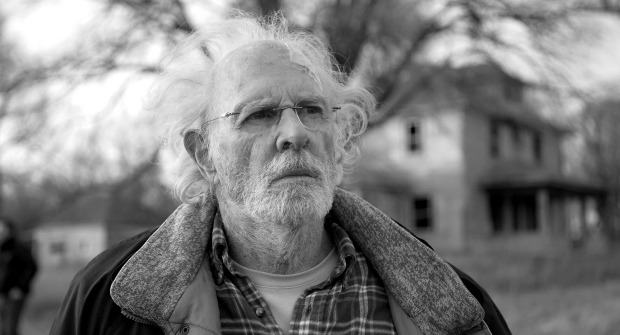
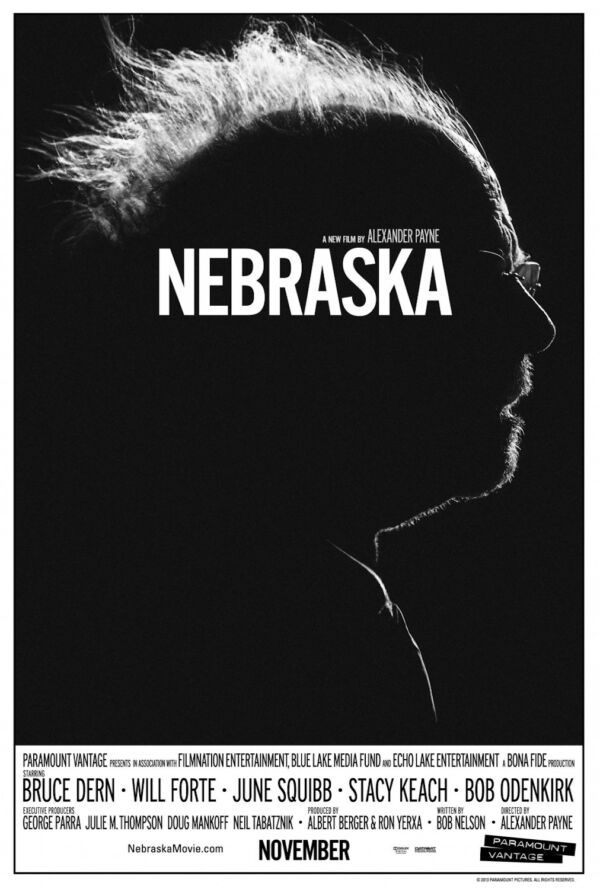
Bruce Dern excels in Alexander Payne’s masterful Nebraska

Director: Alexander Payne

Cast: Bruce Dern (Woody Grant), Will Forte (David Grant), June Squibb (Kate Grant), Bob Odenkirk (Ross Grant), Stacy Keach (Ed Pegram), Mary Louise Wilson (Aunt Martha), Angela McEwan (Peg Nagy), Rance Howard (Uncle Ray), Devin Ratray (Cole), Tim Driscoll (Bart)

Woody Grant (Bruce Dern) is an ageing alcoholic on the edge of senility. Receiving a circular from a magazine company, he becomes convinced he has won a million-dollar sweepstake – despite his family telling him he definitely hasn’t. Eventually, son David (Will Forte) agrees to drive him to Lincoln, Nebraska, to ‘claim’ the prize. Along the way, they visit Woody’s family in Hawthorne, Nebraska – and the whole town swallows whole the idea that Woody has won the sweepstakes. Despite the best efforts of David, his mother Kate (June Squibb) and brother Ross (Bob Odenkirk), both family members and townsfolk come forward with claims for this fictional money. All this while the family themselves come to understanding about each other and their past.

Alexander Payne’s Nebraska is gently paced, meditative, but has lasting impact. Shot in a gorgeous black-and-white, this is a road movie, an odd buddy film, a family drama and a comedy of misunderstandings. All this comes together, in a way perhaps only Payne could do it, into something that at first seems like a bitter-sweet look at a dysfunctional family, but slowly reveals itself into something far more heartfelt than you expect. Nebraska carefully builds a portrait of a family that feuds, but is fundamentally loyal, even while carrying private resentments.

It all revolves around Woody himself, who at first seems to be the typical bad Dad: distant from his sons, dismissive of his wife, a history of drinking. His marriage to Kate seems based more on longevity rather than any love. Approaching senility has only accentuated, it seems, his stubbornness and self-obsession. He’s crochety and fixated on his own needs. But, despite all this – and this is a huge credit to Dern’s sympathetic performance – there is a gentleness to him. For all his negatives, he’s vulnerable and even naïve. He assumes people are telling him the truth. Later Kate will angrily denounce his grasping family, has Woody never said ‘no’ to anything he was asked to for. And you can believe it. He is a character who we see in more and more of a human light.

It comes across in the relationship with David. In an equally beautifully judged performance by Will Forte, David’s motivations for this road journey change. At first it seems an attempt to end an idee fixee, but it becomes more and more about spending time with a man he realises he loves more than he thought. Perhaps that’s because Forte’s sad-sack gentleness has more of an echo of the inner meekness of Dern’s Woody. David has more than a few similarities to Woody – a disappointing career, a failed relationship (unlike Woody’s generation, separation is a lot more feasible), a sense that his life has been a disappointment. But Payne’s film flourishes, because it becomes about David’s discovery of a kindred with his father he hasn’t acknowledged for years.

A lot of that comes from seeing the world his father grew up. A small American town, with more than a touch of The Last Picture Show, where everyone seems either stuck-in-a-rut or happy to drift. Everyone knows everyone, and there are no entertainments except feuds and sharing every piece of gossip. But, above that, David also discovers more about his father’s background: his hopes and dreams, his acts of kindness but also his acts of selfishness. His awkward relationship with his family, and the reasons behind his dysfunctional but strangely contented relationship with his wife.

All this comes together in that very Payne-ish way that is both heart-warming, slightly sentimental but genuinely moving. Above all it works, because everyone one in it feels very relatable and true. David is a highly understandable guy, a quiet fellow who hasn’t quite cracked how life works, but wants to rekindle a relationship with his father. Woody wants to cling to anything that might help him feel he has control over his own life. The saga of the fictional money starts as an item pushing the two men apart, but actually draws them closer as others in the town seek to take advantage (most nastily, the excellent Stacy Keach, claiming to be a former business partner).

That’s what helps make, what could have been a comedy about a clueless Quixote and his reluctant Sancha Panza, into something really moving. Payne may tease Woody – and even allow him to say some quite unpleasant things (his indifference as a young man to having children is a tough thing for any father to say to his son) – but he never makes him a joke. He’s just a man who seems to be looking back at his life, not quite sure how he got there. With David as an audience surrogate, wondering the same thing in turn – and half wondering whether he is going the same way.

And, of course, the film is funny. Woody and David make a wonderful flying trip to Mt Rushmore (“It looks unfinished…Lincoln hasn’t even got an ear” is Woody’s summary of it). June Squibb is very funny as David’s surprisingly foul-mouthed mother, for whom a road trip is a wonderful chance to remember all the conquests she might have made back in the day. David’s constant pleas for Woody to not mention his “win” – and the town’s total buying of this urban rumour – is very well done.

But it mixes with genuinely moving moments. Squibb’s Kate may be frustrated and fed-up with Woody, but she will defend him to the end and tenderly kisses his forehead while he sleeps. It mixes with genuine touches of regret: the extended Grant family sit and watch football together, mutely starring at the television, barely communicating. This isn’t nostalgic, but it is faintly sad about how life so quickly life can trap us into familiar patterns.

And the performances are of course sensational. Dern is incredibly heartfelt, communicating huge amounts of little dialogue and watery eyes. Fonte is superb as a man who believes he has had enough of his father, only to have his perceptions change. Squibb is both funny and heart-breaking, Odenkirk exasperated but tender, Keach a bully scared of his own empty life. It’s one of Payne’s signature works, a gentle character study that starts giving you one perception and develops into giving you a very different one. It’s one of his finest films.

Blonde Venus (1932)

Marlene Dietrich can only save her husband…by cheating on him in Blonde Venus

Director: Josef von Sternberg

Cast: Marlene Dietrich (Helen Faraday/Blonde Venus), Herbert Marshall (Ned Faraday), Cary Grant (Nick Townsend), Dickie Moore (Johnny Faraday), Gene Morgan (Ben Smith), Rita La Roy (‘Taxi Belle’ Hooper), Robert Emmett O’Connor (Dan O’Connor)

For their fourth outing together, von Sternberg and Dietrich made for the first time a film set in the modern era. Not that it mattered – von Sternberg would still turn the setting into his typical fever-dream of hyper-reality. It works as always though, because von Sternberg is a master of style and Dietrich is a true superstar. There might not be much more to it than that – and there isn’t really in this melodrama – but that’s still more than enough.

Ned Faraday (Herbert Marshall) is an American chemist (although he sounds more plummy than King George) suffering from radiation poisoning. Fortunately, there’s a cure (this was a simpler time, before we knew there wasn’t any dusting yourself off from a deadly dose of radium) but it will cost. Ned’s German wife Helen (Marlene Dietrich) has to take to the stage again to earn the money to pay for it – but finally finds the real money is in essentially prostituting herself to playboy businessman Nick Townsend (Cary Grant). When Ned finds out his life has been saved due to his wife becoming a kept woman he is furious – and she heads on the run with son Johnny (Dickie Moore) as she’s terrified of losing custody of him.

The Blonde Venus of the title is Helen herself, that being her stage name. Blonde Venus is frequently punctuated by prolonged musical performances by Dietrich, filmed with a flowingly smooth camera by von Sternberg, now firmly able to marry movement and dialogue in his films (in a way Morocco fails to do). The most bizarre of these is “Hot Voodoo” which features exotic African-American dances and Dietrich emerging from a huge gorilla suit wearing a blonde afro. This sort of stuff is so strange that it still works as entertainment, and it strangely fits with von Sternberg’s dreamy approach to story-telling where everything feels a few degrees off reality.

Blonde Venus riffs on this fable like atmosphere pretty openly. It starts with Helen telling a story of how Ned and her first met. This opening shows Helen and several German women skinny-dipping in a pool in the days after the First World War (oh, those pre-Code days!) when they are approached by a group of American GIs, led by the completely un-American sounding Ned. They flirt, and the entire meeting feels very much like a fairy tale – which is exactly how Johnny takes it. The film will end with revisiting this story, this time the son wanting to use it as a comforting romantic vision to escape to. It’s all part though of how Blonde Venus is very consciously framing itself as fairy tale, a group of people living in a heightened reality that’s just outside of logic.

Pretty fitting as the plot leads into an almost bizarre sequence of Helen and Johnny on the run – Ned wants paternity (since his wife is now a floozy) so Helen and Johnny had down South into a Southern States of America which are bizarrely so unspecific in their setting they could be anywhere and later a Texas that looks like it’s come straight out of the Chinese market-place of Shanghai Express. Throughout the journey, like a Princess on the run from a wicked stepmother, Helen is pursed by policeman looking to find Johnny for a reward. Like an old morality tale, she is tipped into destitution (eventually arrested for vagrancy) but then almost as suddenly decides to turn her life around – literally the next scene she is in Paris, the belle of the French night club scene. This is the sort of rapid logic of a dream, and about as likely as a fairy tale would be in real life.

Alongside this fascinating narrative dreaminess, the film also carries a proto-feminist message. It sympathetically sides with Helen, a woman who has no choice but to prostitute herself in an attempt to save her husband’s life – only to be roundly condemned for it by the old stick-in-the-mud the moment he returns. Blonde Venus hardly warms either to Nick Townsend – played by a very raw Cary Grant, still years away from creating his persona in The Awful Truth – a selfish playboy who seems uninterested in consequences. By contrast, Helen is a martyr who consistently puts other people first and as a reward is branded a harlot and a bad mother. You can’t win.

As Helen, Marlene Dietrich gives another fine performance. By this stage, she was highly experienced before the camera and knew exactly how to achieve an impact on the audience. As Helen she is continually sympathetic but also a bright, confident and determined woman with a deep love and loyalty for her family. Dietrich works extremely well with her two male stars – although she rather overshadows both of them – and has an excellent chemistry with the kid. She nails the song and dance moments and her slight air of other-worldly mysticism lends itself very well to the fairy-tale feel of much of the film.

Blonde Venus is of course crammed with beautiful images and transitions. There is a lovely opening transition from that flashback to Ned and Helen’s first meeting to the modern day, where Helen’s body thrashing through the water slowly turns into Johnny beating water in his bath with his feet. The other worldly beauty of Helen’s run from Ned is beautifully presented, and von Sternberg draws some very good performances from his leads. It’s a very slight story – a classic melodrama – but its told with an artful skill that makes it a very rewarding watch.

Fences (2016)

Denzel Washington and Viola Davis triumph in an overly theatrical version of August Wilson’s Fences

Director: Denzel Washington

Cast: Denzel Washington (Troy Maxson), Viola Davis (Rose Lee Maxson), Stephen McKinley Henderson (Jim Bono), Jovan Adepo (Cory Maxson), Russell Hornsby (Lyons Maxson), Mykelti Williamson (Gabriel Maxson), Saniyya Sidney (Raynell Maxson)

Pittsburgh in the 1950s. Troy Maxson (Denzel Washington) works as a garbage collector after his dreams of becoming a professional baseball player came up against the colour bar. Troy lives with his second wife Rose (Viola Davis). Troy had a troubled upbringing, turning to crime (and serving time in prison – lost time Rose quietly believes may have had more of an impact on his failed baseball career) and claims to have beaten Death in a wrestling match. Proud of his self-made status and certain, always, that he is right, Troy has difficult relations with his two sons Lyons (Russell Hornsby), a musician he believes is forever sponging money and Cory (Jovan Adepo), a teenager being scouted by an American Football team.

Fences follows a couple of years (with a coda that jumps forward five years) in the lives of these characters, and principally the impact that Troy’s mixture of pride, selfishness and bull-headed self-righteousness has on the family. It’s adapted from August Wilson’s award-winning stage-play, with a script prepared before his death by the playwright himself (earning him a posthumous Oscar nomination). Washington, Davis and most of the cast all starred in a hugely successful Broadway production of the play a few years before, and the film is a careful restaging of this production.

Perhaps a little too careful. If there is a problem with Fences, it is that it falls rather awkwardly between two stools. It’s neither particularly filmic – few of the scenes have been adjusted from the single-set locations of the play, and it’s filmed with an unobtrusive conventionality that makes it look and feel pretty similar to watching a National Theatre Live production – nor is it sufficiently theatrical. I can well imagine the power – and they are undeniably powerful – performances by the cast, principally Washington and Davis, would have blown you away live: but on screen, they can’t quite capture that same impact, in a film that feels slightly constrained by its theatricality.

Most of this comes from Washington’s determination that Wilson’s words would be the star, and all other factors in the production would service that. To that end, the film is a clear success – and you can’t argue Wilson doesn’t deserve a certain reverence, particularly as transfers of his plays to film had been almost non-existent before Fences. Wilson’s plays have rarely crossed the Atlantic, so watching this – a play I was not familiar with – I was enraptured by the working-class poetry of Wilson’s language, not to mention the empathy with which he explores his characters.

At the heart is Troy, a fascinatingly flawed human being. Played with huge charisma, which masks a deep bitterness, cynicism and self-pity, by Denzel Washington, Troy manages to be both admirable and destructive at the same time. You can’t not admire the way he has built his own life from scratch, or the “go-out-and-grab-it” balls that helps him become the first black garbage truck driver in Pittsburgh. He’s witty, warm-hearted and loves his family deeply. He’s also domineering, proud and so convinced his view is right that he sees no problem with cheating on his wife or forcing his children, often against their will, to conform with exactly his ideas of how they should live their lives.

So, he’ll tell his son that because Troy’s dreams of becoming a professional sportsman came to nothing, so will his: so there isn’t even any point trying. He loves his mentally handicapped brother Gabe (Mykelti Williamson), and rages at the Government that failed to support this wounded veteran – but he also takes Gabe’s disability payout and uses it to buy himself a house and charge Gabe rent for living in it. He’ll talk endlessly about putting duty and family first – but that fence of the title, which Rose asks constantly him to build, is a job he’ll put off time and time again in favour of holding court in his backyard. Troy’s built the family – but he’s also the main factor holding it back from moving forward any further. He’s a classic tragic figure.

Equally superb is Viola Davis as Rose, endlessly patient and caring, holding the entire family together and quietly and carefully cleaning up after Troy’s outbursts or bad temper. Davis won the Oscar, and Rose is a dream of a part a woman who closes her eyes to problems, believing she lives a perfect family life, until it is too late. When finally confronted with the selfishness of Troy’s actions, Davis’ emotional devastation – her resentment and fury at having benched her own dreams and desires to service Troy – is hugely moving, perfectly showcasing Davis’ skill to play deep emotions while simultaneously holding those emotions in.

These two actors are both extraordinary – and there are also fabulous performances from Henderson, Adepo, Williamson and Hornsby. What stops it from being an outstanding film though is that its more of a theatrical event pushed into a cinema. With the majority of the scenes taking place in Troy and Rose’s backyard, you can picture the single-set theatre production. The camera moves calmly from close-up to medium shot but does very little else. Very little has also been changed or reworked in the play – compare to Arthur Miller’s reworking of The Crucible or Peter Shaffer’s re-imagining of Amadeus for the screen. It’s a film with a slightly worthy, mission quality to it. But as a showcase for the play – and the performances – it’s very fine.

Shang-Chi and the Legend of the Ten Rings (2021)

Simu Liu deals with father-son issues in Shang-Chi and the Legend of the Ten Rings

Director: Destin Daniel Cretton

Cast: Simu Liu (Shang-Chi), Awkwafina (Katy), Meng’er Zhang (Xu Xialing), Tony Leung (Xu Wenwu), Fala Chen (Ying Li), Michelle Yeoh (Ying Nan), Ben Kingsley (Trevor Slattery), Benedict Wong (Wong), Florian Munteanu (Razor Fist)

Thousands of years ago Xu Wenwu (Tony Leung) discovered ten rings which gave him immortality and power. Sadly, he used these powers for evil – until in 1996 he falls in love with Ying Li (Fala Chen), the powerful guardian of a mystical village he has searched hundreds of years for. They have two children – but after she dies, Wenwu returns to darkness and trains his son Shang-Chi to become an assassin. Aged 14, Shang-Chi flees: ten years later, Shaun (Simu Liu) works as a hotel valet with his best friend Katy (Awkwafina), both accomplished students with no aims in life.

All that changes when his father’s heavies attack them in San Francisco, stealing the mysterious pendant Ying Li gave to her son. She also gave a pendant to his sister Xu Xialing (Meng’er Zhang) – so Shang-Chi and Katy head to Macau to find her. But Xu resents Shang-Chi for abandoning her and has trained herself into the martial super-fighter her father would never allow her to become.

Shang-Chi and the Legend of the Two Rings is a curiously mixed bag. First the good: it’s a huge amount of fun. There are some cracking gags and some of the fight scenes have to be seen to be believed. In particular, an early fight scene on a San Francisco bus is an absolute belter. A whirligig of movement, flicks, kicks and punches in, on and around a bendy-bus, using bars, doors, windows and bells to imaginative effect. Hugely exciting, its something the rest of the film struggles to live up to – although a vertigo inducing scaffolding bound fight in Macau comes close.

The film is also built around engaging characters. Shang-Chi is charmingly played by Simu Liu as a very reluctant hero, an extremely polite, decent guy with a wistful wish to just mess around and not grow up, but determined to do the right thing when pushed. He’s very well matched with Awkwafina, extremely funny but also heartfelt as his best friend, great with the one-liners but handling the serious content very well. The film dances rather neatly along a line of not-quite-deciding if these old friends are a potential romantic couple as well, which actually makes for a rather sweet dynamic.

Unfortunately, where the film is a bit weaker is in making it clear exactly what the character arc, or goal, for Shang-Chi is. While this is partly the intent of the film – he has, after all, effectively been drifting through life for a decade – the lack of a really compelling story line or a powerful sense of motivation from Shang-Chi slightly weakens the story. We never really quite get a grip on him as a character, other than knowing he’s a decent guy, out of his depth.

That’s partly because the film invests so much depth into his father, played superbly by Tony Leung making his English-language debut. Wenwu is conflicted, traumatised and motivated by a desire to bring his family together, unable to see that children’s upbringing has made them confused and vulnerable rather than strong. In every scene, I always understand what Wenwu wants and where he is going in a way I don’t with the hero – and this somehow feels the wrong-way round. Effectively, Wenwu is the protagonist of the movie, and Shang-Chi never quite steps up to take his place.

Instead, Shang-Chi has a fairly conventional “Daddy’s issues” plot line – can he overcome his fear and respect for his wicked father? I’d point out that his sister – well played by Meng’er Zhang – has exactly the same issue, but the film isn’t interested in her solving them, focusing instead on the father and son confrontation. Essentially, thematically, not a lot in Shang-Chi and the Legend of the Ten Rings is actually that new – it’s a fairly familiar coming-of-age Superhero origins story, with the loss of a parent and a clash with the surviving parent thrown into the mix.

Not that there is anything too wrong with that when it’s done well. Most of the film is done well, with jokes and fine set-pieces. Ben Kingsley enjoys himself hugely reprising his deluded actor from Iron Man 3. The film quite effectively builds in a Chinese aesthetic – large chunks of the dialogue is in Mandarin – and riffs charmingly off Chinese myths and legends and kung-fu inspirations. The Ten Rings themselves are barely explained at all, but an end-of-credits scene shows this was intentional.

Its weakest section is of course when we get to the final confrontation. This is a CGI over-loaded smack-down between two huge special effects – and carries significantly less impact than the emotional clash between father and son the film has been building towards. A braver film would have left it there without the CGI monsters – but the Marvel films have always been convinced that spectacle is what people want, and I guess they’ve not got much wrong so far.

Shang-Chi and the Legend of the Ten Rings introduces a charming hero, but by the end of the film I still wasn’t quite sure who he was or what he wanted from life. Maybe that doesn’t matter since sequels are inevitable, but there is something amiss when the villain makes such a dominant impression that he takes over the film, as Tony Leung does here. Fun, but a little too long and a little lacking in focus.

Vera Drake (2004)

Phil Davis and Imelda Staunton are superb in Mike Leigh’s masterpiece Vera Drake

Director: Mike Leigh

Cast: Imelda Staunton (Vera Drake), Phil Davis (Stan Drake), Peter Wight (Inspector Webster), Daniel Mays (Sid Drake), Alex Kelly (Ethel Drake), Eddie Marsan (Reg), Adrian Scarborough (Frank Drake), Heather Craney (Joyce Drake), Sally Hawkins (Susan Wells), Ruth Sheen (Lily), Lesley Sharp (Jessie Barnes), Liz White (Pamela Barnes), Martin Savage (Sergeant Vickers), Helen Coker (WPC Best), Vincent Franklin (Mr Lloyd), Lesley Manville (Mrs Wells), Jim Broadbent (Judge)

If you passed her on the street, you’d be sure to say hello and she’d be sure to ask after your family – and really mean it. She has a kind word for everyone and never thinks about herself. And, as far as the law is concerned, she’s a multiple murderer. Vera Drake mixes warmth and goodness with anger at social injustice and is stuffed with perfectly observed detail and marvellous acting. It might just be Mike Leigh’s masterpiece. Certainly, few other of his films carry such an emotional wallop.

In London in 1950, Vera Drake (Imelda Staunton) spends her life helping those around her and is a devoted wife and mother. But what her husband Stan (Phil Davis) and children Sid (Daniel Mays) and Ethel (Alex Kelly) don’t know is that for decades she has been “helping young girls out” who find themselves unwillingly in the family way. All Vera wants to do is help – but with abortion illegal, her actions are a ticking timebomb, which explodes when Vera is arrested.

Vera Drake is a film about “the family way” – in every sense. Leigh’s unique film-making technique is familiar now: long weeks of research and intensive, improvisational rehearsals help the actors to create fully-fleshed characters who they know so well, they can predict their reactions in any circumstances. During rehearsals, none of the actors in the family knew Staunton was playing an abortionist until the actors playing the police knocked on the door mid-rehearsal – and even Staunton was completely unaware she was to be arrested. The genuine shock the actors felt feeds this intensely powerful scene – and every moment that follows.

In perhaps no other film has Leigh’s technique been more successful: every single character feels completely and utterly real. You could look in any direction and find a character with such a rich hinterland you want to know their stories. Just as intriguing films could be formed around the lives of the young women Vera helps out – Sinead Matthews ‘very young woman’ (and the boyfriend who waits outside), Tilly Vosburgh as a mother of seven with a sick husband, Rosie Cavaliero as a nervous married woman or Vinette Robinson’s scared Jamaican girl – as has been about Vera.

These women have fallen through the cracks – unable to support a family, but deprived any chance of making choices about themselves and bodies. There is a clear social gap – Sally Hawkins gives a sensitive, gentle performance as an upper-class woman, raped by her boyfriend, who obtains an abortion through psychiatric loopholes available only to the rich. No fault of hers – you can imagine she’d be horrified at how others suffer – but for the poor, their only option is Vera. It’s a huge flaw in the system – and removing Vera won’t solve the ‘problem’. It only means women will turn with more desperation to the sort of uncaring sleazy abortionists Denholm Elliott played in Alfie.

The film works because of its tenderness and the raw emotion of the performances. Leigh’s camera is a largely stationary and observatory, but that immerses us in the domestic charm of the first half as much as it does the horrifying coldness of the legal system in the second half. The Drake family home is small and cramped, reflecting their poverty, but also because it feels stuffed with love. Their children – the extremely shy Ethel and her outgoing son Sid – both reflect their intensely loving home, and her husband Stan is full of kindness, generosity and decency.

Leigh carefully demonstrates the warmth of this family. There’s a tear-inducingly sweet romance between Eddie Marsan’s Reg (a beacon of human decency) and the shy Ethel. Stan’s brother Frank (Adrian Scarborough, marvellous) and middle-class wife Joyce (Heather Craney, wonderfully torn in her feelings) struggle to conceive a child. The family laugh and joke together, every day ending in smiles and expressions of love. It’s beautifully immersing and deeply moving – and makes the wait for this world to shatter even more dreadful.

As Vera, Imelda Staunton gives an astonishing performance. A quiet, polite, open-hearted lady whose greatest pleasure is other people’s happiness. Leigh’s film follows her acts of caring around the community – cleaning neighbours houses, looking after her ill mother, inviting lonely newcomer Reg to dinner – showing she applies the same heart-felt but unshowy care to those, as she does to her abortions. It’s twenty minutes before we see one of these, and what’s striking is the well-practised calmness Vera goes about this work, carefully repeating the same reassuring instructions. She never asks for anything (the posh doctor treating Sally Hawkins’ character takes £100). Lily, who puts her in touch with those in need, has no qualms charging £2 without Vera’s knowledge.

Then the arrest comes. This sequence – and the rest that follows – is frankly extraordinary. Staunton’s face when she sees police is a heart-breaking thing of wonder – a horrified realisation that what she has dreaded for decades has finally happened and the realisation that the world as she knew it is over. Throughout she is astoundingly fragile. Barely able to speak, mute with shock – and horrified to hear one of her girls nearly died (it’s never revealed what went wrong). Her first thought is the girls health and how this will ruin her family’s celebration of Ethel’s engagement. So warm and joyful has the first half of the film been, we feel the shocking coldness as the law goes about – albeit with a regret, beautifully underplayed by Peter Wight’s sympathetic detective and Helen Coker’s gentle WPC – the black-and-white business of cataloguing wrongs.

Staunton is extraordinary: she shrinks and diminish, terrified and mortified. The reactions of her family – confused then stunned and in some cases appalled – feel immensely true: some jump forward in support, others in anger. Phil Davis’ deeply moving performance sees Stan suppress his anger under love. Mays’ Sid rages, Heather Craney’s Joyce is resentful, Scarborough’s Frank is a pillar of support, Alex Kelly’s Ethel quietly holds her mother and will not her go. The emotion of this is so affecting as it feels so real: when Reg quietly shows his support and later gently says the disastrous post-arrest Christmas is the finest he has ever had, you’ll feel tears spring to your eyes.

The relentless march of the law is chronicled perfectly by Leigh. This is a director at the top of his game, creating a low-key film that switches on a sixpence from warmth and familial love to shattering emotional impact. Staunton’s performance is breathtakingly brilliant, avoiding all histrionics and will break your heart. The entire cast is astounding. The research and filming is exquisite. The film will quietly devastate you, but also remind you that nothing is more reassuring than the fundamental goodness of people. A beautiful, moving, masterpiece of a film.

Chocolat (2000)

Juliette Binoche changes people’s lives with sweet treats in Chocolat

Director: Lasse Hallström

Cast: Juliette Binoche (Vianne Rocher), Judi Dench (Armande Voizin), Alfred Molina (Comte de Reynaud), Lena Olin (Josephine Muscat), Johnny Depp (Roux), Victoire Thivisol (Anouk Roucher), Hugh O’Conor (Pere Henri), Carrie-Anne Moss (Caroline Clairmont), Peter Stormare (Serger Muscat), Leslie Caron (Madame Audel), John Wood (Guillaume Blerot), Elisabeth Commelin (Yvette Marceau), Ron Cook (Alphonse Marceau)

In 1950s France, expert chocolatiere Vianne Rocher (Juliette Binoche), and her six-year-old daughter Anouk (Victorire Thivisol) travel the country following the North Wind accompanied only by Anouk’s imaginary kangaroo. If that sentence alone has too much whimsy for your stomach to take, don’t invest two hours of your time in the rest of the film. Vianne and her daughter rock up in a very traditional town, run by the Comte de Reynaud (Alfred Molina), a stuffed-shirt who won’t admit his wife has left him. The austere Comte is horrified when Vianne’s sweet goodies prove super popular with the townspeople, whose lives suddenly start to change in profound and exciting ways as the quality of the chocolate helps them discover their own suppressed desires.

As if the title alone wasn’t enough of a warning, Chocolat is almost impossibly sweet, like being water-boarded by hot chocolate. Shot in a village that can only be described as chocolate box, it’s twee, sentimental and exhibits practically all the worst elements of cosy women’s fiction. With Miramax muscle behind it, this heavy-going confection briefly persuaded the world it was some sort of easy-going arthouse picture – rather than a smug fable of cliched situations and characters, coated in an unsettling number of scenes of actors eating chocolate with orgasmic grins.

It will not surprise you to hear that Vianne’s arrival in the village is the catalyst for huge change – the sort of change a trailer would surely describe as “their lives were all starters, until she showed them the importance of dessert”. Vianne is played by Juliette Binoche channelling Nigella Lawson as a yummy mummy domestic goddess. Her shop operates with the sort of business model that only exists in escapist fiction: customers spin a sort of Rorschach wheel and whatever they see in the picture decides the chocolate they will buy (no one would dare ask “Do you just have a box of milktray?”). The whimsy is nearly as thick as the molten goodies in the mixing bowl.

The village is stuffed with esteemed actors going through the motions. Judi Dench shows Maggie Smith that she can play crusty-old-women-with-hearts-of-gold as easily as her, as a grandmother who has been refused access to her grandson by his over-cautious mother. (It’s the sort of role people love to see veteran actors do, and duly landed Dench an Oscar-nomination). With some flatly written lines, Dench provides a bit of sparkle in a role she could play standing on her head. Carrie-Anne Moss is pretty good as her daughter, a repressed fusspot, who won’t let her son have fun. John Wood plays a crusty bachelor with the hots for war widow Leslie Caron. You don’t need to be a master confectioner to mix these ingredients together into the expected resolutions.

Hallström keeps events ticking gently along, in a film so soothing it seems designed to help you fall asleep. For a while Hallström was the go-to-guy for middle-brow, unimaginatively “prestige” adaptations of middle-brow, popular novels (this was his second after The Cider House Rules – and he had several to follow – each progressively a bit worse than the one before). The closest genuine emotion comes from Lena Olin’s abused wife of bullying café owner Peter Stormare. Sure, Olin’s problems are solved in about a few minutes, but the threat to her from Stormare is an intrusion of something that feels genuinely dramatic in what is otherwise a souffle. (Olin gets the film’s only memorable line, whacking her husband over the head when he attacks Vianne with the words “Who says I can’t use a skillet”, a line that’s both rather funny and bizarrely out of place.)

Naturally, the stuffy village learning needs to learn to cut lose a bit and embrace life, love and happiness. Alfred Molina’s Comte is the sort of chap who browbeats the local priest (who loves himself a bit of Elvis) into parroting the conservative sermons he’s written for him about the virtue of being miserable. Of course, the Comte is actually a decent guy (when he finds out what a bastard Stormare is, he banishes him at once), just old-fashioned and as much in need of the orgasmic power of chocolate to heal his pain as everyone else. Did Cadburys and Hersheys sponsor this film?

Just when you thought the film’s cosy warmth and supreme heritage gentleness couldn’t get more trying, it tops itself with the arrival of a punch of whimsical Romani people even more smackably smug than Vianne. Worst of all they are led by Johnny Depp at his most lazily teenage dream-boat, sporting a pony-tail and a bizarre Irish accent. He’s even more of a free-spirit than anyone else, strumming his guitar at the drop of his hat. You’ll dream of a hole in his boat taking him to the bottom of the Seine.

It all ends as you might expect: everyone discovers lovely things about themselves and each other, everyone settles down, Depp and Binoche get-it-on (and keep the relationship going as he drifts in-and-out town), the Comte becomes a top bloke and the invisible kangaroo skips away on the North Wind. Eat a box of Quality Street instead.

The Best Years of Our Lives (1946)

Harold Rusell, Dana Andrews and Fredric March find coming home can be as tough as war in The Best Years of Our Lives

Director: William Wyler

Cast: Myrna Loy (Milly Stephenson), Fredric March (Sgt Al Stephenson), Dana Andrews (Captain Fred Derry), Teresa Wright (Peggy Stephenson), Virginia Mayo (Marie Derry), Cathy O’Donnell (Wilma Cameron), Harold Russell (PO Homer Parish), Hoagy Carmichael (Butch Eagle), Gladys George (Hortense Derry), Roman Bohnen (Pat Derry), Ray Collins (Mr Milton)

Three men return from the Second World War. They’ve changed, but everything around them seems the same. How do they even begin to adjust when no one really understands what they’ve been through? The Best Years of Our Lives was a sensation when it was released, speaking to a whole country reeling from the shock of war. Many films focus on the gruelling experience of war, but few take on the struggle to find a place for veterans and help them reintegrate into normal life.

Our three veterans all meet at the airport, trying to home to the same small (fictional) city in the Midwest. Normally they would probably have never met: but war has given them a shared bond they will find hard to replicate back home. Al Stephenson (Fredric March) is a banker, who has developed something of a drinking problem to the surprise of his wife Milly (Myrna). Fred Derry (Dana Andrews) was a café worker who became an Air Force Captain – but finds that doesn’t interest employers back home. He also now has nothing in common with the flighty, flirty wife Marie (Virginia Mayo) he married before shipping out – and far more in common with Al’s thoughtful daughter Peggy (Teresa Wright). Homer Parish (Harold Russell) lost both his hands, replaced with mechanical hooks. Can he overcome the adjustments – and allow himself to be loved by Wilma (Cathy O’Donnell)?

What The Best Years of Our Lives explores brilliantly is how quick we are to praise heroes, but how slow we can be to offer them practical help and support. These problems aren’t just restricted to an unlucky one or two – the film goes out of its way to demonstrate the problem is universal. Our three leads are from different services, and radically different walks of life: an important businessman who served as a sergeant, a wash-out who found a purpose in the air force and an athletic sailor who returns without his hands. Rich or poor, it’s tough to find your place whoever you are.

Wyler shoots all this with a documentary realism, with extensive use of deep focus photography. It helps make this a frequently moving film. It sometimes feels like Wyler just captured real events. Flying home our heroes see “people playing golf like nothing happened”. They are all so nervous going home that both Al and Homer both suggest going for a drink rather than leave the cab they are sharing. Everyday problems about going to the office or looking for a job seem more affecting because we know they’ve come back from the war and don’t deserve knock-backs like this.

The heart of this film is Fred’s struggles to find some sort of purpose on civvie street. War offered more opportunities to him more than anyone else. He is a nobody who became a respected somebody. Now he can’t get a job in a department store. As a potential employer tells him, his CV is stuffed with irrelevant experience and his years out of the job market mean he’s fallen behind the rest. This is how a man with a chest full of medals, winds up serving ice cream and busting a gut trying to flog perfume to housewives who let their children run wild around his stand.

Dana Andrews is the heart of this film, giving a marvellous performance of great depth and sadness. Haunted by nightmares, Fred’s optimism drips away the longer he fails to find proper work. Perhaps most heart-breakingly of all, he increasingly makes himself the target of his dry wit. By the time he has surrounded to the indignity of taking back his old soda jerk job (and reporting to the spotty kid who used to be his assistant), Fred is disparagingly belittling his own wartime accomplishments.

If someone as matinee idol handsome, with a wonderful war record, as Fred can’t get ahead, what chance does anyone have? Fred’s wife (Virginia Mayo, marvellously smackable as this shallow girl) isn’t even interested in him, only the idea of him – begging him to wear his uniform (medals and all) for as long as possible so she can show him off like a new handbag. Fred is knocked back so many times, he comes to believe he deserves it. In a beautiful scene, late in the film, he walks through a field covered in old air force bombers. It’s a striking visual metaphor – one Fred is all too aware of – that he’s as much on the scrap heap as them.

The Best Years of Our Lives shows time and again how quick we are to forget. Al is hauled over the coals for offering a loan to a collateral-free GI who wants to start a farm. But Al feels a loyalty to men like this – and he recognises, unlike his superiors, there are qualities you just won’t find in a bank account. Homer is confronted at Fred’s workplace by an arrogant anti-Commie, who suggests the entire war was a waste of time, spent fighting the wrong foes. Calling Homer “a sucker” for losing his hands in the wrong war leads to a fight – and Fred losing his job for punching the guy out. Where is the sense of debt to these people?

Homer not only has to deal with disability – but also the metallic claws which get him all the wrong attention. The army trained him how to use the claws – but as Al observes, watching Homer’s awkward homecoming “couldn’t train him to put his arms round his girl”. They can solve the practical problem, but there is no support for actually coming to terms with the emotional impact.

Homer is played by real-life veteran paraplegic (and non-actor) Harold Russell, in a poignantly sincere, unstudied performance. It becomes even more heart-breaking, as his torment clearly rooted in Russell’s own experiences. When Homer demonstrates to Wilma how vulnerable he is without his hands –  if a door shuts, he’s trapped in a room, he can’t dress himself– it’s almost unbearably sad (O’Donnell is equally good in this scene). Russell’s simple, matter-of-factness is more moving than any histrionics.

The only plot that doesn’t get fully explored is Al’s implied drinking problem. He gets pissed the first night home (and his wife comments several times on his growing reliance). Everything to Al feels a little different – his kids are older, his bankwork seems stuffier. Today the film would dive more into Al’s probable survivor guilt. But Al makes a stand when others won’t to help his veterans – and March has a superb, low-key speech at a banquet in his honour where he vows to invest small loans into returning GIs. The film also gently probes – and in some ways leaves open – the ongoing problems he and Milly (warmly played by Myrna Loy) have had in their marriage, problems which Al’s absence and drinking have not helped solve.

Wyler pulls these threads together in a restrained style that largely avoids melodrama (though Hugo Freidhofer’s score is frequently overblown – Wyler apparently hated it). Instead, dilemmas are grounded in reality. Al might like Fred, but the last thing he wants is for Fred to get his daughter Peggy (Teresa Wright in a gentle, touching performance) caught up in a divorce. In a perfect example of Wyler’s restrained, documentary style, Al and Fred have a quiet man-to-man discussion, before Fred calls Peggy to see he can’t see her anymore. He does this in the back corner of the frame while the foreground shows Al listening to Homer and his uncle play the piano. It’s a perfect example of the way Wyler uses deep focus to give the film a fly-on-the-wall quality.

There is something extraordinarily modern about The Best Years of Our Lives. It feels calm and un-histrionic – and of course many veterans still struggle today. The camera feels observational and unobtrusive and the characters respond to situations in a very natural way. It’s also helped by the wonderfully natural acting. It all comes together in a film that is important without feeling like it’s trying to be important. An observant, sensitive exploration of the experience of veterans (made by a veteran), that never feels false and looks at our world with affection but realism.