Category: Family drama

Mary Poppins Returns (2018)

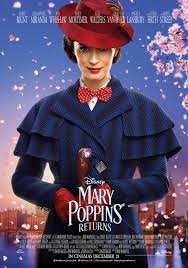
Emily Blunt is practically perfect in every way in Mary Poppins Returns

Director: Rob Marshall

Cast: Emily Blunt (Mary Poppins), Lin-Manuel Miranda (Jack), Ben Whishaw (Michael Banks), Emily Mortimer (Jane Banks), Pixie Davies (Annabel Banks), Nathanael Saleh (John Banks), Joel Dawson (Georgie Banks), Julie Walters (Ellen), Colin Firth (William Weatherall Wilkins), Meryl Streep (Topsy), Dick van Dyke (Mr Dawes Jnr), David Warner (Admiral Boom), Jim Norton (Mr Binnacle), Jeremy Swift (Hamilton Gooding), Kobna Holdbrook-Smith (Templeton Frye), Noma Dumezweni (Miss Penny Farthing)

Some sequels go into production even before the first film hits the cinemas. Others give you a good long wait – and Mary Poppins has had you waiting 54 years. Of course, part of that was down to her creator, PL Travers. Travers so hated the Disney original (I mean, she really hated it) she outright banned all other adaptations of her work – but her estate were far more open to the prospect (and let’s be honest, probably also to the money) that Disney could finally go ahead with a sequel.

And thank goodness for that, since this delightful film is practically perfect in every way. It’s 25 years since the events of the first film, and Michael Banks (Ben Whishaw) is now a widower with three children, whose home is about to be repossessed by the bank for non-payment of loans. His sister Jane (Emily Mortimer) is trying to help, but the pressure and sadness are showing on Michael and are forcing his children Annabel, John and Georgie (Pixie Davies, Nathanael Saleh and Joel Dawson) to grow up fast. The Banks family is in trouble – so it’s the perfect time for the arrival of Mary Poppins (Emily Blunt) to save the day – with a little bit of help from gas-lighter Jack (Lin-Manuel Miranda).

Mary Poppins Returns is a triumphant mix of nostalgia and originality, that walks a very difficult tightrope between being a loving pastiche and tribute to the original film while also managing to bring its own original charm and magic touch. That’s a difficult trick to pull off – but it basically takes a slight remix of the original film’s story and adds a heft of emotional impact to create something that feels modern and fresh while also being very close tonally to the original.

This is never clearer than in Emily Blunt’s sublime performance as Mary Poppins. If there is anyone who had a more difficult job in this film than Blunt I can’t think of them. She had to take on the most iconic character of an iconic actress – and does so brilliantly, but creates a character who feels an equal mix of both Andrews and Blunt. This is clearly the same character as before, but Blunt mixes in a wonderful heart-warming care and concern under the pristine English exterior that melts the heart. She has a glowing twinkle to her, an almost bottomless charm with an endearing delight for the wonder and silliness that is part of Poppins world. And boy can she sing and dance? She carries the film with effortless grace – to such endearing effect that, just like with Julie Andrews, you miss her as she becomes less prominent in the final act.

And of course she is matched by a superb company of actors. Lin-Manuel Miranda makes the transition to the big-screen like a duck to water, hugely loveable, wonderfully charming and superb (as you would expect) at the musical sequences. The three children give exemplary performances, with never a hint of sickly sentimentalism. Emily Mortimer is radiantly giddy as Jane, while Ben Whishaw will bring a lump to the throat as a Michael who is struggling under a huge amount of grief.  That’s not the mention wonderful turns from the whole of the cast, especially from Holdbrook-Smith as a kindly lawyer.

All these actors are “marshalled” brilliantly by director Rob Marshall. With his experience of musicals – both on screen and stage – Marshall knows his stuff and brings all his experience to bear here to create a sequel that will be seen (I’m sure) as a worthy companion to the original. Marshall’s direction of the musical sequences is faultless. He knows exactly how and where to place the camera for maximum effect, and gets just the right tone and mood from these scenes. He’s also, let’s not forget, a brilliant choreographer and has put together some exquisite sequences, not least the lamplighter song Trip the Light Fantastic, a whirligig showstopper of a number that if you saw it in the West End would have the whole crowd on their feet.

The songs make for easy criticism (reviewers seem duty-bound to say they are not as good as the original) – but to these ears Marc Shaiman and Scott Whitman’s songs and scores are both catchy and engaging. Give them time and I’m sure you’ll find them as replete with impact as the Sherman brothers’ tunes from 1964. Saying that, there might be one musical number too many – but that’s a very minor criticism. 

Because this is a film that gets so much else right. The storyline is certain to leave a lump in the throat, with its delicate handling of grief and the sadness both of growing up and also children being forced to leave their childhoods behind in impossible circumstances. These are universal themes – and they certainly impacted on me, and on a cinema packed with families all of whom were engrossed. That’s part of the magic of what Marshall has achieved here – heck, even the final Big Ben set-piece starts pushing you towards the edge of your seat in tension. I also loved the bravery of the colour-blind casting. It’s a film that stands on its own feet so well, it almost takes you out of the film when Dick van Dyke appears at the end – it doesn’t need the cameo, this film is its own beast.

Mary Poppins Returns will leave a smile on your face and a glow in your heart. It’s totally lovely from start to finish. Emily Blunt is superb (with wonderful support from all) and Rob Marshall triumphs as director and choreographer in this, surely his finest movie ever. It’s got something for all ages, and a truly heart-warming story. It takes everything that works so well in the first film and builds on it. It’s a wonderful mixture of homage and originality, that you will enjoy time and time and again. Practically perfect!

Roma (2018)

Alfonso Cuarón’s beautifully filmed semi-auto-biography

Director: Alfonso Cuarón

Cast: Yalitza Aparicio (Cleo), Marina de Tavira (Sofia), Fernando Grediaga (Antonio), Jorge Antonio Guerrero (Fermín), Marco Graf (Pepe), Daniela Demesa (Sofi), Diego Cortina Autrey (Toño), Carlos Peralta (Paco), Nancy García (Adela), Verónica García (Teresa), José Manuel Guerrero Mendoza (Ramón)

All great artists come from somewhere. Experiences fashioned and moulded them. And great storytellers often feel an urge to dramatise and explore their own backgrounds, to bring these events that formed them as artists to life for a wider audience. It’s what Alfonso Cuarón does here with his semi-autobiographical Roma, a Federico Fellini-inspired meditation on events from his own childhood and upbringing, filmed with magnificent, patient lushness.

Despite its semi-autobiographical nature, Roma actually revolves not around the young version of Cuarón (he in fact is hard to identify in the film, but is probably the imaginative younger son Pepe) but Cleo, the family’s live-in maid. Set in 1970-1, the household comprises a middle-class Mexican family (husband a doctor, wife a chemist) and three live-in servants. The film follows a year or so in the life of the family and Cleo, including her surprise pregnancy and the repercussions of that on Cleo, as well as the impact of troubles in the marriage of the parents Antonio and Sofia. 

Cuarón’s debt to Fellini’s semi-autobiographical films, which turned his own childhood and career into a sort of filmmaker’s fable, is clear – heck even the title itself is a clear nod to Fellini’s own childhood story also titled Roma. It’s a poetic presenting of a version of events that may have happened to the filmmaker, and it feels personal and filled with meaning.

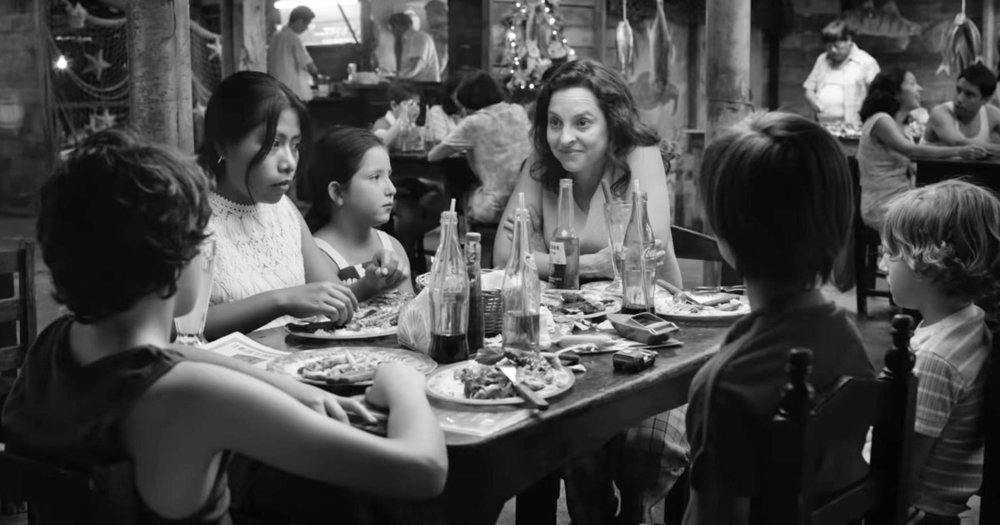
This Roma is a lusciously filmed, gorgeously meditative, visual treat. Shot in crisp and clear black and white, the camerawork is sublime – slow and gentle, carefully following events. Several shots use a slow dolly shot in an arc, to give the feeling of your head turning to take in scenes and the events within them. Cuarón presents a string of arresting and beautiful images, and the film’s lyrical observational tone – like a gentle Mexican Mike Leigh fable – lets the action soak over the viewer and lure you into caring for the characters and the events. 

I say that, because actually very little happens for large chunks of this film, other than following the lives of the family and the everyday events they deal with, from cleaning up dog’s mess from the drive, to trips to the cinema. It’s this air of ordinariness, this lack of event, that gives the themes bubbling under the surface a lot of their strength – namely the shock pregnancy of Cleo and the clear marriage break-up taking place between the two parents. These darker themes – as well as the potential political radicalism of one minor character – are dangerous undercurrents that threaten, but don’t overwhelm, the normality of many of the events. Cuarón lets them play as subtext, while keeping the event and drama to a minimum – this helps make the drama feel extremely real.

However, it also means that when these themes start to pay off into more traditionally dramatic events in the final quarter of the film, it carries a surprising and sudden emotional force that caught me off guard. Somehow, from just living in and among this extended family, and essentially observing their day-to-day life, it set me up to invest even more in the turmoil that threatens their happiness, as those darker currents that had been kept under the family’s (and the film’s) radar burst up onto the surface. So suddenly, at the end of the film, I found myself actually choking back a few tears at the genuine and real emotion that the film suddenly gives us.

This is helped by the naturalistic performances of the cast of non-professional actors. I often feel that the reality of performances like this, this neo-realism approach of encouraging people to play versions of themselves, a la Bicycle Thieves, is as much to a tribute to the patient, gentle and subtle direction of the film-makers as it is to the actors. Cuarón certainly worked with his cast here – shooting the film sequentially to help the actors develop their performances as the film’s story itself develops. Saying that, Yalitza Aparicio is intriguing as the dedicated maid and I was extremely taken by the strength of Marina de Tavira as the mother holding her family together.

What I found less successful about the film was the fact that this story is meant to be about Cleo, but I’m not sure what we really learn about her. Cuarón partly covers her lack of experience by reducing her dialogue to a minimum and letting her eyes convey her story. It’s just I’m not sure what story there really is. Events happen to her – and clearly take an emotional toll – but it never feels (to me) that we get an insight into her character, to her real inner life. We get glimpses but she remains a slight cipher for events that happen to her: what impact do they have on her? How does she change? What does she learn? Crude as “learning” can be in drama, Cleo feels basically the same at the end of the film as she does at the beginning. 

In fact if this film was in English, or set in England, I can imagine it being savaged for its presentation of the servant as a woman who seems to define nearly all her life by her dedication and service to her employers. There is a certain sweetness at Cleo being treated like one of the family, and covered in warmth and affection, but she still gets ordered to clear dog shit off the drive. If Downton Abbey is often criticised for the paternalistic view the employers have of the lower classes (sweet as it is to see the care and concern Sofia treats Cleo with), surely this film is guilty of it as well? The film also flips this with those same lower classes integrating their own contentment with those of their masters. At times Roma feels like a man paying tribute to his nanny by saying “she went through terrible things, but the important thing was she was always there for us”. Which somehow points exactly at how much he really knew about this person, even if the film seems to show the warts and all of her life. 

Roma is a beautiful and poetic exploration of a childhood – but it feels like it has the understanding of a child. It doesn’t really scratch below the surface to give us the adult perspective, to interpret what the adults are thinking and feeling. It treats the audience like the children – we see things, but we don’t get down into the emotional depths of its characters’ stories. Don’t get me wrong – there are scenes laced with emotional force – but it’s because scenes such as tragic childbirth or danger to children are going to carry emotional force regardless. It doesn’t feel like the depth is connected to the characters. For all the time we spend with Cleo, I couldn’t describe at all what she is like or who she really is (except maybe “long suffering”, “dedicated” or “kind”). For all the film’s beauty, charm, poetry and joy it’s somehow, ever so slightly, empty.

The Book Thief (2013)

Sophie Nelisse is The Book Thief in this worthy, dull adaptation

Director: Brian Percival

Cast: Geoffrey Rush (Hans Hubermann), Sophie Nélisse (Liesel Meminger), Emily Watson (Rosa Hubermann), Nico Liersch (Rudy Steiner), Ben Schnetzer (Max Vanderberg), Heike Makatsch (Liesel’s mother), Barbara Auer (Ilsa Hermann), Roger Allam (Death)

Every year you get prestigious film versions of novels that have soared up the bestseller lists. Some of these are good or even great films. Other are so lifeless, listless and lacking in spirit they leave you wondering what on earth people got so fussed about the original for. That’s the case here with The Book Thief.

In late 1930s Munich, young Liesel (Sophie Nélisse) is fostered with a local decorator Hans (Geoffrey Rush) and his wife Rosa (Emily Watson). Liesel has a fascination with books – despite not being able to read and write – and soon Hans is teaching her literacy. Liesel has a compulsion to “borrow” books – first from a burning pile of Nazi forbidden tomes, then from the library of the wife of the local mayor. But it’s dangerous to draw too much attention to the family, particularly when they are hiding a young Jewish man, Max (Ben Schnetzer). 

I’ve not read The Book Thief. I can’t say that I feel the need to dash out and do so after this bland, middle of the road picture that makes Fascist Germany seem very picturesque. The film largely fails, like so many films before it, to translate the joy of reading into a visual language so the whole “book thief” concept of the title quickly gets pushed to the margins in favour of a series of episodic events based around Nazi Germany and Second World War tropes that already feel a bit tired. 

Percival’s award-baiting film doesn’t seem like it wants to bring (or is capable of bringing) something unique or interesting to the setting, instead going through the motions as prettily as possible. And the film does look great, I will give it that. It also sounds pretty damn good, not least through a playful and rich score from John Williams (his first original score for a non-Spielberg film for decades). But it never really gets anything special from the content. In fact, that very chocolate-box beauty of the film seems to run contrary to the setting of Nazi Germany. The awards-friendly beauty envelops the film like treacle.

The book was written from the prospective of Death, but, the film seems to drop this unique aspect as soon as it possibly can. Again, it’s a sign that the film cannot reproduce what worked in the book – by stripping out its most unique and interesting point, it makes the film feel as generic as it possibly can. Roger Allam is a wonderful choice as the richly voiced narrator – but he’s so rarely used in the film that when Death talks about how fascinating he found Liesel you are simply left wondering why. 

In fact that why is a real problem with the film – it’s what you’ll be asking all the way through. Why? Why is anything really happening? Why is Death telling us how different and striking this story is when everything we see in the film feels pretty familiar? What is the point of this film or the message it is trying to give us? For a film that tackles war, fascism, persecution of the Jews, and childhood innocence, it seems empty all the time.

And that’s the problem with the film. It’s all about the pretty presentation. The characters speak with forced German accents that make it feel even more like a pretty Hollywood Golden Age film. (By the way the bad Germans, like the Nazis, they speak only in German. Make of that what you will.) The acting is pretty good, Sophie Nélisse is a great find as the heroine. But there is nothing special about it at all. It’s seemingly made entirely as a prestige product for potentially winning Oscars. Any of the depths of uniqueness of the book seems to have been shaved off in service of that, and we’ve been left with a chocolate box that feels like it’s lacking the sweet richness you’d expect to find in it.

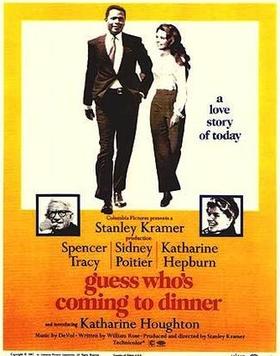
Guess Who's Coming to Dinner (1967)

Hepburn, Tracy, Poitier and one awkward meal: Guess Who’s Coming to Dinner

Director: Stanley Kramer

Cast: Spencer Tracy (Matt Drayton), Sidney Poitier (John Prentice), Katharine Heburn (Christina Drayton), Katharine Houghton (Joey Drayton), Cecil Kellaway (Monsignor Mike Ryan), Beah Richards (Mrs Prentice), Roy E Glenn (Mr Prentice), Isabel Sanford (Tillie)

Stanley Kramer’s films today are quite easy to knock. In fact, to be honest, they were pretty easy to bash back then. Kramer was a man with immense social conscience, and his films carry the same liberal agenda. They were about “Big Themes” and they had a “Message” that they very much wanted the viewer to take home with them. You can see why so many of them were littered with Oscar nominations. Guess Who’s Coming to Dinner is perhaps the most famous of his liberal films, and while we’d love to think the theme it covers today – interracial marriage – isn’t still an issue, I  think many people would say it still was.

Joey Drayton (Katharine Houghton) returns to the home of her liberal parents – Matt (Spencer Tracy) a newspaper editor and Christina (Katharine Hepburn) an art gallery owner – with Dr John Prentice (Sidney Poitier) whom she announces as her new fiancé, after a whirlwind romance in Hawaii over the past two weeks. Her parents, Matt in particular, are hit for six – and their doubts are shared by John’s parents (Beah Richards and Roy E Glenn). Can the older generation overcome their concerns to celebrate the happiness of the younger? 

Guess Who’s Coming to Dinner is a sensitive, very carefully handled film, whose liberal earnestness practically drips off the film. It’s so hand-wringingly liberal in its outlook it’s almost impossible not to mock it a little bit. Not least because John is so ridiculously overqualified – a professor of medicine, one of the world’s leading experts on tropical diseases, a nominee for the Nobel Prize – that you can’t help but wonder what he sees in her not vice versa.

This over-qualification was, by the way, an intentional move by Kramer, who was keen that the onlypossible objections to John could be the haste of the engagement and the colour of his skin. It’s the latter point that becomes the main discussion point, with some hand-wringing concerns around the attitudes of the wider world, and Matt Drayton in particular being moved to question whether he can practise the liberal agenda he preaches. It’s no real surprise to say that eventually all the characters sit down to the eponymous dinner in blissful harmony, but the film is delivering a positive message here.

You could say that it would have been more daring to make John, at the very least, a middle ranking accountant or something at least. But, let’s be honest, at the time this film was made interracial marriages were literally illegal in 17 US states (as the film name checks). Saying that though, the possibility that a BAME male may feel uncomfortably out of place in liberal White America has hardly gone away. It’s one of the reasons why I think the film still works and carries a message today – because if we want to think that these problems have gone away completely today, we are kidding ourselves.

Therefore, however right-on the film may be, it’s still relevant today and it’s still got something to teach us. The world we live in now may well have pushed some of the views and issues expressed in this film underground – we certainly don’t (I hope!) bandy around the word “Negro” as often this film does – but they are still there. So Kramer’s hopeful message of reconciliation and overcoming knee-jerk prejudice is still one that packs a punch. It’s that message that brought such an amazing cast on board, not least Spencer Tracy and Katharine Hepburn as the Drayton parents. Tracy was extremely ill at the time of the film’s production – he died 17 days after filming completed. Tracy was so fragile – as can be clearly seen at several points – that he could only film for three hours in the morning, and only on intermittent days. The film was only made with him because Kramer, Hepburn and Tracy agreed to take no up-front fee, as Tracy could not be insured to finish the film. Hepburn in particular – Tracy’s partner for over 20 years – nursed him through the film, helping with his lines and carefully watching to make sure he was not overcommitted. Not a single shot of Tracy was taken on location due to his ill-health, and a number of scenes were cleverly shot to avoid Tracy having to be on set as often as possible.

Despite all this, Tracy is magnificent. His underlying warmth and humanity work so well for the part that you constantly warm to him, even while you are as frustrated as many of the other characters  with his lukewarm reaction (bordering on hostility) to the wedding. You totally feel empathy for his situation, while at the same time wanting to give him a slap in the face. And man Tracy knows how to react – he is marvellous in a scene with Richards, where all he does is stand, half turned away from the camera and listen. But in this scene you see Drayton think and reassess everything he has considered in the last 24 hours.

But the whole film is building towards the final 10 minutes, which is nearly a complete Tracy monologue – and this is extremely emotional, not least as we are watching a great actor, aware he is dying, knowing that this is his last acting moment, talking emotionally of his love for his fictional wife, while his real life partner of 26 years sits tearfully in shot. It’s that extra level that really creates the emotional force.

Very good as Hepburn in, it’s clear in many scenes that her mind is more on Tracy than her performance – but she still has many wonderful moments, with similar emotional force. She also has one of the film’s funniest moments, where she imperiously dismisses a gallery colleague for barely hiding her racist disgust. Hepburn won the Oscar but stated she had never watched the film, finding the memory of making it far too raw.

The rest of the cast are also good – you can tell their commitment to the film – with Poitier conveying both human decency and firmness of character. Kellaway is very good as the only person in the film who expresses open-minded joy at the union. Richards has a wonderful emotional speech about the value of love, while Glenn conveys all the awkward frustration of a father who cannot understand his son. 

Guess Who’s Coming to Dinner is a very worthy film – and boy it knows it – but it’s got a sort of innocent idealistic purity about it. Its makers clearly believed that they were making a film that would contribute towards changing attitudes in society. And for all its heavy-handed liberalism, you can say it did to a certain extent – but not as much as it would like to. For that reason, there is a sort of additional poignancy to watching it, knowing that an issue the film makers clearly hoped would be gone for good in 30 years would in fact still be with us 50 years on. So for all its flaws, you can’t help but respect and even feel affection for it.

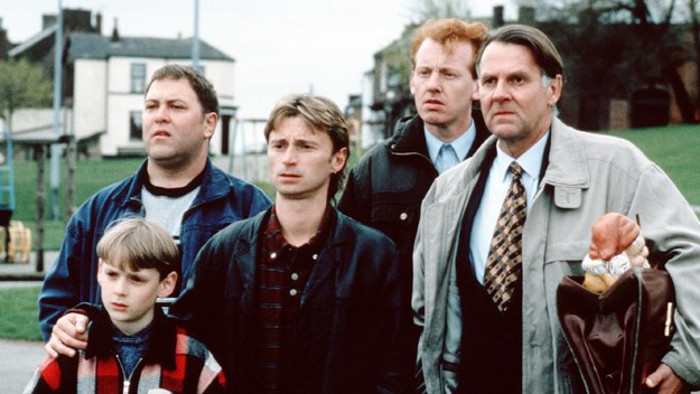
The Full Monty (1997)

Steelworkers from Sheffield have no options but to turn their hand to stripping, in British phenomenon The Full Monty

Director: Peter Cattaneo

Cast: Robert Carlyle (Gaz), Mark Addy (Dave), Tom Wilkinson (Gerald), Lesley Sharp (Jean), Emily Woof (Mandy), William Snape (Nathan), Steve Huisan (Lomper), Paul Barber (Horse), Hugo Speer (Guy)

In the summer of 1997, Britain was a depressed place. The country was in the middle of an intense mourning for the death of Princess Diana. Perhaps that’s why a film all about overcoming despair and to turn it into heart-warming triumph suddenly gripped the whole nation and emerged from nowhere to become the most successful British film of all time. No one expected a film about Sheffield strippers to do that.

The economy has dropped out of the Sheffield steel market, and hundreds of people are out of work and desperate. Gaz (Robert Carlyle), a genial waster, needs £700 to pay his child maintenance and not lose access to his son Nathan (William Snape). Dave (Mark Addy) has serious self-image problems, his disgust at his own weight is leading him to push away Jean (Lesley Sharp), the wife he can’t believe loves him. Gerald (Tom Wilkinson), their ex-foreman, is so ashamed of losing his job he hasn’t told his wife that he’s been unemployed for six months and is facing financial ruin. Together with three other men with no other options, they decide one way to get money quick is to follow the example of the sell-out male-strippers at the local working club – with the unique selling point that they will go “the full monty”.

It’s been nearly a decade since I saw The Full Monty. Over-exposure made it an easy film to feel a bit sniffy and dismissive about, like it was a happy accident that the film came from nowhere to achieve staggering success. But that’s hugely unfair. Watching it back now, it’s amazing how much it’s a comedic film grounded in a sense of desperation and pain, and then how brilliantly it uses this to create empathy for its characters, and how wonderfully this helps you to share their joy and triumph when they are finally taking control of their own destinies.

The Full Monty emerged from a troubled production history. It was hugely difficult to find funding for the film. It took years to get the filming sorted, and casting was difficult – in a parallel universe Nicholas Lyndhurst and Russ Abbott played the lead roles. Robert Carlyle has described the making of the film as being totally chaotic (he further claimed he was convinced the film was “pish” and heading for disaster). The first cut was met with such negativity from the distributors that it nearly ended up direct-to-video, until the producers begged for one more shot at editing the film. But then it emerged as one of the most widely loved UK films of the 1990s, eventually being nominated for four Oscars (Picture, Director, Screenplay and a win for Best Score). That’s what I call a turnaround!

It’s also strangely fitting for the film itself. The opening footage showing a prosperous and bustling Sheffield in the 1960s is a perfect set-up for the Sheffield of the 1990s with unemployment rampant, and our characters confined to endless days of drifting around the city and failing to gain any benefits from a workshop at the unemployment office. Every frame of Cattaneo’s well shot film stresses the relative bleakness of the environment, the run-down world the characters inhabit, and that sense that all promise is missing from the future of this city.

In the middle of this, the film doesn’t shy away from looking at – with plenty of jokes – plenty of themes which are hardly your default expectations for a comedy movie. We’ve got depression, self-loathing, body-image, fathers’ rights and suicide: if that’s not a comic gold on paper I don’t know what is!  However, what is so perfect about the film is how well it judges the tone when dealing with these themes. Simon Beaufoy’s script is warm, humane and above all immensely empathetic. Never – not once – are any of these characters the butt of the humour. While we may see the dark comedy that can occur, we never laugh at the characters.

The script gets a perfect balance between all this desperation and pain and well-worked, down-to-earth, honest and affecting humour. It’s also genuinely funny, with several stand-out gags. As an interesting side note, perhaps the film’s most famous comic moment – the boys standing in the dole queue, involuntarily practicing their routine when Hot Stuff starts playing in the radio – nearly didn’t make the film, as the producers felt it was unrealistic. Just as well they left it in, as it perfectly captures the mood of the movie.

On top of which, the film taps into the human bonds that can grow in adversity. One of the film’s principal delights is seeing this odd bunch slowly begin to come together like a family. We see them confide in each other, listen to each other’s problems, accept each other for what they are. It’s a film about the triumph of the human spirit and the rewards that can come from opening your heart to other people when all seems lost.

It further helps that Simon Beaufoy’s script draws such terrific performances from the actors. Carlyle (for all his doubts about the film) plays Gaz with a perfect, low-key, commitment and empathy. Carlyle in many ways makes the film work as well as it does because he plays the truth of each scene and is willing to be the film’s loadstone. He plays every moment truthfully and is as effective showing Gaz’s chancer wasterness as he is at allowing the real pain and fear Gaz feels at the prospect of losing his son.

The film also changed the careers of Addy and Wilkinson, turning the two into character actor superstars. Addy is fabulous as the self-loathing Dave: having had problems myself with being concerned about my own image, seeing the psychological damage Dave inflicts on himself through his own inadequacies is very moving, and perfectly played by Addy – who also brings a great deal of comic mastery to the film. Wilkinson is perhaps the pick of the bunch as the seemingly proud and haughty Gerald, who hides intense fragility and pain under the surface. He has a truly affecting breakdown scene after a job interview gone wrong – and the reaction acting to this from Carlyle and Addy is also by the way marvellous. It’s a terrific (BAFTA winning) performance.

And then you hit the final stripping scene – and all that empathy the film has been building pays off, because the triumphal dance and strip down is hugely heart-warming. After seeing the men go through such difficulty and despair it’s really affecting and joyful to see them finally take control of their own destinies. How could you not be wrapped up in it? How could a whole nation not take the whole thing to their hearts? Put out of your mind all those thoughts that this can’t be that good, or that we were all mistaken in 1997: this is genuinely very good, thought-provoking and hilarious stuff.

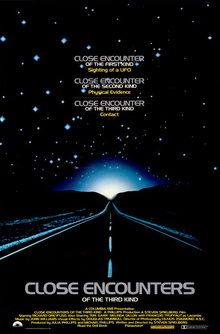
Close Encounters of the Third Kind (1977)

We Are Not Alone in Spielberg’s optimistic sci-fi classic Close Encounters of the Third Kind

Director: Steven Spielberg

Cast: Richard Dreyfuss (Roy Neary), François Truffaut (Claude Lacombe), Teri Garr (Ronnie Neary), Melinda Dillon (Jillian Guiler), Bob Balaban (David Laughlin), J. Patrick MacNamara (Project Leader), Josef Summer (Larry Butler), Robert Blossom (Farmer), Lance Henriksen (Robert)

If you had any doubt that Spielberg in his prime was a fundamentally optimistic filmmaker, then sit down and check out this warm, extremely personal, tale of mankind encountering aliens. It’s one of the very few films that Spielberg also wrote the script for, and every frame is full of his trademark yearning love of the unknown and the childish sense of adventure in us all. In an era where you couldn’t move for depressingly grey films about the corruption of America, Close Encounters is all about dreams and hope.

Throughout mid-West America in the present day, strange crafts covered in lights are seen in the skies by ordinary people like repairman Roy Neary (Richard Dreyfuss). The American Government is very aware of the presence of aliens – recently in the Mojave desert, plans and ships missing since the 1940s have recently reappeared in perfect condition. Led by their UFO expert Claude Lacombe (François Truffaut), the government does its best to control access to, and knowledge of, the aliens. However, Roy Neary and hundreds like him are unable to shake obsessive visions of a strange landmark they seem drawn to create in art. While Neary’s wife Ronnie (Teri Garr) is unable to understand his obsessions, Neary finds a kindred spirit in Jillian Guiler (Melinda Dillon), whose young son has been taken by the aliens.

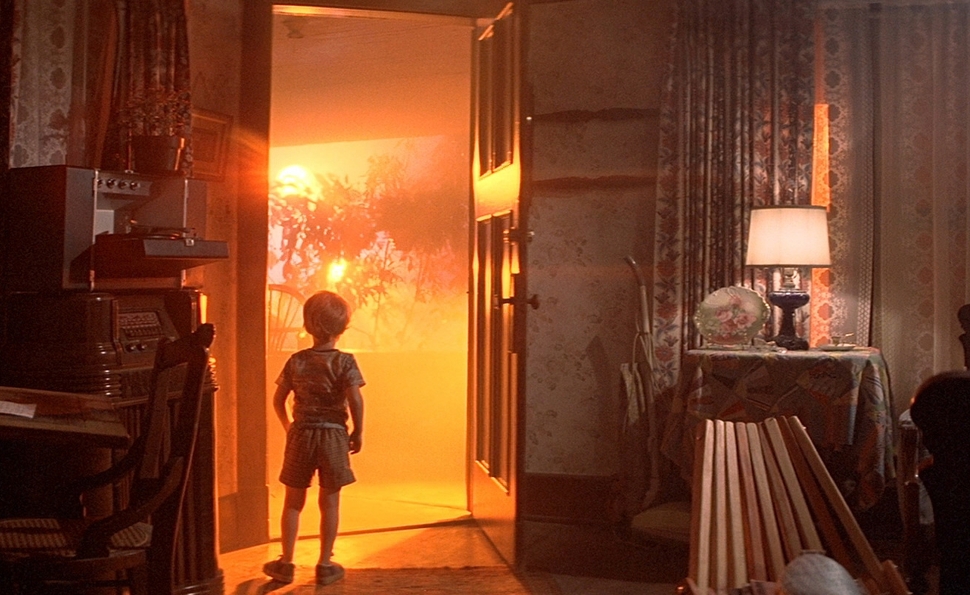
Spielberg has spoken about how, if he could take one image from one of his films to summarise his career, he would choose the one of young Barry Guiler opening the door to reveal an outside flooded with alien light. This also perfectly sums up the movie – a young, optimistic, innocent and instinctive reaction to something unknown but strangely wonderful. If that’s not Spielberg’s reaction – particularly at the start of his career – to the new and unusual I don’t know what is. The shot captures all these feelings, as well as being incredibly arresting and beautiful in itself. It places the viewer at the doorway (if you’ll excuse the pun) of hope and new possibilities in the future.

But then that is the whole film, a gentle exploration of what it might mean to discover we were not alone, especially if our alien visitors were unknowable but essentially benign. Plot-wise, very little happens. The aliens come, we puzzle out their message, the aliens come back. The last 30 minutes of the film are effectively an awe-inspiring light display as the aliens arrive. We learn nothing at all about what they want, what they are doing or what they wish to tell us. Instead it’s left entirely up to our own imaginations, and the magic is in finding our horizons broadened. Like Spielberg, the film is staring up at the sky and dreaming about the future.

And this all works extremely well. The cynicism of the modern age makes you want to knock Close Encounters, more than any other film in Spielberg’s cannon. You want to look at it like a cynical grown-up, to point out its romantic optimism and its gentle humanitarianism. You want to say that it’s unlikely that a government official with such control as Lacombe would be such a warm and wryly amused figure. You want to say that the army would probably be much more defensive in its attitude to the aliens. But the film is so swept up in its joyful discovery that you don’t mind.

Spielberg’s brilliance as a visual stylist here also works massively in the film’s favour. The striking images of the aliens travelling through the countryside or soaring through the skies are mixed with Spielberg’s mastery of the small scale and personal. He’ll compare the simple and homespun with moments of pure wonder and majesty. 

He can also brilliantly mix tension, wonder and fear. The scenes with the aliens intruding in the Guiler home, and later trying seemingly every entrance to the house to try and take Barry with them, are only a few degrees away from genuine horror. Watching the awe-inspiring arrival of the aliens, and their light show around a government facility in the wilderness, it’s hard know not to see how close this is in style, filming and design to the horrifying face-melting conclusion of Raiders of the Lost Ark.

All this optimism and yearning finds its expression in Richard Dreyfuss’ lead performance as Roy Neary. A deliberately average working man, with no desire to rock the boat, Neary is clearly a dreamer turned conformer, a man who still has a childish fascination with models, toy trains and Disney films. Perhaps this is why the aliens have a bigger effect on him than anyone else – it’s a chance for him to discover the sense of wonder and adventure you think he has probably left behind in adulthood. Dreyfuss sells playing a character who is essentially obsessive, manically building a model of the alien landing site, which involves trashing his house and scaring away his wife and kids.

Ah yes the wife and kids. If there is a problem with the film (and even Spielberg has acknowledged this) it’s that it’s very much a young man’s film. Neary’s wife and children are an encumbrance. Teri Garr, in a thankless role, is a nagging shrew who wants her husband (reasonably enough) to grow up and focus on supporting his family. His kids lack understanding or interest in their father. When they leave Neary, he seems (to be honest) not really that concerned – and their absence never troubles him again from that point. While I get Spielberg is focusing on the dreamer as a grown man, casting wife and children as problems that need to be overcome rather than people for whom he has considerable responsibility is something it’s harder to forgive the older you get. It’s easy to see Neary as more than a bit selfish.

Spielberg’s more conservative view of women and especially mother’s comes out in Jillian Guiler’s fierce maternal love for her child – needless to say she’s not fussed about the aliens, only in finding Barry. The kidnapping of Barry – harmless as it might be – is a sort of child-loss horror that feels even more unsettling today with our fears of what might happen to our children. But Dillon gives a good performance as the film’s mother figure, and does at least have the most emotionally true plotline, even if the film doesn’t want to touch the dark implications of her son’s kidnapping.

But this is a film about hope and dreaming, and when it focuses on that it does extraordinarily well. It’s a marvellous and visionary film, full of arresting and beautiful images. Truffaut, very good as the French UFO expert, I’m sure would have loved the film’s magical, old-school, hopeful Hollywood style. Spielberg is a clever and skilled director, with plenty of heart – even if he still at this point didn’t perhaps understand parenthood (something he himself has acknowledged) – and he crafted in Close Encounters a very personal film of an adult who still clings to childhood, who wants to look up at the skies and dream.

Parenthood (1989)

Steve Martin struggles with the demands of fatherhood, in the rather sweet Parenthood

Director: Ron Howard

Cast: Steve Martin (Gil Buckman), Tom Hulce (Larry Buckman), Harley Kozak (Susan Huffner), Jason Robards (Frank Buckman), Rick Moranis (Nathan Huffner), Martha Plimpton (Julie Buckman), Keanu Reeves (Tod Higgins), Eileen Ryan (Marilyn Buckman), Helen Shaw (Grandma), Mary Steenburgen (Karen Buckman), Dianne Wiest (Helen Buckman), Joaquin Phoenix (Garry Buckman-Lampkin)

If there is one thing everyone knows, it’s that families can be complex. That’s why good films about family life resonate so well – everyone (and I mean everyone) can find something in it that echoes with their own experiences. Parenthood is very good at this sort of thing, an entertaining but also tender and rather sweet comedy-drama about an expansive family and their many triumphs and problems.

Frank Buckman (Jason Robards) is the patriarch, a distant father with four children all now raising families of their own. Gil (Steve Martin), married to Karen (Mary Steenburgen), desperately wants to be the perfect dad he feels his own never was, but is struggling with the increasingly apparent emotional problems in his oldest son, 12-year-old Kevin. Helen (Dianne Wiest) is divorced, her ex-husband wants nothing to do with their children. Her son Garry (Joaquin Phoenix) is a socially withdrawn teenager, while her elder daughter Julie (Martha Plimpton) isn’t interested in education only in her relationship with gentle but useless Tod (Keanu Reeves). Susan (Harley Kozak) is married to Nathan (Rick Moranis) who is obsessed with turning their young daughter into a child prodigy. Frank’s favourite son is the feckless Larry (Tom Hulce), a wastrel sponger who turns up after years with an unexpected young son, Cool, in tow, in whom he shows little interest.

You can see just in that quick summary you’ve got a huge array of issues for the film to tackle, all of which it manages to do with sweetness, humour and also a certain amount of emotional truth. The film manages the ups and downs, the flat-out comedy and the heartbreak with real confidence, meaning you are moved smoothly from broad laughs to genuine “ahs” of sweetness. 

With the exception of the shallow and selfish Larry (every family has that black sheep), each of the characters has moments to demonstrate their depth and truth, showing sides of themselves you wouldn’t expect. In a large-cast film that delivers in a tight, well-structured two hours, that’s quite an accomplishment to be honest.

Ron Howard directs all this with fabulous control, a reminder that he’s actually quite a skilled director of comedy, with a good sense of timing and pacing. He’s also a superb director of actors, and there isn’t a weak link in the whole cast, from the youngest child actor to the most experienced Broadway veteran. 

Steve Martin is fabulous as the centre of the family saga, the dad desperate to be the best dad he can be, but who overly worries and obsesses about every detail to try and be as perfect as possible. Martin is ace at this sort of stuff, this gentle comedy grounded in reality, and totally understands how to make a character feel real and grounded. Combine that with his natural comic chops and willingness to embrace the absurd at moments – showcased here in a sequence where he desperately has to cover for a missing entertainer at his son’s birthday party – and he supplies many of the film’s stand out moments. 

Dianne Wiest (Oscar nominated) also manages a difficult balancing act in perhaps the film’s most interesting set of plotlines. Helen’s family covers the full range of teenage trauma, from a loving son who seems to turn overnight into a monosyllabic stranger to a daughter who rejects all her mother’s hopes for the future in order to spend time with a boy she doesn’t approve of. Wiest is not only extremely funny in some of her responses to these problems, but also heartrendingly real in her pain, confusion and frustration at not being able to help her children (or herself) as much as she wants, as well as the clear feeling that her life is somehow a failure compared to her two elder siblings. 

What’s also beautiful about the film is that none of these events or storylines work themselves out quite as you might expect. Young Garry (played excellently by an impossibly young Joaquin Phoenix, here billed as Leaf) has clear reasons for his feelings and is dealing with complete lack of interest his father shows in his life. Julie (Martha Plimpton, very good) isn’t the layabout teen you might expect, and has genuine feelings for Tod – who, under Keanu Reeves’ sweet, slacker style, is a man of far greater emotional depth than might be expected.

The other plotlines of the film are secondary to these, but are still wonderfully played and put together. The Moranis/Kozak plotline of “I’m an ignored wife who wants another baby” v “I’m trying to turn our daughter into a genius” is a bit more played for laughs, but the two actors know their stuff and deliver. Tom Hulce channels Mozart as the irredeemable Larry, but works very well with Jason Robards, who expertly portrays a man aware he was not the perfect dad. Again these scenes develop in ways you might not expect – particularly as regards Robard’s character.

The final sequence of the film, showing how the events and lessons of the film have changed the family but brought them together in different ways, and how they have changed and learned, should feel manipulative and pat, but because the whole film is done with generosity and warmth it actually brings a small tear to the eye with its sweetness and warmth. Parenthood isn’t perhaps remembered quite as well as it should be – but it’s a film that never fails to deliver and always leaves you feeling better about yourself. And you can’t ask more than that.

All That Jazz (1979)

Roy Scheider plays the director Bob Fosse in a barely-veiled-at-all autobiographical film All That Jazz

Director: Bob Fosse

Cast: Roy Scheider (Joe Gideon), Jessica Lange (Angelique), Leland Palmer (Audrey Paris), Ann Reinking (Katie Jagger), Cliff Gorman (Davis Newman), Ben Vereen (O’Connor Flood), Erzsebet Foldi (Michelle Gideon), David Marguiles (Larry Goldie), Michael Tolan (Dr Ballinger), Max Wright (Joshua Penn), William LeMassena (Jonesy Hecht), Deborah Geffner (Victoria Porter), John Lithgow (Lucas Sergeant)

It’s revealing when a director makes an autobiographical film. There are insights to be found about the sort of person they are – and the sort of person they want to present themselves as to the world. And All That Jazz is possibly the most striking autobiographical film ever made. You have to have a towering amount of ego to make a film showing yourself as a deliriously talented polymath, generally liked by everyone. And then you have to have a giddy self-awareness to give your semi-fictional doppelganger all your titanic faults, selfishness, cruelty and flaws. Let’s not even get into the psychology of turning your own death into a musical number, eight years before it happened.

Just like Bob Fosse, Joe Gideon (Roy Scheider) is a hugely influential choreographer and director who has changed the face of Broadway musicals before going on to become the Oscar-winning director of a string of critically acclaimed films. He is also a workaholic, addicted to a string of prescription drugs, a never-ending smoker, with a strong of failed marriages and affairs behind him. Just like Bob Fosse, in 1975 Gideon is staging his ground-breaking original production of a musical (Fosse was directing Chicago which clearly inspired the unnamed musical here), starring his ex-wife (and mother of his daughter) Audrey Paris (Leland Palmer, a frequent Fosse collaborator), living with his girlfriend Kate Jagger (played by Ann Reinking, who was Fosse’s real life girlfriend at the time). At nights and weekends he is editing The Stand-Up (a version of Fosse’s film about stand-up Lenny Bruce titled Lenny starring Dustin Hoffman). When he has a near fatal heart attack part way through this, Gideon starts to sink. Fosse on the other hand used the experience to write this movie. 

All That Jazz is an electric piece of film-making, full of Fosse’s dynamism. It’s not only crammed with fabulous song and dance numbers (some of the best Fosse work you’ll see) but it’s beautifully edited and paced. Fosse holds it all together so brilliantly you never feel the thing teeter on the tightrope like Gideon does (the first image of the film is appropriately Gideon walking a tightrope). It perfectly captures the high intensity, killer pressure of maintaining this constant state of activity, and suggests how much Fosse (clearly) believed his own life was a performance, every moment constructed and staged for maximum impact. 

And that’s what you wonder about the film. Does Fosse hate himself, love himself or some combination of both? It’s something the film just teases, with Gideon indulged in a series of fantasy-tinged cryptic conversations with Jessica Lange (another Fosse conquest allegedly) as some sort of angel dressed in white. Here Gideon of course flirts and charms as only he can, while answering with ambiguous amounts of truthfulness a series of questions about love, his background, his wishes and dreams. But even when he says these things, there is the half smile that suggests it’s only part of the story. Or maybe Gideon himself doesn’t even know where life ends and the story begins.

Fosse’s film is just about perfectly structured. Repeatedly we see Gideon going through the same daily ritual when he wakes up: Vivaldi, shower, cocktail of prescription drugs, eye drops, slap hands, “It’s a show time!” (with an ever increasing struggle to keep the energy up). As the tempo of this repeated introduction changes through the film, you get a perfect idea of the state of Gideon’s mind and mood – and his relentless attempt to turn his own life into a perfect performance.

In among all this, perhaps no film has ever showed a better understanding of the pressures of creating a Broadway musical. The opening sequence follows a series of exhausting auditions from literally hundreds of dancers desperate for a role in Gideon’s show, slowly being whittled down to the chosen few. The rehearsals are a punishing series of deconstructions as the dancers strive to match Gideon’s perfectionism. Rehearsal rooms are crammed, sweaty and uncomfortable. The money men hover over every scene, with an eye on protecting their investment. And then, we see the results suddenly of Gideon’s work with a Chicago-ish dance routine so sexually charged it is positively indecent. It’s genius on at least three levels.

The film revolves around Gideon, and the amount of time squeezed out of his personal life by his never-ending, passionate work commitments. Leland Palmer is excellent as his loving but deeply frustrated wife, supportive but all too aware of Gideon’s selfishness. The bond between them feels strong, real and above conventional marriage. Ann Reinking is equally marvellous as his lover, protégé, partner and you name it. Between these three characters there is a hugely warm performance from Erzsebet Foldi as Gideon’s shrewd but loving daughter. Fosse isn’t afraid to sprinkle real moments of family warmth in, as if trying to show Gideon all the things he is missing out on – one particularly outstanding moment is a song-and-dance routine Reinking and Foldi perform for Gideon after the premiere of his film The Stand-Up, as entertaining as it is charming.

But the film’s secondary motor, after Fosse’s directing brilliance (seriously, there are few Hollywood directors so undervalued, the man is a genius) is Roy Scheider as Gideon. I can’t really imagine a more bizarre sounding bit of casting: Jaws Chief Brody as a song-and-dance man, the world’s greatest (even slightly camp) choreographer. But Scheider is simply sublime in this role. It’s a towering, landmark performance of total commitment. He’s achingly human, supremely sad but also overflowing with warmth, humanity and humour while also being repeatedly selfish, difficult and demanding. It’s a performance of total absorption.

By time of the finale number (a truly bizarre version of Bye Bye Love, renamed Bye Bye Life, in which Gideon lives his final moments in a fantasy world, singing and dancing his way towards death in front of an audience of faces from past and present) the whole thing is so wonderfully overblown it doesn’t really matter. The film’s passage into the surreal and fantasy as Gideon gets increasingly ill (while showing less and less regard for his own health) will be a bit much for some, but I was honestly so into it that I didn’t care. 

Because the film is about this acute piece of self-analysis from the director, a Fellini-inspired sort of musical , in which the understanding (or lack thereof) we get of Gideon, and which he gains about himself, is most important. His conversations with Lange’s angel of death are intriguing and as informative about the man he really is as the man he wants to be. 

Fosse’s film is simply supremely well directed (Kubrick called it one of the best films he ever saw). Fosse’s editor (playing himself in the film as the editor of The Stand-Up) said if Fosse had actually died during the making of the film, he would have made sure his death was filmed and edited into the movie. I can believe it. The only musical you’ll ever see which doubles as a confession and a condemnation, which turns death and surgical procedures into wham bam musical numbers, and which never becomes maudlin or sentimental about the self-inflicted disaster the director is putting on himself – it’s brilliant.

Beginners (2010)

Christopher Plummer and Ewan McGregor are a father and son building a bond in quirky fable Beginners

Director: Mike Mills

Cast: Ewan McGregor (Oliver Fields), Christopher Plummer (Hal Fields), Mélanie Laurent (Anna Wallace), Goran Višnjić(Andy), Mary Page Keller (Georgia Fields), Kai Lennox (Elliot), China Shavers (Shauna)

Oliver Fields (Ewan McGregor) is a reserved man who has struggled to hold a relationship down because of his own emotional distance. His world is shaken when his father Hal (Christopher Plummer) comes out at the age of 75, after the death of his mother, and proceeds to lead an active life in the gay scene of LA, including taking on a boyfriend, Andy (Goran Višnjić). After his father’s death, reflecting on Hal’s love of life and increasing emotional honesty makes Oliver consider his own life and start to tentatively consider a relationship with a French actress, Anna (Mélanie Laurent).

This heavily auto-biographical film was based on the life and experiences of writer-director Mike Mills. It has moments of genuine sweetness and light, occasionally undermined by the slightly smug quirkiness that creeps into the story at several points. Mills sometimes tries a little too hard as a director, using montages of stock footage to place years into context and to add a quirky sheen to the drama.

In fact it’s that quirk that often gets in the way of the drama in the film, Mills relying too often on meet-cutes, a dialogue Oliver has (in subtitles) with his dog, jolly picture montages, the cartoons Oliver draws on themes like “The History of Sadness”, the achingly clever-clever graffiti Oliver sprays on walls etc. etc. Maybe I am just cold of heart but this sort of stuff gets on my nerves rather than awakening my warmer feelings. Clearly I’m getting old.

Someone who isn’t getting old is Hal. Played with Oscar-winning bravado and joie de vivre by Christopher Plummer, the film gets most (if not all) its emotional mileage out of Hal’s embracing of life and his equally profound regret at the years of concealment and emotional distance he inflicted on others. One tearful moment sees the extremely sick Hal holding Oliver’s hand on a bed, sadly reflecting he wanted to do this throughout Oliver’s childhood but didn’t feel he could. 

The film carefully positions Hal’s late acceptance of his personality and explosion of embracing life as an inspiration, and contrasts it with Oliver’s buttoned up repression. To be honest, someone as repressed and traditional as Oliver might well have taken slightly longer (you suspect) to deal with the fact that his dad comes out after the death of his mother – but then this is basically a father-son romance, so you can’t blame Mills for trimming down this expected drama. 

Instead the story focuses largely on Oliver learning to open his heart to a relationship with Melanie Laurent’s French actress (a relationship by the way so impossibly quirky the two of them meet at a fancy dress party – he’s dressed as Freud, she can only communicate through writing notes because she has laryngitis. To be fair it’s marginally less irritating than it sounds). This story is cross-cut with flashbacks to Hal’s last few years that illustrate different lessons Oliver learned from his dad.

This is all rather artfully and gently done, but very traditionally structured. The flashback material with Hal is far stronger and Christopher Plummer’s mix of playfully raging against the dying of the light and gentle emotion and sadness overwhelms the modern plotline. It’s hard to get wrapped up in Oliver’s stumbling shoot-yourself-in-the-foot courtship of Anna, when you have Plummer ripping through a beautiful monologue on how he was desperate not to be as distant as his own father. Even the jokes get overwhelmed – nothing in Oliver’s storyline is as amusing as Hal raving over garage music.

The real interest to be honest is in the relationship between Hal and Oliver, and the late blooming of emotional honesty and love between them (Oliver claims he can barely remember Hal from his childhood, and flashbacks confirm this). Even this however could have had more impact if the film had allowed more of this distance to be seen in the film, as we then lose the impact of the two characters starting to bond. 

In fact I’d love to have seen more of Hal and Oliver together, perhaps more intercut with flash-forwards about Oliver learning to accept love and joy into his life in the same way Hal did in his final years. Reversing the format, effectively. The warmest bond in the story is between Hal and Oliver and this seems a little lost. Ewan McGregor does his best, but he feels slightly constrained by the role, as if aware that he had the pressure of playing the director’s own life story. Melanie Laurent is adorable as Anna, but she feels like the sort of character one only meets in movies – beautiful, sexy, cute, showing the sort of incredible patience for the timid, confused, difficult Oliver that never happens in real life (in my experience).

Such a format change would also mean more Christopher Plummer, which is never a bad thing – and certainly wouldn’t be here, in one of Plummer’s finest performances: fun, witty, warm, kind, sad and gentle with a very touching relationship with his much younger lover (played very well by a sweetly naïve Goran Višnjić). It’s Plummer’s film and he rides above a story that often seems a little too unoriginal and quirky than you might have expected.

Black Panther (2018)

Chadwick Boseman is the legendary Black Panther in Marvel’s solid comic book outing

Director: Ryan Coogler

Cast: Chadwick Boseman (T’Challa/Black Panther), Michael B. Jordan (N’Jadaka/Erik Kilmonger Stevens), Lupita Nyong’o (Nakia), Danai Gurira (Okoye), Martin Freeman (Everett K Ross), Daniel Kaluuya (W’Kabi), Letitia Wright (Shuri), Winston Duke (M’Baku), Angela Bassett (Ramonda), Forest Whitaker (Zuri), Andy Serkis (Ulysses Klaue), John Kani (T’Chaka)

Marvel’s comic book world is now so stuffed with characters, worlds and dimensions that it is remarkable how many of its heroes are white and male. Black Panther does something completely different, giving us a set of African heroes and placing the common framework of a Marvel film within a very proud, and distinct, African heritage. So you can pretty much guarantee you ain’t seen a comic book film quite like this one.

After the death of his father (in Captain America: Civil War), T’Challa (Chadwick Boseman) becomes king of the secretive nation of Wakanda. Camouflaging itself as a poor and unadvanced nation in order to avoid interaction with the rest of the world, Wakanda has in fact for centuries been mining a remarkable metal, vibranium, that has helped the nation become hugely technologically advanced. Its king also bears the responsibility of being the “Black Panther”, ingesting a vibranium-infused herb to gain superhuman speed and strength. However, others have their eye on the throne, not least Erik “Kilmonger” Stevens (Michael B Jordan), who wants to turn Wakanda into a force that could protect the black people of the world from their historical oppressors and avenge centuries of slavery.

Black Panther never fails to be entertaining. The film is shot with a genuinely vibrant excitement, and I love the way it proudly embraces a comic book twist on African tribal heritage. In fact the film’s depiction of an African nation which is secretly the most powerful and advanced nation in the world is really quite an impressive political statement.

Ryan Coogler directs the film with flashy brilliance and comes up with a few ways of presenting what are (essentially) action sequences we’ve seen many times before in unique new ways. The stand-out is an early action scene in a Korean bar, filmed to appear as an immersive single take around a large set, the camera dipping and zooming from character to character. Coogler also brings a fair amount of visual wit to the fights while not losing the emotional and character depth the story is aiming for.

The film also has some fine performances, with Boseman dripping dignity, nobility and decency as T’Challa. Regular Coogler collaborator Michael B. Jordan gives a great contrast as bitter LA slums kid turned misguided would-be dictator Kilmonger. Danai Gurira stands out as proud general Okoye, torn between duty and personal loyalties. Hell even Forest Whitaker – clearly loving every moment of this OTT Marvel world – gets some weight and dignity out of his typical grandstanding style.

It’s another mark for the film that the world of Wakanda is so effectively gender neutral. Kings of Wakanda have a Praetorian Guard of female warriors, most of the leading voices on its council are women, and its technical genius is T’Challa’s sister Shuri (played by Letitia Wright in a charming, star-making performance). Sure it doesn’t feel like the role of Black Panther himself is up for grabs for anyone lacking a penis, but this is a world where women are equal, if not leading, partners in the action.

The film also addresses issues of post-colonial struggle, not least attitudes towards slavery and oppression handed out to Africa over centuries. Kilmonger’s fiendish plot is, in many ways, actually quite sympathetic – he wants to use Wakanda’s resources to protect those of African descent across the world. Jordan gets some good moments from his speeches laced with anger at the historical treatment of Afro-Caribbeans and, to be honest, it’s hard not to see his point. So hard in fact that the film has to drop hints that Kilmonger is a potential tyrant to stop him from seeing too reasonable. 

This is where the film’s plot starts to get slightly hazy. The character arc of T’Challa himself is pretty unclear. Traditionally in these films, the character must embrace his destiny. Problem is, a lot of this arc was covered in Captain America: Civil War. The writers are unable to give him a truly compelling replacement arc here. T’Challa drops a few references early on to not feeling ready – but basically swiftly embraces it. He never outlines a real alternative agenda to Kilmonger – there are characters in the film who argue “Wakanda doesn’t get involved in the world”, but he isn’t one of them, so there is no journey towards engagement with the outside world (on far more humanitarian terms than Kilmonger advocates). 

Frankly, Okoye is given a better character arc than T’Challa, beginning by advocating “we must serve the throne and respect our traditions even if we doubt them”, and learning later to follow her own conscience. T’Challa, in contrast, is no discernibly different at the end of the film to how he was at the beginning. 

T’Challa’s journey is basically getting something, losing it and then getting it back. Strip away Boseman’s performance and the character is basically pretty dull. He partly suffers, as does the rest of the film, from an overstuffed cast spreading the focus of the film far too thinly and leading to character arcs and interconnections feeling rushed. Kilmonger’s connection with T’Challa is forced – they only know each other for at best two days! – and there is a superfluity of villains. There’s not only decoy antagonist Klaue (and his gang) hanging about for a good chunk of the film, but also Daniel Kaluuya’s ill-defined best friend turned opponent, W’Kabi. Combining Kilmonger and W’Kabi would have helped no end, allowing two different, divergent agendas to develop and cause a relationship rift between two friends (Kaluuya is instead totally wasted in a nothing part, whose allegiances change depending on the demands of the plot). 

The good guys fare no better: Lupita Nyong’o is completely wasted as a love interest who feels stuffed into the movie because, y’know, these films gotta have one. She does nothing in the film that could not be easily done by another character, and nearly all of T’Challa’s emotional scenes – and personal motivation – are tied into his sister rather than this are-they-aren’t-they-a-couple. 

It’s all part of the traditionalism that underlies the film. Its structure is familiar and, like many Marvel origin films, the villain is a dark reflection of the hero with similar skills. The final battle is traditional and a little dull (and feels very similar to Avengers: Infinity War). The film avoids showing T’Challa torn between isolation and intervention – he in fact advocates both in the first 15 minutes – and doesn’t really make much of the prospect of a hero changing his mind or developing his views to embrace a wider world.

But it stands out because it is different. And it deserves no end of praise for making such a film so full of love and respect for its heritage. It walks a very difficult line between enjoying the bright exotic colours while not making the film patronising or overly “other-worldly”. How many other Hollywood films have, at best, two white characters (well played in both cases by Martin Freeman and Andy Serkis)? How many others would dare have the villain make a defiant, sizzling and emotionally inspirational speech about racial oppression and the hypocrisy of the West (though the film goes easy on America, with the speech taking place at the hilarious “Museum of Great Britain”. Where is this place – please get my tickets!).

That it slightly dodges and fudges the implication of these themes in its plotting and the conception of its hero – who is basically a dull character played by a charismatic actor – doesn’t reduce its pleasure at doing something different. I’m not sure it will stand up to repeated viewings – look past the setting and it does little new – but it’s a worthy entrance in a crowded universe.