Category: Family drama

Now, Voyager (1942)

Now, Voyager (1942)

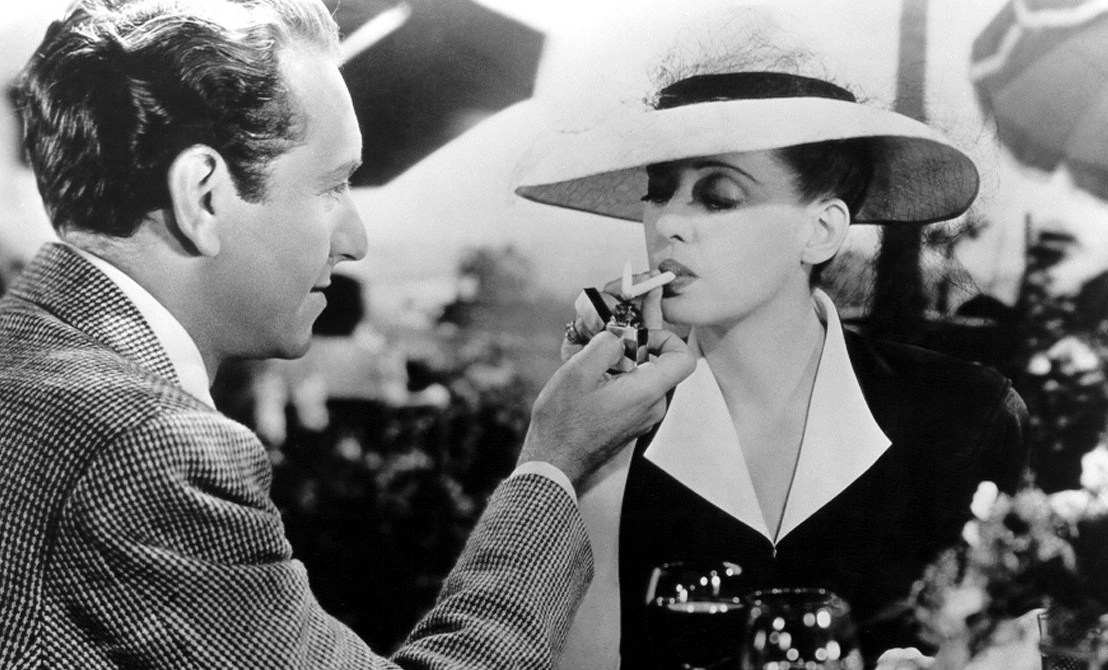
Romance, make-overs and erotic cigarette lighting abounds in this classic luscious romance

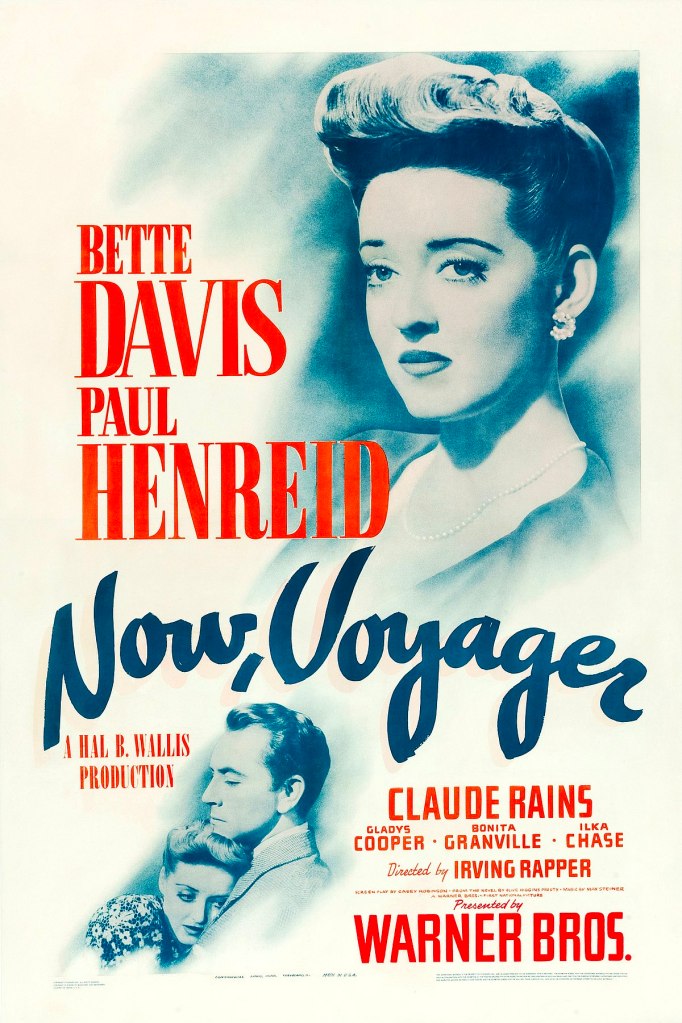
Director: Irving Rapper

Cast: Bette Davis (Charlotte Vale), Paul Henreid (Jerry Duvaux Durrance), Claude Rains (Dr Jaquith), Gladys Cooper (Mrs Windle Vale), Bonita Granville (June Vale), John Loder (Elliot Livingston), Ilka Chase (Lisa Vale), Lee Patrick (Deb McIntyre), Janis Wilson (Tina Durrance)

The untold want by life and land ne’er granted, / Now, voyager, sail thou forth, to seek and find”. Walt Whitman’s words are the poetic urging of kindly psychiatrist Dr Jaquith (Claude Rains) to patient Charlotte Vale (Bette Davis) before she embarks on a cruise that will change her life. Crushed under her imperious mother’s (Gladys Cooper) thumb, Charlotte grew-up an unloved ugly-duckling and self-loathing spinster. How will a taste of freedom change her life – and, with that taste, a love affair with unhappily married would-be-architect Jerry Durrance (Paul Henreid)?

It’s easy to see Now, Voyager as a piece of soapy, romantic puff – and there are certainly suds in its DNA – but that’s to do an engaging, heartfelt character-study down. This is a sort of moral rags-to-riches story about a woman who has been mocked her whole life, finding the courage to build her own life. But that life is not the picture-perfect final image you might expect: instead, it’s about compromise and, more importantly, choosing your own compromises. Without knowing it, that is what Charlotte has been striving for. “Don’t let’s ask for the moon: we have the stars” are her famous closing lines, and it’s about the idea that choosing a compromised version of the life she actually wants is better than a life foisted upon her by others.

Now, Voyager works as well as it does, almost exclusively down to Bette Davis. She fought to get the role, hand-picked the director (an old friend) and stars (insisting on Henreid, despite a disastrous test) and reshaped most of the dialogue. It’s all justified by her superb performance. Charlotte Vale, with her ugly-duckling opening appearance, and operatic romance with Jerry, could have been a pantomimic performance. Davis though grounds her in sensitivity, reality and a deep emotional empathy. It’s a complex, heart-stirring performance.

Almost uniquely for stars at the time, Davis was not afraid to get ugly when the part demanded (she practically invented ugging-up). Charlotte Vale’s first appearance – Rapper teases the reveal by focusing first on her hands at her desk, legs as she descends a staircase before allowing her to fully enter frame – is a sight. With an eye-catching, hairy mono-brow, mousy glasses, a flattened haircut and dumpy clothing, she’s a million miles from our idea of 40s glamour. But Davis doesn’t make her a joke or play up to the appearance. She gives Charlotte a steel, born of self-defence – she snaps swiftly at Dr Jaquith when she thinks she is being condescended to – and a deep well of pain and ill-defined longing for a change she can hardly grasp.

Matters are beautifully inverted when she heads off on her cruise (you can criticise the film’s portrayal of therapy, which seems to be easy if you are stinking rich and can afford a cruise). Rapper repeats his intro trick again – this time revealing a physically confident and striking Charlotte, made-up and dressed to the nines. But, just as the self-loathing Charlotte had a defensive steel, so this ‘confident’ Charlotte has the same vulnerability and fear of ridicule and rejection just beneath the surface. Davis brilliantly gives the outwardly changed Charlotte, a different but equally moving vulnerability, a woman still working out who and what she is.

It’s a brilliant performance that gives the entire confection of the film a real emotional heft, as we experience every inch of this seminal voyage with her. And a lot of that life-change is filtered through the bond between her and fellow-passenger Jerry. Skilfully played by Henreid with a euro-charm that barely masks his own sadness, loneliness and guilt, Jerry may look the part but like Charlotte he’s close to succumbing to imposter syndrome. Unloved by his wife (this unseen harridan arguably deserves a film of her own – perfect role for Joan Crawford?) – but trapped into the marriage by his sense of duty and his love for his timid daughter Tina (Janis Wilson).

Jerry and Charlotte’s relationship blossoms from shyness into a genuine love affair. Reading between the lines of its 1940s code, it’s clear our two heroes get-it-on. Stranded in Brazil after a car crash (caused by an uncomfortably dated caricature portrayal of a Hispanic driver), the two of them ‘snuggle up’ for warmth while camping the night in an abandoned building. Any doubts about how far this went is removed when Henreid lights two cigarettes in his mouth in the next scene, passing one to Charlotte who sucks sensually on it. (This was the era when the language of cigarettes was crucial as a stand-in for bumping and grinding).

Of course, an affair could never be explicitly allowed, just as any idea of Henreid divorcing his awful wife was anathema. But its knowing that it-can-never-be which gives the film its romantic force. Charlotte will eventually find herself drawn to helping Jerry’s daughter Tina, their shared love for the child being the thing that will allow them to be married in spirit if not in actuality.

You could argue Charlotte’s decision to semi-adopt Tina as companion is not dissimilar from her own mother’s would-be exploiting of Charlotte as an unpaid nurse. But Charlotte has learned a lot from the cruel fierceness of her mother. Played with a witheringly cold grandeur by Gladys Cooper – at one point she taps her finger on a bed post in a way which captures oceans of barely repressed fury – this woman is selfish, self-obsessed and cruel. Standing up to her expectation that nothing has changed is the major challenge for Charlotte, with Bette Davis skilfully showing it takes all her strength to overcome.

Now, Voyager is an effective romantic film. It’s helped a great deal by Max Steiner’s beautifully romantic score, that perfectly complements and enhances every on-screen image. Superbly acted by its four leads – Claude Rains is also wonderful as the kindly and deeply professional Jaquith – it’s a detailed character study that manages to rise triumphantly above its soapy roots.

Peyton Place (1957)

Peyton Place (1957)

Small-town America is the home of hypocrisy in this ridiculously silly soap opera that spawned…a long-running TV soap opera

Director: Mark Robson

Cast: Lana Turner (Constance MacKenzie), Diane Varsi (Allison MacKenzie), Hope Lange (Selana Cross), Lee Philips (Michael Rossi), Arthur Kennedy (Lucas Cross), Lloyd Nolan (Dr Matthew Swain), Russ Tamblyn (Norman Page), Terry Moore (Betty Anderson), David Nelson (Ted Carter), Betty Field (Nellie Cross), Mildred Dunnock (Elsie Thornton), Leon Ames (Leslie Harrington)

Small-town America: what mysteries lie behind those white picket fences? If the small New England town of Peyton Place is a guide, all sorts of terrible things. Why is Constance MacKenzie (Lana Turner) so afraid of sex and romance? Could her fear that the slightest kiss could turn her would-be-writer teenage daughter Allison (Diane Varsi) into a slut, be rooted in her own mysterious past? Why does Allison’s friend Selena (Hope Lange) fear her drunken and lecherous step-father Lucas (Arthur Kennedy) so much? Why is Mommas-boy Norman (Russ Tamblyn) so shy?

If that all sounds like the set-up for a great-big TV soap… well that’s because it essentially is. Peyton Place was a huge box-office success in 1957, but you can argue it found its natural home when it later mutated into a long-running TV soap. It’s one long onslaught of high-flung, ridiculously OTT events, all filtered through the sort of dialogue punctured by swelling music to hammer home the feelings. Peyton Place is completely disposable – but also strangely enjoyable, rollicking along like all the best soaps do, so full of events that you don’t have time to stop and realise how silly it is.

Adapted from a doorstop popular novel, screenwriter John Michael Hayes faced quite a task. The original was crammed with sex, foul language and everything from murder to teenage pregnancy, illegal abortions, rape and incest. That’s not exactly the sort of stuff the Hays Code dreamed of. Peyton Place: The Movie is almost a triumph in how much of this stuff it manages to cover, all in a very cunning, under-the-radar way. Sure, the rough edges are shaved off (and, of course, not the hint of a cuss word makes it to the screen) but it still manages to tick a lot of those boxes.

It’s all to hammer home the hypocrisy of small-town America. Curtain-twitching busybodies watch every moment, leaping for their phones at the merest hint of scandal: from kisses out of school to teenage kids skinny dipping (bet they can’t believe their luck when an actual murder happens). Peyton Place follows in Picnic’s footsteps (to which it is vastly superior, equally shallow but much less pleased with itself and far more entertaining) in exposing the hypocrisy of 50s America, where everybody goes to church and no-one practices the good-will and love it preaches (and yes, I know the film is set in the 1940s, but no one told the costume or production designers).

Peyton Place was littered with acting nominations (in a year where 12 Angry Men got none, for Chrissakes!). It’s a little hard to understand why, considering every part fits neatly into a trope. Lana Turner is the nominal lead as the frigid clothes-store owner who hides a secret shame (all about that long-lost husband) that gets in the way of her flirtation with the newly arrived schoolmaster (played with smug dullness by Lee Philips). But that’s only because she’s the most famous actor in it. Her performance sets a sort of template for mothers that would be repeated countless times.

The real leads (both Oscar nominated for Supporting Actress) are Diane Varsi and Hope Lange as the two teenagers at the heart of Peyton Place’s ocean of hormones (although, it being a 50s film, a smooch at a booze-free party is the furthest anyone goes). Varsi narrates most of the film as a precocious would-be writer, with several grandstanding scenes wailing at her mother for being so unfair. It’s a broad but engaging performance and she manages to make Allison not quite as wet as she could be. She also gets a shy romance with nervous Norman Page (a gentle Russ Tamblyn, also nominated): Norman is clearly closeted, struggling with his sexuality in a small town (“I don’t know how to kiss a girl” he says) but the film does its best to overlook this.

More engaging is Hope Lange, who gets the juiciest material to play. The film is surprisingly daring in staging her rape by her boorish step-father (a slightly too ripe Oscar nominated Arthur Kennedy, although still the most memorable male performance). Robson’s camera pans up from her being pinned down, to her raised hands and then finally cuts outside. Lange plays the trauma of this – including an unwanted pregnancy, removed by the Doctor in an abortion the film bends over backwards to make an accident-induced miscarriage – with a great deal of vulnerability and empathy, her shame and desperation rather moving.

It makes her the target for gossip. Peyton Place smugly ticks off small-town America for its gossipy meanness – while still peddling a message that, if we just followed the warmth of the best of small-town values, the world would be a better place – ending with Lloyd Nolan’s doctor delivering a pompous ticking-off to the town (from the witness box during a murder case no-less). Peyton Place at heart is a fairly conservative film, that ends with most people discovering their inner-goodness (apart from a few irredeemable harridans), and all wickedness resolved.

It’s directed with workmanlike professionalism by Mark Robson, but it didn’t need inspiration. It’s odd to consider this had nine Oscar nominations, since it feels like the sort of disposable mini-series Netflix throws together every week. Its main claim to fame might be that its quaint small-town smugness, masking a bucketload of scandal, served as the main inspiration for Twin Peaks (though dialled up to a whole other level of weird). It’s overlong, overblown and very silly, but because it doesn’t take itself seriously (unlike heavy-duty message film that year Sayonara, a silly soap that thought it was Pulitzer material) it’s actually ridiculously entertaining, in a totally trashy way.

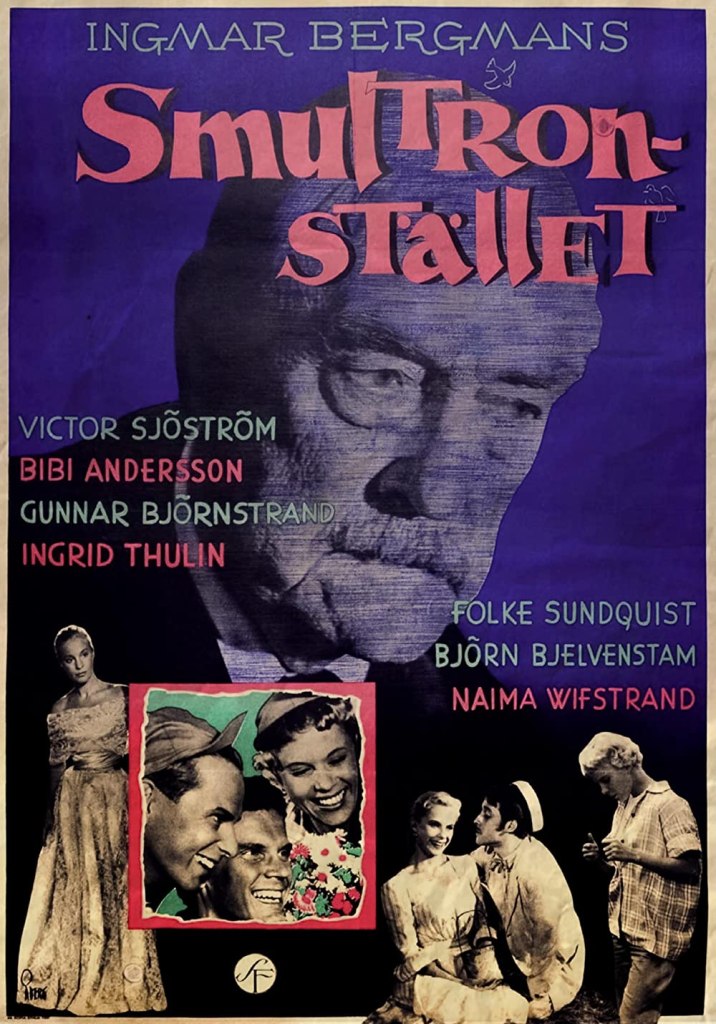
Wild Strawberries (1957)

Wild Strawberries (1957)

An aged doctor reflects on his past regrets and failures, in Bergman’s strangely optimistic masterpiece

Director: Ingmar Bergman

Cast: Victor Sjöström (Professor Isak Borg), Bibi Andersson (Sara/Sara Borg), Ingrid Thulin (Marianne Borg), Gunnar Björnstrand (Evald Borg), Jullan Kindahl (Mrs Agda), Folke Sundquist (Anders), Björn Bjelfvenstam (Viktor), Naima Wifstrand (Isak’s Mother), Gunnel Broström (Berit Alman), Gunnar Sjöberg (Sten Alman/Examiner), Max von Sydow (Henrik Åkerman), Ann-Marie Wiman (Eva Åkerman), Gertrud Fridh (Karin Borg), Åke Fridell (Karin’s lover), Per Sjöstrand (Sigfrid Borg)

Is anything in life more painful than regret? When we look back at our past mistakes, the things we wish had played out differently, the roads not taken, it’s difficult to accept there is nothing we can do about it. It’s the theme of Bergman’s beautiful, strangely optimistic Wild Strawberries (his third consecutive masterpiece, cementing him as one of the most distinctive, visionary directors in the world). Wild Strawberries is filmed with a virtuoso assurance, that still finds a genuine sense of optimism, despite the pain of the past.

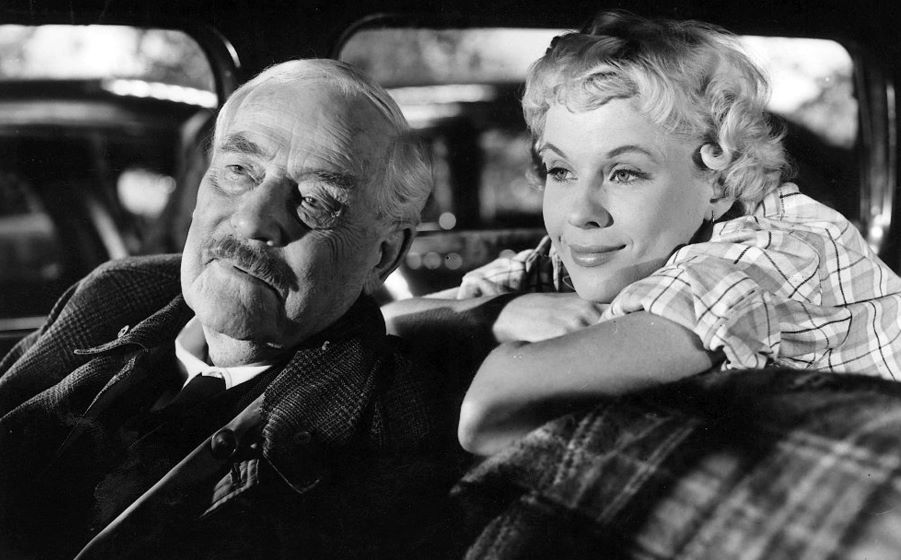
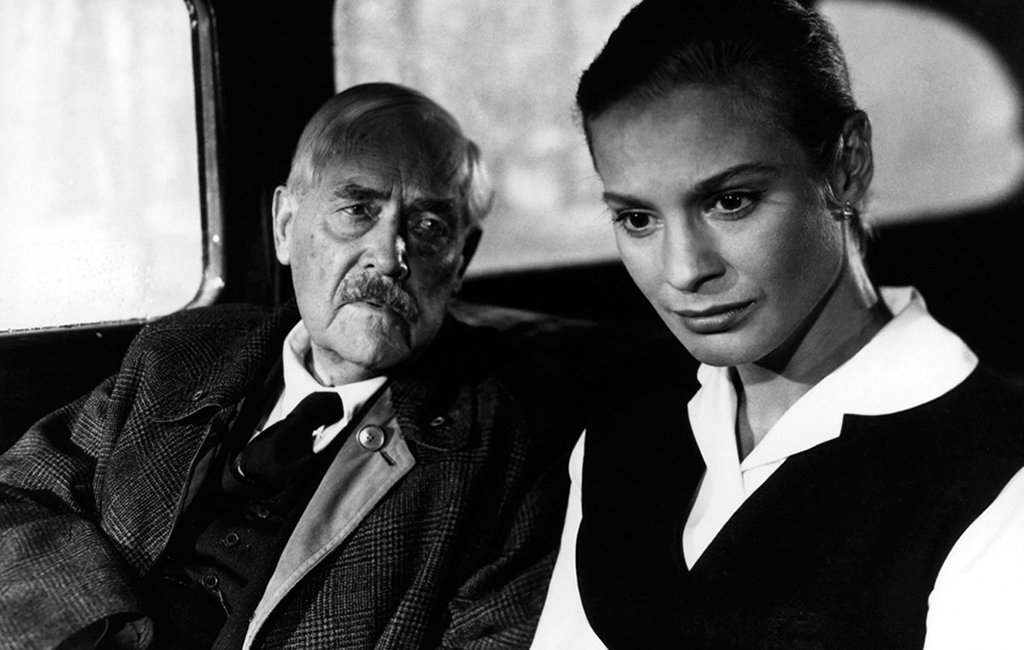
It’s about a long, single-day, road trip taken by famed, retired, medic Professor Isak Borg (Victor Sjöström, Sweden’s legendary father of cinema and Bergman’s idol) and his daughter-in-law Marianne (Ingrid Thulin). Isak is receiving an honorary doctorate in Lund but, after a bad dream, spontaneously decides to drive there. They drop by places with huge personal significance: the country chalet where he loved and lost his cousin Sara (Bibi Andersson) and the home of his mother (Naima Wifstand), who perhaps never really wanted him. Along they way they pick up a trio of young hitchhikers, one of whom, Sara (Bibi Andersson again), reminds him of his lost love. Will Isak come to terms with his regrets and failures?

The Wild Strawberries were collected by Sara on the birthday of her and Isak’s uncle. They are touch points in Isak’s memories, a reminder of the summer when Sara broke off her engagement with him to marry his more fun brother Sigfrid (Per Sjöstrand). Did that moment set Isak on the path of distant, judgmental coolness that defined his whole life? Or was he always bound to become who was, especially since his mother matches him for chilly distance? Is the cycle destined to continue, as Isak’s son Evald (Gunnar Björnstrand, full of cold nihilism) is just as austere as his father?

Bergman‘s radiant memory piece, explores all this without casting judgment. Wild Strawberries profoundly studies the regrets that come with facing your mortality. Isak becomes so lost in his memories, he literally becomes a silent witness in them. Sjöström’s beautifully expressive face lights up with a mixture of powerless pleasure, sadness and longing as he sees Sara once more – its implied the only woman (or indeed person) he has allowed himself to purely love.

What’s striking though, is that Isak’s memory of her – flirting with Sigfrid and then tearfully telling another cousin that Isak is so nice but… – is not a memory he can possibly have. He was never there: it can only be his supposition. It’s the same with the birthday party of his uncle (Bergman fills this with some great comedy, not least two gossipy pre-teens who talk simultaneously), an event he was not present at. Isak clings to these as memories, but they are imaginings. It’s not a card the film plays heavily: but Isak is, essentially, an unreliable narrator showing us his version of the past. It makes you wonder: are we all unreliable narrators of our own memories?

Is Wild Strawberries actually a dream piece? These recollections are daydreams, helping Isak accept his choices, and begin to find peace. The film opens with a striking surreal – and chillingly horror tinged – dream sequence that inspired hundreds of imitators: Isak walks an abandoned street, clocks lack hands, a faceless man collapses into water, a hearse overturns and when Isak investigates his own hand emerges to pull him in. (The unsettling artifice of this sequence is so masterful, it makes you realise Bergman could have become the king of terror if he’s wanted to).

A series of sequences take place halfway between dream and memory. In one he’s challenged by a cold and formal Examiner (a mirror of Isak himself?) with unanswerable questions, diagnosed with guilt and loneliness and then taken to witness his most vivid memory – watching his wife in the throws of passion with another man. The memory changes from reality to dream as Isak’s wife (an unsettling Gertrud Fridh) – who loathes him – sits up and dispassionately recounts their conversation later when she confessed/rubbed-his-face-in her infidelity. These aren’t straight memories.

Isak’s reminiscences creep up on him. It’s started by his daughter-in-law Marianne flatly telling him she can’t stand his aloofness and self-satisfied smugness. He seems unmoved: but does it prompt him to take her to the chalet of his childhood, to try and prove her wrong? Surely it can’t be a complete coincidence he awakes from a dream of Sara, by another Sara (Bibi Andersson brilliantly distinguishes between these two very different women, who both speak to repressed romantic yearnings in Isak) or asks for a lift? My private theory: I think Bergman is implying only Isak sees these two people as identical in appearance, like he plops past-Sara’s face on hitch-hiker-Sara’s body. It’s another walking semi-memory-dream.

Sara is one of several people prompting Isak’s reflection and changing our perceptions. Why did he become a man so detached he barely bats an eyelid when his daughter-in-law rubbishes him? A feuding couple the group pick up after a road accident – whose abuse of each other gets so personal and cruel, Marianne throws them out of the car – could almost be past versions of Isak and his wife. How miserable must his marriage have been? When Isak is feted as a doctor at a small village (a neat Max von Sydow cameo), how much does his sad observation that perhaps he should never have left further trigger his softening character?  As hiker-Sara talks about romance and opportunity, how much does this make Isak think about the staid, loveless respectability of his own life?

Our understanding of Isak is also partly filtered through Marianne’s perception of him. Ingrid Thulin is glorious as a woman whose marriage (to a knock-off prototype of his father) is on the rocks due to her husband’s callous loathing of the world. When she meets Isak’s mother, Thulin’s face radiates understanding of how this woman shaped Isak, who in turn shaped his son. As Isak begins to talk about his past and his fears, it prompts her own willingness to confide in him – something she would never have considered at the film’s start. As Marianne changes her perceptions, so do we.

Wild Strawberries benefits most of all from the wonderfully valedictory performance of Victor Sjöström. Bergman begged his mentor to take the role on, and it produces a cinematic wonder. Sjöström is in every scene and his face fills with such powerful emotion – from distraught regret to wistfulness to confusion to a peaceful radiance – that Bergman allows it to dominate the frame at key points. Its an unforced, gentle and underplayed performance with real emotional force.

Not least because, at heart, this is an optimistic film that tells us its never too late. Sure, we can regret mistakes and lost opportunities: but it shouldn’t close our hearts. Isak learns he has been wrong in closing his heart: there is life, warmth and happiness out there for the taking. It comes together in a final dream/memory, as Isak rediscovers a happy memory of his parents (all the more powerful for how few and far these must be) and Bergman’s camera (shot with majesty by Gunnar Fischer) trains one final time on Sjöström’s face and we understand that he has, at last, come to terms with his life. For a director famed as the master of misery, Wild Strawberries shows he could also frame a story of optimism, growth and understanding, making Wild Strawberries one of his most affecting movies.

The Northman (2022)

The Northman (2022)

A viking tears through flesh and blood in quest for revenge in this bizarre, fascinating Viking epic

Director: Robert Eggers

Cast: Alexander Skarsgård (Amleth), Nicole Kidman (Queen Gudrún), Claes Bang (Fjölnir the Brotherless), Anya Taylor-Joy (Olga of the Birch Forest), Ethan Hawke (King Aurvandill War-Raven), Björk (The Seeress), Willem Dafoe (Heimir), Oscar Novak (Young Amleth), Gustav Lindh (Thorir), Ingvar Eggert Sigurðsson (He-Witch), Kate Dickie (Halldora), Ralph Ineson (Captain Volodymyr)

Ask people about Hamlet, and they picture a poetic Prince, plagued with doubt and vulnerability, talking to skulls rather than carrying out his mission of revenge. What you probably don’t think about are Vikings on a Berserker rage, slaughtering left, right and centre. But Hamlet has its roots in a bloody Scandinavian legend, where remorseless death is handed out by a ruthless killer. That’s the side of Hamlet, Eggers takes for inspiration in his bloody, bold and resolute Viking film, a blood-soaked acid trip it’s hard to imagine anyone else making.

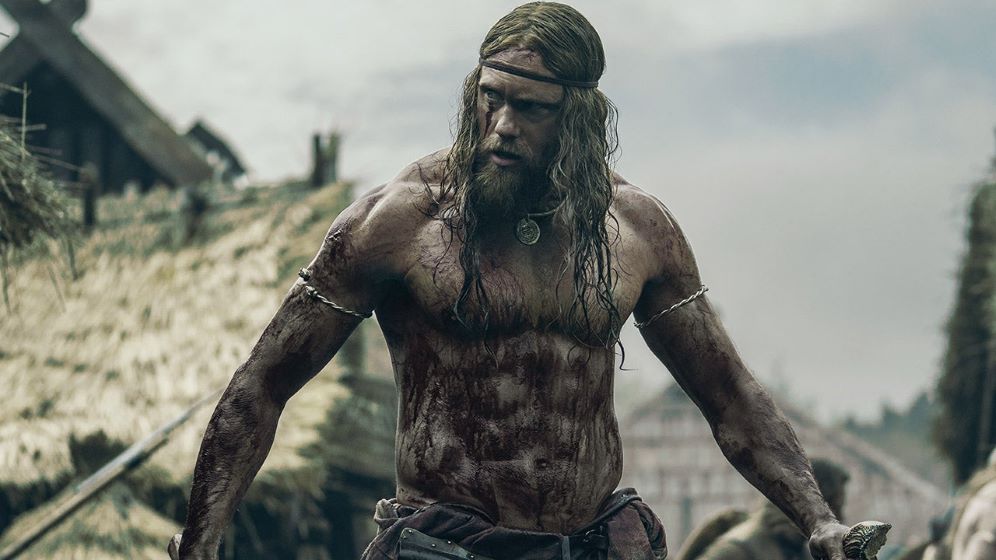
It’s 895 and King Aurvandill (Ethan Hawke) returns from conquest to his wife Gudrún (Nicole Kidman) and young son Amleth (Oscar Novak). Amleth takes his vows of manhood with his father, guided by a demented He-witch (Willem Dafoe) – only for his father to be almost immediately killed by his half-brother Fjölnir (Claes Bangs), who seizes his throne and wife. Amleth escapes – and years later has grown into a berserker Viking warrior (and Alexander Skarsgård). He sees his chance for revenge when he disguises himself as a slave, and joins a shipment traveling to Fjölnir’s village (Fjölnir having lost his throne). There he forms an alliance with Russian slave Olga (Anya Taylor-Joy) and works to undermine and terrify Fjölnir, before he can enact his revenge and save his mother.

The Northman is, possibly above all, a shocking, absorbing deep-dive into Viking Culture. Eggers doesn’t shirk for a second from the bloody, ruthless mayhem of Viking life. Our introduction to the adult Amleth sees him first whipping himself (and others) into a (possibly magic mushroom fuelled) Berserker rage, dressed as wolves and howling at the fireside, before launching an unbelievably ruthless attack on a Russian village. The desperate peasants are butchered with savage fury (and blood lust). In the aftermath, rape, murder and other horrors occur uncommented on in the background, while those not seen fit for slavery are herded into a barn to be casually burned alive.

Amleth, at no point, expresses a jot of regret for his actions (as a Viking wouldn’t), and even after passing for a slave never questions the institution. His revenge uses the same ruthless, blood-dripping fury as his ravaging and his only passing moment of pause is about directly killing Viking women and children (he gets over it). In all this he is in no way different from the rest – in fact he’s even one of the more sympathetic – Vikings. Fjölnir – revealed as otherwise a wise and generous leader – ruthlessly murders and rapes his slave as he fancies and a weekend’s entertainment for all is watching two teams of slaves beat themselves to death in a no-holds-barred version of hockey.

Eggers leaves you in no doubt that, for all the grim fascination, this is a brutal and savage civilisation that you would in no way want to encounter. Saying that, despite Eggers’ clear intentions, with the film’s cast modelling a sort of chiselled, gym-trained super-human Aryanism, sweeping away Slavic peasants and enforcing a triumph of Nordic culture, parts of this film are surely being channelled into the wet dreams of elements of the right-wing.

The film doesn’t just explore violence. Family bonds are demonstrated to be all important to Vikings – Amleth and Fjölnir are dedicated to their families and go to huge ends to protect and mourn them. (A funeral of one warrior features elaborate blood-letting, as the deceased’s horse is decapitated and his favourite slave willingly butchered so both can join him on the journey to the afterlife). There is a mutual regard and affection between warriors – even opponents – in a culture that puts itself above others. Honoured slaves are respected – though told they can never be equal. Licensed fools and mystics are given a great deal of freedom – Willem Dafoe’s crazed He-witch at Aurvandill’s court mocks all and sundry with no repercussions. There is a huge faith placed in wise men and women who inspire awe and fear – even a slave, such as Olga, with possible mystic powers is treated with caution. Bonds and duties across generations and to the next life are revered. Prophecies and destinies are respected. Poetry and storytelling is highly valued.

For all the killing, there are elements of a rich culture here and strong family bonds. All these combine in the person of Amleth, who will not be shaken from his destiny but will enact it in his own time, in line with the prophecies he of a seeress (an unrecognisable Björk). Eventually it doesn’t matter if Amleth’s idealised memory of his parents turns out to be not the whole story, or if he has a chance to build a new life. Destiny is, in fact, all.

Eggers’ film takes place in what almost a state of heightened, fevered excitement. Beautifully shot by Jarin Blaschke, it mixes expressionistic near-black-and-white, with drained-out shots of violence and flame-lit moments of psychological and body horror. Visions shot in a piercing mix of blues, greys and icey chilliness puncture the film, with strange compositions of characters, Valkyries, Valhalla and the Gods. Supernatural elements pepper the film, with Amleth’s father influencing events in the shape of a raven and Amleth completing a quest for a fateful sword. These moments of hyper-reality are perfectly executed and in a visually unique, blood-drenched nightmare.

Where The Northman is less successful is exploring the inner-depth of its characters. Skarsgård is charismatic and physically perfect, but doesn’t give much inner-life to Amleth. Moments of doubt or uncertainty in Amleth never quite convince and he feels more a force of nature than a person. There are richer performances from others, Kidman in particular a revelation as a cryptic, unknowable woman with a mid-film encounter of heightened emotional (and sexual) tension between her Skarsgård. Bangs’ Fjölnir is strangely sympathetic. Anya Taylor-Joy carries a dominant, mystical force in her performance that helps make her character a bridge between multiple worlds.

All these combine into a film of shocking violence, jaw-dropping beauty and troubling emotional and psychological horror. There is no doubt the film is overlong – there are probably one too many deeply odd segues into drug-induced ravings of various prophets and seers – but as an exploration of a culture so uniquely alien, its sublime. As a piece of work from a truly distinctive and unmatchable director, it’s superb. You look it The Northman and can’t believe anyone else could have made it. If nothing else, that makes it a film worthy of your time.

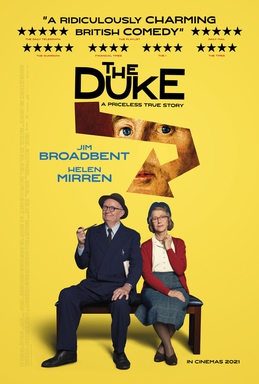
The Duke (2022)

The Duke (2022)

An eccentric Brit pinches a priceless painting in this cozy tea-time drama

Director: Roger Michell

Cast: Jim Broadbent (Kempton Bunton), Helen Mirren (Dorothy Bunton), Fionn Whitehead (Jackie Bunton), Matthew Goode (Jeremy Hutchinson), Anna Maxwell Martin (Mrs Gowling), Aimée Kelly (Iree), Joshua McGuire (Eric Crowther), Charlotte Spencer (Pammy), John Heffernan (Nedie Cussen QC), Charles Edwards (Sir Joseph Simpson), Sian Clifford (Dr Unsworth)

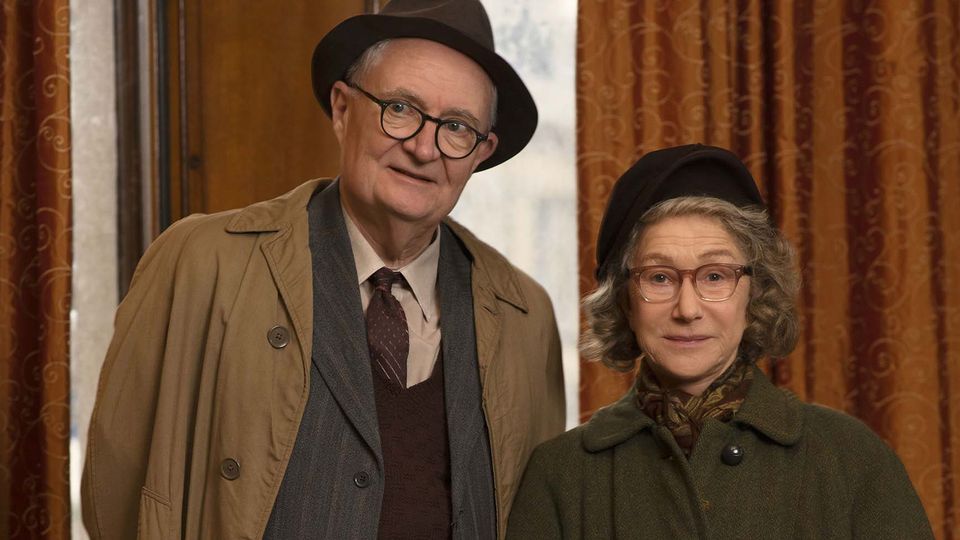
In 1961, a 60-year old working-class Geordie and social campaigner (in the “tilting at windmills” sense) Kempton Bunton (Jim Broadbent) made headlines. He went on trial, accused of stealing Francisco Goya’s Portrait of the Duke of Wellington from the National Gallery. Bunton was outraged that the British Government had spent £140k (about £3.3 million today) on preserving the painting for the public. Bunton believed the money would have been better spent paying for TV licences for veterans. When Bunton returned the painting, his trial became a media sensation.

Michell’s film (his final one, as he passed away before its Covid-delayed release) is an inoffensive, gentle, Sunday-afternoon cuddle fest, that never quite decides what it really wants to be. The tone frequently bubbles with a faint “caper”-like atmosphere, with its jazzy 60s score, split screen shooting and pops at the foolishness of the establishment, who never consider the painting could have been nabbed by a British eccentric from oop North (two sexist police officers rubbish a female handwriting expert who correctly identifies Bunton’s background). But it’s a slow, rather unfocused character study that has a melancholic grief at its heart. These elements never really fuse together.

Bunton is the quintessential plucky-British eccentric, railing against the system, that this country loves to love. He has a fixation on the injustice of the BBC licence fee (he even “fixes” his TV by removing the part of the cathode that receives the BBC signal, so that he can legitimately refuse to pay the licence), he’s a convinced class warrior. He’s fired as a taxi driver for (a) giving veterans and others free rides and (b) banging on endlessly about his political fixations to his passengers (even one of his charity rides begs him to shut up). He’s fired from a bakery for standing up for a Pakistani fellow worker in the face of racial discrimination. He sits in the rain vainly trying to get people to sign his anti-licence fee petition.

But he’s got no real idea how to use the painting to achieve his aims. While this lack of a plan fits his character, it does mean the central section of the film tends to drift, mostly taking some cheap shots at the British authorities‘ self-satisfied complacency, while Bunton tucks the painting in a cupboard and does nothing with it other than write the odd letter to the press, trying to leverage its return for support for his causes

The film has an odd, inverted snobbery about art throughout. It sees paintings as solely a preserve of the rich. A female journalist early in the film (who we are clearly meant to sympathise with) questions the money spent because of its small size (as if surface area was the best judge of Artistic value!) – and the director of the National Gallery is only allowed a vague defence of its quality in return (which we are clearly meant to sneer at). Bunton calls the painting “not very good” and disparages Goya as a “drunk Spaniard” (which feels rather like calling Turner a “blind idiot”), with the film offering no counter view. It never mentions that the picture was (a) placed in the National Gallery for all to see for free; or (b) that the government actually only put up £40k with the rest donated by a millionaire.

Instead, the film takes an odd angle that painting is the “wrong sort of art” to be spending so much money on – the writers and directors never mention that in the same year the Government spent £1 million on the National Theatre (25 times what they spent on the Goya). I’m pretty sure Bunton would have hated that as much, if not more (especially since no one could see a National Theatre show for free, unlike the Goya) but you can’t expect writers Richard Bean and Chris Coleman and director Michell to bite the theatre teat that fed them. The film ends with an odd caption stating the licence fee was made free for over-75s forty years later – but doesn’t explain that it was done in a way designed to hobble an institution loathed by the Conservative Government (and I doubt Bunton would have supported the action either!).

On top of this, there is a way more interesting film to be made here about grief. The loss of their daughter, aged 18, to a cycling accident hangs over everything the Buntons do. It’s the source of unspoken tension between Kempton and Dorothy. He visits the grave frequently and can’t understand why she won’t, and they can hardly bring themselves to talk about the loss or display her picture. While centring this would make for a more melancholic film, it feels like its heart.

But that would be a less crowd-pleasing film, and that’s what this film is trying to be. The final act is dedicated to the courtroom, and its mostly about watching Kenton and his lawyer (a lovely turn from Matthew Goode) running rings around the system. Of course every character in the film puts their differences aside to cheer on Bunton on the stand. It’s when the film gets a bit of the fizz back from the opening. Not enough for it to be anything more than passable entertainment – but it helps.

The lead performances are of course excellent, much better than the film deserves. Broadbent is absolutely perfect casting, playing this dedicated social-warrior to charming perfection. Mirren gives a performance way better than the thinly-written exasperated wife deserves. But they’re the main selling points of an otherwise fairly average movie. The film telescopes the events of four years into six months, but only rarely gives itself the sort of energy and fun it needs to be anything more than a something you can let pass before your eyes on a Bank Holiday.

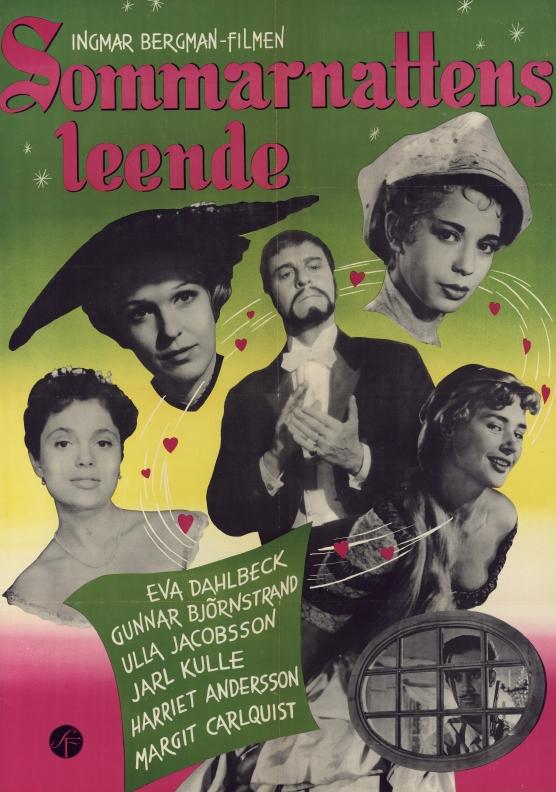
Smiles of a Summer Night (1955)

Smiles of a Summer Night (1955)

Sexual and romantic comeuppances abound in Bergman’s landmark comedy of manners

Director: Ingmar Bergman

Cast: Eva Dahlbeck (Desirée Armfeldt), Gunnar Björnstrand (Fredrik Egerman), Ulla Jacobsson (Anne Egerman), Björn Bjelfvenstam (Henrik Egerman), Harriet Andersson (Petra), Margit Carlqvist (Countess Charlotte Malcolm), Jarl Kulle (Count Carl-Magnus Malcolm), Åke Fridell (Frid), Naima Wifstrand (Mrs. Armfeldt), Jullan Kindahl (Beata), Gull Natorp (Malla), Gunnar Nielsen (Niklas), Birgitta Valberg (Actress), Bibi Andersson (Actress)

An Ingmar Bergman comedy? Surely a contradiction in terms, right? Like Da Vinci spraypainting graffiti or Austen writing a jingle. The Swedish master is near synonymous with glacial, Scandi-misery, not material that will be transformed into a Sondheim musical. But yet: Smiles of a Summer Night was the big smash-hit that guaranteed Bergman lifetime artistic independence (he followed it with the one-two punch of The Seventh Seal and Wild Strawberries that made him untouchable as Sweden’s premiere Artist). A Bergman comedy was never going to be a Ray Cooney farce, and while there are pratfalls and farce here, this film is an exploration of manners with more than hint of Shaw and Wilde, mixed with echoes of filmic greats like Ophüls and Renoir.

Set in turn-of-the-last-century Sweden, the film follows the romantic and sexual entanglements of a series of would-be couples. Fredrik Egerman (Gunnar Björnstrand) is a respected middle-aged solicitor, who hasn’t consummated his two-year marriage with 19-year old Anne (Ulla Jacobssen). This is partly due to her anxiety about sex. But really both of them are in love with someone else. Fredrik with his old mistress, celebrated actress Desirée Armfeldt (Eva Dahlbeck). Anne with Fredrik’s young son Henrik (Björn Bjelfvenstam) who is also in love with her. Henrik is flirting with house maid Petra (Harriet Andersson), who doesn’t seem averse to a relationship with any member of the Egerman family. Desirée is having an affair with Count Malcolm (Jarl Kulle), whose wife Charlotte (Margit Carlqvist) is considering infidelities of her own just to get his attention.

All of these potential couples merge, swop and work out their feelings overnight at the country house of Desirée’s mother (Naima Wifstrand) during one of the longest days of the year, where the sun hardly sets and people traditionally stay up until dawn. There is more than a touch of the theatrical about all of this – particularly with Bergman’s arch, intelligent dialogue – with the country house as a setting beautifully formal and strangely other-wordly. You can sense the theatrical influences here – Bergman had just directed a production of The Merry Widow – with the characters riffing with Wildean wit and insight, in typically Shavian set-ups.

What we get is a high comedy of manners, that’s also coated in a rich, insightful poetry that gives it a great deal of meaning. There is farce here – including a room with a switch that drags a bed from a neighbouring room (with occupant!) into it. There are several funny lines – many from Jarl Kulle’s hilarious heartless count, who doesn’t care who flirts with his wife until someone actually takes him at his word. There are pratfalls – Henrik has a superbly bleak bit of pure farce near the end that tips into erotic joy (“If the world is full of sin, then I want to sin”). The pompous Fredrik is constantly humiliated, from falling in a puddle to being thrown out of Desirée’s apartment in nothing but a borrowed nightshirt and a pair of slippers. There is no end of sexual suggestiveness, from Harriet Andersson’s gorgeously flirtatious maid (“Hurrah for vice!”) to hints about Mrs Armfeldt’s past (“I was given this estate for promising not to write my memoirs”).

Being Bergman though, this is the sort of romantic comedy that ends with a duelling game of Russian roulette and where we learn as much about human nature as we enjoy the scripted bon mots. Namely, that people – especially men – never seem to know what they want. Fredrik spends a huge chunk of the film persuading himself he is deeply in lust with Anne – although its pretty clear that he’s barely interested. Marriage and relationships in this case are gilded cages that lock people into things they barely want. They don’t even lend themselves to communication – the Malcolm’s marriage doesn’t seem to be based on any communication at all.

So, no wonder it needs a bit of Midsummer Night’s Dream style madness to try and sort it all out. Before that short night, the characters all down a particularly intoxicating wine that they are warned will bring down all their restraining impulses (whether that’s true or not, it certainly does). It’s part of a plot by Desirée – a superb Eva Dahlbeck, serene and glamourous, but also a battle-axe force-of-nature who knows exactly what she wants and how to get it – to resolve all complications for the (her) best, carried out in partnership with Caroline, a woman she’s far to savvy to let something petty like sleeping with her husband get in the way of useful friendship.

Contrasted with all these slightly restrained middle-class people who struggle to understand or express their real feelings, or (like the Egermans) seem to feel a slight guilt at sex anyway, we have the more earthy and free Petra, radiantly played by Harriet Andersson. Andersson gives Petra a flirtatiousness that sees her go from unbuttoning her top to attempt to seduce Henrik, to rolling in a bed with Anna. While the upper classes engage in a formal dance, she seizes life and opportunities – and ends up well-matched with the equally down-to-earth chauffeur Frid (an exuberant Åke Fridell), who like her doesn’t muck around when there is a chance to grab a bit of joy.

Not like the Egermans. Fredrik – a beautifully reserved Gunnar Björnstrand – should want Anna, but all the starring at her photos in the world won’t stop him muttering Desirée’s name while he sleeps. Not that it will allow him to try and rekindle his past relationship with her. Anna (a luminous Ulla Jacobsson), nervous about sex or rather nervous about her feelings with Hendrik, channels her feelings into jealous criticisms of his clothing after catching him naively succumbing to Petra’s flirting. Henrik (Björn Bjelfvenstam, very funny in his bemused wetness) is so inept in his romance of either woman, he barely seems to know what he wants.

Perhaps Desirée recognises all this is a bit of prime, Theatrical nonsense and tries to solve it all accordingly. After all her whole life is the theatre – from treading the boards, to singing and dancing while walking late at night with Fredrik. And it was for Bergman – that and film, which is why perhaps the film has echoes of Jean Renoir’s Le Regle de Jue with its country house romantic intrigues and Max Ophüls partner swopping La Ronde. And Smiles of a Summer Night is a beautifully mounted film, shot with a luscious, poetic beauty by Gunnar Fischer.

The whole film is a complex dance – you can see why it was ripe for Sondheim – that also explores profoundly the romantic and gender clashes between men and women. Men who are in a position to take what they want, but have no idea what that is. Women who know far more, but must be smart about how to achieve their goal – or like Petra willing to embrace a wild abandon to live in the moment. It may be a theatrical, drawing-room, sex comedy of sorts: but it’s also a film about humanity and people’s fates, all under the eyes the suggestively supernatural power of a smiling summer night. Perhaps its not such a contradiction of Bergman terms after all.

Calm with Horses (2020)

Calm with Horses (2020)

Irish gangsters manipulate a violent but needy boxer in this well-made debut

Director: Nick Rowland

Cast: Cosmo Jarvis (Arm), Barry Keoghan (Dymphna), Niamh Algar (Ursula), Ned Dennehy (Paudi), Kiljan Moroney (Jack), David Wilmot (Hector), Anthony Welsh (Rob), Simone Kirby (Jules)

In rural Ireland a former boxer, Arm (Cosmo Jarvis), has found a new outlet for violence as an gang enforcer. But Arm is, at heart, a gentle soul, and his desire to belong and be part of a “family” is effectively exploited by the gang, especially his weaselly, bullying boss Dymphana (Barry Keoghan) who treats him like an affectionate pet-dog. His ex, Ursula (Niamh Algar), mother to his autistic son Jack, wants him to change his ways or stay out of their lives. But can Arm change?

Rowland’s film has a deliberately seedy quality to it, shot with a grimy intensity and crawling along on its belly among the mud and filth of Irish crime gangs. It’s a thrilling expose though of how crime takes and takes and is never satisfied. It’s turned Arm into a shell, throwing him the odd bone of inclusive comfort, then ordering him out like a rabid dog to hand out another beating to anyone who has crossed the family.

The main target is a man the heads of the family suspect of raping their teenage niece – although whether this was genuine sexual assault or simply a question of perverse family pride is left open. Arm opens the film by handing out a vicious beating – albeit one where he carefully lays out the ground rules with his victim before going about it with a punch-clock sense of duty. It’s what Arm is used for – a not that bright, piece of muscle who, despite his intimidating presence, will do (almost) anything for anyone who makes him feel wanted.

Even if the main person who does is as a dastardly as Dymphana. Keoghan is very good as a snide, insidious small-time crook, who openly calls Arm his dog and fills his head with prejudices and suspicions designed to keep him in his place. If he’s the dark angel, then Ursula is the good one: Algar equally brilliant as a decent, kind, supportive person who has come to the end of her tether with a man who she now feels is a danger to the fragile temperament of her autistic son.

It’s the fate of this son that will penetrate through the dead exterior shell that surrounds Arm, and make him start to question his own life. There is more than a hint that the fragile, timid, surly Arm – beautifully played, with a haunting gentleness under the violent exterior by Cosmo Jarvis – suffers from a similar condition to his son. Like him, he finds rage he can’t control bubbling up inside him (Arm is hopelessly ill prepared for helping his son during Jack’s emotional outbursts). He at times lacks an emotional intelligence to understand how people are treating him and why. It’s something Ursula knows and recognises – and why she gives him as many chances as she does.

Like his son, Arm finds himself calmed by engagement with animals (the title comes from Jack’s therapy sessions, horse riding). He also, buried somewhere in him, has a strong sense of right and wrong and eventually finds the courage to question his orders, as he begins to understand he really belongs not with them but with his ‘true’ family. His motivations shift from simply pleasing his masters to finding the money Ursula needs to move to Cork and place Jack in a special-needs-school, a need for his son that he slowly learns to place above his own wants and desires.

Eventually this explodes into scenes of retributive violence, shot by Rowland with an immersive intensity (there are some particularly uniquely filmed country-lane car-chase scenes, with the camera mounted on the car at an unusual angle). The violence that has lurked only just beneath the surface of the crime family, bubbles savagely to the top as it’s made clear that even the slightest deviation from what the family wants or expects from its enforcer will never be tolerated.

At times, Calm with Horses is a little too reminiscent of other crime dramas: for all its intelligent and skilful construction and playing, there isn’t a lot that feels really original here. Its influences are plain, but what it has is an intelligent empathy for its characters, and their situations, that constantly rewards you. At times, these characters surprise you with how far they will go: at others they disappoint you with their selfishness. But, thanks to the acting and direction, they always feel real.

Calm with Horses is an impressive debut, confident and exciting. Jarvis is superb as an inarticulate, unaware gentle-ish giant, with Keoghan and Algar outstanding in support (both were BAFTA nominated). It’s grimy, matching the dangerous world its set in, but it also has flashes of hope and understanding in it, little moments of calmness that pepper the darkness. It’s a fine crime drama.

Kramer vs Kramer (1979)

Kramer vs Kramer (1979)

Father and son post divorce are explored in this Best Picture winning look at the state of marriage in the 1970s
Director: Robert BentonCast: Dustin Hoffman (Ted Kramer), Meryl Streep (Joanna Kramer), Justin Henry (Billy Kramer), Jane Alexander (Margaret Phelps), Howard Duff (John Shaunessy), George Coe (Jim O’Connor), JoBeth Williams (Phyllis Bernard), Howland Chamberlain (Judge Chamberlain)

Kramer vs Kramer is a near perfect example of how time changes the perception of a film. On its release, it was the smash-hit of the year, scooping five Oscars. It took a sympathetic look at divorce and explored the then unthinkable idea that a single father could find fulfilment in taking on the woman’s role of caring for a child. Today, it’s more likely to be seen as a thinly veiled attack on feminism and a promotional video for Fathers4Justice. But a film can be a warm celebration of a father building a relationship with his child and an implicit criticism of women who want it all.

The film opens with Joanna Kramer (Meryl Streep) tucking her 7-year-old son Billy (Justin Henry) into bed, telling him she loves him, and then walking out of her New York apartment for good. She tells husband Ted (Dustin Hoffman) – a workaholic advertising executive – she is deeply depressed and has to find what she wants from her life. Ted, a loving but distracted father, has no idea either how to raise his son or run a household. At first, he resents Billy for distracting him from his career, just as Billy resents him for being unable to care for him as Joanna could. Eventually though, Ted and Billy build a loving relationship, with Ted placing Billy’s needs first. At which point Joanna returns and demands custody, a clash that will lead to the courts.

Benton’s film, adapted from a successful novel, is shot with a chamber-piece richness by Nestor Almendros and signposts its art-house credentials with a Vivaldi string score. It’s superbly acted. Hoffman (winning for Best Actor) is hugely committed, running a gamut of emotions from anger and despair to a joyful devotion for his son. Streep won Best Supporting Actress as the deeply-torn and conflicted Joanna. Hoffman and Benton draw superbly natural work from Justin Henry as Billy, an unaffected, completely unmannered performance. Benton marshals these three actors through a series of simply shot but often surprisingly affecting scenes, alternating between raw hurt, anger and tender forgiveness.

But this is a film that needs a sister film. Specifically, one that shows events from Joanna’s perspective. Although the film – at Streep’s insistence – tries to avoid demonising her feminist desire for more in her life than cooking and cleaning, it still gives short shrift to her departure. With the film’s focus on the heart-warming relationship between father and son, it’s very hard not to implicitly see Joanna as first a selfish abandoner and then a hypocritical antagonist trying to steal Billy. There is little attempt to not stigmatise Joanna as, on some level, a bad parent.

For all the film opens with a long hard look at Joanna’s face, struggling with the conflict between her depression and leaving her beloved son, there is no real effort to explain or understand what motivates Joanna to do the things she does. There are some half-hearted justifications very late in the film, during its courtroom sequences – but these only dip lightly into any turmoil Joanna must have been feeling. Worst of all, it’s all presented as something Ted has to learn to “forgive” rather than understanding it was a crisis he played a role in causing.

The film’s main focus is on Ted learning to become a father. Ted is a classic workaholic dad of the 1970s. He stays late at the office boozing with his boss, has literally no idea about Billy’s everyday schedule and is so inept at home that cooking French toast is completely beyond him. He has no idea about how to enforce rules with Billy, alternating between showering him with ice cream to keep him quiet and then vainly trying to re-enforce rules. (In a great scene, Billy slowly and deliberately sees how far he can push these rules as he first refuses dinner, fetches ice cream from the freezer and then starts eating it, all while Ted lamely states “Don’t you dare do that” – it ends of course with mutual screams of “I hate you”.)

What Ted does is learn to become a parent. Or rather, learn how to become a 1970s mother – since it’s a joke made time again that he is the only man dropping his son off at school, taking him to the park or attending his school play. Benton’s film takes some decent pot shots at the poisonous masculine world of work, as Ted eventually loses his job for letting his single-minded focus shift towards his son – his boss offers no sympathy at all for a man whose mistakes are due to his distraction by “woman’s work”. And the Ted at the start of the film would have agreed.

The relationship between Hoffman and Henry is beautifully played, a gently paced but very naturally flourishing of love and acceptance between two people who have had their lives shattered in different ways. The Ted we met at the start could never have run several blocks to the emergency ward, carrying an injured Billy (shot with a one-take urgency by Benton) – and then point-blank refused the doctor’s suggestion he needn’t bother staying with his son while the wound is stitched up. That Ted wouldn’t have taught Billy to ride a bike or helped him learn his lines for the Halloween play. For all its dated attitudes at times, the film deserves praise for the way it stressed that men could – and should – be this involved in the lives of their children.

It should be noted that Hoffman, at the height of his method dickishness, smashed a glass in this scene without warning Streep he was going to do it – her shock was real. Hoffman also made Henry cry for camera at one point by telling him, when filming was done, he would never see any of his new ‘friends’ on the set again. You see now why he was perfect for Tootsie?

But it’s not perfect. The final act, with the return of Joanna, sees both parents gearing up for a paternity battle– and having watched Ted and Billy spend nearly an hour and 20 minutes build a heart-warming relationship, we know where our sympathies lie. Even at the time, lawyers denounced the viciousness and one-sided result of this court case, which seems inexplicable given these two parents live only a short-distance apart with similar salaries. Not that it matters as the film ends with a puff-piece Hollywood fiction moment, as Joanna bravely sacrifices her custody because she recognises she can’t take Billy from his home.

Of course, what the film doesn’t do is acknowledge that Joanna spent essentially seven years doing the sort of all-consuming parenting Ted has only just discovered in the last 18 months. Neither does it do much to avoid suggesting Ted taking these tasks on is an astonishing act of character, just as Joanna abandoning them is an act of calculated selfishness. That’s not to attack the obvious love Ted discovers for his son. He even – eventually – confesses to his son that Joanna’s leaving was his fault for taking her for granted. But the film is so taken-up with the (admittedly beautifully done) relationship between father and son, that it neglects any exploration of the wife and mother beyond her (twice) being a cataclysmic event in their lives.

But it’s a film of its time. And in trying to at least show a divorce where no one was too much at fault and stressing a father could be as much of a parent as a mother, it was trying to do a good thing – even if it sometimes looks like an elderly relative who clumsily says something offensive while trying hard to be open-minded. The three leads are superb and the film has some genuinely heart-warming moments. It looks more and more flawed at times today, but this was trying to do something very daring. And nothing dates worse than daring.

The Diary of Anne Frank (1959)

The Diary of Anne Frank (1959)

Reverent adaptation of the most famous diary ever written, that drains it of any sense of life or drama

Director: George Stevens

Cast: Millie Perkins (Anne Frank), Joseph Schildkaut (Otto Frank), Shelley Winters (Petronella Van Daan), Richard Beymer (Peter Van Daan), Gusti Huber (Edith Frank), Lou Jacobi (Hans Van Daan), Diane Baker (Margot Frank), Ed Wynn (Albert Dussell), Douglas Spencer (Kraler), Dodie Heath (Miep Gies)

Few personal stories have had such a huge impact on so many people’s lives than Anne Frank’s diary. This literary marvel, written by a teenager who mixed profound insight with teenage obsessions, was a world-wide sensation when it was published after the war. The diary covers the over two years Anne, her family and their friends spent in hiding in a secret annexe in her father’s warehouse in Amsterdam. For Jews hiding from the barbaric persecution of the Nazi occupying forces, every day was a struggle between trying to lead as normal a life as possible and the terror of discovery and deportation to a concentration camp. Of course, we know, tragically, they were discovered – and only Anne’s father Otto survived the war.

Otto discovered the diary when he returned to Amsterdam after the liberation of Auschwitz. Moved by the diary’s mix of maturity and youth, Otto had it published first for friends and then more widely. At various points, parts of the diary were edited to remove more “personal” content (Anne wrote freely at points on her growing sexuality and was sometimes less than kind to the other occupants of the annexe). More modern editions have embraced a less edited, fuller diary that really allows us to see what a brilliant, challenging, sometimes judgemental, fully rounded teenager Anne was. The Diary of Anne Frank hails from an era that framed a more sanitised diary. The worst you can say for it is that I think there is a good chance the real Anne Frank would have found it a bit dull.

Adapted from a Pulitzer Prize winning play by Frances Goodrich and Albert Hackett, George Steven’s film is reverent, noble and very worthy. It also frequently lacks any pace or life, and is so concerned with being life-affirming that it filters out nearly all sense of tension or conflict that these eight people felt (which they often did living, as they did, in a few small rooms for over two years, with very little food). The film also centres a romantic relationship between Anne and Peter – one that, according to Anne’s own diary, was already coming to an end at their discovery (in reality, she felt they had little in common other than living in the annexe together).

But Stevens’ film is so concerned with framing someone as fascinating as Anne as a secular saint that it removes much of the vibrancy that gives the diary such impact. It also doesn’t help that Stevens shoots the film in a luscious black-and-white, in detailed sets – but also in the widest possible cinemascope. This does allow for some lovely shots – an image of Anne and Peter kissing in a monochrome shadow, before a door opens to bathe them in light is striking – but it sacrifices the most essential fact of the setting: its cramped smallness.

The widescreen frequently makes the annexe seem larger than it is

Who decided that a location defined by its claustrophobia and smallness was best captured in super-widescreen, I don’t know. But the wide angles make the annexe look a heck of a lot larger than it actually is (I’ve been there, I know it was more cramped than this!) and Stevens frequently frames the whole cast in shots which makes the annexe look positively cavernous.

The lack of claustrophobia has a serious impact on the story’s sense of drama. It also helps to filter out the tension. The script removes, or minimises, most of the key personal tensions in the annexe. We have moments of disagreement, but generally the inhabitants are shown to get on extremely well, with Anne herself practically perfect. This doesn’t really square with the diary, which is pretty open in Anne’s difficult relationship with her mother (with whom she felt no affinity), the clashes with the Van Daans and Mr Dussell (not their real names – Dussell basically translates as idiot, which gives a better impression of Anne’s difficult relationship with this unwanted roommate) or her later arguments with her father. Instead, things are smoothed out and nothing that could detract for a moment from the optimistic and hopeful message of the film is allowed.

The film also replicates several changes that the play made for dramatic effect. This most especially affects the character of Dussell (real name Fritz Pfeffer). In real life a respected dentist and pillar of the Jewish community, Dussell/Pfeffer here is a complacent, panicking imbecile, utterly ignorant of the Jewish faith and claims to have lived his whole life in Amsterdam with no idea he was a Jew. The real-life Pfeffer had in fact fled Germany to escape Nazi persecution. Played with a self-satisfied whininess by Ed Wynn (a famous TV comic, Oscar-nominated here for showing he could do drama), Dussell/Pfeffer is a joke. Pfeffer’s family cut ties with the Franks after the play was released.

Wynn’s nomination reflects how the broader performances in this film gained the most attention. Shelley Winters won an Oscar for her role as the blowsy Mrs van Daan – both van Daans are larger-than-life and obsessed with their status. More restrained and effective performances come from Gusti Huber as Anne’s shy and nervous mother and above all by Joseph Schildkraut as her wisely patient father. Richard Beymer gives an effective performance as a young Peter, straining against the leash of being stuck in a sort of suspended childhood.

As Anne, Millie Perkins looks the part in many ways – apart from the fact she is clearly too old. But there is something a little neutered and frankly a little too perfect about her performance. Her voice has a flat American twang to it that makes much of her voiceover a little wearing to listen to, especially as the tweeness is dialled up. I’m not sure she has the presence for the role – although she is not helped by the sanitised, earnest script.

Criticising The Diary of Anne Frank feels almost sacrilegious, like criticising the lives of the real people who went through something unimaginable to try and survive in a world of horror. But Stevens’ film is straining so hard to be reverent – and shaves the edges of its characters so much – that it turns them and their story into something much more easily digestible than it should be. It becomes a feelgood story, rather than something vibrant and alive. And that vibrancy is what has made Anne Frank live for so long after her murder. To create a film that captures so little of that, instead turning her into a conventional romantic heroine, just feels like it misses what made her unique.

King Richard (2021)

King Richard (2021)

Richard Williams creates two of the greatest tennis stars ever in this easy-viewing star vehicle

Director: Reinaldo Marcus Green

Cast: Will Smith (Richard Williams), Aunjanue Ellis-Taylor (Oracene “Brandy” Price), Saniyya Sidney (Venus Williams), Demi Singleton (Serena Williams), Jon Bernthal (Rick Macci), Tony Goldwyn (Paul Cohen), Mikayla LaShae Bartholomew (Tunde Price), Danielle Lawson (Isha Price), Layla Crawford (Lyndrea Price)

Sports movies have a very reliable formula. There’s the initial promise, early success, adversity, obstacles, a moment of doubt, a renewal of commitment and a final success. I think it’s fair to say that King Richard pretty much hits all the beats you expect. In fact, its pretty much exactly the film you expect it to be when it starts and doubles down hard on the charisma and charm of its star.

King Richard tells the story of how the Williams Sisters, Venus (Saniyya Sidney) and Serena (Demi Singleton), took their very first steps towards dominating the world of tennis, as told through the eyes of their father Richard (Will Smith). Richard Williams had been determined from almost the moment his children were born, that he would never stop working (and push them) to build lives that would take them away from the working-class ghetto he grew up in. Teaching himself tennis coaching, from the moment they can hold a racket the girls are coached. But, being working class and black in a white-middle-class sport, Richard must work night-and-day to win professional coaching and playing opportunities for his daughters. Not to mention, struggling to ensure that they don’t forget their roots or get chewed up and spat out by the sport.

First and foremost, King Richard is a showpiece for Will Smith. The part fits him like a glove: Williams a larger-than-life, force-of-“Will” role that feels about 2/3rds Williams and 1/3rd Smith. With Williams fast-talking patter, never-give-up determination and absolute commitment to protecting his loved ones, the role plays to all Smith’s strengths. Smith gives a quintessential movie-star performance, which to-be-honest often feels like a Will Smith personality role (the modern equivalent of a Cary Grant performance), but is very entertaining because few people are as good at crafting their personae to benefit a movie as Smith is. Smith is heartfelt, earnest, loveable, sometimes slapable (Note: I wrote that before Smith’s slap-heard-around-the-world was forever attached to his Oscar-winning performance), but always a charming guy you root for.

Which is odd, as Richard Williams is a man with a mixed reputation. He was a demanding, argumentative, often controlling presence who irritated and alienated far more people on the tour than he befriended. Some saw him as a self-promoter, others as a man at times causing problems for his daughter’s careers. King Richard doesn’t shy away from showing these qualities – the awkwardness, the temper, the selfishness, the arrogance – but presents them all in the best possible light. The film is purest hagiography and Richard Williams is always vindicated in all his calls.

Awkwardly the film is also determined to give him all the credit for the Williams’ sisters success. Now there is merit in this – and the script was developed with the sister’s input, so it feels a bit presumptuous to get angry on their behalf. The sisters would never have become what they are if their father had not put rackets in their hands so young and invested hours in training them. Similarly, they would not have been as fully-rounded people without his constant mantra about family, humility and hard work. But also, they did have quite a bit of talent themselves – and certainly they profited from lessons they picked up from the other coaches they worked with.

However, one of the points King Richard is gently making – and it is gently made, as if the film was worried its crowd-pleasing potential might have been affected if it banged this drum too hard – is that Williams had to be a domineering figure because he was fighting against a racial divide in the sport. He feels out of place in the tennis country clubs because he is. No one else on the junior tour is anything other than white and well off. Every coach and trainer is applying methods that have worked for affluent middle-class athletes, without considering any adjustment might be needed for two young women coming from a totally different background.

You can argue the hagiography is partially a course correction from years of the only black father and coach on the tour being denounced as uppity, loud-mouthed, self-obsessed and intrusive. Its still made clear he shares these traits with many other tour parents, but adding to it a massive dose of supportive parenting. There are moments when the film addresses how Williams’ obsession that he knows best might just be starting to run the risk of alienating his daughters: in particular Aunjanue Ellis-Taylor delivers a blistering late speech (which probably got her an Oscar nomination by itself, so compellingly is it performed) where she lays out in no-uncertain-terms Williams many character flaws and damaging behaviours. (Coincidentally the film’s most compelling dramatic scene).

Maybe a bit of hagiography is what we need from a film designed to be an uplifting, triumph against the odds and celebration of one man’s fatherly love and devotion to give his daughters a chance to change their stars. The film is professionally directed by Green and some of the titbits of the sisters early training (throwing American footballs to build service strength among others) is fascinating.

The film is probably at least twenty minutes too long and starts at some points to repeat the same beats again and again. It doesn’t really do anything new and is exactly the sort of film you could predict it being. But it has some good performances, Smith is at the top of his (Oscar-winning) game, and it is an enjoyable, if predictable, feel-good watch.