Category: Film about friendship

Wheel of Fortune and Fantasy (2021)

Wheel of Fortune and Fantasy (2021)

Low-key, beautifully made short-story anthology, crammed with wonderfully little touches

Director: Ryusuke Hamaguchi

Cast: Kotone Furukawa (Meiko), Ayumu Nakajima (Kazuaki Kubota), Hyunri (Tsugumi Konno), Kiyohiko Shibukawa (Segawa), Katsuki Mori (Nao), Shouma Kai (Sasaki), Fusako Urabe (Moka Natsuko), Aoba Kawai (Nana Aya)

Hamaguchi’s Wheel of Fortune and Fantasy feels deceptively simple. But it’s the Japanese auteur combining an Ozu-inspired sensibility with the narrative flair of Chekhov. In its three acts, Wheel of Fortune and Fantasy presents three short stories, each chamber pieces, each revolving around intimate, intense and life-changing conversations between two people. Hamaguchi demonstrates how lives can rotate on their axis in split seconds, with conversations shifting for one or both participants with no warning, generating unexpected, emotionally surprising results.

‘Magic’, the first story, revolves around model Meiko (Kotone Furukawa) and best friend Tsugami (Hyunri). During a long cab journey, Tsugami tells Meiko all about her new romance – only for Meiko to realise, part way through, she is talking about Meiko’s ex-boyfriend Kazuaki (Ayumu Nakajima) with whom Meiko may still love. ‘Door Wide Open’ sees distinguished professor and author Segawa (Kiyohiko Shibukawa) become the unsuspecting target of a honey trap by Nao (Katsuki Mori), after her friend-with-benefit’s Sasaki (Shouma Kai) had his media career-plans derailed by Segawa failing him. Nao and Segawa however find unexpectantly common ground. Finally, ‘Once Again’ has Natsuko (Fusako Urabe) excitedly bumping into her former high school girlfriend Aya (Aoba Kawai) at a train station – only to find, when they return to Aya’s home, both have mistaken the other for someone else. These two strangers however find it easier to talk and bond.

All three of these stories are deceptively simple. Only ‘Once Again’ features any unusual set-up (a computer virus has rendered all computers unusable, a sci-fi insertion that only exists to remove any chance of the mix-up being avoided).  Hamaguchi shoots each story with an unaffected simplicity, frequently employing long-takes and staging the bulk of each story (each is about 40 minutes) in single, every-day locations – from taxis to offices to homes.

But Hamaguchi’s approach allows the performances to grow with a subtle, skilful naturalness, capturing intense (but often hidden) changes of mood in the slightest micro-expressions. Each of the three key conversations underpinning the stories develops in utterly unexpected ways and part of the magic of Wheel of Fortune and Fantasy is immediately wanting to play each of back and try and spot the moments where they changed their participants lives.

Hamaguchi carefully builds our empathy with these characters, using Ozu-inspired stationary set-ups complemented with unfussy two-shot set-ups, but culminating in moments of complete immersion where POV shots place us behind the eyes of each character, looking directly at the person they are talking with. It’s a superb way of quietly building our connection with the characters and the events they are experiencing and works brilliantly to immerse us in these moments that we know will shape their emotional development over months and years to come.

This gives these small scale – and they are defiantly small-scale – stories real impact. Hamaguchi’s film is about real people facing real problems: lost loves, frustrated ambitions, childhood regrets. The very human feelings in play here help make the stories affecting. It’s helped again by the subtle performances Hamguchi draws from the cast. When Meiko – a marvellous ambiguous Kotone Furukawa – fumes against her ex-boyfriend for moving on, is she angry at him or at herself for letting him go? Does Segawa (a perfectly dour, almost unreadable Kiyohiko Shibukawa) feel fear at his reputation being damaged or because of stirrings of sexual longing he has clearly repressed? Does Natsuko (a gorgeously fragile Fusako Urabe) relish the freedom of speaking her mind to a complete stranger even more than she would talking to the actual person she is recalling?

Hamaguchi mixes this with intriguing moments of fantasy. A deliberately clumsy camera zoom at one point indicates to us a no-holds-barred conversation in a café has just been in the imagination of one of its participants. Sasaki fantasises about himself reporting on the television about his former mentor. Hamaguchi also brings a wonderful sense of magic to everyday locations (not to mention the fairy tale like set-up of the final stories lack of computers, which feels like the aftereffects of a witch’s curse). The escalator Natsuko and Aya meet on takes on a mystic beauty as it moves them past each other on careful tracking shots. Meiko walks through city streets and stares back at a skyline that feels filled with meaning. Hamaguchi isn’t afraid to slow the film down at key moments to soak up atmosphere and observe the everyday beauty in objects around us.

It lends even more power to the sudden changes these characters experience. Each story carefully builds on the emotional impact of the one before, taking us through ambiguity to complex mixed feelings to a final cathartic moment at a train station that carries real emotional force. Every story ends in a very different place from what we expected at the start – or arguably even the middle – without Hamaguchi ever overplaying his Dahlish Tales of the Unexpected card.

Wheel of Fortune and Fantasy is a small-scale expression of Hamaguchi’s directorial mastery, a perfect expression of his ability to infuse small-scale stories with great emotional force and psychological depth. It’s a highly skilled piece of short-film-making, pulled together into an effective collection. A clear indicator that this – combined with Drive My Car – marks Hamaguchi out as a future great.

Challengers (2024)

Challengers (2024)

Dynamic, mature, hilarious and moving relationship drama, an absolute delight

Director: Luca Guadagnino

Cast: Zendaya (Tashi Duncan), Josh O’Connor (Patrick Zweig), Mike Faist (Art Donaldson), Darnell Appling (New Rochelle Final Umpire), AJ Lister (Lily Donaldson), Nada Despotovich (Tashi’s mother), Naheem Garcia (Tashi’s father), Hailey Gates (Helen)

Tennis superstar Art Donaldson (Mike Faist) is on the slide after six majors – he’s lost his click and can’t even struggle past up-and-comers from the lower rungs of the tour. His coach, manager and wife Tashi (Zendaya) has an idea for how to get his groove back: he’ll enter a lowest-rung Challenger tournament, chalk up an easy win and return to confidence. Problem is, Art’s estranged former friend and doubles partner Patrick Zweig (Josh O’Connor) is also in the tournament and the two of them now line up for a grudge match in the final. But there is more going on than meets the eye, as Guadagnino’s film unfolds in a non-linear style to reveal the complex, confused and frequently ambiguous sexual, emotional and sporting tensions that have beset the three over 13 years.

Challengers feels like it might be a ripe piece of teen click-bait fluff – but reveals itself to be a whipper-sharp, funny, involving and cleverly open-ended film stuffed full of excellent dialogue by Justin Kuritzkes that frequently catches you off-guard with its plot developments. Challengers is a thrillingly mature, adult and very truthful exploration of the underlying attractions and tensions between three people, all of whom seem confused about their exact feelings and motivations.

What is clear – as made explicitly clear by an intensely erotic late-night encounter in a hotel room between the three of them thirteen years earlier – is the rich, unspoken attraction they all share. Art and Patrick are strongly attracted to Tashi, she seems equally interested in different aspects of each of them, while Art and Patrick’s homoerotic bond (clued in before this by their affectionate, casual physical intimacy as well as their intense celebrations on winning the Junior US Open) is immediately clear to the savvy Tashi and briefly embraced by the two men.

Sport – particularly mano-a-mano games like tennis – has an undercurrent of sexual energy to it. Adrenalin-filled men pounding away at each other from across the net, bodies glistening with sweat? Teammates grasping each other in victory with an intensity often beyond anything they would show to a romantic partner? Challengers explores how close a dance sport and sex is, the remarkably similar effects both have on our bodies. It’s what Tashi – a former tennis sensation whose career was ended in tragic circumstances – is getting at when she says the best tennis matches aren’t about tennis. They are semi-romantic couplings, the perfect rally being two bodies in perfect harmony.

This all develops thrillingly in the inter-relationships between the three leads, each excellent. Zendaya is superb as a woman forced to live her tennis dreams vicariously through her husband, who values the loyalty of Art while being quietly troubled by his neediness, infuriated by Patrick’s arrogant performative selfishness while being deeply attracted to his don’t-give-a-damn independence. She has a tight knot of tension throughout that is compelling, a constant sense we are watching a woman struggling to find some sort of resolution from a lifetime of competing resentments and desires.

Equally superb – revelatory in fact – is Josh O’Connor, who makes Patrick a cocksure, confident, selfish but immensely charming guy. Patrick scraps a career from natural skill that he never bothered to hone (witness his bizarre crooked-arm serve), embraces his sexual confidence, bounces around with a breezy bro-confidence and does everything he can to hide the lonely, lost boy he really is. This is breathtaking work from O’Connor, from hilariously funny when shamelessly pimping himself on tour for a roof over his head, and tragically vulnerable in bashful confessions with Tashi.

Mike Faist has the least flashy role but is equally wonderful. Art is – if you will – the most closeted of the three, the least confident, most dutiful, who dedicates himself to things and doesn’t stop to think deeply about his true feelings. You suspect the unspoken intense romantic bond between Art and Patrick remains unspoken in their youth because Art himself is uncertain (scared?) about what he feels. Just as he buttons up and represses his own resentments and anger towards Tashi.

Challengers switches and re-aligns these characters beautifully and constantly leaves us guessing. When Tashi (and by extension Art) refuses to see Patrick after her injury, is this because she genuinely blames him for unsettling her before the match or because she just needs something other than random chance to blame? Does she drive Art into becoming a Grand Slam winning machine out of love, a vicarious desire for success or anger (as she shapes into something he isn’t) because she blames him as well? Does Art know or care? Does he realise how much his depression comes from severing connections with his alter-ego Patrick and does Patrick slog it out on the circuit because it’s the only way he can still feel in-any-way close to the only two people he loves (but won’t admit?).

Watching all this unfold, seeing each scene reveal a new piece of information that refocuses what we thought about each character, is compelling – helped a great deal by the vibrant, emotional and intensely sympathetic performances from the three leads. Challengers is also a superbly assembled film, sharply and snappily edited and with an electric, emotionally well-judged score by Trent Reznor and Atticus Ross that skilfully uses refrains to link back to key emotions and sensations. It’s also a film that shoots tennis more electrically than any other. With sweeping crane shots, hand-held camera and every trick in the book, we see matches from the perspective of everything: the players, the ground, even the ball itself. It’s stunningly visually inventive.

It culminates in a truly wonderful, open-ended, emotionally satisfying ending that I actively adored. It’s a film about love, about three people who feud over petty things for years but need each other to be complete, who find there are elements of each other’s personalities that serve to complete themselves. Who are fiercely sexually attracted to each other, but also have a deep, intense emotional bond they need more than they realise. Challengers is an absolutely gorgeous, delightful, superb film – another emotional, mature triumph from Guadagnino, with three brilliant actors working wonders with a sharp script. It’s a film to love and treasure.

Ratatouille (2007)

Ratatouille (2007)

Delightful and heart-warming cooking comedy with added rats – a Pixar gem

Director: Brad Bird

Cast: Patton Oswalt (Remy), Lou Romano (Alfredo Linguini), Ian Holm (Skinner), Brian Dennehy (Django), Peter Sohn (Émile), Peter O’Toole (Anton Ego), Brad Garrett (Auguste Gusteau), Janeane Garofalo (Colette Tatou), Will Arnett (Horst), Julius Callahan (Lalo), James Remar (Larousse), John Ratzenberger (Mustafa), Teddy Newton (Talon Labarthe)

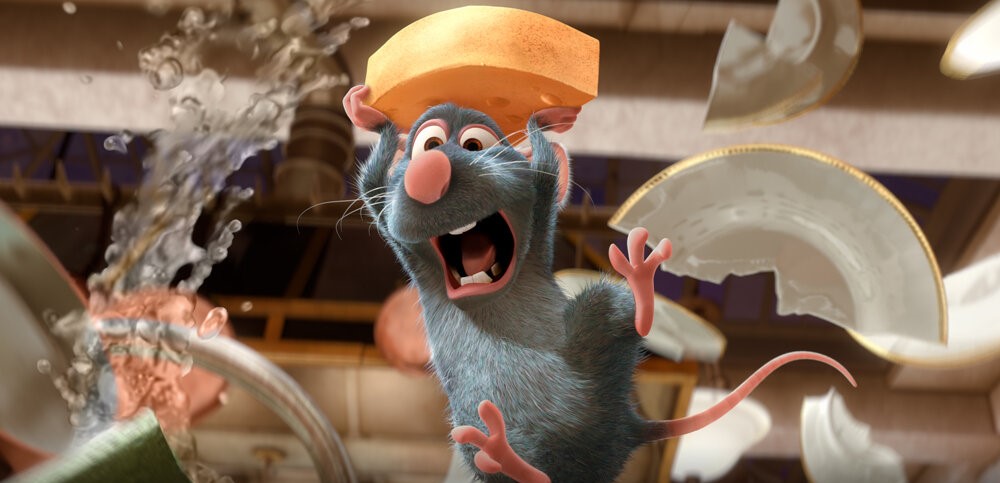
They say anyone can cook – but surely they don’t mean a rat can cook? But in Ratatouille that’s what we get: the greatest chef in Paris is a rat. Remy (Patton Oswalt) has a sense of taste and smell that’s light years ahead of his fellow rats. While they happily munch on rotten food, Remy longs for food that’s actually good. Separated from his family, Remy finds himself in the Parisian restaurant of legendary late chef Auguste Gusteau (Brad Garrett). There Remy’s natural instincts make him the secret brains behind the growing success of young Alfredo Linguini (Lou Romano), who overnight moves from dish cleaner to chef. His secret? Remy of course. Can they keep their secret in the face of the suspicion of head chef Skinner (Ian Holm), Linguini’s growing romance with fellow chef Colette (Janeane Garofalo), and the threat of a damning review by feared critic Anton Ego (Peter O’Toole)?

All this comes together in Brad Bird’s delightful confection, a superb dish where every flavour is perfectly balanced and all ingredients are seasoned to perfection. (I promise this won’t all be full of cooking puns.) It’s absolutely wonderful good fun and on top of that, it’s a real heart-string tugging treat. Ratatouille takes a fantastical set-up (a cooking rat manipulates a talentless chef’s body through precise hair pulling) and then throws in ounces of carefully judged comedy with real emotional pathos. Ratatouille never fails to make you laugh but then hit you with tear-inducing sincerity. The film is a total delight.

What Ratatouille is really about is truth. Being true to yourself, embracing the things you love, and the struggle to find acceptance for that, be it from family or the world around you. It’s the subtext behind Gusteau’s message that anyone can cook. This is not about anyone being able to crack an egg into a pan: it’s about good food coming from a person loving what they do and wanting to share that love with someone else. Remy – an utterly delightful voice performance by Patton Oswalt – wants to experience good food, but as a rat the home of good food is always the place he’s most likely to find himself skewered by a trap.  

Remy loves food in a way that the rest of his rat family – lead by his tough-as-nails father Django (Brian Dennehy) – can’t even begin to understand. They see food as just fuel. Who cares which flavours complement each other or even if its fresh? To them Remy’s extraordinary sense of smell is only useful for his ability to detect poison before it hits their mouths. And they can’t even begin to understand Remy might want more. But the very idea of heading to a kitchen – or interacting with humans who, to the other rats, get their kicks from slaughtering rats in their thousands – they can’t even begin to get their head round. Why can’t Remy be happy snuffling in the gutter?

Linguini (a very sweet, nervy Lou Romano) also has burdens of expectations that he can make a career in the kitchen. Anyone can cook – except for Linguini, who has no interest in (let alone flair for) flavours. The relationship between man and rat is beautifully done– even though neither can speak the other’s language. (In a neat touch, while we hear the rats talk – every human in the film just hears them squeak.) To Linguini, it doesn’t matter that Remy is squeaky vermin, what matters to him is that Remy is a master at what he does. But, Ratatouille gently asks: can hiding your true self make you happy in the long term?

Linguini’s success shows another side of being true: as fame goes to Linguini’s head, he starts to forget he’s the muscle not the brains of the operation. What will eventually alienate his growing relationship with fellow chef Colette (a wonderful Janene Garofalo) is not that he’s working with vermin to make the food, but that he’s lied to her about his skills. Something particularly tough since, like Remy, she has had to fight tooth and nail to live her dream in a male-dominated industry.

Accepting your true self and being happy in your own skin are themes our two villains also juggle with. Head chef Skinner (hilariously voiced with impotent rage by Ian Holm) has lost any love he once had for cooking, marketing his former mentor Gusteau as the face of a brand of cheap ready-meals (“with dignity” he absent-mindedly requests, as Gusteau is drawn as a burrito for the latest packaging) and his interest is only in turning a profit. The face of mass-produced, soulless fare, he’s the perfect antagonist of a film that praises lovingly crafted individualism.

And our other villain? Played with a beautifully plummy relish by Peter O’Toole, Anton Ego – drawn with a grey-faced, sepulchral chill – despairs that any food can meet his standards and seems to have forgotten somewhere along the line that excellence comes from love. Unlike Skinner though, Ego is (at heart) an idealist who may no longer quite remember what he is searching for – but will embrace it when he finds it at last. Ratatouille’s finest moment – always brings a tear to my eye for sure – is Ego’s being reminded at last what made him fall in love with his passion in the first place, perhaps one of the finest moments in Pixar’s long history.

Ratatouille’s emotional content and its themes of truth and acceptance are at the heart of its success, complemented always by the superb score from Michael Giacchini, crammed with Parisian inspiration. There is more life in this animated marvel than in hundreds of live-action films. And the animation is breath-taking: from the kitchen a marvel of pristine, gold and steel surfaces, via the sewers bringing back memories of The Third Man, to the visual imagination of Ego’s coffin-shaped office or the cobbled together rat colony (made from various bits of rubbish). Brad Bird’s flair (and Ratatouille is a wonderfully directed film) also carries across to his electric chase scenes through the streets and rivers of Paris, and the undeniable tension of watching Remy maneuverer his way around a kitchen without being detected.

Bird’s film though really succeeds because it has a warm-hearted love for all its characters and a heartfelt and appealing message for us to be the people we want to be, not what those around expect us to be. And who can’t relate to that? Throw in the sort of unexplained comic magic of watching a naïve young man having his body moved about by a cuddly rat sitting under his chef’s hat and with Ratatouille you onto an absolute winner. Bon appetit!

The Razor’s Edge (1946)

The Razor’s Edge (1946)

A bubbling soap full of incidents, disguising itself as a meditation on philosophy

Director: Edmund Goulding

Cast: Tyrone Power (Larry Darrell), Gene Tierney (Isabel Bradley), John Payne (Gray Maturin), Anne Baxter (Sophie MacDonald), Clifton Webb (Elliott Templeton), Herbert Marshall (W Somerset Maughm), Lucile Watson (Louisa Bradley), Frank Latimore (Bob MacDonald), Elsa Lanchester (Miss Keith), Cecil Humphreys (Holy Man), Fritz Korner (Kosti)

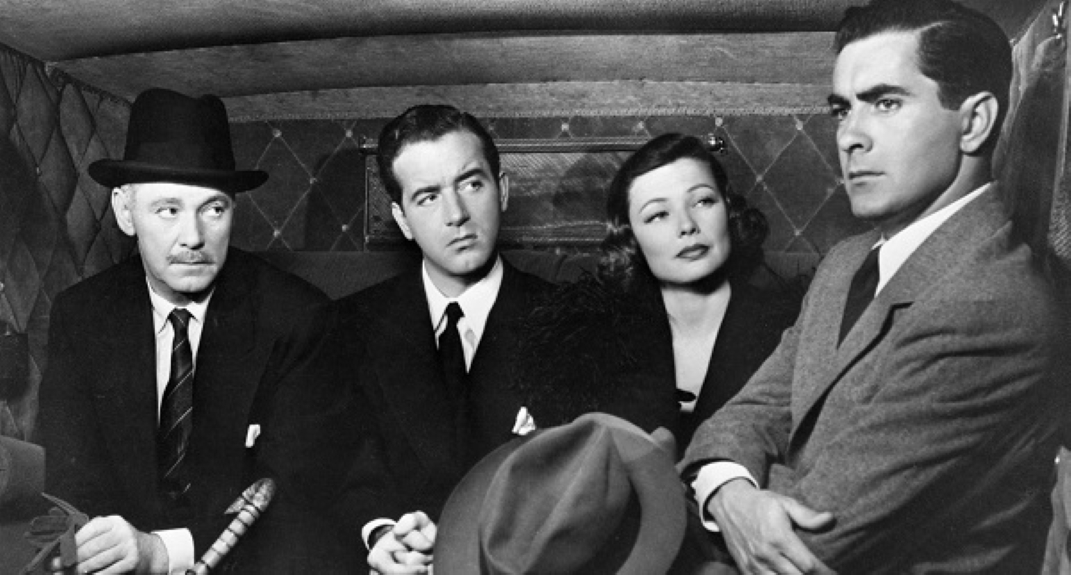
“What’s it all about?”: a question asked long before Alfie and it’s the one asked by Larry Darrell (Tyrone Power) as he returns from World War One to Chicago. Suddenly those garden parties and country clubs all look rather empty and shallow. Larry is engaged to Isabel (Gene Tierney), but he’s not interested in office work and domesticity. He wants to live a little bit, to find out what life is about. Doesn’t he owe that to the man who died in the war to save his life? With just $3k a year (over $50k today, which must help), he heads for the artistic life in Paris. After a year apart, Isabel decides it’s for her (£3k a year? What kind of life is that!) and marries a banker so dull he’s literally named Gray (John Payne). Flash forward to 1929 and the Crash has upturned the lives of the Chicago bourgeoisie – perhaps Larry’s inner contentment will mean more after all?

Adapted from W Somerset Maugham’s novel – with Maugham as a character, played by the unflappably debonair Herbert Marshall – The Razor’s Edge is a luscious period piece with pretentions at intellectualism but, rather like Maugham, is really a sort of a soapy plot-boiler with a veneer of cod-philosophy. Not that there’s anything wrong with that – after all the suds in Razor’s Edge are frequently rather pleasant to relax in – but don’t kid yourself that we are watching a thoughtful piece of cinema. It’s closer in tone to Goulding’s Oscar-winning Grand Hotel than it might care to admit.

Our hero, Larry Darrell, should be a sort of warrior-poet, but to be honest he’s a bit of a self-important bore. Played with try-hard energy by a Tyrone Power desperate to be seen as a proper actor rather than action star, Larry has a blissful “water off a duck’s back” air that sees him meet calamity with a wistful smile and the knowledge that providence evens everything out. Be it the break-up of an engagement or the death of close friend, little fazes Larry who has a mantra or piece of spiritualist advice for every occasion. Bluntly, our hero is a bit of a prig whose middle-class spirituality has all the mystical wisdom of a collection of fortune cookies.

It’s no real surprise that the film’s weakest parts are whenever Larry engages with the vaguely defined collection of homilies and mumbo-jumbo he picks up about spirituality. All this culminates in an almost embarrassingly bad sequence in the Himalayas, where Larry stays under the clichéd tutelage of a shoe-polish-covered Cecil Humphrey as a Holy Man whose every utterance is a vague collection of Diet Yoda aphorisms. Larry, with all the self-importance of the financially secure middle class, returns to the West sublimely certain of his own higher contentment and rather patronisingly looking down on the rest of the characters as shallow, grasping bourgeoisie.

The Razor’s Edge’s insight into human spirituality essentially boils down to “step out of the rat race and you’ll be a better man” – again made much easier, since Larry “forsakes” worldly wealth but can still dapperly turn out to a fancy function in a perfect tux. To be honest it becomes a bit wearing to see the other characters treat him like a sage and more than a bit mystifying why Isabel remains stubbornly obsessed with him for her whole life.

But if she wasn’t, we’d lose a large chunk of the appeal of the movie. The Razor’s Edge’s philosophy may be paper thin, but as a soap it’s spot on. And the scheming, manipulative, vindictive, snobby and entitled Isabel is a gift of a part, seized with relish by Gene Tierney. Isabel wants Larry, not so much because of who he is but because he belongs to her, and she can’t believe he was willing to let her jilt him without a fight. The epitome of the self-obsession of the modern age that Larry has rejected, Isabel consistently puts herself first, clings to the luxuries of high living and can barely hide her bored disinterest in the tedious Gray (a perfect role for the solid but uninspiring John Payne). Isabel schemes and attempts seduction of the saintly Larry, and her hissable antics provides The Razor’s Edge with much of its enjoyable thrust.

Because as a soap is where this film is most happy. It’s actually very well staged and shot by Goulding, full of carefully considered camera moves (including a late “wham” line which we don’t see a character react to, leaving their response open to our interpretation) and skilfully using depth of plain to showcase a series of luscious sets and impressively recreated Parisian streets on sound stages. The Razor’s Edge has a lot of very professional Hollywood craft behind it.

Its event-filled sub plots also give a host of excellent scenes and fun dialogue to its supporting cast. Anne Baxter won an Oscar as the tragic Sophie, a bubbly socialite (and old flame of Larry’s) from Chicago, whose husband and baby are killed in a car accident, tipping her into years of alcoholism and (it’s implied) life as a “good-time-girl” in a seedy Parisian bar. Baxter seizes this role for what it’s worth, from initial charming naivety to tear-streaked discovery of her bereavement to fidgety attempts at sobriety after Larry decides to marry her to keep her on the straight-and-narrow (needless to stay, temptation is put in the way of the pacing, smoking, fist-forming Sophie by the blithely shameless Isabel). It’s a very effective and sympathetic performance.

Clifton Webb, at the time Hollywood’s leading waspish figure of camp, has an Oscar-nominated whale of a time as Elliot Templeton, preening but generous socialite, delighting the finer things in life (from fine wines to perfectly stitched dressing gowns) who provides a catty sounding board to Isabel and whose final hours are spent bemoaning being snubbed by a countess. Herbert Marshall delivers a perfect slice of British reserve and gently arch commentary as Maugham (the real Maugham prepared a script which was junked by the studio, ending his Hollywood career there and then), purring his dialogue with his rich, velvet tones.

It serves to remind you that The Razor’s Edge works best as an event-packed piece of social drama, which it swiftly becomes as deaths, tragedy, alcoholism, scheming and feuds pile on top of each other in the second half with the blissful Larry casting a quietly judgemental but kind eye over everything around him. For all its attempts to look into the human condition, this is where The Razor’s Edge is at its best: engaging supporting characters and a hissable villain, all leading to a series of juicy plot developments. For all its literary pretentions, it’s at best a shallow From Here to Eternity.

The Old Oak (2023)

The Old Oak (2023)

Loach’s swansong is a passionate, if slightly out-of-time, call for peace and understanding

Director: Ken Loach

Cast: Dave Turner (TJ Ballantyne), Ebla Mari (Yara), Claire Rodgerson (Laura), Trevor Fox (Charlie), Chris McGlade (Vic), Col Tait (Eddy), Jordan Louis (Garry), Chrissie Robinson (Erica), Chris Gotts (Jaffa Cake)

The OId Oak is likely the swansong for 87-year-old Ken Loach, Britain’s leading independent film-maker and high-priest of left-wing political cinema. It’s an engaging valedictory effort, crammed with fine Loach touches. But it’s a film that feels slightly politically out-of-time, which works better not when making tub-thumbing points but as a simple plea for a love and understanding. There are worse things Loach (who I’ve sometimes found rather trying for all his brilliance) can sign off with.

In a small town near Durham, TJ Ballantyne (Dave Turner) is a former miner and passionate union man now struggling to keep his pub, The Old Oak, alive in the face of mounting costs. World-weary, he is roped into helping Syrian refugees settle in their new homes in the town. Many locals, bitterly feeling the town has been left behind by government, can barely hide their fury at these refugees. But TJ finds they re-ignite in him a desire to make the world a better place, particularly as he forms a fatherly friendship with Yara (Ebla Mari), a passionate young photographer, who doesn’t know if her own father is alive or dead and wants to build links between the refugees and the local community.

The bond between TJ and Yara is at the heart of this gentle film, with Loach drawing beautifully natural performances from Dave Turner (a former fireman union boss) and Ebla Mari. One of Loach’s greatest strengths has always been his ability to poetically draw out hugely endearing relationships. TJ and Yara are a perfect example, two people who recognise loss and isolation in each other. TJ’s purpose in life has gone, never finding anything to replace his union campaigns of the 80s, estranged from his family and going through the motions to keep his pub alive. Yara has lost her home and everything she has known, the only memento of her father being her treasured camera, facing hostility from all around her.

The Old Oak centres this relationship in a passionate cry for empathy between different communities. The refugees arrive lost, isolated, confused and scared, fleeing conditions far harsher than many of the people in the town could understand. Far from having an easy-ride (as many accuse them of, seeing them get free homes and furniture) they desire nothing else but to go home, but are forced to make the best of it here. It’s a perspective that never occurs to many of the townspeople, seeing them only as interlopers not victims with whom their community – that has never really recovered from pit closures – has more in common with than they suspect.

TJ and Yara both recognise this – and want to build bridges not burn them. Much of The Old Oak revolves around TJ’s efforts to convert his disused back room – a shrine to union action when the room was the heart of the mining community – into a food bank to support both refugees and local alike. Loach’s humanitarianism comes to the fore here in the brief stories we hear about the users of this food bank: the small boy who can’t believe the food is free, the sulky teenager who finds care she rarely encounters elsewhere, the proud boy promised his ‘secret’ thathe needs the food bank will be kept. These are real people, with real problems, which Loach excels at bringing to life.

Loach is equally skilled at subtly staging personal pain. The director of Kes hasn’t lost his touch with the staging of deaths of beloved pets. The emotional pull TJ’s dog Mara has over him – much of his life’s meaning coming from tending for this small dog – and the impact of her loss is beautifully played with a raw grief by Dave Turner and staged with maximum emotional impact by Loach without a stroke of sentimental manipulation. Just as the smashing of Yara’s camera in the film’s opening moments by an unpleasant yob, berating the arrival of these interlopers, carries real impact from the gentle desolation on her face. The building of relationships, instigated by mutual pain and a hope for a better future, is The Old Oak’s strongest material.

It’s the political content that never quite pulls itself into focus. Loach’s sympathy for the working-class community is clear. He demonstrates forcefully these communities have been left with almost nothing, lacking hope or purpose and facing lives of underfunded lack of opportunity. No wonder kids bristle when they see refugee children given old bikes and toys for free. Or that locals bristle at seeing houses assigned for free after they have had to scrimp and save to buy theirs. But I wonder if Loach finds himself slightly confused with some of the prejudices and lack of socialistic international brotherly love in some of the working class today.

Loach has always clinged to the idea of the workers of the world uniting. But throughout The Old Oak he tacks away from really facing the racially-based anger and prejudice in some working class circles and avoids tackling where some of this racism and xenophobia comes from. Or facing the fact that it’s more widely shared, on some level, by more people than he might care to think. (He seems more relaxed linking it to old battles – inevitably one of the most hostile is the son of a scab from the mining days.)

The film shows the angry grousing of the many of the regulars, but avoids getting under the skin of why they are angry about this invasion of their space, eventually writing them off as simply lacking true working-class solidarity. While sympathising with the struggles faced by many of the working class, as a consequence of decades of under investment and alienation from the status quo, Loach feels uncomfortable with acknowledging how some of this has fed into prejudice – or how the working-class dreams of Scargill have been corrupted into “us and them” ill-informed ranting.

Instead, Loach wants to fast-track to a picture he’s more comfortable with, showing many of the local community perform sudden 360 turns towards acceptance and brotherly love, with remaining racists written off as bad apples. The creation of an atmosphere where the younger generation are encouraged to feel xenophobic racial hatred – kids beat Yara’s brother outside of the school, filming it to post on YouTube, where it is watched with glee by some of the regulars – is unaddressed. It’s telling Loach seems certain getting everyone together for an old-fashioned socialist sing-along will help solve problems. It feels like a naïve, if touching, idea that doesn’t really ring true.

The Old Oak sometimes feels like a film from a man slightly out-of-step with the times (the many clumsy shots of phones playing YouTube videos adds to this). It’s a film made up of effective scenes – including a heartfelt sequence in Durham cathedral – but not quite drawn together into a satisfying whole, with so many plot developments kept off screen that it starts to feel it hinges on contrivance. It works best as a simple, human plea for love and understanding – but a more accurate understanding, or a willingness by Loach to really turn a harsh eye on the negative side of the working-class communities he has dedicated his life to, seems to have evaded it.

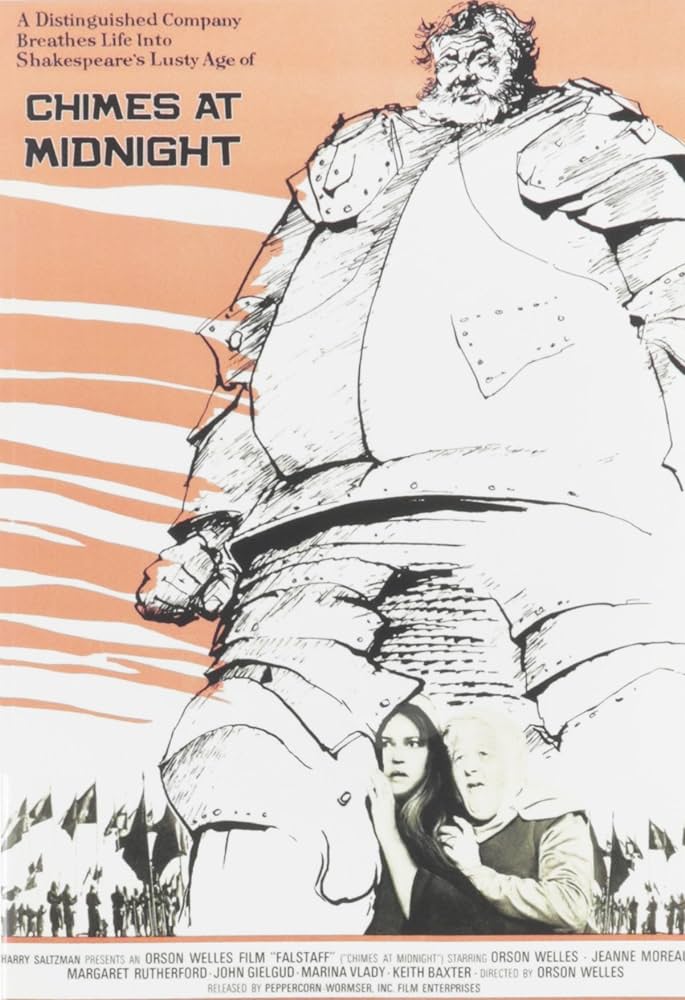
Chimes at Midnight (1965)

Chimes at Midnight (1965)

Welles reimagines Shakespeare’s Henry IV as a melancholic tribute to lost glories

Director: Orson Welles

Cast: Orson Welles (Sir John Falstaff), Keith Baxter (Prince Hal), John Gielgud (King Henry IV), Margaret Rutherford (Mistress Quickly), Jeanne Moreau (Doll Tearsheet), Alan Webb (Justice Shallow), Norman Rodway (Henry Percy “Hotspur”), Walter Chiari (Justice Silence), Michael Aldridge (Pistol), Tony Beckley (Poins), Charles Farrell (Bardolph), Patrick Bedford (Nym), José Nieto (Northumberland), Fernando Rey (Worcester), Keith Pyott (Lord Chief Justice), Andrew Faulds (Westmoreland), Mariana Vlady (Lady Percy), Ralph Richardson (Narrator)

For decades Sir John Falstaff was the part Welles couldn’t get out of his head. He’d already made two attempts at re-working the first Henried for the stage, with Age of Kings in the 30s (where Welles played Falstaff in his twenties) and Chimes at Midnight in 60’s Dublin with Welles again as Falstaff and Keith Baxter as Hal in what would be Welles final stage performance. Welles was fascinated with the roistering knight so when he was offered a film of Treasure Island by a Spanish producer, he agreed on condition he could make Chimes at Midnight at the same time with the same cast. Naturally, this being Welles, not a frame of Treasure Island was made, but with Chimes at Midnight he created possibly his most influential Shakespearean work.

Surely, it’s no coincidence the two literary characters Welles felt the closest affinity to was the windmill-tilting wandering fantasist Don Quixote and the mountain of rogueish humour and memories of Golden Years long-gone, Sir John Falstaff. Welles arguably altered the interpretation of the Fat Knight for generations. Before Welles, he was a “Hail Fellow, Well Met” comic, the exuberant force-of-nature Prince Hal must sadly cast aside for the throne. But Welles knew, like few others, what a wasteland missed opportunities, lost glories and achievements-that-never-were lay behind the raconteur. His Falstaff might be cheeky and sometimes jolly, but he’s also a mountain of melancholy, a playboy with no achievements, his glory days long gone. Even without the rejection, there is no future for Falstaff, only hazy memories of a past long gone.

Chimes at Midnight brilliantly repackages, recuts and recombines several Shakespeare plays (not just Henry IV Parts 1 and 2 but also Merry Wives of Windsor, Henry V and touches of Richard II) to reframe this story around Prince Hal and Falstaff and away from both Henry IV and the politics of rebellion (now embodied by Norman Rodway’s bombastic Hotspur). Structure is imaginatively reworked, with Part 2’s recruiting scenes appearing before Part 1’s Battle of Shrewsbury and ingenious touches such as Henry V’s decision to “enlarge that man who railed against our person” retroactively applied to Falstaff rather than a nameless offender.

Welles makes Falstaff a mix of terrible influence and proud parent – no coincidence that a half-smile of pride crosses his face when Hal finally dismisses him. They banter and bounce off each other, but there is a world-weariness. Baxter’s Hal is beginning to focus his mind on the responsibilities that come with the throne. Falstaff alternates between awareness and denial that their salad days are on borrowed time. Strikingly, both of their most prominent soliloquies are overheard by the other. Hal’s secret plans to reform as King is delivered with steely regret by Baxter, while Falstaff stands a short distance behind him; later Falstaff’s mocking of honour in the aftermath of Shrewsbury is impatiently half-listened to by a Hal already starring towards the future. These are two characters who know each other, their flaws and their ruthlessness, more than they might like.

Chimes at Midnight is Welles’ lament not just for Falstaff but for the whole idea of a Merrie England. The film is a set in a wintery land, covered in cold snow and deeply unwelcoming. Mistress Quickly’s inn is a run-down building in farmland, Henry IV’s breath can be seen in his chilly castle, Silence and Falstaff huddle around a flickering fire after a wintery walk. There is a tiredness around the antics of Falstaff’s gang. Falstaff responds to Doll Tearsheet’s attentions with an impossibly weary “I am old Doll, I am old”. We are living in the winter of a whole way of life, which Hal will comprehensively kill off in favour of realpolitik. The days of dreamers like Welles-Falstaff are numbered.

Welles stresses these differences by shooting events in various locations in strikingly different ways. The Boar’s Head Tavern uses more fluidic camera-work, with events frequently happening in multiple plains – characters appear above others on balconies or at the head of stairs – with the action filled with raucous, swiftly choreographed interplay. This contrasts with the Cathedral-like classicism of Henry IV’s court. Where the Boar’s Head is confined and intimate, Henry IV’s medieval palace has towering stone walls, beams of light flowing down from large windows, courtiers still and quiet while Henry effectively speaks to himself, the exact opposite of the boisterous egalitarianism of The Boar’s Head. Justice Shallow’s ramshackle home of bittersweet memories sits somewhere between the two, where the melancholy Falstaff is closest to Henry’s regrets.

Chimes at Midnight is filled with this sort of superb visual language. The film’s centrepiece is a truly impressive set-piece of cinematic flourish, the Battle of Shrewsbury. A masterclass in fast editing, quick cuts and brilliant framing (that makes 200 extras look like a thousand) this scene captures in microcosm the film’s theme of the death of old-fashioned principles. It starts with a knightly charge and degenerates into mud-strewn, brutal hand-to-hand combat with death agonising and swift. You can see the roots here of Saving Private Ryan, with Welles not using cutting, adjusted film stock and montage to create something really visceral and even shocking, as bodies are forced into the mud or cry out in agony – and our fat ‘hero’ trembles and hides to avoid the barbarity.

This is certainly Welles’ finest acting performance in his Shakespeare films. While always a more limited actor than remembered (a combination of laziness and stage fight), Welles was born for this role. His Falstaff builds off an element of self-portrait: a man still capable of lighting up a room with humour (as seen in his delightful ‘mock trial’ of Hal) but who knows he has achieved only a fraction of what might have been (never before have references to Falstaff’s past glories felt more sad) and that only the march towards death awaits. No wonder Keith Baxter’s excellent Hal, clinging to the last chance to let his hair down, is torn somewhere between love, pity and good-natured contempt for this man. The interplay between the two is perfectly pitched.

Chimes at Midnight is filled with rich performances. It may also be Gielgud’s finest Shakespeare performance on film, his rich, fruity tones turning monologues into musings on self-doubt and regret, distancing the coldly austere king even more from the boisterous knight. (That voice is also a gift for the other actors: Welles, Baxter and Rodway all showcase impersonations of Gielgud’s distinctive voice.) This Henry is so full of doubt, bordering on contempt, for his son he may even believe Falstaff’s claims to be the true killer of Hotspur. Rutherford is wonderful as Quickly, earthy and caring; Rodway, from charging across the battle to impulsively springing out of his bath to meet a messenger clutching only a towel makes a superb contrast with Baxter’s calculating prince. Webb’s disappointed Shallow and Moreau’s kindly Doll also make an impact.

Chimes at Midnight’s main impact though is to reimagine these plays in a highly influential way – just look at the BBC’s more recent The Hollow Crown where the Henry IV productions are so indebted to Chimes it might as well be a remake, while Branagh’s Henry V is virtually a tonal sequel. Rarely again would these be plays seen as near-comedies with a sad-but-necessary final act. Instead, they became sadness-tinged meditations of lost chances and missed opportunities, with productions set not in Olivier-style pageantry, but Wellesian chill.

It’s a film tinged with melancholy, so it’s also fitting that as well as a swansong for a lost time, a “Merrie England” past where everything was possible and the future was golden, it’s also the last narrative film completed by Welles (all others would be either documentaries or filmed lectures). When Falstaff, thanked but coldly dispatched, exits clinging to the fantasy of a glorious return but heading towards death, it’s hard not to see Welles himself shuffling away, never again to persuade a young prince (or film producer) to give him a chance again. It’s a moving metatextual ending to a film that reinvents Shakespeare and expertly exploits the tools of cinema.

Wonka (2023)

Wonka (2023)

Charming but light confection that repackages Wonka into a Paddington type figure

Director: Paul King

Cast: Timothée Chalamet (Willy Wonka), Calah Lane (Noodle), Keegan Michael-Key (Chief of Police), Paterson Joseph (Arthur Slugworth), Matt Lucas (Gerald Prodnose), Mathew Baynton (Felix Fickelgruber), Sally Hawkins (Mrs Wonka), Rowan Atkinson (Father Julius), Jim Carter (Abacus Crunch), Natasha Rothwell (Piper Benz), Olivia Colman (Mrs Scrubit), Hugh Grant (Lofty), Rich Fulcher (Larry Chucklesworth), Rakhee Thakrar (Lottie Bell), Tom Davis (Bleacher)

What did Willy Wonka do, before the factory and the carefully stuffed golden tickets in selected chocolate bars? According to Paul King’s amusingly light confection of a film, he was just a guy with a sweet box and a dream, befuddled by the big city. A bright-eyed, naïve young man, Wonka (Timothée Chalamet) is swiftly bested by the Chocolate Cartel and conned into a life of servitude by his landlady Mrs Scrubit (Olivia Colman), after not reading the contract small print. But Wonka’s invention, good cheer and alliance with put-upon fellow Scrubit victim, orphan Noodle (Calah Lane), sees him turn adversity into cartel-smashing triumph.

It might be clear from that paragraph that the Willy Wonka of this film bears very little resemblance to the figure from the Dahl original who happily allows children to face dangerous punishments in his factory. King’s film has some flourishes of Dahl in its character names and eccentricities but, in terms of tone, it takes far more after his successful Paddington films than anything Dahl wrote. Wonka himself, in his accident-prone naivety, decency and fundamental sense of fair-play, is certainly a figure in the shadow of Peru’s most beloved bear, with the film swiftly also giving him a version of Paddington’s eccentric surrogate family and increasingly comic traps to get out of.

Wonka isn’t really Dahl and doesn’t bother to begin to explore how on earth the man we see here might become the character from the books. Does that really matter? I suppose not. I guess you need to judge each film on its merits, and while the Dahl purists are unlikely to consider this fitting for the great storyteller, I’d point them instead towards Wes Anderson’s gorgeous short films, which are a true blast of Dahlish delight.

Wonka instead is a sweet, bouncy, family-friendly musical with a hero designed to appeal to all ages, carefully set in a non-descript European-ish location that combines elements of multiple cities, regions and periods (so much is the film a higgledy-piggledy fantasia combination of places, all enhanced with CGI, that it’s a surprise to see Oxford’s Radcliffe Camera appear in the film’s conclusion unadjusted and intact). It’s packed with songs – which, if I’m being honest, are mostly clever and decent than catchy or memorable – and is set in a world where corrupt monks and police detectives will bend any rules for another chocolate fix.

At the heart of all this, Timothée Chalamet gives a sprightly and engaging performance. Chalamet dials up the eccentricity of Wonka, creating a character that is whimsical but caring, an innocent abroad who just can’t understand why people would be cruel or lie. Chalamet throws himself into some effective singing and dancing, and generally lands the role pretty much in the sweet spot between sickly sweet and deliciously more-ish. It helps a great deal that he develops a brilliant sibling chemistry with Calah Lane, who is street-smart and a lot of fun as an orphan whom the world has taught to be cunning and creative.

King crafts a number of set-pieces that fit this revisioning of Wonka as a song-and-dance man at the heart of an Arthur Freed-style musical. There is a fine word-play packed song (as Wonka searches for effective rhymes for Noodle) in a giraffe pen, a balloon-carried number in the skies and, best of all, a very funny work song sung by those poor unfortunates conned by Mrs Scrubit into a lifetime of debt. This surrogate family, by the way, is a neat illustration of King and co-writer Simon Farnaby’s trick of turning potential one-note characters into people you care for, ably embodied by Jim Carter as a stuffy accountant, Natasha Rothwell as a bouncy seamstress, Rakhee Thakrar as a nervous telephonist and Rich Fulcher as a past-his-best comedian.

Much like his Paddington films, Wonka takes place in a world of minimal threat. The villains are largely comic – Olivia Colman surely will spend most of the next few years duelling with Helena Bonham Carter to land toothy, sweaty grotesques roles like Mrs Scrubit – with the Chocolate Cartel in particular making a droll collection of smugly superior types, ably played by Paterson Joseph, Matt Lucas and Matthew Baynton. Their operations take place in a surreally complex underground base (under a cathedral guarded by chocolate-obsessed monks naturally), built around a vault full of liquid chocolate. Following the structure of both Paddington films, naturally this becomes the site of an act four heist by our heroes.

Wonka frequently feels a little too often like it is simply repeating and representing stuff that had worked well for King and Farnaby in the past. (You also feel that about the casting of Hugh Grant as an Oompa-Loompa – fundamentally that is the joke, although Grant delivers it repeatedly marvellously.) While few people do this sort of thing better than them, you feel Wonka offered the chance to be something more rather than a spiritual retread of the superior Paddington films.

It’s a film that never quite finds it own identity, or really finds a Dahlish uniqueness. It settles, happily, for being a feel-good confection, a charming series of scenes and songs delivered with just the right level of enthusiasm and glee by a cast who look like they are having a marvellous time. It’s charming enough and I enjoyed it, but I can’t say I loved it like I do Paddington 2. I can’t help but feel that’s because the emotional connection isn’t there. Wonka himself, repackaged as he is, is a little too odd to be as adorable as the Bear, and without really, deeply, caring for Wonka the film itself doesn’t carry the impact it should. It’s entertaining, but it didn’t win a place in my heart.

The Holdovers (2023)

The Holdovers (2023)

Alexander Payne’s hilarious Christmas-themed prep school drama is a heart-warming delight

Director: Alexander Payne

Cast: Paul Giamatti (Paul Hunham), Dominic Sessa (Angus Tully), Da’Vine Joy Randolph (Mary Lamb), Carrie Preston (Lydia Crane), Brady Hepner (Teddy Kountze), Ian Dolley (Alex Ollerman), Jim Kaplan (Ye-Joon Park), Michael Provost (Jason Smith), Andrew Garman (Dr Hardy Woodrup)

Christmas is a time when people come together – not always by choice. In 1971, Paul Hunham (Paul Giamatti) is a curmudgeonly classics teacher at Barton Academy, a New England boarding school for the wealthy which he once attended himself on a scholarship. He’s despised by teachers and students alike for his waspish wit, brutal marking and abrasive personality. As a punishment for refusing to give a donor’s son the grade needed for Princeton, Hunham must spend Christmas with “the Holdovers”, the students whose families cannot take them for Christmas. Principal among these is Angus Tully (Dominic Sessa), while Mary (Da’Vine Joy Randolph) the campus cook whose son (a former scholarship student at the school) was killed in Vietnam also remains on site. These three difficult, damaged people surprise themselves and each other as time together thaws each of them.

I found this film an absolute delight, funny, heartwarming and rather moving, a treat for any time of the year. Shot and edited with a deceptive simplicity, it’s only when you think back that you realise every scene was perfectly formed, every beat wonderfully timed and not a frame was wasted. This is serene film-making that never draws attention to itself. Payne textures the film like a missing 70s auteur piece – like other parts of his work there are strong elements of Hal Ashby, not least The Last Detail – and his measured, patient staging makes the moments of waspish or foul-mouthed humour land with as much impact as quiet moments of raw pain.

What’s really striking about The Holdovers is the warmth and regard it has for its three characters. Lesser films would set them up as standard tropes: people whose edges would be worn off due to the magic of reaching out to others. What The Holdovers does really well is establish from the start that, depressed and damaged as they are, they are all at heart kind, decent people. Paul’s hostility to his students stems from disgust at their entitlement – we’re completely with him when he hits the roof at the contemptuous “get over it” attitude one student shows to the grieving Mary. Mary’s motherly instincts express themselves in myriad ways. And Angus’ sardonic, smart-aleck waspishness doesn’t stop him comforting a vulnerable younger student.

To make this work as well it does, the acting is key and in its principals The Holdovers is blessed. Paul Giamatti is superb as the prickly Paul, who at first even we can find challenging. Like a bullying Mr Chips, Paul sets tests for Christmas, orders the holdovers to exercise and study during vacation and delights in insulting his students. But Giamatti slowly shows this is a shield for a man disappointed with life, who feels its injustice and imbalance very keenly and decides it’s best to attack life head on.

Paul is a man who really, really cares – so much so, that it’s easier to never allow himself to get close to anyone. Giamatti balances this heartfelt humanity with perfectly pitched comedy. Paul’s acidic put-downs, layered with dense classical references, are frequently hilarious but it’s also rather touching to see him trying to use the same references to try and spark small-talk with strangers (unfortunately the etymological origins of Santa Claus in Ancient Greece leave his audience baffled.). You believe him when he talks about finding the world a bitter and complicated place just as you can understand why he feels he has to respond in kind.

You can also understand why he starts to see the same traits in Angus Tully. Played with a wonderful naturalness by Dominic Sessa (in his film debut), Angus also uses humour and intelligence as a shield. Both he and Paul are sharply intelligent (Paul even grades Angus a B!), disgusted by the casual superiority of Angus’ classmates (in particular the awful – and surely not accidentally named – Kountze) and turn out to be all-but orphans struggling with the same depression. What’s delightful about Sessa’s performance though is he manages to show Angus is still just a kid – he can be vulnerable, moody but also innocent: he’s breathlessly excited when flirting with a girl at a party and bounds off to pack his bags with a whoop when Paul agrees to take him on a “field trip” to Boston.

Angus and Paul are surprising kindred spirits. They both stretch the “Barton men do not lie” mantra to the limit in a series of minor crises, from a hospital visit to a prevented barroom brawl to a meeting with Paul’s puffed up former Princeton schoolmate. The Holdovers also, refreshingly, avoids creating cheap melodrama between them. Promises that certain facts will remain entre nous are loyally kept, making the film’s close (with developments we could have an anticipated at the start) feel true.

The bridge these two meet across is Da’Vine Joy Randolph’s wonderfully warm yet brittle performance as a loving woman lost in grief. Mary had clearly focused every hour on her son since his birth, his death leaving her bereft. Around her house, his possessions are stored like mini-shrines. Mary keeps up her professionalism while screaming in agony on the inside, but she’s still determined to see the best in people. All three actors are astonishingly good.

The Holdovers sparks these actors off each other in a series of scenes that are, in turn, hilarious, surprising and then, from nowhere, deeply moving. It’s a lovingly optimistic film at heart. Except for Kountze and the headmaster, every character is deep-down decent (the holdover who spontaneously – and excitedly – invites his fellow holdovers to a skiing holiday is adorable). It’s a film that finds this good in people without being cloying, possibly because the characters puncture any sentimentality with a well-timed, foul-mouthed quip. It also swerves away from predictable tropes (despite Payne cheekily teasing more than a few) to create a sense of a story that feels true.

The Holdovers is also rare in American films for taking class as a strong theme. Barton is a sort of finishing school for the rich, where the size of the library a benefactor buys is more important than the academic skill of his son. Paul is, rightly, appalled by the casual assumption of superiority of many of the students, and their smug obliviousness to their privilege. Mary’s son, due to not being able to afford college, was condemned to enlistment in Vietnam in the hope of a GI bill education. Paul’s past misfortunes are steeped in class injustice and Payne frequently stresses the plush comfort of the school compared to the working-class town it sits inside. There is something quite British about this sharp-eyed look at a “classless society”.

The Holdovers is an intelligent but also magnificently heart-warming film with just the right touch of lemony bittersweetness. With three gorgeous performances, Payne’s film superbly shows how the defences we use to protect ourselves can hurt us as much as those around us. Avoiding sentimentality, it concentrates on making us care deeply for its three damaged souls as they stumble towards understanding. It does this with sensitivity, empathy and (perhaps most importantly) a lot of humour. The Holdovers is a small-scale triumph, the sort of film I can imagine watching again and again and always bringing a small tear to the eye.

A Hard Day’s Night (1964)

A Hard Day’s Night (1964)

The Fab Four conquer the movies in this fast-paced and funny road movie

Director: Richard Lester

Cast: The Beatles, Wilfrid Brambell (John McCartney), Norman Rossington (Norm), John Junkin (Shake), Victor Spinetti (TV Director), Anna Quayle (Millie), Richard Vernon (Man on Train), Kenneth Haigh (Simon Marshall)

In 1964 they weren’t just the most popular music act: they basically were music. Everywhere they went they were met by crowds of screaming fans. They’d conquered America. They were no longer four lads from Liverpool: they were The Beatles. They were numbers 1-5 in the States, their last 11 songs had gone to number one, they were the most popular people on the planet. Of course, it was time for them to conquer the movies.

What’s striking is that A Hard Day’s Night could have been like any number of god-awful Elvis Presley films, with the King awkwardly playing a series of characters shoe-horned into plots based on songs. Richard Lester would do something different – and along the way he’d arguably invent the music video (when told he was the father of MTV, Lester famously asked for “a paternity test”) and the mockumentary all in one go. Lester placed the fab four into a day-in-the-life road movie, mixed with silent-comedy inspired capers and Marx Brothers style word play, in which they would play versions of their various personas in what basically amounted to a series of fly-on-the-wall sketches.

The film follows the gang in Paul’s (fictional) grandfather John (“Dirty old man” Steptoe’s Wilfrid Brimbell) complains move from “a train and a room and a car and a room and a room and a room”. (In a running gag lost on those not au fait with 60s British sitcoms, he is repeatedly called “clean”). In other words, we see the Fab Four shuttle to London, answer questions at a press conference, skive-off to prat about in a park then go through a series of rehearsals (with interruptions) before performing on TV and choppering off to their next appointment. It’s non-stop (even their night-off is filled with answering fan-mail – and pulling Grandad out of casino) work, work, work and any time outside is spent running from a mob of screaming fans. A Hard Day’s Night indeed.

Lester shoots this with an improvisational energy that feels like its run novelle vague through a kitchen-sink drama. He’s not averse to Keystone Kops style chases, sight gags and letting the camera bounce and jerk around with the actors. If things go wrong – ten seconds into the film George and Ringo fall over during a chase scene, get up and start running again while John laughs his head off – Lester just ran with it and kept it in. Everything feels like it has the casual, cool energy of just sticking the camera down and watching four relaxed, cool guys shoot the breeze.

It helps that he moulds four decent performances from a band that, let’s be honest, was never going to trouble the Oscars for their acting. Screenwriter Alun Owen – whose Oscar-nominated script is awash with pithy one-liners and gags – spent a couple of weeks with the boys and from that essentially scripted them four personas best matching their real-life attitudes. John becomes a cocksure smart-arse, with a quip for every corner. Paul an earnest, decent guy with a taste for wacky gags. George a shier, poetic type. Ringo the closest the band gets to a sad-sack loser, but also the most down-to-earth. Essentially, with these scripted “selves” the band were encouraged to relax and go where the mood takes them.

It works. Of course, it helps that the Beatles are (a) really cool and (b) totally relaxed with themselves, with Lester encouraging an atmosphere where the four feel less like they are acting and more like they are just being. There is an impressive naturalness about this film – really striking since it’s full of silly stuff, from the four hiding in a work tent to a car thief being roped in by the police to drive them through a chase – that means it catches you off guard. After a while you kick back and relax along with the people in it. That’s the sort of casual cool that’s impossibly hard work to pull off.

The musical sequences also feel spontaneous. When the Beatles bust out their kit and do a number on the train among the baggage it makes as much sense as them performing their stuff in the studio. It all stems from confidence – the sort of confidence that makes the group seem cheeky rather than cocky. There is a vein in A Hard Day’s Night of thumbing your noise at the posh, privileged world that was being gate-crashed by four working-class Scousers. It’s hard not to side with the Beatles when they tease Richard Vernon’s snobby city gent on the train (“I fought a war for you lot” he sniffs “Bet you wish you’d lost now” John snarks) or smirk at the deferential police eye these working class lads with suspicion.

What A Hard Day’s Night does best of all is make the Fab Four look like Four Normal Guys. They always look slightly dumbfounded by the pace of their life and the riotous reception from fans. They always seem like they’d be happier joking around or, as Ringo does when he bunks off for some time alone, wandering along chatting with people and dreamily watching the world go. They treat the media attention (and stupid questions) with straight-faced but ridiculous answers (“What do you call this haircut?” “Arthur”) and never feel or look like fame has corrupted them. Their manager Norm (a fine Norman Rossington) essentially treats them like four naughty schoolboys.

A Hard Day’s Night flies by in less than 90 minutes. It’s charm, wit and Lester’s sparkling imagery (the boys pratting around in the park did indeed inspire about a million MTV videos) and ability to shoot musical gigs in imaginative exciting ways makes it almost certainly the finest music-star film ever made – and inspired generations of comedies to comes. No wonder it made the Beatles number one at the Box Office and the Charts.

The Lives of Others (2006)

The Lives of Others (2006)

Breathtaking, heartfelt and in-the-end deeply moving film which leaves you with a profound sense of hope for humanity

Director: Florian Henckel von Donnersmarck

Cast: Ulrich Mühe (Hauptmann Gerd Wiesler), Sebastian Koch (Georg Dreyman), Martina Gedeck (Christa-Maria Sieland), Ulrich Tukur (Oberstleutnant Anton Grubitz), Thomas Thieme (Minister Bruno Hempf), Hans-Uwe Bauer (Paul Hauser), Volkmar Kleinert (Albert Jerska), Matthias Brenner (Karl Wallner), Herbert Knaup (Gregor Hessenstein), Charly Hübner (Udo Leveh)

For almost half the twentieth century, Germany was a country divided. West Germany was a world we might recognise today. East Germany was one George Orwell would have found eerily familiar, a surveillance state, where neighbour reported on neighbour, conversations and opinions were monitored and controlled, and the Stasi had ultimate power. Everything was designed to undermine personal loyalty, introduce mistrust into every relationship and keep in power apparatchiks who enjoyed privileges beyond the imagination of others. But what happens when humanity comes up against this system? Can the lives of others affect what the system’s agents think and feel?

1985, East Berlin. Gerd Wiesler (Ulrich Mühe) is the perfect cog in the Stasi machine. Emotion isn’t an issue when he interrogates dissidents for hours at a time, or sits overnight listening to every word spoken in a suspect’s bugged house. All that starts to change when Wiesler is ordered to carry out an operation against noted playwright Georg Dreyman (Sebastian Koch). Dreyman appears to be the perfect citizen, but is suspected of dissident sympathies. More dangerously for him, he’s having a relationship with famed actor Christa-Maria Sieland (Martina Gedeck) who has attracted the lascivious attentions of the corpulent and corrupt Minister Hempf (Thomas Thieme). As Wiesler listens to Dreyman and Sieland’s lives, he finds himself deeply affected by exposure to art he has never experienced and begin to question the certainties of his world-view.

The Lives of Others is a moving, humane debut from von Donnersmarck, offering a rich and chilling insight into the horror of living in a country where thoughts are not free and words are strictly monitored. It carries such emotional impact because it gives us hope that, no matter the strictures of the world around us, common humanity and decency can break through and change us – even the most mechanical servants of a regime. The Lives of Others does this with realism and a lack of sentiment, showing life and the after-effects of our decisions in non-romantic detail, while also giving us hope that goodness can shine through no matter the cost.

Shot in a series of cold colours reflecting the featureless surroundings of East Germany, The Lives of Others exposes the beige hopelessness of Soviet life. It opens with Weisler’s long interrogation of “Prisoner 227”, cutting between it and a lecture hall, where Weisler plays tapes of it to teach a class. He shows no emotion of any type in either setting for the distressed, exhausted prisoner he’s talking to, and matter-of-factly marks down the name of a student who questions the ethics of what he’s doing. Weisler’s life is one of quiet exactitude: his apartment is featureless, his meals are bland pasta with ketchup, he has no friends and barely seems able to smile.

He contrasts totally with Geog Dreymon. Played with an ebullient innocence by Sebastian Koch, Dreymon has accommodated himself with the regime’s requirements. Does he believe in socialism? It’s one of the film’s mysteries – Dreymon may have an intellectual romanticism but he’s averse to making pointless protests or stands that will only lead to him being silenced. He is willing to accept the shelving of his director friend, for his works to be pushed into a realist factory-setting by plodding directors. His charm sees him befriend the high and mighty (“it was a gift from Frau Honecker” he tells a Stasi officer who questions his possession of a Western book) and he has boyish innocence, like someone who has never known the Orwellian horrors he lives amidst.

His friends however have. His director friend Jerska (Volkmar Kleinert) is an ‘unperson’ whose presence is an embarrassment at parties. Another is a closet radical who feels he should take a stance. Above all, Christa-Marie (a marvellous Martina Gedeck) lives with the abuse of Minister Thieme. This corrupt man – who orders Stasi investigations against people he doesn’t like and is the only character who looks overfed and well-dressed – fondles Christa-Marie at parties and forces her into sexual encounters in his chauffeured car. Corrupt men run this state – similarly Wiesler’s Stasi superior Grubitz (a wonderfully smug Ulrich Tukur), is interested only in promotion.

The system is propped up by men like Wiesler. But all that changes as listening to Dreymon’s life pulls something out of Wiesler he has never thought about before. What pivots this? Perhaps Wiesler truly listening to the warmth and vibrancy of Dreymon’s home life? Perhaps exposure to art? Von Donnersmarck masterfully shows (with complimentary camera moves between two locations) Wiesler teary, spellbound listening to Dreymon’s playing of a piano sonata. It opens up a new world of artistic and cultural understanding to Wiesler, who is drawn to the books in Dreymon’s apartment and begins turning more than a blind eye to Dreymon’s flirtation with dissidents.

In fact, Wiesler morphs from Dreymon’s dark shadow to his protective guardian angel. He awakens in himself a care for people around him, from the son of a neighbour to Dreymon and Christa-Maria. He conceals Dreymon’s involvement in a scheme to smuggle someone across the border (tragically the plan is a fake, designed to test if Dreymon’s apartment is bugged). He does his best to reassure Christa-Maria, “bumping into her” anonymously to provide her a moment of solace with a stranger and subtle counselling on her relationship with Dreymon. As Dreymon carefully writes an article, to be smuggled to the West, critical of the regime, Wiesler fills his reports with imagined plot details and quotes for the Lenin play Dreymon claims to be writing.

Dreymon is actually writing an article about the suicide rate in East Germany. Suicide becomes a heart-wrenching central theme. An oppressive, domineering regime like East Germany offers only one real escape: death. A state designed to make its own people suspect and turn on each other is designed to grind you into a choice between blank conformism or taking your own life. And we see the effects of this on multiple characters, as people are separated from the things that give their life meaning, stripped of their own identity, or made to betray those they love. For some, this is more than they can bear.

In this world, just displaying humanity is the victory. Ulrich Mühe’s breath-taking performance slowly fills with growing doubts, longings and passions under the surface of an impassive, quiet man who suddenly realises the world is larger and more magical than he ever imagined. Like a butterfly emerging from a chrysalis, he starts burrowing in the bowels of Stasi HQ, his eyes fixed only on what is in front of him. The film’s victory is turning this man into one who makes huge, unrewarded, sacrifices to protect another, the very attitude he quietly deconstructed in the film’s opening. Mühe is superb, the film constantly exploring his face for unspoken depths.

von Donnersmarck’s film ends with an extended coda of life after reunification. Some things are not as triumphant as hoped: Wiesler lives in poverty, the streets are lined with graffiti and tramps, cockroaches like Thieme remain in authority. But it is also a place where hope and friendship are possible, where things can be spoken rather than suppressed. It culminates in the sort of free-publishing Dreymon could never dream of and a tribute that could never have been spoken before.

After the crushing misery and suicidal pressures of the East, a world of possibility and freedom is one where we all could change our stars like Wiesler, to find an inner contentment from doing the right thing for no reward. Brilliantly filmed and deeply moving, The Lives of Others is a masterpiece.