Category: Film about greed

The Treasure of the Sierra Madre (1948)

Three men go in search of The Treasure of the Sierra Madre

Director: John Huston

Cast: Humphrey Bogart (Fred C Dobbs), Walter Huston (Howard), Tim Holt (Bob Curtin), Bruce Bennett (James Cody), Barton MacLane (Pat McCormick), Alfonso Bedoya (Gold Hat)

Is there anything that warps the human character more than greed? Humanity sometimes seems driven only by the desire for more, to fill our pockets with cash and leave the rest behind. It’s greed that becomes the subject of John Huston’s masterful The Treasure of the Sierra Madre – and specifically the effect it has on Humphrey Bogart’s Fred C Dobbs. If you can pick up as much gold as you want off the ground around you, why does it become so difficult to watch others take it away?

Dobbs and Bob Curtin (Tim Holt) are down-on-their-luck drifters in Mexico, bumming spare change off American businessmen and struggling on hand-to-mouth jobs for shady businessmen. So how could they resist the chance to team up with fast-talking old-timer Howard (Walter Huston) who knows that there’s gold in dem da hills? Heading into the wilderness – partly financed by Dobbs’ lucky small lottery win – the three men strike lucky and start pulling the gold from the ground. Problem is as the piles grow, so slowly does the men’s suspicion each other – not least Dobbs, who grows increasingly paranoid and unbalanced at the thought of any danger to his gold. In the wilderness of Mexico, with bandits across the countryside can the men’s growing suspicion of each other be held off long enough to get the gold back home?

Based on a novel by B Traven – an author so notoriously private that even today no one knows who he was – John Huston’s classic is part adventure story, part treatise on the human condition. It’s also gloriously entertaining at every turn. One of the first major Hollywood films to be shot largely on location, it drips with the sultry heat of Mexico, beautifully filmed by Huston. Huston’s masterful script also packs the film with a punch, from quotable titbits (most famously the oft-misquoted “Badges? I don’t have to show you any stinkin’ badges!”) to its Shakespearean touches as a rambling, mad, paranoid Dobbs walking alone through the desert wilderness like a cut-price Lear.

Dobbs is the heart of the film – and there is perhaps no anti-hero more ‘anti’ in the whole of Hollywood than this ruthlessly selfish, obsessive paranoiac. Bogart probably gives his finest performance ever as the scruffy, sweaty, unshaven and bitter drifter who finds he can’t abide the idea of having to give away any of what he sees as his share of the loot. And, worse than that, becomes convinced that the whole world is out to take it from him. 

Bogart digs deep into the weasily, rat-like greed of this man. Bogart fought long and hard to play who he called “the worst shit you ever saw”. Dobbs has a strange moral code and sense of honour that’s entirely personal. Having his character impugned by others is an affront he can’t abide – though murder and violence are perfectly acceptable. He’s the sort of guy who will savagely beat a man who stiffs him for wages and then precisely take only what he’s owed from the guy’s wallet. Bogart is perfect as the cold-eyed loner who talks big at first about partnership, but later whines about how he staked most of the starter capital so should be getting a larger share of the profits. Bogart, in perhaps one of the biggest snubs in Hollywood history, missed out on an Oscar nomination in a notoriously weak year for Best Actor. Perhaps, the vision of Rick Blaine bitterly muttering to himself, covered in flies and filth, while plotting the murder of his friends in the Mexican outback was too much for the voters to take. Either way, Bogart’s late mental collapse into near-Shakespearean envy, jealousy and twitchy paranoia is as effective as it is subtly done.

More fortunate at the Oscars were the Huston family. John had written the part of Howard for his father Walter. It bought Huston Snr the Oscar for Best Supporting Actor. Walter Huston is wonderful as this fast-talking eccentric, rocketing through his dialogue at a hundred miles an hour, as if he has lived so long through the events he is talking about that he barely has the time or patience to tell the story at a normal pace. Huston adds touches of wonderful eccentricity, to Howard’s insane jig of joy when finally finding the site of the gold, to his infectiously unrestrained cackling laughter. 

Eccentric as he is though, Howard is a decent and honourable man who has every intention of sharing the gold and is well aware of its corrupting influence. The wily Howard is also the only essential member of the crew – the only one with the experience to survive in the wilderness, the only one who can recognise and knows how to mine for gold. The most loyal to the fellowship, he’s the good angel to Dobb’s bad. In the middle of this moral spectrum, John Huston places Tim Holt’s Bob, a plain-speaking, more naïve figure who has elements of both characters in his pride and hunger for gold, matched with his sense of honour and loyalty. The film partly becomes an unspoken struggle for the soul of Holt’s Bob, as we wait to see which way he will fall. 

Not that any of these men are angels. They are all determined to protect what they have. Struggling in shoot-outs with bandits is fine. They even vote on whether or not to execute a fellow drifter (played by Bruce Bennett) who encounters their stake and enquires about joining them for a share. Bennett’s Cody is, by the way, the smartest character in the film, who sees with pathetic ease through the nervy lies told by the three men, as well as acutely analysing their situation and options with a sharpness that seems beyond all of them. 

Of course by that point suspicion between them – specifically Dobbs and Bob – has already grown dramatically. Dobbs takes to spying on his fellows and digs a separate hiding place to which he carefully takes his own share (Curtin takes to doing the same). John Huston includes a marvellous sequence where the three men each wake up in turn during the night – and react with suspicion on noting the absence from the tent of the others. Later Bob will think long and hard before saving Dobbs from a mining cave-in. Only Howard seems less affected about the gold – although with his talk of the corruption he has seen in the past, perhaps he was a Dobbs himself in the past, now grown wiser and more accepting of the easy-come-easy-go nature of gold. 

Huston’s Oscar winning script (he also lifted the Oscar for Best Director, although Best Picture went to Laurence Olivier’s Hamlet) keeps the rich vein of irony running throughout the script, even while it shows how susceptible men are to corruption. The film’s final act – and the eventual fate of the gold – is a treat, a natural extension of the films theme of mankind being a dog-eat-dog world. What else can you do but sit in the dust and laugh at it all? 

There are no heroes really in The Treasure of the Sierra Madre – even the mountain remains named only in the title of the film – just three men, scruffy, seedy and not that smart, struggling to grab what they can from the earth. Life becomes more and more cheap as the film goes on – Dobbs and Curtin are like brothers at the start, but increasingly come to see both other people and each other as expendable rivals. With Dobbs like some scruffy Smaug, the film boils down to each man confronting his own emptiness. The only character with any emotional hinterland is the drifter Cody, looking for gold for his wife and kids (his story has real impact on Curtin), the rest are just living from moment to moment.

John Huston’s classic is a marvellous musing on the nature of greed and humanity, superbly filmed by Huston with not a single false note in acting or writing. Perfectly placed, it mixes a western vibe with a Shakespearean grandness – and has a simply wonderful performance by Bogart. A classic that really delivers.

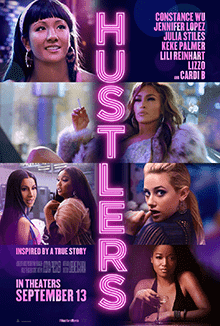
Hustlers (2019)

Constance Wu and Jennifer Lopez head out to get what they want in Hustlers

Director: Lorene Scarfaria

Cast: Constance Wu (Destiny), Jennifer Lopez (Ramona Vega), Julia Stiles (Elizabeth), Keke Palmer (Mercedes), Lili Reinhart (Annabelle), Lizzo (Liz), Cardi B (Diamond), Mercedes Ruehl (Mama), Wai Ching Ho (Destiny’s grandmother)

Greed. To many people, it’s what powers society. Those at the top believe anything can be bought, that they can have anything and everything they want simply because they have the money to pay for it. Hustlers suggests that nowhere is this more true, than in a New York strip club. The rich and the powerful, the masters of the universe, descend on these clubs for their after-hours play and assume their ocean-like wallets will open every door for them. Can we blame the strippers if they decide to exploit this for their own gain?

Opening in the build-up to the financial crash of 2008, Dorothy aka Destiny (Constance Wu) arrives at Moves, a prominent New York strip club, the night-time spot of choice for the super-rich from Wall Street. Money flows liberally in return for the strippers’ performances and their stroking of these masculine egos. Destiny comes under the wing of the club’s star, Ramona Vega (Jennifer Lopez), who teaches her how to manipulate men for cold hard cash. But when that financial crash comes, both women find themselves out of work. In the new atmosphere, the clubs are now staffed by dancers from Russia willing to go further with the men for money. Thrown back together, Destiny and Ramona start a new hustle – target rich men in clubs, get them drunk (and later just simply drug them), drag them to Moves and max out their cards (with the ex-dancers taking a healthy cut). But as the strippers themselves become rich, they start to get greedy. Things aren’t going to end well…

Sharply and wittily directed, Lorene Scarfaria’s film is an excellent crime movie with a little bit of social commentary thrown in. Fast paced and done with just the right amount of flash, it brilliantly rejigs the usual lens that we see strippers through in Hollywood movies. Rather than clichés, hookers with hearts of gold or props for the male characters, here the strippers are real, rounded people working a job – a job that just so happens to involve taking their clothes off. There may be fun to be had at times, but it’s a performance, a show – and a large part of Ramona’s skill is to effectively and convincingly play what she knows the men want to see.

That’s what Scarfaria’s film shows – it’s all a careful hustle, a clever series of tricks and techniques used by strippers to minimise the amount of contact with the customers (and the indignities of their lecherous hands) and maximise cash return, over the longest period of time possible. And these rich Wall Street types are too arrogant and convinced of their own excellence to even notice. The men come out spectacularly badly, a bunch of leering assholes who believe money gives them the right to do anything they like. Scarfaria shoots this with a snazzy Scorsese-ish zing which makes the entire film bounce along like a light version of Goodfellas and Wolf of Wall Street.

And the film has a great deal of admiration for these women who decided to turn the tables – who dealt with the fact that they were basically trapped into a certain role by society by using their skills to steal from the rich. The scheme of conning men is perfect at first – after all what powerful man is going to want to say that he was drugged and fleeced by a gang of attractive women? What is interesting is that the greed that corrupted the men, is gradually the thing the corrupts the women as well: the more successful their scam is, the richer they become, the more they become obsessed with status symbols, just as the men treated them. It doesn’t take long for crime to start moving on from its original Robin Hood targets into something far more indiscriminate.

Leading that charge into hitting any and every target for as much as they can get (rather than a careful but continual fleecing of a select group) is Jennifer Lopez’s Ramona. This is the role Lopez has been waiting almost twenty years for, a charismatic woman so firmly in control of her own life she doesn’t even notice when it starts to hit the skids. It’s the sort of scene stealing role that demands the energy and personality Lopez can bring to it, Ramona being part mentor and mother and part greedy livewire. If you forgot what a promising actress she was in the 90s, this is a great reminder. Ramona is a force of nature, the woman who demonstrates sex is a tool that can produce fabulous, fortune making results. But she’s arrogant enough to let greed and her innate belief in her own infallibility guide many of her decisions.

Lopez also forms a wonderful partnership with Constance Wu in the “Ray Liotta” part of the young naïve innocent, drawn under the mentor’s wings who eventually has to turn against her. Wu draws a lot of charm out of the young stripper learning the ropes, but crosses this really well with an ambition and ruthlessness that only late on finds its limits. 

Hustlers bounds along telling a winning, crowd pleasing story with a depth and emotional force that produces great results. We root completely for its female leads, keeping them relatable even when their actions become less sympathetic. Strikingly directed by Lorene Scarfaria, it’s a film about women that makes themselves firmly the authors of their own destinies – and their own mistakes.

The Third Man (1949)

Orson Welles is the dark heart of The Third Man

Director: Carol Reed

Cast: Joseph Cotton (Holly Martins), Alida Valli (Anna Schmidt), Orson Welles (Harry Lime), Trevor Howard (Major Calloway), Paul Hörbiger (Karl the porter), Ernst Deustch (“Baron” Kurtz), Erich Ponto (Dr Winkel), Siegried Breuer (Anna), Bernard Lee (Sergeant Paine),Wilfrid Hyde-White (Crabbin)

It’s regularly held up as one of the cornerstones of classic 1940s film-making – and it has frequently won polls of the Greatest British Films of all time. Does The Third Man live up to expectations? No it excels them. I doubt there has been a film more perfectly assembled than this, one where all the component parts click together to make one perfect whole. No matter how many times you see The Third Man, it weaves its spell every time.

In immediate post-war Vienna, the city is divided into four zones, each run by a different great power (the UK, US, France and USSR). The black market is rife between the zones. Into this city arrives pulp Western writer Holly Martins (Joseph Cotton), here to visit his old school friend Harry Lime (Orson Welles) – only to find on arriving that Lime died in a traffic accident, with British policeman Major Calloway (Trevor Howard) insisting that he was a black marketeer. Holly can’t believe Harry was a crook, and decides to investigate himself – on the way falling in love with Harry’s girlfriend Anna (Alida Valli) and finding that nobody’s story on what happened to Harry matches up. Could the accident actually be a murder?

Carol Reed’s atmospheric film is beautifully, perhaps flawlessly directed – so well made that for years there were fevered efforts to assign its brilliance to Welles himself. Which was studiously unfair to Reed, a director at the top of his game in the 40s.  The Third Man was the crowning glory of a run of superbly stylish thrillers that matched thought provoking themes with striking film-making. The film is soaked in the atmosphere of post-war Vienna, a city half shelled out of existence. The film was shot on location, and Reed’s camera captures the “bombed about a bit” shambles of the city, its long shadows, cobbled streets and mysterious alleys.

The Third Man’s filming style also plays into this truly distinctive look. Working with (Oscar-winning) cinematographer Robert Krasker, the film is shot with a luscious almost German impressionistic style, with murky shadows and noirish lighting. Reed uses huge numbers of Dutch Angles to constantly present both this shattered city, and it mysterious story, from disconcerting angles. This visually represents the uncertainty and mystery that drip from every scene, making Vienna look like some sort of sinking ship, disappearing into a mire of crime and guilt. Reed’s camera fills the edges of the frames with tramps, beggars, the dispossessed and the plain scared – a brilliant snapshot of post-war Europe unsure about the future and ripe for exploitation.

The film looks simply stunning, with Reed’s visuals throwing up images that have stuck in film heritage, from fingers poking through a sewer grill, to the iconic entrance of Harry Lime itself (possibly the most famous entry ever). Shadows loom with gigantic proportions over the streets. A final sewer chase seems to take place in a nightmare world of water, false turns and foreboding architecture. And that final shot! Sublime cinema, the stillest shot in the film, and also a superb capturing of the film’s themes of loyalty, duty and betrayal.

The film was scripted by Graham Greene, and occupies a wonderful corner of Greene-land. His original concept was for Holly (or Rollo in the original script) and Harry to be British public schoolboys – a plan rejected when Hollywood co-funding came to call – but it did allow Holly to be transformed into a naïve American, lost in the cold realities of post-war Europe. Holly believes in the world of black and white, and writes stories where good triumphs over evil in the Wild West. He’s adrift in a Europe where everyone lies habitually, morality is flexible, and nothing is as it seems.

Holly is bound by old chains of loyalty to Harry – but how far does that loyalty stretch? What price personal loyalty when confronted with the impact of what a person has done? Joseph Cotton’s performance is pitch perfect, a middle-ranker who has orbited his whole life around brighter stars like Harry. How one-way was the relationship? Can Holly ever think for himself? 

And is the right thing to do to walk away or try and correct the wrongs done by another?This divide is shown in the relationship between Cotton’s Holly and Alidi Valli’s sensational turn as Harry’s ex-girlfriend. A woman who has seen the harshness of the world, and been through a war-torn life that Holly would struggle to even comprehend, she’s a woman to whom personal loyalty trumps all things. Should you be loyal to the man you know, your experience of him – or do you have a higher loyalty that trumps that? Anna is firmly of the belief that she knows all that she needs to know of Harry and she needs to learn no more. It’s the sort of European post-war compromise that Holly can’t adapt to, the ideas of morality becoming mired in shades of grey.

It’s a world he struggles to adapt to, but is a cold hard reality for Trevor Howard’s Major Calloway – a superb performance of cool reserve that hides a strong sense of justice. Howard’s wry half-smile and control is perfect for the film, and his disgust at the actions of black marketeers is subtly and brilliantly conveyed by both the actor and Reed’s restrained direction – a visit to a children’s ward full of victims of Lime’s penicillin, is notable for leaving everything to our imagination and communicating another loss by showing a Teddy bear being dropped into a box.

And the cause of all this suffering? Why it’s none other than Harry Lime himself. No film ever captured Orson Welles’ impish charm as well as this, his shy grin and air of an enfant terrible turned terrible are brilliantly captured in the boyishly young but demonic Harry. A Mephistopheles placed on earth to tempt men like Holly, Lime argues what do a few people (or dots) here and there really matter in the long run? After all governments sacrifice them all the time – look at Vienna! – why shouldn’t we? What’s the problem? Lime grins and casually outlines a demonic view of the world, casually uses a cheap historical justification or two, and then saunters off never suspecting that he could lose the argument. Like Welles himself, he has all the glamour and magnetism that we could never have, and to live a few moments in his shadow, as Holly and Anna do, is to live a lifetime.

So Holly has to make a choice – the friend he knew, or the strangers he has seen harmed. The film charts the slow passage to making this hard choice, presenting us with a man who refuses to believe his friend could be anything other than the victim of persecution, to the man who is destined to turn him in. With the framework of Carol Reed’s superb filmmaking, it’s still an absolute treat.

And finally, The Third Man is blessed with perhaps the most perfect film score of all time. Recorded by Anton Karas – literally discovered playing the zither on the streets of Vienna – the score is jaunty, lyrical, schoolboyish even but can switch subtly to something quite disconcerting. It perfectly captures the schoolboy bravado of Holly and the childish lack of morals of Lime. As a match with the bombed out Vienna and its rundown, cynical citizens, it’s perfect. Like all things with The Third Man, it just works better than you could ever have hoped.

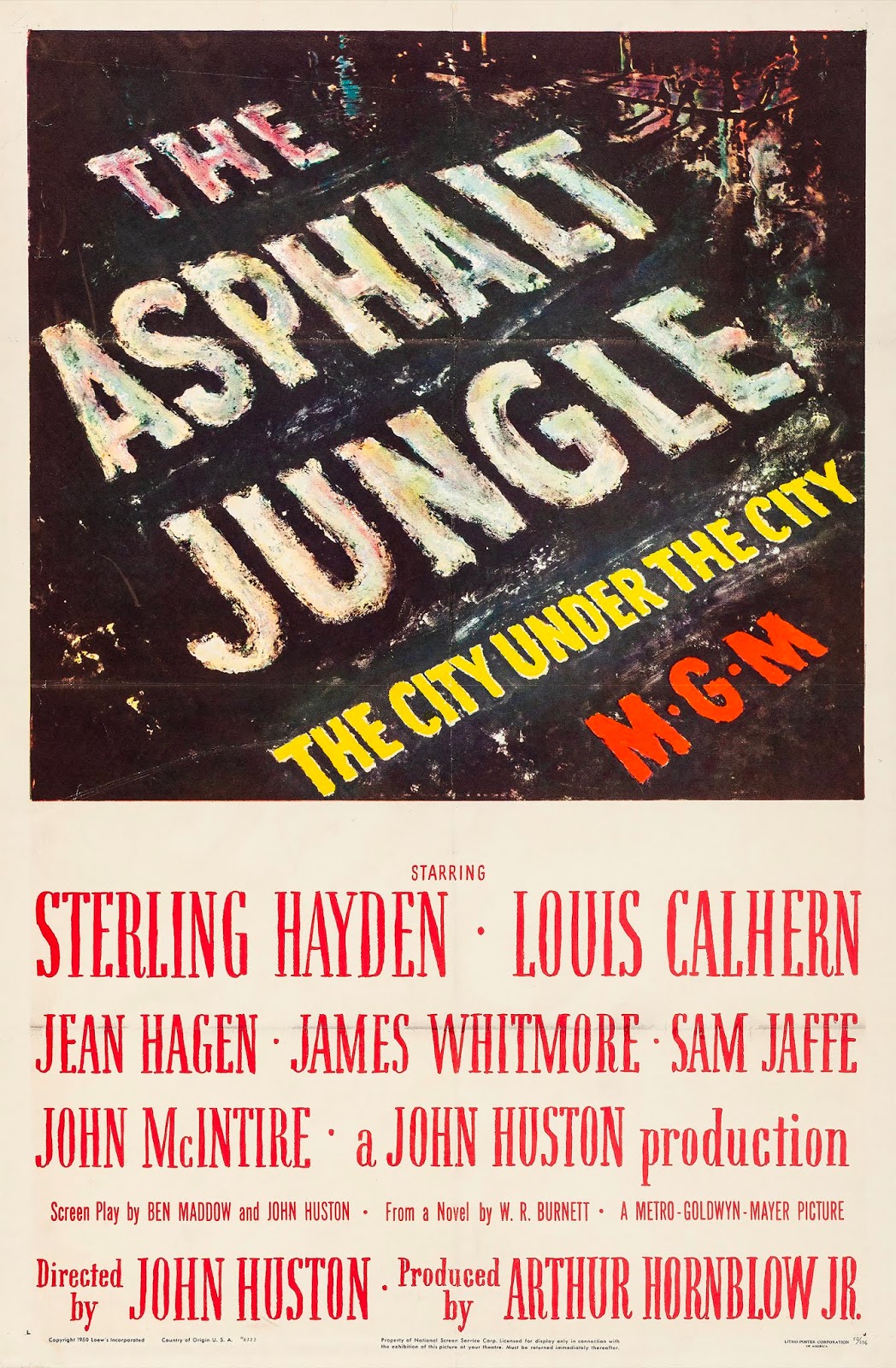
The Asphalt Jungle (1950)

A masterplan goes wrong in John Huston’s crime drama The Asphalt Jungle

Director: John Huston

Cast: Sterling Hayden (Dix Handley), Louis Calhern (Alonzo D Emmerich), Jean Hagen (“Doll” Conovan), James Whitmore (Gus Minissi), Sam Jaffe (“Doc” Erwin Riedenschneider), John McIntire (Police Commissioner Hardy), Marc Lawrence (Cobby), Barry Kelley (Lt. Ditrich), Marilyn Monroe (Angela Phinlay), Brad Dexter (Bob Brannom)

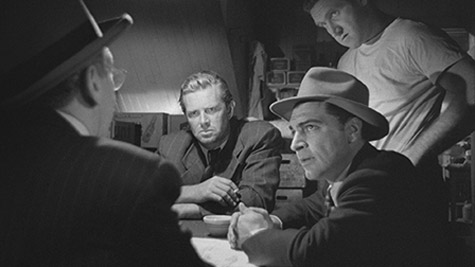
“Doc” Erwin Riedenschneider (Sam Jaffe) is out of the slammer after seven years, and the self-proclaimed “Professor” of criminal plans has a scheme for one final job. But rather than sell it to the highest bidder, Doc approaches crooked lawyer Alonzo Emmerich (Louis Calhern) to fund the crime and then split the proceeds with Doc. To carry out his robbery on a jewellery safe in a bank, he’ll need a gang including get-away driver Gus (James Whitmore) and Gus’ pal and “hooligan” Dix Handley (Sterling Hayden). But even the best laid plans of criminals can fall foul of events and the basic untrustworthiness of criminals themselves.

John Huston surprised some by turning his attention – Oscar in hand from The Treasure of the Sierra Madre – to noir cops and robber’s thrillers, but that was to forget he had made his name with his masterful adaptation of Dashell Hammett’s The Maltese Falcon. And in The Asphalt Jungle he created a small scale but almost perfect slice of criminalise noir, a brilliantly paced and acted film beautifully assembled that effortlessly chronicles the disastrous fall out of a robbery where it seemed everything was going perfectly.

Huston’s direction of the piece is, as nearly always, superlative. His painterly framing of scenes is dead on the money here, his framing of the actors within the scene absolutely without fault. Huston has an uncanny scene for arranging his actors in the minimum number of shots necessary, reducing dramatically the need for clumsy cut aways. Instead multiple actors are often artfully arranged in the frame, allowing the performers to react in the moment and the camera itself to capture the complete story in one smooth shot. It also allows for some great character intros, not least a shot of the Police commissioner in the background of the frame while foregrounded are the hands of his subordinate Dietrich, nervously fondling his hat. Straight away we get the mood of the scene.

This is all part of the brilliant noirish construction of a film that largely features sympathetic criminals – and it’s clear that the film’s sympathy is with the robbers here, the cops either incompetent, bureaucrats or corrupt themselves – either turning on each other, crumbling under pressure, making rudimentary errors that wind up getting them caught or failing into tragic fates that are left questioning what the point of it all was. This is all superbly caught in the moody darkness and shadows that soak over the picture, and highlighted further by the superb script, that packs some excellent lines and beautiful thematic points throughout the film.

It’s also helped by some great performances. Sam Jaffe (Oscar-nominated) is terrific as the cunning calm and businesslike “Doc” who seems unable to understand why things are not quite panning out as he planned, but is heartily sorry that it’s the case. He at least has honour among thieves, refusing to abandon his fellow criminals and quietly disappointed when betrayal raises its head. I love as well his screamish apology that the crime will involve one “hooligan” – or heavy – since he’s not the sort of guy who likes to resort to messy crimes (no matter that things quickly slide out of hand). He’s the sort of professional who expects everyone to play by the same rules, but that doesn’t stop him having his own private passions, particularly for the fairer sex, that will wind up catching him out.

He’s especially proved wrong since Sterling Hayden’s ‘hooligan’ Dix turns out to be the moral force of the gang, despite his down-on-his-luck scruffiness. Hitting crime as a way to finance his dream of buying back his family’s horse farm – and sadly losing most of that finance on the horses – Hayden is gloomy faced and gruff but has his own clear moral code in an affectingly gentle performance of vulnerability beneath the toughness. Debts and betrayal are anathema to him, and he winds up far more of the decent crook than any of the rest – he’s also the only one of the lot who can hold down a loving relationship, forging a genuinely sweet relationship with Jean Hagen’s Doll. Huston’s sympathies are clearly with the down-on-his-luck Dix, a decent guy who has just lost at life.

Of course the crook they can’t trust is the lawyer, a fine performance of snivelling weasliness under a veneer of culture from Louis Calhern. Puffed up, arrogant but desperate for the money and fundamentally weak and easily led, Calhern is excellent as the money man who only adds to the gang’s troubles, led on by Brad Dexter’s wonderfully impatient and ruthless hired gun. Calhern’s sad air of corrupted authority is only enhanced by his lecherous delight in his lusciously young mistress, a radiant early performance from Marilyn Monroe (shot like a classic painting by Huston).

Huston’s film throws this gang together flies together into a superbly detailed and gripping drama of the planning, execution and dreadful fall out of a robbery that clearly inspired the (perhaps even better) Rififi (so much so that it practically has the same story and structure), The Asphalt Jungle is a fabulously made and written pleasure, unpretentious but wonderful story telling marshalled expertly by a director at the top of his game.

Parasite (2019)

The Kim family juggle poverty with dreams of improvement in the brilliant Parasite

Director: Bong Joon-Ho

Cast: Song Kang-Ho (Kim Ki-taek), Choi Woo-shik (Kim Ki-woo), Park So-dam (Kim Ki-jeong), Jang Hye-jin (Kim Chung-sook), Lee Sun-kyun (Park Dong-ik), Cho Yeo-jeung (Park Yeon-gyo), Jung Ji-so (Park Da-hye), Jung Hyeon-jun (Park Da-song), Lee Jung-eun (Gook Moon-gwang), Park Geun-rok (Yoon), Park Seo-joon (Min-hyuk)

I’m writing this in the glorious after-glow of Parasite’s shock win for Best Picture, finally breaking (after 92 years!) the taboo on foreign language films lifting the Big One at the Hollywood’s annual love in. So let’s just say: not only is it a delight to see Hollywood breaking “the 1-inch barrier of subtitles” (to quote Bong from his Best Director at the Golden Globes), but also it’s a thrill to see the Oscar go to something that can make a legitimate claim to being the Best Picture of the Year – not to mention a film that speaks to the modern world in a way very few nominees have done since Get Out.

Bong’s superb picture has found such universal appeal perhaps because it so completely understands questions of class and wealth in our modern world. Set in an unnamed South Korean city, we are introduced to both the extreme poor and the extreme rich. At the bottom end of the scale – living in a half-basement apartment – are the Kim family. At the top – almost literally, living in a sprawling, modernist apartment bathed in sun with a large private garden at the top of a hill – are the Park family. When son Kim Ki-woo (Choi Woo-Shik) lands a job at the Parks’ teaching English to their daughter, he quickly begins to work with sister Ki-jeong (Park So-dam) to manipulate Park Yeon-gyo (Cho Yeo-jeung) to hire each member of the family in turn in a job in the household. But from there, the best laid plans spiral firmly out of control.

The less you know about the structure and events of Parasite going into it, the more you will gain from the film. What Bong has created here is a superb medley of genres, developing from a black-comedy-heist-caper into thriller territory, with a splash of horror and lashings of intelligently subtle social commentary. This is a film for the modern age, addressing questions of class, cultural resentment, societal divisions and the damaging impact of the super-rich and super-poor living side-by-side in ways that are profoundly insightful and fundamentally universal. 

Who are the parasites in Parasite? You could argue its society itself. At first it seems obvious on the surface that the Kims – living half beneath the surface of the city itself, inveigling their way into homes and roles, ruthless in acquiring their aims – fit the bill. But what about the Parks? So sheltered by money (“She can afford to be nice” says Kim dismissively of Mrs Park) they seem barely able to organise their own lives without the aid of an army of employees, placing no real value on them as people, only as extensions of their own house.

It’s all part of Bong’s skilful shift of perceptions throughout the film: the Kims are in some ways sympathetic (for the extreme poverty and desperation) but also they have no concern about hurting other people or manipulating them to get what they want. At the same time, we invest in seeing the well laid plans come to fruition, despite the impact it has on other people affected by their schemes. But as the film progresses, the innate selfishness and thoughtlessness of the Parks, their assumptions that their problems are of more concern than other people’s, that the world should revolve around them, makes them less sympathetic and the Kims more rounded and human.

Bong’s film brilliantly outlines this class war, every frame enforcing the insane split between such completely different worlds all rammed into the same city. The Parks’ apartment is a triumph of modernist design, the Kims’ flat a lightless dive with a regular tramp who pisses just outside their window. The Kims scurry to distant corners of the apartment to gain access to roving free wifi and stretch limited food supplies and their few pennies to the absolute limit. The family takes menial jobs to make ends meet, including folding a never ending pile of pizza boxes (boxes that seem to grow to dominate their flat).

At one point the camera follows the progress of the Kims as they leave the Park house and scamper, in an almost surreal series of long shots, down a never-ending parade of steps and streets, literally descending further down-and-down into the gutters of the city. It’s superb moments like this in Bong’s intricately designed film that constantly show us the divides between these people, the Parks living practically on Olympus with the Kims in Tartarus. These are problems that infect every society in the world, and the difficulty of making both rich and poor actually understand each other and find common ground to relate on are the problems we all see around us every day.

That’s even leaving aside the triumphs of Bong’s directing confidence, his mastery of tone and genre. The first half of the film is very funny – with Bong even leaning on this by having his characters drop dialogue that subtly refers to the ease with which the Kims’ plans come together – and has a delightful heist movie vibe. But the bubbling barriers between class hint at the tensions and danger that we feel lie in wait in the film, and threaten to break out. Korea is a volcano with the Kims and Parks sitting on the top, but it’s a volcano that the whole world can recognise. As Bong makes the film darker, leaner and even more menacing with hints of tragedy, it feels like the world correcting itself.

The acting is superb across the board with Song Kang-Ho hilarious and then deeply affecting as Mr Kim, a man slowly pushed beyond what he can bear. Cho Yeo-jeung is terrifically endearing and frustratingly thoughtless as the naïve Mrs Park. Park So-dam is brilliant as a super-smart Ki-jeong Kim, brilliantly manipulating left-right-and-centre. There is not a false note in the cast, the entire ensemble perfectly combining to create the class-conscious world of the film. To say too much more would be spoil it!

Bong Joon-ho’s film is Western break-through but really it’s a universal condemnation of the dangerous influence of class. And with Bong’s mastery of cinema – this is such a well directed film, both in terms of tone and every single shot contributing brilliantly to the whole – this has produced a film that feels like a very modern, prescient and profound masterpiece, a film that speaks to and almost defines the problems of the modern world. While at the same time being immensely entertaining and unpreaching. Thank goodness that 1 inch barrier came tumbling down.

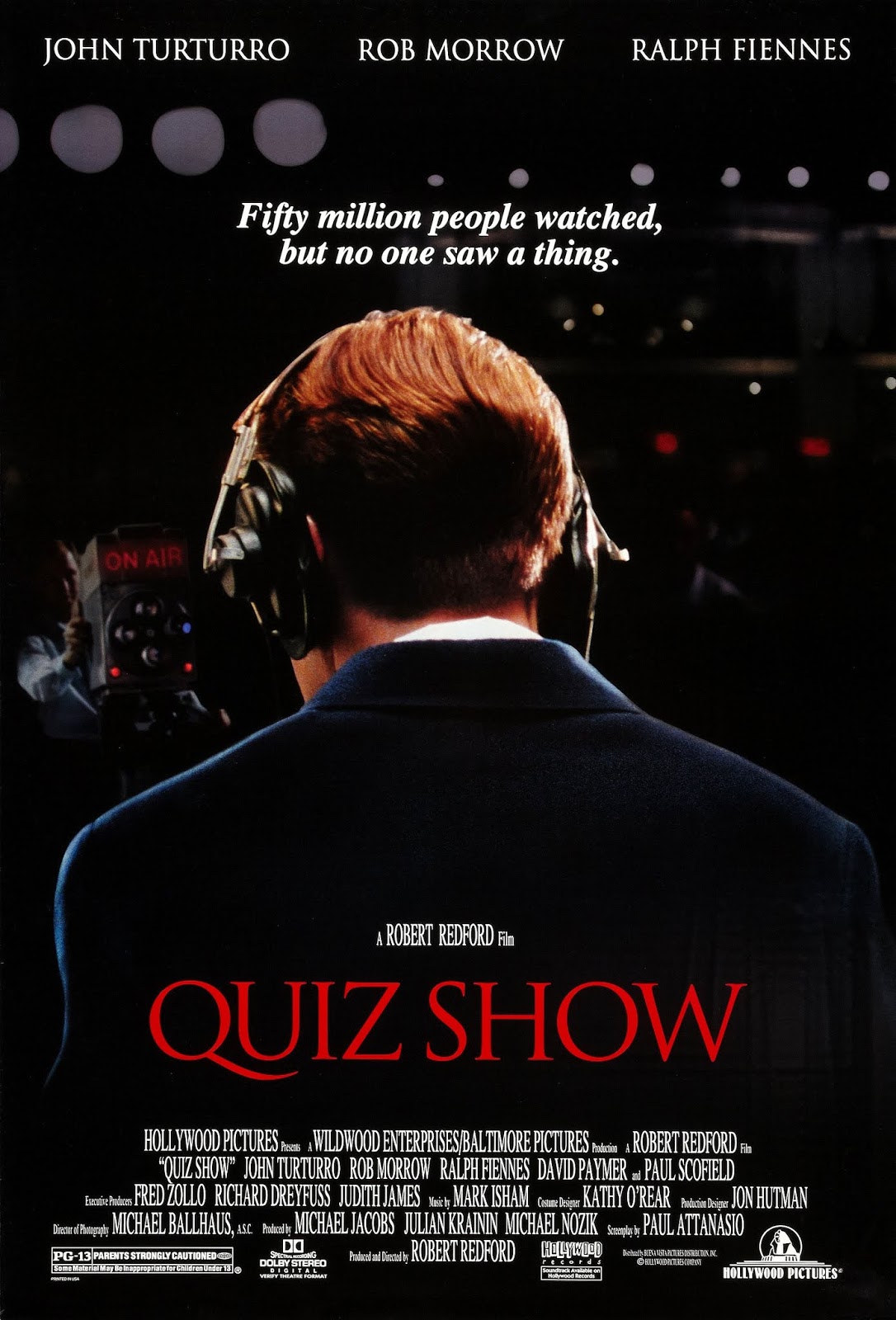
Quiz Show (1994)

Ralph Fiennes excels as the man who as the answers he shouldn’t have in Quiz Show

Director: Robert Redford

Cast: John Turturro (Herb Stempel), Rob Morrow (Richard Goodwin), Ralph Fiennes (Charles Van Doren), David Paymer (Dan Enright), Paul Scofield (Mark Van Doren), Hank Azaria (Albert Freedman), Christopher McDonald (Jack Barry), Elizabeth Wilson (Dorothy Van Doren), Mira Sorvino (Sandra Goodwin), Allan Rich (Robert Kintner), George Martin (Chairman Oren Harris), Paul Guilfoyle (Lishman), Martin Scorsese (Martin Rittenhome), Barry Levinson (Dave Garroway)

Imagine, if you can, a time when we trusted everything we saw on television. When whole nations crowded around to watch a show, and would run home to make sure they didn’t miss it. When the people appearing on the box in the corner were like members of the family invited into our home. In our cynical age of streaming and distrust, such ideas are impossible to imagine. Now we doubt anything we are shown on the box – and the first brick in that wall fell into place with the rigged quiz show scandals on American television in the 1950s.

Twenty-One is the biggest hit on NBC, with reigning champion Herb Stempel (John Turturro) correctly answering every question that comes his way. But the show’s sponsor, Geritol, is worried: Stempel’s ratings are at a plateau, and they feel the show needs a new champion. So producers Dan Enright (David Paymer) and Albert Freedman (Hank Azaria) look to recruit the sort of face of Twenty-One the sponsors want – and find him in clean-cut, Ivy league, charming Columbia League instructor (or “Professor” as they insist on calling him – and Van Doren’s move from reminding him he hasn’t qualified for that title, to happily accepting it is telling in itself) Charles Van Doren (Ralph Fiennes). 

They offer Van Doren the chance to win the show by telling him the answers in advance, while offering Stempel a career in television if he will agree to throw the next edition of the programme. Both men are plagued with indecision, but Stempel throws the game and Van Doren provides the correct answer to his final question – the exact same question he had been asked at his audition. Van Doren, seduced by the fame, quickly agrees to be given the answers in advance of the show, but the unreliable Stemple is dropped by NBC and instigates Grand Jury proceedings. The records are sealed but this piques the interest of Congressional lawyer Richard Goodwin (Rob Morrow), who begins to see the potential to “put television on trial” – while being deeply conflicted by his growing friendship with Van Doren, keen to be seen as co-operating with any investigation.

Quiz Show remains Redford’s finest directorial achievement by far, a rich, fascinating, beautifully made film with a profoundly rewarding and engrossing reflection on fame, television and the media in 20th-century America. Told at a gentle but compelling pace, probably the strongest weapon in its arsenal is a fantastically literate, well-constructed, dryly amusing and affecting script by Paul Attanasio. Scenes are beautifully assembled, crammed with well observed character beats and wonderfully quotable lines. It’s a script that would stand up extraordinarily well as a play itself, and Redford allows it plenty of room to breathe in his assured, unshowy and perfectly judged direction.

This is a film that analyses exactly how truth and entertainment are supposed to be inter-related. The rigging of quiz shows – and it was systematic across a range of shows on all channels – was a detailed lie to the American people. But, the film asks, what was the real harm of this? What are these quiz shows for? Tests of intellectual attainment or pieces of entertainment for the masses? As Scorsese’s Geritol executive says, people weren’t watching the questions, they were watching the money. 

And money is where the villainy lies in this film. For a film rich in period detail, Redford makes clear that there is a definite sense of class that underlies all the action. Decisions are made on the show based on selling things – advertising hours and Geritol products. And there are people in this show – the heads of corporations like NBC – who are making millions out of peddling rigged entertainment shows to the people. And when the chips come crashing down, it’s not these executives who are in the firing lines; it’s the little people who were the face of the enterprise – the contestants themselves – who pay the price.

It’s the exact opposite of what Goodwin wishes to achieve when he starts his investigation. He wants to add some moral force, some legislative control, to what you can and cannot present as fact and fiction on television. What he fails to understand – and what the film does – is that deep down people don’t want this. They want the excitement and the thrills – and at the end of the day wouldn’t care less if they never found out everything presented to them was carefully scripted. This lasts today: do we care that comedy sketches are not improvised but carefully scripted? Do we care if game show contestants are carefully pre-selected? Again, as Scorsese’s sponsor representative states, all any investigation will accomplish is TV shows figuring out other ways to get the high ratings: and simpler questions and less erudite competitors will be the way to go.

Because it’s all the glamour and excitement and drama we like to watch, not displays of intellectual accomplishment. It’s something the film understands – and something that comes across very clearly in Ralph Fiennes’ exquisitely well-judged performance as Charles van Doren. A genuinely intelligent, decent man, Fiennes’ performance works so well because he makes clear that under the WASPish, patrician decency of van Doren is a fundamental shallowness, a laziness and hunger for the quick buck and easy success. Constantly, Fiennes’ confident grin and easy manner hide his unease and guilt at his conduct. But he clearly can’t help himself, a Faust wrapped up in his pact.

After all what would his father – the famous poet and academic Mark van Doren, played with a beautiful ease, grace, intelligence and iron-clad honesty by Paul Scofield, a sublime actor at the top of his game – think of this all if he found out? The scenes between the two men – one the proud, loving but quietly demanding father, the other the successful, shallow, quietly desperate son – are the film’s strongest moments, consumed with the tension of the unspoken. We can see the pressure of familial expectations reflected elsewhere in Herb Stempel’s wife’s disappointment at finding that Stempel himself was a coached as much as van Doren.

John Turturro goes larger as Stempel, a bitter and frustrated man addicted to the attention and glamour TV has bought him which he has always felt has been denied him. Stempel’s desire for fame, his assumption of a persona in the public eye which is part studied, part eagerness to please his audience, gets to the heart of TV’s power. It’s the box in every room, and it can turn the ordinary into the extraordinary. It’s a box with the potential to weave magic – and it’s the tricks behind the magic that are difficult to see. For all we know the magician doesn’t saw the assistant in half (as Hank Azaria’s crude producer puts it), it makes it hard to enjoy the trick when you know it is one.

It’s ideas like this that the film gets to  so cleverly, and which turns the American quiz show into an intelligent metaphor for the corrupted ambition of America itself. The dream is to get to the top, and this was a way of offering a short cut for it – and all to help big business sell its products and make money. This is the subversive truth at the heart of Quiz Show, but it’s easy to forget as we, like the American people, have the obvious villains of the ordinary contestants be crucified by the media, rather than those who really profited. Redford’s film is smart enough to constantly remind us of this, to humanise the contestants and to show the darker elements underneath. Quiz Show is a great film.

The Last King of Scotland (2006)

Forest Whitaker dominates as Idi Amin in The Last King of Scotland

Director: Kevin Macdonald

Cast: Forest Whitaker (Idi Amin), James McAvoy (Nicholas Garrigan), Kerry Washington (Kay Amin), Gillian Anderson (Sarah Merrit), Simon McBurney (Stone), David Oyelowo (Dr Junju)

Forest Whitaker won every award going for his performance as Idi Amin. A film can perhaps only begin to scratch the surface of what a megalomaniac nutjob Amin was, and the depths of his depravity and corruption. But The Last King of Scotland is perhaps less focused on that, and more on the pull that people as charismatically self-absorbed and larger-than-life like Amin can have on the weak-minded and, on a wider basis, how this can end up with him leading an entire country on a not-so-merry dance, everyone desperate to gain the love and approval of a single dominant personality.

That weakling is Dr Nicholas Garrigan (James McAvoy) a young medical graduate from Edinburgh, who is arrogant, cocksure over-sexed and over-here in Uganda, keen for adventure and to get as much sex and experiences in as he can while he’s over here. A gap-year student with a desire for the easy life, after a chance meeting Garrigan becomes chief-physician and confidant to Amin, a man with a deep love for Scotland and who likes to think of himself as a father to those around him. It takes Garrigan a long time to realise that this indulgent, if bad-tempered, charismatic father-figure  is in fact a brutal dictator, his eyes eventually opened by the experiences of one of Amin’s wives Kay (Kerry Washington) who pays a heavy price for mothering an epileptic and adultery. Will Garrigan escape from Uganda?

Macdonald’s film gets a brilliant sense of both the exotic appeal of Uganda at the time (and or Amin) and it’s heat-embroiled danger. The camera work is flooded with yellows and grimy details, that makes every scene feel like its bathed in heat (and later danger) as well as giving it a documentary realism (helped by its use of handheld and immediate footage). The story of the film itself is a fairly basic morality tale, but these stories work because of their universality and it’s clear that Garrigan’s selfishness, shallowness and self-interest is going to lead to a terrible awakening.

The film’s real strength is Whitaker’s tour-de-force as Idi Amin. Whitaker is an actor who has been straining at the leash for an explosive roll, and he gets one here. If ever there was a part that would allow an actor to let rip it’s the one, with Amin part Hannibal Lector, part decadent Roman emperor, a low-rent Hitler with an ego larger than his country. But the bombast and childish fury work because it is built within the framework of a sort of puffed-up magnetism, a charismatic “hail-fellow-well-met” bonhomie that suggests this guy could be the best fun in the room. So dripping in assurance and confidence is Amin that he becomes strangely attractive – and the sort of all-powerful force of nature that would have most of us smiling if we caught a word of approval from him.

The trick of the film is to front-and-centre this lighter, fun-loving aspect. It’s easy to enjoy it like Garrigan as Amin charms the audience as much as he does its lead character. Sure there may be violence at the margins, but good-old-Amin is just doing what needs to be done. He’s brilliant with the people. It’s funny when he on-a-whim appoints Garrigan to decide a major architectural pitch from several countries. He’s playful and enthusiastic. When he’s cross with people he seems at first more disappointed than angry. It’s only as the film goes on that we realise we have been gaslit as much as Garrigan, that Amin may be a fun guy but he also cares nothing for anyone and that the more his focus shifts away, the more we see his callous paranoia and lack of any moral scruples.

Certainly we start getting a sense of the ruthlessness he is prepared to exhibit to enforce his rule in Uganda and the brutality with which he will suppress any resistance. Aides killed in a failed assassination attempt illicit no sympathy. He feels no guilt or responsibility for anything he does. In one brutal moment he berates Garrigan for failing to counsel him against expelling all Asians from Uganda. When Garrigan protests he did, Amin only responds with “Yes, but you did not persuade me Nicholas!” the sort of inverted logic practised only by the insanely self-obsessed.

Whitaker’s performance powers all this, a magnetic masterclass in insanity, charisma and paranoia. He’s well matched by James McAvoy (the film’s real lead) whose performance is similarly a masterclass is shallowness and petty triteness. If anything the film is almost too successful in this. A Garrigan is such a little arsehole it takes quite a force of will to build up any sympathy for this serial shagger playboy. It’s capable to think as the fire turns on him that perhaps he deserves this – and the number of (mostly black) characters who lay down their lives to protect him starts to get a bit wearing after a while.

Because this in part is a film where actual Ugandans are not heard that much. The two principle characters we see are both victims: Kerry Washington in a thankless part as the attractive young wife you just know from day one Garrigan will climb into bed with and David Oyelowo as the sort of noble doctor you only seem to find in movies. For all its horror at Amin’s crimes, it’s still largely filtered through the eyes of a young, white, innocent abroad who sees up-front the dangers but the real victims of Amin, the Ugandans themselves, are clichés or elevated clichés.

While you could say that was not the point of the film, it still means we miss some of the real danger and psychopathy of the leading character, so absorbed are we in seeing the increasing peril of the white man caught up in it all. It’s why The Last King of Scotland doesn’t quite work as well as it should, any why it settles in the end for a being a morality tale plot-boiler about a monster at the heart of the forest, rather than a deeper and more intelligent film about the tragedy of an African state. It’s still enjoyable for all that, but it could have been more.

The Passenger (1975)

Maria Schneider and Jack Nicholson hit the road in Antonioni’s partly frustrating, partly masterful The Passenger

Director: Michelangelo Antonioni

Cast: Jack Nicholson (David Locke), Maria Schneider (The Girl), Ian Hendy (Martin Knight), Jenny Runacre (Rachel Locke), Charles Mulvehill (David Robertson), Steven Berkoff (Stephen)

Ever wanted to jack in your life and have a go at being someone else? It’s a temptation we’ve all felt at one time or another, that chance to make a completely fresh start free of all those burdens and expectations of our own lives. 

It’s a temptation thrown in the way of David Locke (Jack Nicholson) a British-American journalist, trying to make contact with rebel groups in the deepest Sahara deserts of Chad. Returning, after a failed excursion, to his ‘hotel’ in the tiny, beat-up village in the middle of the desert he finds that the only other resident, an Englishman, has died of a heart attack. The two man have a physical similarity, enough for Locke to decide to swop places with the dead man and leave Chad under a new identity as David Robertson. Curious to follow the details left in Robertson’s appointment diary, Locke finds that he has taken the identity of an arms dealer – making sense immediately of why Robertson was also in the hotel at the time – forcing Locke to stay one-step ahead of both the arms dealers and his wife Rachel (Jenny Runacre) and producer Martin (Ian Hendry) keen to talk to him about ‘Locke’s’ death.

If that sounds like it might be an action packed thriller – you’d be wrong, because let’s not forget that this is an Antonioni film, and if there is one thing you can expect from the revered auteur of the Art-House, it’s that his films are mysteries wrapped in enigmas. The Passenger is no exception, a slow, intriguing mood piece that only partially allows the audience even half a chance to puzzle out what it’s about, mixed with striking images and haunting sequences of fundamental unknowingness. Despite the paragraph above there is almost no plot in The Passenger, with the film instead focused on themes of alienation, existentialism, destiny, fate and identity. In other words all the big stuff.

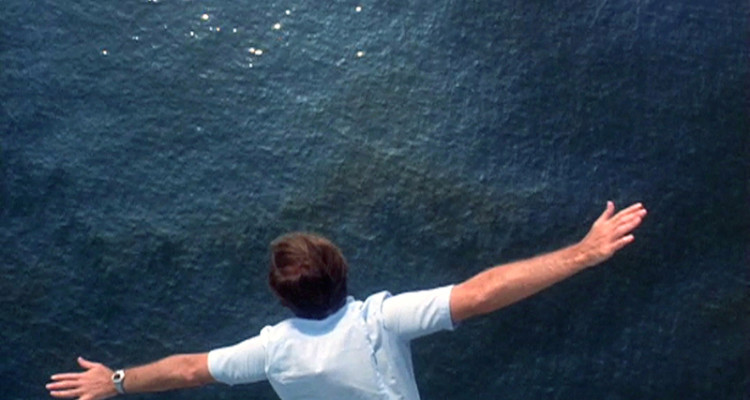
Much of this is captured in the character of Locke. Played by Jack Nicholson in a stripped-down, purged style a million miles away from the “Jack” of legend, Locke is a blank. We spend almost the entire film with him, but learn virtually nothing about him. What desires or miseries or depressions drive him to abandon his life and head out into a new life? We have only vague whispers about an unhappy marriage (with a wife having an affair with someone else) and a general listless dissatisfaction with his own life and career. Locke is a character yearning for some kind of release, some kind of higher meaning – the happiest he seems to be in the movie, is hanging over the side of a cable car, arms outstretched, pretending to fly over the waters below. It’s a freedom like that – some sort of total unshackling from the modern world altogether – that he seems to want or need.

So why doesn’t he go for it? Why doesn’t he just junk Robertson’s appointment diary and escape properly into the wide world, well beyond the reach of Chad rebels, curious wives and BBC Producers? Perhaps because he is a Passenger himself, a man who lacks the essential will and freedom of purpose to make his own destiny, to escape the structure of a world he finds so constricting? Instead, he seems bound of a wheel of fire, compelled somehow to continue following some sort of structure unable to yank himself fully free of the chains of this modern world. He wants to be a free spirit, but he remains a little man, to whom events happen, who is approached by people, who follows directions not forging his own path.

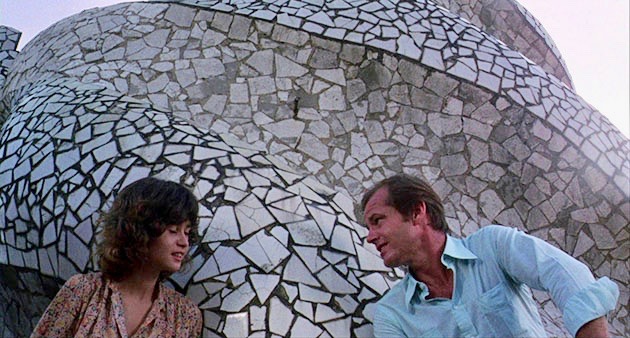
He gets as close as he can to opening up by talking to a passenger of his own, a mysterious girl (played with an unaffected naturalness by Maria Schneider that is part graceful reality, part wooden stiffness but works perfectly) he encounters while following Robertson’s trail. He first spots her sitting on a bench in London, then sees her again atop Guadi’s La Pedrera in Barcelona. Is this coincidence? Is this fate? Destiny? Or is this a curious suggestion that the girl may be more than she seems? None of these questions is answered by the film, but it fits perfectly in with the unknowing vagueness and quizzical unpredictability of its events. Hammering home the blank unknowability of Schneider’s character, she isn’t even named in the film. She joins Locke on his journey, but her motivations are as vague as his – is it escape, a bohemian lark, a curiosity that guides her? Who knows?

The film continues in this vein, showing Locke drifting from Chad to the UK to Berlin, Barcelona and Seville, never seeming to allow Locke more than a few seconds of freedom. Is the film asking if there is any such thing as true freedom, that even after swopping lives Locke still finds himself locked down into following a series of pre-arranged duties, like a train on a line? It’s not clear, but it’s beautifully filmed. Antonioni’s mastery of the camera shines throughout the film, and it’s full of haunting and immersive imagery, not least in his skilful use of locations and framing, with Locke and the Girl frequently positioned oddly or even dwarfed by the architecture and locations around them, from the plains of the desert to the towers of Gaudi.

Antonioni also saves for this film some sequences which are simply breathtaking in their cinematic mastery and beauty. His control of technique is near faultless – while his art house vagueness might have you pulling your hair out at points, these sequences will have you winding the film back just to relax in their skill and confidence again. Early in the film, we see Locke sit and fake his passport in his Chad hotel – oh for the days when identity theft was as simple as glueing a new photo into a passport – the camera smoothly moves around him, while he listens to recordings of Robertson and he meeting, until it settles onto the balcony (all this in one take) at which point Robertson walks into frame and continues the conversation, Locke following him and, there we go, Antonioni has taken us suddenly into the past. Without a single cut, the camera follows the conversation before panning back round to Locke sitting once again writing.

It’s a sequence that cineateases would be raving about, if it wasn’t dwarfed by the film’s penultimate shot, a stunning seven-minute single take that would be simplicity itself to make with CGI and Steadicam today, but was somewhere achieved without the invention of others. Starting on a single shot of Locke’s Seville hotel room, the pan slowly focuses on events outside the grilled window, the camera slowly zooming in on the outside until it passes through the grill and rotates 180 degrees back to see the room from the outside, while the Girl and other mysterious people arrive and leave outside. It’s a beautiful, brilliant, sublime, masterful piece of cinema. It’s compelling, surely one of the greatest “one-take” shots in all of cinema. Simply perfect. Directors could sit and dream of making such a shot. 

Antonioni’s masterful direction and wilfully obtuse exploration of his themes makes for a film that is at time frustratingly unreadable, but also crammed with opportunities for the viewer to insert their own views and interpretations, something that is only going to become more tempting (and rewarding) with repeated viewings. Alongside that, it’s a simply beautiful and sublimely made piece of cinema – and if for no other reason deserves your time.

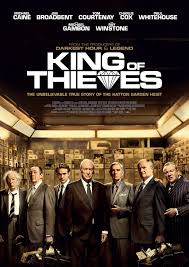
King of Thieves (2018)

Michael Caine leads the Old Lags on one last hurrah in the misjudged King of Thieves

Director: James Marsh

Cast: Michael Caine (Brian Reader), Jim Broadbent (Terry Perkins), Tom Courtenay (John Kenny Collins), Charlie Cox (Basil/Michael Seed), Paul Whitehouse (Carl Wood), Michael Gambon (Billy “The Fish” Lincoln), Ray Winstone (Danny Jones), Francesca Annis (Lynne Reader)

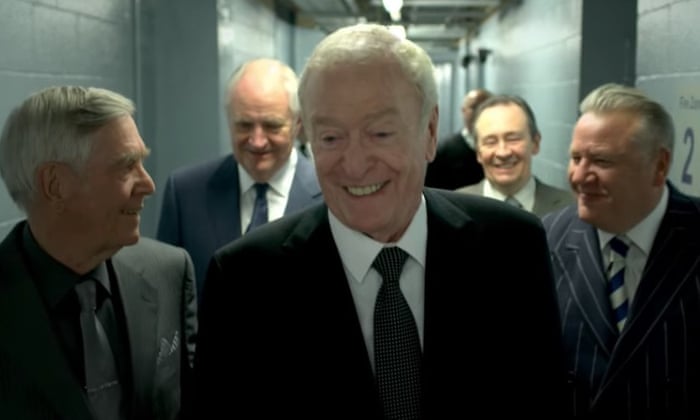
In 2015, a group of old lags robbed a safety deposit company in Hatton Garden. Over the Easter weekend, the gang broke while the facility was empty, drilled through a wall, climbed into the safe and cleared out almost £14 million in cash, diamonds and other goods. The crime captured the public imagination largely because the robbers, bar one member of the gang, were all over 60. This country has a certain nostalgia for rogues, and a tendency towards a condescending affection for the aged. In real life, the only thing remotely charming about these hardened criminals, many of them with extremely violent backgrounds, was their age.

James Marsh pulls together a great cast of actors for his heist caper. Brian Reader, the brains behind the operation, is played with gravitas by Michael Caine. Terry Perkins, the man who cuts Reader out of the profits, is played by Jim Broadbent. Tom Courtenay, Ray Winstone, Paul Whitehouse and Michael Gambon play the rest of the lags while Charlie Cox is the young tech expert who brings the possibility of the heist to Reader’s attention. With a cast like this, it’s a shame the overall film is a complete mess from start to finish.

I watched this film after first watching ITV’s forensically detailed four-part series, Hatton Garden, covering the heist in full detail. That drama was far from perfect, but it was vastly superior to this. The main strength of Hatton Garden was that it never, ever lost sight of the fact that this was not a victimless crime. Real-life small businesses went bust due to property lost in the heist. Families lost priceless, irreplaceable heirlooms. Items of hugely sentimental value have never been recovered. Lives were damaged. On top of that, Hatton Garden stresses the grimy lack of glamour to these thieves, their greed, their paranoia, their aggression and their capacity for violence. Far from charming rogues, they are selfish, greedy old men who fall over themselves to betray each other and are clueless about the powers and abilities of the modern police force.

King of Thieves occasionally tries to remind people that these were hardened career criminals. But it also wants us to have a great time watching actors we love carry out a heist against the odds, like some sort of Ocean’s OAPs. James Marsh never manages to make a consistent decision on the angle he is taking on these men or the crime they carried out. It’s half a comedy, half a drama and the tone and attitude towards the burglars yo-yos violently from scene to scene. The end result, basically, is to let them off with a slap on the wrist.

“It’s patronising” rages Reader at one point at the media coverage of the crime, annoyed at how it stresses their age as if that somehow makes it a jolly jaunt. Never mind that the film does the same. The score contributes atrociously to this, a series of jazzy, caperish tunes that echo the 60s heydays of these violent men (Reader and Perkins had both stood trial for murders, and were lucky to get off) punctured with some cheesily predictable songs. Tom Jones plays as our heroes comes together, and Shirley Bassey warbles The Party’s Over as things fall apart. The old men banter and bicker about the confusions of the modern world like a series of talking heads from Grumpy Old Men and the general mood is one of light comedy.

The film does try and darken the tone in the second half, post-robbery, as things start to fall apart and tensions erupt in the gang. Here we get a little bit of the mettle of the actors involved in this. Jim Broadbent, in particular, goes way against type as Perkins’ capacity of violence (even at a diabetes-wracked 67) starts to emerge. Tom Courtenay’s Kenny Collins emerges as manipulative liar, playing off the robbers against each other. Ray Winstone sprays foul language around with a pitbull aggression. Even Michael Caine roars a few death threats, furious at being betrayed by the gang.

But it never really takes, because the film never throws in any sense of the victims of this crime. Blood is never drawn in this slightly darker sequence of the film. Even the clashes between the gang are played at times for light relief. Anything outside the gang is ignored. The victims? Who cares. The cops? There is barely a policeman in this film who has a line.

The film undermines the whole point it might be trying to make – that these were dangerous men – by succumbing to romanticism at its very end. As the captured old lags await trial, we first see them laughing and joking with each other as they prep for court and then, as they walk towards the dock, the film throws up old footage of the actors from the 60s, 70s and 80s, stressing their romanticism. Look, the film seems to be saying: these were criminals, but they were old fashioned criminals, remember when Britain used to make its own underdog crims instead of being awash with hardened, violent gangs? It’s hard to take. And it’s like the whole film. A tonal mess that finally absolves the robbers who ruined lives and who still haven’t returned almost £10 million of ordinary people’s goods. King of Thieves isn’t charming. It’s alarming.

Beowulf (2007)

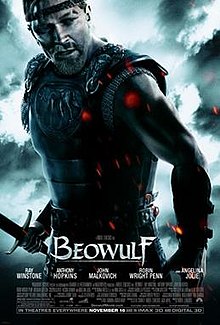
A CGI Ray Winstone faces off against monsters, temptation and fate in Beowulf

Director: Robert Zemeckis

Cast: Ray Winstone (Beowulf), Anthony Hopkins (King Hrothgar), John Malkovich (Unferth), Robin Wright (Queen Wealtheow), Angelina Jolie (Grendel’s Mother), Crispin Glover (Grendel), Brendan Gleeson (Wiglaf), Alison Lohman (Ursula)

Around the turn of the century a new style of film-making (and I guess acting) burst into the world of Hollywood. There had been special effects and there had been animation. We’d seen actors transplanted by CGI into any number of settings and locations. But motion-capture was something else. Its leading pioneer is of course Andy Serkis, and the art involved essentially placing a load of dots on people’s faces to record every inch of their movements and then feed this physical performance into a computer to create a CGI personality that unified actor and special effect. 

Zemeckis, always a pioneering film maker, was fascinated by the art and had used it on previous films – but Beowulf was his real push to create something that couldn’t have been done without motion capture. So Ray Winstone – a bulky middle aged actor – is here transformed through the computer into a slim, muscular man in his early thirties. Winstone plays Beowulf himself, and Zemeckis’ aim here was to bring to life in a way that had never been done before the ancient poem. And not only the humans would be motion captured: Grendel and his mother (played by Crispin Glover and Angelina Jolie) would also be powered by real-life human performances.

It makes a fascinating film visually to watch. Zemeckis’ camera work has the complete freedom to roam anywhere around the actors (every move they made was recorded into the computer from every angle). And he doesn’t hold back, with the camera swooping and sliding around every dimension and angle of the locations, often moving freely and swiftly with a series of engrossing tracking shots and fast moving sweeping panoramas. 

It also means that having real performances behind every creature in the film adds a real human dimension to even the most vile monsters. Crispin Glover’s physical commitment – not to mention the searing, twisted pain in his every moment – humanises Grendel in a way his simple monstrous appearance never could. The later dragon has a real feeling of humanity behind it, for all its scales and arrogant cruelty. Angelina Jolie reported she felt surprisingly uncomfortable when she saw the final realisation of her performance as Grendel’s mother – imagined here as an extremely seductive succubus, permanently naked with perfectly formed curves – but the entire thing works because of the performance behind the animation.

Some of the motion capture isn’t always of course completely successful. There is something still slightly too shiny, slightly too polished about the faces – part of the film being a slightly strange halfway gap between animation and real acting. The eyes suffer most – for all the efforts of the animators there is something still slightly dead behind, something not quite of the human face about them. It’s something that you can’t help but spot, and can’t help but be disconcerted about.

But it largely comes second to some of the imagination that exists in this version of the story. Zemeckis’ film making is often visceral and bloody – and the action sequences are as involving as he manages to make the other sequences are engaging. Not everything works: Beowulf fights Grendel in the nude, and the decision to have Beowulf’s ‘bits’ constantly obstructed by a series of fortuously placed items smacks somewhat of Monty Python and seems tonally off from the rest of the film. But by and large it works.

It does this because the script from Neil Gaiman and Roger Avery mixes the original poem with something reminiscent of Macbeth. One of its key themes is the seduction of power and the inner guilt of heroes who know that they have feet of clay. Grendel is reimagined as the son of Hrothgar – seduced by Grendel’s mother with offers of power, he creates with her Grendel, the living embodiment of his flaws. Grendel’s mother represents the creeping temptation of greed, ambition and the “old ways” (the film plays up the Christianisation of the Vikings in the background throughout). She’s effectively all the witches rolled into one (but much hotter).

And Beowulf is ripe ground for our temptations as it’s made clear right from the start that – while clearly a great warrior – he is also a triumphalist blowhard who enjoys repeating and expanding his own myth. A story recounted about his fighting sea monsters during an epic sea swimming competition (‘It used to be just one’ comments best friend Wilfric) is a masterpiece of puffed up self-promotion on top of genuinely impressive deeds, Beowulf’s words diverging from the story we see on screen towards in the end is a neat foreshadowing of his eventual seduction by Grendel’s mother. 

Beowulf isn’t an empty boaster though. He’s a sympathetic Macbeth who feels guilt about the “sound and fury” that his life story has become. The aged Beowulf in the second half of the film is weary, tired and full of self-loathing, his great name an oppressive weight he can’t live up to or escape from. He’s a man who knows all the time he has feet of clay, but the name of a God – and that the name is so important he can’t let anything puncture it. Wilfric twice refuses to allow Beowulf to divest his conscience: the legend is so important it’s been printed as fact.

Ray Winstone handles this all pretty well – even if a lot of this requires sorrow behind the eyes, that motion capture simply can’t provide – even if the transformation of his face makes him look more like Sean Bean than a younger version of himself. Hopkins and Malkovich embrace all the cavorting and expressive body movement of motion capture like the old hams they can be. The film’s real highlight is Robin Wright who makes a great deal of Hrothgar then Beowulf’s sad wife, unhappy, quietly aware of both her husband’s flaws and perhaps the only level headed person in the Kingdom.

Beowulf has some fine technical work, but its real lasting interest is the psychological depths it tries to explore in its hero. Far from the perfect warrior, he’s someone doubtful and doubting, whose insecurities and vulnerabilities grow throughout the film and finally – like a mix of Lear and Macbeth – only becomes fully sympathetic at the very end. It makes for an interesting remix of a story nearly older than any other in our culture.