Category: Films about mental health

Vertigo (1958)

Vertigo (1958)

Obsession and grief come dangerously into play in one of the greatest films ever made

Director: Alfred Hitchcock

Cast: James Stewart (John “Scottie” Ferguson), Kim Novak (Madeline Elster/Judy Barton), Barbara Bel Geddes (Midge Wood), Tom Helmore (Gavin Elster), Henry John (Coroner), Raymond Bailey (Doctor), Ellen Corby (Hotel manager), Konstantin Shayne (Pop Leibel), Lee Patrick (Car owner)

Spoilers: Vertigo was controversial at the time for revealing its twist, three quarters of the way through the film. I might well do the same in the review – although this is possibly a richer film if you know the twist going in

In 2012 Vertigo dislodged Citizen Kane at the top of Sight and Sound’s decadal “Greatest Film” poll, after 50 uninterrupted years for Welles’ classic. It’s an astonishing turn-around for a film which was a box-office disappointment and first met with reviews that called it “long and slow” and complained that Hitchcock had “indulged in such farfetched nonsense”. (Welles also hated the film – bet he’s even more pissed off at it now.) This is partly because Vertigo is a fiercely, almost defiantly, complex and cold film that defies easy characterisation and flies in the face of the fast-paced watchability of most of Hitchcock’s popular films. But it’s still a haunting and fascinating masterpiece, which has its greatest impact when you reflect on it days after it has finished.

Its plot is both complex and slight. John “Scottie” Ferguson (James Stewart) is an ex-police detective, his career ended by crippling acrophobia bought on by powerlessly watching a fellow officer fall to his death. He’s hired by old college friend Gavin Elster (Tom Helmore) to follow Elster’s wife Madeline (Kim Novak). Madeline is in the grip of an idée fix that she is an incarnation of Carlotta Valdes, a woman who committed suicide in 1857. Scottie follows her – and develops an idée fix of his own for the beautiful Madeline. When his acrophobia prevents Scottie from saving Madeline from jumping to her death from a bell tower, he suffers a near-breakdown. Then he catches sight of Judy Barton (Kim Novak again) who has a chilling resemblance to Madeline. And Scottie tries to turn her into just that.

Vertigo is a dizzying film of monomania and obsession, something you are immediately plugged into with its beautiful Saul Bass opening (swirling spirals, reflecting the circular nature of the obsessive) and its hauntingly mesmeric and off-beat romantic theme from Bernard Herrmann (possibly his greatest work – and he also scored Kane!). More than any other Hitchcock film, Vertigo places us firmly into the POV of its lead character, who is in all but three scenes and whose perceptions and observations we not only share but which totally guide our understanding of everything we see in the film (until that twist, when suddenly we shift to knowing more than he does).

Hitchcock’s technique is truly masterful here. There isn’t the flash of something like North by Northwest, but the sort of chilling control that builds tension and unease that also marks out films like The Birds or, to a degree, Psycho (although that’s much more of a black joke, where Vertigo is terrifyingly serious). Hitchcock uses a huge number of POV shots, alternating with shots of Stewart’s reactions (at times these are disturbing in their fixed intensity) building a subtle momentum that reflects the character’s obsession and further filters everything we experience from his perspective.

That would be the perspective of an ever-more obsessed man tipping steadily into stalkerish territory. Few films have so clearly drawn the link between the private eye and the voyeur. As Scottie silently prowls the streets of San Francisco, observing every inch of Madeline’s actions – and Vertigo has long, worldless stretches of what Hitchcock called “pure cinema” – the disturbing pleasure and control that following brings you becomes more and more clear. It’s certainly giving a sense of masculinity back to Scottie, introduced to us hanging helplessly from a ledge and then so hamstrung by his condition he can’t even climb a step ladder without collapsing.

Judged from this perspective, Scottie is one of the most darkly disturbing characters in film. Rescuing Madeline from the Golden Gate (where she has jumped in) he takes her home, undresses her and puts her in his bed – hardly normal behaviour. It’s not long from there before he surrenders to his romantic obsession (feelings Madeline perhaps returns), that eventually leads him again to be a powerless witness as Madeline plunges to her death right in front of him.

Catatonia and mental collapse follow – but really it’s perhaps just a continuation of the same obsession in another form. Because after a stay in a sanatorium, Scottie is back on the streets again, prowling for something – anything – that could make him feel closer to Madeline again. Which is how he spots Judy, the woman who reminds him of the woman he’s lost. Scottie doesn’t so much woo Judy as seemingly browbeat her into a bizarre (joyless and sexless) relationship and undertake a terrifyingly grotesque remodelling exercise, designed to make her into a carbon copy of Madeline.

This sequence is probably partly at the heart of the film’s fascination for critics and film historians – even more so since we’ve learned about Hitchcock’s manipulative, controlling relationship with his blonde female stars. Here we have Scottie instructing his love interest how to dress, walk and cut her hair – all while telling her it’s for her own good and she’ll like it – his voice with the breathless longing of a closeted pervert (that is when Scottie manages any sexual yearning to Judy, who he treats more like a treasured exhibit). This is Hitchcock dramatizing his own hang-ups, presenting them as creepy and dangerous, making Vertigo partly as well a fascinating psychological study of its director. Did Hitchcock know that his controlling relationship with women was wrong? And, in real life, could he not help himself or did he not care?

Vertigo is a perfect exploration of obsession. But it also pulls the rug out from us – and rewards constant reviewing as a result – because the film reveals there was a whole other level going on. Scottie may seem the Hitchcock substitute, but the in-film Hitch figure is actually the amiable Gavin Elster. Because the entire action of the film is carefully stage-managed by Elster to manipulate Scottie (and us!): Judy and Madeline (as Scottie has met her) are in fact the same woman, a doppelgänger for Elster’s wife. The real Madeline – who Scottie never sees or meets – is murdered by Elster at the top of that tower, and Judy/Madeline was helping build a backstory to have this murder written off as suicide, with Scottie’s acrophobia perfect to make him a powerless witness.

Here comes that pleasure for rewatching: because now when Scottie rescues “Madeline” from the river, then spends the next day with her, we thought at first he knew more than she. Now however, we understand he’s always been a patsy who knew less than anyone else. We’ve been manipulated by Elster, the master director, pulling the strings and building horrors for us. That’s Hitchcock.

The film reveals this in one of the few scenes told from Judy/Madeline’s perspective – and means we then watch Scottie actually craft a woman who actually is the woman he’s obsessed with into his memory of that very same woman. (Get your head around that!) And she allows it, because she seems as desperate as he to recapture the passion of those brief days together – but cannot tell him the thing that would help to do that. It all leads, of course, to Scottie’s destructive obsession leaving him once again to being a helpless witness as another victim plummets to their death.

Vertigo is effectively a two-hander, and most of the focus usually lands on Stewart. He is chillingly dead-eyed in this, his crazed hunting after something he doesn’t even understand capturing the controlling horror behind some romance. In many ways though, Kim Novak has the more complex part. She doesn’t speak for almost 45 minutes – she spends it mostly in long shot performing Elster’s play for Scottie (and us) of the mentally disturbed wife. But when Novak does take centre stage, this is a complex multi-layered performance, carefully modulated throughout to communicate (in advance) Judy’s vulnerability and love for Scottie, without ever letting us realise she is anything but the death-fixated “Madeline”. Novak marries two contradictory characters into one with a simple and convincing aplomb. Equally good is Barbara bel Geddes, in almost the only other named role, as Scottie’s one-time fiancée now best friend, all too aware that her feelings are not returned.

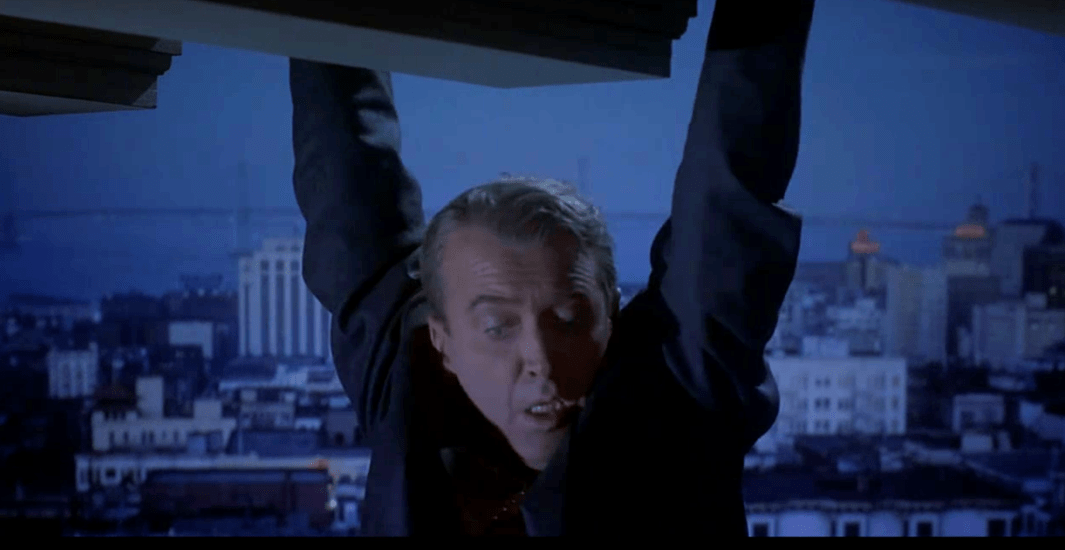
Vertigo will never match the likes of Casablanca or North By Northwest – on a list of films truly popular with audiences. It’s been described as the ultimate critic’s film: a cool, chilling, brilliantly filmed, psychological thriller that quietly exposes the mechanics of film, the manipulation of story-telling and the dark psyche of its director. In many ways initial reviews were right: on first impression, the film is cold and slow, with characters it’s hard to relate to. But it has a truly haunting quality few others can match. And it constantly presents us with a clear image, while never allowing us to guess we are seeing only part of the overall picture. It can leave us as dizzy as Scottie is, hanging from that ledge and staring down at doom, the camera zooming inside his head and showing us his terrifying POV. You need to work at it, but this is a film to value.

The Batman (2022)

The Batman (2022)

Robert Pattinson presents a noirish Bat in Matt Reeves’ dark, moody vision

Director: Matt Reeves

Cast: Robert Pattinson (Bruce Wayne/Batman), Zoë Kravitz (Selina Kyle/Catwoman), Paul Dano (The Riddler), Jeffrey Wright (Lt James Gordon), John Turturro (Carmine Falcone), Peter Sarsgaard (DA Gil Colson), Andy Serkis (Alfred Pennyworth), Colin Farrell (Oswald Cobblepot/Penguin), Jayme Lawson Bella Réal) Rupert Penry-Jones (Mayor Don Mitchell Jnr), Barry Keoghan (Arkham Prisoner)

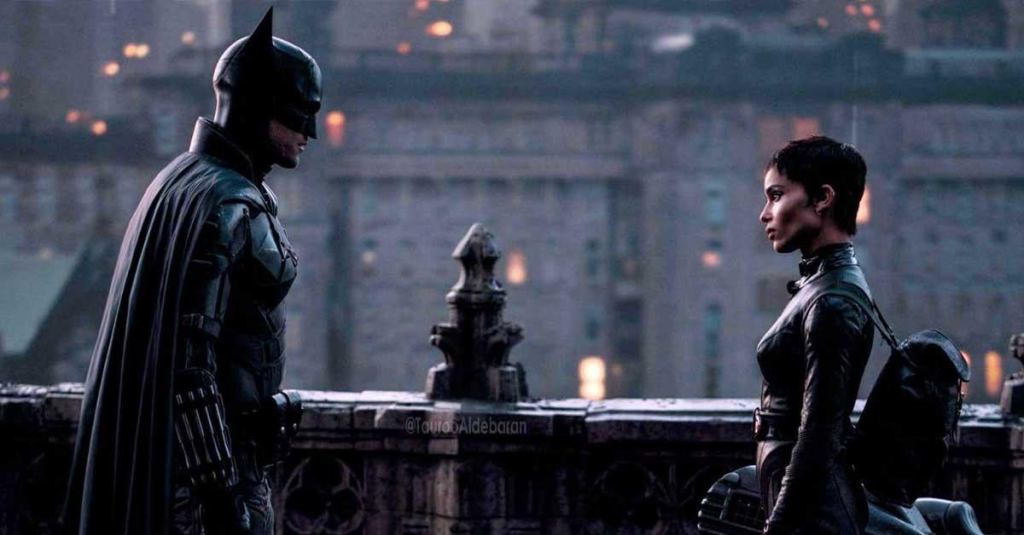
The rain pounds down on Gotham. In the shadows a masked man strikes terror into the hearts of wrong-doers. It could only be the start of a new Batman trilogy. At least that’s the intention, as DC Comics mines its strongest asset, in a dark, noirish version that positions Batman as a gumshoe pulp detective with fisticuffs. If Reeves film at times has more ambition than it knows what to do with, at least it is ambitious.

For two years Bruce Wayne (Robert Pattinson) has been crusading on the streets of Gotham as Batman, trying to fix the city’s problems one criminal at a time. He’s formed an uneasy alliance with police Lt James Gordon (Jeffrey Wright) and is just about tolerated by the official force. That starts to change when unhinged serial killer The Riddler (Paul Dano) begins a campaign of terror targeting Gotham’s elites, who he accuses of corruption. How far will the Riddler go? How do crime boss Carmine Falcone (John Turturro) and mysterious cat burglar Selina Kyle (Zoë Kravitz) fit in?

Reeves’ film is a grimy film-noir Batman. Pretty much the entire film is set at night-time, in seedy bars and filthy streets with barely a frame unaccompanied by the pounding of rain on the soundtrack. Atmospherically shot by Grieg Fraser, the film has a rain-sodden canvas with deep blacks and splashes of red. It’s sound design – and Michael Giacchino’s music – uses deep bases and reverbative sounds that give the film an intimidating rumble.

Reeves’ takes Fincher’s Seven and Zodiac as key inspirations, mixed with the shadowy darkness of Pakula and other 1970s filmmakers. Gotham is the hellish noir of Seven, where light is a stranger. The Riddler is radically re-interpreted as an ingenious psychopath, covering his crimes with cryptic clues, cultivating an online audience with videos where he conceals his face behind a sort of gimp mask and prominent spectacles – in methods and style he’s very similar to the Zodiac killer.

Batman is a tech-assisted private eye, working alongside the official forces, doing things they can’t do. Few other Batman films have zeroed in on the detective element of the character as much, but it’s possibly his main skill here: searching for clues, deftly cracking the Riddler’s cryptic clues, chasing down leads, utilising top-of-the-line surveillance equipment (a set of contact lenses that records everything he sees) and making connections from crime to crime. He’s a sort of miserable Sam Spade who punches lots of people.

Setting the film very early in Batman’s crusade allows for a rough and raw quality to Batman’s gear and approach, helped by Pattinson’s age. The suit has a homespun practicality to it, a hulking suit of armour that bullets bounce of, with various useful attachments. The batmobile is essentially a normal car with a massively souped-up engine. Batman often travels on a normal but powerful motorbike, and stakes out witnesses with his armour disguised under a hoodie. At times Bruce misjudges things: a fall from a building that almost goes horribly wrong, the odd fight where he bites of more than he can chew.

With an eemo look inspired by Kurt Cobain, Bruce Wayne is a surly recluse with serious emotional difficulties. He has a tense relationship with surrogate father Alfred (an effective Andy Serkis), who disapproves of how Bruce spends his evenings. The Batman has far less Bruce Wayne in it than almost any other Batman movie. This Bruce only feels comfortable behind the mask and has worked hard to crush all fear and emotion to find security in anonymity. He has cut himself off not only from the city, but from humanity, idealising his lost parents – and is a stern, humourless judge who describes his mission as one of vengeance.

There is a lot of vengeance needed in Reeve’s corrupt Gotham. The film bites off a huge chunk of content around corruption, class conflict and injustice. The Riddler’s crimes are all connected to corruption, people whose hands are actually filthy with drug money. His fury extends to the Wayne family – Gotham’s venerated philanthropists – and the film is at its best with this character when he functions as a sort of avenging angel of class war.

But it doesn’t quite manage to nail down exploring the morality of a serial killer, eliminating pernicious public figures. There is no discussion of the misguided merit in the twisted motives of the killer. He’s always presented as wicked and insane, with no scope given to understand or acknowledge the legitimate social points he makes. A late act reveal of his deeper plot comes from nowhere and (with its indiscriminate destruction) feels inconsistent with any point the film was trying to make earlier. It seems instead to exist to give us a big action set-piece. The film strains towards a coherent message about institutional, systemic corruption, but doesn’t quite give it the depth and shade it needs.

It’s all part of a film that isn’t quite smart enough, or a script that isn’t deft enough. Take a look at those riddles. Darkly fascinating as they are, their never quite strong or enigmatic enough. The film offers no ‘light-bulb moment’ when a hidden message is suddenly made clear. Batman cracks them all quickly, apart from one. Most audience members will quickly suss out that one and you suspect the only reason Batman doesn’t is that if he did the film would end quickly.

Ending quickly is something The Batman isn’t concerned about. At nearly three hours, it is far too long – particularly as it never quite works out what it is trying to say. There are too many sub-plots: an unrecognisable Colin Farrell is good value as The Penguin, but his entire presence is to set up future movies. The film drags out its ending with a sudden twists, which don’t feel like a wider plan playing out behind the scenes rather than slightly jarring extensions.

The Batman covers a lot, but none of it in enough depth. Very good as Robert Pattinson is, I don’t feel we learn a lot about Wayne. The Batman adds a romance with Selina Kyle (a dynamic Zoë Kravitz) and gives her a sub-plot of her own which largely just crowds the film. None of these plots are complex in themselves, but they all play out at the same time, reducing the focus on each of them. It’s all too much for you get to a handle on what the film is trying to be about.

Essentially, you feel Reeves had hundreds of ideas about what he wanted his Batman film to be – and didn’t have the heart to leave any of them out. But, even when over-ambitious, he’s an impressive and exciting film-maker. The Batman is crammed with great scenes (from action to disturbing splashes of horror). When the sequel comes, a clearer overall theme will help a great deal. But, with this dark but beautifully made film – and an impressive Batman from Robert Pattinson – I’ll be excited to see what Reeves does next.

Calm with Horses (2020)

Calm with Horses (2020)

Irish gangsters manipulate a violent but needy boxer in this well-made debut

Director: Nick Rowland

Cast: Cosmo Jarvis (Arm), Barry Keoghan (Dymphna), Niamh Algar (Ursula), Ned Dennehy (Paudi), Kiljan Moroney (Jack), David Wilmot (Hector), Anthony Welsh (Rob), Simone Kirby (Jules)

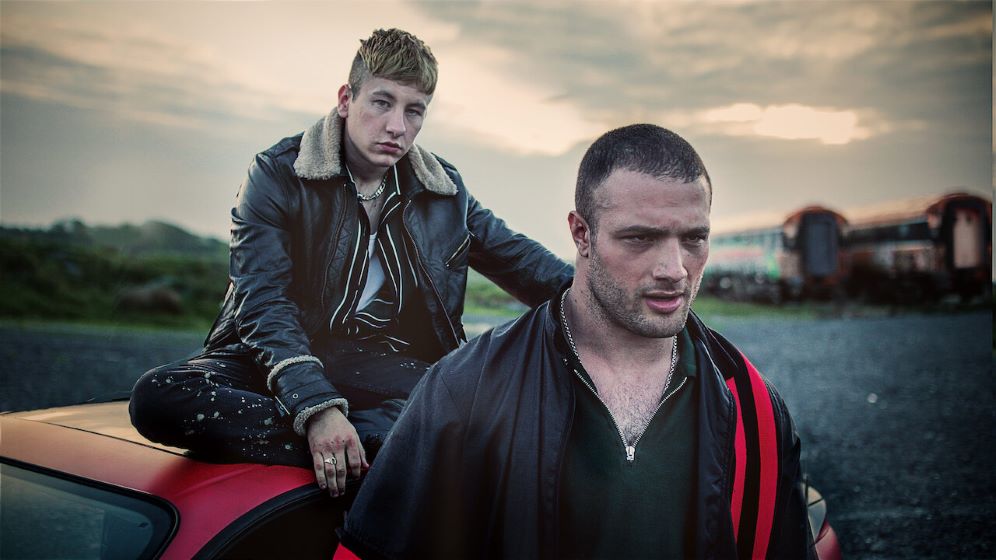
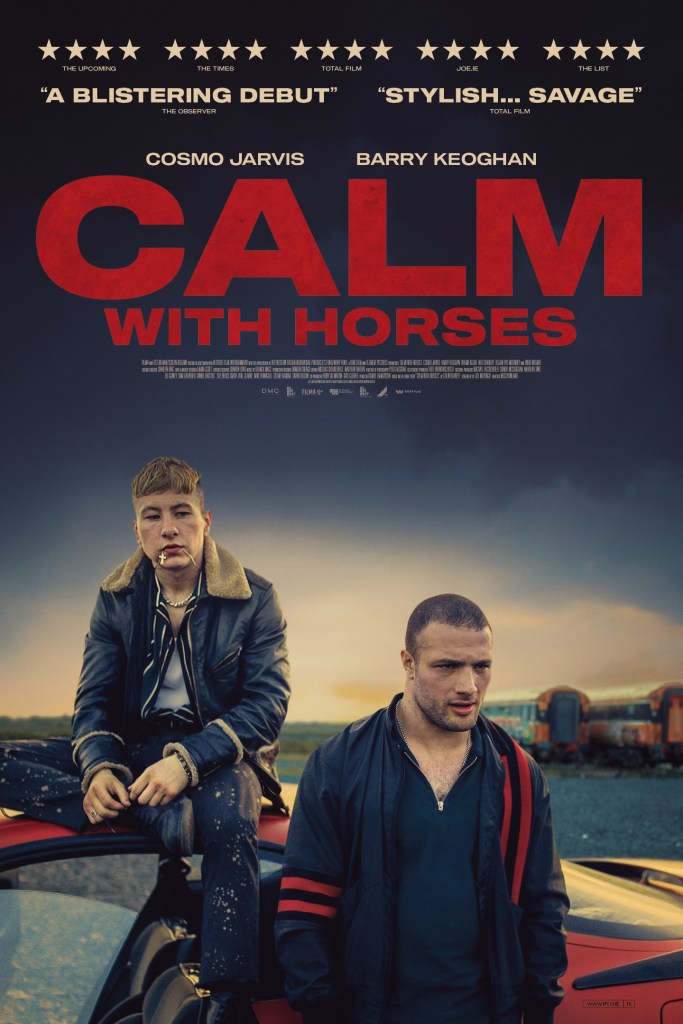
In rural Ireland a former boxer, Arm (Cosmo Jarvis), has found a new outlet for violence as an gang enforcer. But Arm is, at heart, a gentle soul, and his desire to belong and be part of a “family” is effectively exploited by the gang, especially his weaselly, bullying boss Dymphana (Barry Keoghan) who treats him like an affectionate pet-dog. His ex, Ursula (Niamh Algar), mother to his autistic son Jack, wants him to change his ways or stay out of their lives. But can Arm change?

Rowland’s film has a deliberately seedy quality to it, shot with a grimy intensity and crawling along on its belly among the mud and filth of Irish crime gangs. It’s a thrilling expose though of how crime takes and takes and is never satisfied. It’s turned Arm into a shell, throwing him the odd bone of inclusive comfort, then ordering him out like a rabid dog to hand out another beating to anyone who has crossed the family.

The main target is a man the heads of the family suspect of raping their teenage niece – although whether this was genuine sexual assault or simply a question of perverse family pride is left open. Arm opens the film by handing out a vicious beating – albeit one where he carefully lays out the ground rules with his victim before going about it with a punch-clock sense of duty. It’s what Arm is used for – a not that bright, piece of muscle who, despite his intimidating presence, will do (almost) anything for anyone who makes him feel wanted.

Even if the main person who does is as a dastardly as Dymphana. Keoghan is very good as a snide, insidious small-time crook, who openly calls Arm his dog and fills his head with prejudices and suspicions designed to keep him in his place. If he’s the dark angel, then Ursula is the good one: Algar equally brilliant as a decent, kind, supportive person who has come to the end of her tether with a man who she now feels is a danger to the fragile temperament of her autistic son.

It’s the fate of this son that will penetrate through the dead exterior shell that surrounds Arm, and make him start to question his own life. There is more than a hint that the fragile, timid, surly Arm – beautifully played, with a haunting gentleness under the violent exterior by Cosmo Jarvis – suffers from a similar condition to his son. Like him, he finds rage he can’t control bubbling up inside him (Arm is hopelessly ill prepared for helping his son during Jack’s emotional outbursts). He at times lacks an emotional intelligence to understand how people are treating him and why. It’s something Ursula knows and recognises – and why she gives him as many chances as she does.

Like his son, Arm finds himself calmed by engagement with animals (the title comes from Jack’s therapy sessions, horse riding). He also, buried somewhere in him, has a strong sense of right and wrong and eventually finds the courage to question his orders, as he begins to understand he really belongs not with them but with his ‘true’ family. His motivations shift from simply pleasing his masters to finding the money Ursula needs to move to Cork and place Jack in a special-needs-school, a need for his son that he slowly learns to place above his own wants and desires.

Eventually this explodes into scenes of retributive violence, shot by Rowland with an immersive intensity (there are some particularly uniquely filmed country-lane car-chase scenes, with the camera mounted on the car at an unusual angle). The violence that has lurked only just beneath the surface of the crime family, bubbles savagely to the top as it’s made clear that even the slightest deviation from what the family wants or expects from its enforcer will never be tolerated.

At times, Calm with Horses is a little too reminiscent of other crime dramas: for all its intelligent and skilful construction and playing, there isn’t a lot that feels really original here. Its influences are plain, but what it has is an intelligent empathy for its characters, and their situations, that constantly rewards you. At times, these characters surprise you with how far they will go: at others they disappoint you with their selfishness. But, thanks to the acting and direction, they always feel real.

Calm with Horses is an impressive debut, confident and exciting. Jarvis is superb as an inarticulate, unaware gentle-ish giant, with Keoghan and Algar outstanding in support (both were BAFTA nominated). It’s grimy, matching the dangerous world its set in, but it also has flashes of hope and understanding in it, little moments of calmness that pepper the darkness. It’s a fine crime drama.

As Good As It Gets (1997)

As Good As It Gets (1997)

Sparks fly in this straight-forward sitcom set up from James L. Brooks

Director: James L Brooks

Cast: Jack Nicholson (Melvin Udall), Helen Hunt (Carol Connelly), Greg Kinnear (Simon Bishop), Cuba Gooding Jnr (Frank Sachs), Skeet Ulrich (Vincent Lopiano), Shirley Knight (Beverly Connelly), Jesse James (Spencer Connelly), Yeardley Smith (Jackie Simpson), Harold Ramis (Dr Martin Bettes)

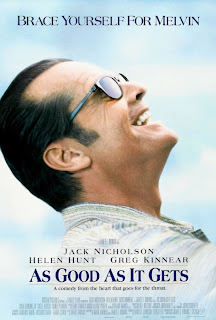
Melvin Udall (Jack Nicholson) is the rude, misanthropic writer of Mills and Boon style novels who suffers from an OCD that sees him keep to a strict series of routines. One of the most important is always having breakfast at the same table of the same restaurant, where the only waitress who will serve him is Carol Connelly (Helen Hunt). Carol is caring for her young son Spencer, who suffers from chronic asthma. All starts to change when the homophobic Melvin is persuaded to look after the dog of his neighbour, gay artist Simon Bishop (Greg Kinnear), after he is assaulted during a robbery. Melvin finds himself getting closer to the dog – and before he knows it, starts to reluctantly build a friendship with Simon and a romantic relationship with Carol.

If you thought that sounds rather like the set-up for a sitcom… you’d basically be right. James L Brooks demonstrates his TV roots again with what could almost be an extended pilot for a TV series, shot with his characteristic functionality. While its an attempt to show how different people can struggle to overcome barriers to connect with each other – be those psychological, social or health – it squeezes this into a trope-filled plot set-up, that swims in sentimentality and gives opportunities for actors to enjoy scenery-chewing, attention-grabbing parts.

None more so than Jack Nicholson, winning his third Oscar as Melvin. To be honest, what Nicholson does he is essentially portray a less complex version of Victor Meldrew from One Foot in the Grave. Melvin is a man who doesn’t suffer fools gladly, and delights in using his wealth to excuse him from saying a host of unacceptable things about everyone he meets (not a single gender, sexuality or race escapes his quick-witted bile).

Of course, the audiences know that it’s alright because it’s Jack, and while he might be a rogue he’s basically got his heart in the right place. Discovering that is basically the purpose of the film: of course, all that rudeness and cruelty is a front to protect an insecure man from the dangers of emotional commitment. Not to mention that the first thing to melt his shell is that most familiar (and sweet) of Hollywood props, a dog. Brooks does manage to demonstrate that Jack’s acts of kindness are at first partly about making life easy for himself – securing an expensive doctor for Carol’s son is about ensuring she doesn’t leave his restaurant and agrees to keep talking to him – but the film is determined to show everyone is basically “decent” and “kind” even if they don’t know it.

Inevitably, the best way of doing this is for that familiar old development, the road trip: for contrived reasons connected to Simon needing to ask his parents in Baltimore for help with medical bills, Melvin, Carol and Simon climb into a car for a cross-country drive. Needless to say, the predictable clashes, confessions, break-ups and reconciliations take place. It being a Brooks movie, this all takes place over an extended two and a half hour run time (indulgent for such a traditional set-up).

What makes it work is that the acting of the three principles is fiercely committed. Oscar-winning Nicholson eats up the cutting dialogue but also manages to mine a lot of “little boy lost” vulnerability from Melvin, a man who throws up barriers of rudeness, aggression and misanthropy to protect himself from getting hurt. Helen Hunt (who won another Oscar) hones years of experience in delivering fast-paced, witty dialogue from Mad About You, also shows real depth making Carol a similarly guarded person, using sass and cynicism as a shield against a world she expects to bite her. Greg Kinnear is a fragile artist, hiding behind his art, tortured by denial about his problems and desperate for an emotional connection.

That theme of the defensive barriers – and crippling effects of our own mental hang-ups – is the deeper message that Brooks manages to bring to the film. Melvin might seem, on the surface, the most obviously maladjusted but at least he’s vaguely happy in his skin at the start of the film. The other characters wear smiles of contentment, but only to hide deep stress and turmoil. It’s Brooks’ TV roots that turns all this into a series of “learning” lessons, where every scene in the final act is accompanied by someone making a profound choice, making a new start or letting something go.

As Good As It Gets is about making the best of things. And Brooks makes a pretty good fist of making this a decent (overlong) romantic comedy with a touch of depth. But its still mired in predictable tropes. Melvin’s OCD expresses itself in the most amusing filmic way possible, essentially as a form of charming eccentricity rather than the crippling disease it can actually be (it ticks all the predictable boxes, from light-switches, to compulsive hand cleaning to not stepping on cracks in the pavement). The film also, rather worryingly, suggests OCD can be overcome just like any other personality problem, simply by opening your heart and learning those lessons.

It’s fine, but you can watch it now and wonder how a film that’s essentially an over-extended dramedy TV-show pilot ended up scooping so many prizes. Entertaining, with some interesting perspectives, with committed acting, but very little that’s new and a lot that’s rather tired.

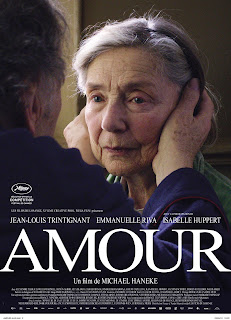
Amour (2012)

Amour (2012)

A couple struggle with an unbearable burden in Haneke’s extraordinary and moving film

Director: Michael Haneke

Cast: Jean-Louis Trintignant (Georges Laurent), Emmanuelle Riva (Anne Laurent), Isabelle Huppert (Eva Laurent), Alexandre Tharaud (Alexandre), Rita Blanco (Concierge), Carole Franck (Nurse), Dinara Droukarova (Nurse), William Shimell (Geoff)

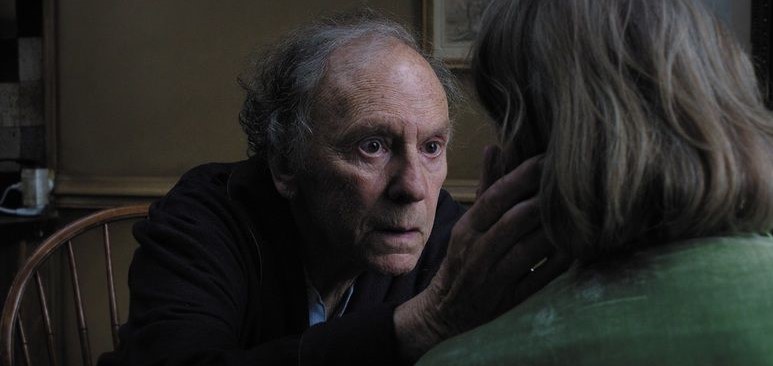
Think of Haneke, and you tend to a picture a rather cold philosopher, starring at humanity through a microscope. Some of his best works are chilling explorations of man’s capacity for inhumanity and cruelty. But Haneke’s work is based on a brilliant understanding of what makes people tick, and that insight applies as much to love as it does to cruelty. Amour is Haneke’s searching exploration of what love can be like, and how it can make us behave, in the worst situation possible: one where we are helpless to ease the suffering of someone we love.

Georges (Jean-Louis Trintignant) an Anne (Emmanuelle Riva) are retired piano teachers, married for almost forty years. The life is one of relaxing calm, enjoying the success of former pupils. All that changes when Anne has a silent stroke, the effects of which leave her paralysed on her left side. Georges resolves to care for her, dedicating himself to seeing to her every need, even as Anne’s body and mind (and desire to keep living) swiftly decline and a second stroke brings on even greater helplessness and dementia.

We know it won’t have a happy ending. It’s told in flashback, the film opening with the door to Georges and Anne’s apartment being broken down by the police, discovering Anne’s body laid out on the bed, surrounded by flowers. We know from the moment of Anne’s first stroke, where this story is heading. And none of it should be a surprise. Haneke based the story on an experience in his own family, where he was left helplessly watching a person he loved suffer, powerless to do anything other than offer brief comforts. Amour asks if there can be anything harder for to bear than being unable to help (or even, in the end, really communicate) with someone we love?

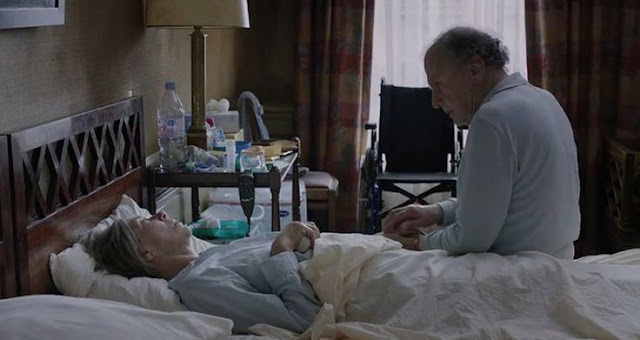
Georges devotion to Anne is clear. He obeys to the letter one of her first wishes when returning from the hospital: she does not wish to leave her home. So, they stay in their apartment (the film leaves this apartment only once, in our introduction to the leads) and Georges cuts up her food, helps her in and out of bed, fetches and carries and helps her get dressed. Steadily Anne’s ability to do things independently declines; and after her second stroke evaporates entirely. She’s incontinent (reliant on a nappy), delirious and incapable of coherent speech, unable to leave the bed and getting her to eat her mashed-up food and water is a daily struggle. Slowly, any trace of the real Anne only exists in Georges memories, which he clings to tightly.

In some ways, this is a horror film: the horror of powerlessness as someone literally wilts away in front of us, a new part of their personality disappearing every day. It frequently plays out in an austere silence – tellingly for two people whose whole life has been music, there is precious little of it in the film. The Anne at the film’s end – frightened, childlike, tempestuous and able to utter only a few words (like “Hurts”) over and over again in an incoherent refrain – bares no resemblance to the intelligent, witty and engaging woman at the film’s start. In every line of Trintignant’s face there is the weary, numbed pain of a man unable to do anything other than gently try to apply the brakes.

But it’s love that keeps him refusing to give-up, and the film is an exploration of the never-ending lengths we will go to for those who mean the most to us. Georges entire life becomes Anne – by the end there is a barely a waking hour that isn’t consumed with her needs. From the start, even the smallest tasks are challenging for Anne: we see her struggle to put on her glasses and turn the pages of a heavy book one-handed in bed. This only gets worse – and the loss of dignity a person feels as they become incapable of controlling any part of their body, including their bladder, is presented by Haneke with a horrific matter-of-factness.

But, what I think is particularly interesting about Amour– and I think Haneke’s stroke of genius – is the flip side of love. Because it also makes us selfish: and you can argue it makes both Anne and Georges selfish. Georges, in particular, begins to horde Anne, as if he was so desperate to keep some vestige of his life with her alive, that he wants to keep her all to himself. He consistently turns down offers of help. He reacts with anger to their daughter Eva (a sensitive Isabella Huppert), telling her that he and Anne should be left to their own privacy. He takes a perverse pride of taking on an impossible burden and refuses to consider any suggestions to reduce his burden (with only great reluctance does he hire a day nurse). Love has made him greedy, to keep Anne to himself.

Part of this comes from his desire to preserve Anne’s dignity: he even locks Anne’s bedroom during one of Eva’s visits as he feels Anne wouldn’t want her daughter to see her like this. Georges dismisses one nurse as he feels she is mistreating Anne. This is fascinating scene: we see no evidence of this – all we see is the nurse showering Anne like a child and later combing her hair and showing Anne her reflection (and she’s furious at Georges accusation). The film suggests, perhaps what Georges can’t bear is the nurse’s infantilising of Anne in her dementia. It can’t be squared with his own desperate attempt to keep some of his memory of her unaffected by what she has become.

Anne knows early where this is going. When Georges returns early from a funeral, he finds her sitting outside an open window. Nothing is said in the following conversation, but it’s clear that Anne was in the midst of attempting suicide. Later she talks bitterly about the point of carrying on. In her later dementia state, she frequently refuses food and water as if determined to try and bring her own life to an end. It’s a cry Georges isn’t interested in hearing: he bolts it away in his mind and battles to the end to try and preserve what life she is, even once striking her with frustration after she spits out her food once again.

Amour can be seen as a pro-Euthanasia film. But I think it’s more complex than that. It’s about love, and how it can drive us to undertake super-human efforts for another person that are also, in a way, about ourselves. That’s what Georges does: a burden that damages his own health and well-being, which he takes on because he will not let go and whatever small parts of Anne are left, he doesn’t want to share with anyone else (not even their daughter). When he takes his fateful decision – and one we’ve been expecting from the film’s first frame – it’s as horrifying as anything Haneke has filmed, both on Georges’ despair and Anne’s instinctive terror.

Amour is blessed with two stunning performances. Emmanuelle Riva won a BAFTA and an Oscar-nomination for her superb performance, a technical masterclass combined with huge emotional depth as Anne moves through fear, anger, self-loathing and finally into a deep, dark well where her understanding of what is happening to her slowly fades away in a babble of incoherent words. Jean-Louis Trintignant, lured out of semi-retirement, is sensational: a shambling, devoted, cantankerous, heart-broken, stubborn man dealing with a profound, never-ending grief and loss.

Haneke films it with a stately calmness and leaves a myriad of possible interpretations open to the viewer. But above all, he invests the film with a humanity, warmth and compassion that will speak to anyone who has had a loved one succumb to the infirmity and fear of old age. Amour is deeply moving, profoundly insightful and achingly beautiful.

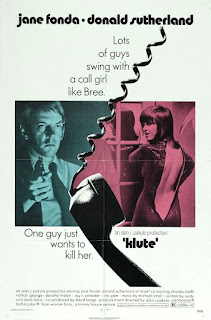
Klute (1971)

Klute (1971)

Paranoia runs rampant in this fascinating – and chilling – murder thriller that taps into into conspiracy thrillers

Director: Alan J. Pakula

Cast: Jane Fonda (Bree Daniels), Donald Sutherland (John Klute), Charles Cioffi (Peter Cable), Roy Scheider (Frank Ligourin), Dorothy Tristan (Arlyn Page), Rita Gam (Trina), Nathan George (Trask), Vivian Nathan (Psychiatrist), Morris Strassberg (Mr Goldfarb)

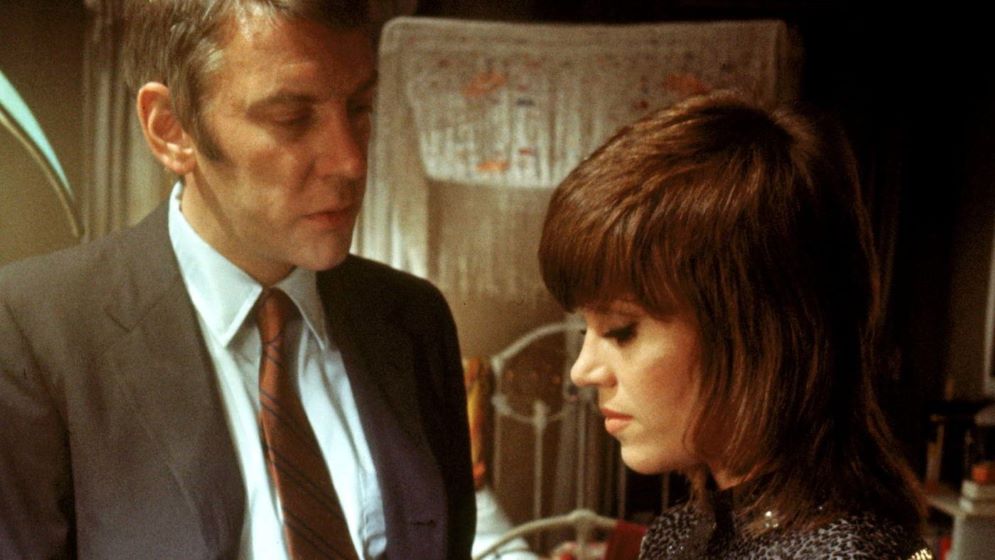
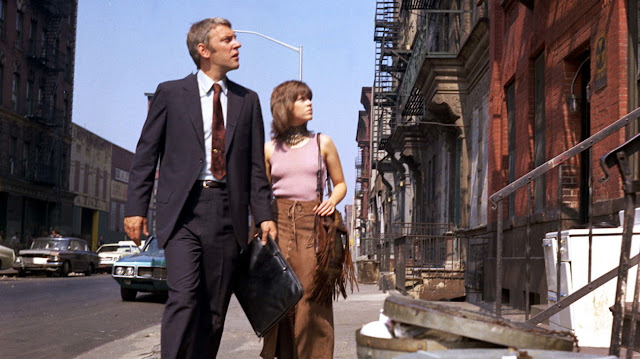
There is one question everyone asks when watching Klute: why the heck is it called Klute? Would calling the film Daniels have been too dull? Would Bree have made it sound like a history of cheese? Klute is dominated by its character study of Jane Fonda’s Bree Daniels, split between her desire to be an actress and the comforting sense of control and avoidance of intimacy her work as call-girl brings. Klute uses the conventions of the male detective movie to conduct a sympathetic, compassionate character examination of its female lead. Match that with Pakula discovering his affinity for creeping 70’s paranoia, and you’ve got one of the most interesting and rewarding films of the decade.

John Klute (Donald Sutherland) is a small-town cop called in as a private investigator after a six month New York police investigation fails to find his friend, businessman Tom Gruneman. The only lead they have is a series of obscene letters found in Gruneman’s office written to New York call girl Bree Daniels (Jane Fonda). Klute discovers Bree has no memory of Gruneman, but Klute believes she may be in serious danger. Together they investigate the crime further, which becomes more and more focused on a mysterious abusive client and even more complicated by the growing relationship between the quiet, reserved Klute and the strong-willed, independent Bree.

Klute uses the conventions of a gumshoe detective movie, spliced with a hard-hitting 70s fascination with grimy, sensationalist crimes (this was the same year as hard-bitten, shades-of-grey cops in Dirty Harry took on a serial killer and The French Connection explored the drugs trade), in this case the assault and murder of prostitutes. But this isn’t a whodunnit, or even really a detective story. The film is barely 45 minutes old before Pakula basically reveals who the killer is (the suspect list has only two people on it in any case). Most of the investigation takes place off screen. Some answers are kept vague. There is no cathartic moment of success.

Instead, the film feels far more like it’s using its Laura-ish set-up (the big difference here being the taciturn detective’s love interest is alive rather than just a painting) as a backdrop to deep dive in Bree’s personality. Bree is played with a stunning (and Oscar-winning) verisimilitude by Jane Fonda. Fonda immersed herself totally in the character, even living in the apartment set during shooting (Pakula had a working toilet installed) and developing a careful psychological background to Bree that is brilliantly introduced through our frequent cuts to her sessions with a coolly professional psychiatrist.

This is a portrait of a female sex worker on screen, where she’s neither a tragic or pathetic figure, or a hooker-with-a-heart-of-gold (the standard tropes). Instead, this is a woman struggling with a crippling fear of intimacy and a compulsion to control, who finds a freedom and release in acting out the fantasies of others. Bree speaks to her psychiatrist of being a call girl not as a curse or source of shame, but something she takes a sort of freedom from. It’s clear that really makes her sweat is not adjusting herself to whatever men want (faking an orgasm while checking her watch with one John, or acting out an elaborate, detailed fantasy for a lonely tailor) but the idea of having to be herself, to display something emotional and true.

And prostitution has the advantage over acting as she sets the terms. We are introduced to Bree as just one in a row of sitting actresses auditioning for an advert, each of them dismissively given a score from A to C. She later auditions for Shaw’s Saint Joan with a detailed, heartfelt reading (she’s clearly a good actress) which is stopped mid-speech by a bored director. With Fonda making clear that control is vital to Bree’s sense of well-being, no wonder she struggles with this dismissive world. Or that she finds a greater freedom in high-end prostitution, where we see she sets the terms with a business-like professionalism and is the centre of the focus and attention of her John’s for the whole of their session. This is a feeling she doesn’t get from anyone else.

What really scares her is the thought of a genuine emotional intimacy with Klute. In their first encounters she assumes she can seduce him with the professional ease she does most men, dropping naturally into her role of seductive dream-girl, offering him sex in return for recordings he has of her from his investigation. Later she will prove a point by coming to him in the night and seducing him with a pretence of vulnerability and fear, as if to prove to him (and herself) that she can work out exactly what mood she needs to control any man.

But it’s buried in genuine fear about emotional attachment. To her psychiatrist she talks about not understanding why Klute seems, with no ulterior motive, to be concerned for her safety and well-being despite the things he’s knows about her or that she’s done and said to him.

There is a marvellous scene where the two of them go shopping for fruit (Klute of course knows exactly how to choose the best fruit, he’s that sort of guy). First, she impulsively steals an apple like a naughty, impulsive child. When Klute responds with a bemused half-shock, she stands behind him, a grin spreading across her face, then she lightly rests her head (almost not touching) on his back – then follows him down the street, holding the end of his coat. It speaks worlds of how something in her emotional growth has been slightly stunted somewhere along the line. And the fact this intimacy is followed in the next scene by a drug-fuelled blow-out, speaks volumes of her fear of it.

It’s a brilliant performance by Fonda, throbbing with empathy and emotional complexity. She’s perfectly abetted by Donald Sutherland, who proves himself once again one of the most generous actors in the game. Klute is in many ways the typical rube in the big city, the one honest cop. But he also has a wet-eyed vulnerability, a tenderness and an urge to protect that as motherly as it masculine. He reveals very little emotionally, not from fear but from a shyness.

He’s also an observer. And Pakula’s film partly draws links between detective and voyeurism. Let’s not forget Klute also bugs Bree’s phone and follows her. The camera frequently shoots the action from distance, through windows and looking down on the action: the idea of being constantly observed lingers over the picture, giving it a rich vein of paranoia. The killer listens to disembodied audio recordings of Bree, and these frequently play over the action not only echoing this paranoia, but re-enforcing how her personality is a fractured one between the independent exterior and the less certain interior.

Pakula’s film pulls all this together into something creepy and unsettling but is also a fascinating character study. That is perhaps its best trick. You come into it expecting a film noir or a detective story. What you get is a compelling analysis of the psyche of one woman, who emerges into the picture and takes complete control of it. Perhaps that’s why it’s called Klute – it’s as much a part of the misdirection as everything else. With its psychological complexity and creeping sense of being watched, this would set the tone for many other films that followed in the 70s.

Boiling Point (2021)

Boiling Point (2021)

A chef struggles to hold it altogether under pressure in this intense one-take drama

Director: Philip Barantini

Cast: Stephen Graham (Andy Jones), Vinette Robinson (Carly), Alice Feetham (Beth), Hannah Walters (Emily), Malachi Kirby (Tony), Izuka Hoyle (Camille), Taz Skylar (Billy), Jason Flemyng (Alastair Skye), Ray Panthaki (Freeman), Lourdes Faberes (Sara Southworth)

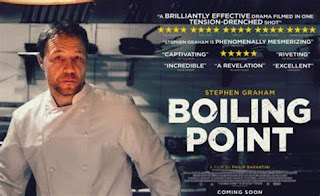
Who would want to run a restaurant? Blimey it can be stressful enough to cook for family and friends. Imagine having to prepare meals for hundreds of paying customers. Boiling Point follows – in real time – one single night of service in an over-booked restaurant a few days before Christmas. Chef Andy Jones (Stephen Graham) is feeling the pressure: his wife has left him, he’s let the paperwork slip so much over the past few months that the restaurant’s Food Hygiene Rating has slipped from five stars to three, little mistakes are slipping in and his former partner (and now celebrity chef) Alastair (Jason Flemyng) is sitting out front. It won’t be long before things hit the eponymous Boiling Point.

Expanded from a 22-minute short film made a few years previously, Philip Barantini’s film is shot in one 93-minute continuous take that starts with Andy’s (late) arrival at the restaurant and takes us through a night’s service. There are some films where this one-take device seems like a gimmick – but here it’s an essential part of the success of the film. Following all this in real time, with no single break or cut away, is like taking part in a giant panic attack. I can genuinely think of few films that were as tense as this one. There is a sweaty, edge-of-the-seat panic about the entire film that means you spend its entire runtime biting your fingernails, waiting for something to go wrong.

And there are so many potential disasters teed up. It’s a sign of the film’s intelligent, skilfully swift construction that all of these are established with minimum dialogue – and not all of them lead to disaster – but in short order we see not only the tensions among the staff (the disaffected junior chefs, the under-pressure waiting staff), but also a bullying Dad intent on making trouble on table 7, a drunken gaggle of ladies on a night out, a group of self-proclaimed social media influencers demanding off-the-menu treatment, a woman with a nut allergy that’s not correctly recorded on the ordering system, and that celebrity chef and the food critic he’s bought with him for dinner.

All this is of course bubbling up and hammering into an already deeply-under-pressure Andy, played with great skill by Stephen Graham, who has mastered these terminally weak alpha-males. Andy is the unknowing root cause of many of the problems. The restaurant’s health rating has dropped solely (as explained by a patronising but well-meaning health inspector, while Andy sits through the conversation like a sullen child who’s been caught cheating on his homework) because his lack of essential record keeping has made it impossible for it to be scored higher. Nevertheless, Andy lashes out at his junior chefs for the minor infractions also recorded, as if they were to blame.

Grasping a water bottle that he suspiciously swigs from almost non-stop, Andy has ceased leading in the kitchen: stock orders are not made, junior staff are either unsupported or allowed to shirk their duties (a kitchen hand is delivering the bare minimum, spending most of the shift on the phone or scoring drugs in the car park). Andy barely prepares any food and largely avoids any communication with his game-faced-but-deeply-out-of-her-depth restaurant manager Beth (an all-business Alice Feetham, trying to cover a rising sense of panic and a desperate need to be liked).

Kitchen command has effectively shifted to his deputy chef Carly, superbly played by Vinette Robinson. Calm, authoritative and supportive of the junior staff, Carly is just about holding the operation together by her fingertips, but even she has clearly had enough. There is a scintillating, hands-over-the-mouth dressing down she hands out to Beth – who she furiously points out doesn’t even realise all the things she doesn’t know – which feels like months of stress and frustration bursting out with carefully thought-out, inexorable, calm fury.

Just as pissed off is meat specialist Freeman (a brilliantly surly and resentful Ray Panthaki) who has had enough of cleaning up after Andy’s poor preparation and Beth’s greater interest in social media promotion rather than running a restaurant. The kitchen is full of careful character stories that swirl around the edges of the story, as the camera moves seamlessly from location to location. There is a beautifully done early scene between Hannah Walter’s motherly dessert chef and her young apprentice that literally brought tears to my eyes for its warmth and humanity.

Out front we wait for the inevitable cataclysm to take place. There to see it is Jason Flemyng’s smugly passive aggressive Alastair, mouthing platitudes about how he’s there to support Andy, while taking credit for his menu, mocking the set-up and pontificating about how he would improve every single dish. But even he is at breaking point, as later developments show.

All of this is built up by the single-take effect. Whenever the camera goes somewhere, we know that no second will be wasted and we are set to see something potentially dramatic. We begin to dread every time a young black teenage waitress heads back to table 7, where the customer doesn’t want her touching his glass and plates. Every return to the kitchen brings the sweat of wondering if a fatal mistake will take place. With the camera weaving around, following the action and moving seamlessly (but with obviously a huge amount of forethought) from place to place, this is brilliantly shot film where the one-take effect adds immeasurably to the pressure cooker effect.

Despite this, the final ending doesn’t quite land with the impact it should. But you can forgive it a great deal for the tense, gripping ride you follow to get there. The cast are all faultless – and often even more than that – and the direction is spot-on. This film is an unsung triumph – it should get a lot more recognition.

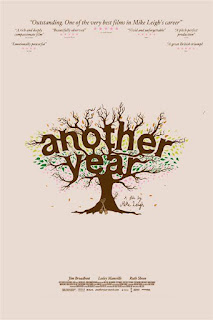
Another Year (2010)

Another Year header
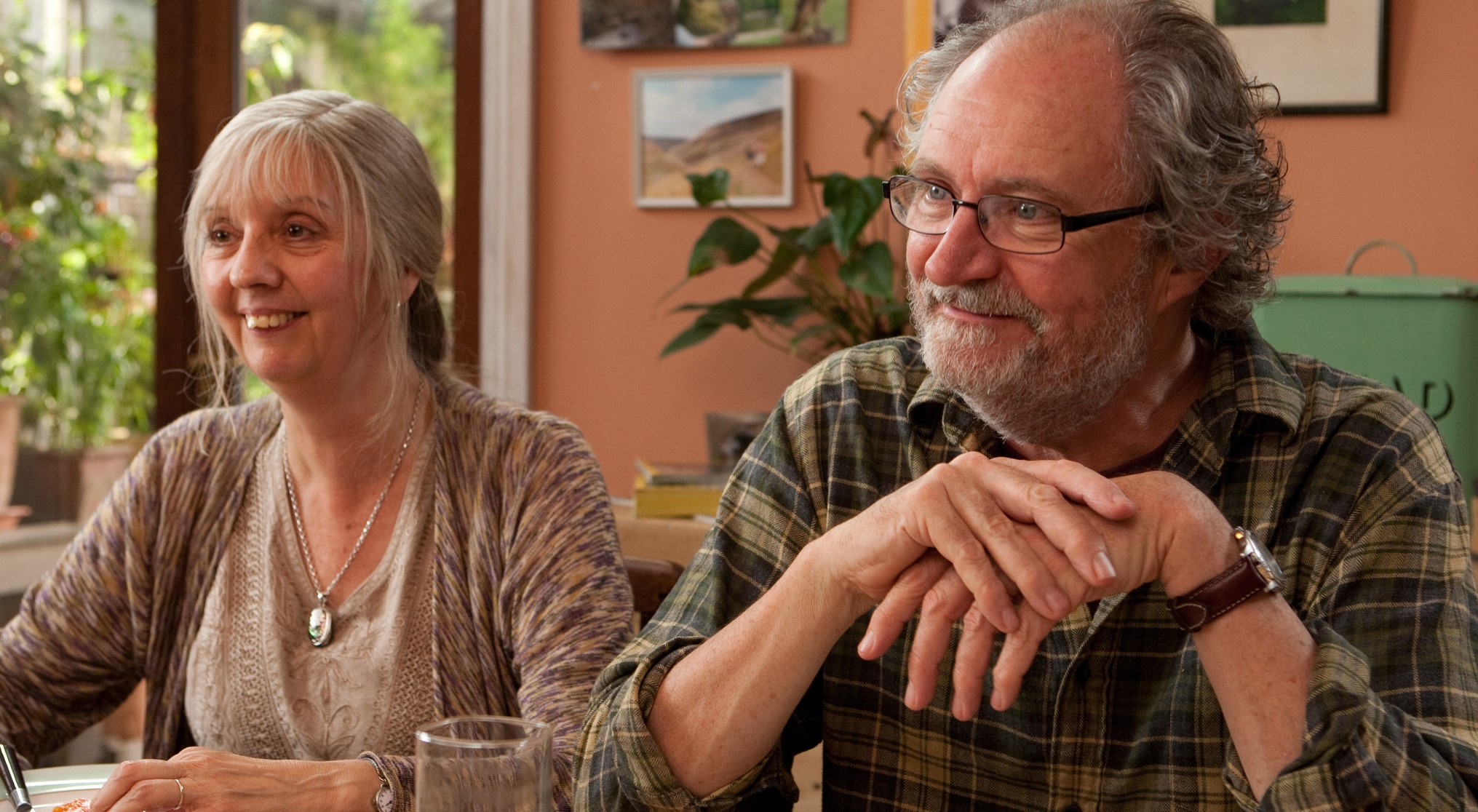
Ruth Sheen and Jim Broadbent are either a blissfully happy and kind or rather smug couple in Another Year

Director: Mike Leigh

Cast: Jim Broadbent (Tom Hepple), Ruth Sheen (Gerri Hepple), Lesley Manville (Mary Smith), Peter Wight (Ken), Oliver Maltman (Joe Hepple), David Bradley (Ronnie Hepple), Karina Fernandez (Katie), Martin Savage (Carl Hepple), Michele Austin (Tanya), Phil Davis (Jack), Imelda Staunton (Janet)

Tom (Jim Broadbent) and Gerri (Ruth Sheen) are a blissfully content middle-class London couple. He’s a successful geologist, she’s an attentive NHS counsellor. They divide their time between work, their allotment and socialising with friends. But many of their friends are disaster zones. Gerri’s work colleague Mary (Lesley Manville) is a divorcee who falls over herself to tell people how happy she is, but is clearly depressed with a drink problem. Similarly, Tom’s old uni friend Ken (Peter Wight) is a lonely alcoholic, seriously overweight and equally depressed.

The fascinating question at the heart of Mike Leigh’s heart-felt and beautiful film is: are Tom and Gerri a sweetly loving couple who go out of their way to support friends – or are they a desperately smug pair, facilitating those around them in self-destructive patterns? It’s hard to say either way: and that’s the beauty of Leigh’s honest, subtle character study which presents a single year in the lives of these characters.

It’s also, of course, superbly acted by the cast – all of them regulars in the work of Leigh. Broadbent and Sheen are brilliant as a couple completely content and happy in themselves and confident that they essentially have life sussed. They are kind, considerate and supportive of everyone. But how much is this genuine and how much is it performative? They fuss and smile to each other around the depressed and fragile Mary – but do nothing to help her change and improve her life, and merrily continue to fill the glasses of both her and the even more alcohol ravaged Ken.

When Tom’s sister-in-law dies, they rush to support his quiet, reserved brother Ronnie (David Bradley). They arrange every detail of the funeral and do everything they can to remove any burden from him. Tom is furious at the selfish and uncaring attitude of Ronnie’s son Carl (a grimly chippy Martin Savage) who seems convinced he is somehow being cheated by them. They bring Ronnie back to stay with them for a few weeks – but frequently leave him alone or allow him to sit watching their own insular conversations. Sure, they give him a home and support, but do they really care or are they going through the motions of people who want to believe they really care?

Wouldn’t a real friend of Ken, tell the obviously over-weight, permanently drunk, desperately self-loathing man that he has serious problems and help him change his life, rather than refill his glass at every opportunity? Or is it a sign of Tom and Gerri’s decency that they don’t see it as their place to tell other people to live their lives? In addition, Tom sticks loyally by Ken in a way very few people would – its clear during a golf game with Ken, Tom, son Joe (Oliver Maltman) and pal Jack (Phil Davis) no-one else wants Ken there – and gives him more warmth and attention than you suspect anyone else ever has. Does it just not occur to him a real friend would help Ken change his life?

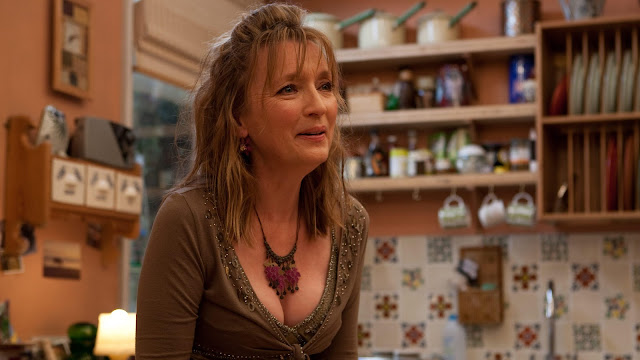
Above all, we see the frantic desperation and all-consuming anxiety, fear and neediness of Mary, played with a heartfelt and deeply moving frankness by a never-better Lesley Manville. Mary is a very sweet woman, who has lost her place in the world and clings to the idea – now long since departed from reality – that she is a young glamour puss, rather than a desperate, divorcee in her fifties. Tom and Gerri support Mary, making her a part of their lives. She is a frequent overnight guest in their house, has known Joe since he was little and relies on Gerri utterly for friendship.

But there is also a slight air of judgement with their treatment of Mary. Does having this all-too-obviously tragic case, this failure who is utterly emotionally dependent on them, make them feel better about themselves? What have they done over the years, for all those sympathetic ears and shoulders to cry on, to help Mary deal with the root cause of problems? While they are willing to listen at great length to her (often tedious and repetitive) conversation, they never once really step into help her effect real change.

Events bubble up as the lonely Mary begins to fixate on a fantasy of her forming a relationship with Joe. It’s implied everyone is aware of this, but politely do their best to hope the situation will go away. Manville is of course brilliant in playing the tragically self-deluded hope under this longing for a never-will-be relationship – particularly as she never once looks down on Mary, but plays with a real empathetic warmth, that helps us feel an immense sorrow for this woman, while still acknowledging she can be deeply frustrating.

And Mary perhaps has more warmth, and ability to connect naturally with people, than Tom and Gerri. This is suggested during a wonderful late scene with Ronnie (a brilliantly quiet David Bradley), where in a long conversation she forms more of a bond of him than we’ve seen Tom and Gerri, for all their patience, ever form. It’s impossible not to relate to Mary as she’s so clearly such a vulnerable person, desperate for love and human connection. Seeing her slow-motion collapse across the film is heart-rending. For all her flaws, she’s someone you are desperate to see happy.

Mike Leigh is able to capture all this in his beautifully observant film, perfectly placed, low-key but deeply affecting. There are never obvious beats and he is willing to show the positives as well as the flaws in every character. He never tips the deck either for or against Tom and Gerri, allowing us to judge them by their actions: they could be warm, friendly, open-house people who stick loyally to troubled friends most people would drop immediately; or they could be subconsciously using these tragic cases to feel even more blissfully happy with their own perfect lives. Leigh never tips it either way, and the breathtakingly emotional performances and beautifully played and written scenes mean that, even though the film is short on plot, it feels rich in character and emotion. It ends with a beautiful held long shot on Mary that, like the rest of this film, is deeply moving but also leaves you with more questions than answers. A triumph.

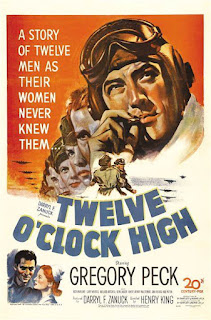
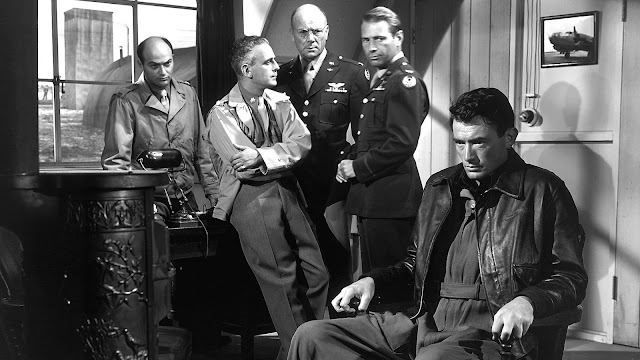
Twelve O'Clock High (1949)

Twelve OClock High header
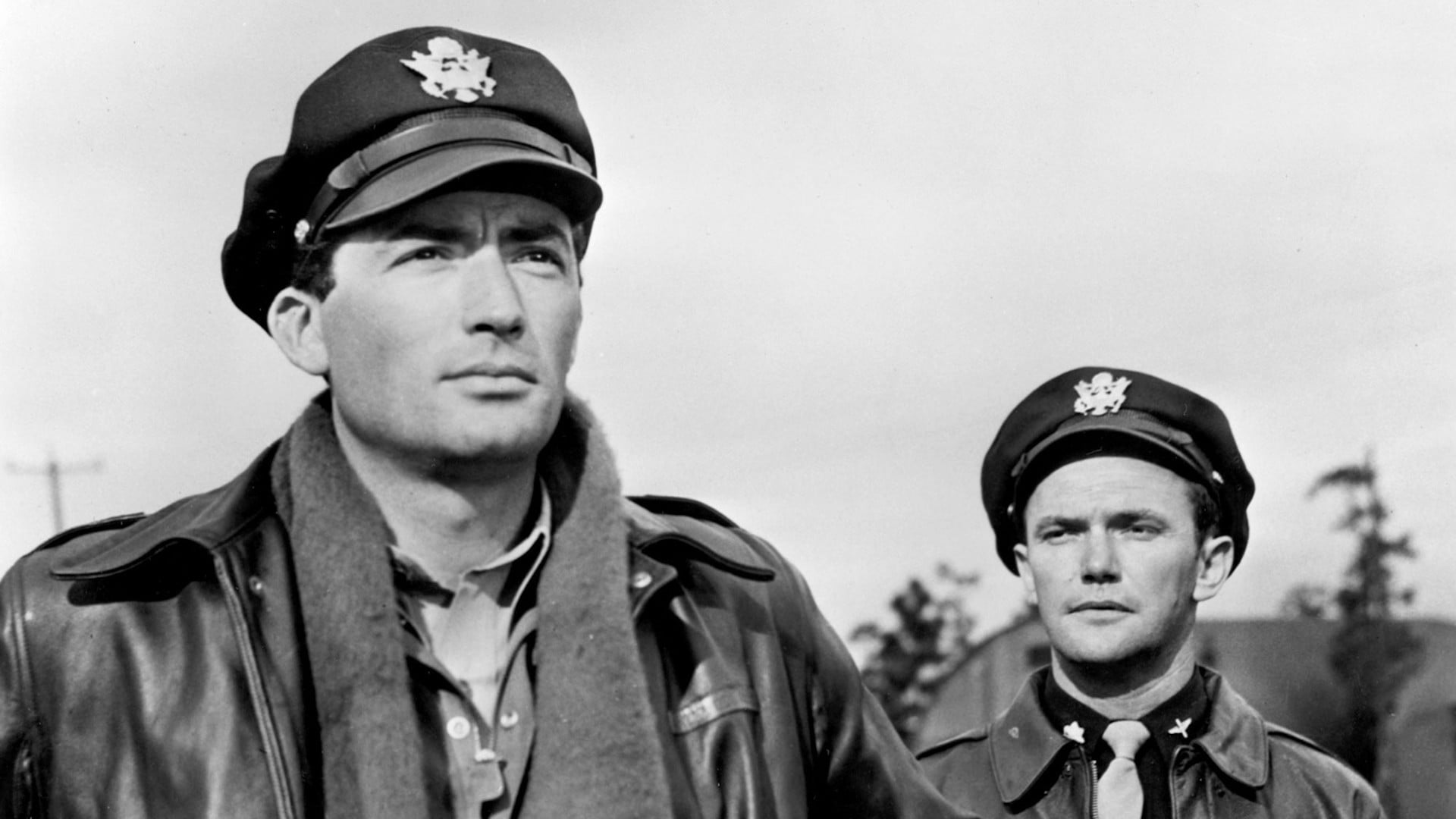
Gregory Peck takes on the burden of command in Twelve O’Clock High

Director: Henry King

Cast: Gregory Peck (Brg General Frank Savage), Hugh Marlowe (Lt Colonel Ben Gately), Gary Merrill (Colonel Keith Davenport), Millard Mitchell (Mj General Pritchard), Dean Jagger (Major Harvey Stovall), Robert Arthur (Sgt McIllhenny), Paul Stewart (Major “Doc” Kaiser), John Kellogg (Major Cobb)

It’s tough at the top. Imagine how much tougher it would be if you job involved pushing people to their limits, and then a little bit further, in a job that puts their lives at daily risk? It’s the sort of burden commanders of American Bomber wings faced during the Second World War. It’s already got to Lt Colonel Keith Davenport (Gary Merrill), a decent guy and much-loved officer, who has grown so close to his men he can’t face sending them off to get killed over Europe any more. He’s replaced by Brigadier General Frank Savage (Gregory Peck), a by-the-book tough son-of-a-bitch who won’t tolerate men who can’t or won’t do their duty. But will the pressure of constant action, escalating casualties and a growing bond with his men also get to Savage?

With Peck at the top of his game, in one of his finest performances of stoical dependability and Lincolnonian authority concealing a carefully nurtured warmth and humanity, Twelve O’Clock High is a very different war film. Here the focus is much less on derring-do and heroism and more on the unbearable psychological pressure a life on the front lines brings. It’s all presented with a documentary style realism – so much so, that the film was used for decades in the USAAF as a training film on successful styles of command.

It’s about the impact that sustained trauma has – how it can make even the toughest man eventually paralysed by over-thinking, uncertainty and doubt. Davenport is a very popular CO – and good in the job in many ways – except the key one: he’s lost the ability to push the men and his willingness to sacrifice them. Essentially, in the nicest possible way, he’s damaging morale by letting the company reflect his own exhaustion, depression and amiable defeatism. He’s lost the ability to push men to want to achieve everything they can for the cause: meaning they are now doing the military equivalent of punching the clock, delivering the barest minimum an attack requires. Mistakes and errors are tolerated and, perversely, casualty rates are rising.

It’s what Savage is sent in to fix. Which he does by essentially blowing apart the cozy, boys-club feel of the Bomber Group. Air Exec, Lt Colonel Ben Gately (a great performance from Hugh Marlowe), is stripped of his command (for not leading from the front) and assigned to commanding the “The Leper Colony” a plane crewed by those Savage believes least likely to pull their weight. Drills are bought in and under-performance is no longer tolerated. Dropping out of formation for whatever reason – a move that puts the rest of the Bomber Group at risk – is punished harshly (a pilot is demoted to the “Leper Colony” for breaking formation to support another a plane, a decision that could have doomed the Group to death). Savage is the ultimate heartless drill sergeant.

Only of course he’s not: as Peck makes clear, the burdens of command weigh as heavy on him as they did on Davenport. But Savage is a professional who knows tough love is what’s going to keep most of the Group alive, accomplishing their missions and bringing the war to an end. And Savage’s policies work: the Bomber Group starts to achieve well above their previous performance. The pilots greet Savage by handing in a group transfer request, but by the time the request is heard by the army (Savage’s adjutant Stovall having delayed the requests with red tape) as a man they back the General. Savage gets then to take pride in themselves and their unit – so much so that, during their first strike on German soil, off duty men smuggle their way onto planes to be part of the mission. (Savage of course doesn’t let slip his pride, rebuking men for abandoning their posts on the base).

Underneath it all, Savage is starting to feel closer to his men. A young pilot, decorated but starting to get worried about flying, is mentored and encouraged by him. Gately responds to the tough love from Savage by aiming to prove to him he is indeed the best pilot in the squadron – winning Savage’s respect, not least when he flies several missions concealing a spinal injury. The pressure inevitably builds on Savage as he finds it harder and harder to maintain his professional demeanour while becoming closer and closer to his men (he even refuses a transfer back to his original job in HQ, as he feels the group isn’t ready for him to leave yet).

It all builds to one of the most famous breakdowns in film, as Savage goes from physically unable to climb into the cockpit to a confused state on the runaway and then catatonic until the Group returns home. This is beyond daring stuff for a 1940s Hollywood film, a true portrait of the effects of wartime pressure on a hero, which never once questions his competence and cowardice but in fact holds up the qualities that led to his breakdown as admirable ones. Peck plays all this with great power and control – and if Savage shrugs off his catatonic state later and the film doesn’t really explore the long-term impacts, the very fact that it showed someone as admirable, competent and professional as this suffering psychological damage from war was quite something.

It’s not a perfect film. King’s shooting style is often unimaginative and the film takes too long to get going – much of the first half an hour is a slow chug towards Davenport being relieved and Savage taking the post. More could be made of the impact of the war on the rest of the men on the group: it’s telling that only Jagger’s Stovell gets a scene where he also is allowed to let off steam against the pressure, getting drunk the night of a big raid, and he won an Oscar for it. But as something very different in Hollywood’s approach to the War, it really stands out as a companion piece to The Best Years of Our Lives.

The Father (2020)

Olivia Colman and Anthony Hopkins excel in Florian Zeller’s sublime The Father

Director: Florian Zeller

Cast: Anthony Hopkins (Anthony), Olivia Colman (Anne), Rufus Sewell (Paul), Imogen Poots (Laura), Olivia Williams (The Woman), Mark Gatiss (The Man)

Is there any worse nightmare than the thought of losing your mind? Worse of all, to lose your mind in stages: to be aware, in every moment, that things are not as they should be, that people and places no longer seem to fit your memory of them. That you can walk into a room and completely forget why or meet someone close to you and have no a clue who they are. It’s an unimaginable condition to go through – and the subject of Florian Zeller’s exceptional adaptation of his award-winning play, The Father.

Anthony (Anthony Hopkins) is a retired engineer slowly succumbing to dementia. Events are increasingly confusing to him. Is he living in his own flat, or is he living with his daughter Anne (Olivia Colman)? Is Anne moving to France or not? Is she married to Paul (Rufus Sewell) or not? Where is his other daughter who looks so like a woman who may-or-may-not be his new carer, Laura (Imogen Poots)? From moment-to-moment Anthony struggles with confusion, rage and fear as the world constantly fails to coalesce into a meaningful picture, but instead remains a fragmented jumble.

That’s the brilliance behind Zeller’s adaptation of his own award-winning play. It captures the perspective of the world for those suffering from dementia in a way no film has done before. The play’s timeline is disjointed in an almost Nolan-esque way, and it’s not clear whether we are watching ‘real’ events’ or if all of these events are memories of Anthony’s which dementia has shuffled, reordered and recast. Either way, the film constantly refuses to allow you any grounding from scene-to-scene, and refuses to present clear answers (although you can infer much).

Even the sets betray us. From to scene to scene the apartment is redressed, sometimes in subtle ways, sometimes in jarringly different ways. The same fundamental layout sees every room constantly redesigned. Sometimes it could be Anthony’s apartment. Sometimes Anne’s apartment. Sometimes a mix of the two. Sometimes it’s a hospital, in others a retirement home. Often it might be a combination of one or more of these locations all at once. The style of decoration is inconsistent, the furniture changes, pictures move, even the colours of bedsheets change. Every single scene disorientates us: it’s only a movie for us, but for Anthony this is his life.

In fact, if The Father has a filmic influence, interestingly it’s a horror-film. Anthony is a man trapped in a situation where he knows everything is wrong, but can never fully understand why, or get people to listen to him. Often the camera catches discomfort and fear on Hopkins’ face, and it’s clear he neither knows where he is or, in many cases, who the people with him are. But for fear of not being believed or a sense of powerlessness, he’s too proud and scared to ask. It taps into the powerlessness of horror films, where you are relentlessly chased by a force outside your control: in The Father that force is life, which has become for Anthony a disturbing kaleidoscope where everything makes sense to everyone except him.

Of course, a large part of this is sold by Anthony Hopkins Oscar-winning lead performance. Hopkins delivers to an astonishing degree: this might just be the greatest performance of his career. Although we see flashes of ‘the true Anthony’ – his wit, playfulness and intelligence – Hopkins deftly and subtly demonstrates the wildly varying mood swings dementia brings. At times he’s paranoid, defensive and even aggressive. At others he’s stunningly vulnerable and scared – he has two breakdown scenes of such heart-breaking vulnerability and boyish fear, they are tough to watch.

The film opens with Anne telling Anthony she’ll be leaving for Paris, and Hopkins’ face collapses into a crumpled, puffy, scared-little-boy face while he plaintively asks what will happen to him. Anthony fixates on things that give him any sense of control: he is obsessed with his watch, hiding it and continuously searching for it. He will dredge up a fact from the distant past to ‘prove’ he has not lost his memory. He snaps angrily when he feels he is being talked down to. His resentment expresses itself in viciously cruel verbal assaults on Anne, labelling her a disappointment, failure and his least favourite child. Then a few scenes later he’ll squeeze her shoulder and quietly and lovingly thank her for everything she has done for him. All of this is delivered by Hopkins with no grand-standing, but with a hugely affecting truthfulness. It’s an astonishingly good performance.

Every scene carefully demonstrates time and again Anthony’s fear and vulnerability. Actors are even replaced by other actors in several scenes. In Anne’s second appearance she is played by Olivia Williams. In a beautiful piece of subtle acting by both Hopkins and Williams, it’s clear Anthony doesn’t recognise Anne and she realises this but decides not to say anything. Anne’s husband (or boyfriend – Anthony remains unclear, so at times so do we) Paul (as he’s called most of the time) is mostly played by Rufus Sewell, but sometimes by Mark Gatiss. Paul is the closest the film has to an antagonist, although much of that is filtered through Anthony’s confused perception and, in any case, Paul is right that Anthony’s condition is making it too difficult for him to remain at home.

And we can see his point. Although each scene more-or-less makes sense within itself, the complete film is like looking at a jigsaw puzzle with all the pieces upside down and no picture, and then being asked to assemble it. In one particularly brilliant dinner scene, the film starts with Anthony witnessing a conversation between Paul and Anne, then loops through the scene and ends with Anthony witnessing exactly the same conversation again. The film is a deliberately, brilliantly, opaque tableau that defies easy meaning.

In all, The Father is a quite unique and brilliant film, that translates a theatrical piece into something highly cinematic. Hopkins is breath-taking, but Colman is also superb as Anne, in a part tailor-made for her ready empathy and easy emotionalism. Zeller’s direction is astonishingly confident and dynamic for a first-timer and the film slots you into the world of a dementia sufferer with an alarming immediacy. A superb film.