Category: Films about reality

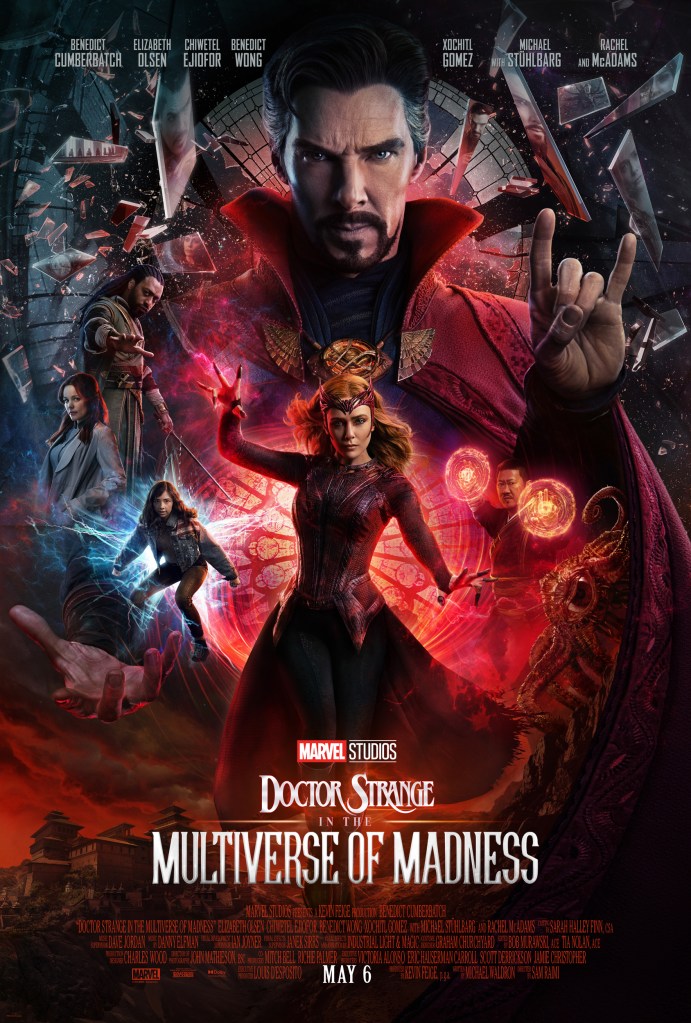
Doctor Strange in the Multiverse of Madness (2022)

Doctor Strange in the Multiverse of Madness (2022)

Marvel opens up its infinite universes as it lays the groundwork for bringing back old characters with new faces in this corporate outing

Director: Sam Raimi

Cast: Benedict Cumberbatch (Dr Stephen Strange), Elizabeth Olsen (Wanda Maximoff/Scarlet Witch), Rachel McAdams (Dr Christine Palmer), Chiwetel Ejiofor (Karl Mordo), Benedict Wong (Wong), Xochitl Gomez (America Chavez), Michael Stuhlbarg (Dr Nicodemus West)

Spoilers: The main spoiler would be looking at the cast list. I won’t name the cameos are but I do mention a main plot development revealed within 15 minutes.

Parallel universes have infinite possibilities. These are largely not found in this lumpen, fan-service obsessed and (whisper it) slightly dull film that fails to follow-up on either the promise of the first film (to which it makes awkward call-backs) or its main concept. It allows Raimi scope to indulge his Evil Dead style visuals, but all within the confines of producing another entry in the series that feels like a bridge between chapters rather than an interesting story in its own right.

Dr Strange (Benedict Cumberbatch) attends the wedding of former girlfriend Christine Palmer (Rachel McAdams), when he’s torn away to fight a squid monster chasing a teenager, America Chavez (Xochitl Gomez). America has the power to travel between parallel universes – and is dragging behind her the dead body of a parallel Strange who failed to protect her from a mysterious foe trying to steal her power. Strange, Wong (Benedict Wong – the most engaging performance in the film from this under-rated actor) and the Sorcerers protect America – but Strange’s attempt to recruit Wanda Maximoff (Elizabeth Olsen) goes awry when it turns out its she hunting America, using dark magic in an attempt to find her parallel versions of her lost children.

DSITMOM has been called the MCU’s horror film: which by no means makes it The Exorcist. It’s a sort of very, very gentle entrée to the genre – like Cronenberg’s Videodrome was turned into a kid’s TV series or a comic-book version of Raimi’s The Evil Dead. It has a few flourishes, but none of this is allowed to get in the way of the corporate enterprise. It’s more interested in giving people what it feels they want and fitting itself into the timeline of a series.

In fact it sometimes feels like an attempt to mirror the success of Spider-Man: No Way Home (I wonder how many of the cameos were added after that film’s release?). It takes the elements of guest stars and parallel universes and presents them in ways that provide little insight or long-term reward. In No Way Home alternate versions of characters are used to explore how different events could have shaped our heroes. The returning stars aren’t just thrown in, they have arcs and emotional journeys. The whole is both fun and an engaging story but also nostalgic. Compare, as well, the TV series Loki (by the same writer) that brilliantly used parallel versions of its lead to deconstruct and develop his character.

DSITMOM does none of this. There are rich opportunities to see how Strange may have developed in different universes: after all this is the closest thing to an “ends justify the means” character in the MCU. Would different versions of him go more or less further – and how might it make our Strange reflect on his occasionally ruthless ‘big picture’ thinking (this is after all, as the film mentions, the guy who allowed half of all life to blink out of existence as part of a masterplan only he knew). We don’t get nearly enough of that. In fact, we get virtually none of it.

These opportunities are ignored in the two parallel universes we spend the most time in, where Strange is either a dead war hero or an insane hermit corrupted by dark magic. Neither of these characters is really contrasted effectively or interestingly with our version. A faint plotline of Strange learning trust from the mistakes of others is threaded through, but only lightly. Instead, the film focuses more attention on Strange’s lost love for Christine Palmer, an oddly unsatisfying focus since Strange has appeared in at least four films since his first solo effort six years ago, and the franchise has failed to mention this motivating loss once (not even a throwaway line in No Way Home to build it up).

Mind you it’s better than the development Wanda Maximoff gets. DSITMOM is pretty much impenetrable unless you’ve watched WandaVision. Even if you have, as I have, you’ll probably be a little annoyed at the ‘development’ she gets here. At the end of that series, Wanda had accepted the damaging consequences of her grief and started moving on. Here though, she’s a sociopathic monster defined solely by her motherly grief and her ruthless determination to tear universes apart to heal it. It feels retrograde to, essentially, be saying “women who suffer loss go axe-crazy” or to double down on her willingness to harm others to cling to a ‘normal life’ fantasy (as well as contrary to the hopeful tone the series ended on).

That’s not to mention the clumsy fan service peppering the film. The main outing to a parallel universe is basically an excuse for fan-pleasing cameos. These amount to nothing more than a series of actors popping up say “Hello I’m Y” and promptly suffering terrible fates (because it’s a parallel universe and your plot armour means nothing there). Like Yoda fighting Christopher Lee, it’s cool when you first see it but risks becoming less and less rewarding overtime because it’s utterly insubstantial.

DSITMOM is basically insubstantial. It drags on – it’s a chase film that largely lacks momentum – it has a series of slightly bored looking actors (Ejiofor wins, with a Mordo who seems to have become Strange’s nemesis in the interim between this and the first film despite never being mentioned in any other film since), gets absorbed in a MacGuffin filled plot (there are no less than two Magic Books of Wham-a-bam that are being hunted or fought over) and flattens down most of Raimi’s style into a corporate product with little heart (compare this to his Spider-Man films which look like Citizen Kane or Vertigo next to this).

There are about two moments of invention: a sequence when Strange plummets through a series of bizarre parallel universes (including one where he’s made of paint) and a battle between two Stranges that utilises musical notes as weapons. Everything else feels production flattened, as do the actors, and ends teeing you up for a third film with another “whoop” cameo. Flat, lumpen and failing to capitalise on its possibilities, this is a big disappointment, an empty lightshow with brief but shallow pleasures.

Spider-Man: No Way Home (2021)

Spider-Man: No Way Home (2021)

Tom Holland’s Spider-Man encounters friends and enemies from another franchise or two

Director: Jon Watts

Cast: Tom Holland (Peter Parker/Spider-Man), Zendaya (MJ), Benedict Cumberbatch (Dr Stephen Strange), Jacob Batalon (Ned Leeds), Marisa Tomei (May Parker), Jon Favreau (“Happy” Hogan), Jamie Foxx (Max Dillon/Electro), Willem Dafoe (Norman Osborn/Green Goblin), Alfred Molina (Otto Octavius/Doctor Octopus), Benedict Wong (Wong), Tony Revolori (“Flash” Thompson), Andrew Garfield (Peter Parker/Spider-Man), Tobey Maguire (Peter Parker/Spider-Man), Rhys Ifans (Dr Curt Connors/Lizard), Thomas Haden Church (Flint Marko/Sandman), JK Simmons (J Jonah Jameson)

It’s been out long enough now – and Marvel are even advertising the Guest Stars – so I guess we can worry slightly less about spoiling this massive crossover event. Spider-Man: No Way Home became one of the biggest hits of all time. It’s not hard to see why, in our nostalgia-loving times. But its not just about nostalgia – lovely as it is to see all those old characters once again. It’s also a hugely entertaining, rather sweet film, crammed with slick lines and jokes, while also, like the best of Marvel’s films, having a heart. We’ve got a hero here so humanitarian he goes to huge risks to try and save the villains. That’s refreshingly human.

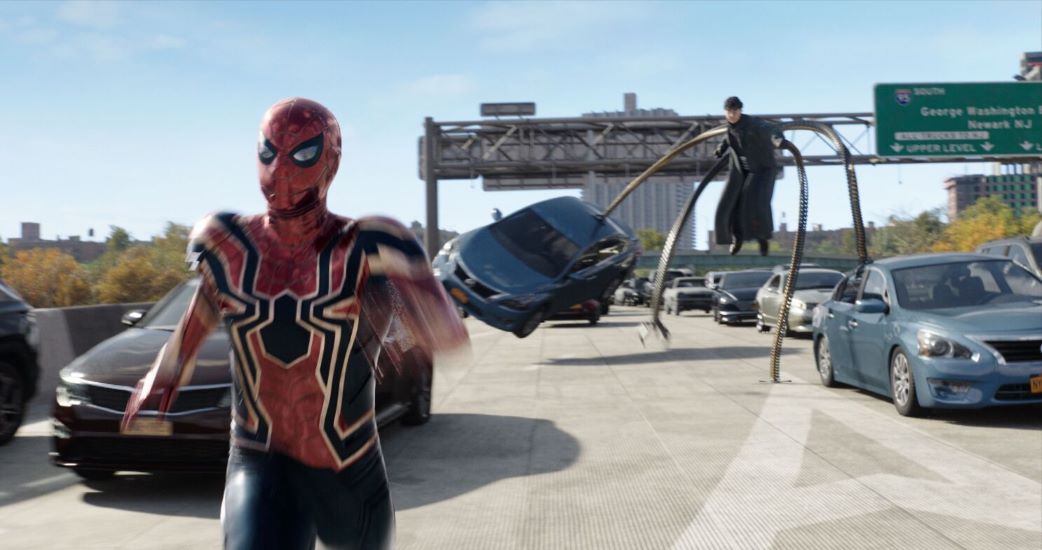
Picking up after the conclusion of Spider-Man: Far From Home, Peter Parker’s (Tom Holland) secret-identity is known. Parker finds himself at the centre of a massive, world-wide scandal, which ends the college chances of him and his friends MJ (Zendaya) and Ned (Jacob Batalon). Peter asks Dr Strange (Benedict Cumberbatch) for help: namely can the world forget who he is? When the spell goes wrong, people who know Parker’s identity from other realities start appearing. And these guys aren’t happy, with villains like Dr Otto Octavius (Alfred Molina), Electro (Jamie Foxx) and psychopath Green Goblin (Willem Dafoe) arriving. But, when Peter discovers sending them back will condemn them to die in the battle against their Spider-man, he decides to do everything he can to try and save them.

No Way Home’s success partly lies on the nostalgia factor, especially for those of us who loved the early Maguire films. And you can sign me up to that: I can’t believe it’s been 20 years since the first one came out! No Way Home throws in characters from all five pre-Holland films and zeros in on the best of the bunch. The films has a lot of fun shuffling and realigning these characters in interesting new combinations, often allowing them to moan about things like origin stories (there is a very funny exchange between Electro and Sandman on the danger of falling into experiments) or just to get on each other’s nerves (Molina’s Doc Ock is spectacularly grumpy).

You pretty much have to have a heart of stone not to enjoy seeing most of these characters again – particularly as they are played with such lip-smacking aplomb. Above all, Dafoe relishes the chance to cement his place as one of the great villains, switching perfectly between gentle and psychotic as the schizophrenic Norman Osborn/Green Goblin (and becoming the nemesis of no-less than two Spider-men). Molina is equally good: pomposity and rage turning into avuncular decency. These two landmark villains from the two best films take most of the limelight, with a smaller share for Jamie Foxx (far more comfortable here than he was in Amazing Spider-Man 2). But every villain is given moments of tragic depth and seeing them react to news of their deaths is strangely moving.

It sets the table rather nicely for a film about redemption. Peter believes he can save these villains from death if he can cure them and restore their humanity. While the pragmatic Strange sees this as pointless, Peter can’t turn his back on a chance to save people. On top of this, No Way Home also serves as a meta-redemption arc for the two previous franchises: Maguire gets a third film worthy of the first two and Garfield is given the sort of rich material he was denied in his failed series.

Which brings us nicely to the biggest returns. Denied by both actors for the best part of a year, this film throws not one, not two but three Spider-men at us, with Maguire and Garfield reprising their incarnations. All three delight in sparking off each other, riffing on everything from web-slingers to making normal life work (“Peter time”) alongside Spider-manning. Maguire settles nicely into the Big-Brother role, giving a worldly experience to the others without losing his gentle idealism. Garfield is sensational – lighter, funnier and warmer than he was in his own films, with a hidden grief that plays out with genuine impact.

Who couldn’t get excited about seeing these three together – or to see the film make these scenes work as well as it does? It shuffles and reassembles things we are familiar with, but presents them in new and intriguing combinations and above all feels true to the characterisations established in previous films. Maguire, Molina and Dafoe in particular feel like they’ve not been away since their own films, while Garfield and Foxx deepen and improve their characters. But it became a mega-hit because it has a truly strong story behind it.

A story staffed by strong, relatable characters. There is a genuine sense of alarm around how Peter and his friends in the film’s opening act are hounded and persecuted by a population scared of them. Even here redemption is key, with Peter going to dangerous lengths to try and get his friends a second chance at getting into MIT. These three characters have a sweet, warm friendship and the chemistry, in particular between Holland (who is sensational, endearing, funny but bringing the role great emotional depth) and Zendaya is stronger than it’s ever been.

And that’s before we hit the film’s genuinely endearing message. Holland’s still-optimistic hero (another excellent contrast with his more damaged alter-egos) is motivated by saving people. And that includes the villains. Maybe it’s the years of Covid, but there is something hugely lovable about a hero who wants to give people a second chance. It’s a living demonstration of “with great power comes great responsibility” (words this film introduces into the Marvel universe with powerful effect, in a mid-film climax). In fact the film is, in some ways, the origin-story Holland’s Spider-Man never had: it gives him a foundational tragedy, leaves him in an isolated position, strips him of his Iron Man style tech and leaves him in a set-up (alone in a cheap apartment, struggling to make ends meet and superheroing on the side) familiar from the comics.

Watts directs the film with real confidence and zest, especially outside the action set-pieces: there is frequent use of ingenious-but-not-flashy single takes and the film’s patient momentum for much of its first half, focusing on character and emotion, really pay off in the second half of fan-service and fights. The camera effects used for Peter’s web-slinging and his spider-sense have a delightful quirky invention. What he really does well though is zero in on the emotion and when events get tragic, he isn’t afraid to commit to that. It gives the film an emotional force that really connected with people.

That heart is what sustains it. It’s a joyful nostalgia trip – that redeems elements of the previous films – but this is a film that really cares about its characters – all of them – and wants you to as well. That gives difficult, emotional struggles to all its Spider-Men, that searches of the humanity in its villains, even the worst of them, making us sympathise with them even as they do dreadful things. Combined with the action and adventure – and the electric pace of the best of Marvel – No Way Home rightly stands as one of the best entries so far.

Eternal Sunshine of the Spotless Mind (2004)

Eternal Sunshine of the Spotless Mind (2004)

An impulsive decision leads to a wild tour through mind and memory in this mind-bending, desperately romantic classic

Director: Michel Gondry

Cast: Jim Carrey (Joel Barish), Kate Winslet (Clementine Kruczynski), Kirsten Dunst (Mary Svevo), Mark Ruffalo (Stan Fink), Elijah Wood (Patrick Wertz), Tom Wilkinson (Dr Howard Mierzwiak), Jane Adams (Carrie Eakin), David Cross (Rob Eakin), Dierdre O’Connell (Hollis Mierzwiak)

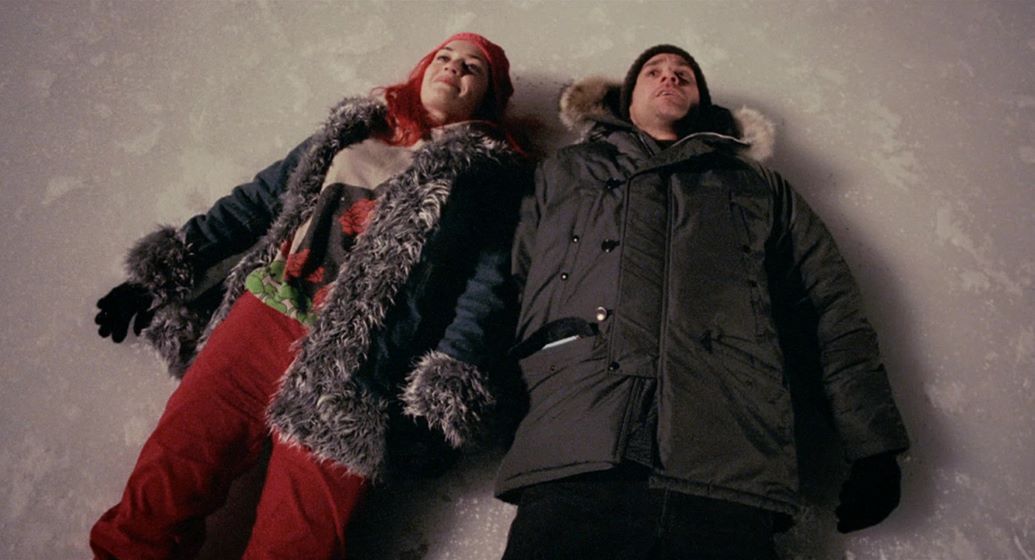
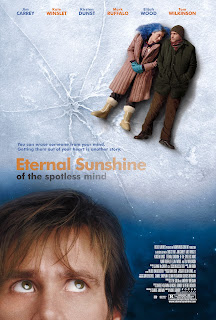
What makes us who we are? If it’s anything, it might just be the sum total of our experiences. The events of our lives, and the emotions they cause in us, shape and define us. If we cut some of them away, what would we be? Is losing painful memories worth it, if we also cut away memories we cling to as treasured possessions? What makes us love someone: instinct or the sum total of our memories with them? Ideas around this and how love works are at the centre of Michel Gondry and Charlie Kaufman’s extraordinarily inventive, imaginative but also romantic and heartfelt Eternal Sunshine of the Spotless Mind, a truly original film crammed with rewarding moments.

Joel Barish (Jim Carrey) wants to make-up with his electric but troubled girlfriend Clementine Kruczynski (Kate Winslet). Imagine his pain when he goes to see her and she seems not to recognise him – and how much worse that might be when he discovers Clementine has erased him from her memory. An experimental surgery, Lacuna, run by Dr Howard Mierzwiak (Tom Wilkinson), offers its clients an unmatchable service: they will erase a person from your memory. Struggling to get over the loss of a partner, wife, friend, child or even dog? No problem, they’ll be gone from your mind and you never need worry about their memory causing you pain again.

Hurt and angry, Joel decides to undergo the same surgery to forget Clementine. While the procedure takes place over night – supervised by techs Stan (Mark Ruffalo) and Patrick (Elijah Wood) and Stan’s girlfriend (and Dr Mierzwiak hero-worshipper) Mary (Kirsten Dunst) – Joel comes to realise in his sub-conscious that he doesn’t want his memory stripped of Clementine. The cost of losing so many good memories isn’t worth it. In his sub conscious he tries to protect his memories – while in the real world the team battle to complete their contract and erase them.

Not many films like that are there? Gondry’s film could have been a slave to its concept. Instead though, it manages to juggle its deeper meanings with a truly heartfelt, winning and very sweet human story about two people who, for all their faults, become people you completely invest in. Kaufman’s script, as you would expect, triumphs as a complex and inventive magic tour but it’s also a wonderfully placed romance and heartfelt relationship story. Effectively the film manages to have something for everyone to invest in, from sci-fi nerds to lovers of romcoms to philosophy students.

It’s also a triumph of style. Set largely in Joel’s mind, the film reflects the fractured nature of the surgery as his memories are assaulted, deconstructed and destroyed. Lights fade, buildings disassemble and disappear, faces melt away from bodies and memories start to crash into each other. In his mind Joel walks through a door in a library to find himself on a beach, or rounds a corner to find himself back in his childhood memories. All of this is filmed with a series of stunning in-camera effects that make characters disappear, duplicate or seem to be in several places at once, all shot in a series of one-take effects that sees buildings disappear in front of us or fascinating memory loops. Visually the film is a feast, a tribute to Gondry’s playful imagination.

But it sticks with people because of the heart at the centre of it. Joel and Clementine become people we care about. We root for Joel to defy the odds and preserve some of his memory. Because, the film makes clear, being consciously aware of his memories being deleted is basically like going through the pain of losing her a second time – only this time knowing you won’t even be left with the parts you want to hold onto. In fact – re-enforced by the distress we see in Clementine when we see her undergoing the panic of being subconsciously aware of memory loss in the real world – Joel’s horror of what he has asked for is likely what all the other patients of Lacuna’s ‘brain damage for your own good’ surgery have gone through.

Superbly played by Jim Carrey and Kate Winslet in cast-well-against-type performances, Joel and Clementine might at times be selfish, frustrating, even irritating people – but it’s clear their love for each other is real. Jim Carrey, dialling down his gonzo mania to an unprecedented degree, is perfect as the shy and gentle Joel, bewitched by this explosive presence in his life. Winslet is electric – cranky, brittle, damaged but also caring and playful. Kaufman’s film shows they hurt and snap at each other, but also that they bring each other happiness they can’t get anywhere else.

So, it comes back to that question: do we accept that part of the price of loving and living is pain? That the people who we love the most, are the ones that may also hurt us the most. The film is also clear that love can’t be forced or replicated. In the ‘real world’ Clementine is being wooed by Elijah Wood’s creepily needy techie, using his records of her romantic memories of Joel to replicate their special moments. The falseness of this isn’t a remote match for the true emotion of the real event: and it’s a testament to the film’s commitment that you can’t forge or force love, and that eventually it might just find a way.

Because, even without our memories, will we still be drawn towards the same people? Can love in fact survive, even if you don’t know who the person who love is anymore? It’s another fascinating thread in this film. Romantic couples throughout find themselves drawn to each other continually, a subconscious emotion surviving the purging of actual memories. It adds even more to the horrific trauma of seeing what’s happening to Joel here. His obvious distress as he realises the implications of what he rashly asked for – and there is plenty of suggestion Clementine feels the same – gets worse and worse as he realises he has signed away his own rights to decide who he loves.

Those ethical questions – is it even possible to make an informed decision here about lobotomizing your memory – mix with those philosophical questions of what makes us what we are. Will Joel and Clementine be the same people or not after this operation? How will they adjust to losing such a hugely important part of their histories? Especially as they won’t even know that they have. Kaufman’s script explores this all carefully, but never once losing track of the emotional story driving it.

So Eternal Sunshine becomes a touching love story, about two people going to huge ends against impossible odds to stay together. That, I think, is what lies behind its appeal. What makes it one of the most lasting films of the 00s is the invention and flair the story is told with – Gondry’s direction and its non-linear structure all only add to the fabulous script from Kaufman and Gondry – and the way it very lightly tackles a whole host of fascinating ideas while never losing track of its nature as an entertainment. It’s a brilliant film.

The Matrix: Resurrections (2021)

The Matrix: Resurrections (2021)

We saddle up one more time for this belated sequel, which does enough to be the second-best film in the franchise

Director: Lana Wachowski

Cast: Keanu Reeves (Thomas Anderson/Neo), Carrie-Anne Moss (Tiffany/Trinity), Yahya Abdul-Mateen II (Morpheus/Agent Smith), Jessica Henwick (Bugs), Jonathan Groff (Smith), Neil Patrick Harris (The Analyst), Priyanka Chopra Jones (Sati), Jada Pinkett Smith (Niobe), Toby Onwumere (Sequoia), Max Riemelt (Sheperd), Brain J Smith (Berg), Erendia Ibarra (Lexy), Lambert Wilson (The Merovingian), Christina Ricci (Gwyn de Vere)

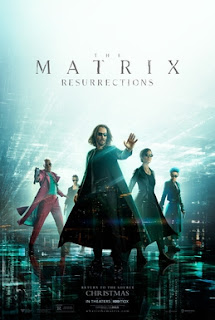
Thomas Anderson (Keanu Reeves) is the most famous games designer in the world. His award-winning game The Matrix revolutionised the genre, but now he needs to make a sequel. But Anderson is juggling all sorts of depression, chugging blue pills like there’s no tomorrow in order to keep back disturbing feelings and sensations that there is more to that Matrixconcept than he remembers. Was it in fact closer to reality? Why is he so drawn to Tiffany (Carrie-Anne Moss) the woman he sees in his coffee shop? Why is he unsettled by his business partner Smith (Jonathan Groff)? Should he follow the White Rabbit?

Bringing The Matrix back is a tough ask. It’s been well over twenty years since the first film revolutionised action and sci-fi – and then the two sequels managed to progressively strip out any of the fun, romance and wonder from the original. Now Resurrections attempts to put it all back in again. It’s a noble attempt – and this is easily the second-best Matrix film – but there is still an air of obligation about the whole thing.

It’s hard to escape that feeling from the on-the-nose opening act, which literally includes dialogue from Smith to Anderson to the tune of: ‘Our parent company, Warner Brothers, say they want a sequel to The Matrix and they’re going to do it with or without us, so we might as well come up with an idea’. Partially set in a new Matrix where the events of The Matrix form the basis of an award-winning game everyone knows by heart, characters constantly riff excitedly on how some events in this film parallel those in the first film (always the first film). There is a spit-ball planning session at Anderson’s workplace, where his design team bounce phrases like “Guns. Lots of Guns” at each other or playfully mime out bullet time. I suppose this relates to Wachowski’s experience of having the Studio for years demand a fresh new Matrix film. But it is a little on-the-nose.

The self-reverential nature of the film continues throughout. From an opening that sees Hacker Bugs (a very good Jessica Henwick) watch a simulation of the opening of the first Matrix film – with a few changes – a mixture of homage and nostalgia runs through the film. As an alliance of humans, machines and programmes try to free Anderson/Neo from his new Matrix cage, they ease him in by playing (on huge projector screens) iconic scenes from The Matrix. Anderson’s flashes of memory, as things start to fall in place, are full of flashbacks to the earlier films. When Neo arrives in the real world, he finds himself in a dystopian future where he is a celebrity, and the events of his life are as much a part of this world’s folklore, as memories of the plot of the original trilogy is in the minds of my generation watching the film.

It’s quite a tribute that the film manages to keep all this self-reverential stuff balanced and neither becoming too annoying or collapsing in on itself. It does so because Wachowski manages to keep it playful. She’s clearly learned from the legacy of the two Matrix sequels, that puffed themselves up so much they burst. This features some discussions around truth, reality and choice but keeps them low-key and free of sequel’s aura of pomposity. It wisely (and plot logically) depowers Neo so that he is no longer completely invulnerable. It again makes him an outsider, fighting against a dominant system that seems to hold all the cards. And it puts at its heart a battle of two people to be together.

It’s also lovely to see Reeves and Moss back in these roles, which they fit back into with a charming ease and comfort – and also to see that their chemistry still exists. The plot of the film is at times garbled and even poorly communicated – it is very hard at times to understand why things are happening or what the rules are in this new Matrix (and its particularly hard to understand the plot around Smith, and how, if at all, he is restrained within this Matrix). But what you do understand is the emotional imperative that lies behind these characters actions – in a way that was often lost in the two original sequels.

The film also manages to keep more than its share of inventive action set-pieces. While its ending – a motorbike chase through a city where the whole population is turned against our heroes – feels very reminiscent of other things we’ve seen, earlier set-pieces use a lot more invention. In particular there is a very neat innovation of doors that jump thousands of miles – and see the characters move from one orientation to another as they pass through them. A chase through these allows for some dynamic movements and more than enough of the gravity defying bouncing and gunplay the franchise is famous for. New actors do very good jobs, in particular Henwick and Yahya Abdul-Mateen II as a new version of Morpheus and Jonathan Groff as a twist on Smith.

But Resurrections feels like a dutiful film and it’s laced with the odd clunky scene (none more so than a reappearance of Lambert Wilson, ranting direct to the audience about social media) and the odd gap in logic and plot definition. Its main problem is that it never feels essential. To bring the franchise back after all this time, into a world where its cultural cache has declined, you feel it needed to do something really special or redefining. It doesn’t really do this: it seems more interested in riffing on the past rather than building a future. It’s a reassuring film that hews closely to the plot and structure of the original film (deliberately so, with the characters even refencing similarities) that isn’t going to scare or annoy the fans – but also (and the film’s box office failure supports this) also not going to win over new converts. But it’s still the second-best film.

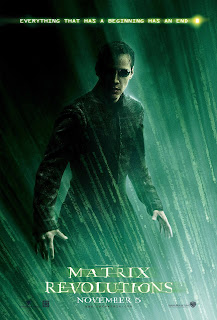
The Matrix Reloaded and The Matrix Revolutions (2003)

The Matrix Reloaded and The Matrix Revolutions (2003)

Tension, drama and thrills… all go missing in these increasingly ponderous self-important sequels

Director: The Wachowskis

Cast: Keanu Reeves (Neo), Laurence Fishburne (Morpheus), Carrie-Anne Moss (Trinity), Hugo Weaving (Agent Smith), Jada Pinkett Smith (Niobe), Monica Bellucci (Persephone), Lambert Wilson (The Merovingian), Gloria Foster/Mary Alice (The Oracle), Helmut Bakaitis (The Architect), Harold Perrineau (Link), Ian Bliss (Bane), Harry Lennix (Commander Lock), Collin Chou (Seraph), Nona Gaye (Zee), Gina Torres (Cas), Randul Duk Kim (The Keymaker), Daniel Bernhardt (Agent Johnson)

If you ever want to study a crash-course in how not to make sequels to a genre redefining film, these might be the perfect examples. I’m going to break a golden rule here and review them both together, which I’ve not done for anything else so far in this blog. The flaws in these films are so interlinked, I think you have to almost treat the whole misfire as one single, dreadfully disappointing film. And I just couldn’t bear the idea about writing two articles about each of them.

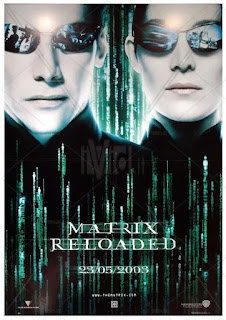
It’s six months after the events of The Matrix. Neo (Keanu Reeves) is an invulnerable phenomenon in the Matrix. He and Trinity (Carrie-Anne Moss) are in love. Morpheus (Laurence Fishburne) is being dragged over the coals by Starfleet Command (I know it isn’t called that, but it might as well be) for disobeying orders. And even worse news than that: the Machines have found the location of Zion, the secret last human city in the world. And they plan to destroy it – in 72 hours. Neo must undertake one final mission in the Matrix to find the secrets that will prevent this destruction of the human race – and he’ll have to do it with only the support of his friends, as the rest of mankind decides to batten down the hatches and wait for the uncoming storm. But is there more going on here than we think? Is there more to Neo’s existence than meets the eye? Why is he being plagued with dreams of Trinity’s death? And what is going on with Smith (Hugo Weaving) who know seems to be acting as rogue agent, working against man and machine?

The answers are all eventually revealed, with maximum pomposity and self-importance, over the nearly five hours these sequels drone on, seemingly determined to drain out everything that anyone found cool about the original movie and leave it with a stuffy, pretentious, dull shell that won’t win any new converts over. Before these films, The Matrix was a franchise that would have a life in films, video games, anime and fan fiction for decades to come. After them, it was dead in the water.

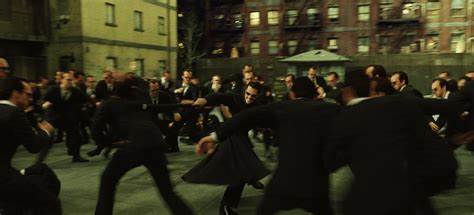
Why? What did people like about the first film? They liked the action sure, and they liked the cool action and visuals and the anti-authoritarian nose thumbing. But those all really worked because we related to the characters, we saw that they were vulnerable, outmatched and in peril. In the real world they were plucky, brave resistance fighters. In the Matrix they were desperate rebels who could do really cool things. This all gets blown away here. In the Matrix, Neo is now so invulnerable, that fights are pointless: they are little more than dull displays of choreography with inevitable outcomes. Reloaded hammers home time and again Neo can do anything he likes in the Matrix. Fighting hundreds of clones of Smith at once? No problem. Flying faster than the speed of sound? Sure thing. Reworking the reality to suit him? It’s just a shrug of the shoulders.

This is a disaster to drama in two ways. Firstly, it drains all the peril out of any moment in the Matrix world because we know that there is no way Neo can get hurt – or that he will allow any of his friends to get hurt. Secondly, it means to get any tension Neo has to be somehow depowered or separated from everyone else. This happens three times over the films: Neo gets dispatched to China, flung into an underground station purgatory and blinded in the real world. When the film becomes reliant on continuously finding a way to put its hero out of the way (a blight that also often hits Superman on film), you know you are in trouble.

Where Neo is still vulnerable, is the real world where the films spend more and more time. Sadly, the real world is a tedious, uninvolving place. Remember in the first film where Morpheus seemed like a super cool, sage-like leader of a rebellion? Well in fact he’s just a cog in a large, stuffy command structure that takes all the worst, most uncool elements of Star Trek’s Starfleet and doubles down on it. Zion is a stereotypical sci-fi city, with characters dressed in flowing robes, quasi-uniforms or urban rags (that’s when they are dressed at all – Reloaded’s early doors rave/orgy rightly draw oceans of sniggers). The real human world isn’t a gang of plucky, anti-authoritarian types but a typical sci-fi, rules-bound society. The flair of our characters is stripped from them.

All this is wrapped in a package that doubles down on the stuffy, Bluffer’s Guide to Philosophy that popped up in the first film. There it added a bit of self-regarding intellectual heft to a film about people kicking each other and dodging bullets, here it’s the be-all-and-end-all. But the films are nowhere near as clever as they think they are: various characters parrot crudely scripted stances on everything from free will to determinism to the greater good. None of it is new or intriguing, and nearly all of it feels like the directors straining to show off their reading list.

It hits its apotheosis in Reloaded as the Architect (Helmut Bakaitis), the bearded brain behind the Matrix, lays out in a long speech how Neo is in fact a part of the Matrix programme designed to help the system reboot and refresh in cycles, an interesting idea totally crushed under the weight of needlessly long, incomprehensible words, phrases and Latin quotes that don’t sound smart, only like the speech was written out in plain English and then run through a thesaurus.

And it was a neat idea that our Messiah might actually have been created by the machines to help their prison renew itself. But it gets lost in the clumsy, pleased with itself delivery, in conversations about choice and free will (will Neo choose his destiny or saving Trinity’s life? Guess!) and the generally turgid plotting. This gets worse in Revolutions which finally seeps the life out of the franchise, with a video-game shoot-out at Zion (which makes no tactical sense), a trek by Neo and Trinity to commune with the machines and Agent Smith converting every human being in the Matrix into a copy of himself, in a vague philosophical comment on the death of individuality.

The worst thing about these films is that they are self-important, hard to enjoy and often more than a little silly. Fights take place at great length with very little tension. Reloaded does have a fab freeway car chase – but again it depends on Neo being absent for any tension to exist (and as soon as he turns up it’s all solved in seconds). Almost everything in the real world is stuffy, earnest and bogged down in the sort of uncool sci-fi tropes the first film stayed away from. Nearly anything in the Matrix involves watching a God like figure hitting things (including a bizarre ten-pin bowling effect when Neo knocks over a host of Smiths).

The actors struggle to keep up the genre-redefining cool that made the first film so popular. Fishburne looks bored (and rightly so, since his dialogue is awful and he’s given almost nothing to do in Revolutions) and Weaving treats the whole thing as a joke. Reeves is earnest, but frequently restrained by the dullness of his role as an almighty God. Moss has most of the best material as Trinity makes drastic decisions for love and faith. The rest of the cast struggle with either paper-thin characters, painfully over-written dialogue or a mixture of both.

The Matrix sequels managed to drain out everything that was great about the original. Where that was nimble, these were stuffy. Where these were anti-authoritarian, these laid out a dull and stereotypical sci-fi society. Where the first was gripping, desperate and adrenalin fuelled, this sees invulnerable heroes, extended runtimes and a frequent lack of peril. Worst of all Revolutions in particular feels like hundreds of other “sci-fi war films” and about a million miles from the actual revolution of the first film. It doubles down on nearly everything that was less good in the original and strips out the things that most impacted people. How not to make a sequel.

The Father (2020)

Olivia Colman and Anthony Hopkins excel in Florian Zeller’s sublime The Father

Director: Florian Zeller

Cast: Anthony Hopkins (Anthony), Olivia Colman (Anne), Rufus Sewell (Paul), Imogen Poots (Laura), Olivia Williams (The Woman), Mark Gatiss (The Man)

Is there any worse nightmare than the thought of losing your mind? Worse of all, to lose your mind in stages: to be aware, in every moment, that things are not as they should be, that people and places no longer seem to fit your memory of them. That you can walk into a room and completely forget why or meet someone close to you and have no a clue who they are. It’s an unimaginable condition to go through – and the subject of Florian Zeller’s exceptional adaptation of his award-winning play, The Father.

Anthony (Anthony Hopkins) is a retired engineer slowly succumbing to dementia. Events are increasingly confusing to him. Is he living in his own flat, or is he living with his daughter Anne (Olivia Colman)? Is Anne moving to France or not? Is she married to Paul (Rufus Sewell) or not? Where is his other daughter who looks so like a woman who may-or-may-not be his new carer, Laura (Imogen Poots)? From moment-to-moment Anthony struggles with confusion, rage and fear as the world constantly fails to coalesce into a meaningful picture, but instead remains a fragmented jumble.

That’s the brilliance behind Zeller’s adaptation of his own award-winning play. It captures the perspective of the world for those suffering from dementia in a way no film has done before. The play’s timeline is disjointed in an almost Nolan-esque way, and it’s not clear whether we are watching ‘real’ events’ or if all of these events are memories of Anthony’s which dementia has shuffled, reordered and recast. Either way, the film constantly refuses to allow you any grounding from scene-to-scene, and refuses to present clear answers (although you can infer much).

Even the sets betray us. From to scene to scene the apartment is redressed, sometimes in subtle ways, sometimes in jarringly different ways. The same fundamental layout sees every room constantly redesigned. Sometimes it could be Anthony’s apartment. Sometimes Anne’s apartment. Sometimes a mix of the two. Sometimes it’s a hospital, in others a retirement home. Often it might be a combination of one or more of these locations all at once. The style of decoration is inconsistent, the furniture changes, pictures move, even the colours of bedsheets change. Every single scene disorientates us: it’s only a movie for us, but for Anthony this is his life.

In fact, if The Father has a filmic influence, interestingly it’s a horror-film. Anthony is a man trapped in a situation where he knows everything is wrong, but can never fully understand why, or get people to listen to him. Often the camera catches discomfort and fear on Hopkins’ face, and it’s clear he neither knows where he is or, in many cases, who the people with him are. But for fear of not being believed or a sense of powerlessness, he’s too proud and scared to ask. It taps into the powerlessness of horror films, where you are relentlessly chased by a force outside your control: in The Father that force is life, which has become for Anthony a disturbing kaleidoscope where everything makes sense to everyone except him.

Of course, a large part of this is sold by Anthony Hopkins Oscar-winning lead performance. Hopkins delivers to an astonishing degree: this might just be the greatest performance of his career. Although we see flashes of ‘the true Anthony’ – his wit, playfulness and intelligence – Hopkins deftly and subtly demonstrates the wildly varying mood swings dementia brings. At times he’s paranoid, defensive and even aggressive. At others he’s stunningly vulnerable and scared – he has two breakdown scenes of such heart-breaking vulnerability and boyish fear, they are tough to watch.

The film opens with Anne telling Anthony she’ll be leaving for Paris, and Hopkins’ face collapses into a crumpled, puffy, scared-little-boy face while he plaintively asks what will happen to him. Anthony fixates on things that give him any sense of control: he is obsessed with his watch, hiding it and continuously searching for it. He will dredge up a fact from the distant past to ‘prove’ he has not lost his memory. He snaps angrily when he feels he is being talked down to. His resentment expresses itself in viciously cruel verbal assaults on Anne, labelling her a disappointment, failure and his least favourite child. Then a few scenes later he’ll squeeze her shoulder and quietly and lovingly thank her for everything she has done for him. All of this is delivered by Hopkins with no grand-standing, but with a hugely affecting truthfulness. It’s an astonishingly good performance.

Every scene carefully demonstrates time and again Anthony’s fear and vulnerability. Actors are even replaced by other actors in several scenes. In Anne’s second appearance she is played by Olivia Williams. In a beautiful piece of subtle acting by both Hopkins and Williams, it’s clear Anthony doesn’t recognise Anne and she realises this but decides not to say anything. Anne’s husband (or boyfriend – Anthony remains unclear, so at times so do we) Paul (as he’s called most of the time) is mostly played by Rufus Sewell, but sometimes by Mark Gatiss. Paul is the closest the film has to an antagonist, although much of that is filtered through Anthony’s confused perception and, in any case, Paul is right that Anthony’s condition is making it too difficult for him to remain at home.

And we can see his point. Although each scene more-or-less makes sense within itself, the complete film is like looking at a jigsaw puzzle with all the pieces upside down and no picture, and then being asked to assemble it. In one particularly brilliant dinner scene, the film starts with Anthony witnessing a conversation between Paul and Anne, then loops through the scene and ends with Anthony witnessing exactly the same conversation again. The film is a deliberately, brilliantly, opaque tableau that defies easy meaning.

In all, The Father is a quite unique and brilliant film, that translates a theatrical piece into something highly cinematic. Hopkins is breath-taking, but Colman is also superb as Anne, in a part tailor-made for her ready empathy and easy emotionalism. Zeller’s direction is astonishingly confident and dynamic for a first-timer and the film slots you into the world of a dementia sufferer with an alarming immediacy. A superb film.

The Matrix (1999)

Keanu Reeves and Hugo Weaving defy gravity in ground-breaking sci-fi The Matrix

Director: The Wachowskis

Cast: Keanu Reeves (Neo), Laurence Fishbourne (Morpheus), Carrie-Anne Moss (Trinity), Hugo Weaving (Agent Smith), Joe Pantoliano (Cypher), Marcus Chong (Tank), Anthony Ray Parker (Dozer), Julian Arahanga (Apoc), Matt Doran (Mouse), Gloria Foster (The Oracle), Belinda McClory (Switch)

In 1999 we all waited for the release of a science-fiction film that would change the genre forever. Problem is we all thought it would be Star Wars: The Phantom Menace, when in fact the entire world went crazy for The Matrix. It helped that The Matrix was everything The Phantom Menace wasn’t: tight, exciting, brilliantly made and above-all endlessly, effortlessly and completely cool. And it still is: not even its dreadful, dreadful sequels could dent its genius or legacy. The Matrixis a flash of counter-culture: anarchic, teenage fantasy taking over the main-stream. It’s still brilliant.

Thomas Anderson (Keanu Reeves) is an office-working drone by day, hacker Neo by night, who wishes there was more to life than this. He’s going to get more than he wished for when he’s offered a choice between the “Red Pill and the Blue Pill” (truth or fantasy) by Morpheus (Laurence Fishbourne), leader of a mysterious hacker group with super-human athleticism and strength. Choosing the Red Pill, Neo wakes up to find himself plugged into a massive machine – and that the world he knows is nothing more than a post-apocalyptic cage, a computer simulation known as The Matrix, used by the all-conquering machines to keep humanity docile while they use their bodies as batteries for their empire. Even more than that, Morpheus is convinced Neo is “The One”, a prophesied saviour who will bring an end to the Matrix. Can Neo accept his destiny?

The Matrix is a superb fusion of a whole host of questions that clearly fascinate the Wachowski siblings. Questions of identity come flying to the fore, as well as the battle for individualism in a conformist society. The Matrix has very earnest points to make about learning to embrace the people we really are, which it delivers with a host of references to philosophy and psychology. It could have become indulgent and self-important (a trap the sequels would fall into), but it delivers the story with a crowd-pleasing burst of energy, mixing in film noir, kung-fu and some rather endearing characters that we end up really caring about.

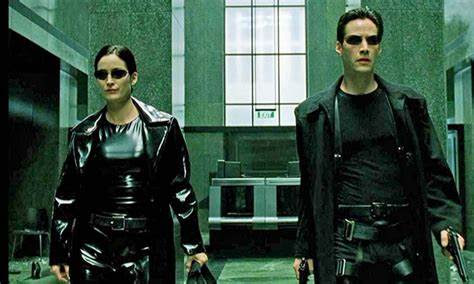
It’s also of course super, super cool. Everything about it passes the test: from the leather trench coats and shades to the high-octane action and the sense that the film is speaking directly to the alienated, authority-nose-thumbing teenager in all of us. This is a film for the people, the under-dog, with something for anyone who has ever felt trapped, bored or oppressed by their fate (i.e. nearly everyone) and reassures them that their dreams of having a special destiny might actually come true. It tapped into people’s joy and fantasy in a way The Phantom Menace totally failed to do.

This is a classic slice of mysticism. It’s not a film as clever as it thinks it is – it’s main calling card is still Alice in Wonderland the go-to for all films musing on dreamlike fantasy worlds – but it still throws a host of fun little questions and thinking points at the audience. Today, its also easier to see how the film is a celebration of counter-culture and sexual fluidity in a way that had to be snuck under the wire in the 90s. It asks (in a simple) way questions about who we are and what is it all about, in a way that really appeals to rebels. It’s the sort of film a Camus-loving teenager who is fed up with their parents, dreams they had the skill to make.

Skill is the key here. This is a superb achievement by the Wachowskis. It’s brilliantly directed, fast-paced and electric. The camera-work frequently makes use of a flurry of flashy tricks (reflections are a common theme), but which never over-whelm the narrative. It’s revolutionary use of freeze-frame camera work – an ingenious invention created “bullet time” where a series of cameras each taking one shot seem to allow us to rotate at normal speed around actors caught mid jump – introduced something we’d never seen before (and was much imitated and parodied later). The action sequences are stunning – a series of high-stakes, super-cool kung-fu-laced punches and kicks that are shot with a fluid camera that manages to seem both classic and deeply immersive.

It also works because our heroes are really underdogs. We are told again and again that they are vulnerable in the Matrix – that for all their gravity defying feats of strengths, when they come up against the “Agent” sentient programmes, they stand little or no chance of surviving. The goodies die with astonishing regularity in the film, and even the leads are shown to be extremely vulnerable in combat. Our empathy for them is so well crafted, that we even forgive the fact that they gun down countless numbers of their fellow humans during the film (it’s handwaved that anyone can become an agent at any time, so the slaughter of dozens of regular Joes is pretty much essential to prevent this).

A lot of that is also down to the excellence of the main performers. The film channels Keanu Reeves instinctive sweetness and gentleness in a way few other films managed to do as successfully before – he’s brilliantly convincing as both the kick-ass hero, but also the endearing fish-out-of-water who says “woah” as Morpheus jumps over a building. Carrie-Anne Moss is determined, assertive and very humane as Trinity while Laurence Fishbourne’s natural poise and authority are perfectly utilised as Morpheus. Opposite them we have a performance of such dastardly, lip-smacking, Rickmanesque consonant precision from Hugo Weaving, that Agent Smith becomes an iconic villain.

It all comes together into a film that delicately weaves a plucky under-dog story of a hero trying to find his purpose around a few perfectly staged, edge-of-the-seat action set-pieces, that hits a perfect balance between a wider-audience and a cool and pulpy indie vibe. It’s the sort of film that will please the masses, but many people will still feel is speaking very personally to them. Hugely influential, it remains a masterpiece of action and science fiction cinema which, while never as clever as it thinks it is, is hugely vibrant in its filming and endlessly, repeatedly exciting when watching.

Groundhog Day (1993)

Bill Murray lives the same day over-and-over again. It’s Groundhog Day!

Director: Harold Ramis

Cast: Bill Murray (Phil Connors), Andie MacDowell (Rita Hanson), Chris Elliott (Larry), Stephen Tobolowsky (Ned Ryerson), Brian Doyle-Murray (Buster Green), Marita Geraghty (Nancy Taylor), Angela Paton (Mrs Lancaster), Rick Ducommun (Gus), Rick Overton (Ralph), Robin Duke (Doris)

Few films are so well known they’ve become a shorthand. But mention “it’s like Groundhog Day” to anyone, and they know exactly what you mean. That’s a tribute to the film’s brilliant concept – but also its superb execution. Never mind just comedies, this is one of the smartest and best films to come out of America in the 1990s, so good it doesn’t seem to have aged a day. Groundhog Day is an enduring classic and quite wonderful.

Phil Connors (Bill Murray) is a misanthropic weatherman on a Pittsburgh news network. Every February, he is dispatched to the small town of Punxsutawney to cover “Groundhog Day”, an annual festivity where a local groundhog is used to predict whether winter will last six more weeks. Phil makes no secret of his contempt for the event, the town, its inhabitants and indeed everything else. After being trapped in the town by a snowstorm he failed to predict, Phil wakes up the next day – to find it’s Groundhog Day again! When the same thing happens the next day, Phil realises he is trapped living the same day in the small town over and over again – and no matter what he does during the day, he will always wake up in his hotel bed at 6am on Groundhog Day. What will he use the never-ending time for? Personal advantage? Or just maybe, becoming a better man?

Groundhog Day works because its concept is gloriously simple, and yet endlessly intriguing. Who can’t relate to the idea of a prolonged déjà vu? And anyway, don’t most of us feel at some points life is a never-ending treadmill (one of the town’s residents, asked what he would do, stuck in the same place every day where nothing you did mattered, replies “That about sums it up for me”)? Whole books have been written about the film’s philosophical roots – from Nietzsche to Buddhism – and the time loop’s duration. The film invites this because it keeps these concepts gloriously unexplained.

Imagine how much less powerful (and funny) the film would have been if Ramis had caved to studio pressure to either include a scene explaining why the time-loop was happening or providing a definitive answer for how long Phil spends in it. Hilariously, studio execs settled on a short period of time measured in months – others have gone for anywhere between decades to millennia. It’s certainly long enough for Phil to learn by heart the complete biographies of the entire town’s population, know the timeline of every event in the day to the second, and master everything from the piano (to Beethoven-like proficiency), to French and ice sculpting. There is a magic about not knowing the answer to these questions, that make the story brilliantly charming.

It also helps that the film remains, at heart, not science-fiction (which explanations would tip it towards) but a Capra-esque morality tale. The time-loop is, essentially, a second-chance over-and-over again for Phil to become a better person: to change from being a selfish misanthrope into a kinder, generous soul. That’s a story everyone can relate to, and becomes more and more heartfelt as the film continues (culminating in its uplifting conclusion). It also has the Capra touch of a heartless professional from the big city discovering (eventually) a warmth and truth in small-town America where the people are straight-forward and unaffected.

Which makes the film sound tediously feel-good. It escapes this completely because of three reasons. Firstly, initially Phil uses his new super-power of 24-hour immortality for what most of us would do – gain and greed. No consequences ever. Theft is child’s play when you know the exact second bank staff will be looking the other way. Easy to seduce a woman when you can ask her a series of questions on one circuit, then use her answers to pick her up on the next one. You can do whatever you want, confident the next day you’ll wake up in your hotel bed to I Got You Babe.

Even on his journey to eventual self-improvement, Phil only begins to change after exhausting all other options, including repeated attempts at suicide, to try and break the loop. And Phil, for all his charm, is not a good guy for a long time. His attempted seduction of producer Rita (a charmingly winning Andie MacDowell) over a never-ending series of first dates constantly fails, because no matter what happens, she eventually sees through his lack of decency (Phil’s attempts to recapture moments of spontaneous genuineness in later circuits fail completely).

Secondly, the film is brilliantly, gloriously funny – even with repeat viewings. Ramis’ brilliant shooting and structuring of the film focus on its repetition. We see the same shots and sets, hear the same music cues, the film is edited to stress repetition. Few things in comedy are as funny as anticipation and watching characters fly in the face of all the social conventions we deal with everyday. Seeing Phil’s different reactions to the same stimulus each time never fails to raise a laugh. Knowing the events almost as well as Phil, we eagerly await unexpected reactions. The script – by Ramis and Danny Rubin – is packed with brilliant lines, wonderful set-ups and is superbly structured. The first loop establishes all the settings and situations Phil will spend the rest of the film continually interacting with, and the film allows us to often be in on the joke with Phil (making us like him more).

Thirdly, and perhaps almost most importantly, the film could never have worked without Bill Murray in the lead role. For all the pull for Lost in Translation, this is surely Bill Murray’s finest performance, and stands comparison with the best work of Jimmy Stewart and Spencer Tracy, laced with that classic Murray touch. There is no other actor who can present a character so grouchy, deadpan, cynical and selfish but still make us love him. And – for all the terrible things Phil does in this film – you never stop liking him. His comic timing is exquisite (his varying reactions from frustration, confusion, glee and despair at his predicament spot on) but he also taps brilliantly into moments of genuine heart, loss and despair. Murray has spoken of how the theme of redemption spoke very strongly to him – and he plays perfectly a man so selfish that only after he has exhausted all other eventualities – including death – does he start to become a better man. It’s one of the greatest film performances of the 1990s, and the film is impossible without him.

Groundhog Day is pretty much perfect. The town of Punxsutawney is presented to us at first much like Phil sees it – old-fashioned and twee, populated by well-meaning but dull residents – but over the course of the loop, like Phil, we learn to embrace it. It perfectly mixes a glee at breaking the rules and embracing your inner misanthrope, with learning to develop and improve. It’s both hilarious and heart-warming, with every scene a classic and every performance spot-on. It has a timeless (!) quality about it, and its focus on telling a rollicking good story, full of heartfelt emotion and fabulous jokes, means you can add as much or as little spiritual depth to it as you like. It’s a modern It’s a Wonderful Life that might even be better.

Here Comes Mr Jordan (1941)

Edward Everett Horton, Robert Montgomery and Claude Rains deal with death, admin and body swops in Here Comes Mr. Jordan

Director: Alexander Hall

Cast: Robert Montgomery (Joe Pendleton), Evelyn Keyes (Bette Logan), Claude Rains (Mr Jordan), Rita Johnson (Julia Farnsworth), Edward Everett Horton (Messenger 7013), James Gleason (Max “Pop” Corkle), John Emery (Tony Abbott), Donald MacBride (Inspector Williams), Don Costello (Lefty), Halliwell Hobbes (Sisk)

One of the best things about the Hollywood Studio system is that created an environment where middle-brow talents could suddenly lift themselves up to create something very special. That’s certainly the case with Here Comes Mr Jordan, the career high spot for its director and its main stars. It’s the sort of product of Classic Hollywood where everything comes together perfectly and delightfully.

Joe Pendleton (Robert Montgomery) is a boxer with a shot at the title. An amateur pilot, Joe flies his own one-man flight to New York for the match. On the way, his plane crashes. An officious Angel, Messenger 7013 (Edward Everett Horton), collects his soul – only to find on arrival in heaven that Joe was meant to survive the crash and live for another 50 years. Unfortunately, by the time the mistake is found out, Joe’s body has been cremated. Head Angel Mr Jordan (Claude Rains) has no choice other than to find Joe another body on Earth. So Joe winds up in the body of millionaire Bruce Farnsworth, recently murdered by his wife Julia (Rita Johnson) and secretary Tony Abbott (John Emery). In his new body, Joe decides to correct Farnsworth’s wrongs, returning his embezzled money to investors and helping to free the father of Bette Logan (Evelyn Keyes), who took the blame. Joe also wants to retrain for a boxer – recruiting, much to his confusion, his old coach Max Corkle (James Gleason) – and he and Bette begin to fall in love. But Joe’s destiny, it turns out, is to be the champ – and he can’t do that in Farnsworth’s body. How will Mr Jordan clean this mess up?

Here Comes Mr Jordan is a delight, a hilarious musing on reincarnation and afterlife, in which the next world is as weighted down by bureaucracy and red tape as much as this one. With neat, unobtrusive direction from Alexander Hall (who never hit the jackpot like this again), the film keeps its comic balls up in the air beautifully, while throwing in some neat observations around life, death and fate. The script bubbles with lovely bits of invention, from the Afterlife to a bureaucratic organisation to Joe’s inhabiting of Farnsworth’s body (after trying a few other bodies on first), while still appearing to himself (and we the viewers – a neat idea that the film invites us not to think about too much as Joe’s mannerisms and physicality must be completely different from Farnsworth) unchanged from his original body.

Around this the film gets some neat pot shots at big business corruption. In some ways this is a little like A Matter of Life and Death mixed with Capra. As in Capra, the humble, kind-but-not-super-smart regular Joe is the one who takes a long-hard look at the corruption and greed of Big Business and Corporate America and decides “there has to be a better way”. The kind of guy who solves major business problems simply by doing the right thing and listening to his heart. Counterbalancing that is Joe’s ongoing obsession with continuing his boxing career, from his determination to get a body that’s “in the pink” (a phrase that drives Mr Jordan up the wall) to roping in his ageing butler into a series of vigorous workouts.

A large part of the charm of Joe Pendleton lies in the brilliantly dry, witty, sweet but still a little selfish qualities that Robert Montgomery (Oscar nominated) brings to the part. Playing the part with a homespun Brooklyn honesty and simplicity, Montgomery also has a childish delight in finding he can pass unobserved as this new man (particularly funny after his initial terror that he will be “found out” any second), while his boxing obsession has an endearing genuineness to it. Montgomery, as well as getting the light comedic tone spot on (no surprise that Cary Grant was the first choice for the role – although he could never have played the working class Joe as well as Montgomery does he) he also builds a very sweet and charming romance with Evelyn Keyes (also in a career best role), who is ill-treated but defiantly assured of the importance of doing the right thing as Bette.

The whole cast is quite superbly assembled, seasoned pros, doing their thing with aplomb. James Gleason was Oscar-nominated as Joe’s befuddled manager, trying to wrap his head around incarnation. Gleason also gets some of the finest gags, as Corkle tries to interact with Mr Jordan, who remains invisible to the living – but also brings a genuine warmth and tenderness to his feelings for Joe, who he clearly sees as a son. As Mr Jordan, Claude Rains is smoothness personified, playing the entire film with a relaxed grin on his face, gleefully mixing in an obsession with ensuring the “rules” are followed, while offering a dry reaction to events such as murder. As his underling Edward Everett Horton brings his patented A-game of flustered middle-man.

Mr Jordan grins so much through the film it’s easy to forget that he’s basically the Angel of Death. Reasonable and supportive, Jordan is also blithely unaffected by death and murder. The film, among the jokes and the general air of a fairy tale, has a little vein of darkness. In his introduction Jordan is overseeing the collection of souls from some of the battlefields of World War II. Later he calmly informs Joe of Farnsworth’s murder taking place even as they speak. The film doesn’t hesitate to shy away from the details of Farnsworth’s killing – or from two further murders. It’s a little nugget of darkness in amongst the charm, and a reminder that this comedy on death and the afterlife took place while the world was tearing itself apart. No wonder death can sometimes not be as big as a deal to everyone as it is today (especially to the Angel of Death).

Because the film has a more Capraesque belief that what matters is not who we are but what’s inside. Joe will appear as Farnsworth to everyone, but eventually what people will respond to (he is told by Jordan) is the person inside not the outward appearance. The potential that Joe may have to move to a new body to fulfil his destiny of becoming the champ, doesn’t meant that he and Bette need to necessarily be apart if his heart remains the same. While the film does suggest (I feel darkly!) at one point that Joe may forget who he was originally the longer he is in a new body, the more it stresses the point that the basic qualities of his decency won’t be lost.

Its ideas like this – combined with expert telling and superb Classic Hollywood grace and skill in its shooting, directing and acting – that give Here Comes Mr Jordan a little bite, along with its comic impact. Nominated for seven Oscars it won two – and it stands to be remembered in what was a glory year for Hollywood. You might expect something rather slight – but this delightful comedy is as thought provoking as it is playful.

Orphée (1950)

Jean Marais is in love with Death in Cocteau’s poetic Orphée

Director:  Jean Cocteau

Cast: Jean Marais (Orphée), François Périer (Heurtebise), María Casares (The Princess), Marie Déa (Eurydice), Henri Crémieux (L’éditeur), Juliette Gréco (Aglaonice), Roger Blin (The Poet), Édouard Dermit (Cégeste), René Worms (Judge)

Cocteau is perhaps the only major poet who became a filmmaker. His films introduced, naturally, a poetic beauty into the French New Wave – something that has led many to overlook their embracing of the techniques of modern cinema. Orphée is his most successful work, a beautiful re-imagining of the Orpheus myth, set in a smashed up post-war France, with the afterlife a bombed-out industrial wasteland. It’s a beautifully made, inventive and hugely impressive film, not without flaws, that allows you to see the potential magic and inventive sleight-of-hand in cinema. It’s a treat.

Orphée (Jean Marais, Cocteau’s real life-partner) is a poet who attracts the attention of a mysterious Princess (María Casares) during a poets’ café brawl that leaves her current protegee Cégeste (Édouard Dermit) wounded after he is hit by speeding motorcycle riders.  He helps her “transport him to the hospital” only to find that Cégeste is dead and that the Princess is some sort of manifestation of Death, transporting artists to the afterlife. The mysterious motorcycle riders are her assistants, while her driver Heurtebise (François Périer) also has some sort of role in carrying souls to the afterlife. Orphée wakes the next morning obsessed with Princess and the cryptic messages he heard on her car radio, that echo the seemingly meaningless messages of the Free France radio. His obsession distracts him from his wife Eurydice (Marie Déa), but when the Princess’ assistants claim her life, Orphée with the help of Heurtebise (who has fallen in love with Eurydice) feels compelled to journey to the afterlife to rescue her.

Cocteau’s film captures the poetic beauty of a dream, many of the events happening with a strange logic in a world that feels a few degrees askew from ours. It’s a film in love with the personal interpretation of great poetry, presenting a series of events we are invited to form our own impressions of. Cocteau’s film also suggests the ever-present link between the dead and the living – the dead still yearn, in their way, for life (some wander the afterlife unaware that they are even dead) while the poet Orphée falls in love with the mystical immortality of death, the all-encompassing love-affair our soul can have with the afterlife. The Princess is herself drawn towards poets, whose grace and beauty she can help promote to their own immortality.

To present this strange and unsettling world, Cocteau uses a host of inventive cinematic tricks that constantly surprise and delight. The Princess’ helpers feel like they invented the cosplay aesthetic with their burly short-sleeve shirts, helmets, dark glasses and machine guns. The afterlife is a blasted, burnt-out factory with ruined homes and houses around it and vital meetings and trials taking apart in worn-out rooms with cracked and decaying walls. The characters move through this afterlife depending on their status – Orphée crawls through it like treacle, battling against his own brain struggling to understand where he is, while Heurtebise glides through it seemingly without moving his feet. 

The afterlife is accessed by moving through mirrors. Cocteau uses reflections intriguingly throughout the film – after all mirrors show us only a version of our world, not the real thing. Mirrors are moved through either as if they are not there, or melt into liquid that souls can pass through. Cocteau uses film in reverse to show mirrors smashing and then reforming themselves, a brilliant effect that looks disconcertingly wrong. He uses the same technique to show dead souls rising under the Princess’ influence, standing with a bizarre disjointedness (the actors were filmed falling and the film reversed). The rubber gloves that must be used to move through mirrors are also shown being put on using reverse photography – the actors were filmed taking them off and the film is reversed making the gloves seem like they fly onto the hands. It’s a simple effect but brilliantly done.

Cocteau continues this inventiveness in the afterlife. Some sets are built on an angle, meaning Orphée at one point crawls along one wall before sliding impossibly down the next wall. Back projection is brilliantly used to show Heurtebise manipulating the afterlife around him. It’s a feast of inventive and imaginative angles, ideas and concepts brilliantly shot. And mirrors are always the key, the doorway to death and a world like ours but not.

And behind that door, Cocteau presents a fascinating afterlife. Is the Princess Death? Or just one of many functionaries? Heurtebise too seems to have some sort of role as Death – and the functionaries of the afterlife operate under a series of rules that suggest they barely understand the world of the living any more. Orphée is allowed to take Eurydice home – on condition he never looks at her, a condition nearly impossible to meet in the real world, despite Heurtebise’s best efforts. Meanwhile Orphée is fixated on Death, chasing the Princess through cloisters and a marketplace in the real world, drawn towards the ghostly messages on the radio (their echoing of French Resistance messages indicating their link to a deathly past of destruction). 

The film throws in a love triangle with Death as the third wheel. Orphée is moved by the desire for the immortality death can bring, while the Princess herself perhaps causes Eurydice’s death out of envy and bends the rules anyway she can to bring herself closer to Orphée. Orphée’s quest for inspiration and immortality distract him from the everyday love of his wife – and her pregnancy. Only Heurtebise still seems to yearn for the quiet normality of everyday life.

The film’s main flaw is that it often fails to invest the relationship of Orphée and Eurydice with any real emotional depth. Part of this is the fault of Jean Marais, who delivers a performance that is aiming for brooding but instead generally comes across as sour and sulky, making him hard to warm to or invest in, while Marie Déa is given very little to do. The real interest is in the figures from the afterlife, and María Casares is superb as a cold, almost dominatrix like Death who slowly finds in herself great longing (perhaps in part for her previous life on earth). François Périer is similarly superb as Heurtebise, desperate to feel again as he did when alive.

Despite the film’s lack of real heart and warmth among (of all things!) it’s living characters, there is so much depth, inventiveness and bizarre longing in the afterlife that you can more than forget this. Cocteau’s film is a wonderful dream, an immersive, brilliantly created feast for the imagination that marries art and cinematic techniques in a way few others have managed before or since.