Category: Literary adaptation

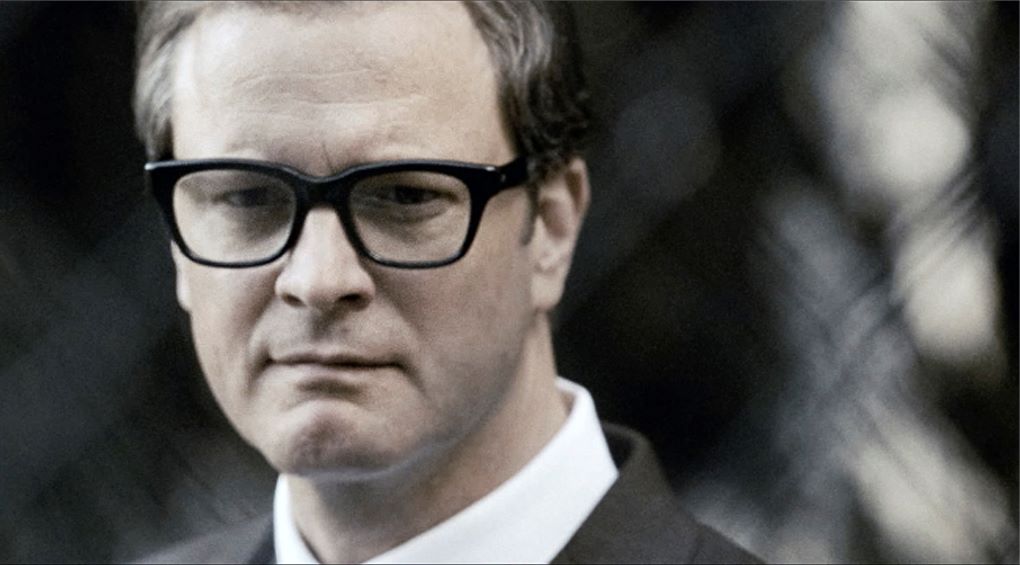
A Single Man (2009)

A Single Man (2009)

Grief is at the heart of this moving, beautifully made debut from Tom Ford

Director: Tom Ford

Cast: Colin Firth (George Falconer), Julianne Moore (Charley Roberts), Nicholas Hoult (Kenny Potter), Matthew Goode (Jim), Jon Kortajarena (Carlos), Paulette Lamori (Alva), Ryan Simpkins (Jennifer Strunk), Ginnifer Goodwin (Mrs Strunk), Teddy Sears (Mr Strunk), Lee Pace (Grant Lefanu)

Grief is like a gaping wound that never heals. It’s an unbearable burden LA-based English professor George Falconer (Colin Firth) can’t bear any longer. Distraught after the death of his partner of sixteen years Jim (Matthew Goode), George decides November 30th 1962 will be the last day of his life. He will spend the day putting his affairs in order, soaking up the isolated intensity of moments, have dinner at his oldest friend Charley’s (Julianne Moore) house, then take his life. Adapted from Christopher Isherwood’s novel, A Single Man follows that one day.

The universal pain of grief and vibrancy of love shines out of one of the most tender gay-love stories ever made (strikingly shot and acted by a straight director and leads). A Single Man is a film that aches in every frame with the desolation of loss and the agony of moments that can never be claimed, touches that can never be made and conversations that can never be had. It studies how empty and overbearing life can feel when we know we must face it alone, without the person who made the world make sense to us.

It is of course a double burden when that loss cannot be acknowledged. George learns of the death of Jim via an awkward phone call from Jim’s brother (a vocal cameo from Jon Hamm) who can’t bring himself to openly acknowledge the love between the two men and tells him it’s a “family only” funeral. George himself can only convey repressed English regret during the phone call, before collapsing into lurching emotional hysteria after it. His loneliness and cool distance from others is all a side effect of man who must always hide his true feelings and who and what he is.

The film gains a huge amount from Colin Firth’s extraordinary performance in the lead role, hiding a seething, raw pain under a genteel and refined exterior. This seemingly cold, precise man – who dresses like a fashion model and is polite to a fault – is a tempest below the surface of loss that cannot be expressed. It’s as much the burden of putting on one face to the world, knowing there is another below the surface, that has crushed George’s spirit over the past years, as the loss of Jim. All of this is captured by Firth with exquisite sensitivity, in a perfectly judged performance.

Even George’s closest confidante Charley – his best friend, and one-time experimental romantic fling, now a depressed divorcee – can’t quite understand George’s feelings for Jim. Played with a wonderful air of domestic, middle-aged tragedy by Julianne Moore, Charley still can’t quite believe a homosexual love can ever really be the “equal” of a heterosexual one – that some part of George would have been happier if he had accepted a ‘normal’ relationship and family with her rather than the more ‘exotic’ relationship he chose. If even those closest to George can’t really see his relationship as legitimate, what chance does his apple-pie neighbourhood have of doing so?

It’s the intense loneliness – no one to share his pain with, no way to really mourn his love – that has finally beaten the will to carry on for George. Ford’s direction reflects his sense of ennui by presenting the world as coldly drained out, rich colours replaced with greyscale-tinged greys and blues. Warm colours only intrude in those moments where George consciously decides to engage, one final time, with the wonders the world has to offer, the frame filling with warmth and colour.

Ford’s elegiac film doesn’t shy away from the coldness of pain and loss. Opening with a (literally) chilling scene, as George imagines encountering Jim’s dead body in the snows, it conveys the functional distance the world can seem to have when we are dealing with life changing internal feelings. George is entrapped into tired conversations about university politics (his gaze drifts to two male tennis players, the screen momentarily filling with colour). Reflecting his fastidious nature, he carefully puts his affairs in order at the bank and catalogues keys, account details and suicide notes on his desk. All of it feels irrelevant compared to the pain within.

But A Single Man is also a hopeful film. Even when the world seems at its bleakest – when we have decided we can’t go on – there is still hope. It’s represented here by Nicholas Hoult, warm, open and honest as George’s student Kenny who intuitively identifies something is wrong with George and goes to huge lengths to try and find out what. The tenderness between the two – and the protectiveness as well as genuine smiles Kenny can promote in George – is a beat that suggests there may still be some chance of happiness in this world where we least expect it.

It’s part of the same warmth and humanity that underlies Ford’s heartfelt film, wonderfully directed. If it was a parade of bleakness, it would have far less effect. But flashbacks to George and Jim together show the joy and comfort of their lives, while the small moments of warmth and humanity in the present constantly remind us of what George’s decision will cost him.

The film’s final dark splash of irony may well be a little too on the nose, sign posted as a possibility a little too heavily earlier in the film. But, in its exploration of grief and intelligent, intense character study it’s a wonderful debut from Ford. And Firth’s extraordinary, career defining role (a year later, after winning the Oscar for The King’s Speech he thanked Tom Ford as being someone who owed a piece of the award to) is one for the ages that speaks to anyone who has ever known loss.
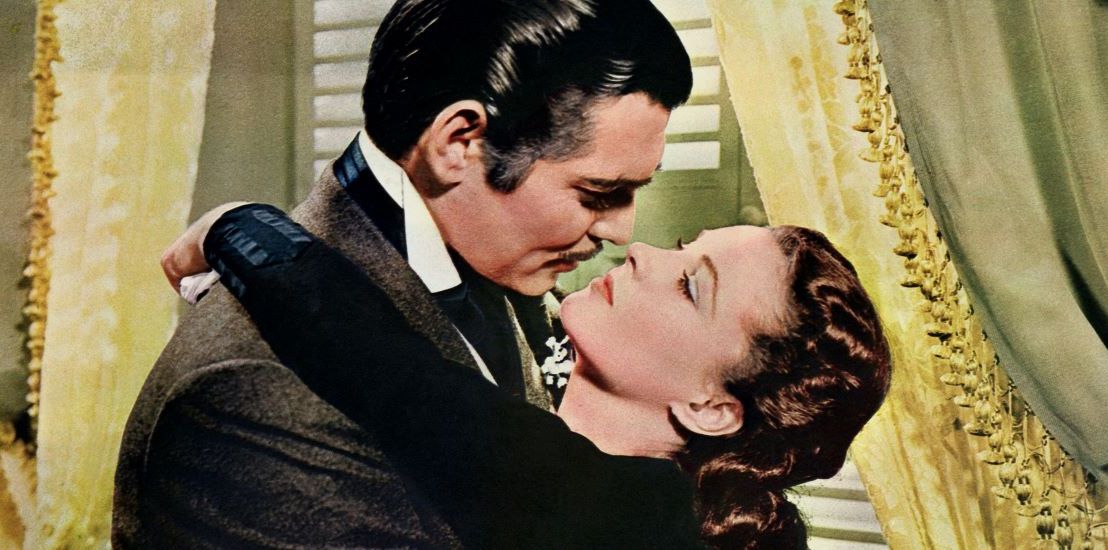
Gone with the Wind (1939)

Gone with the Wind (1939)

For decades unchallenged as the best loved Hollywood film ever made, but showing some signs of its age, it’s still an undeniable marvel

Director: Victor Fleming

Cast: Vivien Leigh (Scarlett O’Hara), Clark Gable (Rhett Butler), Leslie Howard (Ashley Wilkes), Olivia de Havilland (Melanie Hamilton), Thomas Mitchell (Gerald O’Hara), Evelyn Keyes (Suellen O’Hara), Ann Rutherford (Careen O’Hara), Barbara O’Neil (Ellen O’Hara), Hattie McDaniel (Mammy), Butterfly McQueen (Prissy), Oscar Polk (Pork), Rand Brooks (Charles Hamilton), Carroll Nye (Frank Kennedy), Jane Darwell (Mrs Meriweather), Ona Munson (Belle Watling), Harry Davenport (Dr Meade)

For most of the twentieth century, if you asked people to draw up a list of the greatest Hollywood films of all time, you can be pretty sure this would be close to the top. A landmark in Hollywood history, everything about Gone with the Wind is huge: sets, run time, costs, legend. It’s crammed with moments that have developed lives of their own in popular culture. Its score from Max Steiner – luscious and romantic – is instantly recognisable, practically Hollywood’s soundtrack. It’s the most famous moment in the lives of virtually all involved and for decades whenever it was released, it raked in the cash. But as we head into the twenty-first century, does GWTW (as it called itself even at the time) still claim its place at the head of Hollywood’s table?

It’s the love child of David O. Selznick. Never mind your auteur theory: GWTW credits Victor Fleming as the director, but parts of it were shot by George Cukor (the original director, who continued to coach Leigh and de Havilland), William Cameron Menzies (the legendary art director, who shot the Atlanta sequences) and Sam Wood (who covered for an exhausted Fleming for several weeks). This is a Selznick joint from top to bottom. GWTW is possibly the ultimate producer’s film: a massive show piece, where not a single cent isn’t up on the screen. Huge sets, vast casts, colossal set pieces, thousands of costumes and extras. It’s an extravaganza and Selznick was determined that it would be an event like no other. And a hugely entertaining event it was.

It would also be scrupulously faithful to Margaret Mitchell’s novel, with a dozen screenwriters working on it (including Selznick). GWTW was the ultimate door-stop romance novel. Set in Atlanta, Georgia, the entire film is a no-holds barred “Lost cause” romance of the South during the Civil War and Reconstruction. Scarlett O’Hara (Vivien Leigh) is the passionate, wilful daughter of a plantation owner, desperately in love with Ashley Wilkes (Leslie Howard), who is attracted to her but all set to marry his cousin Melanie (Olivia de Havilland). Also interested in Scarlett is playboy Rhett Butler (Clark Gable). Romantic complications are set to one side when the Civil War breaks out, bringing disaster to the South. As the war comes to its end will Scarlett and Rhett find love, or will Scarlett’s fixation on Ashley continue to come between them?

GWTW’s casting was the sort of national obsession not even the casting of a superhero gets today. Every actress in Hollywood seemed to screen test for Scarlett O’Hara, with Selznick playing the search for all the publicity it was worth. No one suggested Vivien Leigh. But, lord almighty, Leigh was placed on this Earth to play Scarlett O’Hara. GWTW is dominated by Leigh, dripping movie star charisma. She would be synonymous with the role for the rest of her life, and it’s no exaggeration to say this one of the greatest acting performances in movie history. Leigh balances a character stuffed with contradictions. Scarlett is wilful and vulnerable, impulsive and calculated, childish and dependable, selfish and generous, spoilt and sensible, romantic and realistic… But Leigh balances all this with complete ease. It’s an act of complete transformation, an astonishingly confident, charismatic and complicated performance.

There was no debate about who would play the romantic hero, Rhett Butler. He basically was Clark Gable. And Gable was perfect casting – so perfect, he was almost too scared to play it. But he did, and he is sublime: matinee idol charismatic, but also wise, witty and vulnerable (it’s easy to forget that Rhett is really in the traditional “woman’s role” – the ever-devoted lover who sticks by his woman, no matter how badly she treats him, spending chunks the latter half of the film halfway to depressed tears). For the rest, Leslie Howard was oddly miscast as Wilkes (he seems too English and too inhibited by the dull role) but Olivia de Havilland excels in a generous performance as Melanie, endearingly sweet and loyal.

These stars were placed in a film production that’s beyond stunning. Shot in glorious technicolour, with those distinctive luscious colours, astonishingly detailed sets were built (plantations, massive dance halls, whole towns). Everything about GWTW is designed to scream prestige quality. It lacks directorial personality – the best shots, including a crane shot of the Civil War wounded or a tracking shot on Leigh through a crowded staircase, seem designed to showpiece the sets and volume of extras. It’s a film designed to wow, crammed with soaring emotions and vintage melodrama. Nothing is ever low key in GWTW: disasters are epic, love is all-consuming passionate clinches. They built stretches of Atlanta so they could burn it down on camera. It’s extraordinary.

And much of GWTW is extremely entertaining. Especially the first half. It’s an often overlooked fact that if you ask people to name things that happen in GWTW, nearly everything (bar the film’s final scene obviously) they will come up with is in the first half. Rhett behind a sofa in the library? Atlanta on fire? Rhett and Scarlett at the ball? Scarlett surrounded by admirers at a garden party? “I’ll never be hungry again?” All before the interval. The first half is a rollicking, fast-paced rollercoaster that takes us from the height of the South to the devastation after the war. It grabs you by the collar and never lets go, supremely romantic, gripping and exciting.

The second half? Always duller. Bar the start and finish of the second half (nearly two hours in all), it’s a Less memorable film. Sure, it has the O’Hara’s in extreme poverty, Scarlett reduced to converting a curtain into a dress to glamour up some cash to keep Tara. It’s got Ashley and Melanie’s adorably sweet reunion. And it’s got possibly the most famous line ever in movies “Frankly my dear, I don’t give a damn” (not to mention “Tomorrow is another day”).

Other than that? It’s a bitty, plot-heavy series of forgettable, episodic moments which you feel really should have been cut. Who remembers Frank Kennedy? Or Scarlett’s lumber mill? Rhett pushing his daughter in a pram? The London sequence? There is a solid hour of this film which is flatly shot, dully paced and devoid of anything memorable at all. GWTW owes all its beloved reputation to the first half: and to be fair you’ll be so swept up in that you’ll give the film a pass for its middling second act. After all you get just about enough quality to keep you going.

But what about the elephant in the room? GWTW, like no other beloved film, has a deeply troubling legacy. They were partly aware of it at the time – after all, every racial epithet was cut, as is every reference to the KKK (it’s referred to as a “political meeting” and Rhett and Ashley’s membership is glossed over) and we never see the attack they carry out on a shanty town of former slaves. But GWTW remains, in many ways, a racist film peddling an unpleasant and dangerous mythology that the “Lost Cause” of the South was all about gentlemanly fair play, rather than coining it off plantations full of enslaved workers.

GWTW, in many ways, plays today a bit like a beloved elderly relative who comes round for dinner and then says something deeply inappropriate half-way through the main course. The dangerous mythology is there from the opening crawl which talks of the South as a land of “Cavaliers and cotton fields” where “Gallantry took its last bow…[full of] knights and their ladies fair, of Master and Slave”. The third shot of the film is a field of smiling slaves, working in a cotton field. Hattie McDaniel won an Oscar (at a segregated ceremony) and she is wonderfully warm as Mammy, but her character is another contented underling. At least she seems smarter than the other main black characters, Pork and Prissy: both are like children reliant on the guidance of their masters.

The Cause of the South is luscious and romantic, as are the people who fight it. Nearly every Yankee we see is corrupt, ugly and greedy, rubbing defeat in our heroes’ faces. It’s not quite Birth of a Nation, but the second half has a creeping suspicion of freed black people. A carpetbagger from the North is a smug, fat black man who mocks wounded Southern soldiers. Scarlett’s walk through the streets of a rebuilt Atlanta sees her startled and mildly hustled by black people who no longer know their place. Every prominent black character is sentimental about the good old days. GWTW would make an interesting double feature with 12 Years a Slave.

It’s this dangerous and false mythology that makes the film troubling today. It’s why you need to imagine the entire thing with a massive asterisk – and why you should be encouraged to find out more about the era than the fake and self-serving fantasy the film peddles as reality. But for all that, GWTW is so marvellous as a film that it will always be watched (and rightly so), even if it was always a film of two halves and only becomes more controversial in time. But watch it with a pinch of salt, and it is still one of the most gorgeous, sweeping and romantic films of all time: that’s why it still remains, for many, the definitive “Hollywood” film.

The Curious Case of Benjamin Button (2008)

The Curious Case of Benjamin Button (2008)

Ageing, romance and sentiment in Fincher’s handsome shaggy dog story

Director: David Fincher

Cast: Brad Pitt (Benjamin Button), Cate Blanchett (Daisy Fuller), Taraji P Henson (Queenie), Julia Ormond (Caroline Button), Jason Flemyng (Thomas Button), Elias Koteas (Monsieur Gateau), Tilda Swinton (Elizabeth Abbott), Mahershala Ali (Tizzy Weathers), Jared Harris (Captain Mike Clark)

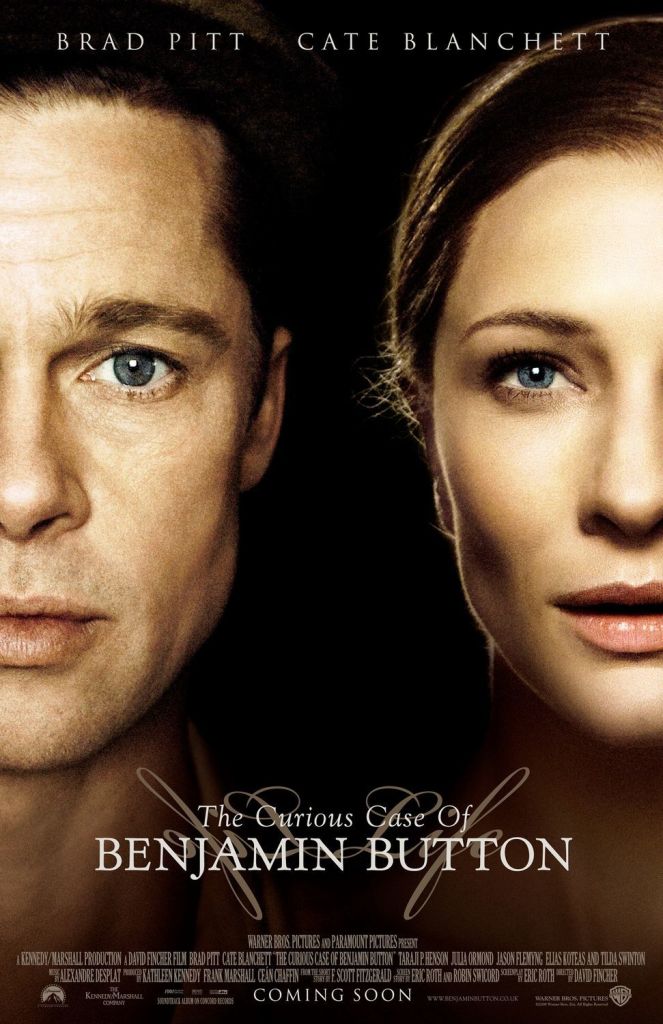
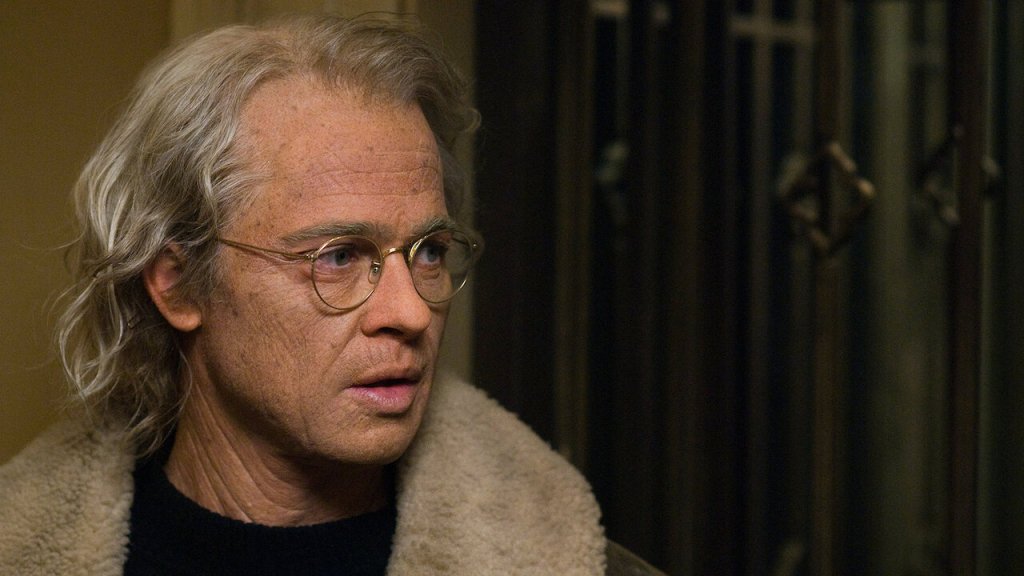
As the eleventh hour of the eleventh day of the eleventh month of 1918 strikes, a baby boy is born. A baby boy unlike any other, with the appearance and illnesses of a very old man. Discarded by his horrified father (Jason Flemyng), the boy is adopted by Queenie (Taraji P Henson), caretaker of a nursing home. There it becomes clear he is growing backwards: the older he gets, the younger he appears. Young Benjamin will eventually grow into Brad Pitt and spend his life watching those around him grow ever older as he grows ever younger. Most joyful, and painful, of all being his childhood friend Daisy (Cate Blanchett), the woman he will love his whole life.

Fincher’s film is a strange beast. A huge technical triumph, that uses cutting edge special effects and astonishing make-up to age – in both directions – Brad Pitt and Cate Blanchett throughout the course of the film (both taken from extreme old age to face-lifted youth), it’s also a whimsical shaggy dog story with elements of a fairy tale that does very little with its astonishing concept other than pepper the script with easily digestible homilies about the purity of the simple life, as if screenwriter Eric Roth was still gorging on the same box of chocolates from which he plucked Forrest Gump.

TCCoBB has a lot going for it: you can see why it was coated with technical Oscars. The ageing and deageing special effects are skilfully and even subtly done, the recreation of a host of periods – from the 1910s to the 1990s and beyond – flawlessly detailed. Claudio Miranda’s photography uses a host of film stocks – from sepia, to scratchy home movie footage style, to luscious technicolour beauty – to reflect time and era constantly. The assemblage of the film has been invested with huge care and attention and, despite its great length, Fincher cuts together (with Kirk Baxter and Angus Wall) an episodic film that manages to keep its momentum and drive going.

Also, it’s a far less vomit-inducing spectacle than the manipulative stylings that coat Forrest Gump. This is in part to Brad Pitt’s restrained and contemplative performance in the lead role: Pitt underplays with surprising effectiveness, capturing Benjamin’s “come what may” attitude and eagerness to go with the flow of the opportunities life offers him. He delivers the narration with an authority just the right side of portentous (for all his rather flat, uninteresting voice) and skilfully manages to invest his body with a physicality quite contrary to his physical appearance (his old body moves with a young man’s casualness, while his younger form carries a slightly world-weary hesitancy).

Benjamin’s mantra becomes one of living your life just as suits you best, not as others expect you to and never worrying about leaving it too late to take chances or make changes. Or at least something like that. To be honest, the weakest part by far of TCCoBB is the lightness and breeziness of its thematic impact. I’ve seen this film three times and, other than a slightly charming shaggy dog story, I’m not quite sure what point it is trying to make – other than straining for a star-cross’d romantic sadness.

This feels like a missed opportunity because there is so much that could be explored here. The film is a nearly unique opportunity to explore how much age – either physical or mental – defines us. A chance to see how our perceptions of a person are shaped as much by what they look like or how they sound, as by who they are. What sort of different perspective on humanity might Benjamin have? How might those around him evaluate, their own lives as they see this him getting younger?

Questions such as these are not touched, the film settling for Benjamin’s whimsical, first-do-no-harm philosophy crossed with a sort of saintly non-interference. The closest it gets to dealing with this is in Benjamin’s friendship and later relationship with Daisy. Old/young Benjamin is told off by Daisy’s grandmother for being a dirty old man, when they first met as children (or old man in his case). Later their lives will drift together and apart, until they form a relationship when both are “the same age” physically. But the film shirks really exploring the implications of this – and outright flees the idea of Benjamin as an increasingly younger man in a romantic relationship with an increasingly older Daisy.

Instead, it settles all too often for easy lessons, comforting parables and charming little vignettes. Benjamin grows up cared for by his adopted mother Queenie (an engaging, if straight forward, performance by Taraji P Henson) – but in the sort of 1920s New Orleans where a racial epithet is never even whispered. He travels the world with Jared Harris’ (rather good) salty sea-dog, falling in love briefly with Tilda Swinton’s lonely champion swimmer turned society wife. He reconnects happily with his father (after all it’s much easier to live a life of free choice if you are the heir to a massive button factory empire). Idyllic 1960s love hits Daisy and Benjamin – a brief shot of a cruise missile taking off is the only reference to those troubled times we see.

It’s all very easy, romantically toned, sweet and easily digestible. Even writing it down highlights how these are charming, eccentrically tinged, vignettes. All events and experiences come together with a vague “lessons learned” impact, as old Benjamin regresses into a teenager, a child and then an infant. But it could have been so much more. A real study of what makes us human, a real look at how events and perspectives define us. It isn’t. Heck, other than watching Pitt travel handsomely around the world on a motorbike in a late montage, we don’t really get much of a sense of how being young/old may impact him.

Which isn’t to say it’s not enjoyable. It all proceeds with a great deal of charm and love, much of which has clearly been invested in every inch of its making. The acting from (and chemistry between) Pitt and Blanchett is very effective. But it feels like a slightly missed opportunity, a film that settles for being a warm, reassuring cuddle when it could have sat you down and helped you understand your life. For all its slight air of importance, it’s a crowd-pleasing, if slightly sentimental, film.

Zorba the Greek (1964)

Zorba the Greek (1964)

The popular image of Greece gets largely defined, for better and worse, in this flawed, over-long, tonally confused film

Director: Michael Cacoyannis

Cast: Anthony Quinn (Alexis Zorba), Alan Bates (Basil), Irene Papas (The Widow), Lila Kedrova (Madame Hortense), Sotiris Moustakas (Mimithos), Anna Kyriakou (Soul), Eleni Anousaki (Lola), George Voyagjis (Pavlo), Takis Emmanuel (Manolakas), George Foundas (Mavrandoni)

Basil (Alan Bates) a Greek-British writer, returns to Crete to try and make a success of his late father’s lignite mine and rediscover his roots. Joining him is Zorba (Anthony Quinn), a gregarious peasant, who believes in confronting the world’s pain with a defiant joie de vivre. In the Cretan village, their friendship grows and they become involved (with unhappy results) with two women: Basil with the Widow (Irene Papas), lusted after by half the village, and Zorba with ageing French former-courtesan Madame Hortense (Lila Kedrova).

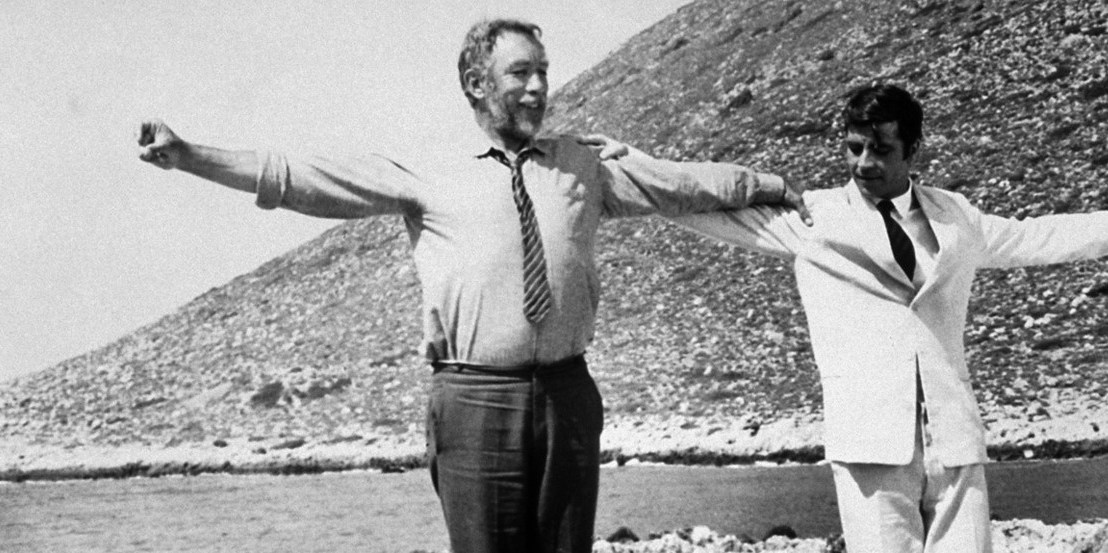
Zorba the Greek was based on a best-seller by Nikos Kazantzakis, directed by Greece’s leading film director Michael Cacoyannis. Matched with Anthony Quinn’s exuberant performance, it pretty much cemented in people’s mind what “being Greek” means. So much so the actual film has been slightly air-brushed in the cultural memory. Think about it and you picture Quinn dancing on luscious Greek beaches. There is a lot of that: but it’s married up with a darker, more critical view of Greek culture that sits awkwardly with the picture-postcard tourist-attracting lens used for Crete.

Nominally it’s a familiar structure: the stuffed-shirt, emotionally reserved, timid and sheltered, is encouraged into a bit of carpe diem by a larger-than-life maverick. As is often the case, he needs t build the courage for romance and work on an impossible dream. Zorba the Greek however inverts this structure: the main lessons Zorba teaches is that you have to meet disaster just as you would meet triumph: with a shrug, a smile and a dance. It’s decently explored – and it lands largely due to Quinn’s barnstorming iconic performance – but also slight message. And Cacoyannis never quite marries it up successfully with the tragic consequences in the film.

Shocking and cruel events happen to the two female characters. The Widow – never named in the film – is loathed and loved by the men of the village, because (how dare she!) she’s not interested in sleeping with them. Played with an imperial distance by Irene Papas, she is condemned as a slut the second she does make a choice about who she welcomes into her bed (Basil, once). Madame Hortense (played with a grandstanding vulnerability by Oscar-winner Lila Kedrova) enters into a one-sided relationship with Zorba. Led to believe (by Basil) Zorba intends marriage, she becomes a joke in the village. Both women’s plot end with shocking, even savage, results.

A braver and more challenging film than Zorba the Greek would have used these events to counter-balance the light comedy and romance of the Greek vistas and Mikis Theodorakis’ brilliantly evocative score, by more clearly commenting on the darkness and prejudice at the heart of the village. In this Cretan backwater, lynching is perfectly legit, women are public property and even our heroes powerlessly accept what happens as the way of things. A smarter film would have pointed out that, in a savage land, Zorba’s ideology is essential or had Basil question his romantic view of Greece once confronted with the barbarism it’s capable of. Neither happens. Instead, the fate of these women is just another of life’s curveballs – the very thing that Zorba has been trying to train Basil to look past. They become learning points on our heroes journey.

Cacoyannis’ rambling script makes a decent fist at trying to capture the mix of Greek life and philosophical reflection that filled Kazantzakis novel. But he fails to bring events into focus or make any real point other than a series of picaresque anecdotes. Tonally the film shifts widely: a boat journey to Crete is played as slapstick, the eventual fate of the Widow chilling horror, the relationship between Zorba and Basil a buddy-movie tinged with the homoerotic. It’s a film that tries to cover everything and ends up not quite exploring any of its successfully.

It’s most interesting note today is homoeroticism. Helped by the casting of Bates, an actor whose screen presence was always sexually fluid (and who is excellent here), it’s hard not to think that Basil and Zorba are most interested in each other. Basil gets jealous, moody and lonely when Zorba leaves for weeks to fetch “supplies” from a local town. Zorba is equally fascinated by the twitchy and shy Basil, coming alive with him in a way completely different to the gruffness he shows to the other characters. Most happy in each other’s companies, there’s a fascinating homoerotic pull here that the film skirts around (not least by making sure both men have female love interests).

Basil is a curious character, strangely undefined and ineffective who listens a lot to Zorba’s messages but seems to learn very little. When the village turns on the Widow he watches like a lost boy. Zorba effectively takes over his home. The one time he tries to live life to the full, it leads to disaster. He remains strangely unchanged by events, which I am sure is not the films intention.

This misbalance is because the film really should be about him and the changes made to his life. It isn’t, because Quinn dominates the screen. A Latin American who most people thought was Italian or Arabic, here becomes the definitive screen Greek. Quinn’s performance here is his signature, grand, performative but also sensitive and strangely noble under the surface, a bon vivant just the right side of ham. He makes Zorba magnetic and hugely engaging and it says a lot that the Greeks effectively claimed him as one of their own. But he does seize control of the film and tips its balance away from its central figure.

Zorba the Greek is a crowd-pleaser, show-casing Greece, that skims on making a more profound impact on how beauty and savagery can live so close together. It doesn’t want to sacrifice the romance too much by staring too hard at the brutality. Tonally, Cacoyannis doesn’t successfully balance the film and its overextended runtime stretches its slight message. But, with its marvellous iconic score and wonderful performances, it’s got its moments.

The Lost Daughter (2021)

The Lost Daughter (2021)

Motherhood, loss and guilt are at the heart of this over-extended drama that doesn’t feel like it focuses on the right things

Director: Maggie Gyllenhaal

Cast: Olivia Colman (Leda Caruso), Jessie Buckley (Young Leda Caruso), Dakota Johnson (Nina), Ed Harris (Lyle), Dagmara Dominczyk (Callie), Paul Mescal (Will), Peter Sarsgaard (Professor Hardy), Jack Farthing (Joe), Oliver Jackson-Cohen (Toni), Athena Martin (Elena), Robyn Elwell (Bianca), Ellie Blake (Martha)

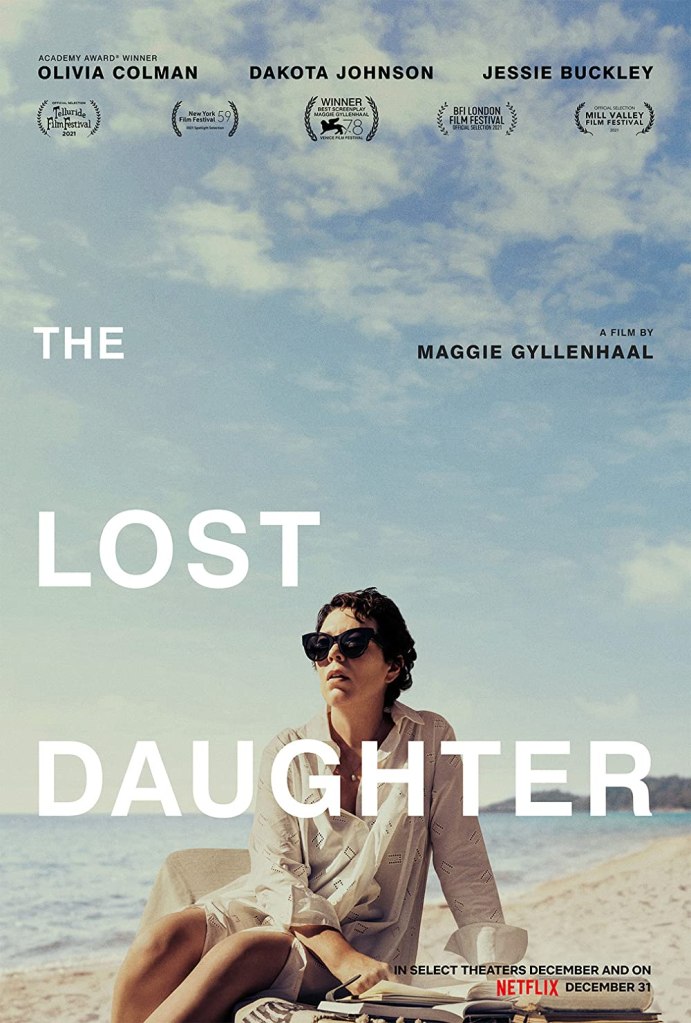
Leda (Olivia Colman), a professor of Italian Literature, holidays in Greece. That holiday is disturbed by the arrival of a noisy, aggressive family from Queens. A member of that family, unhappy young mother Nina (Dakota Johnson) loses her daughter on a beach. Leda finds her, but it triggers her own unhappy memories of motherhood (Jessie Buckley plays the young Leda). She impulsively steals the child’s beloved doll, as her paranoia and mournful reflections grow.

Maggie Gyllenhaal’s directorial debut is a confident, assured piece of film-making, but I found it a cold and slightly unsatisfying film. There is a fascinating subject here, that the film fails to really tackle. One of life’s great unspoken expectations is that everyone should find being a parent – especially being a mother – hugely rewarding. This film studies a woman who didn’t, but still wants to reassure us of the love and happiness found in the bond with a child, no matter your mistakes as a parent. In doing so, it marginally ducks an important societal issue and reaches conclusions that feel predictable, for all the ambiguity the film ends with.

Colman’s expressive face and ability to suggest acres of unhappiness in a forced smile or gallons of frustration with a single intake of breath, are used to maximum effect. Leda is a woman comfortable with her own company, forced and uncomfortable in conversation, her eyes flicking away as if looking for an exit. She seems confused about how to respond to the quiet advances of handyman Lyle (a gentle Ed Harris) and increasingly resents the intrusion into her holiday of outsiders.

How much is this slightly misanthropic, isolated view of the world her natural personality, and how much has it grown from her choices in the past? Flashbacks reveal her struggles as a mother – and the strained relationship with her children today – and it’s clear Leda is a bubble of confused emotions, uncertain about what she thinks and feels.

That past, to me, is the real area of interest, rather than the distant, cold woman those choices have created. I’d argue a stronger film – and one that would feel like it was really making a unique point – would have focused on the younger Leda. Expertly played by an Oscar-nominated Jessie Buckley –brittle and growing in claustrophobic depression – she loves her two girls. But, most of the time, finds them overbearing, all-consuming and more than a little irritating. She’ll laugh at their jokes and be terrified when one of them gets lost, while still resenting their domineering impact on her life.

When she wants to work, they demand attention. When her daughter has a small cut on her finger, Leda is repeatedly asked to kiss it better like a broken record. Leda gives her other daughter her own childhood doll – and then throws it out of a window in fit of hurt fury when the daughter covers it in crayon and says she doesn’t like it. The kids get in the way of everything: be it work (she retreats behind headphones to focus), holidays, sex with her husband or even masturbation.

Her feelings go beyond post-natal depression. She is someone who genuinely loves her children, but can’t bear the idea of mothering them. This is the meat of the film, far more than the present-day narrative. Gyllenhaal sensitively tackles a rarely discussed topic: what can we do if we find parenthood was a mistake? Knuckle down or give up and run away? A film exploring this could have been compelling: but it only takes up a quarter of an over-extended film.

Instead, by focusing on the maladjusted present-day Leda, the film presents her motherhood difficulties as the root cause of her problems. Leda sees a potential kindred spirit in young mother Nina – a brash and exhausted Dakota Fanning – who seems equally frustrated by parenting. But Leda is so insular and self-obsessed, is she only seeing what she wants to see? If she thinks Nina is also failing as a mother, will that make her feel better about her own failures?

The Lost Daughter is an unreliable narrator film – and Gyllenhaal expertly suggests much of what we see are Leda’s perceptions rather than necessarily the truth. The menace from Nina’s loud and aggressive extended family is a constant presence: but is it real, or just Lena’s paranoia. Does the family really cover every tree with a missing poster for a child’s lost doll, or does it just that way to Leda? Does Nina share Leda’s own resentments with motherhood, or does Leda just want her to?

It’s a subtle ambiguity that continues until the film’s close. It leaves many questions unanswered and open to the viewers interpretation. Different viewers will take very different messages from it. But for me, the film wasn’t quite interesting enough – and shied away from exploring the questions of guilt and doubt about parenthood. At no point does Leda even voice the possibility that she regrets having kids – for all that she surely does – which feels odd. For me the film takes a long time to not quite say as much as I feel it could have done.

Memoirs of a Geisha (2005)

Memoirs of a Geisha (2005)

Lush romantic adaptation settles for tourism and pretty pictures instead of any emotional or narrative weight

Director: Rob Marshall

Cast: Zhang Ziyi (Sayuri Nitta/Chiyo), Ken Watanabe (Chairman Ken Iwamura), Michelle Yeoh (Mameha), Gong Li (Hatsumomo), Suzuka Ohgo (Young Chiyo), Kōji Yakusho (Nobu), Kaori Momoi (Kayoko Nitta), Youki Kudoh (Pumpkin), Kotoko Kawamura (Grandmother Nitta), Tsai Chin (Auntie), Cary-Hiroyuki Tagawa (the Baron), Samantha Futerman (Satsu Sakamoto), Mako (Mr. Sakamoto)

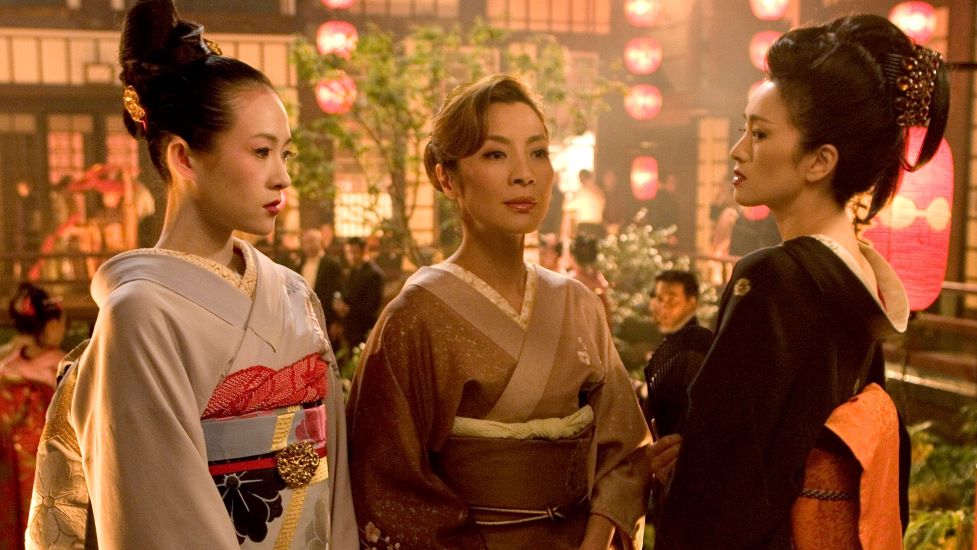
In 1920s Japan, 9 year old disgraced former geisha pupil Chiyo (Suzuka Ohgo) meets a businessman, Chairman Ken Iwamura (Ken Watanabe), who is kind to her. She resolves to one day become a geisha so she may see him again. As a young woman, Sayuri (Zhang Ziyi), as she is now known, masters the geisha arts under the tutelage of famous geisha Mameha (Michelle Yeoh). She encounters the Chairman again – but can she confess her love? And can she escape the attempts of her rival Hatsumomo (Gong Li) to destroy her?

Arthur Golden’s romantic novel was a major success in 1997, tapping into a fascination with Japanese culture. It was inevitable it would come to the screen. But in the journey, it has been stripped down into a beautiful but basically empty story, that seems trite and shallow and revolves around hard-to-invest in characters. By the time it’s finished you’ll wonder what the fuss was about.

The reconstruction of 1920s-40s Japan does look radiant, even if the film focuses on the most chocolate-box, touristy view of Japan you could possibly imagine (think of a Japanese item, event or object and it’s in the film). But it’s radiantly shot and intricately put together – the geisha costumes are a gorgeous, multi-layered, decorative treat – and it’s not a surprise the film lifted three Oscars for cinematography, production and costume design.

It’s not a surprise as well that it was overlooked in all the majors. It’s well-directed by Rob Marshall (juggling a multi-lingual cast and framing the film beautifully), but fundamentally a mix of the highly predictable and the deeply troubling. It’s basically Geisha Expectations or Jane Geishyre. Our heroine is a poverty-stricken youth who makes a series of key encounters in her childhood that shape her whole personality as she comes into wealth as a young adult. Similarly, this quiet girl’s obsessive love for a distant businessman (whom, yuck, she meets as a child – and he compares her to his own children), suffering quietly while sacrificing everything to help him.

But it’s all much less interesting than either of those novels. Despite the narration by an older Sayuri, we never get inside the young woman’s head. Ziyi Zhang is given very little to work with: she either looks distressed, simpering or sad, and frequently fades into the background of her own story. All we really learn about her is that the Chairman gave her an ice cream when she was 9, and that this event influenced her entire life. Equally dull is the Chairman himself, whom Watanabe struggles to make anything other a mute and inscrutable character, terminally dull.

It’s hard to invest in a love-across-the-ages (in every sense) romance between these two, because the film fails to build them up as characters we care about and gives them hardly any time to be together. By the time we reach a late confession, that the Chairman decided (when Sayuri was 9) to turn her into his ideal geisha (um, grooming anyone? Oh yuck) and they finally kiss each other, they still feel like complete strangers. She never matures into a woman who can fall in love past her childhood obsession and he seems more like an oddly manipulative sugar daddy.

Memoirs of a Geisha flounders on the empty plot and non-characters at its heart. It ends up relying on the visuals and lovely design work, because there is no drive or interest in its plot. The film’s most compelling performance is Gong Li’s Hatsumomo and when she walks out of the picture three quarters of the way through, it never recovers. Gong is superb as an envious, embittered geisha being replaced by younger faces. She snipes and growls like a relic from a Bette Davis Hag-thriller, but in the next scene her face will crumple with fear and sadness. She gets all the best lines and the most interesting scenes, from sniping, to lost love to pyromaniac revenge.

Memoirs of a Geisha disappointed at the box office. It’s clumsy casting didn’t help: fine actresses as Zhang, Yeoh and Gong are, they were all Chinese (in Yeoh’s case Malaysian Chinese) rather than Japanese, and there was an uncomfortable feeling that the producers didn’t think this was really an issue. It opened up a can of worms about lingering Chinese hostility over Japanese war crimes, leading to a ban in China. In Japan, the casting was condemned and the film seen as more interested in a tourist eye on geisha culture than a truly Japanese one (and it does appear the film consulted virtually no Japanese people during its making).

All the glorious design in the world can’t hide the emptiness at the heart of Memoirs of a Geisha. World War Two is skipped over in about two minutes (Sayuri spends the time working in the hills, and sums up her whole wartime experience in a couple of sentences, delivered in voice-over while Zhang looks beautiful and pained washing fabric in a river). Other than their external glamour, we don’t learn much about what being a geisha actually means. Its central romance goes from bland, to anonymous, to deeply troubling. It looks wonderful, but if there was anything deeper to the novel than a luscious, gorgeous setting and a predictable, traditional romance, it’s completely lost in translation.

The Remains of the Day (1993)

The Remains of the Day (1993)

Hopkins and Thompson are marvellous in this masterful adaptation from Merchant-Ivory

Director: James Ivory

Cast: Anthony Hopkins (Mr Stevens), Emma Thompson (Miss Kenton), James Fox (Lord Darlington), Christopher Reeve (Congressman Jack Lewis), Peter Vaughan (Mr Stevens Snr), Hugh Grant (Reginald Cardinal), Michael Lonsdale (Dupont D’Ivry), Tim Pigott-Smith (Mr Benn), Ben Chaplin (Charlie), Patrick Godfrey (Spencer), Lena Headey (Lizzie), Pip Torrens (Dr Carlisle), Paul Copley (Harry Smith) Rupert Vansittart (Sir Geoffrey Wren), Peter Eyre (Lord Halifax), Wolf Kahler (Ribbentrop)

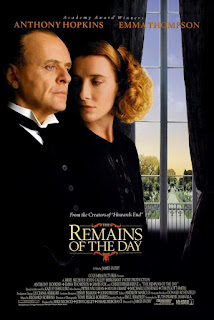
Kazou Ishiguro’s Booker-prize winning novel The Remains of the Day is one of my all-time favourites. So, it’s not a surprise I’m a huge fan of this masterful adaptation from the House of Merchant Ivory. I’m certain this is the apex of the team’s work. Mike Nichols had originally planned a film but, wisely, recognised when it came to making movies about repressed 1930s Brits, one team had a monopoly on how to do it best. Beautifully adapted by their regular screenwriter Ruth Prawer Jhabvala, The Remains of the Day is a wonderfully involving and deeply moving film.

Stevens (Anthony Hopkins) is a butler in a British country house purchased in 1956 by American Jack Lewis (Christopher Reeve). Keen to solve staffing problems (and for no other reason at all), Stevens journeys to the West Country to recruit the 1930s housekeeper, Mrs Benn nee Kenton (Emma Thompson). During the journey, he remembers his service for the previous owner, Lord Darlington (James Fox). An impeccable gentleman, Darlington dedicates himself to reconciliation between Nazi Germany and England, eventually tipping into an unwise dalliance with fascism and appeasement.

Stevens had no views on that though. In fact, he prides himself on his anonymity. The goal of his life is to maintain a dignified unobtrusiveness, ensuring the smooth operation of everything, leaving as little a mark as possible. Nothing can intrude on that: not his own feelings, the illness and death of his under-butler father (Peter Vaughan) and, above all, the unspoken romantic feelings between himself and Miss Kenton. The Remains of the Day is about duty and obsession and how a fixation on both can leave someone with little to show from a long life.

Stevens is living the lessons he learned from his father, an ageing powerhouse masterfully played by Peter Vaughan, who undergoes a physical collapse (from dripping nose to dropping trays) and bouts of forgetfulness, eventually dying on a night Stevens is too busy seeing to the sore feet of an illustrious French guest to spare a moment to visit him. It tells you everything about his character that this stiff-upper lipped commitment to duty is a source of pride to our hero.

There are few as curiously blank ‘heroes’ in literature than Stevens. The narrator of Ishiguro’s book is a dull, fussy, unbelievably cold man who has dedicated himself so fully to duty that he has let any emotional life wither and die on the vine – something he only realises far too late. It’s an immensely challenging role, bought to life masterfully by Hopkins. Hopkins astonishing skill here is to play all that repressed coldness on the surface, but also constantly let us see the emotion, longing and regret he is subconsciously crushing down play in his eyes and the corners of his mouth. Is Stevens even aware how much self-harm he is causing? It’s an astonishingly subtle performance.

So subtle in fact that the books conclusion – Steven’s tear-filled confession to a stranger late at night of all the mistakes he has made – was filmed but cut for being superfluous. Hopkins had done the lot, all the way through the movie, through acting skill. You can’t miss the struggle within him, not least the desperate, powerless longing he feels for Miss Kenton that, for oh-so-English reasons he can never admit to himself. Hopkins has the vocal and physical precision, but every gesture tremors with unspoken, barely understood longings. In fact, it’s a shock when he exclaims an angry “Blast” after dropping a bottle of wine (the real cause of his outburst being, of course, Miss Kenton’s announcement that she is getting married)

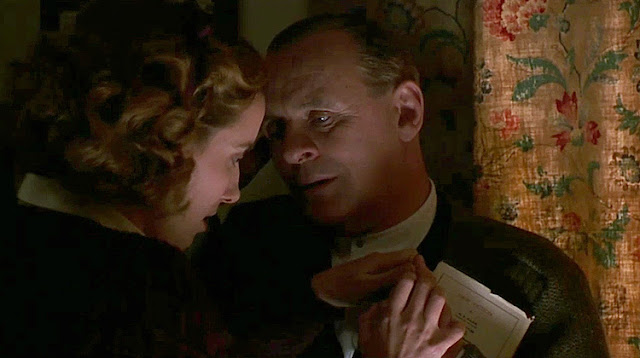
He and Miss Kenton conduct a professional relationship that blossoms into something like a friendship – but he consistently rejects her polite efforts to take it further. In the film’s most powerful scene, Miss Kenton enters his parlour and playfully tries to see the title of the novel he’s reading (a sappy romance). The playfulness tips into agonisingly awkward tenseness as Hopkins’ Stevens seems paralysed, his hand lingering inches from her hair but unable to bring himself to break decorum and fold her in an embrace – all while Miss Kenton continues her increasingly desperate semi-flirtatious banter. It of course ends with Stevens dismissing her: just as later he will take a snap of frustration as a signal to irrevocably cancel their late-night cups of cocoa together.

Emma Thompson is wonderful as a woman only marginally more in touch with her feelings and longings than Stevens is: aware that she, eventually, wants more from life, but unable to find the way of communicating the love she clearly feels for Stevens in a manner he can respond to. Instead, the two of them oscillate between a friendly, affectionate alliance and a discordant arguments (their only outlet for their passion), rooted in their inability to admit their feelings for each other. To further stress the point, both of them mentor young staffers (played by a very young Ben Chaplin and Lena Headey) who have the youthful “what the hell” to jack in all this for love.

Ivory’s wonderfully subtle film makes clear this is a turning point in history, the final hurrah for the this sort of deferential hierarchy. Stevens is the last of a generation of butlers, convinced that what their employers got up to had nothing to do with them – views not shared by Tim Piggot-Smith’s more grounded Benn, who chucks in his job working for a bullying blackshirt (who else but Rupert Vansittart?). Throughout the 1950s storyline, Stevens is constantly asked if he knew the infamous Lord Darlington (a sort of Lord Londonderry figure, hopelessly taken in by Hitler) – in fact, like Paul, he twice denies ever having known him.

And you can understand why, as the film has sympathy for Lord Darlington. As his decent, liberal god-son Reginald Cardinal (an excellent Hugh Grant) says, Darlington is a great asset for Germany precisely because he’s honest, well-meaning and motivated by a desire for peace. The fact that his leads him to consort with a host of Nazis, Blackshirts and the most appalling anti-democratic vestiges of the upper-classes (at one point, Stevens selflessly gives a performance of geopolitical ignorance so as to help demonstrate why men like him shouldn’t have the vote) is an unfortunate side-effect.

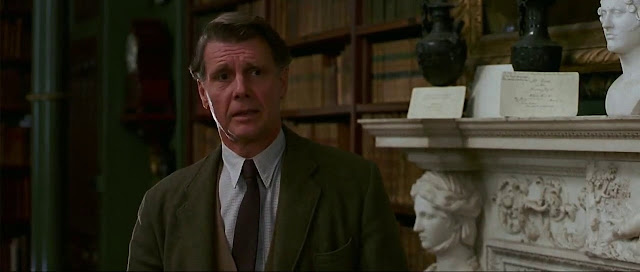
Played perfectly by James Fox, Darlington is misguided but genuine. As war approaches, he leads an increasingly hermit like life – camp-bed and paper-strewn, messy library – hosting conferences denounced by Jack Lewis (a fine Christopher Reeve) as a host of amateurs talking about a world they no longer understand. Beneath it all, Darlington is guided by fair play. So much so, it’s almost distressing to see him (under the influence of an attractive German countess) reading anti-Semitic pamphlets and sacking two refugee Jewish maids – an act he later regrets (far too late). This moment also reinforces Stevens’ compromised pig-headedness (not his place to judge!) and Miss Kenton’s fear to act (she’s horrified, but to scared of unemployment to hand in her notice).

All of this culminates in a series of scenes where emotions pour out of the actors, even while their words are banal and everyday memories and reflections. Ivory was never more confident and skilled behind the camera, and the film is a technical marvel, beautifully shot with a wonderful score from Richard Robbins. Hopkins is phenomenally good, simultaneously pitiable and smackable, Thompson is wonderful alongside him, Fox and Grant perfect – it’s a very well-acted piece. And a wonderfully perfect capturing of a classic modern British novel. No doubt: the best Merchant Ivory film.

The Shawshank Redemption (1994)

The Shawshank Redemption (1994)

Hope and friendship are put to the test in one of the most beloved films ever made

Director: Frank Darabont

Cast: Tim Robbins (Andy Dufresne), Morgan Freeman (Ellis Boyd “Red” Redding), Bob Gunton (Warden Samuel Norton), William Sadler (Heywood), Clancy Brown (Guard Bryon Hadley), Gil Bellows (Tommy Williams), James Whitmore (Brooks Hatlen), Mark Rolston (Bogs Diamond)

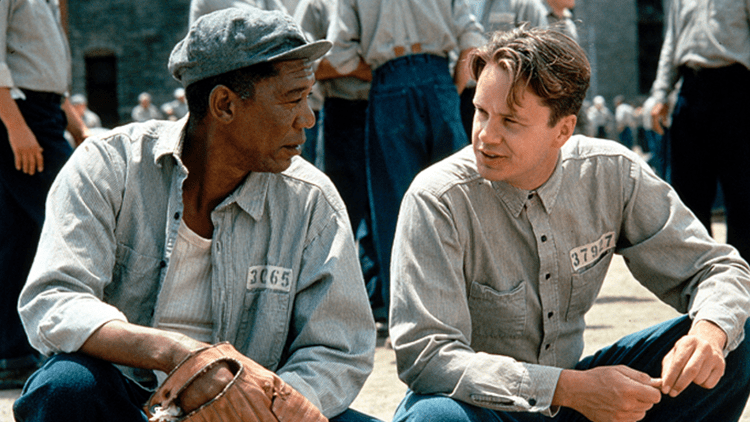
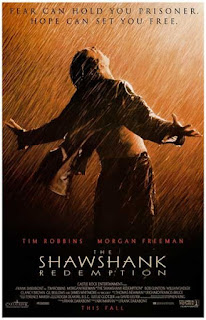
You’d hardly believe it… but the film now routinely listed as one of the most beloved films of all time was actually a box office bomb. The Shawshank Redemption tops many public polls of great films. It’s been the number one film on IMDB practically since the site was built. What is it about it that has had such a connection with people? Perhaps it’s because, under the multitude of genres the film touches on, it’s a film about the strengths of two things crucial to all of us: hope and friendship.

In 1947 Andy Dufresne (Tim Robbins), a mil-mannered bank manager, is imprisoned for life in Shawshank State Prison for the murder of his wife and her lover. For the next twenty years, Andy will get busy living rather than get busy dying, finding what moments of warmth, friendship and hope he can from rebuilding the prison library to helping his fellow prisoners. But he’ll also face daily danger, from sexual assault from brutal fellow prisoners to the machinations of corrupt warden Samuel Norton (Bob Gunton). During his time in prison, his confidant and closest friend is Red (Morgan Freeman), a smart fixer who has spent decades failing his parole hearings.

This is possibly the finest Stephen King adaptation ever made – the other major contender, Kubrick’s The Shining, has the disadvantage of being loathed by the author – perhaps because it captures both the Dickensian sprawl and sentiment of King’s best work, mixed with his edge and danger. There is a charming shaggy-dog story element to The Shawshank Redemption that helps make it delightful to watch. Not only that, it carefully builds up empathy for two people, both of whom are convicted murderers. It manages this as it turns its prison setting into a universal metaphor for the helpless victim trapped in a system.

Because, for all the pious spouting of the Warden (Bob Gunton at his most hypocritically vile), Shawshank is a place devoid of justice. On Andy’s first night in prison, a fellow new arrival is beaten to death for refusing to stop his terrified whining by head guard Hadley (a terrifyingly blank and amoral Clancy Brown). Abuse of power is pretty much endemic in Shawshank – as Andy discovers as he witnesses the guard’s casual brutality, and his accounting skills drags him into building the corrupt financial empire Norton runs with the slave labour of the prisoners.

Shawshank is all about squeezing hope out of people. It’s nothing less than a dystopian hell hole where there is no right and wrong. That’s Andy’s big impact on the place: for all its hellishness, he helps create some sort of freedom. Darabont wonderfully establishes the crushing dehumanising of the prison, so that moments where people can pretend for a moment they are free carry even more power. Whether that’s drinking cold beers on a freshly tarred roof (inveigled by Andy in return for sorting out Hadley’s inheritance tax problems) or listening to Mozart over the prison speakers. It’s there in the rebuilding of the library as a place prisoners can feel pride in or Andy coaching others to gain their school diplomas. And we feel every moment of it with them.

And that’s not even thinking about how brutish some of the other prisoners are. Much of Andy’s first few years in prison see him dodging gang rape from a group of particularly violent prisoners (led by a sneeringly vicious Mark Rolston). For that opening act, Andy is tossed as low as you can go, Darabont pulling no punches on vicious beatings or terror he has to endure. Hope becomes more powerful when it grows out of despair.

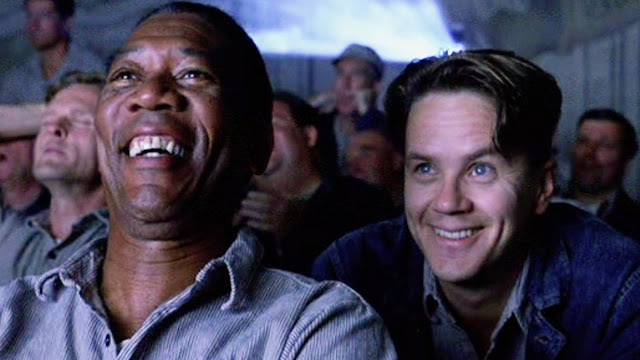
But that suffering is crucial because it gives even more warmth and power to the friendship between Andy and Red. Shawshank Redemption is a beautiful platonic love story, about a deep and lasting bond between friends. The warmth, regard and affection between these two characters, who discover how much they have in common is beautifully paced and supremely engaging.

It’s also helped a great deal by two fabulous performances from the leads. Tim Robbins’ baby-faced inscrutability is perfect for a man who may or may not be a murderer, and looks like he both needs protection and also has the internal strength to see him through anything. You can see why Red thinks, on first meeting him, he might be weak – but also never doubt for a moment that he’s strong enough to wade through the filth of Shawshank.

Opposite him is an iconic, beautiful performance from Morgan Freeman. Darabont’s film uses Freeman’s gorgeous tones to perfection through Red’s narration. Freeman of course gives Red a wonderful world-weary wisdom but also a sort of innocence. Red has worked out perfectly how to bend the rules of the prison – so confidently that he’s an awe of someone who finds out a way to break them completely. This is some of the actor’ finest work, making Red witty, shrewd, self-aware but also in some ways touchingly naïve and scared that he could never survive outside the prison.

Institutionalisation is a major danger in prison: it’s part of the danger of giving up hope, of accepting the status quo that your whole life is those four walls. But then, it’s also the terror of leaving a regimented world, where some decisions are made for you and you can always know your place. One of the film’s finest sequences covers the tragic end for Brooks, wonderfully played by James Whitmore, an educated and respected librarian inside but an irrelevant, old man outside, day-dreaming of one day being allowed to ‘go home’. It’s a danger Red knows could hit him too – after all he’s the best fixer inside, but a man with no such purpose outside.

Darabont’s film understands it. In fact, the film itself encourages the viewer to get a bit institutionalised themselves. The audience enjoys Andy’s triumphs, the commadre between the prisoners, the fun of the tables subtly turned. So much so the viewers can forget that this should be a film about getting out of this hell. (In fact you can argue, after a time, it makes prison look a little like an eternal boys camp). It shakes the viewer up as much as Andy when this status quo we’ve started to enjoy gets shaken up by the arrival of young thief Tommy (Gil Bellows). It’s a moment where the viewer realises that the film made a subtle shift from being a prison drama to a buddy movie where our heroes eek out little wins from the system: not least because this is the point when the system reminds Andy (and us) that it’s not to be messed with.

Darabont’s film reforms into a wonderful caper movie, a super-clever heist, covering Andy’s eventual escape. This is classic Ocean’s Eleven stuff and has the double delight for the audience of paying off Andy’s mistreatment and injustice and also allowing us to really enjoy how ingenious he is. Then the film switches gears effortlessly on a sixpence after this moment of delightful triumph with a low-key, tender, Red-focused coda which taps us straight back into the beautiful warmth of that friendship.

Perhaps this is why The Shawshank Redemption is so universally beloved. It’s a prison film and a buddy film, it’s a caper and it’s a film about a crushing system, it’s a film of hellish suffering and deep hope, all framed around a wonderfully judged, life-affirming friendship. Darabont’ script and direction is perfectly judged and immensely moving and the acting is perfect. It works so well because it constantly brings us back to feelings of hope and friendship. Those are universal feeling and they are beautifully presented in the film. We live with Andy being put through the wringer, and relate to him so much, that we feel as cleansed by the rainfall as he does. It’s that which lies at its success; and the brilliant way it gets you to invest in the fate of its characters.

Lady Macbeth (2016)

Lady Macbeth (2016)

Florence Pugh is either a feminist icon or a ruthless monster in this Gothic drama

Director: William Oldroyd

Cast: Florence Pugh (Katherine Lester), Cosmo Jarvis (Sebastian), Naomi Ackie (Anna), Christopher Fairbank (Boris Lester), Paul Hilton (Alexander Lester), Golda Rosheuvel (Agnes), Anton Palmer (Teddy)

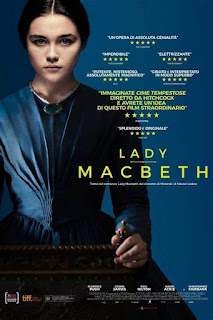
On a rural estate in Northumberland in 1865, Katherine (Florence Pugh) enters a loveless marriage with Alexander (Paul Hilton), son of landowner Boris (Christopher Fairbank). The marriage is a disaster, with the couple incompatible and Katherine bored and trapped with no friends or allies. When Alexander and Boris travel for business, she finally gets the chance to explore her surroundings and enters into a passionate sexual relationship with estate worker Sebastian (Cosmo Jarvis). When Boris – but not Alexander – returns, Katherine begins a chain of events that will see her commit a series of increasingly shocking crimes to hold onto the things she wants.

Oldroyd’s film is adapted by Alice Birch from a Russian short story, and is told with an icy, observatory coldness that doesn’t flinch from the increasingly sociopathic ruthlessness of its lead character. The film at first seems like it will set out a feminist fable, of a trophy wife struggling against the neglect and imprisonment of forced marriage. But, as it progresses, any pretence that Katherine is a feminist hero is stripped away: she is modern only in the most dreadful sense – a woman who will willingly commit almost any act of ruthlessness to safeguard her interests.

Playing Katherine, the film is blessed with a star-making turn from Florence Pugh. Only 19, Pugh gives a performance of such stunning depth and intelligence from a young actress that possibly hasn’t been seen since Kate Winslet in Heavenly Creatures. She’s a master of outward stillness and inscrutability, while always communicating the raging whirlpool of emotions underneath the surface. She’s fiercely intelligent, viciously ruthless, frequently observes other characters silently and can twist her face into a mocking defiance. Pugh also communicates the desperate emotional need for connection that motivates this woman, her willingness to go to such shocking lengths motivated by that yearning for a love that she has never known.

Oldroyd is careful not to present her a Gothic monster (would certainly be easy to do so!). The film is careful to outline how unwanted and ill-treated she is by Alexander and his father. Boris (a bullying Christopher Fairbank) ignores and talks down to this person-as-a-piece-of-property, basically just an unlooked-for freebie with some land, who is failing to get on with the production of an heir. Alexander (Paul Hilton, superbly weak and dripping with contemptuous bitterness) has no interest in his wife, his sexual interest restricted to ordering her to strip and face the wall while he pleasures himself. Neither of these characters ever have anything like a conversation with her, instead speaking to her like a dog or malfunctioning appliance.

So, you can see why she is so drawn to the passion of Sebastian – and also, perhaps, why she might find this cocky but not-exactly-sharpest-tool man an attractive chance for her to wear the trousers for once. Their couplings have a sexual urgency and passion to them that is lacking for anything else in the film. But we never see them as emotional or intellectual equals. There is no scene of romance, bonding or conversational or unsexual emotional connection with them. Katherine becomes obsessed with Sebastian – but it seems to be at least as much an obsession with the sex and the sense of control he brings her, as much as it is Sebastian himself.

As Sebastian, Cosmo Jarvis is initial bluster and wide-boy charm that strips away to reveal a man far more timid, scared and increasingly out-of-his-depth with what he’s got caught up in. For all his Lady Chatterley’s Lover physicality, Jarvis has a real vulnerability in his eyes and a certain little-boy lost quality. His panic and shock as event balloon become increasingly tragic.

Equally affecting is the terror of Naomi Ackie’s maid, torn between different sides. Like Pugh, Ackie is superb at suggesting emotional torment under a still surface and her character Anna frequently finds herself the mute observer of increasingly dangerous events, unable to influence them.

The film is shot with a coolness that at times makes it hard to connect with emotionally. In many ways this is a horror film, with a creeping intimidation, scoreless backdrop and a chilly aesthetic of empty rooms and muted colours. There are some bravura scenes: a life-changing breakfast scene is shot with a terrifying but suggestive stillness, just as it is played by Pugh with a chilling unreadability. Oldroyd’s film masterfully uses a number of simple and unflashy camera set-ups that build up to an overwhelming feeling of dread.

And some of this stuff is hard to watch. Two killings are shown in disturbing detail, enough to haunt your dreams. But the film wisely just presents the facts and avoids judgement – however implied that might be. It also makes for an intriguing condemnation of avarice – everyone in the film seems to be longing for something, but none of them find that struggle was worth it. And at its centre is a intriguingly unknowable and unreadable woman, who only becomes more alarming the more we find out about her.

Lady Macbeth is sometimes a little cold and distant for its own good. But its hauntingly grim and has a stunning, career-making performance from Florence Pugh. Filmed with creeping dread, it’s a cold, disturbing film that will linger with you.

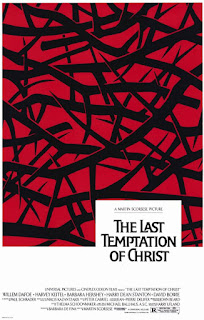
The Last Temptation of Christ (1988)

Last Temptation of Christ header
Willem Dafoe plays the Son of God in Scorsese’s supremely controversial The Last Temptation of Christ

Director: Martin Scorsese

Cast: Willem Dafoe (Jesus Christ), Harvey Keitel (Judas), Barbara Hershey (Mary Magdalene), Harry Dean Stanton (Saul), David Bowie (Pontius Pilate), Verna Bloom (Mary), Barry Miller (Jeroboam). Irvin Kershner (Zebedee), Victor Argo (Peter), Andre Gregory (John the Baptist), Nehemiah Persoff (Rabbi), Tomas Arana (Lazarus), Gary Barsaraba (Andrew), Juliette Caton (Girl Angel)

There are few films as controversial as this. Scorsese’s earthy adaptation of Nikos Kazantzakis’ The Last Temptation of Christ has lived its whole life under the shadow of the parade of traditionalists, conservatives and evangelists who have called for everything from the negative being destroyed to the death of its director. All this is rooted in the film’s quest – as in the book – for the human in Jesus, the saviour who was both mortal and divine. As part of this, it showed him expressing anger, doubt and of course, presented him with temptation and threw him into the dirty, working-class world where he made his ministry.

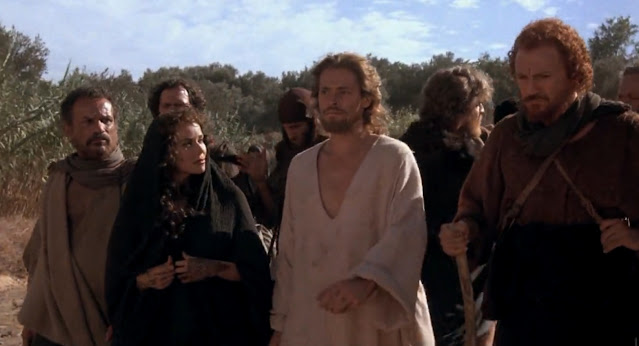
The film follows the life of Jesus (Willem Dafoe) pretty much as per the Gospels, with several interjections and reinterpretations (some of which seem designed to piss off the faithful). We meet Jesus as a carpenter who crafts crosses for Roman crucifixions by day, plagued by voices and fits at night. He knows he has a purpose but is scared of what it might be. Eventually he finds it, encouraged by Judas (Harvey Keitel) his most faithful disciple and a passionate campaigner against the Romans. The last temptation itself fills the final act of the film. On the cross, a disguised Satan comes to Jesus and offers him the chance to leave behind being the messiah and live a normal life: marriage, children and content old age surrounded by family.

The Last Temptation of Christ is Scorsese’s wrestling with his faith. It’s a highly personal, defiantly modern and daring version of the gospels that strongly invests in the notion that true faith is only possible if we also have doubt to overcome. And it applies this logic to Jesus, who is shown here as far more grounded, human and flawed than He has ever been in the movies (or anywhere else). Voiceovers communicate His constant doubts and insecurities – and even His resentments about not understanding what God intends for him.

Where other Biblical epics are old, stodgy and stiff, The Last Temptation profoundly challenges its viewers. This is not a picture postcard world. Jesus’ surroundings are humble and dirty. His disciples are simple men – Judas, the only one with any form of intellect, attacks them as clueless yes-men. But it’s a film that stresses the humanity of Jesus. It wants us to admire him even more, because He needed to overcome the same internal demons we all confront. This is not a saviour unbent in purpose, but battling always. It asks us to try and relate ourself to Jesus in a new way, to ask how we might have felt and whether we would have been strong enough to take on that mantle.

Played with extraordinary passion and fire by Willem Dafoe, this is a Jesus who is scared, reluctant, shows flashes of bitterness and anger but struggles to put all this aside to embrace His destiny and purpose as the Messiah. On other words, He’s far more human than we’ve seen before. He’s also rough and unprepared, in many ways, for His ministry. We see His first attempt at preaching – having, with half-confidence, half-apprehension told Judas He’s sure God will give Him the words – which is carefree, impassioned and amateurish but full of inspirational fire. He doesn’t quite convey the message He’s aiming for, but it is enough to win the devotion of several of the men who will become his disciples.

Scorsese shoots this, as he shoots many of the scenes among the crowds, with an immediacy and urgency, using a mobile camera and throwing us in among those listening to Jesus’ words. John the Baptist’s ministry by the lake is a near-orgy of religious ecstasy (with added nudity), full of wild emotion and jubilant singing – all of which drops out on the soundtrack to just the lapping of the river, as Judas and John meet. (It’s a brilliant moment that shows the world-stopping impact of revelation). Scorsese mixes this with scenes of a spiritual stillness and gentle mysticism. During his time in the desert – during which Jesus sits inside a perfect circle, which He draws free hand in the dirt – He encounters, in scenes of haunting unknowability, temptation from Satan in the form of a snake, a lion and a jet of fire.

It’s a starting point for Jesus’ embarking on a series of miracles and world-changing preaching. Controversially, even now, He is still uncertain of what He is meant to – he tells Judas (who remains a constant confidante) that God only gives Him small parts of the total picture as He needs them. He comes from the desert inviting his disciples to war – against Satan, and to bring God’s word to the world. It seems another provocative image – Jesus brandishing an axe in one hand, His own heart (plucked from His chest before the disciples) in the other – and it’s one of the points in the film where I feel Scorsese overplays his hand. I’m not quite sure what he is suggesting here, as Jesus calls his disciples to war, unless it’s a campaign of muscular Christianity.

It competes with several other images and sequences that infuriated many. Some of these are too much: Jesus crafting crosses and even helping the Romans (in the film’s opening) nail a victim too one is far too much, a tasteless attempt to show a flawed man. Waiting to apologise to Mary Magdalene (a delicate Barbara Hershey) for his part in this, He sits while she services a roomful of men one after another. Moments like this always feel a little too much, even if it’s a more genuine insight into what Mary Magdelene’s life was actually like than we normally get.

But the Temptation itself is fascinating and moving – if a little too long. There was of course outrage at seeing Jesus marry and make love to Mary Magdelene, rejecting his purpose for a life of normality. Surely, if Jesus could be tempted by anything it might have been this: the man who never knew a moment of the life you and I lead, given a chance to experience it. With Satan – passing himself off as a young female guardian angel – guiding him, the vision sees Jesus age into an old man. Satan presents a plausible argument: man and Earth can live in a simple happiness, if they forget the demands of God in heaven.

The very idea of Jesus either deceived by Satan for a time – or seriously considering abandoning His divine purpose – is anathema to many, but again it re-enforces Scorsese’s view that doubt is essential for faith. That we can only commit the supreme act of commitment to God, if we are uncertain about doing it in the first place. And Jesus’ re-devotion at the end to his mission truly gives a sense of “It is being accomplished” in a way few other films have managed.

Ideas like this – and the earthy, vigorous nature of Jesus’ world – dominate the film and dare and push the viewer. Dafoe is superb – and Harvey Keitel excellent as a politically committed Judas, here not betraying Jesus, but taking on the harder role (that of betrayer – Jesus even tells him he is not strong enough for such a role, so has the easier part in dying). It’s shot with a brilliant modernism and has a superb score from Peter Gabriel, stuffed with lyrical etherealism and making use of several contemporary instruments. It sometimes overplays its hand, but as a personal work of a director juggling his own doubts, fears and faith on screen, it’s perhaps one of the most extraordinary religious films ever made.