Category: Literary adaptation

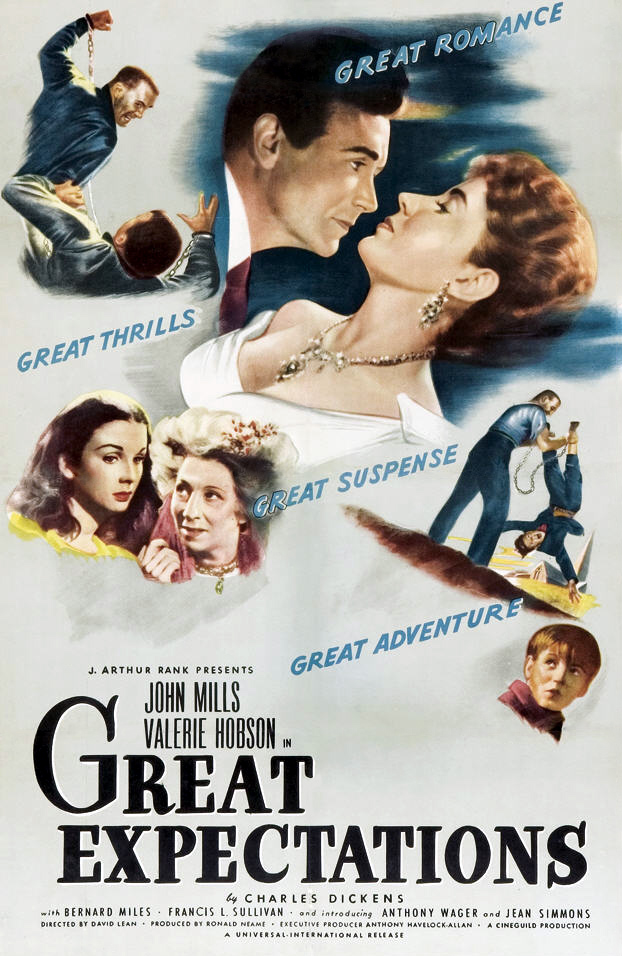
Great Expectations (1946)

Great Expectations (1946)

Lean’s masterful adaptation is still one of the finest examples of Dickens on screen

Director: David Lean

Cast: John Mills (Pip), Valerie Hobson (Estella), Bernard Miles (Joe Gargery), Francis L Sullivan (Jaggers), Finlay Currie (Abel Magwich), Martita Hunt (Miss Havisham), Alec Guinness (Herbert Pocket), Jean Simmons (Young Estella), Anthony Wagner (Young Pip), Ivor Barnard (Wemmick), Freda Jackson (Mrs Joe Gargery), Eileen Erskine (Biddy), Torin Thatcher (Bentley Drummle)

Of all Dicken’s books there is perhaps none so popular as Great Expectations – and no Dickens adaptations are more highly regarded than David Lean’s 1946 film. Of course, just under two hours is only time to tell a simplified version of Dicken’s original. But no-one’s taking the book away. What Lean’s film did triumphantly was turn Dicken’s prose into a clear cinematic language and style, without losing the uniqueness of the author’s voice. Lean’s visual mastery is perfectly matched with his experience as an editor of telling a story to produce an endlessly entertaining film.

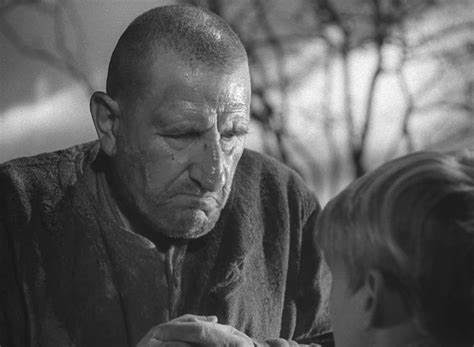
As a young boy Pip (Anthony Wagner) encounters an escaped convict (Finlay Currie) in a graveyard. Intimidated, Pip brings the convict food and tools to escape his chains – acts which the convict clears him of when he is caught later that day. Weeks later, Pip is invited to the home of rich spinster Miss Havisham (Martita Hunt) to provide her and her adopted daughter Estella (Jean Simmons) with company. The visits continue until Pip’s apprenticeship as a blacksmith to his brother-in-law Joe (Bernard Miles) begins. Imagine Pip’s (now John Mills) surprise six years later when he is informed by lawyer Jaggers (Francis L. Sullivan) that he has come into money – that he has become a gentlemen of “great expectations”. Assuming it is the work of Miss Havisham – and that he is destined to marry Estella (now Valerie Hobson) – he is horrified to discover his life is more complex than he believed.

The film repackages Great Expectations a bit more into a romance. While the relationship between Pip and Estella, and the bond between them, is clear in the novel – and a large part of its plot – its but one thread masterfully woven together into the final storyline. Here this thread is given prominence, at the cost of several others. It’s not a complaint as such, but it makes Great Expectations into a more traditional story: a feeling added to by the film’s more conventional “feel-good” ending (very different from the much more uncertain ending of the novel, that Dicken’s edited back and forth in different editions to increase or decrease its hopefulness). However, it works for creating a film story, even if it loses some of the depth of the novel.

Its also more than balanced by how much the film gets right. Lean brilliantly captures the novel’s atmosphere, its gothic sense of impending dread, the burden of the past and the paranoia of persecution. For decades the opening scenes of the film, with its masterfully shot and edited mist covered graveyard (simultaneously a place of peace and a place of unsettling unknowability ) bursting into life through the grasping hands of Magwich, were practically used as a textbook example of cinematic language. Lean’s work is intensely cinematic. The mis en scene of Expectations is masterful – everything from casting, to camera angles to score comes together to bring Dickens world to life. This is exactly his London as he wrote it. It’s a wonderful expression of a particular author’s style, told using a mastery of cinematic language – from camera angles to editing cuts.

The characters have that perfect sense of eccentricity laced with menace that Dickens invests them with. Francis L Sullivan’s Jaggers is an unknowable legal machine who is part man of business, part fearsome fixer. Alec Guinness (in his film debut) is good-natured kindness to a T as Pip’s faithful friend Herbert (in one lovely scene he politely and gently corrects Pip’s primitive table manners). Finlay Currie’s Magwich captures the sense of danger and threat in the book’s opening that will become a fatherly meekness in the story’s later acts.

Largest of all, Martita Hunt’s gothic Miss Havisham sits like a giant spider at the centre of a decaying web. The design of Satis House – with its rotting wedding cake, sprawling cobwebbed dinner service, the heavy curtains and lack of light – is just one of the many perfect touches in the film. Hunt herself is superb as this outwardly eccentric aunt, who in fact has been nursing a core of bile and hatred that ends up only hurting those closest to her. There is something hugely dreamlike about Miss Havisham’s home – you suspect Lean may have watched some Cocteau – with its strangely angled table and mix of intimate framing and wide-angle crane shots.

Perhaps because we only see, not read, Pip’s actions in this film it’s impossible not notice what an arrogant snob he becomes. John Mills does decent work in the part, but (much as in the book) Pip ends up feeling like a slightly colourless figure. The film doesn’t always explore in detail the negative sides of his character meaning moments like his patronising dismissal of the kindly Joe (a perfectly judged Bernard Miles), don’t do the character much favours. Mills does however make a larger impression than Valerie Hobson, left slightly adrift as Estella. She’s not helped by how outstanding Jean Simmons is as the young and preciously flirtatious Estella, the perfect picture of the little cruelties teenagers inflict on each other. (A braver film might have had her play the role throughout – but then Mills would look even older than he does!)

The film is very strong on the pain caused to these two characters – and that they cause for each other. More than any other version, we get a sense here of how Miss Havisham’s misguided aim to use Estella as a weapon of revenge on all men only manages to hurt Estella herself and Pip (her one true love as presented here). Just as a Pip’s snobbish dismissal of Joe stings. And Lean’s brilliant sense of pace and rhythm means that this plays hand-in-hand with Pip’s ever more desperate attempts in the second half to save Magwich from doom.

Many of the complexities of the plot (from Estella’s parents to Herbert’s marriage to several key characters) are cut out, but it’s striking how the film still manages to feel so faithful to the book. Lean’s understanding of Dickens mix of eccentricity and darkness is communicated in every frame. The major moments and characters from the book are beautifully bought to life, from that opening scene to Satis House. But also because small moments, like Wemmick’s “Aged P” remain in the film. Sure, the canvas has been reduced – and refocused into a love story of sorts – but the picture that emerges is still very much in the style of Dickens.

That’s what makes it one of the greatest adaptations of all time: it’s both an interpretation of the original and a beautifully judged capturing of its spirit and tone. An adaptation twice the length may have caught more plot, but would not have been such a fine movie. Because so much of this film’s imagery and drama sticks in the mind long after it is finished. Lean’s masterstroke here was to understand completely the heart of the book, and to focus the film on that. Brilliantly assembled, designed, shot and acted, it’s still one of the best literary adaptations ever made.

The Little Stranger (2018)

Little stranger header
Domhnall Gleeson doesn’t believe in ghosts in The Little Stranger

Director: Lenny Abrahamson

Cast: Domhnall Gleeson (Dr Faraday), Ruth Wilson (Caroline Ayres), Will Poulter (Roderick Ayres), Liv Hill (Betty), Charlotte Rampling (Mrs Ayres), Harry Hadden-Paton (Dr David Granger), Anna Madeley (Anne Granger), Richard McCabe (Dr Seeley)

Can an adaptation of a novel work when the key to its success was the way it was told rather than the story itself? With its unreliable narrator and distinctively interior style, Sarah Waters’ book was a tough ask. But, making it even harder for the big screen, The Little Stranger is a ghost story narrated by a fervent non-believer, who witnesses none of the supernatural elements and spends his time finding detailed, logical reasons for why the people living in the haunted house are as unsettled as they are. It makes for a challenge which, for all the style Lenny Abrahamson brings, the film doesn’t quite manage to meet.

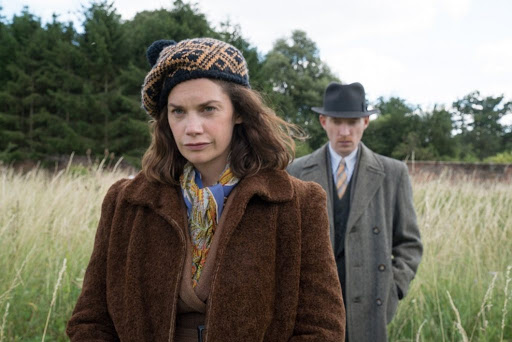
Our sceptic is Dr Faraday (Domhnall Gleeson), a young village GP in the years immediately after the Second World War. Faraday grew up in the shadow of the Ayres house, a grand country seat now being lived in by the last remnants of the Ayres family who have fallen on hard times. Son Roderick (Will Poulter) has been left with debilitating injuries after his RAF service, Caroline (Ruth Wilson) seems destined to become a spinster, and their mother (Charlotte Rampling) struggles to hold together what’s left of the house’s prestige, among leaking roofs and bills that can’t be paid. Dr Faraday becomes an intimate of the household. But are the family’s problems partly linked to a malign presence in the house, perhaps the unsettled ghost of a third, long-dead Ayres sibling? Or is it all just bad luck, frozen pipes, branches on the window and creaking floorboards?

Well of course it isn’t. The film’s main problem is that it takes a book where the narrator spends the entire time stubbornly refusing to accept he is in a ghost story, and repackages it as a more conventional tale of creeps and psychological horror. While moments like this are undoubtedly unsettling, it rather flies in the face of what made the book unique in the first place.

In the book you find yourself – despite knowing deep down he’s wrong, because that’s not how stories work – thinking that maybe all this is just a series of terrible coincidences impacting a psychologically fragile family. In the film, you are never in any doubt that the ghosts are real. Not least, because we are frequently witness to supernatural events. When Charlotte Rampling’s character is terrified in the nursery by the ghost of her lost child, we share the terror with her. A truer adaptation of the book would have only shown us the aftermath – a trembling woman on the ground surrounded with broken glass – and asked us if we shared Faraday’s diagnosis of suicidal depression.

The change in perspective from the book has a particularly bad impact on the Faraday character. Faraday, deep down, is a sort of chippy Charles Ryder, as much in love with the house – and the prospect of one day owning it – as he is with the family itself. This mix of longing, envy and class jealousy bubbles under the surface of the character in the book, qualities that we have to read between the lines to detect. In the film however, these qualities are bought firmly to the surface.

This means that, for all Domhnall Gleeson has just the right rigidity and lack of imagination for the born sceptic, it means the character’s sinister possessiveness towards the Ayres house comes more to the fore. In the film it’s hard to escape the sense Faraday is as much a creep as the ghost (something the film even perhaps vaguely suggests in its open-ended conclusion). He’s cold and undeniably bitter, quietly but resentfully recording each moment where he is treated like a retainer.

The film also loses some of the context of the book as well. Part of the reason this house is falling apart is the declining wealth of the family in a world of post-war depression and higher death duties. Today the Ayres house would have been long since flogged to the National Trust. The crumbling house – compared to the grand vision in Faraday’s memories – is itself a metaphor for a particular class in Britain. However, this gets a bit lost in the film. Instead it’s easy to see the Ayres as just personally unlucky rather than symptomatic of a general collapse of the landed class.

But the film does do lots of good things. The ghost stuff is undeniably creepy – even if, as I say, it leaves the viewer in no doubt that Faraday is wrong and the Ayres are right. Will Poulter is very good in a small role as the bitter and scarred son, while Wilson captures a sense of premature middle-aged drift in Caroline, a woman unhappy in her life but unsure what she wants. Rampling is similarly very strong as a crumbling matriarch.

The film also looks lovely – perhaps too lovely, with its idealised view of a 1950s that surely was dirtier than this – and is well assembled. It just fails to bring a narrative drive to the film to replace the uncertainty and scepticism of the narrative voice that made the book so strong. There Faraday’s dismissals and self-denial about his class envy were what made the story compelling: here they are both removed – and what’s left isn’t quite interesting or unique enough to fill the gap.

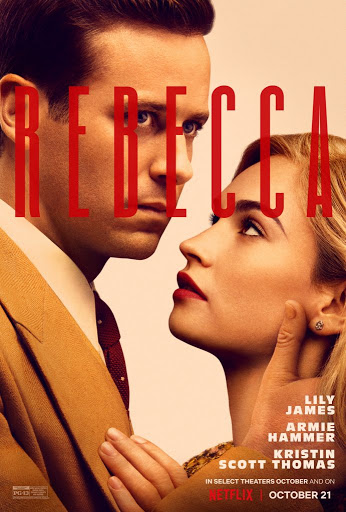
Rebecca (2020)

REBECCA
Lily James and Armie Hammer do their best in an overblown Rebecca the swops Gothic chills for lovely costumes and locations

Birector: Ben Wheatley

Cast: Lily James (The second Mrs de Winter), Armie Hammer (Maxim de Winter), Kristin Scott Thomas (Mrs Danvers), Keeley Hawes (Beatrice Lacy), Ann Dowd (Mrs Van Hopper), Sam Riley (Jack Favell), Tom Goodman-Hill (Frank Crawley), Mark Lewis Jones (Inspector Welch)

Hitchcock’s film version of du Maurier’s novel casts a long shadow. Few have taken up the challenge to film it since – and Ben Wheatley’s is the first film version in nearly 80 years. But you can be pretty certain that, unlike Hitchcock’s, this one probably won’t be being watched 80 years from now.

In Monte Carlo, a young woman (Lily James) meets and falls in love with rich Cornish landowner Maxim de Winter (Armie Hammer), a widower on holiday. They marry and return to his seat at Manderley. However, on arrival the second Mrs de Winter finds that she is living in the shadow of Maxim’s deceased first wife, Rebecca. This feeling is encouraged by the passive aggressive manipulation of Rebecca’s devoted housekeeper Mrs Danvers (Kristin Scott Thomas). Slowly, the second Mrs de Winter starts to worry that even her sanity starts to be slipping.

Wheatley is a director with a love of thriller and horror, and he really should be a natural fit to take on du Maurier’s gothic creepiness. But Wheatley feels almost constrained by the period title and beauty. This is a film that totally misses its gothic beats, instead settling for being a lusciously filmed costume drama. It has only a few traces of the unsettling psychology or air of ghostly possession that the story requires, and even those are chucked in haphazardly and then forgotten in order to make way for a pretty sunset or generic shot of Lily James looking sad in the rain.

The inescapable feeling on watching this is that Wheatley actually wants to turn the story into a more conventional romance. The age difference between Maxim and the second Mrs de Winter has been almost removed.  With Armie Hammer too young and Lily James too pretty, there is no ambiguity to Maxim’s feelings or motivations, nor any power imbalance to their charming, sunlit courtship, filled with carefree drives and charming beach picnics. Gone are the suspicions (for both the second Mrs de Winter and us) as to what a rich, sophisticated older man could see in a shy, unremarkable, average-looking girl who’s employed as little more than a servant.

It also removes much of the vulnerability and uncertainty Mrs de Winter should feel, by bringing her onto more equal terms with her husband. From du Maurier’s vision of an innocent woman feeling out of her depth as she’s plunged into an alien world, unable to break through the hauteur of a distant, older husband, we instead get far more of a conventional whirlwind romance that sours when the couple return home.

It’s not really the fault of the two leads, who give sterling work. Lily James has just about the right vulnerability to her, even if she’s still got a bit more spark than the quiet, demure character needs. But James has a fabulous sense determined earnestness to her, an eagerness to do the right thing and not let anyone down (her greater dignity and strength also pays off in sequences where Mrs de Winter takes on a stronger position in the marriage).

As Maxim, Armie Hammer has the right sort of authority and conveys the distance and coolness of the character, even while he is clearly too young and at times seems a bit hampered by his accent and setting. (Like some American actors, he at times struggles to fully comprehend the issues of class within the film.) Perhaps the main weakness to the casting is, by playing up his charm and romanticism, you never really think for a moment that this is a bloke who might have murdered his wife. It also makes him never feel like the sort of chap who could honestly ever have though about dispatching his new wife. It again strips out much of the darkness and dread of the original.

Needless to say, Kristin Scott Thomas has a ball as Mrs Danvers, the obsessed and bitter housekeeper, a part that hardly pushes her to her limits but which she delivers more than enough in. Wheatley pays homage to several of Hitchcock’s shooting decisions around the character, and the conveying of her menace is probably the film’s most successful beat.

However, the film fails at too many other important points. The sense of the previous Mrs de Winter haunting the home is lost completely. Too often the creepiness and psychological fear the film is aiming for gets lost, with periodic bursts of Cornish singing used too obviously to suggest unsettling menace. One very successful sequence set in a room of mirrors just serves to flag up how painfully absent the sense of threat and fear are from the rest of the film. To be honest, it’s a film that needs more darkness, more shadows. Instead everything is lit with all the prestige handsomeness of Merchant Ivory and Sunday dramas. Why did Wheatley go for this visual approach? Did he feel that it was expected from the lovely locations and luscious costumes?

And the costumes and the sets do look lovely. The shooting colours are vibrant and beautiful. It’s very grand and charming and it turns a haunting novel with dark deeds at its heart into something safe and neutered.

 The final product is what happens if a combination of styles are thrown together in a way that service not the story, but how each element of it could be best presented. When the film wants to show off the set and costumes, it’s bright and beautiful. At the few times it wants to suggest ghostly intimidation, we get some chanting and a few darkened rooms and billowing curtains. Neither plays well off the other and the film ends up feeling professionally mounted but workmanlike. It’s a shame as Wheatley could have really made something of this. But it feels like he has been forced into a prestige costume drama straightjacket.

The Hound of the Baskervilles (1959)

Hound of the baskervilles header
Peter Cushing is the great detective in The Hound of the Baskervilles

Director: Terence Fisher

Cast: Peter Cushing (Sherlock Holmes), André Morell (Doctor Watson), Christopher Lee (Sir Henry Baskerville), Marla Landi (Cecile Stapleton), David Oxley (Sir Hugo Baskerville), Francis de Wolff (Dr Mortimer), Miles Malleson (Bishop Frankland), Ewen Solon (Stapleton), John Le Mesurier (Barrymore), Helen Gross (Mrs Barrymore)

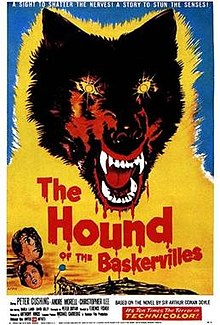
Arthur Conan Doyle’s most famous story hardly needs introduction. In 1959 it was told with a Hammer Horror twist. With its demonic dog, fog covered moor and blood-laden backstory surely no Sherlock Holmes story could be better suited to the studio. The film is fairly faithful to the basic outline of the original, although with added tarantulas and (more controversially) a new villain.

But it all works pretty much a treat, largely due to the performances of Cushing and Morell as Holmes and Watson. Cushing’s Holmes is sharp, analytical, has bursts of energy mixed with impatient distraction. Cushing went back to the stories and threw in many small details – from lines from Doyle to physical moments such as securing notes to the mantelpiece with a knife. His Holmes also uses rudeness in a Doylesque way he rarely does in film. Cushing has the intelligence and dynamism of the Detective – he’s one of the more overlooked actors to play the role – and had been determined to be faithful in his interpretation (sadly sequels were not forthcoming, although Cushing played the role several more times on the BBC).

Morell also returned to the novels to present a Dr Watson who was smooth, professional, assured and competent if uninspired. It was a far cry from the blundering buffoon which – thanks to Nigel Bruce – the public expected from Holmes’ faithful Boswell. Morell’s more patrician style made him a fine contrast with Cushing’s bohemian tinged Holmes. The two actors also spark beautifully off each other and create a feeling of a genuine friendship, underpinned by affection and loyalty, frequently showing genuine concern for each other’s safety.

Aside from these two excellent performances in the leads, the film is a solid if not spectacular adaptation, competently filmed. Terence Fisher’s direction sometimes struggles to cover the cheapness of the enterprise and some sets convince more than others. For a film that is quite short, the pace sometimes slackens (the Baskerville legend in particular gets far too much screen time, probably connected to the presence of the buxom servant girl Sir Hugo is planning to bed). Moments such as an attempt to assassinate Sir Henry via tarantula in London (which makes no sense at all) provides decent moments of tension but are basically filler.

The film does manage to address some of the problems of the novel by introducing a greater sense of mystery, in particular by providing motivations for several characters. Saying that, just as in the novel (where the mystery is solved by Holmes travelling to Scotland and reading some records – not good drama), here much of the mystery is resolved by Holmes carrying out an off-stage conversation with convict Seldon. Much as in the book, Holmes travelling to the area incognito doesn’t really add much to the story other than providing a late reveal.

Better invention however comes in the introduce of a femme fatale in Marla Landi’s Cecile Stapleton, here re-imagined as a sexy, wild girl of undefined (and nonsensical) European origin. She sparks off a neat chemistry with Christopher Lee’s Sir Henry – here playing for the only time in his career not the villain but the romantic lead! – and her development late in the film presents a fresh take on the resolution.

It’s certainly a little more fresh than the eventual scuffle with the dog – which to be honest doesn’t look either that intimidating or convincing. The dog itself is rather underwhelming, and more threat is actually conveyed by the moor itself, a mysterious stretch of land coated in fog covering treacherous bogs.

What Fisher and Hammer do really well is atmosphere, and the gothic feel of the piece is pretty much spot on. There is the expected claret red blood – and a suggestion of something really grotesque which befalls a victim on the moor – mixed in with sexy ladies. It’s an exploitation twist on Holmes, but then the novel itself was basically pretty much a B-movie in text. And the fundamental story is largely unchanged, with both the virtues and vices of the book captured.

The finest thing about it is the acting. Several scene-stealing actors chuck in neat cameos. Le Mesurier is perfect as the reserved butler Barrymore. De Wolff is a sharp and arrogant Mortimer. Malleson steals his scenes as an absent-minded Frankland (here re-imagined as an eccentric cleric). Christopher Lee relishes the chance to play against type, making Sir Henry a pillar of upright, honest decency. But the real delight is Cushing and Morell as Holmes and Watson, a brilliant combination.

Atonement (2007)

Atonement (2007)

Moderately successful literary drama, that succumbs to tricksy showboating

Director: Joe Wright

Cast: James McAvoy (Robbie Turner), Keira Knightley (Cecilia Tallis), Saoirse Ronan (Briony Tallis, aged 13), Romola Garai (Briony Tallis, aged 18), Vanessa Redgrave (Older Briony Tallis), Brenda Blethyn (Grace Turner), Juno Temple (Lola Quincey), Benedict Cumberbatch (Paul Marshall), Patrick Kennedy (Leon Tallis), Harriet Walter (Emily Tallis), Peter Wight (Inspector), Daniel Mays (Tommy Nettle), Nonso Anozie (Frank Mace), Gina McKee (Sister Drummond), Michelle Duncan (Fiona)

The past is a foreign country. Sadly, it’s not always the case that they do things differently there. Instead, it can be a land of regrets and mistakes that we can never undo. Events that once seemed so certain, end up twisting our lives and shaping our destinies. A single mistake can mean a lifetime of never being able to atone. These are ideas thrillingly explored in Ian McEwan’s novel Atonement, one of the finest in his career. The same ideas carry across to this handsomely mounted adaptation, which looks gorgeous but often tries too hard to impress.

In 1935, the Tallis family owns a grand country house. Precocious Briony Tallis (Saoirse Ronan) is on the cusp of her teenage years, and believes she understands the world perfectly. A budding writer, her imagination, curiosity and romanticism overflow. But her youthful mis-interpretation of the romantic interactions between her sister Cecilia (Keira Knightley) and the housekeeper’s son Robbie Turner (James McAvoy)ends in a tragically mistaken accusation that destroys Robbie’s life. Five years later, Robbie serves as a private during the British retreat from Dunkirk, Cecilia is a nurse in London and Briony is training to become the same – their lives still shaped by those misunderstandings on that fateful night.

Atonement is a film I’m not sure time has been kind to. Released in 2007 to waves of praise (including Oscar nominations and a BAFTA and Golden Globe for Best Film), it has the classic combination of literary adaptation, period beauty and big themes. But re-watching it (and it’s the third time for me), the film rewards less and less. Instead, my overwhelming feeling this time was it was a tricksy, show-off film that – despite some strong performances, in particular from McAvoy and Ronan – strained every second to demonstrate to the viewer that Joe Wright belonged with the big boys as a cinema director.

Constantly, the emotional impact of the film is undermined because nearly every scene has an overwhelming feeling of being ”Directed”. Wright pours buckets of cinematic tricksiness and flair into the film – so much so that it overwhelms the story and drowns out the emotion. With repeat viewings this overt flashiness becomes ever more wearing. Scenes very rarely escape having some directorial invention slathered on them. Direct-to-camera addresses where the background fades to back (giving the air of a confessional). Events unspooling (and at one tiresome moment played in reverse) to illustrate time reversing to allow us to see events from a different perspective. Other visual images seem cliched beyond belief: a divine flash of light behind McAvoy while he struggles against death in Dunkirk or, worst of all, Nurse Briony talking about never being able to shed the guilt from her childhood actions while vigorously washing her hands.

Perhaps most grinding of all is the (Oscar winning) score from Dario Marinelli which hammers home the questionably reality of some of the scenes we are watching (or at least the creative filter that Briony is placing over them) by building in excessive typewriter whirs and clicks into its structure. It hammers home one of the film’s key themes: that at least part of what we are watching is based solely (it is revealed) on the recollections of the much older Briony, now a respected novelist. That perhaps, some of the events are her creative interpretation, wishes or even flat-out invention. This is a neat device, but perhaps one that could have worked better with a framing device to place it into context. Instead the reveal feels tacked on at the end – for all that this is the same approach McEwan takes in the novel (with greater effect).

But then, for all the film faithfully follows the structure of the novel (in a respectful adaptation by Christopher Hampton), too often its warmth and feeling get lost in the showy staging. Although part of the tragedy is that Robbie and Cecilia’s relationship is destroyed before they even get a chance to explore it fully, the chemistry between the two of them isn’t quite there and the film doesn’t quite communicate the bond between them being as deep as it would need to be. So much of this in the book was communicated through interior monologue – and the film refuses to take a second away from its flashiness to compensate for this by allowing the relationship between the two to breathe.

Instead Joe Wright prioritises his directorial effects. For all that his over five-minute tracking shot through the beach of Dunkirk is hugely impressive and dynamic – and it really captures a sense of the madness, despair, fear and confusion of the evacuation – this isn’t a film about Dunkirk. It is a film about a relationship – and using the same flair to make us fully buy into, and invest in, this relationship would perhaps have served the film better. It’s striking that, in the long-term, the most impressive scenes are the quieter ones: Benedict Cumberbatch’s chilling house guest’s subtly ambiguous conversation with Briony’s young cousins, or Robbie and Cecilia meeting in a crowded café after years and struggling to find both the words and body language to communicate feelings they themselves barely understand. In the long term, scenes like this are worth a dozen tracking shots – and demonstrate Wright has real talent behind all the showing off.

But the film is striking, looks wonderful – as a mix of both The Go Between and a war film – and in James McAvoy’s performance has a striking lead. McAvoy’s career was transformed by his work here – boyish charm with a slight air of cockiness under his decency, turned by events into fragility, vulnerability, fear and an anger he can’t quite place into words. Knightley gives one of her best performances – although, as always, even at her best she hasn’t the skill and depth of a Kate Winslet. Or a Saoirse Ronan for that matter, who is outstanding as the young Briony – convinced that she is right and that she understands the world perfectly, but as confused and vulnerable as any child thrown into a world that in fact she doesn’t comprehend.

Atonement has its virtues. But too often these are buried underneath showing off, ambition and tricksiness. Sadly this reduces its effect and leaves it not as successful a film as it should be.

Barry Lyndon (1975)

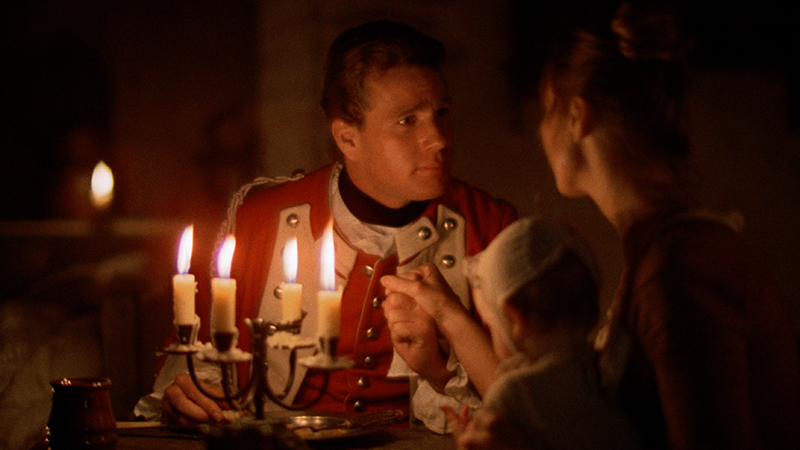
Ryan O’Neal is Barry Lyndon in Kubrick’s brilliantly distant epic

Director: Stanley Kubrick

Cast: Ryan O’Neal (Redmond Barry), Marisa Berenson (Lady Lyndon), Michael Hordern (Narrator), Patrick Magee (Chevalier du Balibari), Hardy Krüger (Captain Potzdorf), Marie Kean (Belle Barry), Gay Hamilton (Nora Brady), Godfrey Quigley (Captain Grogan), Murray Melvin (Reverend Samuel Runt), Steven Berkoff (Lord Ludd), Frank Middlemass (Sir Charles Reginald Lyndon), Leon Vitali (Lord Bullingdon), Leonard Rossiter (Captain John Quin), André Morell (Lord Wendover), Anthony Sharp (Lord Hallam), Philip Stone (Graham), Arthur O’Sullivan (Captain Feeney)

Kubrick has been criticised as a director more interested in style and the technical tricks of cinema than emotion, and there is perhaps no argument for the prosecution than Barry Lyndon. It now seems to the cineaste’s choice du jour as the greatest Kubrick film (probably partly because it is less well-known). Barry Lyndon however is like an exercise in all Kubrick’s strengths and weaknesses, a film that you can admire at great length while simultaneously caring very little about anything that happens in it.

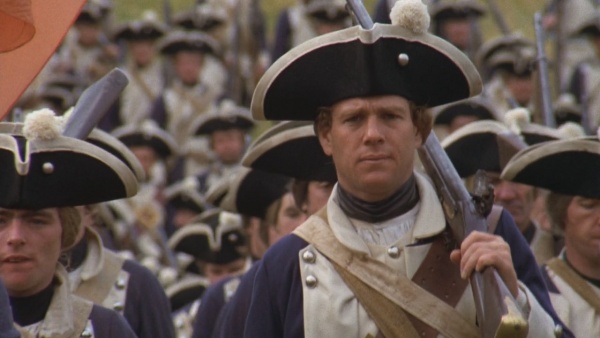
Based on a William Makepeace Thackeray (although it feels in spirit only), Barry Lyndon tells the story of Irish chancer Redmond Barry (Ryan O’Neal) in the mid eighteenth century. Fleeing Ireland after (he believes) killing an English officer in a duel, Barry goes from the British arm to the Prussian army, to card-sharping the courts of Europe to marrying into the aristocracy, as husband to Lady Lyndon (Marisa Berenson). But, however hard he tries, it’s difficult for an Irish chancer to be accepted by the British aristocracy, particularly when he suffers from the vocal hatred of his wife’s son Lord Bullingdon (Leon Vitali). 

Kubrick spent several years carrying out research for an epic biopic of Napoleon (he had Ian Holm lined up for the lead role – Holm read multiple biographies and spent months working on a script with Kubrick). The flop of Waterloo (with a deliciously hammy Rod Steiger as Napoleon) killed off the chances of that film making it to the screen. Never-the-less Kubrick now had a vast archive of research for the period – and how easy it was to shift the focus of this research back a few decades. Thackeray’s novel was his chance to put all this to use – and allow Kubrick to indulge what had become a passion for the style of the era.

Barry Lyndon won four Oscars – and all in the areas where the film deserves unqualified praise. This is a stunningly beautiful piece of work, surely a contender for one of the most strikingly gorgeous films ever made. Ken Adam’s set design utilises a superb range of locations across the UK, dressed to breath-taking effect. The costumes, completely accurate to the period, are exquisitely detailed (Milan Canonero and Ulla-Britt Söderland) and lusciously mounted. Leonard Rosenman’s score is a wonderful riff on a range of masterpieces from classical music, including Handel, Bach, Schubert and Mozart.

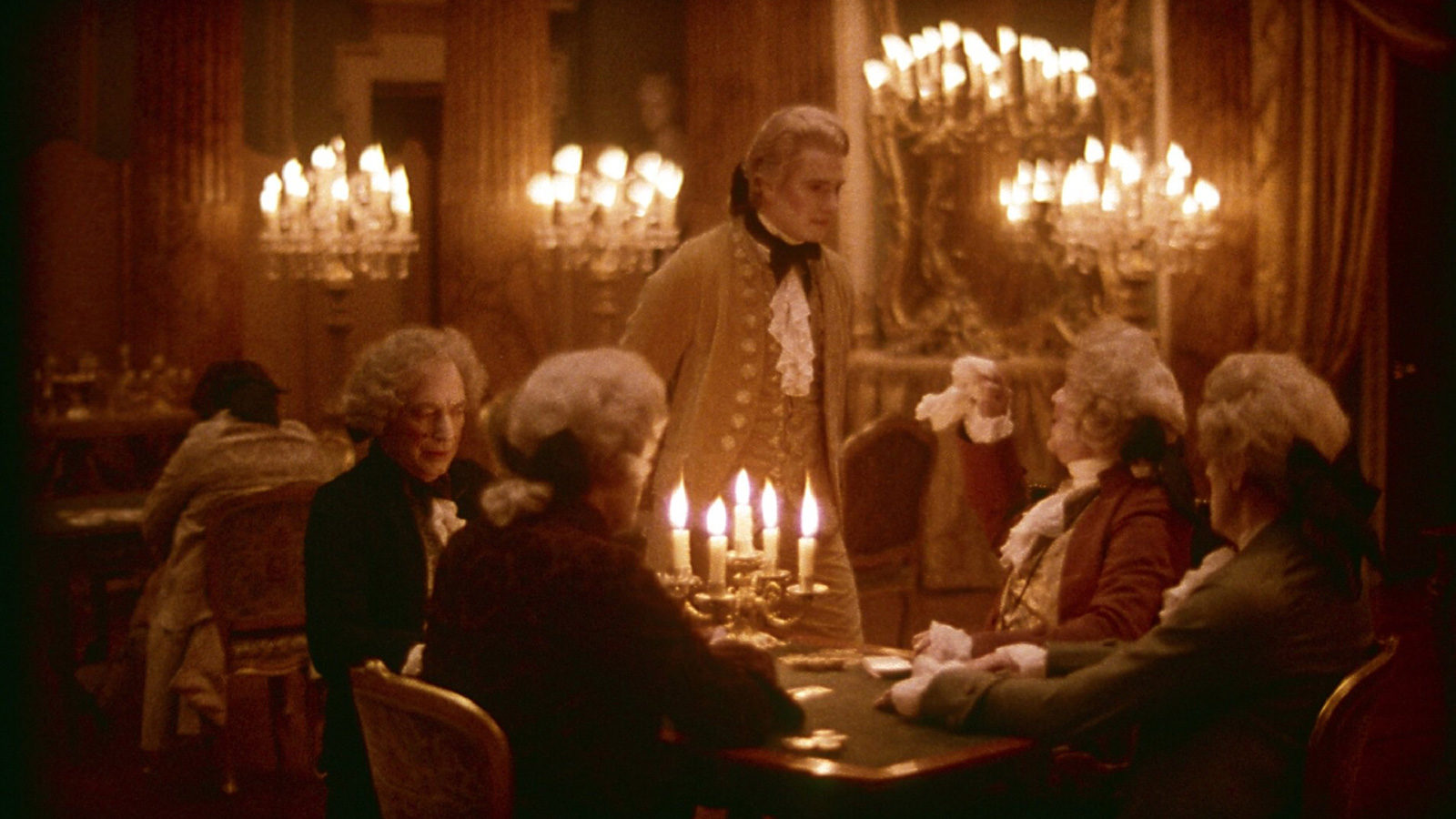
Most strikingly Kubrick decided to film as much as possible with natural lighting only, rather than the vast array of lighting bought in for most films. This was part of Kubrick’s intention to avoid any sense of the studio to his film – everything was to be shot on location and to help immerse the viewer in the detail of the period. Shots were framed to imitate artists of the period, in particular Hogarth. Evening scenes were shot lit only by candle-light, leading to truly stunning images, simply superbly lit. John Alcott’s photograhy utilised (and I’m serious here) NASA designed cameras used for the moon landings to capture images in such low light. Visually, Barry Lyndon may be one of the most perfect films ever made. It’s wonderful – and any doubts that Kubrick is not a true master of cinema should be dismissed.

But Kubrick’s problem, as always? He’s a technocrat artist who lacks some soul. So much time and energy has been expelled on the visuals and the design – the film took almost a year to shoot – that, while you are constantly almost hypnotised by its sublime imagery, it slowly occurs to you that you couldn’t care less about most of the events that happen in it. For all the film’s great length and beauty, it’s a cold and distant film. Kubrick turns Thackeray’s rogueish comic tale – a picaresque dance – into a chillingly sterile meditation on fate, with Barry transformed from a rogue and chancer into a lifeless, passive figure to whom things happen rather than ever attempting to instigate them. 

Is this Kubrick’s idea of humanity? Perhaps it suits the director who was the great master of intricate design and traps, that he would be tempted to turn this story into one where humans are just another piece of set dressing moved around and manipulated by an unseen force (fate, or rather a director?). The distancing effect is further by super-imposing an all-knowing narrator over the events, who frequently pre-empts what will happen and stresses the powerlessness of men. (On a side note, the book is narrated by Barry as were early screenplay drafts – perhaps the idea of O’Neal’s flat voice narrating so much of the action horrified Kubrick. It’s a definite improvement to get Michael Hordern’s tones talking to us for three hours.)

Perhaps though, the failure to capture any sense of Thackeray’s satirical wit, is a sharp reveal of Kubrick’s own inability to appreciate comedy – without the guiding hand of a Peter Sellers to support him. The problem is exacerbated by Ryan O’Neal in the lead role. Kubrick was ordered to hire one of the top ten box office draws of 1972 in the lead role – alas only O’Neal and Redford were the correct age and sex, and Redford (first choice) could never see himself as an Irishman masquerading as an Englishman. So O’Neal got the job – and the film is a damning indictment of his lack of charisma, flat and dry delivery and inability to bring life and energy to the proceedings (although O’Neal has blamed the editing partly for this, as well as the extended shoot). The film helped put an end to O’Neal’s career as a star (already on the wane) – and he is the film’s greatest weakness, in a role that needed more of the impish charm of Malcolm McDowell (although the lead actor from any of Kubrick’s films would have been superior). O’Neal’s presence turns Barry into a character we care nothing for, in a story already coldly distant.

O’Neal is also not helped by Kubrick’s utilising again his great love of striking British character actors – every role is filled with a recognisable face from 1970s British film and TV, each bringing colour and vibrancy to their (often brief) scenes. From Leonard Rossiter – weasily as you’d expect – as the captain Barry thinks he kills, through Patrick Magee’s ambivalently sinister Chevalier, Marie Kean’s loving mother, Murray Melvin’s obsequious priest, Godfrey Quigley’s matey army officer there is not a weak turn elsewhere in the movie. Leon Vitali brings real depth and energy into the film late on as Barry’s son-in-law and hated rival. Even Marisa Berenson – reduced to a dozen lines at most – makes an emotional impression as a woman trapped into serving the needs of the men in her life.

All these actors however are revolving in a movie that gets stuck and overwhelmed in its own grandeur and beauty. There are many wonderful sequences – with the film bookended by two duelling sequences that explore the strange rules and conventions with this society with a vicious black humour. Kubrick’s points about the oppressive insularity of the establishment – and the amount of forgiveness it has for its own, compared to the instant judgement of the outsider – are generally well-made, but are at times so laced with the director’s own cynical views of humanity in general (an increasingly clear trait in his later work) that they carry little impact. Despite this the film is never less than strangely captivating, even if its very easy to let it drift past you rather than invest in it.

But above all, while the film is stunning and the direction of Kubrick near faultless, the film itself gets so close to a great painting that it becomes something you hang on the wall to admire, but not to invest in. Kubrick couldn’t match his genius with the sort of emotion or wit that the story needed (much as it’s vastly superior to Tom Jones, that film gets closer to the spirit of authors like Thackeray than this ever does). Instead, he creates a coldly sterile world, like a perfect experiment in form and style that totally forgets such trivial elements as character and story. For all the film is full of character and events, you’ll find you care very little about them – and that the brilliance of Kubrick is only a partial consolation for that loss.

Moby Dick (1956)

Gregory Peck on a voyage of obsession as Ahab hunting Moby Dick

Director: John Huston

Cast: Gregory Peck (Captain Ahab), Richard Basehart (Ishmael), Leo Genn (Starbuck), Orson Welles (Father Mapple), Friedrich von Ledebur (Queequeg), James Robertson Justice (Captain Boomer), Harry Andrews (Stubb), Bernard Miles (The Manxman), Noel Purcell (Carpennter), Edric Connor (Daggoo), Meryn Johns (Pelog), Joseph Tomelty (Peter Coffin), Francis de Wolff (Captain Gardiner)

There might be fewer books that lend themselves less to being turned into a film than Herman Melville’s monumental Moby Dick. Perhaps the greatest of all American novels, its’ the story of New England whaler the Pequod’s Captain Ahab’s obsessive quest to kill Moby Dick, the great white whale that took his leg. But it’s also an intense intellectual and spiritual journey into the nature of humanity, which has thrown the book open to multiple interpretations, even more tempting with a book that defies explanation. Try capturing that on film.

John Huston’s Moby Dick is a noble attempt, more criticised at the time than it probably deserves, with the visual language of film unable to ever capture the metaphorical weight of the original novel. What Huston needed to do is to try and capture some of the spirit of the novel, bring its central story to life and make a film that ideally makes you want to search the book out. I would say Moby Dick succeeds on that score.

Reducing the monumental novel (often described as one of the great “unread” books in people’s homes) to under two hours, brings out the narrative, stressing the surface story as an adventure on the high seas, a doomed quest under an obsessive captain. The detail of the reconstruction of the whaling ship, its operations on the sea (including some graphic slaughter of some, fortunately, fake whales) and the atmosphere of the time is brilliantly reconstructed. The film is staffed by an extraordinary collection of actors, whose faces speak of lives led in salt-spray. 

So, starting with the idea that no film could ever capture the depth and richness of the book, Moby Dick is a decent, smart enough attempt. The key themes are there in strength. It captures obsession and the idea of the ship being a sort of microcosm of society, led astray by a leader who has his own passions at heart, over and above the well-being of the crew, but has enough magnetism to pull the crew with him nevertheless. 

Huston laboured long and hard to bring the film to life, in a wrestle with Melville. Even adapter Ray Bradbury claimed he had “never been able to read the damn thing”, with Huston and Bradbury clashing constantly during the writing process. It works, and Bradbury’s adaptation is beautifully done, but in a way John Huston himself was a sort of Ahab with the book as his whale. 

In fact you could argue – as many have – that Huston himself was the natural casting for Ahab (take a look at Chinatown to see what I mean). A charismatic raconteur, ruthless and fixated on his goals, that’s an Ahab we could buy into. Perhaps in that world, Orson Welles – here giving a neat little cameo that avoids bombast as Father Mapple – would have been the perfect director, marrying mastery of cinema with a wonderful understanding of transforming literature into film.

Gregory Peck is the Ahab we do get. At the time the casting was strongly criticised – people just couldn’t buy the straight-as-an-arrow Peck as the destructively bullying Ahab. Peck himself remained strongly critical of his performance here all his life. Separated from the time, Peck’s performance is stronger than you anticipate, capturing a gruff fixation and magnetic charisma that you can believe pulls people in. Peck may strain a little too hard for the elemental anger, but Peck’s Ahab has a bass richness, a sort of inverted Lincolnish (he even looks a little like Lincoln) self-righteousness that makes you believe he could rouse a ship to choose its own destruction. Peck also brings a spiritually dead look to Ahab, a man turned from hope to destruction. Huston teasingly keeps Ahab in reserve for almost a quarter of the film until his first appearance, allowing the build in the audience’s expectations.

The casting of the crew uses a fine selection of British and Irish actors (the film was shot in Ireland), with Harry Andrews particularly strong as jolly but non boat-rocking first mate Stubb. Leo Genn gets the meatiest material as Starbuck, a decent, working man with a firm sense of principle but who lacks any sense of the charisma needed to swing people to his point of view. The film bumps up Starbuck’s role, centralising his growing unease at Ahab’s madness, opportunities which Genn (nearly underplaying to contrast with Peck’s theatricality) works a treat. Richard Basehart – a good voice for narration but much less of a presence – gets a bit lost as Ishmael. There is an intriguing bit of casting – something that would never happen today – that sees Austrian aristocrat turned actor Friedrich von Ledebur play the Maori-inspired Queequeg, a visual disconnect that is more than a little distracting for a while.

Moby Dick is beautifully filmed and assembled, even if Huston throws in the odd obvious shot – sun beating down on the ship, a close up of the whale’s eye. It has a unique look – on the remastered blu-ray – with the image reflecting the faded, bleached look of whale prints (an effect achieved by superimposing a black-and-white negative over a colour one, draining most of the colours our), which gives it a great deal of visual interest. It’s never going to replace the book – but honestly what could? As an exploration of the ideas at its heart it’s wonderful – and a great prompt to pick it up – but with a marvellous sense of life on sea, a stirring score and a wonderful sense of intelligent construction it more than works.

The Dead (1987)

Donal McCann and Anjelica Huston in a marriage with a past in The Dead

Director: John Huston

Cast: Anjelica Huston (Gretta Conroy), Donal McCann (Gabriel Conroy), Cathleen Delany (Julia Morkan), Helena Carroll (Kate Morkan), Rachael Dowling (Lily), Ingrid Craigie (Mary Jane), Dan O’Herlihy (Dan Browne), Marie Kean (Mrs. Malins), Donal Donnelly (“Freddy” Malins), Sean McClory (Mr. Grace), Frank Patterson (Bartell D’Arcy), Colm Meaney (Raymond Bergin)

John Huston’s final film was a long-standing passion project, anfaithful adaptation of James Joyce’ short story from The Dubliners. Huston had only a few months to live when shooting the film – he was hooked up to an oxygen supply for the course of its film-making and confined to a wheelchair. His children Anjelica and Tony (who wrote the screenplay) helped to nurse him through this final project. The final film makes for a beautiful wistful, heartfelt and tragically toned story that’s small in scale but carries great emotional force.  It’s a beautiful adaptation.

The film is set at a Christmas house party for family and friends, a regular thrown by two spinster sisters, Julia (Catheen Delany) and Kate (Helena Carroll) Morkan. The soiree – with recitals, dancing and wonderful meal – is an annual treat, with a regular guest list of family and old friends. The Morkan’s nephew Gabriel (Donal McCann) frequently serves as unofficial master of ceremonies – this year nervously checking and rechecking his after-dinner speech. However, at this year’s dinner Gabriel’s wife Gretta (Anjelica Huston) is caught-off-guard by a moving song, that brings back to her a flood of memories from her younger days of a late first love – a revelation of a past life that in their bedroom after the party, stuns Gabriel and causes him to reassess everything he thought he knew about his wife’s past and how his own life has been bereft of the sort of passion she has displayed over a memory.

The summary above essentially captures the entire story of this James Joyce tale that is short on events but deeply long on emotional meaning. Critics have sometimes said it can only be a shadow of the original – but it’s an adaptation not a replacement. Huston’s film is a gentle, unhurried, carefully presented chronicle of everyday lives and the emotional depth that’s can lie buried beneath them. The Dead is short on flash, but it has such warmth, love and respect for its characters, and vibrancy in its playing that it hardly matters that for almost an hour nothing (as such) actually happens. Instead, Huston and his actors so completely understand and communicate the warm bonds between its characters – from decades of knowing each other – and the entire party has such an air of truth to it you can genuinely just enjoy watching the characters enjoy it.

It’s full of perfectly observed moments that ring true – and all straight from Joyce. The younger men who attend the party, and duck out of a gorgeous piano recital for a quick drink, to return and lead vigorous applause at its end. The awkwardness of small talk between two people that don’t really know each other, but are too polite to turn away. The affectionate indulgence of the drunken son of an old friend (“sure, he’s not as bad as he was last year”) who is quietly not passed the port and leads a praise for Julia’s slightly-off-note singing that is so lavish it manages to be as touchingly well-meant as it is grin-inducingly embarrassing. Huston had a long-held regard for the warmth and generosity of Irish hospitality and feeling and this seeps into every pore of the film.

But the film is stuffed full of moments of simple, real-world pleasure crafted by a director who understood that the impact of the stories late emotional revelations depended on the everyday low-key presentation of the film’s first hour. And there is no end of delight be had from the Morkan sister’s tearful pleasure and pride at Gabriel’s sincere speech of gratitude at the dinner’s end (even if it is overladen with classical parables). Or in the quietly supportive way Gabriel goes about organising events for them in the house, from shepherding the tipsy Freddy to a bathroom to sober up to ending events by gently wakening Protestant Dan Browne at the party’s end from his drunken doze in the cloakroom. Around all these events is the conversation of people who have known each other for years and are comfortable to sink back into the patter of familiar themes.

All of which is then perfectly counter-pointed by Gretta’s quiet revelation of a past of passion and deeply held first love that she has never spoken of before – and causes Gabriel to certainly look anew at everything in his life. It’s a sad and delicate Proustian revelation of how the slightest nudges to our memory (in this case the soulful rendition of an old Irish song) can unlock sudden wells of feeling, making events from years ago suddenly seem as painfully recent as yesterday. 

For suddenly Gabriel moves from initial jealousy into a deep and abiding sadness at how nothing in his own life could ever have motivated such depth of feeling from himself – that frankly he has nothing in his experience to match the grief and unforced emotion his wife has displayed. It’s a very Joycian revelation in which the present and the future is readdressed in light of the past. Suddenly Gabriel must reflect that his life has been one of competent and forgetful mediocrity and that he himself will die – and that fate awaits us all, with the snow falling on us all living or dead, and that Gabriel will forever lack the emotional depth and poetry to express it.

The film’s elegiac qualities match perfectly with the end of Huston’s career – and maybe the sad regret of Gabriel is Huston judging whether he made an impact either. The film however is beautiful, recreating Ireland perfectly in California with a superb cast of Irish theatre stalwarts specially imported. Donal McCann is wonderful as Gabriel, Anjelica Huston quietly moving as his wife while the rest of the cast are faultless: from Cathleen Delany and Helena Carroll’s carefully judged spinsterish generosity to Donal Donnelly’s garrulously friendly drunkenness (perhaps motivated by the impossibility of living up to his mother’s – an imperious Marie Kean – high standards). The Dead may not capture all the depth and beauty of Joyce’s writing (what can?) but it captures more than enough to be a beautifully judged film.

The End of the Affair (1999)

Julianne Moore and Ralph Fiennes in a doomed romance in The End of the Affair

Director: Neil Jordan

Cast: Ralph Fiennes (Maurice Bendrix), Julianne Moore (Sarah Miles), Stephen Rea (Henry Miles), Ian Hart (Mr Parkis), Jason Isaacs (Father Richard Smythe), James Bolam (Mr Savage), Sam Bould (Lance Parks), Deborah Findlay (Miss Smythe)

The End of the Affair is one of Graham Greene’s most autobiographical novels, based strongly on his relationship with Catherine Walston, wife of a friend in the civil service. Unlike the affair in the book, Greene’s continued for decades, long after the publication of the novel in 1951 (which had led to the husband demanding an end to it – a demand ignored). Greene’s novel recounts the dangerous passions of an affair, mixed with the powerful anxieties and uncertainties that the Catholic faith can have on relationships. Jordan’s film captures much of this – but in places fails to fully understand the spirit of Greene’s compelling novel.

Maurice Bendrix (Ralph Fiennes) is a moderately successful popular author, excused war service due to having injured his leg in the Spanish Civil War. In 1946, a chance meeting with Henry Miles (Stephen Rea), a staid civil servant brings back vivid memories of Maurice’s wartime affair with Henry’s wife Sarah (Julianne Moore). The affair ended abruptly for reasons Maurice cannot understand, and his love is twisting into jealous resentment. With Henry now concerned Sarah is having an affair – and seemingly unaware of Maurice and Sarah’s wartime relationship – Maurice takes it upon himself to hire Parkis (Ian Hart) a private investigator to find out more. The results though give him profound and affecting insights into both the present and the reasons for the end of his own affair with Sarah.

Jordan’s adaptation gets so much right, it’s almost more of a shame that it gets things wrong as well. The atmosphere of the film is simply perfect. It looks and feels exactly like a classic slice of Greeneland, with its dreary London, rain-soaked settings and gloomy period setting. Roger Pratt’s Oscar nominated photography is perfect for the tragic beauty of Greene’s work, and its matched with a sublime musical score from Michael Nyman that wrings every inch of emotion from the story.

Ralph Fiennes is also the perfect idea of a Greene hero – slightly imperious, bitter, arrogant with an air of prep school smugness mixed with an underlying sense of grim inferiority. It’s hard to imagine any other actor – maybe except Colin Firth – better suited to the slight air of dissolute, not obviously sympathetic world-weary struggle that a Greenian hero needs to exhibit. Fiennes barely puts a foot wrong and could have practically walked off the page.

Equally good is Julianne Moore, who nails a very English type of person, a woman determined to do her best and to set standards, but who carries just below the surface a deep well of emotional pain and sorrow that briefly is allowed to peek through. It’s a heart-rending performance of a person desperate for happiness, but hiding that longing under a veneer of acceptability, who sacrifices what she wants from life to meet the obligations of her faith. 

Because, it being Graham Greene, Faith is the big issue here – the idea of the private deals we make with God and the cost that those impose on us, the sacrifices of our own happiness in surface of something higher than ourselves. Greene’s novel intrinsically understand the eternal struggle felt in Catholicism to do the right thing, to accept the love of God into your life even if it means turning your back on more earthly loves and passions. How these journeys can be hard – unbearable even – but carry a level of reward in themselves. 

It’s that feeling for God – who Bendrix grows to believe has cheated him from happiness on earth – that powers his “diary of hate” that he is writing as the book opens. It’s an idea the film only fitfully engages with. Jordan deviates from the novel’s real intention at a key point, in particular “correcting” a dramatic error he feels Greene makes by having Sarah die “off camera” in the book, of a sudden cold, after confessing to Bendrix her reasons for ending the affair, her pact with God.

This narrative change allows a sequence in Brighton as the two reignite their affair – but it also undermines the tragedy of the book, that suddenness of loss, and also makes Sarah’s death feel like a tit-for-tat punishment for going back on her word. More to the point, the affair restarting has the air of an atheistic view of the Catholic complications here, an idea that these can be easily brushed aside because the “heart wants”. It’s to miss the point of Greene’s world thinking and undermine the small everyday tragedy in favour of something more conventional and “epic”.

It’s a major tweak that undermines the strength (otherwise) of Jordan’s work here – his directing and scripting is otherwise largely faultless. Other changes to the source clarify the message – I think changing Smythe (a gently but arrogantly certain Jason Isaacs) into a priest rather than an atheist Sarah is using to test her faith makes sense, even if it does suggest that she acts under the influence of someone else rather than on her own opinions. Making Bendrix a Spanish war veteran rather someone suffering the effects of a childhood illness adds a political and moral romanticism to the character entirely absent from any of the rest of his personality. But it’s fine.

Jordan’s film has many strengths. Its tone is excellent and it’s passion inspiring (the tender explicitness of the sex scenes landed it with a bizarre and controversial 18 certificate) and there are superb performances, not just the leads but Stephen Rea excellent as the meek but noble husband and some lovely comic work from Ian Hart as a haplessly efficient private eye. But the film slightly misses, in the end, the point of the novel – which is a real shame. If Jordan had stuck to the book, and its complex themes of guilt and grief and Catholicism we could have really had something here.

Mr Holmes (2015)

Ian McKellen is an ageing Sherlock trying to understand his past in Mr Holmes

Director: Bill Condon

Cast: Ian McKellen (Sherlock Holmes), Laura Linney (Mrs Munro), Milo Parker (Roger Munro), Hiroyuki Sanada (Taiki Umezaki), Hattie Morahan (Ann Kelmot), Patrick Kennedy (Thomas Kelmot), Roger Allam (Dr Barrie), Phil Davis (Inspector Gilbert), Frances de la Tour (Madame Schirmer)

It’s 1946 and over 35 years since Sherlock Holmes (Ian McKellen) last investigated a case. Living in retirement with his bees in Devon, with his housekeeper Mrs Munro (Laura Linney) and her inquisitive son Roger (Milo Parker), 93-year-old Holmes’ final “case” is to try and combat the deterioration of his own mental faculties. This focuses on his attempts to remember the details of his final case, investigating the wife (Hattie Morahan) of a client, a case where he knows something went terribly wrong, but cannot recall the exact details.

Condon’s film is a quiet, gentle piece which primarily becomes a character study of the Great Detective, trying to locate the man inside the thinking machine. This is a Holmes unlike any other, haunted by past mistakes and scared of losing the intellectual abilities that have been his principal purpose. Condon’s film also makes clear that much of what we know about Holmes was a cheeky “embellishment” by Watson in his stories – from the pipe and deerstalker to the address of 221B. This is a Holmes who failed all his life to form personal connections, and found this problem magnified by becoming a real-life fictional character, a person who knows no-one but is known by everyone.

This fascinating re-evaluation of Holmes is helped by Ian McKellen’s superb performance (in his second collaboration with Condon after Gods and Monsters). McKellen’s ability to convey the intellectual sharpness of Holmes is matched by his vulnerability and fragility as he feels those same powers begin to fail. This is a Holmes who can still sharply deduce where someone has been from a quick analysis, but needs to write Roger’s name on his cuff to help him remember whom he is talking to. McKellen’s performance slowly reveals the longing for emotional connection and his own regrets at the isolation that has dominated his own life.

The expressiveness of Ian McKellen’s eyes comes into play here, both their capacity for joy – and this is a Holmes who takes an intense pleasure in his own acuity – and the way McKellen is able to allow these eyes to glaze over with forgetfulness and flashes of senility. He also forms a wonderful bond with Milo Parker (very good, genuine and real) as Roger, the two of them forming an odd couple relationship that also gives Holmes a beginning of an understanding of what he has missed from a life without family and friends. 

Alongside this fascinating character study, the actual storyline is fairly tame – but then that’s hardly the point. The modern day plotline takes in physical and mental decline, isolation, fracturing family bonds and post-war Japan (where Holmes travels in search of “Prickly ash” a plant he hopes will help to counteract his mental decline). But it’s really a quiet framework to change this Holmes into a man who sees the world only in terms of logic and puzzles, and must learn to see the humanity and emotions that underlie people’s actions. It’s a Holmes who must learn to appreciate feelings, to express them and to tell “white lies” to save people from pain.

It’s no surprise that the past sequences – where a spry McKellen also plays Holmes in his late 50s – also revolve around this. The investigation cheekily features spiritualism (the pseudo-science that obsessed Conan Doyle in his later days) but the real point is Holmes failing to understand the pain and loss that underlie the desire to believe in the possibility of life after death – that loss is a traumatic event that cannot be hand-waved away with a presentation of facts, but a has a real lasting impact on people. Hattie Morahan captures this wonderfully, in a quietly emotional performance as a grieving mother.

The final resolution of this I found slightly less satisfying – perhaps because I thought of actual “canon” stories that showed Holmes expressing far more emotional intelligence than this film gives him the credit for understanding here (e.g. The Yellow Face). I’m also not sure if this failure would really have left any Holmes punishing himself with 35 years of isolation with bees. But it fits with the film’s concept of a Holmes who finds himself pained by loneliness.

This loneliness is hammered home throughout. Mycroft, Hudson and Watson are long dead. Watson himself is implied to be a man who never understood Holmes, that the “fictionalised” Holmes became more real to him than the flesh-and-blood man. That on Watson’s part the friendship became about the stories, with Holmes always triumphant, rather than reflecting who he was. Holmes finds this disconnection between his inner self and the world’s perception hammered home at every turn – at one point the film shows him watching a Rathbone-esque film (where he is played by Nicholas Rowe, the actor from Young Sherlock Holmes), where the case that haunts him plays out with a traditional ease. Completing this disconnection, Watson remains unseen in the film: a stranger whom Holmes was tied to forever.

All this makes for a thought-provoking film, with a delightful performance from McKellen making a truly unique and original screen Holmes. There are a host of fabulous supporting performances – Laura Linney does fine work as his insecure, lonely housekeeper who feels she is losing her son to the detective – and the film is a gloriously entertaining Sunday afternoon treat, which will make you think again about a man whom the whole world knows, but who may not know himself.