Category: Relationship film

The Invisible Woman (2013)

Ralph Fiennes and Felicity Jones excel in the thoughtful and well handled The Invisible Woman

Director: Ralph Fiennes

Cast: Ralph Fiennes (Charles Dickens), Felicity Jones (Nelly Ternan), Kristin Scott Thomas (Mrs Ternan), Tom Hollander (Wilkie Collins), Joanna Scanlan (Catherine Dickens), Michelle Fairley (Caroline Graves), Tom Burke (George Wharton Robinson), Perdita Weeks (Maria Ternan), John Kavanagh (Reverend Benham), Amanda Hale (Fanny Ternan)

In 1865 Charles Dickens was involved in a train accident. While he worked tirelessly, tending to those caught up in the accident, he was also extremely careful to hide the fact he was travelling with a young actress called Nelly Ternan. Ms Ternan was his lover, had been for several years, and the couple were returning from Paris. Dickens managed to avoid the inquest and preserve the secret of his affair. Because, while he was happy to publicly announce his separation from his wife, the idea of the public hearing that he had an affair with someone 27 years younger than him was unthinkable.

The affair is deduced from careful deduction and the small remaining correspondence (both parties destroyed large numbers of letters) by the biographer Claire Tomlin. Her book forms the basis of Fiennes’ thoughtful, careful and intelligent film, with the director playing Dickens and Felicity Jones as Nelly Ternan. The Invisible Woman is restrained and unjudgmental film-making, that largely avoids obvious moral calls and weaves a beautifully constructed tale of two people who make themselves both happy and miserable.

And that misery is partly due to the times they live in. It’s an era of Victorian morals, where all that matters is the surface appearance and any real emotions underneath can go hang. But it’s also a world where very different rules apply to men and women. Dickens can leave his wife (in a press announcement) – but of course a woman could never do the same. It’s a world of strictly defined rules, with clear roles for both genders that cannot be deviated from. And it forces Nelly Ternan to travel to Paris, because the public shame that would come with her pregnancy by Dickens would destroy her. It’s why, years after Dicken’s death, she is lying about how well she knew the man (even changing her name and age to further distance herself) so that she can conform with the expectations of being a school-master’s wife (and ensure she will not be thrown out to the streets).

The rules are so strong that both Dickens and Ternan are as much in thrall to them as anyone else. Dickens is willing to bend the rules – but only so far. He would clearly never dream of living openly with his unmarried partner and their child as his friend Wilkie Collins (a perfectly cast Tom Hollander) would do. And Nelly Ternan is as outraged at this liaison – and as desperately uncomfortable in their home – as any prim housewife would be. In fact, in many ways, Nelly is even more conservative than Dickens.

But then she has to be. After all, he would be a rogue, she would be a whore. Choices aren’t great for women – and in her chosen career of actress, Nelly is clearly far more enthusiastic than she is talented. It’s worries about the career that leads to her mother – an excellent performance of motherly love mixed with a quiet understanding of the world from Kristin Scott Thomas – all but encouraging Dickens to seduce her daughter. Because, for an independently minded woman passionate about the art, if you can’t be an actress your other option is to be a muse.

Even Dickens seems quietly ashamed at his seduction of this woman, while she half-persuades herself it isn’t happening until it is. So, what draws them together? Refreshingly this isn’t a question of an older man excited by a younger woman – or a naïve woman swept up by a powerful man. Instead, these are kindred spirits. Both of them are passionate, intelligent and questioning. They both express an emotional honesty and openness. They have shared passions for literature, theatre and stories. It’s a romance that slowly blossoms and is based on a shared feeling. It would have been easier to tell a story of seduction and abuse – but this is a more intelligent film than that. At that fatal train accident, its Dickens who yearns to stay with Nelly and its Nelly that urges him to leave to preserve his secrets.

As these two, we have two actors with beautiful chemistry. Felicity Jones is inspired as Nelly Ternan. She both idolises Dickens, but is also drawn towards him on a very human level. She is astute, but conservative and at times even remote. Her older self, over a decade later, is both prickly and defensive – and those are qualities you can trace in her younger self, and not just because of her fear of disgrace. It’s a beautifully judged performance, both older than her time and also with a vibrancy and energy that entrances.

Fiennes, a more reserved actor, seems like an odd choice for the bon vivant Dickens – but he brilliantly excels in the role, full of energy and room-filling dominance. He marvellously conveys the charm and passion of Dickens, but also his thoughtlessness. This is after all a man who drops his wife by newspaper announcement and builds a barrier between their bedrooms. Who loves Nelly, but not enough to make her anything but a secret. Who is passionate and excited about his work, but can be turn distant and cool in his personal life. It’s a fabulous performance.

And the two leads are centred in a low-key, poetic film. You get the sense that there is a danger in getting to close to genius. Dicken’s wife Catherine – a beautifully sad and lonely performance from Joanna Scanlan – even warns Nelly about it (while delivering a gift from her husband, sent to her by mistake). It’s a danger that shapes Nelly’s whole life – but also her life is enriched by having Dickens in it. It’s a film that avoids obvious moral judgments – and while there are things done which cause pain, everyone is living in an imperfect society. Fiennes direction and use of visual language is wonderful and this is an impressive film.

Film Stars Don't Die in Liverpool (2017)

film stars dont die in liverpool
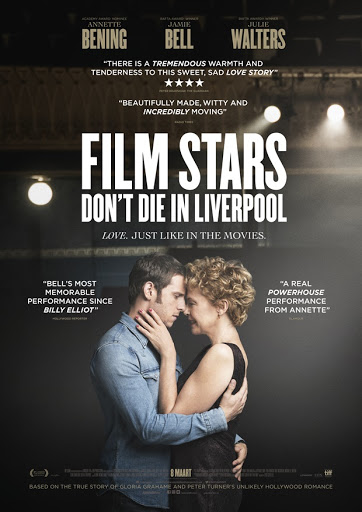
Annette Bening and Jamie Bell as an unconventional couple in Film Stars Don’t Die in Liverpool

Director: Paul McGuigan

Cast: Annette Bening (Gloria Grahame), Jamie Bell (Peter Turner), Julie Walters (Bella Turner), Kenneth Cranham (Joe Turner), Stephen Graham (Joe Turner Jnr), Vanessa Redgrave (Jeanne McDougall), Frances Barber (Joy Hallward), Leanne Best (Eileen)

In 1981, Oscar-winning actress Gloria Grahame (Annette Bening) is performing The Glass Menagerie in Lancaster as part of a UK tour. When she collapses backstage seriously ill, she asks her former lover, young Liverpudlian actor Peter Turner (Jamie Bell), to come to her aid. Peter takes her back to his parents (Julie Walters, Kenneth Cranham) in Liverpool. The two had met a couple of years ago – Grahame the fading star, Turner the would-be actor – and age hadn’t prevented their relationship flourishing into a passionate romance. The film cuts between what pulled them apart in the past, and the present day, where Turner discovers Grahame has been diagnosed with terminal cancer and has at best a few months to live.

Film Stars Don’t Die in Liverpool is based on Turner’s book and is directed with just the right stylistic flourish by Paul McGuigan. Fundamentally a straight-forward (even rather conventional) narrative, McGuigan doesn’t crowd out the action and emotion, but skilfully intercuts past and present together (for instance, characters walk through doors in 1981 and emerge in their memories of 1979). This is pretty subtly done throughout (although the glorious, sun-kissed past and the rain drenched Liverpool present isn’t particularly subtle!) and allows the film to focus on its main strengths – the acting.

The success of the film rests on the chemistry – and skill – of the two leads who both give wonderful performances. Annette Bening excels in nearly a career-best role, as a star clinging to the remnants of her career. Outwardly displaying glamour and confidence – complete with a soft-toned movie star voice – it’s a brilliant study of inner fragility and uncertainty. She carefully reveals a Gloria Grahame who is deeply insecure and fragile.

Bening brings a lot of empathy to the role of a slightly lonely woman who has spent years avoiding questions around her own health, terrified that it could make her unemployable. It’s a fear that has a tendency to make her brittle and defensive. And of course, that’s only added to by her knowing that she is ageing in a young person’s profession. Even jokes about age expose her self-doubt and fear. (Peter drops an early clanger when she tells him after their first date she dreams of playing Juliet with the RSC: “You mean the Nurse?” he says without thinking. She throws him out.)

It’s one of the nice things about the film that the only person who really has a concern about age – or ever seems to mention it as an issue – is the older woman. Nobody else in the film questions the relationship between these two on age grounds (all the doubts raised are based on background and, above all, Grahame’s track record with marriage – four and counting). It’s purely an obsession of Grahame’s – because she doesn’t want to be reminded of her own mortality and, unconsciously, the far younger Turner is a constant reminder of this. And Grahame isn’t really that old anyway: certainly not at heart, her vibrancy being one of the first things that attracts Peter to her.

Peter’s feelings though are heart-breakingly genuine, shown in Bell’s wonderfully compassionate performance. McGuigan frequently allows long reaction shots to study the emotional impact of events on the characters, and no-one benefits from this more than Bell whose face is frequently a picture of conflicted, tortured emotion, of grief that he’s only just managing to hold in. Bell is terrific.

The film charts a romance that starts with a blissful freedom, but ends with a very true and heartfelt declaration of love. The past – saturated with cleanliness and colour as it is – is full of fun, romance and semi-surreal early encounters stuffed with expressive dancing (a great reminder that Bell can really move!) and watching Alien. The time the two spend in New York is similarly golden tinged. What draws it to a close is illness – and Grahame’s fears of how it will affect Turner as well as not wanting to live her last few months being nursed by her lover like an invalid.

It’s an involving romance and relationship piece, and it also gives time to how important families can be. Turner’s parents (lovely work from Walters and Cranham) are supportive and caring of Grahame – and his brother (edgy work from Graham) is only frustrated that they put her before their own interests. It makes quite a contrast with Grahame’s family, a mother who seems more interested in herself (Redgrave at her grand damest, showily quoting Shakespeare) and bitchy, jealous sister (a prickly Frances Barber).

But it’s mainly a film about the two leads and while it doesn’t reinvent anything about biopics or romances (or tragic stories of loss), it tells its story neatly and cleanly and allows scope for the acting to do a lot of the work. Bening and Bell more than rise to the challenge.

The Little Stranger (2018)

Little stranger header
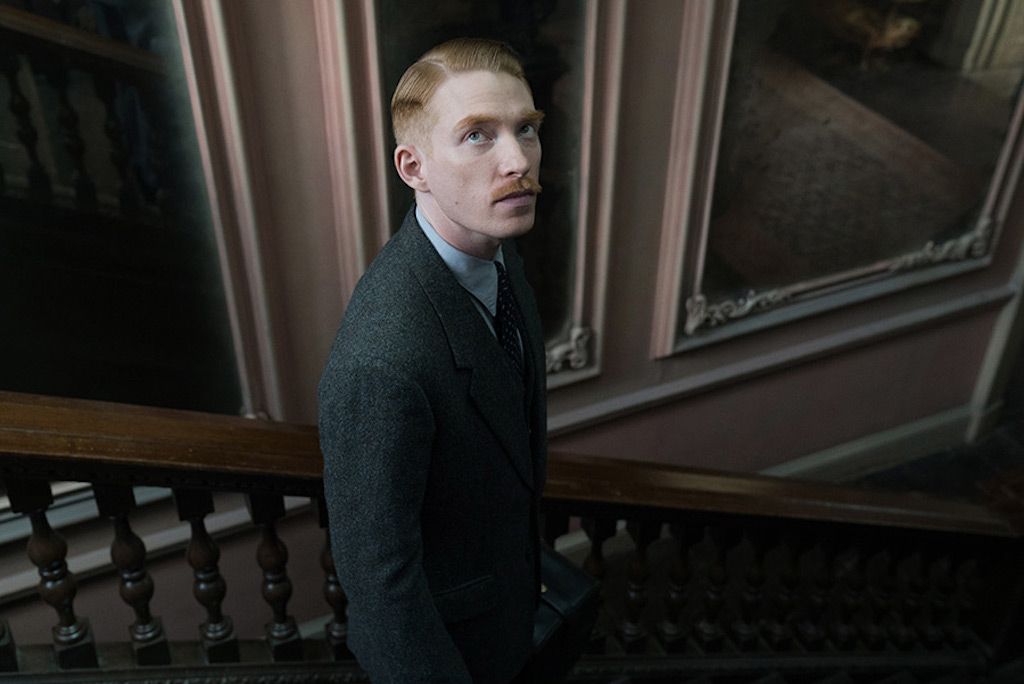
Domhnall Gleeson doesn’t believe in ghosts in The Little Stranger

Director: Lenny Abrahamson

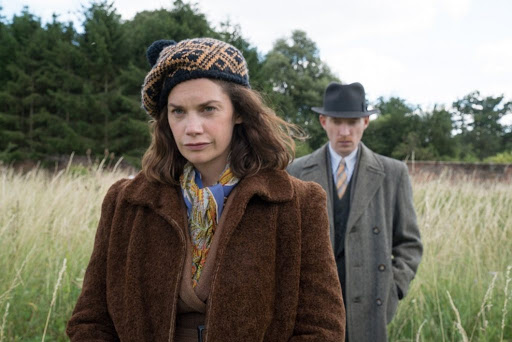
Cast: Domhnall Gleeson (Dr Faraday), Ruth Wilson (Caroline Ayres), Will Poulter (Roderick Ayres), Liv Hill (Betty), Charlotte Rampling (Mrs Ayres), Harry Hadden-Paton (Dr David Granger), Anna Madeley (Anne Granger), Richard McCabe (Dr Seeley)

Can an adaptation of a novel work when the key to its success was the way it was told rather than the story itself? With its unreliable narrator and distinctively interior style, Sarah Waters’ book was a tough ask. But, making it even harder for the big screen, The Little Stranger is a ghost story narrated by a fervent non-believer, who witnesses none of the supernatural elements and spends his time finding detailed, logical reasons for why the people living in the haunted house are as unsettled as they are. It makes for a challenge which, for all the style Lenny Abrahamson brings, the film doesn’t quite manage to meet.

Our sceptic is Dr Faraday (Domhnall Gleeson), a young village GP in the years immediately after the Second World War. Faraday grew up in the shadow of the Ayres house, a grand country seat now being lived in by the last remnants of the Ayres family who have fallen on hard times. Son Roderick (Will Poulter) has been left with debilitating injuries after his RAF service, Caroline (Ruth Wilson) seems destined to become a spinster, and their mother (Charlotte Rampling) struggles to hold together what’s left of the house’s prestige, among leaking roofs and bills that can’t be paid. Dr Faraday becomes an intimate of the household. But are the family’s problems partly linked to a malign presence in the house, perhaps the unsettled ghost of a third, long-dead Ayres sibling? Or is it all just bad luck, frozen pipes, branches on the window and creaking floorboards?

Well of course it isn’t. The film’s main problem is that it takes a book where the narrator spends the entire time stubbornly refusing to accept he is in a ghost story, and repackages it as a more conventional tale of creeps and psychological horror. While moments like this are undoubtedly unsettling, it rather flies in the face of what made the book unique in the first place.

In the book you find yourself – despite knowing deep down he’s wrong, because that’s not how stories work – thinking that maybe all this is just a series of terrible coincidences impacting a psychologically fragile family. In the film, you are never in any doubt that the ghosts are real. Not least, because we are frequently witness to supernatural events. When Charlotte Rampling’s character is terrified in the nursery by the ghost of her lost child, we share the terror with her. A truer adaptation of the book would have only shown us the aftermath – a trembling woman on the ground surrounded with broken glass – and asked us if we shared Faraday’s diagnosis of suicidal depression.

The change in perspective from the book has a particularly bad impact on the Faraday character. Faraday, deep down, is a sort of chippy Charles Ryder, as much in love with the house – and the prospect of one day owning it – as he is with the family itself. This mix of longing, envy and class jealousy bubbles under the surface of the character in the book, qualities that we have to read between the lines to detect. In the film however, these qualities are bought firmly to the surface.

This means that, for all Domhnall Gleeson has just the right rigidity and lack of imagination for the born sceptic, it means the character’s sinister possessiveness towards the Ayres house comes more to the fore. In the film it’s hard to escape the sense Faraday is as much a creep as the ghost (something the film even perhaps vaguely suggests in its open-ended conclusion). He’s cold and undeniably bitter, quietly but resentfully recording each moment where he is treated like a retainer.

The film also loses some of the context of the book as well. Part of the reason this house is falling apart is the declining wealth of the family in a world of post-war depression and higher death duties. Today the Ayres house would have been long since flogged to the National Trust. The crumbling house – compared to the grand vision in Faraday’s memories – is itself a metaphor for a particular class in Britain. However, this gets a bit lost in the film. Instead it’s easy to see the Ayres as just personally unlucky rather than symptomatic of a general collapse of the landed class.

But the film does do lots of good things. The ghost stuff is undeniably creepy – even if, as I say, it leaves the viewer in no doubt that Faraday is wrong and the Ayres are right. Will Poulter is very good in a small role as the bitter and scarred son, while Wilson captures a sense of premature middle-aged drift in Caroline, a woman unhappy in her life but unsure what she wants. Rampling is similarly very strong as a crumbling matriarch.

The film also looks lovely – perhaps too lovely, with its idealised view of a 1950s that surely was dirtier than this – and is well assembled. It just fails to bring a narrative drive to the film to replace the uncertainty and scepticism of the narrative voice that made the book so strong. There Faraday’s dismissals and self-denial about his class envy were what made the story compelling: here they are both removed – and what’s left isn’t quite interesting or unique enough to fill the gap.

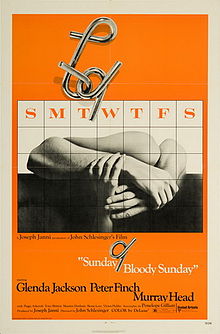
Sunday Bloody Sunday (1971)

Sunday bloody sunday header
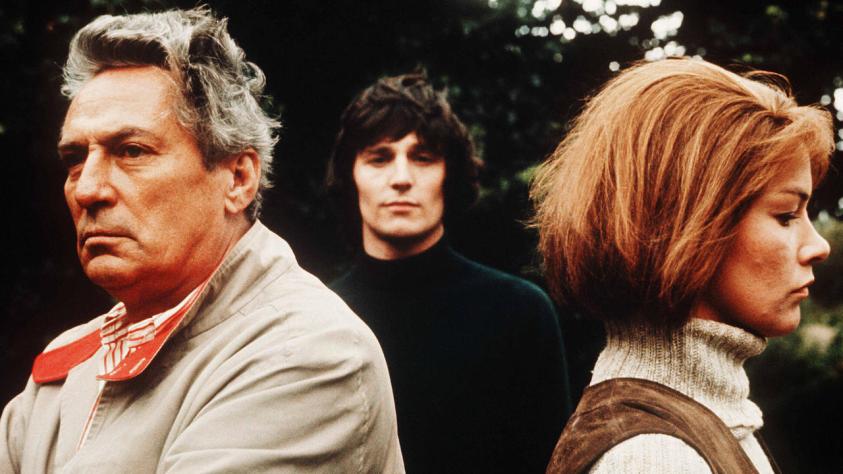
Peter Finch, Murray Head and Glenda Jackson in an unconventional relationship in Sunday Bloody Sunday

Director: John Schlesinger

Cast: Peter Finch (Dr Daniel Hirsh), Glenda Jackson (Alex Greville), Murray Head (Bob Elkin), Peggy Ashcroft (Mrs Greville), Tony Britton (George Harding), Maurice Denham (Mr Greville), Bessie Love (Answering service lady), Vivian Pickles (Alva Hodson), Frank Windsor (Bill Hodson), Thomas Baptiste (Professor Johns), Richard Pearson (Patient), Jon Finch (Scotsman)

Is anything better than nothing? Or, sometimes, is nothing better than anything? It’s a question that lies at the heart of John Schlesinger’s mature and surprisingly low-key exploration of relationships Sunday, Bloody Sunday. In the on-going puzzle of life, what on earth are the answers?

Alex (Glenda Jackson), a divorced woman in her mid-thirties, is in a relationship with young artist Bob Elkin (Murray Head). But the bohemian Bob is also in another relationship, with 50-year-old Dr Daniel Hirsh (Peter Finch). Bob moves between his two partners. Alex and Daniel, who have never met, accept they have him on a timeshare basis and work within his rules, for fear of losing him.

That’s a brief summary – but this is not a film overburdened with plot. Rather it’s a character study. Perhaps its greatest strength (and for some it’s main weakness), is the lack of melodrama or conflict in this unconventional set-up. Any expectations that this might be building towards a cathartic outburst or a traumatic event of some kind should be dispelled from the start. This is a very restrained and genuine film, deeply heartfelt, that avoids cheapness.

In fact, the film becomes a very striking study of the fear of loneliness. Both Alex and Daniel live in semi-acknowledged fear of being left alone. You can see the emotional fragility in them, when separated from Bob. Alex – who Bob has abandoned during a weekend’s baby-sitting to visit Daniel – quietly sits eating fudge and trying to read a book, while tears play in her eyes. Later Daniel will similarly resemble a little boy lost after being stood up at a restaurant. The excitement of being with Bob – for all his faults – are just as acute as the sadness when left alone in their own company.

Both Alex and Daniel are people staring down the barrel of a life of being alone. Alex is a woman stuck between two stools – too bohemian to be happy in a nine-to-five and a safe everyday relationship, too conventional to fully embrace the sort of devil-may-care casualness of Bob. She seems uncertain herself what she wants from life (the perfect relationship, or the bursts of happiness with a young lover).

Daniel, a gay Doctor in middle-class London from a traditional Jewish background, has spent a lifetime quietly carrying on and accepting companionship where he can find it. A man who has understood that a certain degree of isolation is just part and parcel of being who he is. Who balances, perhaps, the flaws in his relationship against getting only a part of what he wants as opposed to nothing.

It’s those questions the film comes back to time and time again. Alex expresses them most clearly, happy in the moments of playful joy she finds with Bob, but this only covering deep lying anxieties. Flashbacks reveal her childhood worries about traumatic events befalling her father (bought on by the killing of a friend’s dog in a road traffic accident due to the carelessness of a child she is looking after). These fears are directly linked to her tentativeness towards long-term relationships: she invests emotionally so much in those she cares for, that it’s difficult for her to find a romantic partner that is perfect enough to justify this level of commitment.

But Daniel has similar issues: his life has taught him to expect that he might always be alone. An insight into his romantic life before Bob is shown with a chance encounter with a former pick-up (played with chippy aggressiveness by Jon Finch) who forces Daniel to give him a lift and then pinches his medical bag. These sorts of risky, emotion-free entanglements are dwarfed by the tenderness and warmth Daniel gets with Bob, for all that Bob is mercurial and immature. As Daniel says at the film’s end (in a beautiful fourth-wall breaking address to the camera), Bob isn’t perfect but he’s something and that while Bob never made him completely happy, right now Daniel is happy only when he is not missing him. It’s balances like this that people make in their lives.

It may also be a fascination with youth. Both Alex and Daniel are either heading into – or deep into – middle age, and they surely wouldn’t deny there is an additional excitement from spending time with the defiantly young Bob. Bob – a rather thankless role to be honest, played with a deliberate lack of depth by Murray Head – is in some ways a cipher, a rather selfish young man who can only think about moving on to the next opportunity, not the difficulties of being fixed in one place and making the best of it. Does this young man’s attitude carry additional appeal to two people with greater ties and responsibilities? Perhaps it does.

Schlesinger’s film is well-paced, and directed with an intimacy by the director who surely built many elements of his own life into Daniel. The two leads – who share a scene only twice, at one point literally passing each other in cars like ships in the night – are both superb. Glenda Jackson is superbly able to suggest a hinterland of emotional guardedness and fragility, behind a confident exterior, that only cracks at key moments. It’s a brilliantly subtle performance of small moments.

Peter Finch is equally superb as Daniel. The film was controversial at the time for featuring the first gay kiss in British cinema (sexuality questions are refreshingly not a major part of the equation and never discussed, which makes the film ever more modern – the kiss itself is played with an unshowy naturalism). The part had been hard to cast – Ian Bannan was fired (to his later intense regret) for being visibly uncomfortable – but Finch (less worried, perhaps because his romances with everyone from Vivien Leigh to Shirley Bassey were so well known, no one watching in the cinema could imagine he was really gay) embraces the part with a beautifully sensitive empathy. It’s a wonderful moving portrait of a man who has come to terms with loneliness and accepted it. Tender and very true, it’s wonderfully heartfelt.

Both stars (along with Schlesinger and the script, credited by Penelope Gilliatt but likely the work of several hands) were nominated for Oscars (inexplicably the film itself was snubbed), and its perhaps their sensitive and tender work is behind the film’s success. Schlesinger co-ordinates all this into a unshowy but very mature intelligent analysis of relationships and the compromises that come with them. Thoughtful and questioning, it’s adult cinema.

Rebecca (2020)

REBECCA
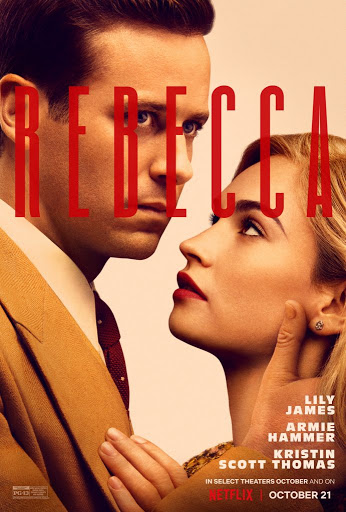
Lily James and Armie Hammer do their best in an overblown Rebecca the swops Gothic chills for lovely costumes and locations

Birector: Ben Wheatley

Cast: Lily James (The second Mrs de Winter), Armie Hammer (Maxim de Winter), Kristin Scott Thomas (Mrs Danvers), Keeley Hawes (Beatrice Lacy), Ann Dowd (Mrs Van Hopper), Sam Riley (Jack Favell), Tom Goodman-Hill (Frank Crawley), Mark Lewis Jones (Inspector Welch)

Hitchcock’s film version of du Maurier’s novel casts a long shadow. Few have taken up the challenge to film it since – and Ben Wheatley’s is the first film version in nearly 80 years. But you can be pretty certain that, unlike Hitchcock’s, this one probably won’t be being watched 80 years from now.

In Monte Carlo, a young woman (Lily James) meets and falls in love with rich Cornish landowner Maxim de Winter (Armie Hammer), a widower on holiday. They marry and return to his seat at Manderley. However, on arrival the second Mrs de Winter finds that she is living in the shadow of Maxim’s deceased first wife, Rebecca. This feeling is encouraged by the passive aggressive manipulation of Rebecca’s devoted housekeeper Mrs Danvers (Kristin Scott Thomas). Slowly, the second Mrs de Winter starts to worry that even her sanity starts to be slipping.

Wheatley is a director with a love of thriller and horror, and he really should be a natural fit to take on du Maurier’s gothic creepiness. But Wheatley feels almost constrained by the period title and beauty. This is a film that totally misses its gothic beats, instead settling for being a lusciously filmed costume drama. It has only a few traces of the unsettling psychology or air of ghostly possession that the story requires, and even those are chucked in haphazardly and then forgotten in order to make way for a pretty sunset or generic shot of Lily James looking sad in the rain.

The inescapable feeling on watching this is that Wheatley actually wants to turn the story into a more conventional romance. The age difference between Maxim and the second Mrs de Winter has been almost removed.  With Armie Hammer too young and Lily James too pretty, there is no ambiguity to Maxim’s feelings or motivations, nor any power imbalance to their charming, sunlit courtship, filled with carefree drives and charming beach picnics. Gone are the suspicions (for both the second Mrs de Winter and us) as to what a rich, sophisticated older man could see in a shy, unremarkable, average-looking girl who’s employed as little more than a servant.

It also removes much of the vulnerability and uncertainty Mrs de Winter should feel, by bringing her onto more equal terms with her husband. From du Maurier’s vision of an innocent woman feeling out of her depth as she’s plunged into an alien world, unable to break through the hauteur of a distant, older husband, we instead get far more of a conventional whirlwind romance that sours when the couple return home.

It’s not really the fault of the two leads, who give sterling work. Lily James has just about the right vulnerability to her, even if she’s still got a bit more spark than the quiet, demure character needs. But James has a fabulous sense determined earnestness to her, an eagerness to do the right thing and not let anyone down (her greater dignity and strength also pays off in sequences where Mrs de Winter takes on a stronger position in the marriage).

As Maxim, Armie Hammer has the right sort of authority and conveys the distance and coolness of the character, even while he is clearly too young and at times seems a bit hampered by his accent and setting. (Like some American actors, he at times struggles to fully comprehend the issues of class within the film.) Perhaps the main weakness to the casting is, by playing up his charm and romanticism, you never really think for a moment that this is a bloke who might have murdered his wife. It also makes him never feel like the sort of chap who could honestly ever have though about dispatching his new wife. It again strips out much of the darkness and dread of the original.

Needless to say, Kristin Scott Thomas has a ball as Mrs Danvers, the obsessed and bitter housekeeper, a part that hardly pushes her to her limits but which she delivers more than enough in. Wheatley pays homage to several of Hitchcock’s shooting decisions around the character, and the conveying of her menace is probably the film’s most successful beat.

However, the film fails at too many other important points. The sense of the previous Mrs de Winter haunting the home is lost completely. Too often the creepiness and psychological fear the film is aiming for gets lost, with periodic bursts of Cornish singing used too obviously to suggest unsettling menace. One very successful sequence set in a room of mirrors just serves to flag up how painfully absent the sense of threat and fear are from the rest of the film. To be honest, it’s a film that needs more darkness, more shadows. Instead everything is lit with all the prestige handsomeness of Merchant Ivory and Sunday dramas. Why did Wheatley go for this visual approach? Did he feel that it was expected from the lovely locations and luscious costumes?

And the costumes and the sets do look lovely. The shooting colours are vibrant and beautiful. It’s very grand and charming and it turns a haunting novel with dark deeds at its heart into something safe and neutered.

 The final product is what happens if a combination of styles are thrown together in a way that service not the story, but how each element of it could be best presented. When the film wants to show off the set and costumes, it’s bright and beautiful. At the few times it wants to suggest ghostly intimidation, we get some chanting and a few darkened rooms and billowing curtains. Neither plays well off the other and the film ends up feeling professionally mounted but workmanlike. It’s a shame as Wheatley could have really made something of this. But it feels like he has been forced into a prestige costume drama straightjacket.

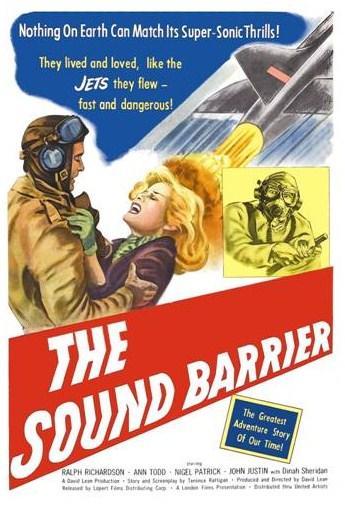
The Sound Barrier (1952)

Sound barrier header
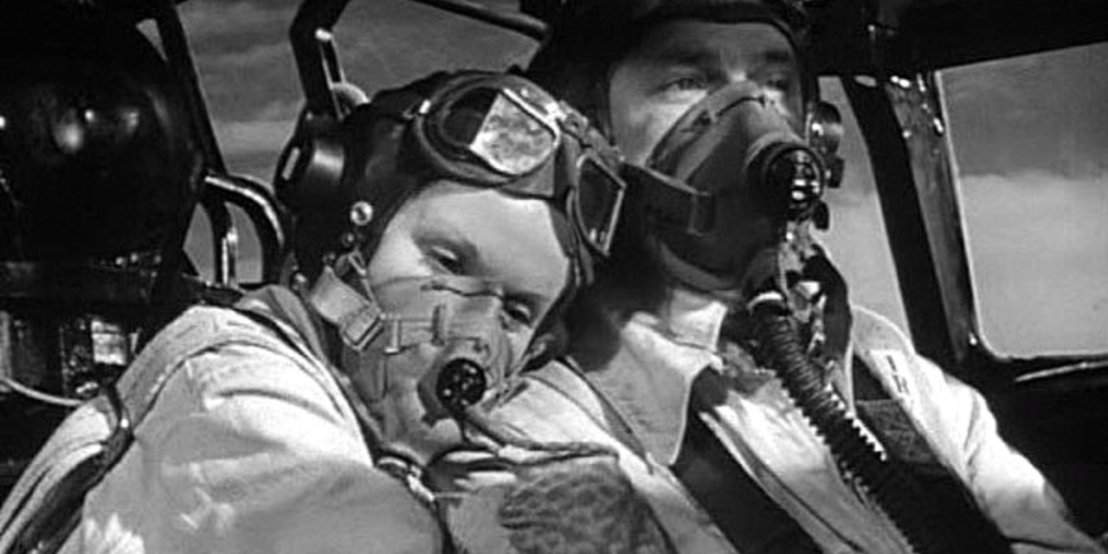
Ann Todd and Nigel Patrick on a dangerous mission to break The Sound Barrier

Director: David Lean

Cast: Ralph Richardson (John Ridgefield), Ann Todd (Susan Garthwaite), Nigel Patrick (Tony Garthwaite), John Justin (Philip Peel), Dinah Sheridan (Jess Peel), Joseph Tomelty (Will Sparks), Denholm Elliott (Christopher Ridgefield), Jack Allen (‘Windy’ Williams), Ralph Michael (Fletcher)

David Lean’s film career can be divided into two eras: his early films are British-based literary adaptations and family dramas, many of them front-and-centring the experiences and tribulations of women. The later era are the jaw-dropping epics he became best known for. The Sound Barrier is towards the end of the first era – and it’s almost a bridge between the two, an impressively filmed story of man’s triumph over nature, that sneaks under the wire an emotional family-in-crisis storyline, with a daughter suffering the damaging impact of her father’s obsession.

That father is John Ridgefield (Ralph Richardson), a famous aeronautical engineer and airline entrepreneur who, with the end of the war, returns to his fixation: discovering a way to make a plane fly so fast it breaks the sound barrier. It’s a vision that has dominated his life, but which his daughter Susan (Ann Todd) finds hard to understand. John is a domineering, demanding father, whose son Christopher (Denholm Elliott) gets himself killed trying to qualify as a pilot to win his father’s respect. In his place, Susan’s husband Tony (Nigel Patrick), a test pilot, is claimed by John as a surrogate son and equally pushed to risk all to try and fly faster than sound.

Lean’s film is a wonderful mix of post-war military-based exploits and stiff-upper lip exploration of family dynamics, where resentments and passions go unspoken but shape everything. With a superb script by Terence Rattigan, whose work is filled with monomaniacs like Ridgefield and sympathetic and emotionally intelligent women like Susan, The Sound Barrier might seem like a celebration of British pluck (it hardly matters that we Brits didn’t actually break the sound barrier first – no mention of Chuck Yaeger here…), with some stunning aerial photography. But it’s a lot more than that.

What’s fascinating about The Sound Barrier – and what makes it such a rewarding watch – is how much it questions the value of these sort of quests. The film’s focus is less on the engineering struggles and the bravery of the pilots (compare and contrast this film with the more straightforwardly triumphant The Dam Busters), and more on the human cost of obsession and this sort of adrenalin-fuelled airborne machismo.

The Ridgefield family has been damaged almost beyond repair – under their wealth and comfort – by their father’s demanding perfectionism. Ralph Richardson is superb as this bluntly-spoken man who sees no reason to sugar coat anything or hide any disappointment. The character has more than a hint of a Gradgrind of engineering – and just like Hard Times patriarch, his well-intentioned but misguided parenting has distorted both his children.

His hero-worshipping son Christopher (a wonderfully fragile and charming Denholm Elliott) pushes himself through chronic air-sickness to lay down his life trying to follow in his father’s footsteps (John greets his death with a sad criticism of his flying skills and goes back to work with his jet-plane models straight after the funeral). Susan has a cold relationship with her father (strikingly she calls him Father while everyone else – even her husband Tony – calls him Dad), and can’t understand why all this goal is worth sacrificing lives and any chance of simple domestic happiness. Her father’s coldness and distance from his children – not to mention his obvious and continual disappointment that she was born a girl – has led her to treat him with respect but not love.

It’s a dynamic completely missed by her husband Tony, played here with a bluff simplicity by Nigel Patrick. But then it’s pretty clear that this risk-taking pilot is quite simply not that bright. His lack of independent thinking is even identified by engineer Will Sparks (a ‘sparkling’ performance of avuncular surrogate fatherdom by Joseph Tomelty) as his major weakness as a test pilot. Tony has no idea of his wife’s concerns or emotional problems with her father, and instead quickly gets sucked into filling the role of “son I never had” for John. But then Tony has everything John wants – the flying skills Christopher never had without the questioning independence of Susan. He’s exactly the sort of weak-willed would-be-hero who can be quickly sucked into taking huge risks.

The film’s sympathies though are with Susan, played with a real warmth tinged with a sad expectation for disaster by Ann Todd, whose presence slowly grows to dominate the film. She can’t understand why it is necessary to risk all for this nebulous goal: it’s a refrain she repeats throughout the film “I wish I knew, I really wish I knew”. We’ve just gone through a second calamitous war – why are we throwing our lives away for a concept? Why should her husband put himself at huge risk like this for a brief mention in the history books and nothing else? Why not be content with a happy family life and living to see his son? Not to mention that the film proves her right – the nice-but-dim Tony isn’t good test pilot material and Susan’s new family is destroyed just like her old one.

At first it might seem that Todd’s character is the stay-at-home “don’t go Darling” type, but the film increasingly shows the validity of her doubts. There is a slightly toxic “carry on” Englishness about Tony and her father. Obsession is shown to drive out all over considerations – and Richardson has a late scene that carefully but brilliantly demonstrates how it has left him isolated and alone. It’s telling the barrier is finally broken by devoted husband and father Philip (a very decent John Justin), who is aware of the danger and has the most settled family life of the lot (and who greets his triumph with tears of relief rather than cheers).

The Sound Barrier could have easily been a “Britain triumphs in the skies!” with soaring music and heroic filming. Instead, it demonstrates the danger of obsession and the damaging impact it can have on people and their families. It concentrates not on the men in the sky, but increasingly the potential widows on the ground, forced to acknowledge that life with the family is less important than the chance of glory. It’s a rich and emotionally intelligent film, very well directed by Lean with warmth and humanity and with three terrific actors leading from the front.

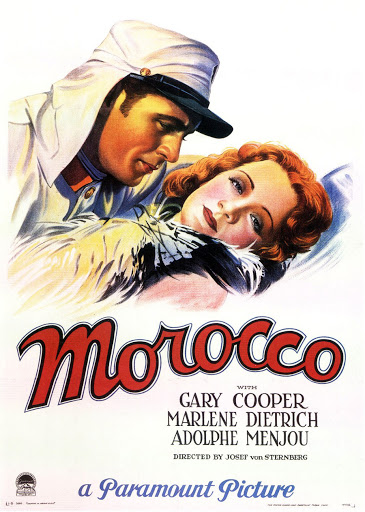
Morocco (1930)

Morocco header
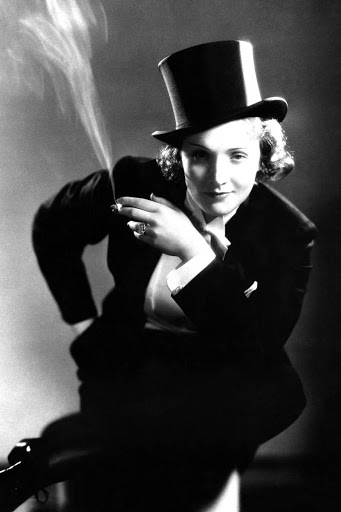
Marlene Dietrich and Gary Cooper romance in the heat of Morocco

Director: Josef von Sternberg

Cast: Gary Cooper (Legionnaire Tom Brown), Marlene Dietrich (Mademoiselle Amy Jolly), Adolphe Menjou (La Bessiere), Ulrich Haupt (Adjutant Caesar), Eve Southern (Madame Caesar), Francis McDonald (Sergeant), Paul Porcasi (Lo Tinto)

Josef von Sternberg was one of the greatest directors of early cinema – and Marlene Dietrich was his muse. Or was he her Svengali? Either way, they first worked together on German film The Blue Angel and such was the impression made by Dietrich, Hollywood was desperate to get her and von Sternberg together for a new picture that would channel her star power into ticket sales. Morocco is the picture they come up with, a romance tinged with heartbreak set in French occupied-Morocco around a Foreign Legion troop passing through town.

Dietrich was Amy Jolly, a woman of uncertain and shady past, new in town and making a living as a night club singer. There here routine encompasses everything from erotic singing in top hat and tails (complete with a bisexual vibe – you can tell this is pre-Code Hollywood?) to an apple selling singing routine. She’s loved by La Bessiere (a rather bland Adolphe Menjou), a stuffed shirt rich guy. But her heart belongs to man’s-man legionnaire Tom Brown (Gary Cooper), a toughened old soldier with a girl in every barracks town. Who will Amy end up with? Will she follow her heart or her head? Can she bear to live the life of a soldier’s mistress amongst the camp followers?

Writing it all down, there are probably few mysteries about the resolution you get from Morocco, which even at its 90 minute run time feels like an impossibly slim piece of fluff. But that hardly really matters when von Sternberg shoots the film with a romantic flourish and with Dietrich and Cooper as such compelling leads. It’s odd to think, looking at it now, that Morocco was acclaimed as one of the greatest films ever made on release (it’s not even the best or most lasting Dietrich/von Sternberg Hollywood collaboration of which there were five more to come).

But it lasts in history because it introduced Dietrich to the wider world. Von Sternberg took control over every aspect of her image to best present her to the world – including a torturous 45 takes of her first line (because after all the first line was the one that will make the first impression on an audience). Von Sternberg and cinematographer Lee Garmes choose lighting methods and angles that would enhance her features, and shot huge parts of the film to favour her (much to the annoyance of Gary Cooper, who resented von Sternberg’s shunting of him to the sidelines).

Von Sternberg was determined that Dietrich would make an impression: and she certainly did with her cabaret act, still probably the film’s highlight. Dressed in a striking male garb, her rendition of When Love Dies is sold on her confidence, sexual allure and tinge of bisexuality (viewers were scandalised and titalated that the routine ended with Dietrich playfully kissing a woman in the audience) to make a lasting impact. Von Sternberg lets the tension build as well by holding the camera calmly on Dietrich (in drag) while the audience at first boo before silencing and then being swept up in her performances. This is the approach taken for the rest of the film – and its rather weak plot – focusing on the a magnetic quality, the indefinable star quality some people have to just make you watch them.

It’s recognised by von Sternberg, who builds the film around her. It’s tempting to see Adolphe Menjou – the jilted would-be husband, in awe of the star – as a von Sternberg self-portrait, dressed as he is to resemble the director. But von Sternberg felt so confident over his control of Dietrich and her career, I suspect there is actually far more of him in lothario Tom Brown, the sort of man who may love a woman but also very much likes her to submit her will to his own. Brown may have his moments of decency – he wants Amy to have the best chance in life, which is clearly with La Bessiere rather than him – but he’s also an at times ruthless opportunist and adventurer, with a string of broken hearts behind him. Interestingly, considering their later films and her reputation, Dietrich’s Jolly is actually a fairly passive figure throughout the film, to whom events happen and who never feels in charge of her destiny. Perhaps more than a little of life drippling through to the screen?

Saying that the film has some bite in it, with the dialogue from Jules Furthman often rich, rough and ready, creating characters who speak at times bluntly but with a sort of urban poetry. Sadly, the dialogue scenes are often frequently the dullest in the film. Von Sternberg was still at the time a natural director of silent film, not the talkies. Hollywood itself had still not really learned how to do record dialogue and do camera movements at the same time, so most of the dialogue scenes are visually flat and rather forced (not helped by the storyline itself being often less then enthralling).

Where Morocco really comes into its own is when it falls back on visuals. As a director of pictures, von Sternberg is outstanding. The camera perfectly captures the bustle of the Moroccan market town. There is a beautiful sequence where Amy raises through a seemingly never-ending row of soldiers to try and find Tom. The Morocco in this film may bear almost no resemblance to the real Morocco – it’s clearly a Hollywood fantasy land – but it also looks at no time like it was shot on a Hollywood backlot. Tom Brown’s slow and sad browse through Amy’s dressing room, before deciding he should leave for her own good is hauntingly well done in near total silence, matched with beautifully empathetic camera moves. The final imagery, as our heroes head out into the sands of Morocco, is marvellous, a perfect collection of shots and reactions leading to an image for the ages.

And Morocco is a film of images strung together with a rather dull plot and a very stilted scenes of dialogue. Marlene Dietrich is at the centre of many of these images. This was her only Oscar nomination – but it’s not her finest performance. She’s still learning her craft and – above all you feel – still very much an elaborate prop for von Sternberg. The more they became something like equals the stronger the pictures would become. Gary Cooper was unhappy on the film – but actually his performance is remarkably strong and assured, dripping sexuality (von Sternberg also works a lovely little scene that pokes fun at Cooper’s height).

Morocco seems like a landmark of cinema that is of greater academic interest at times than it is dramatic. But when the dialogue fades away and the film is able to relax into the series of arresting images that make up most of it, it’s still a marvellous and intriguing work.

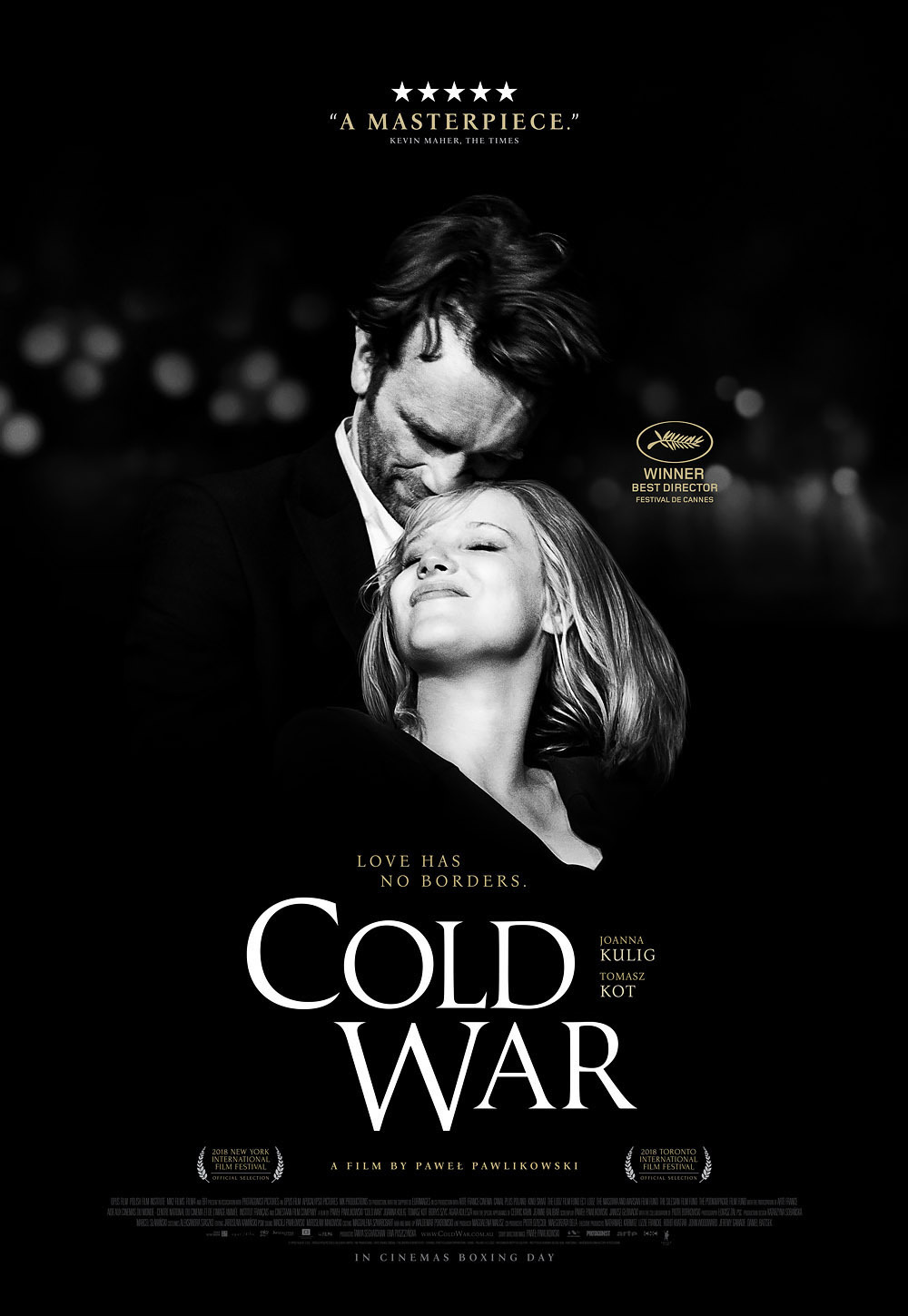
Cold War (2018)

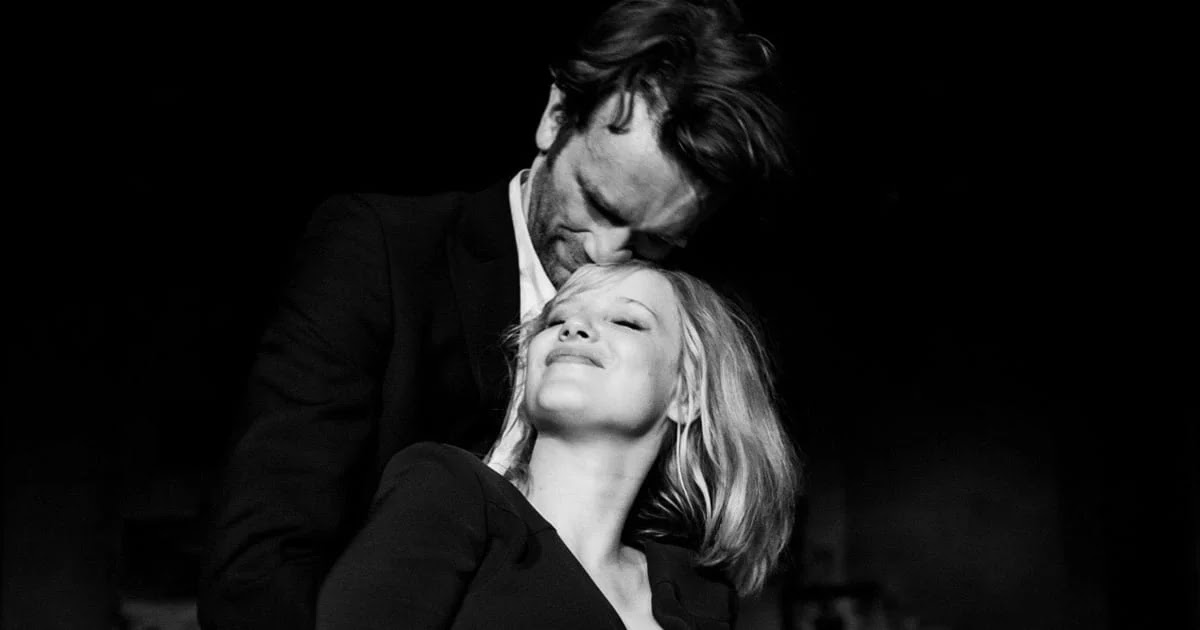
Tomasz Kot and Joanna Kulig are lovers divided in Cold War

Director: Paweł Pawlikowski

Cast: Joanna Kulig (Zula Lichon), Tomasz Kot (Wiktor Warski), Borys Szyc (Lech Kaczmarek), Agata Kulesza (Irena Bielecka), Jeanne Balibar (Juliette), Cédric Kahn (Michel)

Pawlikowski’s film is a heartfelt, heavy fictionalisation, of his own parent’s marriage. Or at least the emotions and clashes that lay at the heart of this turbulent marriage, rather than the actual events themselves.

In post-World War II Poland, the Polish government are funding the creation of a folk-music ensemble, to promote Polish culture. Wiktor (Tomasz Kot) is the lead conductor, helping to select the members. One of the applicants, Zula (Joanna Kulig) is a talented musician who has misled the committee on her background. Wiktor recruits her anyway and she swiftly becomes lead singer of the troupe – just as she and Wiktor begin a heated relationship. When the troupe journeys to perform in Berlin, Wiktor takes the opportunity to cross the border – but Zula, frightened of the risk, refuses to go with him. Over the next fifteen years the couple intermittently come together again. When apart, they long for each other. When together, it never takes long for joy to transform into envy, bitterness, anger and frustration.

The film is called “Cold War” – but it’s about the feuding relationship between these two different but very similar people, and the clashes between them caused by their hearts. Pawlikowski creates some neat commentary around how the Cold War – that division of Europe into two opposing camps – throws up even more boundaries between the two. The defection of one from Poland instantly makes it nearly impossible to meet. Both long for their Polish homes, aware that they can never lead the life they want there.

What’s a shame is that these themes don’t mix very well with the dark romance of the main storyline. It’s impossible watching the film not to think about Pawlikowski’s previous film Ida. Like Cold War, Idawas shot in gorgeous black-and-white (using the non-widescreen Academy ratio 4:3) and explored family problems in post-War Poland. But Ida managed to be both a deeply emotional investigation into the traumas historical and political events have inflicted on a family, while also giving a riveting insight into the scarred land Poland was for much of the twentieth century. Cold War misses this additional layer, focusing excessively on the personal, with two characters at its centre that it’s harder to relate to.

I always feel bad when I’m reduced to saying that the film didn’t work so well for me because I didn’t care for the lead characters. There is very little to fault in the performances. Both have an absorbing chemistry, and develop characters that are prickly, difficult, passionate, firey figures. Kot is, by turns, reserved and obsessive, prone to rash decisions he regrets at leisure. It’s something he shares with Zula. Joanna Kulig is very impressive here, carrying a defensive coldness at her heart that she only rarely allows to melt. She is a character rife with contradictions – decisive (except when she isn’t), passionate (except when she’s rational), loving (except when she hates). She’s a cocktail of confused emotions – perhaps stemming from a troubled childhood.

Both characters have striking self-destructive streaks. The film – like many of Pawlikowski’s films told in a very tight runtime, little more than 80 minutes – charts how these two characters time-and-time again find themselves in a position where they could seize happiness – only too promptly ruin it with jealousies, bitterness and narrow-mindedness. After a while, I confess, I found it wearing. Their decisions are so often – so obviously – wrong, naïve and stupid, that it gets too much. Their relationship is so fuelled by selfishness and disregard for others – partners, spouses, children – that after a while I found myself wanting to give them a shake and tell them to sort themselves out.

Essentially, for all its heartfelt passion and poetic beauty, it’s a “can’t live with, can’t live without”  tale. Its told with pace, but I felt I could actually do with a few more minutes to understand these two people better. There is probably one too many rural peasant troupe performance eating up runtime that could have been better spent getting a grasp on the characters.

The black-and-white shooting is extraordinarily beautiful, and Pawlikowski’s direction is, as always, perfectly judged, well-paced and tender. But for me this becomes a slight film about two people its’ hard to warm to, with an ending that suddenly tips into something both far more operatic and also slightly too pleased with itself. I missed the grace, beauty, wisdom and depth of Ida, which looks more and more like a perfectly judged masterpiece that balances the personal, the emotional and the social perfectly. Cold War, on the other hand, only feels like it scratches the surface of many of these themes.

The Constant Gardener (2005)

Rachel Weisz and Ralph Fiennes in the brilliant and moving The Constant Gardener

Director: Fernando Meirelles

Cast: Ralph Fiennes (Justin Quayle), Rachel Weisz (Tessa Quayle), Danny Huston (Sandy Woodrow), Hubert Koundé (Dr Arnold Bluhm), Archie Panjabi (Ghita Pearson), Bill Nighy (Sir Bernard Pellegrin), Gerard McSorley (Sir Kenneth Curtis), Pete Postlethwaite (Dr Lorbeer), Donald Sumpter (Tim Donohue), Richard McCabe (Arthur Hammond), Juliet Aubrey (Gloria Woodrow)

John Le Carré’s reputation as a spy novelist without peer can lead people to forget his books are often scathing condemnations of Western policy. The Constant Gardener, a superb adaptation of one of his finest novels, is no different. It’s a passionate, angry denunciation of how Western pharmaceutical companies, and their government partners, exploit the people of Africa. But it carries real force as it’s interwoven with a moving and tender study of grief and how it changes us, pushing us to see things from a different perspective. It’s that which gives the film its force.

Justin Quayle (Ralph Fiennes) is a middle-ranking career diplomat, serving in the high commission in Kenya. His wife Tessa (Rachel Weisz), an idealist determined to make a difference, is murdered. Justin determines to get to the bottom of her murder – and finds Tessa was investigating a British drugs company using the distribution of AIDS drugs to poverty-stricken Kenyans to test an experimental TB drug, covering up the harmful side effects and disposing of the dead. As flashbacks reveal Tessa’s investigation and motivations, Justin becomes ever more determined to unmask the drugs companies, and the figures in the British government protecting them.

Directed with vibrant urgency by Fernando Meirelles, The Constant Gardener is part thriller, part romance and part study of loss. Continuing his style from City of God, Meirelles’ camera work is jagged, hand-held and often unsettling, becoming ever more disjointed and edgy as the plot itself heads into darker and darker territory. The film throws us into its Kenyan setting, not shying away from the poverty of the villages. At one point, an aerial shot travels from the golf course, where the British are at play, across a train track and settles on the neighbouring slums.

This is all part of the film’s anger, which translates Le Carré’s feelings from the book. Inspired by the story of an aid worker he met in Cambodia in the 1970s (and who died in Kosovo in the 90s), the film is as furious as the novel at the heartless exploitation of Africa for the benefit of Western companies. Who counts the cost of Kenyan lives lost to experimental drugs? Certainly not the rich and powerful, who keep any consequences at a distance and rationalise them as for the greater good.

And not many have the courage to stand up to this. Most it seems are like Justin – good people who prefer not to think about, or look to deeply at, the impact we are having on the world. It takes a firebrand like Tessa to shake things up – and she pays a huge cost for it. Starting with Tessa’s death, the film feels at first like a mystery, but the culprits are all too obvious. Instead the question is why, not who, and the dark conspiracy that unfolds is really about establishing who knew what rather than who was involved (everyone, of course, was involved).

Rachel Weisz (winning the Supporting Actress Oscar for her work here) excels in a part that could have been a holier-than-thou left-wing agitator, but which she makes warm, human and real. Tessa is a woman who cares deeply, but also loves deeply, who is genuine, unaffected and speaks her mind. Weisz’ performance hits just the right notes, passionate but playful. The bond between her and Justin is real and based on a deep love on both their sides.

So warm is her performance, that you totally understand the all-consuming grief and loss Justin suffers at her death. It’s a very different sort of part for Fiennes – gentle, vulnerable, sweet, far different from his more patrician roles. He nails the part perfectly, bringing out of it a great deal of emotional force. The film is a tender exploration of the impact of grief on a person, and the mixture of shock, sorrow, anger and confusion in Fiennes’ performance feels completely real. This stillness and sombre approach to loss carries real weight.

The film becomes both a crusade – the husband taking up the cause of his slaughtered wife – but also an unusual romance. The greatest pain for Justin is discovering that his wife kept so much of her life secret from him. She did it to protect him, but he longs for the chance to prove to her that he could have been her “secret sharer”, that she could have trusted him. Effectively the film – and Justin’s quest – is to emotionally reunite with his wife, to fully understand her. The emotional heart of the film is this story, the husband effectively communing with the ghost of his wife, wanting there to be no more secrets keeping them apart.

This does mean that, at times, the conspiracy angle of the film gets slightly rushed. A late sequence effectively is four confessions from supporting characters to Justin in a row. The film gets a little bogged down in the mechanics of Justin chasing down various pieces of paper. The eventual quest to find the doctor behind the scandal (a wizened with guilt Pete Postlethwaite) offers a rather neat resolution. But it doesn’t matter too much as the film culminates in an ending that is as bizarrely bleak as it is hopeful.

Beautifully shot by Meirelles, with a raw immediacy that keeps the tension up, with a genuine sense of Kenyan life, it has a wonderful cast of character actors doing their bit (Bill Nighy as an arrogant senior diplomat and Danny Huston as a weasely coward stand out). It’s a film that is full of righteous fury at the West – but also with a tender beating heat for the pain of grief and the struggle with mourning. Emotional and political, it’s the finest Le Carré adaption on film.

The Graduate (1967)

Dustin Hoffman is out of his depth in coming-of-age comedy The Graduate

Director: Mike Nichols

Cast: Dustin Hoffman (Benjamin Braddock), Anne Bancroft (Mrs Robinson), Katharine Ross (Elaine Robinson), William Daniels (Mr Braddock), Murray Hamilton (Mr Robinson), Elizabeth Wilson (Mrs Braddock), Buck Henry (Room clerk), Brian Avery (Carl Smith), Walter Brooke (Mr McGuire), Norman Fell (Mr McCleery)

In 1967, the world went crazy for The Graduate. This comedy of manners and sex tapped into a whole generation’s growing sense of rebellion. Who wants to be told their life has already been mapped out for them? The Graduate seemed to capture that mood and was celebrated as the ultimate example of how someone could break out of the mould. It’s a young person’s film, and perhaps you need to be young to watch it. The older you get – and the further away from those dreamlike days of the late sixties where everything seemed possible – the more the film feels like an amusing but soulless story, with a privileged bore at its heart.

Benjamin Braddock (Dustin Hoffman – actually nearly 30) is a fresh-faced young graduate, top of his class and a sports star. Arriving back home in California, he’s depressed, lost, uncertain about what he wants from life, but pretty sure it isn’t the litany of office, marriage and a career in “plastics” that his parents expect. His isolation brings him to the attention of Mrs Robinson (Anne Bancroft – only 6 years older than Hoffman), the wife of his father’s business partner. She sets about to seduce him, partly out of boredom, partly perhaps because she feels the same ennui and depression as he does (not that Benjamin ever notices – more on that later). They start a long summer affair, conducted with supreme awkwardness on Benjamin’s part, which suddenly becomes complex when he falls for her daughter Elaine (Katharine Ross). Can true love triumph?

The good first. The film’s popularity was grounded in its wit – and it has a very funny script by Buck Henry, who also appears in one of the film’s funniest sequences, as an overly helpful desk clerk at the hotel where Benjamin is awkwardly trying to book a room for his assignation. The film is pacey and energetic and full of imaginative cuts (a brilliant one sees Benjamin flopping out of a pool, jump cutting to him descending onto Mrs Robinson in bed) and directorial flourishes. It’s a dynamic and sexy young film, full of bounce and appeal, with some great jokes.

Mike Nichols – who won the film’s only Oscar for Best Director – shoots the film with real vibrancy. He does a fantastic job getting us to invest in Benjamin. A huge percentage of the film sees the camera focus in on Benjamin, usually in medium-shot or close-up – and it’s a rare moment when he isn’t in frame. The camera rarely leaves him for the first ten minutes, first zooming out from a close-up of him sitting on a plane, following him along a conveyor belt to the terminal (where his blankness slowly changes to fearful anticipation of what waits at home) to tracking along beside him at his welcome home party. This party is stuffed with his parents’ friends, and Ben’s isolation, claustrophobia and insecurity seem all the more striking as the camera gets closer and closer to him. It’s a superb example of using the camera to build empathy for the character.

Nichols’ excellent work continues throughout the film, which makes excellent use of shots, editing and zooms to make us experience Benjamin’s emotions, helping us root for him. It also helps that the film is scored to some of the finest music Simon and Garfunkel ever performed. The slightly sad, wistful feel to their songs – from Sound of Silence to Scarborough Fair – seems to perfectly frame Benjamin’s doubts, just as the slightly more hopeful beats of Mrs Robinson seem to capture him embracing freedom at the film’s end.

The decision to cast Hoffman pays off in spades. Hoffman is no one’s idea of a WASPy sports-star alpha male, but he’s everyone’s idea of an outsider. His performance is pitched perfectly – awkward, shy, uncertain, unaffected and natural. In fact, the film is pretty much perfectly cast. Anne Bancroft’s performance defined her whole career, the predatory Mrs Robinson whom she invests with touches of emotional vulnerability and more than a trace of the very same depression and fear that Benjamin is feeling. An entire generation effectively fell in love with the charming Katharine Ross.

Freedom is what the film is all about. But today, you feel the film skims only lightly on depths it could explore in detail. Benjamin can feel all the ennui he likes: he’s got it so made, I wish I had his problems. With his wealth, his fast car, the vast array of businessmen falling over themselves to offer him low-work-high-reward jobs, not to mention the gallery of attractive women throwing themselves at him, it’s the sort of misery only the rich enjoy. Almost constantly dressed in suit and tie, with his combed down hair, he looks a million miles from the generation that would party at Woodstock and protest Vietnam. Benjamin probably went on to vote for Reagan (twice). There is nothing counter-culture about him whatsoever. He ticks off noisy teenagers at a drive in and seems to find the young as hard to understand as the old. He’s less a generation adrift, more of an individual misfit.

The film though loves him to pieces, in the same way it largely treats Mrs Robinson as somewhere between a joke and a monster. She’s written as either a horny exploiter of youth, or a vengeful harpy. Rather than a ruthless cougar, today she seems to be more of a vulnerable, damaged figure. Every scene with Bancroft carries moments of pain, sadness and world-weary depression. Why else is she so able to spot these traits in Benjamin? Watch her desperation and hurt when Benjamin starts to date her daughter. That’s real humanity there, miles from the empty selfishness of Benjamin, who genuinely doesn’t get why she could take it so amiss that he intends to replace her with her own daughter.

The most striking moment in the film that captures this is the scene where Benjamin attempts small talk during one of their nights together. The film wants us to think Ben is looking for something real, and that Mrs Robinson just wants the sex. But the conversation is a masterclass from Anne Bancroft of suppressed pain and regret, as she talks of having to drop her art degree because she was seduced by her husband, of years of living an empty life. Benjamin of course doesn’t get it – he guesses she dropped the art because she wasn’t interested – and then gets cross when he feels he’s being belittled. Mrs Robinson’s sad eagerness to persuade him to stay is rather affecting – more than the film really allows. I credit Anne Bancroft with much of this.

And then we have Elaine. The second half of the film shifts gear dramatically from the first. While the first half is a sex comedy and study of suburban discontent, the second seems to change into the sort of celebration of youthful energy that the first half could be said to be partially satirising. Elaine is an independent young woman, embracing her education and the opportunities it offers. Suddenly, an energised Benjamin is tearing across country to win Elaine back (let’s put aside that Benjamin behaves in this section like something between a stalker and a creep).

However, as the film nears its conclusion, that celebration of the promise of youth is undercut somewhat, as Elaine chooses to make  all the same mistakes her mother made. The film even hints at this with its famous ending shot. After eloping from her wedding, Elaine and Ben sit on the back seat of the bus. The camera holds the shot as they laugh, until they stop laughing and then sit next to each other, and then awkwardly look this way and that as if waiting for someone to tell them what to do. What do they really have in common? Having made a spontaneous decision like this, what happens next? It’s another little genius flourish by Nichols – although it’s also the film having its cake and eating it, selling the sequence before this as a triumph of true-love, then asking us to question if the world is that simple.

Some of these ideas felt lost in the excitement of the film’s first release, when it captured a wave of public feeling. But the older the film gets, the more awkward it looks. As if the kids who watched it in the sixties and turned into the Reaganite Baby Boomers of the 1980s, slowly realised that the message it was selling was not quite true and perhaps their parents weren’t that different after all.

Watching The Graduate today, I found it hard to shake the feeling that if I flashed forward to the characters’ lives in 1997 I would find a very different, but still very similar story. Benjamin Braddock would be a wealthy businessman, still dressed in suit and tie, who went into plastics or computers or some such and swallowed the “greed is good” mantra from his corner-office. Elaine a depressed housewife, mother to a couple of kids, who left her dreams of forging her own life behind to marry the subject of a youthful fling. Who, with her own regrets, finally understands the sadness and misery at the core of her mother’s life. And is making eyes at that attractive young man next door…