Category: Relationship film

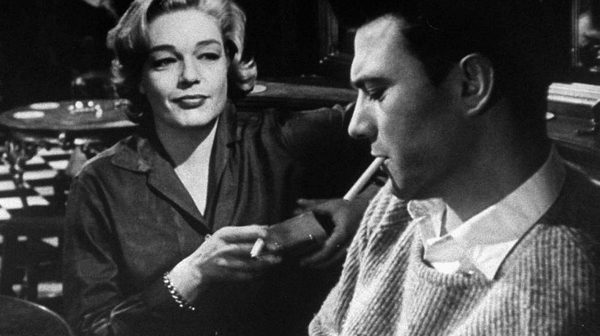
Room at the Top (1959)

Room at the Top (1959)

An ambitious man chooses between a damaging love affair and career in this fabulous kitchen-sink drama

Director: Jack Clayton

Cast: Laurence Harvey (Joe Lampton), Simone Signoret (Alice Aisgill), Heather Sears (Susan Brown), Donald Wolfit (Mr Brown), Donald Houston (Charlie Soames), Hermione Baddeley (Elspeth), Ambrosine Phillpotts (Mrs Brown), Allan Cuthbertson (George Aisgill), Raymond Huntley (Mr Hoylake), John Westbrook (Jack Wales), Richard Pasco (Teddy)

If there is one thing that preoccupied British cinema of the late 50s and early 60s it was class. How was a working class boy from the wrong end of the tracks supposed to pull himself up and make himself some room at the top? That’s certainly one of the many themes that you find in Jack Clayton’s sensational hit, nominated for a string of Oscars, but it’s also as much about how the search for that mystical nirvana that sees you invited for tea and crumpets at the conservative club, also means sacrificing huge shards of your own soul.

Joe Lampton (Laurence Harvey) arrives in the a Yorkshire town to take on a dreary, poorly-paid post in the Treasurer department of the local council – but has the bonus of being office work that gives him a chance at working his way up to the top. To that end he sets his ambitious cap at Susan Brown (Heather Sears), daughter of major local business magnate Mr Brown (Donald Wolfit). But Joe is also a man of his own passions, which fly in the face of his ambition, and he finds himself drawn towards married older French woman Alice Aisgill (Simone Signoret), who he meets at the local amateur drama club and who encourages him to surrender his ambitions and instead lead a life of contentment and happiness with her. Which possible life will Joe choose?

Perhaps the very first of what became the kitchen-sink genre, Room at the Top is beautifully filmed by Jack Clayton (as you would expect), but also brings the other major strength of this overlooked director to the fore, his ability with actors and to wring all-encompassing tragedy from the most everyday of circumstances. That’s what he does here, creating an almost epic scale of internal struggle for its hero, prickly as he is, drawn between two deeply conflicting goals, that asks what profits a man who gains the world at the cost of his soul?

Because, Room at the Top is that uniquely British film, that shows ambition and desire to better yourself often comes hand-in-hand with the sort of ruthless disregard of your roots, backgrounds and those around you in order to find your own path. Joe Lampton is a former POW, chippy, insecure, bitter, angry and determined to gain the sort of life he deserves. Of course it’s not hard to agree that he is more deserving than some of the tweedy, chinless fools around him and the sneers and condescension he receives from the officer class (his rival for Susan’s affections delights in calling him Sergeant, and reminding him constantly of his superior war record) is more than enough to motivate Joe.

What’s really striking about Joe therefore as how weak the character is. In undoubtedly the finest performance of his career, Laurence Harvey (a difficult and unreadable actor, with a style bridged between minimalism and woodenness) bravely shows both the bullish determination and the fundamental insecurity and weakness of Joe. A character who defines himself solely around what he feels he can achieve, he’s also a man completely unaware of what happiness is and how he to get it – and the thawing of her personality into something warmer and more loving with Alice, only serves to highlight how misguided and weakly he suppresses and kills such feelings in order to seize opportunities in life he feels entitled to.

It’s a rich contrast to Alice herself, a woman who is far braver and more certain about what she wants, and willing to fly against the conventions expected of her if it means she can gain happiness. The novel was adapted to turn Alice into a French ex-pat (married to a brutally cold RAF type played with an imperious selfishness by Allan Cuthbertson) solely so Signoret could be cast in the role – and it’s a match made in heaven. Simply wonderful, Signoret brings the part not only an imperious sexuality, but also a deep and lasting vulnerability under the surface of Euro-chill, a woman who we see opening herself up to the possibility of an affair becoming something truly lasting and deep, who has the courage to understand who and what she wants in a way Joe never can. 

The tragedy is in that inability of Joe to understand his yearnings. Clayton’s brilliantly subtle film demonstrates time and time again, contrasting its romantic freedom laced with passion when Joe and Alice are together with the stilfed, contained suppression and chill that the more buttoned up, angered Joe meets elsewhere. If Joe had the will and strength he would top fighting for the things he should want in order to seize the opportunities he actually wants. His tragedy is that he can’t – and can’t begin to understand himself, or acknowledge his desires, until it is too late.

This was all a deep shock – and carried real power – at the time when Britain was shifting out of post-war hierarchies into the freer 60s, and Room at the Top was a massive hit at the box office. But it made such impact because its attitudes feel so deep and real, and the simple, everyday tragedy it details of two relationships doomed for different reasons, bound together by the self-defeating ambition of its lead character. Because wherever he goes, Joe will have people like Mr Brown (Donald Wolfit is very good by the way, in a role far outside his usual style) constantly reminding him of his oik status, so any victory in inbuilt with failure. Joe’s ambition and intelligence serve largely to blind and deflect him from the things he really wants. A lesson for us all.

The Beguiled (2017)

Nicole Kidman struggles to resist the charms of Colin Farrell in The Beguiled

Director: Sofia Coppola

Cast: Nicole Kidman (Miss Martha), Kirsten Dunst (Edwina), Elle Fanning (Alicia), Colin Farrell (Corporal McBurney), Oona Laurence (Amy), Angourie Rice (Jane), Addison Riecke (Marie), Emma Howard (Emily)

A remake of Don Siegel’s adaptation of the original novel, The Beguiled throws a feminist slant on a story of a confederate soldier, Corporal McBurney (Colin Farrell) who, in the later years of the Civil War, is found injured in the grounds of a girl’s school, where the women have continued to run the operation while the menfolk are consumed with (and by) the war. The school is run by the distant Miss Martha (Nicole Kidman), with the lead teacher Edwina (Kirsten Dunst) and five students of varying ages. All of the girls and women find themselves entranced (beguiled!) with the deceptively gentlemanly McBurney, whose true aims may be darker than assumed.

Sofia Coppola’s version of the story shifts the attention onto the women of the piece, and their plight and emotional journeys. This is a perfectly legitimate stance to take – and showing effectively a colony of girls and women in the 1860s living some sort of structured commune life is interesting and different – but Coppola’s film has a coolness and distance to it that ironically makes it far less than beguiling than it should be.

Beautifully filmed as the film is, it’s slow pace and meditative tone – as well as the rather obvious points it seems determined to make about male and female relations – actually serve to make the film less engaging than it should be. Wonderfully framed and painterly in its execution, with an effective mix of classical and 1970s style, it still never quite sparks into life.

The cast also struggle to bring a heartbeat to their characters. Nicole Kidman brings her customary reserve and elegance to a woman who has hints of a mysterious past that troubles her to this day, but the role remains distant and difficult to read – more than the film really requires. A clash or seduction between her and Colin Farrell’s corporal keeps promising dynamite but the explosions never really seem to come. Farrell laces his role with charm and a gruff masculinity, but the role misses a sense of his own darkness or manipulative nature until quite late, with the final act revelations making him appear more angry and bitter than the role really requires. It all kind of sums up the film that gets lost in its artifice and fails to uncover its heart.

The film, you could argue, does its best to beguile the audience with McBurney as the film’s character are. We are shown at every angle his vulnerability and tender politeness, and hidden from us for too long are his more manipulative elements. Coppola’s film becomes an intense study instead of sexual feelings and relations within a confined space. From sensual hand washes from Miss Martha, to intense declarations with lonely teacher Edwina, to not-so-innocent flirtations with the pupils, there is more than enough evidence that McBurney’s desire to stay may well be as much linked to seeing the school as having the potential to be his own private harem. The film’s failure in this intense sexual politics is that, while it captures moments of the simmer of attraction, it fails to really establish the danger that McBurney could suggest, as a violent man of action with complete control over a group of women.

Indeed the final moments of the film even suggest that the school itself may be a sort of siren’s bay – although lord knows McBurney is no Odysseys – which I found a rather confusing beat. Effective as the final images, or the film’s last supper betrayals, may be, they don’t carry quite enough wait because the film never quite nails the sexual tension it is aiming for, or the sensual danger it is trying to establish as a theme within the film. 

Other changes make less sense as well. Coppola deliberately changes the race of Edwina, from a mixed-race young woman to someone white enough to be played by Kirsten Dunst. While Dunst’s performance is fine, many of the themes of Edwina’s lack of confidence, her self-loathing, her feeling of having no place outside of the school, of being somehow less than other women are left in place. These themes of course make perfect sense for a mixed race woman in the 1860s who has landed a job through the connections of her father, but they make less sense for an attractive young schoolteacher with a privileged background. Coppola made the change because she felt that she could not do the theme justice, but she misses the fact that the very appearance of the character is the context needed for her to make sense.

The Beguiled is beautiful to observe and has its moments, but it never really comes to light the way it should. Thoughtful and poetic a director as Coppola is, she has created a film here that feels all artifice and no depth, that wants to paint a picture of the life of women in the civil war but never really has the energy and fire to make this come to life in a way to make the audience as engaged as they should be.

Last Christmas (2019)

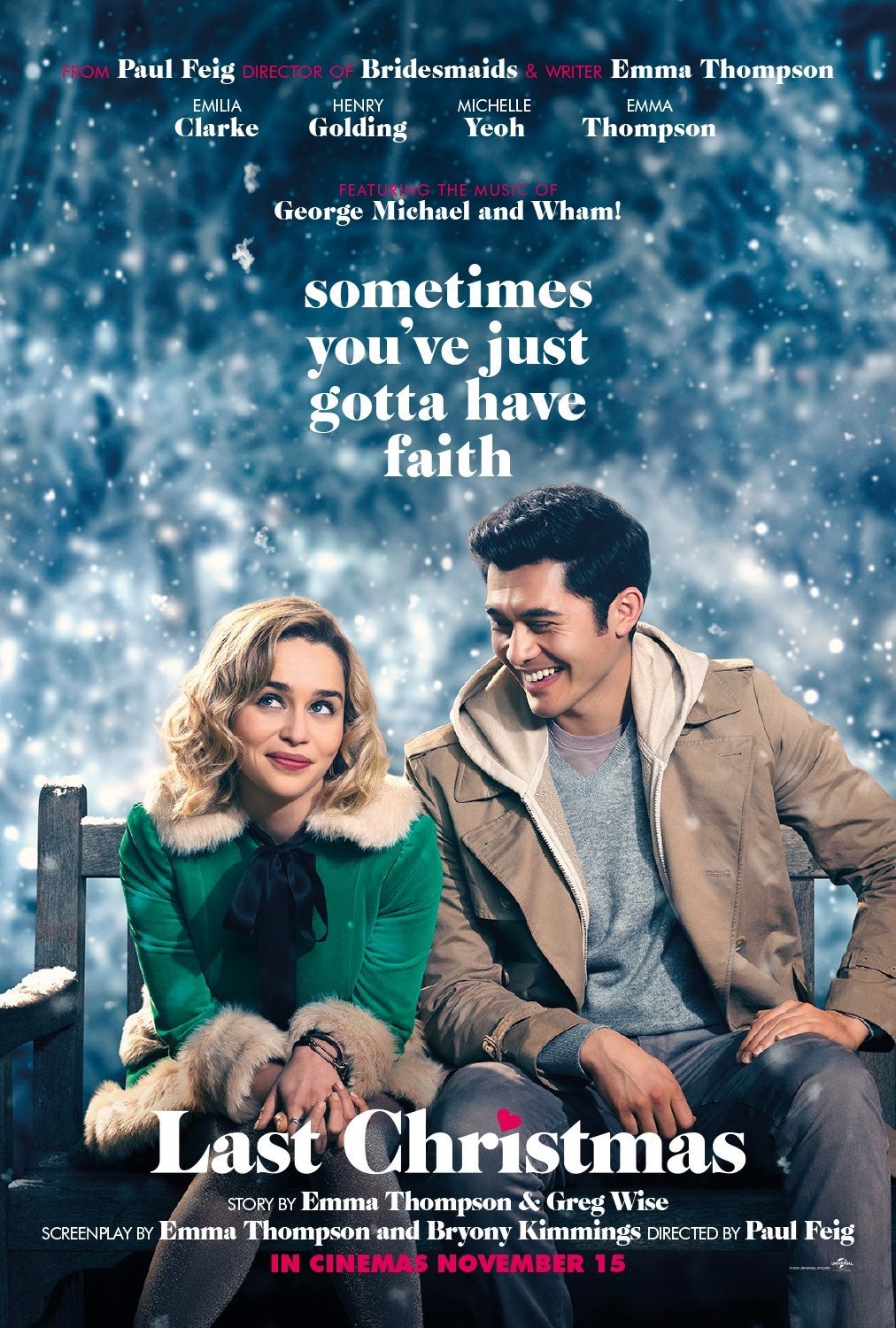
Emilia Clarke and Henry Golding in a Christmassy romance with a twist

Director: Paul Feig

Cast: Emilia Clarke (Kate), Henry Golding (Tom Webster), Michelle Yeoh (“Santa”), Emma Thompson (Petra), Lydia Leonard (Marta), Peter Mygind (“Boy”), Rebecca Root (Dr Addis), Patti LuPone (Joyce), Ingrid Oliver (PO Crowley), Laura Evelyn (PO Churchill), Rob Delaney (Director), Peter Serafinowicz (Producer)

Last Christmas has been savaged by critics and held up by many like it was some sort of embodiment of everything that’s wrong with cinema. Jeez louise guys, take a chill pill why don’t you? Feig’s London based comedy, working with an Emma Thompson script, does exactly what it says on the tin – an It’s a Wonderful Life-inspired Christmassy story, that ticks all the Christmas boxes. It has no pretentions for doing anything else. And there is nothing wrong with that!

Kate (Emilia Clarke) is recovering from a heart transplant last year, and she’s heading off the rails. She takes no responsibility for anything, she’s selfish, lazy, demanding and making a car-crash of her life and health. Working as a full-time Elf in a Covent Garden Christmas store (run by Michelle Yeoh as “Santa”), Kate’s life is heading down the toilet until one day she meets Tom Webster (Henry Golding), an almost supernaturally decent guy, kind, considerate, friendly and caring. With his guidance can Kate start to turn her life around?

Well there is a twist in Last Christmas and, to be honest, it’s pretty easy to see coming. Anyone with half an eye on costumes or numbers of interactions will see it coming and anticipate what they are going to get. But you know, that’s fine. This is a film that knows what it is, a fairly unchallenging rom-com that’s spiced with a little touch of Capra-esque whimsy and a conventional morality tale of a selfish person turning round their life.

There are some good jokes, there are some reasonably charming performances, there is a good sense of fun driving through the whole film and it manages to capture at least a little touch of that Christmas-movie alchemy (a la Love Actually) where you can imagine people happily sitting down to watch it, in a light, fun, unchallenging way, for years to come. Its Feig’s offering for the Christmas movie cannon and it’s a perfectly acceptable entry. In fact its cosy predictability and familiar structure is pretty much a key part of its appeal. Because at Christmastime we don’t really want anything that’s going to stretch us or demand things from us. We kind of want to sit around and watch something a little predictable, a little fluffy but basically well-meaning and fun.

Emilia Clarke does a terrific job as light comedienne in the lead role, a role perhaps far more suited to her quirky, klutzy, off-the-wall charm than years of playing Daenerys Targaryen on Game of Thrones ever was. She throws herself into it here, happy to be silly, and shows both a good skill for pratfalls and also for drawing out a vulnerability from her character as well as being extremely charming. Henry Goulding makes a very good match as a character who could very easily tip over into smugly perfect, but again remains just the right side of charming.

Thompson writes herself a decent role as Kate’s Yugoslavian mother, a typical sort of nightmare domineering mother from films of this time, but laced with a sadness and isolation in the modern world and her adopted country. Moments that show the reaction of the characters to Brexit and the growing hostility to immigrants sometimes lean a little too heavily on the liberal conscience of the audience, but it fits in with the generally gentle, liberal attitudes of the film.

It’s a film that knows it’s a guilty pleasure, but it seems to have been designed to give you a sort of pre-Christmas glow. Catch it in the wrong mood and you will consider it one of the worst things you have seen. Take it in the right mood and you might even be charmed by it.

The Good Liar (2019)

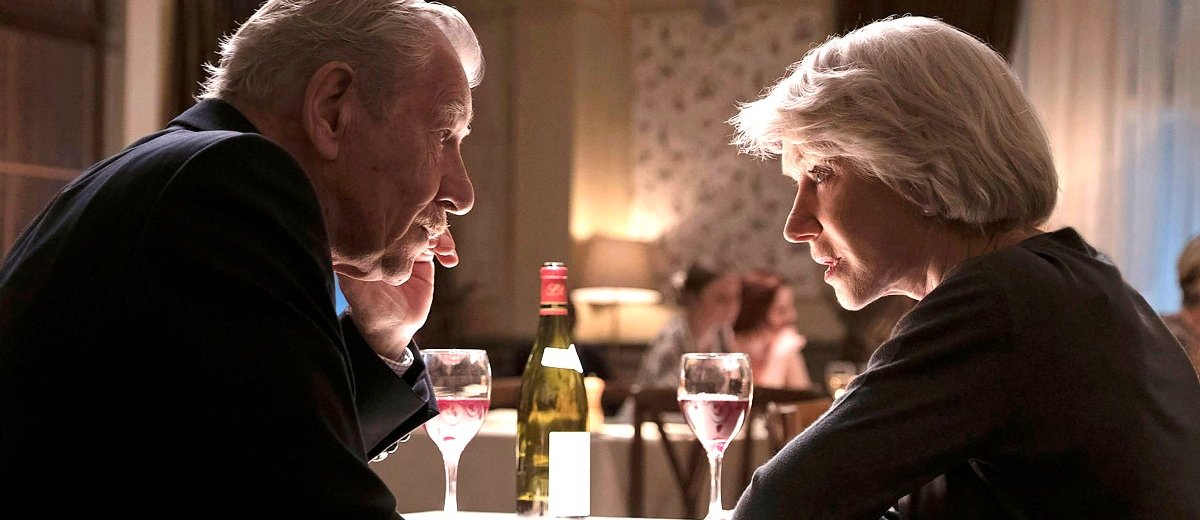
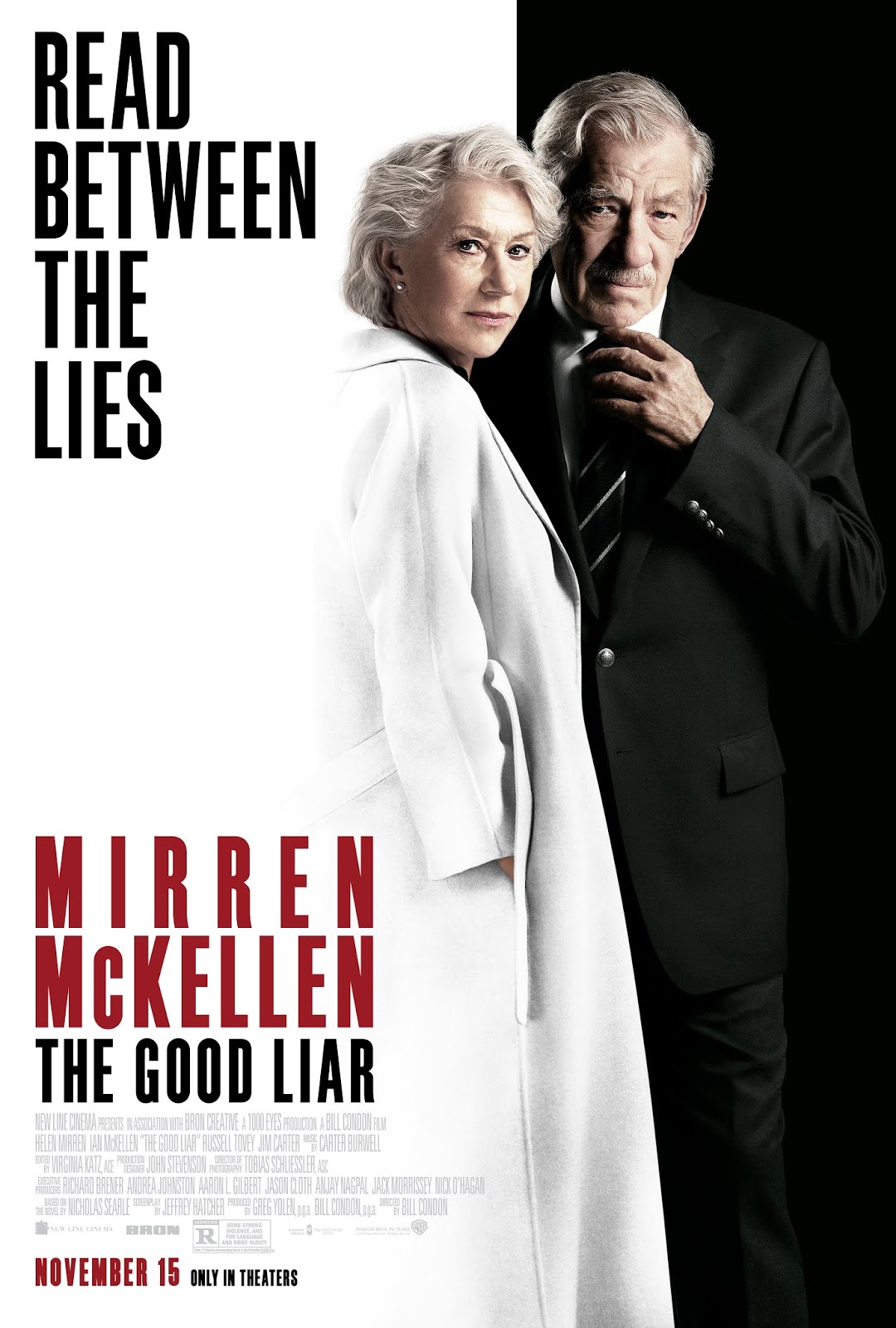
McKellen and Mirren excel in this enjoyable confidence trick caper The Good Liar

Director: Bill Condon

Cast: Ian McKellen (Roy Courtnay), Helen Mirren (Betty McLeish), Russell Tovey (Steven), Jim Carter (Vincent), Lucian Msamati (Beni), Mark Lewis Jones (Bryn), Jóhannes Haukur Jóhannesson (Vlad)

The truth can be a difficult thing to grasp. Particularly when so many people are skilled at twisting and turning it for their own purposes. Roy Courtnay (Ian McKellen) is one of the best in the business, a selfish and greedy con man who preys on the vulnerable and the arrogant unlike, ruthless in is business dealings and with anyone who tries to muscle in on his business. His latest mark is Betty McLeish (Helen Mirren), a lonely widow who has inherited a huge fortune from her late husband. Meeting Betty through a “lonely hearts” online dating agency, Roy skilfully inveigles his way into her life and her home. But is all as it seems to Roy?

The Good Liar is an entertaining and enjoyable con trick of a film, that sets up its stall very much like a number of other films in this genre. We are presented with a picture of the conman at work, and shown many of the tricks and hoodwinks that the film will practice on us, being worked out in practice by the conman early in the film. It’s possible to see how the joins work – and do find your expectations being carefully prepped – but the film is entertaining enough that you are happy for it to let you try and lead you down the deceptive garden path even as it points out a few trips along the way.

A large part of the success is down to the brilliance of the two leading performances. Ian McKellen is at possibly his very best as the genial, amusing, waspish Roy who we only slowly begin to realise is a thoroughly nasty piece of work, with a line in casual cruelty and violence. It takes a great actor like McKellen, to play so successfully a consummate actor (and liar) as Roy, and never seem either too forced or overplaying the hand. His Roy has several excellent lines, and also a brilliant ability to look and sound genuine and heartfelt at one moment and shift gears to ruthless coldness the next. It’s a superb performance, wonderfully entertaining in its delight in its own villainy. You almost want to forgive Roy his essential vileness, such is his surface charm and McKellen’s waspish delight in playing such an unrepentantly horrible man. McKellen has done his best film work working with Condon and this film might be his best yet.

Mirren matches him well as the mark, a considerate, intelligent and decent woman. Mirren has a difficult job here, for reasons that would perhaps be spoilers, although I think it is safe to say that most viewers going into a film like this would expect that it would have a few cards up its sleeves. Needless to say Mirren is perhaps not all she seems, but she handles the difficult balancing act of seeming one thing and suggesting enough of another, that the final reveals never come as a surprise or seem inconsistent with her characterisation throughout the film. 

Instead the film takes us on a delightful dance where we know that something is going on that we don’t know about or can’t see – and playfully the film effectively shows us the mechanisms of the con very early on as Roy and his business partner Vincent (an excellent Jim Carter) carry out another confidence game on some other victims. But Condon’s playful film lets us know enough that something is happening that Roy can’t even begin to guess at, while also allowing us to enjoy his confidence, arrogance and fast-thinking willingness to dance from lie to lie depending on the mood. 

The one problem the film might have is that the final reveal of what is going on is based on information that is not delivered early in the film, but instead dropped on us at the end in an info-dump. While it makes sense that the film wishes to play its cards close to its chest, it perhaps would have been more satisfying to have little bit more of the information sprinkled throughout the film, enough for us to have a bit of a chance of piecing together they why before we are told. On reflection the film gives us moments that point towards the big picture, even if never enough information is given.

But the film still works because it has a devilish charm and waspish wit, and a delightful performance of gleeful devilry from McKellen, in one of his best roles yet. Making a superb pairing with Mirren, Condon’s enjoyable film hinges on the success of its actors and its enjoyment of the tricky narrative sleight-of-hand that con films can do so well.

The Theory of Everything (2014)

Felicity Jones and  Eddie Redmayne bring to the screen the life of Stephen Hawking

Director: James Marsh

Cast: Eddie Redmayne (Stephen Hawking), Felicity Jones (Jane Hawking), Charlie Cox (Jonathan Jones), David Thewlis (Dennis Sciama), Simon McBurney (Frank Hawking), Emily Watson (Beryl Wilde), Maxine Peake (Elaine Mason), Harry Lloyd (Brian), Guy Oliver-Watts (George Wilde), Abigail Cruttenden (Isobel Hawking), Christian McKay (Roger Penrose), Enzo Cilenti (Kip Thorne)

If you want a story of a triumph over adversity, there are few where adversity was faced off so successfully and publicly than the life of Stephen Hawking. Diagnosed with motor-neurone disease while still a postgraduate, Hawing defied the diagnosis that gave him little more than a few years to live, to shape a life and career that would have a profound impact on the world and make him probably the most famous scientist alive. Not bad for a man who spent a large part of his life confined to a wheelchair, only able to communicate through a synthesised computer voice.

But his life was not just a story where he was the only character. Many of his accomplishments came about because of the unflagging support of his wife Jane. This film takes as its source the book Jane wrote about their life together. And while it arguably sugar-coats or plays down some of the more uncomfortable or divisive elements of their marriage (a marriage that was eventually to end in divorce and several years where they did not speak), it also serves as a warm tribute to the many years they spent together where their support for each other was total and offered with no agenda or demands.

Here in James Marsh’s inventive and well-made film, which manages to more-or-less transcend its “movie of the week” roots, Hawking and Jane are played by Eddie Redmayne and Felicity Jones in performances that scooped an Oscar and a nomination respectively. Both are deserved, as these are rich, dedicated and empathetic performances, crammed with admiration for their subjects. It all fits perfectly well in Marsh’s moving if (at times) rather conventional film, which he directs with a lack of flash and plenty of heart. 

It’s a film that sometimes avoids delving too deeply into the emotional heartlands of its lead characters, and the frequently messy situations that life throws you into (the end of this relationship comes with a remarkably calm sadness, which contrasts heavily with the furious argument Jane describes in her book). It’s also a film that has a very clear agenda of framing Jane as a near saint in her devotion and patience, and Stephen as a brave soul with a superhuman perseverance and regard for his wife. So the introduction of choir leader Jonathan Jones (played with a sweet charm by Charlie Cox) into their domestic life as a surrogate father to the Hawking children and friend to Jane (very definitely not a lover, the film is eager to make clear) is very much something accepted by both without a hint of doubt or recrimination. Similarly, Hawking’s later divorce of Jane is set in a context of “setting her free” rather than the more (allegedly) definitive break it was in real life.

Real life, you suspect, was messier than this. The film does mine some excellent emotional honesty from Jane’s decision to marry Stephen being, at least partly, based on her belief that this man she loves only has a few years to live. From the start she doesn’t anticipate signing up for a lifetime of providing care and abandoning her own aspirations to support Stephen’s (the film makes no real mention of her own dreams of becoming a translator) – but Jane does so with a decided willingness and sense of duty. Similarly, Stephen does not anticipate a life essentially trapped in a wheelchair – finally speechless – and the film allows beats of frustration from him, alongside the determination to not let these problems prevent him from achieving his potential.

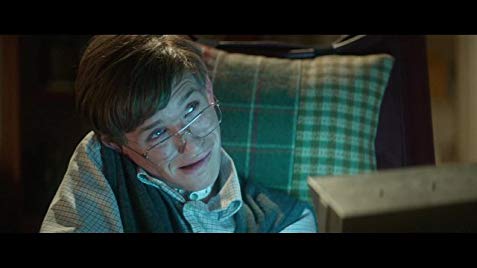
The film revolves around Eddie Redmayne’s performance as Hawking. Needless to say it’s a technical marvel, a stunning accomplishment not only in its physical mastery (especially as it was all shot out of sequence, so in each scene Redmayne needed to carefully map how far the symptoms had progressed) and commitment, but also in its searing emotionality. Hawking’s brightness, his bashful playfulness, his intelligence and sense of cheeky charm are all there – and they’re later married with a pained, just-controlled bitterness mixed with stern mouthed resentment and gutsy determination to deal with the hand he has been given. Redmayne’s performance is a superb capturing of the all-consuming feelings of being betrayed by your own body, of no longer being the master of your own frame and being forced to adjust your plans and expectations to meet the limits nature has put on you.

Felicity Jones is equally good in a superbly heartfelt performance as Jane, a woman who gifts Stephen the determination and will to see past the limits the disease places on him. But it’s also a performance that acknowledges the draining burden of having to support someone this ill, of having to constantly be the strong member of the marriage, the one who must always be as ready to save her husband from choking at dinner as she must be to drop everything and fly across Europe to take life-saving medical decisions about him. Jones’ performance never slips into self-pity, but mines a rich vein of willing sacrifice powered by love.

Marsh’s film is largely unflinching around the everyday miseries and sorrow of the terminally ill and restrictingly disabled. We are confronted in every scene with the limits that Hawking’s body places upon him, from deteriorating handwriting and clumsiness to the loss of all speech and movement. This progression is presented with a detail uncoloured by maudlin sentimentality. Doctors are sympathetic but bluntly clear about the dangers and risks of treatment, each adversity is met with a quiet determination to carry on.

The Theory of Everything is a heart-warming watch – and features two superb performances. The portrait of a marriage that works, for the most part of their lives together, despite all obstacles is inspiring. While the film glosses over well-publicised issues over the end of the relationship – and perhaps downplays the emotional strains on both towards its end – it still succeeds in making a largely unsentimental picture of a genius who overcame all, and the brave woman who gave him the dedication he needed to do it.

Never Look Away (2019)

Tom Schilling excels in this shadowy Gerhard Richter biography Never Look Away

Director: Florian Henckel von Donnersmarck

Cast: Tom Schilling (Kurt Barnet), Sebastian Koch (Professor Carl Seeband), Paula Beer (Ellie Seeband), Saskia Rosendahl (Elisabeth May), Oliver Masucci (Professor Antonius van Verten), Ina Weisse (Martha Seeband), Rainer Bock (Dr Burghart Kroll), Hanno Koffler (Gunther Presueer)

In 2006 The Lives of Others propelled Florian Henckel von Donnersmarck to the fore-front of the European Arts Film circle. His follow-up, the Depp/Jolie starrer The Tourist was a disaster that sent him spiralling back. Now von Donnersmarck returns to German cinema – and the travails and divides of a country split for a large chunk of the 20th century into East and West – with Never Look Away a film heavily inspired by the life and work of famed German artist Gerhard Richter, with splashes of German history and it’s difficult relationship with both fascism and socialism.

Kurt Barnett is an artist growing up in Nazi Germany, living outside Dresden after his father lost his teaching job due to his reluctance to join the party. Barnett’s family is hit hard during the way – his two young uncles are killed, Dresden (and everyone he knows) is destroyed. Worst of all his inspirational artistic sister Elisabeth (Saskia Rosendahl) is diagnosed with schizophrenia and is quietly killed during the Nazi programme of removing “unsuitable elements” from German society. That decision is taken by Professor Carl Seeband (Sebastian Koch), a natural survivor and amoral egotist who later makes the adjustment smoothly to living in the Socialist East. Barnett (played by Tom Schilling as a young man) meanwhile goes to East German art school, falling in love with a fashion student Ellie (Paula Beer), but struggling to find his own voice in an East Germany where all art must serve a social purpose. Will escape to the West bring freedom of thought?

Never Look Away is a mantra in the film, in an epic quasi-biography that explores the dark underbelly of German history, filtering the countries struggles to find some sort of freedom through the world of Art. It also has an unflinching eye for the losses and horrors of Nazi Germany, with the film never turning away from the brutal impact of the bombings of Dresden, the death of Kurt’s uncles on the Eastern front and (toughest of all) the shuffling of his tragic aunt into a gas chamber. 

But the film also works so well as a commentary on the silent repression Germany has suffered throughout the twentieth century, from the fear of stepping out of line with a contrary opinion in Nazi Germany, to the repression of individualist thought under Communist East Germany. “Never Look Away” are the last words Elisabeth speaks to Kurt – and it’s what fuels his eventual move towards Art that comments on reality with its blurred reproductions of personal snapshots and images (see Gerard Richter’s art). 

Von Donnersmarck uses art as a neat commentary for these ideas by showing how, in each era of Germany, the comments and views of art reflect each other. The film opens with the young Kurt and Elisabeth taking a tour around a Nazi “Degenerate Art” exhibition in Dresden, which suggests the likes of Picasso and Dali are either insane, moral degenerates, perverts or all three for their failure to create art that properly reflects nature. Later at the East German art school, the same artists are denounced again for failing to carry a proper and correct social message in their work. The tables are turned in the free Germany of the 1960s, where Modern exhibitionist art is all the rage, and paint and canvas is so passeas to be almost vulgar. Three different political spectrums, three very different dictates from society about what constitutes art.

How’s a man to find himself, and his personal expression as an artist, in the middle of this? Kurt is a gifted painter and drawer, but in every era his work is moved towards what is expected of him. As a boy in Germany he hides his impressionist sketches. In East Germany he becomes a famous painter of socialist images and murals. In the art college he tries to shift his style into the experimental alleyways of his peers – work that his professor (played with a neat mixture of pretension and earnestness by Oliver Masucci) recognises his not his true voice. It takes putting his own spin on images and memories of the past – of careful reproductions than subtly blurred to reflect our own imperfect memories (a visual trick von Donnersmarck prepares us for throughout the film with Barnett watching things move in and out of focus as they happen before him) works perfectly.

The film throws together this mix of art and German history with a thick streak of melodrama, which should be ridiculous but basically seems to work. Contrivance and coincidence bring together the fates of Barnett and Professor Seeband, the man responsible for the death of his aunt, and bounds their lives together forever. It’s a narrative development that could make you groan, but somehow the film gets away with it. It probably mostly works because Sebastian Koch is excellent as Seebold, even if the man is so base, selfish, lacking in shame and principle and coldly, uncaringly ruthless that he feels at time almost like a cartoon. No deed of greed and bastardy is beneath him, and the score frequently underlines his villiany with a series of unsubtle cues. 

But it works because Koch’s Seebold is also a marvellous commentary on the flexibility of so many in Germany. Seamlessly he turns himself from proud SS sterilisation and termination doctor, into proud East German Socialist leader and finally into centre-piece of West German society as a leading surgeon. Just as art is bent and shifted, so Seebold represents how people will allow their lives and principles to adapt and shift with all the rest. It’s worth a bit of melodrama and some plot twists that lean on the unbelievable (and are based far less on reality than most of Richter’s life). 

But the sections that focus on Barnet/Richter are just as fine, and von Donnersmarck brings energy, excitement and joy to the act of art creation in the way few other film makers have done. Tom Schilling continues his excellent run of roles, as a passionate free-thinker, yearning to have the chance to find his own voice and Paula Beer is just as good as his wife, whose artistic soul is just as strong, even if she does get a (albeit moving) can-I-have-babies plotline. The relationship between these two is striking for its loving affection and genuine warmth. And it gives the film a real heart.

Never Look Away isn’t perfect, but in its marvellous expression of the joys of artistic creation and the way that art is bent and used for the needs of government and society, it has a lot to say. With excellent performances across the board – Schilling, Koch and Beer are fabulous – it is also a fascinating commentary on the schizophrenic nature of Germany itself throughout much of the twentieth century. Melodramatic and obvious at times – and even I will say overlong at nearly three hours – a thudding mix at times of points made with too much force, it’s also a marvellous exploration of art and artists. Von Donnersmarck is back.

The Age of Innocence (1993)

Daniel Day-Lewis and Michelle Pfeiffer have a love that cannot survive the morals of society in The Age of Innocence

Director: Martin Scorsese

Cast: Daniel Day-Lewis (Newland Archer), Michelle Pfeiffer (Countess Ellen Olenska), Winona Ryder (May Welland), Miriam Margolyes (Mrs Mingott), Geraldine Chaplin (Mrs Welland), Michael Gough (Henry van der Luyden), Richard E. Grant (Larry Lefferts), Mary Beth Hurt (Regina Beaufort), Robert Sean Leonard (Ted Archer), Norman Lloyd (Mr Letterblair), Alec McCowen (Sillerton Jackson), Sian Phillips (Mrs Archer), Jonathan Pryce (Rivière), Alexis Smith (Louisa van der Luyden), Stuart Wilson (Julius Beaufort), Joanne Woodward (Narrator), Carolyn Farina (Janey Archer)

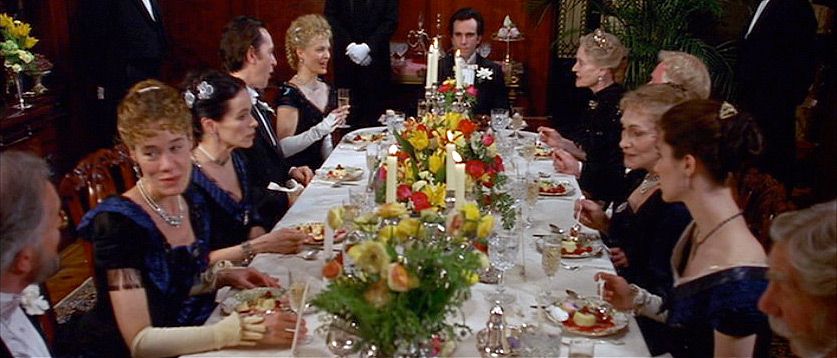
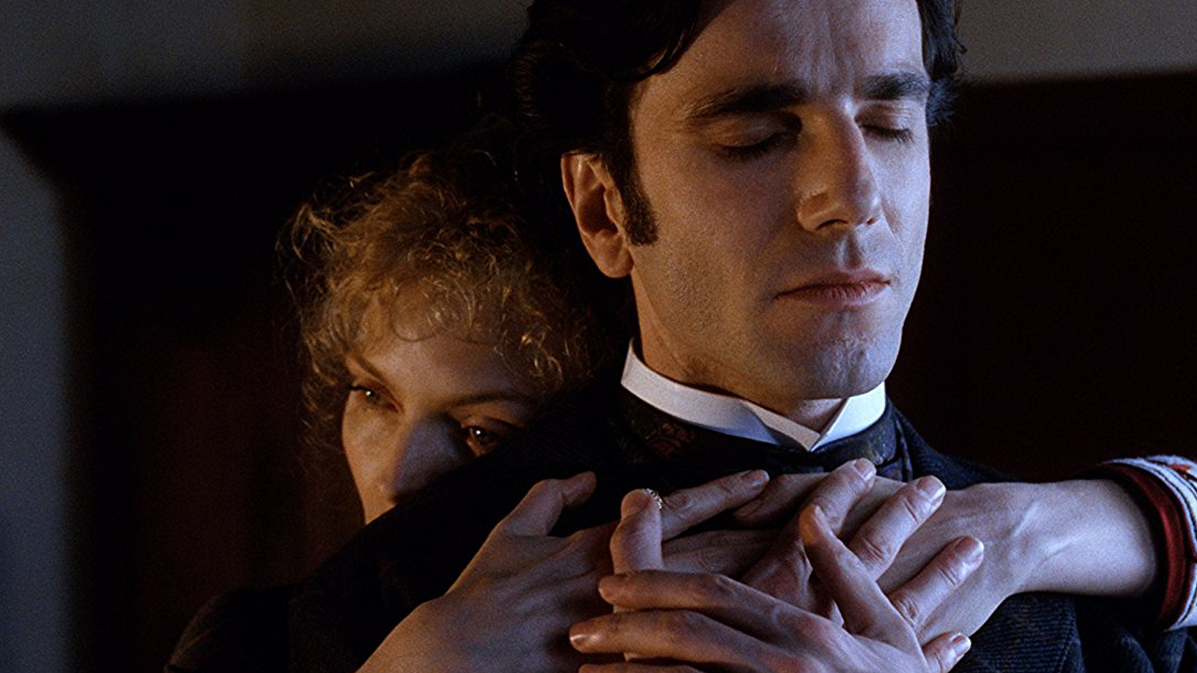
In 1870’s New York, Newland Archer (Daniel Day-Lewis), is a fastidious connoisseur of the arts, part of the super-rich elite of New York society. He’s engaged to be married to young May Welland (Winona Ryder), but finds his world view and values turned upside down when he meets May’s cousin, the Countess Ellen Olenska (Michelle Pfeiffer). Ellen is a scandalous figure, a woman separated from her philandering European husband, trying to make her way in New York society. Newland and Ellen are irresistibly drawn together, but do they have a chance to be together in the oppressive society of the New York upper classes?

That’s one question. The one more people were asking was: how would Scorsese follow up Goodfellas? Probably very few people would have bet on an adaptation of Edith Wharton’s The Age of Innocence. In fact, in 1993, there was more than a little annoyance among some viewers at the idea of the master of gangster movies, the guy who directed Raging Bull and Taxi Driver, turning his hand to the realm of Merchant Ivory. The film bombed at the box office – but did it deserve that reaction? Was Scorsese a director out-of-place?

Well the reaction is slightly unfair, because The Age of Innocence is a marvellously filmed, exact, brilliantly constructed piece of film-making, that so lays on the opulence and wealth of New York society that it turns everything in the film into feeling like a gilded cage. That’s a cage carefully controlled and monitored by the inmates, with their strict, inflexible rules about every single social interaction, unbreakable rules of decorum and etiquette covering everything, with any deviation from these rules met with instant expulsion. Put it like that, and this doesn’t sound a million miles away from the gangster families Scorsese is more associated with.

Inspired by the films of Powell and Pressburger in its intricate construction, and flashes of artifice in filming and editing, as well as its rich colour palette, with touches of everyone from Visconte, Ophüls, Truffaut to name but a few, this is a film-maker’s love letter to cinematic classics. A beautiful sequence of Newland watching Ellen from behind and a distance on a jetty, yearning for her to turn around before a boat passes a lighthouse, using that landmark as the point when he will stop looking and accept something is not to be. The scene is bathed in a Jack Cardiff-ish red, with the objects in the light given a sharp definition in contrast to the colours. It’s a beautiful image, and one of several that run through the film. Inspired by paintings of the era, Scorsese also layers in Viscontish scenes of opulence, with The Leopard very much in mind as every detail of the vast wealth, and huge accumulation of objects in every room of these people’s houses, seems to crush and entrap the people in them. The rooms themselves become metaphors of the oppressive, rule-bound society the characters are trapped in, like the people have been designed to fit into the rooms rather than vice versa. The one exception is Ellen’s rooms, which have a sense of personality to them.

This marvellous construction – with its beautiful photography, inspiring design and costumes – contains a storyline of frustrated love, a love triangle between three people where the man has to make a choice between what he wants and what is expected of him. Newland Archer clearly loves Ellen in a way he can never love May – indeed, he is dismissively cruel in his thoughts towards May, who he clearly considers nothing more than an extension of the mindless gilded objects of beauty around him, a woman he sees as lacking an imagination or daring. In Ellen, he sees far more opportunities for a world of change, of difference, or being something he does not expect. She is far more of a free-spirit, a more bohemian figure, confident in herself and something far more modern than May, who is very much a product of her time and place.

The film, carefully demonstrates the growing unease and unsettlement of Archer as he begins to feel things he has never done before, to start to react and aim for a style of living he would never previously consider. All his life before now is a careful studying and collection of moments, or savouring experiences in the way that a collector would place them in a glass box. From seeing only the moments of plays he wishes to see, to carefully collecting shipments of books from London and reading the choice moments, Archer is a coldly controlling figure who believes he guides and directs his own life. Ellen not only demonstrates to him that in many ways he is as conventional as anyone else, but also that there are other options in his life. Archer struggles to build the emotional language that he needs in order to express these feelings bubbling in him – key moments indeed seem reminiscent of the operas that this New York society spends so much time watching, and it is only late in the film in little, genuine moments of affection can he find something real.

Scorsese’s film artfully and carefully shows this developing affection between the two, a love that the two of them speak of surprisingly early, but fail to find a genuine way of expressing it. The film captures the attempt by New York society at the time to be more British than the British, and the hidebound restrictions this brings. Scorsese uses cinematic tricks to show Archer’s striving to escape. Spotlights zero in on Archer and Ellen in the middle of society, as if to drain out all other moments. Letters from his respective love interests are delivered with the actors addressing the camera, as if speaking to Archer direct. Flashes of screen colour cover key cuts, as if all this colour was just on the edges of his life but he is unable to access them. He is a man who feels himself trapped and committed to one form of life, but who still feels the longing for another.

The Age of Innocence is a beautifully made film, but there is a coldness to it. Perhaps this is why it doesn’t quite capture the heart in the way of other films. So much as Scorsese captured the cold and restrictive world of this society, that it seems to permeate the film and make the whole thing somehow colder and more restrictive. There is such artistry and effort in the film-making, that the film seems a coldly detailed piece of art. Perhaps this is why the use of narration – beautifully spoken by Joanne Woodward – becomes overbearing here in the way it doesn’t in other Scorsese films. It’s another distance from the entire experience, as if the film is keeping the audience at arm’s length as much as society is. 

Daniel Day-Lewis’ performance is expertly assembled, a masterful, brilliantly observed, intricately detailed masterclass in micro-expression, of layered frustrations and repression. But it’s such a marvellously constructed, detailed and well observed performance that it feels a masterful piece of art to be admired rather than loved. For all the film centres Archer in the story, he is a hard man to care for or invest in. Pfeiffer gives a wonderful performance as the far freer, intelligent and daring Ellen – but there is a slight lack of spark between them, for all the brilliance of both actors the feeling of an overpowering, obsessive love just doesn’t quite come out of the picture.

This coldness of the construction, carries through every frame. It is perhaps an easier film to admire than love, for all its brilliant construction. It is perhaps too successful in establishing the sharp rules of its society, and does not invest enough time in looking at the raw passions that bubble under the surface of its characters. It never quite explores the inner life of its characters, and they remain slightly distant objects from us. To be fair, this works very well in some cases: Winona Ryder as May carefully plays her hand throughout the film, so that it is a shock in the final scenes where she reveals depths of determination, strength of character and manipulation that far dwarf anything Archer is capable of. Where he is a man with a wistful longing for what he wants, but lacks the will to take it, she knows what she wants and is determined to take it.

The film uses its mostly British cast very well, their understanding of period and these sort of society rules crucial to its success. Margolyes, Wilson and McCowen in particular are very impressive as very different types of society bigwigs. Scorsese’s film contains many other things to admire, but it’s such a wonderfully made piece of film-making, so overburdened with intelligent interpretation of the novel that it fails to make a real emotional connection with the viewer. You will respect and enjoy scenes from it, but perhaps find its running time as overbearing as the characters find the society they are in, and eventually find yourself needing to come up for air.

The Children's Hour (1961)

Audrey Hepburn and Shirley MacLaine are victims of scurrilous rumours in The Children’s Hour

Director: William Wyler

Cast: Shirley MacLaine (Martha Dobie), Audrey Hepburn (Karen Wright), James Garner (Dr Joe Cardin), Miriam Hopkins (Lily Mortar), Fay Bainter (Mrs Amelia Tilford), Karen Balkin (Mary Tilford), Veronica Cartwright (Rosalie Wells), Mimi Gibson (Evelyn), William Mims (Mr Burton)

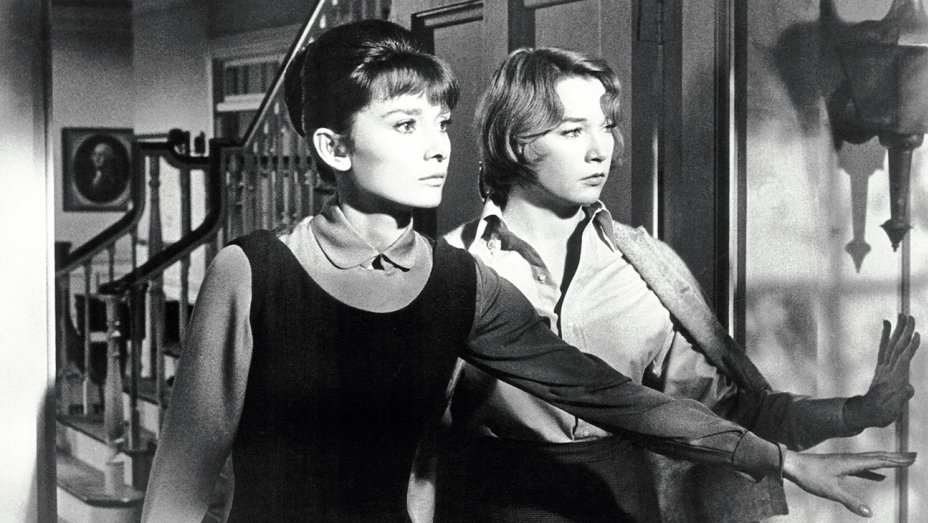
The Children’s Hour was William Wyler’s second stab at directing an adaptation of Lilian Hellman’s play of the same name: a story about  two young teachers at a private girls’ school, and the destruction wreaked on their lives when a malicious pupil spreads rumours the two are in a secret lesbian relationship. His first attempt from 1936, These Three, kept as many of the themes as possible but carefully deleted every single reference to homosexuality in the script. This second film version restores this core theme in a carefully structured, well directed, respectful film adaptation that, with its careful analysis of the danger of rumours and snap judgements, still feels relevant today. 

Martha Dobie (Shirley MacLaine) and Karen Wright (Audrey Hepburn) run a private girls’ school. Karen is engaged to Dr Joe Cardin (James Garner), and this prolonged engagement is part of the arsenal used by a bitter, bullying student Mary (Karen Balkin) when she decides to start spreading innuendo about a scandalous relationship between the teachers, painting Martha as consumed by sexual envy. Mary’s story is believed whole-heartedly by her grandmother, doyen of the social scene and Joe’s aunt, Amelia Tilford (Fay Bainter). Thoughtless words from Martha’s aunt Lily Mortar (Miriam Hopkins) make things worse. In no time, the school is ruined, the children all gone and Martha and Karen face a desperate battle to prove that there is nothing to this but gossip.

Wyler’s film is a strange mixture at times, in part a commentary on prejudice, and also a scorching condemnation of jumping to judgements. The film plays out all this with calmness and a general careful avoidance of histrionics and lecturing. The removal of the children from the school is brutal and cowardly – with none of the parents having the guts to say why they are doing what they are doing until finally confronted by Karen. Amelia Tilford goes about her campaign of moral righteousness with a holier-than-thou superiority while constantly stressing that she takes no pleasure in this. In the latter half of the film, the abandoned school seems to be constantly surrounded by smirking men.

The film carefully outlines that this sort of moral judgement is inherently wrong, and it brings out some true moral judgement on many of the people involved. It draws out a brilliant Crucible-like indignation at the rigidity and hypocrisy of how those who are judged to be different are treated. The film’s finest sequence is at the centre of the film, where Martha and Karen make a (failed) attempt to nip the scandal in the bud by confronting Mary at her grandmother’s house. The scene zings with a burning sense of injustice, as Mary’s lies are believed, doubled down on and then confirmed by a blackmailed fellow student, all while the audience knows that everything that is being spun is florid, innuendo-filled rubbish.

Mary is a bitter, twisted, angry little girl whose face seems permanently screwed into a furious frown. She also has the sharpness and ruthlessness of the natural bully, successfully blackmailing a sensitive, kleptomaniac student to endorse all her lies at every turn. Wyler carefully demonstrates that she has a natural manipulator’s deviance and that half-facts and muttered comments carry more conviction and force than carefully stated arguments ever would.

But Mary’s actions partly stem from Karen’s own forceful treatment of her – and Karen’s moral inflexibility and personal certainty is just one of the many character flaws that this lie brings closer and closer to the surface. Well played by Audrey Hepburn, using her occasional slight imperiousness to great effect, Karen’s lack of compromise, her domineering personality and her own moral superiority help to make her both an unsympathetic victim to many, and a person who manages to drive wedges (inadvertently) between herself and her two closest friends, Joe and Martha.

That wedge spins out from the fact that the more sensitive Martha (a sensitively delicate performance from Shirley Maclaine) does have romantic and sexual feelings for Karen, feelings that she has carefully suppressed (or perhaps not even understood) and confesses to late on in a wave of guilt and shame, mixed with an almost unspoken hope that Karen might respond to this confession with more than silence and a quiet assurance that it won’t change anything. Neither of which is what Martha wants (or needs) to hear. 

MacLaine was critical of Wyler for removing from the film scenes that showed Martha’s love and affection for Karen in a romantic light. Perhaps Wyler was still slightly squeamish about the likelihood of America accepting a lesbian character presented honestly and sensitively. –But MacLaine has a point for, while the film does suggest it is reprehensible to  make judgements about other people’s private lives, it falls well short of suggesting that a lesbian relationship is as normal and valid as a straight one, or that Martha’s feelings for Karen are the equal of Karen’s for Joe. Karen will let the idea slide, but she is hardly thrilled by it, meanwhile Martha is made the more passive and hysterical of the two women, and her feelings for Karen are a source of tragedy in the story. While it’s of its time, the film still shies away from the idea that a lesbian relationship could ever be without a tinge of scandal. Unlike, say, Dirk Bogarde’s gay barrister in Victim, there is always something “not quite right even if we shouldn’t judge” about homosexuality in the film.

It’s why the film is at its strongest when showcasing its outrage for the many selfish and self-appointed moral guardians who ruin lives with sanctimonious self-regard. Miriam Hopkins is eminently smackable as Martha’s appalling aunt, whose love of gossip pours fuel on the fire. Fay Bainter is very good (and Oscar nominated) as Amelia, whose reluctance and unease about her self-appointed role as the moral police, only partly tempers her rigidity and inflexibility. Words of support and encouragement from others are noticeable by their absence, and even the long-standing loyalty of Joe (a rather charming James Garner) is eventually tinged (forever for Karen) by a moment of doubt. 

Rumours and innuendo are dangerous and cause real and lasting damage to people’s lives. It’s a fact the film enforces strongly – and it’s an idea that perhaps is even more relevant today at a time when social media sends moral judgements that ruin lives around the world even faster than Amelia Tilford’s phone can. A well-made film with moral force, that could have gone further, but still went further than many others dared at the time.

Pygmalion (1938)

Pygmalion (1938)

The leads excel in this vibrant, well-made adaptation of Shaw that set the framework for My Fair Lady

Director: Anthony Asquith, Leslie Howard

Cast: Leslie Howard (Professor Henry Higgins), Wendy Hiller (Eliza Doolittle), Wilfrid Lawson (Alfred Doolittle), Marie Lohr (Mrs Higgins), Scott Sunderland (Colonel George Pickering), Jean Cadell (Mrs Pearce), David Tree (Freddy Eynsford-Hill), Everley Gregg (Mrs Eynsford-Hill)

“It’s an insult for them to offer me an honour, as if they have ever heard of me – and it’s very likely they never have. They might as well send some honour to George [VI] for being King of England.” That was George Bernard Shaw’s reaction when he heard that he had won Best Adapted Screenplay at the Oscars. Now that’s a reaction that would have burned Twitter up today. Mind you Shaw wasn’t adverse to taking the film world’s money for bringing Pygmalion to the screen – and also means he is one half of a nifty pub quiz question (who is the only other person to win BOTH an Oscar and the Nobel Prize for literature?).

Pygmalion, always Shaw’s most popular play, seemed a logical choice to begin for producer Gabriel Pascal’s dream of bringing a cannon of the playwright’s complete work to the cinema screens. Shaw agreed – so long as he had was on board as the screenwriter and with a personal supervision of the adaptation. He missed a trick by not insisting on creative control. Shaw re-wrote and restructured much of the play for the screen – and it’s this screenplay that forms the basis of My Fair Lady. So closely so, that it’s the most familiar version of the play – and so close does the dialogue cut that you end up wondering where the songs are.

Anthony Asquith was bought on board as the director, and Shaw oversaw the assembly of the cast. Leslie Howard was cast over Shaw’s original choice, Charles Laughton, and also given a co-director credit (although there are some disagreements about what this meant, with some claiming it was basically some on-set notes to actors). Asquith was a director with a gift for opening out literary adaptations onto the big screen, and he succeeds here in capturing much of the atmosphere and mood of Shaw’s comedy of manners. There was also a young whippersnapper called David Lean on hand to direct the montage sequences that showed Eliza’s training.

Leslie Howard was a major matinee idol, but also an accomplished stage actor – and both qualities come to the fore here in what is surely the best Higgins captured on screen (with apologies to Rex Harrison). His Higgins is a rough-edged, somewhat scruffy, eccentric who speaks before he thinks, treats everything with an absent-minded, off-the-cuff bluntness and is almost professionally rude. He’s never straight-forwardly charming, indeed sometimes he’s outright cruel and bullying, but there is a professorial lack of harm to him that makes him reassuringly British and decent. And he gives the final act a real sense of vulnerability and emotional repression that is vital.

If Leslie Howard makes a very good Higgins, I do think there is very little doubt that Wendy Hiller is the definitive Eliza Doolittle. Handpicked by Shaw, she is superb here. Her Eliza has all the fragility, worry and working-class chippiness you expect, but Hiller laces it with such a real streak of humanity that you end up deeply investing in her. Her flourishing sense of personality, of her growing strength of personality and feelings of independence dominate much of the final act of the play, and Hiller mixes it with notes of genuine hurt and sadness about the dismissive treatment she is receiving from Higgins. It’s a performance overflowing with nuance and pain – and the moment when a pained Eliza responds with a pained dignity when Higgins suggests she marry someone else that “we sold flowers….we did not sell ourselves” is a truly wonderful moment.

But this is also a very well made, cinematic movie with some really outstandingly funny sequences. The scene where Eliza – newly trained to talk “proper”, but with no idea about what makes for decent polite conversation – regales a dinner party in earnestly, perfectly accented English about her belief that “they done [that] old woman in” at great length is hilariously funny, as is Howard’s wryily amused response. There is also equal comic mileage to be got from Wilfrid Lawson’s very funny performance as Eliza’s selfish, street-smart father, the dustbinman with the mind of philosopher. 

Asquith’s film is very well shot and assembled, helped a great deal by this inventively made and very structured montage sequences contributed by Lean (who also edited the film). It’s done with real snap, and Asquith’s camera movements and invention of framing dwarves the far more staid and flat production of My Fair Lady that would win many Oscars 25 years later. He knows when to go for low, static shots – particularly in those moments when Eliza realises she is just a toy for Higgins – and also close-ups and one-two shots that give even greater energy and dynamism to Shaw’s wonderful dialogue (again the final argument sequence benefits hugely from this).

Shaw didn’t go for creative control, so he failed to prevent the happy ending that was added to his play, as Eliza returns to Higgins (after seeming to leave to marry Freddy), and the Professor continues his pretence of indifference – which thanks to Howard’s excellent performance earlier we know is just that. To be honest, even with the performances of the leads, Eliza’s devotion to Higgins still seems to come from left-field (just as it does in the musical) and there isn’t much in the way of romantic chemistry between them. But it works for many people, even if it never works for me (or Shaw).

Pygmalion is a fine film, far superior to My Fair Lady (better made, better acted, better written, funnier, smarter, more moving and more heartwarming). It deserves to live a life outside of its shadow.

And that other Nobel and Oscar winner? Why Bob Dylan of course.

Silver Linings Playbook (2012)

Bradley Cooper and Jennifer Lawrence in an unusual love story Silver Linings Playbook

Director: David O. Russell

Cast: Bradley Cooper (Pat Solitano Jnr), Jennifer Lawrence (Tiffany Maxwell), Robert De Niro (Pat Solitano Snr), Jacki Weaver (Dolores Solitano), Anupam Kher (Dr Cliff Patel), Chris Tucker (Danny McDaniels), Julia Stiles (Veronica), Shea Whigham (Jake Solitano), John Ortiz (Ronnie)

David O. Russell is a director it’s easier to admire than fall in love with. I can see why actors come back to work with him time and again – he’s clearly an actors’ director who crafts stories that give them chances to shine. But his films often have an archness about them, while I find too many of them settle for a sort of middle-of-the-road quirky cool. I’ve never really, truly, loved any of them – even if I have enjoyed them while watching them. The closest I think I’ve got is Silver Linings Playbook.

Pat Solitano (Bradley Cooper) is released from psychiatric hospital, after being confined for assaulting his ex-wife’s lover, into the care of his parents Pat Snr (Robert De Niro), unemployed now making a living as an underground bookmaker, and Dolores (Jacki Weaver). Suffering from a host of compulsions connected to his bipolar disorder, Pat is fixated on winning back his wife. To do so, he enlists the help of Tiffany (Jennifer Lawrence), the widow of a policeman who died in a road traffic accident, who has her own borderline personality disorder and has been dealing with her grief through a parade of casual sexual encounters. Together they enter a dance competition – Tiffany because she always wanted to, Pat because Tiffany has offered to take Pat’s letters to his wife if he says yes and because Pat wants to prove to his wife that he has changed. But is there more than mutual convenience between the two?

Silver Linings Playbook is an unusual romance, that also explores themes of mental health and compulsions and how thin the lines can be between what we consider healthy and not healthy. When does obsession tip over into something that should be treated? Pat is the sort of guy who wakes his parents up to furiously denounce the Hemingway book he has just finished reading in one sitting (a scene played exuberantly for laughs – including Pat smashing a window by throwing the book out of it) but it quickly tips into danger when in a similar mania he awakens the entire neighbourhood at 3am tearing the house apart for his wedding video, accidentally hits his mother, and ends in a tear filled scuffle with his dad. Similarly, Tiffany’s tendencies towards aggression and self-destruction frequently put her in situations both funny and dreadfully damaging.

But just as close to this, we have Pat Snr’s addiction not only to gambling, but also to a raft of superstitions designed to better his chances of winning (and which dominate large parts of his life). Dolores seems obsessed with maintaining peace and order in the family. Pat’s brother has an almost savant tendency to speak his mind, causing more harm than good. Every character in this seems to have their own psychological hang-ups, with resulting problems.

But the film marries this up with an actually quite sweet romantic story between two damaged souls, both very well played by Cooper and Lawrence. This was the film where Cooper repositioned himself as a major actor of note. His performance here is a perfect mixture of charm, pain, confusion, frustration, insight and self-destructive monomania. He’s both funny and deeply moving, sweet and also slappable, gentle but with a capacity for unpredictability. He’s a terrific performance, deeply affecting. It also helps he has fabulous chemistry with an Oscar-winning Jennifer Lawrence. Lawrence’s Tiffany is a vulnerable soul, desperate to appear as tough and impossible to harm as possible and not caring about any of the collateral damage. She’s as brittle as she seems rigid, and as desperate for affection as she pretends to be uncaring about it.

The film throws these two together with an obvious spark from the start, and brilliantly uses their preparation for a dancing contest to show them growing closer together physically and emotionally, as well as adding a purpose to their lives and giving them a common goal to work towards. There is a rather nice gentleness, amongst all the chaos of this film, that something as simple as taking up a new hobby can help to ground two people.

The film builds the romance gently, carefully showing it developing organically and leaving us to guess at what point the bond between these two enrichens and deepens from an instant connection to something more profound. It’s sure got a lot to overcome, with Pat’s obsessive focus on his wife and Tiffany’s compulsion for meaningless sex and her own desire to destroy promising relationships (she almost immediately alienates the surprisingly gentlemanly Pat with an offer of casual sex on their first meeting). With a gentle slow-burn, the film builds towards something that ends up being rather moving.

Russell’s adaptation of the original novel is well-structured and entertaining and his unfussy, stylish direction brilliantly creates an enjoyable mode. De Niro (in what many people called a joyous return to form) and Weaver are both very good as the parents (both were Oscar nominated – this is one of the few films to be nominated in each acting category) and there is hardly a weak beat in the cast. After several quirky, indie-cool, rather distant films, this is possibly the most fun and the most heart-warming Russell has ever been. It’s a career high. Heck even Chris Tucker is really good. And I’d never thought I’d say that.