Category: Relationship film

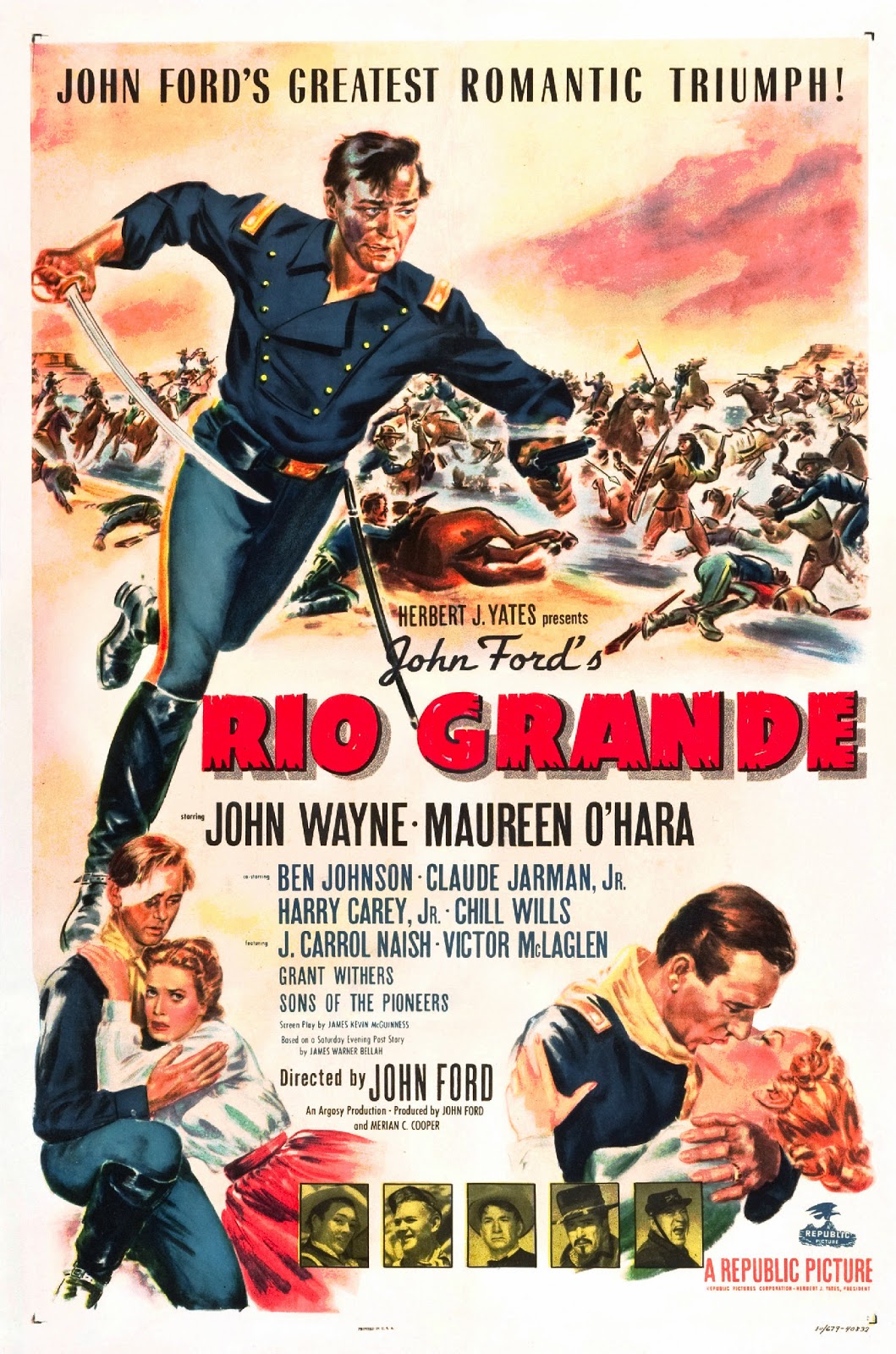
Rio Grande (1950)

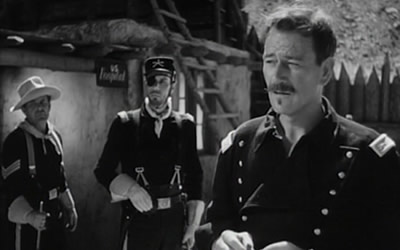
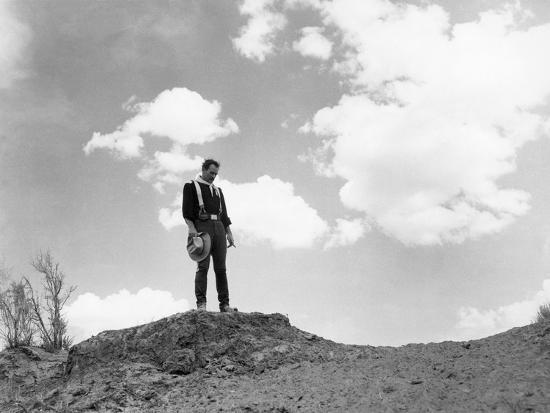
John Wayne is the Colonel regretting past mistakes in Rio Grande

Director: John Ford

Cast: John Wayne (Lt Colonel Kirby Yorke), Maureen O’Hara (Kathleen Yorke), Victor McLaglen (Sergeant Major Quincannon), Ben Johnson (Trooper Travis Tyree), Claude Jarmon Jnr (Trooper Jefferson Yorke), Harry Carey Jnr (Trooper “Sandy” Boone), Chill Wills (Dr Wilkins), J. Carrol Naish (General Philip Sheridan)

John Ford’s next project was meant to be The Quiet Man, his Ireland-set passion project. However the studio, Republic Pictures, were not convinced the expensive picture could ever be a hit (it later became one of their biggest hits and only Best Picture nominee). So they told Ford he could make it on condition that he, and his proposed stars Wayne and O’Hara, first made a good old-fashioned Western. Because they sure as hell knew they could sell that. So Ford turned out the third and final picture in his “Cavalry” trilogy, three interconnected films (the others being Fort Apache and She Wore a Yellow Ribbon) with loosely connected themes and overlapping character names.

Lt Colonel Kirby Yorke (John Wayne) is posted on the Texan frontier, defending the settlers against Apache attacks. When Yorke’s son Jefferson (Claude Jarmon Jnr) – who Yorke wasn’t seen in almost eighteen years – washes out of West Point, he volunteers to join Yorke’s regiment as an ordinary Trooper.  This leads to the arrival of his mother – and Yorke’s estranged wife – Kathleen (Maureen O’Hara arriving at the Fort, eager to get her son out of an enlisted life she feels isn’t right for him. But Yorke is determined there will be no special treatment for his son, never mind how dangerous are starting to get with the Apaches. 

Rio Grande is a professionally assembled, classic Ford western that hits all the marks you could expect in terms of action, excitement and that romantic version of the West that you might expect from Ford. But it’s perhaps so professionally assembled it still feels like one for the money at times – it’s a collection of all you might expect from a Ford classic, so much so it doesn’t feel like it offers much new among the director’s other works.

It’s most interesting parts revolve around John Wayne’s complex performance as a man who has buried his emotions beneath a cover of professionalism. Yorke is now martinet, but he’s a man who has put duty above his personal relations. It’s easy to forget that in many of his iconic roles Wayne was often the veteran, and here is man nearing retirement, loaded down with regrets and secretly crying out for a chance at reconciliation. Wayne’s performance is heartfelt and tinged with sadness, the sort of man who looks at his son from a distance as he performs dangerous horse riding stunts, but then backs away into the shadows, anxious that his fatherly concern remains unseen. It’s a quiet, lonely and sad performance from Wayne, a reminder of what a soulful actor he could be.

It also helps that he has wonderful chemistry with Maureen O’Hara, equally wonderful as his wife. A caring and loving woman, O’Hara’s Kathleen is also determined and independent, sure of her own mind and with no compunction about standing her ground against her husband. The two of them make a wonderful pair, two people who fear they have turned their backs on happiness for duty but secretly desperate for reconciliation. That desire certainly drips from Wayne, whose sad eyes beneath his drooping moustache seem to be constantly searching for grasping something from his life – and Ford certainly knew how to shoot this American icon with angles that made him appear like a mournful monument.

The actual plot of the film outside of this isn’t really that strong. Any shade or depth is removed from the Apaches who are faceless, ruthless killers who move like a swarm and spend the nights dancing and drinking after a victory. Even at the time there were feelings that the film was uncomfortably slanted in its view of the Native Americans. The actual story of the battle against the Apache meanders across the screen, with discussions of crossing the Rio Grande to do battle with them largely forgotten in a final act kidnap plotline that serves as the film’s action set piece.

Honestly, most of the plot outside of whether Wayne, O’Hara and son (played with an earnest honesty by Claude Jarmon Jnr) pretty much is by the numbers stuff. There are a host of songs and musical interjections from contemporary Western group Sons of the Pioneers. Ford made a virtue of the studio’s decision to include the band – apparently they loved being in the film and led a number of impromptu sing-alongs during the late night cast sessions, which basically led to Ford putting more of them in the film. The songs do add a wistful, whimsical air to the film which actually works rather well and mirrors nicely the personal drama of a family unit which duty is keeping apart.

The action when it kicks in is enjoyable, even if Ford relies a little too heavily on over cranked cameras to adjust the speed of various falls and horse riding stunts – the sped up effect actually often makes the whole thing look a little too reminiscent at times of keystone kops silent film. The best stunt sequence is done instead in real time, as Johnson, Carey Jnr and Jarmon Jnr take it in turns to “Roman Ride” two horses at a time around a course. Johnson and Carey – skilled horsemen – spent weeks training, the effect was so good that Ford suggested Jarmon have a go.

The cast is rounded out by some solid work from Ford regulars. McLaglen is good value as a decent Sergeant, one of those comic Irish types that Ford had such fondness for. Johnson is very good as a trooper on the run from the law who can’t resist coming back to the do the right thing. But the film belongs to Wayne and O’Hara, a couple looking to seize a last chance at happiness. Rio Grande may be one for the money, but it’s still got a touch of that Ford magic.

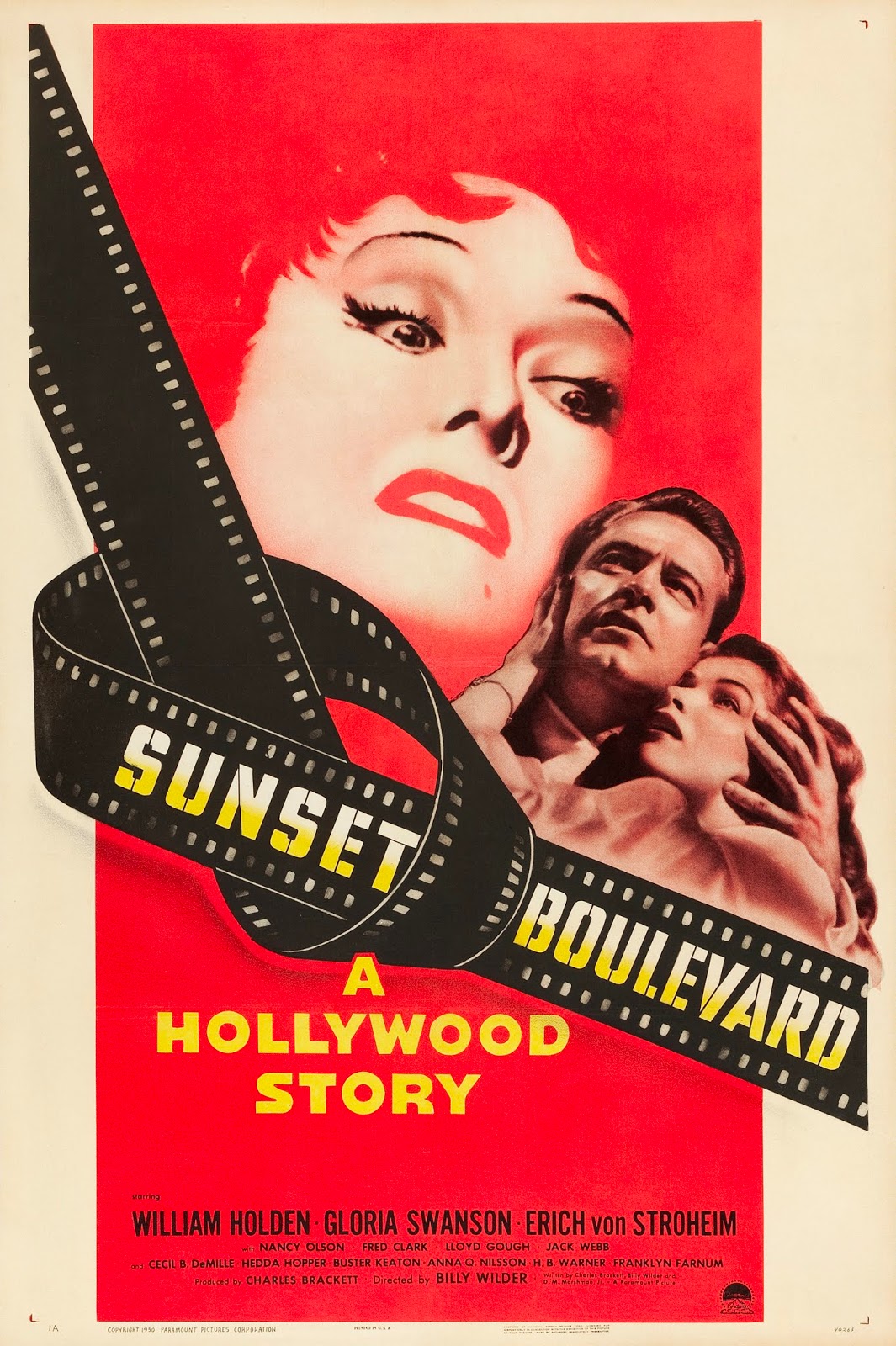
Sunset Boulevard (1950)

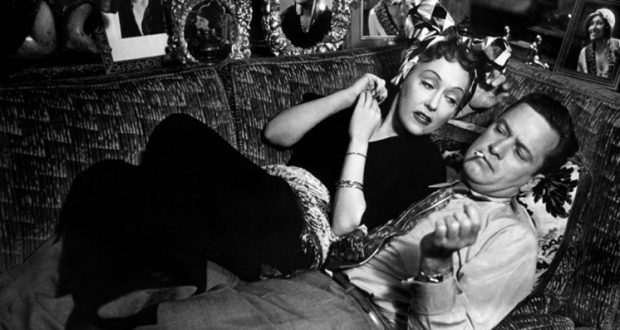
William Holden falls under Gloria Swanson’s spell in Billy Wilder’s superb Hollywood satire Sunset Boulevard

Director: Billy Wilder

Cast: William Holden (Joe Gillis), Gloria Swanson (Norma Desmond), Erich von Stroheim (Max von Mayerling), Nancy Olson (Betty Schaefer), Jack Webb (Artie Green), Fred Clark (Sheldrake), Robert Emmett O’Connor (Jonesy), Lloyd Gough (Morino); as themselves: Cecil B. DeMille, Hedda Hopper, Buster Keaton, Anna Q. Nilsson, HB Warner

Imagine if Charles Dickens had been born a hundred years later. He would surely have headed to Hollywood – and if he had, surely would have written something like Sunset Boulevard. Because who is Joe Gillis but another shallow Pip, dreaming of fortune and wasting his brains, who turns up at Satis House but stays on to become Miss Havisham’s live-in lover? Sure Wilder is more cynical and bitter than Dickens, but I guess even optimist Dickens killed off Little Nell so maybe he too would have had Joe Gillis end (and start) the film face-down in a swimming pool with three bullets in his back?

The cops arrive to find Joe (William Holden) exactly like that, while we hear Joe’s acidic commentary outlining exactly how this state of affairs came about. Joe is a screenwriter in Hollywood (he’s in the second tier of a second tier profession in the movies) who can’t get his latest script made for love nor money. Dodging the debt collectors set on reclaiming his car, he pulls into the drive of a mysterious house. It’s the home of Norma Desmond (Gloria Swanson), a forgotten silent film star who now lives out her days in her mansion, dreaming of her past glories and planning for a return to stardom that will never come, tended to by her loyal butler Max (Erich von Stroheim). Joe is roped in first to rewrite the (terrible) script she has been working on for her comeback, and then to become her live-in lover. But can such a situation survive Hollywood’s cold heart and Joe’s own self-loathing and desires to restart his screenwriting career in partnership with ambitious young studio script reader Betty Schaefer (Nancy Olson)?

Billy Wilder’s poison-pen love letter to Hollywood skewers the coldness at its heart. It does this with a triumphant mix of the grotesque and the heartfelt, the surreal and the coldly realistic, an insider’s guide to the world behind the magic of film-making and a story about those shut out of that very world. Hollywood is a shallow, bitter town where you’re either top of the bill or no-one at all. Would people from any other profession write such a bitter denunciation of their job that is also laced with affection and love? Maybe it has something to do with this being a unique profession which you have to love to enter, but once there you work with people who see it as a business.

The smell of desperation is there from the start, with Joe peddling his dreadful sounding baseball movie The Base Is Loaded to a polite but uninterested producer. Dropping a host of names and accepting any number of changes to the story (including changing it into an all-female sporting musical), Joe might once have had a talent but, as he says, “that was last year, this year I need money”.  William Holden was a late choice for Joe, but he is perfect in the part, capturing the air of the self-loathing cynic, a man bright enough to understand he’s shallow, a hack and desperate for any touch of the fame and fortune Hollywood can bring him.

Just like Pip, Joe is a young man who feels he is entitled to a life he scarcely seems to be qualified for. No wonder he settles into a life as Norma Desmond’s gigolo – it may well damage his sense of masculine pride to be an emasculated house-boy, but my God the suits are nice. And what talent does Joe even really have anyway? The script he is peddling barely seems to have any merit at all, and his extensive polish of Norma’s vehicle is still so alarmingly bad it never even gets the slightest consideration from Cecil B. DeMille. But Joe can’t let it go because he’s like a moth drawn towards those bright Hollywood lights.

And those bright Hollywood lights have consumed forever Norma Desmond. Wilder pulled Gloria Swanson out of an enforced semi-retirement to play the silent screen siren, whose career her own so closely parallels. It’s easy to remember Norma as a sort of Psycho-ish grotesque, a demented Miss Havisham living in her own crazy patchwork world of memory and delusion. Swanson certainly channels brilliantly the expression and body language of silent cinema into the part, and Desmond’s use of the sort of exaggerated gestures from that era in everyday life hammers home how her life hasn’t moved on from her glory days. 

But that would be to overlook the immense skill in Swanson’s performance. Norma may be sad, desperate, probably more than a little unhinged – a larger than life Miss Havisham to whom the “the pictures got small”, but she’s also a real person. Swanson makes it clear she genuinely loves Joe, she’s generous when she wants to be, devoted in her own way and immensely fragile. She takes a delighted pleasure in entertaining – a sequence of her reliving her glory days for Joe’s amusement (he couldn’t give a toss, making it all the more painful), capped with a charmingly delightful Chaplin impersonation shows a Norma who loves entertaining, loves putting a smile on people’s faces. Sure she’s obsessed with fame and desperate to reclaim it, but she’s also deep-down a real person.

But then that’s part also of Wilder’s romantic look at cinema. He can totally understand the bitter, destructive “business” part of it, but he still loves the show. His insiderish film is full of loving tributes to old Hollywood. Norma sits and watches real film footage of the real Gloria Swanson. The visit to Paramount Studios delights not only with its “backstage pass” feel, but also in the excitement with which the ageing extras and stage hands greet Norma. Norma’s weekly card games are staffed with genuine silent movie stars like Buster Keaton. Cecil B DeMille even pops up as himself (on the set of his film Samson and Delilah), kindly trying to guide Norma out of the studio even as he lacks the guts to tell her that her dream of a comeback is stillborn.

So how can you not feel sorry for Norma, who is clearly locked up in her haunted house on the outskirts of town, a million miles from reality, surrounded by endless reminders of her past glories. It’s so all-encompassing it traps Joe as well – at one point Wilder shows him trying to storm out, only for his pocket watch to literally get caught on the door. This place of dreams is staffed by the butler Max, a beautifully judged performance of Germanic chill mixed with doe-eyed devotion from Erich von Stroheim, also playing a dark version of himself as Norma’s pioneering former director (and husband) now reduced to protective butler. The entire house is a mausoleum without any escape.

The only character who seems truly positive is Nancy Olson’s wonderfully sweet Betty Schaefer, passionate about crafting a career for herself in the cinema. But even she is ruthlessly ambitious, a woman quite happy to consider jilting her fiancée for Joe’s attentions and has her eye on the price of success. She may have the talent, but she’s also got the sharpness.

Billy Wilder’s film brilliantly explores all these divides and contradictions in Hollywood and its history. Because what is Hollywood but a town that pays lip service to the past, but only has eyes for the future? Particularly with women. Female stars have a short shelf life and then they are dispatched. Poor Norma is still glamourous, still clearly has star quality – but as far as Hollywood is concerned she may as well be a million years old. No wonder Joe, used to these attitudes, is so ashamed to be kept by her – a woman he constantly refers to as a middle-aged friend. 

The dialogue, as you would expect from Brackett and Wilder, is superb from top to bottom with zingers and well-constructed dialogue exchanges so well placed they will survive for as long as there are movies. The film is beautifully shot by John F Seitz – part gothic horror, part dark romance, part neo-realist. Its pacing is perfect, its four act construction perfectly put together. All four of the principals (all Oscar nominated, none winning) are pitch perfect, sketching out characters that feel real and mixed with tragedy and loss as much as they are larger-than-life otherworldliness.

It’s the mixture of the freak show and the heart, in the massive Havishamesque estate, that marks this out as Hollywood does Dickens. The astute understanding of central characters, with enough depth to understand their shallowness, the grotesques that revolve around them but still have their humanity, it’s all there. Wilder mixes it with his own Hollywood emotions and his dry wit and cynicism to create a damn near perfect movie.

Who’s Afraid of Virginia Woolf? (1966)

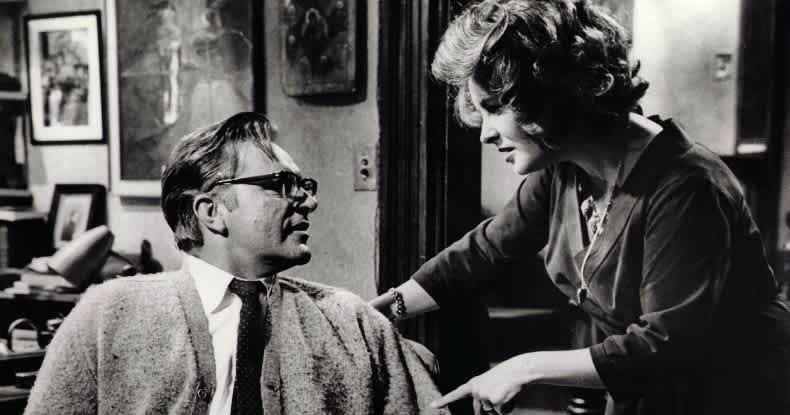
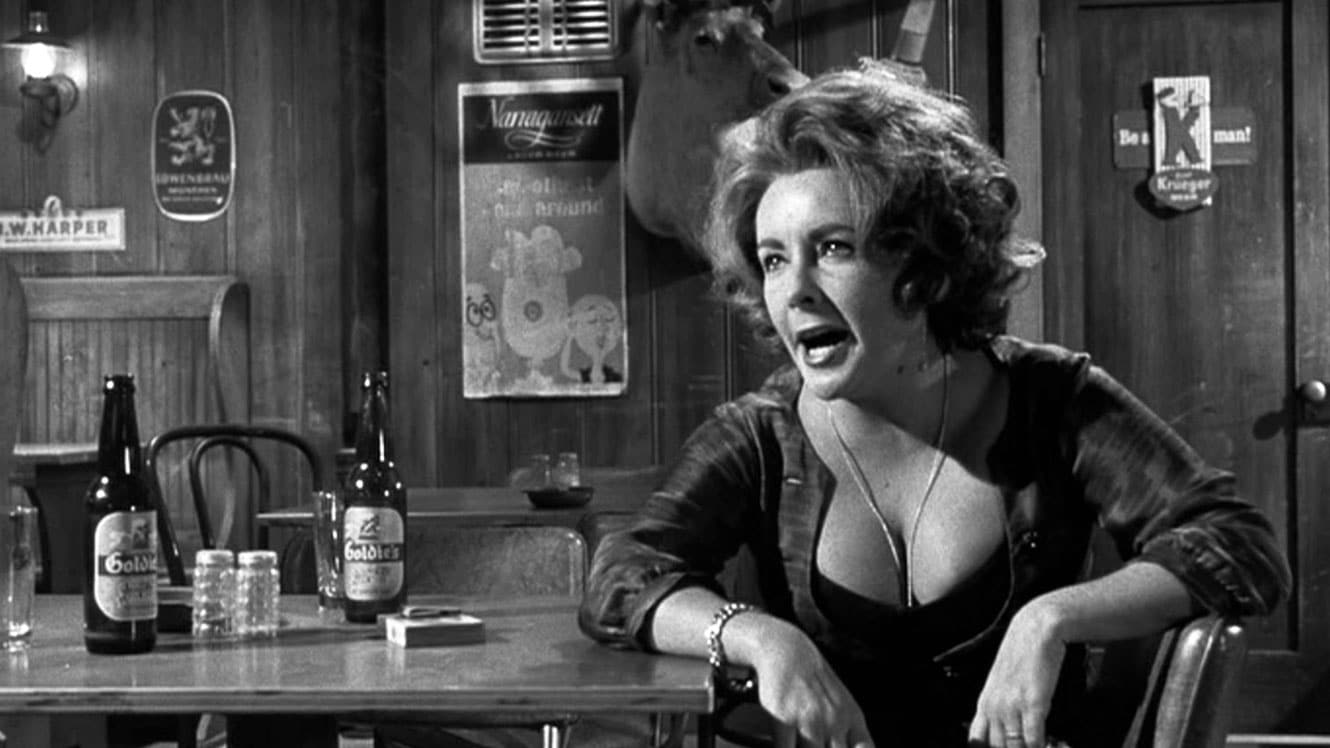
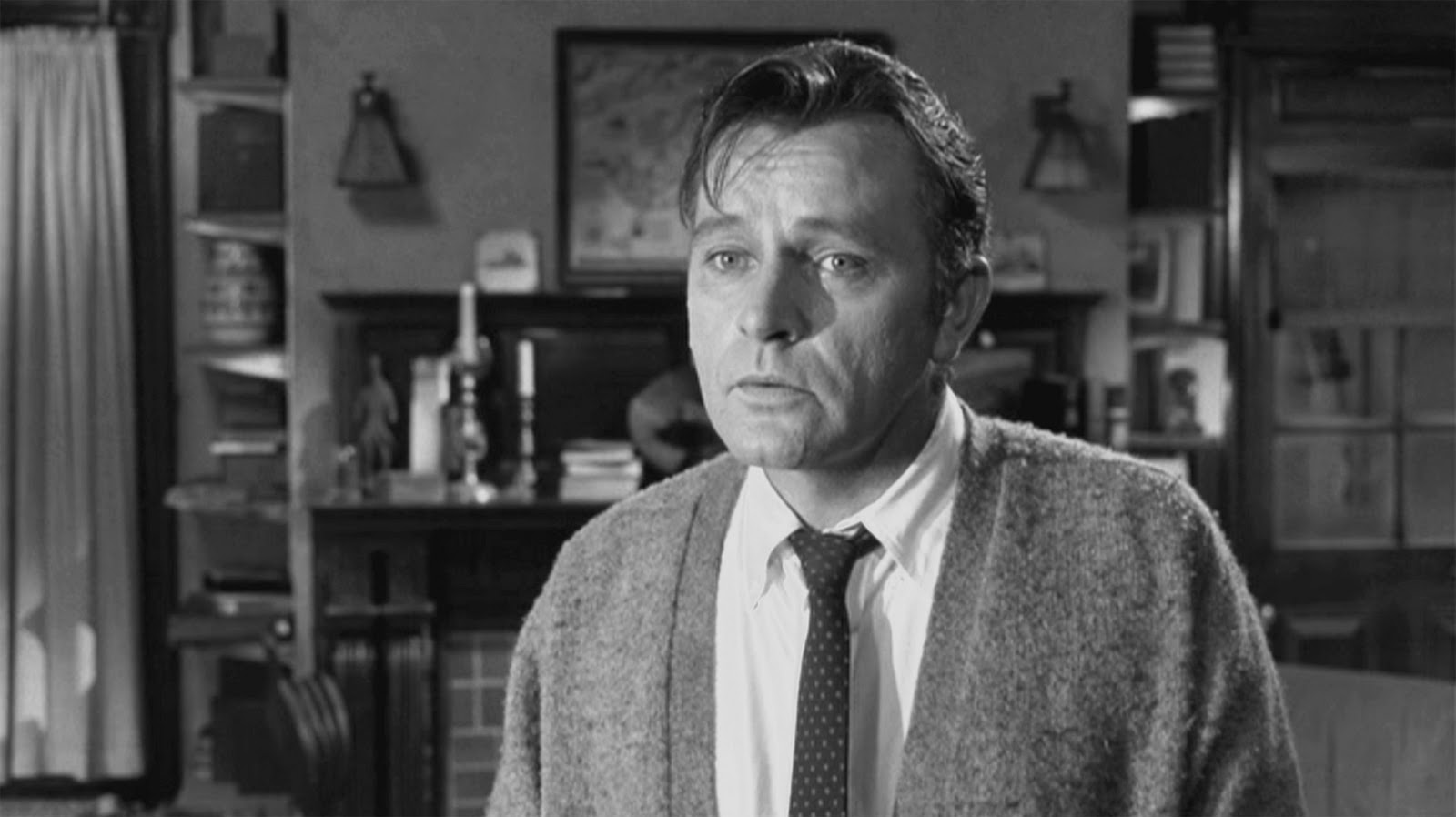
Burton and Taylor play a feuding couple in Who’s Afraid of Virginia Woolf?

Director: Mike Nichols

Cast: Elizabeth Taylor (Martha), Richard Burton (George), George Segal (Nick), Sandy Dennis (Honey)

In 1966, Hollywood was only just emerging from the strict rules of the Hays Code. These governed everything from the themes a film could explore to the language you could use while doing it. But in the permissive 60s, it was finally beginning to crack – and Who’s Afraid of Virginia Woolf? was one of the first films to really push it over the edge. This film helped usher in 70s Hollywood, where filmmakers finally felt empowered to explore darker themes and to do so with sex, violence and bad language. Five years after this film came out, something like A Clockwork Orange could become a box-office smash and a Best Picture nominee. Talk about the changing of the guard.

Mike Nichols’ film debut is a faithful adaptation of Edward Albee’s Broadway smash, which had been controversial enough on stage for its full and frank exploration of a marriage consumed with bitterness, feuding and pain. Not to mention its open acknowledgement of extra marital sex, abortion and alcoholism all delivered with a literal “screw you!”. Elizabeth Taylor is Martha, daughter of the president of a small New England college, whose husband George (Richard Burton) is a failed associate history professor. The couple are locked into a dysfunctional marriage that mixes recrimination and a perverse, shared sense of humour. Drunkenly returning home after a party, they welcome a new professor (George Segal) and his wife (Sandy Dennis) to their home for a nightcap. There they quickly rope the couple into a series of increasingly personal “games” with an edge of cruelty and lashings of verbal abuse.

Today, Who’s Afraid of Virginia Woolf? has not always aged well, coming across at times as rather forced and overbearing, as is often the way with films that pushed the boundaries so effectively back in the day. Nichols has the confidence to avoid “opening up” the play too much – its single setting on stage is augmented here only with a brief drunken excursion out to a late night bar – and instead focuses on drawing out four superb performances from its actors (all Oscar nominated) and letting the camera move intricately around the confined rooms where the action takes place.

What Nichols really draws superbly from this film is the control of the film’s continual pattern of simmer, tension and release. The play is effectively a series of psychological games that George and Martha play between themselves. The film is like a drunken, truly mean-spirited version of Noel Coward’s Hay Fever, where the self-absorbed hosts similarly play elaborate ”games” with their confused guests. Most games involves Martha and George turning on each other, viciously attacking the other for everything from failure to drunkenness, with their guests used as the jury, mixed with “get the guests” interludes as the couple turn on the sexual and marital issues in their guests’ lives.

It makes for a series of compellingly delivered sequences – even if the constant thrum of tension and heightened half-mock, half-real fury Martha and George keep up for most of the film finally starts to bear down on the viewer. The film starts banging its points with a transgressive pride, which looks like increasingly like a lot of sound and fury over quite minor issues. But then that’s always the way with convention defying films – so many following films have buried these conventions, that the attention grabbing way this film does it looks quite tired and overworked today.

As Martha and George, Nichols was able to cast the most famous married couple on the planet at the time, in Elizabeth Taylor and Richard Burton. With these titanic personalities working – for perhaps the only time – with a director who had the skill and authority to tame them, the two of them delivered probably their finest performances on film. It also adds to the illicit sense for the audience – like Nick and Honey – that we are trapped into seeing a series of personal and intense conversations and arguments. 

Finally accepting the sort of intense and challenging material he often overlooked for well-paid gigs, Burton is superb as George: a mass of passive aggression, condescending to everyone around him, capable of great cruelty but also a crushed, disappointed and vulnerable man, desperate for affection.

Elizabeth Taylor was similarly sensational – and Oscar-winning: puffy faced, blowsy and domineering as Martha, who similarly has buried her pain and loneliness under a never ending onslaught of aggression, mockery, tartiness and loudness. Brassy and bold, Martha at first seems the controlling, even abusive force in the relationship, but she is also isolated, scared and overwhelmed with pain. 

What’s brilliant about the relationship between the couple is at first it seems like George and Martha are a deeply unhappy couple, fuelled by hate. However, it becomes clear their feuding and contempt for each other is in fact part of a relationship grounded on mutual love and need (the final shot is their hands joined together), revolving around their mutual shared pain on their failure to have children. The couple’s primary “game” is a private one – a fictional child, invented to compensate for their mutual infertility – discussion of whom early on by Martha opens the door to the fury that follows. But it gives an insight into their relationship, actually kept fresh by their feuding.

By contrast, it’s the seemingly happier young couple who have serious problems. Nick, very well played by George Segal, is a dashing young buck who is actually selfish and, with a dream of sleeping his way to the top (despite his possible impotence), whose lack of depth is routinely savaged by both Martha and George. Despite this, Nick doesn’t seem to realise that this he’s in the middle of a series of games. He’s married his wife out of obligation for her pregnancy. Honey – an Oscar-winning turn by Sandy Dennis – on the other hand seems to be aware she’s out of his depth here, and reverts into an almost childish passiveness, mixed with awkward horror which slowly peels away to reveal her misery and depression. Slowly we realise Nick and Honey have nothing in common.

It’s a complex and intriguing play, brilliantly bought to the screen by Nichols whose camera (in stark black and white) bobs and weaves through the action, involving each actor in every scene (the camera often focuses on reactions as much as dialogue delivery). All four of the actors are great, but Burton and Taylor are nothing less than sensational (ironically their careers never seemed to recover from the amount they put out there, with more than a few speculating that their own marriage was but a few degrees different from George and Martha) and the film itself, while overbearing, is also still compelling in its complexity and stark insight into human relationships.

Adam's Rib (1949)

Spencer Tracy and Katharine Hepburn go toe-to-toe in court and marriage in Adam’s Rib

Director: George Cukor

Cast: Spencer Tracy (Adam Bonner), Katharine Hepburn (Amanda Bonner), Judy Holliday (Doris Attinger), Tom Ewell (Warren Attinger), David Wayne (Kip Lurie), Jean Hagen (Beryl Caighn), Hope Emerson (Olympia La Pere)

He’s a tough-on-crime DA. She’s a top liberal lawyer with a feminist agenda. So when Doris Attinger (Judy Holliday) is arrested for firing a gun at her philandering husband Warren (Tom Ewell) and his lover Beryl (Jean Hagen), naturally Adam (Spencer Tracy) and Amanda Bonner (Katharine Hepburn) end up on opposite sides of the court case in this witty “battle of the sexes” married life comedy.

Directed with unfussy calmness by George Cukor who, as he often does, hires the best actors, points the camera and lets them get on with it, Adam’s Rib is an enjoyable and fascinating watch, partly ahead of its time in its gender politics, partly relic of another era. It completely accepts the idea that a woman can be a successful, skilful lawyer – the idea isn’t even questioned – while still bemoaning the march of militant feminism. After all even the title is a humourous little reminder of where Eve came from.

The plot revolves around Amanda’s belief that a man firing a gun at a cheating wife would get very different treatment from a woman doing the same: that he would be seen as a man protecting his home, while the woman is a neurotic danger. Adam disagrees strongly with this – a crime is a crime – and to be honest he’s probably right (today Doris would almost certainly go down for actual bodily harm, if not attempted murder). But in the 1940s, this issue gets tied up with women starting to push against the idea that their role was just to follow the man’s lead and not threaten to shake up his existence. And that’s exactly contrary to what happens in this film.

Amanda is played by force-of-nature Katharine Hepburn at her most quick-witted and sharp, a lawyer more successful in many ways than her husband (and by being in private practice, probably the main bread winner as well, although that is never stated). Her place in the court is never questioned, which is interesting in itself in the post-war era where the idea of women in the professional world was just beginning to be seen as a possibility (although lord knows there was still decades to go until it was to be seen as completely normal).

It’s not a position that Adam questions. His main problems are more with the law being used as a tool for a very specific agenda, rather than a feeling that women are crowding into his realm. Played with brusque stuffiness and uncomfortable formality that tips over into moral outrage by Spencer Tracy (again showing his natural gift for both acting and reacting), Adam feels that his belief in the law is being damaged by Amanda’s use of Judy’s case as a political tool for women’s rights, rather than being judged on its actual merits. 

So this becomes the spring board for a series of extremely well-acted (and frequently funny) arguments between this tempestuous couple as the court case turns from a flirtatious rivalry into an increasingly bitter one. These ding-dong battles work so well on screen because of the immense chemistry between Tracy and Hepburn, a couple so devoted in real life that they convey this even when really going at each other on screen. 

Mix that in with an obvious sexual chemistry between them (and this film is remarkably open about sex, by my count the camera cuts to black to imply sex at least three times in this movie – and the couple have separate beds in their bedroom as per the Hays Code, but only one sees the sheets disturbed by sleeping!) and you’ve got an entertaining show. The courtroom antics are frequently both dynamic and entertaining, and the perspectives of both Adam and Amanda carry force – yes women are treated differently by the law, but you surely can’t deny that Doris broke that law.

There isn’t much room for the rest of the cast apart from the barnstorming Tracy-Hepburn show, with the two seasoned performers tearing through the screen. Judy Holliday comes off best in the second-string as the woman on trial, suggesting enough hypocrisy and two-facedness under the surface of her butter-wouldn’t-melt sweetness. Holliday was also helped by Hepburn’s generous insistence that she be made the focus of their scenes together – Hepburn being keen to help Holliday land the leading role in the film Born Yesterday, the play of which made Holliday’s name on Broadway (it worked and Holliday won the Oscar the next year). 

Of the rest, there is a neat, naughty little cameo from Jean Hagen as the other woman, though Tom Ewell mugs as the husband. David Wayne meanwhile plays the Bonners’ next door neighbour, a supremely irritating musician, smug and trying, but whom we’re meant to think of as a witty, eccentric “character”.

The latter half of the film starts to tip a little bit, as Adam has of course to end with the upper hand (he is after all the man!) which he does using underhand tactics and an actually rather unpleasant business with a fake gun (the sort of trick that you imagine if Tracy had pulled in real life, Hepburn would have walked out of the door and never come back). But this is still a film with plenty of top gags and a refreshing look at a marriage where both participants are professional equals and which goes quietly some way in arguing for greater rights for women, before retreating back to its more conservative resolution. Still great entertainment – and Tracy and Hepburn are both at the top of their games here.

Marty (1955)

Betsy Blair and Ernest Borgnine are two shy people out on a date in Marty

Director: Delbert Mann

Cast: Ernest Borgnine (Marty Piletti), Betsy Blair (Clara), Esther Minciotti (Mrs Piletti), Augusta Ciolli (Aunt Catherine), Joe Mantell (Angie), Karen Steele (Virginia), Jerry Paris (Tommy)

Strange to think today, but until Parasite, only one other film had won both the Palme d’Or at Cannes and the Oscar for Best Picture. That film was Marty and if that fact seems odd today when you watch the film, it’s easy to forget how revolutionary a film about a regular guy with an average job and boring life was back then. Films were about larger than life guys doing big manly things. They weren’t about butchers who lived with their mamas and can’t get girls.

Our butcher is Marty Piletti (Ernest Borgnine) and one night he meets Clara (Betsy Blair), an equally shy chemistry school teacher. They spend the whole night talking, and Marty excitedly plans to call her the next day. Problem is, a brief meeting with his mother (Esther Minciotti) is a disaster – not least because she’s worried Clara could mean her being thrown out of Marty’s home like her sister (Augusta Ciolli) has been – and Marty’s best friend Angie (Joe Mantell) doesn’t think Clara is much to write home about. Under these peer pressures will Marty make that call or not?

That plot summary by the way effectively covers 95% of the film. Today Marty seems so lightweight and slight it’s almost a puff of air. The film was adapted from a one hour TV play, and beat a host of Broadway adaptations (Picnic, The Rose Tattoo and Mister Roberts) to the big one. Today of course a TV play would never be adapted into a movie (in fact if anything Paddy Chayefsky’s play would probably be expanded into a ten episode Netflix drama), but in 1950s America a TV play would have been screened once and then disappeared forever. What better for Hollywood but to assume the one-off delights of TV could be as mined as easily as the best work on Broadway?

So Marty was made and won and it’s a decent, reasonably charming movie even though it’s really hard to see what the fuss is about now. The main delights lie in the script by Paddy Chayefsky, one of the greatest screenplay writers of American film history here winning the first of his three Oscars. The script is simple, well observed, full of cracking little lines, creates some marvellously rounded characters and is careful not to overbalance the overall low-key effect of the film. 

Chayefsky has teed the whole film up so well that most of those involved simply run with the great material they have been given. None of the actors – or Delbert Mann, who received a generous Best Director Oscar – ever hit these heights again. But then that’s about right for a film that is all about the triumph of the little guy (or at least the little guy getting a small day in the sun). Mann marshals the actors (some of whom were in the original TV production) to good effect and basically doesn’t get in the way of the script.

The story itself covers just two days in the life of Marty, but it’s still a gift of a part for Ernest Borgnine, who won an Oscar (surely to the chagrin of Rod Steiger who played the role on TV). The role subtly subverts Borgnine’s persona – Marty has the build for muscular action that matches the series of smarmy, working-class heavies Borgnine had played up to this point (characters much like some of his friends in the drama) but he moves with the nerves of a timid man. Borgnine is as gentle and careful as the picture itself, a shy man who has given up on good things happening to him but comes alive when he meets someone who sees him for who he is rather than what he is not.

That first long date – it takes up well over half the film’s runtime – sees him slowly go through stages from nerves, to stumbled confessions to an excited jabbering as he is so excited to be with Clara he keeps failing (accidentally) to let her speak so keen is he to share everything with her, through to a protective regard and a euphoric celebration. The only slight dated misstep is Marty’s reaction when denied a kiss – which he goes for with the entitlement of a Mad Men era male – but it’s swiftly course corrected in the film as another sign of Marty’s clumsy lack of knowledge of how relationships work. Throughout all this Borgnine is charming, heartfelt, tender and sweet and deserving of recognition for the role.

Opposite him for most of the film is Betsy Blair, who won the role after vigorous campaigning from her and her husband Gene Kelly (who announced he would refuse to do his next film if she was not cast). Mousy, timid and shy but looking for warmth and affection in life, Clara is just like Marty: a woman who isn’t sure what the next step in her life is but is certain that she doesn’t want to spend it growing old alone. It’s another heartfelt performance. The cast is rounded out by the sort of solid minor supporting players who don’t usually stand out, with Joe Mantell getting an Oscar nomination repeating his role as brash best friend Angie from TV. Stand out though is Esther Minciotti (also repeating her role) as Marty’s loving but domineering mother.

It all comes together into something very small, sweet and low-key and if it’s strange to see what the fuss is all about, it’s probably because there have been so many more movies made about ordinary people since then that this first trend setter now looks like nothing too special. But with a marvellous script and some wonderful performances from actors who never got an opportunity like this again, it’s truly a magic moment for all concerned, a once in a life-time film before most of them returned to jobbing roles once more.

Butch Cassidy and the Sundance Kid (1969)

Paul Newman and Robert Redford in the perfect partnership in Butch Cassidy and the Sundance Kid

Director: George Roy Hill

Cast: Paul Newman (Butch Cassidy), Robert Redford (The Sundance Kid), Katharine Ross (Etta Place), Strother Martin (Percy Garris), Henry Jones (Bike Salesman), Jeff Corey (Sheriff Bledsoe), George Furth (Woodcock), Cloris Leachman (Agnes), Ted Cassidy (Harvey Logan), Kenneth Mars (Marshal)

Butch Cassidy and the Sundance Kid was a monster hit in 1969. It struck cinematic gold by combining Newman (originally first choice for the Sundance Kid) and Redford (fourth choice at best after Jack Lemmon – and what a different film that would have been! – Warren Beatty and Steve McQueen) and got the tone just about spot on between old school charm and hit 1960’s chic. It reinvents no wheels, but it’s a prime slice of classic Hollywood entertainment.

In the dying days of the Old West, the Hole in the Wall Gang is finding trade tough. The banks are wising up to how easy they are to rob, and the new idea of holding up trains is fraught with danger. Not least from the powerful backers who don’t like to see their money and goods being half-inched off the tracks by a gang of desperados. The leader of the gang, affable, fun-loving Butch Cassidy (Paul Newman) and his sidekick sardonic ace-shot the Sundance Kid (Robert Redford) continue to ply their trade of stealing, but they are fighting a losing battle. Hounded out of the states by a crack squad of lawman they make their way to Bolivia – but find the life of crime isn’t easier there either, what with no one speaking English and the Bolivian army being even more trigger happy than the American law and order forces. What’s a couple of guys to do?

Butch Cassidy and the Sundance Kid is really a celebration of nostalgia, repackaged with a wry sense of 60s cool that merrily seizes on its lead characters as the sort of anti-authoritarian, free-spirited, jokers who were bucking the rules of Vietnam-era America. But fundamentally at heart, it’s a joke filled sad reflection on a lost America and a lost sense of freedom – even if it was the freedom for two basically decent guys to make a living from robbing banks – that even shoots most of its opening segment in a romantic sepia. 

Because this is all about Butch and Sundance being two guys left behind by progress. Their way of life is dying out around them – the opening sequence sees Butch walk around a new bank, with its impressive new security measures. What happened to the beautiful old bank? Asks Butch: “People kept robbing it” comes the cold response. This follows on from a recreation of old sepia newsreal footage that states that the entire membership of the Hole in the Wall Gang is now dead – meaning that we know where the film is heading from day one. It’s a world where the train and modern communications are leaving our heroes behind. Even the humble bicycle is a sign of the future – “the horse is dead!” crows a bike salesman to a crowd of red necks.

The film may be cool and whipper-sharp in its style and the characterisation of its lead characters, but it’s a firmly nostalgic film that sentimentalises the Wild West and our heroes. No wonder at its conclusion it freeze frames (famously) as the heroes charge out to certain death in a shoot-out with the Bolivian army. It’s like Hill can’t bear seeing these guys torn apart ala Bonnie and Clyde or The Wild Bunch by the cold hard truth of a bullet. 

The film makes an interesting comparison with The Wild Bunch released the same year. In many ways the latter is a more traditional western, both in its style and its content. But in every other way it’s a far more radical piece, really embracing the lack of rules, the cruelty and the lack of glamour of life in the west – and ending with its heroes being shot to pieces on screen in a prolonged bloody shoot out that set a new record for use of squibs. Compared to this, Butch Cassidy is very light stuff, with its final image almost hopeful in its sepia toned romanticism.

Not that it’s not entertaining for all that. Its sense of sixties defiance is perfectly captured in the film’s lightness and playfulness – and in the fine lines and gags in William Goldman’s well structured (and Oscar winning) script. From its opening lines “Most of what follows is true” through the offbeat wisecracks of its lead, it’s a lot of fun. Newman and Redford are both just about perfect. Newman is the very picture of relaxed, casual cool while Redford’s style of handsame smartness works perfectly for the more plugged in Sundance. The two of them also form a very swinging sixties sexfree-Thruple with Katharine Ross as Sundance’s girlfriend, but essentially a companion to both men.

Not that Etta isn’t aware that the good times are coming to end. She makes it clear she won’t stick around to watch them die, and when (late in the film) she announces she will return to the US, it’s a clear sign to everyone that things are near the end. But then Butch and Sundance have already faced the cold realities, as an attempt to go straight protecting bank money from robbers see them gun down a group of bandits (the first real bloodshed in the film), an action that leaves them both slightly stunned.

It’s very different from the hijinks of the film’s first three quarters. The two of them spend a chunk of the film trying to evade the lawmen chasing them, each attempt failing, ending in them making a desperate jump off a cliff into water (because no one would follow unless they had to) and even their early career robbing banks in Bolivia is hampered by their inability to speak Spanish (cue a series of lessons from Eta on the rudiments of larceny in Spanish). The film’s lightness and warmth early on lies behind its popularity.

Butch Cassidy is a film that is designed to please and for you to love it. It has two fine actors giving superbly entertaining performances. It has some wonderful scenes, not least the introduction of each character, two superb scenes (Butch’s facing down of a challenge against his leadership of the gang is a scene so good I don’t think the film bests it). But Hill’s film is also a cosy and safe picture, that drips with sentimentality towards its leads and nostalgia for its era. It’s successful because it’s such an unchallenging and safe film.

Midnight Cowboy (1969)

Jon Voight and Dustin Hoffman are an odd couple in the Big Apple in Midnight Cowboy

Director: John Schlesinger

Cast: Jon Voight (Joe Buck), Dustin Hoffman (Enrico “Ratso” Rizzo), Sylvia Miles (Cass), John McGiver (Mr O’Daniel), Brenda Vaccaro (Shirley), Barnard Hughes (Towny), Bob Balaban (Young Student), Ruth White (Sally Buck), Jennifer Salt (Annie)

Even today it still feels like an odd Best Picture winner: two down-and-outs in the slums of New York, both trying to hustle, develop a strangely symbiotic relationship part brotherly, part semi-romance. It’s even more bizarre when you remember the year before the Academy had given the Big One to the super-safe family-friendly charms of Oliver! Still the only X-rated film to win Best Picture (though it looks hilariously tame for such a rating today), Midnight Cowboy is both the first step towards the fresh, modern film-making of the 70s and also a dated landmark of a particular era of film-making.

Joe Buck (Jon Voight) is the would-be Cowboy, escaping the hum-drum life of dishwashing in a run-down restaurant in Texas (not to mention a backstory darkly hinted at of a childhood of neglect and traumatic sexual encounters of the past) to make the trip to the Big Apple to find a new career – as a gigolo. After all he “ain’t a for-real cowboy. But [he is] one helluva stud”. Sadly making a career of sleeping with rich women for money ain’t half a lot harder to pull off than you might think. Not least when you are quite the naïve rube, certainly compared to more practised hustlers like “Ratso” Rizzo (Dustin Hoffman), a crippled, seriously ill born-and-bred New York who lives a hand-to-mouth on the streets desperate for each coin he can find. Both hustlers team up to try and make their wealth from Joe’s attractions – but life is tough for the desperate underclass of American society.

Released in 1969, the film stunned the States with Brit John Schlesinger’s insight into the dark underbelly of the American dream. Schlesinger, in a way few film makers before had, focused on the scuzzy poverty of the American loser, the two dreamers who fantasised about turning their lives around into the American ideal, but instead met failure and depression at every turn. This was a million miles from the “poor boy made good” vision of past films, or the sort of Capraesque spin of small-town guys winning out in the big city due to their inherent pluck and honesty. There’s none of that in Midnight Cowboy

Throw in Schlesinger’s style – the way his camera immerses you in New York with its “on the hoof” immediacy (Schlesinger couldn’t afford to get the streets closed, so simply shot the actors in medium or long-shot in real streets and locations, with real people) – and you got a vision of America you hadn’t seen before. The use of locations gives triumphant shots – Jon Voight emerging head and shoulders above the New Yorkers as he walks through bustling streets – and also moments that hum with authenticity. Most famously Hoffman’s “I’m walkin’ here” outburst when the actor was nearly mowed down by a taxi mid-shot while crossing a road. Midnight Cowboy takes you down in the gutter with these characters, and makes you feel part of their world. When we see the freezing poverty they live-in – in an abandoned apartment block – you practically shiver with them.

Throw in with this Schlesinger’s (and Waldo Salt’s fabulous script) careful and sensitive exploration of the bonds between the two men. Starting as strangers, both Ratso and Joe slowly find themselves drawn together in a symbiotic way that’s part soul mate, part unspokenly romantic. It’s implied throughout that the two characters feel a connection towards each other that they lack both the emotional and intellectual language to understand. But it’s there for the audience to pick up on, even if the sexuality of the two characters is something they seem barely able to understand (Joe’s sexuality is certainly far more fluid than he can even begin to grasp, while Ratso hurls around homosexual slurs so often you can tell he doth protest too much). These characters become inseparable, tending to each other (at one point an ill and soaking Ratso loosely embraces Joe, while Joe uses his shirt to dry his face and hair), sharing dreams and hopes for the future, forming a bond that goes way beyond questions of sexuality. For both of them it’s more than clear that an emotional bond like this is something alien to them both, a connection they have long feared in a cruel world.

Both actors excel in the two roles. Voight – in a career making performance – is understanding as a man who is naïve, easily fooled, caring but distant, who slowly begins to replace his wide-eyed innocence with a greater understanding of himself. Joe is a hopeless hustler – a failure as a seducer of women, and twice reduced to tragically mismanaged male prostitution, a stud who ends up paying his first customer to spare her feelings. The film carefully sketches in a backstory of emotional frigidity which adds context to a character who is charmingly selfish but learns to make a connection with another human being.

Hoffman was equally keen for the role, desperate for a part that would be the polar opposite of Benjamin from The Graduate. While Voight plays with a grounded naturalism and unaffected genuineness, Hoffman’s performance pushes the envelope of quirk. There is no end to the affectation of the role – scruffy, limping, sweaty, loud, twitchy – it’s a show-off of a role, with the moments of emotional vulnerability seized on with an actorly relish. But it still works because, despite it all, Hoffman communicates a genuine empathy and sorrow in the role, and because the performance bounces so well off Voight’s stiller, more balanced work.

The film works less well when it drifts away from this central pairing. The “marks” get short shrift, with the women in particular either hornily manipulative (Sylvia Miles, receiving a generous Oscar nod for five minutes work) or serenely wise (Brenda Vaccaro as a woman with more insight into Joe’s fluidity of sexuality than himself). Joe’s male marks are a tragically ashamed young student (Bob Balaban in an effecting debut) or full of messed up self-loathing (Barnard Hughes). 

Similarly, Schlesinger’s directorial flourishes may have looked like modern cinema verite at the time, but don’t half look like dated, heavy-handed touches today. Joe’s backstory – told in wordless sequences with different film stock – not only seem tiresome and alienating but also flimsy in the extreme in their psychological insight. Schlesinger’s satire on the Warholesque arty high-life of New York is heavy handed in the extreme, and its filming style outrageously clunky. The film’s psychological depth is thin and insight often blunted, while Schlesinger’s analysis of character often seems dependent on actors (some overindulged) rather than a true vision.

But despite that, Midnight Cowboy works because the characters are so rich and the insight into the life down-and-outs in New York still feels real. Voight and Hoffman (for all his indulgence) are excellent and the sexless romance between the two characters is intriguing and, by its conclusion, carries real emotional weight. While dated and lacking in as much insight as you might wish, it’s still a film that reflects on the damaging gap between dreams and reality, and the difficulty of casting the former aside.

Fat City (1972)

Stacy Keach and Jeff Bridges excel as boxers failing to live The Dream in Fat City

Director: John Huston

Cast: Stacy Keach (Billy Tully), Jeff Bridges (Ernie Munger), Susan Tyrell (Oma Lee Greer), Candy Clark (Faye), Nicholas Colasanto (Ruben), Art Aragon (Babe), Curtis Cokes (Earl)

The American Dream has an underbelly. For all those dreamers who find fame, fortune and glory in the Land of Free there are thousands who never made it. Thousands who stayed rooted at the bottom of the rung of the ladder and saw their dreams disappear and lives head into turnaround. Fat City – the good life, according to the slang of San Francisco, the crazy goal you’ll never achieve – is all about those left behind by their dreams.

Billy Tully (Stacy Keach) is a former boxer, now down on his luck and now possibly struggling with alcoholism. Ernie Munger (Jeff Bridges) is a young prospect who shows some promise in the ring. Both of them dream of getting into the limelight – but what hope do they have when it’s nearly impossible to turn your life around in smalltown America?

John Huston’s film is unflashily assembled, but carries a fundamental emotional power as it investigates with a simplicity and honesty the difficult dynamics of real life. It’s a film which has no pat answers, no simple solutions and doesn’t offer much in the way of hope. Which is not to say that it is a depressing vision of the world. Just a recognisable one. Because, sure, for most of us there isn’t any real chance of seeing our lives change. 

Huston’s film – brilliantly shot with a 1970’s muddy graininess mixed with flashes of revealing light by Conrad Hall – is wonderfully well observed and beautifully paced and keeps refreshingly loyal to its essentially downbeat vision of life. There is nothing forced in Huston’s well-paced touch and his embracing of the ordinariness of the drama and the lives of the characters. Because for both of them what we see in this film – and it ain’t much – is still clearly the high point of their life. Just getting into the ring and being beat (and only one fight in the film ends with one of our heroes winning – and even then he’s unaware of his win, he’s so punchdrunk) makes them something rather than nothing. These small moments are the best they can hope for.

Because both men have lives of nothingness in front of them. Keach’s Tully is a man whose best years are already behind them, but keeps up a touching air of hope and belief that maybe that could change, even while he drunkenly stumbles from one moment to the next. And maybe he did have something in the past – but he certainly doesn’t have something to come. Keach captures this superbly – like a reliable pro embracing what he feels might be the highlight of his career – investing Tully with a gentleness but also touch of fantasy, a man who can’t quite accept where his life is, but despite a lack of bitterness he’s still a man balancing fantasies. 

Jeff Bridges makes a perfect balance to this amiable failure of a man as Ernie, a young man who may well have more promise than Tully but lacks any sense of personal drive. He’s a friendly but empty shell. While Tully at least goes through spells of wanting success – even if he drifts and falls into alcoholic patches of non-achievement and becomes lost in recollections – Ernie has no desire. He’ll allow himself to be put forward but will do no work at all to push himself forward. He’s a young man with no hurry, a man who seems destined to never achieve anything because he has no desire to do so. It’s a great performance of amiable emptiness from Bridges.

But then you hope that Ernie won’t be heading to the alcoholism that consumes Tully and his romantic interest Orma. Played by an Oscar-nominated Susan Tyrell, Orma is the picture of a failed life, a semi-bloated, rambling alcoholic who oscillates between small insights and far more common drunken ramblings and bitter drunken whining but believes strongly in what she does. Huston’s film places her firmly as much of a drifter through life as Ernie in her way, taking up with Tully while her lover serves prison time – and moving easily and with little impact from one domestic set-up to another. Tyrell and Keach give outstandingly strong performances of drunkenness, never over-playing and totally convincing in their slurred speech, attempts to not appear as drunk as they are and emotional swings from calm to sudden and consuming fury.

But then what is there to look forward to in this life than the next drink? Certainly not the fights. For all the dreams of trainer Ruben (Nicolas Colosanto – very good) to find the next big thing, every fight we see is a tragic and painful affair mostly ending in defeat. Ruben drives carfuls of beaten, ring fodder from place to place, watches them get duffed up and then takes them home all the while dreaming of a title shot. It is dreams shared by Tully – even while we watch his slow, alcoholic fuelled body struggle to get through a few minutes of shadow boxing.

But then that’s the message of Fat City the anti-Rocky – and probably more realistic for it. Huston;s simple touch and pure vision help to make this one of his finest films, his unfussy and naturalistic camera encouraging truthful and powerful performances from his leads. And every small moment is full of it, including a marvellous wordless sequence that sees Tully’s Mexican opponent arrive in town (on a rundown bus), wordlessly check into a motel, piss blood and then head to the ring to be (only just) beaten – a moment of victory so fleeting and small it barely counts (and is only a hiatus on Tully’s return to shambling from bar to bar on the streets). The American Dream is a great thing – but for many people it’s just that: a dream.

Marriage Story (2019)

Scarlett Johansson and Adam Driver are an estranged couple in Marriage Story

Director: Noah Baumbach

Cast: Scarlett Johansson (Nicole Barber), Adam Driver (Charlie Barber), Laura Dern (Nora Fanshaw), Alan Alda (Bert Spitz), Ray Liotta (Jay Moratta), Azhy Robertson (Henry Barber), Julie Hagerty (Sanda), Merritt Wever (Cassie), Wallace Shawn (Frank), Martha Kelly (Nancy Katz)

It’s a scenario that more and more marriages in our modern world head towards – divorce. And it’s never easy to separate from something that has dominated your life for years, and the more that bonds two people together, the harder to pull them apart. As the film says, “it’s not as simple as not being in love any more” – and the complex emotional bonds that form between people, and the inability we have to switch these on and off like lights, are what drive Noah Baumbach’s film, heavily influenced by his own real-life divorce from Jennifer Jason Leigh.

Nicole Barber (Scarlett Johansson) is a former child-star who has built a career as a respected theatre actor in tandem with her husband Charlie Barber (Adam Driver), an acclaimed and visionary theatre director. Living in New York with their young son Henry (Azhy Robertson), their marriage is dissolving with Nicole frustrated at Charlie’s selfishness, just as Charlie is angered by what he sees as her refusal to take full responsibility for her career choices. As mediation fails, Nicole returns to LA for a role in a TV series, taking Henry with her. With divorce papers filed in LA, the couple engage in a cross-state legal battle for custody and finances, with their positions increasingly weaponised into hostile encounters by their respective legal teams. No one is coming out of this one unscathed.

Baumbach’s film is tender, sympathetic and offers a fine line of arch comedy and even farce (at points), that works over time to be as even-handed as it possibly can. The film’s sympathies are aimed not solely at husband or wife, but at the couple themselves wrapped up in the hostile, money-spinning world of divorce where, it’s strongly implied, the only real winners are the lawyers making thousands of dollars spinning out clashes as long (and as aggressively) as possible in order to cement their positions and keep their industry going.

The film is a solid denunciation of the entire industry that has grown up around divorce, where it’s seemingly impossible to find any arrangement alone without lawyers giving it a legal force, or to come out without that process consuming most of the wealth of the couple. Even worse in this case, the main battle-ground becomes the rights of each parent to access to their son, Henry’s college fund disappearing into a legal battle and the child becoming the centre of both fraught attentions and an unseemly competition for affection between both parents, effectively offering bribes for preferential responses from their son. All in order to prove that their link to him is the stronger.

The tragedy of all this – the way the system seems designed to turn personal relationships poisonous and bitter – becomes Baumbach’s focus. Brilliantly the film starts with a voiceover from both Nicole and Charlie in turn, over a montage, stressing the wide list of things they loved about their partner in the first place: part, it is revealed, of a mediation session that ends in disaster and Nicole’s walkout. But the closeness, the bond, the intimacy of these two people is revisited time and time again in the film. Legal dispute scenes and lawyer confrontations are followed by perfectly friendly home visits and regretful conversations. Legal meetings are bizarrely punctuated by coffee with conversation from the lawyers suddenly turning light and breezy. Then, as events hit a courtroom, moments like Charlie’s failure to properly install a car seat are spun out by lawyers as evidence of his risky disregard of his child’s safety while Nicole’s glass of wine after work becomes incipient alcoholism. 

For a film about divorce, it’s striking that it’s the process of divorce that turns the couple’s relationship increasingly toxic (culminating in a brutal scene where each throws increasingly personal and cruel abuse at each other for other five minutes). Sure there are resentments and anger at the front, but these are kept under reserve and still allow the couple to chat and negotiate amicably when they’re by themselves. As soon as the lawyers are involved, the mood steadily turns worse and worse. 

This is part of the film’s attempt to present the couple even-handedly. I’d say it only partially succeeds at this – with a 55/45 split in favour of Charlie, who is presented as the most “victimised” by the system, as the New York man having to prove he has a link to his now-LA-based-son. While Nicole does get a fantastic monologue (brilliantly performed by Johansson, full of regret, apology, anger and confusion) where she outlines Charlie’s selfishness, distance and probable (later confirmed) affair to her lawyer, the focus soon shifts to Charlie’s travails in the system. It’s him hit by a blizzard of demands from court and lawyer. It’s him who is separated from his son. It’s him who pays the biggest financial burden. It’s him who takes the biggest blows and has to bend his whole life to try and claim a residency in LA. It’s not a surprise Baumbach marginally favours his surrogate, but it does leave you wanting a few more scenes – especially in the latter half of the film – for the impact on Nicole.

However you keep on side with both halves of the couple thanks to the superb performances from Johansson and Driver. Johansson is both fragile and acidly combative, a woman who feels she has led someone else’s life for far too long. Driver is a bewildered gentle giant, but carrying a long streak of self-justifying self-obsession, clearly believing himself the only victim, but deeply hurt by the situation he finds himself in.

Supporting him are three very different lawyers. Laura Dern is on Oscar-winning form as Nicole’s brash, confident, ruthless defender with a smile so practised it’s hard to tell when it’s false or when it’s true. Alan Alda is endearing – but also gently out of his depth – as Charlie’s more conciliatory first lawyer (in one brilliant moment, Charlie interrupts a lengthy joke from Alda’s Bert during a sidebar with the frustrated put down “sorry Bert am I paying for this joke?”) while Ray Liotta channels De Niro roughness as his fiercely competitive second lawyer.

Marriage Story is a bittersweet, superbly made, moving but occasionally strangely funny story of a couple falling out of love and trying to find the way of converting that into a functioning co-parenting friendship. Throughout it’s not the couple, but the system making money from their dysfunction, that’s to blame in this marvellously written and superbly played drama.

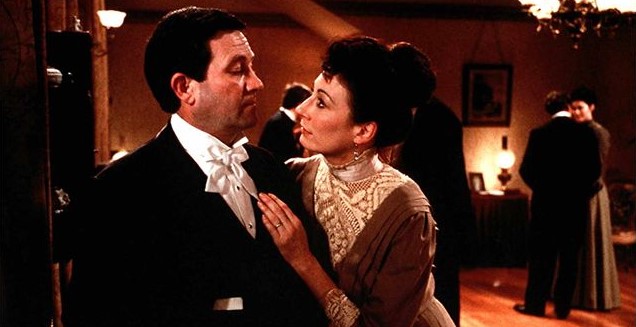
The Lonely Passion of Judith Hearne (1987)

Maggie Smith excels in stately literary drama The Lonely Passion of Judith Hearne

Director: Jack Clayton

Cast: Maggie Smith (Judith Hearne), Bob Hoskins (James Madden), Wendy Hiller (Aunt D’Arcy), Marie Kean (Mrs Rice), Ian McNeice (Bernard Rice), Prunella Scales (Moira O’Neill), Alan Devlin (Father Quigley), Rudi Davies (Mary)

Judith Hearne (Maggie Smith) is a lonely, frustrated Irish spinster who never found her place in the world. Arriving at her new lodgings in Dublin, Judith leaves behind her a whiff of scandal and a slight air of being someone you don’t want in your home. However, while her superior manner may not fool everyone, it’s enough to spark the interest of chancer James Madden (Bob Hoskins) brother of Judith’s lodger Mrs Rice (Marie Kean) – who is not remotely fooled by Judith’s pretence at upper-class gentility. While Judith wonders if romantic love may, after all, finally be round the corner for her with Madden, Madden himself wonders if the starting investment for his next dream is in his grasp.

Jack Clayton’s adaptation of Brian Moore’s novel is a stately passion project. An adaptation that Clayton had worked for years to bring to screen, it’s a quiet and respectful picture that moves with a graceful serenity over its runtime, covering emotional territory but never quite sparking into life. Clayton’s adaptation of the book is precise and perfect in nearly every way, with the film very true to Moore’s style and his ability to capture the domestic tragedy of small-scale, disappointed lives. But it’s not quite a film that hums with inspiration.

What inspiration it has is bound up with Maggie Smith’s superb (BAFTA winning) performance in the lead role as Judith herself. This is surely some of Smith’s finest work on screen, perfectly capturing every beat of this character study. Judith Hearne is a woman who relies on her upper-class background – her airs and manners – to cover up the facts of her poverty and, even more importantly, her chronic alcoholism. Couple this with her self-loathing, her confused attitudes towards God and her (barely consciously aware) mixed feelings for her deceased aunt (Wendy Hiller in imperious form in flashbacks) and she is a woman reeking of disappointment, depression and oppression as much as she does the booze she knocks back.

Smith’s performance progresses throughout the film, from a veneer of assurance to an increasingly poignant and tough to watch collapse into starkly raw emotional disintegration. Desperate in ways she hardly understands for emotional (and physical) content for another, she’s almost touchingly over-enthusiastic when offered the olive branch of friendship of a man, and the self-loathing and loneliness that channel her collapse into brutal alcohol-driven meltdowns show Smith holding nothing back but never once heading over the top. Smith totally understands how to get the balance between quiet tragedy and emotional force, constantly balancing the two expertly. 

It’s her performance that is a triumph of small moments that build over time to carry emotional force, from her careful arrangement of a room to her confused slightly timid eagerness to please when in conversation with Madden. Smith’s superb in the role, never anything less than real her eyes little windows to the depths of sadness in her soul.

It’s a shame that the rest of the film doesn’t quite measure up to her and that, despite the force of her performance, the film never quite manages to capture the overall impact of domestic tragedy that the film needs in order to be something more than just a gracefully filmed package around a superb central performance.

Too many other plot directions end up in cul-de-sacs or never get explored. Madden’s frustrated sexual feelings – and his eventual assault on housemaid Mary (a decent performance by Rudi Davies) are simply never explored any further. Bob Hoskins gets short-changed with a character that doesn’t really go anywhere and whose darker side is demonstrated but then never referenced again. The film gives such force to the damage of Judith’s alcoholism and depression that her struggles with the church never quite gain the force they need. This is despite some sterling work from Alan Devlin as a bullying but empty churchman, not interested in hearing about problems that can’t be solved with doggerel and dogma.

The finest subplots feature Ian McNeice is superb as the bloated wastrel son of the landlady, a spoiled, lazy former student claiming to be working on the next great Irish poem (a work he estimates will take him at least another 5 years), but largely spends his time swanning around the house causing problem and sniping arrogantly at the residents. Marie Kean is also fine as the arch landlady who sees through all deceptions, other than her son’s.

It’s a shame that the film itself – for all the excellence of Clayton’s work – doesn’t quite come together into a really coherent package. What it kind of misses is perhaps the sort of sharp, knowing observation and dry wit that Alan Bennett bought to so many similar small-scale stories of wasted lives in Talking Heads. The film is on a grander scale than those, but somehow carries both less weight and less insight than an average Bennett monologue. Smith is superb – possibly a career best – but the film itself is more something to be admired than remembered.