Category: Science fiction film

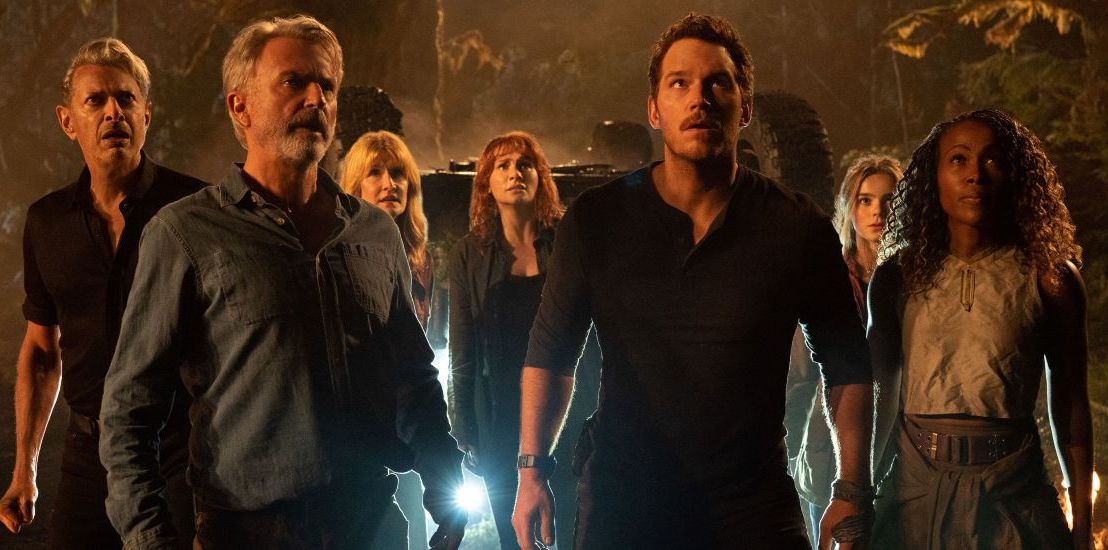
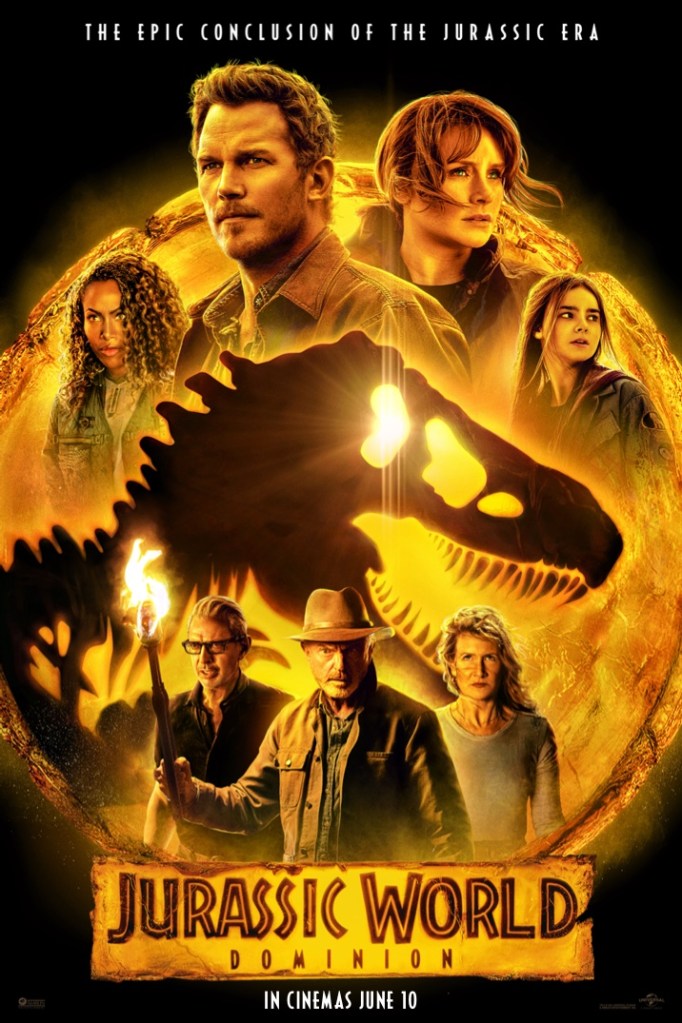
Jurassic World: Dominion (2022)

Jurassic World: Dominion (2022)

It squeezes so many characters in, it totally forgets to make room for plot, invention or anything new at all

Director: Colin Trevorrow

Cast: Chris Pratt (Owen Grady), Bryce Dallas Howard (Claire Dearing), Laura Dern (Dr Ellie Sattler), Jeff Goldblum (Dr Ian Malcolm), Sam Neill (Dr Alan Grant), Isabella Sermon (Maisie Lockwood), DeWanda Wise (Kayla Watts), Mamoudou Athie (Ramsay Cole), Campbell Scott (Dr Lewis Dodgson), BD Wong (Dr Henry Wu), Omar Sy (Barry Sembène), Justice Smith (Franklin Webb), Daniella Pineda (Dr Zia Rodriguez)
As I was leaving the cinema, I heard a twelve-year old talking about which of the dinosaurs in the movie was their favourite. Then they said: “it was a bit samey though wasn’t it?”. I’m not sure I can beat that precocious nail-on-the-head judgement. Nothing happens in Jurassic World: Dominion you’ve not seen many times before in the franchise. Underneath the flash, Jurassic World: Dominion is a tired retread, crowbarring in references from better films left, right and centre, all to hide that there are no new ideas here.

Owen Grady (Chris Pratt) and Claire Dearing (Bryce Dallas Howard) have dedicated their lives to protecting human clone Maisie Lockwood (Isabella Sermon) from the grasp of corporations. When she’s kidnapped by foot-soldiers of clearly-evil-corp BioSyn (they even have “Sin” in their name), they pull out all the stops to get her back from BioSyn’sNorthern Italy research compound. Meanwhile, Drs Ellie Sattler (Laura Dern) and Alan Grant (Sam Neill) are investigating genetically modified locusts which are destroying every crop in the Southern USA – except those using BioSyn seed. All roads lead to that Italian compound – where Dr Ian Malcolm (Jeff Goldblum) is employed as a contrarian philosopher – to try and stop BioSyn’s nefarious schemes.

You know what struck me when I wrote that summary? I didn’t use the word dinosaurs. The prehistoric beasties are pretty superfluous. Sure, they down a plane and our heroes dodge them in various places (BioSyn’s compound doubles as a dinosaur refuge). But, seeing as the last film ended with dinosaurs escaping into the wild and becoming part of our everyday lives… this sequel takes the concept nowhere. Bar an opening news report montage (showing, among other things, pterodactyls – yes, I know they’re not dinosaurs – stealing a bride’s bouquet) and a Star Wars style under-ground market where dino-pets and fighting-pit beasties are traded on the black market, Dominion finds almost nothing to do with this.

In fact, Dominion struggles to find anything to do at all. It’s an extremely loosely plotted mess of a film that feels like two vaguely (very, very vaguely) connected plotlines rammed together in a way designed to shoe-horn in as many legacy characters and call-backs as possible. Laura Dern gets the bulkiest (and only plot essential) role among the returning trio. Sam Neill feels dragged along for the ride (Grant serves literally no narrative purpose) and, while Goldblum gets most of the best lines (delivered in his trademark, improvisational oddness), Malcolm merely splits the role of “inside man” with another character so cursorily introduced and vaguely motivated he feels like he was only there because covid made some of the other actors unavailable for parts of the filming.

The legacy framing is so lazy that all three of these characters essentially wear the same costumes as they did in Jurassic Park. Everyone in universe seems to know who they are (Which I find highly unlikely) and the film bends over backwards to introduce clumsy links between them and the characters from the first two Jurassic World films in ways that feel forced.

The film slowly consumes itself with references back to previous films, linked by sequences that feel ripped out from other hits. Owen and Claire’s opening plotline plays out like an odd Mission: Impossible spy thriller, including a Bourne-ish roof top chase (with Owen haring away on his trademark motorbike from killer velociraptors – the film’s only exciting set-piece, and even that is ripped from other films) with Claire transformed into a semi-adept free-runner. The dino-market is essentially Mos Eisley, by way of that Kamono Dragon fighting pit from Skyfall. By the end a host of famous set-pieces from Jurassic Park and Jurassic World are effectively re-staged or openly referenced and props (such as Nedry’s shaving foam can) are reverentially pulled out.

Any interesting ideas raised are swiftly crushed. Maisie’s concern that, as a clone, she isn’t a real person is fascinating, but the film forgets it in seconds. The villain (a neat Steve Jobs parody from Campbell Scott) spends a fortune capturing Maisie – but when she escapes (thanks to a key to her cage being helpfully left on a table in front of her) he makes literally no attempt at all to recapture her. It’s stressed to us that the whole world is looking for Maisie and that if she is found it will be dangerous for her – by the end of the film she’s doing a press conference and no one gives a damn. The moral implications of a ‘mother’ cloning herself and curing her clone child of a life-ending disease in the womb, is thrown on the table and then ignored.

The whole film revolves around ridiculous coincidences. Villains run away and then helpfully return to ludicrously unsafe places, purely because the plot requires it. Stupid decisions are made right, left and centre. Plot armour ruthlessly protects the expected. The dinosaurs are just irrelevant set dressing: we are told no less than three times the Gigantasaurus is “the biggest hunter there’s ever been”: solely to build up an inevitable face-off with the T-Rex. The deadly locust plot is such a naked attempt to motivate shoe-horning in legacy characters, the film doesn’t even bother to explain what it’s about or what the baddies plan was.

At one point Laura Dern says something to the effect of “we shouldn’t live in the past, we should aim for the future”. Imagine if this slightly lumpen rehash of its better predecessors had done the same.
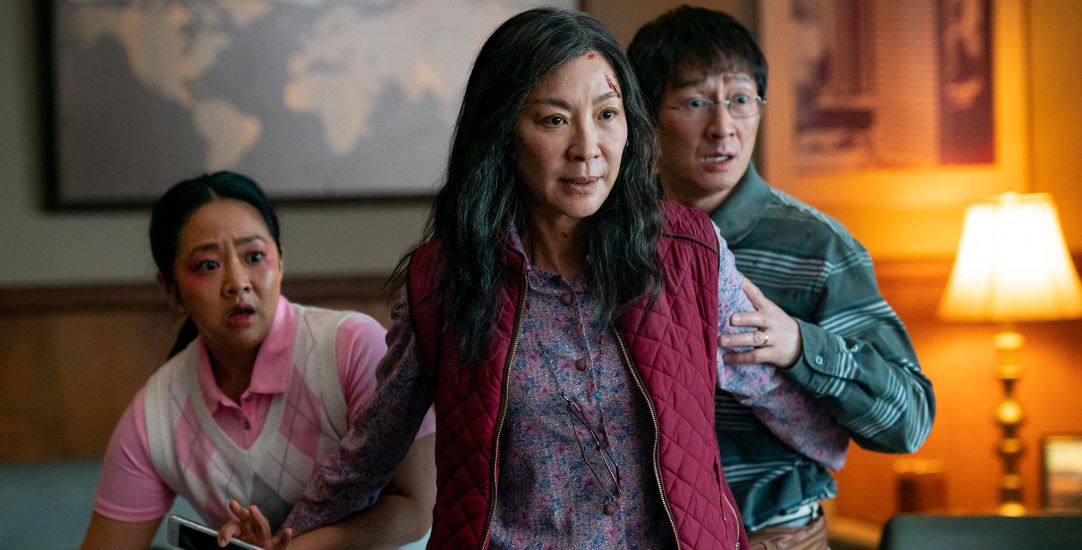

Everything Everywhere All At Once (2022)

Everything Everywhere All At Once (2022)

The multi-verse is at risk of ending – and only a disenchanted woman running a laundromat can save the day in this inventive science-fiction

Director: Dan Kwan, Daniel Scheinert

Cast: Michelle Yeoh (Evelyn Quan Wang), Stephanie Hsu (Joy Wang), Ke Huy Quan (Waymond Wang), James Hong (Gong Gong), Jamie Lee Curtis (Dierdre Beaubeirdre), Tallie Medel (Becky Sregor), Jenny Slate (Debbie), Harry Shum Jnr (Chad), Biff Wiff (Rick)

Evelyn Wang (Michelle Yeoh) has lots on her plate: running her laundromat, completing tax returns for a demanding IRS agent (Jamie Lee Curtis), her waning marriage to goofy husband Waymond (Ke Huy Quan) and drifting relationship with lesbian daughter Joy (Stephanie Hsu), not to mention her fear of the disapproval of her demanding father (James Hong) – its Everything Everywhere All at Once as it is: no wonder she struggles to cope when discovering from an alternate version of her husband that she, and she alone, is the key to saving the entire multi-verse from destruction.

Everything Everywhere All at Once is an endlessly inventive, imaginative and unique spin on everything from science fiction to philosophy, via the struggles of an immigrant family, familial dynamics and love, death and the universe itself. Did I mention it’s got jokes as well? There isn’t anything quite like EEAAO out there, and if the film does lose energy at an inflated runtime of 145 minutes, at least that’s because it must have been a struggle knowing what to cut.

In the mythology of EEAAO, Evelyn lives in just one of a myriad different realities. Every time a decision is taken, a new reality branches off, spawning innumerable different realities. If Evelyn can imagine it, then somewhere in another universe it happened. She should be a film star, a martial artiste, a chef, a blind singer, a pizza sign spinner…there are realities where mankind never evolved or where they evolved with hot dogs for fingers (a joke the film is a way too pleased with and seriously outstays its welcome).

With some technology from the “Alpha” universe – the first universe to discover alternate realities, where Evelyn and Waymond were pioneering scientists – Evelyn can access the memories and skills of her alternates. All she – and others with the right training and equipment – need to do to become experts at anything in seconds is to build a mental link to that reality by performing a highly improbable act. Whether that’s getting four consecutive papercuts, eating a lipstick, swallowing a model frog or – in a comic highlight – Evelyn fighting to stop an opponent shoving an “Employee of the month” award shaped like a dildo up their bottom in public (you’re not going to see that in many movies) – it’s a brilliant comic device that raises belly laughs a plenty.

EEAAO knocks spots off the recent Doctor Strange sequel (that made almost nothing of its parallel universe concept) by not only presenting radically different worlds (in this universe Evelyn is a pinata! Here she’s a rock!), but also exploring how the path-not-taken can have a mesmerising and inspiring/depressing impact. Evelyn – a woman who (justifiably?) believes she has achieved nothing, is both fascinated or heart-broken to see realities where her accomplishments are titanic. EEAO is superbly thought-provoking when it explores the emotional impact of questioning your choices, when you see turning right rather than left could have been the first step on a path of astonishing glory and success and, even, a completely different personality.

This leads into the film’s second half which, after the comic energy of the first, dives into a philosophical debate about the nature of choice. The villain attempting to destroy reality is motivated not by rage or power-lust – but simply by the fact that jumping to a billion realities has persuaded them it all means nothing. Everything is basically a combination of atoms that, with a few pushes and pulls, can turn from one thing to anything else. This nihilistic view of the world – what does it matter killing one person when there are billions of other versions of them, many of them ‘better’ – and balancing it with a more humanitarian view, becomes the film’s key debate.

It’s also rooted in the film’s opening, which is does a marvellous job of exploring universal family questions, while still grounded in the experience of an immigrant family. Evelyn and Waymond, having moved to America in search of their dreams as youngsters – and wound up running a laundromat – struggle to balance their relationship (her growing irritation at his perpetual optimism, his alienation from her cynicism) and, particularly in Evelyn’s case, understanding her more Westernised daughter. Two generations with very different experiences, struggling to understand each other.

On top of which, many of these problems are universal. Generational conflicts: the grandpa who can’t be told his granddaughter is gay, because her mother isn’t sure how he will react. The mother and daughter who have lost the ability to communicate and reduced to saying increasingly cruel things to each other (there is a shocking moment when Evelyn tries to tell her daughter she loves her but instead chastises her for getting fat). Waymond tries to hold things together but is too gentle and ineffective to do anything.

All of this is bundled together in a film stuffed with inventive and hilarious sequences. There are kick-ass fights (one involving Alpha-Waymond and a fanny-pack – bum-bag to us Brits – which has to be seen to be believed), hilarious segues, brilliant parodies of other films (2001, Ratatouille and In the Mood for Love for starters): and then the film will hit you for six with a genuinely heart-breaking moment. I will say there is almost too much good stuff here – ten minutes trimmed from the film would work wonders, and the continued trips back to Hot Dog Hands reality is a joke stretched to absolute breaking point – but better too much than too little.

At the heart of this fabulous work from The Daniels are superb performances, none more so than a career best turn from Michelle Yeoh. Channelling everything Yeoh has ever done in her career into a single film, she of course can handle the astonishing action but also displays an emotional depth and complexity that will break your heart. She’s bitter and trapped, then will shift on a sixpence to agonised guilt and longing. She’s astonishingly good. There is brilliant support from Hsu as her trapped and troubled daughter and Ke Huy Quan (last seen in The Goonies) is heart-breakingly endearing, funny and wonderfully sweet as her good-natured husband (like Yeoh he also plays multiple variants – from confident to cold and distant). James Hong is wonderful as her austere father and Jamie Lee Curtis is having a ball as a bullying IRS agent turned villain’s heavy.

When the major flaw in the film is that it is too damn long, you know you are onto a good thing. There are more ideas in a few minutes here than in the entire runtime of such things as the Doctor Strange sequel. Superbly directed with wit, energy and compassion by the Daniels and with a career-defining role for Michelle Yeoh, Everything Everywhere All At Once is destined to take its place as a year defining cult hit.

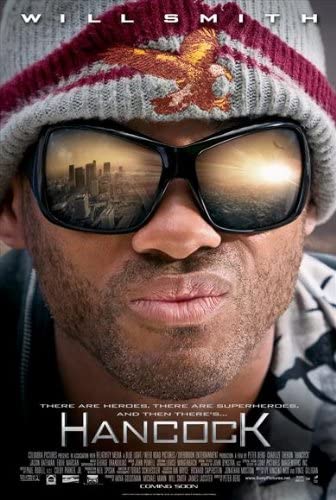
Hancock (2008)

Hancock (2008)

Will Smith goes against type as an arrogant superhero in this deeply flawed would-be satire

Director: Peter Berg

Cast: Will Smith (John Hancock), Charlize Theron (Mary Embrey), Jason Bateman (Ray Embrey), Eddie Marsan (Kenneth “Red” Parker Jnr), Jae Heard (Aaron Embrey)

Back in 2008, everyone was entertained by the idea that the most charming man in the world was pretending to be an arrogant, entitled arsehole. Sadly, in 2022, when Will Smith is synonymous with entitled public slapping, the joke feels a little different.

In Hancock, Smith plays the eponymous superhero, a drunken dickhead, who saves people without giving a damn about them or the millions of dollars of damage he causes while doing so. When he saves the life of PR man Ray (Jason Bateman) – wrecking a train in the progress – Ray decides to help Hancock change his image. His wife Mary (Charlize Theron) is less than happy about it – but is there a deeper mystery to her discomfort?

Needless to say there is: and the reveal of what it is marks a tonal shift in a messy film that never quite knows what it is. But that’s because the entire film is basically a sketch thinly stretched out over 85 minutes. What if Superman was real and also a complete arsehole? What would an irresponsible, drunken, unpleasant hero be like? And hell, wouldn’t we stop thanking him and instead start getting really pissed off when he trashes a freeway and several buildings, while chasing some trigger-happy bank robbers?

That’s basically the core of the film: setting up the unlikeable hero, watching him tell people to go to hell and use his powers against people who annoy him. See him get humiliated by going to prison (Ray’s genius PR idea to get people on Hancock’s side) and then eventually resolving a bank robbery with excessive, awkward politeness. It’s one joke. Don’t get me wrong, it’s a good joke. It would make a great recurring gag on Saturday Night Live or something. But it never manages to be anything more than that.

Peter Berg’s film radically shifts gear for the final thirty minutes or so. A second superhero is introduced, a poorly explained and illogical backstory is shoe-horned in and info dumps of character background start to get dropped in (the entire backstory, plot and motivation of Eddie Marsan’s nominal villain is explained in an overheard TV broadcast). What had been a farce suddenly turns into a clumsily intense relationship drama between two people with no chemistry. It ends in a final fight in a hospital which features blood, shooting, tears and a joke about a hand being sliced off. It’s all over the place.

Will Smith just about holds it together: and the fact that he managed to make this not-particularly-funny or rewarding film into the fourth biggest hit of its year is a tribute to what Box Office Gold he was at the time. It’s a decent role for him, and Smith does the humour well. But, after his frank autobiography on his dark side (not to mention that infamous slap), it feels less like Smith playing against type, and more him exposing parts of his own personality. But he carries the entire film with gusto, even if he can’t make the final tonal mess work.

Berg’s direction pitches between way-too-intense and flatly-comedy-free. He drills into emotion in the final act, as if he’s forgotten that this was supposed to be a super-hero satire – but totally fails to bring enough character or reality to the story for its seriousness to work. For the first half, he struggles to bring much personality to the film (I suppose that is Smith’s job). It becomes a film that raises the odd smile but, despite its very short length, outstays its welcome.

Bateman is good value as the do-good PR man (strangely, he’s introduced as a real hotshot, even though it seems he’s completely useless based on nearly everything we see him do). He has a strange chemistry with Charlize Theron, wasted in an incoherent part. No one else gets a look in.

Tonally, Hancock is a mess with a few good gags (Hancock casually tossing a beached whale back into the sea, hitting a yacht, is funny). Its novelty appeal in 2008 – “Look! Will Smith can be mean!” – has disappeared today. Nothing in it is remotely memorable, making a decent joke never anything more than functional. It falls apart in the final stretch as it reaches for a depth it isn’t strong enough to deliver. Can you believe this was one of the biggest hits of 2008? Has anyone really watched, or thought about it, since?

12 Monkeys (1995)

12 Monkeys (1995)

A world-ending-virus can only be cured through the power of time-travel in Gilliam’s twisty, paradox time loop

Director: Terry Gilliam

Cast: Bruce Willis (James Cole), Madeleine Stowe (Dr Kathryn Railly), Brad Pitt (Jeffrey Goines), Christopher Plummer (Dr Leland Goines), David Morse (Dr Peters), Jon Seda (Jose), Christopher Meloni (Lt Halperin), Frank Gorshin (Dr Fletcher), Bob Adrian (Geologist), Simon Jones (Zoologist), Carol Florence (Astrophysicist), Bill Raymon (Microbiologist)

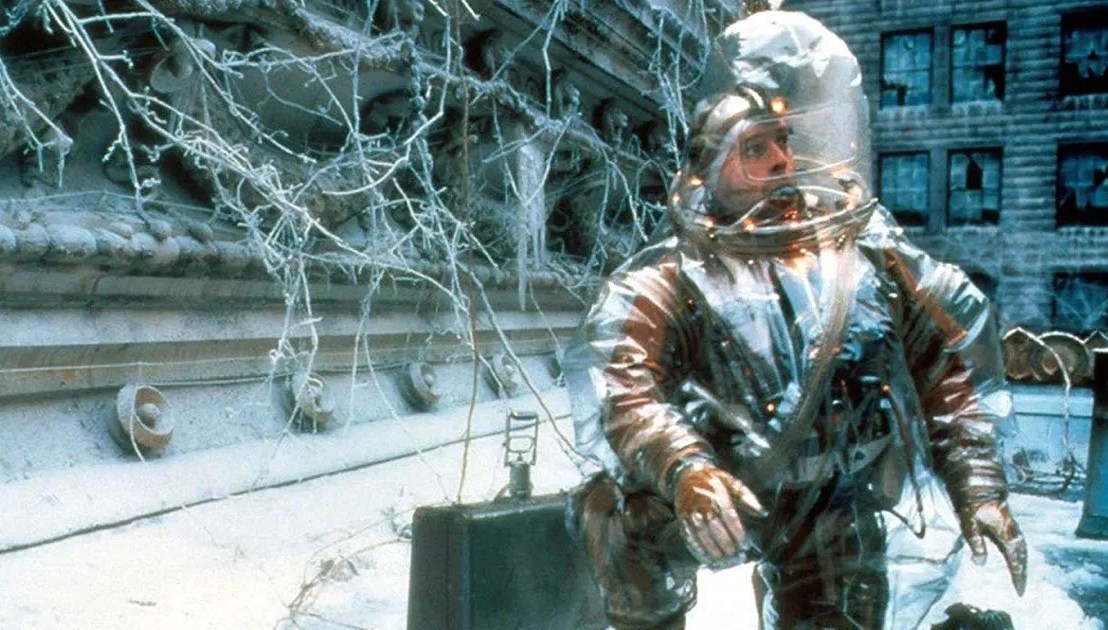
2035 and the world is a plastic-coated hell, where what remains of mankind huddle below the Earth in rudimentary, environmentally controlled, airtight refuges. The surface is a dream, now home to a deadly virus that wiped out 99% of the population. That virus was unleashed in Philadelphia in 1996: nothing can stop that. But time travel can help the scientists of 2035 gain a sample of the original pre-mutation virus. They believe it was unleashed by an organisation called “The 12 Monkeys”. Track the organisation in the past and find an original sample of the virus. Easy right?

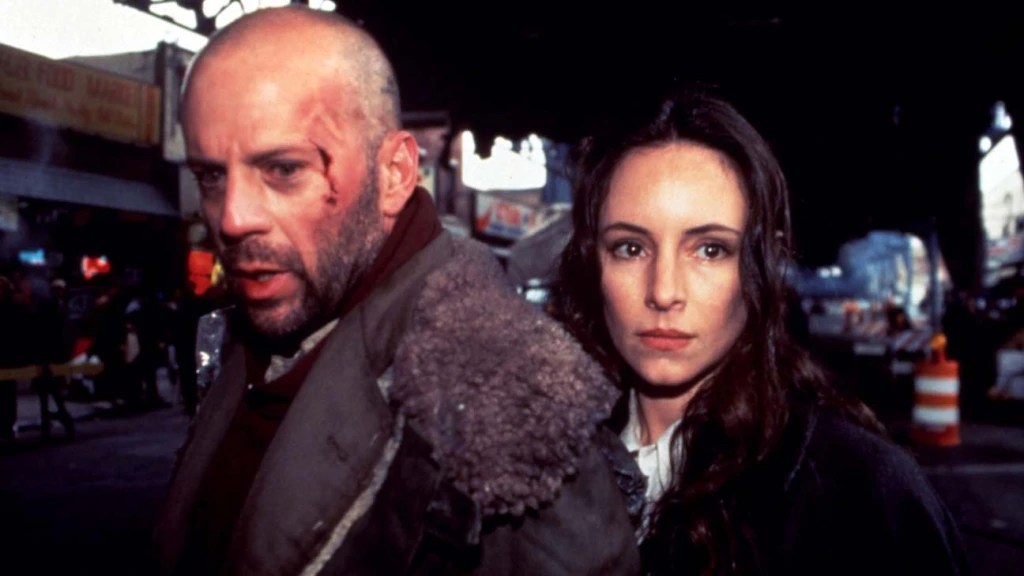
Wrong. Time travel messes with your mind, making it hard to tell what’s real and what’s not. The travellers are penal “volunteers”. James Cole (Bruce Willis) is selected as he has a photographic memory and a strong memory from 1996 of witnessing a Philadelphia airport shooting, that will help send him back. However, he’s flung back to 1990 and thrown into an asylum, treated by Dr Kathryn Railly (Madeleine Stowe) and sharing a room with environmentalist Jeffrey Goines (Brad Pitt). Rescued and correctly sent to 1996, can Cole convince Railly he’s telling the truth and track Goines who has become the leader of the 12 Monkeys?

12 Monkeys is one of the most intriguing time-travel films ever made – and its future, ripped apart with plague, seems chillingly closer today. It puts a vulnerable, scared person at its centre – and makes him a dangerous, inarticulate Cassandra who reacts with violence when no-one listens him (which they never do). It repeatedly tells us things cannot end well, but still gets us hoping they might anyway. It presents puzzles that provoke debate and stretch the imagination.

Gilliam’s most main-stream film is an eccentric, unsettling, tricksy film that juggles time travel and paradoxes, as well as mental health and the nature of reality. Shot with a Dutch-angle infused oddness – reflecting its hero’s mental unbalance – and scored with a French-inflected whirly-gig musical theme that is reminiscent of the demented street people that pepper the film (and may, or may not, be other unbalanced time travellers), it constantly puts you on edge and unsettles.

This extends to its casting, which takes two Hollywood superstars – Willis and Pitt – and deglamorises them to a shocking degree. As Cole, Willis is shambling, vulnerable, scared and struggling to distinguish between reality and fantasy. An 8-year-old boy when the virus destroyed the world, in a way he’s never grown up. He looks around the world of the past with a wide-eyed wonder (he adores the sun and the feel of the soil beneath his feet) but has the stroppy impulsiveness of a maladjusted teenager. He’s so twitchy and insecure, you start wondering if he is the mentally disturbed man who imagines he’s from the future, that his doctors think he is. It’s Willis’ least-Willis performance ever and one of his finest.

Similarly, Pitt pushes himself as the disturbed, aggressive Goines. Prone to obsessive rambling, that stretches Pitt’s languorous vocal register (he trained for months to improve his vocal range), Pitt’s performance is wide-eyed, unpredictable and unsettlingly dangerous. With a single eye swollen and askew, it’s a performance that plays with being OTT but manages to work because he mostly avoids actorly showing off. Madeline Stowe, by contrast, has the most difficult role as the ‘normal person’, a sceptical psychiatrist becoming more and more convinced Cole is telling the truth.

Of course, despite the film’s efforts to play with reality, the audience are always pretty certain he isn’t wrong about the future. But, with the sight of fellow deranged time travellers, not to mention Willis’ vulnerable performance, that Cole could still be crazy. Even if you are right, doesn’t mean you are sane.

Gilliam’s surrealist future helps with this. Every time Cole is pulled back to 2035, the world becomes ever more deranged. Is his grip on reality eroding, as he is feared it is. Design wise the future is a triumph – but it also seems eerily similar to the 1990 asylum Cole is in. Has the building, and the things in it, been repurposed in 2035? Or, as the scientists of 2035 become ever more surreal (including serenading Cole at one point in a Dennis-Potteresque fantasy), questioning Cole via a circular floating series of TV screens while he sits in a suspended chair, is Cole’s grip on reality gone?

It keeps the tension up in the ‘past’ plotline, even as the things Cole has seen in the future – strange messages on walls, photos, voicemail messages – accumulate. 12 Monkeys is a fascinating time-travel movie, that establishes from the very first moment it is impossible to change the past (something the audience, like the characters, get sucked into forgetting). After all, if the plague was stopped, then time travel would never be invented in the first place. All Cole, and the other travellers, can do is collect information.

But that doesn’t stop the future influencing the past. Goines decides to form the 12 Monkeys based on a conversation with Cole in 1990. Dr Railly becomes fascinated with apocalyptic predictions – writing a book that will influence the man planning viral annihilation in 1996 – only because she meets Cole. And, above all, 2035 Cole’s presence in 1996 leads to that strong childhood memory happening in the first placce. The final reveal of the meaning behind Cole’s recurring memory-dream is the perfect example of a time-loop closing (so much so the scientists in the future bend over backwards, giving Cole a doomed mission, to ensure it happens).

It also explains why he is drawn towards Stowe’s Railly, who resembles (with the exception of her lack of Hitchcock Blonde hair) the woman in his dream. The relationship between Cole and Railly develops into a slightly forced romance (it feels like a script requirement, for all Gilliam’s taking the characters to watch Vertigo to hammer home the obvious contrasts). But when it focuses on two people drawn together for reasons they can’t quite understand (and there are hints of predestination) it just about works. That and the commitment of both actors to the roles.

12 Monkeys is about 15 minutes too long (it’s 1990 section outstays its welcome), especially as the audience is never in doubt that the plague is real (after all this is a movie). But Gilliam keeps us on our toes with how confident we feel in Cole: we’re repeatedly shown he’s violent, inarticulate and impulsive. The final half of the film, where the origins behind events we have been shown or heard in the first half, is fascinating. The tragic turns of the film’s paradoxical temporal loop is brilliantly executed and haunting. Gilliam’s film is quirky, unsettling and a design triumph: but it also tells a fascinating story. It’s his most accessible and crowd-pleasing film.

Avatar (2009)

Avatar (2009)

Cameron’s monster-hit is an exciting slide of traditional story-telling, that had less cultural impact than you might expect

Director: James Cameron

Cast: Sam Worthington (Jake Sully), Zoë Saldana (Neytiri), Stephen Lang (Colonel Miles Quaritch), Sigourney Weaver (Dr Grace Augustine), Michelle Rodriguez (Trudy Chacón), Giovanni Ribisi (Parker Selfridge), Joel David Moore (Dr Norm Spellman), CCH Pounder (Mo’at), Wes Studi (Eytukan), Laz Alonzo (Tsu-tey), Dileep Rao (Dr Max Patel)

Why is Avatar so easy to mock? It’s the second biggest box office hit ever (Cameron holds slots two and three with this and Titanic:only Avengers: Endgame grossed more). But its cultural impact feels wide but not deep. As FOUR more Avatar films start to arrive from 2022, the question remains: why has no-one really talked about Avatar since 2009?

Perhaps it’s because there isn’t really much new or unique in Avatar, beyond the magic of its visuals and the magnificent showmanship of Cameron. For all the striking blue design of the aliens, their story was too reminiscent of too many other things. The script lacked punch, distinctive lines and unique characters. There was little to quote and few truly original pivotal moments that could be embraced by our cultural memory. Narratively and structurally, it’s all a little too safe, predictable and conventional.

 Avatar partly became a “must see” cinematic event, because it was the film that finally nailed 3D. Maybe it is the best 3D film ever made. I don’t know, I’ve only ever seen it in 2D. To be very fair, Cameron doesn’t fill the film with crappy shots of things pointing at the camera. Instead, concentrating on telling a cracking (if predictable) story and filling the screen with beautiful, imaginative imagery that works in any dimension.

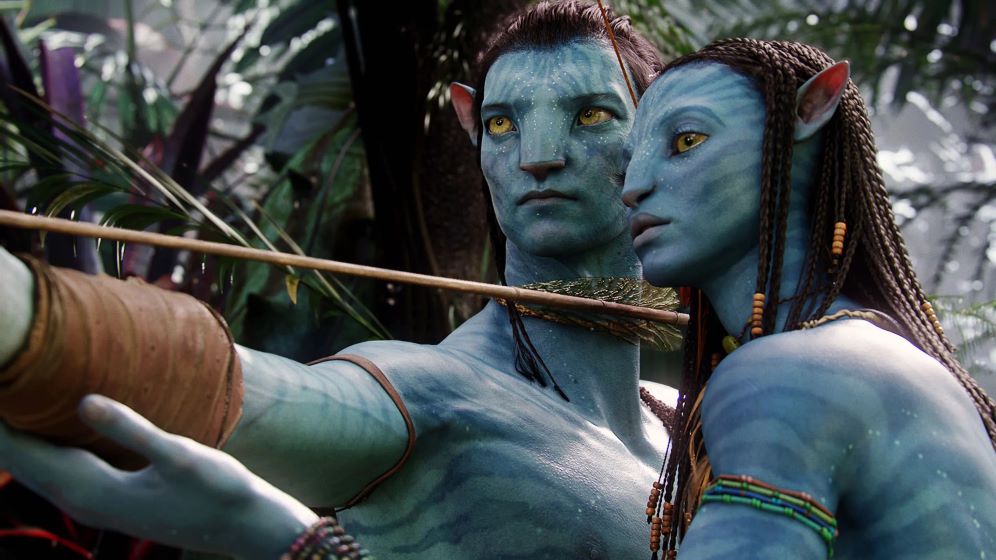
Avatar’s imagery is so striking because it’s set on the magical alien world of Pandora. In 2154, with Earth’s resources depleted, mankind has struck out into the stars – and Pandora is a rich seam of an insanely valuable mineral called unobtanium (chuckles presumably intended). Pandora is a carefully balanced biosphere, peopled by exotic animals and 10-foot, blue-skinned natives called the Na’vi. Pandora’s atmosphere is poisonous to humans, so scientists – led by Dr Grace Augustine (Sigourney Weaver) – use Na’vi “avatars”, operated by genetically matched humans, to explore. The mission is carefully balanced between science and financial exploitation by a sinister corporation, backed by mercenary army, led by the fanatical Colonel Quaritch (Stephen Lang).

Into this magical set-up drops paraplegic ex-marine Jake Sully (Sam Worthington), taking the place of his dead scientist brother because he is a genetic match for a freshly grown Na’vi avatar. With this warrior background, Jake is welcomed by the Na’vi, becoming an ambassador to the people. But Jake’s loyalties split as he finds a purpose in Na’vi life he has long since lost on Earth – and as he falls in love with Na’vi warrior Neytiri (Zoë Saldana). When the company decide to destroy the Na’vi’s home to gain access to the rich unobtanium deposits beneath, which side will Jake back?

It’s not hard to guess. At heart, Avatar fits very neatly into a series of Dances with Wolves-esque films, in which a wounded and lost (white) soldier finds a spiritual peace and solace with a native people, eventually rising up to fight for their rights against his own people. Avatar also finds roots in The Mission, with the scientists as the missionaries fighting alongside the natives (although with much better results), the conclusion of Return of the Jedi and Cruise’s The Last Samurai. Not to mention more than a few stylistic and plot echoes from Cameron’s own Aliens (you can even hear them at several points in Horner’s score), from technology (those stomping war suits) and cocky marines lost in a world they don’t understand (except this time, we love to see them killed off).

Avatar doesn’t challenge you, presenting its humble message of environmentalism and peaceful co-existence within a familiar framework where military forces and corporations are very bad and enlightened missionaries and Indigenous people are good. It entertains because it’s told with such skill. Cameron, while never the greatest screenwriter in the world, knows how to marshal his clichés and standard narrative tricks into something exciting and involving.

It also helps that the stock characters he creates a played with such forceful engagement by the actors. Stephen Lang is a growlingly hateable racist, delighting in the prospect of genocide, while Giovanni Ribisi’s corporate boss is a snivelling opportunist who couldn’t care less about the impacts of his actions. Opposite them, Sigourney Weaver gives huge weight to a fairly standard irritated-boss-turned-mentor role as the head scientist, Sully’s bridge to learning the Na’vi way. As Sully, Sam Worthington is not the most charismatic performer but he has an earnest intensity and emotional honesty that helps us invest in his pre-Pandora misery and his growing love of his adopted home.

Cameron’s greatest achievement though is the vision he creates for the Na’vi. All are played by actors using cutting-edge (and still impressive now) motion capture. Cameron builds a whole world for these people: a language, belief system, culture and bond with the environment. Sure, it’s heavily inspired by Indigenous American culture, but it feels real. Its bought to the screen with grace and tenderness and gains a huge amount from Zoë Saldana’s committed and emotionally open performance as Neytiri. Cameron so successfully builds a bond between audience and the Na’vi that you feel your heart wrench to see mankind tear their beautiful world apart.

It’s that emotional connection Cameron successfully builds that helps make the film work. After all we’ve all seen effects stuffed films before, but they don’t all become monster hits. And if the film was a dog, all the 3D magic in the world wouldn’t have helped. Few directors have as much skill with threading emotional bonds within the epic as Cameron. He shoots Avatar with a stunning majesty, carefully placed shots and graceful, almost traditional, editing help to build a sense of magic and wonder around the awe-inspiring alien vista. Avatar has a lot of action, but it never feels like just an action film: it’s a relationship drama, inspired by the beauty of its setting, with action in it.

More people have mocked Avatar with comparisons to the visually and thematically similar Fern Gully: The Last Rainforest than have actually seen Fern Gully. Narratively it does little new or unique and offers very little surprises. But its visuals are stunning and Cameron’s superb direction knows how to engage you. Clichés last because they carry a sort of truth: Avatar uses these truths to help you invest in a gripping, if conventional, story. But it’s also why its impact over time has been so slight – there aren’t any new ideas for viewers to tie themselves to and almost nothing that stands out as a unique cultural reference point – even if the conventional plot helped make it a short-term monster hit. But it’s also why it still makes for enjoyable rewatching.

Transformers: Dark of the Moon (2011)

Transformers: Dark of the Moon (2011)

Sexist, violent, crude and deeply disgusting. Transformers continues to make you weep for your childhood memories

Director: Michael Bay

Cast: Shia LaBeouf (Sam Witwicky), Josh Duhamel (Colonel William Lennox), John Turturro (Seymour Simmons), Tyrese Gibson (Robert Epps), Rosie Huntington-Whiteley (Carly Spencer), Patrick Dempsey (Dylan Gould), John Malkovich (Bruce Brazos), Frances McDormand (Charlotte Mearing), Kevin Dunn (Ron Witwicky), Julie White (Judy Witwicky), Alan Tudyk (Dutch Gerhardt)

I’m ashamed to say when I saw it in the cinema I sort of enjoyed it. Goes to show how the excitement of a trip out can make the most ghastly, horrible, vile piece of work feel like fun. Even at the time, I recognised enjoying Transformers: Dark of the Moon was like becoming engaged with the story-telling in a porno. Doesn’t change the fact it’s a crude exercise, pandering to your baser instincts.

The plot? Autobots. Decepticons. Blah, blah, blah. Don’t worry if you’ve not seen the previous films: this merrily contradicts them. In the 60s an Autobot ship crashes on the moon, the moon landings were all about exploring the wreckage. In the present day our “hero” Sam (a never more annoying, unlikable Shia LaBeouf) can’t land a job and the Decepticons hatch a plan to destroy the planet by bringing their homeworld Cybertron here. Former Autobot Boss Sentinal Prime betrays everyone. Optimus Prime doubles down on being a psychopath. It’s very loud and makes no sense.

Transformers: Dark of the Moon exposes Michael Bay’s aesthetics as those of a porn director. Everything is crude, huge, brash, obvious, tries to do as much work for you as possible and panders to your worst instincts. Dark of the Moon is shocking in almost every possible sense: from its crude sexism and leering camera, its revoltingly heavy-handed, end-of-the-pier, terminally unfunny comic relief, its overlong, explosive battle sequences (shot with the slavering longing of a pornographic gang-bang). Dark of the Moon is a revolting film, a disgusting perversion of what was a kids cartoon.

Can you imagine letting a child watch this? Let’s deal with its disgusting sexism first. Megan Kelly had been sacked between this and Revenge of the Fallen for denouncing Michael Bay’s working basis (I’ll admit calling him Hitler went too far). Every chance in the film to disparage her character is taken (two appallingly unpleasant tiny Autobots all but call her a bitch). She’s replaced by Rosie Huntington-Whiteley, introduced walking up-stairs, the camera starting at her feet and trailing up, lingering on her bottom (she’s wearing just a slightly-too short shirt). Later two characters will discuss “the perfect curves” of a car – while the camera pans up her body. Those are only the most egregious of the deeply uncomfortable sexual objectification of this poor woman.

How about its crude humour? Several actors enter a private competition to give the loudest, least funny comic cameo. Malkovich gurns and rants as Sam’s pointless, kung-fu obsessed boss. John Turturro does whatever he wants as a Transformers obsessed former-agent. Kevin Dunn and Julie White are eat-your-fist levels of unfunny as Sam’s parents. Worst of all is Ken Jeung as a Deep Throat style informer whose every scene is crammed with homophobic jokes about anal and oral sex. Remember, once upon a time this was for kids. All this alleged humour does is add to the already bloated run-time. You’ll suffer through every single word, because you certainly won’t miss it due to laughing. Bay’s idea of funny is if the joke is delivered LOUD by a wild-eyed actor, preferably accompanied by a whip-pan. He’d probably love Roy Chubby Brown.

The film has two of the least likable heroes perhaps ever placed on film. Shia LaBeouf must have genuinely hated himself by the time he made this. Perhaps that’s why he makes no effort to make Sam even one per cent likeable. Sam is a whining, petulant man-child, alternating between bitching about his job to bragging about his trophy girlfriend (whom he spends half the film whiningly chasing). In the first of these films, LaBeouf had a goofy charm. Now the character is just a deeply arrogant little prick, with major entitlement issues. LaBeouf shouts and screams throughout, but mostly just looks really angry at himself for even being there.

Then we come to the pièce de resistance: Optimus Prime. When I was a kid, this noble warrior was like the perfect Dad. Traumatised kids wept when he died in the animated movie. Revenge of the Fallen started turning him into a violent killer. This completes the journey. Bay probably thinks Prime is a bad-ass taking names. He’s actually a violent, psychopathic killer who arrives at a battle with the inspiring words “We will kill them all”. Prime allows the whole of Chicago to be destroyed (at the cost of millions of lives) to prove a point to the stupid humans. At the film’s end he reacts to Megatron’s offer of a truce by ripping out his spine and then executes Sentinel Prime by shooting him point blank in the head while Sentinel pleads for his life. Ladies and gentlemen: our hero.

It’s customary to say the special effects are good, so: the special effects are good. The violence is pornographic, shot often in slow-mo, with explosions, fast editing and huge noise filling the screen. Transformer bodies are mauled, beheaded, eviscerated. There are several rather chilling executions. Prime rips out the equivalent of heart, lungs, eyes and brains. Bay adds a reddish oil to the transformers, which looks like blood spraying up. Just like the humour, the action goes on FOREVER. The final Chicago battle takes up fifty minutes of buildings falling, brutal slaughter and triumphalist flag-waving. After repeated viewings it’s not just boring, it starts getting offensive.

Dark of the Moon is, quite simply, only just (only, only, only just) better than Revenge of the Fallen – and it says it all that it’s because it’s not as racist. In every other sense it’s simply revolting: violent, crude, sexist and homophobic. This is a horrible, horrible film made by a soulless director. It genuinely is like a beautifully shot pornographic film that wants you to respect the craft that’s gone into it while you finish yourself off. For a brief few seconds you might get sucked in – but you’ll certainly not be boasting about it afterwards.

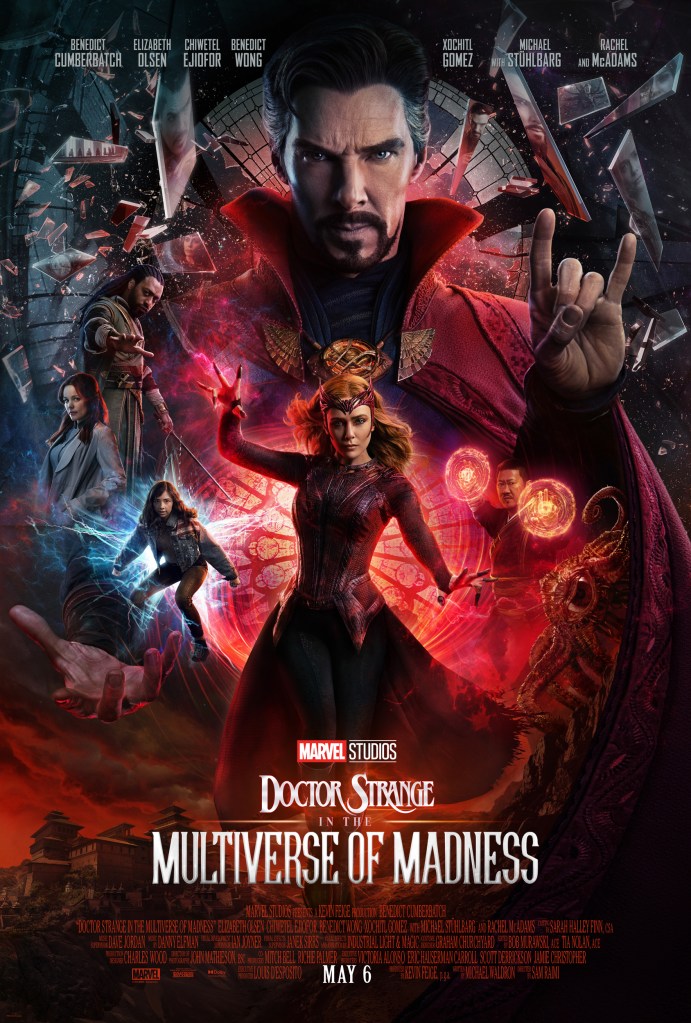
Doctor Strange in the Multiverse of Madness (2022)

Doctor Strange in the Multiverse of Madness (2022)

Marvel opens up its infinite universes as it lays the groundwork for bringing back old characters with new faces in this corporate outing

Director: Sam Raimi

Cast: Benedict Cumberbatch (Dr Stephen Strange), Elizabeth Olsen (Wanda Maximoff/Scarlet Witch), Rachel McAdams (Dr Christine Palmer), Chiwetel Ejiofor (Karl Mordo), Benedict Wong (Wong), Xochitl Gomez (America Chavez), Michael Stuhlbarg (Dr Nicodemus West)

Spoilers: The main spoiler would be looking at the cast list. I won’t name the cameos are but I do mention a main plot development revealed within 15 minutes.

Parallel universes have infinite possibilities. These are largely not found in this lumpen, fan-service obsessed and (whisper it) slightly dull film that fails to follow-up on either the promise of the first film (to which it makes awkward call-backs) or its main concept. It allows Raimi scope to indulge his Evil Dead style visuals, but all within the confines of producing another entry in the series that feels like a bridge between chapters rather than an interesting story in its own right.

Dr Strange (Benedict Cumberbatch) attends the wedding of former girlfriend Christine Palmer (Rachel McAdams), when he’s torn away to fight a squid monster chasing a teenager, America Chavez (Xochitl Gomez). America has the power to travel between parallel universes – and is dragging behind her the dead body of a parallel Strange who failed to protect her from a mysterious foe trying to steal her power. Strange, Wong (Benedict Wong – the most engaging performance in the film from this under-rated actor) and the Sorcerers protect America – but Strange’s attempt to recruit Wanda Maximoff (Elizabeth Olsen) goes awry when it turns out its she hunting America, using dark magic in an attempt to find her parallel versions of her lost children.

DSITMOM has been called the MCU’s horror film: which by no means makes it The Exorcist. It’s a sort of very, very gentle entrée to the genre – like Cronenberg’s Videodrome was turned into a kid’s TV series or a comic-book version of Raimi’s The Evil Dead. It has a few flourishes, but none of this is allowed to get in the way of the corporate enterprise. It’s more interested in giving people what it feels they want and fitting itself into the timeline of a series.

In fact it sometimes feels like an attempt to mirror the success of Spider-Man: No Way Home (I wonder how many of the cameos were added after that film’s release?). It takes the elements of guest stars and parallel universes and presents them in ways that provide little insight or long-term reward. In No Way Home alternate versions of characters are used to explore how different events could have shaped our heroes. The returning stars aren’t just thrown in, they have arcs and emotional journeys. The whole is both fun and an engaging story but also nostalgic. Compare, as well, the TV series Loki (by the same writer) that brilliantly used parallel versions of its lead to deconstruct and develop his character.

DSITMOM does none of this. There are rich opportunities to see how Strange may have developed in different universes: after all this is the closest thing to an “ends justify the means” character in the MCU. Would different versions of him go more or less further – and how might it make our Strange reflect on his occasionally ruthless ‘big picture’ thinking (this is after all, as the film mentions, the guy who allowed half of all life to blink out of existence as part of a masterplan only he knew). We don’t get nearly enough of that. In fact, we get virtually none of it.

These opportunities are ignored in the two parallel universes we spend the most time in, where Strange is either a dead war hero or an insane hermit corrupted by dark magic. Neither of these characters is really contrasted effectively or interestingly with our version. A faint plotline of Strange learning trust from the mistakes of others is threaded through, but only lightly. Instead, the film focuses more attention on Strange’s lost love for Christine Palmer, an oddly unsatisfying focus since Strange has appeared in at least four films since his first solo effort six years ago, and the franchise has failed to mention this motivating loss once (not even a throwaway line in No Way Home to build it up).

Mind you it’s better than the development Wanda Maximoff gets. DSITMOM is pretty much impenetrable unless you’ve watched WandaVision. Even if you have, as I have, you’ll probably be a little annoyed at the ‘development’ she gets here. At the end of that series, Wanda had accepted the damaging consequences of her grief and started moving on. Here though, she’s a sociopathic monster defined solely by her motherly grief and her ruthless determination to tear universes apart to heal it. It feels retrograde to, essentially, be saying “women who suffer loss go axe-crazy” or to double down on her willingness to harm others to cling to a ‘normal life’ fantasy (as well as contrary to the hopeful tone the series ended on).

That’s not to mention the clumsy fan service peppering the film. The main outing to a parallel universe is basically an excuse for fan-pleasing cameos. These amount to nothing more than a series of actors popping up say “Hello I’m Y” and promptly suffering terrible fates (because it’s a parallel universe and your plot armour means nothing there). Like Yoda fighting Christopher Lee, it’s cool when you first see it but risks becoming less and less rewarding overtime because it’s utterly insubstantial.

DSITMOM is basically insubstantial. It drags on – it’s a chase film that largely lacks momentum – it has a series of slightly bored looking actors (Ejiofor wins, with a Mordo who seems to have become Strange’s nemesis in the interim between this and the first film despite never being mentioned in any other film since), gets absorbed in a MacGuffin filled plot (there are no less than two Magic Books of Wham-a-bam that are being hunted or fought over) and flattens down most of Raimi’s style into a corporate product with little heart (compare this to his Spider-Man films which look like Citizen Kane or Vertigo next to this).

There are about two moments of invention: a sequence when Strange plummets through a series of bizarre parallel universes (including one where he’s made of paint) and a battle between two Stranges that utilises musical notes as weapons. Everything else feels production flattened, as do the actors, and ends teeing you up for a third film with another “whoop” cameo. Flat, lumpen and failing to capitalise on its possibilities, this is a big disappointment, an empty lightshow with brief but shallow pleasures.

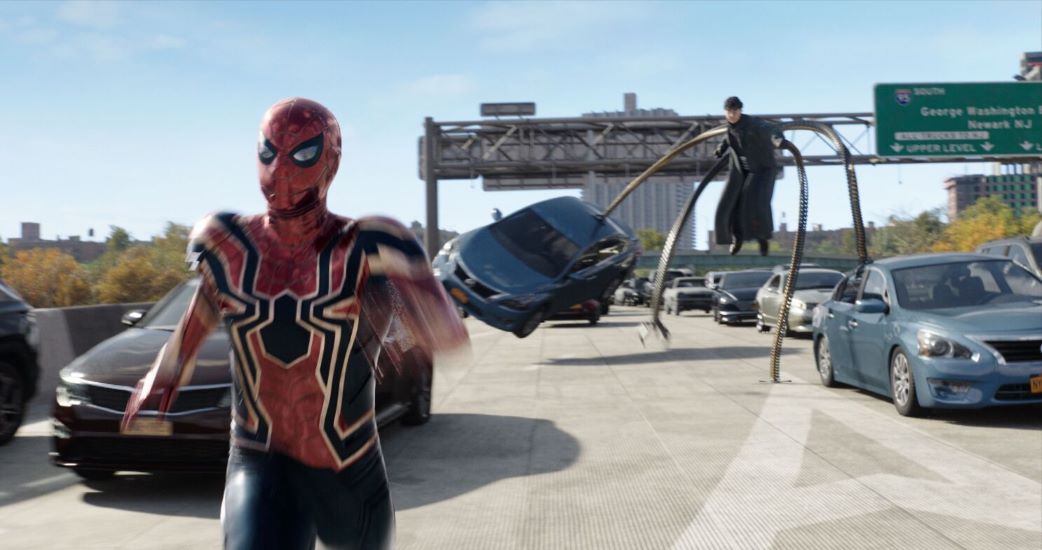
Spider-Man: No Way Home (2021)

Spider-Man: No Way Home (2021)

Tom Holland’s Spider-Man encounters friends and enemies from another franchise or two

Director: Jon Watts

Cast: Tom Holland (Peter Parker/Spider-Man), Zendaya (MJ), Benedict Cumberbatch (Dr Stephen Strange), Jacob Batalon (Ned Leeds), Marisa Tomei (May Parker), Jon Favreau (“Happy” Hogan), Jamie Foxx (Max Dillon/Electro), Willem Dafoe (Norman Osborn/Green Goblin), Alfred Molina (Otto Octavius/Doctor Octopus), Benedict Wong (Wong), Tony Revolori (“Flash” Thompson), Andrew Garfield (Peter Parker/Spider-Man), Tobey Maguire (Peter Parker/Spider-Man), Rhys Ifans (Dr Curt Connors/Lizard), Thomas Haden Church (Flint Marko/Sandman), JK Simmons (J Jonah Jameson)

It’s been out long enough now – and Marvel are even advertising the Guest Stars – so I guess we can worry slightly less about spoiling this massive crossover event. Spider-Man: No Way Home became one of the biggest hits of all time. It’s not hard to see why, in our nostalgia-loving times. But its not just about nostalgia – lovely as it is to see all those old characters once again. It’s also a hugely entertaining, rather sweet film, crammed with slick lines and jokes, while also, like the best of Marvel’s films, having a heart. We’ve got a hero here so humanitarian he goes to huge risks to try and save the villains. That’s refreshingly human.

Picking up after the conclusion of Spider-Man: Far From Home, Peter Parker’s (Tom Holland) secret-identity is known. Parker finds himself at the centre of a massive, world-wide scandal, which ends the college chances of him and his friends MJ (Zendaya) and Ned (Jacob Batalon). Peter asks Dr Strange (Benedict Cumberbatch) for help: namely can the world forget who he is? When the spell goes wrong, people who know Parker’s identity from other realities start appearing. And these guys aren’t happy, with villains like Dr Otto Octavius (Alfred Molina), Electro (Jamie Foxx) and psychopath Green Goblin (Willem Dafoe) arriving. But, when Peter discovers sending them back will condemn them to die in the battle against their Spider-man, he decides to do everything he can to try and save them.

No Way Home’s success partly lies on the nostalgia factor, especially for those of us who loved the early Maguire films. And you can sign me up to that: I can’t believe it’s been 20 years since the first one came out! No Way Home throws in characters from all five pre-Holland films and zeros in on the best of the bunch. The films has a lot of fun shuffling and realigning these characters in interesting new combinations, often allowing them to moan about things like origin stories (there is a very funny exchange between Electro and Sandman on the danger of falling into experiments) or just to get on each other’s nerves (Molina’s Doc Ock is spectacularly grumpy).

You pretty much have to have a heart of stone not to enjoy seeing most of these characters again – particularly as they are played with such lip-smacking aplomb. Above all, Dafoe relishes the chance to cement his place as one of the great villains, switching perfectly between gentle and psychotic as the schizophrenic Norman Osborn/Green Goblin (and becoming the nemesis of no-less than two Spider-men). Molina is equally good: pomposity and rage turning into avuncular decency. These two landmark villains from the two best films take most of the limelight, with a smaller share for Jamie Foxx (far more comfortable here than he was in Amazing Spider-Man 2). But every villain is given moments of tragic depth and seeing them react to news of their deaths is strangely moving.

It sets the table rather nicely for a film about redemption. Peter believes he can save these villains from death if he can cure them and restore their humanity. While the pragmatic Strange sees this as pointless, Peter can’t turn his back on a chance to save people. On top of this, No Way Home also serves as a meta-redemption arc for the two previous franchises: Maguire gets a third film worthy of the first two and Garfield is given the sort of rich material he was denied in his failed series.

Which brings us nicely to the biggest returns. Denied by both actors for the best part of a year, this film throws not one, not two but three Spider-men at us, with Maguire and Garfield reprising their incarnations. All three delight in sparking off each other, riffing on everything from web-slingers to making normal life work (“Peter time”) alongside Spider-manning. Maguire settles nicely into the Big-Brother role, giving a worldly experience to the others without losing his gentle idealism. Garfield is sensational – lighter, funnier and warmer than he was in his own films, with a hidden grief that plays out with genuine impact.

Who couldn’t get excited about seeing these three together – or to see the film make these scenes work as well as it does? It shuffles and reassembles things we are familiar with, but presents them in new and intriguing combinations and above all feels true to the characterisations established in previous films. Maguire, Molina and Dafoe in particular feel like they’ve not been away since their own films, while Garfield and Foxx deepen and improve their characters. But it became a mega-hit because it has a truly strong story behind it.

A story staffed by strong, relatable characters. There is a genuine sense of alarm around how Peter and his friends in the film’s opening act are hounded and persecuted by a population scared of them. Even here redemption is key, with Peter going to dangerous lengths to try and get his friends a second chance at getting into MIT. These three characters have a sweet, warm friendship and the chemistry, in particular between Holland (who is sensational, endearing, funny but bringing the role great emotional depth) and Zendaya is stronger than it’s ever been.

And that’s before we hit the film’s genuinely endearing message. Holland’s still-optimistic hero (another excellent contrast with his more damaged alter-egos) is motivated by saving people. And that includes the villains. Maybe it’s the years of Covid, but there is something hugely lovable about a hero who wants to give people a second chance. It’s a living demonstration of “with great power comes great responsibility” (words this film introduces into the Marvel universe with powerful effect, in a mid-film climax). In fact the film is, in some ways, the origin-story Holland’s Spider-Man never had: it gives him a foundational tragedy, leaves him in an isolated position, strips him of his Iron Man style tech and leaves him in a set-up (alone in a cheap apartment, struggling to make ends meet and superheroing on the side) familiar from the comics.

Watts directs the film with real confidence and zest, especially outside the action set-pieces: there is frequent use of ingenious-but-not-flashy single takes and the film’s patient momentum for much of its first half, focusing on character and emotion, really pay off in the second half of fan-service and fights. The camera effects used for Peter’s web-slinging and his spider-sense have a delightful quirky invention. What he really does well though is zero in on the emotion and when events get tragic, he isn’t afraid to commit to that. It gives the film an emotional force that really connected with people.

That heart is what sustains it. It’s a joyful nostalgia trip – that redeems elements of the previous films – but this is a film that really cares about its characters – all of them – and wants you to as well. That gives difficult, emotional struggles to all its Spider-Men, that searches of the humanity in its villains, even the worst of them, making us sympathise with them even as they do dreadful things. Combined with the action and adventure – and the electric pace of the best of Marvel – No Way Home rightly stands as one of the best entries so far.

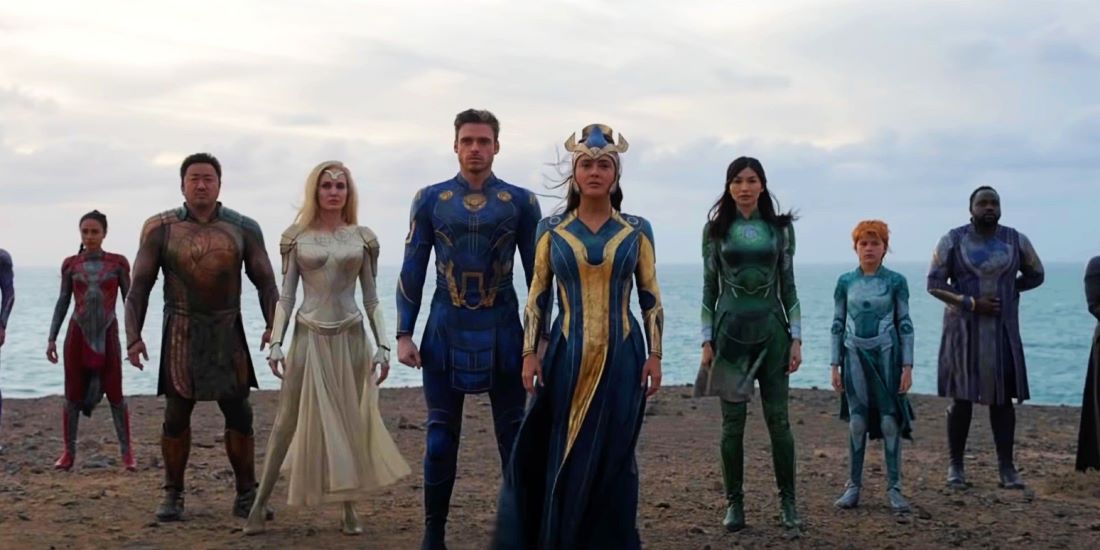
Eternals (2021)

Eternals (2021)

A cast of diverse actors are totally crushed in this pompous, dull Marvel film

Director: Chloé Zhao

Cast: Gemma Chan (Sersi), Richard Madden (Ikaris), Kumail Nanjiani (Kingo), Lia McHugh (Sprite), Brian Tyree Henry (Phastos), Lauren Ridloff (Makkari), Barry Keoghan (Druig), Don Lee (Gilgamesh), Harish Patel (Karun), Kit Harington (Dane Whitman), Salma Hayek (Ajak), Angelina Jolie (Thena)

It must have seemed like a good idea at the time… Marvel had already turned one little known gang of superheroes into a huge hit with The Guardians of the Galaxy. World defining stakes had been the core of most of The Avengers films. An ensemble cast of diverse actors were pulled together with an acclaimed (and now Oscar winning!) director at the helm. They only forgot one thing: to make the final film interesting, engaging or feel in any way original.

Our heroes are a group of very serious God-like Aliens called Eternals, who have been sent to Earth thousands of years ago by even more God-like Celestrial Aliens to protect humanity from savage monsters called Deviants. By 1521, the Deviants are defeated and our heroes are left unsure of what to do. Ordered to never interfere in the events of humanity, they go their separate ways and settle down into life on Earth. But in the present day the Deviants return – and the Eternals start to uncover dark facts about their mission.

All of this takes place over a runtime which feels pretty bloody eternal itself. Essentially the film opens with an info-dump, then spends a couple of hours getting the gang back together (interspersed with occasional additional info-dumps) before the inevitable final-act smackdown to save the world. The stakes have arguably never been higher: but with the film’s indolent pace and thinly sketched characters it sure-as-hell doesn’t feel like it. There is a lot of uninvolving world-building and its ends up feeling every bloody minute of its epic runtime.

With its group of characters, essentially a loving family that has fallen out, this should really be an intimate, character-driven film. But it never balances the huge cast, the epic action and building relatable characters swiftly. Instead the Eternals rarely seem like anything more than heavy-handed sketches defined by basic character traits: a caring empath, a warrior princess, a slightly austere would-be-leader, a mentor destined to die, an eternal child frustrated about never growing up, a natural showman, a cold mind-controller, a deaf athlete and a gay guilt-ridden inventor. The cast (as very proudly trumpeted in its marketing material) is on paper the most diverse ever in Marvel. But it’s like simply making it representative was enough and they didn’t need to bother creating rich, engaging and multi-faceted characters.

All of them are squashed into a film that really feels like it could have been made by anyone. For all Zhao’s occasional indie visual beauty, this is totally free of authorial voice, with completely routine action set-pieces. There is the odd joke, but Zhao’s attempt to put her own mediative personality on the film only really ends up making the bits between the fights dry and boring. Put quite simply, Marvel seems to have rather crushed any life out of her. We get endless solemn moments, as characters watch with horror the results of the development in mankind they have encouraged (from the genocide of the Incas to the bomb at Hiroshima). These nearly always feel on-the-nose and obvious. It all stems from Zhao failing to make us care about these characters.

So, when they find out they have been betrayed by their masters – that their purpose is to fatten the Earth for feasting, not raise it in good health – its rather hard to feel the impact of the betrayal. The film isn’t even smart, or daring, enough to acknowledge that the same manipulative Gods who have used the Eternals have done the same thing to the Deviants. The film continues to treat these as wicked killers, when in fact they are as much victims as everyone else. Would it have killed Eternals to acknowledge this for a moment, to explore the implications of this more?

Especially since it’s so bloody long. It takes almost two hours for the film to bring the gang back together. Each reunion with a new Eternal is basically played the same – a brief bit of banter and then a horrified reaction as they discover the truth. Which means we basically see versions of the same scene play out six times, with diminishing levels of interest. Can’t these guys conference call?

There is no momentum to this ever. Where is the pace? Where is the urgency? The Eternals have been told they’ve only a few days to save the Earth, but they seem to spend most of it ambling around chatting and catching-up. Even when the end-of-the-world starts, most of them still sit around starring at the middle distance sadly and bemoaning their lot. This – and soft spoken intensity and lackadaisical wandering – are constantly used by the film as a short hand for seriousness, a self-importance the film wears very, very heavily.

All of the actors get crushed under the weight of the film. Nanjiani stands out pretty much as the only one having anything approaching fun while only Lee gets to show some sort of warm, uncomplicated human connection. Keoghan, Ridloff and Henry do decent work, but the rest of the cast seem hampered by how very, very, very serious they need to be all the time. One of them, of course, is a wrong ‘un (you can make a pretty decent guess early on which in it will be), but they turn out to be the dullest most stick-up-the-butt character of the lot. Despite the huge amount of time we spend with them, lead characters like Chan’s Sersei and Madden’s Ikaris remain enigmas we can’t be bothered to find out more about.

Eternals is pretty much a failure. It’s long. It builds an expansive universe with a series of clumsy lectures and fails to make any of these interesting. It’s got long battle scenes which feel like several other films. It’s got no personality or vibe to it. It sets up the odd interesting idea then takes it nowhere. It makes the end of the world a massive yawn, while telling you it’s a hugely important and daring film (it’s neither of those things). You end up feeling this might be the most forgotten Marvel film since The Incredible Hulk.

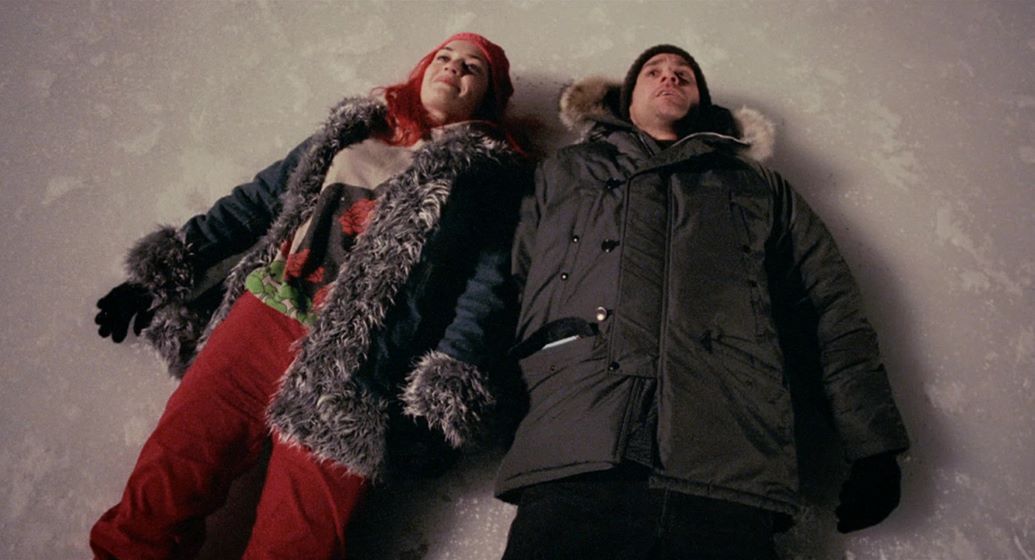
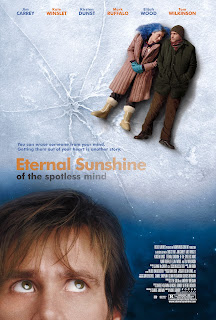
Eternal Sunshine of the Spotless Mind (2004)

Eternal Sunshine of the Spotless Mind (2004)

An impulsive decision leads to a wild tour through mind and memory in this mind-bending, desperately romantic classic

Director: Michel Gondry

Cast: Jim Carrey (Joel Barish), Kate Winslet (Clementine Kruczynski), Kirsten Dunst (Mary Svevo), Mark Ruffalo (Stan Fink), Elijah Wood (Patrick Wertz), Tom Wilkinson (Dr Howard Mierzwiak), Jane Adams (Carrie Eakin), David Cross (Rob Eakin), Dierdre O’Connell (Hollis Mierzwiak)

What makes us who we are? If it’s anything, it might just be the sum total of our experiences. The events of our lives, and the emotions they cause in us, shape and define us. If we cut some of them away, what would we be? Is losing painful memories worth it, if we also cut away memories we cling to as treasured possessions? What makes us love someone: instinct or the sum total of our memories with them? Ideas around this and how love works are at the centre of Michel Gondry and Charlie Kaufman’s extraordinarily inventive, imaginative but also romantic and heartfelt Eternal Sunshine of the Spotless Mind, a truly original film crammed with rewarding moments.

Joel Barish (Jim Carrey) wants to make-up with his electric but troubled girlfriend Clementine Kruczynski (Kate Winslet). Imagine his pain when he goes to see her and she seems not to recognise him – and how much worse that might be when he discovers Clementine has erased him from her memory. An experimental surgery, Lacuna, run by Dr Howard Mierzwiak (Tom Wilkinson), offers its clients an unmatchable service: they will erase a person from your memory. Struggling to get over the loss of a partner, wife, friend, child or even dog? No problem, they’ll be gone from your mind and you never need worry about their memory causing you pain again.

Hurt and angry, Joel decides to undergo the same surgery to forget Clementine. While the procedure takes place over night – supervised by techs Stan (Mark Ruffalo) and Patrick (Elijah Wood) and Stan’s girlfriend (and Dr Mierzwiak hero-worshipper) Mary (Kirsten Dunst) – Joel comes to realise in his sub-conscious that he doesn’t want his memory stripped of Clementine. The cost of losing so many good memories isn’t worth it. In his sub conscious he tries to protect his memories – while in the real world the team battle to complete their contract and erase them.

Not many films like that are there? Gondry’s film could have been a slave to its concept. Instead though, it manages to juggle its deeper meanings with a truly heartfelt, winning and very sweet human story about two people who, for all their faults, become people you completely invest in. Kaufman’s script, as you would expect, triumphs as a complex and inventive magic tour but it’s also a wonderfully placed romance and heartfelt relationship story. Effectively the film manages to have something for everyone to invest in, from sci-fi nerds to lovers of romcoms to philosophy students.

It’s also a triumph of style. Set largely in Joel’s mind, the film reflects the fractured nature of the surgery as his memories are assaulted, deconstructed and destroyed. Lights fade, buildings disassemble and disappear, faces melt away from bodies and memories start to crash into each other. In his mind Joel walks through a door in a library to find himself on a beach, or rounds a corner to find himself back in his childhood memories. All of this is filmed with a series of stunning in-camera effects that make characters disappear, duplicate or seem to be in several places at once, all shot in a series of one-take effects that sees buildings disappear in front of us or fascinating memory loops. Visually the film is a feast, a tribute to Gondry’s playful imagination.

But it sticks with people because of the heart at the centre of it. Joel and Clementine become people we care about. We root for Joel to defy the odds and preserve some of his memory. Because, the film makes clear, being consciously aware of his memories being deleted is basically like going through the pain of losing her a second time – only this time knowing you won’t even be left with the parts you want to hold onto. In fact – re-enforced by the distress we see in Clementine when we see her undergoing the panic of being subconsciously aware of memory loss in the real world – Joel’s horror of what he has asked for is likely what all the other patients of Lacuna’s ‘brain damage for your own good’ surgery have gone through.

Superbly played by Jim Carrey and Kate Winslet in cast-well-against-type performances, Joel and Clementine might at times be selfish, frustrating, even irritating people – but it’s clear their love for each other is real. Jim Carrey, dialling down his gonzo mania to an unprecedented degree, is perfect as the shy and gentle Joel, bewitched by this explosive presence in his life. Winslet is electric – cranky, brittle, damaged but also caring and playful. Kaufman’s film shows they hurt and snap at each other, but also that they bring each other happiness they can’t get anywhere else.

So, it comes back to that question: do we accept that part of the price of loving and living is pain? That the people who we love the most, are the ones that may also hurt us the most. The film is also clear that love can’t be forced or replicated. In the ‘real world’ Clementine is being wooed by Elijah Wood’s creepily needy techie, using his records of her romantic memories of Joel to replicate their special moments. The falseness of this isn’t a remote match for the true emotion of the real event: and it’s a testament to the film’s commitment that you can’t forge or force love, and that eventually it might just find a way.

Because, even without our memories, will we still be drawn towards the same people? Can love in fact survive, even if you don’t know who the person who love is anymore? It’s another fascinating thread in this film. Romantic couples throughout find themselves drawn to each other continually, a subconscious emotion surviving the purging of actual memories. It adds even more to the horrific trauma of seeing what’s happening to Joel here. His obvious distress as he realises the implications of what he rashly asked for – and there is plenty of suggestion Clementine feels the same – gets worse and worse as he realises he has signed away his own rights to decide who he loves.

Those ethical questions – is it even possible to make an informed decision here about lobotomizing your memory – mix with those philosophical questions of what makes us what we are. Will Joel and Clementine be the same people or not after this operation? How will they adjust to losing such a hugely important part of their histories? Especially as they won’t even know that they have. Kaufman’s script explores this all carefully, but never once losing track of the emotional story driving it.

So Eternal Sunshine becomes a touching love story, about two people going to huge ends against impossible odds to stay together. That, I think, is what lies behind its appeal. What makes it one of the most lasting films of the 00s is the invention and flair the story is told with – Gondry’s direction and its non-linear structure all only add to the fabulous script from Kaufman and Gondry – and the way it very lightly tackles a whole host of fascinating ideas while never losing track of its nature as an entertainment. It’s a brilliant film.