Category: Sports film

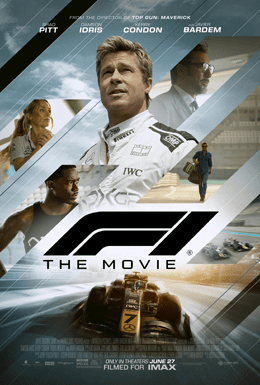
F1 (2025)

F1 (2025)

Brilliantly shot racing is the centre piece of this straight-forward, massive advert for the sport

Director: Joseph Kosinski

Cast: Brad Pitt (Sonny Hayes), Damson Idris (Joshua Pearce), Kerry Condon (Kate McKenna), Javier Bardem (Rubén Cervantes), Tobias Menzies (Peter Banning), Kim Bodnia (Kaspar Smolinski), Sarah Niles (Bernadette Pearce), Will Merrick (Hugh Nickleby), Joseph Balderrama (Rico Fazio), Callie Cooke (Jodie), Shea Whigham (Chip Hart)

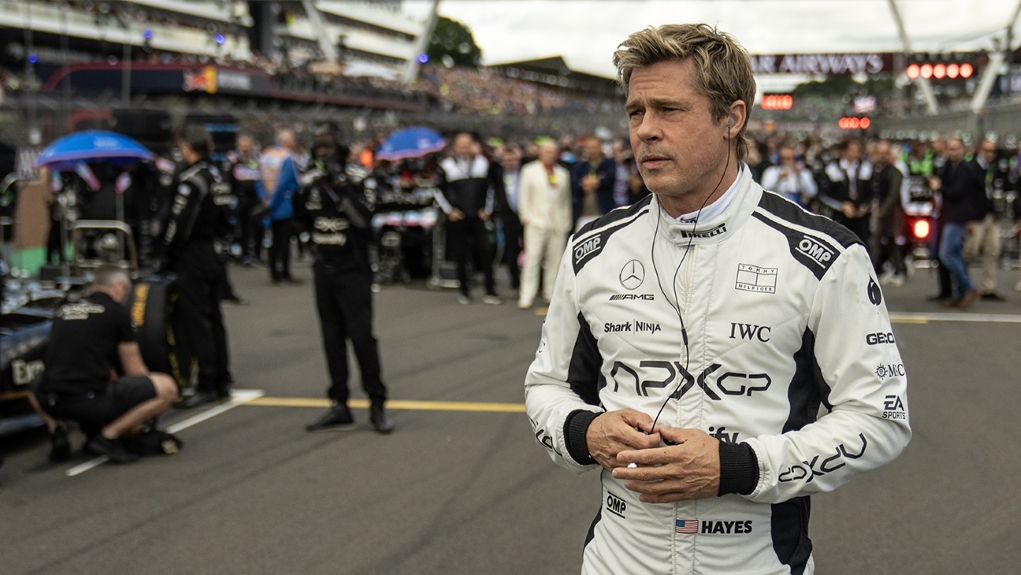
No one exactly says it, but “I feel the need for speed!” hangs over the whole of F1. Set in a fictional F1 team – although every other team, driver and team manager we see is real, with F1 superstar Lewis Hamilton serving as both producer and ‘final boss’ for the film’s conclusion – it’s by-the-numbers plot is the glue holding together a host of excitingly cut scenes of cars zooming round straights and bends.

It’s half-way through the season and struggling APXGP don’t have a point, and if they don’t win one of the remaining nine races the corporate suits will sell the team. Owner Rubén (Javier Bardem) tries a Hail Mary: signing up ex-F1 prodigy turned racing gun-for-hire Sonny Hayes (Brad Pitt) to pull it out of the bag. But can Sonny’s old-school ways mesh with his hi-tech team, led by technical director Kate (Kerry Condon) and ambitious, social-media friendly team-mate Joshua Pearce (Damon Idris)?

F1’s alternative title is F1: The Movie and it’s basically a massive advert for the sport. (In fact, not just F1 since it drips with product placement in almost every frame.) With the glamourous face of Brad Pitt front-and-centre, this is all about dragging more eyeballs onto the sport, presented here as an impossibly balls-to-the-wall, high-octane, Fast and Furious style, non-stop adrenaline rush with every race awash with excitement, unpredictability and thrills. (No first-to-last lap processions here!) Of the nine Grand Prixes we see, not a one goes by without a pulsating crash, gloriously skilled over-takes or final lap miracles. This F1 putting its best suit on and asking you out on a date.

After his success with Top Gun: Maverick, Kosinski was a logical choice to bring the same excitement to cars as he did to planes. The camera gets down and low with the drivers, either sitting with the car as it zooms on the track or zeroing in on the drivers’ faces as the scenery whips by. It’s tightly edited, often cut perfectly to the beat of various classic rock songs, the film sounding like a Top Gear Greatest Hits compilation CD. This is some of the best edited and assembled footage of racing you’ll see (not surprising since they had F1’s full co-operation) and is the clear highlight.

F1 pitches for the widest possible audience by making sure even the biggest rube watching can follow the action with almost every second of race footage accompanied by commentary explaining exactly what’s happening and why. Sky commentators Martin Brundle and David Croft probably have more dialogue than most of the actors, feeding us Spark Notes F1 lore, probably irritating the petrol-heads but a godsend to newbies. Interestingly, they don’t talk about how much the film slightly mis-represents the rules. For starters, any driver who carried out as many ‘accidental’ minor collisions as Sonny does in an early race (to provoke the safety car’s emergence and make it easier for his team to score a point) would probably find himself on a one-way ticket to a ban. Never mind the APXGP car being crap at qualifying but unbelievably good in races. I guess, due to the drivers who the film is selling as gods of the gearstick – which is also why a F1 rules official (played by Mike Leigh regular Martin Savage) is portrayed as humourless bureaucrat for enforcing the sports own labyrinthine red tape.

Anyone expecting an F1 season to play out like F1 is in for a disappointment. But then, this is about dragging you in to see if you get sucked in by the moments when the sport does live up to this. Everything else is completely subservient to selling the experience, hence the paint-by-numbers script. There is scarcely a single narrative beat in the film you can’t predict from the set-up, and every character is only lifted from being a lifeless caricature through the charisma of the actors. It’s quite old school really: part of suppressing the truth of F1 (the engineering is key) in favour of the romantic (the drivers are the magic sauce that brings the win).

F1 has a fawning, romantic regard for the sort of old-school, manly no-nonsense of Brad Pitt, the film largely being about establishing everyone would perform better if they took more than a few leaves out of his book. For starters, Damson Idris’ JP would really become a winner if he focused on the driving not social media and started training like Pitt does (running the track, catching tennis balls and flicking playing cards) rather than putting trust in a high-tech gym. Pitt’s Sonny is never wrong in the film with mistakes only happen when his advice is ignored. He’s shown to have the dedication and in-bred knowledge to zero on the key data about the cars (F1 heavily endorses science in the cars, even as it subtly disparages science in the gym) to hone its performance. His samurai-life view, of moving from race to race (from Daytona to F1 and on) only dreaming of speed and the pure joy of driving is relentless praised.

Saying that, F1 does rather charmingly fly the flag of the importance of teamwork (just so we really get it, Pitt pointedly states several times it’s a team sport, where a second saved by a pit stop team is as vital as a second gained by the driver). F1 goes into detail of how important pit stop teams, racing strategy and technical design of the car are to success. Again, it feels like a pointed rebuttal of an argument non-fans of the sport might make, that it’s just men driving fast in a circle for about two hours.

Fundamentally though, F1 offers very old-fashioned entertainment, with very expected cliches. Kerry Condon’s technical director may speak briefly about the hurdles she’s had to climb over to become the sport’s sole female in her role – but her primary role is as really as coach and love interest to Pitt. Anyone who needs more than five seconds to work out that Tobias Menzies’ smirking corporate suit probably isn’t the ally he claims to be needs to see more movies. Sonny and JP’s relationship follows familiar rail tracks of rivals-turned-friends and the film even has the motor sport equivalent act four “you’re off the case” moment beloved of movies. But, if I’m honest, Pitt doesn’t have the charm and vulnerability that Cruise does (Sonny is so cool and collected, he’s never as relatable or loveable as he needs to be), and the film lacks a strong emotional centre to invest in. It’s entertaining enough of course, but it never finds a real, durable, re-watchability for anything other than the fast-moving cars at its heart.

The Smashing Machine (2025)

The Smashing Machine (2025)

Johnson goes for Oscar in a mediocre film that arguably shows his limits as an actor not his depth

Director: Ben Safdie

Cast: Dwayne Johnson (Mark Kerr), Emily Blunt (Dawn Staples), Ryan Bader (Mark Coleman), Bas Rutten (Himself), Oleksandr Usyk (Igor Vovchanchyn), Lyndsey Gavin (Elizabeth Coleman), Satoshi Ishii (Enson Inoue), James Moontasti (Akira Shoji)

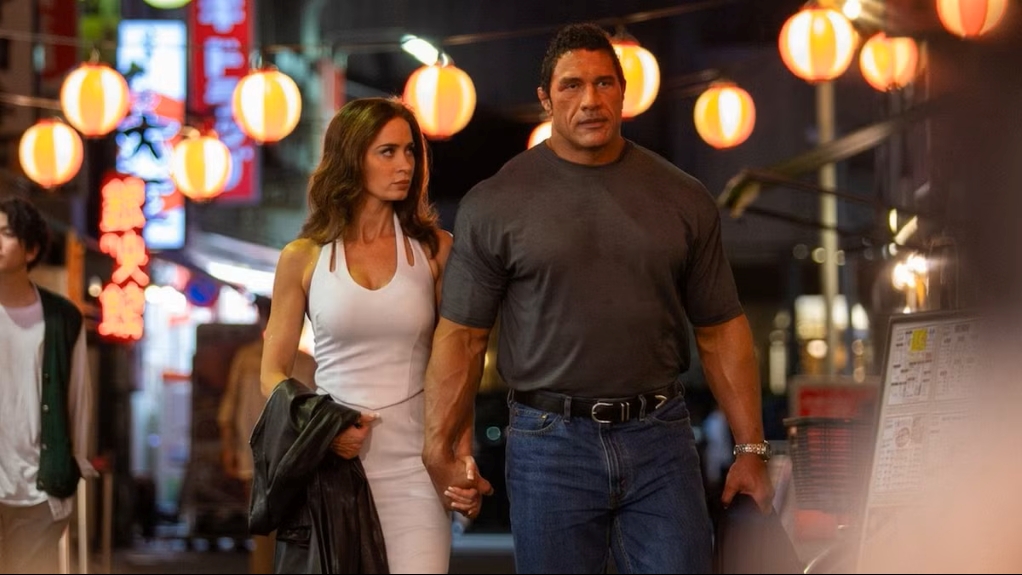
Mixed Martial Arts is big business today. The Smashing Machine makes a point of stating its stars are internationally known, earning millions of dollars. Making them not too dissimilar from The Smashing Machine’s star (and guiding light) Dwayne “The Rock” Johnson, who achieved both these in MMA’s ‘scripted’ sibling Professional Wrestling. It’s a knowledge the film is banking on, as Johnson plays Mark Kerr a leading MMA fighter from that period in the late 90s when men were willing to have several layers of shit kicked-and-punched out of them for a few thousand dollars and a dream.

Kerr is one of the big draws of MMA, an affable six-foot mountain of muscle who (when not brutally beating others in the ring) is a hulk of likeability. But he’s got problems – for starters a growing reliance on opioid painkillers and a relationship that’s two thirds self-destructive to one-third mutually dependent with girlfriend Dawn (Emily Blunt). The Smashing Machine covers Kerr’s getting clean, the break-up and return of his volatile relationship and his shot at 2000 MMA title in Japan in 2000 that could land him $200k.

The Smashing Machine covers all this in a deliberately distanced, low-key style. It nominally follows sports film structure (triumph, failure, re-build, some level of success), trudging along the Rocky template. But Safdie avoids exploiting the genre’s strengths (the highs and joys and it’s emotional release) in a way that is both admirable and makes The Smashing Machine a less engaging or interesting film than you keep expecting it to be. It’s almost a point-of-pride that the film avoids the obvious, but instead languidly leaves things unsaid, or skims lightly over key plot developments, as it spools out accompanied by an incessant jazz soundtrack. But it’s not always a strength.

What it fails to do is find something sufficiently interesting or compelling to take their place. It has all the surface appearance of raw, true-life drama: the jerky camera-work, jazzy score, muted colours, roughed-up actors – but is constantly too distanced and cautious to be truly raw. It (perhaps admirably) doesn’t want to be seen to exploit Kerr, but by playing down his struggles (or rather, boiling them down into neat little scenes ripe for “For your consideration” Oscar clips), it also makes them frequently feel like not that much of a deal. On top of this, the underlying desperation that could have been there in a film where people submit themselves (effectively) to ruleless cage fights like wage-slave gladiators never gets an airing.

It doesn’t even really explore the dark nature of the ‘romance’ at its heart, a relationship which seems categorically a ‘bad thing’ for both people (a coda reveals they married shortly after reuniting after the ballistic, emotion-packed row that is their final moments here – and separated within six years). This is a relationship where the two are never on an equinox. When Mark is in the depth of addiction, Dawn is both afraid of his drugged-out distance and enjoys his small-boy-like need for her affection. When he’s clean, Mark sermonises sanctimoniously while Dawn doubles down on drinking and pill-popping in front of him (“that’s not nice” Mark chides her, sounding like a disappointed child).

But, despite the disapproval hinted out from all the other characters in the film, The Smashing Machine shies away from really addressing this dangerous relationship, making it feel more like a formulaic awkward-love-story, rather than being braver with a harsh truth. In fact, that passionate heated romance, ends up feeling like somewhere between a rather forced series of contrived, manipulative moments (that have no real pay-off) and a firey acting exercise between two performers who trust each other.

Lack of bravery soaks through the whole film, a muted awkward affair where you feel different hands pulling in different directions (an on-the-nose commentator explains all the MMA action to us, as if a producer watching a late-cut was worried it would otherwise make no sense). It’s part a quiet, off-the-wall, yanging-when-it-could-ying serious character study (the Safdie side perhaps), part an Oscar bait slice of true-life heroism (the Johnson side).

Ah yes, the Oscar bait. Much play was made of how far Johnson was willing to move out of his comfort zone and cast aside the action that made him a star. However, for me, what The Smashing Machine reveals is the limits Johnson is willing to go too as an actor. The Rock doesn’t do vulnerability even when playing a beaten-up drug-addict in a borderline-mutually-abusive relationship (all the head-in-his-hands scenes weeping can’t change this, and Johnson delivers these moments like acting assignments rather than with true emotion). Johnson won’t sacrifice his strength of character to play a truly weak man: Johnson might punch a door apart, he never feels comfortable embodying a man who was at time selfish, self-destructive or foolish. Johnson prefers a Kerr who is always, in some degree, strong (even when whining at a loss, he does it with real commitment).

His partnership with Emily Blunt doesn’t help him: Blunt is far more skilled at creating a nuanced character, someone who weeps with pain at Kerr’s drug use and then later performatively rages at him for being boring when he’s clean. She’s not afraid to explore the darker, less flattering areas in the way Johnson doesn’t want to. Johnson makes the mistake of many in thinking real acting is starring soulfully and having a cry. What he doesn’t do is really commit to transforming his soul and persona: for all the wig, this always feel like a performance as in-control and carefully studied as Johnson himself is. The Smashing Machine shows that even a piece of against-type Oscar-bait is still fundamentally part of the same Johnson-branding exercise, another brick in the persona wall of a determined, charming high-achiever.

You can’t say as much for the film. An average film, lacking spark, energy or interest that can’t make up its mind about whether it wants to be low-key tragedy or a heroic tale of redemption. It says a lot that its most powerful and affecting moments are its closing ones, as we watch the real Kerr shopping in 2025, utterly anonymous, chatting pleasantly with staff who don’t know who he is before he breaks the fourth wall to wave us goodbye. In these minutes, the film clicks with a force nothing else in it manages. Shame you need to wait two hours for it.

September 5 (2024)

September 5 (2024)

Well-made reconstruction of a seminal moment, that avoids all the awkward questions it raises

Director: Tim Fehlbaum

Cast: Peter Sarsgaard (Roone Arledge), John Magaro (Geoffrey Mason), Ben Chaplin (Marvin Bader), Leonie Benesch (Marianne Gebhardt), Zinedine Soualem (Jacques Lesgards), Georgina Rich (Gladys Deist), Corey Johnson (Hank Hanson), Marcus Rutherford (Carter Jeffrey), Daniel Adeosun (Gary Slaughter), Benjamin Walker (Peter Jennings)

There is only one thing we really remember about the 1972 Munich Olympics. This celebration of sport, meant to mark Germany’s re-emergence from the shadow of the Holocaust, saw 11 members of the Israeli Olympics team taken hostage and murdered by Black September, a Palestinian terrorist group. The entire kidnapping played out on international TV, the inadequacy of the German police response cripplingly obvious to millions of viewers around the world. September 5 focuses on the ABC Sports team that switched from covering Mark Spitz to one of the first primetime terrorist acts.

Journalists in films tend to either be heroic strivers after truth or scum-bag bin-searchers. September 5 is very much in the first camp, chronicling with documentary precision the professionalism and dedication involved in bringing this story to the world. The story is as terribly involving as the dreadful events it covers on fuzzy long-distance footage. But September 5 struggles when it tries to capture why it’s telling a story that has already been expertly told before (not least in Kevin MacDonald’s superb Oscar-winning documentary One Day in September). What point is September 5 trying to make, either about media or terrorism? It’s not clear to me.

Fehlbaum’s film is as expertly assembled as the swiftly cut-together sports action the team excelled at. The production and sound design faultlessly bring to life the atmosphere of a claustrophobic TV control room. It has a loving eye for the detail of how 70s television was made – you’ve got to admire the practical details of how live coverage was water-marked, clunky cameras were wheeled into position, squabbles were carried out over limited satellite windows and on-the-hoof re-wiring was made to hook up journalists on phones for live broadcast. A parade of strong actors deliver clipped professionalism and anxious strain – Sarsgaard, Magaro, Chaplin and Benesch are all great.

But it fumbles when it addresses the moral issues. Fundamentally, September 5 doesn’t know how to handle the complex ethical balance journalism straddles, between covering events like this and giving the terrorists exactly what they want. After all, as it’s pointed out, there’s a reason Black September targeted the most public event in the world (and why they made demands they surely knew Israel would never accept). They wanted mass coverage: and ABC gave it to them. By September 6, the whole world knew what Palestine was: it’s striking how many of the ABC crew are unfamiliar not only with the sort of fundamentals even a child today knows about the Middle East conflict but how some of them even have to double-check what exactly the word “terrorism” means.

On top of that, the extended media coverage, in some ways, even helped the terrorists. Not least their ability to switch on the TVs in their captured rooms in the Olympic Village and watch live footage of the Munich police’s ham-fisted preparations to storm the building. There is chilling realisation in the control room that the terrorists are also watching their coverage, but the debate about what to do in response to this is light. In fact, much of the conclusion is that the inept German police (who eventually burst into the control room, pointing machine guns wildly, demanding the feed is cut) are really to blame since they forgot to cut the building’s power.

Either way, September 5 doesn’t question the fact that the ABC team encouraged journalist Peter Jennings to remain hidden in the village so he could carry on phoning in live updates, or that they forged an ID for a junior member of the team so could pass as a US athlete and smuggle camera footage in and out of the park. Or that they tune into a police scanner to follow and report on the Munich police’s plans. It also skirts questions of ratings – a clear motivation to keep the cameras rolling – and how this meant ABC had an awkward intention overlap with Black September.

There is no question though that the crew care deeply about the athlete’s fate. Ben Chaplin’s character (an American Jew, who lost family in the Holocaust) goes farthest in constantly reminding the team they are covering the fates of real people here, urging restraint in the coverage. September 5 skirts overt commentary on the Middle East, but raises interesting questions over the characters’ (all of them old enough to remember World War Two) perceptions of Germany and the lingering guilt of that nation (very well captured by Leonie Benesch’s awkward translator).

But when given (false) confirmation that the attempt to free the hostages at the airport has succeeded, it’s the temptation of a scoop that sends the news out on the air. (This moment of mistaken celebration allows September 5 to squeeze in its moments of congratulation for the team’s excellent job before the tragic ending.) Sure, the characters look sickened when they realise their mistake – but does the fact they were given false information really matter more than the fact their motivation was because they wanted to break the story first?

September 5 never really explores these moral questions. It settles for stating them – as Benesch’s character does, describing how she and other reporters hustled at the airport for a scoop, while people literally died a few kms away. It ends with a confusing series of captions, stating this was the first time a terrorist attack was broadcast live and 900 million people watched. It’s hard to escape the feeling that the 900 million figure is being used to celebrate the coverage, rather than reflecting on the fact it taught terrorist groups large scale actions capture attention.

September 5 is on the brink of making a more interesting point, that this was a turning point where getting the story out was more important than the implications of telling the story: that transmitting sensitive information or being too quick to broadcast major headlines was the first stride on a slippery slope that led to the generally awful state of the media today. It’s not a point September 5 is interested in making.

Don’t get me wrong. The Black September attack was an atrocity and ABC’s coverage of its was expert journalism. But you can also argue it shows how journalists can disconnect what they are doing from its real-world impact. But September 5 is silent on how Black September’s success in turning their cause into international news. Or that, thanks it changed the playbooks of terrorist organisations all over the world. None of these interesting, but challenging, ideas get any airtime in this well-made reconstruction.

Challengers (2024)

Challengers (2024)

Dynamic, mature, hilarious and moving relationship drama, an absolute delight

Director: Luca Guadagnino

Cast: Zendaya (Tashi Duncan), Josh O’Connor (Patrick Zweig), Mike Faist (Art Donaldson), Darnell Appling (New Rochelle Final Umpire), AJ Lister (Lily Donaldson), Nada Despotovich (Tashi’s mother), Naheem Garcia (Tashi’s father), Hailey Gates (Helen)

Tennis superstar Art Donaldson (Mike Faist) is on the slide after six majors – he’s lost his click and can’t even struggle past up-and-comers from the lower rungs of the tour. His coach, manager and wife Tashi (Zendaya) has an idea for how to get his groove back: he’ll enter a lowest-rung Challenger tournament, chalk up an easy win and return to confidence. Problem is, Art’s estranged former friend and doubles partner Patrick Zweig (Josh O’Connor) is also in the tournament and the two of them now line up for a grudge match in the final. But there is more going on than meets the eye, as Guadagnino’s film unfolds in a non-linear style to reveal the complex, confused and frequently ambiguous sexual, emotional and sporting tensions that have beset the three over 13 years.

Challengers feels like it might be a ripe piece of teen click-bait fluff – but reveals itself to be a whipper-sharp, funny, involving and cleverly open-ended film stuffed full of excellent dialogue by Justin Kuritzkes that frequently catches you off-guard with its plot developments. Challengers is a thrillingly mature, adult and very truthful exploration of the underlying attractions and tensions between three people, all of whom seem confused about their exact feelings and motivations.

What is clear – as made explicitly clear by an intensely erotic late-night encounter in a hotel room between the three of them thirteen years earlier – is the rich, unspoken attraction they all share. Art and Patrick are strongly attracted to Tashi, she seems equally interested in different aspects of each of them, while Art and Patrick’s homoerotic bond (clued in before this by their affectionate, casual physical intimacy as well as their intense celebrations on winning the Junior US Open) is immediately clear to the savvy Tashi and briefly embraced by the two men.

Sport – particularly mano-a-mano games like tennis – has an undercurrent of sexual energy to it. Adrenalin-filled men pounding away at each other from across the net, bodies glistening with sweat? Teammates grasping each other in victory with an intensity often beyond anything they would show to a romantic partner? Challengers explores how close a dance sport and sex is, the remarkably similar effects both have on our bodies. It’s what Tashi – a former tennis sensation whose career was ended in tragic circumstances – is getting at when she says the best tennis matches aren’t about tennis. They are semi-romantic couplings, the perfect rally being two bodies in perfect harmony.

This all develops thrillingly in the inter-relationships between the three leads, each excellent. Zendaya is superb as a woman forced to live her tennis dreams vicariously through her husband, who values the loyalty of Art while being quietly troubled by his neediness, infuriated by Patrick’s arrogant performative selfishness while being deeply attracted to his don’t-give-a-damn independence. She has a tight knot of tension throughout that is compelling, a constant sense we are watching a woman struggling to find some sort of resolution from a lifetime of competing resentments and desires.

Equally superb – revelatory in fact – is Josh O’Connor, who makes Patrick a cocksure, confident, selfish but immensely charming guy. Patrick scraps a career from natural skill that he never bothered to hone (witness his bizarre crooked-arm serve), embraces his sexual confidence, bounces around with a breezy bro-confidence and does everything he can to hide the lonely, lost boy he really is. This is breathtaking work from O’Connor, from hilariously funny when shamelessly pimping himself on tour for a roof over his head, and tragically vulnerable in bashful confessions with Tashi.

Mike Faist has the least flashy role but is equally wonderful. Art is – if you will – the most closeted of the three, the least confident, most dutiful, who dedicates himself to things and doesn’t stop to think deeply about his true feelings. You suspect the unspoken intense romantic bond between Art and Patrick remains unspoken in their youth because Art himself is uncertain (scared?) about what he feels. Just as he buttons up and represses his own resentments and anger towards Tashi.

Challengers switches and re-aligns these characters beautifully and constantly leaves us guessing. When Tashi (and by extension Art) refuses to see Patrick after her injury, is this because she genuinely blames him for unsettling her before the match or because she just needs something other than random chance to blame? Does she drive Art into becoming a Grand Slam winning machine out of love, a vicarious desire for success or anger (as she shapes into something he isn’t) because she blames him as well? Does Art know or care? Does he realise how much his depression comes from severing connections with his alter-ego Patrick and does Patrick slog it out on the circuit because it’s the only way he can still feel in-any-way close to the only two people he loves (but won’t admit?).

Watching all this unfold, seeing each scene reveal a new piece of information that refocuses what we thought about each character, is compelling – helped a great deal by the vibrant, emotional and intensely sympathetic performances from the three leads. Challengers is also a superbly assembled film, sharply and snappily edited and with an electric, emotionally well-judged score by Trent Reznor and Atticus Ross that skilfully uses refrains to link back to key emotions and sensations. It’s also a film that shoots tennis more electrically than any other. With sweeping crane shots, hand-held camera and every trick in the book, we see matches from the perspective of everything: the players, the ground, even the ball itself. It’s stunningly visually inventive.

It culminates in a truly wonderful, open-ended, emotionally satisfying ending that I actively adored. It’s a film about love, about three people who feud over petty things for years but need each other to be complete, who find there are elements of each other’s personalities that serve to complete themselves. Who are fiercely sexually attracted to each other, but also have a deep, intense emotional bond they need more than they realise. Challengers is an absolutely gorgeous, delightful, superb film – another emotional, mature triumph from Guadagnino, with three brilliant actors working wonders with a sharp script. It’s a film to love and treasure.

Rollerball (1975)

Rollerball (1975)

Violent science-fiction dystopia satire ends up making blunt, uncertain points

Director: Norman Jewison

Cast: James Caan (Jonathan E.), John Houseman (Mr. Bartholomew), Maud Adams (Ella), John Beck (‘Moonpie’), Moses Gunn (Cletus), Ralph Richardson (The Librarian), Pamela Hensley (Mackie), Barbara Trentham (Daphne), Shane Rimmer (Rusty), Richard LeParmentier (Bartholomew’s Aide)

It’s the future, but it might as well be Ancient Rome. The world is ruled by Corporate Caesars, holding supreme power, controlling information and plucking anyone they want for anything, be it for a job or as a partner in bed. The masses are kept pliant and happy by being fed Bread and Circuses. Namely Rollerball, the world’s most popular sport, a hyper-violent mix of American football and ice hockey played in a velodrome, with teams competing to score by thrusting a metal ball into their opponent’s goal, with rules to prevent only the most egregiously violent acts. It’s a game designed by with a simple message: the individual is powerless, the system is all.

Problem is, like any game, some players are better at it than others. And the best player there has ever been Jonathan E (James Caan) is a living legend for Houston, tougher and more passionate about the game than anyone else alive. He’s a living contradiction of the secret principle of the game: an individual can make a difference. Naturally the Corporation want him gone, offering him a generous package to retire. Problem is Jonathan doesn’t want to retire. What else is there to do, but to remove the few rules Rollerball has, and establish how futile individual effort is by killing Jonathan in the game. But Rollerball’s greatest ever player isn’t that easy to kill.

All of which makes Rollerball sound both cleverer and more exciting than it actually is. Because Rollerball is a deeply sombre, rather self-important film that makes obscure, slightly fumbled points about the war between the system and the individual, within a coldly Kubrickian framework that suggests Jewison and co misunderstood what made 2001 a sensation (it wasn’t just clean surfaces and classical music). It’s actually quite a problem that the only time Rollerball even remotely comes to exciting life for the viewer is during the game sequences: and seeing as the film is criticising our love of gladiatorial blood sports, that can hardly be what it’s aiming for.

Rollerball is shockingly po-faced and lacks even a hint of humour at any point (except perhaps a reliably eccentric cameo from Ralph Richardson as an only half-sane custodian of an all-seeing computer). There is little satirical spice that might provide a bit of lighter insight into the ruthless, business-driven world the film is set in, or that might demonstrate how concepts we are familiar with (sports and television) have been tweaked to manipulate and pander to the masses. Combined with that, every character in the film is sullen, serious and (whisper it) dull and hard to relate to.

This is best captured in Jonathan himself, played with a lack of an uneasy stoic quality by James Caan. Caan later commented he found the character lifeless and lacking depth, and you can see this in his performance. Caan never seems sure what angle to take: is Jonathan a defiant individualist or a guy utterly at sea in the system who can’t understand why he is being told to stop playing the game he loves? Rollerball wants to settle for both: it doesn’t really work. Jonathan spends his time outside the ring, moping and staring into the middle-distance. He holds a candle for the wife taken from him by an executive, but this is never channelled into a motivating grief or ever used as way to make the scales fall from his eyes about the nature of the system he’s working in.

In fact, Jonathan remains pretty much oblivious to the brutality and cruelty of the sport he’s playing – which, by the end of the film, regularly clocks up impressive body counts in every match. He’s still perfectly capable of throwing an opponent under the wheels of a motorbike, thrust a goal home and then bellow “I love this game!”. Never once does he, or the film, question this love. Not even an on-pitch assault on his best friend (which leaves him in a vegetative state) or watching his teammates being crushed, incinerated, battered and smashed seems to register with him intellectually or emotionally.

Rollerball needed a character with enough hinterland to grow into that or could denounce on some level (even privately) the violent spectacle he’s wrapped in, capable of a moral journey or making an imaginative leap. We don’t get either. Instead, Jonathan E feels like a care-free jock who wants to carry on doing his thing, because he has a good-old-fashioned dislike of being told what to do. In the end it fudges the whole film: Jonathan E is neither sympathetic or interesting enough to be a vehicle for the sort of satirical or political points the film wants to make.

Not that these ideas are really that interesting anyway, essentially boiling down to a mix of familiar “Big Business Bad” and “the proles will take any loss of freedom lying down, so long as they get some juicy violent action to watch”. None of this hasn’t been explored with more wit and wisdom elsewhere. Never-the-less Rollerball lets its points practically play trumpets to herald their arrival as they stumble towards the screen. There is nothing here Orwell didn’t cover better in a few paragraphs of 1984.

Norman Jewison does a decent job staging this though, in particular the violence of the Rollerball games, with bodies crushed, maimed and thrown-around. There is a fine performance of heartless corporate chill from John Houseman. But, when the film makes its points, I’m not sure what on earth it’s trying to say. Is it a tribute to the strength of one man’s character? Does it matter if Jonathan E acts out of a stubborn lack of knowledge or understanding? As the crowd watches a deadly match in stunned silence, have they finally had enough? As they praise Jonathan E rapturously is Rollerball suggesting we are just naturally inclined to love strong-men dictators? I’ve no idea what is happening here – and I’m not sure that Rollerball does either.

Champion (1949)

Champion (1949)

Kirk Douglas is a boxing heel in this noirish melodrama full of excellent moments

Director: Mark Robson

Cast: Kirk Douglas (Midge Kelly), Marilyn Maxwell (Grace), Arthur Kennedy (Connie Kelly), Paul Stewart (Tommy Haley), Ruth Roman (Emma), Lola Albright (Palmer), Luis van Rooten (Harris), Harry Shannon (Lew), John Day (Dunne), Ralph Sanford (Hammond), Esther Howard (Mrs Kelly)

What does it take to get to the top? Skill, luck, ambition, determination – and sometimes just being a ruthless bastard. Midge Kelly (Kirk Douglas) as all five of those skills in spades, flying from bum to champ in just a few short years, burning every single bridge along the way. Champion tells the ruthless story of how Kelly alienated his devoted lame brother Connie (Arthur Kennedy), dropped the trainer (Paul Stewart) who discovered him in a heartbeat and used and tossed aside a host of women: dutiful wife Emma (Ruth Roman), would-be femme fatale Grace (Marilyn Maxwell), artistic, sensitive Palmer (Lola Albright) wife to his new manager. As he enters the ring to defend his title against old rival Johnny Dunne (John Day), will all these chickens come home to roost?

Champion is deliciously shot by Franz Planer with a real film noir beauty, in particular the vast pools of overhead light that fill spots of the backstage areas of the various venues Midge fights in. Its boxing is skilfully (and Oscar-winningly) edited into bouts of frenetic, enthusiastic energy – although you can tell immediately that no one in this would last more than 90 seconds in a real ring – and it manages to throw just enough twists and turns into its familiar morality tale set-up to keep you on your toes and entertained. In fact Champion is a gloriously entertaining fists-and-villainy film, full of well-structured melodrama and decently drawn moral lessons. It’s the sort of high-level B-movie Studio Hollywood excelled at making.

For a large part it works because Douglas commits himself so whole-heartedly to playing such an absolute heel, the kind of guy who knows he’s a selfish rat but just doesn’t give a damn. Douglas was given a choice of a big budget studio pic or playing the lead in this low-budget affair, chose Champion – and his choice was proof he knew where his strengths lay as an actor. Midge Kelly is the first in a parade of charismatic, ruthless exploiters that Douglas would play from Ace in the Hole to The Bad and the Beautiful. Kelly is all grinning good nature until the second things don’t go his own way: and then you immediately see the surly aggression in him.

Its why boxing is a good fit for him. He doesn’t quit a fight – pride won’t let him. It’s the quality that Tommy sees in him, after Midge is literally pulled in off the street to pad up the under-card at a challenger’s fight night. Clueless as he is about boxing technique, he refuses to stay down and picks a fight with the promoter on the way out when cheated out of his fee. Champion shows how, for resentful people like Kelly, pugilism is a great way of getting your own back when you feel life has screwed you in some way. Perhaps that’s why he goes for his opponents with such vicious, relentless energy and why he takes such a cocky delight in beating the hell out of them. In fact, Champion could really be a satire on the ruthless, put-yourself-first nature of much of Hollywood, with both Connie and Tommy commenting that the fists-and-showbiz world is a cutthroat one.

What Champion makes clear though is that Kelly isn’t corrupted by fame. For all Douglas’ charming smile, there is a cold-eyed sociopathy in him from the start. Kelly performs loyalty, but it’s always a one-way street. He’ll assaults those who call his weak-willed, more cynical, crutch-carrying brother Connie ‘a gimp’, but he has no real sense of loyalty. He doesn’t even pause for a second when seducing Emma (daughter of the diner the brothers end up working at on arriving in LA) for a quick fumble despite knowing Connie’s feelings for her. Later, criticised by Connie, he’ll just as angrily lash out at Connie, mocking his disabilities, the second his brother starts to make decisions of his own.

Kelly’s ruthlessness towards women is also clearly something innate. He’ll whine like a mule when forced (virtually at gunpoint) to marry Emma, who he’ll immediately leave behind with no interest of hearing from again (until she finally develops some feelings for Connie of course, at which case he seduces her as a point of pride). His sexual fascination for the manipulative Grace – a purring Marilyn Maxwell – quickly burns out, again not pausing for a second in chucking her aside, all but flinging dollar bills on a table as he goes. Even more heartlessly, after showing some flashes of genuine courtliness in his romantic interest in Palmer (a very sweet Lola Albright), he happily takes a cheque from her husband (right in front of her) to never see her again. None of this comes from fame: it’s the sort of guy Kelly is.

And, as Douglas’ smart, self-absorbed performance makes clear, it’s because deep down Kelly always thinks he is the victim and the world owes him a living. There is a strong streak of self-pity in Douglas’ performance, bubbling just below the surface combined with a narcissistic need to be loved by strangers even while he’s reviled by everyone who knows him. There is an escape from inadequacy for Midge in fighting: something he keeps coming back to time-and-again in complaints about the unjust treatment the world has given him in the past, used to justify any number of lousy actions.

Champion unfolds as an interesting study of a deeply flawed, increasingly unsympathetic character with a huge drive to destroy other people, either by words or fists. An excellent performance by Douglas is counter-poised by a host of other strong turns, especially from Arthur Kennedy, whose Connie effectively trapped in an abusive relationship and Paul Stewart’s unromantically realistic trainer who knows the score long before anyone else. Handsomely shot and directed with a melodramatic flair by Mark Robson, it can enter the ring with any number of other boxing films.

Nyad (2023)

Nyad (2023)

Swimming biopic relies on strong performances as it delivers expected strokes

Director: Elizabeth Chair Vasarhelyi, Jimmy Chin

Cast: Annette Bening (Diana Nyad), Jodie Foster (Bonnie Stoll), Rhys Ifans (John Bartlett), Karly Rothenberg (Dee Brady), Jeena Yi (Angel Yanagihara), Luke Cosgrove (Luke Tipple), Eric T Miller (Jack Nelson)

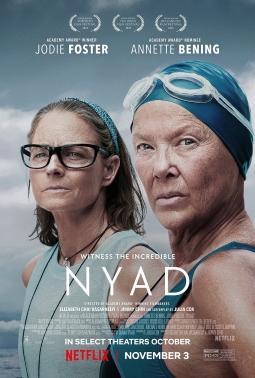
Diana Nyad was a champion endurance swimmer in the 1970s, but one major achievement eluded her: the 110-mile swim from Cuba to the tip of Florida at Key West. Estimated to take about 60 hours, it involves wild currents, difficult weather conditions and wild sea creatures with a support crew who can do nothing to help other than advise, keep her on course and provide food. The swim must be completed unassisted and without rest. A failed attempt in 1978 aged 28 was one of her last swimming feats for almost 30 years. Turning 60, Diana decides to dive back into the water and attempt it once again.

Nyad brings this story to the screen, refashioned into a comfortably feel-good sports biopic that presents Diana’s story within the expected framework of the cliches of the genre. There is almost nothing in Nyad that you haven’t seen before. Lessons are learned, people walk from the swimming campaign only to return for “one more adventure”, we discover there is no I in team and no solitary athlete ever truly works alone. Settle down for seeing the same sort of material you’ve seen in many other films before, and you won’t be disappointed.

The thing that makes Nyad different is the performances at its heart. Annette Bening (Oscar-nominated) trained for a year in preparation for this role, large chunks of which are spent watching Nyad charge forward through choppy open waters. On land, Bening skilfully balances Nyad’s prickly self-obsession with a vulnerability and fear of defeat. A demanding perfectionist who accepts no compromise, Nyad frequently rubs her team up the wrong way, but Bening never makes her unsympathetic. She’s a woman keen to prove something to the world and to herself, not least that age doesn’t define our horizons.

Our warmth to the tunnel-focused Nyad largely comes from the delightful chemistry between Nyad and her coach, ex-girlfriend and best friend Bonnie Stoll, delightfully played by the Oscar-nominated Jodie Foster. This is some of Foster’s finest work in years, an exuberant, playful, incredibly natural performance of a woman who is, in her way, as driven as Nyad, determined to protect her charge. It’s Bonnie who frequently needs to salve the wounds left by Nyad, hold the team together and make the difficult calls to continue or abort Nyad’s attempts. Foster’s performance is a burst of life in the film, providing its real heart.

The two dominate much of the film, although there is a room for a fine performance of curmudgeonly decency from Rhys Ifans as late navigator John Bartlett. But this is film that works best when focused on the two leads, be it Bonnie surprising Nyad with a birthday party, the two unashamedly celebrating watching a competitor’s attempt fail on television, Bonnie tending Nyad’s injuries, or the two arguing with the honesty that platonic life partners have. All of the film’s most memorable moments feature Foster and Bening bouncing off each other on land.

So, it’s a bit of a shame that a large part of the film takes place in the water. One of Nyad’s major failings is that it never really finds a way to make the act of swimming either truly dramatic of visually interesting. It is a tough challenge – after all, marathon solo swimming is (by its very nature) silent, monotonous, and in long stretches not exactly compelling to watch. But Nyad falls back too often into sequences that feel either artificial – look out there are sharks in the water! – or reliant on Life of Pi style visuals (no coincidence surely that film’s Claudio Miranda also shoots this one) to try and bring to life the hallucinations long-distance swimmers can suffer from after over 50 hours of non-stop physical effort. We get Bening swimming through magical light shows and an underwater Taj Mahal, but this feels like an attempt to give us something to look at rather than a flourish that gives insight into theme or character.

It’s a common theme of the film. Nyad often has watery-framed flashbacks to her younger self, pushed to achieve great things at an early age and suffering sexual abuse from her coach as a teenager. But, again, these revelations feel unconnected with the drama we are watching, making the repeated flashbacks to it feel unnecessary. The only time the subject comes up in the main plot line, Nyad brusquely closes the conversation down, insisting she has not been made into a victim and briskly moving on.  The film concurs in wanting to avoid defining Nyad in any way by this abuse. But it does leave you wondering why in that case the film so frequently returns to the issue.

At times it feels like Nyad has struggled to turn the act of someone swimming into drama. Instead, it relies on those standard sporting movie events. The initial success, the struggle, the break-up, the lessons, the heart-warming triumph. Nyad doesn’t find any time to explore the on-going debate around Nyad’s achievement (her poor record-keeping led to Guinness Book of Records refusing to recognise it) but that would get in the way of the triumphant ending. It’s a middlebrow film that relies pretty much exclusively on its actors for spark: fortunately, especially in Foster’s case, they provide it.

Escape to Victory (1981)

Escape to Victory (1981)

The sort of odd movie pitch that could only have been made in the 80’s: it’s a POW film – but with footballers! And Stallone in goal! Cult nonsense, but fun.

Director: John Huston

Cast: Sylvester Stallone (Captain Robert Hatch), Michael Caine (Captain John Colby), Pelé (Cpl Luis Fernandez), Max von Sydow (Major Karl von Steiner), Bobby Moore (Terry Brady), Osvaldo Ardilles (Carlos Rey), Paul von Himst (Michel Fileu), Kazimier Deyna (Paul Wolchek), Hallvar Thoresen (Gunnar Hilsson), Mike Summerbee (Sid Harmor), Russell Osman (Doug Cluire), John Wark (Arthur Hayes), Daniel Massey (Colonel Waldron), Tim Pigott-Smith (Major Rose), Carole Laure (Renee)

It’s possibly the most bizarre idea in movies. An old-school, boy’s-own-adventure about POWs starring a Panini sticker album’s worth of footballers, led by Michael Caine and Sylvester Stallone playing the Germans (actually represented by a team of ringers from the New York Cosmos) in a ‘friendly’ football match in Paris. Oh, and it’s directed by John Huston. Who thought this one up?

Needless to say Escape to Victory is a cult hit. Caine plays professional footballer John Colby, his career interrupted by internment in a POW camp, challenged to an exhibition match by football-mad Major von Steiner (Max von Sydow). When von Steiner’s bosses turns the game into a propaganda vehicle, Colby is under intense pressure to pull out. When he refuses – not wanting to put his players lives at risk, some of whom (the Eastern European ones) have been rescued from labour camps – instead he is asked to accommodate a daring escape plan, led by American Robert Hatch (Sylvester Stallone) who joins as ‘trainer’ and back-up goalie. With the match scheduled, a plan is formed: the team will escape at half time. But will the players abandon the game, or will sporting pride kick in?

Well, what do you think? The whole film is a build up to the game. Are they really going to leave it at 4-1 to the Germans? The pedestrian opening two thirds of the film can pass you by. You certainly feel it passed John Huston by (if you ever want to see a great director do a pay cheque movie, watch this). The film settles into familiar rhythms of both genres (sports and POW movies) mashed together. For the latter; forgers, escape committees, roll-calls, daring escape attempts over and under wire, muttered attempts to board trains with fake papers are all dutifully ticked-off. Nothing unusual: the interest is all in the sports film.

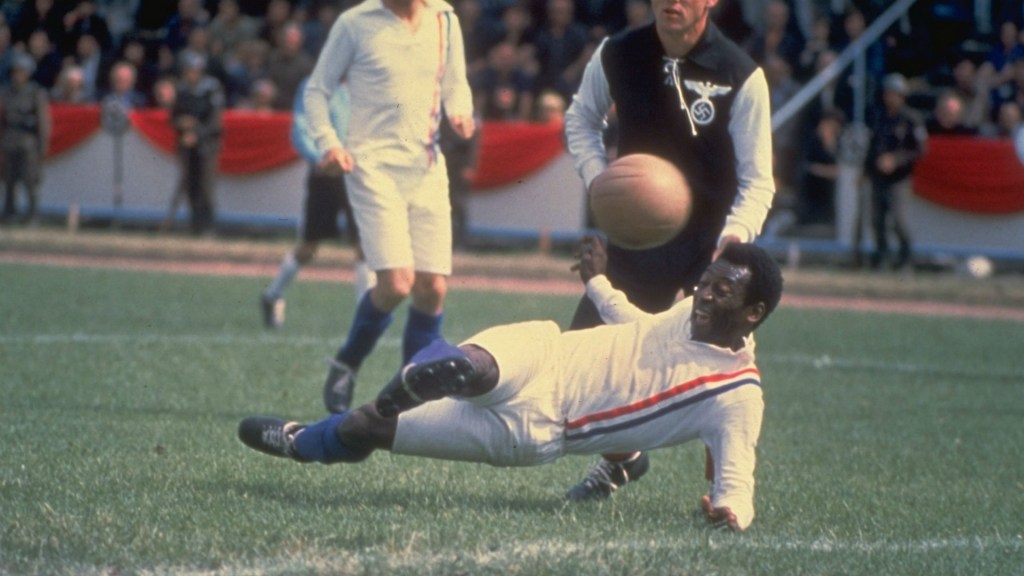
And if you are going to make a sports film – crammed with training montages – who else would you hire than a dream list of footballers to perform them. And no footballer was more of a God-like figure than Pelé. Welcome to the only film the Greatest Player Ever made (as soon as he opens his mouth, you’ll see why). Alongside him England’s legendary World Cup winner Bobby Moore, charming Argentinian Ossie Ardilles (not trusted with a line), several other internationals from across Europe and (filling out the numbers) half a dozen players from Ipswich Town (though, to be fair, John Wark might just be the best actor). Most of the best parts involve watching these stars go through their paces.

Michael Caine – who only took the film so he could say he had genuinely played with Pelé – anchors all this reasonably well (even though, at 47, he looks noticeably out-of-shape considering he’s playing an international footballer at the peak of his career). The role of Colby is no stetch for him, but Caine conveys carrying responsibility rather well, and there is some decent material as he butts heads against the unhappy upper-class officers who want him to tell the Germans to shove it.

The officers – decent performances from Daniel Massey and Tim Pigott-Smith among others – point out the Germans won’t give them a sporting chance. But, this is the sort of film where boy’s own pride kicks in, and we get a classic ‘let’s show em’ attitude. This culminates, of course, in the half-time planned escape attempt being aborted as the players protest “We can win this!” and the side head back out for the second half (and, of course, glory).

It’s a big shout as our heroes take a heck of a drubbing in the first half. (This despite Caine’s ahead-of-his-time coaching advice to make the ball do the running, which sounds like tika-taka seventy years early – was Escape to Victory required viewing in Spanish football academies?). To the disappointment of von Steiner – our token ‘Good German’ played with his customary professionalism of von Sydow – who gave his word it would be a fair game, his superiors hire “a very good referee” who will “make no mistakes”. German tackles fly in un-punished, a dubious penalty is awarded and Pelé’s ribs are broken in a filthy foul forcing the team to play with ten men. Those dirty, cheating Germans! Thank goodness Bobby Moore scores to give them a chance.

Every star player gets their moment in the spotlight, most of all Pelé who scores with a trademark bicycle kick. (I wonder if Pelé counted this one in his career goals record?) It’s a breath-taking piece of skill – von Steiner even proves his “Decent German” credentials by rising to applaud (to the fury of his fellow officers). Our heroes pull it back to 4-4 before having a goal disallowed for a false off-side (mind you it feels less inexplicable in an age where VAR chalks off goals for offside elbows). Then of course the Germans are awarded a penalty as the last kick of the game after a fair tackle by Ardiles.

And so, we come to Stallone. Perhaps the most inexplicable thing in this, the Italian Stallion at least convinces as a man who knows nothing about football. Looking trim, Stallone handles most of the POW and escape stuff (and a token romance subplot with a French resistance fighter) but of course space had to be made for him in the game. So, he plays as keeper (the team’s first choice keeper volunteers for Caine to break his arm so Stallone can be released from lock-up to play in the film’s most difficult to watch moment). Stallone wanted to score the winning goal, but was told that was unlikely for a keeper, so instead he saves the penalty to preserve the moral victory. Stallone mumbles his way through the film, feeling bizarrely out of place, but he was the big star.

Escape to Victory is a truly bizarre thing. But it’s got a fun football game in it and as sort of exhibition match it’s a bit of a treat. And watching it shortly after the passing of Pelé, it feels almost like a rather lovely tribute.

The Fighter (2010)

The Fighter (2010)

A fighter has a title shot, in a surprisingly heartwarming film about the importance of family, no matter how messed up it is

Director: David O Russell

Cast: Mark Wahlberg (Micky Ward), Christian Bale (Dicky Eklund), Amy Adams (Charlene Fleming), Melissa Leo (Alice Eklund-Ward), Jack McGee (George Ward), Frank Renzulli (Sal Lanano), Mickey O’Keefe (Himself)

Everyone loves Rocky. We all want to that local-hero-turned-good, the guy who went the distance. Lowell, Massachusetts had that in Dicky Eklund. Eklund, a minor pro-boxer, once went the distance against Sugar Ray Leonard in 1978 (he argues he knocked him down, although many are convinced Leonard slipped). “The Pride of Lowell” then became… a crack addict, tumbling from disaster to let-down, helping and hindering the career of his brother, fellow boxer Micky Ward.

The story of the two brothers – leading up to Ward’s eventual title shot in 1997 – comes to the screen in Russell’s affectionate, if traditional, boxing drama, long a passion project of Mark Wahlberg who plays Micky. Wahlberg kept himself in boxer-condition for years as he dreamed of making the film, recruiting director and cast and producing the film. The fine, sensitive film we’ve ended up with is a tribute to his commitment and producing skills, while the fact that Wahlberg casts himself in the least dynamic part is a nice sign of his generosity.

Because it’s only really on the surface a Micky Ward film. Sure, the film follows the vital events in his life. It opens with him bashed up in a mis-match, filling his role as a “stepping stone” fighter, someone the future champs flex their muscles against. We follow his struggles to escape from under the thumb of his large brash family – above all his bombastic, domineering mother Alice (Melissa Leo). He forms a relationship with ambitious-but-caring Charlene (Amy Adams), moves up the ranking, lands that title shot, fights the big bout. But it never quite feels like Micky is the star.

Because, really, this feels like it’s about Dicky Eklund working out the first act of his life is over, and trying to find if he has what it takes to start a second, more humble, one. The film opens with Dicky followed by an HBO crew for a fly-on-the-wall documentary. Dicky’s convinced himself it’s to chart his boxing come-back. It’s actually about the horrific impact of crack addiction. Dicky is a strung-out, unreliable junkie, living on past glories but screwing up everything he touches, being enabled by the fawning worship of his mother and sisters, who still worship him as the families main event (and continue to do so, even as Micky rises to title shot). The film’s heart is Eklund sinking to rock bottom and realising he has forced the compliant Micky into playing a subservient role in his own life.

Perhaps it feels like a film more focused on the remoulding of this charming but selfish figure because of the compelling performance of Christian Bale. Starving himself down to match Eklund’s wizened, strung-out physique (he’s still got the boxer moves, but his body has wasted away) is a day’s work for a transformative actor like Bale. But this isn’t just a physical performance, but a deep immersion into the personality of a person who almost doesn’t realise until it is too late how fundamentally flawed he is. Bale’s a ball of fizzling energy and electric wit coated in a lethargic drug-induced incoherence. His energy is frantic but uncontrolled, wild and mis-focused. It’s a superb, heartfelt performance of loveable but dangerous uselessness that nabbed Bale an Oscar.

But what makes The Fighter a surprisingly warm film is that, for all his many flaws, selfishness and self-obsession, Dicky genuinely cares for his brother. He wants the best for him, he believes in and loves him. Much of the power of Bale’s performance comes from the fact he never forgets this, even when Dicky is at his worst. In fact, Russell’s whole film works because that warmth and love everyone feels for Micky is never forgotten and never weaponised by Russell into helping us make moral judgements about the characters. Nor does it forget that Micky may sometimes hate his family, but he never stops loving and needing them.

A weaker film would have stressed the trailer-trash greed of Melissa Leo’s Alice. Leo (who also scored an Oscar and famously dropped the f-bomb on live TV, condemning the ceremony to a permanent time delayed broadcast ever since) is in many ways playing an awful character: controlling, nakedly favouring Eklund over his brother, quick to judge, rude and aggressive. She’s never truly likeable – but Russell’s film understands everything she does is motivated by love. She genuinely wants the best for Micky, even while she pushes him into bad fights and never listens to him. She tries to protect him, and expresses this in destructive selfishness.

In many ways she’s just like Micky’s girlfriend Charlene, who recognises early that Micky’s family (who have turned him into a timid hen-pecked type) can’t be trusted to run his whole career, but who also subtly pushes herself into Alice’s place as the leading decision-making influence in his life. Very well played by Amy Adams (who lost the Oscar to Leo), Charlene is smart, sexy, loving but just as determined that it’s her way or the highway.

What Micky needs to do, the film carefully (if rather safely) outlines, is take the best qualities of all his influences. It’s Eklund’s “job” to realise Micky needs everyone he loves singing from the same hymn-sheet. It needs compromise and putting other people first. It makes for a nice little paean to the importance of family relationships, founded on forgiveness and admitting when you are wrong. Micky forgives his mother and brother for their selfishness: they, in turn, acknowledge their mistakes. Eklund is crucial here: Bale is again superb as a man who suddenly realises pride has nearly ruined his life and embraces the junior role in the relationship with his brother.

Sure, none of this reinvents this wheel, but it still makes for engaging and rather sweet drama. Russell mixes it with some neat stylistic flourishes that don’t overwhelm the film. It’s shot with an edgy, handheld immediacy reflecting its street roots. The fights are shot with old TV cameras, so that invented footage can fuse with 90s HBO coverage. Russell of course gets great performances from his actors, as he always does.

The Fighter is in many ways predictable. But it wears its heart very much on its sleeve, and Wahlberg deserves credit for assembling it and for giving a quiet, generous performance at the centre of it. And the film’s commitment to the idea that, no matter the problems in our families, we can all find the courage to admit our mistakes and pull in the same direction remains heartwarming.

Ali (2001)

Ali (2001)

Will Smith captures The Greatest in a film that misses the fire and passion of Muhammad Ali

Director: Michael Mann

Cast: Will Smith (Muhammad Ali), Jamie Foxx (Drew Bundini Brown), Jon Voight (Howard Cosell), Mario van Peebles (Malcolm X), Ron Silver (Angelo Dundee), Jeffrey Wright (Howard Bingham), Mykelti Williamson (Don King), Jada Pinkett Smith (Sonji Roy), Nona Gaye (Khalilah Ali), Michael Michele (Veronica Porché), Michael Bentt (Sonny Liston), James Toney (Joe Frazier), Charles Shufford (George Foreman), Joe Morton (Chauncey Eskridge), Barry Shabaka Henley (Herbert Muhammad)

There is perhaps no greater sportsman of the 20th century than Muhammad Ali. Not for nothing did he call himself “The Greatest”. His impact on his sport is unrivalled, and his impact on our culture almost matches it. He’s one of those titanic figures that, even if you don’t care a jot for boxing, you know exactly who he is. Ali approved the film – and even more so, Smith’s performance – in Mann’s film that covers ten turbulent years in Ali’s life, from winning the title and changing his name, to refusing the Vietnam draft and losing his boxing licence and title, to reclaiming the title again in  the legendary “Rumble in the Jungle”.

If there is a major flaw about Ali, it’s that Ali was a man who was about so much more than just boxing – but Ali struggles to be more than a film about a boxer. It’s hard today to look at the film and not think that a black director would have had more connection with the emotional, cultural and political turmoil that defined Ali’s life in the 60s and 70s. Mann mounts all this well – and gives it plenty of empathy in the film – but his outsider perspective perhaps contributes to the film’s coldness.

Coldness is the prime flaw of the film. There was no sportsman larger than life than Ali. No public figure who demanded attention more, no boxer who fought his battles as much with wit, convictions and passion as well as fists as Ali. A film of his life needs to capture some of this magic alchemy: it needs to feel like a film that conveys the man Ali was. While there is no doubt there was a melancholy in Ali, a quiet inscrutability behind the pizzazz, this film leans too much into this. It does this while never really telling us anything about Ali’s inner life.

As two marriages are formed and collapse, we don’t get an understanding of what drew Ali to, and caused him to turn away from, these women. His relationship with the Nation of Islam ebbs and flows throughout, but other than a few on-the-nose statements from Ali, we don’t get an idea of how his faith defines him. We get his brave stand against serving in the Vietnam war, but not the emotional and intellectual conviction behind it (other than parading a series of famous quotes).

The film is packed with famous black figures – from Malcolm X to rival boxers and Ali’s support team – his father and family, not to mention three of his wives, but the relationship the film is most invested in is Ali’s mutual appreciation/attention-feeding verbal duels with boxing correspondent Howard Cosell (a pitch-perfect vocal and physical impersonation by Jon Voight). There feels something wrong about this film about a black icon, that his relationship with a white man feels the best defined.

But then it’s also a flaw with the film that its most striking, inventive and memorable sequences are all pitch-perfect recreations of filmed events. Will Smith perfectly captures the vocal and physical grace of Ali, and brilliantly brings to life his interviews with Cosell and his larger-than-life press conferences. The boxing matches are compellingly filmed, a perfect mix of slow-mo and immersive angles (they were largely fought for real, with few punches pulled). Ali’s final KO of Foreman in the Rumble in the Jungle, after several rounds of exhausting Rope-a-dope, is punch-the-air in its triumphal filming and scintillating excitement. But all of this stuff you could actually watch for real today. How essential is a film that uses actors to recreate, with better camera angles and superior editing, stuff that was filmed when it actually happened? Essentially if I want to see Ali stunning the world with his words, or sending Foreman to the canvas, would I choose to watch the man himself, or Will Smith’s perfect impersonation of him doing it?

There is nothing wrong with Will Smith’s performance though. For all his Oscar-winning work in King Richard, this is his finest performance. Bulked up to an impressive degree (Smith spent a year preparing for the film), he’s got Ali’s movements in and out of the ring to a tee and the voice is an unparalleled capture of The Greatest’s. It’s a transformative, exact performance – Smith has just the right force of character for the patter, but also brings the part a soulful depth that the film struggles to explore further. It’s a superb performance.

Enough to make you wish this was in a better, more passionate film. Ali was at the centre of a storm of civil rights and class war in America. He became the public face of a black community struggling to make its voice heard, sick of tired of being treated like second-class citizens by a country they were expected to die for in battle. The politics of the time is lost – Mario van Peebles has a wonderful scene as a troubled Malcolm X, but even he feels like a neutered figure – and the cultural impact of Ali is diluted.

The film ends with captions that dwell on Ali’s later boxing career and his marriages. That’s fine. But this a man who was so much more than what he just did in the ring. He used his position to take a stand on vital issues in America, at huge personal cost, when thousands of others would have settled down to mouth platitudes and make money. He took on the government and refused a compromise that would have allowed him to continue boxing, because he felt the war and America’s domestic policies were wrong. He was a brave leader of men, at a time of furious injustice. The film conveys the facts, but none of the glorious passion. It’s a photocopy of Ali, which is why its best bits are recreations of filmed events. It can’t quite understand or communicate the tumultuous feelings behind racial injustice in the 60s and 70s. It could – it should – have been so much more.