Category: Survivalist film

Jurassic Park (1993)

Jurassic Park header
Dinosaurs walk the Earth once more in Spielberg’s classic blockbuster Jurassic Park

Director: Steven Spielberg

Cast: Sam Neill (Dr Alan Grant), Laura Dern (Dr Ellie Satler), Jeff Goldblum (Dr Ian Malcolm), Richard Attenborough (John Hammond), Bob Peck (Robert Muldoon), Joseph Mazzello (Tim Murphy), Ariana Richards (Lex Murphy), Samuel L. Jackson (Ray Arnold), Wayne Knight (Dennis Nedry), Martin Ferrero (Donald Gernaro), BD Wong (Dr Henry Wu)

Can you imagine a more exciting film for a 12-year-old boy, than one with dinosaurs walking the Earth once more? And not the sort of rubbery dinosaurs, that we always knew were really models, in classic films. I was 12 when I first saw this film, and these animals really did look 65 million years in the making: they felt real, with roars that deafened the ears and footfalls that made the cinema shake. Dinosaurs are hugely exciting, awe-inspiring beasts. So much so you can forget many of them were also ruthless killers, with really sharp pointy teeth. It’s that mixture of awe and terror that Steven Spielberg understands so well in this exceptional blockbuster, like he mixed Close Encounters and Jaws together in a lab and then let it run loose.

Boffins have worked out a way to clone dinosaurs from frozen DNA, stuck inside prehistoric mosquitoes. Naturally, what else would you do with this discovery but use it to create the most exciting theme park ever seen. What could possibly go wrong? Avuncular billionaire John Hammond (Richard Attenborough) has built the park – and he wants scientists and archaeologists Alan Grant (Sam Neill), Ellie Satler (Laura Dern) and Ian Malcolm (Jeff Goldblum) to give it the thumbs up. Sadly however things are set for disaster during a long, low-staffed weekend when an act of industrial espionage by disgruntled employee Nedry (Wayne Knight) leads to all control over the par being lost and the dinosaurs turning on the guests.

The rights to Chrichton’s novel were sold before the book was published, and it’s classic Chrichton set-up of science trying to play God, and landing us all in a moral quagmire and massacre. But first though, let’s not forget how awe-inspiring dinosaurs actually. It’s a long wait until we see any more detail of one than a fearsome eye. But when we do, Jurassic Park knows that for that brief moment we are all children again. As John Williams’ triumphant theme thunders out, and the characters stagger with breathless, tearful excitement in its wake, a Brachiosaurus towers over the screen. Spielberg’s camera perfectly hammers home the sense of wonder at the size and beauty of this gentle giant. Sure science is arrogant, but then if it wasn’t we’d never reach the stars, right?

Spielberg’s film though isn’t just an awe-inspiring modern-day Planet Earth. Because the makers of this park also created plenty of fierce monsters, from the mighty T-Rex to the scarily smart and vicious velociraptors. And if the first half of the film is about the magic – that imperious brachiosaurus, a sleeping triceratops, a baby velociraptor emerging from its egg – the second half is about the horror of finding out what happens when man’s hubris comes back and (literally) bites him in the ass (and plenty of other places). Because when the Raptors get lose, suddenly this park isn’t magic, but a terrifying death-trap where the guests are the prey to out-of-control exhibits.

The second half of the film – from the moment the T-Rex bursts through its non-functioning electric fence to rip apart two jeeps (and of course eat a lawyer cringing on the toilet) – is a terrifying, giddy, exciting monster-chase, with a director who hasn’t delighted this much in the relentless horror of nature since Jaws. And Spielberg gets to play every game here. Huge dinosaurs stomping on cars. Velociraptors playing ruthless hide-and-seek in isolated power houses. Open spaces becoming terrifying hunting grounds and everyday ones like kitchens become terrible traps. What chance do human beings have when there are “clever girls” like the raptors running around?

Jurassic Park is singularly responsible for elevating the raptor, a previously largely unknown dinosaur, to the front rank of dinosaur fame. There is always a romantic appeal to the T-Rex. It’s the king after all, the biggest and the most famous – and its status in the public perhaps reflects the fact that the film sort of asks us to root for it. After all, it only eats the lawyer. And when the final act comes, it’s the T-Rex’s intervention that saves our heroes bacon. The real monsters are the raptors: supremely clever (they can open doors!), totally ruthless, they hunt in packs, they move super-fast and they look like a disturbing mix between bird, human and lizard. Spielberg makes them one of the most terrifying monsters in film, that more than live up to their extended build-up.

Spielberg directs the entire film with his usual devilish wit and fiendish mastery of the set-piece. The film draws some neat, if simple, story-lines for its human characters. Will Dr Grant overcome his aversion to children? Each of them gets a snippet like this. The actors are often (literally) in the shadow of the dinosaurs, but they are big part of communicating the sense of awe. Neill and Dern go through the motions with a certain charm. Goldblum steals most of his scenes as a rock ‘n’ roll physicist, riffing in the way only he can. Richard Attenborough reinvented himself from a career of creeps to cuddly grandad as a Hammond who shares nothing but his name with the book’s ruthless capitalist.

But the real stars are the dinosaurs. And even almost thirty years on, the special effects are really breath-taking here. These feel like real, living, breathing creatures, and Spielberg knows how to shoot them. Even today it still casts quite a spell. It’s telling that none of the sequels, except Jurassic World (which was made by the people who grew up on this film) gets near to matching the mix of magic and horror that this one hits. Sure, it’s a film so confident of success that it fills one scene with shots of the park merchandise (available in a shop near you now!), but then that’s because it’s got a master at the helm and the greatest attractions in 65 million years.

With its underlying plot of the dangers of mankind’s hubris – plus some rather witty criticism of how a park reliant on wild animals might have struggled to work anyway if the dinosaurs refused to emerge from the shadows of their huge paddocks for the tourists – Jurassic Park gives you something to think about, while still terrifying you with ruthless monsters. It’s a classic.]

Odd Man Out (1947)

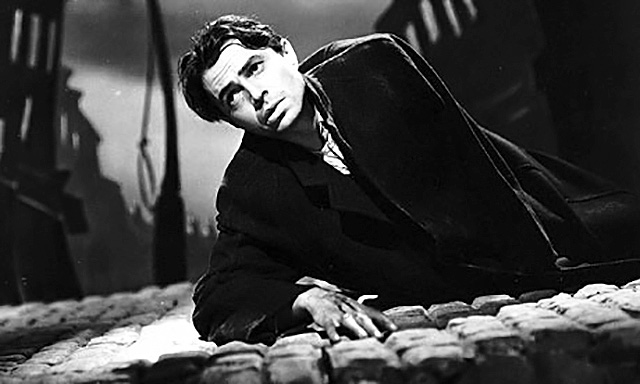
James Mason is wounded and on the run in Odd Man Out

Director: Carol Reed

Cast: James Mason (Johnny McQueen), Kathleen Ryan (Kathleen Sullivan), Robert Newton (Lukey), Robert Beatty (Dennis), Cyril Cusack (Pat), FJ McCormick (Shell), William Hartnell (Fencie), Fay Compton (Rosie), Denis O’Dea (Inspector), WG Fay (Father Tom), Maureen Delaney (Theresa O’Brien), Dan O’Herlihy (Nolan), Elwyn Brook-Jones (Tober)

Is it set in Belfast, or is it set in Purgatory? We follow in the footsteps of Johnny McQueen (James Mason), a leader of “the organisation” (the IRA by another name), on the run in an Irish city with a bullet buried in him. With the police looking to bring him to book, Johnny has to find his way to safety – easier said than done when pain and blood-loss keeps you moving between consciousness and collapse. Is this Johnny’s dying fever dream? It’s a tempting interpretation of Carol Reed’s stunning Odd Man Out (the first of a hat trick of masterpieces from Reed over three years, the others being The Fallen Idol and The Third Man).

It’s a perfect marriage of styles. It opens with a sense of documentary realism that would do Rossellini proud, the camera flying over its unnamed Irish city. As we dive into the house where Johnny and his cell are hiding out, planning a robbery for much-needed funds, the film tips into a marriage of noir and classic gangster film. After the disastrous robbery, where Johnny shoots a man dead in a scuffle, the film becomes more and more an impressionistic series of vignettes as an at-times delirious Johnny stumbles from encounter to encounter, meeting a host of people who help or hinder him, many of whom want him for their own ends (from reward to bizarre artistic inspiration). All this is intermixed with his own increasingly tenuous grip on reality, some scenes floating and soaring with Johnny’s own fantasies and visions as the bullet in him slowly drains his lifeforce.

As Reed’s film increasingly moves into a world that is a few degrees less real than our own, you could argue that perhaps Johnny was dead from the start. That this is his own journey through some sort of Dante-inspired purgatory. His own odyssey, where he will encounter some who want to save him and others who want to damn him.  Reed brilliantly helps us share Johnny’s vulnerability by taking the film ever more off-balance. From Johnny’s visions of the past in the air raid shelter where he takes shelter we spiral down into a surreal bombed out house and an ending that has the sniff of Greek tragedy.

No wonder Johnny feels disconcerted, as this is a rag-tag city with its own rules. Half under construction, half well-established, where the streets are a mix of cars and horse-drawn cabs, Johnny’s journey takes him from dotty housewives to tramps to saviour priests and Dickensian artists. As his fever takes hold, so does the bizarreness of his settings, until he finds himself in an abandoned grand house leaking snow from outside, being painted by a drunken artist who wants to capture the moment of death on his canvas. It’s a million miles from the forensic reality of the robbery that the film started with. Yet it never feels out of place.

A large part of that is because of how brilliantly the film invests us in Johnny’s journey – with Reed’s inspired camera-work and story-telling pulling us into his experience. James Mason spends large chunks of the film in silence, but his performance is extraordinary. A man who seems partly aware that he’s dying, guiltily wanting to know if the man he shot died. Who even from the start seems to have lost his purpose, doubting if violence can bring the results “the organisation” wants, dazzled by sunlight after years in prison, who leads his cell through habit rather than inspiration. Mason’s brilliance here is capturing the very essence of suffering humanity, a confused and frightened man who struggles to understand what is happening around him. Buffeted by events, he’s sympathetic because he never feels in control.

Partly that’s because death feels like its always been waiting for Johnny. You can see it from the start, as he sits in his hide out wondering what its all been for. Kathleen (well played by an impressionable Kathleen Ryan) can’t get death off her mind as she talks about finding and saving Johnny or dying with him. Sympathetic priest Father Tom (a devout WG Fay) just wants to have the chance to save his soul. There is a sense of inevitability about the film – helped by Mason’s crumbling weakness – that destruction is coming and nothing can avoid it.

Reed’s film also has a brilliant sense of the compromises and shady questions of right-and-wrong. Johnny is a murderer and a terrorist – even if he also is a man plagued with doubt. Kathleen is a romantic and a fanatic. Hotel owner Theresa plays both ends against the middle. The coppers will do their duty, but they don’t seem vindictive, just determined to do what they must. There are no clear moral answers in this film, everyone has shades of grey.

It all combines together into one of the most inventive, dynamic and compelling British films of the 1940s by a director who was entering a purple patch where he could claim to be the greatest director in the world. This is a perfect fusion of styles – part realist, part impressionist – that puts you into a cold reality before tipping us into a poetic never-world where the boundary between life and death seems blurred. With a superb performance from Mason (and the rest of the cast), this is still one of the all-time greats.

Deep Blue Sea (1999)

Deep Blue Sea header
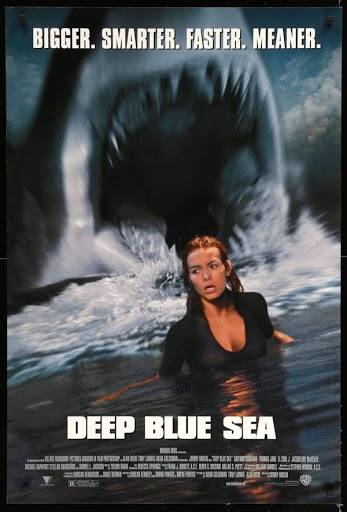
Just when you thought is was safe to go back into the Deep Blue Sea

Director: Renny Harlin

Cast: Saffron Burrows (Dr Susan McCallister), Thomas Jane (Carter Blake), Samuel L. Jackson (Russell Franklin), LL Cool J (Sherman “Preacher” Dudley), Jacqueline McKenzie (Janice Higgins), Michael Rapaport (Tom Scoggins), Stellan Skarsgård (Dr Jim Whitlock), Aida Turturro (Brenda Kerns)

What would be your first idea for curing Alzheimers? Yup that’s right, you’d experiment on sharks brains: and to make those experiments even more effective you’d want the sharks to have really big brains. So, if you’re going to make them super-intelligent, you might as well make them super big, super ruthless with massive teeth. It’s just common sense. After all, they can never escape from your isolated sea laboratory could they? And even if they did, how much of a threat could they be?

Harlin’s film embraces its ludicrous set-up and B-movie nonsense from the start. Dedicated (and more than a little ruthless herself) scientist Dr Susan McCallister (Saffron Burrows) has bred these sharks to help with her obsessive dreams of curing Alzheimers. With millionaire funder Russell Franklin (Samuel L Jackson) flying into spend the weekend at the lab – with a skeleton crew on board – of course its time to run the final test. Can shark wrangler Carter Blake (Thomas Jane) help lead everyone to safety? Well no not everyone… it’s a monster flick after all.

There isn’t anything particularly surprising in Deep Blue Sea – other than one genuinely well-done shock death, which defies your expectations of which characters are the most important – but there are some decent jumps. Some nice little moments of action. A few good gags as sharks prowl through the base picking off the expected victims, while other characters use their wits and a bit of luck to take out the toothy opponents (even an oven gets employed as a weapon). But it’s quite predictable. And I predict that, if you are in the right mood, you might enjoy it.

The dialogue is unimaginative. Most of the acting is pretty wooden (Skarsgård in particular looks like a man yawning his way to a pay cheque) and the characters have clearly been scribbled on post-it notes. Harlin’s direction has a few playful moments, but there’s nothing special about it. You could pretty much predict where the film is going to go – and have a bit of fun spotting its various influences. But I think the film knows you are going to laugh at it. After all, mega sharks? Come on!

At the centre of this is the chemistry free line-up of Burrows and Jane. I feel a bit sorry for Burrows here. Her character is written as an all-consuming obsessive – she also is responsible for everything that happens – and, partly thanks to Burrows barely-concealed disdain for the whole thing, she never comes across as sufficiently guilty or apologetic. Test audiences watching the film reacted so negatively to the character – and you can’t blame them – that Harlin recut the film to make her more of the villain (not quite as much as the sharks, but up there).

A ‘romance’ with Jane hit the cutting room floor – although there are still several scenes where its DNA is readily apparent – just as well really as the actors are chemistry free. Jane in fact has more chemistry with LL Cool J (easily the films MVP as a charmingly offbeat, born-again cook) and the film works best when this bromance is at the fore.

Oh that, and when the sharks at the heart of it. The characters are so non-descript their fates will largely provoke laughter, but as a piece of popcorn rubbish Deep Blue Sea could be a lot worse. Sure it’s got no originality or real expertise about it all, with everyone chucking one in for the money, but its good fun. After all, who doesn’t love a vengeful super-smart shark eh?

The Impossible (2013)

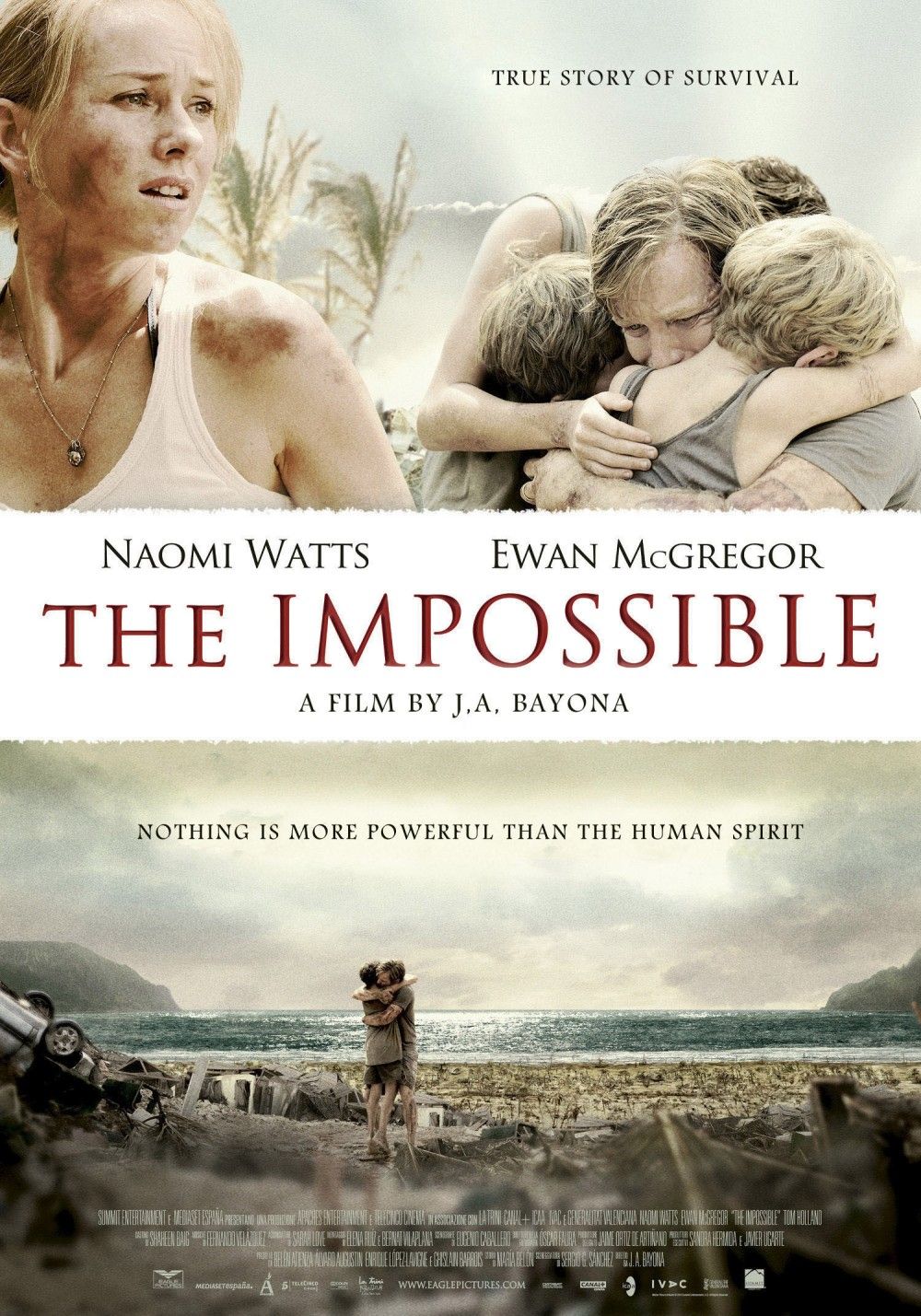
Naomi Watts and Tom Holland survive extreme circumstances in The Impossible

Director: JA Bayona

Cast: Naomi Watts (Maria), Ewan McGregor (Henry), Tom Holland (Lucas), Samuel Joslin (Thomas), Oaklee Pendergast (Simon), Marta Etura (Simone), Sönke Möhring (Karl), Geraldine Chaplin (Old Woman)

In 2004 the Boxing Day tsunami hit the Indian ocean. The resulting tidal waves devastated communities in several countries, with almost a quarter of a million casualties. The impact left rich and poor alike in a desperate struggle to survive. These terrible events form the basis of this emotionally powerful, if sometimes manipulative, film that recreates the remarkable story of a Spanish family, separated in the tsunami, who all miraculously survived.

Here the family is re-imagined as British (presumably to sell the film around the world a little easier, as they now all speak English). Maria (Naomi Watts) is a doctor who for the last few years has been a stay-at-home mum for her three sons Lucas (Tom Holland), on the cusp of becoming a teenager, Thomas (Samuel Joslin) and Simon (Oaklee Pendegast), both younger. Her husband is businessman Henry (Ewan McGregor). Staying in Thailand for a Christmas vacation, the family are separated when the tsunami hits their resort. Maria (badly injured) and Lucas make their way to a hospital, where Lucas struggles to get the life-saving treatment his mum needs. Henry is trapped in the resort with their other two sons, desperately trying to find his missing wife and child. Around them swirl an entire country of refugees and affected people, all of them trying to find family members.

The Impossible gets an awful lot right. The recreation of the tsunami is faultless. You’ll feel every moment of terror as the water rips through the family’s high-end vacation spot. As Maria and Lucas are swept far away by a deep swell of fast-flowing water (stuffed with mud, filth and debris) you’ll feel every blow to bodies as debris hammers into them, and feel like you’ve lived through every moment of desperation as the two fight against the current to reach each other. The sense of powerlessness and fear – a mother trying to be brave for her son, a son frightened and desperate for reassurance, ashamed at being scared – are powerful, deeply affecting and hugely immersive. Bayona’s experience of directing horror comes wonderfully into play here, as he knows exactly how to push our buttons and make us feel the emotion, fear and anxiety of the situation.

This tone continues through most of the film’s first hour which largely follows Maria and Lucas as they attempt to reach the hospital. Running on adrenalin, Maria only slowly begins to succumb to exhaustion as her grievous wounds (smashed ribs, a horrifically graphic leg injury) sap her strength, even while she tries to maintain an air of calm for her son. What is intriguing in this sequence is that, like a set of scales, as the mother becomes weaker the son becomes stronger – Lucas suddenly propelled into become an adult. Lucas increasingly takes decisions on how best to survive, argues at times for hard calls and becomes, in many ways, the adult in the situation.

This sequence is helped hugely by the performances of the two actors. The physical commitment of every actor isn’t to be doubted (Holland and Watts spent hellish weeks in water tanks filming – although this is only relative compared to the horror of the actual tsunami). Watts (Oscar-nominated) brings power to a mother who believes she is the only thing her son has left in the world, and must survive at all costs for him. Her buttoning down of her terror for as long as she can is deeply moving, and she brings the part significant heart. Tom Holland is simply a revelation as Lucas. He develops an authority well beyond his years, the complexity of the emotions he deals with – from fear to anger and defiance, determination, anxiety, relief and despair – would have challenged an actor three times his age. Holland never loses trace of the central kindness in Lucas – no matter how desperate the situation – and he is the undoubted star of the film, his portrayal of a child forced to grow up scarily quickly is deeply affecting.

Ewan McGregor offers similarly excellent work. Left searching through the rubble of his holiday home, McGregor brilliantly captures a sense of a father trying to deny that his control over events has disappeared. He excels in an extremely moving breakdown scene – after finally contacting his wife’s parents in the UK, he collapses in desperate, uncontrollable sobs of guilt and fear, apologising for not knowing what to do. It’s some of the actor’s best work, brilliantly tapping into his natural warmth for excellent effect.

Where the film struggles more is in its focus. While it is a story of one – affluent – Western family, so naturally its focus will be there, it does turn the rest of the cast into little more than extras. Some focus is given to the Thai people: a group of poor local people is crucial in saving Maria and Lucas’ lives and getting them to a hospital, their immediate humanity and generosity reducing Maria (and the audience) to tears of gratitude, but that’s the only real look we get at them. The hospital where a large part of the story is set is full of Westerners, bar the staff. All the victims we spend significant time with are white and Western (all are presented sympathetically, bar a pair of Americans for whom the tsunami is a holiday inconvenience).

But you could watch the film and not realise that so many of the people who died were part of the indigenous population – and while thousands of Westerners also perished, the survivors did at least return to their homes, whereas those living in affected countries lost everything.

The film’s other flaw is the manipulative tone it moves into late on, in particular a series of prolonged “missed moments” as the separated family walk around the hospital, just missing each other. This may well have actually happened, but is so contrived that it feels like a narrative flourish. The plot slows down in the second half as the characters search for each other. The film’s final title cards were a perfect opportunity to bring more focus to other victims – and to mention the death toll and impact on the countries – but avoids all of this to simply confirm it’s based on a true story.

The Impossible has lots of powerful moments. Its moments of emotion are raw and affecting and, manipulative as it is, you do celebrate when the family is reunited. But it’s also a film that loses its way a bit – which captures a superb survivalist story but then becomes too sentimental towards its end. And by not doing more to acknowledge the impact on the Thai people, among others, you can’t help but feel it turns this tsunami into something that affected rich, white, Westerners – which is harder to forgive.

Jaws (1975)

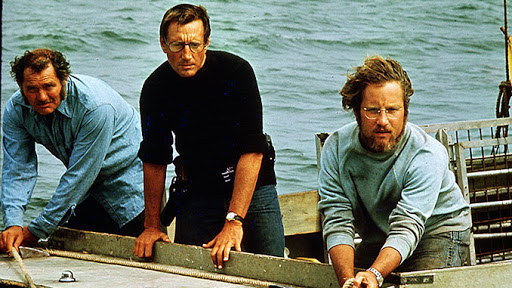
Shaw, Scheider and Dreyfuss take on the shark in Jaws

Director: Steven Spielberg

Cast: Roy Scheider (Martin Brody), Robert Shaw (Quint), Richard Dreyfuss (Martin Hooper), Lorraine Gray (Ellen Brody), Murray Hamilton (Mayor Vaughhn), Carl Gottlieb (Meadows)

Necessity can be the mother of invention. Perhaps no film demonstrates this better than Spielberg’s sensational smash-hit Jaws. If “Bruce” the animatronic shark had not been so unreliable and unconvincing would the film have become such a big hit? If Spielberg had been able to show a convincing shark, would he have dropped the suggestiveness and unseen terror – not to mention the famous creeping dread of John Williams’ score – and gone for more traditional scares? We just don’t know – but he was certainly forced to be as inventive as possible and it worked a treat.

A quiet community on Amity Island suddenly finds itself falling victim to a terrifying series of attacks from a shark. As people panic – and the death toll rises – only local police chief Martin Brody (Roy Scheider) seems to want to close the beaches and declare an emergency (after all we can’t let the simple matter of a few kids ripped to shreds by the finned killer disrupt the holiday season). But when things eventually go too far on the first day of holiday season, Brody finally gets the go ahead to head to sea and take on the shark himself. Only problem is Brody has a fear of water and no idea how to hunt a shark. Just as well he’s teaming up with Marine Biologist Martin Hooper (Richard Dreyfuss) and grizzled old sea-dog and shark hunter Quint (Robert Shaw) for the mission. Though with this size of this sucker, they may need a bigger boat…

Spielberg’s film largely works so damn well because it pushes suggestion over what we actually see. The shark doesn’t appear on screen for well over an hour. Instead, we see only movement of the water, POV shots of the shark and the flailing terror of the victims, dragged hither and yon by the unseen opponent. Spielberg very generously – and perhaps accurately – attributed at least half of the film’s success to John William’s iconic score. The seemingly simple, but devilishly intoxicating music perfectly captures feelings of mounting dread and tension. It’s possibly the most instantly recognisable score in film history, and works an absolute treat to get across the terror.

Because that is what the film is all about. There is a reason why the tag line for the first sequel was “Just when you thought it was safe to go back into the water”. The film plays on the creeping concern with not knowing what is underneath the still surface of the waters. And the possibility that a monster lurks there ready to destroy us, taps into all those fundamental child-like terrors we have of monsters under the bed. The things we can’t see are terrifying. Spielberg taps into this brilliantly, with the frothing of water or the shark’s movement being substituted by other things – either a part of a pier being dragged in its wake, or the barrels that Quint attaches to it with harpoons to track its movement. A large part of the second half of the film revolves around Quint’s ship being chased by floating barrels – and it works never-the-less.

This sense of terror that the film captures so well – as well as the moments of shock of carefully chosen few beats of gore – is a surprise when you consider that Spielberg today is seen as a more sentimental, family-friendly director. But on this film, he was a young buck still out of the gate – this was only his second theatrical film. Spielberg wasn’t even first choice – although his TV movie Duel, which sees a driver chased by a giant truck, the driver of which remains unseen, was the perfect calling card. When he got on board, he made what he himself describes as a series of rookie mistakes, not least insisting on shooting at sea rather than in a tank or just off the coast. Not to mention the multiple delays from the shark. Despite the film’s nomination for Best Picture (and the millions it earned at the box office), Spielberg was denied an Oscar nod as suspicions abounded that the oft-delayed, over-budget film was “saved” in the editing suite. 

While the film is superbly edited – again that creeping power of suggestion and the way the film leaves much to the viewer’s imagination – it’s much easier now to accept Jawswas Spielberg’s first real flexing of his cinematic muscle. The decision to film at sea – while causing no end of problems for the crew – brilliantly allows for wide shot vistas that creates a real sense of isolation for the boat. It constantly looks small, rattled and fragile in a massive environment, making it feel like even more of a mismatch against the size of the shark. Throw in Spielberg’s brilliance at building tension, and you get a film that seizes you by the scruff of the neck and doesn’t let go. He’s a master here and the film has more than enough famous shots – including the famous reverse zoom on Scheider as he realises the shark is in the water – to show he was just warming up.

It also helps that the film front-and-centres character and good writing alongside all the thrills. Part of the benefit of the films continued delays is that the original script was constantly tinkered and improved by Carl Gottleib from Benchley’s original. Others were bought in to work on it – most famously John Milius who took a redraft pass at Quint’s famous Indianapolis speech, which Robert Shaw himself then rewrote. What we end up with is a script with three well-drawn – and distinctively different but complementary – characters and plenty of sharp lines.

The three stars fill these roles with aplomb. Scheider gracefully accepts the quieter role, but carries the film with an unshowy ease as an everyday hero, eventually pushed to his limits. Dreyfuss gets the more plucky, overtly comic role as the expert biologist and plucky young gun, with a sharp wit and a chippy younger man’s perspective. Shaw meanwhile gets some of the films best scenes as a grizzled seadog with no time for the kids and a dangerous obsession for proving he’s right. The three actors play off each other extremely well, despite the troubles on set (which Shaw was usually at the heart of, from his drinking, to his clashes with Dreyfuss, to his constant flying back to Canada at any opportunity for tax reasons).

But these three actors work brilliantly together, and the film’s tense brilliance still makes it a compelling watch today. And yes, Spielberg was right – that Williams score does play a huge part in its success. Try imagining what you are seeing in the film without the score playing over it? Necessity is the mother of invention.

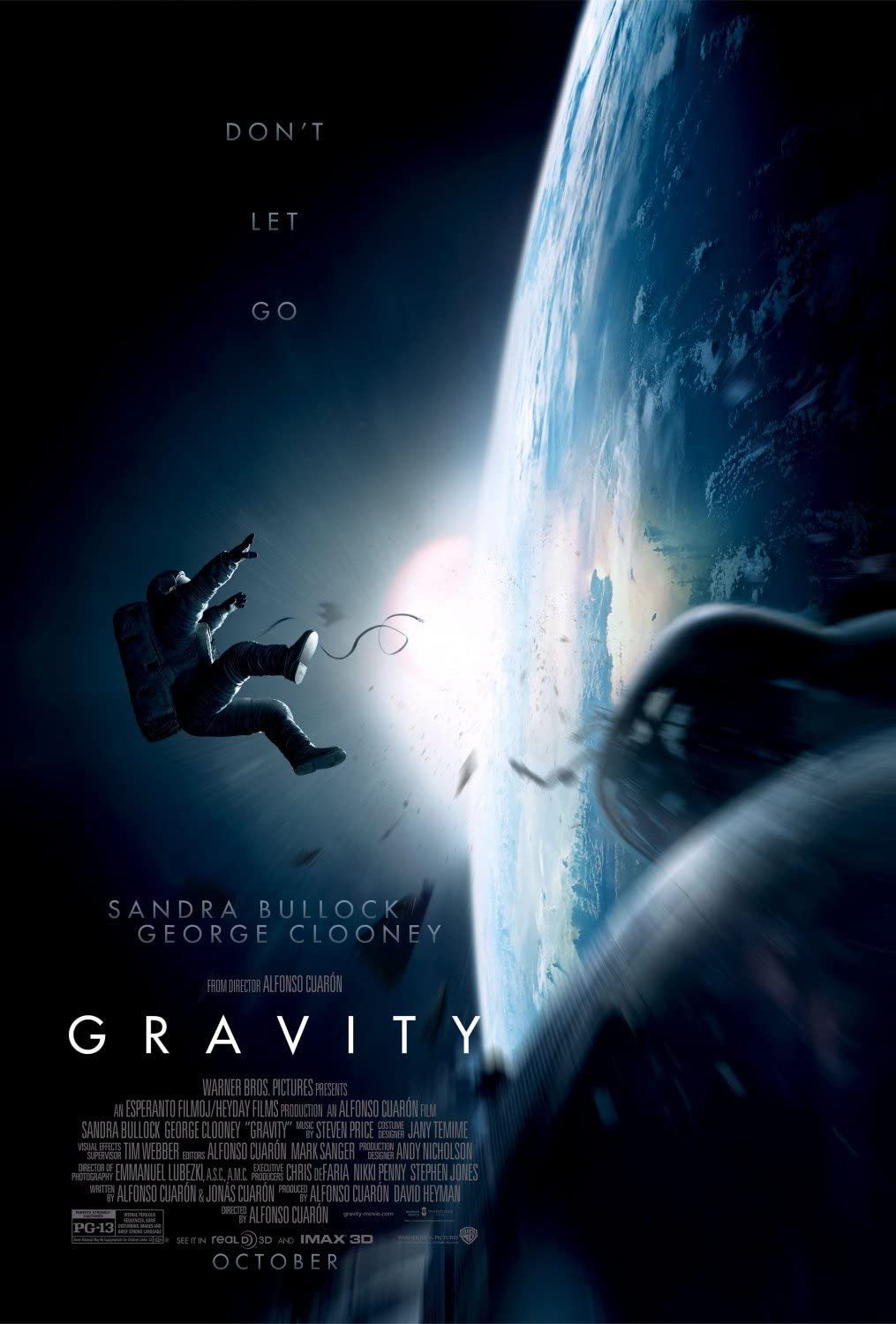
Gravity (2013)

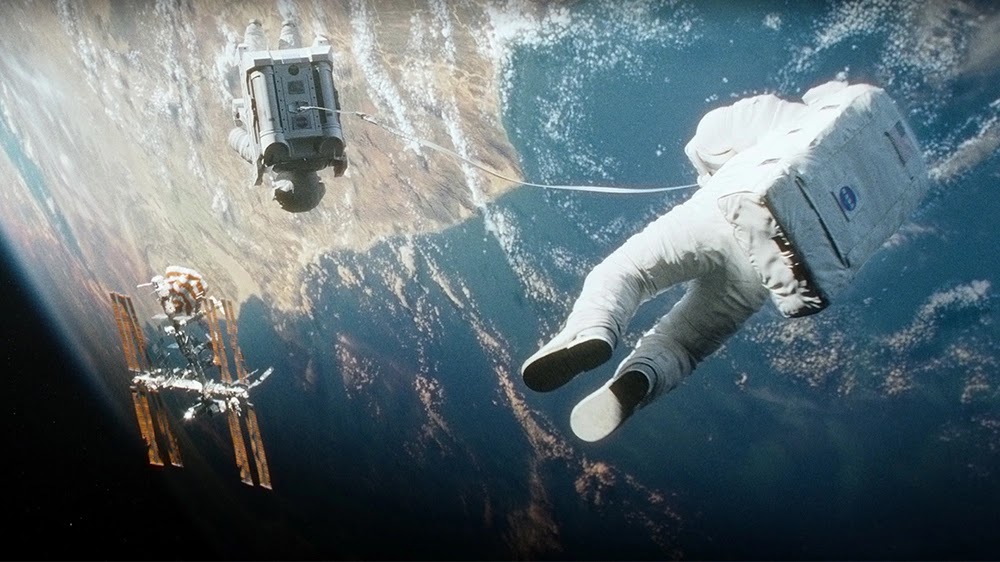
Sandra Bullock is stranded in space in Gravity

Director: Alfonso Cuarón

Cast: Sandra Bullock (Ryan Stone), George Clooney (Matt Kowalski), Ed Harris (Voice of Mission Control)

It’s often been said space is mankind’s final frontier. It’s beautiful and awe-inspiring. But it’s also a terrible place, a void where the normal rules that dictate how our bodies operate are completely suspended. We can only breathe what we carry with us and the lack of any atmosphere or gravity means a few metres might as well be a million miles. It’s in many ways the perfect conditions for a survival film – which, at its heart, is what Gravity is.

On a mission in space to repair the Hubble telescope, a collapsed satellite triggers a chain reaction of space debris hurtling in orbit at extreme velocities. Turned into a vast number of deadly bullets flying completing an orbit once every 90 minutes. This shrapnel destroys the mission, leaving specialist Dr Ryan Stone (Sandra Bullock) and mission commander Matt Kowalski (George Clooney) as the only survivors – and left with their only chance of return to Earth being to travel somehow to one of the other space stations in orbit and hitch a ride home on one of their escape pods.

Cuarón’s film is an engrossing and edge-of-the-seat 90 minute thrill ride, combined with a quietly meditative reflection on how our internal pain can make us drift through life. The film is titled Gravity but it’s there to draw attention to what is missing in the film. Not only the obvious – the lack of pull on her body – but also the lack of grounding in Stone herself. In mourning for the loss of a child, Stone has very little ties to earth or indeed anything. She is drifting through her life emotionally, much as she drifts through space itself. When asked why she likes it up in space, she replies “the silence”. She’s a woman untethered from life on earth in more ways than one.

So this is a film that is not just a survival but also a rebirth. We see Stone go through immense, dangerous moments of tension and terror, battling against all the odds to survive and return home. At the same time, the film carries an emotional weight because it’s also about Stone making a conscious decision to survive, to decide to re-engage with and commit to the world – to choose life if you like. Someone suffering from grief and depression as she does at the start of the film, may well have understandably embraced despair. Instead, the film is her coming to terms with the loss of her daughter, and a resolve to live her life for her.

All of this happens of course in the vast majesty of space, a vision beautifully captured by Cuarón. Filmed in an immersive style, with several long takes that don’t draw attention to themselves – a shot length that serves the purpose of the story not vice versa – and Cuarón is happy to use quicker cuts where needed. The camera follows the journey of Stone in epic and intimate detail, with shots exchanged between vast panamas of the astronauts as dots in space, to extreme close ups that bore into Stone’s eyes and capture her emotions from guilt, to hope, to terror. 

The long opening shot, that ducks and weaves around the weighless astronauts in space as they repair the Hubble telescope is of course a technical marvel, but it also brilliantly established the situation and the joy and fear of being an astronaut, of being allowing in the darkness and emptiness of space. It sets the scene perfectly from later shots that throw you into the adrenalin burning terror of spinning wildly in space with no resistance to slow you down or dodging debris moving at thousands of kilometres per second through space.

In fact the film is almost unbelievably tense – probably the most tense space film since Apollo 13 and in that we actually knew they were coming home alive (in a nice nod to that film, Ed Harris ‘reprises’ his role as mission controller in a voice-only cameo). With its brilliant immersive style, and the emotional bond it swiftly builds with the viewer, it means you will find you hardly draw breath along with the heroes. I’ve seen the film three times and each time after the first viewing I was sure it wouldn’t have the impact the first viewing had. But goddamn it, it works every time. The film is quick – at little under 90 mins – but you won’t feel it (in fact if anything you might be relieved).

Cuarón won the Oscar for direction, and the film is not just a load of flash and technical marvel (although it has a lot of both). It’s grounded in a very simple emotional story of survival, matched with an internal story (not overplayed) of resolving and dealing with grief. A lot of that works from the effectively unflashy performance from Sandra Bullock, who is very good in a part that requires not just physical but also emotional commitment. She’s well supported by George Clooney, who is perfect as the charming but calm and controlled mission commander who mentors her through the early stages of survival in space.

The film has a series of breathtaking set pieces – collapsing Hubbles, spinning astronauts in space, desperate space walks trying to grab any inch of objects to stop them drifting into space, collapsing space stations, burning up on re-entry – all of them shot with an elegance that marries technical excellence and dazzling camerawork and vision with a powerful story. A bag of tricks but one that is delivered with real heart.

Unbroken (2016)

Jack O’Connell does fine work in the middlingly impactful Unbroken

Director: Angelina Jolie

Cast: Jack O’Connell (Captain Louis Zamperini), Domhnall Gleeson (Lt Russell Phillips), Garrett Hedlund (Lt Commander John Fitzgerald), Miyavi (Sgt Mutsuhiro “The Bird” Watanabe), Finn Wittrock (Sgt Francis McNamara), Jai Courtenay (Lt Charlton Cupernell), Luke Treadaway (Miller), Spencer Lofranco (Harry Brooks)

Angelina Jolie’s directing work doesn’t get the acknowledgement it perhaps deserve and it’s easy to think, watching the confident and imaginative framing of much of the film, that if, say, Brad Pitt had directed the film it might have got a more positive reaction from people. Anyway, perhaps part of the problem might be for all the extraordinary courage of Louis Zamperini’s life story, the general ideas behind the film are now so common in film-making that – and it feels terrible to say it – perhaps we are at last too familiar with these stories for them to have a real lasting impact. 

Louis Zamperini (Jack O’Connell) was an Olympic athlete, who set a world record for the fastest lap in his final lap of the 1936 Olympics 5000 metres final (despite finishing 8th overall). Signing up for service in the war, his bomber crashes and (after surviving 47 days in an open lifeboat in the Pacific) he is captured by the Japanese. There he experiences the brutality of the POW camps – and earns the enmity of Mutsuhrio Watanabe (Miyavi) one of the camp’s officers, who beats him mercilessly. But through it all his determination never wavers, neither does his humanity. He remains Unbroken.

The attraction of the resilience of the human spirit never wavers – and many of us suspect we would break, making our admiration and respect for those that don’t all the greater. That admiration is easily bound up in O’Connell’s wonderful performance as Zamperini, dripping charisma powered by kindness, humanity, decency and self-respect. O’Connell dominates the film, and is also the key to its successful moments – the camera always comes back to him, and his eyes wind up telling much of the story. Without him the film would struggle to make a real impact.

Which is part of the problem with it – it doesn’t make the impact you feel it should. Jolie’s direction is technically accomplished and very skilful, and the film is beautifully shot and filmed by Roger Deakins. There is barely a foot wrong anywhere in its make-up – but for some reason it doesn’t come together into something that carries real force. Maybe this is overfamiliarity with these stories, maybe this is too much professionalism and expertise crowding the emotion out, maybe it’s just that there isn’t enough story here for it to really work. But for whatever reason, this is a film that winds up leaving you colder than it should.

Its finest sequence coves the isolation on the boat, the struggle with sun and sea, without sufficient food or water, a marathon endurance test that claims the life of one of the three men who undergo it. Jolie’s film captures the strange claustrophobia of a tiny world – one lifeboat – in a huge expanse of nothingness. These scenes are compelling in a way the later prison camp scenes just aren’t. 

The camp scenes are of course tough and brutal in a way (although some have – perhaps justly –  complained that they are so beautifully and elegantly filmed that their impact is dramatically reduced, with every shot of the camp turned into some sort of renaissance-lit masterpiece) but they don’t hit like they should. Yes what Zamperini and the soldiers go through is dreadful and awful beyond measure, but nothing here seems to really capture that. It’s sort of something we understand but don’t wind up feeling from the film. 

Perhaps that’s because the one thing the film does capture really well is the powerless drift of POW life. The soldiers have no control over their fates and no way of escaping it, This all gets captured in the brutal bullying of Watanabe – but the film never manages to make either him or his rivalry with Zamperini compelling, leaving me unsure whether he was intended as a representative cipher of the appalling system rather than a real character.

Unbroken won’t exactly disappoint but it won’t exactly thrill either. While I do feel not enough credit is given to Jolie – and a male star would have got more praise – this is also a film that feels too much like a Hollywood prestige picture, too much like an important film straining for those Oscars. It forgets the heart and doesn’t engage our feelings.

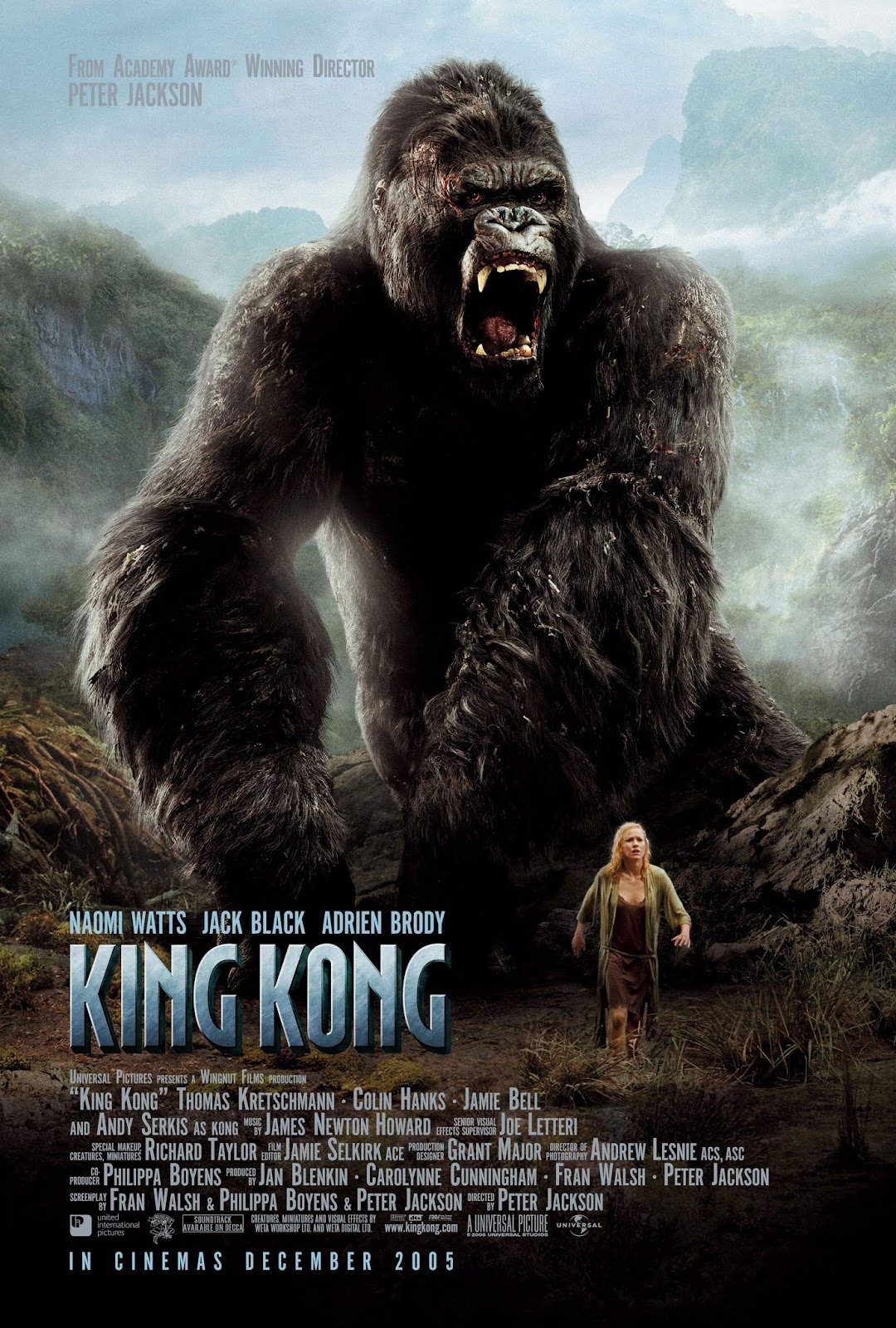
King Kong (2005)

Naomi Watts and a mo-cap Andy Serkis bring to life Peter Jackson’s dream in King Kong

Director: Peter Jackson

Cast: Naomi Watts (Ann Darrow), Jack Black (Carl Denham), Adrien Brody (Jack Driscoll), Thomas Kretschmann (Captain Englehorn), Colin Hanks (Preston), Jamie Bell (Jimmy), Andy Serkis (Kong/Lumpy), Evan Parke (Ben Hayes), Kyle Chandler (Bruce Baxter), John Sumner (Herb), Lobo Chan (Choy), Craig Hall (Mike)

In the late 90s Peter Jackson was working hard on putting together the plans for his dream project. It was a complex project, with unprecedented special effects demands, a huge cast, a demanding shoot and a big budget. However, plans fell through, so Jackson decided to move his attention to that Lord of the Rings trilogy idea he had been banging around instead. Hot of the success of that little escapade, he delivered at last his dream: a huge remake of King Kong.

Carl Denham (Jack Black) is a ruthless film director, desperate to make the big epic that will dwarf all others. Pulling together a team including playwright Jack Driscoll (Adrien Brody) and vaudeville dancer Ann Darrow (Naomi Watts), he heads out on a ship for location shooting on the mysterious Skull Island. Arriving on the Island, they find that the savage natives aren’t the only dangers on an Island that has bypassed evolution. The crew find themselves hunted by dinosaurs, huge creepy-crawlies and other horrors all while they try to find and rescue Ann from the Island’s Alpha – a huge gorilla, King Kong (famously motion-captured by Andy Serkis). Led by Jack, who has fallen in love with Ann, dangers surround the crew – but is mankind, and the ambitious Carl, the real danger?

Time and public perception has not always been kind to Jackson’s labour of love. Perhaps coloured by the generally negative reception to his Hobbit films (which are a mess), perhaps also by the film being more of a gentle, sentimental film mixed with cartoon-splatter horror rather than the monster-mash B movie later Kong films have been, it’s generally remembered as a bit of a disaster. This is far from fair. Yes it’s overlong (hugely so at well over three hours – nearly twice as long as the original) and over-indulgent but it’s also quite a sweet, if rather tonally mixed, film that more or less manages to keep an audience entertained.

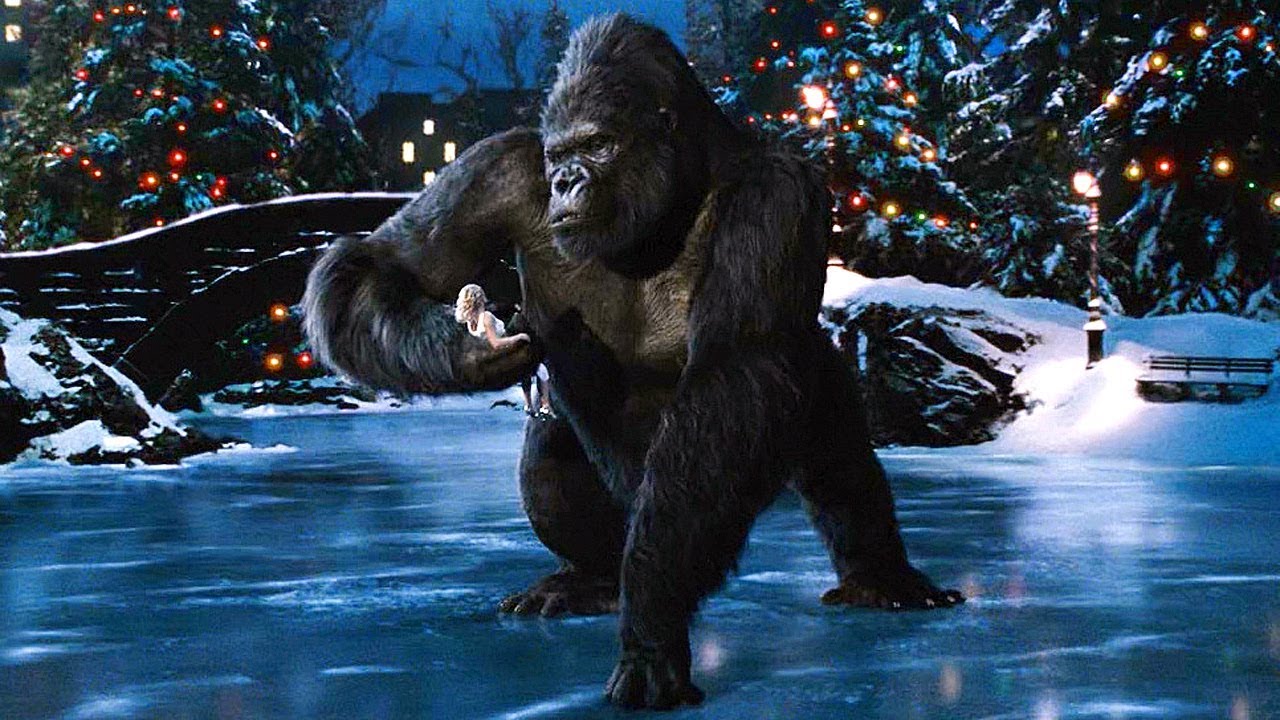
Unlike later films which have enjoyed Kong (or Godzilla) most when he smashes things – even if he is often the film’s hero or at least anti-hero – this Kong film is perhaps at its most contented when it is finding the humanity in the ape. As a 9-year old, Jackson talks about crying when Kong fell dead from the Empire State Building – and it is this engaging giant that he wants to bring to life here. Using Serkis – cementing his reputation here as the whizz of motion capture – to have a human literally inside the Gorilla, giving real expressions and genuine character to a giant ape was deliberate. The film’s most heart-felt – and quietest – moments both involve moments of gentle play or innocence from the Gorilla, either starring at a beautiful sunset (which he does both on the island and on the Empire State) or playfully slipping and sliding on a Central Park frozen lake, this is a monster that Jackson sees as a misunderstand soul, that bond he felt at 9 brought to the screen.

That’s the key between the bond that Ann feels with this beast who starts as potential killer, becomes protector, friend and finally a sort of romantic interest of a kind. Well played by Naomi Watts, Ann Darrow herself is a damaged soul, a bright-eyed, naïve dreamer with a dose of realism slowly entering her soul, who wants to entertain people but also to make her immediate world a better, warmer place. It’s natural that such a person would start to feel a deep bond with Kong, to learn to appreciate his gentleness and protectiveness, to put herself at risk to try and save his life. It’s a huge development of the character from scream-queen, and positions Ann (or tries to) as a more pro-active force in her own story.

And the ape responds to this, slowly revealing his own true nature as a potentially gentle giant, albeit one who is prepared to rip a few T-Rex’s apart to protect his love. He certainly ends up feeling more of an ideal partner for Ann than the other men in the film. Adrien Brody’s Jack Driscoll is a determined, principled and brave man but there is a touch of inadequacy to him, a surrendering of responsibility and a lack of proactivity in his make-up. While the early love story between the two characters is sensitively drawn, it tellingly can’t survive the events of Skull Island – at least not in the same way.

Mind you Driscoll is better than Denham, who is transformed in this film to a soulless monster interested only in his own greed for fame and power. Jack Black delivers what the script demands – even if the film is pushing on the edge of his range. As Black’s stock has fallen, so perhaps as some of the film’s – and the perception of his performance here. It doesn’t help that the idea of the ruthless film director seems to be a common trope for film director’s to explore (and interesting psychological question there!) so the character’s shallow lack of regard for anyone else, coupled with his fierce ambition to be the greatest showman around start to grate after a while. It’s a character lacking any depth.

But then that’s the case for most of the rest of the cast as well, who struggle to make room in a film that is overloaded with events and action to the detriment of its overall impact. Jackson’s heart may really lie in the quiet moments between beauty and beast – but he also loves an action scene. And King Kong has too many of these. Much of the middle hour of the film is given over to a never-ending parade of events on Skull Island, that after a while seize to have any real impact. As nameless crew members are crushed by boulders, or stampeding dinosaurs, or savaged by giant insects, or have their heads caved in by savage islanders (not surprisingly these H Rider Haggard style savages, with their lust for human sacrifice, drew more than a little criticism – and it hasn’t aged well) you start to feel your interest sagging. Kong’s brawl with three savage T-Rex’s is perfectly made in every respect, except for the fact it goes on forever.

Ambition lies behind every frame (all of them beautiful by the way) of this huge three hour epic monster picture – but it gets all so much that it buries the story. Like Kong himself, it touches the heavens only to fall tragically to Earth, trying to protect the thing it loves. Jackson wants to protect Kong from being just seen as a massive ape that hits things – but loses his way at times when Kong does little more than exactly that. It is still an intelligent and heartfelt film – but it struggles as well with being an uncontrolled play in the sandbox.

Sunshine (2007)

Astronauts head out to restart the sun in Danny Boyle’s Sunshine

Director: Danny Boyle

Cast: Cillian Murphy (Robert Capa), Chris Evans (James Mace), Rose Byrne (Cassie), Michelle Yeoh (Corazon), Cliff Curtis (Searle), Troy Garity (Harvey), Hiroyuki Sanada (Kaneda), Benedict Wong (Trey), Chipo Chung (Icarus), Mark Strong (Pinbacker)

Spoilers: Last act surprises are discussed here. Although they did put them in the trailer at the time as well

What would we do if the sun decided to pack it in? To be fair, probably not build a bomb the size of Manhattan out of all the world’s fissile material and then fly it up to the Sun in a huge spaceship to jump start the sun’s core. Because that idea is pretty much like trying to restart a volcano with a match. To be fair, Professor Brian Cox (for it was he) did come up with an actual concept that did work – something involving a Q-Ball in the sun, whatever the hell that is – that the film never mentions. But then who really cares about the science, we only care about the simple idea of restarting the sun’s engine with a massive nuke. That’s an idea I don’t need a staff pass at the Large Hardron Collider to understand.

Mankind’s final fate is in the hand of a team pulled from across the world’s space agencies, with Professor Robert Capa (played by Cillian Murphy as a figure inspired heavily by Brian Cox himself in looks and style) as the boffin whose job is to blow the bomb when the time comes. The mission, Icarus II, is under the command of Captain Taneka (Hiroyuki Sanada), with engineer Mace (Chris Evans), pilot Cassie (Rose Byrne), biologist Corazon (Michelle Yeoh) whose job is to maintain the oxygen garden, psychiatrist Searle (Cliff Curtis), navigator Trey (Benedict Wong) and second-in-command and comms officer Harvey (Troy Garity). Entering the final days of the mission, near Mercury, the crew discover traces of the first missing mission that carried the first payload to restart the sun, Icarus I. Deciding two payloads are better than one, the crew divert to intercept – and of course from there everything slowly falls apart into increasing chaos, destruction and horror.

Boyle’s film was marketed as a sort of slasher-in-space – which to be fair it only really becomes in its final act, as the crew accidentally take on board captain of Icarus I, Pinbacker (Mark Strong), a man driven mad by proximity to the sun, deluded in the belief that it is God’s will that mankind perish with the sun. In fact for the bulk of its runtime – and its primary themes – are really about the psychological impact of prolonged isolation in space with only a small group of people for company (a heightened submarine claustrophobia), the dangers and damage that obsession can cause and the moral complexities that emerge when the fate of mankind is literally in the hands of eight people.

With an intelligent script by Alex Garland, Boyle’s film is smart, superior sci-fi which asks searching questions of how we might respond in the situations this crew are thrown into. How quickly would you make decisions about who is expendable and who is not when you are mankind’s last chance? How quickly would you be willing to sacrifice yourself? What moral qualms would you feel if the fate of the one was balanced against the many? And how are all these feelings heightened by the intense claustrophobia and isolation of prolonged space travel, interacting with the same few people day-in and day-out in a ship of which every inch you would be intimately familiar within the first few months of a mission lasting years?

It’s a wonder more people don’t go crazy in the film. Boyle’s film makes excellent use of the terrifyingly awesome, good-like power of the sun. Its rays are so intense at the range of the ship, that any exposure over about 2% of its full strength is lethal. But there is something about its mighty power, its all-consuming presence, that draws characters too it like moths to a flame. Psychiatrist Searle (impressively played by Cliff Curtis) already seems to be becoming slowly a slave to an obsession with our star, his skin peeling from too many hours in the ship’s solar observation lounge. Pinbacker (a curiously accented performance of intense insanity from Mark Strong) lost his mind in sun worship, his mind seemingly snapped by coming face-to-face with the powers of the heaven compared to the mini-presence of man.

But it’s that presence of mankind that drives the mission, and lies behind all decisions. Hard-ass engineer Mace (Chris Evans, very good) seems like a jerk, but he simply applies Spock’s maxim of the needs of the many to a logical extreme (correctly) objecting to every course of action that invites unknowns into the equation that endanger the mission. And Mace doesn’t hesitate at any time in the film when asked to balance his own safety against the success of the mission. Each crew member – with the exception of Harvey – places their own survival a distant second behind the completion of the mission, and the film is littered with moments of self-sacrifice and self-imperilment.

It’s this humanistic core to the film, of accepting the world is it and that mankind must be preserved within that, which leads to some of the film’s more weighted points around faith and religion. The film has little time for anything away from pure science, and an interest in higher powers and staring too closely at the bright light, is mixed in heavily with a dangerous fundamentalism that eventually leads to the film’s only spiritual figure Pinbacker becoming a psychopath determined to follow what he sees as God’s plan at the cost of all human life. It’s not a subtle picture of religion – and the film could have balanced it with at least one of these characters expressing some faith in some sort of religion on the ship or gently questioning how humbling being this close to the face of God might feel. The film has no time for that.

But then I suppose this is really a psychologically intense mission film, a sort of big-themes action sci-fi that is the sort of ideas based film you wish was made more often. Boyle’s direction is pinsharp as always, and the moments of dreamy awe and shattering power of the sun (as bodies are vapourised, parts of the ship crumble) or the freezing vastness of space (as one character discovers to their cost) provide a series of haunting scenes. Shooting Pinbacker with a juddering out-of-focus intensity – intended to ape the feeling of starring directly at the sun – is effective in making the character chillingly unknowable.  This moments work very well, as does the superb cast which has not a weak link among them (Cillian Murphy in particular anchors the entire thing extremely well). Sunshine is a thought-provoking and blistering science-fiction film that manages to balance big themes and ideas with horror house jumps and haunting moments of tension.

The Birds (1963)

Tippi Hedron has a bad day at the birdcage in The Birds

Director: Alfred Hitchcock

Cast: Tippi Hedron (Melanie Daniels), Rod Taylor (Mitch Brenner), Jessica Tandy (Lydia Brenner), Suzanne Pleshette (Annie Hayworth), Veronica Cartwright (Cathy Brenner), Charles McGraw (Sebastian Sholes), Lonny Chapman (Deke Carter), Joe Mantell (Cynical Businessman)

Alfred Hitchcock is often seen as the master of technique, the doyen of suspense, the master of the shock twist. Perhaps it was his love of this sort of material that led him to this radical reworking of Daphne du Maurier’s short story The Birds. After all Hitch had already directed the greatest ever du Maurier adaptation (Rebecca), so working with du Maurier was hardly new and turning this English suspense story into a sort of post-apocalyptic, tension-filled plot-boiler was right up his street. The Birds is a master-class in the director’s craft, and a curiously empty experience with barely a human heart in sight.

Melanie Daniels (Tippi Hedron), a slightly spoiled heiress, arrives in a small coastal town in California in order to play a practical trick on lawyer Mitch Brenner (Rod Taylor). Deciding to stay the night, she quickly realises that she has chosen the wrong weekend to get away as, while sparks grow between her and Rod, they also grow between humanity and the birds, as our feathered friends (enemies?) begin a series of escalating attacks on the population of the town that eventually lead to multiple deaths and destruction.

Hitchcock’s film is as masterclass in the slow-burn, deliberately the slowest film the director perhaps ever made. Hitchcock prided himself on his films in suspense being the awaiting of an event to happen. The bomb you know will go off on the bus. The plane circling Cary Grant that seems ripe to attack. The Birds takes this to the nth degree. The film’s very title all but tells you that the birds are going to attack, so Hitchcock takes it nice and slow, letting scenes play out with a breezy lack of pace, almost like a low-rent romantic comedy. But somehow this long unwinding of not a lot happening works well, because every scene somehow becomes a corkscrew as tension as every single bird in shot becomes suspicious. 

This atmosphere is increased by the wide open locations and remote locale the film is set in, with these all-American small town sites seeming to stretch on forever around the characters only serving to stress their isolation and vulnerability in the middle of all this deadly nature. Hitchcock also carefully stripped out all musical score from the film, instead providing a sound track of natural noise complemented by slightly exaggerated bird noise (created by use of a Trautonium, supervised by master composer Bernard Herrmann). The often makes the film eerily and unsettlingly quiet, with the soundtrack only punctured by the frequently (perhaps deliberately) mundane dialogue. Suddenly with this brilliant combination game, the entire film becomes a tense waiting game for the unleashing of avian attacks, every frame a tense waiting for the bang you all know is coming. It’s Hitchcock using every aspect of his reputation, and the film’s promise of violence, to create an overwhelming effect that is deeply unsettling no matter how many times you see the movie. 

Hitchcock also gives a slow build to the bird violence. Events escalate quickly, from the unsettling gathering of the birds in several places (most notably along telephone lines and outside a school playground) to subtle messages about chicken’s refusing food, to first Melanie and the other characters colliding with or being bitten by birds. It all builds to a grim reveal of a local farmer who has been attacked over-night, with Rod’s mother stumbling across the mutilated old man, Hitchcock’s camera delightedly cross cutting onto the man’s pecked out eyes. It’s the most grotesque shot of the film – and coming before we’ve seen our first mass bird attack, leaves us in no doubt as to the danger of these animals.

And when those bird effects come they have a real unsettling violence to them. In a blur of both real birds and super-imposed images (I will admit that the special effects of this film do now look a little dated, with the mixture of real, model and photo trickery birds rather jarring) the birds fly with an almost unimaginable aggression at the human beings. Flocks descend, pecking, biting and clawing, leaving human bodies maimed, blinded and bloodied. Crowds of school children are attacked while fleeing their school. A gas attendant is brutally set upon leading to a firey conflagration. Passers-by and those unable to get refuge are beaten to the ground under a flood of winged assailants.

The film changes tack in its final sequence into a tense series of sieges as Melanie, Rod and his family hole up in Rod’s house by the lake, barricading doors and windows as the birds peck relentlessly at doors and windows, slowly forcing their way in. Rooms that fall to the birds become whirlpools of deadly flying creatures, a tornado of wings and pecks that few can stand against. Hitchcock’s camera cuts rapidly from the flood of birds, to ever increasing pecks at hands and arms, to hands thrown up to protect eyes – a brilliant call back to the eye horror shown earlier in the film that immediately inspires. The birds attack in unpredictable waves, their attacks dying down at moments as the sit calmly and placidly only to expectantly burst back into violence.

It’s just a shame that Hitchcock’s film is so enamoured with its undeniable technique that it neglects to feature any heart or soul at all. The characters are a stock collection of forgettable tropes, most played by forgettable actors, or mute ciphers. The film almost deliberately throws together a truly trivial collection of stories and character motivations to pepper the centre (perhaps this bland self-interest is what pisses the birds off so much) of the film, that frankly are not that interesting. Rod Taylor is a solid but uninspiring performer, Jessica Tandy is saddled with a truly pathetically weak role. So many of the other characters such little impact that they barely warrant names. Rarely in Hitchcock films have the human characters felt so much like devices, square pegs in square holes, totally subservient to the Master’s whims. Put frankly, for all the tension of when the birds will turn, you’ll care very little for any of their victims. 

A lot of focus on the film has been on Tippi Hedron, in particular her accusations of ill-treatment (routed in frustrated sexual obsession) from Hitchcock. These stories – and Hitchcock’s subsequent description of her as little more than an attractive prop (a feeling he tended to have for lots of actors) – have drawn attention away from the fact that she is actually very effective in The Birds, and that her brightness and intelligence makes her the only person who feels real in the whole film. It makes it all the more sad that the final sequence renders her into a mute, shell-shocked victim – but Hedron’s promise (never fulfilled due to Hitchcock’s sabotage of her career) is clear here.

Hitchcock’s film finally ends on a truly nihilistic, Armageddon tinged ending that speaks volumes for the post-apocalyptic nuclear anxiety prevalent in the West in the 1960s. The birds rest, triumphant, over the chilling silence of the world as what remains of our heroes beat a retreat. It’s a chilling flourish in a film that is a stylist’s triumph but lacks any real heart. It’s a film that haunts the memory but it doesn’t win the heart. If Hitchcock really did hate actors and most people, this film makes a good case for arguing that’s a pretty honest insight.