Category: Terrible Films

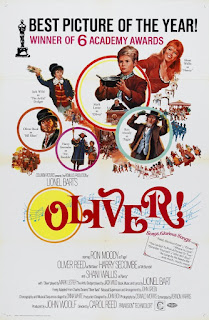
Oliver! (1968)

Oliver! header
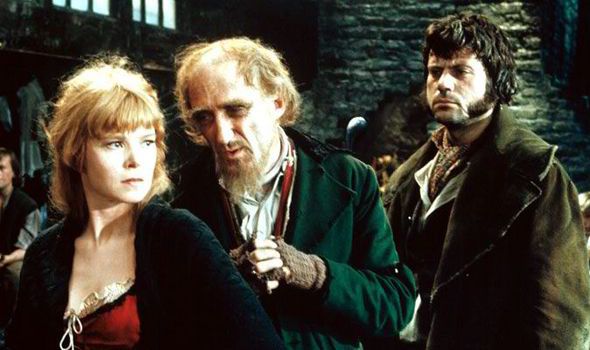
Mark Lester asks for More. You may not share his sentiments in the Oscar winning Oliver!

Director: Carol Reed

Cast: Ron Moody (Fagin), Mark Lester (Oliver Twist), Jack Wild (The Artful Dodger), Oliver Reed (Bill Sikes), Shani Wallis (Nancy), Harry Secombe (Mr Bumble), Joseph O’Conor (Mr Brownlow), Hugh Griffith (Magistrate), Peggy Mount (Mrs Bumble), Leonard Rossiter (Mr Sowerberry), Hylda Baker (Mrs Sowerberry), Kenneth Cranham (Noah Claypool), Megs Jenkins (Mrs Bedwin)

1968. The Vietnam War gets worse. The My Lai Massacre is a low-point in America’s global reputation. MLK is assassinated. Student protests rip through campuses, culminating in Chicago riots at the Democratic convention. RFK is assassinated. In the UK, Enoch Powell talks about “Rivers of Blood”. A flu pandemic sweeps the world. The USSR ends the “Prague Spring” with tanks. It was a year of horrific global turmoil. Perhaps it’s not a surprise the Oscars chose as Best Picture something as blandly comfortable and utterly disconnected from all this mayhem as Oliver! A personality-free re-tread of a successful stage musical, with a few good tunes bolstering a lobotomised adaptation of Dickens’ novel, Oliver! is so coated with sugar it must have helped the medicine of 1968 go down.

Young Oliver (Mark Lester with his singing voice dubbed) is an angelic orphan, thrown out of the workhouse for asking for “more” (Never before has such an event occurred), eventually escaping to London (Where is Love eh?). There he finds the Big Smoke to be nothing less than a wretched hive of scum and villainy. Invited by pickpocket The Artful Dodger (Jack Wild) to consider himself part of the family, he’s soon learning how to pick a pocket or two from Fagin (Ron Moody). It’s not all fun and games though: violent criminal Bill Sikes (Oliver Reed) is a wildcard, although his devoted girlfriend Nancy (Shani Wallis), the sort of girl the boys will do anything for, remains loyal to Bill for as long as he needs her. But there’s a secret in Oliver’s past – who are his parents?

Carol Reed could once make a claim for being the greatest director in the world. You couldn’t make a case for that based on this cosily chocolate-box, unimaginative trudge through a musical that has little other than a couple of catchy tunes to really recommend it in the first place. The real MVP here is Onna White, whose choreography is very impressive. White takes everyday acts and, with a little bit of jazz and a dollop of musicality, turns them into dance movements. It gives the dance numbers a heightened reality that kind of works and provides nearly everything worth looking at it in the film. Reed certainly leaves her to it, carefully setting the camera up with simple wide and medium shots to capture as much of it as possible.

And you could argue that’s his job. But he brings nothing to the other parts of the production. Of course, Lionel Bart’s musical is a much lighter affair than Dickens’ original (although, in actual fact, this is much more of a musical remake of Lean’s Oliver Twist, making many identical cuts and sharing nearly all the same dialogue), but you’d think the director who gave us Odd Man Out and The Third Man could give some drama and character to London’s underbelly. Not a jot. They have the same muted technicolour cleanliness of everything else, and any hint of ruthlessness, criminality or moral conundrums are well and truly left at the door. What we get is a world where everyone – apart from Bill – is fundamentally nice and decent, and rapacious old men using children as criminals is basically not a lot different from running an after-school club.

It isn’t helped that Oliver!, like Bart’s stage original, has a weak book that offers little light or shade for its characters other than to typecast them into simplified “goodies and baddies”. Reed and the film either can’t or won’t stretch this much further – although the film does rearrange some events of the original production to give a bit more motivational heft to actions and introduce Bill earlier to at least add a bit more tension. The film is as quickly bored with the angelic Oliver as the original is – fair enough since he’s a tediously saintly chap – with Mark Lester alternating between looking winsome and shocked at the company he finds himself amongst.

Nothing can interrupt the overflowing “niceness” of what we are seeing. Ron Moody’s Fagin had been honed from performing it on stage so often (and he is very good). But his Fagin is a cuddly uncle, the sort of grown-up scamp you would invite over for a drink, only keeping an eye on the silverware when you did. This is, let’s not forget, a bloke who colludes in murder (though the film reduces his responsibility), kidnapping, grooms kids for a life of crime and willingly lets them die for him. Not a whiff of this is allowed onto the screen. The Artful Dodger (played with a cheeky but tellingly amoral charm by Jack Wild, who tragically never hit these heights again) is given more light and shade than Fagin.

Like the musical, the film downplays the abusive relationship at its heart. Nancy is little more than a walking embodiment of the cliched “tart with a heart” trope, and the film adaptation chooses to praise her for not just sticking with her abuser, but slavishly devoting herself to him. In fact, beyond being casually kind to a child once in a while, this devotion is pretty much Nancy’s entire personality – and the film approves of it. This isn’t a dark picture of a violent man victimising a young woman, folks, it’s love! See, there’s a ballad about it and everything!

It’s a family drama so her murder takes place off screen (just her death spasm legs are seen), but you’d like to think the film could have taken a few moments to put a bit of light and shade on just why this character feels the way she does and does the things she does. In fact, the film is quite dependent on Oliver Reed, the only actor in it who dares to touch some sort of psychological depth – it’s quite telling that, even though he was a famed drunk, he’s the only member of the cast to have had any success after the film was released.

Instead, this is a great big, colourful, empty pantomime of a musical, devoid of character and (outside of its choreography) inspiration. It’s a great big explosion of tasteful sets, mugging actors, pretty colours, prancing and the odd catchy tune. It’s got no idea what the original novel was about at all, and no interest in even touching some of the themes of poverty and criminality Dickens was aiming at. Reed directs the entire thing with the indifference of a gun-for-hire.

Its syrupy sweetness and hammering tweeness leaves you punch-drunk rather than sugar-rushed. Oliver is such an insipid fella you’ll be delighted when he shuts up and sits in the background for most of the second half. It clumsily unveils a mystery and then drifts towards a conclusion that lacks any real drama. It studiously avoids anything that could remotely stretch the viewer. It’s trying so hard to charm you and hug you, it comes across like a lecherous stranger offering you sweets. Oliver! wasn’t even the best musical of 1968, let alone the best film. But in a year when the world was going to hell in a handcart, perhaps a kid-friendly fable bending over backwards to charm and reassure you was what the world needed. Doesn’t mean I need to stomach it now.

Men in Black: International (2019)

Tessa Thompson and Chris Hemsworth struggle through the messy Men in Black: International

Director: F Gary Gray

Cast: Chris Hemsworth (Agent H), Tessa Thompson (Molly Wright/Agent M), Liam Neeson (High T), Kumail Nanjiani (Pawny), Rafe Spall (Agent C), Rebecca Ferguson (Riza Stavros), Emma Thompson (Agent O), Kayvan Novak (Vungus the Ugly)

Remember Men in Black? An amusing, odd-couple buddy movie about a secret agency patrolling alien activity on Earth. To be honest, the well was pretty dry after when the first movie ended. The formula – with original stars Will Smith and Tommy Lee Jones – attempted to recapture the magic twice with diminishing returns. This, surely final, attempt subs in the stars of Thor: Ragnorak for an over-long, neither terribly exciting nor funny movie that feels like it’s been assembled by an arguing committee.

Molly Wright (Tessa Thompson) encounters the Men in Black when they erase the memories of her parents (but accidentally leave hers intact) when she’s a child. As an adult she becomes obsessed with joining them, dedicating her life to building the skills the agency needs. Recruited by shrewd head of US operations Agent O (Emma Thompson) as Agent M, she’s shipped to the UK to join forces with their ace Agent H (Chris Hemsworth), under the direction of branch chief High T (Liam Neeson), to safeguard an alien dignitary. When the dignitary is assassinated, Agents M and H find themselves at the centre of a conspiracy that could destroy the whole world.

Tonally, Men in Black: International is a mess. At times it’s a farcical buddy movie, at others a darker action film. What it is all the time is overlong, meandering and only occasionally interesting. It stretches its slim action over nearly two hours (the first film was barely more than 90 minutes!), with the plot featuring so many diversions and chases down rabbit holes, that you are desperate to get back to the Eiffel Tower for the signposted showdown.

It doesn’t help that most of the events in the film are fairly predictable. You only need to have seen a film before to work out who the ‘surprise’ villain is. Every action scene – flipping heck nearly every joke – has been done in hundreds of films before. Anything remotely interesting – in some version of this film Agent H could have been a washout, coasting on his glory days rather than the stereotypical cocky-but-cool hero he is – has been ironed out. None of the dialogue sticks even vaguely in the head and not one of the punchlines lands.

Every scene is written with a perfunctory A-to-B quality. For example, at their first meeting Agent H is dozing at his desk, when Agent M approaches to ask to join his latest mission. She has a comprehensive briefing prepared for him (because she’s new and eager) which he shoves aside with a few off-the-cuff I’ll-read-it-later gags (because he’s a bog-standard action hero who acts on instinct). He claims he wasn’t dozing but meditating and sends her on her way. As she leaves, she tells him he has a “tell”: when he meditates he snores. This is neither particularly funny or enlightening, but because Agent H needs to be impressed for the film to continue, he is and recruits her. That’s a decent insight into the formulaic writing.

F Gary Gray tried to resign multiple times as the story he wanted to tell – something slightly darker about alien refugees on the run from a hideous force – was forced more and more into cookie-cutter Hollywood summer blockbuster fare by the producers. Fights like this perhaps explain why the motivations and actions of several characters make little sense. While Gray and the producers feuded over their cuts of the films, Hemsworth and Thompson allegedly then hired their own scriptwriters to re-write their dialogue.

It ends up an incoherent film, where it feels like some scenes were inserted by test audiences. For example, Rebecca Ferguson pops up for essentially a pointless cameo where she gains control of the macguffin. This long sequences only exists so we can get: a hot actress as an ex for Hemsworth’s character, a fight between Ferguson and Thompson (because Hemsworth can’t fight a girl, he fights the heavy – complete with lame Thor hammer joke), and an unneeded wrap up of a minor plot hole from the film’s opening. At the end they get the macguffin back again – but you could have dropped the whole sequence and got to the ending much quicker and lost nothing.

Hemsworth and Thompson do their best, although the film can’t decide whether to make them buddies or potentially romantic partners. Perhaps the confusion comes about from the actors’ obvious lack of sexual chemistry (they are much more believable as mismatched buddies). I actually feel both actors would have been better the other way around, rather than the lazy casting here. Hemsworth’s sweet earnestness and geeky charm under the muscle would be better as the newbie agent, while Thompson’s confidence and no-nonsense brusqueness matches the more the experienced agent. They do their best anyway, but they have some piss-poor material to work with.

It says a lot that the best moments of the film feature Emma Thompson coasting with snark through a few minutes of screentime. Liam Neeson seems an odd choice for a character clearly written as a posh English gent. Rafe Spall’s casting memo clearly told him he was in some sort of cartoon farce, so embarrassingly broad is his performance. The CGI chess pawn comic relief character does and says nothing that has even a passing relationship with the word “funny”.

Men in Black: International is a fairly dull, predictable, unimaginative franchise entry that, by trying to appeal to everyone with its derivative stunts and jokes, ends up appealing to no-one.

Chocolat (2000)

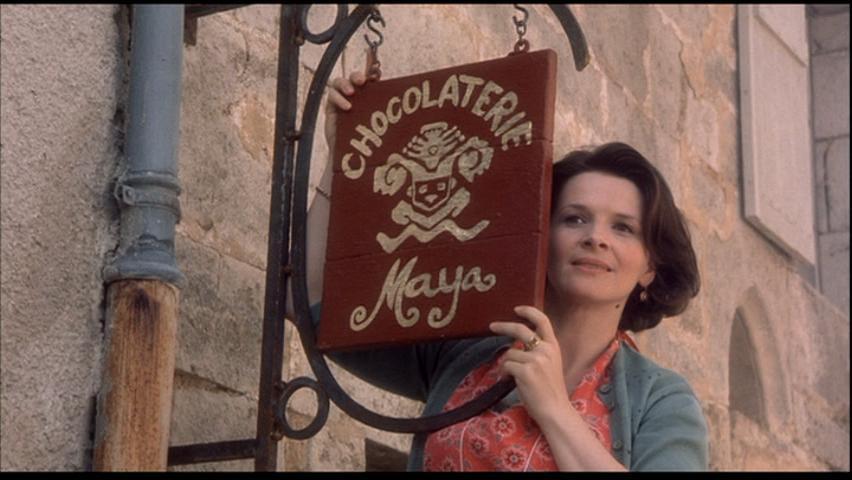
Juliette Binoche changes people’s lives with sweet treats in Chocolat

Director: Lasse Hallström

Cast: Juliette Binoche (Vianne Rocher), Judi Dench (Armande Voizin), Alfred Molina (Comte de Reynaud), Lena Olin (Josephine Muscat), Johnny Depp (Roux), Victoire Thivisol (Anouk Roucher), Hugh O’Conor (Pere Henri), Carrie-Anne Moss (Caroline Clairmont), Peter Stormare (Serger Muscat), Leslie Caron (Madame Audel), John Wood (Guillaume Blerot), Elisabeth Commelin (Yvette Marceau), Ron Cook (Alphonse Marceau)

In 1950s France, expert chocolatiere Vianne Rocher (Juliette Binoche), and her six-year-old daughter Anouk (Victorire Thivisol) travel the country following the North Wind accompanied only by Anouk’s imaginary kangaroo. If that sentence alone has too much whimsy for your stomach to take, don’t invest two hours of your time in the rest of the film. Vianne and her daughter rock up in a very traditional town, run by the Comte de Reynaud (Alfred Molina), a stuffed-shirt who won’t admit his wife has left him. The austere Comte is horrified when Vianne’s sweet goodies prove super popular with the townspeople, whose lives suddenly start to change in profound and exciting ways as the quality of the chocolate helps them discover their own suppressed desires.

As if the title alone wasn’t enough of a warning, Chocolat is almost impossibly sweet, like being water-boarded by hot chocolate. Shot in a village that can only be described as chocolate box, it’s twee, sentimental and exhibits practically all the worst elements of cosy women’s fiction. With Miramax muscle behind it, this heavy-going confection briefly persuaded the world it was some sort of easy-going arthouse picture – rather than a smug fable of cliched situations and characters, coated in an unsettling number of scenes of actors eating chocolate with orgasmic grins.

It will not surprise you to hear that Vianne’s arrival in the village is the catalyst for huge change – the sort of change a trailer would surely describe as “their lives were all starters, until she showed them the importance of dessert”. Vianne is played by Juliette Binoche channelling Nigella Lawson as a yummy mummy domestic goddess. Her shop operates with the sort of business model that only exists in escapist fiction: customers spin a sort of Rorschach wheel and whatever they see in the picture decides the chocolate they will buy (no one would dare ask “Do you just have a box of milktray?”). The whimsy is nearly as thick as the molten goodies in the mixing bowl.

The village is stuffed with esteemed actors going through the motions. Judi Dench shows Maggie Smith that she can play crusty-old-women-with-hearts-of-gold as easily as her, as a grandmother who has been refused access to her grandson by his over-cautious mother. (It’s the sort of role people love to see veteran actors do, and duly landed Dench an Oscar-nomination). With some flatly written lines, Dench provides a bit of sparkle in a role she could play standing on her head. Carrie-Anne Moss is pretty good as her daughter, a repressed fusspot, who won’t let her son have fun. John Wood plays a crusty bachelor with the hots for war widow Leslie Caron. You don’t need to be a master confectioner to mix these ingredients together into the expected resolutions.

Hallström keeps events ticking gently along, in a film so soothing it seems designed to help you fall asleep. For a while Hallström was the go-to-guy for middle-brow, unimaginatively “prestige” adaptations of middle-brow, popular novels (this was his second after The Cider House Rules – and he had several to follow – each progressively a bit worse than the one before). The closest genuine emotion comes from Lena Olin’s abused wife of bullying café owner Peter Stormare. Sure, Olin’s problems are solved in about a few minutes, but the threat to her from Stormare is an intrusion of something that feels genuinely dramatic in what is otherwise a souffle. (Olin gets the film’s only memorable line, whacking her husband over the head when he attacks Vianne with the words “Who says I can’t use a skillet”, a line that’s both rather funny and bizarrely out of place.)

Naturally, the stuffy village learning needs to learn to cut lose a bit and embrace life, love and happiness. Alfred Molina’s Comte is the sort of chap who browbeats the local priest (who loves himself a bit of Elvis) into parroting the conservative sermons he’s written for him about the virtue of being miserable. Of course, the Comte is actually a decent guy (when he finds out what a bastard Stormare is, he banishes him at once), just old-fashioned and as much in need of the orgasmic power of chocolate to heal his pain as everyone else. Did Cadburys and Hersheys sponsor this film?

Just when you thought the film’s cosy warmth and supreme heritage gentleness couldn’t get more trying, it tops itself with the arrival of a punch of whimsical Romani people even more smackably smug than Vianne. Worst of all they are led by Johnny Depp at his most lazily teenage dream-boat, sporting a pony-tail and a bizarre Irish accent. He’s even more of a free-spirit than anyone else, strumming his guitar at the drop of his hat. You’ll dream of a hole in his boat taking him to the bottom of the Seine.

It all ends as you might expect: everyone discovers lovely things about themselves and each other, everyone settles down, Depp and Binoche get-it-on (and keep the relationship going as he drifts in-and-out town), the Comte becomes a top bloke and the invisible kangaroo skips away on the North Wind. Eat a box of Quality Street instead.

Cimarron (1931)

Richard Dix strikes a pose as Irene Dunne looks on in the appalling Cimarron

Director: Wesley Ruggles

Cast: Richard Dix (Yancey Cravat), Irene Dunne (Sabra Cavat), Estelle Tayler (Dixie Lee), Nance O’Neil (Felica), William Collier Jnr (The Kid), Roscoe Ates (Jesse Rickey), Stanley Fields (Lon Yountis), Robert McWade (Louis Hafner), Edna May Oliver (Tracy Wyatt), Judith Barrett (Donna Cravat), Eugene Jackson (Isaiah)

The only reason Cimarron doesn’t regularly top polls of the worst Best Picture winners ever made, must surely be because so few people have seen it since 1931. Believe me you are not missing anything. A ponderous, pompous, puff of a movie, Cimarron might have tricked people into thinking it looked radical, daring and inventive at the time – but it’s fooling no-one today.

Over 40 years in Oklahoma, from the Land Rush of 1889, the town of Osage grows from tents and mud hats to a thriving modern 1920s city. Part of the story of the town are the lives of two of its founders, Yancey Cravat (Richard Dix) and his wife Sabra (Irene Dunne). Yancey is a noble, man’s man with wanderlust, who rides into Osage, guns down the bullies and campaigns for the rights of the poor and down-trodden via his newspaper. Sabra picks up the pieces when he wanders off (often years or decades at a time) raising the children, running the newspaper and eventually becoming a congresswoman.

It should be a sprawling epic, but Cimarron is a dull fart of a film that runs out of any narrative drive after its opening hour (which largely focuses on 1889-1893) and collapses into a series of disconnected, uninteresting scenes, very dully filmed, that sees our characters obtain increasing amounts of old age make-up while shedding what little personalities they had to begin with.

Ruggles shoots the film with such tepid flatness, you might as well be in the theatre. Most of the scenes sees the camera set in a static position (to capture the sound – the sound mix on the film, by the way, is appalling making most of the dialogue extremely hard to hear) with scenes taking place in medium shot allowing us to see the sets and follow the actors walking in and out. You might as well be sitting in the theatre – although, if you were, it would be harder to leave.

It’s not helped by the generally terrible acting, pretty much across the board. Irene Dunne just about emerges with some dignity by underplaying and even showcases a surprising amount of feminine independence – even if her character is an insufferable prig, demonstrating flashes of racism as and when the plot requires. But you can at least see why she continued to have a career – just as you can see why this was Richard Dix’s highest profile sound film. Dix doesn’t know whether to go for a declamatory theatrical style or to telegraph every emotion with poses, silent movie style. So, he does both. The result is a ludicrous collection of poses and grandstanding, that his wild eyes, dyed hair and middle-distance starring stance doesn’t help with. It’s a dreadful performance.

It’s fitting it sits in a film as bad as this one. The only moment of invention the film manages is its opening sequence, restaging the Oklahoma Land Rush. This set piece uses an army of carts and horses to restage the entire land grab from start to finish, the camera capturing these waves of prospectors charging into Oklahoma to grab the best bits. Nothing else in the film beats it, not even the gun fight that occurs part way through. Instead, the film degenerates into long, vague scenes, usually centring around a self-important speech of self-righteous bluster from Dix.

Nothing looks more dated in the film than its depiction of anyone not white and Christian. Now I will cut the film a little bit of slack here. It’s clearly trying to make a plea for greater toleration. Dix’s character passionately campaigns for the rights of Native Americans (or “the red men” as he puts it). He treats his black servant Isaiah with love and affection. He defends the Jewish prospectors. This film is trying to push an agenda more advanced than its time. It gets points for that.

It loses them all though for how these characters are presented. The Jewish characters are smiling, wizened Shylocks. The Native Americans are exotics, forever “How”-ing and happily accepting their status as second-class citizens. Worst of all, Yancey’s servant Isaiah is one of the most shockingly racist caricatures put on film. You think Gone with the Wind is bad? Watch this. Isaiah is stupid, muddle-headed, speaks in a clumsy patois, ridiculously fawning, delighted to be a servant and treats the white men like Gods. The film encourages us to chuckle at him, while patting his head with a smiling paternalism. All the tragic death scenes in the world can’t wash the bad taste out of the mouth. Back then it was fairly forward-thinking – today its jaw dropping.

The main problem is the film is a dull, drifting, dawdling mess that goes nowhere and asks us to root for two characters who are both, in their ways, self-important prigs, convinced they are right about everything. It builds to nothing at all, other than mirroring the sort of relentless march of time you’ll experience while watching it. It’s patronising, uninteresting and outstays its welcome. I can’t even work out why it’s called Cimarron (the name of Yancey and Sabra’s son). Is it because it’s a film asking us to think about the future? It can’t be because Cimarron is important – in ten minutes he ages from about 12 to 40. But then the fact the title refers to an empty non-character is somehow fitting for a film that really should be put down at the earliest opportunity.

Driving Miss Daisy (1989)

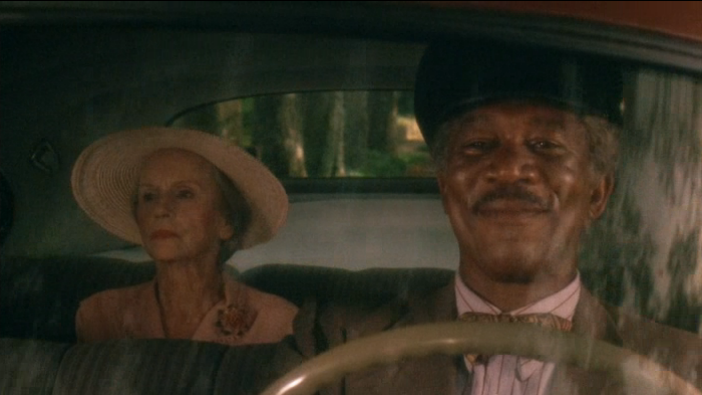
Jessica Tandy and Morgan Freeman drive through the South in Driving Miss Daisy

Director: Bruce Beresford

Cast: Morgan Freeman (Hoke Colburn), Jessica Tandy (Daisy Werthan), Dan Aykroyd (Boolie Werthan), Patti LuPone (Florine Werthan), Esther Rolle (Idella)

Retired Jewish teacher Daisy Wethan (Jessica Tandy) crashes her car while trying to drive down to the store. Her wealthy businessman son Boolie (Dan Aykroyd) decides she’s too old to drive herself, so hires black chauffeur Hoke Colburn (Morgan Freeman) for the job of Driving Miss Daisy. At first Daisy resists this new servant in her life but, doncha know it, over the next 23 years the two of them grow closer together as they deal with the ups-and-downs of life and find out that, heck, under the surface maybe we are all more alike than we think.

It’s been a recurrent theme that some films (like Shakespeare in Love or The Greatest Show on Earth) have found themselves actually diminished by the burden of being an “Oscar Winning Film”. Driving Miss Daisy joins them, an impossibly slight little puff of air film which could be blown away by the faintest breeze. It won out in a year where the most exciting movies of the year (sex, lies and videotape and most strikingly of all Do the Right Thing) failed to get nominated. It seemed a particular slap in the face that a film which looks at racial relations with such a cozy, nostalgic view as this one should triumph in the year Spike Lee made a film that exposed how close America was to racial tensions erupting into violence (worst of all this wouldn’t be the last time for Lee).

Driving Miss Daisy wants no part of that though. This is the Downton Abbey of racial dramas, a nostalgic and overwhelmingly “nice” film that uses odd-couple drama to make us feel good about ourselves. In this vision of the south, the Whites (and I am not buying the film’s pained attempts to suggest anti-Semitic mutters here and there is on a par with lynching) are mostly paternalistic masters, and the blacks forelock tugging servants hoping for a better life but grateful for the support of their betters. There isn’t a single black character (bar Hoke’s niece who appears wordlessly in the final minutes of the film) who isn’t a domestic servant, and not a single white person who isn’t genteel (bar a single racist cop 52 minutes into the film).

Not a single black character is ever angry, complains about injustice or is anything less than patient, noble and humble. It’s all part of a film designed to make us feel better about the South’s appalling record of racism and segregation by presenting it as exactly the sort of genteel Gone-with-the-Wind-good-old-cause fantasy many people remain comfortable with today, where black people needed to be looked after because (as even Daisy puts it in the film) they are basically children.

Now saying that, the film is of course light, fluffy, inoffensive and (there is no better word for it) nice. You can sit down and let the gentleness wash over you, no problem at all. I can see why it was a word-of-mouth hit in 1989, and why the Oscars gave it the big one. It’s well made and very faithful to the Pullitzer winning play it’s based on. Beresford’s genteel direction lets the dialogue and actors do the work (he didn’t get a nomination – though even he modestly said later he didn’t really feel he deserved one).

Freeman and Tandy do decent work with these incredibly simple characters. Tandy could have played this cookie-cutter “cantankerous-but-loveable-old-lady” role standing on her head. But she does it well (again, drawing those Downton parallels, this is exactly the same role Maggie Smith has in that series) and nails a little speech where she wistfully remembers visiting the sea then stops as if embarrassed by her self-indulgence. She won the Oscar.

Freeman here (and in Glory) invents a screen persona. He’s kindly, worldly-wise (but not bookly wise – he ain’t never had time to learn readin’), patient, long-suffering but full of dignity. But, with his repeated “Yassums”, his non-complaining acceptance of his position and status and his deferential nature, he’s pretty close to a sort of fantasy Uncle Tom-ish figure. Sure, Freeman can sell those quiet moments, where it’s clear Hoke has learned to bury feelings of fear (his brief confrontation with a racist cop – and his controlled fear – is the film’s most effective moment) but the whole performance feels like a carefully constructed lie.

It’s in line with the film, where the black experience has been cut down and filtered in such a way to make white people feel good about themselves. Because we can watch the film and go “oh yeah I’d be like Daisy and Boolie, they’re so sweet” and we wait 52 minutes before an unpleasant character turns up and uses the n word – and then he’s mean to Daisy as well for being Jewish and heck gosh darn it we are all the same after all, what a relief, pass the popcorn. You come out of Driving Miss Daisy and you have learned nothing.

Worse than that, you’ve been shown a cuddly fantasy world. We never see Hoke outside of the setting of his master’s homes (there is no other way of putting it) and learn nothing about his life or experiences. We see him melt the heart of an already-fundamentally-decent woman, but their relationship always has boundaries. Driving Miss Daisy would be fine as an escapist piece of fluff – but time has shown it increasingly to be a film designed to make us feel reassured that history wasn’t as distressing as it might have been. And I’m not sure that’s a good thing.

The Firm (1993)

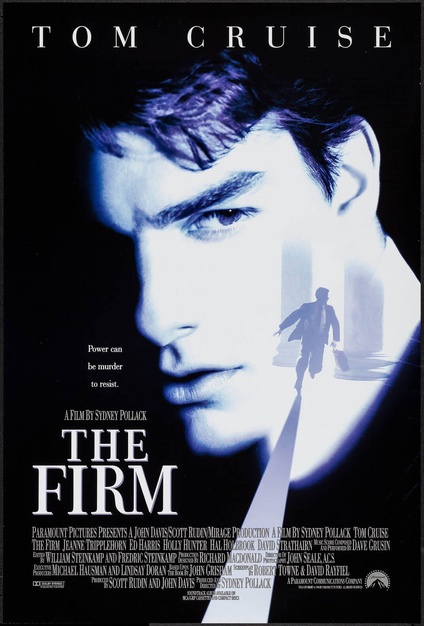
“He can’t handle the truth!” Tom Cruise takes on The Firm. We lose.

Director: Sydney Pollack

Cast: Tom Cruise (Mitch McDeere), Jeanne Tripplehorn (Abby McDeere), Gene Hackman (Avery Tolar), Holly Hunter (Tammy Hemphill), Ed Harris (FBI Agent Wayne Tarrance), Hal Holbrook (Oliver Lambert), Jerry Hardin (Royce McKnight), David Strathairn (Ray McDeere), Terry Kinney (Lamar Quinn), Wilfrid Brimley (Bill DeVasher), Gary Busey (Eddie Lomax), Paul Sorvino (Tony Morolto)

Mitch McDeere (Tom Cruise) is graduating top-of-his-class from Harvard Law. A plucky kid who’s worked for everything he has – and who wants to provide the best he can for wife Abby (Jeanne Tripplehorn) – Mitch has lots of offers but is seduced by a perk-filled offer from a law firm in Memphis. Everything goes wonderfully at first. But then associates at the firm start to die under suspicious circumstances and Mitch discovers no-one everleaves the firm except in a wooden box. Maybe all that off-shore tax-dodging isn’t quite as innocent as it seems – and those big-city clients with Italian-sounding names aren’t so friendly after all…

Adapted from a best-selling novel by John Grisham at the height of his airport-novel flogging days, The Firm is bought to the screen by Sydney Pollack. And what a complete dog’s dinner he makes of it. The Firm is a dreadful film: long, slow and dull with a plot that stretches right through elaborate and comes out the other side as confusing. By the time Mitch is tearing through Memphis, briefcase flapping behind him, you’ll have long-since ceased caring about anything involved in the film at all. Because for a film of such great length, very little seems to happen in it – and what little does happen is wrapped up in a mixture of legalese and curiously flat chase sequences.

Cruise plays Mitch at his most gung-ho, cocky, shit-eating grinnish. He’s preppy, super-smart, arrogant but also loyal, brave and principled. Aside from a brief temptation by money – and that because he wants the best for his family! – and of course a dalliance with a honey-trap on a beach (but it was a set-up, so not his fault!), he’s practically perfect in every way. He’s even a decent athlete, playfully taking part in back-flipping competitions with a break-dancing pre-teen busker (one of the most clumsy and bizarre introductions of a Chekov’s skill in the movies).

To put it bluntly, Mitch is an irritating character and watching him (very slowly) decide to do the right thing doesn’t make gripping viewing. Around him a host of experienced character actors do their thing, none of them stretching themselves. Tripplehorn does her best with the thankless part of “wife”, though she does at least get to do something a little proactive at the end. Hackman grins and coasts as Cruise’s mentor with the lost conscience. Hunter pouts and wisecracks (Oscar-nominated) as Grisham’s twist on an Eve-Ardenish secretary. Holbrook and Brimley scowl behind smiles as high-ups at the Firm. Harris shouts a lot as a permanently angry FBI agent with a heart of gold. Sorvino breaks out his Mob Boss 101.

Pollack marshals all these forces together with minimal effort and then ticks the boxes of all Grisham-cliches. The only thing missing are some courtroom dynamics, but we get the next best thing with wee-Tommy playing the FBI, the Mafia and the Firm off against each other in a desperate attempt to stay one step ahead of the game. I can’t stress enough how turgid and dull this film is. However scintillating you feel the set-up you might be, as the film clocks into the second hour (with 30 minutes still to go), you’ll be amazed how little sense of peril or threat there is.

There is nothing sharp, pointed or pacey about this film. “It has to happen fast” Tom announces at one point, as he kicks his impenetrable plan into gear. “Good luck in this film” my wife commented. She’s spot-on. Pollack fails to bring any sense of pace or peril to the film. For all we are repeatedly told Cruise’s life is at risk, it never really feels like it.

A big part of this massive failure is the terrible musical score that covers every single second of the film. Provided by an Oscar-nominated Dave Grusin (beating out Michael Nyman’s score for The Piano from even being nominated, one of the most inexplicable oversights at the Oscars from the 90s), every single second of the film is overlaid with a plinky-plonky piano score that would not sound out of place in a second-rate jazz bar or a hotel lift. Rather than bring you to edge of your seat, the score actually makes you feel like you should be resting back in it with a large cocktail in hand and a fuzzy sense of upcoming sleepiness clouding your brain. Which to be honest might work: pissed and half-asleep is probably the only way to get anything from the movie.

The Reader (2008)

Kate Winslet and David Kross in the vomit-inducing The Reader

Director: Stephen Daldry

Cast: Kate Winslet (Hanna Schmitz), Ralph Fiennes (Michael Berg), David Kross (Younger Michael Berg), Bruno Ganz (Professor Rohl), Alexandra Maria Lara (Ilana Mather), Lena Olin (Rose Mather/Older Ilana Mather), Linda Bassett (Mrs Brenner)

In 1960s Germany, teenage Michael Berg (David Kross) falls in love with an older woman, Hanna Schmitz (Kate Winslet), a tram conductor who seduces him and asks him to read classic novels to her in between bouts of passionate love making. As an adult (Ralph Fiennes), Michael has never got over the effect the affair had on him. But that’s largely because, as a law student, he sat in on a trial where he discovered Hanna was a guard at Auschwitz, responsible for the gas chamber selections and later locking 300 Jewish women into a burning church.

Her co-defendants turn on Hanna – but Michael realises that Hanna is illiterate so cannot possibly be the author of the reports that her co-defendants says she wrote. Hanna is imprisoned – but years after the trial, Michael rekindles a distant contact with her, sending her recordings of books he has read, which she uses to teach herself to read. Will these embodiments of new and old Germany manage to come to terms with their shared past?

There is no way round this: The Reader is a truly dreadful film. It might be the worst film nominated for Best Picture this century (the backlash over its inclusion over The Dark Knight led to a radical change in nomination rules). It is sentimental, trite, insulting, empty, vainglorious awards-bait, shot with a heritage-stylishness. It utterly fails at almost every single thing it attempts to do: from coming-of-age drama, to questions of moral responsibility in a police state, to a country reconciling with its traumatic and criminal past. In fact, it fails so utterly and completely, you are more likely to be left open-mouthed at its crude tone-deafness than remotely moved by its emotional manipulation. It is a truly dreadful film.

Daldry’s highly average direction (Oscar-frigging-nominated!) is sickeningly twee, using a number of carefully staged moments to tweak heart-strings and point our sympathies the right way. It’s the sort of Holocaust film where the only direct engagement with the subject is a beautifully framed, poetically-scored, insultingly-genteel scene of the hero visiting Auschwitz and starring sadly at collections of shoes and the gas chambers. Presumably because, any shots of the actual Holocaust – or the crimes of Hanna, who happily confesses to selecting thousands of women and children for death – would end any chance of us feeling sorry for her.

Because this is indeed a film that feels it is challenging us to say “look again” – as if Daldry and screenwriter David Hare are sitting on our shoulder saying “Ah you think it’s all black-and-white, but see how things are more complex than that”. So we are shown a concentration camp worker whose defence really is that she was just following orders – and we are asked to sympathise! She only voluntarily signs up for the SS because, you know, it was a better job than the factories. In a crudely empty moment she asks the judges at her trial “what would you do?”. Daldry shoots like this as a “Gotcha” moment – we are clearly meant to come away from that moment feeling “ah yes, there but for the grace of God go all of us”.

Only that is, for want of a better word, bullshit. Turning your back on Jewish neighbours being taken away out of fear for your own safety would be one thing, but taking a job in a death camp, selecting people for death and then watching 300 people burn to death in front of you but doing nothing? That is quite another. And the film knows this deep down, which is why we never get a flashback, or a photo, or anything that might make us sit up and go, “hell I don’t care how much you were just a foot soldier, what you did was just wrong”. To really top it off, the film even makes it clear Hanna took this job freely (not under duress, or because she was poor and starving, or any other extenuating circumstance that might prompt complex questions about what “normal” people do under evil governments) – and she’s not sorry. Not even a little bit. Not ever at any point.

These muddied morals carry over to the vomit-inducing idea that we should feel sorry for Hanna because she is fascinated by literature but deeply ashamed of her illiteracy. So ashamed in fact that she would rather be seen as the ring-leader of a mass murder than illiterate. That very sentence alone should really give you an insight into her perverted psychology. And I love books, but I don’t think that would be much of a mitigating factor if I was also Jack the Ripper.

That’s not to mention that the film doesn’t even want to engage with the fact we are told Hanna selected sensitive, vulnerable children in the camp to read for her (and then had them killed) – and doesn’t draw a connecting line between that and her using the same tactics with Michael, seducing a vulnerable 15 year old child to control him so that he will read to her. Her behaviour is clearly not some secret shame, the product of an isolated set of circumstances that will never come again – it’s who she is, and she has made no effort to change it. Hanna is worse than a child abuser, she’s a sociopathic monster and the film’s attempt to paint her as something else is appalling.

I suppose it could have just about worked if it the film had managed to make some decent material out of its theme of Germany’s struggle with its history. But even that gets fudged. There is one decent scene, as Michael and his fellow students discuss morality with the professor (a cuddily Bruno Ganz), but other than that the idea gets lost in the cut. Instead it settles for “what would you do” confrontations and clumsy parallels between Michael’s distress about finding out the truth and his trauma and guilt leading to a struggle to emotionally connect with people.

But then he’s only matching the film which has no emotional understanding of people. It sees nothing wrong with what I am about to describe. After Hanna’s death, Michael follows the request of her will to take her life savings to the daughter of one of her victims. Not only is Michael emotionally illiterate enough to carry out this shockingly tone-deaf request, but (amazingly) the woman not only sees him in her home but keeps as a souvenir the tin Hanna kept her cash in and then puts the tin next to a her picture of her family murdered in the Holocaust. Even writing it I can hardly believe I saw it. It’s the film’s attempt to say “look there is hope” but not in any universe does any of this behaviour seem even remotely real.

The Reader instead wants to try and juggle a big theme (the Holocaust) with a cliched one (a coming-of-age for a young man) and throw in an airport-novel faux big theme (isn’t reading great!) into a syrupy, awards-winning piece of prestige cinema. It probably deserves some sort of award for getting everything about this catastrophically wrong. By the time Hanna climbs on a pile of books she has made to hang herself, you’ll be desperate to give her a shove.

Oh, Kate Winslet won an Oscar. She’s does her usual excellent job. But the film is utter dogshit.

Armageddon (1998)

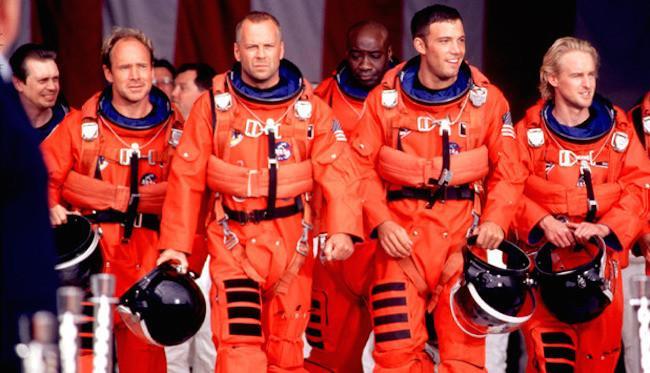
Bruce Willis leads a group of Big Damn Heroes in Michael Bay’s abysmal Armageddon

Director: Michael Bay

Cast: Bruce Willis (Harry Stamper), Billy Bob Thornton (Dan Truman), Ben Affleck (AJ Frost), Liv Tyler (Grace Stamper), Will Patton (Chick Chapple), Steve Buscemi (Rockhound), William Fichtner (Colonel Sharp), Owen Wilson (Oscar Choice), Michael Clarke Duncan (Bear), Peter Stormare (Lev Andropov)

In Michael Bay’s space, no-one can hear you scream. But that’s only because it’s so damn loud up there. It’s 1998’s other “asteroid is going to wipe out humanity” film, the one that came out after Deep Impact but grossed more. NASA recruits ace driller Harry Stamper (Bruce Willis) and his team (including Will Patton, Steve Buscemi, Michael Clarke Duncan and Owen Wilson) to fly up to an asteroid the size of Texas, drill a hole in it, drop a massive nuke in and blow it into two bits that will bypass the Earth. Will humanity be saved? And will the tensions ever be resolved between Harry, his protégé AJ (Ben Affleck), and Harry’s daughter Grace (Liv Tyler) who, much against her dad’s will, wants to marry AJ? Houston, we have a problem.

Armageddon is the ultimate expression of Michael Bay’s style. With the camera swooping and rotating wildly around characters on the move, the fast-editing, the assault on the ears, the green-yellow-blue hue, every shot and line of dialogue in Armageddon feels like it was made to be inserted into a trailer. It’s an overlong onslaught (nearly two and a half hours) which rarely goes ten minutes without a sequence that features explosions, furious shouting and frantic camera movements. Most of the action in Armageddon is incoherent and the film rather neatly replicates the experience of being actually hit by a meteor.

For many people this is a guilty pleasure. But there is very little pleasure to be had here. By trying so hard to top Deep Impact – a film he hadn’t even seen at this point – Bay dials everything beyond 11. So much so it becomes exhausting. Half the action sequences (of which there are many) are impossible to understand, such is the fast editing and the way all the dialogue is screamed by the actors at each other, all at once, drowned out by bangs and crashes. The only dialogue you can actually make out in the film is of the “The United States government asked us to save the world. Anybody wanna say no?” variety, built for slotting into a trailer before some more bangs.

In fact the whole film is basically a massive trailer for itself. It’s unrelenting and after a while not a lot of fun. I guess if you catch it in the right mood it might just work. Bay gives it everything he has in his arsenal. But even he can’t overcome performances from his actors that range from bored and unengaged (Willis and Buscemi both fall into this category) to over-played grasping at epic-status (Affleck and Tyler fall into this one). Billy Bob Thornton comes out best with a wry shrug, knowing the whole film is bonkers but going with the ride.

Anyway, it all charges about a great deal, even while it never knows when to stop. In every situation one crisis is never enough – it’s best to have three at once. Not only does someone need to stay behind, but the asteroid is breaking up and the shuttle won’t take off! What a to-do! The film is desperate to excite you, like a 7 year old who wants to share the BEST-THING-EVER with you and doesn’t draw breath while telling you every single detail.

Of course, scientifically the film is nonsense, but that hardly matters. How NASA can know the comet being blown in two will create two bits that will miss the Earth (rather than two impacts or a whole load of debris) is unclear. Timeline wise – particularly early on – the film makes no sense. But then who goes to Bay looking for a science lecture? It even opens with a ponderous Charlton Heston voiceover, all part of the straining for grandeur.

It’s not even the best Bay film (that would surely be the far more enjoyable but equally overblown The Rock closely followed by the first Transformers film, the only one that doesn’t make you feel soiled after watching it). Armageddon could be a guilty pleasure. But really it’s terrible. You should just feel guilty.

Forrest Gump (1994)

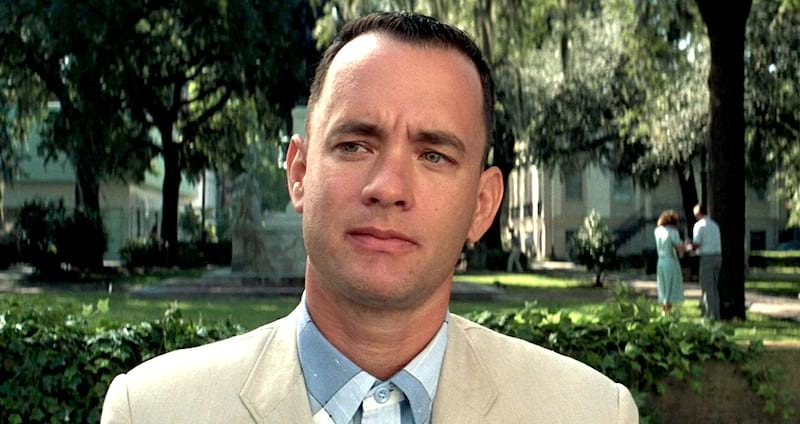
Tom Hanks unleashes some cloying charm in Forrest Gump

Director: Robert Zemeckis

Cast: Tom Hanks (Forrest Gump), Robin Wright (Jenny Curran), Gary Sinise (Lt Dan Taylor), Mykelti Williamson (“Bubba” Blue), Sally Field (Mrs Gump), Haley Joel Osmont (Forrest Gump Jnr)

Oh dear God. It’s worse than I remembered. I hadn’t watched Forrest Gump since maybe 1995. I hadn’t liked it much then. But that might just have been my contrariness: sure I was going to find faults in the film that became a cultural phenomenon. Rewatching it today: actually no, I had good taste. This must be one of the worst films to ever win the Best Picture Oscar – and certainly one of the most unsettlingly twee, sentimental, conservative-minded pieces of feel-goodery to ever come out of Hollywood.

You surely know the plot. Forrest Gump (Tom Hanks, who to do him credit plays this one note character with real charm) is a good-hearted man with developmental difficulties (IQ below the 75 mark) who lives through some of the most turbulent times in American history. From racial violence in the 1950s, to Vietnam, the Cold War, the political turmoil of the 1970s, Forrest lives through it all. And largely lets it wash over him, never letting it intrude on his simple, folksy, homespun gentleness. Although that might mostly be because he also doesn’t really understand most of the things happening around him. He’s quite a contrast with the girl he’s loved since their childhood, Jenny (Robin Wright) who embraces everything the modern world brings (protest, politics, drugs) but of course finds her life much less rewarding and happy than Forrest’s “go-with-the-flow” acceptance.

Just writing it down I can feel my stomach turning again. At the time the filmmakers were very keen to promote the film as stridently apolitical. Yeah sure the film never praises, say Kennedy or Nixon, just as it goes out of its way not to state an opinion on either George Wallace or the Black Panthers. But the film is, at its heart, a large, beating, reassuring lump of rank conservatism.

It looks back at America’s past with rose-tinted glasses, portraying a world which would have all better if they had taken a leaf out of Forrest’s book. If we had all been just as uninvolved, decent, kind and stayed at home where we were happy rather than getting engaged in major social and political issues, everything would have been better. Forrest is a celebration of all-American virtues of honesty, bravery and loyalty – but the film is also an implicit criticism of other all-American virtues like curiosity, scepticism and challenging the status quo. Basically, the film celebrates the cosy attitudes conservatives adore and has nothing good to say about more liberal values. Sure, it doesn’t roll out a banner for Nixon – but you can also see this playing well at a Trump rally, with people saying we would be a happier country if we could all be a bit like Forrest.

That’s really tough on the film – and I imagine Zemeckis and co would be rightly horrified about that very idea – but it’s a film that doesn’t once challenge the audience at all. I was reminded throughout of Being There which took a similar concept: a man with low IQ finds himself at the centre of major events. But while that film was a satire – where the characters invest Chance’s gnomic utterings with profound wisdom – this film is a serious drama which encourages the audience to see a “deeper wisdom” in Forrest, to effectively treat him as a sort of prophet. There is a reason bland nonsense like “life is like a box of chocolates” caught on.

The original book was far more of a satire on the shallowness of modern culture. This instead plays like a sort of holy fool pilgrimage, with Forrest’s interaction with historical figures played for laughs. From showing Elvis how to dance, to (in the film’s most cringing moment) inspiring John Lennon with the lyrics of Imagine (another reason to hate Forrest), the film is crammed with gags like this. While the insertion of Tom Hanks into newsreel footage with Kennedy, Johnson and Nixon is impressive (although it has not aged quite so well), it’s not made with any point. This is because Forrest has no real appreciation of what’s happening around him. He’s merely moving from one event from the next – but this lack of engagement and understanding is held up as a virtue. And the very fact that it is, speaks to the film’s underlying conservatism and love for simple, small-town American ideals that shouldn’t be sacrificed to all that uncomfortable social and political change.

The film is particularly harsh on Jenny, decently played by Robin Wright, who is portrayed as someone succumbing to every trend and popular movement of the era. And whom the film consistently punishes for this by showing her emptiness, shallowness and unhappiness, until it finally consigns her to death from AIDS. Just in case we’ve missed the point, Forrest repeatedly urges her to come home – to stop engaging with the wider world and the problems in it and bury her head back into the sands of home, where everything is simple, safe and nothing changes.

The world of Forrest Gump is one where corruption and war mongering don’t matter because it happened a long time ago. A world where racial politics are too distasteful to mention (although since Forrest’s Granddaddy was a leading member of the KKK – a flashback played for laughs – that clearly wasn’t the case). Where the only black people Forrest encounters are the outsider soldier Bubba (who of course dies in ‘Nam – even in serious films, the Black Guy dies first) and his servile family whose names don’t even merit a mention, but who become the grateful beneficiaries of Forrest’s oblivious generosity. But there is no sense here of the dangers and violence of America (bar some nasty jocks at Forrest’s college) – which considering the film has a cameo from George Wallace of all people is really striking.

But then the problems of the world I guess don’t seem that bad if you just don’t think about them and instead go through life with a smile on your face, blissfully unaware of what’s happening around you. The closest the film gets to giving Forrest an opinion on something is when he is asked to speak at a rally against Vietnam – and even then the sound cuts out meaning we can’t hear him (though it seems to have been profound). A wittier film, like Being There, would have made this a moment for satire. Here it seems more like the magic of Forrest’s simplicity mustn’t be shattered for the audience by daring to suggest he actually has a view on something.

The film is a warm and comforting hug, that tells people the past wasn’t that bad and would have been better still if we’d just been nice to each other. That wanting to change the world is dangerous and greater rewards can come from going with the flow. For all Forrest is bereft by Jenny’s death, the film still rewards him with family, home and friends. It’s sentimental, empty, depressing crap. Well made, but simply dreadful. You may not know what’s in a box of chocolates, but you sure as shit will remember after you’ve vomited them all back up after watching this.

Victoria and Abdul (2017)

Victoria and Abdul
Judi Dench and Ali Fazal forge an unlikely friendship in the tame heritage flick Victoria and Abdul

Director: Stephen Frears

Cast: Judi Dench (Queen Victoria), Ali Fazal (Abdul Karim), Tim Pigott-Smith (Sir Henry Ponsonby), Eddie Izzard (Prince Albert), Adeel Akhtar (Mohammad Bakhsh), Michael Gambon (Lord Salisbury), Paul Higgins (Dr James Reid), Olivia Williams (Baroness Spencer), Fenella Woolgar (Harriet Phipps), Robin Soans (Lord Stamfordham), Simon Callow (Giacomo Puccini)

In the last decade of her life, Queen Victoria (Judi Dench – who else?) makes an Indian servant, Abdul Karim (Ali Fazal), one of her closest friends and advisors. As Victoria and Abdul become closer, the rest of the court are outraged – bad enough that the Queen is spending all this time with an over-promoted servant, but an Indian as well?!

The fundamental events of Victoria & Abdul are true. There was a man called Abdul Karim – and Victoria did raise him from servant to a confidant. He did cause conflict in the royal household and was finally sent back to India after her death, after surrendering most of his papers. But Victoria & Abdul repackages this friendship into a cosy, Sunday-afternoon entertainment, bereft of depth. And carefully works on the rough surfaces to make the story smooth and easy to digest.

The film is clearly trying to ape the success of Mrs Brown – a far more intelligent and emotionally complex (if similarly heritage) film that looked at Victoria’s previous all-consuming friendship with a male servant, John Brown. But that film didn’t close its eyes to the negatives of such relationships, as this one does. It made clear royal attention can be fickle – and being elevated above others can help make you your own worst enemy. In that film, after a honeymoon, the friendship declines into one of residual loyalty but reduced affection. It’s a realistic look at how we might lean on someone at times of grief, but separate ourselves from them later. Victoria & Abdul takes only one lesson from Mrs Brown: that a close bond between monarch and commoner is heart-warming.

The film in general is in love with the idea that if the Queen could only speak directly to her people, the world would be a better place. It presents a Victoria stifled by court procedure who knows very little about her empire and is constrained by the courtiers around her. It wants us to think that if the Queen took direct rule, she’d be kinder, wiser and more humane. That this figurehead symbol could craft a better British Empire if she was an absolute monarch.

Unfortunately, it doesn’t work. This romantic view of “Victoria the Good” is comforting stuff, but undermined even within the film by our introduction to the Queen at a royal dinner, where Victoria stuffs food down herself so quickly that mountains of untouched food goes uneaten on the plates of the other diners (as all plates are removed the moment she is finished). And despite being told that the Koh-i-noor diamond was stolen by the British (to her surprise), she still doesn’t think twice about wearing it later in the film while in the midst of her Indian passion. And while the real Victoria loathed the racist attitudes of some at her court, she still clearly sees herself as a paternalistic mother figure for India, which could of course never be able to make its own decisions about things.

Not that the film is interested in tackling more complex ideas of the position of India and its independence. It’s similarly confused by Abdul himself. In a more interesting film, Abdul would have been partly naïve servant and partly charming rogue. He very carefully spins an invented story of himself as a teacher and thinker (he’s actually a clerk from a fabric office) and it would have been interesting to see his building of a relationship with Victoria at least partly being based on self-gain. He certainly gains an awful lot from her – from his own carriage on her train to a home and his own servants. It would have been possible to have this side of him and still have his loyalty and friendship to the Queen being genuine. But it’s too much for the film to tackle.

An Abdul who was consciously playing a role of exotic thinker might have come across as a scam-artist – but would have given the film a lot more to play with, when the royal court is full of people positioning and presenting themselves for influence. Adeel Ahktar’s fellow-servant Mohammed even suggests in one scene that this is what Abdul is doing – and good luck to him. But the film is scared that this could be seen as endorsing the court’s fears about Abdul. So the character is neutered into nothing: he becomes exactly the sort of empty “exotic”, free of opinion and character, that filled out the extras list of a 1940s epic. He has no agency, never makes any decision or expresses any opinion. And his feelings for Victoria are presented as totally genuine which, combined with his foot kissing, turns him into someone who looks and feels really servile.

This is because the film wants to tell the story of a perfect friendship, with the British upper classes as the hissable baddies (never mind that no one is more upper class than Victoria). Never mind that Abdul’s action will indirectly condemn Mohammed to death in the British climate – or that while Abdul rises, Mohammed becomes his servant, still consigned to sleeping on the floor of his railway carriage. We learn nothing about Abdul. How did this clean-living saint become riddled with the clap? Why did he die so young? Did he really think nothing of the riches and honours Victoria showered him with? We don’t have a clue.

Instead the film keeps it simple with goodies (Victoria and Abdul) and baddies (almost everyone else). The most politically astute character, Mohammed, disappears and never allows things to get unpleasant. Jokes of the courtiers standing around aghast saying things like “Now he’s teaching her Urdu” are repeated multiple times. They’re fun, but it substitutes for dealing with the real issues.

It all has the air of ticking boxes. Frears’ direction is brisk, efficient and free of personality. Dench is great, but she could play this role standing on her head while asleep. Pigott-Smith (in his final role) is fine but Farzal has nothing to work with and Izzard provides a laughable pantomime role of lip-smacking villainy as the future Edward VII. The finest performance – handling the most interesting material – is from Ahktar. He’s the only character who seems to place what we see here in any form of context. Other than that, this film is just a string of very comforting heritage ideas, thrown together with professionalism but a total lack of inspiration.