Scum (1979)

Ray Winstone finds prison life a tough proposition in Scum

Director: Alan Clarke

Cast: Ray Winstone (Carlin), Mick Ford (Archer), Julian Firth (Davis), John Blundell (Banks), Phil Daniels (Richards), Alan Igborn (Meakin), Alrick Riley (Angel), Patrick Murray (Dougan), Peter Howell (Governor), John Judd (Mr Sands), Philip Jackson (Mr Greaves), John Grillo (Mr Goodyear), Bill Dean (Mr Duke)

In 1977 Alan Clarke’s searing condemnation of the borstal system in the UK, Scum, was shot as a BBC Play for Today. Outraged at its content, pressure in the press led to the film being banned. But that didn’t change what an electric bit of work it was – and when talk turned to creating a film version, having a filmed version of the script already in existence that could be used as a pitch tool was invaluable. So was born the film version of Scum, with much of the same cast, a higher budget (although still tiny by comparison to other films) and a chance for Clarke to bring his uncompromisingly harsh vision to the big screen.

Three young boys arrive at a borstal: Davis (Julian Firth) is a sensitive youngster who ran away from his previous borstal, Angel (Alrick Riley) a black kid who suffers the systemic racism at every level of the system and Carlin (Ray Winstone) a hard man with a dangerous reputation, who punched a warden at his last borstal. On arrival, the three are identified as requiring being “broken” by staff: Davis is bullied, Angel abused and Carlin is placed at the mercy of the wing’s “Daddy” Banks (John Blundell), suffering beatings with the authorities turning a blind eye. The entire system is rotten to the core and, while Carlin eventually rises up to take over the position of “Daddy”, it changes little in a young offender’s prison rife with racism, sadism, violence, abuse and rape. 

Scum is almost unbelievably grim and pessimistic for this system of incarceration, finding nothing to redeem or excuse the system across its entire running time. The borstal is a wintery hell on Earth, with justice and sympathy nowhere to be seen. While the system claims to be helping its inmates (aged from early teens to early twenties) to find new skills and purpose in life, its real function seems to be trying to beat discipline and subservience into its inmates by all means necessary. While the Governor (a silkly patrician Peter Howell) may talk faith, duty and country he oversees a system where the wardens ruthlessly beat the inmates, encourage them to ‘discipline’ each other, turn a blind eye to violence and abuse, encourage an atmosphere of racial loathing and generally show no concern or interest in any boy’s problem that can’t be solved without punching them in the mouth.

It’s a world Carlin is dropped into, and he knows it well. Played by Ray Winstone with a chippy anger that never seems that far from bursting to the surface, Carlin might want at first to keep his head down but quickly accepts the only way to survive in this dog-eat-dog world is to be the top dog. There will certainly be no justice from the wardens, who beat him on arrival as a trouble-maker, and set the Wing’s alphas on him to break his spirit. Casually beaten in the middle of the night, it’s the bruised Carlin who is sent to solitary confinement for fighting while his attackers go free. He is joined by Davis, framed for theft and Angel, for whom being black seems to be crime enough (walloped by a warden, and spilling food across his room, he is sent down for keeping his cell untidy).
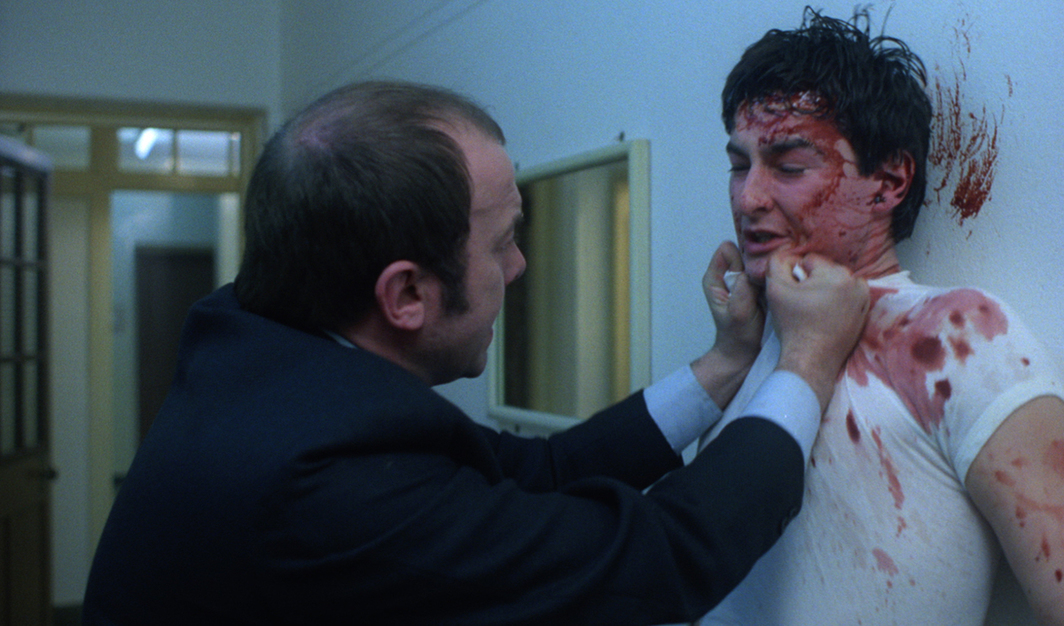
What’s striking in this film though is that, as much as we are meant to think Carlin might be the hero, Clarke is smarter than that. He carefully watches Carlin – a tight-control on Winstone’s face that promises retributive violence is on the way – for almost forty minutes adjust in this system, before he takes matters into his hand. The film’s most famous sequence – shot in one dizzying tracking shot that captures the immediacy of Carlin’s putsch – sees Carlin beat Bank’s weasily sidekick Richards (Phil Daniels) with two snooker balls in a sock, before heading up to his dormitory toilet to beat Banks black-and-blue (and bloody), the cut finally coming to show us Carlin (from Banks POV) screaming at him “I’m the Daddy now”. It’s a masterclass of a sequence, electric in its execution and gives a moment of pleasing oomph (for all its extreme violence) as it shows Carlin finally getting a bit of justice.

Only Carlin’s institution as the Daddy brings largely only a change of figurehead rather than real change. Sure Carlin isn’t quite the bully Banks is, but he’s an unashamed racist, a violent thug, who ruthlessly takes over the money smuggling operation Banks was running (but taking a higher cut) and takes control of another wing by beating its “Daddy” (another black inmate) with an iron bar. Carlin is also quickly adopted by the wardens, just as Banks was, agreeing to maintain peace and control in the borstal in exchange for certain privileges like his own room. Carlin may at first seem to us the angel of retribution – but he’s really a ruthless survivor who is perfectly happy with the status quo so long as he on the top of it.

But then no one has any interest in improving things. The governor is only interested in the appearance of gentility. The wardens couldn’t care less about the rehabilitation of the inmates so long as they have a quiet life. The inmates drift through their life there, never questioning the violence around them. The matron is well-being, but hopelessly rules-bound, whose concern for the boy’s welfare never develops into seeing them as human beings. It’s a systemic failure.

There are other perspectives of course. Possibly the most fascinating character is Mick Ford (replacing David Threlfall in the original production) as Archer, a precociously intelligent inmate in his early twenties, possibly the only one who has read the rulebooks and enjoys running intellectual rings around the wardens. Causing trouble in his “own little way”, he claims to be a vegetarian (requiring a complex set of arrangements to be put in place to feed him separately) and also unable to wear leather boots (requiring his own special plastic boots to be located) and provokes the bible-bashing Governor with thoughts of converting to Islam and Sikhism. 

But he’s also a smart cookie, who recognises (in a fascinating conversation with veteran warder Dukes) that the entire system is a trap, both for the inmates and the wardens, imprisoning them in a system where criminal acts are endemic, the wardens are trapped and brutalised by the system as much as the prisoners and the whole system manifestly fails to do anything other than inoculate Darwinian violence into its inmates (Archer is of course promptly put on report for this cutting analysis). The scene – a key part of the film’s argument – is also a tribute to the skilful writing of Roy Minton, whose script bubbles with both quotable and sadly realistic dialogue.

Clarke’s entire film is the exploration of this violence and the mixture of hypocrisy and denial down to outward condonation and support it receives from the Governor down to the wardens. Any proper review of the conditions in the Borstal is impossible, as it would rock the boat and fly in the face of the positive message the Governor wishes to promote about his institution. Effort is put into putting the boys at loggerheads with each other (usually on racial grounds) as a divide and rule. The weak are happily left at the bottom of the rung, not least the tragic Davis, a sensitive boy (marvellously played by Julian Firth with a heartbreaking vulnerability) totally failed by everyone around him.

Clarke’s final act spins out of a disturbingly intense rape scene of a young inmate (an act witnessed with a sneer by sinister warden Sands, a repulsive John Judd) – the scene a mix of careful filming to show nothing too graphic, and heart-rendering intensity in its vulnerability and violence. The victim is totally ignored, leading to tragic consequences – another difficult to watch scene which hammers home both the cruel indifference of the warders and the helplessness of the victim. The eventual riot this is all leading too is, however, painfully futile: scapegoats are selected at random and beaten senseless, the status quo is reinforced by a bland platitude speech from the Governor. 

Directed with fire and passion by Alan Clarke, a virtuoso of realism and master of social conscious, Scumis a masterpiece of anger, of boiling resentment against systems that do not work and do not care that they do not work. Packed with astonishing performances and some sublime camera work and film-making skill, it’s a must-see.

The Birds (1963)

Tippi Hedron has a bad day at the birdcage in The Birds

Director: Alfred Hitchcock

Cast: Tippi Hedron (Melanie Daniels), Rod Taylor (Mitch Brenner), Jessica Tandy (Lydia Brenner), Suzanne Pleshette (Annie Hayworth), Veronica Cartwright (Cathy Brenner), Charles McGraw (Sebastian Sholes), Lonny Chapman (Deke Carter), Joe Mantell (Cynical Businessman)

Alfred Hitchcock is often seen as the master of technique, the doyen of suspense, the master of the shock twist. Perhaps it was his love of this sort of material that led him to this radical reworking of Daphne du Maurier’s short story The Birds. After all Hitch had already directed the greatest ever du Maurier adaptation (Rebecca), so working with du Maurier was hardly new and turning this English suspense story into a sort of post-apocalyptic, tension-filled plot-boiler was right up his street. The Birds is a master-class in the director’s craft, and a curiously empty experience with barely a human heart in sight.

Melanie Daniels (Tippi Hedron), a slightly spoiled heiress, arrives in a small coastal town in California in order to play a practical trick on lawyer Mitch Brenner (Rod Taylor). Deciding to stay the night, she quickly realises that she has chosen the wrong weekend to get away as, while sparks grow between her and Rod, they also grow between humanity and the birds, as our feathered friends (enemies?) begin a series of escalating attacks on the population of the town that eventually lead to multiple deaths and destruction.

Hitchcock’s film is as masterclass in the slow-burn, deliberately the slowest film the director perhaps ever made. Hitchcock prided himself on his films in suspense being the awaiting of an event to happen. The bomb you know will go off on the bus. The plane circling Cary Grant that seems ripe to attack. The Birds takes this to the nth degree. The film’s very title all but tells you that the birds are going to attack, so Hitchcock takes it nice and slow, letting scenes play out with a breezy lack of pace, almost like a low-rent romantic comedy. But somehow this long unwinding of not a lot happening works well, because every scene somehow becomes a corkscrew as tension as every single bird in shot becomes suspicious. 

This atmosphere is increased by the wide open locations and remote locale the film is set in, with these all-American small town sites seeming to stretch on forever around the characters only serving to stress their isolation and vulnerability in the middle of all this deadly nature. Hitchcock also carefully stripped out all musical score from the film, instead providing a sound track of natural noise complemented by slightly exaggerated bird noise (created by use of a Trautonium, supervised by master composer Bernard Herrmann). The often makes the film eerily and unsettlingly quiet, with the soundtrack only punctured by the frequently (perhaps deliberately) mundane dialogue. Suddenly with this brilliant combination game, the entire film becomes a tense waiting game for the unleashing of avian attacks, every frame a tense waiting for the bang you all know is coming. It’s Hitchcock using every aspect of his reputation, and the film’s promise of violence, to create an overwhelming effect that is deeply unsettling no matter how many times you see the movie. 

Hitchcock also gives a slow build to the bird violence. Events escalate quickly, from the unsettling gathering of the birds in several places (most notably along telephone lines and outside a school playground) to subtle messages about chicken’s refusing food, to first Melanie and the other characters colliding with or being bitten by birds. It all builds to a grim reveal of a local farmer who has been attacked over-night, with Rod’s mother stumbling across the mutilated old man, Hitchcock’s camera delightedly cross cutting onto the man’s pecked out eyes. It’s the most grotesque shot of the film – and coming before we’ve seen our first mass bird attack, leaves us in no doubt as to the danger of these animals.

And when those bird effects come they have a real unsettling violence to them. In a blur of both real birds and super-imposed images (I will admit that the special effects of this film do now look a little dated, with the mixture of real, model and photo trickery birds rather jarring) the birds fly with an almost unimaginable aggression at the human beings. Flocks descend, pecking, biting and clawing, leaving human bodies maimed, blinded and bloodied. Crowds of school children are attacked while fleeing their school. A gas attendant is brutally set upon leading to a firey conflagration. Passers-by and those unable to get refuge are beaten to the ground under a flood of winged assailants.

The film changes tack in its final sequence into a tense series of sieges as Melanie, Rod and his family hole up in Rod’s house by the lake, barricading doors and windows as the birds peck relentlessly at doors and windows, slowly forcing their way in. Rooms that fall to the birds become whirlpools of deadly flying creatures, a tornado of wings and pecks that few can stand against. Hitchcock’s camera cuts rapidly from the flood of birds, to ever increasing pecks at hands and arms, to hands thrown up to protect eyes – a brilliant call back to the eye horror shown earlier in the film that immediately inspires. The birds attack in unpredictable waves, their attacks dying down at moments as the sit calmly and placidly only to expectantly burst back into violence.

It’s just a shame that Hitchcock’s film is so enamoured with its undeniable technique that it neglects to feature any heart or soul at all. The characters are a stock collection of forgettable tropes, most played by forgettable actors, or mute ciphers. The film almost deliberately throws together a truly trivial collection of stories and character motivations to pepper the centre (perhaps this bland self-interest is what pisses the birds off so much) of the film, that frankly are not that interesting. Rod Taylor is a solid but uninspiring performer, Jessica Tandy is saddled with a truly pathetically weak role. So many of the other characters such little impact that they barely warrant names. Rarely in Hitchcock films have the human characters felt so much like devices, square pegs in square holes, totally subservient to the Master’s whims. Put frankly, for all the tension of when the birds will turn, you’ll care very little for any of their victims. 

A lot of focus on the film has been on Tippi Hedron, in particular her accusations of ill-treatment (routed in frustrated sexual obsession) from Hitchcock. These stories – and Hitchcock’s subsequent description of her as little more than an attractive prop (a feeling he tended to have for lots of actors) – have drawn attention away from the fact that she is actually very effective in The Birds, and that her brightness and intelligence makes her the only person who feels real in the whole film. It makes it all the more sad that the final sequence renders her into a mute, shell-shocked victim – but Hedron’s promise (never fulfilled due to Hitchcock’s sabotage of her career) is clear here.

Hitchcock’s film finally ends on a truly nihilistic, Armageddon tinged ending that speaks volumes for the post-apocalyptic nuclear anxiety prevalent in the West in the 1960s. The birds rest, triumphant, over the chilling silence of the world as what remains of our heroes beat a retreat. It’s a chilling flourish in a film that is a stylist’s triumph but lacks any real heart. It’s a film that haunts the memory but it doesn’t win the heart. If Hitchcock really did hate actors and most people, this film makes a good case for arguing that’s a pretty honest insight.

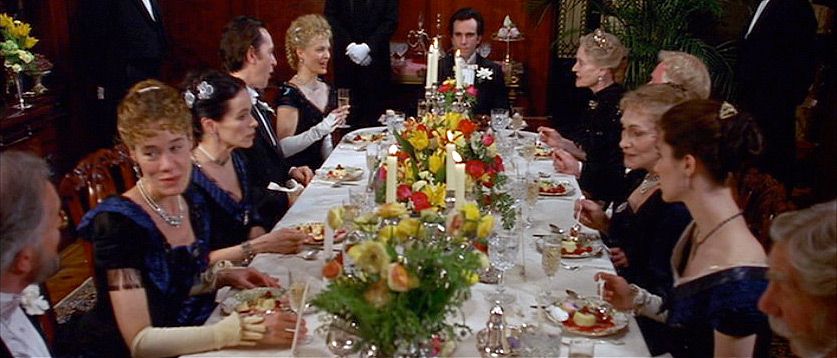
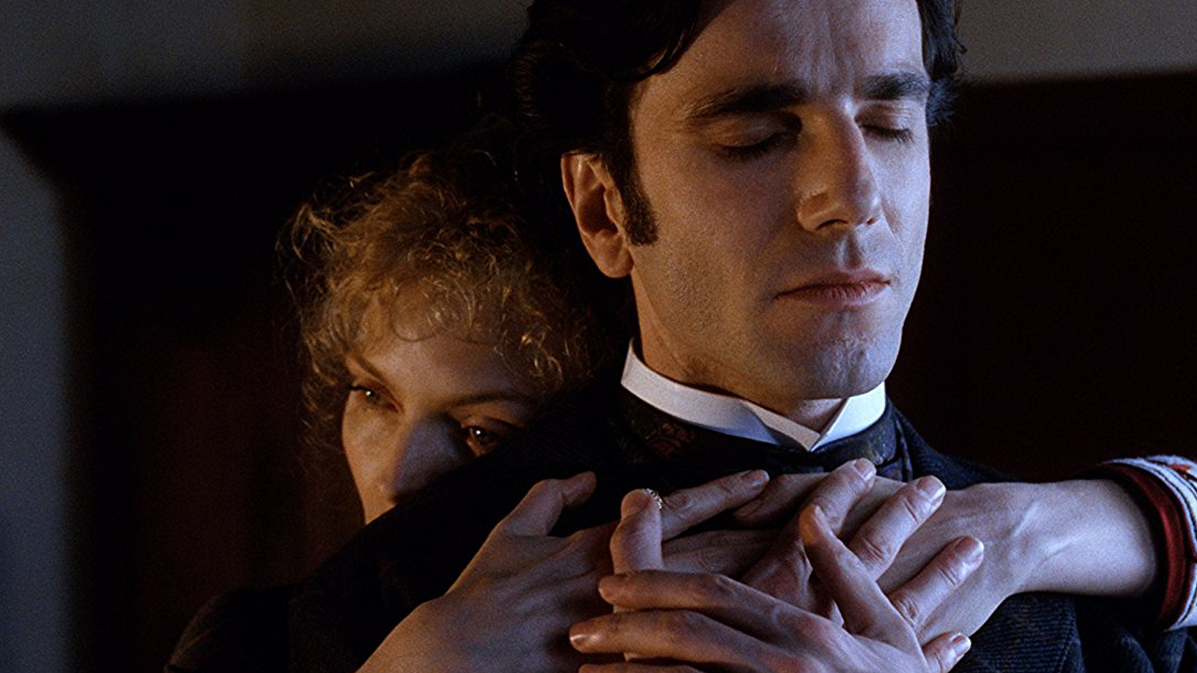
The Age of Innocence (1993)

Daniel Day-Lewis and Michelle Pfeiffer have a love that cannot survive the morals of society in The Age of Innocence

Director: Martin Scorsese

Cast: Daniel Day-Lewis (Newland Archer), Michelle Pfeiffer (Countess Ellen Olenska), Winona Ryder (May Welland), Miriam Margolyes (Mrs Mingott), Geraldine Chaplin (Mrs Welland), Michael Gough (Henry van der Luyden), Richard E. Grant (Larry Lefferts), Mary Beth Hurt (Regina Beaufort), Robert Sean Leonard (Ted Archer), Norman Lloyd (Mr Letterblair), Alec McCowen (Sillerton Jackson), Sian Phillips (Mrs Archer), Jonathan Pryce (Rivière), Alexis Smith (Louisa van der Luyden), Stuart Wilson (Julius Beaufort), Joanne Woodward (Narrator), Carolyn Farina (Janey Archer)

In 1870’s New York, Newland Archer (Daniel Day-Lewis), is a fastidious connoisseur of the arts, part of the super-rich elite of New York society. He’s engaged to be married to young May Welland (Winona Ryder), but finds his world view and values turned upside down when he meets May’s cousin, the Countess Ellen Olenska (Michelle Pfeiffer). Ellen is a scandalous figure, a woman separated from her philandering European husband, trying to make her way in New York society. Newland and Ellen are irresistibly drawn together, but do they have a chance to be together in the oppressive society of the New York upper classes?

That’s one question. The one more people were asking was: how would Scorsese follow up Goodfellas? Probably very few people would have bet on an adaptation of Edith Wharton’s The Age of Innocence. In fact, in 1993, there was more than a little annoyance among some viewers at the idea of the master of gangster movies, the guy who directed Raging Bull and Taxi Driver, turning his hand to the realm of Merchant Ivory. The film bombed at the box office – but did it deserve that reaction? Was Scorsese a director out-of-place?

Well the reaction is slightly unfair, because The Age of Innocence is a marvellously filmed, exact, brilliantly constructed piece of film-making, that so lays on the opulence and wealth of New York society that it turns everything in the film into feeling like a gilded cage. That’s a cage carefully controlled and monitored by the inmates, with their strict, inflexible rules about every single social interaction, unbreakable rules of decorum and etiquette covering everything, with any deviation from these rules met with instant expulsion. Put it like that, and this doesn’t sound a million miles away from the gangster families Scorsese is more associated with.

Inspired by the films of Powell and Pressburger in its intricate construction, and flashes of artifice in filming and editing, as well as its rich colour palette, with touches of everyone from Visconte, Ophüls, Truffaut to name but a few, this is a film-maker’s love letter to cinematic classics. A beautiful sequence of Newland watching Ellen from behind and a distance on a jetty, yearning for her to turn around before a boat passes a lighthouse, using that landmark as the point when he will stop looking and accept something is not to be. The scene is bathed in a Jack Cardiff-ish red, with the objects in the light given a sharp definition in contrast to the colours. It’s a beautiful image, and one of several that run through the film. Inspired by paintings of the era, Scorsese also layers in Viscontish scenes of opulence, with The Leopard very much in mind as every detail of the vast wealth, and huge accumulation of objects in every room of these people’s houses, seems to crush and entrap the people in them. The rooms themselves become metaphors of the oppressive, rule-bound society the characters are trapped in, like the people have been designed to fit into the rooms rather than vice versa. The one exception is Ellen’s rooms, which have a sense of personality to them.

This marvellous construction – with its beautiful photography, inspiring design and costumes – contains a storyline of frustrated love, a love triangle between three people where the man has to make a choice between what he wants and what is expected of him. Newland Archer clearly loves Ellen in a way he can never love May – indeed, he is dismissively cruel in his thoughts towards May, who he clearly considers nothing more than an extension of the mindless gilded objects of beauty around him, a woman he sees as lacking an imagination or daring. In Ellen, he sees far more opportunities for a world of change, of difference, or being something he does not expect. She is far more of a free-spirit, a more bohemian figure, confident in herself and something far more modern than May, who is very much a product of her time and place.

The film, carefully demonstrates the growing unease and unsettlement of Archer as he begins to feel things he has never done before, to start to react and aim for a style of living he would never previously consider. All his life before now is a careful studying and collection of moments, or savouring experiences in the way that a collector would place them in a glass box. From seeing only the moments of plays he wishes to see, to carefully collecting shipments of books from London and reading the choice moments, Archer is a coldly controlling figure who believes he guides and directs his own life. Ellen not only demonstrates to him that in many ways he is as conventional as anyone else, but also that there are other options in his life. Archer struggles to build the emotional language that he needs in order to express these feelings bubbling in him – key moments indeed seem reminiscent of the operas that this New York society spends so much time watching, and it is only late in the film in little, genuine moments of affection can he find something real.

Scorsese’s film artfully and carefully shows this developing affection between the two, a love that the two of them speak of surprisingly early, but fail to find a genuine way of expressing it. The film captures the attempt by New York society at the time to be more British than the British, and the hidebound restrictions this brings. Scorsese uses cinematic tricks to show Archer’s striving to escape. Spotlights zero in on Archer and Ellen in the middle of society, as if to drain out all other moments. Letters from his respective love interests are delivered with the actors addressing the camera, as if speaking to Archer direct. Flashes of screen colour cover key cuts, as if all this colour was just on the edges of his life but he is unable to access them. He is a man who feels himself trapped and committed to one form of life, but who still feels the longing for another.

The Age of Innocence is a beautifully made film, but there is a coldness to it. Perhaps this is why it doesn’t quite capture the heart in the way of other films. So much as Scorsese captured the cold and restrictive world of this society, that it seems to permeate the film and make the whole thing somehow colder and more restrictive. There is such artistry and effort in the film-making, that the film seems a coldly detailed piece of art. Perhaps this is why the use of narration – beautifully spoken by Joanne Woodward – becomes overbearing here in the way it doesn’t in other Scorsese films. It’s another distance from the entire experience, as if the film is keeping the audience at arm’s length as much as society is. 

Daniel Day-Lewis’ performance is expertly assembled, a masterful, brilliantly observed, intricately detailed masterclass in micro-expression, of layered frustrations and repression. But it’s such a marvellously constructed, detailed and well observed performance that it feels a masterful piece of art to be admired rather than loved. For all the film centres Archer in the story, he is a hard man to care for or invest in. Pfeiffer gives a wonderful performance as the far freer, intelligent and daring Ellen – but there is a slight lack of spark between them, for all the brilliance of both actors the feeling of an overpowering, obsessive love just doesn’t quite come out of the picture.

This coldness of the construction, carries through every frame. It is perhaps an easier film to admire than love, for all its brilliant construction. It is perhaps too successful in establishing the sharp rules of its society, and does not invest enough time in looking at the raw passions that bubble under the surface of its characters. It never quite explores the inner life of its characters, and they remain slightly distant objects from us. To be fair, this works very well in some cases: Winona Ryder as May carefully plays her hand throughout the film, so that it is a shock in the final scenes where she reveals depths of determination, strength of character and manipulation that far dwarf anything Archer is capable of. Where he is a man with a wistful longing for what he wants, but lacks the will to take it, she knows what she wants and is determined to take it.

The film uses its mostly British cast very well, their understanding of period and these sort of society rules crucial to its success. Margolyes, Wilson and McCowen in particular are very impressive as very different types of society bigwigs. Scorsese’s film contains many other things to admire, but it’s such a wonderfully made piece of film-making, so overburdened with intelligent interpretation of the novel that it fails to make a real emotional connection with the viewer. You will respect and enjoy scenes from it, but perhaps find its running time as overbearing as the characters find the society they are in, and eventually find yourself needing to come up for air.

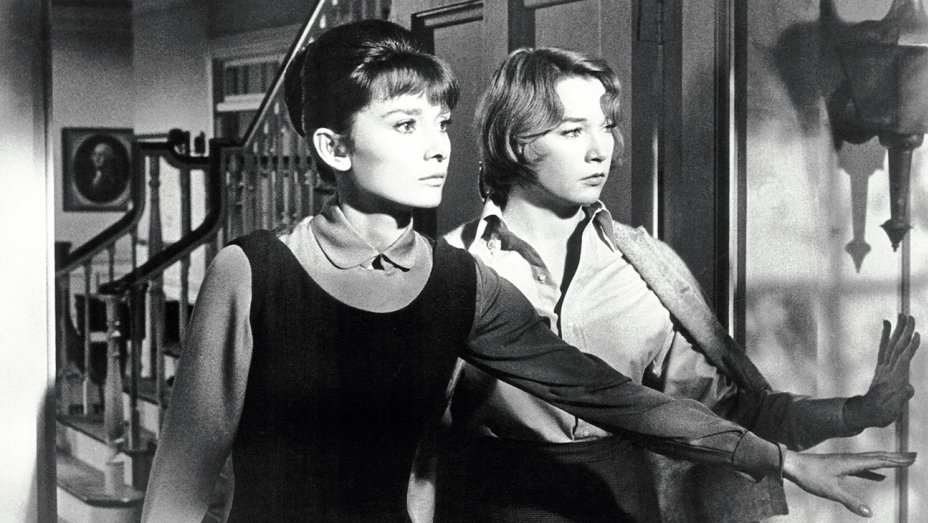
The Children's Hour (1961)

Audrey Hepburn and Shirley MacLaine are victims of scurrilous rumours in The Children’s Hour

Director: William Wyler

Cast: Shirley MacLaine (Martha Dobie), Audrey Hepburn (Karen Wright), James Garner (Dr Joe Cardin), Miriam Hopkins (Lily Mortar), Fay Bainter (Mrs Amelia Tilford), Karen Balkin (Mary Tilford), Veronica Cartwright (Rosalie Wells), Mimi Gibson (Evelyn), William Mims (Mr Burton)

The Children’s Hour was William Wyler’s second stab at directing an adaptation of Lilian Hellman’s play of the same name: a story about  two young teachers at a private girls’ school, and the destruction wreaked on their lives when a malicious pupil spreads rumours the two are in a secret lesbian relationship. His first attempt from 1936, These Three, kept as many of the themes as possible but carefully deleted every single reference to homosexuality in the script. This second film version restores this core theme in a carefully structured, well directed, respectful film adaptation that, with its careful analysis of the danger of rumours and snap judgements, still feels relevant today. 

Martha Dobie (Shirley MacLaine) and Karen Wright (Audrey Hepburn) run a private girls’ school. Karen is engaged to Dr Joe Cardin (James Garner), and this prolonged engagement is part of the arsenal used by a bitter, bullying student Mary (Karen Balkin) when she decides to start spreading innuendo about a scandalous relationship between the teachers, painting Martha as consumed by sexual envy. Mary’s story is believed whole-heartedly by her grandmother, doyen of the social scene and Joe’s aunt, Amelia Tilford (Fay Bainter). Thoughtless words from Martha’s aunt Lily Mortar (Miriam Hopkins) make things worse. In no time, the school is ruined, the children all gone and Martha and Karen face a desperate battle to prove that there is nothing to this but gossip.

Wyler’s film is a strange mixture at times, in part a commentary on prejudice, and also a scorching condemnation of jumping to judgements. The film plays out all this with calmness and a general careful avoidance of histrionics and lecturing. The removal of the children from the school is brutal and cowardly – with none of the parents having the guts to say why they are doing what they are doing until finally confronted by Karen. Amelia Tilford goes about her campaign of moral righteousness with a holier-than-thou superiority while constantly stressing that she takes no pleasure in this. In the latter half of the film, the abandoned school seems to be constantly surrounded by smirking men.

The film carefully outlines that this sort of moral judgement is inherently wrong, and it brings out some true moral judgement on many of the people involved. It draws out a brilliant Crucible-like indignation at the rigidity and hypocrisy of how those who are judged to be different are treated. The film’s finest sequence is at the centre of the film, where Martha and Karen make a (failed) attempt to nip the scandal in the bud by confronting Mary at her grandmother’s house. The scene zings with a burning sense of injustice, as Mary’s lies are believed, doubled down on and then confirmed by a blackmailed fellow student, all while the audience knows that everything that is being spun is florid, innuendo-filled rubbish.

Mary is a bitter, twisted, angry little girl whose face seems permanently screwed into a furious frown. She also has the sharpness and ruthlessness of the natural bully, successfully blackmailing a sensitive, kleptomaniac student to endorse all her lies at every turn. Wyler carefully demonstrates that she has a natural manipulator’s deviance and that half-facts and muttered comments carry more conviction and force than carefully stated arguments ever would.

But Mary’s actions partly stem from Karen’s own forceful treatment of her – and Karen’s moral inflexibility and personal certainty is just one of the many character flaws that this lie brings closer and closer to the surface. Well played by Audrey Hepburn, using her occasional slight imperiousness to great effect, Karen’s lack of compromise, her domineering personality and her own moral superiority help to make her both an unsympathetic victim to many, and a person who manages to drive wedges (inadvertently) between herself and her two closest friends, Joe and Martha.

That wedge spins out from the fact that the more sensitive Martha (a sensitively delicate performance from Shirley Maclaine) does have romantic and sexual feelings for Karen, feelings that she has carefully suppressed (or perhaps not even understood) and confesses to late on in a wave of guilt and shame, mixed with an almost unspoken hope that Karen might respond to this confession with more than silence and a quiet assurance that it won’t change anything. Neither of which is what Martha wants (or needs) to hear. 

MacLaine was critical of Wyler for removing from the film scenes that showed Martha’s love and affection for Karen in a romantic light. Perhaps Wyler was still slightly squeamish about the likelihood of America accepting a lesbian character presented honestly and sensitively. –But MacLaine has a point for, while the film does suggest it is reprehensible to  make judgements about other people’s private lives, it falls well short of suggesting that a lesbian relationship is as normal and valid as a straight one, or that Martha’s feelings for Karen are the equal of Karen’s for Joe. Karen will let the idea slide, but she is hardly thrilled by it, meanwhile Martha is made the more passive and hysterical of the two women, and her feelings for Karen are a source of tragedy in the story. While it’s of its time, the film still shies away from the idea that a lesbian relationship could ever be without a tinge of scandal. Unlike, say, Dirk Bogarde’s gay barrister in Victim, there is always something “not quite right even if we shouldn’t judge” about homosexuality in the film.

It’s why the film is at its strongest when showcasing its outrage for the many selfish and self-appointed moral guardians who ruin lives with sanctimonious self-regard. Miriam Hopkins is eminently smackable as Martha’s appalling aunt, whose love of gossip pours fuel on the fire. Fay Bainter is very good (and Oscar nominated) as Amelia, whose reluctance and unease about her self-appointed role as the moral police, only partly tempers her rigidity and inflexibility. Words of support and encouragement from others are noticeable by their absence, and even the long-standing loyalty of Joe (a rather charming James Garner) is eventually tinged (forever for Karen) by a moment of doubt. 

Rumours and innuendo are dangerous and cause real and lasting damage to people’s lives. It’s a fact the film enforces strongly – and it’s an idea that perhaps is even more relevant today at a time when social media sends moral judgements that ruin lives around the world even faster than Amelia Tilford’s phone can. A well-made film with moral force, that could have gone further, but still went further than many others dared at the time.

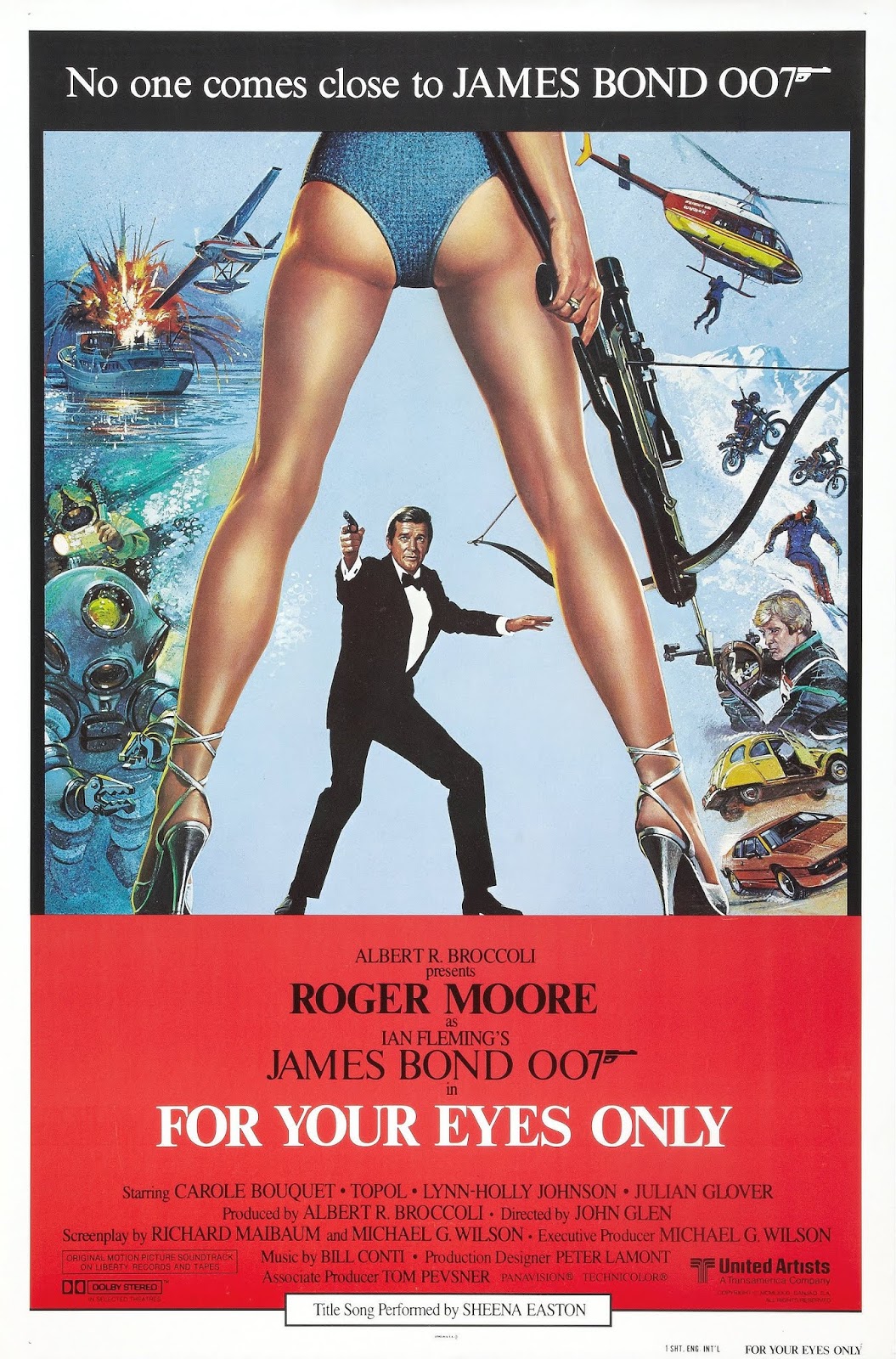
For Your Eyes Only (1981)

Roger Moore takes aim in this most low-key of his adventures – and one of his best

Director: John Glen

Cast: Roger Moore (James Bond), Carole Bouquet (Melina Havelock), Topol (Milos Columbo), Julian Glover (Aristotle Kristatos), Lynn-Holly Johnson (Bibi Dahl), Michael Gothard (Emile Leopold Locque), Cassandra Harris (Lisl van Schlaf), John Wyman (Erich Kriegler), Desmond Llewelyn (Q), Jill Bennett (Jacoba Brink), James Villiers (Bill Tanner), Geoffrey Keen (Minister of Defence), Walter Gotell (General Gogol), Lois Maxwell (Miss Moneypenny), Jack Hedley (Sir Timothy Havelock)

Where could Bond go after he went to space in Moonraker? Another planet? The future? The producers of Bond decided they couldn’t top that – probably wisely – so for Bond’s next outing they went back to low-key basics. For Your Eyes Only Bond would find himself in an old-school Cold-war game of cross and counter-cross, scrambling for the Russians for ownership of what looks like a cross between a typewriter and child’s cash till toy. 

That toy is the ATAC (though it might as well be called MCGUFFIN) a ministry of defence system used to co-ordinate nuclear subs or some such. When the ship it’s on sinks somewhere off the coast of Greece, MI6 and the KGB swing into gear to be the first claim it from the Ocean depths. So Bond is off to Greece to investigate, not knowing who to trust: should it be MI6 contact and shipping magnet Kristatos (Julian Glover) or playboy smuggler and former resistance man Columbo (Topol)? And how will he deal with Melina Havelock (Carole Bouquet), the long-haired, half-Greek archer intent on revenge on whoever ordered her parents killed while they (without her knowledge) searched for the ATAC? Either way it will involve chases, deadly winter sports, flirtatious teenage ice skaters and a death defying climb up to a monastery at the top of a mountain.

For Your Eyes Only is one of those quiet gems of Bond movies that, because it is about something quite small scale and quiet compared to the films it precedes often gets overlooked. It’s certainly the point where Moore should have stopped making the films – when your turning down the advances of someone because she’s too young (as he does ice skater Bibi) you know it’s time to go – and to be honest Moore was flagging already here, clearly too old for the action and certainly far too old for Carole Bouquet, who looks like she could have him for breakfast (she struggles to muster much sexual interest in him). But it doesn’t really matter because this is an old-school bit of spy cool, mixed with some decent but grounded fights and chases and shot with a loving eye for Switzerland and Greece (with plenty of clichéd visuals and sound cues thrown in from both as you would expect).

The producers wanted to shy away from the gadget filled antics of the previous films. As if to make the point, Bond’s car is destroyed almost immediately, forcing him to make a getaway at one point in a bashed up Citroen 2CV. The long sequence in the film where Bond is chased around a ski resort – which takes in cross-country skiing, a ski jump, a toboggan and several other winter sports is remarkable for nary a gadget in sight, with Bond relying on his wits and native skill with skis. Even when ascending the mountain at the film’s end, he uses nothing more than standard climbing equipment, putting his trust in ropes and hooks. It’s possibly the least tech heavy Bond film since Doctor No. There isn’t even a novelty watch and no humorous Q briefing on the gadgets. The only visit to Q’s lab is to use a cumbersome facial recognition system, that hilariously uses computer disks the size of stone slabs loaded into something that today resembles a dishwasher.

Other than that Bond is on his own, and it’s fairly neat to see him go about an investigation and follow a trail – even if Bond is, as usual, a hopeless undercover agent who largely relies on waiting to see who tries to kill him first. The villains, as always oblige, spending most of the film attempting to off Bond for all sorts of confused ill-defined reasons. Perhaps it has something to do with our main villain – the rather low-key Julian Glover, playing possibly the least colourful Bond villain ever, a guy who just wants to sell the ATAC for some cold hard cash – using so many cut outs for his operations, speechless goons (including an early appearance from Charles Dance) and East German skiing champions who seem motivated to kill Bond purely for larks and the evilz.

The first half of the film though is huge fun, watching Bond blunder around the ski resort dodging hits, fighting people, punching out butch hockey players and the like that it hardly matters that most of the plot is pretty inconsequential. When Bond finally stops mucking around in Switzerland and heads to Greece the ATAC is found in about 5 minutes flat (Havelock helpfully left a map with the downed boat coloured in on it, making his daughter’s ability to translate his cryptic notes pretty much useless), while the villain immediately takes this chance to comprehensively unmask himself.

After a further elaborately sadistic attempt to off Bond involving dragging him across coral in shark infested waters (sharks are always such deadly threats in Bond films), Bond unites with Topol to storm the castle in an actually pretty gripping and vertigo inducing climb sequence, another triumph of John Glen’s mastery of the action sequence. It’s a nice touch as well to introduce the “guest star” of the film not as the antagonist but as a protagonist ally, a neat twist that must have come as quite a shock back in the day. Topol plays his role with realish, cracking nuts, gags and heads with equal glee.

The film also heads into some dark places. For all his charm, gallantry and debonair wit, Moore does his meanest thing in years here when he kicks a heavy’s teetering car off a cliff. But that’s a fair repayment for the brutal running over of his mid-film squeeze (played by Pierce Brosnan’s real life late wife Cassandra Harris) earlier on by the same heavy. The early murder of the Havelock’s is surprisingly graphic (and also gives a great reaction shot for Carole Bouquet as she turns and looks back as the plane carrying her parent’s murderers jets away, her eyes screaming “I shall have my revenge!”) and Carole Bouquet’s Melina is determined figure, who does more than her fair share of the action.

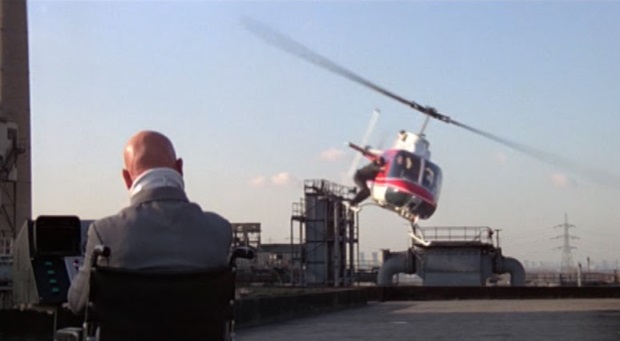
Of course the film can’t endorse too much her need for revenge. “That’s not the way” Bond, like a disapproval uncle, rather prissily tells her several times. Which is a bit rich coming from a man who opens the film by dropping his wife’s murderer down a factory chimney shaft. That opening sequence by the way is a joy, a neat call back to On Her Majesty’s Secret Service (whenever Bond went serious, it referenced Bond’s status as a widower) as well as a the dispatching of a it-could-be-anyone bald, scared, cackling villain with a white cat who makes an ill-advised attempt to kill Bond with a remote controlled helicopter (the film is so anti-Gadgets, only the baddies seem to use them and they don’t even work for them). It’s a neat “fuck you” to Kevin McCloy, at that time in a feud with the producers over the rights to Bond who had refused to allow them to use Blofield or Spectre again in the films. Keen to show they didn’t need Blofield, the producers introduced him in all but name to ignominiously kill him off, his final pathetic words a hilariously meaningless offer to buy Bond a “delicatessen in stainless steel” if only Bond would let him go.

FYEO is a crackingly old-fashioned Bond film that, despite being more grounded, has some great action sequences and a host of actors having a good time. Carole Bouquet is one of Moore’s best Bond girls and Moore himself certainly should have stopped here, this film throwing together one of his best mixes of light comedy, moral uprightedness, playfulness mixed with a dash of cruelty. John Glen did such a good job assembling this one he directed the next four films. It’s not got the smash-and-grab of The Spy Who Loved Me, but it’s an excellent action adventure.

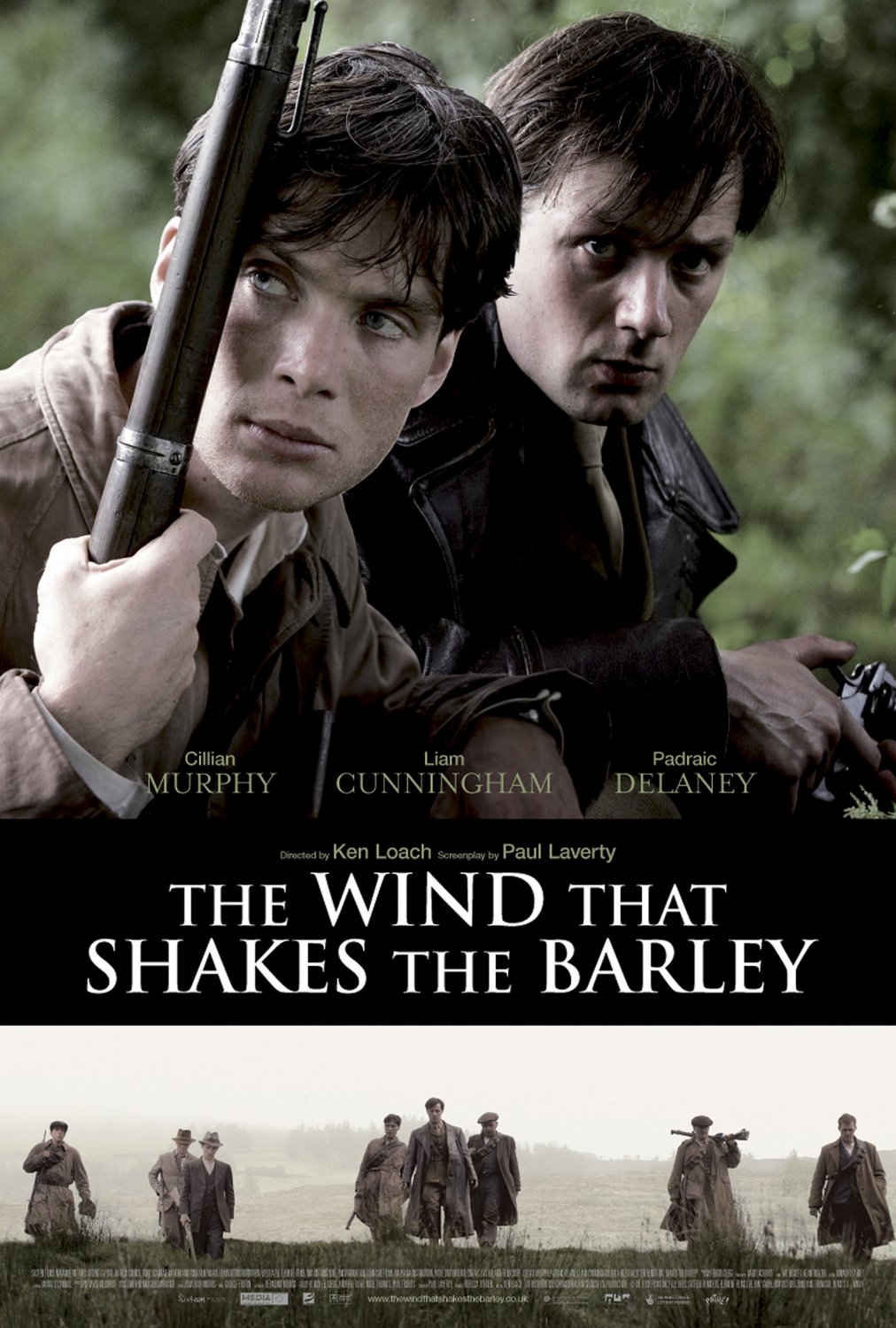
The Wind That Shakes the Barley (2006)

Cillian Murphy and Padraic Delaney take on the British in The Wind That Shakes the Barley

Director: Ken Loach

Cast: Cillian Murphy (Damien O’Donovan), Pádraic Delaney (Teddy O’Donovan), Liam Cunningham (Dan), Orla Fitzgerald (Sinéad Ní Shúilleabháin), Laurence Barry (Micheál Ó Súilleabháin), Mary Murphy (Bernadette), Mary O’Riordan (Peggy), Myles Horgan (Rory), Martin Lucey (Congo), Roger Allam (Sir John Hamilton), John Crean (Chris Reilly)

There are few directors in British cinema who have such impeccable left-wing credentials as Ken Loach. Each of his films is powered by a social and political conscience and chronicles the travails of those on the left, those struggling for the down-trodden and unfortunate, or those on the bottom rungs of society’s ladder. It was perhaps only a matter of time before he made a film about that blistering sore on the British conscience, Ireland (just as he is surely destined to eventually make a film about Palestine). It’s not a surprise that Loach’s film, with its vicious denunciation of British policy in Ireland, was met with a vitriolic response by much of the UK media, just as it was scooping Loach the first of his two Palme d’Ors at Cannes.

The film opens in the immediate aftermath of the First World War. Many of the Irish are in open revolt for independence, with Teddy O’Donovan (Pádraic Delaney) a leading IRA figure in Cork. His younger brother Damien (Cillian Murphy), a doctor, is persuaded to join the cause by his horror at the actions of the British “Black and Tan” troops in Ireland, vicious flying squads empowered to act with impunity. When the war eventually leads to a negotiated peace and the Anglo-Irish Treaty of 1922 that divides Ireland in two as a Dominion in the British Empire, the two brothers are divided. Teddy sees this as a stepping stone to peace for further gains later; Damien sees it as betrayal of the socialist message he and many others fought for, which will change only “the accents of the powerful and the colour of the flag”. A civil war across Ireland is inevitable between the government “pro-treaty” troops (supported by the British) and anti-treaty former-IRA members.

The history of Ireland is one of tragically missed opportunities, of poor British policy decisions throughout the nineteenth century (including delaying emancipation for Catholics, and a refusal to grant any level of Home Rule to Ireland for over 70 years, despite three votes on the issue in Parliament) eventually leading to many “peaceful” political movements in Ireland becoming completely discredited and the bullet seen as the only way to self-government. There is no doubt at all – as the film is not shy showing – that British policy in Ireland was often shameful, brutal, repressive, and helped enforce lasting bitterness and resentment, the impact of which is still felt today.

So, despite the furious backlash against the film as being anti-British in the press, it’s clear that The Wind That Shakes the Barley tells hard truths of the violence on both sides – of ransacked homes, murders, shootings and repression. Loach’s film unquestionably favours the Irish perspective and places their actions within a heroic context, while the British soldiers are nearly to a man foul-mouthed, arrogant, violent louts (although an officer does get a speech saying what do they expect since the black and tans are all bitter ex-front liners from France who have nothing else in their lives to come home to). But it makes a legitimate point, and it’s hard not to agree that British occupation of Ireland was, at best, a mistake and worst case a crime.

Loach’s film is harrowingly well-made, expertly shot by Barry Ackroyd, a testament once again to what a vivid and engrossing director Loach can be. Shoot-outs and violence are shot with icy-cold camerawork, mixed with handheld confusion. Political debates (of which there are many) are shot with passionate intimacy, the camera roving between the faces of those on both sides. The film’s reconstruction of Ireland in the 1920s is brilliantly done, and its engrossing recreation of the guerrilla warfare tactics of the IRA is fabulous. The acting is very good, with Cillian Murphy excellent and passionate in the lead role. Loach’s earnestness, married to his cinematic skill, is clear.

The real problem with the film is Loach’s left-wing politics, not his anti-British-establishmentism. To Loach the real tragedy in Ireland was not the civil war, but the compromise that large parts of the country made to sign the treaty with Britain and turn their back on aiming to turn a poor country into something closer to a socialist one, with collectivised industry, less power to the church and a greater equality between the rich and the poor. Loach’s film is squarely stacked in favour of the left-wing firebrands who continue the fight with the IRA, and firmly against those who support the treaty and look to gradually build a lasting peace.

To Loach, it feels like there is little real difference between the British and the pro-treaty forces. The They are both moral cowards and bullies who are fighting to maintain a status quo. There is no legitimate case made for the treaty. Those who support it in the film – like the increasingly nervous, twitchy pro-Treaty Teddy (as if Loach wanted to show him physically weighted down with guilt) – are either mealy-mouthed and guiltily shifty or hectoring bullies (like the priest who preaches pro-treaty/anti-socialism from the pulpit).

Loach is right that independence was a cause that bought everyone together, and in his argument that that the lack of a unifying idea of what the country would become next would inevitably lead to fracture and collapse. But never once in the film do we hear the voice of the ordinary Irish people, and what they wanted. Inconveniently, when put to the ballot, pro-treaty parties won the election of 1921, so the film has to have Damien (as is often the case with those on the extreme of both ends of politics I find) claim that the people didn’t understand what they were voting for, and if they did they would have agreed with him. The film’s final scene ends at a ruined house, but never once does the film (or Loach) reflect on how this embodies the catastrophic harm simple, everyday people were suffering over this period – and that they may have wanted a chance for the fighting to stop and a shift to peaceful progress towards greater independence rather than die in a ditch for nebulous political goals.

The film’s main enemy is actually compromise. Compromise is what Teddy and his gang accept when they plead for the chance for the fighting to stop, and for the country to settle for 80% of their demands now, and the rest later. Compromise is what Damien won’t settle for, and why he’ll restart a war to the death for his beliefs. Maybe it’s just me, but the art of living seems to be one of compromise and peace is built on agreements and a statesman-like acceptance that complete victory is often impossible without unacceptable loss. It’s a belief the film has no time for, and Loach seems to be advocating that the IRA should have completely rejected the treaty and instead fought to the bitter end (an action that would have probably turned Ireland into a wasteland) in the name of the socialist dream, rather than deal with reality.

It’s that which is the real problem with the film: its hard-headed clinging to the belief that any form of compromise is anathema, that death is preferable to altering your beliefs one iota, that prolonging a bloody civil war is the right thing to do rather than accept any agenda that doesn’t completely match your initial dream. Loach’s faith in his politics is admirable, but The Wind That Shakes the Barley sets out a didactic vision of Irish politics that gives no legitimate argument to the pro-treaty side, and only listens to the socialist wing of the anti-treaty group. It’s a one-sided view of history and, increasingly, a dangerous one.

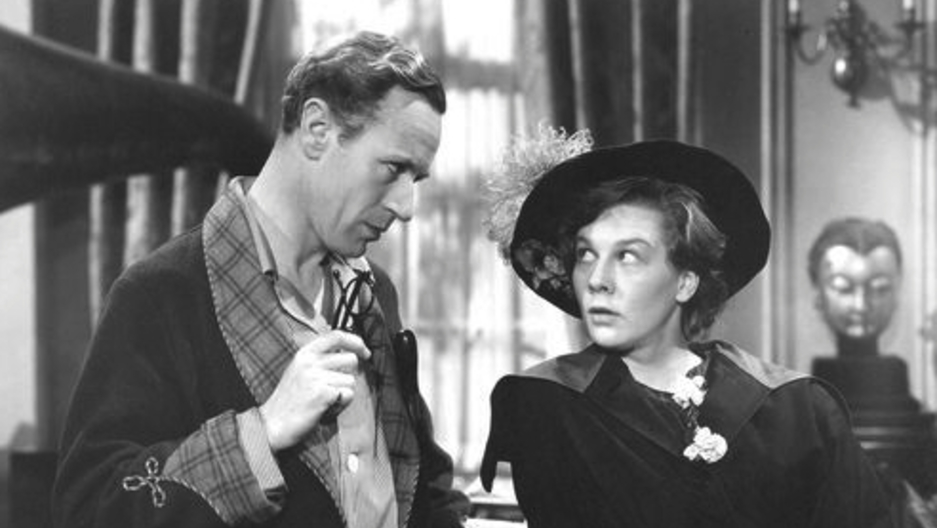
Pygmalion (1938)

Pygmalion (1938)

The leads excel in this vibrant, well-made adaptation of Shaw that set the framework for My Fair Lady

Director: Anthony Asquith, Leslie Howard

Cast: Leslie Howard (Professor Henry Higgins), Wendy Hiller (Eliza Doolittle), Wilfrid Lawson (Alfred Doolittle), Marie Lohr (Mrs Higgins), Scott Sunderland (Colonel George Pickering), Jean Cadell (Mrs Pearce), David Tree (Freddy Eynsford-Hill), Everley Gregg (Mrs Eynsford-Hill)

“It’s an insult for them to offer me an honour, as if they have ever heard of me – and it’s very likely they never have. They might as well send some honour to George [VI] for being King of England.” That was George Bernard Shaw’s reaction when he heard that he had won Best Adapted Screenplay at the Oscars. Now that’s a reaction that would have burned Twitter up today. Mind you Shaw wasn’t adverse to taking the film world’s money for bringing Pygmalion to the screen – and also means he is one half of a nifty pub quiz question (who is the only other person to win BOTH an Oscar and the Nobel Prize for literature?).

Pygmalion, always Shaw’s most popular play, seemed a logical choice to begin for producer Gabriel Pascal’s dream of bringing a cannon of the playwright’s complete work to the cinema screens. Shaw agreed – so long as he had was on board as the screenwriter and with a personal supervision of the adaptation. He missed a trick by not insisting on creative control. Shaw re-wrote and restructured much of the play for the screen – and it’s this screenplay that forms the basis of My Fair Lady. So closely so, that it’s the most familiar version of the play – and so close does the dialogue cut that you end up wondering where the songs are.

Anthony Asquith was bought on board as the director, and Shaw oversaw the assembly of the cast. Leslie Howard was cast over Shaw’s original choice, Charles Laughton, and also given a co-director credit (although there are some disagreements about what this meant, with some claiming it was basically some on-set notes to actors). Asquith was a director with a gift for opening out literary adaptations onto the big screen, and he succeeds here in capturing much of the atmosphere and mood of Shaw’s comedy of manners. There was also a young whippersnapper called David Lean on hand to direct the montage sequences that showed Eliza’s training.

Leslie Howard was a major matinee idol, but also an accomplished stage actor – and both qualities come to the fore here in what is surely the best Higgins captured on screen (with apologies to Rex Harrison). His Higgins is a rough-edged, somewhat scruffy, eccentric who speaks before he thinks, treats everything with an absent-minded, off-the-cuff bluntness and is almost professionally rude. He’s never straight-forwardly charming, indeed sometimes he’s outright cruel and bullying, but there is a professorial lack of harm to him that makes him reassuringly British and decent. And he gives the final act a real sense of vulnerability and emotional repression that is vital.

If Leslie Howard makes a very good Higgins, I do think there is very little doubt that Wendy Hiller is the definitive Eliza Doolittle. Handpicked by Shaw, she is superb here. Her Eliza has all the fragility, worry and working-class chippiness you expect, but Hiller laces it with such a real streak of humanity that you end up deeply investing in her. Her flourishing sense of personality, of her growing strength of personality and feelings of independence dominate much of the final act of the play, and Hiller mixes it with notes of genuine hurt and sadness about the dismissive treatment she is receiving from Higgins. It’s a performance overflowing with nuance and pain – and the moment when a pained Eliza responds with a pained dignity when Higgins suggests she marry someone else that “we sold flowers….we did not sell ourselves” is a truly wonderful moment.

But this is also a very well made, cinematic movie with some really outstandingly funny sequences. The scene where Eliza – newly trained to talk “proper”, but with no idea about what makes for decent polite conversation – regales a dinner party in earnestly, perfectly accented English about her belief that “they done [that] old woman in” at great length is hilariously funny, as is Howard’s wryily amused response. There is also equal comic mileage to be got from Wilfrid Lawson’s very funny performance as Eliza’s selfish, street-smart father, the dustbinman with the mind of philosopher. 

Asquith’s film is very well shot and assembled, helped a great deal by this inventively made and very structured montage sequences contributed by Lean (who also edited the film). It’s done with real snap, and Asquith’s camera movements and invention of framing dwarves the far more staid and flat production of My Fair Lady that would win many Oscars 25 years later. He knows when to go for low, static shots – particularly in those moments when Eliza realises she is just a toy for Higgins – and also close-ups and one-two shots that give even greater energy and dynamism to Shaw’s wonderful dialogue (again the final argument sequence benefits hugely from this).

Shaw didn’t go for creative control, so he failed to prevent the happy ending that was added to his play, as Eliza returns to Higgins (after seeming to leave to marry Freddy), and the Professor continues his pretence of indifference – which thanks to Howard’s excellent performance earlier we know is just that. To be honest, even with the performances of the leads, Eliza’s devotion to Higgins still seems to come from left-field (just as it does in the musical) and there isn’t much in the way of romantic chemistry between them. But it works for many people, even if it never works for me (or Shaw).

Pygmalion is a fine film, far superior to My Fair Lady (better made, better acted, better written, funnier, smarter, more moving and more heartwarming). It deserves to live a life outside of its shadow.

And that other Nobel and Oscar winner? Why Bob Dylan of course.

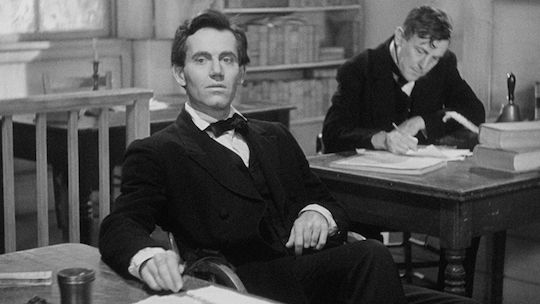
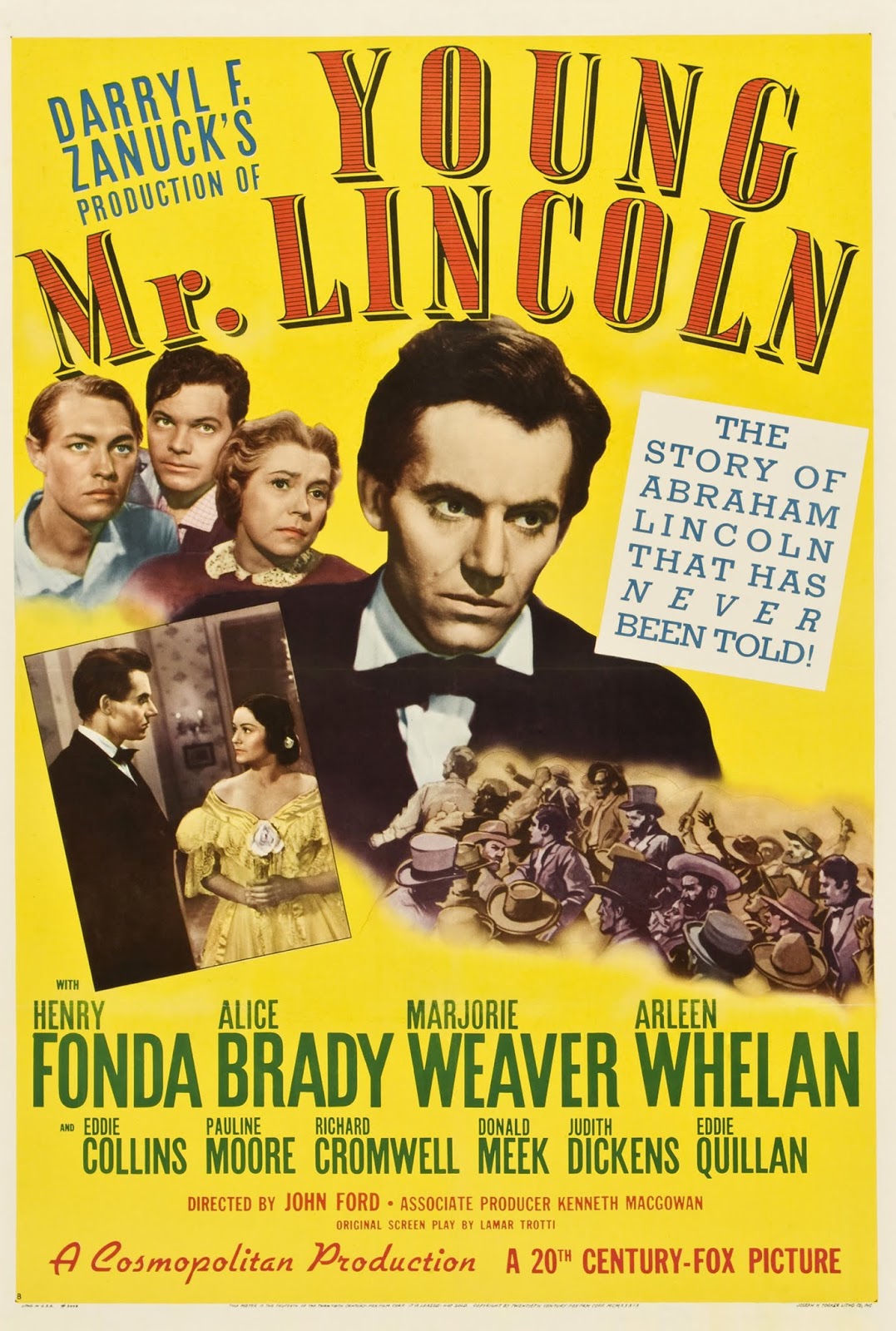
Young Mr Lincoln (1939)

Henry Fonda excels in the origins story as the Young Mr Lincoln

Director: John Ford

Cast: Henry Fonda (Abraham Lincoln), Alice Brady (Abigail Clay), Marjorie Weaver (Mary Todd), Arleen Weaver (Sarah Clay), Eddie Collins (Efe Turner), Pauline Moore (Ann Rutledge), Richard Cromwell (Matt Clay), Donald Meek (Prosecutor John Felder), Eddie Quillan (Adam Clay), Spencer Charters (Judge Herbert A Bell), Ward Bond (John Palmer Cass), Milburn Stone (Stephen A Douglas)

John Ford is often called the mythmaker of America, the director who perhaps contributed more than any other to building a romantic vision of America’s roots and past. As an explorer of the legends and mythology that underpinned his country, it’s perhaps no great surprise that he directed a film about the American revered more than any other since the Founding Fathers – Abraham Lincoln himself.

Playing out over 10 years, the film follows Young Honest Abe (Henry Fonda) from his days of autodidactism with a law book in Illinois, through his love for, and the death of, Ann Rutledge (Pauline Moore) and his arrival in Springfield to practice law (which he does with a shrewdness mixed with the wisdom of Solomon). The bulk of the film’s plot focuses in particular on him representing two brothers accused of murder in a courtroom trial, where Lincoln’s wit, wisdom and determination see justice done.

Okay reading that subplot, it’s pretty clear that this is a fairly rose-tinted view of The Great Emancipator. Henry Fonda had put off playing the role, as he felt it would be like hewing a performance out of marble. It’s hard for non-Americans to even begin to understand the reverence with which Lincoln is almost universally held in America, but it runs through this film like sugar through a stick of rock. Lincoln throughout the film is maybe an increasingly canny operator with a mastery of winning people over and playing crowds large and small, but he’s also always right, always does the right thing and always has a warm regard and love for genuine real people.

If you made the film today it would probably be called Abraham Lincoln: Origins, as Ford shows Lincoln building up all the weapons that would become central to his political artistry. Fonda starts the film gangly and physically awkward, finding it hard to know what to do with his height or long arms while giving speeches (Fonda wore platform shoes to increase his height). But even at the start his words are warm and genuine, even if his delivery is awkward. It’s something he masters to a far greater degree by the mid-way point of the film, when he skilfully diffuses a potential lynch mob with wit, gentleness, calm and a bit of righteous shaming. By the time he hits the courtroom, he’s overwhelmingly confident in his physicality and able to match it up with his oratorical brilliance and his skill at using seemingly rambling, inconsequential stories to suddenly hit home a sharp and painful truth.

Fonda’s impressive performance as Lincoln makes the film. Fonda gives Lincoln not just these positives but also hints at his sharpness of mind and his cunning. Negotiating a legal disagreement between two farmers (which he does with such skill that both end up paying him), he not only gives a fair sentence, but shows how he is not above manipulating men to achieve his ends (and, in biting one of the coins that he is given, that he may be honest himself but he’s not always trusting). He has a romantic regard for the mother of his clients (played very well by Alice Brady), but can still gently patronise her with his romantic ideal of her as an ideal American mother.

But when the push comes, Lincoln is a man of principle, wrapped in a skilful performance. The idea of mob justice is anathema to him, while Fonda makes clear he’s smart enough to not say that outright but to guide the crowd to agree with him. During the selection of the jury for the courtroom scene, he will accept men honest enough to say they favour hanging for the guilty, but turn down equivocators or those who believe they are better than the accused men. During the trial scene, he erupts in moral outage when the boys’ mother is pressured into naming one of her sons as the killer so as to save the other from the death penalty.

But he’s also a clever and brilliant player of the game, able to charm both the working classes and the rich, even if he’s not comfortable with either. During the trial scene, his quick wit and relaxation run rings around the government prosecutor (a good role of absolute convictions from Donald Meek) and he easily wins the crowd over with a series of gags and light touches that also carry with them a real, deep truth. Ford is also able to show his ambition – over the grave of Ann Rutledge he lets the fall of a stick decide whether he will continue his career or stay at home, and he all too clearly lets the stick lean over one way before letting it fall (he even acknowledges this himself).

Ford’s film is only very loosely based on actual true events – only the final coup Lincoln uses to win the case is really based on fact. The film is covered with smatterings of what look now like clumsy droppings in of key facts or persons from Lincoln’s life – from the cowpoke who plays “Dixie” (“Sounds like a song you could march to” is Lincoln’s comment) to Lincoln meeting future-wife Mary Todd, to his legal (and romantic) rival being none other than Stephen A Douglas his later rival for the presidency. There could have been a lot more, but afraid that it would make the film ridiculous, Ford kept these to a minimum by simply refusing to shoot them (such as a planned scene where Lincoln met John Wilkes Booth).

It all works because the audience knows who Lincoln will become, and it’s told with an earnestness and a certain amount of pace. Ford however really crafts a modern American myth and it even ends in a suitably epic scale: having won the case, Lincoln strikes off for a walk up a hill, trudging into the distance while a storm brews, heading onwards and upwards away from us and into his future. Sure it’s corn, but it works.

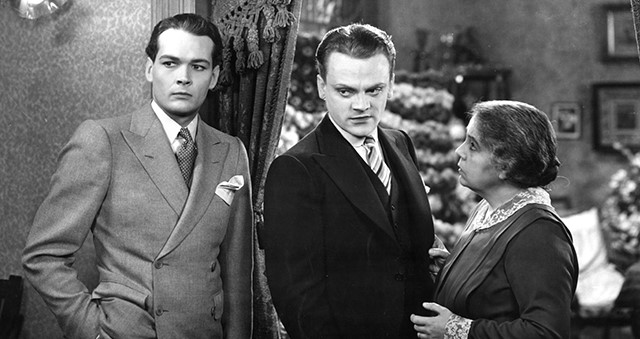
The Public Enemy (1931)

The Public Enemy (1931)

Cagney’s first landmark gangster film, still a propulsive and gripping thriller

Director: William A Wellman

Cast: James Cagney (Tom Powers), Jean Harlow (Gwen Allen), Edward Woods (Matt Doyle), Joan Blondell (Mamie), Donald Cook (Mike Powers), Leslie Fenton (Nails Nathan), Beryl Mercer (Ma Powers), Robert Emmett O’Connor (Paddy Ryan), Murray Kinnell (Putty Nose)

The gangster film has been popular as long as there have been movies. And if there was an actor that first became synonymous with the hair-trigger violence of the underclasses, it was James Cagney. The Public Enemy was Cagney’s big-break, a career shift from the song-and-dance films that had been his bread-and-butter before this. Cagney seizes the opportunity with relish – and helped set a template that everyone from Tony Montana to Tommy Vito have followed ever since.

Tom Powers (James Cagney) is an impulsive, violent, ambitious small-time crook who gets more and more embroiled in the world of crime, from his boyhood in the 1900s to the introduction of prohibition in the 1920s. Partnered with his lifetime-long best friend Matt Doyle (Edward Woods) – and despite the disapproval of his straight-laced brother and war vet Donald (Mike Powers) – Powers rakes in the crash as an enforcer for Paddy Ryan’s (Robert Emmett O’Connor) liquer business. But when the gang war breaks out, the dangerously impulsive Powers finds himself in the middle of a situation he can no longer control.

Cagney amazingly wasn’t the first choice for Powers. In fact, he started shooting the film playing the terminally dull nothing-part of Matt Doyle, with Edward Woods playing Powers (the two child actors at the start of the film playing their young versions, specially cast for their resemblance to Cagney and Woods, remain noticeably the wrong way round). Cagney’s charisma tore up the screen in the rushes – far overshadowing the bland Woods – and the call came from the top: “Swop these guys round!” And so film history was born.

As silence turned to sound in the movies, so the style of acting that the movies required grew and changed. Originally sound was the preserve of the well-spoken, crystal clear, the mic needs to capture every word, diction of the classically trained actor (half the cast in the film continue to speak with cut-glass, Mid-Western clarity). Cagney was something else. A little spitball of energy, who rushed through the lines, who threw in his own accented casualness, who dropped letters from words, who felt real and alive. 

It’s astonishing watching this what a brilliantly modern actor Cagney is: the little psychological touches that speak to Powers’ many hang-ups and insecurities. The commitment to any bit of business required. The method dedication to doing things for real (not least his insistence that at one point Donald Cook punches him for real). His Powers is a brilliant portrait of searing nervous energy – that lifetime of dance training paid off in spades in Cagney’s mastery of physicality – and ruthless thoughtlessness, spiced with a touch of smartness (“Your hands ain’t so clean. You killed and liked it. You didn’t get them medals for holding hands with the Germans” he sneeringly tells his brother). It’s a masterful performance of magnetism that holds so much influence with films to come you’ll retrospectively see touches of Cagney in nearly every dangerous psycho played by actors such as Pacino, De Niro and Pesci.

Wellman’s film is also hugely influential, practically laying the ground work for the structure of gangster morality tale – from those first trivial involvements in crime, the getting deeper, those terrible relationships (often with a girl with a pauncheon for dangerous men), the isolation and the fall. Wellman shoots it with a brilliant eye for action – there are majestic chases, gun fights and punch ups that still entertain today (for all their slightly old fashioned look). As a piece of pulp story telling this is damn high class.

But the other trick is that some of the best scenes are those away from the action. Powers clashes with his brother are brilliantly done. An early sequence in which as a boy Powers wordlessly takes the strap from his strict father (a scene that is echoed years later in Scorsese’s Goodfellas, with Powers a clear prototype for both Tommy and Henry in that film) is brilliant. Most famously of all, the breakfast sequence when a bored and frustrated Powers shoves a grapefruit in the face of the (legitimate) complaints of a girlfriend. Watching it today it’s amazing to think how influential this scene was – audiences hadn’t really seen anything like it.

And it works as a dance with the devil because Wellman and Cagney both know that we might not want to spend time with Powers, but a part of us wants to see this working-class grasper and charismatic fun-loving criminal to succeed and get-ahead. You end up rooting a bit for him – even though you know, with the Hays Code in place, that Powers won’t still be standing by the end of the film. The executives were so worried about audiences being a little too keen on Powers, they added a sanctimonious message about the dangers of crime to the start of the film.

Fast-paced, pulpy, violent and full of excellent scenes with a real eye for how America grew and changed over the first 25 years of so of the 20th century, Wellman’s Public Enemy is a masterclass of film-making – and about a zillion times more influential than many of the prestige films released at the time. But it also works so well because Cagney is one of the best there is, not just in the gangster films, but films themselves. A performer you can’t tear your eyes away from who turns a pulp character into a sea of complexity, he’s as much one for the ages as the picture.

The Snake Pit (1948)

Olivia de Havilland struggles with her sanity in the engaging The Snake Pit

Director: Anatole Litvak

Cast: Olivia de Havilland (Virginia Stuart Cunningham), Mark Stevens (Robert Cunningham), Leo Genn (Dr Mark van Kensdelaerik “Dr. Kik”), Celeste Holm (Grace), Glenn Langan (Dr Terry), Helen Craig (Nurse Davis), Leif Erickson (Gordon), Beulah Bondi (Mrs Greer), Lee Patrick (Asylum inmate), Betsy Blair (Hester), Howard Freeman (Dr Curtis)

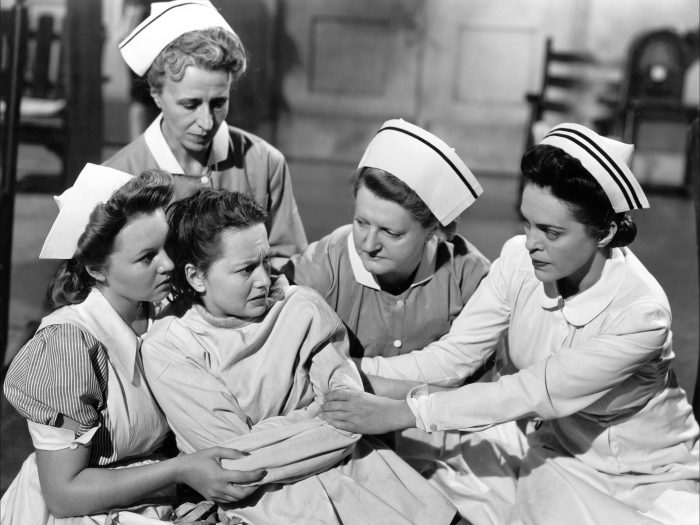
Virginia Stuart Cunningham (Olivia de Havilland) wakes up on a park bench with no idea where she is – and only the vaguest idea of who she is – and reckons she could be anywhere from a zoo to a prison. She’s actually in an asylum – or Juniper Hill State Hospital – and has been for some time, struggling with a schizophrenia and anxiety-related condition and with no idea of when – or if – she will ever leave. She is treated by the kindly, professorial “Dr Kik” (Leo Genn) and generally fails to recognise her husband Robert (Mark Stevens).

The Snake Pit is a very earnest but dramatically engaging and even quite moving story of one woman’s struggle to try and preserve her mental health, despite being stuck in a system that is a complete lottery with some patients lucky enough to be cared for and others dumped and forgotten. Litvak’s film is a passionate expose on the conditions that lack of funding and public interest had allowed to prosper in mental institutions in America, with parts of the facility little better than a Dickensian work-house, others like something out of Dante’s Inferno. It was a passion project for Anatole Litvak, who bought the rights to the book personally and pushed the studio to fund the creation of the film.

The story is centred around Virginia’s experiences of the asylum as she moves from ward to ward – low numbered wards being reserved for those considered likely to leave, with the ward number increasing as the prospect of the patient ever getting out of the asylum (or ever getting any focus from the doctors) decreasing. The staff are harassed, overworked, underpaid and frequently struggle with being heavily outnumbered by the patients, having only a few minutes a day for each one. They are also a mixed bag – there seems to be very little in the way of training – with some dedicated and caring, others seeing the patients as at best irritants and at worst little more than objects. Virginia’s real problems start when she gets on the wrong side of Ward 1 nurse Davis (Helen Craig), an officious, domineering bully who treats her patients like pupils in a finishing school and punishes ruthlessly any deviation from her rules.

Litvak’s film exposes the conditions here, but apart from the odd individual largely avoids attacks on the staff. Instead it seems to be the general air of indifference and disregard that society has for those who end up in these places that seems to be taking the brunt of the blame. Litvak’s direction is impeccable as he uses a combination of interesting angles, sympathetic close-ups and clever transitions and fades (which serve as a neat contrast for Virginia’s own struggles to understand where and when she is). In one particular tour-de-force moment, Litvak’s camera pulls up-and-away from Virginia in the middle of the hellish Ward 33 (the Snake Pit of the title), pulling away to make the ward indeed appear it is at the bottom of a pit with the patients a mass of figures within. 

Litvak’s film also benefits hugely from the simply superb performance by Olivia de Havilland. De Havilland brings the role such commitment and such emotional performance, that she is largely to thank for making the story (and not just the setting) as engrossing as it is. De Havilland is gentle, vulnerable, scared but mixes it with touches of determination and also carries with her a sensitivity that makes her as much a caring and gentle figure as it does a victim. She appears in almost every scene and dominates the film, handling the moments of quiet panic as well as she does the moments of immense distress. Her increasingly sorry state as she progresses down through the wards is heart-rendering, and her confusion and fear makes her someone we care for deeply, even while her concern and care for her fellow inmates – particularly a violent patient, played by Betsy Blair, who she takes under her wing and helps recover some of her equilibrium – makes her admirable and less of a victim.

Though lord knows she suffers enough, from claustrophobic locked-in baths (her screaming fit as she fears drowning being all-but-ignored by her dismissive nurses who have heard it all before) to being strapped into a straitjacket for god knows how long (after being provoked into an angry outburst by Nurse Davis). Around this she also undergoes bullying medical examinations from doctor’s unfamiliar with her case to watching her fellow inmates being mocked and laughed at my visitors. That’s not even to begin to mention the ECT treatment she undergoes at the start of the film (“to bring her back” from the edge of disappearing into a fantasy world), a series of detailed and observed procedures which are clinically sinister. 

Despite its many strengths, the film is dated in many ways. The original book avoided all reasons for Virginia’s illness. The film works overtime to give a “reason” for why she is, and of course this is rooted above all to issues related to Virginia’s failure to relax into the “proper” role for a woman in this man’s world. Her conditions are clumsily linked back to a troubled relationship with her mother and father, that led to a lack of development of maternal feelings. Guilt over a failed engagement has made her uncomfortable with marriage and nervous of men. Many of these revelations come out through a series of slightly clichéd therapy sessions that, for all the skill of Leo Genn’s performance as the doctor, carry the “and now we know all the answers” certainties of film psychiatry. 

Attitudes like this date The Snake Pit – so what if Virginia perhaps isn’t wild about marriage and isn’t sure if she wants children – and the film works overtime to suggest what will make her better above all is settling down into the sort of conventional life represented by her dull-as-ditch-water husband Robert, flatly played by Mark Stevens. While the film shows that healing like this takes time – and a lot of it – it also can’t imagine a world where a woman might find a life outside of the domestic norm healthier for them. But the film remains an emotional and moving one – moments like the one near the end where the patients listen enraptured, with enchanted faces, to a singer singing about home carry real emotional force – and it has a simply superb performance from de Havilland. Litvak’s film maybe slightly dated, but it’s still an impressive piece of work.