Civil War (2024)

Civil War (2024)

An eye-catching concept disguises a film more about journalistic ethics than politics

Director: Alex Garland

Cast: Kirsten Dunst (Lee Smith), Wagner Moura (Joel), Cailee Spaeny (Jessie Cullen), Stephen McKinley Henderson (Sammy), Nick Offerman (President of the United States), Sonoya Mizuno (Anya), Jefferson White (Dave), Nelson Lee (Tony), Evan Lai (Bohai), Jesse Plemons (Militant)

A third-term President (Nick Offerman) speaks to an America torn apart by Civil War. It’s an attention-grabbing opening but actually, in many ways, politics is not the primary focus of Civil War. Rather than a state-of-the-nation piece, Garland’s punchy work is a study of journalism ethics. Should journalists have any moral restraint around the news they report? Civil War covers the final days of its fictional civil war, as four journalists – celebrated photo-journalist Lee Smith (Kirsten Dunst) and her reporter colleague Joel (Wagner Moura), veteran correspondent Sammy (Stephen McKinley Henderson) and would-be war photography who idealises Lee, Jessie (Cailee Spaeny) – travel to Washington in the hopes of capturing the photo (and interview) with the President before his defeat.

Perhaps worried about accusations of political bias, Civil War keeps the causes of its war – and, often, even which sides we are interacting with at any given moment – deliberately vague. There is a throwaway reference to Lee having gained fame for a photo of “the Antifa massacre”, phrasing which doesn’t tell us if Antifa were victims or perpetrators. California and Texas – unlikely bedfellows to say the least – have allied to form the Western Federation. We learn nothing about the President, other than casual name-checks comparing him to Gaddafi (he does vaguely resemble vocally, in his brief appearances, Trump). But so universal are the politics of Civil War it could, without changing a thing (other than wifi access) be as easily set in the time of Clinton or Reagan as Trump and Biden.

Instead, Garland’s point seems to be more if there was a civil war in the Land of the Free, the chaos we could expect to see would be no different than the chaos that has occurred in any number of other locations. On their journey, the journalists encounter UN-run refugee camps, lynch mobs, summary executions, street-by-street fighting, mass graves of civilians and a collapse of anything resembling normal life. We’ve seen the same sort of images countless times on TV, and it matters not a jot that the backdrop now are the streets of DC rather than, say, Mogadishu.

Instead, Civil War becomes the sort of ethical discussion you could imagine in a journalism school seminar. Lee is plagued with troubling memories of conflicts passed, where we see her photographing at intimate range, war crimes, atrocities and shootings without a flicker of emotion. It doesn’t take long for the viewer to find this passive observation of death uncomfortable. It’s something I already felt, watching Lee in the film’s opening photograph a riot over a water truck, camera clicking mere centimetres from civilians laid low by truncheons. When an explosion occurs, her first instinct (after pushing Jessie down to avoid the blast) is to reach for her camera, not to help.

Although showing journalists as brave – putting themselves in harm’s way to bring the readers and viewers at home the truth – Civil War subtly questions the profession of war reporter, people often excitedly pounding the streets alongside killers. Lee’s mentoring of Jessie seems focused less on camera skills, and more on drilling into her the need to disconnect with the world around her. To see herself an observer, whose duty is to record events not to intercede. This boils down to a central idea that Civil War will repeat: if I was killed, Jessie asks, would Lee take the photo? This question becomes the dark heart of Civil War.

We increasingly realise many of the journalists are adrenalin junkies, hooked on the buzz from following in soldier immediate footsteps. “What a rush!” screams Joel after they drive away from a battle that ended with a series of summary executions. Many of the journalists don’t consider they hold any moral connection at all for what happens in front of them. It never occurs to them to attempt to prevent an act of violence or argue against something they see. You start to get the chilling feeling that some of them would as unprotestingly followed the Wehrmacht through the Eastern Front and recorded mass executions with the same emotional disconnection.

The journalists also have a cast-iron belief in their own inviolability, believing the simple waving of their press badge will be guarantee them safety. This delusion is seriously shaken by an encounter with a terrifying, mass-grave filling soldier played by a dead-eyed chill by Jesse Plemons. Even in the tragic aftermath of this, Joel’s grief at the loss of friends and colleagues is also tinged with regret that their potential missing of a crucial story means it was also all for nothing.

Only Lee – an excellently subtle performance by Kirsten Dunst, with the flowering of doubt and regret behind her eyes growing in every scene – shows any growing sense of the ghastly moral compromises (and even collaboration with the grisly things they witness) the journalists have made. It makes an excellent contrast with the increasingly gung-ho and risk-taking Jessie (an equally fine Cailee Spaeny), who becomes as hooked on the adrenalin rush of combat as Joel is.

Garland explores all this rather well under his flashy eye-catching concept. The film is shot with a grimy, visceral intensity – punctuated frequently with black-and-white freeze frames showing Lee and Jessie’s photos, which reaches a heart-wrenching climax for one pivotal scene. Interestingly it’s the dialogue and plotting that sometimes lets Civil War down: its character arcs verge on the predictable and the characters have a tendency to fill themselves in on events with on-the-nose journalism speak.

Civil War culminates in a well-staged gun battle towards the White House in Washington that, like much of Civil War’s America-based concept is about the shock of seeing these things “happening here” rather than in a land far away “of which we know nothing”. But this teasing of a political comment disguises the film’s real intent, a careful study of the moral complexities of reporting horrors rather than stopping them, of becoming so deadened to violence a friend’s death becomes a photo op. Civil War might be one of the most subtle questioning of journalistic ethics ever made, presenting it not as an unquestionably noble profession but one of moral compromise and dark excitement-by-proxy at death and slaughter.

Written on the Wind (1956)

Written on the Wind (1956)

Sirk’s melodrama packs in plenty of tight psychological observation among soap suds

Director: Douglas Sirk

Cast: Rock Hudson (Mitch Wayne), Lauren Bacall (Lucy Moore Hadley), Robert Stack (Kyle Hadley), Dorothy Malone (Marylee Hadley), Robert Keith (Jasper Hadley), Grant Williams (Biff Miley), Robert J. Wilke (Dan Willis), Edward Platt (Dr. Paul Cochrane), Harry Shannon (Hoak Wayne)

Money can’t buy you love. The oil-rich Hadleys live the high-life off the oil-empire built by patriarch Jasper Hadley (Robert Keith). Unfortunately, his children are both deeply unhappy and emotionally stunted. Kyle (Robert Stack) is an alcoholic playboy, Marylee (Dorothy Malone) a lonely woman who plays with other people’s lives to make herself feel better. Both are, in different ways, in love with sub-consciously resentful Mitch Wayne (Rock Hudson), the poor-boy childhood friend turned geologist who their father sees as the son he wishes he had. Mitch is in love with Lucy Moore (Lauren Bacall), an ambitious secretary at Hadley Oil – but Kyle also falls for her, marrying her. Marylee is in love with Mitch, who doesn’t feel the same. We already know from the film’s prologue all this is going to end with a bullet.

It makes for gorgeous entertainment in Douglas Sirk’s lusciously filmed melodrama, that helped lay out the template for the sort of soapy Dynasty-type TV monoliths that would follow years after. Sirk’s gift with this sort of material was to imbue it with just enough Tennessee Williams’ style psychological drama. Written on the Wind is awash with the glamour and beauty of wealth but, at the same time, demonstrates the immense psychological emptiness at the heart of the American Dream. What’s the point of all this luxury when those who have it are as deeply fucked up as the Hadleys are?

Their family is so wealthy the Texas town they live in is named after them and the run it like a private fiefdom, with the police running around like their errand boys. It’s not made them a jot happy. Both Maryann and Kyle are deeply aware of their own emptiness, rooted in the lack of attention (and love) from their father, a work-obsessed man who seems to have written his children off at an early age and invested far more time in training up Mitch like some sort of cuckoo-in-the-nest. Perhaps to try and win back their father’s love as much as to try and find meaning in their own, both of them want to possess Mitch: Maryann is destructively desperate to marry him, Kyle seems to want to become him and if one-way of doing that is by stealing the girl Mitch loves, all the better.

Wonderfully played by Robert Stack, overflowing with false confidence, jocularity and an utter, all-engulfing emptiness, Kyle talks endlessly about how Mitch is like a brother to him all while repeating as often as he can gently disparaging references to his poor-upbringing and dependence on the Hadley’s patronage. It’s coupled with his homoerotic (unspoken of course – it’s the fifties – but you can’t miss it!) obsession with Mitch. All of these confused, contradictory feelings wrap up in Stack’s (Oscar-nominated) performance, with the weak Kyle all too-readily believing Mitch might just be bedding his wife.

It’s an idea planted by Maryann, played with a scene-stealing bravado by Oscar-winner Dorothy Malone. Despite her vivacious energy and languidly casual confidence in establishing her pre-eminence over the newcomer Lucy, Maryann is a miserable, disappointed, deeply damaged soul, painfully bereft of any love and seeking meaning in casual couplings with a parade of gas attendants and hotel bellboys. Obsessively in love with Mitch, she dwells like Kyle on their childhood and the lost dreams of what might have been, but never was. This bubbles out over the course of Written on the Wind to an ever-more destructive Iago-like manipulation of the haplessly drunk Kyle, out of a mix of wanting everyone to be as miserable as she is and a desire to either own or destroy Mitch.

Malone and Stack triumph in these show-case roles, successfully building both frustration and sympathy in the audience. Opposite them, Hudson and Bacall (the stars!) play the more sensible, less interesting parts. Bacall’s strength and firmness balance rather nicely the contradictions in Lucy. A clear-eyed realist on meeting Kyle, attracted to the display of wealth while repulsed by his shallow, well-oiled, lothario routine, she never-the-less marries him, at least partly out of a desire to mother this fragile figure (she is genuinely moved by Kyle’s cockpit confessions of inadequacy and self-loathing while he flies her from New York to Miami for a date). From this Lucy confronts the psychological mess of the Hadley family with a stoic determination to make the best of things.

When does she start to develop feelings for Mitch? Mitch is clearly smitten on first sight, glancing fascinated at her legs while she stands behind a display board. But Sirk uses Rock Hudson’s similar stoic quality to great effect, turning Mitch into the epitome of duty, loyal enough to the Hadley family to bend over backwards to support the Kyle-Lucy marriage, all while clearly carrying an immense candle for Lucy. Saying that, part of the fun in Written on the Wind is wondering how much the patient Mitch is a conscious cuckoo, displaying all the intelligence, dedication and aptitude that Jasper so publicly lambasts his children for lacking (and whose fault is that?)

All these psychological soapy suds bubble superbly inside Sirk’s intricately constructed world. Every shot in Written on the Wind is perfectly constructed, splashes of primary colours dominating a world of pristine 50s class. Sirk frames the picture gorgeously, notably using mirrors effectively to place the characters in triangular patterns (Mitch at one point strikingly appearing in a mirror standing between Kyle and Lucy) or to suggest psychological truths (one shot angled to show Lucy brushing her hair in a mirror where we see a reflection of the reclining Maryann and don’t forget that marvellous closing shot of Dorothy subconsciously mirroring her father’s pose in the painting behind her while caressing a phallic model of an oil drill).

Sirk keeps events just the right side of melodramatic excess. A brilliantly staged sequence sees Maryann – dragged home from an assignation by the police – dance with a wild abandon in her bedroom while Jasper, horrified at realising how his disregard has warped Maryann, collapses to a heart-attack on the stairs. It’s a sequence that could be absurd but has just the right amount of reality to it, grounded as it is in Maryann’s self-loathing. Just as Kyle’s belief that impotence is going to consign him to being as much a failure in continuing the Hadley line as he is in everything else. Particularly since he’s constantly reminded of his inadequacy opposite the taller, smarter, better-at-everything Mitch who everyone else in the film openly seems to prefers to him.

It’s an extraordinary balance Sirk keeps, treating the characters with utter respect and affection while placing them in an over-the-top structure full of elaborate sets and overblown, melodramatic events and heightened feelings. Perhaps because Sirk never laughs at the concepts and content he’s created, we invest in both its truth and ridiculous entertainment quality. He does this while avoiding any touch of self-importance, never forgetting this is an old-fashioned melodrama. It makes Written on the Wind a hugely enjoyable, and surprisingly rich, character study mixed with plot-boiler.

Die Nibelungen (1924)

Die Nibelungen (1924)

Wagnerian epic is crammed with gorgeous, dramatic imagery and relentless pace

Director: Fritz Lang

Cast: Paul Richter (King Siegfried of Xanten), Margarete Schön (Kriemhild of Burgund), Hans Adalbert Schlettow (Hagen of Tronje), Theodor Loos (King Gunther of Burgund), Hanna Ralph (Queen Brunhild of Isenland), Rudolf Klein-Rogge (King Attila), Bernhard Goetzke (Volker of Alzey), Rudolf Rittner (Margrave Rüdiger of Bechlarn), Georg John (Mime the Goldsmith/Alberich the Dwarf/Blaodel)

Fritz Lang wanted to create a film that would help a shell-shocked Weimar Germany start to feel proud of its heritage and culture. He would do this with a film of the legend of Siegfried. It’s not really Lang’s fault that this Aryan feel-good stuff, coupled with Lang’s flawless visual compositions dripping with power and authority, would turn into the wet dreams of the Nazi party Lang fled Germany to escape. Die Nibelungen has unfortunate associations, but it stands as a towering pinnacle of Lang’s visual artistry. An adaptation of the legend, not the Wagner operas, Lang created something both mystic but also subtly questioning the idealistic figures it celebrates.

He would do all this in two (epic of course) films, totalling almost five hours. In the first Siegfried, the hero (Paul Richter) overcomes dragons and murderous dwarves to gain powers of almost (that almost is key) total invulnerability, strength and invisibility. Powers he puts to the test to win the weak King Gunther of Burgundy (Theodor Loos) the hand of Brunhild (Hanna Ralph) by invisibly aiding Gunther best this Valkyrie at a series of challenges. He even takes on Gunther’s form to help lead Brunhild to the bridal bed. Brunhild however discovers the truth from the loose lips of Siegfried’s wife (and Gunther’s sister) Kriemhild (Margarete Schön). Brunhild’s tricks Gunther and his loyal heavy Hagen (Hans Adalbert Schlettow) to murder Siegfried via a spear in his one weak spot. In Kriemheld’s Rache, Kriemheld plots the destruction of everyone who conspired in the death of her husband, via a marriage with the warlord Attlia the Hun (Rudolf Klein-Rogge).

The first thing that strikes you about Die Nibelungen – aside from its surprisingly electric pace – is the powerful, undeniable beauty of nearly every single frame. Lang composed each image as if it was a painting, from Siegfried introduced in steaming smoke at the forge, to the formalist imperialism of the castle of Burgandy and the rigid order and symmetry of its soldiers. Locations, from grand castles to mystic forests, underground caverns full of scheming, wicked creatures are superbly bought to life. There is a martial power Lang’s composition of so many of these images, their perfect angles and symmetrical blocking: parts of Die Nibelungen are some of the greatest pageantry displays in movies.

There is a wonderful sense of overblown, geometric, artificiality in all this – Lang deliberately creates a world larger than life and full of the unworldly and impossible. Buildings tower over crowds, courts that hold thousands to view events of grand importance, sieges of burning halls that fill the frame, staircases up impossibly high buildings. The sort of world of medieval excess where Gunther and Kriemheld disembark from a boat by walking across a bridge of shields created by half-submerged knights. Power and magnificence come from every frame.

It’s matched with an impressive creation of the bizarre and magical. Of course Siegfried kills a giant, animatronic dragon (strangely it’s obvious – even then surely – fakeness works in a film where everything is a heightened, from the emotions to the buildings to the costumes). Siegfried trains in something not far off from Vulcan’s forge and the forest feels like a sort of fairy-tale wonderland. Lang pioneered cross-fades and double exposures to make extraordinary effects, as Siegfried disappears under a veil of invisibility and jumps impossible distances. There is an extraordinary shot where Brunhild, still in the midst of her Valkyrie-like super-powers, seems to jump straight into the camera lens at full force. A beautiful edit sees a tree seem to reform itself into a skill in front of the eyes of the grieving Krimhild.

But Die Nibelungen places its world of power and magical forces in an increasingly costly human world of realpolitik and conspiracy, where its mystical but naïve and simple hero is out of step. Even before then, Siegfried’s status as a hero is subtly questioned. The dragon he kills seems a peaceful, inoffensive creature for all is scale, sitting placidly when Siegfried attacks and stabs it in the eye. Lang introduces a lovely touch where it’s dying tail flick will send the leaf that shields a crucial spot of Siegfried’s back from the torrent of invulnerability-granting dragon’s blood he bathes in. Siegfried is easily manipulated by the dwarf Albereich (a Gollum-like, uncomfortably antisemitic in appearance) before a large dose of luck allows him to defeat his opponent and gain the treasure of Nibelungen.

At the court of Burgundy, for all his courage and blunt honesty, Siegfried is at sea among the subtle power dynamics. The kingdom is ruled by chronically indecisive weakling Gunther (a snivelling Theodor Loos), easily manipulated by Wagnerian-costumed Hagen (an imposingly arrogant and faintly psychotic Hans Adalbert Schlettow). Siegfried’s main acts are to trick and then break the resistance of Brunhild (a dynamic Hanna Ralph) while impersonating the weakling – hardly acts to brag about, which doesn’t stop Siegfried doing exactly that to his wife who then blurts it out to Brunhild in a fit of pique. This isn’t a hero covering himself with glory, just as even the formally idealistic Brunhild (much to her later self-disgust) is reduced to scheming and plotting revenge, a far cry from the noble actionee she prided herself on being.

It’s not a surprise to find Part 2 heads into a Götterdämmerung as Kriemhild’s obsessive, destructive desire for revenge against Hagen (her husband’s murderer) meets with Gunther’s own stubborn-short-sighted protection of his controlling vassal. Nearly half of Part 2 is dedicated to the prolonged siege of the King and his followers by the massed armies of Kriemheld’s new husband Attila the Hun, her manipulations of him helped a great deal by Hagen’s arrogant, impulsive violence against Attila’s people. This extended battle sequence is astounding in its scale, violence and excitement – you can see the influence it had on The Two Tower’s Helm’s Deep – and is shot with the same visual mastery as the more stately first half, even as it seeks into bloody desperation.

It must be stated that Die Nibelungen does feature more than its share of clumsily presented racism. As mentioned, the hook-nosed, gold-obsessed, murderous dwarf Albereich is a painful antisemitic stereotype. Rudulf Klein-Rogge is caked under layers of make-up as the ugly, Slavic Attila while his Hun army resemble crouching Orc like figures, frequently ripe for the sword edge of the relentless German soldiers. It’s the uncomfortable flip side of the Aryanism idealism and romantic framing given to Siegfried, that these un-German figures are painted so monstrously.

But Die Nibelungen’s subtle criticism of the flaws in its German leads – it would go some to call them heroes – balances this out. From the flawed, empty-headed, foolishness of Siegfried to the increasingly sadistic, unrelenting cruelty of Kriemheld (Margarete Schön’s performance is excellent, going from sweetly retiring to unblinking fanaticism over the course of the film) the Germanic characters are compromised, weak and cruel: Hagen and Gunther are no one’s ideas of admirable figures. Compared to them, for all his clumsy racist appearance, Atilla feels like a reasonable figure, loving his family, caring for his people and refreshingly free of vindictiveness and cruelty.

It makes for an intriguing complex undercurrent in a film which, of course, the Nazis interpretated entirely on surface-appearance as a celebration of Aryan super-might. Or at least they did for Part 1 – even they couldn’t kid themselves that Part 2 didn’t quite fit that bill. Today Die Nibelungen provokes the same interesting thoughts. But above all it’s a visual marvel from a gifted film director, a truly painterly masterpiece that, for all its great length, never flags and offers a new marvel, camera trick or miraculous composition with every frame. This is silent cinema at its best.

Challengers (2024)

Challengers (2024)

Dynamic, mature, hilarious and moving relationship drama, an absolute delight

Director: Luca Guadagnino

Cast: Zendaya (Tashi Duncan), Josh O’Connor (Patrick Zweig), Mike Faist (Art Donaldson), Darnell Appling (New Rochelle Final Umpire), AJ Lister (Lily Donaldson), Nada Despotovich (Tashi’s mother), Naheem Garcia (Tashi’s father), Hailey Gates (Helen)

Tennis superstar Art Donaldson (Mike Faist) is on the slide after six majors – he’s lost his click and can’t even struggle past up-and-comers from the lower rungs of the tour. His coach, manager and wife Tashi (Zendaya) has an idea for how to get his groove back: he’ll enter a lowest-rung Challenger tournament, chalk up an easy win and return to confidence. Problem is, Art’s estranged former friend and doubles partner Patrick Zweig (Josh O’Connor) is also in the tournament and the two of them now line up for a grudge match in the final. But there is more going on than meets the eye, as Guadagnino’s film unfolds in a non-linear style to reveal the complex, confused and frequently ambiguous sexual, emotional and sporting tensions that have beset the three over 13 years.

Challengers feels like it might be a ripe piece of teen click-bait fluff – but reveals itself to be a whipper-sharp, funny, involving and cleverly open-ended film stuffed full of excellent dialogue by Justin Kuritzkes that frequently catches you off-guard with its plot developments. Challengers is a thrillingly mature, adult and very truthful exploration of the underlying attractions and tensions between three people, all of whom seem confused about their exact feelings and motivations.

What is clear – as made explicitly clear by an intensely erotic late-night encounter in a hotel room between the three of them thirteen years earlier – is the rich, unspoken attraction they all share. Art and Patrick are strongly attracted to Tashi, she seems equally interested in different aspects of each of them, while Art and Patrick’s homoerotic bond (clued in before this by their affectionate, casual physical intimacy as well as their intense celebrations on winning the Junior US Open) is immediately clear to the savvy Tashi and briefly embraced by the two men.

Sport – particularly mano-a-mano games like tennis – has an undercurrent of sexual energy to it. Adrenalin-filled men pounding away at each other from across the net, bodies glistening with sweat? Teammates grasping each other in victory with an intensity often beyond anything they would show to a romantic partner? Challengers explores how close a dance sport and sex is, the remarkably similar effects both have on our bodies. It’s what Tashi – a former tennis sensation whose career was ended in tragic circumstances – is getting at when she says the best tennis matches aren’t about tennis. They are semi-romantic couplings, the perfect rally being two bodies in perfect harmony.

This all develops thrillingly in the inter-relationships between the three leads, each excellent. Zendaya is superb as a woman forced to live her tennis dreams vicariously through her husband, who values the loyalty of Art while being quietly troubled by his neediness, infuriated by Patrick’s arrogant performative selfishness while being deeply attracted to his don’t-give-a-damn independence. She has a tight knot of tension throughout that is compelling, a constant sense we are watching a woman struggling to find some sort of resolution from a lifetime of competing resentments and desires.

Equally superb – revelatory in fact – is Josh O’Connor, who makes Patrick a cocksure, confident, selfish but immensely charming guy. Patrick scraps a career from natural skill that he never bothered to hone (witness his bizarre crooked-arm serve), embraces his sexual confidence, bounces around with a breezy bro-confidence and does everything he can to hide the lonely, lost boy he really is. This is breathtaking work from O’Connor, from hilariously funny when shamelessly pimping himself on tour for a roof over his head, and tragically vulnerable in bashful confessions with Tashi.

Mike Faist has the least flashy role but is equally wonderful. Art is – if you will – the most closeted of the three, the least confident, most dutiful, who dedicates himself to things and doesn’t stop to think deeply about his true feelings. You suspect the unspoken intense romantic bond between Art and Patrick remains unspoken in their youth because Art himself is uncertain (scared?) about what he feels. Just as he buttons up and represses his own resentments and anger towards Tashi.

Challengers switches and re-aligns these characters beautifully and constantly leaves us guessing. When Tashi (and by extension Art) refuses to see Patrick after her injury, is this because she genuinely blames him for unsettling her before the match or because she just needs something other than random chance to blame? Does she drive Art into becoming a Grand Slam winning machine out of love, a vicarious desire for success or anger (as she shapes into something he isn’t) because she blames him as well? Does Art know or care? Does he realise how much his depression comes from severing connections with his alter-ego Patrick and does Patrick slog it out on the circuit because it’s the only way he can still feel in-any-way close to the only two people he loves (but won’t admit?).

Watching all this unfold, seeing each scene reveal a new piece of information that refocuses what we thought about each character, is compelling – helped a great deal by the vibrant, emotional and intensely sympathetic performances from the three leads. Challengers is also a superbly assembled film, sharply and snappily edited and with an electric, emotionally well-judged score by Trent Reznor and Atticus Ross that skilfully uses refrains to link back to key emotions and sensations. It’s also a film that shoots tennis more electrically than any other. With sweeping crane shots, hand-held camera and every trick in the book, we see matches from the perspective of everything: the players, the ground, even the ball itself. It’s stunningly visually inventive.

It culminates in a truly wonderful, open-ended, emotionally satisfying ending that I actively adored. It’s a film about love, about three people who feud over petty things for years but need each other to be complete, who find there are elements of each other’s personalities that serve to complete themselves. Who are fiercely sexually attracted to each other, but also have a deep, intense emotional bond they need more than they realise. Challengers is an absolutely gorgeous, delightful, superb film – another emotional, mature triumph from Guadagnino, with three brilliant actors working wonders with a sharp script. It’s a film to love and treasure.

The Bells of St Mary’s (1945)

The Bells of St Mary’s (1945)

Schmaltzy but also rather charming, a superior sequel to Going My Way

Director: Leo McCarey

Cast: Bing Crosby (Father Chuck O’Malley), Ingrid Bergman (Sister Mary Benedict), Henry Travers (Horace P Bogardus), William Gargan (Joe Gallagher), Ruth Donnelly (Sister Michael), Joan Carroll (Patsy Gallagher), Martha Sleeper (Mary Gallagher), Rhys Williams (Dr McKay), Dickie Tyler (Eddie Breen), Una O’Connor (Mrs Breen)

When Bing Crosby asked America if they were Going My Way in 1944, the answer was a massive yes. It was inevitable we got a sequel –the first sequel to be nominated for Best Picture – The Bells of St Mary’s. In a stunning display of it ain’t broke so don’t fix it, The Bells of St Mary’s drops Father Bing (aka Chuck O’Malley) into another urban-parish-with-problems, this time turning round a rundown convent school, run by straight-laced Sister Ingrid Bergman (aka Mary Benedict). Can Father Bing and Sister Ingrid set aside their incredibly-good-natured rivalry to: (a) convince heartless local businessman Horace Bogardus (Henry Travers) to donate a new school building, (b) save sensitive young Eddie from easy-going bullying and (c) re-build the marriage of easy-going-bad-girl Patsy’s parents? If you have any doubt Father Bing can solve these problems without breaking his easy-going-sweat, you ain’t spent long enough going his way.

The Bells of St Mary’s score over its Oscar-winning forbear by being significantly less gag-inducing in its snowstorm of saccharine schmaltz. This is despite the fact it shares almost all the flaws of the original. It goes on forever, very little really happens, every single problem is solved with a little flash of Father Bing’s gentle insight, and it’s painfully predictable. But The Bells of St Mary’s manages to not outstay its welcome because it’s told with genuine wit and, in Ingrid Bergman, has a consummate performer who is actually charming and lovable rather than someone we are just told is charming and lovable.

It’s also somehow more down-to-earth, the resolution to its problems being a bit more relatable than Going My Way’s MET-opera finale for the tough kids. Father Bing is marginally less saintly smug and has an underhand cunning – having worked out his wise words ain’t melting the heart of Bogardus (how strange it is to see George Bailey’s Clarence as a child-hating arsehole), he quickly switches to a little conspiracy of suggestion to make Bogardus fret about being set on a highway to hell. Despite this of course, O’Malley remains blissfully perfect, a liberal churchman and bathed in perfection.

The Bells of St Mary has complete faith in the fundamental goodness of the church. The only questions are ones of approach: O’Malley favours a manly Christianity where decent men fight bullies, while Mary Benedict’s instinct is to turn the other cheek and take the moral high ground. O’Malley feels the kids will be served best if they relax, Mary Benedict sees virtue in hard work and self-improvement. Naturally, lessons are learned on both sides: O’Malley discovers sending the boys on holiday isn’t a ticket for good behaviour, Mary Benedict teaches bullied Eddie to box and prove himself to his bully.

Sister Ingrid might be a bit more serious because, unlike Father O’Malley, she’s lived a bit in her time. The tomboy-turned-nun can swing a baseball bat with the best of them and when she tells young Patsy you “have to know what you are giving up” when you become a nun, there is more than a hint Sister Mary might have snuck behind a few bike-sheds back in the day. Perhaps this contributes to The Bells of St Mary’s cheekily suggesting a little bit of sexual tension between the eunuch-like O’Malley and Mary Benedict. (Crosby and Bergman played up to this to tease their on-set Catholic advisors, at one point ending a take with an improvised passionate kiss – a gag that’s probably a little funnier than some of those in the film.)

Ingrid Bergman is actually rather marvellous here. It’s a reminder she had fine light comic chops, making Mary charming, warm and rather endearing – for all Sister Mary switches from hard-headed academic realism to a flighty faith that God Will Provide so long as they pray hard enough (very different from O’Malley’s God Helps Those Who Help Themselves angle). Bergman hilariously dances and prances, like Sugar Ray, while teaching Eddie to box but is also touchingly gentle when comforting a distressed Patsy. Bergman is such a good actress she pretty much lifts the entire film another level from its original.

She even lifts the game of Bing Crosby. Though he still largely coasts through on his own charm and persona, but he pushes himself into some more fertile dramatic territory. Even the film’s  contrived plot developments like Sister Ingrid’s TB diagnosis – something which for reasons she can’t be told about (don’t ask) – end up carrying a touch of realistic drama. Not that Bing forgets what the people want to see: of course Patsy’s father is a piano player, so of course within seconds of him turning up at her mother’s flat he and Bing dive straight into a musical number.

Despite all the treacle that The Bells of St Mary’s wades through, there is enough genuine charm here (among all its sentimental, signposted silliness) for you to cut the film some slack. Leo McCarey directs mostly with an unfussy professionalism – although he does sprinkle in the odd good bit of comic business, noticeably a cat stuck crawling around under O’Malley’s signature straw hat, on the mantlepiece behind him during his first meeting with the nuns. And it might largely be due to Bergman’s skilful presence, but there is genuinely more substance here than Going My Way. It might still feel like gorging on candy, but at least this time you don’t feel your stomach groaning in pain after you’ve finished.

Kanał (1957)

Kanał (1957)

Wajda’s war-epic is a brilliantly filmed, unsettling critique of the truth behind national myths

Director: Andrzej Wajda

Cast: Teresa Iżewska (Daisy), Tadeusz Janczar (Jacek “Korab”), Wieńczysław Gliński (Lt. Zadra), Tadeusz Gwiazdowski (Sgt. Kula), Stanisław Mikulski (Smukły), Emil Karewicz (Lt. Mądry), Maciej Maciejewski (Gustaw), Vladek Sheybal (Michał, the composer), Teresa Berezowska (Halinka)

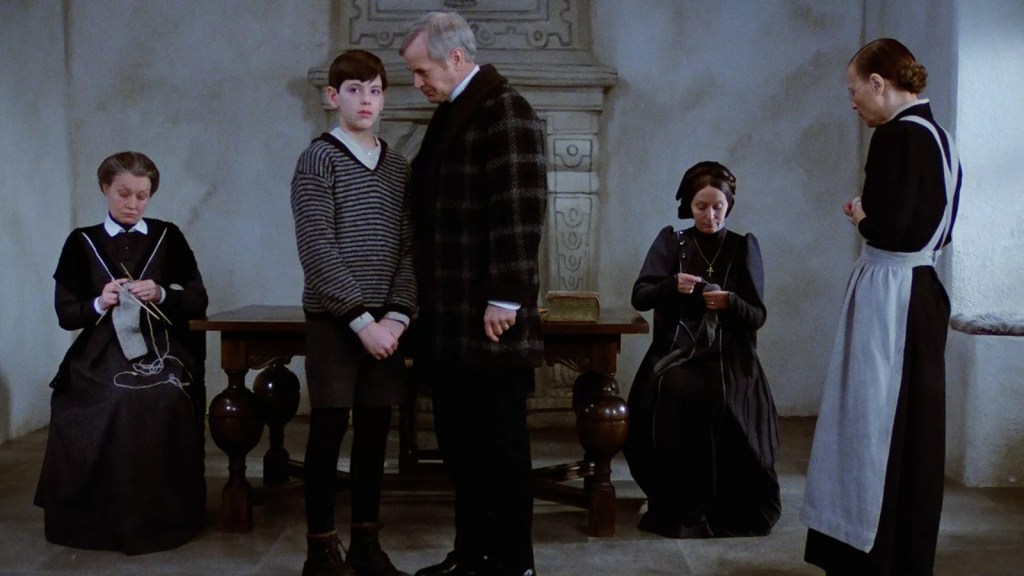
By 1957, Wajda was working under a very different Polish government from the one in place for his debut feature A Generation. With the fall of Stalinism came an easing on restrictions and controls. Wajda could address themes he couldn’t touch before, helping make Kanał perhaps even more controversial than A Generation, as it explored Polish sacrifices during the Second World War and, by implication, asked what the point might have been. Focusing on the final days of the 1944 Warsaw Uprising – a revolt against the German occupiers which the Soviets effectively stood by and watched the Wehrmacht crush – Kanał gives a Polish National myth a tragic human face of futile effort.

Not quite what Wajda’s bosses in the Polish Film Industry expected. Perhaps the title should have tipped them off: Kanał translates as Sewer, hardly suggesting a heroic tribute to national sacrifice. Starting on the 54th day of the Warsaw Uprising, the Home Army forces are beaten, clinging to a few streets. Introducing a unit commanded by Lt Zadra (Wieńczysław Gliński) in a long tracking shot through a devastated city, an unseen narrator bluntly tells us in the opening moments everyone we see is about to die. But not in a last charge against the Germans: instead it will be in the sewers, while attempting to escape, waist deep in shit, lost in the dark and stumbling into dead ends, madness, exhaustion and booby traps.

For many Poles this didn’t fit with the idea of the Warsaw Uprising being a heroic, necessary battle for the nation. It’s rather like in the 1950s, a British film studio had made a film about the Battle of Britain in which the pilots got tanked up on booze then took to the skies to be pointlessly shot down by the Luftwaffe over the channel. At least Wajda this time could present the Home Army – who, following the government line, A Generation had condemned as bourgeoise, fusspot cowards – as heroes. And Kanał is mercifully free of blunt political messaging: no one has time for any of that when they are simply desperate to survive.

What it’s also free of though is any tangible achievements from the Polish Resistance forces. Zadra’s unit holds onto a trashed district, under heavy fire, taking more and more casualties for about a day before being ordered to withdraw through a city pounded by shells through desperate civilians. During the entire course of Kanał the Poles inflict three casualties on the Germans: one tank is hit (but not destroyed), one unmanned motorised mine is stopped and one German soldier who falls into a defensive trench is beaten to death with a stone. Other than that, this is a one-sided curb-stomp where the Germans are hardly even seen and the Poles take huge casualties without even the most basic, morale boosting minor victory.

Kanał’s first half, which covers the war up-top is gritty, immediate and a truly scintillating piece of brutal combat. Wajda’s cinematic confidence is clear from the start with that long Wellesian tracking shot introducing all the characters as they move from one ruined district to another. His combat scenes take place on a wasteland of smashed buildings and have a panicked pointlessness to them – confused and desperate soldiers responding rather than planning anything proactive. The one undeniably heroic act we see – Jacek’s (Tadeusz Janczar, once again Wajda’s complex sacrificial lamb) taking down of the motorized mine – sees him near-fatally wounded, reducing him to a limping, slowly dying passenger for the rest of the film.

The atmosphere behind the lines is already tipping into desperation: number two soldier Mądry (a swaggering Emil Karewicz) is bedding young fighter Halinka (a fragile Teresa Berezowska) openly, while composer Michal (Vladek Sheybal, excellent as a haunted outsider) attempts to call through to his wife and children on the other side of the city, only to listen in on their deaths over a phone line. Any sense of chain of command is crumbling, and the soldiers are already hardened to death and destruction: retreating through the city, none of them can muster even a flicker of interest in a desperate mother begging for news of her lost child.

That’s nothing though compared to the bleakness of the film’s second half as the unit piles into the sewer. Here, time and space start to lose all meaning. The film’s timeline becomes as unclear for us as it does for the characters as they trudge through this Dantean sludge (Wajda makes sure we don’t miss the point, in a slightly clumsy touch, by having Michal quote the poet at length). With limited light, no real idea where they are going, low motivation and toxic gases being stirred up from the excrement they are crushing under their feet, slowly sanity slips, people revert to their worst instincts and selfish, unheroic decisions are made.

There is little to build a national myth on here. An incoherent colonel is left to die in the mire. Mądry and record keeper Sgt. Kula (a comradely Tadeusz Gwiazdowski) decide their own lives are more important than those of the company. Zadra clings to his duty, but lost and confused utterly fails to maintain any duty of care to his men. Michal, teetering already with the loss of his family, disappears into his own world. Their guide Daisy (a brilliantly humane Teresa Iżewska) abandons her duty in what we already know is going to be a futile attempt to keep Jacek alive. There is no dignity or final heroic act of death, with people meeting the end with stunned silence, clumsy tiredness or panic.

And over it all is the statement Wajda implies: since the Uprising achieved nothing but the massacre of its fighters, to a Wehrmacht driven out months later with ease by the Soviet forces, what was the point? That, however much the Communist state chose to praise the bravery of the soldiers, was it brave or foolhardy to single themselves out as targets in a one-sided battle that achieved nothing? Watching the fighters of the Uprising wade through excrement towards a lonely, uncelebrated death with nothing to show for it, makes you consider the complex feelings that lie behind National myths of sacrifice. And it’s a powerful and haunting message for this mesmerising sophomore effort.

Rollerball (1975)

Rollerball (1975)

Violent science-fiction dystopia satire ends up making blunt, uncertain points

Director: Norman Jewison

Cast: James Caan (Jonathan E.), John Houseman (Mr. Bartholomew), Maud Adams (Ella), John Beck (‘Moonpie’), Moses Gunn (Cletus), Ralph Richardson (The Librarian), Pamela Hensley (Mackie), Barbara Trentham (Daphne), Shane Rimmer (Rusty), Richard LeParmentier (Bartholomew’s Aide)

It’s the future, but it might as well be Ancient Rome. The world is ruled by Corporate Caesars, holding supreme power, controlling information and plucking anyone they want for anything, be it for a job or as a partner in bed. The masses are kept pliant and happy by being fed Bread and Circuses. Namely Rollerball, the world’s most popular sport, a hyper-violent mix of American football and ice hockey played in a velodrome, with teams competing to score by thrusting a metal ball into their opponent’s goal, with rules to prevent only the most egregiously violent acts. It’s a game designed by with a simple message: the individual is powerless, the system is all.

Problem is, like any game, some players are better at it than others. And the best player there has ever been Jonathan E (James Caan) is a living legend for Houston, tougher and more passionate about the game than anyone else alive. He’s a living contradiction of the secret principle of the game: an individual can make a difference. Naturally the Corporation want him gone, offering him a generous package to retire. Problem is Jonathan doesn’t want to retire. What else is there to do, but to remove the few rules Rollerball has, and establish how futile individual effort is by killing Jonathan in the game. But Rollerball’s greatest ever player isn’t that easy to kill.

All of which makes Rollerball sound both cleverer and more exciting than it actually is. Because Rollerball is a deeply sombre, rather self-important film that makes obscure, slightly fumbled points about the war between the system and the individual, within a coldly Kubrickian framework that suggests Jewison and co misunderstood what made 2001 a sensation (it wasn’t just clean surfaces and classical music). It’s actually quite a problem that the only time Rollerball even remotely comes to exciting life for the viewer is during the game sequences: and seeing as the film is criticising our love of gladiatorial blood sports, that can hardly be what it’s aiming for.

Rollerball is shockingly po-faced and lacks even a hint of humour at any point (except perhaps a reliably eccentric cameo from Ralph Richardson as an only half-sane custodian of an all-seeing computer). There is little satirical spice that might provide a bit of lighter insight into the ruthless, business-driven world the film is set in, or that might demonstrate how concepts we are familiar with (sports and television) have been tweaked to manipulate and pander to the masses. Combined with that, every character in the film is sullen, serious and (whisper it) dull and hard to relate to.

This is best captured in Jonathan himself, played with a lack of an uneasy stoic quality by James Caan. Caan later commented he found the character lifeless and lacking depth, and you can see this in his performance. Caan never seems sure what angle to take: is Jonathan a defiant individualist or a guy utterly at sea in the system who can’t understand why he is being told to stop playing the game he loves? Rollerball wants to settle for both: it doesn’t really work. Jonathan spends his time outside the ring, moping and staring into the middle-distance. He holds a candle for the wife taken from him by an executive, but this is never channelled into a motivating grief or ever used as way to make the scales fall from his eyes about the nature of the system he’s working in.

In fact, Jonathan remains pretty much oblivious to the brutality and cruelty of the sport he’s playing – which, by the end of the film, regularly clocks up impressive body counts in every match. He’s still perfectly capable of throwing an opponent under the wheels of a motorbike, thrust a goal home and then bellow “I love this game!”. Never once does he, or the film, question this love. Not even an on-pitch assault on his best friend (which leaves him in a vegetative state) or watching his teammates being crushed, incinerated, battered and smashed seems to register with him intellectually or emotionally.

Rollerball needed a character with enough hinterland to grow into that or could denounce on some level (even privately) the violent spectacle he’s wrapped in, capable of a moral journey or making an imaginative leap. We don’t get either. Instead, Jonathan E feels like a care-free jock who wants to carry on doing his thing, because he has a good-old-fashioned dislike of being told what to do. In the end it fudges the whole film: Jonathan E is neither sympathetic or interesting enough to be a vehicle for the sort of satirical or political points the film wants to make.

Not that these ideas are really that interesting anyway, essentially boiling down to a mix of familiar “Big Business Bad” and “the proles will take any loss of freedom lying down, so long as they get some juicy violent action to watch”. None of this hasn’t been explored with more wit and wisdom elsewhere. Never-the-less Rollerball lets its points practically play trumpets to herald their arrival as they stumble towards the screen. There is nothing here Orwell didn’t cover better in a few paragraphs of 1984.

Norman Jewison does a decent job staging this though, in particular the violence of the Rollerball games, with bodies crushed, maimed and thrown-around. There is a fine performance of heartless corporate chill from John Houseman. But, when the film makes its points, I’m not sure what on earth it’s trying to say. Is it a tribute to the strength of one man’s character? Does it matter if Jonathan E acts out of a stubborn lack of knowledge or understanding? As the crowd watches a deadly match in stunned silence, have they finally had enough? As they praise Jonathan E rapturously is Rollerball suggesting we are just naturally inclined to love strong-men dictators? I’ve no idea what is happening here – and I’m not sure that Rollerball does either.

The Insider (1999)

The Insider (1999)

Mann’s finest film is a chilling breakdown of the insidious strength of corporations

Director: Michael Mann

Cast: Al Pacino (Lowell Bergman), Russell Crowe (Dr Jeffrey Wigand), Christopher Plummer (Mike Wallace), Diane Venora (Liane Wigand), Philip Baker Hall (Don Hewitt), Lindsay Crouse (Sharon Tiller), Debi Mazar (Debbie De Luca), Stephen Tobolowsky (Eric Kluster), Colm Feore (Richard Scruggs), Bruce McGill (Ron Motley), Gina Gershon (Helen Caperelli), Michael Gambon (Thomas Sandefur), Rip Torn (John Scanlon), Cliff Curtis (Sheikh Fadlallah)

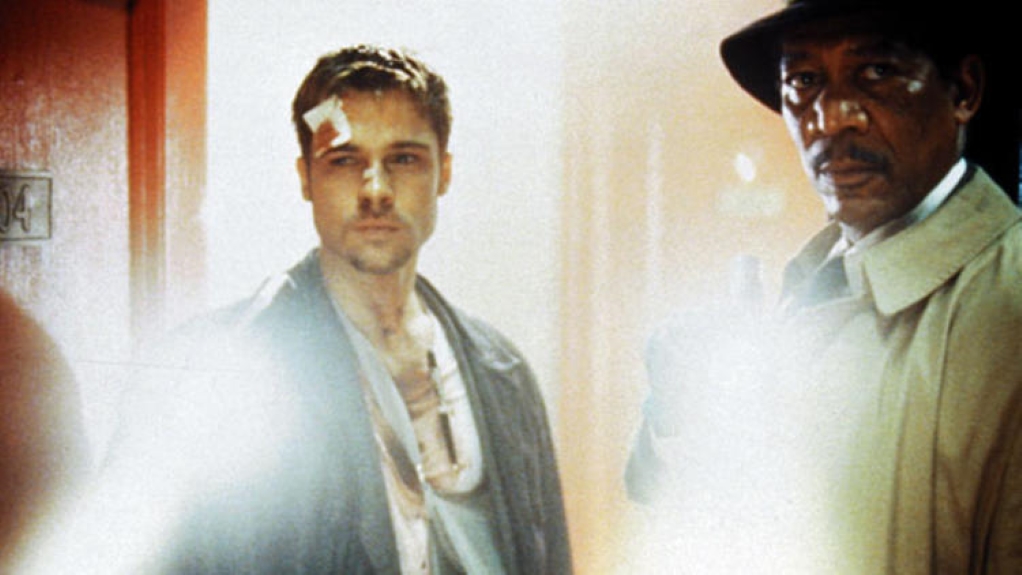
For decades we persuaded ourselves smoking was problem-free. Then, when we finally decided sucking tar into your lungs several times a day probably didn’t go hand-in-hand with good health, Big Tobacco bent over backwards to argue they didn’t believe for one minute nicotine was actually addictive. This lie – they were improving the hit to increase the customer base – was blown upon by corporate whistle blower, and former B&W employee, Dr Jeffrey Wigand (Russell Crowe).

But the battle over the reporting of the story also exposed the fault-lines in corporate-owned media companies, as Wigand’s 60 Minutes interview was canned by a CBS network terrified of legal action imperilling a corporate sale, much to the fury of crusading producer Lowell Bergman (Al Pacino) who spent months bringing Wigand in only to see him brushed aside. The Insider charts these two stories merging into each other: the deadly campaign of intimidation and smears against Wigand, segueing into the caving of CBS in the face of legal threats with Bergman left furious, betrayed and turning his campaigning fire against his own employers.

This all comes grippingly to life in Michael Mann’s superb slice of All the President’s Men inspired-reportage, turning this 1996 TV-and-business scandal into a sleek, intelligent thriller that takes a chilling look at how corporate America rigs the game in its own favour with impunity. The Insider is as rightfully furious at the dirty-tricks and menace of the tobacco companies, as it is at the subtly insidious way corporate interests pollutes news reporting. It does this while also presenting its two heroes as flawed men with more in common than they might think: competitive alpha males, both prone to taking rash, destructive actions in fits of head-strong self-righteousness, caring about their own moral code over the needs of others.

The Insider splits into two clear acts: the agonising decision of Wigand to blow the whistle on corporate malfeasance, in the face of immense personal and professional pressure and Bergman’s subsequent struggle to deliver on his word and get Wigand’s confession on air. The first half offers the more traditional heroics – and the more overt hero-and-villain structure, but increasingly I find the second half, of news shows being dictated to by their paymasters more-and-more unsettlingly prescient, becoming increasingly relevant the older the film gets.

But that first half makes for a compellingly tense pressure-cooker view. It’s powered by an excellent performance by Russell Crowe (effortlessly convincing as someone twenty years older, and collecting his first Oscar nomination). Crowe makes Wigand principled but prickly, brave but confrontational and at times frustratingly self-righteous. His moral qualms are finally sharpened into action his fury at the blunt-intimidation from B&W’s sinisterly avuncular CEO (a masterful cameo from Michael Gambon – one of the great single-scene performances in movies) and its implication that he cannot trusted to stick to his NDA. Wigand barely involves his wife (a tightly-wound Diane Venora) in his decisions, only mentioning his dismissal in passing and deciding to appear on 60 minutes (a decision that will shatter their lives) unilaterally.

But Wigand also has higher motives. He wants to be able to look his daughters in the eye, having sold-out to burnish the dirty-deeds of B&W with his scientific skills. He’s rightly affronted by the lies Big Tobacco has sold the public and undergoes enormous sacrifices (financial, marital, professional, legal, death threats and a public smear campaign) to see things through. Mann’s cool mix of starkness and shadows, full of drained out colours and greys, is perfect for a world where Wigand is shadowed by strangers at a driving range, receives bullets in his mailbox and searches late at night for who has left footprints in his garden. Crowe superbly conveys a man acting out of an increasing sense of moral imperative, struggling desperately to hold himself together under immense pressure.

This section of the film – especially with its clear antagonist – plays as a superb personal and political thriller, Mann expertly conveying lurking menace. In 1999 the second half of the film, the struggle to actually broadcast Wigand’s interview, was often seen as slightly underwhelming. But actually it shows a different type of danger: less overt and heavy-handed corporate power with its legal injunctions and bullying FBI guys hoping for a cushy retirement job with the corporation, more how these corporate masters assert control in quiet, less direct ways to decide what we hear or see.

Our journalists have no fear when confronting criminals or terrorists – The Insider’s prologue establishes this with Bergman and host Mike Wallace not flinching in the face of gun-toting Hezbollah fighters guarding the Sheikh they have arranged to interview. But they face far greater threats to their integrity when confronted with lawyers and corporate directors (effectively embodied by Gina Gershon and Stephen Tobolowsky as uncaring suits) whose threats are indirect and insidious. Wigand’s interview could imperil the sale of CBS and the bonus of the corporate suits, and in that scenario journalist principles can go hang. Christopher Plummer is, by the way, superb as the charismatic Wallace, who caves to pressure then convinces himself he hasn’t, a super-star of the airwaves who loses part of his wider integrity trying to protect his position.

And doesn’t the idea that corporations can squeeze the life out of journalistic stories feel even more chilling today? After all, virtually every single news outlet out there is owned by a major business, all with their own agendas. Can we really believe they’ve not all made calls on gets reported, based on what their shareholders might think? Mann’s film skilfully – and rather chillingly – shows how quickly they can re-work the agenda. It leaves Lowell Bergman raging (as only Al Pacino can) against the betrayal of trust he’s being forced to make towards Wigand.

Crowe’s pressure-cooker performance stole many of the headlines on release but The Insider also benefits from an excellent Pacino performance. Utterly committed to his principles and – just like Wigand – utterly unwilling to compromise them even an inch, no matter the cost, Bergman will pick up the windmill-tilting banner, and charge with it at his own paymasters. No one can rip through speeches quite like Pacino, but he gives Bergman a real genuineness, grounded in a fundamental decency, whose righteous anger is underpinned with world-weary disbelief that it’s come to this.

It grounds an excellently studied breakdown of a journalistic turf war. The Insider plays like All the President’s Men, if Woodward and Bernstein had been spiked after they nailed the story. Mann demonstrates the influence in The Insider’s crisply immersive photography that employs depth of frame and gyroscopic deep-focus, as well as in the crisp editing and the film’s mesmerising emersion in the complex details of building a story. Combine that with a gripping conspiracy thriller on the machinations of ruthless corporations and The Insider makes for a compelling film.

Jesus Christ Superstar (1973)

Jesus Christ Superstar (1973)

Some odd clashes of style but still a distinctive and unique musical, if not a triumph

Director: Norman Jewison

Cast: Ted Neeley (Jesus Christ), Carl Anderson (Judas Iscariot), Yvonne Elliman (Mary Magdalene), Barry Dennen (Pontius Pilate), Bob Bingham (Caiaphas), Larry Marshall (Simon Zealotes), Josh Mostel (King Herod), Kurt Yaghjian (Annas), Philip Toubus (Peter)

A bus rolls up in the West Bank and a bunch of excited, hippie actors and singers bundle out. What else are they going to do but replay the final days of Jesus Christ – with songs! Thus begins Norman Jewison’s adaptation of Andrew Lloyd Weber and Tim Rice’s rock opera musical, a hodge-podge of interesting ideas, stylistic nonsense and touches of the bizarre. Some of it works, some of its doesn’t – but at least it’s having a stab at doing something different.

I’ll assume you are familiar with the final days of Jesus Christ (Ted Neeley) as Jesus Christ Superstar ticks off the arrival in Jerusalem, the money lenders in the temple, the last supper, Gethsemane, Pilate washing his hands and the crucifixion (but not, pointedly, the resurrection). Jesus is at the centre of this but, as is so often the case in films, is an enigmatic, unreadable figure. The real lead is Judas (Carl Anderson), worried that the Messiah is running the risk of provoking a brutal smack-down from the Romans and letting the worship of his follower’s rush to his head. Perhaps he should do something about it?

First the good stuff. Douglas Slocombe’s photography, on location in a sun-soaked Middle East (the cast must have been grateful their flowing, hippie robes translated into such light clothing) looks gorgeous (the final shot of the cross at dusk – with a shepherd and sheep just visible in the corona of the sun’s glare, a happy on-the-day accident – is sublime). The locations are bravely selected to stress the sweeping vastness of desert: Pilate’s home is a rocky mountain, the apostles dance among abandoned Roman pillars, Gethsemane is the only splash of green we see. A cave with a circular hole in its roof, casts a striking shard of light over Jesus with his disciples. There is gorgeous stuff here.

It’s mixed in with some successful modern touches. Turning the money lender’s stalls into a trashy marketplace, rife with everything from tourist tat to heavy weaponry works as a striking image of commercial corruption. Jesus’ final vision of Judas takes place in a Roman amphitheatre decked out like a concert carries a nice dream-like quality. The idea of having the priest’s temple being a piece of bare-bones scaffolding is a nice visual image of their ambition. At the centre of the film is a very striking, excellently sung performance by Carl Anderson as Judas. Pretty much dominating the film, he brings the part just the right amount of spark, frustration, anger and self-pity and best manages to invest the songs with character.

Unfortunately, Jesus Christ Superstar mixes this with plenty of modern touches that either land flatly or whose intention becomes almost hard to work out. When Judas is chased through the desert by tanks or buzzed by fighter planes, is this a sign of the conflict that would come, the sense of destiny forcing him into his assigned role, or just an excuse to see the budget put into effect on some military hardware? Moments like this feel they are trying too hard against the more subtle modern touches.

There’s also the rather mixed bag of inexperienced performers Jewison fills the film out with. Ted Neeley can certainly hold a note, but he’s no actor, turning Jesus into a blank void who frequently feels like he’s watching the action around him while waiting for his cue. Yvonne Elliman similarly is an excellent singer but doesn’t really manage to convey the complex feelings of love and worship in Mary Magdalene. The rest of the cast give it an enthusiastic go, ranging from the decent (Barry Dennon) to the over-emphatic (Philip Toubas – who later became a hugely successful porn star, not exactly the expected career path of St Peter).

The mix of hippie-ish costumes also only works in places. While Jesus is of course dressed pretty much as any Hollywood film had ever dressed him (white-flowing robes), others wear a mixture of that, flower-power garbs or the sort of in-between strangeness (I’m looking at you Roman soldiers) that makes it look like they have wandered in from an episode of Star Trek. The brightly coloured costumes do however stand out extremely well in the vast blankness of the desert.

Jesus Christ Superstar’s main problem is its lack of narrative drive. Co-scripting with Melvyn Bragg (surely the easiest paycheque ever for one of the UK’s leading public intellectuals), Jewison doesn’t really provide any dramatic meat or force between the songs. There isn’t really a sense of moral and narrative development, with the film instead feeling rather like the concert album it’s based on, a series of songs staged one after-the-other without really linking together in a full narrative arc.

Saying that, Jewison’s effectiveness with the camera comes across well. “Hosanna” is crammed with a full-blown, very well-shot Busby-Berkely style number where Jewison rather effectively uses freeze-frames to punctuate the beats. “The Temple” sees Jesus disappear under a swarm of lepers like a zombie victim. A shot of the Judas’ purse of thirty pieces of silver dominates the frame at one point like it’s drawing him in. Some of the frantic tracking shots of Judas through the desert have a real elemental force to them.

But there isn’t quite enough of that to bring Jesus Christ Superstar to make it a triumph. Its episodic song structure, it’s odd mix of styles and the wildly varying quality of its performances never quite gel together. However, it’s perfect for turning this into a sort of camp spectacular, a cult oddness that stands out as quite unlike any other musical or film Jewison made.

Awakenings (1990)

Awakenings (1990)

Decent performances from the leads can’t save a shamelessly manipulative, saccharine movie

Director: Penny Marshall

Cast: Robert De Niro (Leonard Lowe), Robin Williams (Dr Malcolm Sayer), Julie Kavner (Eleanor Costello), John Heard (Dr Kaufman), Penelope Ann Miller (Paula), Max von Sydow (Dr Peter Ingham), Ruth Nelson (Mrs Lowe), Alice Drummond (Lucy), Judith Malina (Rose), George Martin (Frank), Dexter Gordon (Rolando), Keith Diamond (Anthony), Anna Meare (Miriam), Mary Alice (Margaret)

There can be few things more terrifying than being trapped inside your own body, unable to engage with the world, but to be in a sort of waking coma for years. Imagine how wonderful – and how terrible – it might be if you briefly woke to normality, only to return to your catatonic shell? This actually happened to patients of Dr Oliver Sacks – here re-imagined as Dr Malcolm Sayer (Robin Williams) – in a Bronx hospital in 1969. Looking after catatonic survivors of the encephalitis lethargica epidemic of 1919-30, Sayer discovered they responded to certain stimuli: their name, music, catching balls etc. With an experimental drug he discovers he can restore the patients to ‘life’ – foremost among them Leonard Lowe (Robert De Niro), just a boy when afflicted – only to discover the effects won’t last and they are doomed to return to their coma-like state.

It’s such a terrible thing to think about that it even gives genuine emotional force to Awakenings an otherwise hopelessly manipulative, sentimental film that plays like a TV-Movie weepie. It certainly didn’t need the naked emotional manipulation that washes over the whole thing like a wave, with Randy Newman’s sentimental, tear-jerking score swells with every single heart-string tucking moment. Awakenings is so determined to make you feel every single moment it eventually starts to make the story less affecting than it really is. A simpler, less strenuous film would have been more moving rather than this film almost genetically engineered into ‘life-affirming’.

Everything in Awakenings feels like it is always trying too hard. Every moment is laid on for maximum emotional impact. Adapted from Oliver Sacks’ book chronicling individual cases, it presents a stereotypical Hollywood ‘feelings’ film, with lessons for all. Worse, there is a tedious ‘seize the day’ message that keeps ringing out of the film. The awakening is, of course, not only literal but metaphorical – the patients (and their doctors) ‘awoke’ to appreciate life and living more. It’s hard not to think at times there is something rather patronising about partially using Leonard’s brief experience as a lesson for Dr Sayer to stop being so damn timid and ask a nurse out on a date. As traumatic as it is for Leonard to return to his coma, at least Dr Sayer learned to live a little!

It’s a very fake attempt at a hopeful ending to an otherwise down beat true-story. Dr Sayer is a retro-fitted version of Oliver Sacks, sharing many of his characteristics – but not his sexuality or decades long celibacy – and the film presents him, as Hollywood loves to with geniuses, as a shy, awkward type who no-one of course could expect anything of. He combines this with quiet maverick tendencies, putting the patients first against the ‘numbers-first-risk-free’ obstructionist bureaucrats (represented, of course, by John Heard, though he does thaw a little) who run the hospital and poo-poo his ideas.

Awakenings is full of sickly moments of heavy-handed sentimentality – its opening shot of Leonard as a boy carving his name in a bench under the Brooklyn Bridge tells you immediately one of the first places he’ll go as an adult for a wistful smile – that keep trying to do the work for you. (Of course, all the nurses and cleaning staff offer up cheques to help pay for the patients drugs!) The story doesn’t need it. Just seeing the facts of these vibrant adults emerge for a brief time in the sun is moving enough. Leonard quietly, but with dignity, asking the hospital board for permission to go outside alone is more moving than watching him forcibly dragged from the door by porters or seeing him rant on the mental ward he’s been consigned to as a punishment. We don’t need Sayer to literally tell us some things are too sad for him to film, when we can see it on Williams’ face.

The leads are not always immune to the try hard nature of the film, but they do some decent work. De Niro (Oscar-nominated) brings a touching sweetness to Leonard, essentially a boy who wakes in the body of an adult. There is a genuine wonder in his eyes at the world around him – wonder that transforms into frustration at the continued restrictions placed on his freedom. There is something slightly studied about the physical effects (especially in the film’s final act) but De Niro understands that underplaying and quiet honesty is more moving than when the film pushes him towards grandstanding.

Williams is also very good – if at times a little mannered – as the quiet, awkward Sayer. With the less flashy – but potentially more complex role – he again shows how close humour is to pathos. It’s a performance with several little eccentric comic touches, but wrapped up in a humanitarian shell of earnestness that is quite affecting. It’s a shame that the film constantly undermines his restraint by using every conceivable trick of framing, scoring and composition to wring sentiment from him.

But then that’s Awakenings all over. You can imagine the script covered with annotations along the lines of ‘make them cry here’. And it worked with a great many people, the mechanical nature of the film working overtime to tickle the tear ducts. But the film’s utterly unnatural sense of artifice constantly prevents you from really feeling it. You are always aware of Marshall nudging you to remind you of the unbearable emotion and the tragedy of lives not lived. All easily washed down in a narrative structure as old as the hills – Sayer is an outsider who proves himself, he and Leonard fall out then come back together stronger than ever etc. etc. – that continually reminds you of its functional, manipulative nature.