Gandhi (1982)

Ben Kingsley excels as Gandhi in Richard Attenborough’s Oscar winning epic

Director: Richard Attenborough

Cast: Ben Kingsley (Mahatma Gandhi), Rohini Hattaggadi (Kasturba Gandhi), Roshan Seth (Jawaharlal Nehru), Pradeep Kumar (VK Krishna Menon), Saeed Jaffrey (Vallabhbhai Patel), Alyque Padamsee (Muhammad Ali Jinnah), Virendra Razdan (Maulana Azad), Candice Bergen (Margaret Bourke-White), Edward Fox (Brigadier General Reginald Dyer), John Gielgud (Lord Irwin), Trevor Howard (Judge Broomfield), John Mills (Lord Chelmsford), Martin Sheen (Vince Walker), Ian Charleson (Reverend Charles Andrews), Arthul Fugard (General Jan Smuts), Geraldine James (Mirabehn), Amrish Puri (Khan), Ian Bannan (Senior Officer Fields), Richard Griffiths (Collins), Nigel Hawthorne (Kinnoch), Michael Hordern (Sir George Hodge), Om Puri (Nahari)

In 1962, Richard Attenborough was approached by Motilal Kothari, an Indian civil servant, who believed Attenborough was the man to bring the life of Mahatma Gandhi to film. All this despite Attenborough having never directed a film. But the life of one of history’s greatest men, and passionate advocate of peace and non-violence, spoke deeply to the socially-engaged Attenborough who dedicated 20 years of his life to bringing the film to the screen, immersing himself in Indian culture along the way and winning the support of Nehru (until his death delayed the project again) and Gandhi’s family. The eventual film was a huge success, cementing the public perception of Gandhi and beautifully capturing both the importance of the story, and its emotional heart.

Opening with Gandhi’s assassination in 1948, the film covers in flashback his life from combatting anti-Indian prejudice in South Africa as a young, British-trained, lawyer to his return to India and long involvement in the campaign to win India its independence from the British Empire, stressing non-co-operation, his eventual success but also his failure to hold the Hindu and Muslim parts of the country together and his attempt as “father of the nation” to put an end to religious violence, a failure that will eventually lead to his assassination. 

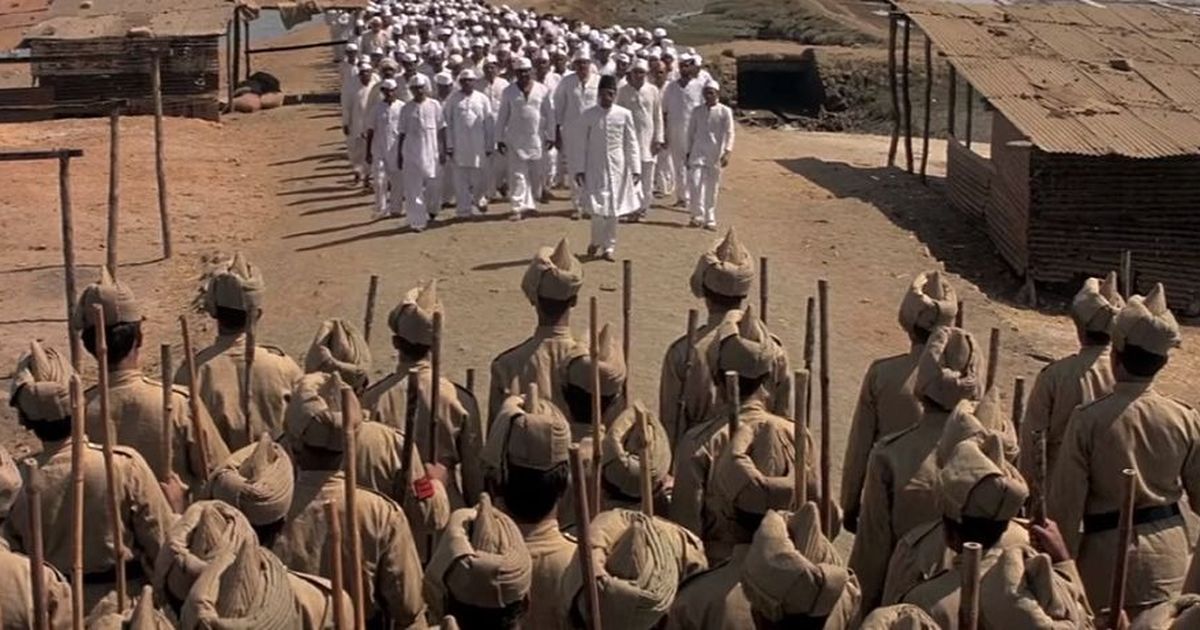
Attenborough’s grand, epic film marshals thousands of extras to bring to life pages of history. At times events fly by with speed, but Attenborough never loses sight of the emotional heart of the story – both Gandhi and the status of Indians as not being masters in their own home. Attenborough directs scenes of real power, most strikingly a heart-rending peaceful march on a salt works (the tax on salt use being a major burden on many poor Indians) that culminates in line after line of peaceful Indian protestors walking calmly forward to be beaten down by soldiers. Despite being the grandest and largest of films, it allows questions of pure morality and decency to lie at its heart and, supported by a parade of British acting greats, keeps the Indians at the heart of their own story and the masters of their own destinies.
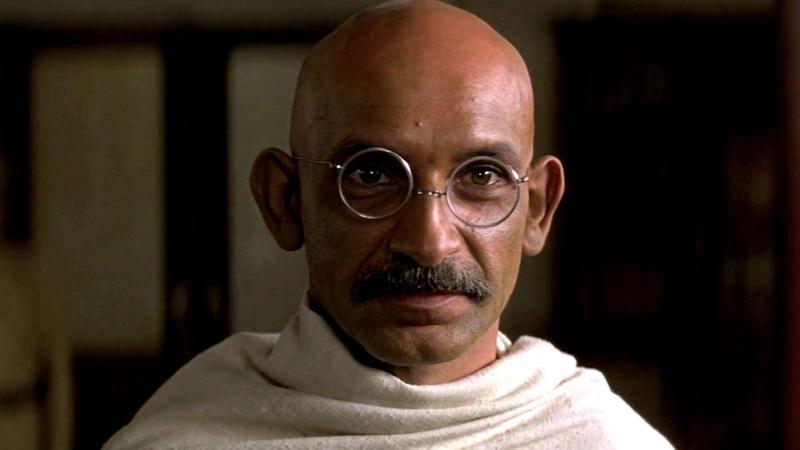
The film’s impact though may be directly connected to the gloriously transcendent performance of Ben Kingsley in the title role. For years it was believed the film could only work with a British actor in the title role – imagine how it would be received today if Gandhi had been played by (as it nearly was) a browned-up Anthony Hopkins or John Hurt (who famously told Attenborough he looked absurd). Instead half-Indian unknown RSC actor Ben Kingsley took the role. Kingsley so completely and utterly immersed himself in Gandhi – everything, the physicality, the morality, the voice, the intellectualism – that not only has he become so completely associated with the role but it’s hard to imagine anyone else playing it.

Ageing almost 50 years over the course of the film, Kingsley’s Gandhi is above-all moral, softly-spoken, observant and considerate – the very spirit of the original man seems to be up on the screen. Far from the sort of histrionics you might expect from a subject of an epic movie, Kingsley is not afraid to be quiet, gentle even underplayed. He completely understands that the charisma and power in Gandhi laid in his moral authority, not his speech-making, but his careful example-setting of even-handedness, patience and desire for peace. 

But Kingsley is also willing to show Gandhi as shrewd and stubborn, even while mixing it with both a deep pain at the loss of life. Kingsley is superbly good at the smaller quieter moments – he wrings heart-rending force from the loss of his wife (a similarly impressive and quietly authoritative performance from Rohini Hattaggadi), which partly works because the film quietly centres the truth and faith in their marriage. This is extraordinary work from Ben Kingsley, that seems to carry not just the entire film but the sense of a nation.

Attenborough though was a director who was at his best when working with actors, and his ability to coax truthful and heartfelt moments from quiet scenes are what gives the other sequences the emotional force to make them work. Attenborough seemingly called in every favour to assemble the supporting cast that backs up Kingsley, many of them juggling only a few scenes. Among the stand-outs we have a martially certain Edward Fox as General Dyer, an archly arrogant John Gielgud and a frustrated John Mills as viceroys, Trevor Howard representing decent British rule as an honest Judge and Martin Sheen as a reformist minded journalist. That’s to overlook dozens of others in small roles, all of them clearly committed to the intention of the project.

The film though allows the Indians themselves to take centre stage, even if it is easy to criticise some of the simplifications of many of the issues that would eventually culminate in partition. The film has a clear hostility towards the idea of religion, seeing it as the root of much of the violence that erupted in India in the last years of Gandhi’s life. While Roshan Seth is excellent as Nehru, the character is portrayed more as the faithful follower of Gandhi than the shrewd politician in his own right (it’s a role most of the other leading members of congress are also placed in). Alyque Padamsee carries a high level of charisma as Jinnah, founder of Pakistan – but the film can’t quite resist painting him into the corner as a semi-villain, ignoring Gandhi’s desperation to get Jinnah to invest in a united India.
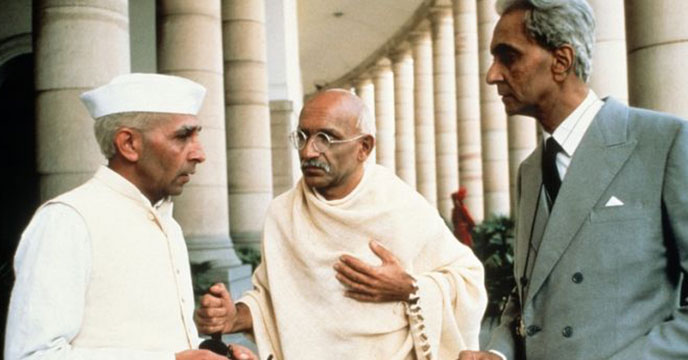
It’s part of what has been seen since as the film’s more hagiographic stance towards Gandhi. Certainly later historiography has outlined a few shades of grey in Gandhi – although I would argue that seeing him as a man and not a saint only heightens (similar to Mandela) the awe at what he went on to achieve. The film’s whistle stop tour of Indian history – taking in every major event and personality, some in a matter of moments – looks particularly old-fashioned now with our current trend being biographical films that focus only on crucial moments, not the whole life. It adds a slight air of schoolboy history to the project, an unfortunate side-effect of the passionate earnestness with which the story is told.

But then even in 1982 – when it lifted 8 Oscars including Best Picture, Director and Actor and most of the technicals – it was seen as slightly old-fashioned. Attenborough has generously repeatedly said that he believed Steven Spielberg was more deserving of Best Director for ET. And it’s true that Attenborough was in many ways a producer at heart with these epics than an inspired director like Lean. His marshalling of crowds, finances and simply forcing the will together to make the picture – and to allow it to focus on Indians rather than Westerners – is a tribute to his organisational skills. His strengths as a director were more in performances, and as with many of his epic films the most memorable moments are smaller, intimate ones. The larger moments are shot with an assured professionalism rather than inspiration, but Attenborough understands how to wring emotion from moments and how to let character drive action.

Gandhi works above all because even today you can see it is a passionate labour of love, that everyone involved in clearly believed in passionately. It may well be that at times it is workmanlike or simplistic – and covers the sweep of history with an earnest completeness, even while it is unafraid to be critical certainly of the British – but it still invests it crucial moments with humanity, life and deep emotion. You can’t help but be moved by it – and you are instantly stunned by the sheer brilliance of Kingsley as Gandhi, one of those performances like George C Scott as Patton which seems more like the man than the real thing. Gandhi may be old fashioned, but that’s not a crime when the quality is still there.
Cape Fear (1991)

Robert De Niro terrorises his lawyer’s family in Cape Fear

Director: Martin Scorsese

Cast: Robert De Niro (Max Cady), Nick Nolte (Sam Bowden), Jessica Lange (Leigh Bowden), Juliette Lewis (Danielle Bowden), Joe Don Baker (Claude Kersek), Robert Mitchum (Lt Elgart), Gregory Peck (Lee Heller), Illeana Douglas (Lori Davis), Fred Dalton Thompson (Tom Broadbent), Martin Balsam (Judge)

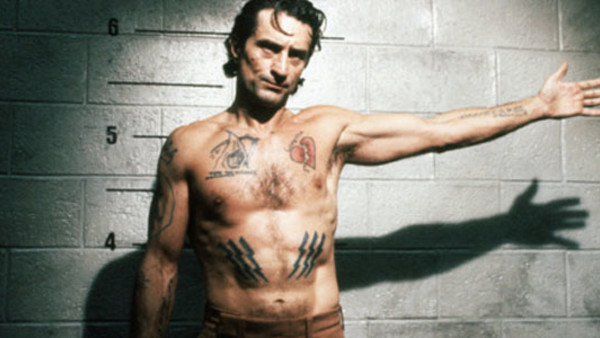
Max Cady (Robert De Niro) is out of prison after 14 years. He went in as an ill-educated psychotic bum, sent down for the rape and assault of a young woman after his appalled lawyer Sam Bowden (Nick Nolte) buried evidence on her sexual history that might have lightened his sentence. He comes out as a self-educated, articulate and psychotic force of nature, not sorry for one minute and intent on making Sam and his wife Leigh (Jessica Lange) and daughter Danielle (Juliette Lewis) pay. 

Scorsese’s remake of J. Lee-Thompson’s deliberately Hitchcock-esque thriller sees the great director go one better by trying to channel Hitchcock’s style as closely as possible. Framing and editing decisions echo Hitchcock, its design apes as much as possible cinematographer Robert Burk’s lensing, Elmer Bernstein remixes the original film’s Bernard Herrmann score into something even more Hitchcockesque than the original. Scorsese throws in several of the master’s favourite themes, with sexual obsession and frustrated, working men forced to defend themselves in extreme situations. Combined with the sort of lavish violence and extreme imagery Hitchcock couldn’t use, we end up with something like an odd film-school experiment, by film students who have watched too many slashers. It’s grim, tasteless, overlong and troubling – and not in a good way.

The film adjusts Nolte’s character from a lawyer and witness against Cady into his corrupt lawyer (no matter that his corruption in this case was well intentioned). The film has a slightly unpleasant concern with modern worries about masculinity, with Bowden now concerned he is not “man enough” to defend his home – the film constantly passes subtle judgement against Bowden’s lack of physical prowess. It also readjusts Bowden into a weasel, corrupt at work and having an affair with a young attorney (whom Cady then beats and rapes later in the film, with a slightly queasy air that she is at least partly culpable by allowing Cady to pick her up in a bar beforehand). To be honest Bowden is hard to sympathise with, and his quest to assert his masculinity rather than rely on the law or hiring others to do his dirty work not really that pleasant. Frankly Nolte was never the actor to engage sympathies in the way original choice Harrison Ford (he wanted to play Cady) would do.

Cady himself is played by Robert De Niro, channelling heavily the original’s star Robert Mitchum (with lashings of The Night of the Hunter) as the sort of articulate psychopath so beloved by film. It’s fun to watch De Niro grandstanding as this sort of violent Tyrannosaur, weaving both psychological and shockingly violent games to unnerve and panic Bowden and his family. The film doesn’t give much scope to make Cady much more than a sort of comic-book monster, but De Niro does at least have moments of reflection in amongst his insanity. And there is a sort of admirable emotional intelligence in Cady’s knack of detecting the underlying tensions in the Bowden’s marriage and family life and exploiting these to torment the family.

The film’s most effective moments are the quieter ones, none more so than Cady’s quiet befriending/seduction of Bowden’s daughter Danielle behind her parents’ back. This culminates in a deeply unsettlingly seduction scene in Danielle’s school hall, where Juliette Lewis (extremely good) fascinatingly and bashfully becomes entranced with Cady’s interest in her teenage reading list and problems with her parents. The sexuality of the scene is possibly even more unnerving today and a highlight of the film – not least, ending as it does, with Danielle sucking Cady’s thumb before kissing him and leaving with the giddy, confused excitement of someone both scared and fascinated. Few other things in the film match this moment for psychological complexity – or the unsettling exploration of teenage sexuality overlapping with rebellion against domineering parents. 

Least of all the film’s overblown and final confrontation between the Bowden family and Cady, in which Cady rises from death no  less than three times and which stretches on forever, jettisoning all the small stock of goodwill the film had built up in its quieter moments. But then this is just part of a film that chooses the graphic and the overblown over calculated and chilling, every chance it gets. It’s a shame as there is a more chilling, psychological terror film – with Cady as a demonically clever opponent – struggling to come out here, but which keeps tripping into slasher territory with Cady as an invulnerable Michael Myers.

Perhaps Scorsese just thought of the whole thing as a sort of cineaste’s private joke? All the Hitchcock references, the careful apeing of styles, even the casting of the original’s leads in small roles (a joke further amplified by casting Mitchum as the police officer, while ultimate straight arrow Gregory Peck plays a lawyer even more corrupt than Bowden). But jokes like this don’t really make for long-term entertaining films, and Cape Fear is so full of basically horrible people doing horrible things to each other (in an increasingly Grand Guignol fashion) that after a while you more than cease caring about it. You start getting actively annoyed by it.

The Proposition (2005)

Guy Pearce is given a fateful mission in bleak Aussie Western The Proposition

Director: John Hillcoat

Cast: Guy Pearce (Charlie Burns), Ray Winstone (Captain Morris Stanley), Emily Watson (Martha Stanley), Danny Huston (Arthur Burns), David Wenham (Eden Fletcher), Richard Wilson (Mike Burns), John Hurt (Jellon Lamb), Tom E Lewis (Two Bob), Leah Purcell (Queenie), Robert Morgan (Sgt Lawrence), David Gulpilil (Jacko), Tom Budge (Samuel Stoart)

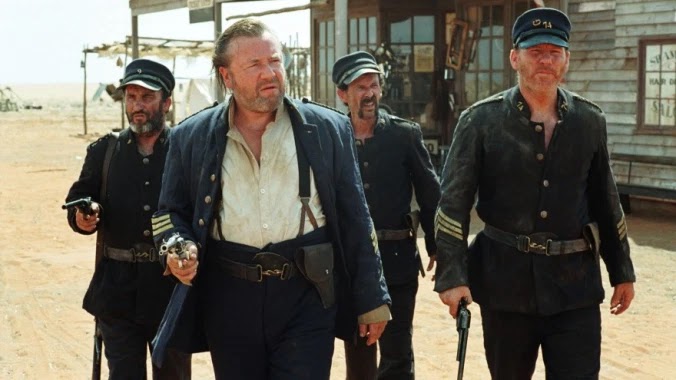
In the Australian outback at some point near the turn of the last century, a gang of ruthless killers are finally tracked down and killed by the police. The only survivors are Charlie Burns (Guy Pearce) and his younger brother Mikey (Richard Wilson). Charlie is offered a proposition by British émigré police captain Morris Stanley (Ray Winstone): find and kill Charlie’s other brother, the even more ruthless Arthur (Danny Huston), in nine days and Charlie and Mikey can go free. Will Charlie do it? And what view will Morris’ superiors take of his unusual decision? Either way violence and bleakness will ensue in the ruthless world of the Australian outback.

Scripted by Nick Cave – who also contributed the film’s sparse and haunting score – The Proposition is a dark, challenging and difficult film. It’s bleak, nihilistic and lacking in any real sense of hope or warmth. It presents a world where life is cheap and blood flows freely. All of this set in a wild, open-aired, dead, dry and dusty environment that in its gaping wildness and emptiness seems to consume the men who walk into it and leave them unhinged and capable of any depth of inhumanity.

How can there be any hope for mankind in all this? No wonder Stanley’s wife Martha (an intriguing performance of both optimism and disillusionment walking hand-in-hand from Emily Watson) tries to turn their house into a little slice of England, with a nice fence and traditional garden. It’s almost like she’s trying to slice something recognisable and safe from an environment that feels like it crushes everything it touches. It contrasts with every other ramshackle shack we see in the film, or dusty sandstone building – or the homes that most of the characters fashion among the rocks and the outback. What chance does civilisation have in this wild world?

It’s a world of ruthlessness where life is cheap. The local sport seems to be killing native Australians – something both police and gangs brag about. The native tracker used by the police – played by Walkabout’s David Gulpilil – quietly watches on as his drunken employers celebrate the (mercifully off screen) killing of a group of native Australians accused of murdering an Irish settling family. There is no pardon for him – later his throat is contemptuously slit by one of his fellows who now works as a sharp-shooter with Arthur’s gang. Hillcoat and Cave’s Australia has not a single touch of romance  or fellow feeling, but instead feels like a waiting room for hell.

Stanley is out of place here, not only by his Englishness, but also because his tough and pitiless policing is dwarfed by the cruelty he encounters. Ray Winstone gives one of his finest performances here as a toughened veteran who slowly realises he has only skimmed the surface of the brutality man can show man. Brutal and determined as he is, he has rules – and a wife he loves and a home he values – and that puts him at an utter disadvantage when going up against the amoral likes of Arthur Burns. Winstone’s Stanley also has a sense of fair play – he will struggle in vain to prevent a lethal flogging for Mikey that obsequious town mayor (a very good David Wenham) wants to inflict to placate the town. He frowns on the persecution of the indigenous people and treats his house servant well. Is it any wonder he isn’t remotely prepared for the bloodletting Arthur unleashes when he rides into town?

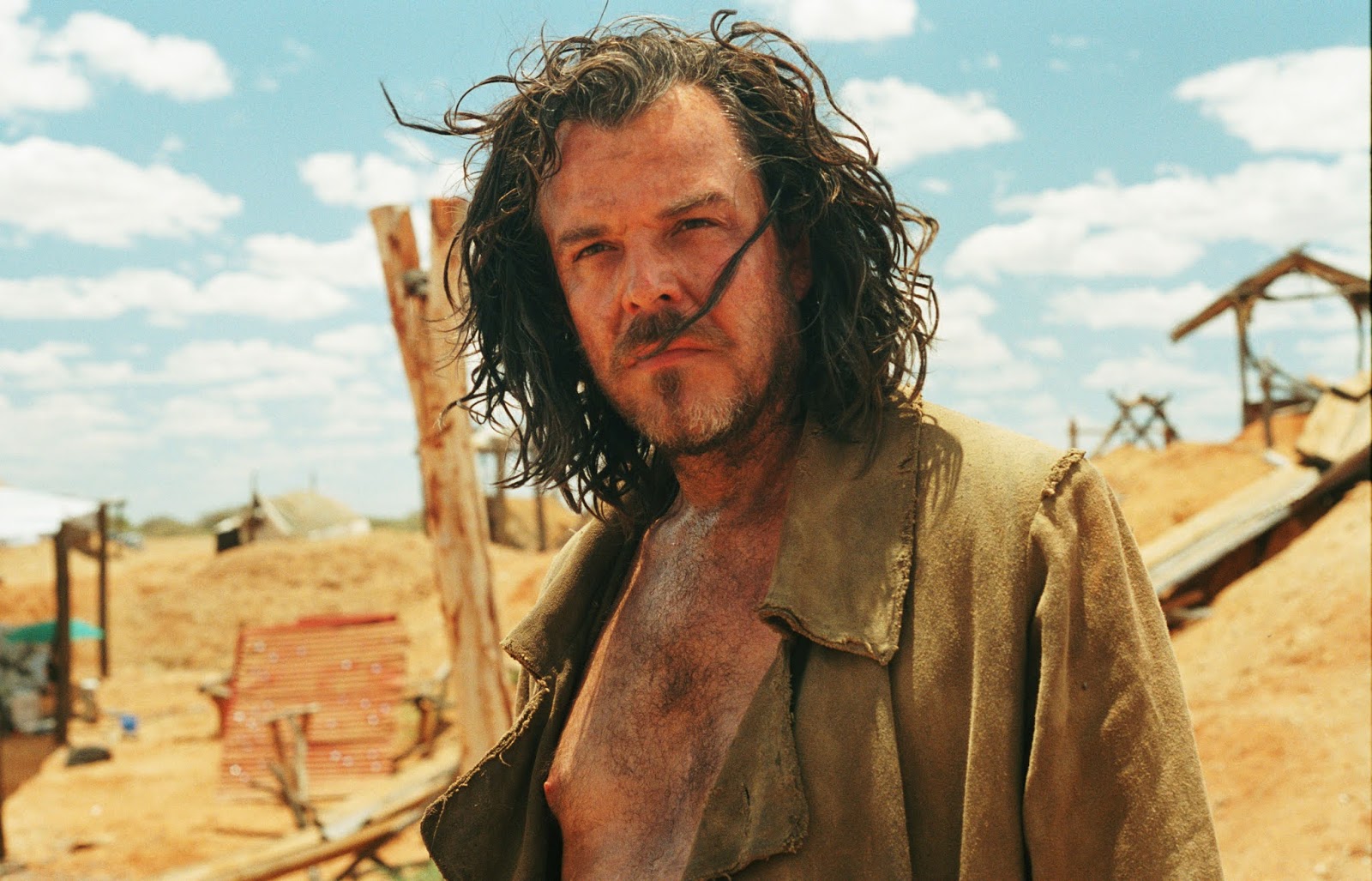
Danny Huston does excellent work as the poetic Arthur who lacks any touch of empathy. Softly spoken and chillingly calm at all times, with a lilting Irish accent, Arthur slaughters without any mercy and can charmingly undertake any level of depravity and violence. From mutilation to rape, from sudden slaughter to lingering sadism, worst of all it never seems to be personal with Arthur. More just a way of alleviating his own boredom with the world. Is there something about life in the outback that has turned Arthur slowly and quietly insane? Perhaps so, and it fits with Hillcoat and Cave’s nihilistic view of humanity as a destructive force with very little room for hope.

Guy Pearce’s Charlie perhaps offers what little hope we have – and even he is a murderer. Pearce does quiet, generous work in a reactive role, tipped pillar to post and dealing with conflicted family loyalties as well as some sense of right and wrong. Enough of a sense at least to believe wanton murder and destruction as practised by Arthur is too much. Pearce is a quiet, enigmatic figure in the film – perhaps a man struggling to work out where he sits. It’s a performance that cedes a lot of the fireworks elsewhere, with a moral conundrum that is almost deliberately elliptical, but striking nonetheless.

The Proposition is a tough and difficult film. It has a slightly disjointed narrative that at times skips gently over events or moves swiftly from one to another but missing connective events in between. It has the feel of a fever dream, the sort of bizarre tale you might throw together out of half-remembered nightmares. It allows wonderful opportunities for actors – all mentioned, and also John Hurt quite delightful as a drunken but deadly bounty hunter, his wizened looks perfect for the overbearing wilderness. Sure it’s a western that runs rampant with destruction, but it’s also a dark stare into the evil heart of man. It may end with a slight note of hope, but it’s an obscured and uncertain one and mixed in with more than enough suffering and destruction for the survivors.

The Proposition is still the finest film John Hillcoat has directed, and the best balance between compelling story telling and difficult nihilism.

The Program (2015)

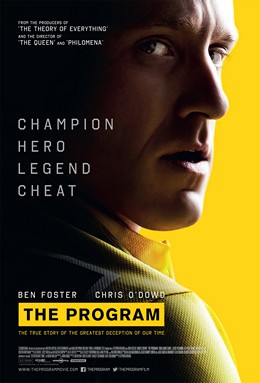
Ben Foster is the disgraced Lance Armstrong in this functional but insight free biopic The Program

Director: Stephen Frears

Cast: Ben Foster (Lance Armstrong), Chris O’Dowd (David Walsh), Jesse Plemons (Floyd Landis), Lee Pace (Bill Stapleton), Guillaume Canet (Michele Ferrari), Denis Menochet (Johan Bruyneel), Dustin Hoffman (Bob Hamman), Edward Hogg (Frankie Andreu), Elaine Cassidy (Betsy Andreu), Laura Donnelly (Emma O’Reilly), Sam Hoare (Stephen Stewart)

In sports there has probably never been an icon who fell so far as Lance Armstrong. Stephen Frears’ film reconstructs the story of Armstrong’s – played by Ben Foster – career, from finding his natural build and ability isn’t enough to win the Tour de France, through cancer diagnosis and recovery and then into his record-breaking run of Tour victories, all achieved off the back of running a comprehensive and professional doping system, and his final fall from grace.

Frears’ film is well-made and stylish and good at capturing the freedom and excitement of professional cycle racing. It’s also a skilled reconstruction of its time period, and a fairly well structured chronicle of events, which it reconstructs from journalist David Walsh’s (played here with a fine sense of moral outrage by Chris O’Dowd) book Seven Deadly Sins. Walsh had written stories for several years questioning Armstrong’s achievements, and Frears’ film puts together the events and testimonies that convince Walsh of Armstrong’s cheating with a documentarian skill.

Where the film fails though is its lack of drama and, crucially, its willingness to use dramatic and creative licence to attempt an exploration of Armstrong’s personality. What drove this cancer survivor to abuse his body with a parade of substances? How did Armstrong balance his passionate campaigning for a cure for a cancer with the lie he was presenting the world of how he didn’t just recover from cancer, he used it as a springboard to become the greatest endurance athlete in the world? Basically, what the film doesn’t really try to do, is get inside the head of its lead character.

Instead, the film follows its title: The Program. There is greater interest in the how of this cheating regime, not the why. Now perhaps in real life Armstrong is the shallow, narcissistic bully he often seems here, obsessed with winning at all costs with no moral quandaries at all. But it hardly makes for entertaining or satisfying drama. Foster is a brilliant physical match – and he captures the ruthless forward-drive of Armstrong very well – but this is a film that doesn’t really scratch the surface of what made Armstrong. We never get a sense of his motivations – or really his reactions as the world tumbles around him.

There is a fascinating story to tell here, but it’s almost as if the film is worried about giving this sinner some feet of clay we can sympathise with (to mix a few metaphors). Instead Armstrong is all chilled front and nothing underneath, and his villainy is so central from day one that we get neither a satisfying sense of a hypocrite unmasked nor of a Promethean fall from grace. 

Actually, Frears may well have been more interested in making a film where Jesse Plemons’ Floyd Landis was a central character – the devout Christian persuaded to take part in the doping scheme, who becomes Armstrong’s successor only to be immediately discredited in a way Armstrong would not be for years. It’s the tragedy of Landis that really has dramatic potential – a decent man who is well aware what he is doing is wrong, but is too weak to not accept the easy path to glory. It’s this story that has real dramatic potential – and might well have made a better focus for the movie.

The Program isn’t a bad film. It captures the drama of its sport well, and it brings together the events that led to Armstrong’s fall with professional skill. But it’s more of documentary than a drama and to be honest there isn’t much in it that couldn’t be picked up better from actually reading Walsh’s book. There was a lot of potential here – but it needed a film more willing to explore and understand its central character rather than just condemn him as a monster and move on.

Crimson Tide (1995)

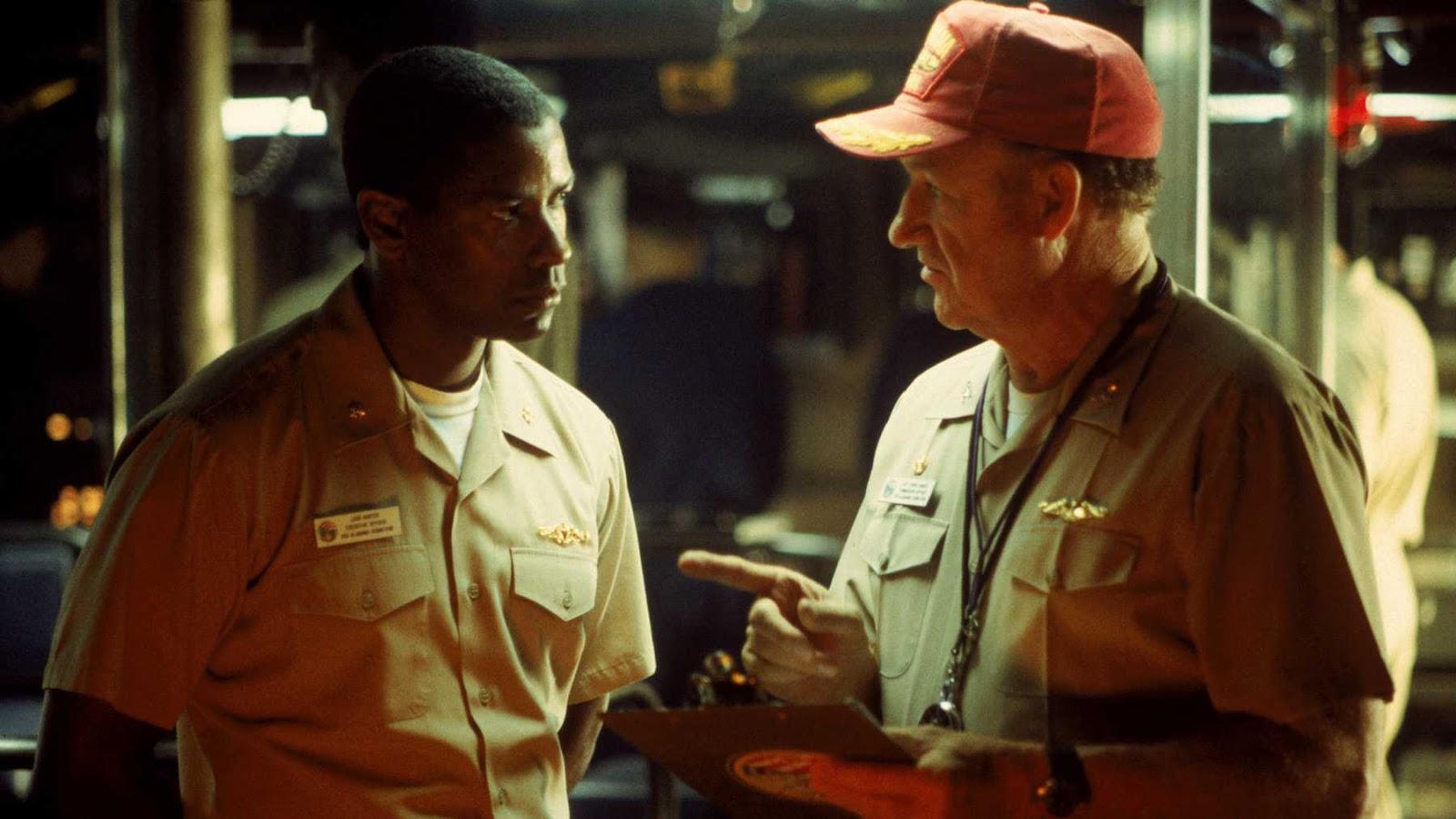
Denzel Washington and Gene Hackman face off under the water in Crimson Tide

Director: Tony Scott

Cast: Denzel Washington (Lt Commander Ron Hunter), Gene Hackman (Captain Frank Ramsey), George Dzundza (COB Walters), Matt Craven (Lt Roy Zimmer), Viggo Mortensen (Lt Peter Ince), James Gandolfini (Lt Bobby Dougherty), Rocky Carroll (Lt Darik Westerguard), Danny Nucci (PO Danny Rivetti), Lillo Brancato Jnr (PO Russell Vossler)

“The three most powerful people in the world: the President of the United States, the President of the Russian Republic and…the captain of a US ballistic missile submarine”. So boasts the film’s opening caption. This submarine drama explores the truth of that, during a clash of wills (and more) between Captain Frank Ramsey (Gene Hackman) and his XO Lt Commander Ron Hunter (Denzel Washington) over the launch of the sub’s nuclear missiles at a rogue Russian general. Ramsey has orders in hand. Hunter has a later, partial, order that may or may not be recalling the strike. Should the sub launch, or should they work to repair their radio and check the second message – possibly losing the narrow window of time they have to take out a rogue general’s missiles before he can launch them at America? Glad I don’t have that job.

Tony Scott’s submarine thriller is one of the best of the genre. It throws in all the clichés you would expect (the claustrophobia, the long dive, the game of cat and mouse with an enemy sub, the blips on the radar, the need to sacrifice someone to save the ship etc.) but presents them with a dynamic freshness (helped by Hans Zimmer’s exciting, award winning score). And at its heart it is a character study of two very different men, with very different styles of thinking and leading. Both rules are juicy, so it’s not surprising that two of the best actors in the game fill them out.

Denzel Washington is just about perfect as a Harvard-educated, committed soldier-thinker who believes in relating to the men as much as he does in firm order. Washington is careful not push Hunter towards being too cautious – under his command the Alabama bests a Russian sub in combat – and he may be alarmed by the impact of nuclear war but will reluctantly pull the trigger, but only once he is certain he has received the correct orders. A lot of the film depends on Washington’s natural moral authority, as well as his mix of forceful reserve and relatability. 

You need a big actor to not get steamrollered by Washington in those argument scenes – and few have the authority of Gene Hackman. Hackman is way too smart an actor to make the captain what he could have been in lesser hands – a trigger happy autocrat. Ramsey may be an old hand who believes in telling men what he wants and expecting delivery or a boot in their ass. But he’s not uncaring, he’s well-read, thoughtful, articulate and capable of acts of kindness and generosity. But he’s also a man rigid in his intent when he believes he is doing the right thing – and Hackman is always careful to establish that his intent on launching missiles is because he believes he is protecting innocent civilians back home.

The film becomes a compelling clash of tempers between two men who firmly believe they are both doing the right thing. The film is careful to throw up the fundamental lack of compatibility between the two from the start, even if it is tinged with respect. Their backgrounds, methods of discipline even ways of thinking about their role are different. There is an unspoken racial tension under the film, not because anyone in it is racist, but rather as Washington’s Hunter represents all round a newer America (an educated Black-American officer) that makes Hackman’s naval old hand feel like a relic of Cold War thinking.

But the film is, at heart, sympathetic towards both men, and probably places more blame on the system (an Admiral later reassures us both men were both right and wrong). Scott’s film with its expected flashy style (Scott loves the stark red lighting of the sub at alarm, mixed with the blaring greens of radar screens and the cool blues of sub interiors) gets a wonderful sense of the claustrophobia affecting decisions. Every character is a sweaty mess, while the sub seems to spend half the movie at an angle, forcing the crew to virtually pull themselves through it. 

The final hour takes place almost in real time, and covers the pressure cooker of men forced to make world-destroying decisions, cut-off under the ocean from any idea of what’s going on in the world, in extreme temperatures on little sleep. It’s a world of butch extreme masculinity – another way that makes Washington’s more cultured Hunter seem strangely other. Sweat pours off the men (the camera frequently focuses in on sweat-dripping faces). The officers of the ship generally come out badly, with Viggo Mortensen in particular a weak-willed man flip-flopping from side-to-side during the various changes of command on the sub. Many of the rest think little about what they are doing, and it’s telling Washington is largely supported by non-commissioned officers and regular sailors. Perhaps that’s where the true heart of America lies.

The film was written by a smorgasbord of writers (Robert Towne wrote much of the Hackman/Washington arguments at short notice, while Quentin Tarantino polished up much of the rest of the dialogue – no wonder it’s sprinkled with pop culture references). Initial support from the navy was cut off after Bruckheimer confessed the film was not about a HAL style computer trying to launch missiles, but a potential mutiny on a submarine and a feud between its two senior officers. Scott’s front-and-centring of the human drama between two great actors is what makes the film work – and take its place as one of the classic submarine movies.

To Catch a Thief (1955)

Cary Grant and Grace Kelly basically have a nice French holiday in To Catch a Thief

Director:  Alfred Hitchcock

Cast: Cary Grant (John Robie “The Cat”), Grace Kelly (Frances Stevens), Jessie Royce Landis (Jessie Stevens), John Williams (HH Hughson), Charles Vanel (Monsieur Bertani), Brigitte Auber (Danielle Foussard), Jean Martinelli (Foussard)

One of the nice things about being a powerful film director is, if you fancy a nice holiday in the sun, get a film greenlit in a nice location and settle in for a nice vacation. That’s perhaps the real story behind To Catch a Thief, a popular Hitchcock film that is, at best, a second tier entry in his CV – but has some truly lovely location shots of the French Riviera in it.

The film meanders through a plot that never really heads anywhere particularly interesting, other than crossing off some of Hitchcock’s familiar beats. Cary Grant coasts along as suave former French Resistance fighter and infamous jewel thief “The Cat”, now retired to a lovely vineyard on the French Riviera (presumably off the back of his ill-gotten gains). His French resistance past has basically made him immune from persecution, until a copy-cat thief starts to plunder the jewels of the rich. With Robie Suspect #1, who better to catch a thief than…another thief?

To Catch a Thief is so much about its style, its expensive Hollywood production standards and luxurious location shooting, that it almost forgets to have any substance at all. I suppose that doesn’t completely matter when this is very much one of Hitchcock’s entertainments – a luscious change of pace from his previous film Rear Window, which was all about confined spaces, voyeurism and seedy thrills. Here instead the focus is on beauty, charm and frothy comedy, with the plot unspooling so gently, that the final resolution is virtually thrown in as an afterthought.

Instead the focus is more on the extended game of flirting between Grant and Grace Kelly as daughter of wealthy American jewel owner Jessie Royce Landis. Grant was, of course, twice as old as Kelly (and only eight years younger of course than Landis, who played his mother four years later in North by Northwest), but the two make for a chemistry laden couple. (Hitchcock cheekily has one seductive late night conversation intercut – and end – with a fireworks explosion. No prizes for guessing what that symbolises). 

Much of this fire comes from Grace Kelly who, fresh from her Oscar win for Best Actress, is brimming with confidence. Clever, sexy and dangerous – she’s excited by Robie’s life of crime and loves the idea of joining him in a life of crime, don’t get many leading ladies of the time being as daring as that – Kelly oozes sex appeal and looks like she could eat Grant for breakfast. It takes all the experienced cool and charm of Grant – who adjusts the part so neatly into his wheelhouse, he feels like he could play the thing standing on his head – to keep up. Kelly is radiant and magnetic and walks off with the movie. So much so you wish it gave her slightly more to do. 

But then the plot of the film doesn’t give anyone much to do. Robert Burks (Oscar-winning) photography is lovely, really capturing the beauty and elegance of the French Riviera. But the events around it are nothing to write home about, an underpowered caper with little of the director’s energy and fire or his subversive creepiness. The identity of the copy-cat will be a mystery perhaps only to those who have never seen a movie, while the generally predictable beats in every scene make it feel like a hodge-podge pulled together from the offcuts of better films.

It’s got a lovely feeling of a holiday adventure for all and sundry. Plenty of French actors dutifully trudge through – although to a man their characters are either incompetent, bullies or crooks – with The Wages of Fear Charles Vanel clearly dubbed as a seedy ex-Resistance fighter turned restaurateur. It’s all very well mounted, entertaining enough and leaves almost nothing for you to digest after it’s finished.

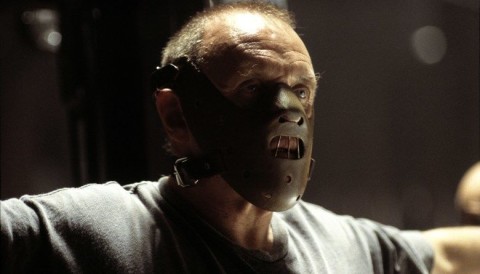
Hannibal (2001)

Anthony Hopkins rides again in the terrible Hannibal

Director: Ridley Scott

Cast: Anthony Hopkins (Hannibal Lecter), Julianne Moore (Clarice Starling), Gary Oldman (Mason Verger), Ray Liotta (Paul Krendler), Frankie R Faison (Barney Matthews), Giancarlo Giannini (Chief Inspector Rinaldo Pazzi), Francesca Neri (Allegra Pazzi), Zeljko Ivanek (Dr Cordell Doemling)

For Dino De Laurentis, The Silence of the Lambs was always the one that got away. Owning the movie rights to the Lecter character, de Laurentis allowed Orion, producers of The Silence of the Lambs, to use the character name for free. De Laurentis was desperate to make his own Hannibal Lecter film, to cash in on Lambs success – so much so he would have put any old crap on the screen so long as it was connected to Lecter. Perhaps Thomas Harris wanted to test that out with his novel Hannibal, a blatantly for-the-money piece of pulp.

Hannibal is everything that Silence of the Lambs is not. Where Jonathan Demme’s film was subtle, insidious and unsettling this is brash, gory and garish. Harris’ serial killer works always circled around the possibility of tipping into a sort of Poesque-Gothic netherworld. Hannibal dives in head first, reinventing its central character as a sort of Robin Hood of murderous psychopaths and introducing everything from vengeful faceless paedophiles, to Dantesque murders and man-eating hogs. The plot, such as it is, sees Hannibal Lecter (Anthony Hopkins) living under an assumed identity in Florence. Back in America he is being hunted not only by Clarice Starling (Julianne Moore) but also Mason Verger (Gary Oldman, unbilled under a host of make-up) who wants revenge after being hideously disfigured by Lecter. Will Lecter turn the tables on these adversaries?

Both Jonathan Demme and Jodie Foster were offered more money than they knew what to do with for this film. Both turned it down, citing the book – and its grotesque and bizarre outcome that see Lecter and Starling becoming lover-killers together – as the major factor. Foster in particular was out-spoken about how she saw the books extremity as a betrayal of the work she did with the character in the first film. 

No such concern for Hopkins though, who took a bumper pay cheque to return. Hopkins always said Lecter was an easy role to play – basically a creepy voice and a lot of actorly tricks – and it certainly makes it easy for Hopkins to coast through the part here. Really Hopkins treats the role no differently from the countless chat shows where he had been asked to say “Hello Claressse”, the only real difference being he was paid about $20million to do it here. This is Hopkins on unthinking autopilot, in a film that tries to play up the black comedy but instead becomes a ludicrous, offensive farce, drowning in blood.

Ridley Scott directs and his painterly visuals and mastery of the epic shot strips comes at the cost of the very things that made the original film so involving and tense. The Hitchcockian suspense and intimacy of Demme’s direction is jettisoned. Instead everything is a dialled up to a brightly coloured 11. The entire film mistakes gore, blood and overblown, cartoonish villainy for horror. Watching people being mauled by wild hogs, or some more unfortunate being lobotomised and made to eat his own brain isn’t scary it’s more gross. And because nothing feels remotely real in this film, it doesn’t even carry much impact.

The entire film is based around the fact that it’s Hannibal we’re paying to see – especially Hopkins reprising the role – so by Jiminiy we better work a little bit to make this lethal killer from Lambs into something a bit closer to an anti-hero. So instead, Lecter is rejigged as a sort of charming, amoral cannibal. The sort of guy who prefers to eat the rude and unmannered, who loves art and is only really dangerous when provoked. The film carefully gives us reasons to dislike everyone Lecter kills, and slowly falls in love with his sinister magnetism. 

This reduces Julianne Moore – in a truly thankless task – trying to both forge some sort of identity for Clarice from the story that is both unique and a continuation of what Jodie Foster did so well in the first film. It’s not entirely her fault that she fails. This is a film that depowers Clarice, that goes as far as it dares to turn her into a moth around Hannibal’s flame. The film backs away from the romance of the book (even if the film hints at it enough), replacing the eventual ending with something almost as stupid but at least doesn’t turn Clarice into a brain guzzling serial killer.

The plot flies around two arcs, one set around Hannibal in Florence the other on his return to America. Both carry no resemblance to the real world. The first does at a least have a decent performance of nervy greed from Giancarlo Giannini as the Italian detective who (wrongly) feels he can go toe-to-toe with Hannibal. The second revolves around Gary Oldman’s (unbilled – due to an argument over billing or a sly joke, depending on who you talk to) repulsive Mason Verger, a villain so revoltingly gothic you can’t believe in him for a second.

The film looks good and has a decent score, but it’s basically a claret splashed mess that can’t decide whether it’s a horror or some sort of black comedy. It settles for being nothing at all. A truly terrible movie, where everyone is there for the money and I imagine no one thought about the movie for a second once their work on it was done.

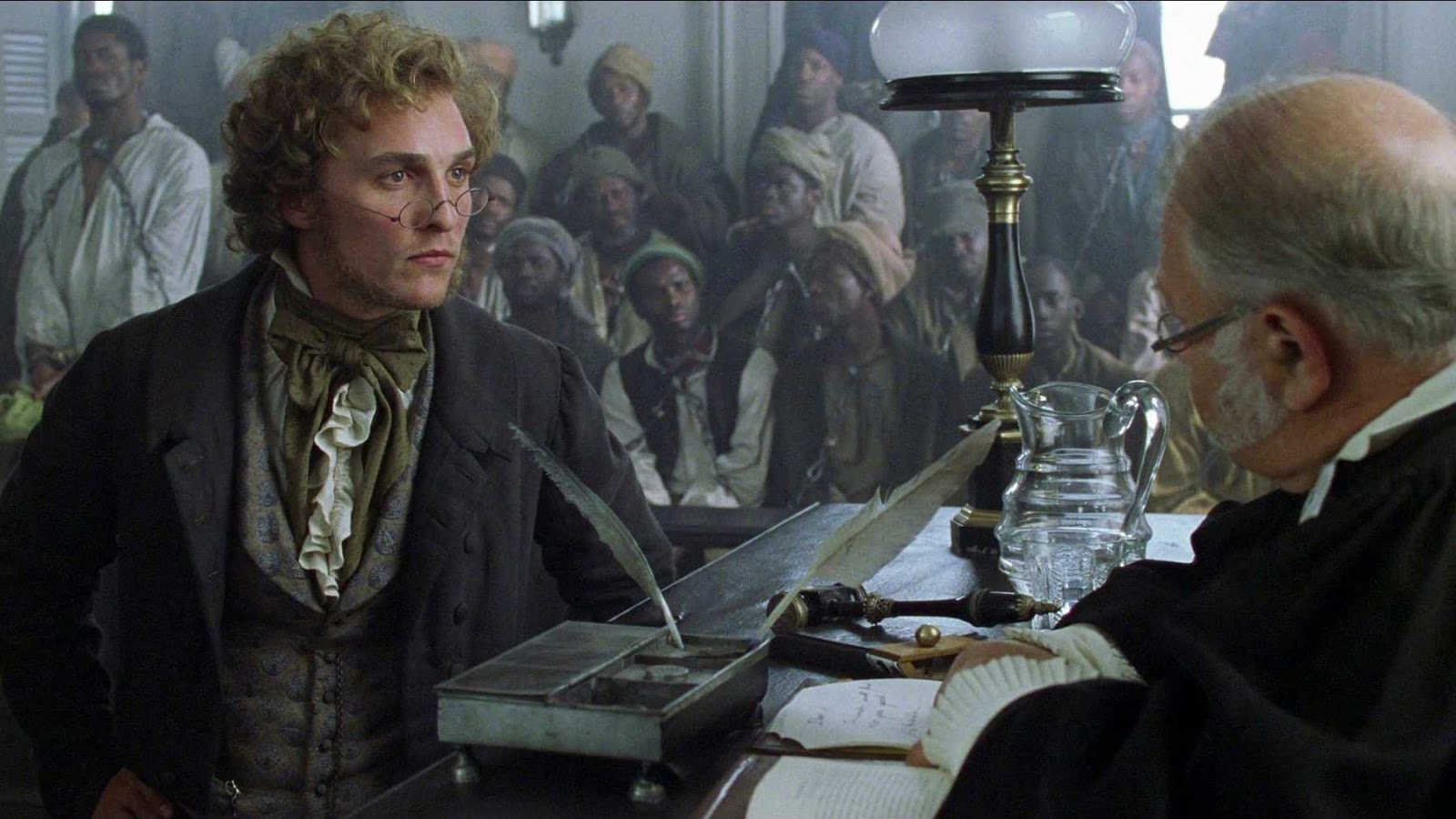
Amistad (1997)

Djimon Hounsou excels as a slave longing for freedom in Amistad

Director: Steven Spielberg

Cast: Djimon Hounsou (Sengbe Pieh/Joseph Cinqué), Matthew McConaughey (Roger Sherman Baldwin), Anthony Hopkins (John Quincy Adams), Morgan Freeman (Theodore Joadson), Nigel Hawthorne (President Martin van Buren), David Paymer (John Forsythe), Pete Postlethwaite (William S Holabird), Stellan Skarsgård (Lewis Tappen), Razaaq Adoti (Yamba), Abu Bakaar Fofanah (Fala), Anna Paquin (Isabella II), Chiwetel Ejiofor (James Covey), Peter Firth (Captain Fitzgerald), Jeremy Northam (Judge Coglin), Xander Berkeley (Ledger Hammond), Arliss Howard (John C Calhoun)

After the American Revolution, independence left one issue in America that would profoundly split the country: slavery. This was a land divided, between abolitionists and plantation owners, the more emancipation-minded North and slave states of the South. Slavery was – and remains – the ugly stain on the American soul. Steven Spielberg’s film uses a significant court case of its day to shine a light on these contrasting and conflicting priorities in American society throughout much of the early 19th century, that would eventually lead to civil war.

The film tells the true story of the slave revolt on the Spanish slaver ship Amistad. Here the slaves, led by Joseph Cinqué (Djimon Hounsou) escaped captivity, rose up and killed most of the crew (leaving just two men alive to sail the ship) and tried to return to their home in Sierra Leone. Arrested by an American naval ship while collecting fresh water, the slaves are transported to Connecticut where they find themselves on trial as escaped slaves, facing charges of piracy and murder. Their cause is taken up by Northern abolitionists Lewis Tappen (Stellan Skarsgård) and his black associate Theodore Joadson (Morgan Freeman), and their lawyer Roger Sherman Baldwin (Matthew McConaughey) a property lawyer. However, the case’s international implications for slavery attracts the concern of President Martin van Buren (Nigel Hawthorne), eager to support the prosecution, while former President John Quincy Adams (Anthony Hopkins), a lawyer and opponent of slavery, offers his advice to the defence.

Spielberg’s film has just the right balance of human interest and humanitarian concern to overcome its slight air of a civics lesson. Although largely a courtroom drama, what the film is really trying to do is capture in one moment the troubling contradiction of the land of the free built on slaves, and give a voice and empathy to the slaves themselves. 

Although some have criticised this as a “white saviour” film, I feel that’s unfair. This is a film that starts and ends with Cinqué’s story and filters America through his perception. We can well understand why he rages at his lack of comprehension of laws that can be adjusted, court decisions overturned or how words can be twisted to take on other meanings. A film front and centred, say, by Matthew McConaughey’s Baldwin and focusing on journey from seeing this as just another case into a crusade would be a white saviour film. Instead the white characters drop in and out of the story as the narrative requires, and it’s the struggles and courage of the black characters that form the heart of the narrative.

Spielberg also brings to life the cruelty and inhumanity of slavery and what it does to all of us. The film opens with the confined, appalling conditions of the slave ship while Cinqué (with hands running with blood) tries to release a nail from the wood which he will use to free himself from his chains. The film intriguingly opens without the African characters being translated – giving us a sense of their isolation and perhaps also stressing how different they are from the Western “civilisation” that has taken them from their homes. 

It isn’t until half way through the film, until a translator is found for Cinqué, that the film gives us the backstory that Cinqué has struggled to communicate. Spielberg spares no punches in showing the violence of abduction, the brutality and casual slaughter of the slavers, the starvations, the floggings that end in blood sprayed death, the cramped conditions practically designed to weed out the weak. A mother chooses drowning for herself and her child rather than life on the ship. Later the slavers chain unwanted slaves to a bag of rocks and cast them overboard to reduce their cargo load. If there was any doubt about the heart-rending evil behind slavery, it’s removed from your mind.

It also serves to hammer home the injustice of America’s own system. Under political pressure – van Buren is worried about the reaction of both Spain and the Southern States to the Africans being found innocent – the trial encounters interference and appeals every step of the way. It’s a system that prides itself on being the greatest in the world, but shows time and time again how it can be weighted against the weakest. The courtroom scenes – skilfully directed and played – show time and time lawyers valuing obscure property laws above right and wrong. And we are brought time and time again to the reactions and lack of understanding of the African characters, who come from a society where there is no equivocation and no words equivalent to “usually” or “perhaps”.

The film perhaps does take a little too long over its various legal machinations, and could do with losing a few minutes here and there. But that would be to sacrifice its many strengths. Looking wonderful, with a marvellous score by John Williams (riffing on the American pipes and African tribal influences), one of the strongest acting companies Spielberg ever assembled does outstanding work. Carrying much of the film is Djimon Hounsou, who makes Cinqué anything but a victim – he is a proud, defiant and intelligent man, humble enough about his qualities but quick to act to defend his rights. Uncowed but infuriated by the situation he finds himself in, he is never a passenger but at all times a key figure in his own liberation, even if his legal case must be fought by whites.

McConaughey enjoys himself under a bad wig, glasses and dirty teeth as the lawyer Baldwin, ambitious but with more than an air of decency. Postlethwaite is at his quietly authoritative best as his opposition counsel. Freeman lends the film a large part of his grace and dignity in a small, observant part of the freed-slave turned abolitionist, with Skarsgård more political as his white colleague. Hawthorne makes a van Buren a slightly flustered, impatient figure. Peter Firth demonstrates a great contempt for slavery behind an imperious exterior.

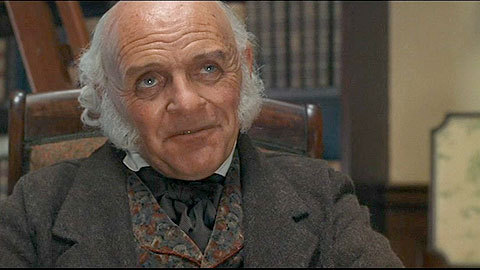
The film’s highlight performance though is Hopkins’ Oscar-nominated turn as John Quincy Adams. Adjusting his physicality to match the ageing ex-President, Hopkins captures his slightly nasal Massachusetts twang and adds a significant amount of twinkly charm and wry shrewdness to this adept political operator. A large chunk of the film’s final 20 minutes is given over to Hopkins, with the highlight a long monologue of Adams speech to the Supreme Court (in actuality a speech over eight hours in length!), that is a tour-de-force of skilled showmanship. It’s Hopkins’ last great performance of the 1990s. 

Spielberg’s Amistad is a superb courtroom drama but also a heartfelt condemnation of the inhumanity man can show to man. It never forgets either that while this was a victory, it was only a skirmish not the war. While the film at times overplays the inevitability of Civil War (which did not exactly start over this issue), it skilfully shows the divide in the American culture between abolition and slavery – and how many felt for the first cause, but feared the supporters of the second so much they would rather not address it. Either way, Amistad may at times be a little dry – but that gives its moments of emotion even more force.

The Treasure of the Sierra Madre (1948)

Three men go in search of The Treasure of the Sierra Madre

Director: John Huston

Cast: Humphrey Bogart (Fred C Dobbs), Walter Huston (Howard), Tim Holt (Bob Curtin), Bruce Bennett (James Cody), Barton MacLane (Pat McCormick), Alfonso Bedoya (Gold Hat)

Is there anything that warps the human character more than greed? Humanity sometimes seems driven only by the desire for more, to fill our pockets with cash and leave the rest behind. It’s greed that becomes the subject of John Huston’s masterful The Treasure of the Sierra Madre – and specifically the effect it has on Humphrey Bogart’s Fred C Dobbs. If you can pick up as much gold as you want off the ground around you, why does it become so difficult to watch others take it away?

Dobbs and Bob Curtin (Tim Holt) are down-on-their-luck drifters in Mexico, bumming spare change off American businessmen and struggling on hand-to-mouth jobs for shady businessmen. So how could they resist the chance to team up with fast-talking old-timer Howard (Walter Huston) who knows that there’s gold in dem da hills? Heading into the wilderness – partly financed by Dobbs’ lucky small lottery win – the three men strike lucky and start pulling the gold from the ground. Problem is as the piles grow, so slowly does the men’s suspicion each other – not least Dobbs, who grows increasingly paranoid and unbalanced at the thought of any danger to his gold. In the wilderness of Mexico, with bandits across the countryside can the men’s growing suspicion of each other be held off long enough to get the gold back home?

Based on a novel by B Traven – an author so notoriously private that even today no one knows who he was – John Huston’s classic is part adventure story, part treatise on the human condition. It’s also gloriously entertaining at every turn. One of the first major Hollywood films to be shot largely on location, it drips with the sultry heat of Mexico, beautifully filmed by Huston. Huston’s masterful script also packs the film with a punch, from quotable titbits (most famously the oft-misquoted “Badges? I don’t have to show you any stinkin’ badges!”) to its Shakespearean touches as a rambling, mad, paranoid Dobbs walking alone through the desert wilderness like a cut-price Lear.

Dobbs is the heart of the film – and there is perhaps no anti-hero more ‘anti’ in the whole of Hollywood than this ruthlessly selfish, obsessive paranoiac. Bogart probably gives his finest performance ever as the scruffy, sweaty, unshaven and bitter drifter who finds he can’t abide the idea of having to give away any of what he sees as his share of the loot. And, worse than that, becomes convinced that the whole world is out to take it from him. 

Bogart digs deep into the weasily, rat-like greed of this man. Bogart fought long and hard to play who he called “the worst shit you ever saw”. Dobbs has a strange moral code and sense of honour that’s entirely personal. Having his character impugned by others is an affront he can’t abide – though murder and violence are perfectly acceptable. He’s the sort of guy who will savagely beat a man who stiffs him for wages and then precisely take only what he’s owed from the guy’s wallet. Bogart is perfect as the cold-eyed loner who talks big at first about partnership, but later whines about how he staked most of the starter capital so should be getting a larger share of the profits. Bogart, in perhaps one of the biggest snubs in Hollywood history, missed out on an Oscar nomination in a notoriously weak year for Best Actor. Perhaps, the vision of Rick Blaine bitterly muttering to himself, covered in flies and filth, while plotting the murder of his friends in the Mexican outback was too much for the voters to take. Either way, Bogart’s late mental collapse into near-Shakespearean envy, jealousy and twitchy paranoia is as effective as it is subtly done.

More fortunate at the Oscars were the Huston family. John had written the part of Howard for his father Walter. It bought Huston Snr the Oscar for Best Supporting Actor. Walter Huston is wonderful as this fast-talking eccentric, rocketing through his dialogue at a hundred miles an hour, as if he has lived so long through the events he is talking about that he barely has the time or patience to tell the story at a normal pace. Huston adds touches of wonderful eccentricity, to Howard’s insane jig of joy when finally finding the site of the gold, to his infectiously unrestrained cackling laughter. 

Eccentric as he is though, Howard is a decent and honourable man who has every intention of sharing the gold and is well aware of its corrupting influence. The wily Howard is also the only essential member of the crew – the only one with the experience to survive in the wilderness, the only one who can recognise and knows how to mine for gold. The most loyal to the fellowship, he’s the good angel to Dobb’s bad. In the middle of this moral spectrum, John Huston places Tim Holt’s Bob, a plain-speaking, more naïve figure who has elements of both characters in his pride and hunger for gold, matched with his sense of honour and loyalty. The film partly becomes an unspoken struggle for the soul of Holt’s Bob, as we wait to see which way he will fall. 

Not that any of these men are angels. They are all determined to protect what they have. Struggling in shoot-outs with bandits is fine. They even vote on whether or not to execute a fellow drifter (played by Bruce Bennett) who encounters their stake and enquires about joining them for a share. Bennett’s Cody is, by the way, the smartest character in the film, who sees with pathetic ease through the nervy lies told by the three men, as well as acutely analysing their situation and options with a sharpness that seems beyond all of them. 

Of course by that point suspicion between them – specifically Dobbs and Bob – has already grown dramatically. Dobbs takes to spying on his fellows and digs a separate hiding place to which he carefully takes his own share (Curtin takes to doing the same). John Huston includes a marvellous sequence where the three men each wake up in turn during the night – and react with suspicion on noting the absence from the tent of the others. Later Bob will think long and hard before saving Dobbs from a mining cave-in. Only Howard seems less affected about the gold – although with his talk of the corruption he has seen in the past, perhaps he was a Dobbs himself in the past, now grown wiser and more accepting of the easy-come-easy-go nature of gold. 

Huston’s Oscar winning script (he also lifted the Oscar for Best Director, although Best Picture went to Laurence Olivier’s Hamlet) keeps the rich vein of irony running throughout the script, even while it shows how susceptible men are to corruption. The film’s final act – and the eventual fate of the gold – is a treat, a natural extension of the films theme of mankind being a dog-eat-dog world. What else can you do but sit in the dust and laugh at it all? 

There are no heroes really in The Treasure of the Sierra Madre – even the mountain remains named only in the title of the film – just three men, scruffy, seedy and not that smart, struggling to grab what they can from the earth. Life becomes more and more cheap as the film goes on – Dobbs and Curtin are like brothers at the start, but increasingly come to see both other people and each other as expendable rivals. With Dobbs like some scruffy Smaug, the film boils down to each man confronting his own emptiness. The only character with any emotional hinterland is the drifter Cody, looking for gold for his wife and kids (his story has real impact on Curtin), the rest are just living from moment to moment.

John Huston’s classic is a marvellous musing on the nature of greed and humanity, superbly filmed by Huston with not a single false note in acting or writing. Perfectly placed, it mixes a western vibe with a Shakespearean grandness – and has a simply wonderful performance by Bogart. A classic that really delivers.

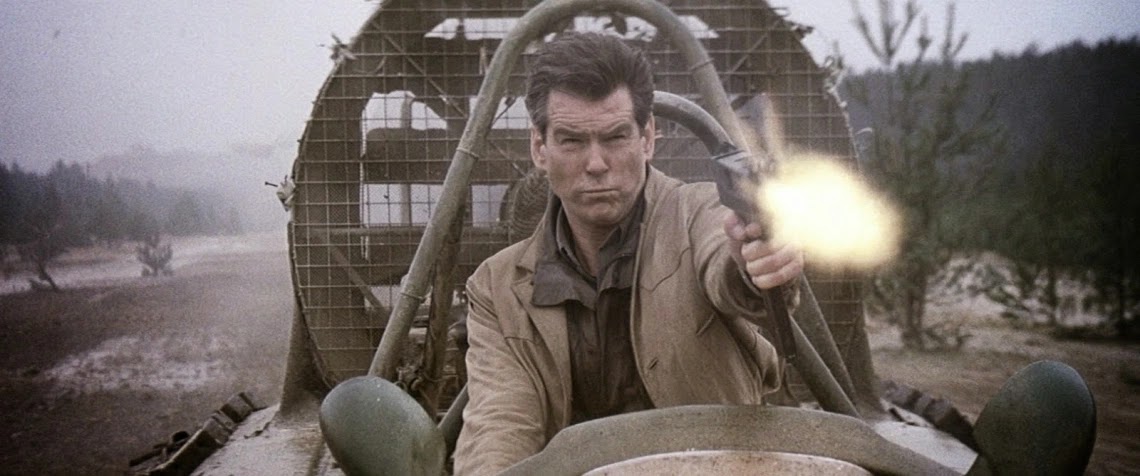
Die Another Day (2002)

Pierce Brosnan signs off as Bond with the mess that is Die Another Day

Director: Lee Tamahori

Cast: Pierce Brosnan (James Bond), Halle Berry (Jinx Johnson), Toby Stephens (Gustav Graves), Rosamund Pike (Miranda Frost), Rick Yune (Tang Ling Zao), Judi Dench (M), John Cleese (Q), Michael Madsen (Damian Falco), Samantha Bond (Miss Moneypenny), Colin Salmon (Charles Robinson), Will Yun Lee (Colonal Tan-Sun Moon), Kenneth Tsang (General Moon), Madonna (Verity)

Die Another Day was the highest grossing Bond film ever released. So why was it almost four years before another one was made? Put simply, because this one weren’t no bloody good. Released at the Bond series’ 40th anniversary, Die Another Day was meant to be a celebration of everything Bond – instead it’s like the final nail in the coffin of an entire lifecycle in the franchise that started probably around the early Roger Moore films. When Bond came back out after this, he was radically different. 

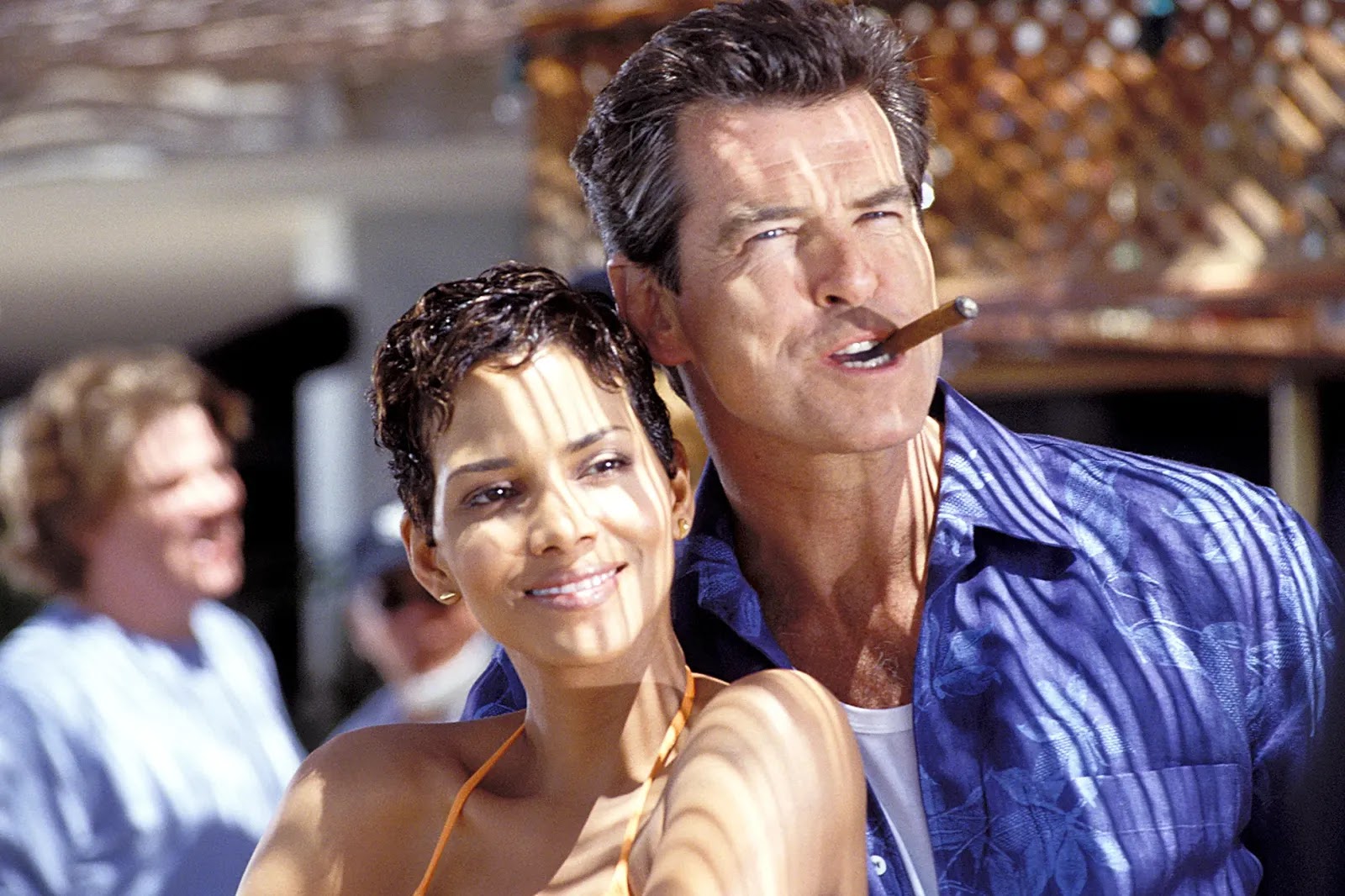
James Bond (Pierce Brosnan) is sent undercover to Korea to take out renegade Korean Colonel Moon (Will Yun Lee). The mission is a success – but Bond is betrayed and captured by the North Koreans. Coming out of Korean prison a year later, Bond is no longer wanted by MI6. So he goes off on his own to find out who betrayed him – and finds newly emerged diamond businessman Gustav Graves (Toby Stephens) might have something to do with it. With a trail that starts in Hong Kong and heads to Cuba, the UK, Iceland and back to Korea he’ll work alongside CIA agent Jinx Johnson (Halle Berry) to find out how this all ties together and get his revenge.

Die Another Day starts a bit like a Connery Bond – and about half way through it segues into being perhaps the most ridiculously overblown Roger Moore-esque Bond you’ll ever see. I suppose you could say this was the scriptwriters trying to capture the essence of 40 years in one movie. But actually it’s probably just incoherent scriptwriting and stupid storytelling. It starts trying to be grounded – Bond is captured and tortured for a year! – but then shrugs off any aftereffects of this year of hell with lackadaisical ease before throwing us into the sort of “Ice palace! Invisible cars! A weapon that channels the power of the sun!” malarkey that even Roger might have thought was a little bit too much.

It’s not helped by the fact that the entire film is so shoddily put together and so lazy in its execution. The one liners in this film are terrible – there are no double entendres in this film only single entrendres (words like thrust, pleasure, weapon and mouthful are used with gleeful abandon) – and far from being a playful exercise in Bond’s cheekiness are just hand-in-the-mouth embarrassing. But that’s almost as nothing compared to the woeful special effects. Even in 2002, nothing in this film looked real. 

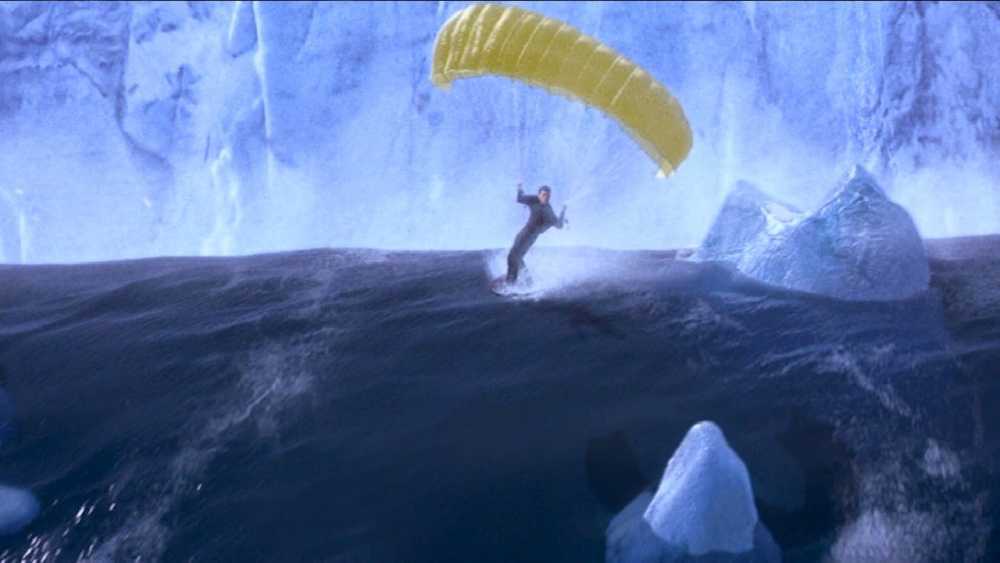
I hardly know where to start with the awful plasticky sheen of the effects here. The film opens with Bond and fellow agents surfing (!) into a deserted island – at the end of which Brosnan in front of blatant blue screen rips off his mask to show it-was-definitely-him. As if that wasn’t bad enough (Bond surfs? I’m out!) Bond surfs AGAIN in the movie halfway through, using a parachute as a sail to escape possibly the least convincing wave ever put onto film. It really has to be seen to be believed (or rather not believed). That’s not to mention the wonky overblown final plane sequence, or a laughably unrealistic looking Jinx dive from a cliff down into the water below.

Brosnan probably tries his best in all this, but even he can’t save this total mess. How does a film that started with Bond in prison and emerging damaged and on a gritty quest for revenge end with a villain wearing a robot suit controlling the sun? The script after the first 15 minutes gives Brosnan nothing to play with. The film loses all interest in the traitor plotline about halfway through, and when she is unmasked (in a twist that surprises no one at all) Bond barely seems to care. Pierce himself looks frankly too old and a little out of shape (his running in this film with his arms pumping up to his face looks terrible), something only magnified by the youth of his co-stars. 

Not that I’m saying his co-stars are any good either. When this film came out there was a brief flurry of excitement that Halle Berry’s Jinx would be worth a franchise of her own. That died shortly after the film came out – this is a character that acts tough when needed, but still needs to be saved twice in quick succession by Bond, who says faux-tough things like “Yo Mama!” but has barely two personality facets to rub together. Berry simply does her bit and meets the requirement of looking sexy and fighting. Mind you she still fares better than an embarrassing Toby Stephens, whose villain is so paper-thin the actor seems to have taken the bizarre decision to channel Alan Partridge. Rosamund Pike’s fencing MI5 agent barely registers.

Needless to say Bond beds her – as he beds all the women in this with a perfunctory inevitability that fits the box-ticking exercise of the whole film. The film is littered with references to past Bond films, although that is probably only going to make you want to watch almost any of the other films instead. Perhaps to try and up the ante and make this one “even biggerer and betterer than before” there are more gadgets than ever before. These are topped with the crowning turd of the invisible car, a nadir for the franchise, a senseless advantage (Bond at one point follows directly behind two walking heavies in the car – it’s invisible NOT silent for goodness sake!) and something so overblown that however much the producers at the time tried to justify it by pointing at military technology just sounds silly. Don’t get met started on the bizarre VR training sequence Bond carries out (later replayed for a grotesquely demeaning Moneypenny joke that made me feel sorry for Samantha Bond).

But then the whole thing basically sounds silly. Giving the villain a huge ice palace lair might have seemed like a cheeky nod, but again it just looks absurd and the producers desperately trying to find a location that hasn’t been used before. The entire film feels like a rushed attempt to get something out for the 40th anniversary (perhaps the rush helps explain the insane product placement, leading to the film being nicknamed Buy Another Day). The script has been assembled from the off-cuts of other Bond films. There are no fresh ideas at all and everything that happens in the film has the air of “well this sort of thing happens in Bond films”. The script and special effects feel half finished. Rather than a tribute to how Bond was done in the past, it feels like a tombstone. Here lies James Bond c. 1967-2002. No wonder under Daniel Craig he needed to be reborn as someone who felt vaguely in touch with something approaching reality.