Dangerous Liaisons (1988)

Glenn Close and John Malkovich play games of lust and sex in Dangerous Liaisons

Director: Stephen Frears

Cast: Glenn Close (Marquise Isabelle du Merteuil), John Malkovich (Vicomte Sébastian de Valmont), Michelle Pfeiffer (Madame Marie du Tourvel), Uma Thurman (Cécile de Volanges), Swoosie Kurtz (Madame de Volanges), Keanu Reeves (Raphael Danceny), Mildred Natwick (Madame du Rosemonde), Peter Capaldi (Azolan), Valerie Gogan (Julie)
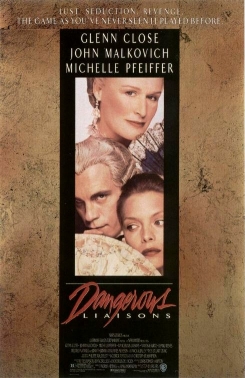
Christopher Hampton’s adaptation of Pierre Choderlos de Laclos Les liaisons Dangereuses had been a stunning success in the West End and on Broadway – so a film adaptation of this lusciously set story of sex was inevitable. Stephen Frears’ film keeps the story grounded in its setting of pre-Revolutionary France, but deliberately encourages a modern looseness, even archness, from its actors that makes it feel grounded and modern.

The Marquise du Merteuil (Glenn Close) and Vicomte de Valmont (John Malkovich) are two French aristocrats who fill their time with seductions and sexual manipulation of other people, while conducting a dance of attraction around each other. Du Mertuil wants revenge against her ex-lover by getting Valmont to seduce the lover’s innocent intended bride Cécile de Volanges (Uma Thurman). But Valmont is more interested in setting himself the challenge of seducing the unimpeachable Madame du Tourvel (Michelle Pfeiffer) – du Merteuil so convinced the task will be impossible that she bets him if he seduces du Tourvel, she will sleep with him as well. These games of sexual manipulation develop with disastrous consequences for all involved, as unexpectedly real emotions of love and affection intrude on the heartlessness and contempt.

Frears’ film won three Oscars for its most striking elements: production design, costumes and Hampton’s script. Hampton’s script provides a series of striking scenes and tongue-lashing dialogue for its stars. Meanwhile the film looks marvellous, it’s use of French locations superb in creating the world of decadence that these characters move in, while the costumes are so strikingly, elaborately intricate they practically become characters themselves. The film opens and closes with scenes of dressing and de-dressing: the opening sequence shows Merteuil and Valmont being dressed in their elaborate finery, a sequence uncannily reminiscent of knights being dressed for war, ending with shots of their defiantly cold faces starring down the lens. The film bookends this with the film’s key survivor, brokenly wiping away from their made-up “public face” probably forever. It’s a film that uses the intricacy of the period, to strongly suggest modern, dynamic tones and emotions. 

The film is shot with a series of tight shots, intermixed with the odd long shot, that is designed to bring us in close with the film’s serial seductions and envy-powered clashes. This brings us straight into the middle of the events, giving them an immediacy and suddenness that makes this feel like anything but a traditional costume drama. Seductions have a steamy immediacy, while the growing moments of tension in the relationship between Mertuil and Valmont is similarly bought in close to us, to allow us to see the mix of emotions these two have for each other – both a deeply, unexpressed, love and a strange sense of loathing linked together with a possessive jealousy.

Frears makes marvellous use of mirrors in the film. These reflective surfaces appear in multiple shots and frequently expand the world, mirrors reflecting characters as others discuss them, or forcing into shot (usually between two other characters) the subject of conversations. They reveal (to the viewers) eavesdroppers hiding and, in one striking shot, as Valmont and Mertuil’s latest lover argue she is framed in reflection hanging above them on the wall mirror. There’s a reason why one of the film’s final sequences revolves around the smashing of a mirror in grief. 

The film’s modernism also stems from its use of very modern American actors – apeing the success of Milos Forman’s Amadeus – with everyone using their own accents. Glenn Close is superb as Mertueil, a woman projecting a cold, manipulative authority but does so to suppress and hide her own emotional vulnerability. Mertueil has convinced herself that she is a champion of her sex, but her every action seems to be motivated by finding indiscriminate revenge on all those who have found the sort of happiness she has been denied (or denied herself). Close lets little moments – wonderfully captured by the intimacy of Frears’ camerawork – where moments of micro-emotions and pain flash briefly across her face, only to be wiped away.

Malkovich is an unusual choice as Valmont – and his serpentine swagger and arch mannered style at first feels quite a disconnect with a character renowned as the most successful lover in France. But Malkovich’s eccentricity, his very oddity, in a way makes him believable as a man women would find intriguingly irresistible. Malkovich, while naturally perfect for the coldness of the character, is also highly skilled at expressing the slow, non-continuous growth of conscience and feeling in Valmont, as his feelings for Tourvel dance an uncertain line between manipulation and genuine feeling – and while his confused feelings for Mertuil alternate from possessive devotion to revulsion.

The whole cast respond well to Frears guidance, and his ability to draw relaxed performances from an odd selection of actors. Michelle Pfeiffer is particularly fine in a role that on paper could be very dull – the perfect, kind woman – but which she invest with such a seam of emotional truth and longing for deeper connections, combined with naked emotional honesty that she becomes the most compelling character in the film. Uma Thuman is very good as a naïve young girl, Kurtz and Natwick suitably arch as society bigwigs, Peter Capaldi creepily willing as a manipulative servant and even Keanu Reeves has a certain sweetness about him, even if he is at the height of his “Woah” dudeness.

The film’s principle problem is perhaps the very archness and coldness that makes it affecting. While it’s intriguing and intelligent, it is never perhaps as engaging as it should be and its characters are so jet-black, deceitful and cruel that it becomes hard at points to really invest in this chilling story of unpleasant people using other unpleasant people and manipulating innocent ones. It becomes a film easier to admire, perhaps carrying too much of the freezing chill of imperial French greed and selfishness. Come the denoument for all the skill it is played with the actors, it is hard to feel your emotions invested or your heart moved by any of the fates of the characters. Perhaps, in presenting a heartless world of selfishness and lies, it does its job too well.
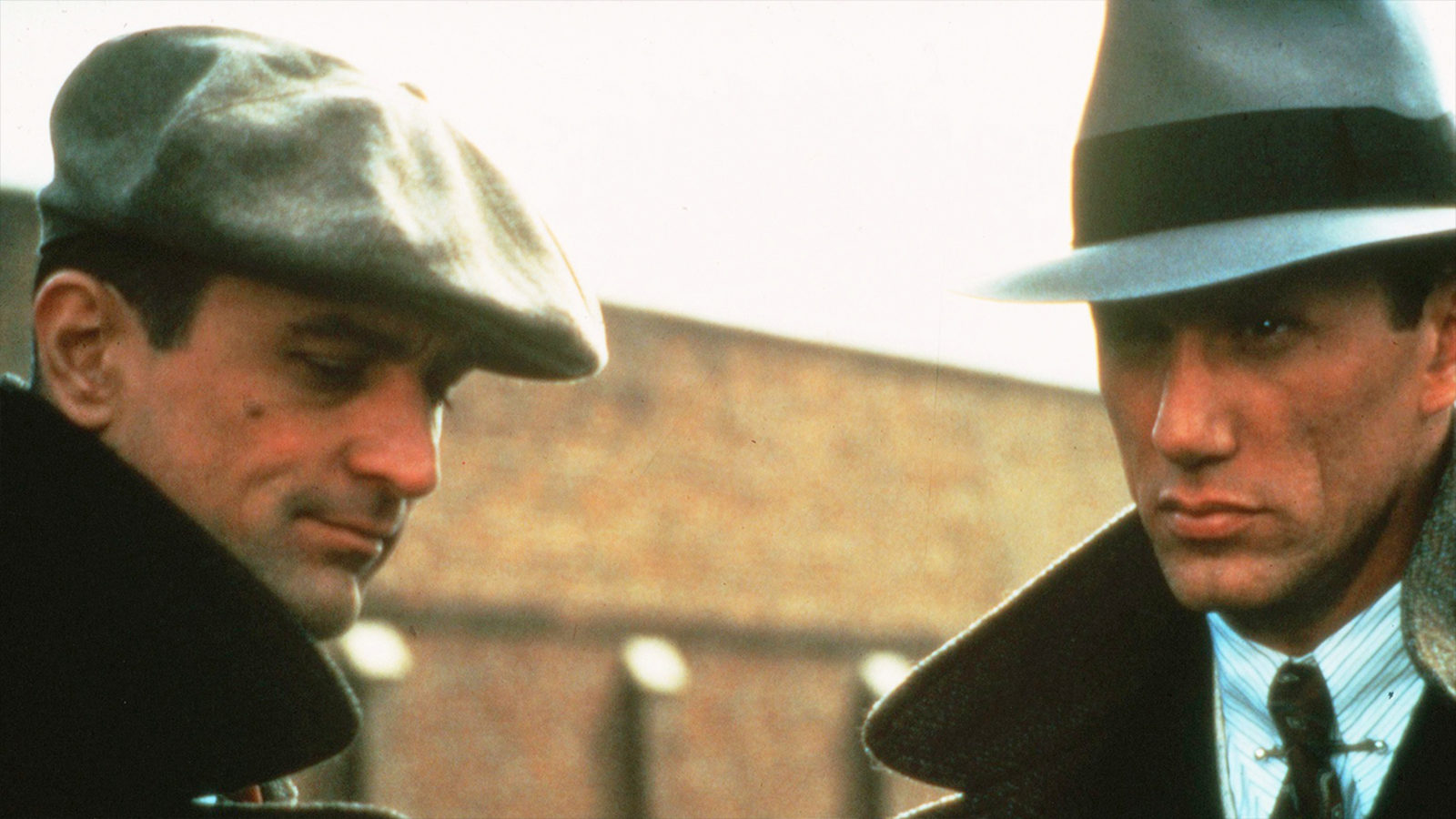
Once Upon a Time in America (1984)

Robert De Niro and James Woods are gangsters in Sergio Leone’s sprawling indulgent masterpiece Once Upon a Time in America

Director: Sergio Leone

Cast: Robert De Niro (Noodles), James Woods (Max), Elizabeth McGovern (Deborah), Joe Pesci (Frankie), Burt Young (Joe), Tuesday Weld (Carol), Treat Williams (Jimmy O’Donnell), Danny Aiello (Police Chief Aiello), Richard Bright (Chicken Joe), James Hayden (Patsy), William Forsythe (Cockeye), Darlanne Fluegel (Eve), Scott Tiler (Young Noodles), Rusty Jacobs (Young Max), Jennifer Connelly (Young Deborah)

It had been thirteen years since Leone had made a film. During this time he turned down The Godfather in favour of his own dream of filming Harry Grey’s novel The Hoods. The final film, Once Upon a Time in America, seems destined to live in the shadow of The Godfather, from its settings and many of its themes through to its graphic design and cast. It’s a challenging, over-indulgent, sometimes difficult film that, never-the-less has its own sense of hypnotic power to it.

Told in a partly non-linear style, it opens with Noodles (Robert De Niro) a Jewish gangster on the run from thugs in 1930s New York days after the fall of prohibition. With his friends and his girl dead and his money stolen, Noodles flees the city – returning only in 1968 after a mysterious summons suggests his past is not as buried as he thought. Within this, the film weaves an intricate series of flashbacks that fill in the story of Noodles and his friend Max (James Woods) turning their teenage gang of hoodlums into an effective crew, muscling in on the money that can be made from prohibition. Carrying the story from 1918 all the way back to 1968, we discover why Noodles was on the run, what the money was, where it’s gone and who or what summoned him back to life.

Leone originally envisioned the film as a two-part epic: two films of three hours length. His original cut was almost ten hours long, cut down to six and then finally to just over four. This cut was released to critical acclaim at Cannes – but was still too long for the producers, concerned about making their money in America. To the fury of the cast (James Woods continues to be vocal about the butchering of the film), and the heartbreak of Leone, the film was cut again to just over 2 hours before its release in the States – a move that rendered it nearly incomprehensible and led to reviews that labelled it one of the worst of the year. Only with the much late release of the European cut (and work continues to restore something closer to Leone’s six hour cut) did the film find acclaim.

But you can see why the producers worried. Leone was never a director who felt the need to get where he was going quickly. As his films became ever more dominated by his love for artful compositions, meditative longeurs and drawing the tension out for as long as possible, so their running times ballooned. Leone matched this with a yearning to tell a story that was to be nothing less than about defining “America” – or at least, give a symbolic weight and depth to the Americana he loved. The film is overflowing with the feel of Old Hollywood gangster films and classic imagery of the immigrant experience in Manhattan. It’s like a brilliant coffee-table album bought to life and covered with blood.

So Once Upon a Time in America is a slow, lethargic even, film that takes its time to build up a picture of an immigrant community drawn together through bonds of culture and shared past that are nearly impossible to express – but fractured by the greed and capitalism of the American Dream, temptation to make an even bigger killing leading to old loyalties being sacrificed. Leone juggles some big ideas here, and if the film never quite comes to grips with any of them as it charts the fractured relationship of Max and Noodles, from brothers-in-arms to ambition, pride and private frustrations leading to betrayal it’s never less than strangely engrossing. 

In many ways this is a hugely indulgent film, but it is also remarkable (strangely) for how restrained and elegiac it is. The razzamatazz of some of Leone’s Westerns are mixed in with a golden age romantic view of the past – and its lost opportunities and loyalties – in a film particularly fascinated with the coming-of-age of young men. The film is nothing less than an old man taking a ruminative journey through the past (both Leone and Noodles in his memories), looking back at a life time of bad choices and lost chances. It all makes for one of cinema’s greatest mood pieces ever, with faultless period reconstruction, but also a piece that for all its focus on personal lives at cornerstones of histories, makes its characters seem strangely impersonal.

Part of that lies in Leone’s clear love for the film’s long second act (nearly a third of its runtime), which charts the young Jewish hoodlums teenage lives in 1918 New York – their meeting, first scores, rivalries with other gangs and inevitably the loss of virginity. For all its overextended backstory, the section of the film hums with love and elegiac romance. It’s the richest part of the film. There is a beauty in beats of the watching the boys encounter everything from first crime to first love – and easy as it is to mock a good 3-4 minutes watching one of them eat a cake intended as an offer in exchange for a first sexual experience with the local floozy, moments like that have an innocence and a beauty to them that Leone really captures.

It’s a shame that it’s the back-end of the film that suffers – and its plot and narrative drive. It feels like Leone fought to keep the beauty of this early section and sacrificed drive and narrative later. The fracturing of the relationship between Max and Noodles is less clear, and their adult characters never quite come into focus. Perhaps there isn’t quite room for actors in the long sequences of wordless silence and atmosphere, punctuated by bursts of shocking violence, in Leone’s world. Certainly the cut doesn’t help, with most of the supporting cast (Joe Pesci, Treat Williams, Burt Young, Danny Aiello) reduced to little more than one scene each, their storylines – particularly a crucial Teamsters plot – barely making any sense.

Max’s growing distance from Noodles is perhaps rooted in everything from his ambition being frustrated by Noodles small-time viewpoints, perhaps even in suggestions of a frustrated homosexual love for the defiantly straight Noodles. James Woods does very well to piece to together a suggestion of deep psychological unease and confusion in a character who remains unknowable, a man to whom loyalty is everything until it isn’t.

As Noodles Robert De Niro anchors the film with one of his quietest, most reflective performances. Noodles is a deeply flawed, low-key, humble character who carries in him a capacity for self-destructive and vicious violence. Leone’s film suggests Noodles is perhaps troubled by feelings and longings he can’t begin to understand or appreciate. He is a romantic character, deeply infatuated with both Max and his childhood sweetheart Deborah, but unable to express or communicate his feelings until it is far too late, a man traumatised by emotional connection.

Not that this excuses Noodles for his actions, particularly towards women. If there is one troubling aspect of the film it is its attitude towards women. There are two prominent women in the film, both of whom are raped. One of them, Carol, is a shrewish temptress, who deliberately provokes Noodles to rape her and is then shown enjoying it. The second rape, this time of Deborah, comes from Noodles after a romantic date where he has finally done everything right. While Leone shoots the scene with an almost unwatchable grimness – Elizabeth McGovern’s screams and distress make for very hard viewing – the film still asks us to feel not only for her pain, but also (perhaps more so) Noodles regret. Further when they encounter each other late in life, Deborah matches him in sadness at chances lost – an unlikely reaction you feel for someone who has suffered as traumatic experience as she has. 

But then to Leone perhaps this is part of the corruption of America – or rather the vileness of gangsters. The gangsters are a grotesque bunch in this film, killing without compunction, torturing, stealing, using violence as second nature. Loyalty is barely skin deep and arrogance abounds. There is no romantic sense of family behind it all – perhaps the thing Leone rejected most from The Godfather – just a series of people on the make and on the take. 

But for all its faults and over extended length the film is increasingly hypnotic and engrossing, Leone’s understanding of mood being near faultless. While the ideas are perhaps not quite pulled into sharp focus in the film – and leave the audience having to do a lot of supposition – it still works over time. And the film has so many astonishing merits – from its awe-inspiring shooting and production to the sublime score from Ennio Morricone that gives the film even more poetic depth – it more than merits its existence.

And of course there is the cheeky sense Leone throws in that some – or indeed all – of what we are seeing may not even have happened. The film opens and closes with Noodles in an opium den, stoned out of his mind, in the 1930s. In the opening he lies there, haunted by the sound of a ringing phone (the memory of the phone call he made betraying Max), and we see him arrive at the film’s end taking his first puff and lying back with a grin. Is the film’s off-kilter 1968 even real? Or just an opium den dream? Is the past – and the film’s disjointed narrative flying back and forth – just a stoned man lost in his own fantasies? Who knows? What we do know is that Leone’s indulgent epic is a flawed but genuine masterpiece – and the opium fantasy angle may just be the perfect cover for the fact more than half the film is on the cutting room floor of history.

Back to the Future Part II (1989)

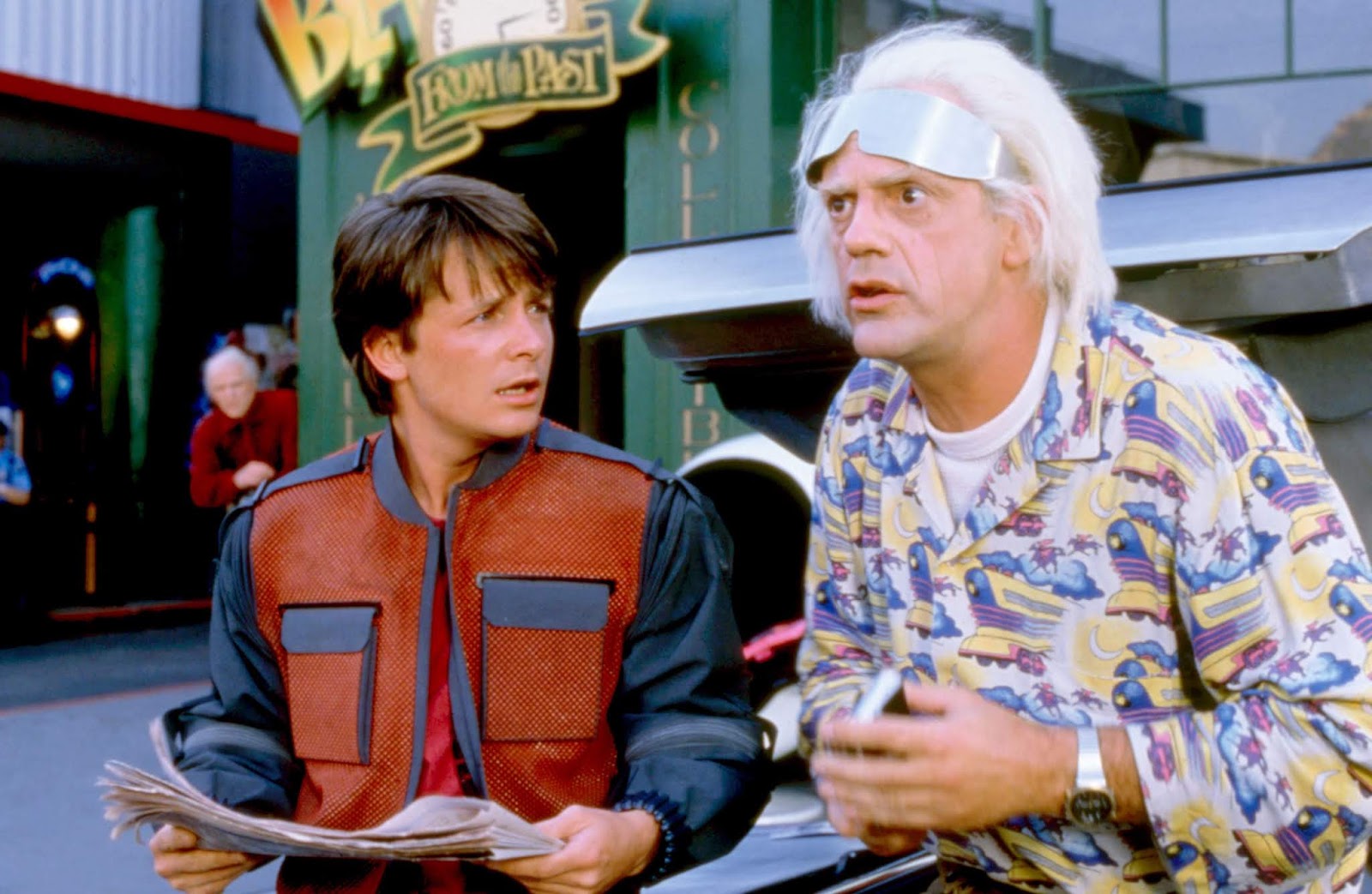
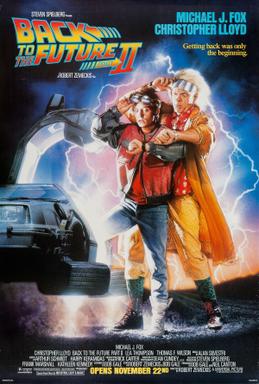
Marty and Doc head to the Future at last – alas – in the weak middle chapter Back to the Future II

Director: Robert Zemeckis

Cast: Michael J Fox (Marty McFly/Marty McFly Jnr/Marlene McFly), Christopher Lloyd (Emmett Brown), Lea Thompson (Lorraine McFly), Thomas F. Wilson (Biff Tannen/Griff Tannen), Elisabeth Shue (Jennifer Parker), James Tolkan (Strickland), Jeffrey Weissman (George McFly), Flea (Needles)

After the smash hit of Back to the Future a sequel was inevitable – particularly with that hook ending with our heroes zooming off into the future to fix Marty and Jennifer’s kids. Back to the Future Part II is often fondly remembered for its journey into 2015, a typically 1980s view of what the future might be like, but this is journey is mostly a slightly embarrassing mess that the film has to spend quite a bit of time getting over before the plot can start in full.

The journey into the future is largely a narrative cul-de-sac, which is mostly there to introduce a Sports Almanac covering 1950-2000 which Marty (Michael J Fox) picks up in an antiques store with an eye on placing some bets in the future. He’s firmly told by Doc (Christopher Lloyd) not to mess with the timeline, but that’s never here nor there to Old Biff (Thomas F. Wilson), who pinches both Almanac and DeLorean to head back in time to 1955 and handover the Almanac to his younger self. Which means when Marty and Doc return to 1985 from 2015, having not noticed the theft and return of the time machine, they find 1985 has been transformed into a nightmare dystopian world where Los Angeles is ruled by multi-billionaire Griff. So it’s back to 1955 to repair the timeline again – and this time dodge round their younger selves who are still going through the events of the first film. 

Zemeckis and Gale, it’s pretty clear, actually wrote themselves into a bit of a corner with their visit to the future. Firstly, the problem with the kids turns out to be fairly quick and easy to solve. Secondly, they are stuck with Jennifer (Elizabeth Shue replacing the unavailable Claudia Wells) who is instantly unceremoniously knocked out not once but twice in order for her not to be a third wheel on the boys adventures. Thirdly, the real interest and delight of these time travel films is seeing the past through the perspective of the present, and we lose that completely in a silly painfully of its time vision of the future. Gale himself had ruled out visiting the future in the first film, because all visions of the future date quickly on film – so it’s a shame he didn’t listen to himself.

The future sequence of the film is honestly pretty awful, in the midst of a film that takes a long time to get going and then relies very, very heavily on recreating the first film either spiritually (several set pieces in the future echo the first film, from feuds in a diner to the skateboard chase here done with a hoverboard) or literally (the third act of the film is a point-by-point recreation of the first film from different angles). The future sequence lacks any real point or drive, other than to establish two plot points: the sporting almanac and how Marty’s character flaw of pride leads him to take stupid, self-destructive risks. 

Other than that it’s an increasingly embarrassing look at what a 1980s person thinks the future might be like – flying cars, hovering skateboards, strange futuristic clothes, cybernetic implants, loud, bright colours – it’s all there. Sure there are some things correctly predicted – principally the idea of something approaching the internet and video calls – but the attempts at presenting a humourous view of the 2010s falls flat. This isn’t helped by the desperate mugging of several of the actors – none worse than Fox sadly, who plays his whiny Grandson, a latex covered middle aged version of Marty and (worst of all) his granddaughter – straining for laughs, but missing completely. It’s a cheesy, awkward sequence that says more about the hang-ups of the 1980s than anything else.

The film only starts to pick-up when we head back to the hellish Mad Max version of 1985 caused by Biff’s meddling. Sure it’s also an excuse for retreading some other elements of the previous film – and conveniently means that George McFly can be killed off, resolving the problem of working around a second recasting after the difficult to work with Crispin Glover turned down the film – but at least it kicks a bit of a plot going, away from the more feeble moments and overacting in the future section.

Which it brings us to the final act as the film reworks, reimagines and represents the events of the first film once again. I’m split on this between it being a fun, fresh idea of looking again at a beloved film (as well as opening up some comedy opportunities to play on the viewer’s expectations) or a sign of the well running dry. Either way it works a lot better than the future sections of the film, even if again the narrative structure is an almost exact re-tread of the first film, once again showing Marty trying to juggle events to get the outcome he needs and a race against time ending that culminates in a bolt of lightning and a cliffhanger.

There are some fun moments in the film, but Back to the Future II generally falls between two stools, trying to tell a new story while also setting up Part III. I appreciated more watching it again the way it carefully sets up themes and ideas for Part III – from Eastwood avoiding death in a shootout on a TV screen (the same way as Marty will) to establishing Marty’s character flaws that the third film shows him struggling to overcome. But it’s a slightly cheesy, slapdash film – short as well, as the opening 5 minutes are a reshoot of the first film and the last five are a trailer for Part III and the credits. It feels like Gale and Zemeckis felt forced to deliver the future against their will, and then spend the rest of the film course correcting to bring us back to the Past.

The Last Hurrah (1958)

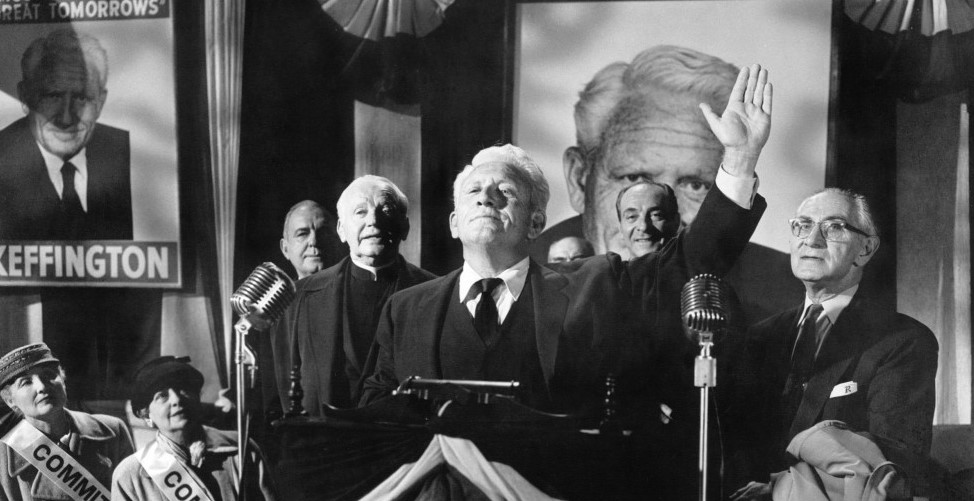
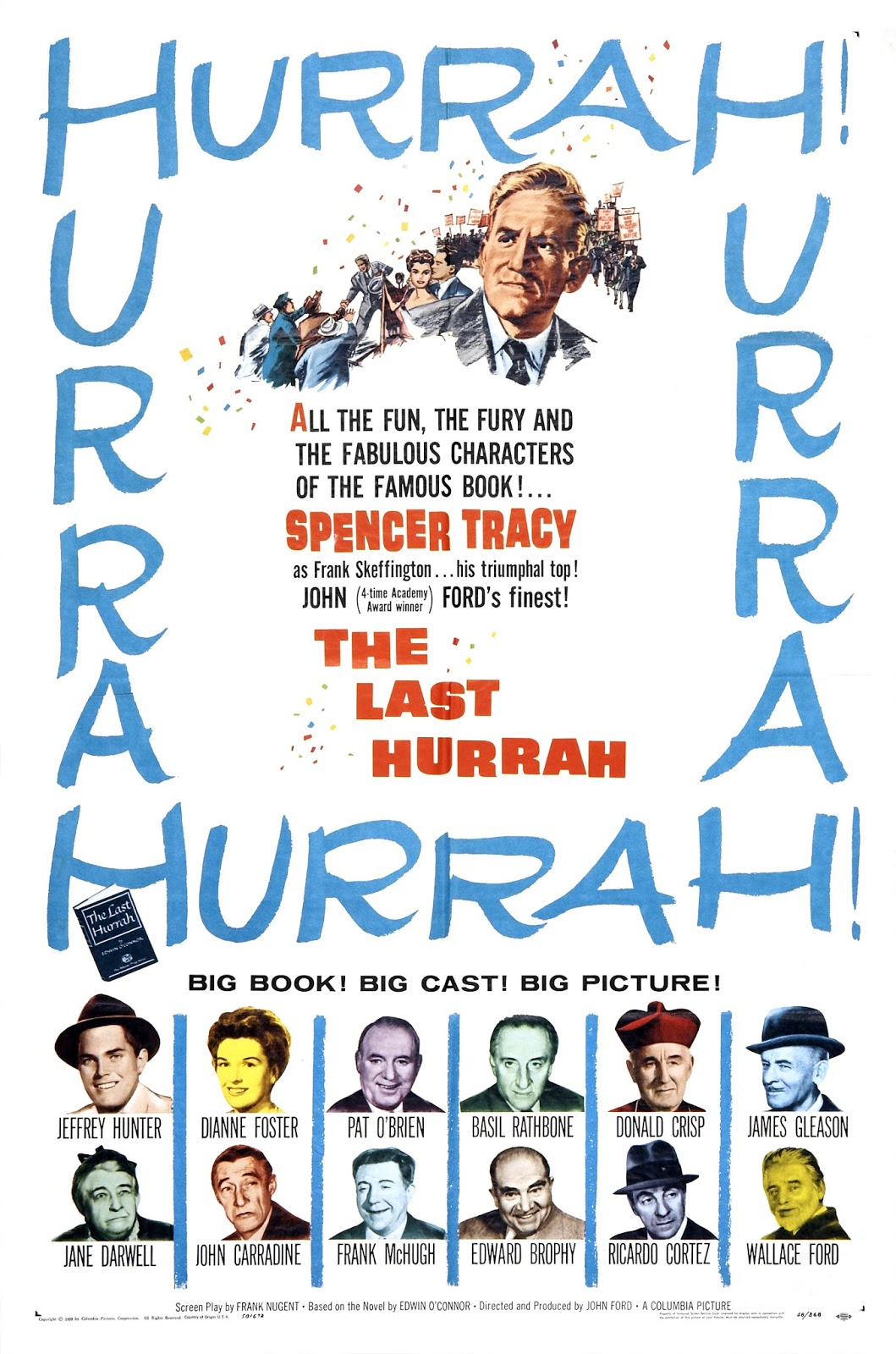
Spencer Tracy runs for office in John Ford’s toothless satire The Last Hurrah

Director: John Ford

Cast: Spencer Tracy (Major Frank Skeffington), Jeffrey Hunter (Adam Caulfield), Dianne Foster (Maeve Caulfield), Pat O’Brien (John Gorman), Basil Rathbone (Norman Cass), Donald Crisp (Cardinal Martin Burke), James Gleason (“Cuke” Gillen), Edward Brophy (“Ditto” Boland), John Carradine (Amos Force), Willis Bouchey (Roger Sugrue), Ricardo Cortez (Sam Weinberg), Wallace Ford (Charles J Hennessey), Basil Ruysdael (Bishop Gardner)

Mayor Frank Skeffington (Spencer Tracy) is running for a fifth term of a “New England city”. Skeffington’s roots lie in the town sprawling Irish population, and has successfully played the game of machine politics all his life. He’s alienated the members of the towns traditional elite – who can trace their ancestors all the way back to the Mayflower – but he’s loved by the regular people of the city. But is Skeffington going to find himself out of touch with a political world starting to embrace populism and the power of television?

John Ford’s adaptation of a hit novel by Edwin O’Connor, is one of his rare “present day” pictures. But it’s a bit of a busted flush. What should have been an exploration of a tipping point in American politics, totally fails to successfully land any of the points it could make. It’s a film that doesn’t understand the Kennedy-esque world America was moments away from embracing, and looks with such ridiculously excessive sentimentality at old-school politics it manages to tell us nothing about the corruption and dirty deals of this sort of machine politics. Effectively it’s a film that takes two long hours to tell us almost nothing at all. 

The film adores two things – and it’s not a surprise in a Ford film – the past and the Irish. Anything from yesteryear is covered in a halo, with the parade of old-school Hollywood character actors from the Ford rep company taking it in turns to denounce and condemn anything and anyone less than 40 years old. Every young person in the film is either a feckless idiot – Skeffington and Cass’ sons are a playboy and an embarrassing moron – or, like Jeffrey Hunter’s Adam Caulfield (Skeffington’s nephew covering the election for the local paper) is there merely to provide doe-eyed adoration. 

As for the Irish, the film loves the grace and charm of this old immigrant community. Skeffington’s Irish political machine is sanitised beyond belief. In the real world these sort of organisations operated on a system of back room deals, intimidation and careful arrangements to deliver set quotas of votes on polling day. Sure many of these politicians also delivered a number of social reforms – as Skeffington does – but any suggestion that any of Skeffington’s dealings could ever be described as dirty are roundly dismissed. Here it’s all about what Skeffington could do for other people, and no mention of the endemic corruption in many politicians like this. Instead Skeffington is presented with nothing but rose-tinted sentimentalism, a respectful widower, a kind man, whose actions are often more about other people than politics.

Former Boston mayor James Michael Curley – who Skeffington was clearly based on – was imprisoned for corruption. No chance of that happening to Skeffington who only uses intimidation and back-street savvy to fight the causes of orphans and widows (literally) and takes nothing at all from the public purse (although he still lives in a lovely big home). By contrast his elite opponents are the sort of scowling, greedy, penny-counters you might find in a Frank Capra film, shameless bankers and newspaper types who care nothing for truth and justice and only their own selfish needs.

Perhaps that’s why Skeffington’s opponent McCluskey (an early Kennedy substitute with his perfect family life, war record and lack of actual accomplishments) is portrayed as such an empty suit, a mindless, grinning yes-man who has nothing to say and no goals to meet. Ford’s contempt for him – and for the new word of television – drips off the screen. The TV shot we see McCluskey shooting is a farcical mess, poorly shot, edited and delivered with stilted artificiality by McCluskey and his tongue-tied wife. Not only is it not particularly funny, the presentation of this just shows how out of touch Ford was with modern America. Two years after this, Kennedy would win an election largely off the back of his ability to present a dynamic image on TV. Skeffington even crumbles in the election due to his traditional, press-the-flesh campaign not competing effectively with TV slots. How can that look even remotely convincing when Ford shows his rival has no mastery of the new media at all? That in fact he’s worse at making TV than Skeffington proves to be?

What exactly was Ford going for? By failing to criticise anything at all about the old-school politics and pouring loathing on the new politics, he ends up saying very little at all. Skeffington is a twinkly angel, but we never understand why so many in the church and the city oppose him – other than the fact I guess that he is Irish. Donald Crisp’s cardinal promises at one point near the end to reveal why he always opposed Skeffington – only to be hushed. If anything bad ever happened, Ford ain’t telling us making this one of the most dishonest of his tributes to Old America.

None of this is to criticise much of the acting, which is great. Spencer Tracy dominates the film with his accustomed skill and charisma, his Skeffington both a twinkly charmer and a practised flesh-presser who manages to subtly pitch and adjust his character depending on his audience and whose physicality helps to assert his dominance in every scene. Pat O’Brien does fine work as his fixer and Basil Rathbone is suitably sinister as a his principle financial opponent. Ford also puts together some memorable shots – especially a long walk Skeffington takes past a victory parade – and scenes, but the film is an empty mess. And, with its extended final twenty minute coda, goes on way too long.

The Queen (2006)

Helen Mirren reigns supreme as her Majesty in The Queen

Director: Stephen Frears

Cast: Helen Mirren (Queen Elizabeth II), Michael Sheen (Tony Blair), James Cromwell (Prince Philip), Helen McCrory (Cherie Blair), Alex Jennings (Prince Charles), Roger Allam (Robin Janvin), Sylvia Syms (Queen Elizabeth, the Queen Mother), Tim McMullan (Stephen Lamport), Mark Bazeley (Alistair Campbell), Julian Firth (Jonathan Powell)

It’s easy to assume The Queen is a cozy piece of film-making, not least because writer Peter Morgan’s exploration of the Royal Family has become every one’s favourite costume drama viewing thanks to his series The Crown on Netflix. But that’s to forget the acute sense of the personal and the public Morgan has, and his ability to write himself into the minds of his participants. And he’s perfectly matched here with the wry eye of Stephen Frears. Together they create a film that uses a single moment of history to explore the nature of our institutions and the particular characters of the people that fill them.

The film follows the death and aftermath of Princess Diana, and especially the dramatic public reaction to the death that expressed itself both in unparalleled scenes of national public mourning and hostility to the Royal family. Both are things a lifetime of duty and service have failed to prepare Queen Elizabeth II (Helen Mirren) for – but are also things intrinsically understood by her new Prime Minister Tony Blair (Michael Sheen). As the public clamour for the Royals to join the public in an exhibition of public grief rises, it’s mixed with a furious demand for a royal ‘mea culpa’ for ruining the life of the “People’s Princess”. Could the Royal Family be finished?

Well of course it wasn’t, and perhaps it’s hard to understand for those who didn’t live through those crazy days of 1997. But there was never anything like it before – people wept in the streets as if they had lost a family member of their own. Princess Diana – a tireless campaigner for charities, who did a great deal to change public perceptions on AIDS among many other issues – was also a brilliant master of public opinion, far more attuned to the countries drift away from stiff-upper-lip reticence towards celebrity-worship sentimentality than the family she married into. As skilful a manipulator of the press, as she was a victim of their hounding, she’d made herself into someone larger than life. It’s the sort of modern cult of celebrity, that few others mastered – and certainly not in the Royal Family.

Diana hangs over the family in the film like a ghost, an embodiment of their sense that the country is drifting away from them. It’s a film where pace and speed are vital, Frears and Morgan brilliantly contrasting the rushing onslaught of events from the car crash to distraught, increasingly angry, crowds gathering outside Buckingham Palace with the relatively sedate official response, which was effectively a private retreat to Scotland and say and do very little. The film has a brilliant sense of the momentum of those crazy days, and of the clash between an institution straitjacketed by tradition and a world where the public exhibition of emotion is de rigour.

What the film finds however is the value in both, and in doing so perhaps becomes one of the greatest adverts for the monarchy – or at the very least for Elizabeth II – you will ever see. A lot of this comes from Helen Mirren superb performance as the Queen. It’s a role Mirren performs with a combination of Sphinx-like genius and a genuine fragility under a veneer of exactitude. Mirren’s Elizabeth is a woman whose sense of duty has led to a lifetime of living as a symbol, a profession that has demanded the avoidance of any sort of personal opinion what-so-ever (something Morgan leans on with his Alan Bennettish early scene, where the Queen chats with a maid about the recent General Election and regrets she never had the chance to tick a box for something). She’s a woman certain that she has performed her duty in the finest tradition of her family.

Her tragedy in the film is the bewildered sense of suddenly finding the country she thought she knew being completely different. Put simply, the destructive Diana, a difficult person privately but loved publically, is a woman she can’t understand – and a country that embraces her is one she struggles to understand as well. Mirren’s Queen has a sharply defined sense of her place and person, but finds herself questioning all that. While sharply refusing to be treated as fool, she has a distressed sense of suddenly being adrift in the world.

Morgan captures all this in a series of engaging “behind the scenes” moments, but his real trick is his sure touch with symbology. A magnificent stag on the grounds, being hunted by all and sundry, could easily have been a clumsy parallel with the Queen, but it’s delivered with real grace and serves as a true emotional catalyst for the Queen (twice!) as she finally begins to understand both her own situation, and the necessity for her to bend her own firm principles and tradition to meet the requirements of this new age.

It’s the main theme of the film, this conflict between tradition and modernism, but the film sees merit in both. Many of the formalities of court life are humoursly spoofed in their intricate pomposity, but the overblown sentimentalism and knee-jerk judgamentalism of the modern world are hardly much better. As Blair himself, the arch modernist, observes there will always be a place for a head of state who gives us a symbol to aspire to. Not least, because the burden of standing for things and being driven to play to the masses will eventually lead to the destruction of most political careers (the film mines a fair bit of material between the implicit comparison of Blair’s saint-like popularity in 1997 to the wreckage of his “Bliar” reputation in 2006).

Frear’s film is a gentle critique but also a sharp defence of the institution of the monarchy, as practiced by the Queen. It may pain her, but she will get on with it. Morgan’s script also suggests her quiet wisdom – the film’s coda has her suggesting that Diana, like all things popular today, will pass. 

The film is less sure footed elsewhere. It’s portrayal of New Labour at times leans a bit too heavily into public perception – Campbell (played by a bullying Mark Bazaely) as a brash blow-hard, Labour as being obsessed with spin and image, Cherie Blair as a judgemental Shrew. Other members of the Royal family sometimes bend into parody – by the time of the Crown, Peter Morgan was to find Prince Philip as a far more fascinating and richer character than he is here. But the performances are strong across the board, as if following their head of state in Mirren. Sheen’s re-creation of Blair is pitch perfect, and he also aptly understands the difficult balance in Blair between genuine decency and ambition. Roger Allam also provides a wonderfully dry cameo as the Queen’s old fashioned secretary, while Alex Jennings does a neat impersonation of a Charles desperate to be seen to be doing the right thing.

The Queen’s main interest though is showing that tradition and modernism can sit side-by-side – and that a leaning too far in either direction is harmful for all involved. It sprinkles in intriguing levels of criticism for Diana, but matches that with a respect for the Queen, that makes her real while keeping her a symbol. Helen Mirren’s performance deserved every price going, and the film itself rewards with each new viewing.

Mr Holmes (2015)

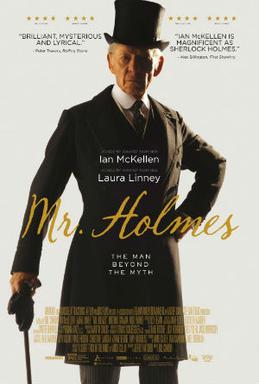
Ian McKellen is an ageing Sherlock trying to understand his past in Mr Holmes

Director: Bill Condon

Cast: Ian McKellen (Sherlock Holmes), Laura Linney (Mrs Munro), Milo Parker (Roger Munro), Hiroyuki Sanada (Taiki Umezaki), Hattie Morahan (Ann Kelmot), Patrick Kennedy (Thomas Kelmot), Roger Allam (Dr Barrie), Phil Davis (Inspector Gilbert), Frances de la Tour (Madame Schirmer)

It’s 1946 and over 35 years since Sherlock Holmes (Ian McKellen) last investigated a case. Living in retirement with his bees in Devon, with his housekeeper Mrs Munro (Laura Linney) and her inquisitive son Roger (Milo Parker), 93-year-old Holmes’ final “case” is to try and combat the deterioration of his own mental faculties. This focuses on his attempts to remember the details of his final case, investigating the wife (Hattie Morahan) of a client, a case where he knows something went terribly wrong, but cannot recall the exact details.

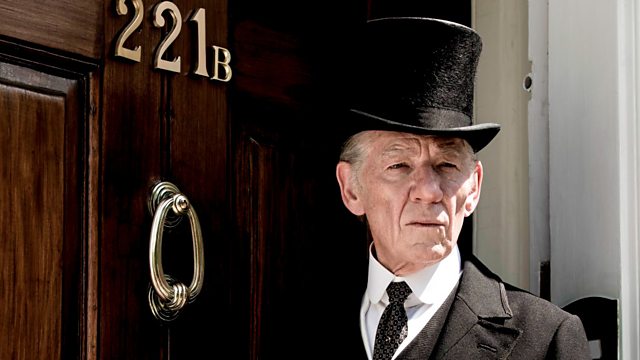
Condon’s film is a quiet, gentle piece which primarily becomes a character study of the Great Detective, trying to locate the man inside the thinking machine. This is a Holmes unlike any other, haunted by past mistakes and scared of losing the intellectual abilities that have been his principal purpose. Condon’s film also makes clear that much of what we know about Holmes was a cheeky “embellishment” by Watson in his stories – from the pipe and deerstalker to the address of 221B. This is a Holmes who failed all his life to form personal connections, and found this problem magnified by becoming a real-life fictional character, a person who knows no-one but is known by everyone.

This fascinating re-evaluation of Holmes is helped by Ian McKellen’s superb performance (in his second collaboration with Condon after Gods and Monsters). McKellen’s ability to convey the intellectual sharpness of Holmes is matched by his vulnerability and fragility as he feels those same powers begin to fail. This is a Holmes who can still sharply deduce where someone has been from a quick analysis, but needs to write Roger’s name on his cuff to help him remember whom he is talking to. McKellen’s performance slowly reveals the longing for emotional connection and his own regrets at the isolation that has dominated his own life.

The expressiveness of Ian McKellen’s eyes comes into play here, both their capacity for joy – and this is a Holmes who takes an intense pleasure in his own acuity – and the way McKellen is able to allow these eyes to glaze over with forgetfulness and flashes of senility. He also forms a wonderful bond with Milo Parker (very good, genuine and real) as Roger, the two of them forming an odd couple relationship that also gives Holmes a beginning of an understanding of what he has missed from a life without family and friends. 

Alongside this fascinating character study, the actual storyline is fairly tame – but then that’s hardly the point. The modern day plotline takes in physical and mental decline, isolation, fracturing family bonds and post-war Japan (where Holmes travels in search of “Prickly ash” a plant he hopes will help to counteract his mental decline). But it’s really a quiet framework to change this Holmes into a man who sees the world only in terms of logic and puzzles, and must learn to see the humanity and emotions that underlie people’s actions. It’s a Holmes who must learn to appreciate feelings, to express them and to tell “white lies” to save people from pain.

It’s no surprise that the past sequences – where a spry McKellen also plays Holmes in his late 50s – also revolve around this. The investigation cheekily features spiritualism (the pseudo-science that obsessed Conan Doyle in his later days) but the real point is Holmes failing to understand the pain and loss that underlie the desire to believe in the possibility of life after death – that loss is a traumatic event that cannot be hand-waved away with a presentation of facts, but a has a real lasting impact on people. Hattie Morahan captures this wonderfully, in a quietly emotional performance as a grieving mother.

The final resolution of this I found slightly less satisfying – perhaps because I thought of actual “canon” stories that showed Holmes expressing far more emotional intelligence than this film gives him the credit for understanding here (e.g. The Yellow Face). I’m also not sure if this failure would really have left any Holmes punishing himself with 35 years of isolation with bees. But it fits with the film’s concept of a Holmes who finds himself pained by loneliness.

This loneliness is hammered home throughout. Mycroft, Hudson and Watson are long dead. Watson himself is implied to be a man who never understood Holmes, that the “fictionalised” Holmes became more real to him than the flesh-and-blood man. That on Watson’s part the friendship became about the stories, with Holmes always triumphant, rather than reflecting who he was. Holmes finds this disconnection between his inner self and the world’s perception hammered home at every turn – at one point the film shows him watching a Rathbone-esque film (where he is played by Nicholas Rowe, the actor from Young Sherlock Holmes), where the case that haunts him plays out with a traditional ease. Completing this disconnection, Watson remains unseen in the film: a stranger whom Holmes was tied to forever.

All this makes for a thought-provoking film, with a delightful performance from McKellen making a truly unique and original screen Holmes. There are a host of fabulous supporting performances – Laura Linney does fine work as his insecure, lonely housekeeper who feels she is losing her son to the detective – and the film is a gloriously entertaining Sunday afternoon treat, which will make you think again about a man whom the whole world knows, but who may not know himself.

The Magnificent Ambersons (1942)

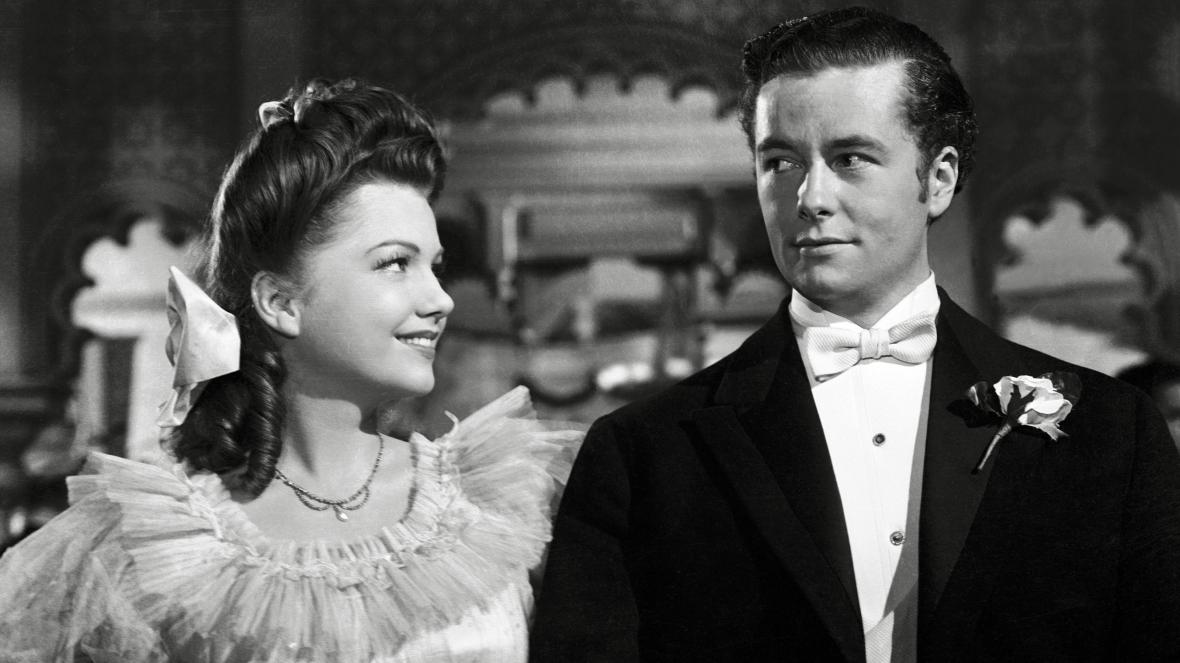
Tim Holt can’t understand how the world is changing in The Magnificent Ambersons

Director: Orson Welles

Cast: Joseph Cotton (Eugene Morgan), Dolores Costello (Isabel Amberson Minafer), Anne Baxter (Lucy Morgan), Tim Holt (George Amberson Minafer), Agnes Moorehead (Fanny Minafer), Ray Collins (Jack Amberson), Erskine Sanford (Roger Bronson), Richard Bennett (Major Amberson), Don Dillaway (Wilbur Minafor), Orson Welles (Narrator)

In early 1940s, Orson Welles was given the sort of contract by RKO directors normally only dream of. The freedom to write, direct and star in films of his choice and, most of all, the power of “Final Cut” – the dream of all his contemporaries. All this for a 25-year-old who had never made a film. It was unheard of – and it was never heard of again. The reaction to Citizen Kane had been full of praise from the critics but that hadn’t saved it from box office disappointment – nor the savages of the Hearst press or the jealousy of his peers. The chickens would well and truly come home to roost on The Magnificent Ambersons, the second picture in Welles’ deal.

The film itself is an adaptation of Booth Tarkington’s Pulitzer prize-winning novel. The Ambersons are a powerful and rich Midwestern family at the turn of the century – but the film charts their decline and fall as the modern age (represented by the motor car) slowly leads their world of genteel wealth and entitlement to a close. It’s a particularly challenging concept for the youngest member of the clan, George Amberson Minafer (Tim Holt) to come to term with, the spoilt young son of Isabel (Dolores Costello), who has grown up expecting his every whim to be met without question. His hostility focuses on Eugene Morgan (Joseph Cotton), his mother’s rejected suitor (now renewing his interest with her widowhood) and inventor who has patented a new form of motorcar. Things are complicated by George’s own love for Eugene’s daughter Lucy (Anne Baxter), a young woman who expects George to want more from life than just to live off his family’s wealth.

It’s impossible to discuss The Magnificent Ambersons without mentioning its status as perhaps the greatest “lost film” ever. Welles’ original cut of the film was a little over two hours long. He completed the cut and then flew to Brazil to begin collecting footage for his next project, It’s All True a part-documentary, part-fiction film (which in the end was abandoned). While he was out of the country, the film was roundly rubbished at a test screening. RKO panicked and demanded cuts. Welles had foolishly surrounded his right to final cut for the film and sent back a list of suggested changes (some have argued the list was deliberately bad to force the studio to make no changes), but refused to fly back to supervise things. 

So his editor Robert Wise (later a two-time Academy award winning director) cut the film down to just over an hour and twenty minutes. Cotton and Moorehead were corralled into filming some new scenes to hurriedly wrap the story up and give it the studio mandated “happy ending”. Welles wasn’t happy, but still wouldn’t come back to fight his corner. His notes were destroyed and eventually the remaining negative of the deleted scenes were burnt. So the truncated shadow is all we have.

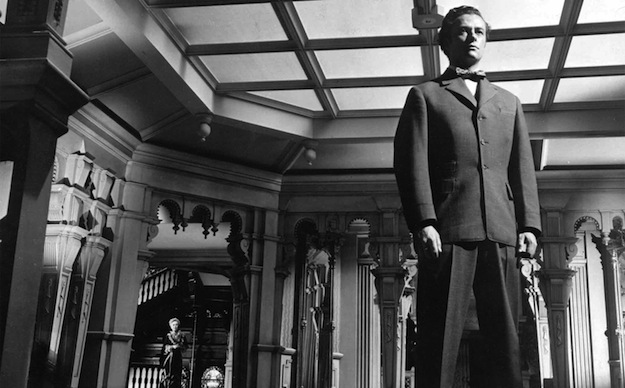
I call it a shadow, because that is what the film feels like – an afterimage of a true masterpiece, like a dream you can almost completely remember. In some ways it’s an even more confident and controlled piece of film-making than Kane, a wonderfully assured and graceful piece of film-making that mixes luscious long-takes with a triumph of techniques and little details (both of performance and technical work). Welles captures this all within a triumphantly impressive set, an elephantine house of at least three stories with a winding grand staircase, that allows him to film from different, heights and angles as well as indulge a series of graceful tracking shots that all proceed and accompany the actors through the house.

Welles matches this with a storyline that captures a sense of a country in a state of change – a tipping point of modern America as the Henry Jamesian Old Americans, with their wealth and inherited English-class system, gave way to industrialist new money. These two worlds sit awkwardly against each other, constantly compared and contrasted – Eugene’s car factory is a noisy, piston filled Ford-ist church, a world away from the formal gentility of the Amberson home. 

Welles also captures this in a series of wonderful vignettes, not least an early scene featuring Morgan driving Isabel and her siblings through the snow bound countryside in his prototype motor car, at first passed by an arrogant George with Lucy in a horse and sleigh, then having to bail George out when the sleigh turns leaving him and Lucy stranded. George is reduced to pushing the car to getting it started – getting a face full of fumes for good measure – a humiliation that hardens his stance against the modern world (and Eugene) all the more.

Because for George – superbly played with a fragile ego and utter lack of self-awareness by a preeningly weak Tim Holt – the world has a certain order that places Ambersons at the top and the rest of the world at various levels on the way down. And anything that might threaten to change that is rejected at all costs. George expects the world to march to his tune without him putting in the faintest effort – and when it doesn’t, his whole life is a desperate raging of petty attempts to assert his control.

This focuses above all on exerting a bullying moral force on his mother, a woman who loves her son but also wants to explore the romantic feelings she has for Eugene (and by extension her understanding that the world is changing). George makes this choice stark – him or Eugene – a choice no mother can be expected to make. Dolores Costello is superb as a woman who has spent her life shutting her eyes to her son’s selfish nature until it’s too late to change, who sacrifices her own desires for the good of her family.

The whole film is a feast of sublime acting, a reminder of how Welles could get the best out of actors (all regular collaborators of his). Joseph Cotton’s earnestness is perfect for the upright and decent Eugene, too proud to let his resentment and anger show. Ray Collins is wonderfully sweet and endearing as Jack, George’s generous and open-minded uncle. Anne Baxter has a radiant honesty that hides a determined spine of moral certainty as Eugene’s daughter Lucy. Perhaps finest of all is Agnes Moorehead (Oscar nominated) as Aunt Fanny, George’s spinster aunt, who has worn a mask of contentment over her own frustrations and resentments for so long she only slowly begins to work out what she actually feels about anything at all. Moorehead’s performance walks a brilliant line between careful underplaying and explosive dynamics – she has at least three striking emotional breakdown scenes of such brittle honesty that it’s enough to move you to tears.

All of this comes together into a superb package of sublime film-making and intelligent story telling. The problem is it’s too short. The later scenes really bear the brunt, with Wise’s cutting trimming much of the connecting meat between the key scenes. Events towards the end seem to happen with no build up – characters suddenly die, fortunes are swiftly lost, years disappear from one scene to the next. As the film accelerates through its final half hour, narratively it begins to make less and less sense. Then the studio caps on a functionally filmed happy ending (Wise does at least ape Welles’ tracking shot techniques – he was a very capable director) which rings utterly untrue with the sadly elegiac story we’ve been watching (superbly narrated by the way by Welles).

It makes The Magnificent Ambersons a wonderful, incomplete masterpiece. It’s the filmic equivalent to those parts cut off from The Night Watch or Ucello’s Battle of San Romano. What we are left with is still awe inspiring. But it could have been even more.

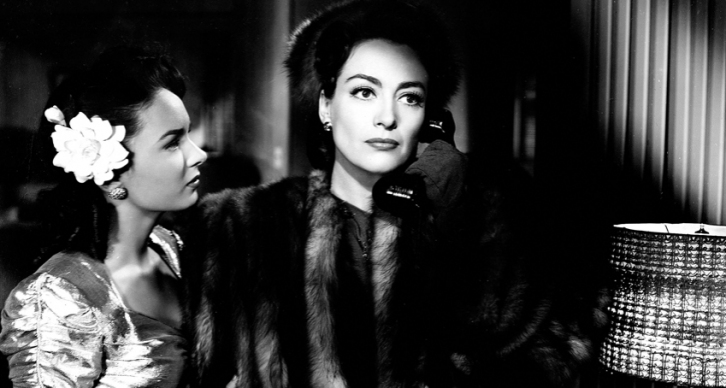
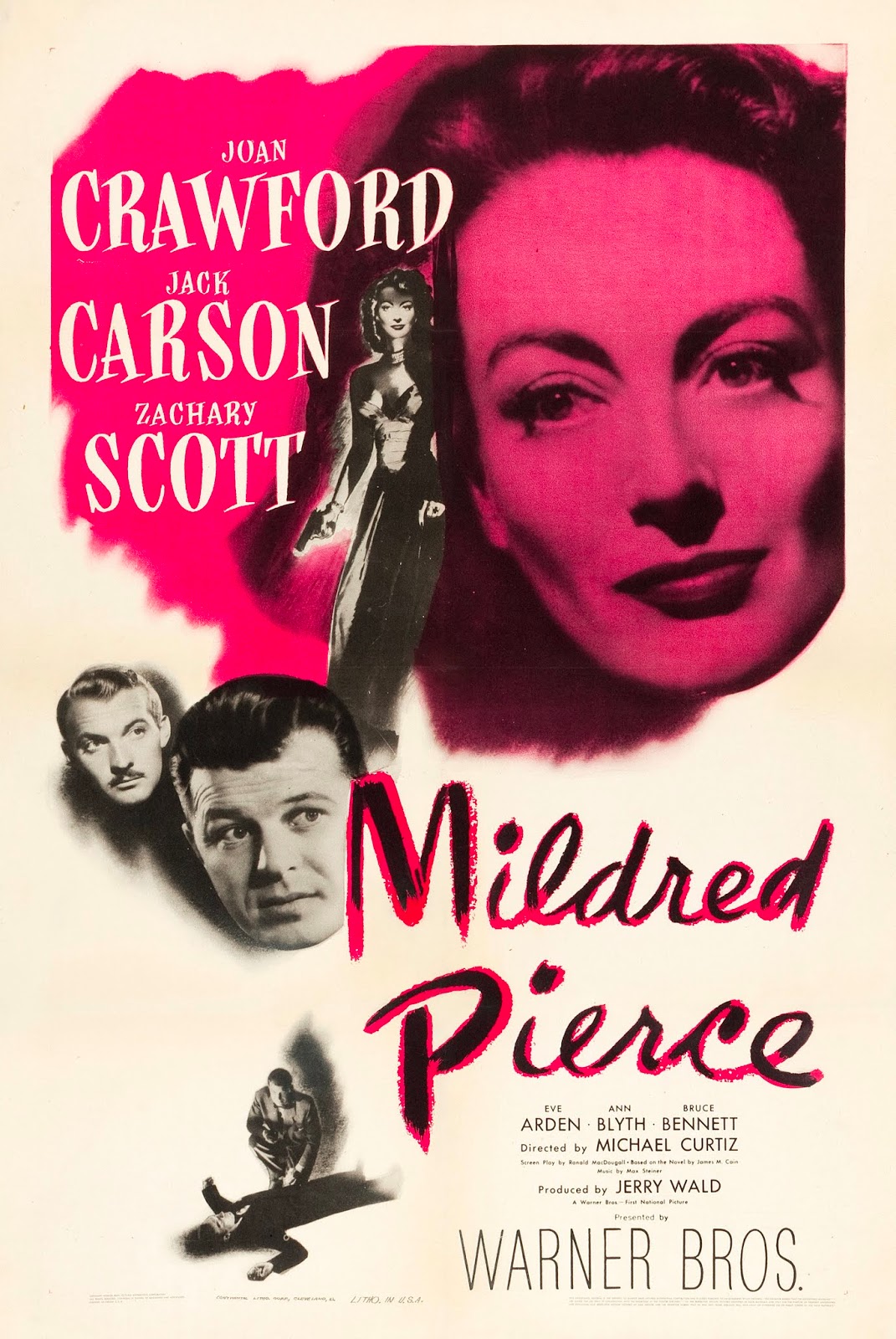
Mildred Pierce (1945)

Joan Crawford sacrifices everything for a daughter who doesn’t deserve it in Mildred Pierce

Director: Michael Curtiz

Cast: Joan Crawford (Mildred Pierce), Jack Carson (Wally Fay), Zachary Scott (Monte Beragon), Eve Arden (Ida Corwin), Ann Blyth (Veda Pierce), Bruce Bennett (Bert Pierce), Butterfly McQueen (Lottie), Lee Patrick (Mrs Maggie Biederhoff), Moroni Olsen (Inspector Peterson)

There are few things that classic Hollywood did quite as well as a melodrama. Adapted loosely from a James M Cain novel – its murder plot line is a flourish solely for the screen – this is a triumphantly entertaining picture that mixes themes of sex and class with good old-fashioned family drama. It’s got psychology and it’s also got the high-concept family feuding around the building of a restaurant business that you could find in Dynasty. Put simply, Mildred Pierce is a prime slice of entertainment.

After her second husband Monte (Zachary Scott) is shot dead, Mildred Pierce (Joan Crawford) is brought in by the police for questioning. After the collapse of her first marriage to Bert (Bruce Bennett), Mildred has expanded her home-baking business into a full restaurant chain, with the support of Bert’s old business partner Wally Fay (Jack Carson). Mildred’s goal is to provide for all the needs of her eldest child Veda (Ann Blyth), a selfish snob who despises her mother for having to work for a living. The tensions between self-sacrificing mother and demanding, unloving daughter, lead Mildred to take a series of disastrous personal and business decisions, culminating in her wastrel, upper-class, Veda-approved, second husband Monte going down in a hail of bullets. But who pulled the trigger?

The murder mystery plotline adds effective spice to this very well directed (Michael Curtiz is at the top of his game) melodrama. Full of domestic thrills and spills, it races along like a combination page-turner and soap, perfectly matching a deeply sympathetic, self-sacrificing heroine with a host of deeply unsympathetic wasters, chancers and bullies. It’s capped by giving our heroine possibly the least sympathetic child in film history, the deliberately selfish and greedy Veda. 

Sure you could argue that its psychology is either pretty lightly developed, or thrown in only for effect. It’s never clear when or why exactly Veda and Mildred’s relationship went south so completely, or where Veda’s deep resentment and ideas above her station come from. It also avoids looking at how Mildred’s complete devotion has probably completely spoiled a child who clearly needed to be told “no” a lot more, a lot sooner. But it doesn’t really matter as the film follows the logic of an event-filled plot-boiler, throwing revelations and cliff-hangers at you left, right and centre.

In the lead, Joan Crawford took on a role that many had turned down before her – stars at the time were not keen to be seen playing roles that suggested they were old enough to have mothered children as old as Ann Blyth. The decision to push for the role paid off as she netted an Oscar and it’s the finest performance of her career. A somewhat haughty actress, Crawford here demonstrates depths of vulnerability and tenderness as a much-put upon woman who, despite everything, will stop at nothing to give her daughter what she wants. Crawford dominates the film, her air of self-sacrifice never once tipping over into self-pity, even as the character so desperately seeks for the sort of love and affection that is denied her from those around her. 

Around her most of the cast – with the exception of Eve Arden’s entertaining, wise-cracking best friend (Oscar nominated) – are basically a bunch of sharks. None sharper than Ann Blyth’s (also Oscar nominated) sweet-faced but dead-inside daughter. Rarely has a display of more naked grasping, snobbish disdain ever been captured on film, matched with unapologetic greed. Veda has no compunction about the moral consequences of her actions and, like Zachary Taylor’s archly lazy Monte, is as interested in spending Mildred’s money as she is contemptuous of its source. 

Curtiz’s film constantly however plays with our judgements and expectations of people. Veda has more than her share of moments of pain and vulnerability as she shares some of the more painful travails of her mother. Similarly, Wally Fay (very well played by a roguish Jack Carson) oscillates between being a trusted confidante of Mildred, and a lascivious greedy creep. First husband Bert (a somewhat dry Bruce Bennett) starts as a love rat but may have more decency about him than anyone else (except Mildred).

The film is wonderfully shot in luscious black-and-white by Ernest Haller, in a dynamic noirish style. Water reflections lap across ceilings. Smoke from fires and cigarettes rises up and seems to dance and swirl in the light. There are some beautiful shots of faces – the camera work in particular perfectly locates a vulnerability in Crawford’s superior features – and there is a beautiful shot late on when two people caught in an illicit kiss roll their heads back from the shadows to emerge into the light. The entire design of the film is spot-on, and it looks and sounds fabulous today.

Mildred’s struggles make this a brilliant example of the stereotypical “women’s picture”, a tale of a woman struggling against all the odds to make her way in the world, with the twist that the daughter she is straining to support is a monster and the men she chases are feckless wasters. Mildred makes chronically terrible decisions throughout but for the best of motives – and part of the film’s appeal is that you are so invested in her fundamental decency you are willing her not to make the same mistakes again and again.

Curtiz’s melodrama is brilliantly enjoyable and never lets up. It’s also a feminist icon of a sort – Mildred is never punished for having a career, indeed she’s celebrated for it (and is far more savvy about it than nearly all the men). She leaves her husband, runs her own household, pushes for her own divorce all while protecting and providing for her child (not her fault the child ain’t worth it). Mildred Pierce is ahead of its time, and still a fabulously entertaining film.

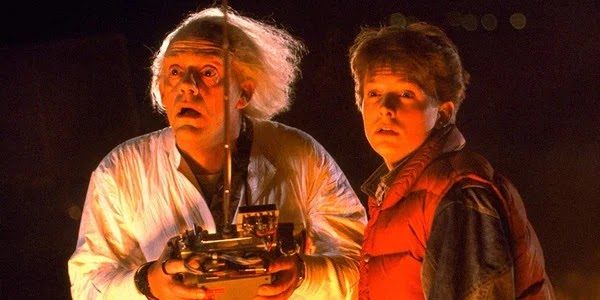
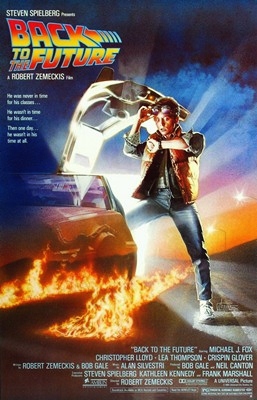
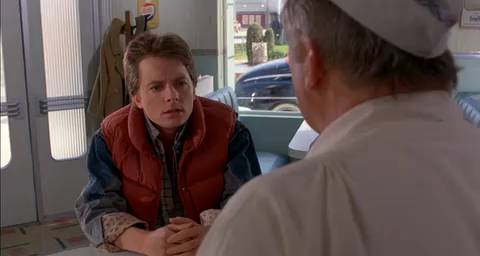
Back to the Future (1985)

Michael J Fox and Christopher Lloyd head to the past and back in the ever beloved Back to the Future

Director: Robert Zemeckis

Cast: Michael J Fox (Marty McFly), Christopher Lloyd (Dr Emmett “Doc” Brown), Lea Thompson (Lorraine Baines-McFly), Crispin Glover (George McFly), Thomas F. Wilson (Biff Tannen), Claudia Wells (Jennifer Parker), James Tolkan (Gerard Strickland)

In the tentpole 1980s film icons, few films are as beloved as Back to the Future. With the highest of high-concepts, it could easily have alienated people – or felt a little bit silly – but instead it’s a perfectly structured entertainment, a wonderfully assured combination of light comedy, drama, science fiction, farce and adventure. It’s one of those rare films that doesn’t have a wrong beat in it.

Set in 1985, Marty McFly (Michael J Fox) is a your typical teenager, cool, loves rock music, has a great girlfriend Jennifer (Claudia Wells) – and is worried he’s going to turn out like his parents, his weak father George (Crispin Glover) bullied by his supervisor Biff (Thomas F. Wilson) who never amounted to anything and his depressed mother Lorraine (Lea Thompson). His friend, eccentric scientist Emmett “Doc” Brown (Christopher Lloyd) ropes Marty into tests of his latest invention – a time travel machine built into a DeLorean car. When the first test is interrupted by angry Libyan terrorists – furious that Doc used their investment and stolen plutonium to build a time machine rather than a bomb – Doc is killed and Marty escapes in the DeLorean, accelerating to 88mph and accidentally throwing himself thirty years into the past. There he meets his parents, disrupts their first meeting and finds his mother falling in love with him and his father a weakling who he has to teach how to become a man and win his mother’s love – all while finding the help of the younger Doc to return him to 1985. 

Back to the Future has a tricky concept but a remarkably simple story which revolves around completely relatable ideas and questions. Who hasn’t wondered what your parents were like when they were young? Would you get on with them? How different would they be from the adults you know? These ideas are all caught – and told with maximum comic and dramatic impact – in Robert Zemeckis and Bob Gale’s superbly constructed script.

The secret really is in the cooking of that script – nearly five years in the making – where every single scene serves a clear purpose, and all the plot points sprinkled through the first twenty or so minutes or brilliantly pulled into effect in the rest of the film. With skilfully swift and economic story telling us all the information we need to know about Marty, his interests and skills, his parents – not to mention all the hundred and one other things happening in the film – so that as each careful plot point sprinkled through the film comes into effect it’s instantly satisfying and convincing. As director Zemeckis also gets a perfect conveying of the film’s tone of light comedy, even more surprising since it frequently touches on darker themes (murder, incest and rape for starters!) but never once feels like it’s tone is falling all over the place.

The film has a brilliant Frank Capraesque film of the strength of how one person can make a difference – both for good and bad. By arriving in the past – and with his confidence, bravery and shy decency – Marty at first ruins his parents meeting and then (almost without realising it) builds up both of them to head-off the mistakes they will make in their lives. Most obviously in his coaching of the timid and frightened George into someone who will have the confidence to make his own choices and go after the things he wants. The grooming of luckless loser George into someone who will stand up (eventually) against the brutality of Biff (a swaggeringly vile Thomas F Wilson) is particularly affecting, Crispin Glover to be commended for making a character who is wimpish and frustrating but not unlikeable. Lea Thompson also does great work as a sweet young girl, who’s more daring than she appears.

The film’s real success though is tied directly into the casting of Michael J Fox in the lead. Fox was born to play this role, the film effectively a showcase for his timing, ability to throw just enough shade and emotion onto scenes to keep them real, and above all his almost unparalleled skills as a light comedian. Originally unable to play the role due to a scheduling clash with his sitcom Family Ties, Fox was only bought on board after three weeks when backup choice Eric Stoltz proved unsuitable for the role (by his own admission). The entire film was shot either at night or the weekend to allow Fox to shoot after this 9-5 commitment to Family Ties was finished. And thank goodness because Fox makes the film.

He also has superb chemistry with Christopher Lloyd (graciously stooping for the whole film so he could fit in the same frame as the famously diminutive Fox). Lloyd, another great comedian with the instincts of a natural actor, channelled Einstein and conductor Leopold Stokowski as Brown, making him a larger than life eccentric who still feels like a real person. These two actors spark off each perfectly, adding a huge amount of comic and dramatic force to their rat-a-tat dialogue. Fox’s skill in understanding the light drama tone – and making what was already a very strong script comedy gold – as well as his ability to be immediately relatable to viewers is what makes the film an eternal success. 

That and it’s simple themes. The joke of travelling back in time and having your mum accidentally fall in love with you is perfectly judged, being just the right amount of icky (Fox’s horrified discomfort is hilarious) without being unsettlingly disturbing. The reconstruction of the tone and vibe of the 1950s is perfect – with Marty’s more hip 1980s style juddering up against the picket fence Americana of the past. There is plenty of humour from watching Marty “invent” everything from the skateboard (in a hilarious but gripping chase sequence) to rock and roll music. But it all works because the film is very heartfelt and genuine and very sweet.

Not only that but when it wants to be it’s also exciting and dramatic. The final resolution of George’s rise to manhood carries a real sense of threat as well as a cathartic moment of violence. The film’s final sequence as Doc and Marty race against time to channel a lightning strike to get the Delorean back to 1985 is truly exciting, helped as well by Alan Silvestre’s perfectly judged musical score (and thank goodness for executive meddling that nixed Zemeckis original idea of a Nevada test site and the time machine being built into a fridge). It all works as such an entertaining package you don’t even think about the fact that, as Marty returns to a radically altered family life in 1985, he won’t share any memories with his parents and siblings.

With a star actor taking on the role he was born for – and Fox was never better again, perfectly charming, endearingly sweet, cocksure and cool – Back to the Future has been entertaining audiences for almost 35 years – and it will carry on entertaining them the more we head into the future.

Orphée (1950)

Jean Marais is in love with Death in Cocteau’s poetic Orphée

Director:  Jean Cocteau

Cast: Jean Marais (Orphée), François Périer (Heurtebise), María Casares (The Princess), Marie Déa (Eurydice), Henri Crémieux (L’éditeur), Juliette Gréco (Aglaonice), Roger Blin (The Poet), Édouard Dermit (Cégeste), René Worms (Judge)

Cocteau is perhaps the only major poet who became a filmmaker. His films introduced, naturally, a poetic beauty into the French New Wave – something that has led many to overlook their embracing of the techniques of modern cinema. Orphée is his most successful work, a beautiful re-imagining of the Orpheus myth, set in a smashed up post-war France, with the afterlife a bombed-out industrial wasteland. It’s a beautifully made, inventive and hugely impressive film, not without flaws, that allows you to see the potential magic and inventive sleight-of-hand in cinema. It’s a treat.

Orphée (Jean Marais, Cocteau’s real life-partner) is a poet who attracts the attention of a mysterious Princess (María Casares) during a poets’ café brawl that leaves her current protegee Cégeste (Édouard Dermit) wounded after he is hit by speeding motorcycle riders.  He helps her “transport him to the hospital” only to find that Cégeste is dead and that the Princess is some sort of manifestation of Death, transporting artists to the afterlife. The mysterious motorcycle riders are her assistants, while her driver Heurtebise (François Périer) also has some sort of role in carrying souls to the afterlife. Orphée wakes the next morning obsessed with Princess and the cryptic messages he heard on her car radio, that echo the seemingly meaningless messages of the Free France radio. His obsession distracts him from his wife Eurydice (Marie Déa), but when the Princess’ assistants claim her life, Orphée with the help of Heurtebise (who has fallen in love with Eurydice) feels compelled to journey to the afterlife to rescue her.

Cocteau’s film captures the poetic beauty of a dream, many of the events happening with a strange logic in a world that feels a few degrees askew from ours. It’s a film in love with the personal interpretation of great poetry, presenting a series of events we are invited to form our own impressions of. Cocteau’s film also suggests the ever-present link between the dead and the living – the dead still yearn, in their way, for life (some wander the afterlife unaware that they are even dead) while the poet Orphée falls in love with the mystical immortality of death, the all-encompassing love-affair our soul can have with the afterlife. The Princess is herself drawn towards poets, whose grace and beauty she can help promote to their own immortality.

To present this strange and unsettling world, Cocteau uses a host of inventive cinematic tricks that constantly surprise and delight. The Princess’ helpers feel like they invented the cosplay aesthetic with their burly short-sleeve shirts, helmets, dark glasses and machine guns. The afterlife is a blasted, burnt-out factory with ruined homes and houses around it and vital meetings and trials taking apart in worn-out rooms with cracked and decaying walls. The characters move through this afterlife depending on their status – Orphée crawls through it like treacle, battling against his own brain struggling to understand where he is, while Heurtebise glides through it seemingly without moving his feet. 

The afterlife is accessed by moving through mirrors. Cocteau uses reflections intriguingly throughout the film – after all mirrors show us only a version of our world, not the real thing. Mirrors are moved through either as if they are not there, or melt into liquid that souls can pass through. Cocteau uses film in reverse to show mirrors smashing and then reforming themselves, a brilliant effect that looks disconcertingly wrong. He uses the same technique to show dead souls rising under the Princess’ influence, standing with a bizarre disjointedness (the actors were filmed falling and the film reversed). The rubber gloves that must be used to move through mirrors are also shown being put on using reverse photography – the actors were filmed taking them off and the film is reversed making the gloves seem like they fly onto the hands. It’s a simple effect but brilliantly done.

Cocteau continues this inventiveness in the afterlife. Some sets are built on an angle, meaning Orphée at one point crawls along one wall before sliding impossibly down the next wall. Back projection is brilliantly used to show Heurtebise manipulating the afterlife around him. It’s a feast of inventive and imaginative angles, ideas and concepts brilliantly shot. And mirrors are always the key, the doorway to death and a world like ours but not.

And behind that door, Cocteau presents a fascinating afterlife. Is the Princess Death? Or just one of many functionaries? Heurtebise too seems to have some sort of role as Death – and the functionaries of the afterlife operate under a series of rules that suggest they barely understand the world of the living any more. Orphée is allowed to take Eurydice home – on condition he never looks at her, a condition nearly impossible to meet in the real world, despite Heurtebise’s best efforts. Meanwhile Orphée is fixated on Death, chasing the Princess through cloisters and a marketplace in the real world, drawn towards the ghostly messages on the radio (their echoing of French Resistance messages indicating their link to a deathly past of destruction). 

The film throws in a love triangle with Death as the third wheel. Orphée is moved by the desire for the immortality death can bring, while the Princess herself perhaps causes Eurydice’s death out of envy and bends the rules anyway she can to bring herself closer to Orphée. Orphée’s quest for inspiration and immortality distract him from the everyday love of his wife – and her pregnancy. Only Heurtebise still seems to yearn for the quiet normality of everyday life.

The film’s main flaw is that it often fails to invest the relationship of Orphée and Eurydice with any real emotional depth. Part of this is the fault of Jean Marais, who delivers a performance that is aiming for brooding but instead generally comes across as sour and sulky, making him hard to warm to or invest in, while Marie Déa is given very little to do. The real interest is in the figures from the afterlife, and María Casares is superb as a cold, almost dominatrix like Death who slowly finds in herself great longing (perhaps in part for her previous life on earth). François Périer is similarly superb as Heurtebise, desperate to feel again as he did when alive.

Despite the film’s lack of real heart and warmth among (of all things!) it’s living characters, there is so much depth, inventiveness and bizarre longing in the afterlife that you can more than forget this. Cocteau’s film is a wonderful dream, an immersive, brilliantly created feast for the imagination that marries art and cinematic techniques in a way few others have managed before or since.