Tag: Cillian Murphy

Small Things Like These (2024)

Small Things Like These (2024)

Profoundly sad film of the impact of small acts, with a soul-searching lead performance

Director: Tim Mielants

Cast: Cillian Murphy (Bill Furlong), Eileen Walsh (Eileen Furlong), Michelle Fairley (Mrs Wilson), Emily Watson (Sister Mary), Clare Dunne (Sister Carmel), Helen Behan (Mrs Kehoe), Zara Devlin (Sarah), Mark McKenna (Ned), Agnes O’Casey (Sarah Furlong)

Sometimes the only hope for change, is that the balance of small acts of kindness outweighs the mass of indifference and blind-eye-turning. Claire Keegan’s acclaimed novella is about exactly such a moment. In the small town of New Ross, Wexford, just before Christmas in 1985, coal merchant Bill Furlong (Cillian Murphy) works hard to provide for his family and look out for those around him. Bill is struggling with insomnia, haunted by memories of his mother’s (Agnes O’Casey) death when he was a boy. One day he witnesses something unsettling at the local convent: a young woman (Zara Devlin) begging not to be left there. A few days later he arrives at dawn to find her locked in the coal shed. The Mother Superior (Emily Watson) assures him it is nothing to worry about and sends him on his way with a giant tip. But Bill can feel in his bones something is not right.

Small Things Like These is a sombre investigation of how an appalling scandal like the Magdalene Laundries could continue for years. The convent’s influence touches every inch of the town. Social life revolves around the Church and even organise the town’s Christmas lights. They run the school – with the Mother Superior heavily implying Bill’s actions will have a profound impact on his children’s educational prospects – and they are treated with awed deference from everyone. You slowly realise many people know things are not right at the Convent – but no one wants to rock the boat (Bill’s wife even begs him not to and the pub landlady warns him to put his own family first).

In a world like this, bad things flourish because people don’t want to put themselves and their loved ones at risk. People must hear the wailing of babies from the convent and decide to keep walking. It’s not just the convent: New Ross is full of people looking the other way to poverty and misfortune. Bill quietly does his best to help people – a generous Christmas bonus for his workers, a handful of whatever change he has to a young boy walking home alone – but even he can only look on in slack-jawed sorrow when he sees a shoeless child in the middle of the night drinking from a cat’s bowl.

Mielant’s film brilliantly captures not only the drab, gloomy atmosphere of this poor Irish town – every shot is soaking in shades of grey, brown and coal dust black – but also the grim sense of things constantly being watched passively from a distance. The film is awash of shots that frame events through doorways or at a distance, be it from across the street or in mirrors or reflections. Small Things Like These is an oppressive, claustrophobic film, largely taking place in dusk or night-time darkness, where things go unspoken and unconfronted.

The burden of inaction has had a huge impact on Bill, in a mesmerising performance by Cillian Murphy. Quiet, awkward and shy, Murphy makes Bill weighed down by an impossible burden of sadness. Large chunks of the film simply allow us to study Murphy’s face, and few actors can convey inner turmoil as beautifully as Murphy can. You feel there is a poet’s soul buried in Bill, in Murphy’s eyes haunted with an impossible melancholia: Murphy brilliantly embodies a quiet, decent man who knows the world isn’t right but is deeply torn about what he can do about it, while haunted by his own lingering childhood pain at witnessing his mother’s death and never knowing his father.

It’s interesting that this past is one of the most brightly filmed parts of Small Things Like These. Bill’s natural empathy towards the young woman he encounters at the convent – and his desire to care and provide for his own family – is rooted in his own past. Growing up without a father, the child of the maid of a wealthy family, we realise it is only due to an act of decency that Bill’s life developed as it did. As a single, unmarried woman, his mother could easily have ended up in the Magdalene Laundries herself, with Bill taken at birth to be fostered by strangers. It’s only the kindness of her employer (a tender Michelle Fairley) that saved him – though Bill still grew up bullied and mocked for his illegitimacy.

Perhaps Bill realises more the lucky escape he had, when confronted by Emily Watson’s chillingly authoritarian (under a mask of genial indulgence) Mother Superior. What would his life have been like if his mother had been crushed by someone like this fierce woman, resolute in her self-righteousness? Bill’s shame and guilt is superbly conveyed by Murphy as he leaves with a previously disputed bill settled in full (and then some) and a promise of future favours to come. The message is clear: this is how the world works and Bill should get with the programme.

That’s how wicked deeds flourish among decent people. Small Things Like These may spin an old-fashioned Edmund-Burke-inspired line, but it’s hard not to argue with its honesty, conviction and the air of impossible sadness that drips from every frame of it. At points it’s decision to leave so much unspoken does create more ambiguity than I think it intends. In particular, the music choices for some flashbacks imply shocking revelations that never arrive. Which are in fact utterly counter to the film’s eventual, slightly open-ended, reveal of Bill’s past (contrary to the more explicit book) but this a refreshingly quiet, thoughtful and meditative film (with a brilliant, grief-stricken lead performance) – that in its gentle way carries real emotional force but leaves you feeling hopeful.

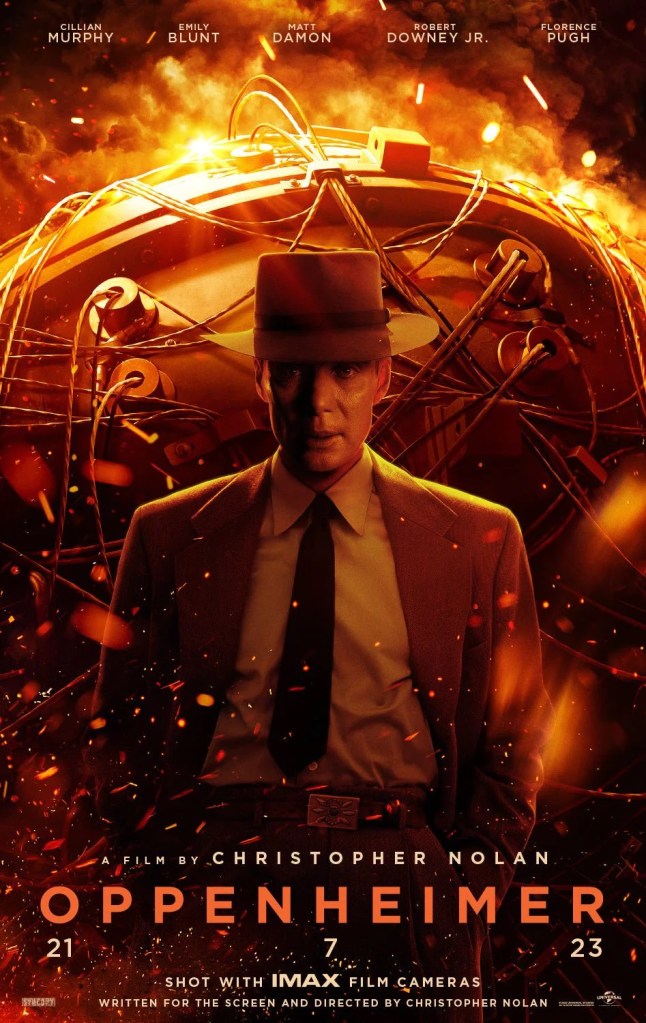
Oppenheimer (2023)

Oppenheimer (2023)

Nolan’s masterful musing on the morality of science is both challenging and compelling

Director: Christopher Nolan

Cast: Cillian Murphy (J Robert Oppenheimer), Emily Blunt (Kitty Oppenheimer), Matt Damon (General Leslie Groves), Robert Downey Jnr (Lewis Strauss), Florence Pugh (Jean Tatlock), Josh Hartnett (Ernest Lawrence), Casey Affleck (Colonel Boris Pash), Rami Malek (David Hill), Kenneth Branagh (Niels Bohr), Benny Safdie (Edward Teller), Dane DeHaan (General Kenneth Nichols), Jason Clarke (Roger Robb), David Krumholtz (Isidor Issac Rabi), Tom Conti (Albert Einstein), Alden Ehrenreich (Strauss’ aide), Gary Oldman (President Truman), Jefferson Hall (Haakon Chevalier)

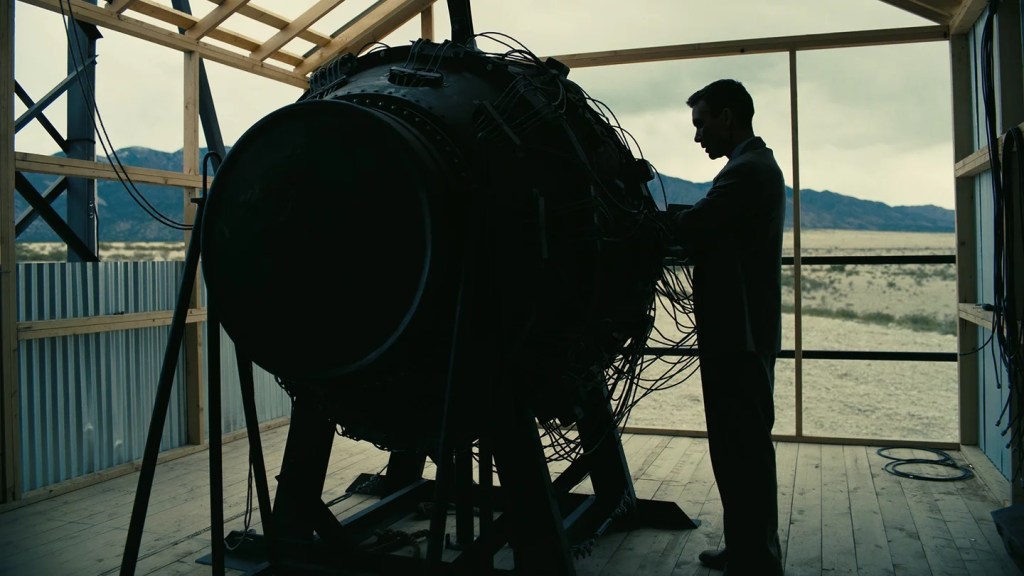
“I am become Death, the destroyer of worlds”. These words from The Baghavad Gita are synonymous with J Robert Oppenheimer, director of the Manhattan Project as he witnessed the destructive force of his creation, the atomic bomb. Fittingly, Nolan’s fascinating and ambitious film opens with a reference to Oppenheimer as Prometheus: the man punished for all time for stealing fire from the Gods. Oppenheimer uses everything from thriller to courtroom drama, to explore the moral responsibilities of science: if we can do a thing, does it follow that we must?

J Robert Oppenheimer (Cillian Murphy) is a Renaissance man and leading theoretical physicist who dabbled more than a little in left-wing politics. The woman he loves, Jean Tatlock (Florence Pugh), is a die-hard communist, the woman he marries Kitty (Emily Blunt) is a former party member, his closest friends are all members. Associations like these will later haunt him after he is approached by General Leslie Groves (Matt Damon) to use his organisational skills, political savvy and charisma to run the WW2 nuclear programme where maverick scientists work hand-in-hand with the army. Despite his position, Oppenheimer remains untrusted by many. In the aftermath of the war, these suspicions will be used by his opponents, among them Lewis Strauss (Robert Downey Jnr) ex-head of the Atomic Energy Committee, to bring about his downfall as Oppenheimer preaches disarmament.

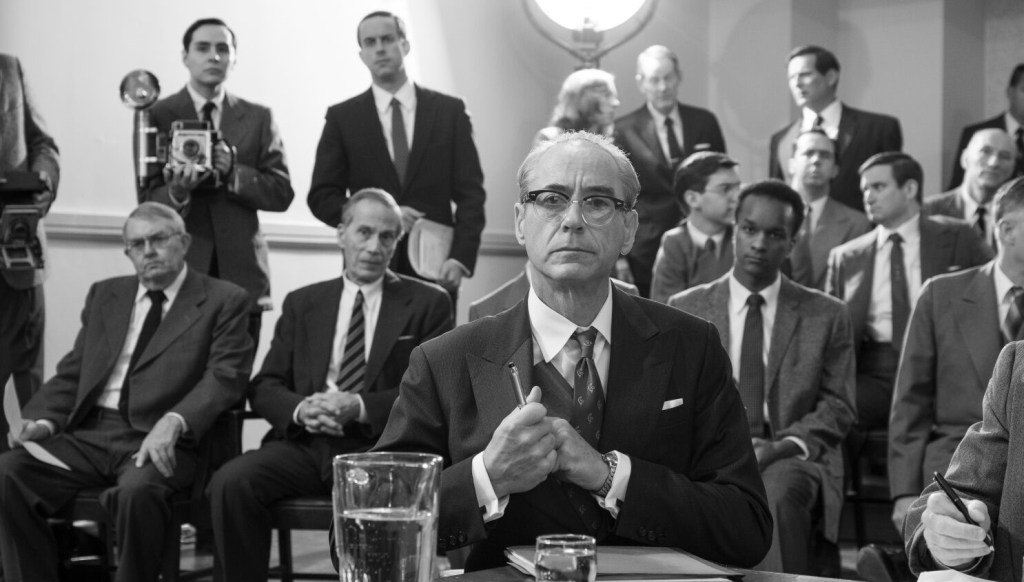
Much like Dunkirk, Oppenheimer is told in two timelines, intersecting with scenes replayed from different perspectives in subtly different ways. In “Fission” we see Oppenheimer, effectively on trial in 1954 for his security clearance, recount his life story, chronological flashbacks taking us through the development of the bomb. In “Fusion”, shot in gorgeous black and white, we follow the 1959 senate hearings to confirm Strauss in a cabinet post, and see his reminiscences of Oppenheimer’s post-war struggles to control the monster he has unleashed.

Oppenheimer is a brilliantly made, cinematically adventurous film: you would, of course, expect nothing less from a distinctive talent like Nolan. Brilliantly intercutting multiple timelines, it’s a film that is as much an experience as a story. This is a behemoth, filled with moments of flair and breath-taking use of sound and vision to affect mood. In particular, the film’s oppressive sound design bears down on the viewer like the pressure of the bomb itself. This means moments when we are released from its grip carry real impact. As Oppenheimer – already plagued with doubt – triumphantly announces the successful use of the bomb, the war-like celebratory pounding of scientists’ feet disappears from the soundtrack leaving Oppenheimer’s words echoing impotently around the room.

The pounding score and epic, sweeping camerawork (even more striking, since so much of the film takes place in small rooms filled with conversation) help Nolan to build up Oppenheimer’s mythic status and simultaneously strip him bare. Literally so at one point as, when questioned on his sex life in his hearing, Oppenheimer is seen naked in the room (as exposed as he must be feeling) answering questions with a naked Jean Tatlock astride him, staring into his wife’s eyes.

Oppenheimer labours, with the best intentions, to create a weapon before the Nazis. In its middle act, Nolan’s film focuses on the propulsive excitement of creation. The thrill of obstacles being overcome and solutions being found. The joy of a diverse team coming together for a single goal. We find ourselves longing for problems to be overcome, swept up in the desire for the endgame, as anxious as the scientists when it looks like rain will prevent the vital first Trinity test of the bomb.

Oppenheimer feels the same. Powerfully, intelligently and magnetically played by Cillian Murphy, this is a man who is a host of flaws crammed with impossible genius. A charismatic room leader, who is awkward in personal interactions. A charmer who rudely fails to remember his brother’s girlfriend’s name at a party. An inspiring leader who alienates people with ease. Murphy captures every inch of Oppenheimer’s staggering intellect and delight in intellectual problems, just as he also embodies the man’s arrogance and crushing self-belief.

So, it’s as crushing to him as it is terrifying to us, when the bomb explodes and the realisation hits us. Nolan’s sensory experience of a film fades down to silence as Nolan lets the camera float across the all-consuming fire of the silent explosion (the noise only comes when the shockwave hits) and suddenly the chilling implication of this terrible weapon becomes clear. This is a device that will kill millions. Oppenheimer knows it: he slowly shrivels into haunted guilt, Murphy seeming to shrink into himself as he finally understands what he has done.

Images of nuclear destruction both obvious (ashen bodies and nuclear flashes) and subtle (the out-of-focus vibration of background around Oppenheimer, as if sensing an approach shockwave) will haunt him and us for the rest of the movie. While many scientists – foremost among them Benny Safdie’s bull-headed Edward Teller and Josh Hartnett’s WASPish but decent Ernest Lawrence – feel little guilt. But Oppenheimer, and we, can no longer avoid questions of moral responsibility raised by those such as Niels Bohr (a quietly effective Kenneth Branagh).

Are there some discoveries better not made? Because once the genie is out of the bottle, it cannot be stuffed back in again. In this new world every world power must always have more. More bombs, bigger bombs, better bombs. And it explains why, like Prometheus, Oppenheimer must be punished. The tool of his punishment being his communist sympathies, embodied in his yearning attraction to Jean Tatlock (an under-used Florence Pugh). Nolan’s film is very strong on the terrifying paranoia of the secret state, where every word or association can be collected into a terrible portfolio of witnesses you cannot question, evidence you cannot see, testimony you cannot hear.

“Why don’t you fight” cries his wife Kitty, played with a dynamic, intelligent forcefulness by Emily Blunt. I could have done with a third act built more around Blunt’s starkly honest betrayal of a woman ill-suited to being a wife and mother, trapped in a world where that is all women can achieve (and which also trimmed a few witnesses from Oppenheimer’s trial). Why doesn’t Oppenheimer fight? Nolan has his theories, carefully seeded and confidently revealed.

Oppenheimer’s post-war clashes cover much of “Fusion”, anchored by a superbly under-playing Robert Downey Jnr (his finest work since Chaplin) as the outwardly avuncular, but inwardly insecure and bitter Strauss, who sees Oppenheimer as the embodiment of all the elitists who turned their noses up at him (no matter that Oppenheimer himself is an outsider, in a world of science run by WASPish types like Lawrence). Nolan’s film explores how morality is forgotten in an environment so rife with paranoia that the slightest expression of doubt is seen as treason.

Nolan’s film needs its vast runtime to keep as many balls in the air as it tries to. It’s probably a few too many balls. I would have loved more on Oppenheimer’s outsider status, as a Jew in American science (its not mentioned that the J stands for Julius, despite his claims it stands for nothing). Similarly, I would have welcomed more time to explore Oppenheimer’s complicated emotional life, in particular the fascinatingly complex relationship of some love, a fair amount of mutual respect and a large measure of mutual convenience with his wife Kitty.

But the film’s chilling musing on the horrors science can accidentally unleash while focused on progress is superbly explored and leaves a lasting impact. It’s a feeling that continues to be sharply relevant while we struggle with the implications of AI. Was there a need for the bomb? Perhaps there was. Were we ready for the bomb? No. And it is the failure of anyone, including Oppenheimer, to even consider this until it was too late that is the coldest warning in Nolan’s epic film.

In the Heart of the Sea (2015)

In the Heart of the Sea (2015)

Hunger, desperation, the sea and a very big whale in this Moby Dick origins story

Director: Ron Howard

Cast: Chris Hemsworth (Owen Chase), Benjamin Walker (Captain George Pollard), Cillian Murphy (Matthew Joy), Tom Holland (Thomas Nickerson), Brendan Gleeson (Old Thomas Nickerson), Ben Whishaw (Herman Melville), Michele Fairley (Mrs Nickerson), Gary Beadle (William Bond), Frank Dillane (Owen Coffin), Charlotte Riley (Peggy Chase), Donald Sumpter (Paul Mason), Paul Anderson (Caleb Chappel), Joseph Mawle (Benjamin Lawrence), Edward Ashley (Barzillai Roy)

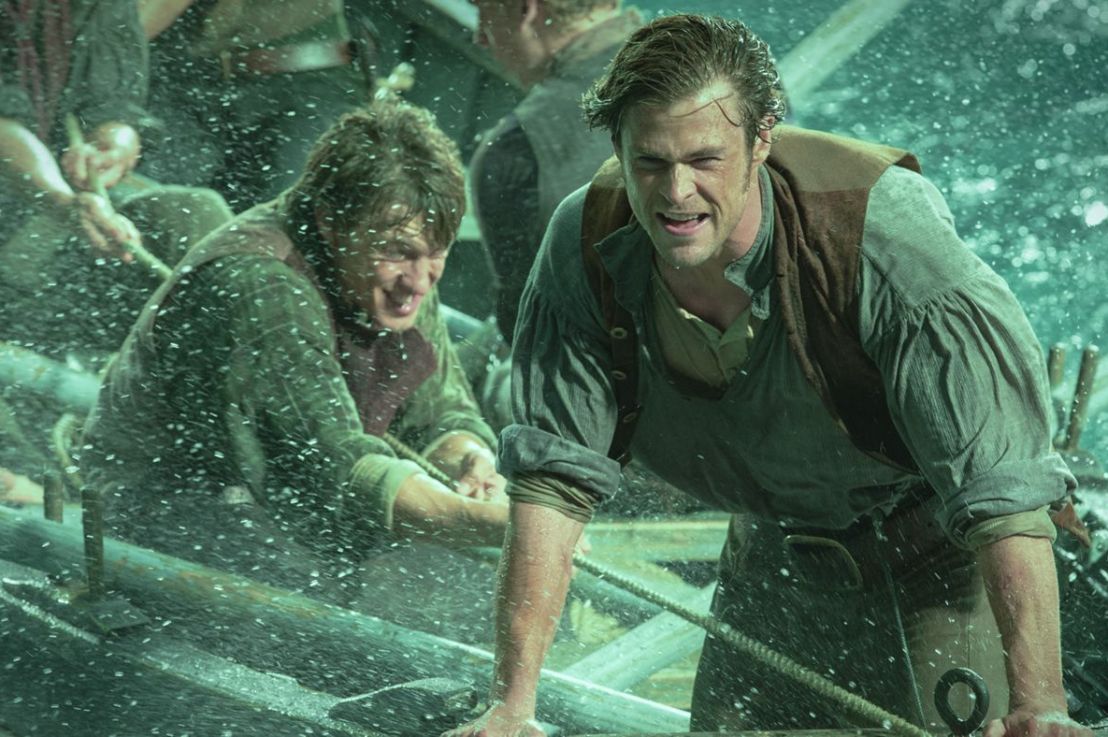
1820 and the world is run by oil. Not the sort you get out of the ground, but the sort you fish out of a whale’s corpse with a bucket. America is the leading exporter of whale oil and Nantucket is the centre of the industry. But it’s a dangerous business: as the crew of the Essex are about discover. Attacked by a whale, their ship sinks in the Pacific Ocean, thousands of miles from land. Passed-over first officer Owen Chase (Chris Hemsworth) and privileged captain George Pollard (Benjamin Walker) must set aside their differences to lead the survivors to safety. But starvation and desperation will lead those survivors to ever more desperate acts. All of this is told to Herman Melville (Ben Whishaw) by final living survivor Thomas Nickerson (Tom Holland and Brendan Gleeson), and it all sounds like a perfect inspiration for that Big Whaling Book Melville wants to write.

That Melville framing device is a good place to start when reviewing the many problems of In the Heart of the Sea, Ron Howard’s misfiring attempt at a survivalist epic. When we should be consumed by concern at whether these men survive, the film keeps trying to get us care as much about whether Melville will write a novel worthy of Hawthorne. The clunky prologue eats up a good sixth of the film, and we keep cutting back for Gleeson to tell us things the script isn’t deft enough to show us. Worse, it keeps ripping us way from the survivalist story that should be film’s heart.

Howard should know this: he directed one of the best survival-against-the-odds films ever in Apollo 13. Maybe the difference is that Apollo 13 is, at heart, a hopeful story. In the Heart of the Sea is about grimy sailors in a trade the film can’t find any sympathy for, eventually drawing lots in a long boat to see who is going to get killed and eaten by the others. It’s the sort of thing Werner Herzog would (pardon the metaphor) eat up for breakfast. For Howard, a fundamentally optimistic film-maker, its an ill fit. No wonder he wants to end the film with the triumph of Moby Dick.

In the Heart of the Sea is the rare instance of a film that is too short. The narration keeps skipping over time jumps in the first hour, that means we don’t get invested in the characters (most of whom are barely distinguished from each other, especially as beards and wasted bodies become the uniform). The sinking doesn’t take place until almost an hour in the film, meaning the time we spend with them lost in boats is a mere 40 minutes or so.

That is nowhere long enough for us to get a sense of either the monotonous time or the ravages hunger and desperation have made. Difficult as that stuff is to film – and I can appreciate its hard to make five men sitting, dying slowly, in a boat visually interesting – it means the film is asking us to make a big leap when it goes in five minutes from the men leaving a stop on an abandoned island to regretfully slicing one of their party up for dinner. We need to really understand how desperation has led to this point, but the film keeps jumping forward, as if its impatient to get to it.

Understanding is a general problem in the film. It can’t get past the fact that, today, we don’t see whaling (rightly so) as a sympathetic trade. But to these men, plunging a harpoon into a whale wasn’t an act of barbarous evil. It was more than even just making a living: it was a noble calling. Several times the film makes feeble attempts to push its characters towards moral epiphanies which seem jarringly out of chase (would Owen Chase, a hardy whaler with multiple kills, really hold his hand when confronted with a whale he thinks is trying to kill him?). Clumsy parallels are drawn between the heartless corporate oil industry of today, and the ‘suits’ back at Nantucket who only care about the bottom line.

Without accepting that, to these men, striving out into the ocean to bring back whale oil was as glorious a cause as landing on the moon, the film struggles to make most of the earlier part of the film interesting. Hard to sympathise with the characters, when the film is holding their profession at a sniffy distance. The film even radically changes the future career of its hero, Owen Chase, claiming he joined the merchant navy and never whaled again (not remotely true).

On top of this, Howard doesn’t manage to make the act of sailing feel as real or as compelling as, say, Peter Weir did in Master and Commander. Everything has a slightly unconvincing CGI sheen. Strange fish-eyed lenses keep popping up zooming in on specific features of pulleys and sails (is it meant to be like a whale’s eye view?). The film never manages to really communicate the tasks taking place or the risks they carry. There is a feeble personality clash between Pollard and Chase that fills much of the second act of the film, but is written and acted with a perfunctory predictability that never makes it interesting.

You can’t argue with the commitment of everyone involved. The cast noticeably wasted themselves down to portray these starving dying men. But it all adds up to not a lot. Chris Hemsworth gives a constrained performance as Chase – his chiselled Hollywood bulk looks hideously out of place – while Cillian Murphy makes the most impact among the rest as his luckless best friend. But the film’s main failure is Howard’s inability to make us really feel every moment of these men’s agonising suffering and to really understand the desperation that drove them to lengths no man should go to. Eventually that only makes it a surprisingly disengaging experience.

The Dark Knight (2008)

Heath Ledger leaves a great legacy as The Joker in The Dark Knight

Director: Christopher Nolan

Cast: Christian Bale (Bruce Wayne/Batman), Michael Caine (Alfred Pennyworth), Heath Ledger (The Joker), Gary Oldman (Lt James Gordon), Aaron Eckhart (Harvey Dent), Maggie Gyllenhaal (Rachel Dawes), Morgan Freeman (Lucius Fox), Eric Roberts (Sal Maroni), Monique Gabriela Curnen (Detective Ramirez), Ng Chn Han (Lau), Ritchie Oster (The Chechan), Colin McFarlane (Commissioner Loeb) Anthony Michael Hall (Mike Engel), Joshua Harto (Coleman Reese), Cillian Murphy (Scarecrow)

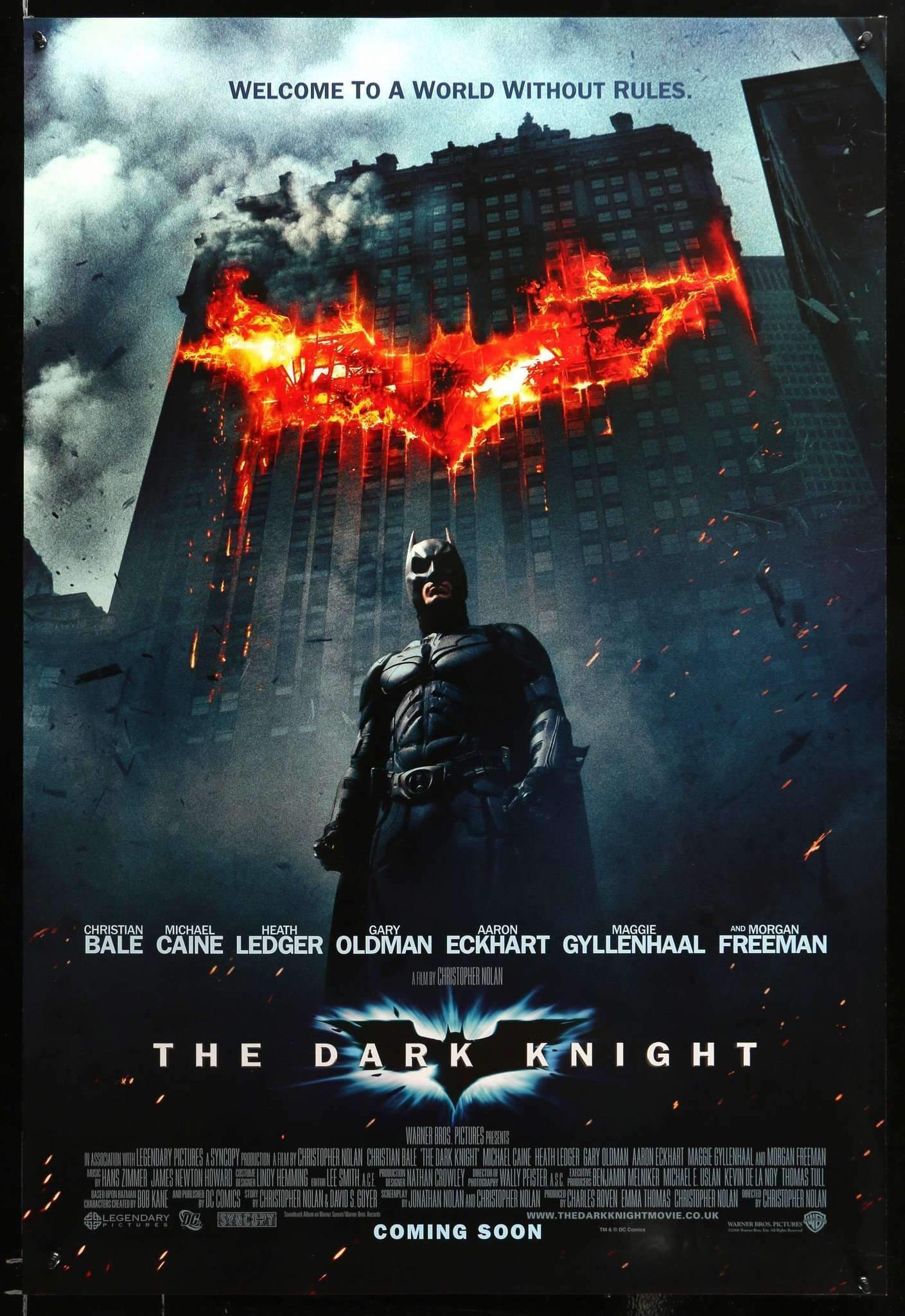
Christopher Nolan’s Batman Begins reset the table for superhero films. The Dark Knight took that table, picked it up, overturned it and rebuilt it from scratch. This influential film is certainly the greatest superhero film ever made and the calling card Nolan will carry for the rest of his life. Its exclusion from the 2008 Best Picture list at the Oscars (and Nolan’s snubbing for Best Director) was so widely condemned as snobbery (especially as the slot went to the atrocious awards-bait The Reader, a film even Oscar-host Hugh Jackman quipped he hadn’t seen) it led to the Oscars doubling the number of Best Picture Nominees (something benefiting several genre films inferior to this one). The Dark Knight declared forever superhero films could be proper films with characters, intriguing stories and interesting things to say.

It’s been a year or so since Bruce Wayne (Christian Bale) began his caped crusade as Batman, wiping out organised crime in the city. District Attorney Harvey Dent (Aaron Eckhart) – working closely with Bruce’s childhood sweetheart Rachael Dawes (Maggie Gyllenhaal) – has launched his own tough on crime crusade that has led to many mobsters landing behind bars. In the police force, Lt James Gordon (Gary Oldman – superb as a man whose good intentions lead to great harm) is straightening out the most bent police force on record. Now the gangs are desperate and in retreat – so desperate that they turn to the sort of dangerous, anarchic freak they would never usually countenance working with: a man known only as The Joker (Heath Ledger). The Joker though has his own plans for the city, for Batman and his own crazed ideas of social anarchy.

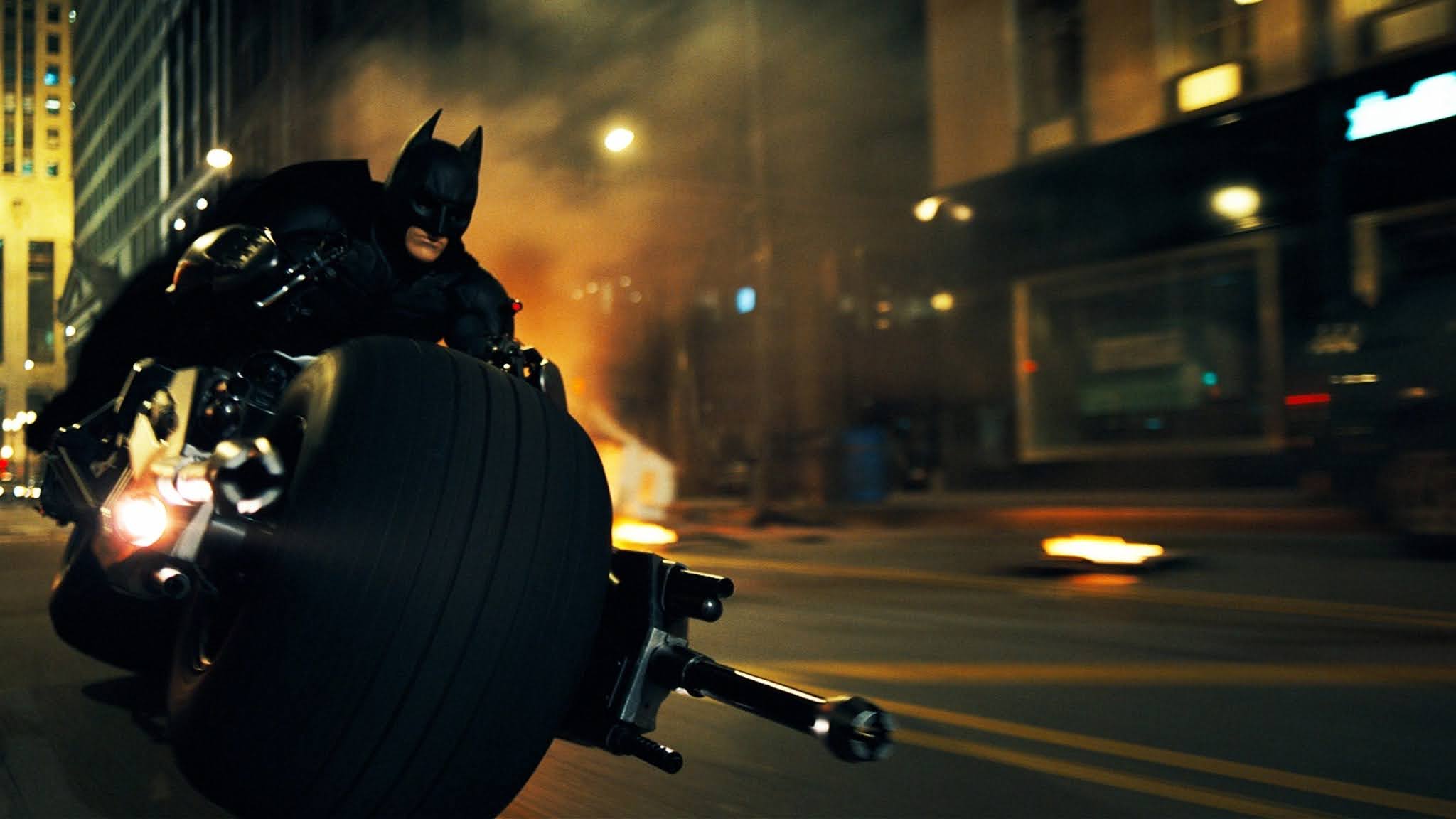
The Dark Knight is told on a huge scale: but Nolan never once loses sense of the fact this is an adventure film, while making sure that it explores ideas around society and humanity that leaves most high-brow films standing. Sumptuously made, a technical marvel it has set-pieces that stand with the greatest in cinema, dialogue that is crisp and brimming with intelligence and every performance in it excels. Nolan’s cinematic verve creates a film that always feels fresh.

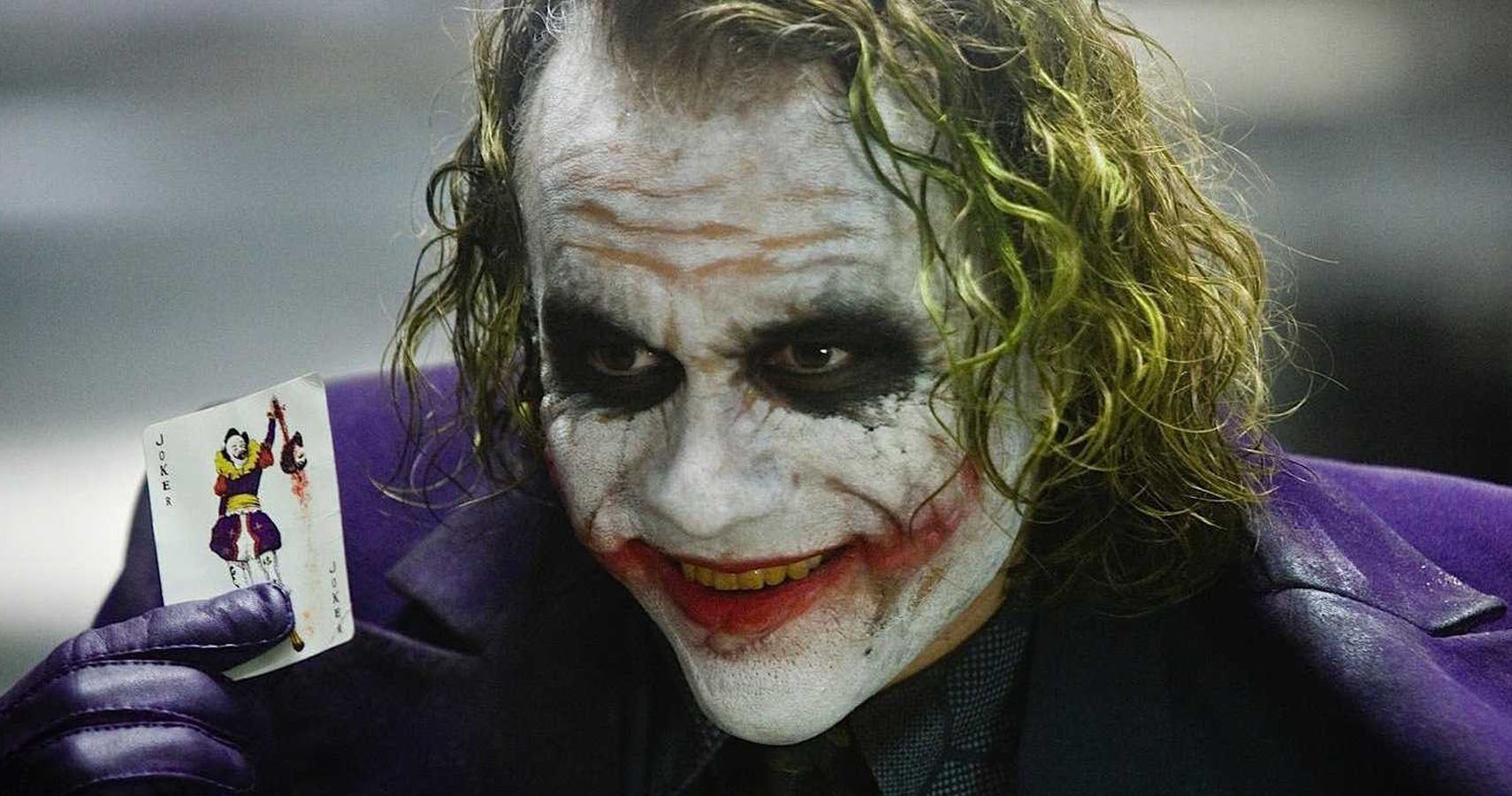
It’s hard not to reflect on the film without remembering the tragic death of Heath Ledger. A controversial choice for the Joker – despite Brokeback Mountain he was seen by many as a lightweight actor – Ledger’s performance is astounding. He radically redefines the character, giving every scene an eerie edge somewhere between violence and black comedy. His Joker has the bowed head and animalistic prowling of a hyena (along with the laugh), a snake-like licking exploration of his facial wounds, a voice that switches from a deep baritone to a high-pitched giggle.

He’s dangerously, psychotically violent, with a dark, demonic delight in mayhem, a wickedness that is not funny so much as unsettlingly comic and an unpredictability laced with a sharp and intimidating intelligence. Ledger essentially redefined a character who had existed for decades. It’s an extraordinary performance, winning numerous awards, that stands as the definitive interpretation of the character as a scuzzy, streetwise hood with the willingness to do anything at all.

The Joker is the channel Nolan’s film uses to explore fascinating ideas around order and chaos, and the clash between anarchy and rules. Nolan understands that, for all his confused psyche – heading out to beat up criminals for his nightly activities – Batman is a bastion of law and order and moral righteousness. He’s a fiercely ordered and meticulous man, who plans several steps ahead of his enemies, holds rigidly to a moral code and has the confidence (arrogance?) to believe he is best placed to make the big calls for the many. They are personally traits he shares with all the films heroes: he, Gordon and Dent are all men who harvest long-term plans to deliver mass benefits.

Standing against them is their antithesis. The Joker believes principles are bunkum, with life motivated by randomness and selfishness. These are polar opposite theories of life being explored here – and the Joker’s plans (such as they are) are to show that mankind is, at heart, an awful, terrible thing that can only destroy. But the schemes of our heroes also smack of arrogance and control – a sense of almost divine certainty in their righteousness.

Basically, what we get here is a discussion on our fear of anarchy. Deep down we all like conspiracy theories, because it shows someone is in charge. Randomness is terrifying. We all like to feel there is an organising force behind events – no one wants to meet their end by the toss of coin. We feel comforted by being part of an overall plan – even if it’s a plan for our demise. The Joker’s power comes not from his skills in themselves, but his willingness to break all rules and destroy anything and anyone at any time for any reason. There is no protecting against this. And it’s terrifying.

Nolan introduces the concept – and the character’s warped way of thinking – from the very start. The stunning opening sequence features a bank heist (with a neat cameo from Heat veteran William Fichtner – a deliberate homage) where the Joker has devised a ragged, but brutal plan which involves each member of the gang offing each other in turn (not that they are aware of that!). It’s a blazingly, triumphantly cinematic opening and a brilliant entrée to Nolan’s superbly directed, engrossing film.

While juggling intelligent ideas it’s also a brilliant, edge-of-the-seat ride crammed with jaw-dropping set-pieces. Each of them is underpinned by that rich psychological clash. Bruce Wayne is trapped in tactics utterly unsuited for his opponent, his assumption that criminals are simple people motivated by greed. Even worse, the Joker delights in identifying the clear lines Batman won’t cross, and dances right across them, wiping out the psychological advantages that Batman has over other criminals: once the Joker establishes Batman will never kill him, he forever knows he has the upper-hand.

Bravely the film ends not with a bang, but a character-driven, personal three-way confrontation between its three heroes (Batman, Gordon and Dent), low-key but bubbling with resentments, fury and pain. It’s a perfect cap – and a capturing of the film’s argument that the greatest damage people like the Joker can cause is not to our property but to our souls.

It’s easy in all this to overlook Christian Bale, but he is wonderful as Wayne (and again this is a film that is as much, if not more, about Wayne than Batman). Increasingly distancing himself from people – his last links to human warmth being Alfred (Michael Caine, again in wonderful mentor form) and Rachel Dawes (re-cast to terrific effect with Maggie Gyllenhaal, who brings wonderful depth and complexity to the role) – Wayne carries a martyr complex, damaging to his psyche.

Nolan’s film is a dense and rich thematic exploration of chaos and certainty which expertly combines thills and actions with a character driven plot. Superbly acted, wonderfully paced, rich and intelligent – with a genre defining performance by Ledger – this is truly great film-making, one of the greatest blockbusters of all time.

Batman Begins (2005)

Christian Bale redeems the Batman in Batman Begins

Director: Christopher Nolan

Cast: Christian Bale (Bruce Wayne/Batman), Michael Caine (Alfred Pennyworth), Liam Neeson (Henri Ducard), Katie Holmes (Rachel Dawes), Gary Oldman (Lt James Gordon), Morgan Freeman (Lucius Fox), Cillian Murphy (Dr Jonathan Crane/Scarecrow), Tom Wilkinson (Carmine Falcone), Rutger Hauer (William Earle), Ken Watanabe (Ra’s al Ghul), Mark Boone Jnr (Detective Arnold Flass), Linus Roache (Thomas Wayne), Colin McFarlane (Commissioner Loeb)

In the mid-2000s, Batman on film was a joke. A series that started with the Gothic darkness of Tim Burton had collapsed into the pantomime campness of Joel Schumacher. The franchise was functionally dead, so why hot burn it all down and start again from scratch. It was a radical idea – one of the first big “reboots” of a comic book saga. It was a triumphant success, changing the rule book for a host of film series and one of the most influential movies from the last 15 years. 

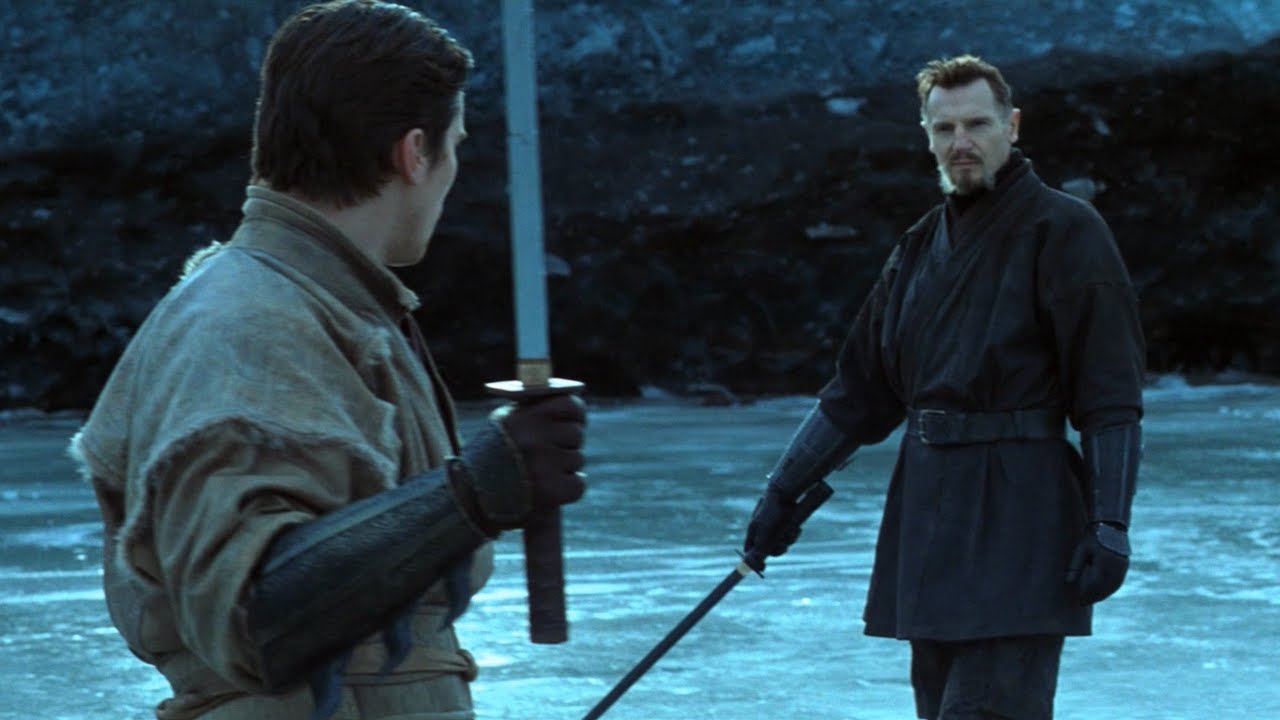
After the death of his parents, Bruce Wayne’s (Christian Bale) life drifts as he is unable to get over his own guilt at believing he was partly responsible for getting his parents into a situation where they were killed. In a Gotham run by organised crime boss Carmine Falcone (Tom Wilkinson), Bruce exiles himself for years to try and learn the skills he will need to return and try and find some peace and deal with his fears by tackling crime head on. Recruited by his mentor Henri Ducard (Liam Neeson) into the League of Shadows – a dark group of ninja inspired vigilantes – Wayne eventually rejects the group’s ruthlessness and returns to Gotham. There, working with his old guardian and family butler Alfred (Michael Caine), he starts to build a new identity: by day shallow playboy Bruce Wayne, by night The Bat Man ruthless vigilante, fighting crime. 

Why did it work so well? Because Christopher Nolan understood that the key to making a film that will kickstart a series and win the love of both the casual viewer and the fan is ‘simple’ – just make the film good. Make it a film powered by ideas, characters, a deliberate story and intriguing beats and audiences will love it. Make it a lowest common denominator film offering only bangs and crashes and ‘fan service’ and audiences will reject it. Because at the end of the day we know when we are being manipulated, and the assumption too many people behind making films like that is that people don’t really want intelligent films. They do.

Batman Begins works so well because it places character front-and-centre in a way no other Batman film – and very few superhero films – had before. Unlike all the other Batman films, here Bruce Wayne (and it is definitely Bruce Wayne) was the lead character, not a staid stick-in-the-mud around whom more colourful villains danced. Combine that with Nolan’s inspired idea to return Batman to something resembling a real-world, a more grounded, recognisable version of Gotham which has problems with organised crime that we could recognise from the real world. This are intelligent, inspired decisions that instantly allowed the film to take on a thematic and narrative depth the other Batman films had lacked. 

It’s Bruce Wayne’s psyche at the centre of the film – in an excellent performance of emotional honesty and physical commitment by Christian Bale – and his attempts to find solace in a sense of duty from his fears and his loss of a father figure. It’s Fear that is possibly one of the central themes of Batman Begins and the power it has over us. Fear is what Bruce must master – on a visceral level his fear of bats, on a deeper level his fear that he has failed his parents by failing the city they loved – and fear is the weapon all the villains use. Fear is the petrol for Falcone and his gangsters. Fear is the weapon Batman utilises. Fear is the study of choice of disturbed psychologist Joanthan Crane (a smarmily unsettling Cillian Murphy). A weaponised Fear gas is the WMD that the film’s villains intend to introduce into Gotham.

Understanding fear, working with it, finding its strengths and using these for good is at the core of the film. It’s there from the first beat – a traumatised young Bruce attacked by bats after falling into an abandoned well they nest in – and it’s there at the very end. Bruce’s training with mentor Ducard is as much about understanding and living with these terrors as it is physical prowess. His impact as Batman on the city is central towards channelling his own fears – bats, the dark, violence on an empty street – into universal fears he can use to terrorise criminals. 

It’s all part of the film’s quest to work out who Bruce Wayne is. With Bale superb at the centre, the film throws a host of potential father characters at Bruce, all offering different influences. He has no less than three father figures, in his father (a fine performance of decency by Linus Roache), the austere and understanding Ducard (Neeson channelling and inverting brilliantly his natural gravitas and calm) and the firm but fair and caring Alfred (Michael Caine quite brilliantly opening up a whole new career chapter). 

The influences are all there for Bruce to work out. Should he follow a path of compassionate justice as his father would do? How much muscular firmness and earnest duty, such as Alfred represents, should this be spiced with? How does Ducard’s increasingly extreme views of justice, combat and social order play into this? Which influence will win out over Bruce – or rather how will he combine all this into his own rules? It’s telling that the film’s villain turns out to be a dark false-father figure – the entire film is Bruce’s quest to come to turn with his own legacy and allow himself to accept his father and forgive himself.

It’s also telling that both hero and villain are driven by similar (but strikingly different) agendas. Both are looking to impose justice on the world. But where Bruce sees this as compassion with a punch – a necessary evil, protecting the good in the world while bringing down the evil – the League of Shadows see their mission as one of imposing Justice through chaos, of letting a world destroy itself so that a better one can rise from the ashes. 

Its ideas like this that pepper Christopher Nolan’s film. Throw in his superb film-making abilities and you have an absolute treat. Nolan’s direction is spot-on, superbly assembled with a mastery over character and story-telling. Beautifully designed, shot and edited it’s a perfect mixture of comic book rules and logic – the very idea of the League of Shadows – with the real world perils of crime, vigilanteeism and violence. With a superb cast led by Bale – and Gary Oldman also deserves mention, Nolan finally unleashing the decency, honesty and kindness in the actor that revitalised his career – Batman Begins relaunched Batman as a serious and intelligent series, that matched spectacle and excitement (and there is tonnes of it) with weighty themes, fine acting and superb film making. There is a reason why it’s been a touchstone for every reboot of a series made since.

Inception (2010)

Leonardo DiCaprio caught between dreams and reality in Inception

Director: Christopher Nolan

Cast: Leonardo DiCaprio (Dom Cobb), Joseph Gordon-Levitt (Arthur), Marion Cotillard (Mal Cobb), Ellen Page (Ariadne), Tom Hardy (Eames), Ken Watanabe (Saito), Dileep Rao (Yusof), Cillian Murphy (Robert Fischer), Tom Berenger (Peter Browning), Pete Postlethwaite (Maurice Fischer), Michael Caine (Professor Stephen Miles), Lukas Haas (Nash), Tallulah Riley (Disguise woman)

What is reality? It’s a question that for many of us never comes up. But in the artificial and exciting world of film, it’s a legitimate question. These worlds we watch unspooling before us on the cinema screen, so large, so real, so exciting. Could we get lost in them? And how much do the films we love echo the dreams that fill our nights, the movies we create in our mind to keep our brain active during those hours of complete physical inactivity? And what happens when the world of imagination and possibility becomes more compelling, more comfortable – and perhaps more real – to us than the actual flesh-and-blood world around us? These are ideas tackled in Inception: the blockbuster with a brain. 

Set in some unspecified point in the not-too-distant future, Dom Cobb (Leonardo DiCaprio) and his partner Arthur (Joseph Gordon-Levitt) are “extractors”, shady corporate espionage experts who use experimental military technology to enter shared dream states with their targets. While in their dreams, they have complete access to their subconscious mind, where secrets can be extracted. A wanted man in the States, Cobb is forced to ply his trade despite his yearning to return home to his children. After a job goes wrong, their would-be target Saito (Ken Watanabe) hires the pair to take on a far more challenging role: rather than extract an idea he wants them to plant one – a technique called “inception” – into the mind of a business rival (Cillian Murphy) to get him to dismantle his father’s empire. To do the job, Cobb needs a new team, including dream “architect” Ariadne (Ellen Page), dream identity forger Eames (Tom Hardy) and dream compound chemist Yusof (Dileep Rao) – and needs to try and control his own dangerous subconscious version of his late wife Mal (Marion Cotillard) who is determined to destroy his missions.

Just a plot summary should give an idea of the twisty-turny world of imagination and ideas that Christopher Nolan mixes in with big budget thrills and excitements, in the most original sci-fi/philosophy film marriage since The Matrix. Of course it helps when you have the clout of having directed a hugely successful comic book series, but Nolan was brave enough to trust that an audience for this sort of action-adventure caper wanted to have their brains stretched as far as their nerves. So he creates a dizzying and challenging piece of escapism that plays around with the audience’s perceptions and understanding of the nature of dreams. 

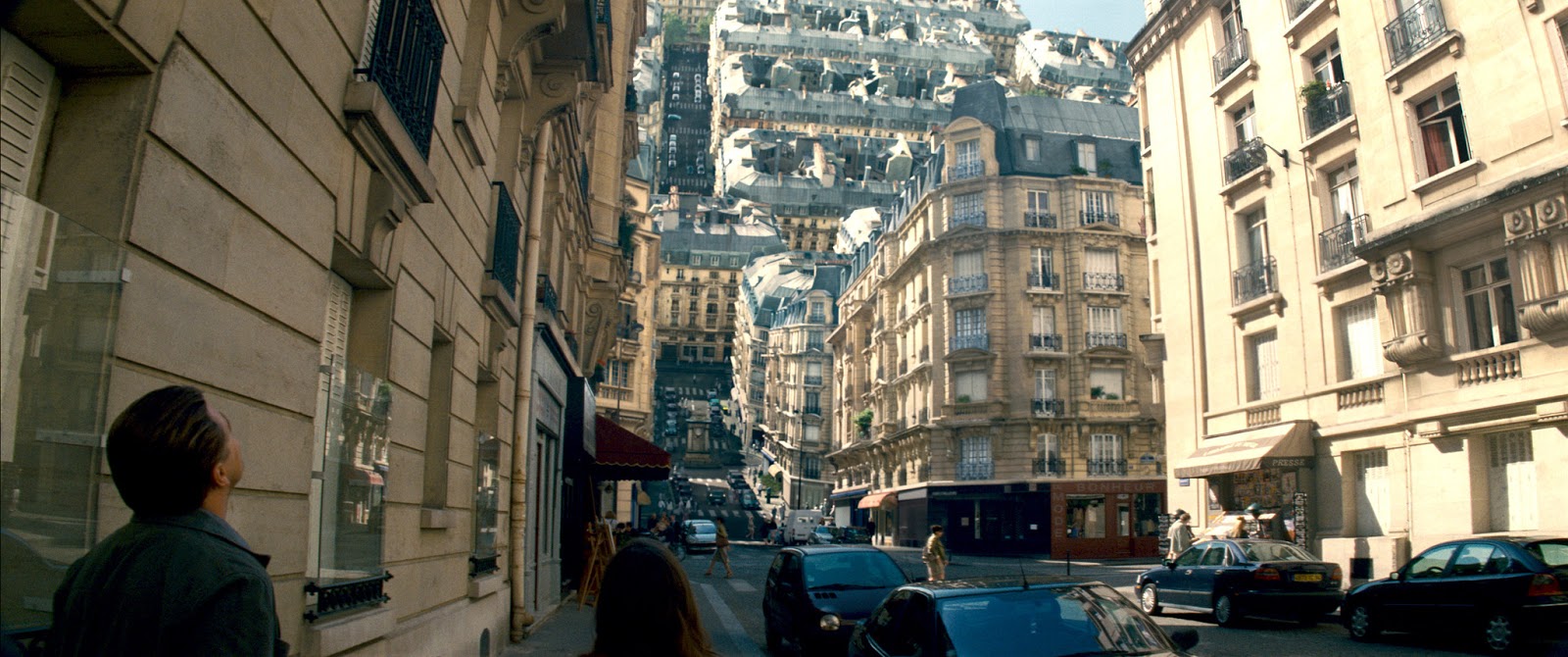
In the world of dreams, the film is a fabulous tight-rope-walk of dazzling concepts. Here everything is possible, with Nolan throwing at us worlds from film fantasy: intricate Samurai houses, brawling third-world streets, luxurious hotels, Bond-style winter bases and entire cities that literally fold, bend and reinvent themselves around the film’s dreamers, worlds that defy conventional rules of physics and time. This world is presented with genuine visual panache at every point, Nolan’s mastery of the language of film leading to a sensational series of slight-of-hand tricks and compelling set-pieces, all the while making you question which events are real and which are dreams or even dreams within dreams. In these worlds, the characters have the ability to literally shape a world to meet their needs, and the dangerous attraction of these worlds – even if they are not real – is the dark temptation that hangs over every frame. 

Because it’s those ideas beneath the action that give the film depth as well as excitement, that ability to ask questions and openly invite the audience to begin theorising themselves to fill in any blanks. Within the world of Inception, characters can create dream states within dreams, to share one person’s dream while simultaneously all being inside the dream of someone else. These multiple levels are cleverly established as being as much of a risk for the characters in getting confused as they are for the audience, with the characters carrying personal “totems” to help them judge if what they are seeing is reality or not. This is made all the more difficult by the establishment that your subconscious will manifest people to populate the dream worlds – and these will turn on invaders they detect in the dream.

All of this tunnels down into the deep limbo of our subconscious – and also introduces as a concept Nolan’s fascination with time. In dreams, time moves at a different pace, and this differential becomes all the greater as you descend down levels in dreams within dreams. A few minutes can become an hour in a dream and become almost a day in the dream within it – and years within the dreams beyond that. This is brilliantly demonstrated by Nolan in the film’s dazzling central sequence as the film intercuts between three timelines in three different dreams – each impacting the other.

It’s another masterful touch – the impact of actions on dreamers’ bodies in the level above can be felt in their world. A slap to the face in the real world can send someone in the dream flying across a room. A bucketful of water turns into a tidal wave in the dream. The dreamer falling in the world above removes gravity in their dream (giving Joseph Gordon-Levitt a cult fight scene in a gravity free world that sees him gracefully leaping from floor to ceiling to wall). The visuals are extraordinary, but the intriguing logic of the inter-relation between reality and the dreams – and the way dreams struggle to explain external effects – lend all the more credence to the mixing of reality.

But then, as Nolan suggests, isn’t that film after all? In dreams we move from location to location and struggle to remember the journey in between. We find ourselves doing tasks and not knowing how we started. Chases, faulty logic, sudden reversals and changes – these are the rules of film, it’s editing slicing out the boring bits and focusing on the reality. We are dropped into the middle of Cobb’s story and only slowly find the backstory, a gun filled chase through an African city is almost indistinguishable from similar sequences in the dreams. The final sequence of the film is a purposefully cut series of images that are very true to the rules of film, but feel alarmingly close to the rules of dream (unsettling us about whether what we see at the end is truth or dream, a debate that continues today). It makes for fascinating stuff, as well as a commentary on film itself.

Nolan’s film is gloriously entertaining, even if in its haste at points it does fail to explain how certain events and concepts truly work – but doesn’t really matter so compelling is the journey. The cast, enjoying the chance to mix action hijinks with genuine characters and dialogue are very strong, with DiCaprio anchoring the film wonderfully as the conflicted, lonely, defensive and daring Cobb. Hardy made a name for himself in a cheekily flirtatious performance, which sparks wonderfully with Gordon-Levitt’s more po-faced Arthur. Page creates a character both naïve and at times almost gratingly intrusive. Cotillard makes a difficult balance look easy playing a character part real and part dream figure. Watanabe is archly dry as the investor. There isn’t a weak link in there.

It may at times move too fast and not always make itself completely clear. It might be a bit too long in places and take a little too long to make its point – but it’s ambitious, challenging, intriguing film-making that rewards repeated viewing. Not least with its cryptic ending in which we are forced to ask how much of what we have seen is real and whether – like Cobb perhaps? – we should even care at all if the end result is so positive. With the fascinating world of dreams – and the rules there that we encounter – it gives us a firm grounding for the its meditation of the dark attraction of fantasy, embodied by the genial wish fulfilment of the movies where adventure lies around each corner and the heroes triumph.

Sunshine (2007)

Astronauts head out to restart the sun in Danny Boyle’s Sunshine

Director: Danny Boyle

Cast: Cillian Murphy (Robert Capa), Chris Evans (James Mace), Rose Byrne (Cassie), Michelle Yeoh (Corazon), Cliff Curtis (Searle), Troy Garity (Harvey), Hiroyuki Sanada (Kaneda), Benedict Wong (Trey), Chipo Chung (Icarus), Mark Strong (Pinbacker)

Spoilers: Last act surprises are discussed here. Although they did put them in the trailer at the time as well

What would we do if the sun decided to pack it in? To be fair, probably not build a bomb the size of Manhattan out of all the world’s fissile material and then fly it up to the Sun in a huge spaceship to jump start the sun’s core. Because that idea is pretty much like trying to restart a volcano with a match. To be fair, Professor Brian Cox (for it was he) did come up with an actual concept that did work – something involving a Q-Ball in the sun, whatever the hell that is – that the film never mentions. But then who really cares about the science, we only care about the simple idea of restarting the sun’s engine with a massive nuke. That’s an idea I don’t need a staff pass at the Large Hardron Collider to understand.

Mankind’s final fate is in the hand of a team pulled from across the world’s space agencies, with Professor Robert Capa (played by Cillian Murphy as a figure inspired heavily by Brian Cox himself in looks and style) as the boffin whose job is to blow the bomb when the time comes. The mission, Icarus II, is under the command of Captain Taneka (Hiroyuki Sanada), with engineer Mace (Chris Evans), pilot Cassie (Rose Byrne), biologist Corazon (Michelle Yeoh) whose job is to maintain the oxygen garden, psychiatrist Searle (Cliff Curtis), navigator Trey (Benedict Wong) and second-in-command and comms officer Harvey (Troy Garity). Entering the final days of the mission, near Mercury, the crew discover traces of the first missing mission that carried the first payload to restart the sun, Icarus I. Deciding two payloads are better than one, the crew divert to intercept – and of course from there everything slowly falls apart into increasing chaos, destruction and horror.

Boyle’s film was marketed as a sort of slasher-in-space – which to be fair it only really becomes in its final act, as the crew accidentally take on board captain of Icarus I, Pinbacker (Mark Strong), a man driven mad by proximity to the sun, deluded in the belief that it is God’s will that mankind perish with the sun. In fact for the bulk of its runtime – and its primary themes – are really about the psychological impact of prolonged isolation in space with only a small group of people for company (a heightened submarine claustrophobia), the dangers and damage that obsession can cause and the moral complexities that emerge when the fate of mankind is literally in the hands of eight people.

With an intelligent script by Alex Garland, Boyle’s film is smart, superior sci-fi which asks searching questions of how we might respond in the situations this crew are thrown into. How quickly would you make decisions about who is expendable and who is not when you are mankind’s last chance? How quickly would you be willing to sacrifice yourself? What moral qualms would you feel if the fate of the one was balanced against the many? And how are all these feelings heightened by the intense claustrophobia and isolation of prolonged space travel, interacting with the same few people day-in and day-out in a ship of which every inch you would be intimately familiar within the first few months of a mission lasting years?

It’s a wonder more people don’t go crazy in the film. Boyle’s film makes excellent use of the terrifyingly awesome, good-like power of the sun. Its rays are so intense at the range of the ship, that any exposure over about 2% of its full strength is lethal. But there is something about its mighty power, its all-consuming presence, that draws characters too it like moths to a flame. Psychiatrist Searle (impressively played by Cliff Curtis) already seems to be becoming slowly a slave to an obsession with our star, his skin peeling from too many hours in the ship’s solar observation lounge. Pinbacker (a curiously accented performance of intense insanity from Mark Strong) lost his mind in sun worship, his mind seemingly snapped by coming face-to-face with the powers of the heaven compared to the mini-presence of man.

But it’s that presence of mankind that drives the mission, and lies behind all decisions. Hard-ass engineer Mace (Chris Evans, very good) seems like a jerk, but he simply applies Spock’s maxim of the needs of the many to a logical extreme (correctly) objecting to every course of action that invites unknowns into the equation that endanger the mission. And Mace doesn’t hesitate at any time in the film when asked to balance his own safety against the success of the mission. Each crew member – with the exception of Harvey – places their own survival a distant second behind the completion of the mission, and the film is littered with moments of self-sacrifice and self-imperilment.

It’s this humanistic core to the film, of accepting the world is it and that mankind must be preserved within that, which leads to some of the film’s more weighted points around faith and religion. The film has little time for anything away from pure science, and an interest in higher powers and staring too closely at the bright light, is mixed in heavily with a dangerous fundamentalism that eventually leads to the film’s only spiritual figure Pinbacker becoming a psychopath determined to follow what he sees as God’s plan at the cost of all human life. It’s not a subtle picture of religion – and the film could have balanced it with at least one of these characters expressing some faith in some sort of religion on the ship or gently questioning how humbling being this close to the face of God might feel. The film has no time for that.

But then I suppose this is really a psychologically intense mission film, a sort of big-themes action sci-fi that is the sort of ideas based film you wish was made more often. Boyle’s direction is pinsharp as always, and the moments of dreamy awe and shattering power of the sun (as bodies are vapourised, parts of the ship crumble) or the freezing vastness of space (as one character discovers to their cost) provide a series of haunting scenes. Shooting Pinbacker with a juddering out-of-focus intensity – intended to ape the feeling of starring directly at the sun – is effective in making the character chillingly unknowable.  This moments work very well, as does the superb cast which has not a weak link among them (Cillian Murphy in particular anchors the entire thing extremely well). Sunshine is a thought-provoking and blistering science-fiction film that manages to balance big themes and ideas with horror house jumps and haunting moments of tension.

The Wind That Shakes the Barley (2006)

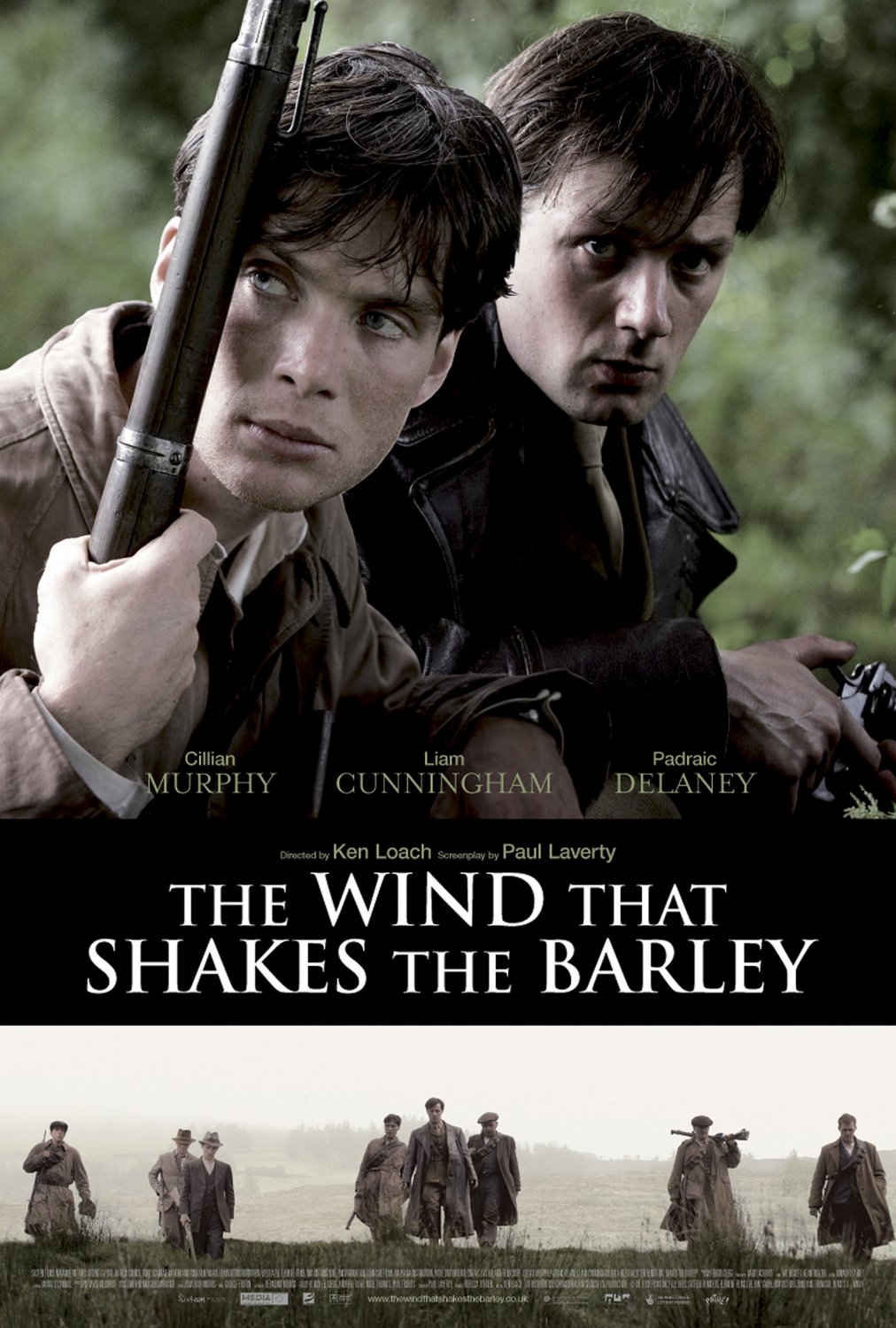
Cillian Murphy and Padraic Delaney take on the British in The Wind That Shakes the Barley

Director: Ken Loach

Cast: Cillian Murphy (Damien O’Donovan), Pádraic Delaney (Teddy O’Donovan), Liam Cunningham (Dan), Orla Fitzgerald (Sinéad Ní Shúilleabháin), Laurence Barry (Micheál Ó Súilleabháin), Mary Murphy (Bernadette), Mary O’Riordan (Peggy), Myles Horgan (Rory), Martin Lucey (Congo), Roger Allam (Sir John Hamilton), John Crean (Chris Reilly)

There are few directors in British cinema who have such impeccable left-wing credentials as Ken Loach. Each of his films is powered by a social and political conscience and chronicles the travails of those on the left, those struggling for the down-trodden and unfortunate, or those on the bottom rungs of society’s ladder. It was perhaps only a matter of time before he made a film about that blistering sore on the British conscience, Ireland (just as he is surely destined to eventually make a film about Palestine). It’s not a surprise that Loach’s film, with its vicious denunciation of British policy in Ireland, was met with a vitriolic response by much of the UK media, just as it was scooping Loach the first of his two Palme d’Ors at Cannes.

The film opens in the immediate aftermath of the First World War. Many of the Irish are in open revolt for independence, with Teddy O’Donovan (Pádraic Delaney) a leading IRA figure in Cork. His younger brother Damien (Cillian Murphy), a doctor, is persuaded to join the cause by his horror at the actions of the British “Black and Tan” troops in Ireland, vicious flying squads empowered to act with impunity. When the war eventually leads to a negotiated peace and the Anglo-Irish Treaty of 1922 that divides Ireland in two as a Dominion in the British Empire, the two brothers are divided. Teddy sees this as a stepping stone to peace for further gains later; Damien sees it as betrayal of the socialist message he and many others fought for, which will change only “the accents of the powerful and the colour of the flag”. A civil war across Ireland is inevitable between the government “pro-treaty” troops (supported by the British) and anti-treaty former-IRA members.

The history of Ireland is one of tragically missed opportunities, of poor British policy decisions throughout the nineteenth century (including delaying emancipation for Catholics, and a refusal to grant any level of Home Rule to Ireland for over 70 years, despite three votes on the issue in Parliament) eventually leading to many “peaceful” political movements in Ireland becoming completely discredited and the bullet seen as the only way to self-government. There is no doubt at all – as the film is not shy showing – that British policy in Ireland was often shameful, brutal, repressive, and helped enforce lasting bitterness and resentment, the impact of which is still felt today.

So, despite the furious backlash against the film as being anti-British in the press, it’s clear that The Wind That Shakes the Barley tells hard truths of the violence on both sides – of ransacked homes, murders, shootings and repression. Loach’s film unquestionably favours the Irish perspective and places their actions within a heroic context, while the British soldiers are nearly to a man foul-mouthed, arrogant, violent louts (although an officer does get a speech saying what do they expect since the black and tans are all bitter ex-front liners from France who have nothing else in their lives to come home to). But it makes a legitimate point, and it’s hard not to agree that British occupation of Ireland was, at best, a mistake and worst case a crime.

Loach’s film is harrowingly well-made, expertly shot by Barry Ackroyd, a testament once again to what a vivid and engrossing director Loach can be. Shoot-outs and violence are shot with icy-cold camerawork, mixed with handheld confusion. Political debates (of which there are many) are shot with passionate intimacy, the camera roving between the faces of those on both sides. The film’s reconstruction of Ireland in the 1920s is brilliantly done, and its engrossing recreation of the guerrilla warfare tactics of the IRA is fabulous. The acting is very good, with Cillian Murphy excellent and passionate in the lead role. Loach’s earnestness, married to his cinematic skill, is clear.

The real problem with the film is Loach’s left-wing politics, not his anti-British-establishmentism. To Loach the real tragedy in Ireland was not the civil war, but the compromise that large parts of the country made to sign the treaty with Britain and turn their back on aiming to turn a poor country into something closer to a socialist one, with collectivised industry, less power to the church and a greater equality between the rich and the poor. Loach’s film is squarely stacked in favour of the left-wing firebrands who continue the fight with the IRA, and firmly against those who support the treaty and look to gradually build a lasting peace.

To Loach, it feels like there is little real difference between the British and the pro-treaty forces. The They are both moral cowards and bullies who are fighting to maintain a status quo. There is no legitimate case made for the treaty. Those who support it in the film – like the increasingly nervous, twitchy pro-Treaty Teddy (as if Loach wanted to show him physically weighted down with guilt) – are either mealy-mouthed and guiltily shifty or hectoring bullies (like the priest who preaches pro-treaty/anti-socialism from the pulpit).

Loach is right that independence was a cause that bought everyone together, and in his argument that that the lack of a unifying idea of what the country would become next would inevitably lead to fracture and collapse. But never once in the film do we hear the voice of the ordinary Irish people, and what they wanted. Inconveniently, when put to the ballot, pro-treaty parties won the election of 1921, so the film has to have Damien (as is often the case with those on the extreme of both ends of politics I find) claim that the people didn’t understand what they were voting for, and if they did they would have agreed with him. The film’s final scene ends at a ruined house, but never once does the film (or Loach) reflect on how this embodies the catastrophic harm simple, everyday people were suffering over this period – and that they may have wanted a chance for the fighting to stop and a shift to peaceful progress towards greater independence rather than die in a ditch for nebulous political goals.

The film’s main enemy is actually compromise. Compromise is what Teddy and his gang accept when they plead for the chance for the fighting to stop, and for the country to settle for 80% of their demands now, and the rest later. Compromise is what Damien won’t settle for, and why he’ll restart a war to the death for his beliefs. Maybe it’s just me, but the art of living seems to be one of compromise and peace is built on agreements and a statesman-like acceptance that complete victory is often impossible without unacceptable loss. It’s a belief the film has no time for, and Loach seems to be advocating that the IRA should have completely rejected the treaty and instead fought to the bitter end (an action that would have probably turned Ireland into a wasteland) in the name of the socialist dream, rather than deal with reality.

It’s that which is the real problem with the film: its hard-headed clinging to the belief that any form of compromise is anathema, that death is preferable to altering your beliefs one iota, that prolonging a bloody civil war is the right thing to do rather than accept any agenda that doesn’t completely match your initial dream. Loach’s faith in his politics is admirable, but The Wind That Shakes the Barley sets out a didactic vision of Irish politics that gives no legitimate argument to the pro-treaty side, and only listens to the socialist wing of the anti-treaty group. It’s a one-sided view of history and, increasingly, a dangerous one.

Cold Mountain (2003)

Nicole Kidman and Jude Law are souls in love separated by war in Cold Mountain

Director: Anthony Minghella

Cast: Jude Law (WP Inman), Nicole Kidman (Ada Monroe), Renée Zellweger (Ruby Thewes), Eileen Atkins (Maddy), Kathy Baker (Sally Swanger), James Gammon (Esco Swanger), Brendan Gleeson (Stobrod Thewes), Philip Seymour Hoffman (Reverend Veasey), Natalie Portman (Sara), Giovanni Ribisi (Junior), Lucas Black (Oakley), Donald Sutherland (Reverend Monroe), Cillian Murphy (Bardolph), Jack White (Georgia), Ray Winstone (Teague), Melora Walters (Lila), Charlie Hunnam (Bosie)

There was no difficult novel Anthony Minghella couldn’t adapt for the big screen. Cold Mountain is as beautiful and handsome a film as any he made, and his masterful scripting of a complex story is testament to his skill. So why is Cold Mountain not more loved? Is it because it’s almost too well made, too handsomely mounted, too literary and intelligent? Is it, actually, trying a little too hard? Is it a Cold Mountain itself, a giant structure of beauty but with an icy heart?

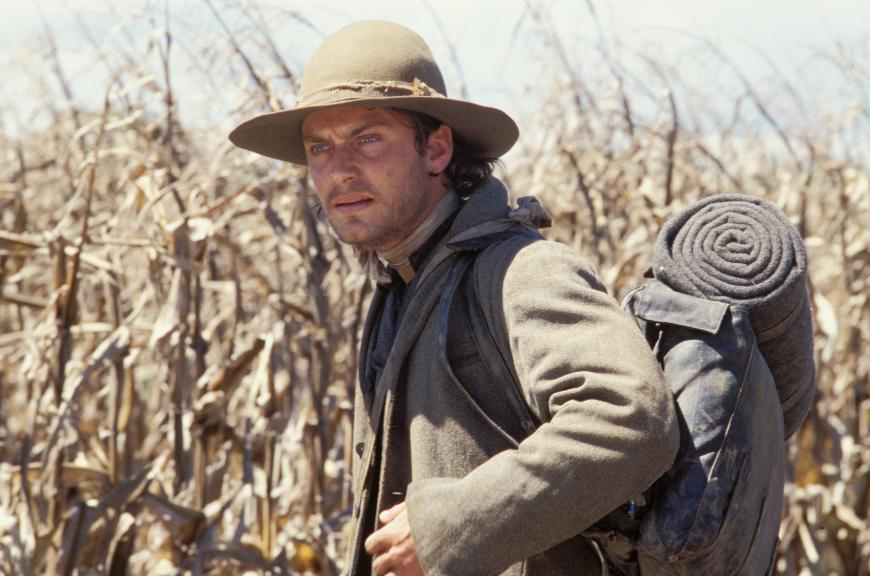
Based on Charles Frazier’s novel, set in the final days of the American Civil War, confederate soldier Inman (Jude Law), knowing the war is lost, deserts to return to the woman he loves, Ada Monroe (Nicole Kidman). The two of them have only spoken a few times but they feel a deep personal bond. During the years of war, poverty has hit preacher’s daughter Ada, although she has crafted a life-changing friendship with 18th century trailer trash Ruby Thewes (Renée Zellweger) which has helped her survive. As Inman’s odyssey home leads to him encountering a number of different vignettes that show the despair Civil War has brought to America, Ada struggles to survive and avoid the sinister attentions of home guard enforcer Teague (Ray Winstone).

There is so much to admire in Cold Mountain I want to start there. The photography is beautiful, and the film is assembled with a striking grace and skill. Walter Murch’s editing and sound design is perfect, with each shot of the film being fabulously composed and each carrying a specific message and purpose that contributes to the overall impact. The use of music – a collaboration between T Bone Burnett and Gabriel Yared – is perfect, a series of wonderful period compositions and impactful orchestral pieces. 

Everything about how Minghella captures the feel of the time, the mood of the South heading into war, and the disintegration of social conventions as the war takes hold and lays waste to the land, rings completely true. From the celebrations of the young men at the film’s start, to the increasingly haunted, tragic look of Jude Law’s Inman as he discovers new horrors at every point in his journey, you know war is hell. Minghella ironically opens the film with a catastrophic defeat for the North – but the slaughter disgusts Inman, and his burial under mounds of rubble during an explosion leads to a spiritual rebirths with Inman deciding senseless killing isn’t worth the candle any more. In a war of willing volunteers, how do we respond when these volunteers don’t want to keep fighting?

And why should they, as each of the various vignettes Inman walks through is a wasteland of moral collapse? From a sex-obsessed preacher (an amusing performance by Philip Seymour Hoffman) who has lost his morals to a tragic widow desperately trying to feed her baby (Natalie Portman, effectively stealing the whole show with an intense performance of utter desolation), everything Inman sees shows that nothing is worth all this. The film gets a very good sense of the drive that pushes Inman forward: constantly moving, he’s rarely seen sitting or resting. Each of the Odyssey-inspired stories gives him something to reflect on, or another opportunity for moral and emotional torment , from dragging bodies in a chain gang to avoiding the lustful advances of a group of hillbilly sirens who trap deserters for money.

Meanwhile, things ain’t much better on the homefront, where corrupt bullies like Teague (a slightly too obvious Ray Winstone) are enforcing their own law at the expense of justice. Poverty is also the impact of war, and poor Ada suffers hugely from this, as supplies run low and eventually out. Minghella’s swift and skilful establishment of character shows from the start how Ada is a stranger in a strange land, a middle-class town girl who is completely unsuited for country life and utterly unready to fend for herself when the chips are down without support. 

Is it any wonder in this world, that Inman and Ada cling to memories? Part of the film’s effect depends on how you respond to the romantic bond between these two clinging to a few brief moments (a few exchanges and one immensely passionate kiss on the day of Inman’s departure). It’s an old-fashioned, sweeping, love story and it depends on you relating to that old-fashioned mythic love story. I’m not sure that the film quite sells this as effectively as it could do. Somehow, perhaps because Inman is so insular and Ada a little too difficult to relate to, the passion between them can’t quite carry the sweep that the film demands, even as Minghella skilfully intercuts between them.

Nicole Kidman in particular feels miscast as Ada. Kidman is too intelligent, too determined and strong a performer to convince as a woman who is unable to look after herself and nearly succumbs to fear – she’s just not an actress I can picture cowering in fear in front of an angry rooster. Kidman does her best, but the character never really wins the sympathy that we need for the performance to work. Jude Law has much more to work with as Inman, brilliantly communication a whole world of feeling with very little dialogue. 

What works less well with Law is that his plotline just doesn’t quite grip enough. The vignettes are often entertaining, but feel like episodic sketches, and the sense of a building picture of the despair of the South doesn’t quite come into shape as much in practice as it does in theory. Frankly, after a while, you are ready for Inman’s journey to come to an end and for him to intersect with Ada’s plotline back at Cold Mountain (which is built around a consistent group of characters who engage our interest).

In the home front storyline you’ll be relieved with the entrance (almost an hour into the film) of Renée Zellweger’s blowsy Ruby, a loud-mouthed, trailer-trash woman with a heart of gold and a mastery of farming who effectively saves Ada’s life. It’s a loud, big, Oscar-winning performance from Zellweger that plays with being a little broad, but is skilfully balanced by the slow reveal that this personality is a cover that Ruby uses to hide her own pain. Added to this depth, her heart-warming presence carries such simple pleasure and colour compared to the more muted performances from the leads that you welcome it. 

Because Inman and Ada don’t quite work as a romantic couple. There is something slightly cold about them, slightly hard to relate to. And for all the intense and brilliant construction and filming of the film – and the mastery of Minghella’s writing and direction – it never makes them into the sort of classic romantic couple you care for. You want to connect with it more than you ever really do, and whether that is down to miscasting or the lack of intense chemistry between them I’m not sure, but it means Cold Mountain never becomes the great romantic tragedy it should be. You want a film this good to be as good as it feels – and it never quite is.

Red Eye (2005)

Rachel McAdams is on the flight to hell with only Cillian Murphy for company in Red Eye

Director: Wes Craven

Cast: Rachel McAdams (Lisa Reisert), Cillian Murphy (Jackson Rippner), Brian Cox (Joe Reiset), Jayma Mays (Cynthia), Jack Scalia (Charles Keefe), Robert Pine (Bob Taylor), Teresa Press-Marx (Marianne Taylor)

Are there any two things in the world we are more unsettled by than plane flights and the possibility that the strangers we meet might turn out to be nutters? Well Red Eye taps into both of those terrors with an effective B-movie of fast-paced brutality, which plays out almost in real time. Lisa Reisert (Rachel McAdams) is catching the red eye flight home to get back to her job managing a five-star hotel in Miami. At the airport bar she meets handsome, charming stranger Jackson (Cillian Murphy), and then finds herself sitting next him to on the plane. Just as things seem to be going well for romance, Jackson reveals he’s a terrorist and he wants Lisa to change the room booking of the Director of Homeland Security so his team can take him out – and if she says no, hitmen will take out her beloved father Joe (Brian Cox). But there may be more to Lisa than Jackson bargained for.

Craven’s film is an extremely efficient, sharp, lean little thriller with a cracking idea at its heart. It’s such a whipper cracker of an idea – the stranger on a plane who turns dangerous – that once the claustrophobia of the flight is removed in the final quarter, the film never quite gets its energy back. It’s Lisa’s mid-flight powerlessness, the self-contained, claustrophobic lack of escape, that makes the first three quarters of the film so compelling. Because as soon as Lisa realises that there is something wrong, there is nothing she can do and nowhere she can go to escape. And Jackson has manoeuvred the situation so she looks like the untrustworthy, awkward one while Jackson seems (outwardly) reasonable and friendly – cutting off any chance of help from fellow passengers.

These sequences in the plane work so well because they are so tightly directed, written, edited and played. Rachel McAdams is very good as a woman who at first seems self-occupied and slightly distant, then weak and vulnerable, before becoming resourceful and courageous. She’s well matched by Cillian Murphy as the smooth, in-control terrorist who begins to crumble as his plans turn against him.

It’s another decent structural twist in the film as it’s Rippner’s own arrogance and pride that eventually proves his undoing, as he drops enough information amongst his hubristic brags and threats for Lisa to work out how she can gain the upper hand. Before that she already shows plenty of invention to try and communicate her situation to the other passengers – and the tension of these cat-and-mouse games of evasion is portrayed perfectly.

It’s not a perfect film. The final quarter too quickly turns Murphy’s character into a psychotic version of his near namesake, Jack the Ripper, while the final cat-and-mouse hunt between these two characters in a new location doesn’t have the same tension as the plane setting. Similarly, the plot hinges on McAdam’s character falling victim to a past sexual assault – and how that event has shaped her later life – that today seems a little uncomfortable in its perfunctory treatment in the story. But these are blemishes – Red Eye is largely a sleek little thriller that makes its points with a nail-biting B-movie meanness. Craven sure knew how to put something like this together.