Scorsese’s calling card is an energetic, gripping, electric mix of themes that would shape his career
Director: Martin Scorsese
Cast: Harvey Keitel (Charlie), Robert De Niro (Johnny Boy), David Proval (Tony), Amy Robinson (Teresa), Richard Romanus (Michael), Cesare Danova (Giovanni), Victor Argo (Mario), George Memmoli (Joey), Lenny Scaletta (Jimmy), Jeanne Bell (Dianne), David Carradine (Drunk), Robert Carradine (Gunman), Martin Scorsese (Jimmy Shorts)
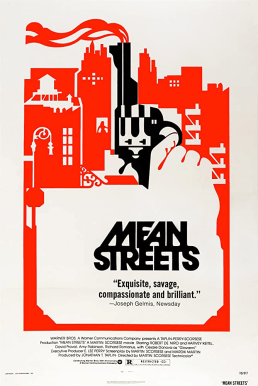
Mean Streets wasn’t actually Scorsese’s film debut but that feels like a technicality. If young Martin had a calling card, it was Mean Streets. It’s a vibrant, electric punch to the solar plexus and a dazzling display of virtuoso skill mixed with grungy, improvisational energy. Mean Streets is an artist finding his voice and screaming his agenda from the rooftops, bringing together a host of ideas, styles and themes that would dominate the rest of his work. Mean Streets remains raw, dynamic and overpowering, a major artistic statement like a punchy companion piece to Terence Malick’s Badlands, another new-found distinctive voice in American from 1973.
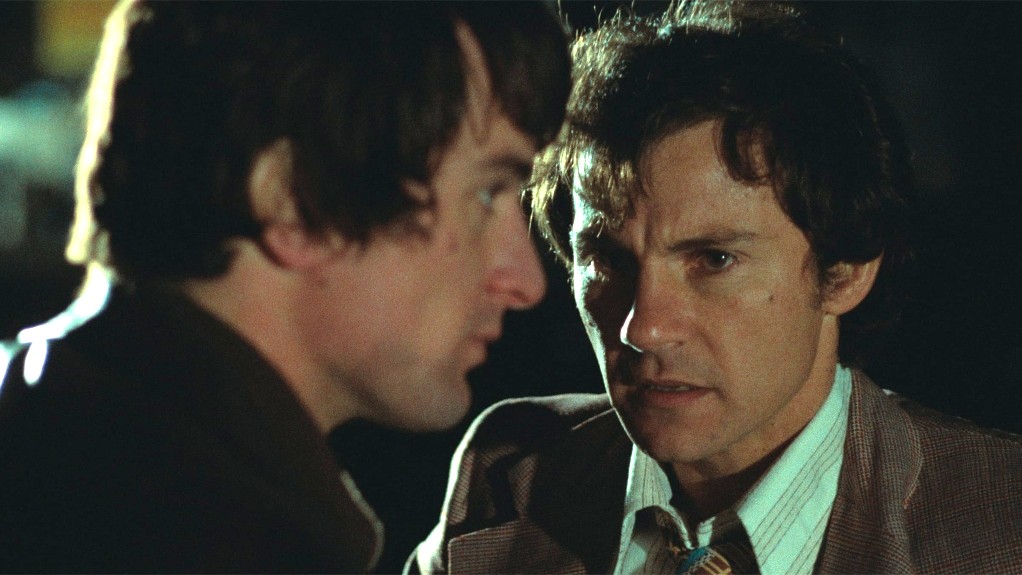
Mean Streets was strongly inspired by the environment Scorsese saw around him growing up on the rough streets of New York, crammed with the sort of sin Travis Bickle would later swear to wash away. It’s a world of gangsters and masculinity where boys never grow up, but become immature sharp-suited guys whose conversations end in hasty punch-ups and saving face means everything. Charlie (Harvey Keitel), nephew to the leading neighbourhood Mafiosa, is plagued with Catholic guilt. His idea to deal with this? To ‘save the soul’ of old friend Johnny Boy (Robert De Niro), an impulsive tearaway, in debt to every money lender. Charlie will struggle to curb Johnny Boy’s self-destruction, but with limited success.
Catholic guilt soaks through Charlie, introduced kneeling in Church while we hear the words of a priest (voiced by Scorsese) outlining Charlie’s moral quandaries. Charlie has a morbid fascination with punishment of his sins, never seeing a flame without feeling the urge to dip his hand into it. He claims his hero is St Francis of Assisi (though there is no sign he has read or understood anything St Francis ever said). Charlie continues a clumsy internal monologue with God (hilariously, late in the film he slips into continuing this out loud to the confusion of Johnny). He has not time for confession, with its Hail Mary’s: he’s arrogant enough to think, as a real sinner he needs more.
But, like so many of Scorsese’s gangsters, his guilt runs skin-deep. He’s a nice guy, scrupulously polite and well-spoken, only as far as it goes. Charlie may know his guilt springs from his life of crime being full of greed and sin, but never once does he even consider changing it. Just one flash of his uncle casually suggesting he could own his high-class restaurant soon is enough for him to shelve all idea of personal change or real sacrifice. His self-imposed mission to reform Johnny Boy is really a self-aggrandising deflection effort, designed to make him feel better about his horrendous life choices. As if it’s fine to be a low-level rent collector and friendly face of Mafia loan sharks, if he makes one wildcard play by the rules everyone else obeys.
Keitel captures Charlie’s walking contradictions very well, his surface decency hiding his obsessive pride. He may be more articulate about his flaws, but Keitel makes clear Charlie talks a good game, but is obsessed about what people think of him. He considers himself in love with Johnny Boy’s epileptic cousin Teresa (Amy Robinson, very good) – but he’s way too embarrassed to ever let their relationship become public, because of the scorn that will be heaped upon him for dating someone ‘diseased’. Just as the idea of dating Black dancer Dianne (Jeanne Bell) is instantly rejected.
All these low-level gangsters are obsessed with status. Nearly every conversation – most strikingly in a pool room payment haggle – seems about five seconds away from a punch-up over some semi-imagined slight. No one has anything to talk about, other than booze and girls. They are all basically children, giggling over immature jokes or watching films like enthralled toddlers. Only Tony, a surprisingly thoughtful eccentric, seems to have any hinterland (and even he keeps baby lions in his basement). Most of them are useless. Michael, an incompetent loan collector introduced bungling a camera shipment deal, is desperate to look lean and mean in his sharp suits but constantly fails to look like anything other than someone’s dumb younger brother.
The willingness to call out these bullshit self-images is part of what makes Johnny Boy such a dangerous figure. Introduced blowing up a post box for shits and giggles, this is a jaw-dropping firecracker of a performance by De Niro. He makes Johnny Boy a larger-than-life figure with a sociopathic streak, stirring up trouble and conflict simply for kicks. There can be charm to his unashamed insolence – De Niro captures all this has a stunning early monologue, a rambling shaggy dog story excuse that Keitel’s Charlie can’t help grinning indulgently at. But he’s also capable of sudden, thoughtless violence. Just as he can collapse into vulnerable tears when the pressure’s on – tears he can instantly forget when he starts chasing the next thrill, like a dog with a car.
De Niro’s stunning performance beautifully complements Scorsese’s superb direction. Both artists collaborate perfectly for De Niro’s arrival at Tony’s bar – a perfectly paced tracking shot towards Keitel, cut to perfection to The Stones ‘Jumping Jack Flash’. It brilliantly tops Keitel’s own entrance earlier, where the camera followed him in tight close-up from behind (to the tune of The Stones ‘Tell Me’). Mean Streets is full of wonderfully selected rock ‘n’ roll tracks, the action cut to these tunes to perfection. Scorsese understands every beat of this music and how it can maximise impact. From ‘Rubber Biscuit’ to the stunning use of ‘Be My Baby’ at the film’s start, few directors have used pop songs better.
It brings a rocky edge to a film that feels constantly propulsive and wired, despite the fact the plot is strikingly straight-forward. It feels ripped from the streets in places (so persuasive is its energy, you can forgive the multiple obvious continuity errors), full of punchy energy. Sequences like Keitel’s drunken revelry – the camera attached to Keitel makes us feel we are woozing around as much as Charlie. An extended pool-room fight is a masterpiece of energy.
The film is full of masterful edits, immediate tracking shots and whipper-crack roving camerawork. All to see a world of shallow desires, where the characters feel awkwardly out of place as soon as they leave their dark streets (never has anyone looked less comfortable at a beach, than Charlie does here). Every problem is addressed with fists and Charlie is lying to himself when he says he’s less wild and foolish than the others.
Mean Streets builds towards a crescendo, but it’s a masterclass before then of atmosphere. And it’s a major awakening of a great artist – and a major statement of a great actor, De Niro as sensational as Scorsese’s filmmaking as breathtaking. In any other career it would be the highlight: the fact it might only crack the top ten of both, shows the greatness of the careers that would follow.