Tag: Henry Daniell

Mutiny on the Bounty (1962)

Mutiny on the Bounty (1962)

Epic retelling that sticks with the same melodrama and nearly destroyed Brando’s career

Director: Lewis Milestone (Carol Reed)

Cast: Marlon Brando (Lt. Fletcher Christian), Trevor Howard (Captain William Bligh), Richard Harris (John Mills), Hugh Griffith (Alexander Smith), Richard Haydn (William Brown), Tarita Teriipaia (Princess Maimiti), Matahiarii Tama (Chief Hitihiti), Percy Herbert (Matthew Quintal), Duncan Lamont (John Williams), Gordon Jackson (Edward Birkett), Chips Rafferty (Michael Byrne), Noel Purcell (William McCoy), Tim Seely (Midshipman Ned Young), Henry Daniell (Admiral)

After the success of Ben-Hur, MGM thought it had cracked the mystery of making those cash-registers go ring-a-ding: massive historical pictures, with scale and run-time dialled up to “epic”. Mutiny on the Bounty was one of the most famous stories of all time and they’d had signed up Marlon Brando, universally seen as the greatest actor alive. It couldn’t go wrong, could it? Months of shooting and a disastrous box-office release later (despite a MGM campaign that landed this a Best Picture nomination), and Mutiny on the Bounty effectively destroyed Brando’s career for the next ten years and became a by-word for star excess.

Brando played mutineer Fletcher Christian – but in a manner completely different from Clark Gable (who, Brando disparagingly stated, only played himself minus the moustache). Brando’s Christian would be British and then-some: posh, foppish, a gentleman torn between the rules of society and those of fair play. Bligh – played with a constant sneer by Trevor Howard – would follow in the footsteps of Laughton, but Brando wanted to make something more serious, more historical. Less of a blood-and-thunder naval drama and more a character study that would give a fair crack of the whip (so to speak) to the Tahitian natives the mutineers lived among.

The film we ended up with though is no more historically accurate than the 1935 Best Picture winner. Part of the film’s disastrous reception might well be that this epic tells more-or-less exactly the same salacious story of a devilish sadist scowling as he whips men to death (far from the truth of the real Bligh, a poor leader but not a monster) until his noble number two steps up (the real Christian was a spoilt weakling) but in what feels like twice the time with half the fun. If you want to watch this version of the Bounty story, why would you want to choose this one? (We’d have to wait until the 1984 version for a more fair-handed telling.)

Not that Mutiny on the Bounty is as terrible as its reputation suggests. It touches – particularly in its thoughtful post-mutiny coda on Pitcairn island – on an interesting character study of the mixed motivations of Christian, filled with regrets and self-pitying sulking. It wants to explore where the balance lies between what is right by the letter of the law and by its spirit. Nothing Bligh does in the film is wrong as such, but his relish and zeal in doing it are. Christian isn’t a conventional hero, but a smirking, foppish character prone to snide remarks and affecting an air of disconnected duty for large chunks of the film. If the film had allowed Bligh more sympathy, rather than the two-dimensional monster he’s portrayed as here, it might have made for an interesting character clash.

Instead, it tends to be slow, self-important and pompous, not helped by Brando’s indulgent performance which sacrifices drama for portentousness. For all the film offers a cartoonish villain, it’s resolutely unfun and deathly serious. Shot with a professional, disengaged widescreen flatness by Milestone (called in from decades of retirement as a “safe-pair of hands”, after the sacking of Carol Reed), it’s uninspired and mistakes size for visual interest. The ship, in particular, is shot with a wide-angled spaciousness which feels completely wrong for a location supposed to be ripe with claustrophobic tension.

The drama attempts to make up for this with its parade of lashings, keel-haulings and bodies (or obvious dummies) tumbling to their death from the rigging. Trevor Howard delivers exactly what’s asked fork here, sneering and constantly in the wrong. It’s one of the film’s failings that it leans into psychological complexity in some places, while most of its events and its second lead are presented with cartoonish silliness. Its location shooting in Tahiti looks great (although the all-too-obvious intercutting of this with scenes on sound stages, sometimes from one cut to another, jars) but a widescreen image of glistening sea would look gorgeous in even the most workmanlike hands.

Perhaps the film is, at times, a chore because it all too clearly was for many involved. Reports of Mutiny on the Bounty have regularly focused on its disastrous making, with directors fired, location shoots awash with dysentery, shooting months over schedule. Above all, Brando rewriting the film on the fly, muscling a disinterested Milestone aside to direct certain scenes. Not a surprise that the studio decided all the blame would be dropped on him not them (they were also stung by the contract they gave him, at $5k a day overtime, Brando’s perfectionism becoming one of the main factors of the film going months over schedule), leaving him virtually unemployable for a decade.

But is that fair? Brando arguably become the awkward, unlikeable, misunderstood Bligh with the cast and crew as the mutineers, all of them intent on a voyage of mutual self-destruction. Put simply, this was a clash between Brando’s immersive, deep-dive acting style and Old Hollywood. To Brando “professional” meant something very different to the “hit-your-marks-say-your-words” attitude of Milestone and the crew: it meant searching over time for the heart of a character. The sort of psychological depth Brando was aiming for was just anathema to many of those he was working with, coming across as the unprofessional self-indulgence of a spoilt star. Combine that with Brando’s stand-offish shyness and professional selfishness and you had a recipe for disaster.

Severed from any director he respected (he made it all too clear he considered Milestone a hack studio Yes-Man) and with no-one having either the power or inclination to restrain him, Brando threw every idea he had at the screen, no matter how awful. So we got Christian with a ludicrous, giggle-inducing accent, a performance stuffed with foppish eccentric touches (and awful costume choices) that aims at thoughtful re-invention but comes across as a camp, bizarre mess. The tragic thing is Brando is clearly passionate about the project, putting more thought and commitment into this performance than he ever offered in barely-bothered turns in films like Sayonara.

Brando was also working with a group of Reed-recruited actors with no sympathy for him. This group of macho British and Irish heavy-drinkers (Hugh Griffith, in a crucial role, frequently disappears for no reason as his alcoholism eventually became such a burden he was fired mid-shoot) had no sympathy for the fey Brando or his acting style. Richard Harris’ loathing of his co-star – who responded to their open dislike with petty on-set power-plays, only making the whole problem grow – in particular is all too-clear. Brando looks most comfortable working with the Tahitian actors (he had long been a passionate anti-racist campaigner) and later married Tarita Teriipaia. It’s one of the few times where he makes Christian feel fully human rather than a mixed bag of conflicting actorly tricks.

Mutiny on the Bounty has its moments: unfortunately it’s all the wrong ones. For a film that wanted to be a more serious, historical exploration of the mutiny, its best parts revolve around Howard’s lip-smacking villainy, combined with flashes of its on-location shooting. Problem is, that’s not dissimilar from what we got in the 1935 original – and really you’d just be better off watching that.

All This and Heaven Too (1940)

All This and Heaven Too (1940)

Illicit romance, murder, scandal… it should all be so much more exciting than this film makes it

Director: Anatole Litvak

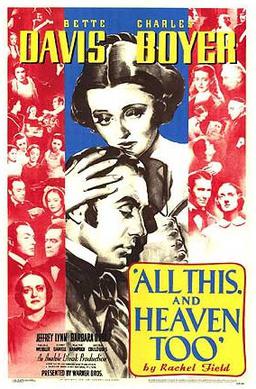
Cast: Bette Davis (Henriette Deluzy-Desportes), Charles Boyer (Duke Charles de-Praslin), Barbara O’Neil (Fanny Sebastiani de-Praslin), June Lockhart (Isabelle de Choiseul-Praslin), Virginia Weidler (Louise de Choiseul-Praslin), Jeffrey Lynn (Reverend Henry Martin Field), George Coulouris (Charpentier, Harry Davenport (Pierre), Montagu Love (Army General Horace Sebastiani), Helen Westley (Mme LeMarie), Henry Daniell (Broussais)

In the 1840s, Henriette (Bette Davis) arrives as governess at the home of the Count de-Praslin (Charles Boyer). She’s calm, collected, patient and caring: in short she’s everything that the count’s wife Fanny (Barbara O’Neil) is not, and it doesn’t take the count long to work it out. With Henriette swiftly becoming a second mother to his four children, the count and Henriette find themselves falling, unspokenly, in love. But Fanny isn’t fooled – and neither is the gutter press – and as scandal brews, the count takes drastic action to stop his wife, leading to a legal case that will shock France.

All This, and Heaven Too was conceived as a sweeping romance to rival Gone with the Wind. Money was lavishly splashed on sets and costumes (Bette Davis has no fewer than 37 costumes in the film, averaging at one every five minutes). Based on a famous murder case – that some felt had contributed towards the anti-monarchy atmosphere that led to the revolution of 1848 – All This, and Heaven Too had everything on paper to challenge Gone with the Wind in romance stakes. So why doesn’t it?

There is something too restrained, too slow and controlled about the film. It’s overlong – the original cut was over three hours, reduced to 2 hours 20 minutes – and takes a very long time to get going. The two stars underplay very effectively – with Davis cast very successfully against type as a mousey, rather timid Jane Eyre-ish figure – but it also means that the sort of grand romance the film is aiming for never quite takes fire, for all the careful shots of burning flames between the two lovers as they discuss their romantic predicaments in roundabout terms.

Litvak’s film saddles itself with a framing device that, while accurate to the real-life story, adds very little. The film opens with Henriette teaching children in America – children who have no respect for her, having heard whispers of her scandalous past – which leads into her telling the story to them (and us) about her past. The film returns to this framing device at the end, but as a whole it provides very little insight or interest to the core thrust of the film’s action. The film also wastes time on Jeffrey Lynn’s Reverend (Heinrette’s future husband), a relationship that seems largely in there to absolve Henriette of any possible indirect responsibility for the murder (she can’t be a hussy, she marries a man of the cloth!).

A large chunk of the film is designed to minimise what was a major scandal that rocked French society. This was a (possible) sexual affair between an unhappily married aristocrat and the governess to his children. It culminated in the countess being stabbed and beaten to death and her blood-stained husband found on the scene, claiming he had fought and chased away an intruder (which, writing it down, is basically the plot of The Fugitive). He never confessed, but committed suicide via arsenic in prison a few months later. Henriette was arrested as an accessory (presumably for encouraging the count to kill his wife) but released.

This should have been racy, racy stuff – but the film shies away from it. It’s probably linked to the expectation that the Hays Code would never accept the idea of Henriette as an adulteress who never goes unpunished. The possible Therese Raquin style set-up is instead translated into a more Jane Eyre model, with the employer in love but the servant too noble to act on her feelings and expose herself to disgrace. The film does pull no punches in making clear that the count committed the crime (the camera zooming in on Boyer’s starring eyes as he advances on his pleading wife) but since he was always destined to meet a historical punishment (he helpfully absolves Henriette on his deathbed) there were no concerns there.

All This, and Heaven Too can’t have a passionate, lusty drama so it avoids any overt spark between Boyer and Davis. Both actors play this unspoken attraction extremely well, but the film has to work overtime to get drama out of their several scenes of standing carefully apart or side-by-side, talking about everything except their own feelings. Boyer, as ever, is first class: his expressive eyes and beautiful ability to listen and react is as perfect for an unspoken romance, as it is for a man who becomes convinced murder is his only escape. Davis’ meeker, Joan Fontainesque role suits her extremely well, even if it disappoints those expecting fireworks.

Those fireworks come from Barbara O’Neil instead, raving and unreasonable as a woman driven to the edge by this semi-imagined affair, in an energetic performance that gained one of the film’s three Oscar nominations. But the film’s strange momentum affects her too: she is left to repeatedly hit the same notes over again, as the film repeats its established set-up over and over for 90 minutes before she is murdered (then squashes everything connected to the historical scandal and the murder trial into the final 40 minutes).

It’s productions standards are high and it’s well shot by Gone with the Wind cameraman Ernest Haller. There is some beautiful use of shadows and several ball scenes are expanded with some gorgeous use of mirrors. It ticks many of the boxes you expect a period romance to have, but is fatally hampered by its caution and by its restrictive narrative choices. It ends up feeling long and drifts too often through its build-up, forcing it to rush its pay-off. All of this contributes to its lack of challenge to GWTW in the romance stakes.

The Great Dictator (1940)

The Great Dictator (1940)

The Little Tramp takes down Hitler in this iconic satire on the dangers of over-mighty strong-men

Director: Charles Chaplin

Cast: Charles Chaplin (Jewish barber/Adenoid Hynkel), Paulette Goddard (Hannah), Jack Oakie (Benzino Napolini), Reginald Gardiner (Schultz), Henry Daniell (Garbitsch), Billy Gilbert (Herring), Maurice Moscovich (Mr Jaeckel), Emma Dunn (Mrs Jaeckel), Grace Hyle (Madame Napolini), Carter de Harven (Bacterian ambassador), Bernard Gracey (Mr Mann)

They were born four days apart and had the two most famous moustaches of the 20th century. There the similarities end. One became the world’s most beloved comic, the other its most reviled bogeyman. Chaplin and Hitler were bound together in people’s minds for a decade before Chaplin turned his revulsion at Hitler into satire: The Great Dictator sees him play both a version of his Little Tramp (here reimagined as a Jewish barber) and a version of the Fuhrer (as a temper-tantrum-throwing, hatred-spewing, lunatic). But it also sees Chaplin effectively playing himself, capping the film with a famous humanitarian appeal to the audience for a little peace and understanding.

The Great Dictator is, just about, a comedy. A Jewish barber (Chaplin) serving in the front lines for Tomania during World War One, saves the life of officer Schultz (Reginald Gardiner) but loses his memory. In a veterans’ hospital for 20 years, he emerges into a radically different Tomania, now an anti-Semitic, fascist dictatorship ruled by the barber’s doppelganger Adenoid Hynkel (Chaplin again). Hynkel rants and raves about racial purity and Tomanian expansion and his stormtroopers march through the Jewish ghetto. The barber is saved from death, first by Hannah (Paulette Goddard) and then by Schultz, now a senior leader in the new Tomania. But, as Hynkel eyes up an invasion of neighbouring Osterlich, what role can the barber play in stopping his plans?

Chaplin said later, if he had known the horrors Hitler’s regime would perpetrate, he would never have made the film. That would have robbed us of one of the sharpest, most astute satires of power-hungry radicalism ever made. But Chaplin made his stinging assault on Hitler – painting him as both ludicrous and insanely dangerous – at a time when Hollywood was still nervously appeasing Germany to keep access to its film market, before the true horrors were known.

Chaplin’s film is chilling enough with what it does know. Its depiction of bullying stormtroopers is deeply unsettling, for all they are also comic buffoons. These jackbooted bullies march into the ghetto, swiftly escalating from daubing “Jew” on shop windows to beating and shooting innocents. Hynkel casually orders the execution of thousands and day-dreams of a world where Jews are no more. We see Jews brutalised. Chaplin doesn’t pull punches in demonstrating fascism is a dangerous cancer in the world, or that the likes of Hynkel are appalling in their ruthless heartlessness.

That makes it a mark of genius that Hynkel is also the centre of a ridiculous farce painting him as inept, childish and laughable. Chaplin achieves this by masterfully channelling Hitler’s mannerisms – no less than you would expect from the most gifted physical comedian in history. We are introduced to Hynkel at a Nuremberg-style rally, delivering a speech in a hilarious mix of gobbledegook and random German words (“Werner Schnitzel!”) delivered with a perfect parody of Hitler’s physicality. (Marking the film’s careful balance between jokes and seriousness, this includes a spit-flecked rant against “Der Juden”). His grandiosity is further punctured with coughing fits and clumsiness.

That’s nothing to what we see of Hynkel off-stage. Prone to carpet-chewing rants, prat-fall prone with the manner of a bitter, insecure teenager, Hynkel is a bully elevated into a position of power, clinging to the trappings of office to give him a feeling of personal worth. Residing in a presidential palace that’s a perfect parody of Speer’s grandiose architecture, Hynkel is both laughable and deeply dangerous. Chaplin gets this mixture of the sublimely ridiculous and terrifying in every scene: most notably in Hynkel’s famous dance with an inflated globe. He bounces and cavorts with this like a romantic lover (appropriately themed to Wagner) – but it all grows out of his near sexual excitement at the idea of conquering and purifying the world of Jews (and brunettes).

The Great Dictator bursts that globe, but it also bursts the bubble of puffed-up strong men in a way that’s still highly relevant today. Hynkel and fellow dictator Napolini (a perfect capturing of Mussolini’s mannerisms, mixed with a “mamma-mia” accent from Jack Oakie) are both buffoons, who can’t even co-ordinate shaking hands in between their ludicrous salutes. These buffoons have the power and coldness to kill millions, but are both idiots. Napolini’s state visit is a hilarious game of one-up-manship, from Hynkel’s feeble attempts to intimidate Napolini in his office, to the two of them pathetically pumping their barber chairs higher and higher (to insane levels) to try and look the tallest. They even engage in a childish food fight while bickering over who will have the right to invade Osterich. Vanity, childishness and homicidal nation-destroying all hand-in-hand.

To counter his brilliant deconstruction of Hitler, Chaplin deployed his Little Tramp character in a new guise, here re-imagined as a Jewish barber, but with the same mix of good intentions and bumbling clumsiness. There is classic Chaplin business – his shaving of a client perfectly in time to Brahm’s Hungarian Dance No 5 is pretty much perfection – but also darker material. The Barber is saved from lynching, nearly gets roped into a suicide attack on Hynkel and winds up in a concentration camp. This is the Tramp’s war: his decency used to point-up the hideousness of Hynkel even more.

And, in case we miss the point, Chaplin plays a third character in the final five minutes. With Hynkel in prison (mistaken for the Barber), the Barber-as-Hynkel takes his place to speak to Tomania. He’s got the Barber’s soul, Hynkel’s appearance… but his words are Chaplin’s. Talking direct to camera – just as the Barber glances at the fourth wall throughout – Chaplin makes an impassioned plea for peace, like the curtain speech of a classical actor. He was begged not to do it (it later lead to him being denounced as a Commie) – but Chaplin was making the film to make this point. It was all very well to make Hynkel look stupid, but equally important to put forward an alternative vision, one of hope and faith in mankind’s decency. The speech may be on the nose (probably a little too much), but Chaplin delivers it with the intensity of someone who passionately believes every word he is saying – and at least it serves as a culmination of themes and ideals the entire film espouses among the jokes, rather than a blast from the blue.

The Great Dictator is over-long (at over two hours), and some of its comic moments are more successful than others. But the sequences that deconstruct Hitler are almost perfect (and feature superb support from Daniell and Gilbert as lupine Goebbels and cry-baby Goering parodies) and the film balances hilarious farce, biting political wit, and an earnest despair at the horrors of dictatorship with just the right touch of hope.

Chaplin’s genius combined with his passion created a landmark, brave film. Few others could have balanced its tonal shifts with such deft skill and perhaps no other performer could have been both so funny and so appallingly destructive. Hitler banned the film, but succumbed to curiosity and arranged a private screening. No one knew what he thought of it – but he watched it twice.

Watch on the Rhine (1943)

Watch on the Rhine (1943)

Dialogue heavy, drama light, war-time propaganda, that was already dated by the time it was released

Director: Herman Shumlin

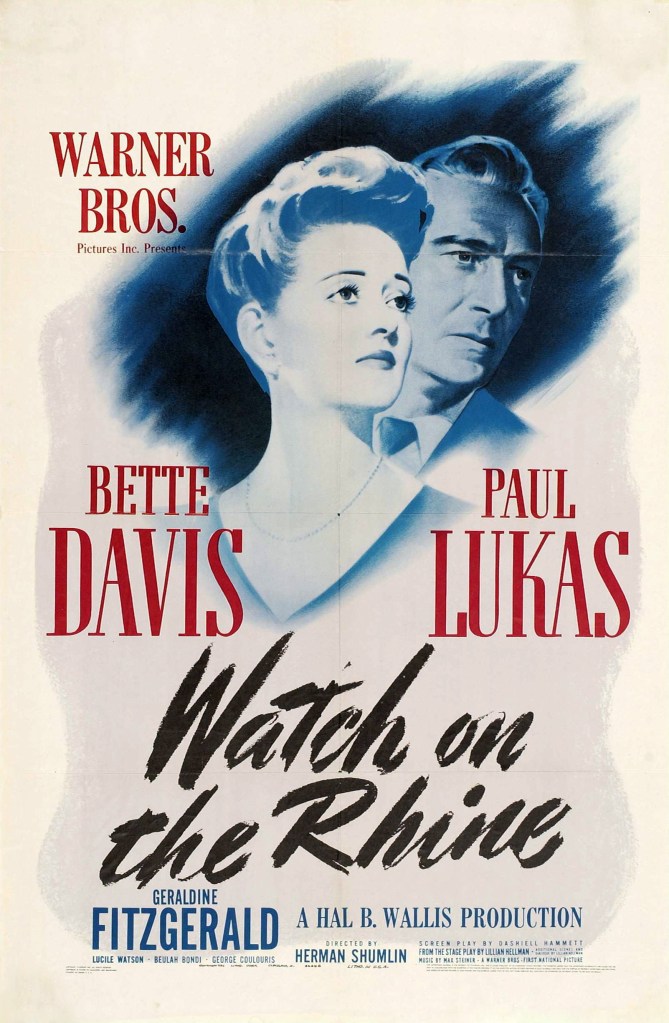
Cast: Bette Davis (Sara Muller-Farrelly), Paul Lukas (Kurt Muller), Lucile Watson (Fanny Farrelly), Geraldine Fitzgerald (Countess Marthe de Brancovis), George Coulouris (Count Teck de Brancovis), Beulah Bondi (Anise), Donald Woods (David Farrelly), Donald Buke (Joshua Muller), Henry Daniell (Baron Phili von Ramme), Kurt Katch (Blecher)

In 1940, dedicated anti-fascist campaigner Kurt Muller (Paul Lukas) arrives in the USA with his American wife Sarah (Bette Davis) and their children. They are welcomed by Sarah’s mother Fanny (Lucille Watson), but soon discover that America has little understanding of the dangers of Nazism – and that there is in danger in their refuge. Fanny’s other houseguest is Romanian diplomat Teck de Brancovis (George Coulouris) – whose wife Marthe (Geraldine Fitzgerald) is quietly in love with Sarah’s brother David (Donald Woods) – and he has every intention of selling Muller out to the Nazi embassy if he doesn’t pay him thousands of dollars. Can the Mullers escape?

Watch on the Rhine is adapted from a play by Lilian Hellman. Hellman was otherwise engaged and unable to write the script, so her long-term lover Dashiel Hammett came on board to open up the one-set play into a movie, with Hellman providing some additional speeches. Their best efforts can’t hide the fact this is a painfully worthy, preaching-to-the-choir propaganda piece. It’s packed with on-the-nose (if well-written) speeches and horrifically slow in its pacing and plotting.

First staged in early 1941, the original play did at least serve a clear purpose. It preached about the dangers and evils of fascism to a nation watching Europe tear itself apart. It was a heartfelt cry to understand that Hitler and his cronies were wicked men determined to let all the liberties America held dear burn. Its characters speechified at length about the conditions in Europe, the loss of freedom and the wickedness and danger of a political movement many in America felt was basically someone else’s problem.

This would have carried some real power as a rallying cry if the play had been bought to the screen in 1941. But, by 1943, American soldiers were already fighting Nazi forces in Africa and Italy: it hardly felt necessary to cry for intervention. Even by 1943, it was a period piece, looking back at a moment in time when fashionable types went to the German embassy for fancy dinners with black-shirted diplomats. And certainly, viewing it now, even its 1943 perspective looks slightly naïve and uninformed, in light of the horrors we now know were taking place.

Shorn of its original purpose to educate, the film comes across as a mix of heavy-handed propaganda (“This is why we fight!” it might as well be saying) and civics lesson.  It’s because, frankly, there is very little drama at all to take the place of the political lecturing. It’s fair to compare the film to Casablanca – another film that calls for action, released after a point when action had been taken. That could have been a propaganda piece: instead it’s a fast-paced, drama packed mix of romance and conspiracy thriller where Paul Henreid (remarkably similar to Lukas’ character here) struggles to gain the papers to escape from Vichy with a life-and-death urgency this film never musters.

Although Watch on the Rhine eventually works in a blackmail plot, where Muller’s plan to return to Europe and take on the leadership of the anti-fascists is threatened by George Coulouris’s smarmy diplomat, it takes so long to get to this (nearly an hour of screen time) your attention may well already have been lost.

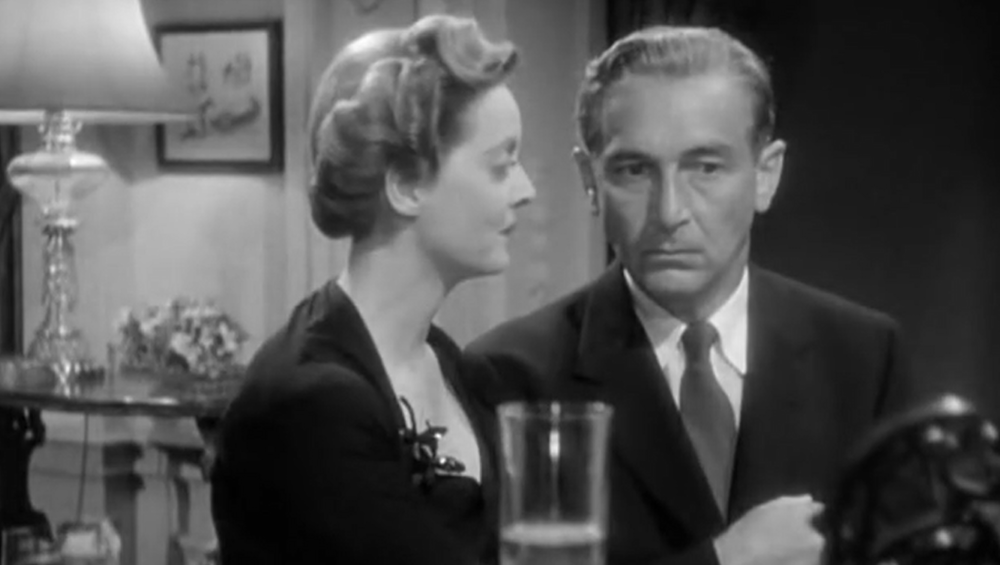
Watch on the Rhine was directed – rather flatly, in one of his only two films – by it’s original Broadway director Herman Shumlin (heavily assisted by cinematographer Hal Mohr). The cast included several actors recreating their roles, including Lukas, Coulouris and Lucille Watson. Obviously, this left it short of heavyweights for the box office so the studio bought in Bette Davis to play Muller’s wife, expanding the role heavily (and insisting, against her protests, that she get top billing). Davis – exhausted after working intensely on Now, Voyager – took the part out of commitment to its message, but struggled with both Shumlin and serious personality clashes with Lucille Watson over their wildly differing politics.

Shumlin was unable to rein Davis in and Watch on the Rhine features one of her more melodramatic performances. Almost every scene features her staring off into the middle distance, voice trembling (not helped by Max Steiner’s music swelling magnificently practically every time she speaks). It’s a performance that never quite rings true, especially when compared to the underplaying from Lukas, who won the Best Actor Oscar for his low-key, restrained performance. He is quiet and genuine – and his pain and desperation when driven into a terrible moral choice is moving – but it’s hard to shake the feeling this fine performance was rewarded more for the words from his lips (especially since he beat Bogart in Casablanca). Watson was also nominated, playing the sort of role beloved by awards ceremonies, an eccentric old snob with a hidden heart of gold.

Watch on the Rhine is a rather dull civics lesson full of worthy speeches and very short on drama. It also has some of the most irritating child actors you will ever see (already infuriatingly precocious, the kids communicate their German background with stilted, precise accents). Even in 1943, its moment had passed and it never manages to create any dramatic point compelling enough to make you want to rewatch it. A film less worthy, and more willing to indulge in espionage thriller, would have been a distinct improvement.

Witness for the Prosecution (1957)

Witness for the Prosecution (1957)

A court case hinges on a heck of a twist or two in Wilder’s well-mounted Christie adaptation

Director: Billy Wilder

Cast: Tyrone Power (Leonard Vole), Marlene Dietrich (Christine Vole), Charles Laughton (Sir Wilfrid Robarts), Elsa Lanchester (Miss Plimsoll), John Williams (Mr Brogan-Moore), Henry Daniell (Mr Mayhew), Ian Wolfe (Carter), Torin Thatcher (Mr Myers QC), Norma Vaden (Emily Jane French), Una O’Connor (Janet McKenzie), Francis Compton (Justice Wainwright)

Agatha Christie is better known for detectives who unearth murderers, not lawyers defending those accused in court. But that doesn’t mean Witness for the Prosecution, a very effective courtroom drama, shirks on classic Christie flourishes. Witness has a single stonking twist that huge numbers of people never see coming (the end of the film comes with a sonorous warning entreating people not to spoil the surprises, the sort of anti-spoiler warning that would make Marvel proud).

Leonard Vole (an unlikely Tyrone Power) is the soldier and would be entrepreneur, who stands accused of the murder of a rich older woman (Norma Vaden) who conveniently left Vole her money. Defending Vole is richly-toned, highly-skilled barrister Sir Wilfrid Robarts (Charles Laughton), recovering from a heart attack and doing his very best to dodge the overly attentive concern of his private nurse Miss Plimsoll (Elsa Lanchester). Vole’s case looks difficult, with much circumstantial evidence stacked against him and worries about whether his German wife Christine (Marlene Dietrich) will stand by him or not?

Billy Wilder directs with a smooth professionalism – he later modestly claimed of his Oscar nomination, that it was like giving the crew that moved Michelangelo’s Pietá an award for best sculpture – but his real contribution (with fellow writer Harry Kurnitz) was sharpening the dialogue, expanding Christie’s characterisation (in particular adding much more shrewdness and eccentric pomposity to Robarts) and upping the zip of Christie’s original. It certainly met with the approval of the grandé dame of crime who listed this, and Lumet’s Murder on the Orient Express, as the only two adaptations of her work she liked.

The film is largely based around the courtroom dynamics, as witnesses are examined and cross examined and facts gently dragged into the light. There is plenty of quality theatrics, not least since Robarts and his opposition counsel Myers (a fearsome Torin Thatcher) are more than a little skilled at keeping things sparky for the jury. There is a hint of cynicism in Witness: Robarts needs to convinces himself of a client’s innocence, but there is a suggestion this is because it helps him work out how to effectively defend them, less because of any moral reasons. And certainly, the entire mechanics of the trial operates largely as a show, an entertainment with jokes and compelling stories offered by both sides.

There is of course no better showman than Robarts. Played by Charles Laughton in one of his last great – and possibly most enjoyable – performance, Robarts is an affectionate, witty performance of carefully studied eccentricity and barking bluffness. But there is also a vulnerability in him: Robarts needs to belief in his own legend and his ability to separate truth from lie (he even prides himself on his “monacle test”, using a reflection from it to shine in suspects eyes, believing a liar will get flustered and trip themselves up – needless to say it turns out to be faulty).

Wilder – with Laughton as a brilliant collaborator – transforms Robarts into a far more forceful and charismatic figure, making the late plot twists even more of a shock. If someone as professionally adept and plugged in as Robarts can be taken in, what chance do the rest of us have? Oscar-nominated, Laughton, a twinkle permanently in his eye, powers through moments of high court theatricality but also heartily enjoys the banter of real life, taking a real delight in his schoolboy mischief as he persists in having his own way.

A large part of that, is a running of dodging treatments and sticking to a diet of things that are bad with him. Wilder’s finest change from the original, in introducing Robart’s ill health and his love-hate relationship with his nurse Miss Plimsoll. Who is, of course, played by Elsa Lanchester, Laughton’s real-life wife. The chemistry between these two is spot-on, with Lanchester (also Oscar nominated – and unlucky to lose to Miyoski Umeshi in Sayonara) in particular playing the combination of world-weary exasperation and growing affection for Robarts perfectly.

Combined with those twists, it’s the interplay between these two that is the real highlight in the film – well that and the twists. Many of those twists are bound up with Marlene Dietrich’s character. Dietrich gives one of her most colourful and wide-ranging performances here. The secrecy of the film probably stopped her from landing an Oscar nomination (much to her regret – Wilder even apologised to her). Power is miscast – he lacks the required natural innocence and looks both too old and incongruously American – but fortunately spends most of the film in the dock.

The final twist is a doozy, perfectly delivered by the actors and Wilder. Wilder directs throughout with quiet authority – as well as fine sense of humour, in particular a stair lift scene that sees Robarts using the device as a tool to dodge being told what to do. Laughton and Lanchester in particular are wonderfully funny. It’s got some excellently handled courtroom tricks and you won’t forget how it turns out. It’s a solid example of Wilder’s skill behind the camera – but a very enjoyable film and a must for Christie fans.

The Philadelphia Story (1940)

The Philadelphia Story (1940)

Three stars are at the top of their game in this classic screwball-style comedy

Director: George Cukor

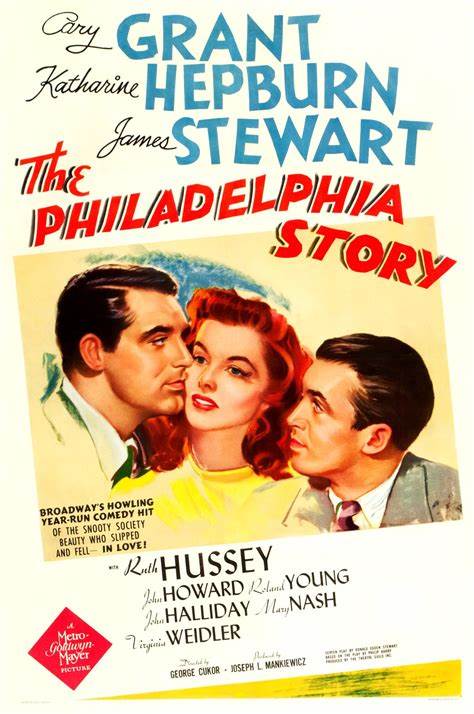
Cast: Katharine Hepburn (Tracy Lord), Cary Grant (C.K. Dexter Haven), James Stewart (Mike Connor), Ruth Hussey (Elizabeth Imbrie), John Howard (George Kittredge), Roland Young (Uncle Willie), John Halliday (Seth Lord), Mary Nash (Margaret Lord), Virginia Weidler (Dinah Lord), Henry Daniell (Sidney Kidd)

In 1938 Katharine Hepburn’s career was over. After the flop of some now forgotten (wait, hang on…) screwball comedy called Bringing Up Baby, she took centre place on the Independent Theatre Owners list of “Box Office Poison”. Flops after flop hit Hepburn (all of them are classics today of course), and the studios did their damnedest to drop her. So, Hepburn returned to the stage, developing The Philadelphia Story with Philip Barry – and creating a lead role for herself that would play to all her strengths and help win back public affection. And which (with a little help from Howard Hughes) she would own the rights for: so, if and when they wanted to make a film, she could insist she starred. The rest is history.

The Philadelphia Story is perhaps the best example of the Code-approved genre, the “remarriage comedy” (because the code wouldn’t countenance the idea of a couple cheating). Daughter of a rich Philadelphia family, Tracy Lord (Katharine Hepburn) is to marry her dull fiancée George Kittredge (John Howard). George’s main attraction is he’s the complete opposite of her charismatic ex-husband C.K. Dexter Haven (Cary Grant). Dexter crashes the build-up to the wedding, bringing along reluctant society journalist (he’s really a renowned short-story writer) Mike Connor (James Stewart) and press photographer Elizabeth (Ruth Hussey), promising to introduce them as distant friends of the family so they can report on the wedding. But then Tracy finds herself drawn to Dexter and Mike and George as well – who will she end-up walking down the aisle with?

Perhaps the best thing about The Philadelphia Story is that you really don’t know who it will be – and the film successfully keeps the question both up-in-the-air and deeply entertaining. There even seems a chance (unlikely as it is) that Tracy really will stick with George (a tedious nouveau riche businessman with priggish middle-class morals who can’t even mount a house – imagine!). Directed with the sort of unfussy smoothness Cukor excelled in – and helped get the best out of actors – it’s a superb comic treat, with a sparkling adaptation by Donald Ogden Stewart.

At the heart of it, Hepburn is superb in a role that riffs considerably off her own public personality. Hepburn was smart enough to know most audiences saw her as far too clever by half. Her sharpness, acidity and no-nonsense unwillingness to suffer fools had made her hard to relate to. Quite correctly, she felt she needed a role where she could “fall flat on her face”. Which , by the way, is more or less the first thing she does – a hilarious prat fall while throwing Cary Grant’s Dexter out, him responding to her snapping his golf clubs by gently putting his hand on her face and pushing her off-balance (only Grant could have got away with that by the way).

Tracy Lord is a version of the Hepburn many people felt they knew. Tracy genuinely believes she’s smarter and better than anyone else, with unquestionable judgment and superior morals. The film is a gentle exercise in pricking her balloon, showing her she is as prone to mistakes, prejudice and, above all, getting giddy and silly in love, as anyone else. This is a fiercely practical woman, who sets high standards for those around her, suddenly finding herself falling in love with three men at once. It’s the exact flighty lack of commitment she spent years condemning her estranged father for.

This is all scintillatingly played by Hepburn, at her absolute best. The rat-a-tat dialogue (with its classic, Wildean comedy of errors and mis-identification) is under her complete control. She’s delightful when, under the influence, she flirts with Mike – Hepburn showing the world (clearly they missed it in Bringing Up Baby) that she could be as silly and vulnerable as the next girl. Hepburn knew people wanted to see her personae deconstructed, and for her character to learn that (in the words of another comedy) nobody’s perfect. It works a treat – and this remained one of her greatest (and funniest) performances.

It helps she had two of the greatest to riff off. Cary Grant is at his light-comedic best here, turning Dexter – a manipulative reformed alcoholic it would be easy to dislike – into the embodiment of sophistication, charm and playful wit, who we adore as much Tracy’s family does. James Stewart won an Oscar and matches Grant gag-for-gag in a comedic masterclass. He’s a master of hilarious comedic and physical reactions – and lovable enough to turn a chippy newspaperman into a sort of hilariously droll sage. His ‘drunk’ acting is also some of the funniest you’ll see on film (even Grant can be spotted cracking up just a little as Stewart hiccups his way through a scene).

Hepburn’s chemistry with both actors is sublime. Her romancing scenes – both the worst for wear for drink, but also empowered to say things they’ve clearly been burying all day – with Stewart are not hugely romantic, but also rather sexy (Cukor’s direction here is also exquisitely spot-on). It’s a masterclass in on-screen flirtation – and you can see why George gets as pissed off as he is. Hepburn and Grant meanwhile bicker and taunt each other with all the chemistry of a match and a fire.

Each scene has a bounce that teeters between heart-felt and farcical. The set-ups are frequently silly – but they work because they hinge on characters that feel immensely real. Every performer is spot on – credit also goes to a superb Ruth Hussey, one of the few grown-ups in this weekend of flirting, feuding children. Set in a sumptuously rich Philadelphian mansion, for all of Mike’s chippy criticism it’s a celebration of the smooth upper classes over hard-working, dull prigs like George. Its sole fault might be it’s too long (at just under 2 hours, a few scenes and set-ups outstay their welcome). But, as a classic Hollywood comedy, it’s pretty much the top of the class. Box-office poison no more.

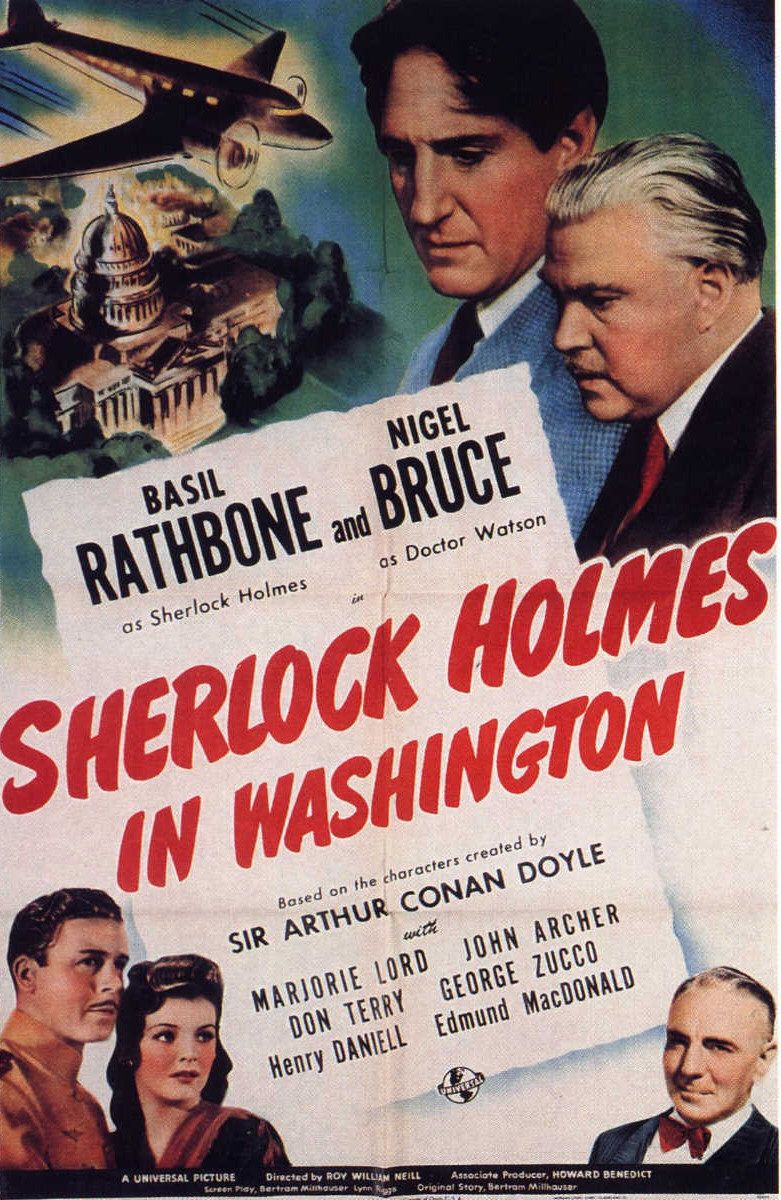
Sherlock Holmes in Washington (1943)

Holmes and Watson have a few more tourist destinations pointed out to them. Altogether now: “Magnificent!”

Director: Roy William Neill
Cast: Basil Rathbone (Sherlock Holmes), Nigel Bruce (Dr. John Watson), Marjorie Lord (Nancy Partridge), Henry Daniell (William Easter), George Zucco (Heinrich Hinkel), John Archer (Lt. Peter Merriam)

With Sherlock back on our televisions, it’s always great to revisit the old Basil Rathbone classics for a neat comparison. They also serve as reminders to us that setting the stories in the modern day is far from a new idea as, in this picture Holmes takes on a Nazi spy ring in the heart of the American capital.

Of course anyone watching with even an ounce of experience of watching films will quickly suss out nearly everything in the film within seconds. A British agent goes missing en route to Washington carrying some crucial government secrets (in a rather nifty opening sequence we follow our antagonists trying to work out who among the passengers on a train is the British agent). Holmes is called in and the trail soon leads to Washington. The game’s afoot!

It’s all quite good fun clearly inspired by Hitchcock and Chandler, odd as it is to see Holmes running around with American gumshoes or flick Watson a thumbs up. Rathbone carries it all off with style although his deductions are elementary to say the least  (the British agents home is full of photography and microfilm equipment – I wonder what he might have done the letters…) and he has a lot of fun with a few snide put downs and later when disguised as a bumbling Brit in a antiques shop (don’t ask). His smooth, cool authority makes the final scenes really work.

There is also some quite effective comic relief from Nigel Bruce’s Watson, here obsessed with Americana, seen picking up slang, slurping milkshakes and chewing gum. In fact there is a touching pride from the film makers for their travelogue sections, the camera lingering on aerial shots of buildings and stills of famous buildingw. Holmes arrival sequence is almost completely given over to shots of Washington landmarks followed by Rathbone stressing their “magnificance” to Watson and the audience. Later of course Rathbone sings America’s praises and uses a Churchill quote to show that “we are all allies together”. Yay for the allies!

This is silly stuff and highly predictable, but it’s professionally made and bounds along. A sequence at a party mines a lot of humour from the casual passing around of a match book containing the vital microfilm. Most of the American support is pretty forgettable (although Clarence Muse gives a great cameo as a bus boy), but Henry Daniell makes a good heavy and George Zucco’s late introduction as a master agent makes a decent antagonist. Rathbone is authoritative amongst the nonsense and Bruce actually quite fun (though his Watson remains a moron). It’s a fast moving, totally predictable, rather silly spy film that happens to have Sherlock Holmes in it. You’ll enjoy it. And if you forget it don’t worry – you’ll work it all out again as soon as you see it.