Tag: John Wayne

The Shootist (1976)

The Shootist (1976)

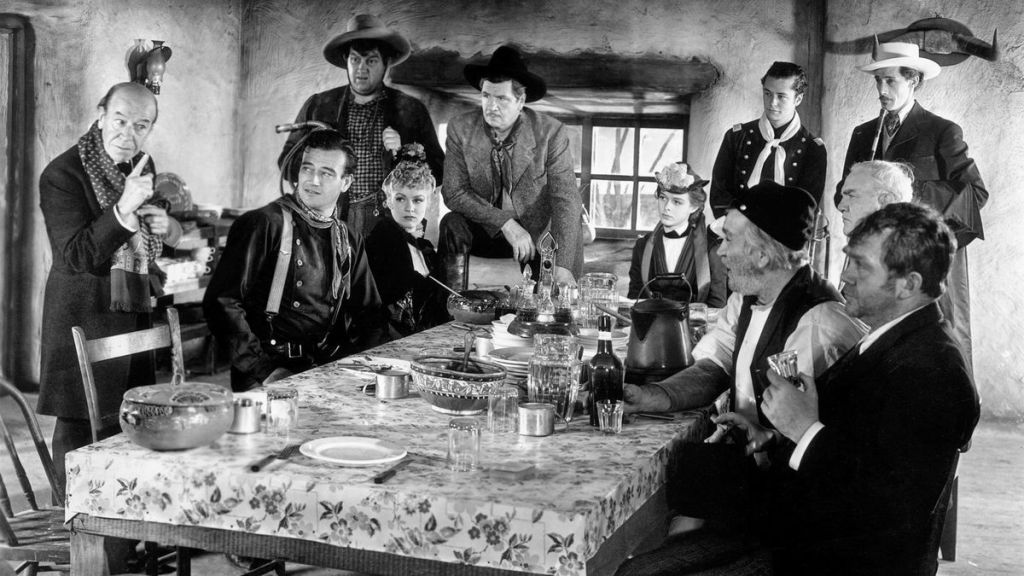
Wayne’s final elegiac Western as a dying gunslinger tries to go out on his own terms

Director: Don Siegel

Cast: John Wayne (JB Brooks), Lauren Bacall (Bond Rogers), Ron Howard (Gillom Rogers), James Stewart (Dr Hostetier), Richard Boone (Sweeney), John Carradine (Beckum), Scatman Crothers (Moses), Richard Lenz (Dobkins), Harry Morgan (Marshall Thibido), Sheree North (Serepta), Hugh O’Brian (Pulford)
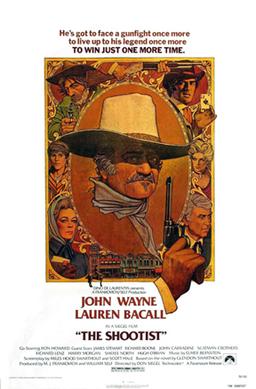
It’s 22nd January 1901 and Queen Victoria has passed. Automobiles are starting to chug down roads, towns filled with electricity, telegraphs and trams, no longer look like the beat-up, dust-bowls the likes of Wyatt Earp policed. It’s a new age and the end of the Wild West. Which also means it’s the end of the gun-toting cowboys, like JB Brooks (John Wayne), who rode freely and grabbed their six-shooters faster than anyone else. Brooks rides into Carson City, his cancer terminal, his life lonely and full of enemies, wanting to live (and die) in his final week on his own terms.

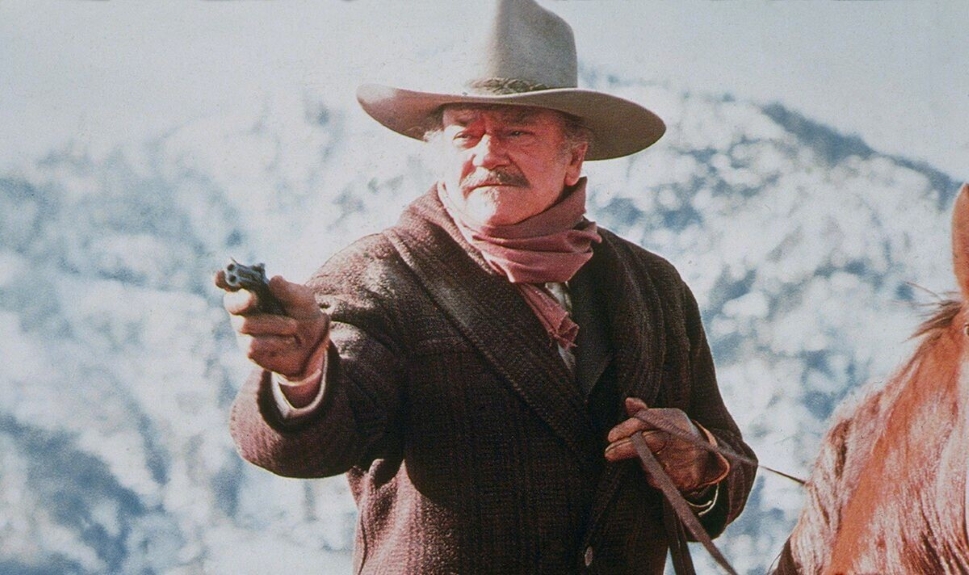
You don’t need to be a psychologist to see more than a few parallels between Brooks and the man playing him, Hollywood legend John Wayne. Wayne himself was struggling with a cancer that claimed his life three years later and you could argue he too had outlived his time. The glory days of the Westerns were gone along with men like John Ford who built it. The Shootist draws huge piles of its elegiac emotion from this – with even more retrospectively added when it turned out to be the star’s swan song.

It’s strange to think Wayne wasn’t even first choice for the role (the producers were worried his health might not last), because he is so perfect for it that the line between Wayne and Brooks seems paper thin. Wayne still has the spark under the weakness of a sickly one who downs laudanum and relies on a cushion to sit comfortably. He’s a vulnerable man, raging quietly against the dying of the light. Lonely, devoid of friends whose entire life’s possessions are wrapped up in a saddle bag. But he’s also dangerous who can still be extraordinarily ruthless. He kills without hesitation when called on and resorts to violent threats (backed with a gun) when he needs to. But he needs to believe there is more to him than this.

Brooks is a man ‘scared of the dark’, quietly terrified about how he will be remembered. He sees himself as a ‘shootist’, a prowling man’s-man who shot when he needed to. What he doesn’t want to be seen as is a ruthless blood-soaked assassin dealing death left-right-and-centre. He humiliates a journalist (the weasily Richard Lenz) who wants a blood-and-guts killer’s story, sending him packing with a gun in his mouth. He turns away a funeral director (John Carradine, a lovely cameo) who offers a free funeral so he can sell tickets to see the dead killer. He’s desperate for some sort of positive legacy.

This overlaps with Wayne who, if he didn’t know this was his final film, surely knew it was probably his final Western. Siegel opens with a montage from Wayne films past (including Red River, Hondo and Rio Bravo) before crashing into a wide-screen, Fordian landscape that sees Wayne swiftly get the better of a would-be robber. Wayne’s performance is, whatever you think of him, undeniably heart-felt. His drawling pain-wracked face, full of fear and frustration, when told his fatal diagnosis by an old friend (an almost equally emotional cameo from that other drawling icon of the Western, James Stewart) is very moving.

You can see Brooks regrets when an old flame (Sheree North) arrives to suggest they marry – and the hurt when it becomes clear she only wants marriage so she can sell his story. The closest thing he has to a friend – Stewart’s doctor – he hasn’t seen for fifteen years (coincidentally the exact length of time since the two actors shot The Man Who Shot Liberty Valance). In fact it becomes clear the people in his life are enemies and rivals. From Richard Boone’s weasily rancher who blames Brooks for his brother’s death to Hugh O’Brian’s suave gambler who wants the chance to take down a legend. Even that’s better than Harry Morgan’s nervous Marshal, who bursts into relieved laughter when he hears cancer is going to take care of Brooks so he doesn’t have to.

In his final week, Brooks finds some sort of connection not based on fear, envy or greed with Lauren Bacall’s (yet another golden-voiced legend) Bond Rogers, a widow with a tearaway son Gillom (Ron Howard), whose initial suspicion of Brooks soften. Bacall is excellent, full of humanity and sharp no-nonsense sincerity that hides a warmth you feel she’s had to crush down over years of holding hearth-and-home together. Brooks and Mrs Rogers form a quiet friendship, based on mutual loneliness, both actors playing beautifully in a series of quiet, sombre but gentle scenes, with Bacall drawing even more humanity from Wayne.

Mrs Rogers’ son, Gillom, becomes the embodiment of Brooks battle for a legacy. Ron Howard makes Gillom a cocky, immature dreamer, exactly the sort of guy who’d lap up the sort of blood-and-guts stories Brooks is worried his life will be turned into. He’s wowed when Brooks – alerted by his pain-ridden body keeping him awake – takes down two would-be assassins. But his mother is terrified that he could lead the wrong sort of life. And, eventually, Brooks himself starts to worry that all he’s doing spending time with him is leading Gillom towards an end like his: lonely and dying in a guest house, surrounded by strangers. It becomes the thematic struggle of the film, which is handled (like the rest) with an unlaboured patience.

It’s all building of course to Brooks deciding to go down on his own terms, clutching a gun not a laudanum bottle. The Shootist ends with a blood-soaked shoot-out that we all suspect its heading to, expertly assembled by Siegel. Siegel’s direction throughout is faultlessly smooth, avoiding all temptation to layer on sentimentality but instead let the sad tiredness of Wayne carry the emotion without loading the deck. It’s a beautifully done, quiet, restrained and perfectly elegiac picture that makes for a perfect final role for John Wayne. A sad, touching film about a strong-willed man fighting a last battle he can’t win, it’s a compelling watch.

The Alamo (1960)

The Alamo (1960)

Wayne’s historical epic is a mediocre labour-of-love that takes a very, very long time to get to its moments of interest

Director: John Wayne

Cast: John Wayne (Col Davy Crockett), Richard Widmark (Col. Jim Bowie), Laurence Harvey (Col. William Barrett Travis), Richard Boone (General Sam Houston), Frankie Avalon (Smitty), Patrick Wayne (Captain James Butler Bohham), Linda Cristal (Graciela), Joan O’Brien (Sue Dickinson), Chill Wills (Beekeeper), Joseph Calleira (Juan Seguin), Ken Curtis (Captain Almaron Dickinson), Carlos Arruza (Lt Reyes), Hank Worden (Parson)

John Wayne believed in America as a Shining City on a Hill and he wanted films that celebrated truth, justice and rugged perseverance. To him, what better story of fighting against all odds and to the bitter end for liberty, than the Battle of the Alamo? There, in 1836, a few hundred soldiers and volunteers from the Republic of Texas bravely stood before an army of over two thousand Mexicans to defend the Texas Revolution’s independence from Mexico. Wayne put his money where his mouth was, pouring millions of his own dollars into bringing the story to the screen. Furthermore, he’d direct and produce himself, convinced only he could protect his vision.

The end result isn’t quite the disaster the film has gained a reputation for being – nor is Wayne’s directorial efforts as useless as his detractors would like. But The Alamo is a long, long slog (almost three hours) towards about fifteen minutes of stirring action, filled with pages and pages of awkward speechifying, hammy acting and painfully unfunny comedy. While a bigger hit than people remember, Wayne lost almost every dime he put in (he said it was a fine investment) and even a muscular series of favour-call-ins that netted it seven Oscar nominations (including Best Picture!) couldn’t disguise that The Alamo is a thoroughly mediocre film that far outstays its welcome.

Wayne collaborated closely with his favourite writer, James Edward Grant. Both had a weakness for overwritten speeches and there is an awful lot of them in The Alamo’s opening half as we await the arrival of the Mexicans. Wayne gets several speeches about the glories of the American way such as (and this is cut down) “Republic. I like the sound of the word…Some words can give a feeling that makes your heart warm. Republic is one of those words” or a musing on duty that takes up a solid five minutes (it’s ironic Widmark’s Bowie refers to Harvey’s Travis as a long-winded jackanapes, since Wayne’s Crockett has them both beat).

There is only so much portentous, middle-distance-starring talk one can take before you start twitching in your seat, even for the most pro-Republican viewer. With complete creative control, there was no one to tell Wayne to pick up the pace and trim down these scenes. So enamoured was Wayne with Grant’s dialogue, whole scenes are taken up with the Cinemascope camera sitting gently in rooms watching the actors pontificate about politics, strategy and duty at such inordinate length you long for the Mexicans to damn well hurry up.

For a film as long as this, there is an awful lot of padding. The first hour shoe-horns in an immensely tedious romantic sub-plot for the increasingly-long-in-the-tooth Wayne (who had been playing veterans for almost 15 years by now) with Linda Cristal’s flamenco-dancing Mexican. We know she’s a hell of a dancer, since we get several showcases for her toe-tapping skills as Crockett’s Tennessee volunteers wile away the evenings. There is a sexless lack of chemistry between Wayne and Cristel, re-enforced by Crockett’s gentleman-like rescuing of Cristel from a lecherous officer, and the whole presence of this sub-plot feels as like a box-ticking exercise to appeal to as many viewers as possible as does the casting of young heart-throb Frankie Avalon in a key supporting role.

This is still preferable to the rather lamentable comic relief from a host of Wayne’s old muckers, playing a collection of Good Old Boy Tennesse volunteers. These jokers swop wise-cracks, prat-falls, good-natured fisticuffs, but (inevitably) also drip with honour and decency. Chief among them is Chill Wills as Beekeeper, a scenery-chewing performance of competent comic timing that inexplicably garnered Wills an Oscar nomination. Wills made real history with an outrageously tacky campaign for the golden man, shamelessly publicly pleading for votes and including a full-page Variety advert (‘The cast of The Alamo are praying harder than the real Texans prayed for their lives in the Alamo for Chill Wills to win!’) that even Wayne denounced as tasteless.

Wayne believed the real Oscar nominee should have been Laurence Harvey as ram-rod stickler-for-form Colonel Travis, commander of The Alamo. He’s probably right (if you were going to honour anyone here), as Harvey’s abrasive style and stiff formality was a good fit for the role and he turns the brave-but-hard-to-like Travis into the most interesting character. He’s more interesting than Widmark’s rough-and-ready Bowie, who looks uncomfortable: he would have been better casting as Crockett. That role went to Wayne, after investors said his presence in a lead role was essential for the box office (reluctant as Wayne was, he still cast himself in the most dynamic, largest role).

There are qualities in The Alamo – and they are largely squeezed into the final thirty minutes as the siege begins in earnest. This sequence is very well done, full of well-cut action and shot on an impressive scale. The money is certainly up-on-the-screen – The Alamo built a set only marginally smaller than the actual Alamo and recruited a cast of actors not too dissimilar from the size of the actual Mexican army. (The only nominations The Alamo deserved were related to production and sound design, both of which are impressive). The relentless final stand is undeniably exciting – whether it’s worth the long wait to get there is another question.

The Alamo largely avoids vilifying the Mexicans. Their commanders may be little more than extras, but Wayne’s was aware that in the Cold War, allies were crucial so the film is littered with praise for the bravery, courage and honour of the Mexicans as battle rages (‘Even as I killed ‘em, I was proud of ‘em’ one volunteer muses). However, in many ways, The Alamo is incredibly simplistic and naïve about American history – especially the ‘original sin’ of slavery, the banning of which in Mexico was one of the main reasons for the Texans revolt. It’s hard not to feel it’s a bit rich for Wayne to make a big speech about freedom, when Crockett and co were literally laying down their lives for the Texan Republic’s right to keep slaves. The only slave in the film is so overwhelmingly happy with Bowie, he literally refuses his freedom and lays down his life to protect his master.

But then that’s because The Alamo is a proud piece of propaganda, celebrating a rose-tinted view of American History that avoids complexity and celebrates everyone as heroes. It’s not the disaster you might have heard about. It has its moments. But its still a dull, tedious trek.

Stagecoach (1939)

Stagecoach (1939)

Iconic action adventure, a very exciting chase film with a strong script and characters

Director: John Ford

Cast: Claire Trevor (Dallas), John Wayne (The Ringo Kid), Andy Devine (Buck Rickabaugh), John Carradine (Hatfield), Thomas Mitchell (Dr Josiah Boone), Louise Platt (Lucy Mallory), George Bancroft (Sheriff Curly Wilcox), Donald Meek (Samuel Peacock), Berton Churchill (Gatewood), Tim Holt (Lt Blanchard), Tom Tyler (Luke Plummer), Chris-Pin Martin (Chris), Francis Ford (Billy Pickett)

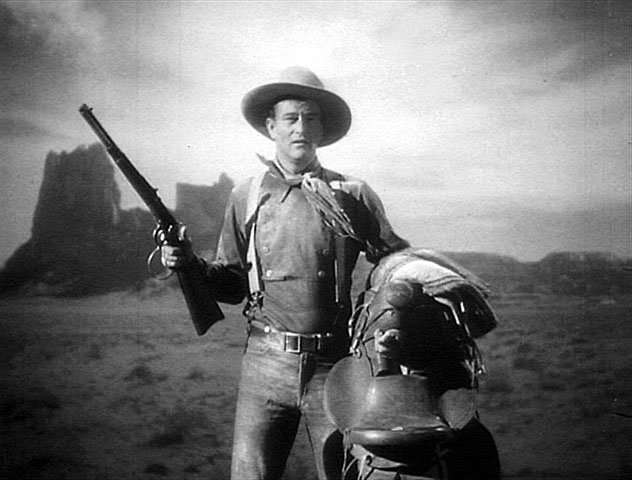
It might be the greatest star entrance of all time. Before Stagecoach, John Wayne was a minor leading man from a never-ending stream of oats-and-saddles B-movies. But, after one shot – a superb fast-paced zoom (so fast, the focus slips at one point) into the stoic face of Wayne, Winchester rifle twirling – that wasn’t going to be the case anymore. Stagecoach was Ford’s return to the Western – and he was bringing a friend along for the ride. After it, both director and star would become synonymous with the genre and Wayne would remain Hollywood’s Mayor-in-all-but-name.

Of course, that shot alone didn’t make Wayne a star (but, as you can imagine Andy Devine’s Buck wheezing “it sure helped, didn’t it”). What cemented the deal was what the hugely entertaining thrill ride Stagecoach is, a rollicking journey through Monument valley, crammed with just about anything you could want, from gun-battles and stunts to class commentary and arch dialogue. Like some sort of JB Priestley play, a regular smorgasbord of folks climb into a stagecoach to travel from Tonto to Lordsburg, facing a parade of dangers from Geronimo’s Apaches along the way – not to mention their own personality clashes and business to take care off in Lordsburg. All aboard!

We’ve got prostitute Dallas (Claire Trevor), run out of town by ‘blessed civilisation’ – much like drunken surgeon Dr Boone (Thomas Mitchell) – hoping for a new life. Army wife Lucy Mallory (Lucy Platt) trying to find her missing husband, escorted by Southern gent turned gambler Hatfield (John Carradine); both are more than a little uncomfortable sharing a carriage with a lady of the night. They probably wish the carriage had more people like bank manager Gatewood (Benton Churchill), although they might change their mind if they knew he was an embezzler. Sheriff Curly Wilcox (George Bancroft) is trying to catch escaped prisoner The Ringo Kid (John Wayne), who is himself keen to get to Lordsburg to take down the Plummer gang who killed his father and brother.

All of these well-drawn characters – including the timid whisky salesman (whose name no-one can remember) Peacock (well played by the suitably named Donald Meek) – are bought vividly to life by a strong bunch of actors working with a well-constructed script by Dandy Nichols, crammed with sharp lines and wit. It’s packaged together by Ford into a film that’s lean, plays out at a whipper-cracker pace and juggles several plots, threats and character motivations all at once.

You can see Ford’s mastery of story-telling throughout Stagecoach. The opening fifteen minutes is a superbly efficient piece of lean scene-setting which, in a series of tightly-focused, engaging scenes, brilliantly introduces the principle characters, their motivations and the twin dangers of the Indians on the road and the Plummers in Lordsburg all in perfectly digestible chunks. In addition, Ford carefully introduces the class commentary that greases Stagecoach’s wheels: from the unconcealed loathing and disdain Dallas is treated with by the town’s worthies (including the appalled revulsion of Hatfield and the marginally less strident disdain shown by Lucy) to the unquestioned bluster of blowhard fat-cat Gatewood, whose blatantly transparent lies and increasing nervousness draws no where near the level of suspicion it should do.

But then most people are too worried about catching sin-by-touch from Dallas. Stagecoach never outright states her profession, but only the naïve Ringo Kid seems unaware she’s on-the-game. At the first stop on the journey, Ford orchestrates a perfectly constructed scene of micro-aggressions and class structure, where Ringo guiltily utterly misreads as snobbery about his own jailbird past. (Hatfield is so committed to keeping the distance between himself and Dallas, he won’t even let her borrow his water glass as he does Lucy, tossing Dallas the canteen to drink straight from instead). Similar disdain also meets Dr Boone, whose utter refusal to even slightly moderate his drinking (he spends the first day getting sozzled) disgusts the elite passengers, right up until his skills are needed during a medical emergency. (At this point Hatfield starts treating him as the fount of wisdom).

Ford’s sympathies are, like so often, with the tough little-guys out in the West, who judge people by who they are and what they do rather than where they come from. Claire Trevor is perfectly cast as Dallas, never a victim but always full of patient defiance, all-to-used to the snubs from others. But we respect Dallas because it’s clear – from the start – she’s kind, considerate and decent. When the chips are down for Laura, it’s Dallas and Boone (not self-appointed guardian Hatfield) who step-up to save her, and never once does it cross their mind to hold Lucy to account first.

Just the same is, of course, The Ringo Kid. Stagecoach was possibly the last time Wayne could plausibly be called ‘the Kid’ – he looks older than his 32 years already – and he fills the part with a sincere honesty, courtesy and straight-forwardness that would become integral to Ford’s films, while still making the Kid the rough-and-tumble hero you want to be. The Ringo Kid may be a jailbird, but treats people according to their personal merits, sticks to his word, unhesitatingly protects people (that iconic introduction is him warning the coach of danger ahead) and won’t do anything he isn’t unwilling to do himself. It’s people like that – and Thomas Mitchell’s Oscar winning (Mitchell had key roles in half the best picture nominees that year, so had to win for something!) Doc Boone who turns himself into a master surgeon by force-of-will alone – who form the backbone of Ford’s West.

This all sits alongside some truly sensational action-adventure. Most of Stagecoach is a long build-up to its two action sequences that end the film: the running attack across the wide-open desert sands from the Apache and Ringo’s fateful duel with the Plummers. The eight-and-a-half minute chase would be the highlight of any film, a dynamic, pulsating masterclass of tight editing and tracking shots that fills the screen with electric pace and energy. It also has some of the most iconic stunts of all time, executed by Yakima Canutt Wayne’s long-term stunt consultant. From Canutt-as-Ringo jumping from pair-of-horses to pair-of-horses in front of the coach galloping at full-speed, to Canutt-as-Apache leaping from horse, to coach horses to falling and bring dragged under the coach (a stunt homage by Raiders of the Lost Ark’s truck chase) their visceral thrill is made even more exciting by Ford’s camera speeds making them look like they took place at even faster pace than the 45-miles-an-hour the horses were galloping at.

Ringo’s final duel with the Plummers gets a different approach, a long, steadily paced build-up that culminates in a very low camera watching a ready-for-action Wayne move towards us like a striding mountain. Stagecoach is also a masterclass in visual imagery and camera-use – so much so Orson Welles literally used it as such in prep for Citizen Kane, screening it over 40 times. Not just in action and editing, but also the brilliance of placement. Stagecoach’s low-ceilinged sets and striking shadows are a clear influence on Kane. A superb shot of Dallas from down a corridor, framed in light strewn from an open doorway, is a wonderful piece of visual poetry and there are gorgeous visual flourishes throughout, from the black cat that crosses the Plummer’s path to the wonderful vistas from Ford’s first trip to Monument valley.

All of this comes together into a film that is a wonderfully entertaining character study, wrapped up with a series of knock-out set-pieces, with romance, comedy and social commentary thrown in on top. It’s perhaps one of the most purely ‘entertaining’ Westerns ever made and one of Ford’s finest fusions of artistic brilliance and popcorn chewing thrill-rides.

The Quiet Man (1952)

The Quiet Man (1952)

Ford’s sweet and funny Irish fable is possibly his most purely enjoyable film

Director: John Ford

Cast: John Wayne (Sean Thornton), Maureen O’Hara (Mary Kate Danaher), Barry Fitzgerald (Michaleen Oge Flyyn), Ward Bond (Father Peter Lonergan), Victor McLaglen (Squire Will Danaher), Mildred Natwick (The Widow Sarah Tillane), Francis Ford (Dan Tobin), Eileen Crowe (Mrs Elizabeth Playfair), Arthur Shields (Reverend Cyril Playfair), Charles B Fitzsimmons (Hugh Forbes), James O’Hara (Father Paul), Jack MacGowran (Ignatius Feeney), Sean McClory (Owen Glynn)

John Ford wasn’t born in Ireland, but he loved the place in the way only the child of ex-pats could. The Quiet Man is a loving, romantic, almost fairy-tale view of Ireland, an affectionate feelgood fantasy that transcends any possibility of patronising its subject through its warmth and charm. It’s an unashamedly feel-good film, a delightful fable full of luscious scenery and tenderly sketched characters that plays out like a warm end-of-term treat where we are all invited to the party. It’s possibly Ford’s most purely enjoyable and heart-warming film.

Set in 1920s Ireland, Sean Thornton (John Wayne) returns to his childhood home of Inisfree after growing up and becoming a boxer in Pittsburgh. Sean loves his home country, but with his American upbringing is out-of-step with the customs and traditions of Ireland – something that becomes very clear when he falls in love with Mary Kate (Maureen O’Hara), sister of local squire Will Danaher (Victor McLaglen). Their rules-bound courtship – overseen by matchmaker Michaleen Oge Flynn (Barry Fitzgerald) – eventually leads to marriage, but via tricking Will, who withholds Mary Kate’s dowry, the sign of her independence. Mary Kate wants Sean to fight for it – but the former boxer is haunted by the accidental killing of an opponent in the ring and wants to live-and-let-live. Problem is everyone, from Mary Kate down, sees that as cowardice.

Ford was desperate to make The Quiet Man, the rights for which he had paid $10 for in 1933 when the short story was published by Maurice Walsh (Ford ensured Walsh received another $5k when the film was finally made). B-movie studio Republic Pictures was the only one willing to take a punt on it. But, alarmed by Ford’s insistence to shoot in colour and (even more expensively!) on location, they were convinced they had a box office bomb on their hands. They insisted Ford and his cast made a western first – the literally for-the-money Rio Grande – to cover the expected losses. They even demanded Ford couldn’t make it longer than 2 hours. Ford screened the final 2 hours and 9 minutes cut to them, stopping the film on exactly the two hour mark and asking them what they’d cut. They released the film unchanged. The film was an Oscar-nominated smash-hit.

It’s not a surprise why, because the film is a whimsical delight. Ford isn’t often remembered for his sense of fun, but The Quiet Man is unarguably funny. It’s crammed with sight gags – from sly double takes (there is a delightful one from the railway station workers, who watch first a determined Sean then a horse walk straight past them), to Sean and Will grimacing in pain but smiling as they exchange a brutal handshake, to Mary Kate jumping over obstacles as Sean drags her back to the village to have it out with her brother. It famously ends with an extended comic set-piece as Sean and Will launch a mano-a-mano “Queensbury Rules” fistfight that takes most of a day, moves across the whole village, and is interrupted only by a break for a pint.

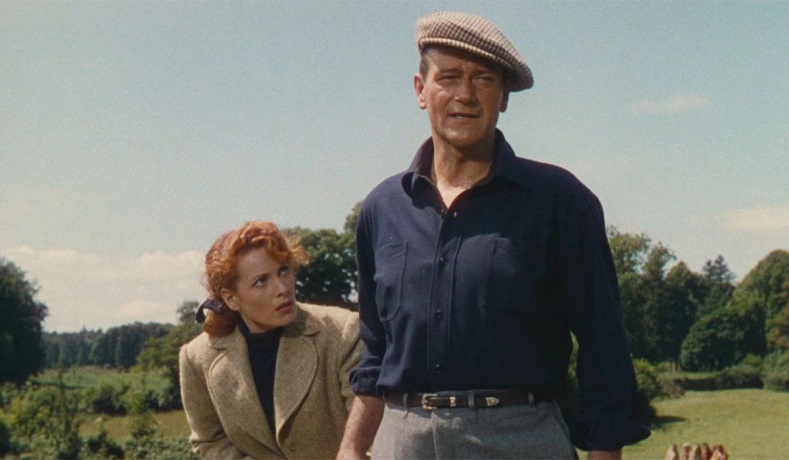
All of this takes place in an Ireland that, while it never feels entirely real, is drawn with such loving affection and cast with such careful exactitude that it hardly matters. Ford’s insistence on shooting all the exteriors on location paid off in spades. The country has never looked more ravishing than through Winton C Hoch’s technicolour lens. Rolling vistas, gentle brooks, quaint villages, perfect beaches. You totally understand why Sean, on arrival, simply stands on a stone bridge and stares across the valley of Inisfree, lost in memories and his emotions.

Sure, it’s a romantic vision. And 1920s Ireland wasn’t the sort of haven depicted here, where Catholic and Protestant lived in perfect harmony, politics never reared its head and the local IRA man is a jolly joker in the pub. If The Quiet Man had not been so well-meaning, you can imagine people taking offence at a picture of the country full of roguish charm, horse-drawn carriages, drinking and fighting. (You could say The Quiet Man shaped many Americans’ perceptions of what the country is like.) But Ford never makes any of this a subject of humour. In fact, it’s a subject of love. The joke is never on the Irish. Inisfree is in fact a haven of community spirit, a supportive village where its people are wise, caring and decent, tradition is respected and what people say and do matters.

It’s why so many are shocked by Sean’s seeming cowardice at not raising his fists earlier. That’s not what “men” do. John Wayne is very effective as the easy-going Sean, a guy who just wants to settle down to marriage. It’s a decent playing-against-type by Wayne, that balances his quiet sense of dignity with the sort of manly determination we know will eventually come through. It’s easy to see why he and Mary Kate fall in love. Also, why she is both swept up in his masculinity and also enraged that he doesn’t behave enough like a man, by refusing to take a stand to defend her honour and secure that dowry that will make her a true wife.

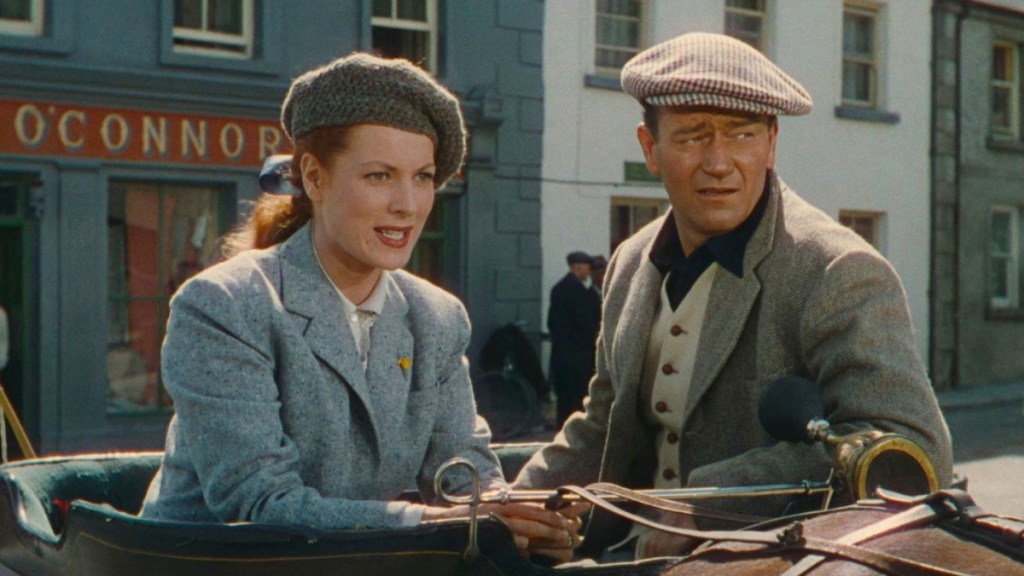
O’Hara is marvellous in a challenging role as Mary Kate. This is a feisty and determined woman, who knows what she wants but denies to herself what that is. She and Wayne share a striking, windswept early kiss – her mood in it going form surprise, to fascination, to irritation, to surrendering to her own desires. While you could suggest the film’s comic set-piece of Sean dragging her (sometimes literally) back to the village so she can watch him fight her brother the way she’s demanded from the start feels uncomfortable today, but it’s also Sean not only delivering what she has wanted him to do from the start, but also strangely the thing that finally bonds them together.

A bond is what they have, both of them straining against the confines of the courtship rules of Ireland. Together they flee the chaperoned carriage ride Michaeleen (a delighful Barry Fitzgerald) takes them on to ride a tandem through the streets. Mary Kate constantly, bashfully, tries to go after what she wants – and a large part of that is the lurking “bad boy” tendency that she detects under the surface of the quiet Sean. Something her less-bright brother Will can’t see.

Victor McLaglen (Oscar-nominated) swaggers, slurs and puffs himself up as this rough-and-tough, punch-first-think-later bruiser, who constantly thinks he’s being cheated. He and Wayne throw themselves into the long dust-up that ends the film with the same comic energy and enthusiasm they did exchanging handshakes. Part of The Quiet Man’s success comes from the comfort and familiarity the cast felt for each other. The trip to Ireland was like a friends-and-family holiday: old mates like Ward Bond, Ford’s brother, O’Hara’s brother, Wayne’s children – they all round out the cast. It helps build even more the family and community feeling that makes the film a delight.

Above all, The Quiet Man leaves you with a smile on your face. With expertly filmed set-pieces – a horse race, Sean and Mary Kate’s long walk back to Inisfree and the epic punch-up – combined with luscious shooting (also done with wit – a sexually frustrated Sean pounds through the countryside, tossing heavily puffed cigarettes aside, after Mary Kate withdraws favours) – it’s also fast-paced, witty and warm. The cast even effectively take bows as Ward Bond’s (his finest hour) priest delivers a final voiceover. Full of affection and charm, it’s a delight and is perhaps the only foreign “Irish” film that has been embraced by the Irish.

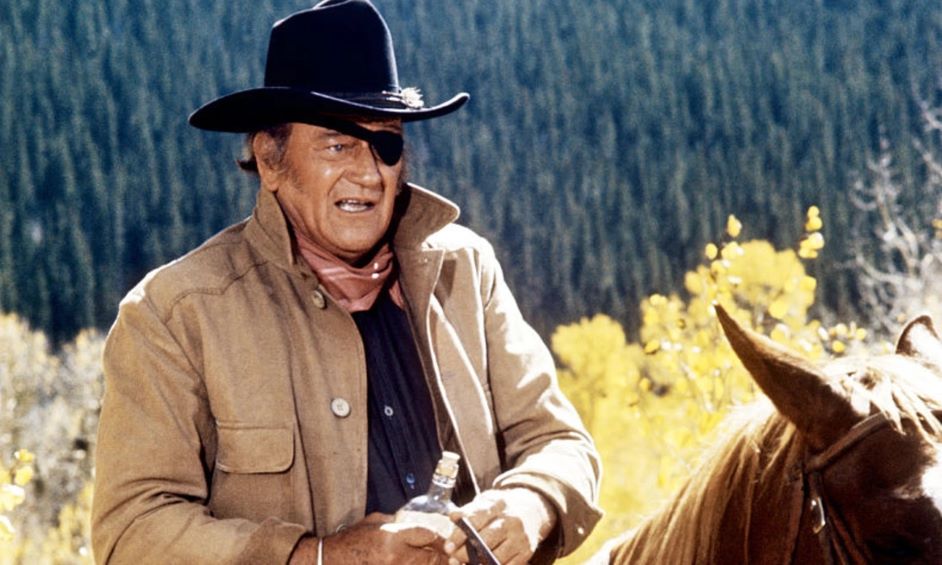
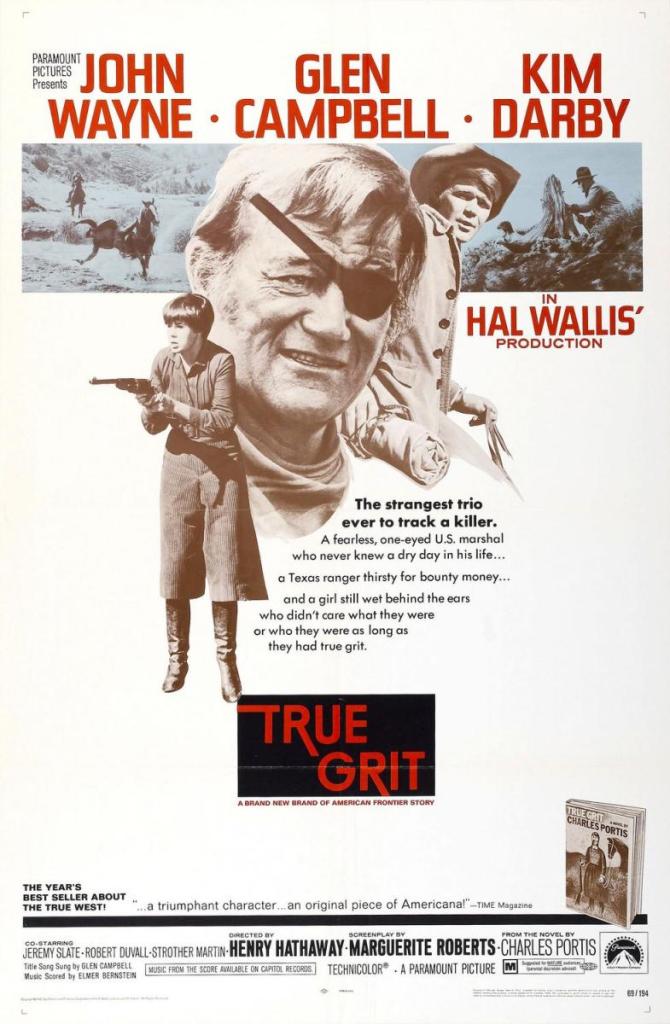
True Grit (1969)

True Grit (1969)

The Duke wins an Oscar in this solid Western (already old-fashioned in 1969) put together with a professional solidity

Director: Henry Hathaway

Cast: John Wayne (Reuben “Rooster” Cogburn), Glen Campbell (La Boeuf), Kim Darby (Mattie Ross), Jeremy Slate (Emmett Quincy), Robert Duvall (Lucky Ned Pepper), Dennis Hopper (Moon), Alfred Ryder (Goudy), Strother Martin (Colonel Stonehill), Jeff Corey (Tom Chaney), John Fiedler (Daggett)

By 1969 John Wayne had been pulling his six shooters against rascals and rapscallions for thirty years, ever since making one of the all-time great entries in Stagecoach. He’d been an American icon, box-office gold and practically the Mount Rushmore of Hollywood. What he never really had was recognition that, underneath the drawl, he was a fine actor who knew his business. He’d only had the single Oscar nomination in 1949, so by 1969 there was a sentimental urge to correct that – especially since illness had already seen the Duke (one of the first major stars to be open and frank about his cancer and urge others to get checks) lose a lung a few years previously.

And correct that they did, as Wayne beat out two respected thespians (the perennially unlucky Burton and O’Toole) as well as the whipper-snapper stars of Midnight Cowboy (the sort of cowboy film the Duke would never even consider making!) to scoop the Best Actor prize for taking a character-role lead (all Wayne roles are lead roles) in True Grit. Wayne was “Rooster” Cogburn, a hard-drinking but hard-riding, always-gets-his-man US Marshal, hired by Mattie Ross (Kim Darby) the teenager daughter of a murdered father to track down his killer Tom Chaney (Jeff Corey). Rooster develops an avuncular relationship with Mattie, despite his penchant to get pissed and (of course!) eventually proves he has the ‘true grit’ that made Mattie hire him in the first place.

True Grit is a traditional yarn, directed with a smooth competence (but lack of inspiration) by Henry Hathaway. It must have felt quite a throwback in 1969: you could imagine it pretty much would have been shot-for-shot identical if it had been filmed in 1949 (especially since Wayne had been playing the veteran since at least Fort Apache). Compared to other major Westerns made that year – Butch Cassidy and the Sundance Kid and, especially, the grim nihilism of The Wild BunchTrue Grit looks like the cosiest film imaginable. It even shies away from the book’s ending where Mattie loses an arm after a snake bite (something the, frankly superior, Coen Brother’s remake would not do 40 years later).

It does feel odd to see Wayne, that bastion of old-school Hollywood, sharing the screen with New Hollywood icons like Dennis Hopper (playing a yellow-bellied squealer at the baddies hideout) and Robert Duvall (a belated villain, looking uncomfortable in this genre saddle-flick as a bad-to-the-bone gang leader). But Hathaway makes sure it’s The Duke’s show. Which it is from start-to-finish.

Rooster isn’t really a stretch for Wayne. Compared to his work in The Searchers and Red River, Cogburn is a cosy and straight-forward hero, a straight-shooter who always holds to his word. But it’s a perfect showpiece for his charisma. Wayne shows a decent comic-timing (he has a nice line in deadpan reactions, particularly when he meets Mattie’s famed lawyer Daggett for the first time, discovering far from the imposing figure he imagined he’s actually the mousy John Fiedler) and there’s just a little hint of lonely sadness in Rooster as he talks about the family who left him or the homes he’s never known.

Wayne also has a lovely chemistry with Kim Darby, the relationship flourishing in a rather sweet big-brother-“little sister” (as Rooster calls her) way. Although of course it takes time to form: Rooster spends most of the first half of the film trying his best to shrug her off so he can hunt down the gang Tom Chaney runs with (and collect the bounty for them) unencumbered. The two of them form a tenuous alliance with Texas Ranger La Bouef, who is far keener to deliver Chaney to another state for a higher bounty than that offered for the killing of Mattie’s father.

La Bouef is played with try-hard gameliness by singer Glen Campbell, largely hired to commit him to singing the film’s best-selling theme tune. To be honest, he makes for a weak third wheel – but it’s hard not to hold it against Campbell when he charmingly later said he’d “never acted in a movie…and every time I see True Grit I think my record’s still clean!”. Far better is Kim Darby, who gives a spunky tom-boyish charm to the shrewd and persistent Mattie who is far too-smart to either by cheated by short-changing landlords or to be ditched from the trail by Rooster and La Bouef.

It’s Wayne’s film though, and a final act face-off with the villains shows that there were few people better with a gun on screen (his one-handed shotgun twirling reload while riding a horse is surely the envy of Schwarzenegger’s similar move in Terminator 2). The whole enterprise is carefully framed to showcase Wayne and he rises to the occasion. Think of it like that, and it hardly matters that Hathaway offers uninspired work behind the camera and fails to provide either any moments of visual interest or dynamism (or work effectively with the weaker actors).

True Grit is an entertaining, second-tier Wayne film, lifted by his charisma and enjoyment for playing a larger-than-life gravelly cool-old-timer and cemented in history by his reward with that sparkling gold bald man. Compared to other Westerns – both before and at the time – it’s traditional, straight-forward and unchallenging. But it’s fun, has some good jokes and offers decent action. And it’s a reminder that no one did this sort of thing better than the Duke.

Rio Bravo (1959)

Rio Bravo header
John Wayne, Ricky Nelson and Walter Brennan are supremely unbothered by danger in Hawks’ High Noon riposte, Rio Bravo

Director: Howard Hawks

Cast: John Wayne (Sheriff John T Chance), Dean Martin (Dude), Ricky Nelson (Colorado), Angie Dickinson (Feathers), Walter Brennan (Stumpy), Ward Bond (Pat Wheeler), John Russell (Nathan Burdette), Pedro Gonzalez Gonzalez (Carlos Robante), Estelita Rodrigues (Consuelo Robante), Claude Akins (Joe Burdette)

When they saw High Noon Hawks and Wayne were unimpressed. Who was this sissy cry-baby, blubbing in his office, begging all and sundry to join him in an impending gunfight with an outraged gang? This wasn’t the West they knew. How un-American was that? So, heads went together and they came up with their counterpoint: Rio Bravo, where the Duke does the right thing, locks up the bad man, is supremely unruffled by threats of violence from his gang, turns down offers of help from across the town (he doesn’t need to worry, they all help anyway) and even finds time for an unfazed, late-night jail-room sing-along with his deputies. Take that Fred Zinnemann and Carl Foreman!

The Duke is John T Chance, a grizzled, experienced sheriff, still in-his-prime, who arrests the brother of Nathan Burdette (John Russell) after he shoots an unarmed man in a bar brawl. When Nathan demands his release – or there will be hell to pay – Chance relies on the men he can trust: old-timer Stumpy (Walter Brennan), recovering alcoholic former-deputy Dude (Dean Martin) and (eventually) plucky young gunslinger Colorado (Ricky Nelson). The three simply have to wait for the Marshalls to arrive and take Burdette away – but will the Burdette’s strike first? On top of which, Chance’s eye is caught by the widow of a cheating gambler, Feathers (Angie Dickinson) – does he also have time for a bit of love?

Rio Bravo is possibly one of the most “shooting-the-breeze” films ever made – even though the general air of manly cool is punctuated by the odd gun-fight. Wayne and his gang are far too cool, confident and quick on the draw to ever be that worried about the approaching threat of the Burdette family – not that you can blame them, since Hawks spends only the minimum amount of time fleshing them out. Instead, the film is a chronicle of a few days where they hole-up and basically shoot-the-breeze – their banter carrying over to exchanging bon-mots during the final gunfight (“You took two shots!” “I didn’t take the wind into account”). It’s the sort of unfazed cool against the odds that you can see has carried across to a whole host of modern action and superhero films, heroes who are so confident in their skills they crack wise even under fire.

Rio Bravo is directed at a gentle pace but complete assurance by Hawks. It occasionally has a feel of settling down and watching a relaxed after-show party, with a group of actors so comfortable in each other’s company, that they simply filmed themselves having a whale of a time. Wayne marshals the whole thing on screen with authority and confident precision: the part is far from a stretch, but he hits the beats with a naturalness that really works, from a fatherly mix of encouragement and disappointment in Dude’s slow turnaround from his drunken collapse, to a crusty flirtatiousness with Feathers (Angie Dickinson at her most radiant here).

The film is full of delightful little moments that pop-up with a perfectly judged regularity. Colorado and Feathers save Chance’s bacon with a perfectly timed flower-pot through the window, matched with Colorado’s pitch-perfect shooting skills. Dude judges exactly the location of sharp-shooter through the drops of blood on a full beer-glass (a lovely image from Hawks). Chance and Colorado confront a card cheat. Chance is so cool under fire, that pinned with two guns on his back in a small room, he never once feels like he thinks there is any real danger.

Either side of these events, the film is full of a sublime lackadaisical charm, as our heroes riff off each other, never once letting events get too heavy. You couldn’t cast Dean Martin and Ricky Nelson without having them break into song – so of course, they do just that in a late-night sing-along. It seems to be about blocking out the sound of Degüello, the cut-throat Mexican song that plays non-stop outside the town overnight, warning them of the perils to come. But really it’s just because we are watching three blokes chilling and simply too cool to be that flustered by scare-tactics. (The Degüello here, by-the-way, was composed by High Noon’s composer Dimitri Tiomkin – another one in the eye for that film).

Wayne’s charges all do a fine job on screen, with Dean Martin in particular fitting the role like a glove and bringing a wonderful sense of sixties brashness as well as a surprisingly affecting struggle with alcohol. Ricky Nelson does his duty when pushed. Walter Brennan wheezes and cackles as only he can. Angie Dickinson is wonderfully vibrant and sexy – surely, with those tights, she’s too much for even the Duke to handle?

Duty is what it is all about, and these are men’s-men who knuckle down and get on with it rather than complain. People may offer to help, but only those qualified will do so (two of them rock-up to help at the final gunfight anyway). That film’s concluding shoot-out is rousing, dramatic and literally explosive. Hawks shoots it all with assured skill – the film’s long silent opening, is a wordless delight of reaction, implication and careful character development (Chance and Dude are wordlessly, but perfectly, established).

Rio Bravo is one of those films people has have their “favourite” – and that might be because it’s laid-back, fun and invites you to join on it. It’s free of pretension and shows you the sort of men you’d like to be, going about effortlessly the sort of things you’d like to do. No wonder people love it so much.

She Wore a Yellow Ribbon (1949)

She Wore a Yellow Ribbon header
John Wayne embodies the honour and duty of the American man in She Wore a Yellow Ribbon

Director: John Ford

Cast: John Wayne (Captain Nathan Brittles), Joanna Dru (Olivia Dandridge), John Agar (Lt Flint Cohill), Ben Johnson (Sgt Tyree), Harry Carey Jnr (Lt Ross Pennell), Victor McLaglen (Sgt Quincannon), Mildred Natwick (Mrs Abbey Allshard), George O’Brien (Major Mack Allshard), Arthur Shields (Dr O’Laughlin)

If there is a film that marks John Ford as the great American Artist of the West, it might just be She Wore a Yellow Ribbon. Shot in glorious Techicolour on location in (where else?) Monument valley by Oscar-winning cinematographer Winton C Hoch, it’s a gorgeously lit celebration of everything that made the American West a legend. Streaking red sunsets, rolling plains, lightening that slices through the sky, masculine military ruggedness beautifully bought to the screen. It’s Ford’s biggest push to become a Winslow Homer or Edward Hopper of the wide-open American space.

Nuzzling in the middle of Ford’s unofficial Cavalry trilogy (either side of Fort Apache and Rio Grande), John Wayne plays Captain Brittles (who might as well be Kirby York again, since he shares the same personality and most of the same backstory), is counting down the last few days until retirement. After Custer and his men are slaughtered at the Battle of Little Big Horn, he’s ordered to lead a cavalry patrol to fly the flag and help prevent a new war with the Indians. At the same time, he’s to escort his commander’s (George O’Brien) wife (Mildred Natwick) and niece Olivia (Joanna Dru) to an eastbound stagecoach (and safety). Olivia herself is in the middle of a love triangle with the two lieutenants eying taking on Brittle’s command, Cohill (John Agar) and Pennell (Harry Carey Jnr).

The film tells the story of that patrol and the subsequent follow-up mission to save those caught protecting the rear guard (needless to say Brittles continues the mission after his supposed retirement, bending the rules). There isn’t actually much in the way of plot in She Wore a Yellow Ribbon. Instead, Ford’s intention is to front-and-centre those particular American qualities of loyalty, honour, dedication to the cause and self-sacrifice. The men of the cavalry always put their country and fellow soldiers first, willing to sacrifice themselves to the greater good and show not one jot of hesitation in doing so. Ford shoots all this with real beauty and more than a touch of whimsical wit, coming particularly (where else?) from the Irish American contingent among the soldiers.

At the film’s heart is Wayne himself, now cemented in Ford’s films not as the traditional romantic action hero, but an elder statesman, wiser and less trigger-happy than his fellows, an unflappably experienced man who guides and inspires, shrugging off praise with an aw-shucks-just-doing-my-duty nobility. If Fort Apache and Red River were first steps towards Wayne – at this time only just past 40 – starting to act as if he was ten years older than he actually was (and in Red River’s case a little bit older than that!) – She Wore a Yellow Ribbon cemented him as the grizzled, inspiring man of action, a role he would play in variation for most of the rest of his career.

And he’s very good in She Wore a Yellow Ribbon. Ford had of course been impressed by the depth and shade of his performance in Red River. This is a simpler role – it would be a few more years before Ford used the darkness in Wayne as well as that film – but it shows Wayne slotting into place as part of What Made America Great. Wayne plays Brittles with a sadness – he’s a touching grieving husband, who takes a familiar chair out every night to talk to his wives tombstone – and a fatherly concern for his men, but tolerating no selfishness or greed. He mentors and pushes Cohill and Pennell like a second father, and has a brotherly banter with his loyal sergeant (inevitably Victor McLaglen as a hard-drinking, extremely Irish drill sergeant). He will do his duty, but he also respects Indian culture, will fight but prefers a peaceful option, will follow orders but never blindly. He’s all that’s good about the American fighting man, and this is one of his finest performances (and a personal favourite of his).

The yellow ribbon wearer is Joanna Dru as Olivia, the sort of spunky young woman Ford’s films frequently feature in key roles. Dru is just about the archetype: brave, determined, smart – much smarter than both of the rather dull men playing court to her. She’s also sensitive and understanding of Brittle’s grief and can hold her own with the men out in the field. Dru’s very good in the role, bringing it a great deal of depth and more than a touch of heart.

She Wore a Yellow Ribbon, plot wise, is more of a day-in-the-life movie. At heart not a lot actually really happens in it other than following the cavalry on two missions (one of which fails) and far from averting the war, it’s explicitly suggested they are just delaying it. The status quo is almost completely restored by the film’s end. The real focus of the film is the detail of what the men set out to do, the determination and humanity with which they go about it – not least the self-sacrificing bravery – and then the return to rest and prepare to go out again. All shot in some of the most striking and beautiful images of the West ever committed to the screen. As a visual tribute, the film is a rich feast.

It’s Ford’s celebration of America and the West and his case for the beauty and majesty of a generation and the values that they placed above all others. For this, She Wore a Yellow Ribbon may be one of the finest of its kind. It lacks the narrative thrust of Fort Apache – and like that film is, in the end, as unquestioning and uncritical of the actions and legacy of those pioneers out West, or the dangers of imperial expansionism or blind veneration of deeply flawed heroes like Custer – but it’s beautiful, very well acted (particularly by Wayne) and a fine film from a director at the top of his game.

The Greatest Story Ever Told (1965)

Greatest Story Ever Told header
Max von Sydow carries a heavy burden in Steven’s far-from The Greatest Story Ever Told

Director: George Stevens

Cast: Max von Sydow (Jesus), Dorothy McGuire (The Virgin Mary), Charlton Heston (John the Baptist), Claude Rains (Herod the Great), José Ferrer (Herod Antipas), Telly Savalas (Pontius Pilate), Martin Landau (Caiaphas), David McCallum (Judas Iscariot), Donald Pleasance (“The Dark Hermit”), Michael Anderson Jnr (James the Less), Roddy McDowell (Matthew), Gary Raymond (Peter), Joanna Dunham (Mary Magdalene), Ed Wynn (Old Aram), Angela Lansbury (Claudia), Sal Mineo (Uriah), Sidney Poitier (Simon of Cyrene), John Wayne (Centurion)

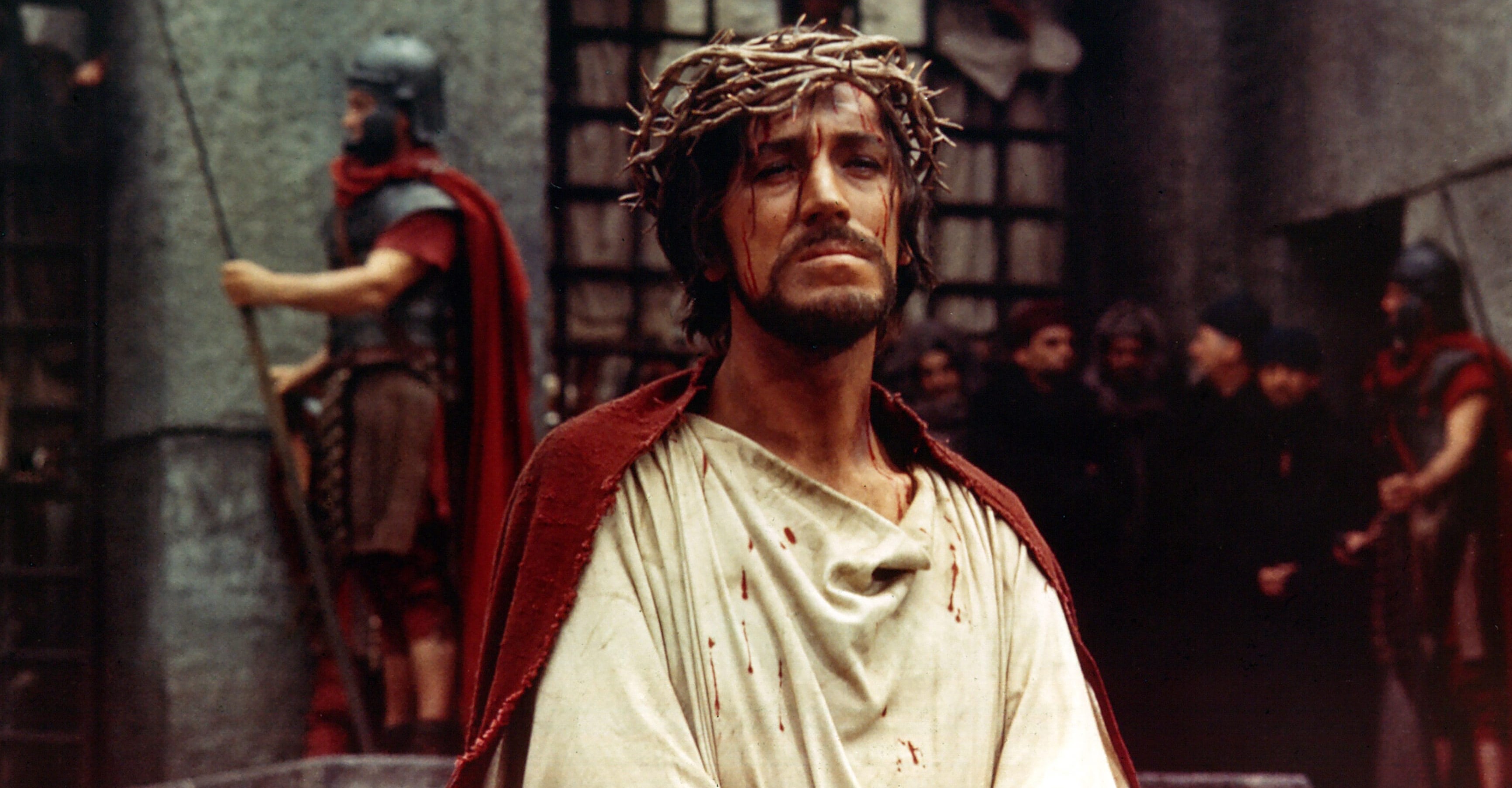
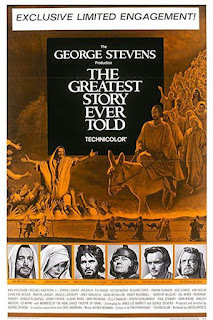
You could make a case to prosecute The Greatest Story Ever Told under the Trade Descriptions Act. In a world where we are blessed (cursed?) with a plethora of Biblical epics, few are as long, worthy, turgid or dull as George Stevens’ misguided epic. Just like Jesus in the film is plagued by a Dark Hermit representing Satan, did Stevens have a wicked angel whispering in his ear “More wide shots George, and even more Handel’s Messiah. And yes, The Duke is natural casting for a Roman Centurion…”. The Greatest Story Ever Told has some of the worst reviews Christianity has ever had – and it’s had some bad ones.

The plot covers the whole life of the Saviour so should be familiar to anyone who has ever seen a Gideon’s Bible. It was a passion project for Stevens, who spent almost five years raising the cash to bring it to the screen. When he started, the fad for self-important Biblical epics was starting to teeter. When it hit the screen, it had flat-lined. It didn’t help that The Greatest Story Ever Told was first released as an over four-hour snooze fest, laboriously paced, that managed to drain any fire or passion from one of (no matter what you believe) the most tumultuous and significant lives anyone on the planet has ever led. The film was cut down to about two hours (making it incomprehensible) and today exists as a little over three-hour epic that genuinely still feels like it’s four hours long.

Stevens gets almost nothing right here whatsoever. Self-importance permeates the entire project. The film cost $20million, double the largest amount the studio had ever spent. Ordinary storyboards were not good enough: Stevens commissioned 350 oil paintings (that’s right, an entire art gallery’s worth) to plan the picture (which probably explains why the film feels at times like a slide show of second-rate devotional imagery). The Pope was consulted on the script (wisely he didn’t take a screen credit). Stevens decided the American West made a better Holy Land than the actual Holy Land, so shot it all in Arizona, Nevada and California. It took so long to film, Joseph Schildkraut and original cinematographer William C Mellor both died while making it, while Joanna Durham (playing Mary Magdalene!) became pregnant and gave birth. Stevens shot 1,136 miles of film, enough to wrap around the Moon.

There’s something a little sad about all that effort so completely wasted. But the film is a complete dud. It’s terminally slow, not helped by its stately shooting style where the influence of all those paintings can be seen. Everything is treated with crushing import – Jesus can’t draw breath without a heavenly choir kicking in to add spiritual import to whatever he is about to say. Stevens equates grandeur with long shots so a lot of stuff happens in the widest framing possible, most ridiculously the resurrection of Lazarus which takes place in a small part of a screen consumed with a vast cliff panorama. Bizarrely, most of the miracles take place off-screen, as if Stevens worried that seeing a man walk on water, feed the five thousand or turn water into wine would stretch credulity (which surely can’t be the case for a film as genuflecting as this one).

What we get instead is Ed Wynn, Sal Mineo and Van Heflin euphorically running up a hilltop and shouting out loud the various miracles the Lamb of God has bashfully performed off-screen. Everything takes a very long time to happen and a large portion of the film is given over to a lot of Christ walking, talking at people but not really doing anything. For all the vast length, no real idea is given at all about what people were drawn to or found magnetic about Him. It’s as if Stevens is so concerned to show He was better than this world, that the film forgets to show that He was actually part of this world. Instead, we have to kept being told what a charismatic guy He is and how profound His message is: we never get to see or hear these qualities from His own lips.

For a film designed to celebrate the Greatest, the film strips out much of the awe and wonder in Him. It’s not helped by the chronic miscasting of Max von Sydow. Selected because he was a great actor who would be unfamiliar to the mid-West masses (presumably considered to be unlikely to be au fait with the work of Ingmar Bergman), von Sydow is just plain wrong for the role. His sonorous seriousness and restrained internal firmness help make the Son of God a crushing, distant bore. He’s not helped by his dialogue being entirely made-up of Bible quotes or the fact that Stevens directs him to be so stationary and granite, with much middle-distance staring, he could have been replaced with an Orthodox Icon with very little noticeable difference.

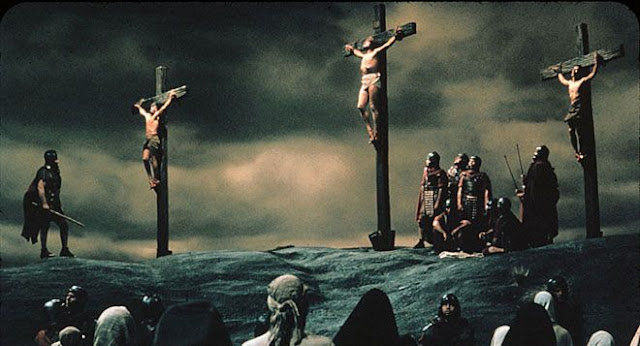
Around von Sydow, Stevens followed the norm by hiring as many star actors as possible, some of whom pop up for a few seconds. The most famous of these is of course John Wayne as the Centurion who crucifies Jesus. This cameo has entered the realms of Filmic Myth (the legendary “More Awe!”exchange). Actually, Stevens shoots Wayne with embarrassment, as if knowing getting this Western legend in is ridiculous – you can hardly spot Wayne (if you didn’t know it was him, you wouldn’t) and his line is clearly a voiceover. In a way just as egregious is Sidney Poitier’s wordless super-star appearance as Simon, distracting you from feeling the pain of Jesus’ sacrifice by saying “Oh look that’s Sidney Poitier” as he dips into frame to help carry the cross.

Of the actors who are in it long enough to make an impression, they fall into three camps: the OTT, the “staring with reverence” and the genuinely good. Of the OTT crowd, Rains and Ferrer set the bar early as various Herods but Heston steals the film as a rug-chested, manly John the Baptist, ducking heads under water in a Nevada lake, bellowing scripture to the heavens. Of the reverent, McDowell does some hard thinking as Matthew, although I have a certain fondness for Gary Raymond’s decent but chronically unreliable Peter (the scene where he bitches endlessly about a stolen cloak is possibly the only chuckle in the movie).

It’s a sad state of affairs that the Genuinely Good actors all play the Genuinely Bad characters – poor old Jesus, even in the story of his life the Devil gets all the best scenes. That’s literally true here as Donald Pleasence is head-and-shoulders best-in-show as a softly spoken, insinuating but deeply sinister “Dark Hermit” who tempts Jesus in the wilderness and then follows Him throughout the Holy Land, turning others against Him. Also good are David McCallum as a conflicted Judas, Telly Savalas as weary Pilate (he shaved his head for the role, loved the look and never went back) and Martin Landau, good value as a corrupt Caiaphas (“This will all be forgotten in a week” he signs the film off with saying).

That’s about all there is to enjoy about a film that probably did more to reduce attendance at Sunday School than the introduction of Sunday opening hours and football being played all day. A passion project from Stevens where he forgot to put any of that passion on the screen, it really is as long and boring as you heard, a film made with such reverent skill that no one seemed to have thought about stopping and saying “well, yes, but is it good?”. I doubt anyone is watching it up in Heaven.

The Longest Day (1962)

John Wayne leads the charge on The Longest Day

Director: Ken Annakin, Andrew Marton, Bernhard Wicki

Cast: John Wayne (Lt Col Benjambin Vandervoot), Henry Fonda (General Theodore Roosevelt Jnr), Robert Mitchum (General Norman Cota), Richard Burton (FO David Campbell), Eddie Albert (Col Lloyd Thompson), Sean Connery (Pvt Flanagan), Curd Jurgens (General Gunther Blumentritt), Richard Todd (Maj John Howard), Peter Lawford (Brig Lord Lovat), Rod Steiger (Lt Com Joseph Witherow Jnr), Irina Demick (Jeanine Boitard), Gert Frobe (Pvt “Coffee Pot”), Edmond O’Brien (General Raymond Barton), Kenneth More (Capt Colin Maud), Robert Ryan (Gen James Gavin), Red Buttons (Pvt John Steele), Christian Marquand (Cpt Philippe Kieffer), Jean-Louis Barrault (Fr Louis Rolland), Arletty (Mdm Barrault), Paul Hartmann (Field Marshall Gerd von Rundstedt), Werner Hinz (Field Marshall Erwin Rommel), Wolfgang Priess (General Max Premsel), Peter van Eyck (Lt Col Karl Williams Ocker)

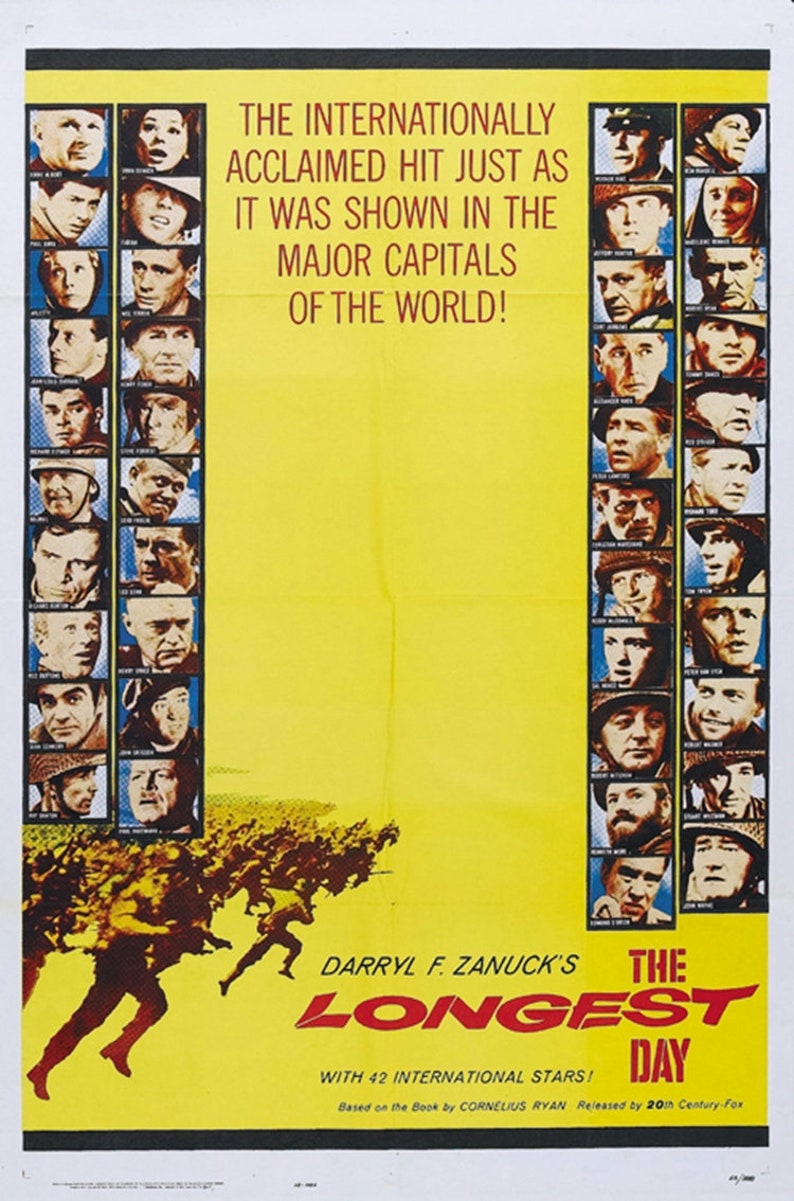
Darryl F Zanuck wanted to make the War Film to end all War Films. So, what better way than to restage D-Day itself, with a cast (as the poster brags) of 42 International Stars, playing out almost in real-time. It’s a grand ‘mock-documentary’ shot in black-and-white (so that actual war footage can be integrated into the film) and aims to show the perspectives of the four main combatants (the Americans, the British, the French and the Germans – with all their scenes played in their respective languages). Adapted from a definitive D-Day book by Cornelius Ryan, it makes for huge, now slightly old-fashioned, Sunday afternoon fun and one of the most iconic second world war films.

To make his dream come true, Zanuck left no stone unturned. Pretty much every single part is played by a ‘name’ actor (although, rather like Around the World in 80 Days, time has left some of them less recognisable than others) no matter how small the role. And I mean no matter how small. Many of the actors appear in no more than one or two scenes. Steiger chips in a brief speech as a Naval officer. Burton has two scenes as an RAF officer, one of the last of the “Few”. Fonda contributes a few minutes of heroism as Theodore Roosevelt Jnr. Robert Ryan briefs The Duke as General Gavin. Jean Servais makes a grand speech as a French Admiral. Gert Frobe doesn’t even speak as a (what else?) bullying German soldier. This parade of stars does though does mean you pay a lot more attention to every single part and it makes it a lot easier to keep track of who’s who.

It’s certainly a ‘producer’s’ film. Zanuck held complete creative control, splitting the directorial duties between three hired hands. Annakin directed all the British and French scenes (and most of the American ‘briefing room’ scenes). Martan, an experienced second unit director, was hired to shoot most of the battle sequences. Wicki looked after the German sequences. With the brief being to replicate the documentary style of actual footage, naturally this basically led to a film that doesn’t have the feel of being ‘authored’ (in the way, say, Saving Private Ryan does), but it’s functional shooting style and design does make it fairly easy to follow.

And it needs to be easy to follow, as this is a very long film indeed – and with the cast frequently changing from scene to scene, can become overwhelming. The quick changes of location – and the lack of time spent with any single character – often means it’s hard to connect to strongly to any of the individual characters. Most of the more prominent characters gain their personality solely from the actors playing them: so I don’t really know what the real Colonel Vandervoot is like, but I know his character here is basically ‘John Wayne’.

The more prominent roles in the script rely on these personality parts. Wayne probably has the largest individual role as the Paratrooper commander who breaks his ankle on landing, but doesn’t let that slow him down from hitting his objective. (Wayne also gets a great little speech, the sort of thing much missed in Ryan, where he praises Brit fortitude under the Blitz, which is a lovely moment of Allied brotherhood). Mitchum gets the juiciest action as General Cota, the highest-ranking soldier on Omaha Beach, who leads the first break out. At the other end of the ranking, Red Buttons brings charm and heartfelt emotion to the most memorable sequence as Pvt John Steele, the paratrooper who landed on top of the church spire at Sainte-Mère-Église, deafened by bells and forced to watch the rest of his platoon slaughtered on landing.

The scale is really what it’s all about. The recreation of the D-Day landings is stunning (the first boats, though, don’t hit the beaches until well over two hours into the film), and its genuinely hard to tell the difference between what is recreated and what is actual war footage. The film doesn’t shirk from showing the cost of war, or the slaughter on that beach (although of course, it looks reserved compared to Ryan). But the combat and operations elsewhere are also perfectly recreated. Richard Todd is very good as Major John Howard, in an expert reconstruction of the seizing of the Orne Bridges near Caen (in real life, Todd himself was one of the commandos serving under Howard and even has a scene where Todd as Howard talks to another actor as Todd).

These battle sequences make for compelling viewing. Slightly less so is the long build-up of the Allies to the attack. There are many, many scenes in various briefing rooms and for every delight (such as Jack Hedley’s briefing around “Rupert” a model paratrooper, dropped as a distraction) there are po-faced actors staring into the middle distance and discussing how important everything is. By far and away the most interesting content in the first half is less the Allies (waiting to leave) than the Germans (trying to work out how and where the Allies will arrive). These scenes feature a range of German officers, from the quietly resigned to die-hard, head-in-the-sand Fascists, and revolve around a series of fascinating debates on where, when or even if at all the Allied attack will come. With a cast of excellent German actors – Jurgens, Preiss, Hartmann, Hinz and Wolfgang Buttner are particularly fine – these scenes stand out as they present a perspective we don’t often get to explore. (Even though the film squarely accepts the German military view that the defeat was all Hitler’s fault and the army was completely blameless of any of the crimes of Nazism.)

After the slow-build, the explosion of tension and action is done really effectively. Sure, the film is long and episodic, but the ever-changing locations do frequently help with the pace. The film’s documentary style also lends it a great deal of authority that a more ‘fictional’ film would not have. After all, pretty much everyone in the film is ‘real’ and while the film could be seen as a collection of D-Day anecdotes, strange moments – such as a platoon of Germans and Americans passing each other on opposite sides of a low wall without noticing each other – have the ring of truth. The script was doctored by a host of major novelists and playwright (including Noel Coward) to brush it up, but really this is a producer’s triumph.

And it is a triumph for Zanuck. Everything he sought to do, he accomplished here – and the doubts that he could pull it off were moved as wrong, as those who doubted whether the Allied plan to cross the Channel would work. Hugely impressive in its staging, detailed in its recreation and with a cast of stars and top actors giving every scene a fresh bit of life, this makes for one of the all-time classic war films.

How the West Was Won (1963)

James Stewart helps us see How the West Was Won

Director: Henry Hathaway, John Ford, George Marshall

Cast: Spencer Tracy (Narrator), Carroll Baker (Eve Prescott Rawlings), Walter Brennan (Colonel Jeb Hawkins), Lee J Cobb (Marshal Lou Ramsey), Henry Fonda (Jethro Stuart), Carolyn Jones (Julie Rawlings), Karl Malden (Zebulon Prescott), Raymond Massey (Abraham Lincoln), Agnes Moorehead (Rebecca Prescott), Harry Morgan (Ulysses S Grant), Gregory Peck (Cleve van Valen), George Peppard (Zeb Rawlings), Robert Preston (Roger Morgan), Debbie Reynolds (Lilith Prescott van Valen), Thelma Ritter (Agatha Clegg), James Stewart (Linus Rawlings), Rus Tamblyn (Confederate deserter), Eli Wallach (Charlie Grant), John Wayne (William Sherman), Richard Widmark (Mike King)

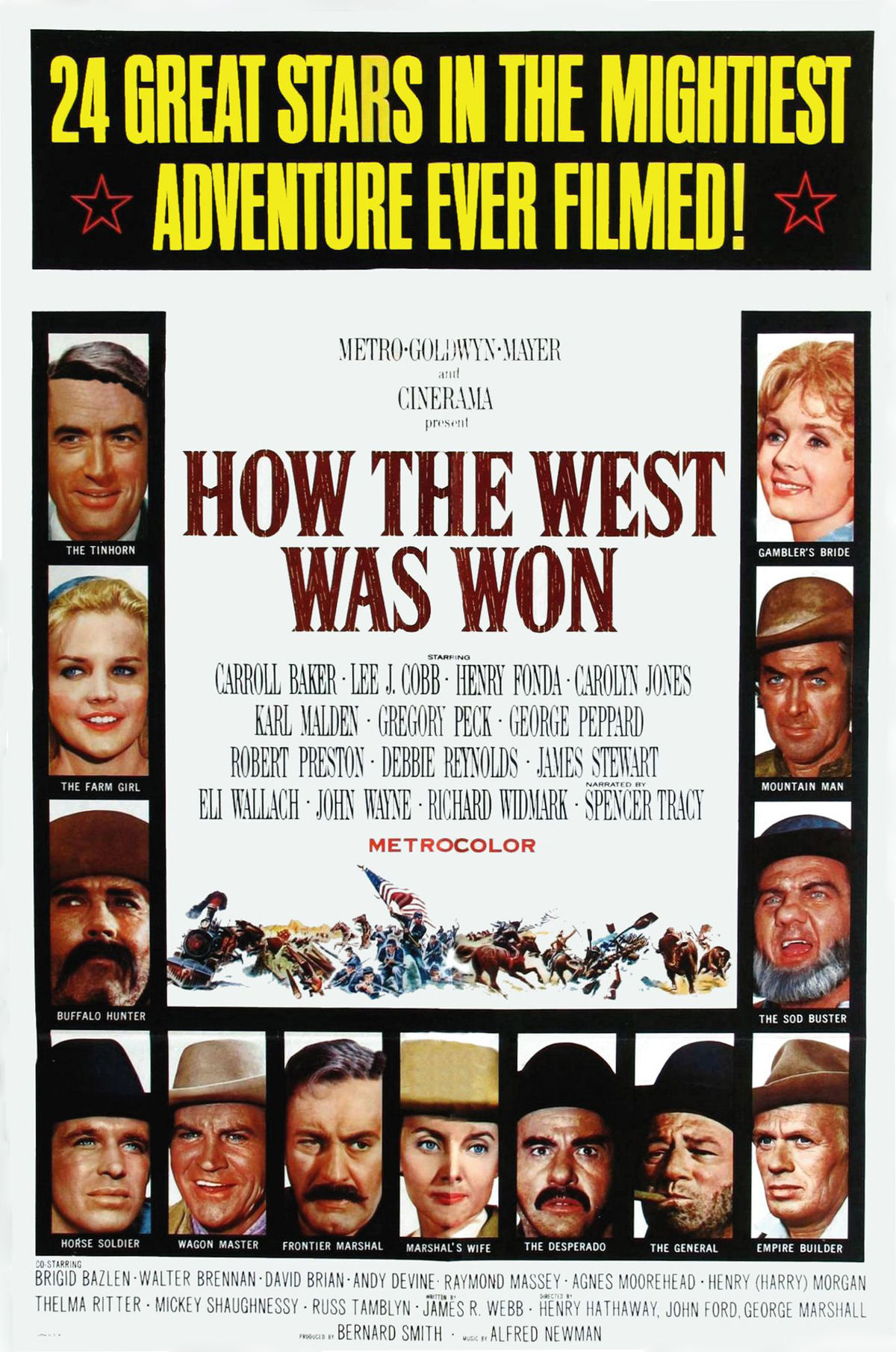
How the West Was Won was the Avengers: Endgame of its day: every star of the biggest box-office genre in America coming together for one epic adventure that would stretch over generations. Stewart! Fonda! Peck! Wayne! Together for the first time (only of course they are not, none of them appearing the in same scene). Even more than that, How the West Was Won would be filmed in Cinerama, a three-screen shooting method producing a panoramic image. All this would make How the West Was Won the biggest, grandest, largest film ever made. It was a massive box-office success, nominated for eight Oscars (including Best Picture) and wowed audiences.

Plot wise though, it’s basically a series of short films cobbled together into a single film. The stories are basically self-contained, although some actors cross over (especially George Peppard and Debbie Reynolds). The first episode The Rivers covers the migration west, down the river, of the Prescott family, taking on river pirates and allying with James Stewart (looking at least twenty years too old as a young drifter). The Plains sees Debbie Reynolds, daughter of the Prescott family, migrate further West and eventually marry gambler Gregory Peck. The Civil War sees Stewart’s son George Peppard caught up in the war. In The Railroad, Peppard reluctantly runs security for ruthless railway builder Richard Widmark. Finally, in The Outlaws an older Peppard attempts to retire, but not before one final shoot out with old enemy Eli Wallach during an attempted train heist.

All these short stories – each about 30-45 minutes in length – are entertaining. So entertaining that you won’t mind at the end that you have no idea how the west was actually won (I assume it’s something to do with progress and the law) or that the characters are basically actors riffing off their own personas rather than fully realised individuals. Despite the attempt to build the story around one  family (the Prescott-Rawlings), the stories are so disconnected and the characters so lightly sketched, with such huge time jumps, each story might as well be about completely new characters.

Not that there is anything particularly wrong with that. But it boils down to the key issue with How the West Was Won, a very flabbily constructed film that lacks any real sense of guiding narrative or vision behind it. It’s a series of set pieces, which are all about scale – the river rapids, the battles of the Civil War, the final train-set shoot out – in which some loosely defined characters live their lives. There are some decent performances – Debbie Reynolds does a very good job anchoring a couple of stories (plus we get to see her do some song-and-dance routines), while Peck (a smooth operator) and Fonda (a gruff woodsman) have the best parts among the stars. Others, like Wayne, pop up for but a few seconds.

They needed all these stars to fill the frame. How the West Was Won’s main problem is also its principle reason to exist. It was designed to showcase the wideness of Cinerama, one of only two films to use the technique. Designed to be projected into curved screens, the technique essentially used one massive camera to produce an image so large it needed three synchronised projectors to screen it. This led to an impossible wide frame to fill, with two clear joins in the middle. The challenge of shooting this was not an enjoyable one for the directors.

To cover the visible joins, nearly every scene in the film sees an object placed one-third and two-thirds of the way through the image (usually a tree or a post). The actors stand carefully on their marks in their assigned third of the image. Close ups involved flying the massive camera almost into the faces of the actors (and even then it only produced an image from the waist up). Awkward compositions abound – either with actors standing rock still in front of huge scenery, or actors standing in carefully assigned rows, standing on marks they never move from.

The sweeping shots of the American west look impressive, but in a National Geographic way – it’s simply fitting as much of the imagery of the countryside in as possible. It was a hugely difficult job for the directors. It was not helped by two of them being competent journeymen and all three of them having done their best work in 4:3. Quite frankly I don’t think any of them have a clue about how to fill a frame this mighty. Instead, the film for all its grandeur is frequently visually conservative and unimaginative to look at. It’s got huge landscapes, but no real inspiration.

How the West Was Won is an enjoyable curiosity. It is very rarely, if ever, seen as it was intended on a Cinerama screen (the version I watched on a large television, still showed the slight fish-eye effect at points of a curved image flattened). Telling five short stories, each of them entertaining enough, it keeps the interest. It has a lusciously beautiful (famous) score by Alfred Newman that captures the spirit of the West. But, for all its grandness, it’s a strangely small experience.