Tag: Journalism

Good Night, and Good Luck (2005)

Good Night, and Good Luck (2005)

The importance of journalism is loudly praised in this engaging but faultlessly liberal Clooney film

Director: George Clooney

Cast: David Strathairn (Edward R Murrow), George Clooney (Fred Friendly), Robert Downey Jnr (Joseph Wershba), Patricia Clarkson (Shirley Wershba), Frank Langella (William Paley), Jeff Daniels (Sig Mickelson), Tate Donovan (Jesse Zousmer), Ray Wise (Don Hollenbeck), Helen Slayton-Hughes (Mary), Alex Borstein (Natalie), Thomas McCarthy (Palmer Williams)
In the early 1950s America seemed to be in the paranoid grip of one man. Senator Joseph McCarthy was the tip of a spear of anti-Communism, targeting every part of American life. To have even had thoughts that might be seen as socialist or communist, was enough for you to be considered an Anti-American and potential enemy of the state. McCarthy led a campaign to unearth Communist spies and sympathisers in the government, military, business, academia and the media. Blacklists and persecution were rife, and the slightest past association could condemn you. It took many years before anyone took a stand against this.

One of the leaders of this stand was renowned journalist Edward R Murrow (David Straithairn). Famous for his broadcasts from London during the Blitz, Murrow hosted an investigative journalist programme See It Now. A passionate believer in the power of television to educate and inform, Murrow and his producer Fred Friendly (George Clooney) are appalled when Air Force officer Milo Radulovich is condemned to be discharged, based on members of his family being communists and a sealed envelope of charges he was never allowed to see. Despite the worries of network CBS, Murrow, Friendly and their team run an episode of the show that exposes McCarthyism and its injustice, the first of several investigating McCarthy. But what price will they pay?

Clooney’s well-made, heartfelt film, is an impeccably liberal piece of film-making that is a very sincere tribute to the potential of television to be more than just an idiot’s lantern. Clooney frames the film with Murrow accepting a lifetime achievement award in 1958: he uses the opportunity to make a speech rebuking the room full of executives and journalists for squandering the potential of television to inform rather than just entertain. Murrow would of course be horrified by what TV became. Good Night, and Good Luck is a rose-tinted view of television journalism at its pioneering best: just as the end result of See It Now being gutted by cuts is a realistic look at where the scales will fall if entertainment and money are balanced with principles and education.

Clooney’s father was a TV journalist, while Clooney himself majored in journalism. The cut-and-thrust of the newsroom is as intrinsic to him, as is a desire to investigate and inform as part of a healthy political debate. Good Night, and Good Luck captures the mood of a newsroom with a convincing confidence. Journalists debate the fine point of stories, editors rush to assemble films and executives balance the pros and cons. It’s all shot in a beautiful monochrome, that exquisitely captures the haze of cigarette smoke all this takes place in. It’s a shot with a handheld urgency, sharply cut, that puts us into this world of cut-and-thrust media decisions.

And it makes clear what TV news can be. Not agenda led, but facts led. Not kowtowing to power, but challenging it to justify itself. Looking into matters that are important, not sensational. Wanting to inform people and expand their understanding, rather than pander to the lowest common denominator. Murrow’s shows are scrupulously fact-checked, and allow full rebuttal from their subject. He comes at story not with a pre-supposed position, but based on where the facts and his editorial judgement leads him.

It all takes place in a TV set that’s really striking in its humbleness, compared to the operatic news sets we see today. The 1950s studio is small, cramped and simple – and by contrast the ideas are large, expansive and complex. Murrow’s set is little more than a chair with a TV monitor. His producer Fred Friendly, literally sits at his feet to hand him notes and cue him in with announcements and VT. The See It Now set contrasts vividly with the more grandiose sets for Murrow’s other show, a series of puff piece interviews with popular stars like Liberace. (While Murrow learns his scripts by heart for See it Now, he professionally reads through a series of cue cards for these for-the-money interviews).

Murrow and Friendly also won’t compromise. They defend their right to make the show to CBS President William Paley (a brilliant performance from Frank Langella), who prides himself on no direct intervention on the news but pushes for a less controversial line. The entire team is consulted on every issue. The newsroom is a place where our better angels can come out.

But it’s still happening in an America where people are careful about what they say and do. A subplot concerns reporters played by Robert Downey Jnr and Patricia Clarkson: secretly married – contrary to CBS policy – like those suffering from McCarthyism, they must live a lie in order to protect what they have. See It Now is in danger of criticism, cancellation and attack. Another CBS anchor, Don Hollenbeck – perfectly played by Ray Wise (and few actors are better at suppressed desperation than Wise) – is dealing with constant media persecution for his perceived communist sympathy. Murrow and Friendly are not perfect: they sometimes dodge the fights they can’t win and Murrow in particular shrugs off or ignores Hollenbeck’s concerns with tragic results.

But, as Clooney makes clear, the good outweighs all the rest. As Murrow, David Straithairn (Oscar-nominated) has never been better. He perfectly captures Murrow’s mannerisms, but mixes it with wonderful measure of honesty and decency, mixed with a degree of pride and self-righteous certainty. He dominates the film (with Clooney as a generous foil) and carries much of the film’s liberal message that smart, intelligent, dedicated men can change the world.

Good Night, and Good Luck might be the most soft-left liberal film made in Hollywood in the last fifteen years. But it is a fine example of film-making craft and the earnest honesty with which it is made in its own way inspiring. It’s Clooney’s finest film and it’s grounded in his strengths: fine actors and writing carrying a sincerely told message.
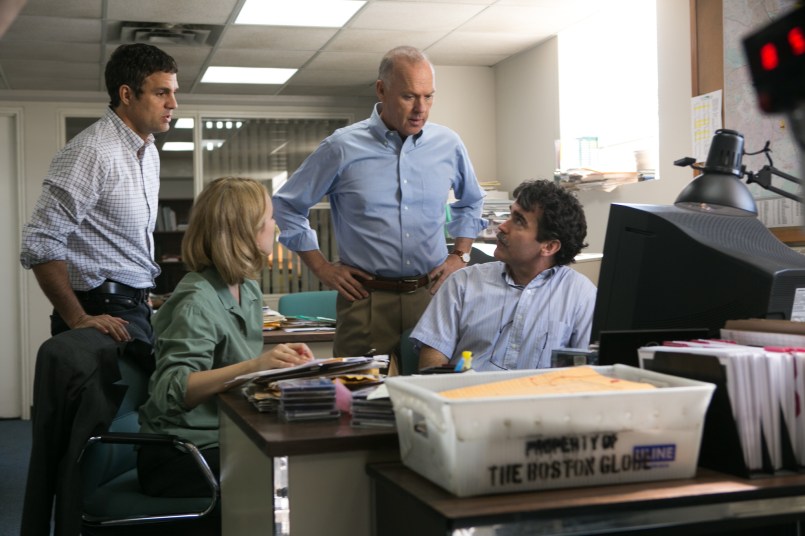
Spotlight (2015)

SPotlight header
Ruffalo, McAdams, Keaton and James head up the investigation into the church in Spotlight

Director: Tom McCarthy

Cast: Michael Keaton (Walter “Robby” Robinson), Mark Ruffalo (Michael Rezendes), Rachel McAdams (Sacha Pfeiffer), Brian d’Arcy James (Matt Carroll), Liev Schreiber (Marty Baron), John Slattery (Ben Bradlee Jnr), Stanley Tucci (Mitchell Garabedian), Billy Crudup (Eric MacLeish), Jamey Sheridan (Jim Sullivan), Paul Guilfoyle (Peter Conley), Len Cariou (Cardinal Bernard Law), Neal Huff (Phil Saviano)

True villains are hard to spot: those clothed in good deeds are particularly well hidden. Few clothe themselves in good deeds more effectively than priests – and the small minority who use their positions of trust and power to abuse vulnerable children. It’s an unforgiveable, abominable betrayal that has ruined the lives of thousands of victims around the world. This century, the Catholic Church was rocked by a scandal: many in the church hierarchy were all too aware of these appalling acts, but protected priests from exposure rather than submitting them to well-deserved punishment. It took the work of crusading journalists to lift this veil and force the Church to begin to change its policy from protecting priests to protecting children.

The story was bought to wider attention by the dedicated work of the Boston Globe’s Spotlight team – the US’s finest investigative journalist team, a small team of reporters who work for months at one story. Boston is a firmly Catholic city, where the Church still holds a huge influence over the lives of its population. For years, faint suspicions of misconduct from any of the nearly 1,500 priests in the city was hushed up. It takes the arrival of an outsider at the Boston Globe – the paper’s unassuming new Jewish, Floridian editor Marty Baron (Liev Schreiber) – to push the Spotlight team to delve deeper into this story. He finds plenty of support from the team – respected editor “Robby” Robinson (Michael Keaton), the passionate Michael Rezendes (Mark Ruffalo), dedicated and empathetic Sacha Pfeiffer (Rachel McAdams) and increasingly disgusted Matt Caroll (Brian d’Arcy James). Using tried-and-trusted journalistic methods, passionate investigation, archival work and winning the confidence of survivors, the team piece together a systematic cover-up by the Catholic Church that extends all the way to the Vatican.

Spotlight scooped the Oscar for Best Picture (along with an Oscar for its brilliantly researched screenplay). It feels like a late Oscar partly awarded in memory of All the President’s Men, the film that Spotlight bears the most relation to. But, even more so than Pakula’s film, this is a low-key, reserved but strikingly effective and engrossing film that takes an almost documentary approach to the patient work required to uncover a story (no Deep Throat here) and the grinding shoe leather needed to get there. Fittingly, given the tragic story the team were reporting on, Spotlight is almost totally devoid of histrionics (there is at best one scene where a member of the team gets angry – only to be met with a quiet “are you done?”), instead being a tribute to the professionalism and integrity of journalists powered, but never overwhelmed by, their anger.

McCarthy’s film is refreshingly free of flourish or over-emphasis. It’s brave enough to let the story speak for itself, and trusts the viewer to understand both the emotional weight of abuse and the feelings of those involved without resorting to dramatic speeches or tearful dialogue. The details dominate – searching through archives for old newspaper clippings, waiting for access to court papers, days spent reading over a decade of parish records. Nothing is earned cheaply: every revelation the result of patient leg-work and following where the story leads without agenda or bias.

Agenda is something these journalists are deeply aware of. All of the team were raised in the faith to one degree or another, with strong roots in a community. The team’s leader, Robby, is an esteemed alumnus of a Catholic school one of the guilty priests worked at when he was a child – a revelation that quietly leads him to question both his implicit turning of a blind eye, but also how only a single man’s choices prevented him from becoming a victim. There is discomfort throughout the Boston Globe at the story – assistant Editor Ben Bradlee Jnr (a fine performance from John Slattery), while supportive of the team, is prickly at revelations that the Globe had previously not followed up reports of abuse and is deeply unhappy at the thought of accusing the Church itself.

The power of the Church in communities like this is subtly, but brilliantly, depicted. The film opens in the 70s with a paedophile priest having his actions being quietly hushed up by the police after the intervention of an ADA. Virtually every important person in the city is a Catholic and, like Robby, has been bought up and schooled in the Church. In exterior shots, McCarthy’s camera constantly frames churches on the edges of shot, their spires visible over residential blocks. The scale of the power of this institution – its reach and influence – is constantly demonstrated. It’s a big challenge for the team to take on – and one which they are not even sure their readers are ready to read about.

But McCarthy’s film isn’t crude. It’s made clear that these priests are a minority – 6% – and the anger is not with faith itself, but with the flawed and wrong decisions taken by men (the psychologist the team consults, an ex-priest, makes clear his faith is not shaken by his discoveries, only his trust in the institution). Equal care is given to the victims themselves. Their stories are reported by two characters in the film, each time with a careful lack of over-emphasis and a quiet, yet emotional, honesty. No attempt is made to sensationalise any of this.

And the film also makes clear that everyone is in some way complicit in this. The Globe has failed to report it. The police and government have covered it up. People might whisper about it – or say a particular priest is “dodgy” – but no one has made an effort to rock the boat and find out about it. Instead, victims are paid off, priests are moved to new parishes and everyone tries to carry on as normal. It’s a grimy and quiet conspiracy – miles away from the Grisham-esque danger the film’s trailer suggested – rather a collective failure of moral responsibility.

The film’s low-key approach, professionalism and absorption in how people do their jobs is deeply engrossing. Few things, after all, are as involving as watching highly professional people execute their jobs flawlessly. The performances are superb. Michael Keaton gives possibly the finest performance of his career – surely connected to it being his most restrained – as the team’s leader, whose sense of personal guilt and regret quietly build along with determination. Ruffalo (Oscar-nominated) is fantastic as his passionate, committed colleague (he gets the one shouting scene). McAdams delivers quiet empathy and powerful intelligence. Schreiber confounds expectations as the numbers man who emerges as a dedicated searcher for the truth.

The truth is exposed – but it’s just a tip of the iceberg. The story might be out there, but as the film shows in its coda, the struggle goes on. Crusading maverick lawyer Mitchell Garabedian (Stanley Tucci, very good) can’t celebrate the story’s publication – he’s got two child victims he needs to talk to. Cardinal Law (a fine performance of assured, misguided, certainty from Len Cariou) is promoted to the Vatican. Similar scandals emerge across the world. But the problem doesn’t go away. Just as the story needs time and work, the same qualities are needed to reform the Church.

Spotlight is quiet, engrossing and finely moving and triumphant film-making. It focuses brilliantly on professionalism and dedication producing results and shows that hyperbole and embellishment are not needed for outstanding drama. Told with documentary realism, acted with reserved grace and skill, McCarthy’s film is a call-back to 1970s film-making in the best possible way. A deserved winner and a small triumph.

The Devil Wears Prada (2006)

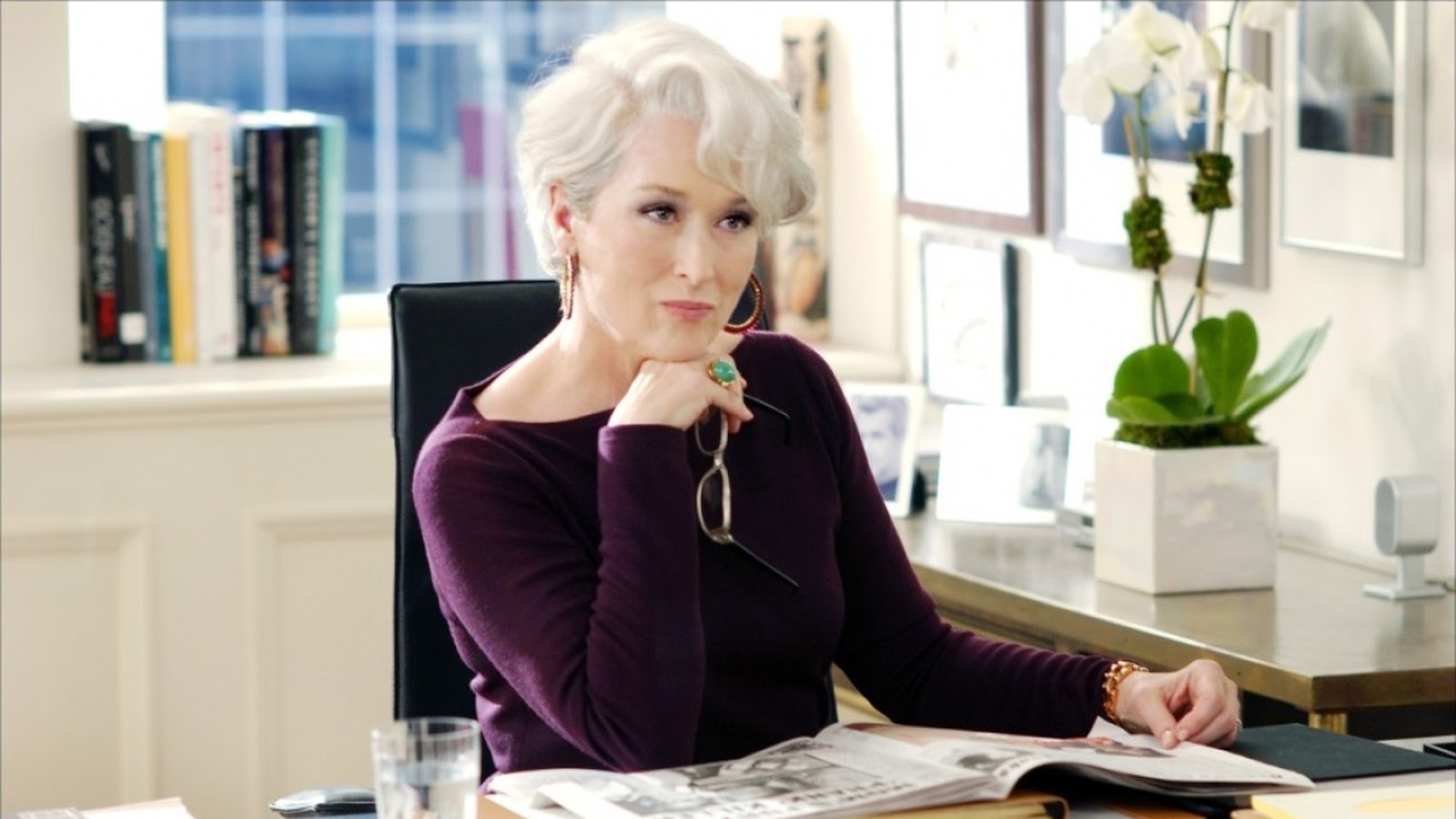
Meryl Streep on demonic good form in The Devil Wears Prada

Director: David Frankel

Cast: Meryl Streep (Miranda Priestly), Anne Hathaway (Andrea Sachs), Emily Blunt (Emily Charlton), Stanley Tucci (Nigel Kipling), Simon Baker (Christian Thompson), Adrian Grenier (Nate Cooper)

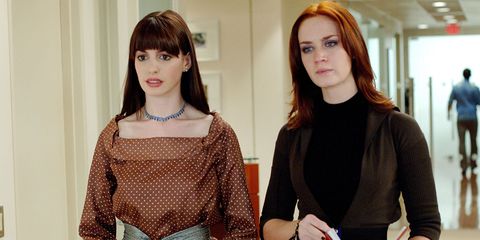
Miranda Priestly (Meryl Streep) is the lord of all she surveys. Ruling the fashion industry from the editorial office of her magazine Runaway, she can make or break careers with a pursed lip or a raised eyebrow. And, while barely raising her voice beyond a whisper, she expects total obedience and deference in the office, with her assistants little better than personal slaves. It’s a tough world for wannabe journalist Andrea (Anne Hathaway), hoping for a big break from her connection with Miranda. Andrea looks down on the world of fashion, and longs for a serious journalism career – but will her ideals survive the temptations on offer… 

The Devil Wears Prada is your pretty standard morality tale of the moth brought too close to the flame: the hero struggling to resist the temptation to jack in their principles and dreams in order to win the praise of a domineering bully and secure riches and fame. We’ve seen it all before, and to be honest TDWP doesn’t really do anything different from this formula, other than introduce it into the world of fashion and making both the tempter and tempted a woman.

And it works where it does because it has some pretty impressive women in these roles. None less than Meryl Streep, who seizes on the role with a quiet relish and has the confidence to underplay scenes that lesser actresses would tear into as if their only dinner that day was the scenery. What’s notable about Streep’s Miranda is that she is so calm, so quiet, so assured, so unflustered that she only needs the slightest gestures and hints to break people around her. It’s the ultimate confidence that comes from supreme power – she knows she never needs to raise her voice, that people will fall silent to listen to her. Streep also mines her considerable comic talent to lace her many moments of cruelty and selfishness with an arch, dry humour.

It’s no wonder poor Andrea has such a rough time in this film. Only in Hollywoodland could Anne Hathaway be considered a dumpy frump, but the styling of her as a someone with no sense of fashion whatsoever (at least initially) does at least make her stand out from the rest. Andrea’s plotline follows what so many other “moth to the flame” plots have followed, moving from snide indifference to her job to all consuming obsession as she begins to parrot the same values and opinions of her master. She even has a partner (usually the woman’s role, so very nice to see it reversed) who complains about her not being at home enough.

The film avoids cheap shots at fashion as well which is refreshing, stressing at every point that it is a world of legitimate art and expertise and has made an important contribution to the culture and society of the 20th century. No wonder so many fashion famous faces cameo. Andrea’s scornful disregard for fashion is punctured early on as being an inverted snobbery and part of her desire to project an image of herself. 

The real issues here are workplace bullying – although the film never really delves into it that much and is eager to leave no real resolution. Emily Blunt – who is extremely good, with more than a hint of desperation and depression under her cool, arch, British exterior – as Andrea’s fellow assistant shows early on how environments like this chew people up and force them to become sharks or die. It’s a suggestion the film is not keen on exploring in real depth though, preferring a far lighter, more traditional story as we wonder whether Andrea will be seduced by the darkness or will return to her roots of integrity and journalism (one guess which way she goes).

Even at the end though, Andrea is still desperate in some way for Miranda’s approval and to be acknowledged in some way by her. It’s a feeling that the film shares. It wants Miranda to turn to it and praise it, it’s scared of really calling her out on her behaviour, instead wanting to cut her as much slack as possible. It wants to see her triumph and, even at the end, to take a wry pleasure from Andrea forging her own life. It’s as besotted with her as the characters are, and for all it shows that Andrea doesn’t do well from spending time with her, it still seems to want to show that under it all “she is human”. It dodges the bullet of actually dealing with bullies and monsters, and instead takes the line of saying “yeah sure she was bad, but she had great style so you can’t not like her.” Which means, in a way, it follows the same line that in real life allows charismatic geniuses in the workplace to continue behaving any way they like.

Which isn’t to say this isn’t a fun film with decent performances and lots of good jokes. Streep gives Miranda a huge degree of depth – we have moments of her loneliness and isolation from her family – but it’s a film that could have done more to show the negatives of how working lifestyles like these affect people. I guess that would have made it less fun though.

The Post (2017)

Hanks and Streep bust Watergate in advance in Spielberg’s too dry The Post

Director: Steven Spielberg

Cast: Meryl Streep (Katharine Graham), Tom Hanks (Ben Bradlee), Sarah Paulson (Tony Bradlee), Bob Odenkirk (Ben Bagdikian), Tracy Letts (Fritz Beebe), Bradley Whitford (Arthur Parsons), Bruce Greenwood (Robert McNamara), Matthew Rhys (Daniel Ellsberg), Alison Brie (Lally Graham), Carrie Coon (Meg Greenfield), Jesse Plemons (Roger Clark), David Cross (Howard Simons), Michael Stuhlbarg (AM Rosenthal)

There are few things newspaper journalists like more than old-fashioned films about the glory days of the press, showing journalists to be uniformly noble, upstanding, seekers of truth. There are few things Hollywood likes more than films the feature Streep and Hanks and/or are directed by Spielberg. As such, it’s not really a surprise that The Post received laudatory reviews, or that it crept into the Best Picture list of 2017 (it only got one other nomination, inevitably for Streep).

The film covers the Washington Post’s decision in 1971 to publish details from the Pentagon Papers, originally leaked to the New York Timesby former Defence Department official Daniel Ellsberg (Matthew Rhys). The papers detail the American government’s deceptive public messages on Vietnam, a war they knew to be unwinnable for almost ten years. The Nixon administration has blocked publication in the New York Times, but when the Post gets the same papers, owner and publisher Katharine Graham (Meryl Streep) and editor Ben Bradlee (Tom Hanks) have a difficult decision to make – suppress the truth or publish and face crippling legal penalties that could destroy the business.

The Post is quite similar in some ways to Spielberg’s far more successful Lincoln – a po-faced history lesson, told with panache, but essentially a dry civics lesson which draws some neat, but a little too on point, parallels with current events. Certainly it’s clear whom we are meant to be thinking of when the camera shows a shadowy Nixon in long shot from outside the White House, ranting into a phone in the Oval office late at night (admittedly, in a nice touch, the film uses the actual audio from Nixon’s Oval Office recordings). The parallels between press freedom and the spin of politics (or the charges of Fake News flung at any story the powers that be don’t like) are pretty clear. They are also pretty obvious.

Part of the film’s problem is that, unlike All the President’s Men (where the story covers full investigative journalism and Woodward and Bernstein need to piece the story together against the odds), this film hands everything to the journalists on a plate. It doesn’t even try to put a puzzle or some form of mystery before the viewers. Instead, the history is painstakingly (and drily) explained to give us the context, then each stage of the Post getting the papers is shown in simple and rather undramatic steps. There isn’t a sense – despite Bob Odenkirk’s deputy editor doing a bit of legwork – that the Post needed to work that hard to land the story. Crikey, you can see why The Times (who really did the crack the story) were a bit pissed at the film stealing their glory.

Once the papers are in the Post’s hands, the story almost immediately jumps to one night in which the papers are read and the board and the journalists squabble over whether they can legally publish or not. After that we get a swift coda where everything turns out fine, backs are slapped and the Supreme Court says it’s all good. There just isn’t quite enough drama. In fact we feel like we are watching a footnote, rather than the real story, which seems to be happening on the margins (for starters, the scandal of government lies on Vietnam, how The New York Times broke the story, and the Watergate break-in, a recreation of which rather clumsily closes the picture).

And I get that the film is trying to tell a story about how important a free press is and, yes, it’s great – but despite having a number of characters talk at length about this, I’m not sure what the film really tells us that we don’t already know. Instead it moves methodically but swiftly through events, carefully telling us what happened but never turning it into a really compelling story. Pizzazz for its own sake is not a strength, but a little more oomph in delivery here might have helped.

Alongside this, the film also wants to make points about the struggle of a woman in a man’s world and the institutional sexism (that probably hasn’t changed that much) of many boardrooms. Meryl Streep’s Katharine Graham – having inherited the company after the suicide of her husband – is a brow-beaten woman struggling to impose herself in a room of men whom she feels inferior to. Even this plotline though feels slightly rushed – we have Graham cowering in a boardroom meeting and struggling with paperwork, next thing we know she hesitantly makes the call to publish and is facing down her chief opponent (Bradley Whitford, rolling out another of his arrogant men of privilege). It’s all a bit rushed, perfunctory and all as expected – and Streep can clearly play this sort of role standing on her head.

But then the whole film has this slight comfort job feeling about it – everyone clearly invested in the story and the importance of the film’s points, but clearly without being challenged by the content. By the end of the film we’re are awash with clichés, from newspaper print rolling through old machines, to Graham walking through a crowd of admiring women outside the Supreme Court. The interesting and well assembled cast don’t get enough to do, with many of them feeling slightly wasted, not least Sarah Paulson in a thankless role as “the wife”.

The Post wants to be a big, world-changing film that talks about our modern age. Instead it’s a very middle brow, middle of the road history lesson that flatters to deceive, entertaining enough just about, but immediately forgettable.