
Tag: Larry Gates

Cat on a Hot Tin Roof (1958)

Cat on a Hot Tin Roof (1958)

Excellent acting almost saves a neutered, inverted version of Williams’ powerhouse play

Director: Richard Brooks

Cast: Elizabeth Taylor (Maggie Pollitt), Paul Newman (‘Brick’ Pollitt), Burl Ives (‘Big Daddy’ Pollitt), Jack Carson (‘Gooper’ Pollitt), Judith Anderson (‘Big Mama’ Pollitt), Madeleine Sherwood (Mae Flynn ‘Sister Woman’ Pollitt), Larry Gates (Dr Baugh), Vaughn Taylor (Deacon Davies)

There is a fun little anecdote of Tennessee Williams running into a crowd of people lined around the block to catch Cat on a Hot Tin Roof at their local multiplexes and loudly begging them “Go home! This movie will set the industry back 50 years!” You can sort of see why Williams was a bit pissed. It’s a miracle really that Cat on a Hot Tin Roof works at all. The studio snapped up this Broadway mega-hit and promptly instructed Richard Brooks to remove all the content that worked with a bunch of New York Times readers, but wasn’t going to fly in a mid-West fleapit. What we end up with is a curious, mis-aligned, neutered work that arguably inverts several of Williams’ points and is reliant on its incredibly strong, charismatic acting to work.

Brick (Paul Newman) is a former College sports star, now adrift in life, trapped in an unhappy marriage with Maggie (Elizabeth Taylor) who he resents and blames for the suicide of close friend Skipper. All Maggie’s attempts to rediscover any love is met with cold, blank disinterest as Brick hits the bottle big-time. Maggie keeps up the front of wedding bliss, as she is determined they will win their share of the inheritance from Brick’s father ‘Big Daddy’ (Burl Ives) who believes he’s merely under-the-weather, but is in fact dying. This news is also being kept from his devoted (but privately barely tolerated by Big Daddy) wife Big Mama (Judith Anderson), while Brick’s brother’s Gooper (Jack Carson) and his wife Mae Flynn (Madeline Sherwood) makes aggressive pitchs to cement Big Daddy’s fortune for themselves.

This simmering Broadway adaptation of a Southern family weighted down by lies (or mendacity as they love to call it), concealments and barely disguised resentments, was a smash hit but a very mixed film. It’s weighed down by both too much respect of the theatrical nature of the play, and too little interest in its actual message. Richard Brooks’ production largely restricts itself to interspersing wider shots with some reaction shots and sticks very much to its ‘same location for each act’ set-up. It’s a surprisingly conservative and safe re-staging of a hit play.

Despite Brooks’ liberal re-writing of the dialogue (of which more later), it remains a very theatrical rather than cinematic piece, largely devoid of imaginative editing or photography. The attempts to ‘open up’ the piece introduced by Brooks feel pointless or add very little (such as witnessing the accident where Brick breaks his leg or travelling to the airport to see the arrival of Big Daddy’s plane). Compared to the inventive and dynamic use of single-location shooting in Lumet’s 12 Angry Men, Cat on a Hot Tin Roof feels considerably more stately and reserved, and is far less successful in using the tricks of cinema to successfully build tension and conflict.

What it shares however with 12 Angry Men is the electric acting. Elizabeth Taylor gives one of her finest performances, her Maggie bubbling with sexual and emotional frustration, reduced to hurling physical and verbal punches at Brick in an attempt to get any sort of emotional rise out of him. She makes Maggie, for all her desperation and confusion, surprisingly sympathetic. Taylor manages to be both selfish and domineering while also showing how broken up Maggie is with shame and guilt. It’s a detailed, intense, passionate performance.

It also works perfectly opposite Paul Newman’s brooding intensity as Brick. This is the handsome, blue-eyed legend inverting his charisma into something insular, at times merely starring in self-loathing into the middle distance as other speak at him, only rarely rising to let rip at others with contempt and fury. Newman is a force of quiet, emotional anger, even if (stripped of his character’s primary motivation) he comes across at times like a spoilt child who never really grew up rather than the tortured man trapped in a lie of a life, that Williams intended (Brooks even frames him at one point with a high-school football of himself behind him, his past literally haunting him).

Burl Ives would certainly have won an Oscar for this, if he hadn’t won that year for The Big Country. Recreating his Tony Award winning role, he’s a whirligig force of nature as Big Daddy, bullishly insistent on getting his own way, shrugging off with irritation his wife’s affection (an effectively unsettled Judith Anderson) and hiding his own fear at oncoming death in a relentless pursuit of the future. Ives also nails Big Daddy’s outstanding late speeches, investing them with a deep sense of melancholy and sadness under the bombast and strength. It’s a great performance. Jack Carson is perfectly, anonymously uninteresting as ‘other son’ Gooper and Madeline Sherwood hits the beats of shrill hostility she’s asked for as his wife Mae Flynn.

That these performances work so well is a tribute to the underlying strength of a play that has been radically, almost disastrously, lobotomised by Brooks into something that flattens, blurs and (at points) radically inverts the intention. Putting it bluntly, Williams’ original used Brick’s unspoken (perhaps even subconscious) homosexual attraction to Skipper as the root cause of his disastrous marriage and booze-laden depression. Maggie, all too-aware of her husband’s sexual orientation, fumes in frustration at his lack of interest in making the inheritance-required babies. Even Big Daddy suspects this massive unspoken secret at the heart of a family. The fact this remains unspoken to the end, that the characters carry on with the fake fiction of the Pollitt dynasty is a damning indictment of the hypocrisy of American family life.

That wasn’t going to wash in Hollywood. No hint of Brick’s homosexuality could be allowed: in fact, Newman’s heteronormative virility is repeatedly stressed (at one point he even embraces Maggie’s dressing gown in romantic longing). It weakens both characters – for all the skill of Newman and Taylor, it makes both characters shallower, two people letting sulks and pride stand between happiness, rather than two people trapped into a doomed cycle. The film resolutely associates happiness with love and duty to the family unit, emphatically not what Williams’ play suggested.

No wonder he was pissed. A daring play about Southern family hypocrisy and buried secrets, where the burden of the family is a deadweight crushing people is turned into a straight (in every sense) celebration of it. It makes the play a conservative, reassuring lie, as much as a mendacity as the characters talk about. So maybe Williams was right to berate that crowd. Still it pissed Brooks off mightily: he pithily retorted it was a bit rich of Williams to kick up such fuss over a film which made him very wealthy. I guess at least there Brooks makes a strong point.
Invasion of the Body Snatchers (1956)

Invasion of the Body Snatchers (1956)

Paranoia in small-town America is superbly executed in Siegel’s creepy sci-fi thriller

Director: Don Siegel

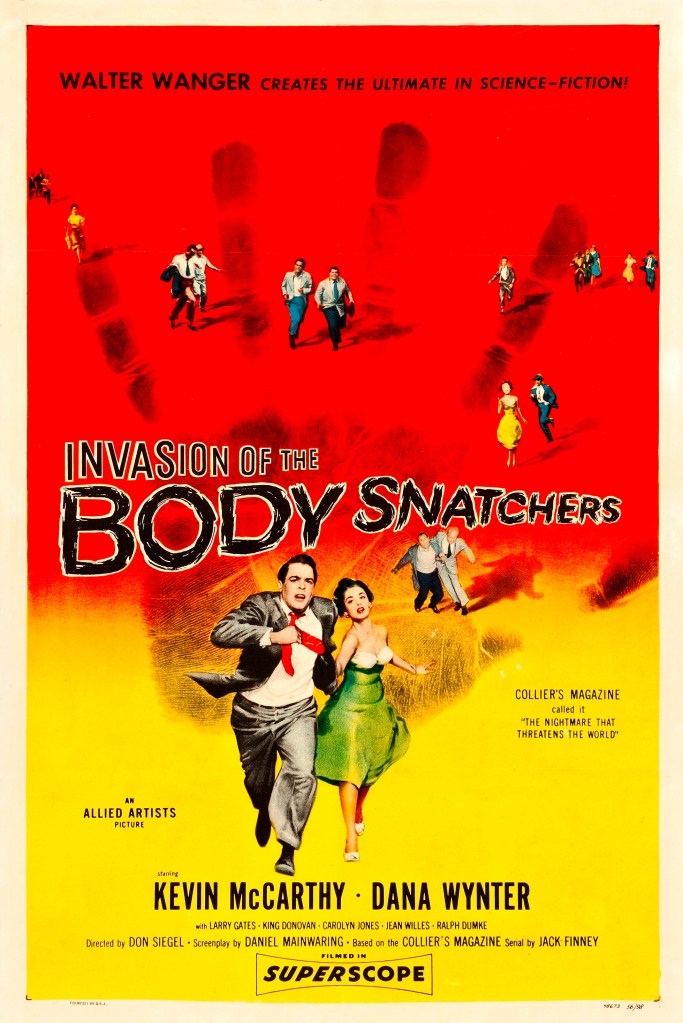
Cast: Kevin McCarthy (Dr Miles Bennell), Dana Wynter (Becky Driscoll), King Donovan (Jack Belicec), Carolyn Jones (Teddy Belicec), Larry Gates (Dr Dan Kauffman), Virginia Christine (Wilma Lentz), Ralph Dumke (Police Chief Nick Grivett), Jean Wiles (Nurse Sally Withers), Bobby Clark (Jimmy Grimaldi)

‘Look, you fools, you’re in danger! Can’t you see?! They’re after you! They’re after all of us! Our wives, our children, everyone! They’re already here! You’re next!’

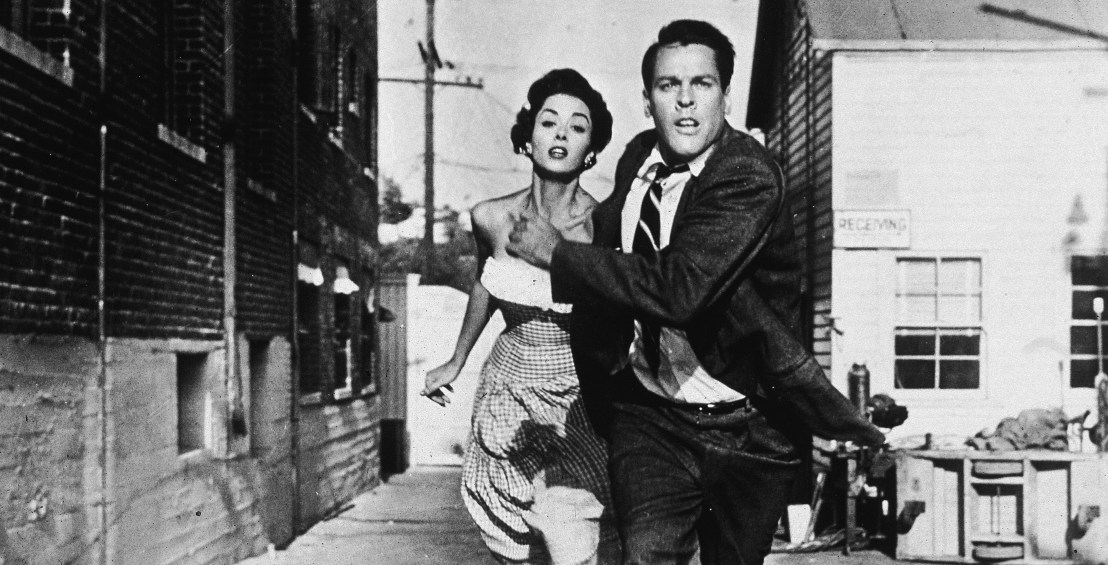
Those paranoid screams from Dr Miles Bennell (Kevin McCarthy) are part of the iconic conclusion of Don Siegel’s thrilling B-movie sci-fi conspiracy, full of the creeping horror of not trusting your own eyes or ears. It’s set in small-town Santa Mira, a sweet-as-apple-pie slice of Americana, where everyone knows everyone and life never changes. Until, of course, it does. Dr Bennell returns from a conference in Los Angeles to an epidemic of people claiming their loved ones are no longer their loved ones but that something about them is different. Bennell shrugs this off, more focused on his budding romance with fellow divorcee Becky Driscoll (Dana Wynter) – until he finds a clone of his friend Jack Belicec (King Donovan) growing in their home and faces the horrific truth: alien invaders are replacing people in the town with emotionless duplicates bent on world domination.

Siegal always claimed it was just a movie. That he wasn’t interested in political statements. You can believe that if you like, but Invasion of the Body Snatchers’ power stems from the terrible political and social parallels it draws with the real-world. The inversion reeks of 50s McCarthyite paranoia at communist infiltration, those suspicious Pinkos uninterested in individuality, only in protecting the system, where people are just cogs in its wheel. Even today, it still feeds on our fear of ‘the system’ absorbing us, crushing all that individuality we pride ourselves in having.

Even scarier at the time, Invasion doesn’t happen in the big city (where individuals are all getting lost anyway), but in that most American place of all, sacred small-town America, of picket fences and lifelong neighbours. If it can happen there, Invasions suggests, it really could happen anywhere. It’s one of many instances where Siegel makes the low-budget work effectively: in the same way he made a massive city full of people you don’t know the perfect space for a killer in Dirty Harry, he makes an intimate community the worst possible place to see people drained of humanity.

Invasions of the Body Snatchers uses that low-budget and limited locations to excellent effect. The bulk of the action taking place in the character’s homes and offices is actually more chilling. Watching a pod person mow a lawn, while his terrified niece (an effective performance from Virginia Christie) swears up-and-down he’s definitely not really her uncle, or a child running in terror from the home of his preternaturally calm mother is even more scary. That gets even more disturbing when our heroes discover replicas of themselves growing in their basements, or watch their small-town streets suddenly turn into a sea of emotionless duplicates.

There is also a hell of a lot snuck under the censor’s watchful eyes (maybe they only half-watched B-movies?) Its sharp screenplay includes plenty of surprisingly racy talk about between Bennell and Becky about his ‘bedside manner’ (‘that comes later’ he wryly tells her), or the fact that both of these characters talk openly about ‘going to Reno’, a popular euphemism at the time for divorce. For the time this is a surprisingly frank discussion of sex, not to mention the possibility of contented divorce (even Bennell’s nurse teases him about his flirtations with married ladies). What’s interesting is to consider is, if part of the appeal of the film is the horror of the familiar disappearing, perhaps the open acceptance of both divorce and sex suggests the process is already happening in different ways? Perhaps the safe world of picket fences is collapsing anyway, into something more permissive (and, who knows, plenty of people might well prefer that).

The creepy body-horror of the pods the duplicates grow in is also surprisingly disturbing for a 50s sci-fi. Splitting open to reveal the half-formed people inside, covered in foam, or the creepily serene complete copies that emerge, there is something deeply unsettling about it. No wonder Bennell’s instinct is to destroy them if he can with a garden fork, a surprisingly graphic choice. It’s hard to imagine a major Hollywood picture getting away with this sort of nightmare imagery.

It helps to build the terror of the film, which grows more-and-more relentless. Much of the final third of Invasion mixes a cat-and-mouse game with Bennell and Becky’s desperate flight from the town. It culminates in Bennell – in a scene really sold by Kevin McCarthy, who is the picture of (literally) square-jawed determination and reasonableness – disintegrate into just the sort of ranting lunatic (as he would do again in a cameo in the 1978 remake) the pod people decide they can let go, because ‘no one will believe him anyway’. Siegel shoots this sequence of paranoid ranting with a fast-cut mix of close-up and unsettling angles, as Bennell fails utterly to get anyone on the highway to slow down and listen to his warnings, like that nightmare of shouting when no one can hear you.

Perhaps it was too much for the producers, who added their own reassurance, introducing a framing device where Bennell recounts his tale to two reassuring figures of authority. I like to think Siegel – who uses visual metaphors for creeping paranoia and panic effectively throughout the film – deliberately shot these sequences as dully as possible (they remind me above all of the pedestrian final sequence of The Magnificent Ambersons) either so that we forget them (which we do) or perhaps to suggest their mundane nature implies these two-dimensional doctors and FBI agents might just be pod people themselves.

Despite the framing device, Invasion of the Body Snatchers is a tightly paced thriller, that builds in intensity throughout and uses its small-town setting as an excellent metaphor for the terrifying thought of your own family being invaded and subverted by a horrendous outside force. It makes for a compelling B-movie and leaves a deeply unsettling feeling behind: no wonder it has inspired so many remakes and reinventions. The terror of the people you know being the same and yet so completely alien and different, is going to have impact on every generation, no matter the context.

In the Heat of the Night (1967)

Sidney Poitier and Rod Steiger confront racism In the Heat of the Night

Director: Norman Jewison

Cast: Sidney Poitier (Virgil Tibbs), Rod Steiger (Chief Bill Gillespie), Warren Oates (Sam Wood), Lee Grant (Mrs Colbert), Larry Gates (Endicott), James Patterson (Purdy), William Schallert (Mayor Schubert), Beah Richards (Mama Caleba), Peter Whitney (Courtney)

A slim, tight thriller with a social message, In the Heat of the Night won Best Picture in 1967, beating out Bonnie and Cyde and The Graduate (both films with a revolutionary impact on films making) as well as another Sidney Poitier starrer, the even-more message heavy Guess Who’s Coming to Dinner. An unflashy, cleanly made, efficient film, In the Heat of the Night is in some ways a surprising winner – but the shocking depiction of racism in the Deep South at the time still hits home today.

In Sparta, Mississippi a wealthy industrialist from Chicago is found murdered in the street. Who committed the crime? Well surely it’s the well-dressed black man with a wallet full of money waiting to get out of town at the train station. The man is hauled in – only for him to reveal he is an expert homicide detective from Philadelphia named Virgil Tibbs (Sidney Poitier). Tibbs is sucked in to assist local police chief Gillespie (Rod Steiger) to investigate the crime, partly on the order of his boss, partly due to his disgust at the police department’s racism and incompetence, and partly at the pleading of the victim’s widow (Lee Grant) who recognises him as the best officer for the case. But will Tibbs’ expertise crack the case in a town where the idea of a black man in a suit, asking questions and taking no shit, is a still a surefire recipe for a lynching?

Nominally In the Heat of the Night is a murder mystery, but you’ll be hard pushed to remember much about the case after you finish the film. The eventual killer emerges from left field and the steps of the investigation are often unclear. While the film is trim, it does mean the tension around the killer’s identity never really builds up and we never get a real sense of the personality of the suspects (apart from the uniform racism).

Where its real strength is, is in the mis-matched “buddy” movie structure of two men forced to work together, the difference being that both casual and violent racism underpins every interaction Tibbs has in the town. Poitier was seen as a calm and graceful figure, but In the Heat of the Night finally gave him the chance to mix dignity with resentment and anger that had never been seen in a black character on screen before. The film works due to Poitier’s inherent toughness, his lack of compromise and anger at injustice. Poitier was never more hard-edged, defiant and determined to get what he deserves. Unlike Poitier’s other racial buddy movie The Defiant Ones, you can’t imagine Tibbs jumping off the train to freedom to try and save Tony Curtis.

Tibbs isn’t just the smartest, toughest policeman on the screen – he demands to be treated like it. The film’s most famous scene – and shocking at the time – is during Tibbs’ questioning of genteel racist Endicott in his orchid greenhouse. Endicott – whose home resembles nothing more than a plantation, loaded with black workers – is well spoken but inherently racist, and slaps Tibbs when his questions go on too long – only to immediately receive a backhand from Tibbs in return. Endicott is as shocked as audiences were – the idea of a black man striking back was on unheard of.

It’s terrifying and sickening to realise however that the American South at the time was genuinely like this. The slap is a proud moment – but it marks Tibbs for retribution. There is a genuine danger Tibbs will get lynched in this film (twice he narrowly escapes murder at the hands of a gang of furious rednecks). In real life, Poitier was very hesitant to film in the South, and for the brief location shooting in Tennessee slept with a gun under his pillow. The film is littered with casually dropped racial slurs, the politest of which is “boy”. It leads to the famous line from Tibbs that back home “they call me Mister Tibbs” – but you forget that it follows from Gillespie asking him what an n-word copper is called in Philadelphia. And even after that Gillespie only calls him Virgil, as if still not quite able to compute the idea of a black man who can be a “mister”.

The relationship between Tibbs and Gillespie is the heart of the film. And the film is brave to not have this turn into “they were opponents but then they became the best of friends”. Instead there is a sort of grudging respect that grows, even though Tibbs clearly thinks Gillespie is an impulsive racist and Gillespie thinks Tibbs is a stiff-backed but brilliant n-word. Rod Steiger won the Oscar for Best Actor, and he does some fine work as the complex Gillespie. Keeping his explosive energy in check (despite the inevitable outbursts), Steiger sketches out a character who is smart enough to know he isn’t smart enough, who can respect Tibbs’ professionalism and understand on some level that racism is beyond all sense but still drop racial words with an instinctive ease.

Steiger’s Gillespie is a tough-talking, stereotypical cop but he’s also got a sad little hinterland – a late dinner at his home with Tibbs has him confess that Tibbs is his only guest for years – and while he arrests no fewer than three innocent people for the crime, there is no doubting his dedication to justice. Steiger doesn’t apologise for Gillespie’s appalling attitudes, but also does enough to suggest that his racism is learned rather than innate. While never completely sympathetic, especially today, the film lays hints of hope that a racist cop from the South could work side-by-side with a black officer – and that was considerable progress at the time.

But it’s Poitier’s movie, and while in many ways he has the simpler part (and Poitier generously ceded his admiration for Steiger’s skill and craft pushing him to a level he felt he not reached before), Tibbs is the centre of the film. Jewison skilfully shoots Poitier as always the outsider, from his looks and Sherlock Holmes style skills, to the way the camera focuses on his hands touching things – from dead bodies to door knobs – to the visible discomfort of the white men watching him. Tibbs may be arrogant but he’s right and Poitier’s refusal to compromise or offer any concessions is a striking thing – Tibbs is who he is and he won’t change a thing to be accepted by the white man. At the end, he may respect the steps Gillespie has taken – but I doubt he’d consider the man a friend and certainly not a professional equal. 

In the Heat of the Night is still shocking for the openly displayed racism and menace of violence that black people faced in the Deep South in sixties America. Jewison’s film is efficiently assembled and tightly edited – not a single minute is wasted in one of the shortest Best Picture winners ever – and while its mystery is little to write home about, its portrait of racism in America is still shocking and stirring and its two lead performances are things to linger in the memory.