Tag: Mike Nichols

Working Girl (1988)

Working Girl (1988)

Wall Street gets the Cinderella treatment in this romantic comedy of sexual politics and mega-hair

Director: Mike Nichols

Cast: Melanie Griffith (Tess McGill), Harrison Ford (Jack Trainer), Sigourney Weaver (Katherine Parker), Alec Baldwin (Mick Dugan), Joan Cusack (Cynthia), Philip Bosco (Oren Trask), Nora Dunn (Ginny), Oliver Platt (Jack Lutz), Kevin Spacey (Bob Speck), Robert Easton (Armbrister), Olympia Dukakis (Personnel Director), Amy Aquino (Alice Baxter)
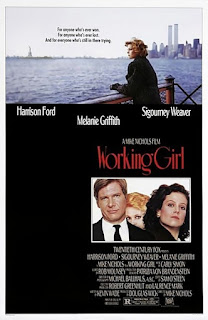
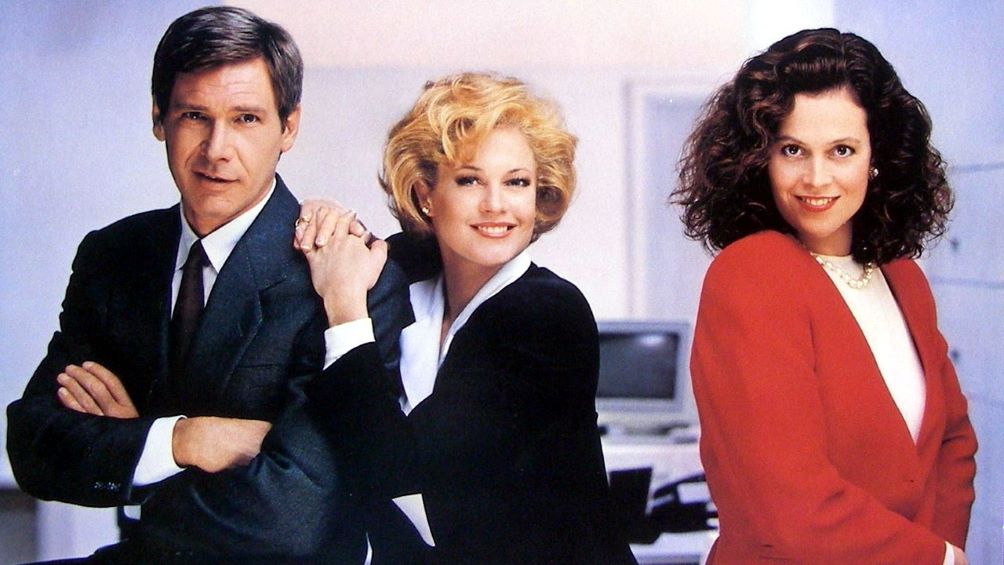
Is there a more 80s film in existence? It’s got the hair, the fashion, the attitudes, the Reagonite go-getting celebration of the guts and glory of Wall Street. Tess McGill (Melanie Griffith) looks and sounds like a dumb secretary, but she’s got the brains for business (but also, as she says, a bod for sin) – just never the opportunity to prove it. It looks like that might change under new boss Katherine Parker (Sigourney Weaver), who’s all smiles and talk of the sisterhood – but pinches Tess’ ideas and passes them off as her own. When Katherine is injured on a ski trip, Tess takes the chance to prove she’s got it by passing herself off as Katherine’s colleague and enlisting the help of mergers expert Jack Trainer (Harrison Ford) to put together a mega-bucks media merger. But what will happen when Katherine finds out?

Working Girl is really a great big Wall Street fairy tale, with Tess as the Cinderella invited to the ball only to have to run away leaving the business equivalent of her glass slipper behind. Katherine is a wicked stepmother, and Jack the handsome prince. It’s the sort of film where the heads of corporations are cuddly figures who place fair-play and honesty above making a buck and goodness, wins out in the end. Basically, it’s about as much a slice of business realism as Pretty Woman (this film could almost be a dress rehearsal for that).

Nichols directs the entire thing with confidence and pizzazz and draws some good performances from the actors, while keeping the entire thing light, frothy and entertaining. He had to fight tooth and nail to cast Melanie Griffith – but it was a battle worth winning as the role is perfect for her. Griffith always finds it hard to get good roles – her light, airy voice has condemned her to a string of airheads and bimbos – but here it’s perfect for a woman everyone assumes is dumb the second she opens her mouth. She’s even thinks of herself as not that bright, accepting her lot in life is settling for second best.

That’s personally and professionally. Her boyfriend, played with a wonderful smarm by Alec Baldwin, is a rat (she walks in to her flat to discover him mid-coitus – “This isn’t what it looks like!” he protests with an unabashed grin), who constantly reminds her that she’s punching above her weight dating him. Tess is at the bottom of an ocean of sexism on Wall Street: traders see her as little better than a perk, slapping her bum or stopping to stare at her behind when she walks past them. She barely avoids sexual assault from a coke-addled trader in the back of a limo (a piece of presciently perfect casting for Kevin Spacey). Her first boss (a puffed-up Oliver Platt) routinely humiliates her.
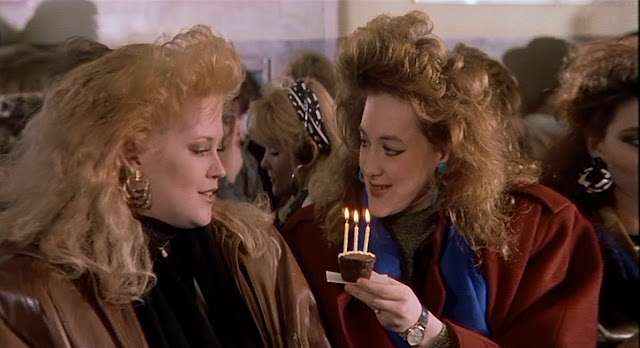
Oh my God! The Hair!

To be fair, the film makes clear that much of this is a woman’s lot in this poisonous world of Wall Street. Even her boss Katherine has to patiently remove groping hands from parts of her body, and wearily tells Tess that it doesn’t do to kick up a fuss when you never know who might become a vital contact in the future. Working Girl makes some pretty gentle points about workplace sexism – you can’t fail but notice Katherine and Tess are the only two women in the office who aren’t secretaries or HR people, and even Tess is pretending not to be – and the casual objectification of women.

Sadly, it blows a few of those points by still getting Griffith and Weaver to perform scenes in lingerie. Griffith even has a brief scene where she hoovers Weaver’s empty apartment topless. Sure, it’s a bit progressive on women’s rights in the workplace: but still, phroah, look at that.

Nichols gets one of his most relaxed and loose performances from Harrison Ford. Even if Ford at times looks a little abashed, working against such forceful performers as Griffith and Weaver (like a shy teenager in a school play), Nichols helps him feel light and funny without relying on the cool machismo that served him well as Indy or Han. Jack Trainer (such a Harrison Ford character name!), becomes giddy and playful under Tess’ influence and there is a sweet innocence about his courtship of her. It’s one of Ford’s funniest, most naturally instinctive performances.

Equally essential to the film’s success is Weaver, who plays up to perfection her glacial distance as a woman who is all smiles and “us, us, us” in person, but selfish looks and “me, me, me” in private. Weaver is very funny as a ruthless, amoral businesswoman masquerading as a campaigner for her sex and completely recognises that the role is essentially a wicked stepmother, pitching it just right between arch comedy and realism. She was Oscar-nominated, as was Griffith, and Joan Cusack who is triumphantly ditzy and warm as Tess’ best friend.

Working Girl pulls together all the tropes we expect. Tess is made up to look like the professional businesswoman she is aspiring to become, there is a neat bit of low-key farce as she passes off Katherine’s office for her own to Jack, a sweet bit of business chicanery as she Jack sneak into a wedding (the sort of thing that in real life would get you a restraining order) and it all leads into a “love and truth conquers all” resolution with a satisfying coda scene as Tess starts a new life. There is a lovely song by Carly Simon (over-used on the soundtrack – and fans should check out Michael Ball’s cover of it) and plenty of chuckles. It’s a fairy tale of New York.

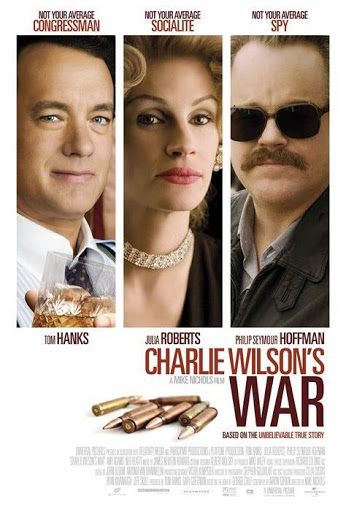
Charlie Wilson's War (2007)

Charlie Wilsons war
Tom Hanks and Philip Seymour Hoffman plot to bring down communism in the misfiring satire Charlie Wilson’s War

Director: Mike Nichols

Cast: Tom Hanks (Congressman Charlie Wilson), Julia Roberts (Joanne Herring), Philip Seymour Hoffman (Gust Avrakotos), Amy Adams (Bonnie Bach), Ned Beatty (Congressman Doc Long), Christopher Denham (Michael G Vickers), Emily Blunt (Jane Liddle), Om Puri (President Zia-ul-Haq), Faran Tahir (Brigadier Rashid), Ken Stott (Zvi Rafiah), John Slattery (Henry Cravely)

Did Congressman Charlie Wilson (Tom Hanks) end the Cold War? Well no, of course he didn’t. But he might just have managed to make the US notice that Afghanistan had the potential to be the USSR’s very own Vietnam. Despite his reputation as a playboy, Wilson had a shrewd understanding of geopolitics and – encouraged by millionaire backer Joanne Herring (Julia Roberts) and helped by firey CIA agent Gust Avrakotos (Philip Seymour Hoffman) – arranges for money and arms to be pumped into the Afghan Mujahideen throughout the 1980s. Shame that funding stopped just as the Taliban emerged into the power vacuum.

There is a compelling film to be made here around how the US’s short-sighted policies in Afghanistan during the 1980s led to catastrophic implications in the 2000s. This isn’t that film. Instead Nichols – with some playful rat-a-tat dialogue from Aaron Sorkin – settles for a political caper, which only nods vaguely at the future disaster of 9/11 in favour of a feel-good, against-the-odds triumph. It’s a massive shame, as a third act which really embraced how policy failures in Afghanistan contributed to the rise of the Taliban and Al-Queda could have been compelling and thought provoking.

Watching this film you could come away with no real idea why the fighters the Wilson works so desperately to get defensive anti-aircraft missiles to, would end up recruiting young men to fly planes into buildings. The film nods at this, with Wilson failing to raise even a paltry million for investment in education and healthcare in Afghanistan post-Soviet occupation (after raising billions for weapons to fight the Soviets). But we don’t get a sense of the bigger picture here. How did hatred for the Russians, with the Americans as allies, flip into fury at the West? The film doesn’t want to think about it.

Instead this is a light bit-of-fluff. It’s a comic drama of the sort Hollywood loves: the playboy with immense depth. The hero whose heart melts at a refugee camp and dedicates himself to helping people. The film uses as a framing device a medal ceremony, with Wilson being praised for his vital role in bringing about the defeat of the USSR. It’s all feel-good – and for all we see at the end a brief moment of Wilson in tears at his failure to ‘finish the job’ by offering real hope to the Afghans – and that doesn’t feel like the whole story.

There is plenty of comedy though, even if the political awareness is light. Gust and Charlie’s first meeting is a well-staged farce of Wilson juggling geopolitics with heading off oncoming scandal, that requires Gust to frequently step in and out of his office as two different conversations take place. Comic material is mined from Wilson’s handpicked office staff of attractive women who, contrary to expectation, turn out to be brilliantly insightful and hyper-competent. CIA agent Gust is a gift of a role for Philip Seymour Hoffman (who is great fun) as a foul-mouthed, just-this-side-of-OTT maverick who genuinely cares about his job.

Hoffman fares better than the other two leads, both of whom feel miscast. The casting of Hanks and Roberts seems designed to keep a film that could have been a sharp attack on America’s world policy feeling as cosy as possible. After all, this is America’s uncle and America’s sweetheart: they couldn’t be part of geopolitical shenanigans! Sadly, Hanks doesn’t have the touch of smarm and cocksure lightness with depth the part needs (Tom Cruise would have been better). Julia Roberts seems too wholesome for a sexual femme fatale (Michelle Pfeiffer would have been better).

Nichols does keep the pace up and his direction is assured and professional. But this is a strange and toothless film which, after the initial energy of Wilson managing to get the funding the Afghans need, has no idea where to go. So instead it slowly drains out to nothingness. A late scene as Gust explains the dangers of abandoning Afghanistan to the Taliban to Charlie (with the accompaniment of plane sounds on the soundtrack) hints at the film this could have been. But instead, this sticks for being a romp about how an unexpected hero changed the world. The fact it was partly for the worse doesn’t fit this narrative.

The Graduate (1967)

Dustin Hoffman is out of his depth in coming-of-age comedy The Graduate

Director: Mike Nichols

Cast: Dustin Hoffman (Benjamin Braddock), Anne Bancroft (Mrs Robinson), Katharine Ross (Elaine Robinson), William Daniels (Mr Braddock), Murray Hamilton (Mr Robinson), Elizabeth Wilson (Mrs Braddock), Buck Henry (Room clerk), Brian Avery (Carl Smith), Walter Brooke (Mr McGuire), Norman Fell (Mr McCleery)

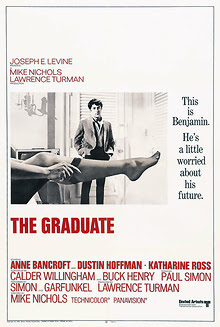
In 1967, the world went crazy for The Graduate. This comedy of manners and sex tapped into a whole generation’s growing sense of rebellion. Who wants to be told their life has already been mapped out for them? The Graduate seemed to capture that mood and was celebrated as the ultimate example of how someone could break out of the mould. It’s a young person’s film, and perhaps you need to be young to watch it. The older you get – and the further away from those dreamlike days of the late sixties where everything seemed possible – the more the film feels like an amusing but soulless story, with a privileged bore at its heart.

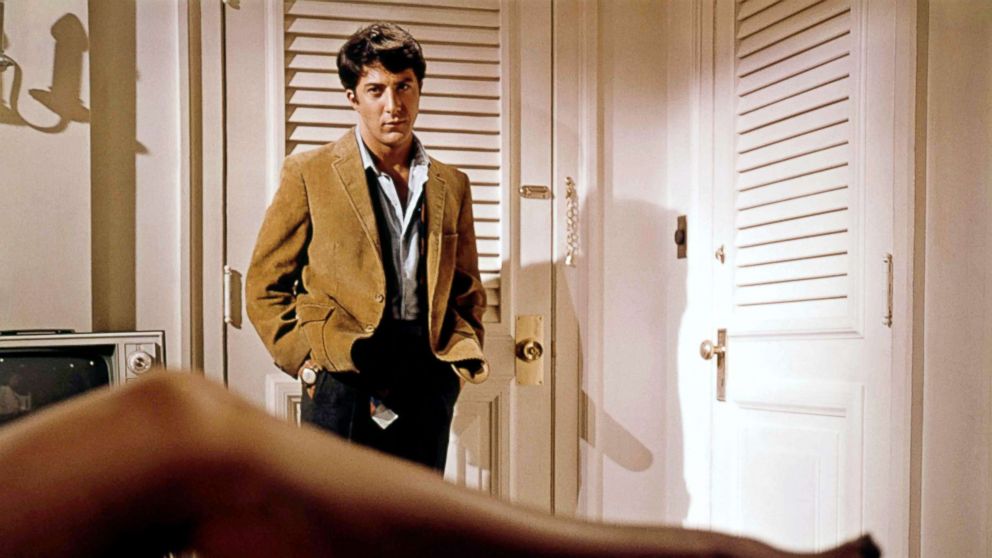
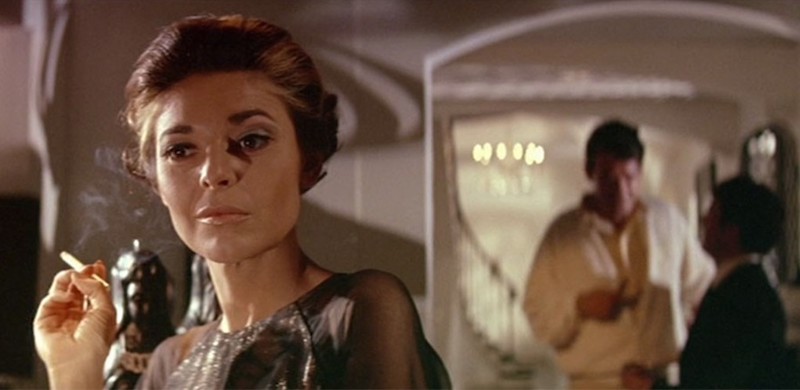
Benjamin Braddock (Dustin Hoffman – actually nearly 30) is a fresh-faced young graduate, top of his class and a sports star. Arriving back home in California, he’s depressed, lost, uncertain about what he wants from life, but pretty sure it isn’t the litany of office, marriage and a career in “plastics” that his parents expect. His isolation brings him to the attention of Mrs Robinson (Anne Bancroft – only 6 years older than Hoffman), the wife of his father’s business partner. She sets about to seduce him, partly out of boredom, partly perhaps because she feels the same ennui and depression as he does (not that Benjamin ever notices – more on that later). They start a long summer affair, conducted with supreme awkwardness on Benjamin’s part, which suddenly becomes complex when he falls for her daughter Elaine (Katharine Ross). Can true love triumph?

The good first. The film’s popularity was grounded in its wit – and it has a very funny script by Buck Henry, who also appears in one of the film’s funniest sequences, as an overly helpful desk clerk at the hotel where Benjamin is awkwardly trying to book a room for his assignation. The film is pacey and energetic and full of imaginative cuts (a brilliant one sees Benjamin flopping out of a pool, jump cutting to him descending onto Mrs Robinson in bed) and directorial flourishes. It’s a dynamic and sexy young film, full of bounce and appeal, with some great jokes.

Mike Nichols – who won the film’s only Oscar for Best Director – shoots the film with real vibrancy. He does a fantastic job getting us to invest in Benjamin. A huge percentage of the film sees the camera focus in on Benjamin, usually in medium-shot or close-up – and it’s a rare moment when he isn’t in frame. The camera rarely leaves him for the first ten minutes, first zooming out from a close-up of him sitting on a plane, following him along a conveyor belt to the terminal (where his blankness slowly changes to fearful anticipation of what waits at home) to tracking along beside him at his welcome home party. This party is stuffed with his parents’ friends, and Ben’s isolation, claustrophobia and insecurity seem all the more striking as the camera gets closer and closer to him. It’s a superb example of using the camera to build empathy for the character.

Nichols’ excellent work continues throughout the film, which makes excellent use of shots, editing and zooms to make us experience Benjamin’s emotions, helping us root for him. It also helps that the film is scored to some of the finest music Simon and Garfunkel ever performed. The slightly sad, wistful feel to their songs – from Sound of Silence to Scarborough Fair – seems to perfectly frame Benjamin’s doubts, just as the slightly more hopeful beats of Mrs Robinson seem to capture him embracing freedom at the film’s end.

The decision to cast Hoffman pays off in spades. Hoffman is no one’s idea of a WASPy sports-star alpha male, but he’s everyone’s idea of an outsider. His performance is pitched perfectly – awkward, shy, uncertain, unaffected and natural. In fact, the film is pretty much perfectly cast. Anne Bancroft’s performance defined her whole career, the predatory Mrs Robinson whom she invests with touches of emotional vulnerability and more than a trace of the very same depression and fear that Benjamin is feeling. An entire generation effectively fell in love with the charming Katharine Ross.

Freedom is what the film is all about. But today, you feel the film skims only lightly on depths it could explore in detail. Benjamin can feel all the ennui he likes: he’s got it so made, I wish I had his problems. With his wealth, his fast car, the vast array of businessmen falling over themselves to offer him low-work-high-reward jobs, not to mention the gallery of attractive women throwing themselves at him, it’s the sort of misery only the rich enjoy. Almost constantly dressed in suit and tie, with his combed down hair, he looks a million miles from the generation that would party at Woodstock and protest Vietnam. Benjamin probably went on to vote for Reagan (twice). There is nothing counter-culture about him whatsoever. He ticks off noisy teenagers at a drive in and seems to find the young as hard to understand as the old. He’s less a generation adrift, more of an individual misfit.

The film though loves him to pieces, in the same way it largely treats Mrs Robinson as somewhere between a joke and a monster. She’s written as either a horny exploiter of youth, or a vengeful harpy. Rather than a ruthless cougar, today she seems to be more of a vulnerable, damaged figure. Every scene with Bancroft carries moments of pain, sadness and world-weary depression. Why else is she so able to spot these traits in Benjamin? Watch her desperation and hurt when Benjamin starts to date her daughter. That’s real humanity there, miles from the empty selfishness of Benjamin, who genuinely doesn’t get why she could take it so amiss that he intends to replace her with her own daughter.

The most striking moment in the film that captures this is the scene where Benjamin attempts small talk during one of their nights together. The film wants us to think Ben is looking for something real, and that Mrs Robinson just wants the sex. But the conversation is a masterclass from Anne Bancroft of suppressed pain and regret, as she talks of having to drop her art degree because she was seduced by her husband, of years of living an empty life. Benjamin of course doesn’t get it – he guesses she dropped the art because she wasn’t interested – and then gets cross when he feels he’s being belittled. Mrs Robinson’s sad eagerness to persuade him to stay is rather affecting – more than the film really allows. I credit Anne Bancroft with much of this.

And then we have Elaine. The second half of the film shifts gear dramatically from the first. While the first half is a sex comedy and study of suburban discontent, the second seems to change into the sort of celebration of youthful energy that the first half could be said to be partially satirising. Elaine is an independent young woman, embracing her education and the opportunities it offers. Suddenly, an energised Benjamin is tearing across country to win Elaine back (let’s put aside that Benjamin behaves in this section like something between a stalker and a creep).

However, as the film nears its conclusion, that celebration of the promise of youth is undercut somewhat, as Elaine chooses to make  all the same mistakes her mother made. The film even hints at this with its famous ending shot. After eloping from her wedding, Elaine and Ben sit on the back seat of the bus. The camera holds the shot as they laugh, until they stop laughing and then sit next to each other, and then awkwardly look this way and that as if waiting for someone to tell them what to do. What do they really have in common? Having made a spontaneous decision like this, what happens next? It’s another little genius flourish by Nichols – although it’s also the film having its cake and eating it, selling the sequence before this as a triumph of true-love, then asking us to question if the world is that simple.

Some of these ideas felt lost in the excitement of the film’s first release, when it captured a wave of public feeling. But the older the film gets, the more awkward it looks. As if the kids who watched it in the sixties and turned into the Reaganite Baby Boomers of the 1980s, slowly realised that the message it was selling was not quite true and perhaps their parents weren’t that different after all.

Watching The Graduate today, I found it hard to shake the feeling that if I flashed forward to the characters’ lives in 1997 I would find a very different, but still very similar story. Benjamin Braddock would be a wealthy businessman, still dressed in suit and tie, who went into plastics or computers or some such and swallowed the “greed is good” mantra from his corner-office. Elaine a depressed housewife, mother to a couple of kids, who left her dreams of forging her own life behind to marry the subject of a youthful fling. Who, with her own regrets, finally understands the sadness and misery at the core of her mother’s life. And is making eyes at that attractive young man next door…

Who’s Afraid of Virginia Woolf? (1966)

Burton and Taylor play a feuding couple in Who’s Afraid of Virginia Woolf?

Director: Mike Nichols

Cast: Elizabeth Taylor (Martha), Richard Burton (George), George Segal (Nick), Sandy Dennis (Honey)

In 1966, Hollywood was only just emerging from the strict rules of the Hays Code. These governed everything from the themes a film could explore to the language you could use while doing it. But in the permissive 60s, it was finally beginning to crack – and Who’s Afraid of Virginia Woolf? was one of the first films to really push it over the edge. This film helped usher in 70s Hollywood, where filmmakers finally felt empowered to explore darker themes and to do so with sex, violence and bad language. Five years after this film came out, something like A Clockwork Orange could become a box-office smash and a Best Picture nominee. Talk about the changing of the guard.

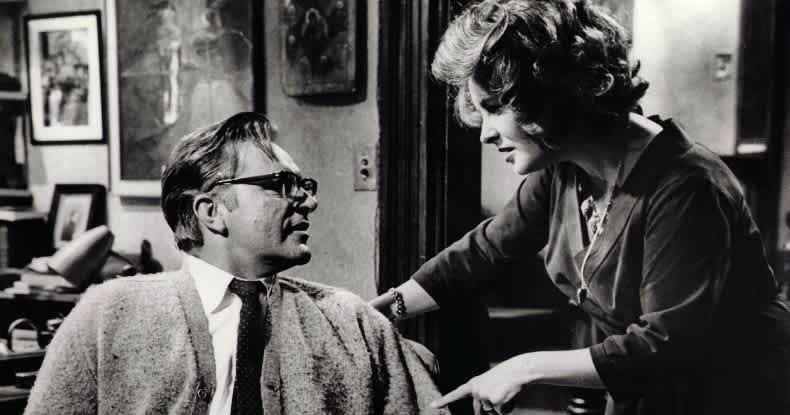
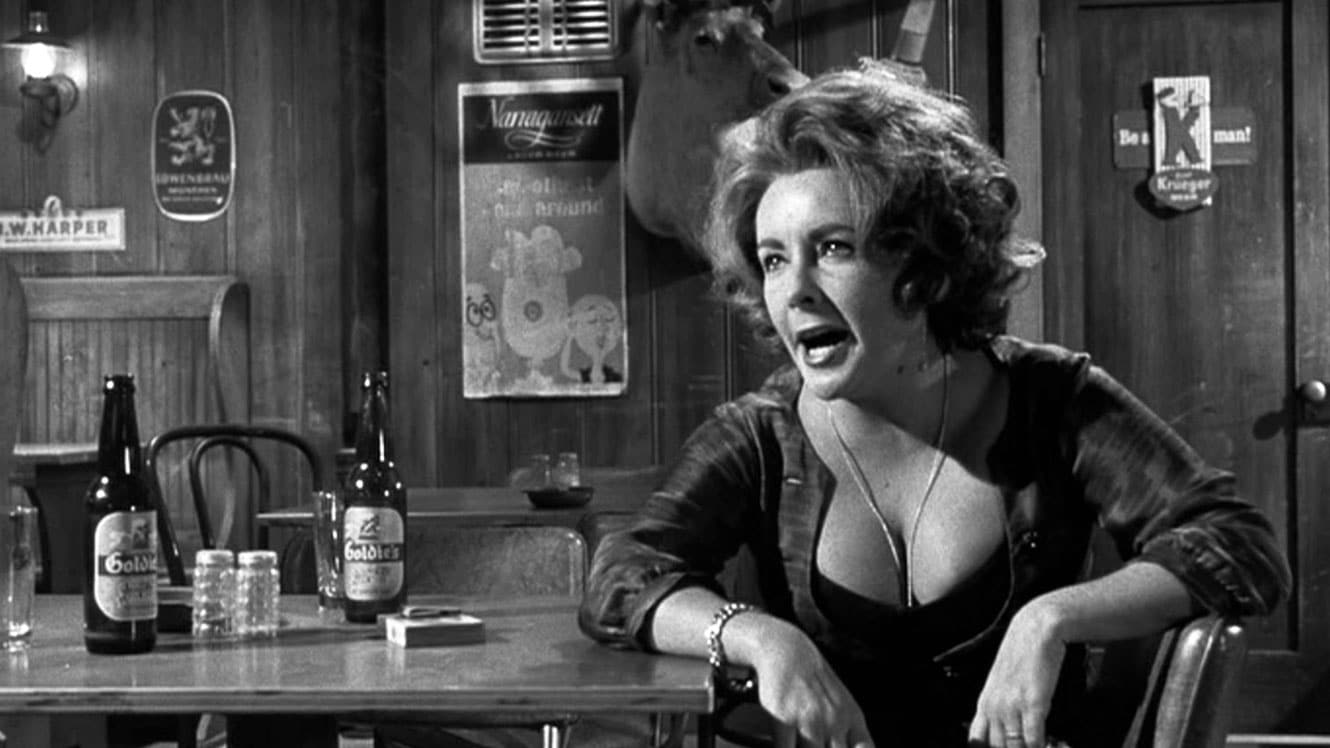
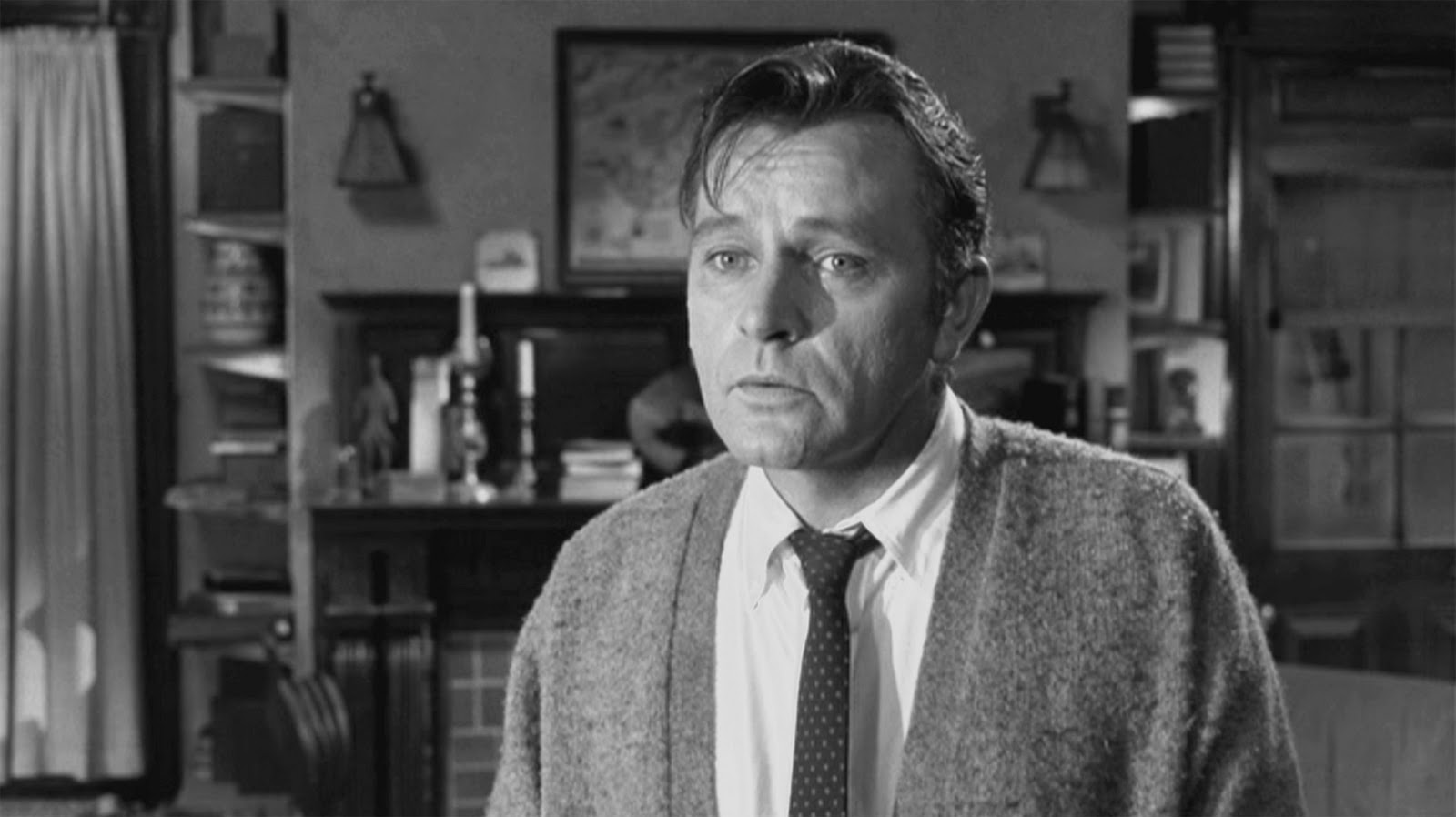
Mike Nichols’ film debut is a faithful adaptation of Edward Albee’s Broadway smash, which had been controversial enough on stage for its full and frank exploration of a marriage consumed with bitterness, feuding and pain. Not to mention its open acknowledgement of extra marital sex, abortion and alcoholism all delivered with a literal “screw you!”. Elizabeth Taylor is Martha, daughter of the president of a small New England college, whose husband George (Richard Burton) is a failed associate history professor. The couple are locked into a dysfunctional marriage that mixes recrimination and a perverse, shared sense of humour. Drunkenly returning home after a party, they welcome a new professor (George Segal) and his wife (Sandy Dennis) to their home for a nightcap. There they quickly rope the couple into a series of increasingly personal “games” with an edge of cruelty and lashings of verbal abuse.

Today, Who’s Afraid of Virginia Woolf? has not always aged well, coming across at times as rather forced and overbearing, as is often the way with films that pushed the boundaries so effectively back in the day. Nichols has the confidence to avoid “opening up” the play too much – its single setting on stage is augmented here only with a brief drunken excursion out to a late night bar – and instead focuses on drawing out four superb performances from its actors (all Oscar nominated) and letting the camera move intricately around the confined rooms where the action takes place.

What Nichols really draws superbly from this film is the control of the film’s continual pattern of simmer, tension and release. The play is effectively a series of psychological games that George and Martha play between themselves. The film is like a drunken, truly mean-spirited version of Noel Coward’s Hay Fever, where the self-absorbed hosts similarly play elaborate ”games” with their confused guests. Most games involves Martha and George turning on each other, viciously attacking the other for everything from failure to drunkenness, with their guests used as the jury, mixed with “get the guests” interludes as the couple turn on the sexual and marital issues in their guests’ lives.

It makes for a series of compellingly delivered sequences – even if the constant thrum of tension and heightened half-mock, half-real fury Martha and George keep up for most of the film finally starts to bear down on the viewer. The film starts banging its points with a transgressive pride, which looks like increasingly like a lot of sound and fury over quite minor issues. But then that’s always the way with convention defying films – so many following films have buried these conventions, that the attention grabbing way this film does it looks quite tired and overworked today.

As Martha and George, Nichols was able to cast the most famous married couple on the planet at the time, in Elizabeth Taylor and Richard Burton. With these titanic personalities working – for perhaps the only time – with a director who had the skill and authority to tame them, the two of them delivered probably their finest performances on film. It also adds to the illicit sense for the audience – like Nick and Honey – that we are trapped into seeing a series of personal and intense conversations and arguments. 

Finally accepting the sort of intense and challenging material he often overlooked for well-paid gigs, Burton is superb as George: a mass of passive aggression, condescending to everyone around him, capable of great cruelty but also a crushed, disappointed and vulnerable man, desperate for affection.

Elizabeth Taylor was similarly sensational – and Oscar-winning: puffy faced, blowsy and domineering as Martha, who similarly has buried her pain and loneliness under a never ending onslaught of aggression, mockery, tartiness and loudness. Brassy and bold, Martha at first seems the controlling, even abusive force in the relationship, but she is also isolated, scared and overwhelmed with pain. 

What’s brilliant about the relationship between the couple is at first it seems like George and Martha are a deeply unhappy couple, fuelled by hate. However, it becomes clear their feuding and contempt for each other is in fact part of a relationship grounded on mutual love and need (the final shot is their hands joined together), revolving around their mutual shared pain on their failure to have children. The couple’s primary “game” is a private one – a fictional child, invented to compensate for their mutual infertility – discussion of whom early on by Martha opens the door to the fury that follows. But it gives an insight into their relationship, actually kept fresh by their feuding.

By contrast, it’s the seemingly happier young couple who have serious problems. Nick, very well played by George Segal, is a dashing young buck who is actually selfish and, with a dream of sleeping his way to the top (despite his possible impotence), whose lack of depth is routinely savaged by both Martha and George. Despite this, Nick doesn’t seem to realise that this he’s in the middle of a series of games. He’s married his wife out of obligation for her pregnancy. Honey – an Oscar-winning turn by Sandy Dennis – on the other hand seems to be aware she’s out of his depth here, and reverts into an almost childish passiveness, mixed with awkward horror which slowly peels away to reveal her misery and depression. Slowly we realise Nick and Honey have nothing in common.

It’s a complex and intriguing play, brilliantly bought to the screen by Nichols whose camera (in stark black and white) bobs and weaves through the action, involving each actor in every scene (the camera often focuses on reactions as much as dialogue delivery). All four of the actors are great, but Burton and Taylor are nothing less than sensational (ironically their careers never seemed to recover from the amount they put out there, with more than a few speculating that their own marriage was but a few degrees different from George and Martha) and the film itself, while overbearing, is also still compelling in its complexity and stark insight into human relationships.

Primary Colors (1998)

John Travolta and Emma Thompson are definitely not the Clintons in Primary Colors

Director: Mike Nichols

Cast: John Travolta (Governor Jack Stanton), Emma Thompson (Susan Stanton), Adrian Lester (Henry Burton), Billy Bob Thornton (Richard Jemmons), Kathy Bates (Libby Holden), Larry Hagman (Governor Fred Picker), Stacy Edwards (Jennifer Rodgers), Maura Tierney (Daisy Green), Diane Ladd (Mamma Stanton), Paul Guilfoyle (Howard Ferguson), Kevin Cooney (Senator Lawrence Harris), Rebecca Walker (March Cunningham), Allison Janney (Miss Walsh), Mykelti Williamson (Dewayne Smith)

In 1998, America was engrossed in what seemed like a never-ending series of scandals around Bill Clinton, with Clinton facing impeachment. The news was filled with Clinton-Lewinsky Scandal catch-ups seemingly non-stop. Surely in the middle of that, a film that charted earlier scandals about Slick Willie would be a hit? Well Primary Colors proved that wrong. A thinly veiled portrait of the Clinton run for the White House, based on a novel written by Joe Klein who followed the Clintons on the campaign, it tanked at the box office. Possibly due to audiences having Clinton-fatigue – but also perhaps because it’s a stodgy, overlong and slightly too pleased-with-itself piece of Hollywood political commentary.

The film sticks pretty close to real-life timelines. John Travolta is Arkansas Governor Jack Stanton (Travolta does a consistent impersonation of Bill Clinton both vocally and physically during the whole film), who’s running for the Democratic Presidential nomination, supported by his (perhaps) smarter, ambitious wife Susan (Emma Thompson, doing a neat embodiment of Hillary without impersonation). Eager young black political operator Henry Burton (Adrian Lester) is recruited to help run the campaign – and finds himself increasingly drawn into the secrets of the Stantons, not least Jack’s persistent infidelities that seem to go hand-in-hand with his empathy and genuine passion for helping people. As scandal builds on scandal, the campaign to run for President becomes ever more unseemly.

Primary Colors asks questions that, to be honest, are pretty familiar to anyone who has ever seen a Hollywood film about politics. We’re presented with a Clinton-Stanton who wants to help America to re-educate itself in a modern world, who weeps with emotion when hearing a man recount his struggles with literacy (a fine cameo from Mykelti Williamson), who wants to rebuild America’s economy and build opportunities for all. And at the same time, he can’t keep it in his pants, is quite happy to dodge as much as possible the consequences of his actions, and is blithely disinterested in the impact his infidelities have on other people. Essentially the film wants to ask: at what point does a man’s personal behaviour and morals start to outweigh his good intentions?

It just takes a long time to ask it. A very long time. Primary Colors is a film that could easily be half an hour shorter, and you would miss very little. It’s a stodgy, overlong, smug drama that takes a gleeful delight in how clever it’s being making a film about the Clintons that-isn’t-about-them. It’s weakened as well by using an overly familiar device of putting a naïve and well-meaning audience surrogate character at its centre. We’ve seen this growth of disillusionment before, but Adrian Lester (in a break out role) fails to make Henry Burton a really interesting character – he’s little more than a cipher that we can project our views onto, and Lester is too reserved an actor to make him a character we can effectively invest in as a person. Instead he becomes a largely passive observer that more interesting characters revolve around.

Those characters being largely the Stantons themselves. John Travolta does a very good impersonation of Clinton, but he offers very little insight into the sort of person Clinton is, his motivations or his feelings. Like the character, the role is all performance and you never get a sense of how genuine his goals are and how much ambition is his main driver. As scandals pile up, Travolta is great at capturing Clinton’s sense of hurt that anyone would question his morals (even as his actions display his fundamental lack of them), but the role is short on depth. 

Emma Thompson gets less to play with as Hillary. In fact, she disappears from the second half of the film, after an affair plotline between her and Lester was cut completely from the film (something that makes certain scenes, where actors are clearly responding to this non-existent plotline, amusing to watch). But she manages to make the role something a little more than impersonation, delivering a whipper-sharp, ambitious woman who has buried her resentments about her husband’s betrayals under a wish to achieve a higher goal.

The rest of the cast deliver decent performances, but the stand-out is Kathy Bates as a long-time Stanton friend turned political fixer, who sees her idealisation of the Stantons turn to bitter disillusionment. Bates at first seems to be delivering another of her custom-made “larger than life” roles, but as the stuff hits the fan she layers it with a real emotional depth and complexity. It’s a caricature role that she turns into something real, a woman who feels genuine pain at seeing her deeply held political convictions and ideals being slowly disregarded by her heroes.

But then we get her point. Don’t we all feel a bit like that when we think back about Bill Clinton? The more we learn about his affairs and sexual scandals – and the more that #MeToo develops our understanding of how powerful men can abuse their power to take advantage of star-struck young women – the less sympathetic he seems. The film too suffers from some really out-of-date views of male sexuality. Billy Bob Thornton’s political fixer exposes himself early on in the film to a female worker, but this is shrugged off as “banter”, as opposed to a criminal offence – and the film largely avoids giving any air time to Stanton’s principal victim, the teenage daughter of a black restauranter whom he may or may not have impregnated. Stanton uses his power to gain sexual favours – one of his earliest acts is casually picking up a gawky English teacher who’s giving him a guided tour of her school (a funny cameo from Allison Janney) – but this is largely categorised as a personal weakness that doesn’t impact his suitability for the Presidency, something that feels more and more uncomfortable.

However, Primary Colors’ real problem is that it is overlong and a little bit too pleased with its intricate reconstruction of semi-true events. Although there are funny lines and decent performances, the film lacks any real zip and it gives no real insight into modern politics (other than perhaps deploring the compromises politicians must make) or the Clintons themselves. Instead it settles for telling us things we already know at great length and making safe but empty points about modern America. Far from exploring a Faustian pact where we accept deep personal failings in politicians because we believe that, overall, they could be a force for good, instead Primary Colors is all about turning shades of grey into obvious clear-cut moral choices.