Tag: Paul Lukas

Dodsworth (1936)

Dodsworth (1936)

A marriage disintegrates in this richly mature, non-judgemental film one of the best of the decade

Director: William Wyler

Cast: Walter Huston (Sam Dodsworth), Ruth Chatterton (Fran Dodsworth), Paul Lukas (Arnold Iselin), Mary Astor (Edith Cortright), David Niven (Captain Lockert), Gregory Gaye (Kurt von Obersdorf), Maria Ouspenskaya (Baroness von Oversdorf), Odette Myrtil (Renée de Penable), Spring Byrington (Matey Pearson), Harlan Briggs (Tubby Pearson), Kathryn Marlowe (Emily), John Payne (Harry)

Marriage is tricky. In the hustle and bustle of everyday life, bringing up a family, running a business and rushing between social events, what if you don’t notice you don’t have much left in common? That’s the theme of Dodsworth, one of the most strikingly modern of 1930s films, that tackles the breakdown of a marriage in a surprising subtle way, avoiding the sort of moral punishment and condemnation you’d expect from the production code. Combined with sharp writing, fine acting and some fluidly creative direction from William Wyler, and you have an overlooked classic.

Dodsworth kicks off with the retirement of car entrepreneur Sam Dodsworth (Walter Huston). Having sold his successful independent factory to a major business, Sam is now effectively retired and suggests that he and his wife Fran (Ruth Chatterton) take that trip to Europe they’d always discussed but never had time to do. The trip, however, starts to reveal fractures in their relationship. Fran isn’t ready to ‘rush towards old age’ like she feels Sam, with his touristy longings and interest in engineering mechanics is. She wants to be part of society and feel the excitement of flirtations (and more) with rakeish European types (from David Niven to Paul Lukas to Gregory Gaye), while Sam ticks off the sites and sits in cafés. Sam, it turns out, has far more in common with Naples-ex-pat Edith (Mary Astor) – but feels duty bound to do whatever he can to preserve his marriage with Fran.

It’s all adapted from Sinclair Lewis’ doorstop novel, skilfully boiled down into a clear dramatic journey by Sidney Howard, from his own theatre adaptation (which also starred Huston). It becomes both slightly sad, watching two people drift apart, while also offering rich vestiges of hope of what the future can hold if you dare to take a chance. It mixes this with dry wit, scenes of compelling narrative interest and an insightful look at two people effectively going through different types of life crisis during a ‘once in a lifetime’ journey. Because nothing can disrupt your thinking about your own life more than changing nearly everything about it in one swift barrage of events.

It’s assembled into a richly involving whole by William Wyler, who lands the film just the right side of melodrama. From the opening shot, tracking towards Sam’s back as he leans against a window looking out over the factory which gave his life meaning, there is a quiet air of its characters living in denial of their own melancholy. Part of Sam is already wondering what on earth he’s going to do without his factory – its why he immerses himself in the most banal details of the sights they will see in Europe, or the engineering of their cruise ship.

Sam feels his journey will give him new opportunities, but it often sees him uncertain and slightly adrift, from not knowing how to tip waiters to finding his mid-Western mindset unable to compute the sexually liberal rules of European high society. Fran claims the journey abroad will mean leaving behind the oppressive parade of the over familiar social scene in their small town. It quickly turns out, she’s only be bored of their small circle not the glamour of social events.
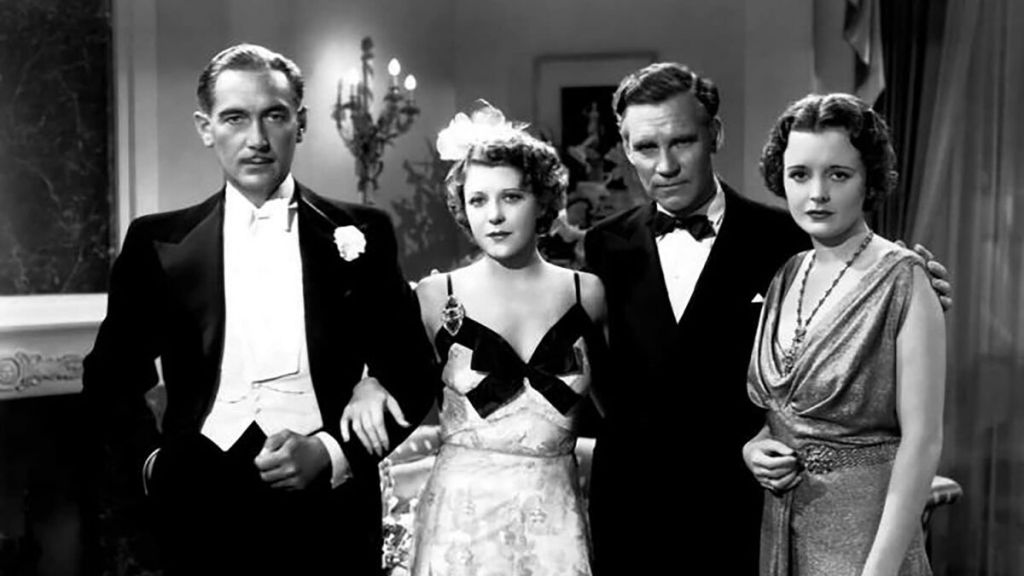
Sam is played with real skill and under-played grace by Walter Huston in one of his finest performances. He’s an overwhelmingly decent man, self-made, confident but hesitant and uncertain out of his element. There’s a fuddy-duddy quality to him you can understand Fran finding grating, but he’s also capable of genuine, unfiltered enthusiasm (watch his joyful spotting of a famous lighthouse during their journey – which hilariously he nearly misses while checking his watch – and the eagerness which he tries to share this with an irritated Fran and a politely bored Niven). What’s superb about Huston’s performance is the awkwardness, shyness and even timidity he brings to a successful man, the quiet air of confused anxiety behind Sam as his certainties melt away.

Both Sam and Fran are convinced everything between them is fine, constantly speaking (increasingly dutifully) about their love, as if trying to convince each other even as it starts to fall apart. Their home already feels invaded by their daughter and her husband, who absent-mindedly serves himself drinks from Sam’s cabinet. They’re in completely different mindsets. Fran is constantly embarrassed by her husband’s tendency to hickness. Sam feels Fran’s upper-class ‘friends’ wouldn’t look twice at her without the cash she can flash. Fran is horrified by Sam’s whimsical statement that they will soon ‘be a couple of old Grandparents’. She’s young at heart, being wooed and won’t give that up.

From a ship-bound flirtation with David Niven’s suave playboy where she seems shocked at his implication that they can take things further (Sam doesn’t help by telling her she only has herself to blame), she swiftly begins an all-but-open affair with Paul Lukas’ smooth gentleman (with Sam turning an embarrassed third-wheel blind eye) even sending Sam home to extend her holiday privately, while he fields awkward questions from their family and re-directs his inner fury at his public cuckolding into grumpy rants about other’s scrabble games covering his desk and fussily reaching for his Encyclopaedia to prove trivial discussion points.

By the time Ruth has convinced herself divorce will lead, inevitably, to a glorious new marriage with much younger aristocrat Gregory Gaye, she’s at the centre of an increasingly delusional mid-life crisis, full of false claims about her age and built on fantasies. Ruth Chatterton is very good, neatly bringing to life a woman who can’t face the idea of becoming old. The film (while siding with Sam) never fully condemns her for her behaviour – even if it maintains an American suspicion of her wealthy European upper classes. In fact, it’s very hard not to feel sorry for Fran when her lover’s mother (played by an imperiously shrewd Oscar-nominated Maria Ouspenskaya) punctures her delusions about the likely future of a relationship with her feckless son.

It’s all beautifully framed by Wyler. How can you not admire the lingering shot of Fran reading a telegram from Sam and letting Lukas’ Iselin set fire to it, the camera following the paper as the wind blows it across the balcony floor to disintegrate like the Dodsworth marriage? Dodsworth is full of such beautifully subtle moments, its imagery (and Oscar winning sets) wonderfully establishing a world in transit as much as the Dodsworths. Wyler also evens the score at points: Sam remains largely sympathetic, but its possible to be irritated by his naïve dullness, just while the frequently infuriating Fran is relatable in tragic fear that her life is behind her.

It’s this mature view of people drifting apart, making mistakes and not always being condemned that makes Dodsworth such a richly intelligent film. Sam would certainly by more happy with Edith (a very moving performance from Mary Astor), just as Fran would be better off without Sam. Dodsworth is largely refreshingly free of the sort of Puritan punishments other films dealing with similar themes would use under the Production Code. Instead Dodsworth is a superbly acted, directed and written melodrama with a serious tone that remains richly rewarding viewing.
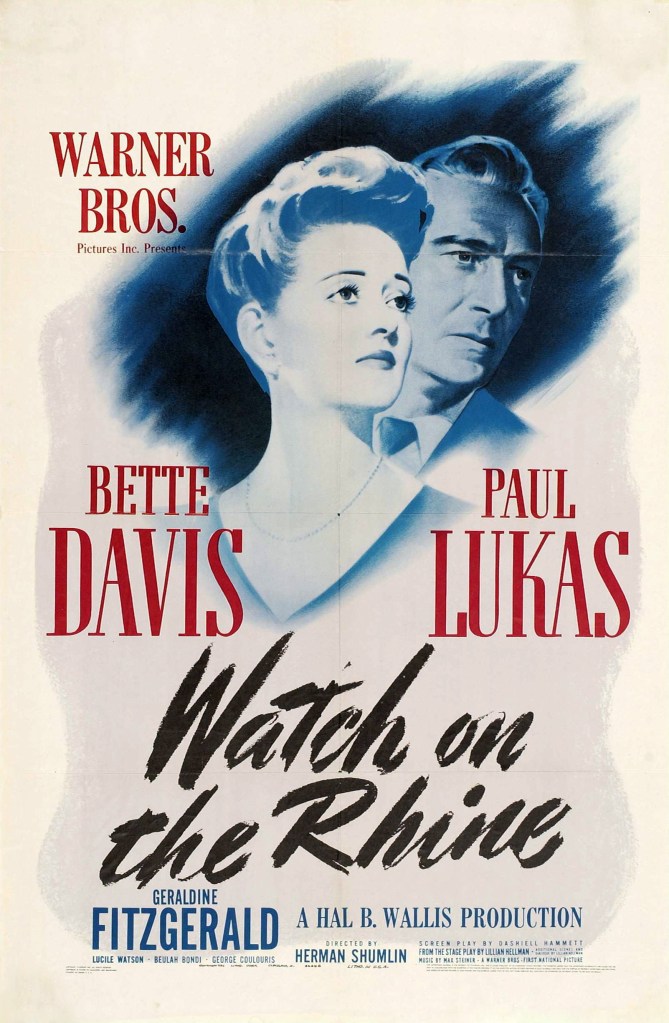
Watch on the Rhine (1943)

Watch on the Rhine (1943)

Dialogue heavy, drama light, war-time propaganda, that was already dated by the time it was released

Director: Herman Shumlin

Cast: Bette Davis (Sara Muller-Farrelly), Paul Lukas (Kurt Muller), Lucile Watson (Fanny Farrelly), Geraldine Fitzgerald (Countess Marthe de Brancovis), George Coulouris (Count Teck de Brancovis), Beulah Bondi (Anise), Donald Woods (David Farrelly), Donald Buke (Joshua Muller), Henry Daniell (Baron Phili von Ramme), Kurt Katch (Blecher)

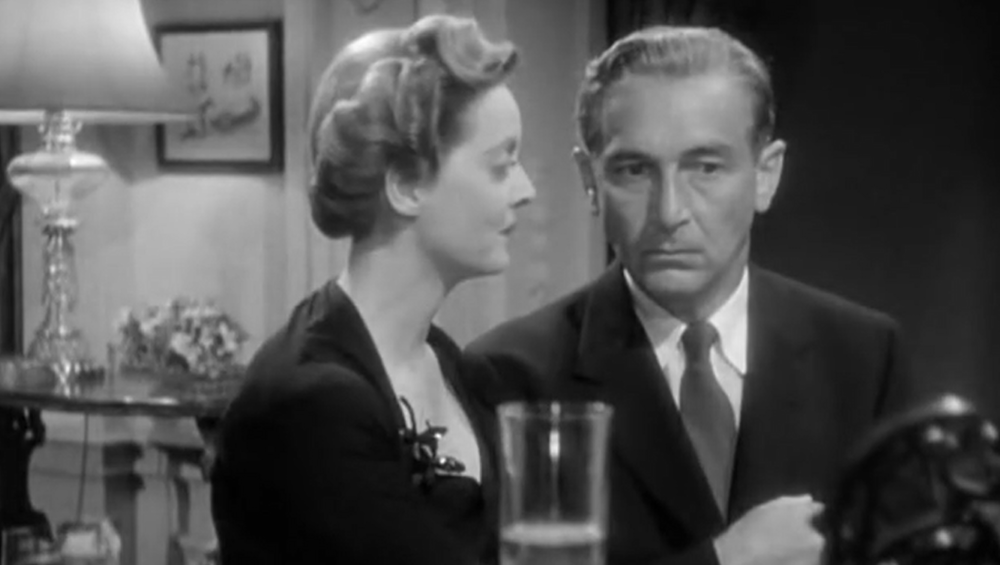
In 1940, dedicated anti-fascist campaigner Kurt Muller (Paul Lukas) arrives in the USA with his American wife Sarah (Bette Davis) and their children. They are welcomed by Sarah’s mother Fanny (Lucille Watson), but soon discover that America has little understanding of the dangers of Nazism – and that there is in danger in their refuge. Fanny’s other houseguest is Romanian diplomat Teck de Brancovis (George Coulouris) – whose wife Marthe (Geraldine Fitzgerald) is quietly in love with Sarah’s brother David (Donald Woods) – and he has every intention of selling Muller out to the Nazi embassy if he doesn’t pay him thousands of dollars. Can the Mullers escape?

Watch on the Rhine is adapted from a play by Lilian Hellman. Hellman was otherwise engaged and unable to write the script, so her long-term lover Dashiel Hammett came on board to open up the one-set play into a movie, with Hellman providing some additional speeches. Their best efforts can’t hide the fact this is a painfully worthy, preaching-to-the-choir propaganda piece. It’s packed with on-the-nose (if well-written) speeches and horrifically slow in its pacing and plotting.

First staged in early 1941, the original play did at least serve a clear purpose. It preached about the dangers and evils of fascism to a nation watching Europe tear itself apart. It was a heartfelt cry to understand that Hitler and his cronies were wicked men determined to let all the liberties America held dear burn. Its characters speechified at length about the conditions in Europe, the loss of freedom and the wickedness and danger of a political movement many in America felt was basically someone else’s problem.

This would have carried some real power as a rallying cry if the play had been bought to the screen in 1941. But, by 1943, American soldiers were already fighting Nazi forces in Africa and Italy: it hardly felt necessary to cry for intervention. Even by 1943, it was a period piece, looking back at a moment in time when fashionable types went to the German embassy for fancy dinners with black-shirted diplomats. And certainly, viewing it now, even its 1943 perspective looks slightly naïve and uninformed, in light of the horrors we now know were taking place.

Shorn of its original purpose to educate, the film comes across as a mix of heavy-handed propaganda (“This is why we fight!” it might as well be saying) and civics lesson.  It’s because, frankly, there is very little drama at all to take the place of the political lecturing. It’s fair to compare the film to Casablanca – another film that calls for action, released after a point when action had been taken. That could have been a propaganda piece: instead it’s a fast-paced, drama packed mix of romance and conspiracy thriller where Paul Henreid (remarkably similar to Lukas’ character here) struggles to gain the papers to escape from Vichy with a life-and-death urgency this film never musters.

Although Watch on the Rhine eventually works in a blackmail plot, where Muller’s plan to return to Europe and take on the leadership of the anti-fascists is threatened by George Coulouris’s smarmy diplomat, it takes so long to get to this (nearly an hour of screen time) your attention may well already have been lost.

Watch on the Rhine was directed – rather flatly, in one of his only two films – by it’s original Broadway director Herman Shumlin (heavily assisted by cinematographer Hal Mohr). The cast included several actors recreating their roles, including Lukas, Coulouris and Lucille Watson. Obviously, this left it short of heavyweights for the box office so the studio bought in Bette Davis to play Muller’s wife, expanding the role heavily (and insisting, against her protests, that she get top billing). Davis – exhausted after working intensely on Now, Voyager – took the part out of commitment to its message, but struggled with both Shumlin and serious personality clashes with Lucille Watson over their wildly differing politics.

Shumlin was unable to rein Davis in and Watch on the Rhine features one of her more melodramatic performances. Almost every scene features her staring off into the middle distance, voice trembling (not helped by Max Steiner’s music swelling magnificently practically every time she speaks). It’s a performance that never quite rings true, especially when compared to the underplaying from Lukas, who won the Best Actor Oscar for his low-key, restrained performance. He is quiet and genuine – and his pain and desperation when driven into a terrible moral choice is moving – but it’s hard to shake the feeling this fine performance was rewarded more for the words from his lips (especially since he beat Bogart in Casablanca). Watson was also nominated, playing the sort of role beloved by awards ceremonies, an eccentric old snob with a hidden heart of gold.

Watch on the Rhine is a rather dull civics lesson full of worthy speeches and very short on drama. It also has some of the most irritating child actors you will ever see (already infuriatingly precocious, the kids communicate their German background with stilted, precise accents). Even in 1943, its moment had passed and it never manages to create any dramatic point compelling enough to make you want to rewatch it. A film less worthy, and more willing to indulge in espionage thriller, would have been a distinct improvement.

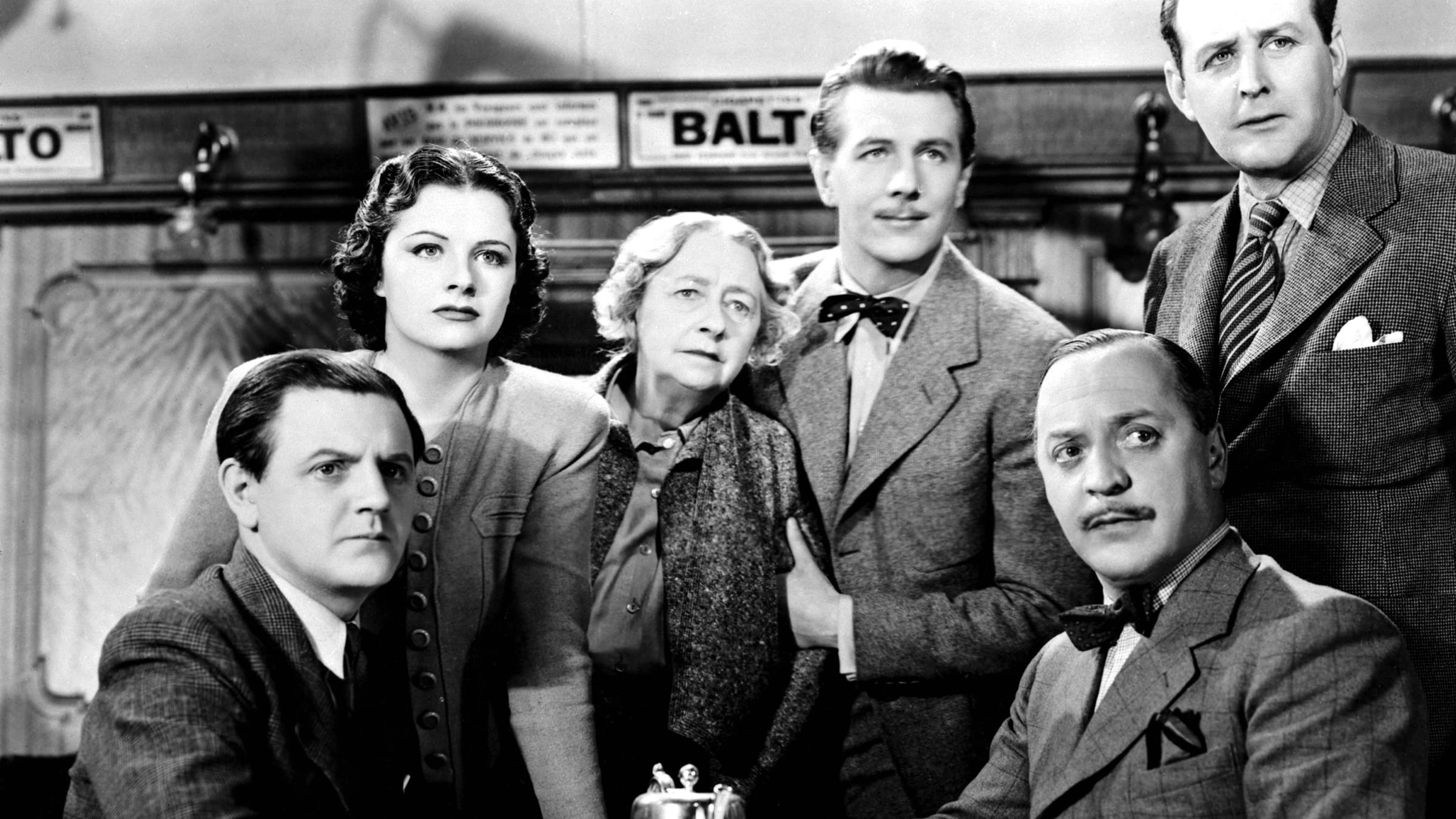
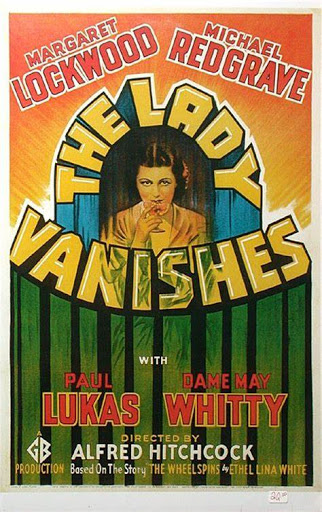
The Lady Vanishes (1938)

lady vanishes
May Whitty is searched for by Margaret Lockwood and Michael Redgrave in The Lady Vanishes

Director: Alfred Hitchcock

Cast: Margaret Lockwood (Iris Henderson), Michael Redgrave (Gilbert Redman), Paul Lukas (Dr Hartz), May Whitty (Miss Froy), Cecil Parker (Mr Todhunter), Linden Travers (“Mrs” Tothunter), Naunton Wayne (Caldicott), Basil Radford (Charters), Mary Clare (Baroness), Catherine Lacey (Nun), Googie Withers (Blanche), Sally Stewart (Julie)

In his conversations with Hitchcock, Francois Truffaut declared every time he tried to study The Lady Vanishes, all its tricks and mechanics, he always ended up too wrapped up in the plot to notice them. It’s about as fitting a tribute as a film can get, that it got one of the world’s ultimate film buffs just sit down and enjoy the ride. The Lady Vanishes is Hitchcock’s penultimate British film and it might well be one of the most enjoyable and entertaining films he ever made.

It’s late 1930s in Europe and a group of mostly British travellers have got stuck waiting for a train in the fictional country of Bandrika (but it’s clearly Germany). Iris Henderson (Margaret Lockwood) is on her way back home to (perhaps somewhat reluctantly) get married, exasperated by the loud noise made in the room above through the night by folk music expert Gilbert (Michael Redgrave). Charters (Basil Radford) and Caldicott (Naunton Wayne) are cricket obsessives, desperate to get home for the big test match. Mr Todhunter (Cecil Parker) is a lawyer, keen not to draw attention to the fact Mrs Todhunter (Linden Travers) isn’t actually his wife. When the train finally leaves the station the next day, Iris is hit on the head by a plant plot (was it pushed?) that very nearly hits governess Miss Froy (May Whitty). Miss Froy takes care of Iris on the train – but when Iris wakes after a rest, she finds Miss Froy has disappeared and – furthermore – everyone denies she ever existed in the first place. While a Bandrikan psychiatrist Dr Hartz (Paul Lukas) claims she may be suffering from concussion, only Gilbert believes her story. Will they be able to prove Miss Froy is real and rescue her from whatever peril she has found herself in?

Hitchcock’s The Lady Vanishes shouldn’t really work – not least since it takes nearly 20 minutes before we get any indication that we are watching anything other than a romantic comedy. But perhaps that’s also why it works, because those first 20 minutes are beautifully scripted, with some cracking dialogue and some skilfully drawn character work that invests us in these people long before any danger arises. It also serves as a brilliant counterpoint to the nearly non-stop tension and action that comes in the final hour of the film – who could have believed that all that light hearted banter in a guest house could end in a ruthless shoot out in the woods?

It all seems to change pace on a classic Hitchcock touch – a folk singer is suddenly, violently, strangled by an unseen assailant (why? I’ve no idea. The film doesn’t think you’ll care about the logic gap, and you don’t). But a large part of the film’s success stems from Hitchcock’s collaboration with Sidney Gilliat and Frank Launder on script-writing duties. Gilliat and Launder made a number of changes to the original novel, adding a greater espionage element. Even more importantly, they overhauled several of the characters, not least changing the Gilbert character from an engineer into a charming (if eccentric) folk music expert with a deadpan wit. Even more successfully, they introduced the hilarious ultra-British Charters and Caldicott, classic eccentric grown-up public schoolboys with a fascination with cricket (the combo was so popular Naunton and Wayne played versions of these characters another eleven times).

The script’s wit, playfulness and scintillating dialogue is what drives most of the film’s energy – and certainly what helps to make it as entertaining as it is. In particular, the dialogue exchanges between Lockwood and Redgrave hum with the sort of love-them-hate-them banter that wouldn’t seem out of place in a screwball comedy (“You’re the most contemptible person I’ve met in all my life!” “Confidentially I think you’re a bit of a stinker as well”), and the two actors shine in roles that start with classic feuding but subtly and beautifully come together as a romantic couple by the film’s end. Lockwood has pluck, guts and determination, a mix of socialite and head girl determination. Redgrave is superb as Gilbert, showing the sort of matinee idol wit and charm – not to mention an unconventional romantic sex appeal – that he very rarely got to exhibit again (sadly he didn’t get on with Hitchcock, and never worked with him again).

The film is full of wit and invention, but mixes it with a properly engrossing mystery. Every character has very clear reasons for denying the existence of Miss Froy (May Whitty is superb as a seemingly dotty old woman, hiding cunning and an unexpected capacity for action). We know that of course Iris is right – but even so, it’s hard not to begin to suspect that maybe the oily Dr Hartz (Paul Lukas whose professional smoothness neatly tips into cruelty) is right and she is suffering from concussion. The unravelling of this mystery is half Agatha Christie (vital clues pop up here and there), half famous five adventure – but the nearly “real time” playing out of the mystery injects huge amounts of tension and excitement, particularly as the villains start to be revealed.

The film also serves, interestingly, as a plea for British invention in European affairs in the era of appeasement. The train is stuffed nearly exclusively by Brits, most of whom are quite content at first to let things drift and not rock the boat. However, when the chips are finally down and its time to make a stand, the majority of the characters knuckle down and get their hands dirty to fight for justice. Even Charters and Caldicott take up arms (with a typical British reserve) to protect their fellow passengers, while Gilbert has already shown himself capable of being a man of action (as well as a pretty neat impressionist and physical comedian) when called upon. It’s telling that Cecil Parker’s Mr Todhunter is the nearest thing we see to an appeaser on the train (with a fear-and-hope-tinged expectation that everyone is playing by his own antiquated rules), and he’s the only one who angrily questions taking a stand.

It’s not surprising from Hitchcock, who made an even more passionate plea for intervention a few years later with Foreign Correspondent. Neither is it a surprise how superbly the film is made. Hitchcock is at the top of his game here, shooting the train brilliantly (the set was tiny, not that you could tell from the number of angles Hitch finds here). His mastery of the pace and tone of the film is spot on: the second half never lets up, and you never for one minute lose the film’s wit, even while the stakes become more bigger and bigger. The film has possibly the most winning romantic pairing in all of Hitch’s movies, helped hugely by the natural and winning playing of Redgrave and Lockwood. It so successfully builds up the possibility of Iris being mistaken, that it makes the audience start to question what they’ve seen.

It’s a superbly directed film, but above all it’s supremely entertaining in a way few other films can hope to be. Its re-watch value – from hearing the jokes again, to spotting the early clues – means it will be rewarding audiences for decades to come.