Tag: Walter Huston

Dodsworth (1936)

Dodsworth (1936)

A marriage disintegrates in this richly mature, non-judgemental film one of the best of the decade

Director: William Wyler

Cast: Walter Huston (Sam Dodsworth), Ruth Chatterton (Fran Dodsworth), Paul Lukas (Arnold Iselin), Mary Astor (Edith Cortright), David Niven (Captain Lockert), Gregory Gaye (Kurt von Obersdorf), Maria Ouspenskaya (Baroness von Oversdorf), Odette Myrtil (Renée de Penable), Spring Byrington (Matey Pearson), Harlan Briggs (Tubby Pearson), Kathryn Marlowe (Emily), John Payne (Harry)

Marriage is tricky. In the hustle and bustle of everyday life, bringing up a family, running a business and rushing between social events, what if you don’t notice you don’t have much left in common? That’s the theme of Dodsworth, one of the most strikingly modern of 1930s films, that tackles the breakdown of a marriage in a surprising subtle way, avoiding the sort of moral punishment and condemnation you’d expect from the production code. Combined with sharp writing, fine acting and some fluidly creative direction from William Wyler, and you have an overlooked classic.

Dodsworth kicks off with the retirement of car entrepreneur Sam Dodsworth (Walter Huston). Having sold his successful independent factory to a major business, Sam is now effectively retired and suggests that he and his wife Fran (Ruth Chatterton) take that trip to Europe they’d always discussed but never had time to do. The trip, however, starts to reveal fractures in their relationship. Fran isn’t ready to ‘rush towards old age’ like she feels Sam, with his touristy longings and interest in engineering mechanics is. She wants to be part of society and feel the excitement of flirtations (and more) with rakeish European types (from David Niven to Paul Lukas to Gregory Gaye), while Sam ticks off the sites and sits in cafés. Sam, it turns out, has far more in common with Naples-ex-pat Edith (Mary Astor) – but feels duty bound to do whatever he can to preserve his marriage with Fran.

It’s all adapted from Sinclair Lewis’ doorstop novel, skilfully boiled down into a clear dramatic journey by Sidney Howard, from his own theatre adaptation (which also starred Huston). It becomes both slightly sad, watching two people drift apart, while also offering rich vestiges of hope of what the future can hold if you dare to take a chance. It mixes this with dry wit, scenes of compelling narrative interest and an insightful look at two people effectively going through different types of life crisis during a ‘once in a lifetime’ journey. Because nothing can disrupt your thinking about your own life more than changing nearly everything about it in one swift barrage of events.

It’s assembled into a richly involving whole by William Wyler, who lands the film just the right side of melodrama. From the opening shot, tracking towards Sam’s back as he leans against a window looking out over the factory which gave his life meaning, there is a quiet air of its characters living in denial of their own melancholy. Part of Sam is already wondering what on earth he’s going to do without his factory – its why he immerses himself in the most banal details of the sights they will see in Europe, or the engineering of their cruise ship.

Sam feels his journey will give him new opportunities, but it often sees him uncertain and slightly adrift, from not knowing how to tip waiters to finding his mid-Western mindset unable to compute the sexually liberal rules of European high society. Fran claims the journey abroad will mean leaving behind the oppressive parade of the over familiar social scene in their small town. It quickly turns out, she’s only be bored of their small circle not the glamour of social events.
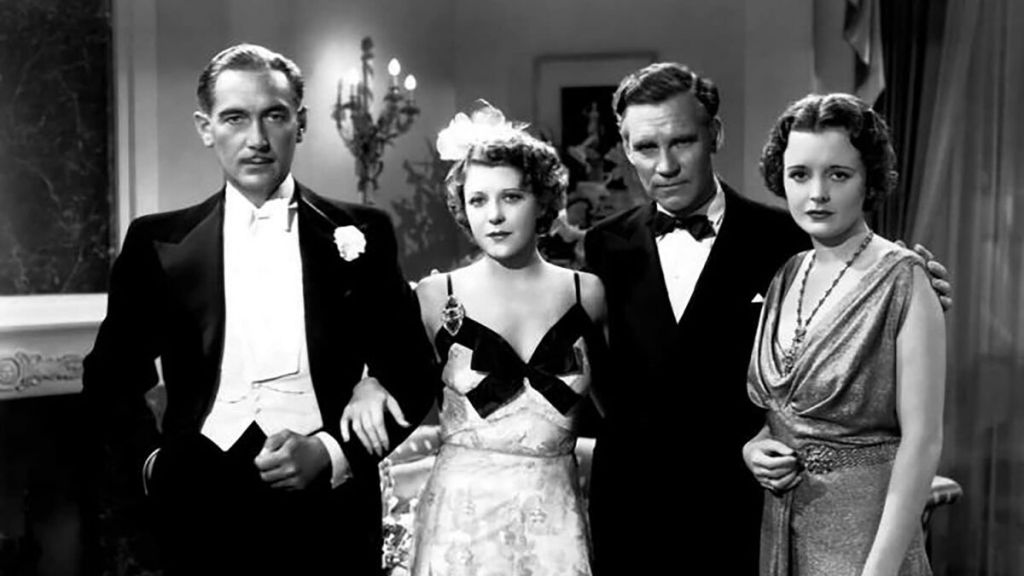
Sam is played with real skill and under-played grace by Walter Huston in one of his finest performances. He’s an overwhelmingly decent man, self-made, confident but hesitant and uncertain out of his element. There’s a fuddy-duddy quality to him you can understand Fran finding grating, but he’s also capable of genuine, unfiltered enthusiasm (watch his joyful spotting of a famous lighthouse during their journey – which hilariously he nearly misses while checking his watch – and the eagerness which he tries to share this with an irritated Fran and a politely bored Niven). What’s superb about Huston’s performance is the awkwardness, shyness and even timidity he brings to a successful man, the quiet air of confused anxiety behind Sam as his certainties melt away.

Both Sam and Fran are convinced everything between them is fine, constantly speaking (increasingly dutifully) about their love, as if trying to convince each other even as it starts to fall apart. Their home already feels invaded by their daughter and her husband, who absent-mindedly serves himself drinks from Sam’s cabinet. They’re in completely different mindsets. Fran is constantly embarrassed by her husband’s tendency to hickness. Sam feels Fran’s upper-class ‘friends’ wouldn’t look twice at her without the cash she can flash. Fran is horrified by Sam’s whimsical statement that they will soon ‘be a couple of old Grandparents’. She’s young at heart, being wooed and won’t give that up.

From a ship-bound flirtation with David Niven’s suave playboy where she seems shocked at his implication that they can take things further (Sam doesn’t help by telling her she only has herself to blame), she swiftly begins an all-but-open affair with Paul Lukas’ smooth gentleman (with Sam turning an embarrassed third-wheel blind eye) even sending Sam home to extend her holiday privately, while he fields awkward questions from their family and re-directs his inner fury at his public cuckolding into grumpy rants about other’s scrabble games covering his desk and fussily reaching for his Encyclopaedia to prove trivial discussion points.

By the time Ruth has convinced herself divorce will lead, inevitably, to a glorious new marriage with much younger aristocrat Gregory Gaye, she’s at the centre of an increasingly delusional mid-life crisis, full of false claims about her age and built on fantasies. Ruth Chatterton is very good, neatly bringing to life a woman who can’t face the idea of becoming old. The film (while siding with Sam) never fully condemns her for her behaviour – even if it maintains an American suspicion of her wealthy European upper classes. In fact, it’s very hard not to feel sorry for Fran when her lover’s mother (played by an imperiously shrewd Oscar-nominated Maria Ouspenskaya) punctures her delusions about the likely future of a relationship with her feckless son.

It’s all beautifully framed by Wyler. How can you not admire the lingering shot of Fran reading a telegram from Sam and letting Lukas’ Iselin set fire to it, the camera following the paper as the wind blows it across the balcony floor to disintegrate like the Dodsworth marriage? Dodsworth is full of such beautifully subtle moments, its imagery (and Oscar winning sets) wonderfully establishing a world in transit as much as the Dodsworths. Wyler also evens the score at points: Sam remains largely sympathetic, but its possible to be irritated by his naïve dullness, just while the frequently infuriating Fran is relatable in tragic fear that her life is behind her.

It’s this mature view of people drifting apart, making mistakes and not always being condemned that makes Dodsworth such a richly intelligent film. Sam would certainly by more happy with Edith (a very moving performance from Mary Astor), just as Fran would be better off without Sam. Dodsworth is largely refreshingly free of the sort of Puritan punishments other films dealing with similar themes would use under the Production Code. Instead Dodsworth is a superbly acted, directed and written melodrama with a serious tone that remains richly rewarding viewing.

All That Money Can Buy (1941)

All That Money Can Buy (1941)

The Devil sure knows how to tempt a man in this beautifully filmed morality tale

Director: William Dieterle

Cast: Walter Huston (Mr Scratch), Edward Arnold (Daniel Webster), James Craig (Jabez Stone), Anne Shirley (Mary Stone), Jane Darwell (Ma Stone), Simone Simon (Belle), Gene Lockhart (Squire Slossum), John Qualen (Miser Stevens), HB Warner (Judge Hawthorne)

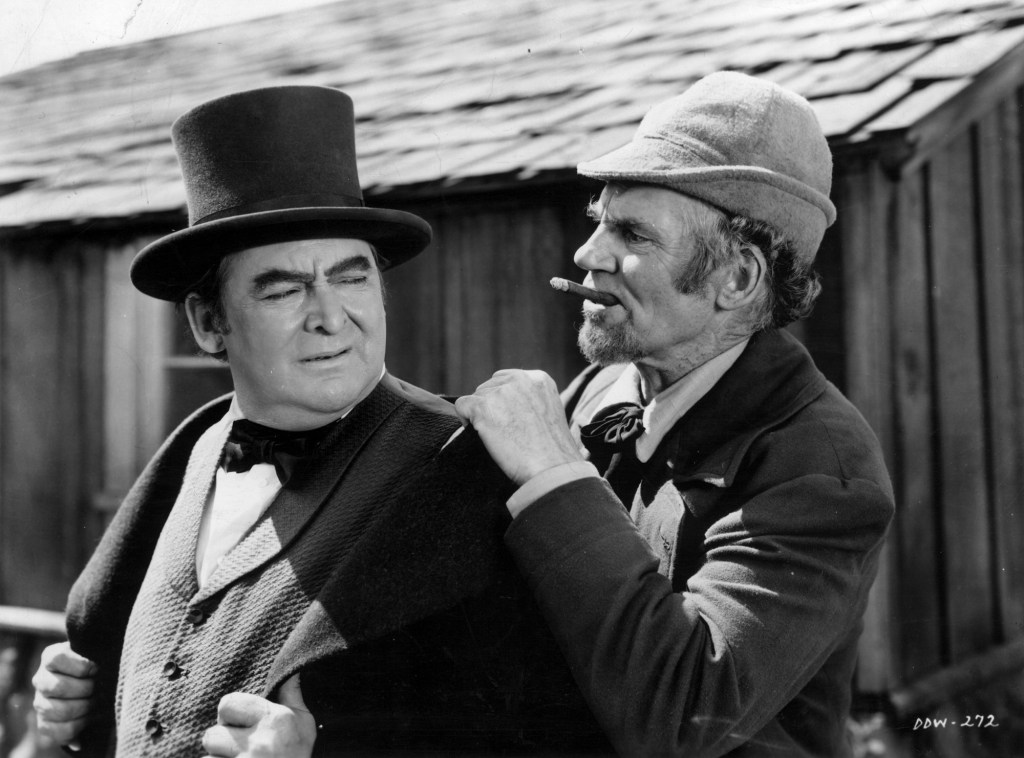
Sometimes life can be a real struggle. With debts, failed crops and animals getting sick, what’s a guy to do? That’s the problem New Hampshire farmer Jabez Stone (James Craig) has in 1840. What he wouldn’t give to find a bundle of buried gold that could solve all his problems. Fortunately, charming old rogue Mr Scratch (Walter Huston) knows exactly where to find one – all he wants in return is for Jabez to sign away his soul seven years from now (signed in blood of course). Jabez gets fortune, prestige, the son he always wanted – but when ‘Mr Scratch’ comes to collect, can Jabez’s friend, famed orator, lawyer and congressmen Daniel Webster (Edward Arnold) save his soul?

All That Money Can Buy is a richly atmospheric piece of film-making from William Dieterle, adapted from Stephen Vincent Benet’s short story and full of gorgeously filmed light-and-shadow with a haunting score by Bernard Herrmann. (The story was originally titled The Devil and Daniel Webster, also the film’s original title before RKO changed it to avoid confusion with their more successful Jean Arthur comedy The Devil and Miss Jones.) It’s a neat morality tale, full of dark delight at the devilish ingenuity of Mr Scratch, with lots of dark enjoyment at seeing a weak-but-decent man corrupted into being exactly the type of greedy, cheating cad to whom he was deeply in debt to from the beginning.

It’s nominally about James Craig’s Jabez Stone, but Jabez is a shallow, easily manipulated passenger in his own life, pushed and pulled towards and away from sin depending on who he’s talking to. Stone’s fall is swift: moments after meeting Scratch, he’s digging hungrily into a meal while his wife and mother say grace, hugging his newfound bag of gold. As his wealth goes, he drifts from his pure wife (Anne Shirley, effective in a dull part) becoming easy prey for demonic (literally) temptress Belle (a wonderfully seductive Simone Simon). By the time the seven years are up, he’s skipping church for illicit card games and crushing the farms of his neighbours to fund his dreamhouse-on-a-hill.

Stone is really the Macguffin here. The real focus is the big-name rivals: The Devil and Daniel Webster. It’s implied these two have fought a long-running battle for years: our introduction to Webster sees him scribbling literally in the shadow of Mr Scratch, who whispers to him tempting offers of high office. Later Webster is unflustered when Scratch suddenly appears to place a coat on his shoulders, treating him as familiar rival. You could argue Scratch is only prowling the streets of New Hampshire because he’s looking for a way to nail the soul of his real target, Daniel Webster.

As Mr Scratch, the film has a delightful (Oscar-nominated) performance from Walter Huston. With his scruffy clothes and twirling his cane, Scratch pops up everywhere with Huston’s devilish smile. It’s a masterclass in insinuating, playful malevolence, with Huston playing this larger-than-life character in a surprisingly low-key way that nevertheless sees him overflowing with delight at his own wickedness. Huston has the trick of making Scratch sound like someone trying to sound sincere, while never leaving us in doubt that everything he says is a trap or lie, only showing his arrogance and cruelty when victory is in his grasp. It’s a fabulous performance, charismatic and wicked.

Edward Arnold makes Daniel Webster both a grand man of principle and a consummate politician, proud of his reputation and all the more open to temptation for it. He also has the absolute assurance of a man used to getting his own way, and the arrogance of seeing himself as an equal to the Devil rather than a target. These two form the ends of a push-me-pull-me rivalry.

The rivalry culminates in its famous ‘courtroom’ scene, as Webster – a little the worse for drink –argues for Jabez’s soul in front of a ghostly court of American sinners from the bowels of hell (lead among them Benedict Arnold). Its shot in atmospheric smoke, with the double exposure creating a ghostly effect for jury and judge. It’s another excellent touch in a film full of inventive use of effects and camerawork, Dieterle at the height of his German influences. The artificial New Hampshire scenery is shot with a sun-kissed beauty that bears Murnau’s mark. Striking lighting and smoke-play abounds in Joseph H August’s camerawork, not least Belle’s introduction backlit with an extraordinarily bright fire. Early scenes of Stone’s misfortune interrupted by a brief frames of a photo-negative Scratch laughing, quite the chillingly surrealist effect.

Politically, All That Money Can Buy backs away from any overt criticism of Webster’s support for the Missouri Compromise (this key piece of slavery protection legislation is so key to Webster’s view of American strength he’s even named a horse after it). But it’s quite brave for 1941 in allowing the Devil legitimate criticism of America’s ‘original sins’ saying he was there driving on the seizing of the land from the Native Americans and up on deck on the first slave ship from the Congo. (Especially as Webster can’t defend these actions). It’s also interesting that the film praises collectivism for the farmers over rugged individualism, a conclusion it’s hard to imagine being praised a few years later.

All That Money Can Buy is also filled with impressive practical effects, not least Scatch’s impossible catching of an axe thrown towards him, bursting it into frame. Both Scratch and Bell reduce papers to flaming ashes with a flick of the wrist. Horribly woozy soft-focus camera work accompanies Jabez’s nightmare visions of the damned. It’s tightly and skilfully edited, superbly paced, with montages used effectively for transitions (a field of corn growing is particularly striking) and wildly unnerving sequences, like Scratch’s fast-paced barn-dance with its whirligig of movement and repeated shots. It’s all brilliantly scored by Herrmann, from the pastoral beats of New Hampshire to the discordant sounds (some created from telephone wires) that accompany Scratch.

All That Money Can Buy concludes with a stand-out speech from Webster that perhaps settles matters a little too easily – and brushes away any of the film’s mild criticism of America’s past with a relentlessly upbeat patriotic message. But the journey there – and the performances from a superb Huston and excellent Arnold – is masterfully assembled by a crack production team working under a director at the height of his powers. A flop at the time, few films deserve rediscovery more.

Yankee Doodle Dandy (1942)

Yankee Doodle Dandy (1942)

Cagney proves there is more far more to him than guns, in this cracking musical

Director: Michael Curtiz

Cast: James Cagney (George M Cohan), Joan Leslie (Mary Cohan), Walter Huston (Jerry Cohan), Richard Whorf (Sam Harris), Irene Manning (Fay Templeton), George Tobias (Dietz), Rosemary DeCamp (Nellie Cohan), Jeanne Cagney (Josie Cohan), Eddie Foy Jnr (Eddie Foy)

To many James Cagney was the definitive gangster. But Cagney wanted to be known as more than just another heavy: at heart he was a song-and-dance man. He got few chances to show it, so when the right film came along, doggone it he didn’t plan to leave anything in the dressing room. Cagney dominates George M Cohan biopic Yankee Doodle Dandy (at times its almost a one-man show with guests). He’s in almost every scene, doing his twist on Cohan’s stiff-legged dancing style with such energy and enthusiasm it leaves you quite exhausted watching it (Cagney sprained his ankle twice making it). It was a massive hit and won Cagney a much-deserved Oscar.

George M Cohan came from a family vaudeville troupe and became “the man who owned Broadway”. An accomplished performer, he was also a prolific writer (banging out more than 50 shows and 300 songs, including nation-defining tunes like Over There, The Yankee Doodle Boy and You’re a Grand Old Flag). The film uses his awarding of the Congressional Gold Medal from President Franklin D Roosevelt (Cohan arrives at the White House fresh from playing an all-singing, all-dancing version of the wheelchair-confined President in I’d Rather Be Right) as a framing device. Naturally, the President wants to know all about this Broadway legend’s life. Cue Cohan settling back to tell him his entire life story: from birth to childhood stardom, knock-backs and a string of successes.

It’s odd to think Cagney wasn’t keen at first. A leading union man – one of the founder members of the Screen Actor’s Guild – Cagney was not an admirer of Cohan, who had taken a strong stand against the 1919 actor’s union strike. What changed Cagney’s mind was accusations of communism from the House of Un-American Activities in 1940: he was cleared but his producer-brother William told him he needed “to make the goddamndest patriotic picture that’s ever been made.” They certainly succeeded with Yankee Doodle Dandy, such an all-singing, all-dancing celebration of the American way it must surely be Sam the Eagle’s favourite film.

Yankee Doodle Dandy is nothing more-or-less than a grand slice of entertainment. It’s very much cut from the same cloth as The Great Ziegfeld, another cradle-to-grave rundown of the life of a Broadway mover-and-shaker. Like that film, Cohan’s rough edges are comprehensively shaved off: his hostility to the actor’s union goes unmentioned as does his divorce and remarriage (instead his two wives are amalgamated into a new fictional wife, conveniently called Mary so that his song Mary’s a Grand Old Name can be named after her). Several events are telescoped or shifted to a new date for dramatic impact. Cohan emerges thoroughly charming (if proud), decent and honest all-round entertainer, overflowing with bonhomie.

Narratively the film does nothing Hollywood hadn’t done before. The big difference here to The Great Ziegfeld is that Curtiz keeps the story moving with real pace and a certain flair (it’s a solid two hours, and never outstays its welcome) and the musical numbers are dynamic and entertaining. A great deal of that is due to Cagney, outstanding in a part that demands an overabundance of personality. Cagney’s dancing and singing doesn’t have the grace of Fred Astaire (the original choice), but it has a gloriously entertaining and breath-taking energy. Cagney studied Cohan’s stiff-legged-marionette dancing style, and used his physical exuberance to bring to life his numerous dance routines with a spectacular stand-and-applaud skill and energy. (Curtiz uses a highly mobile camera to film most of these in single shots, to really capture the skill and energy of Cagney). His singing also follows the Cohan style – the sort of half-singing, half recital style Rex Harrison would later make his own. His impersonation is uncanny and performance superb.

Cagney is gloriously entertaining and makes every single one of his numerous songs thrum with glee. It’s a real reminder of what a modern performer Cagney was: he’s fast-paced, lacks any sense of staginess and has a real emotional honesty. His comic moments are very funny: in Cohan’s first meeting with Mary, still in old-man make-up (fresh from playing father to his own mother on stage), Cagney lets a little moment of glee move across his face as he realises Mary thinks he really is an old-man in his 70s – a confusion he plays up to, before launching into an impromptu tap dance routine. When tragedy strikes he is just as moving: his heart-broken repeat of his mantra “My mother thanks you. My father thanks you. My sister thanks you. And I thank you” at his father’s death-bed not only moves the audience, it also made the stony Curtiz weep on set.

No wonder, when a dying Cohan watched the film, he said “My God, what an act to follow!” Cagney’s performance, with its playful energy, encouraged a greater spontaneity in Curtiz’s disciplined directorial style. The famous sequence, where Cagney walks down the steps inside the White House before bursting into a joyful bout of tap-dancing was improvised on the spot (and a glorious summary of the playful joy of the movie it is). Curtiz uses montage very effectively at several points (a sequence of early knock-backs for Cohan is a wonderful collection of shots of signs, producer refusals and walking feet). He often uses high and low angles to imaginatively shoot the action, and the fluid camera for the musical numbers finds a neat middle ground between theatrical performance and cinema.

Of course, it is damned patriotic. The film recreates several of Cohan’s most stirring numbers in all their pomp. The explosion of Americana (Washington! Lincoln! Teddy Roosevelt!) that is You’re a Grand Old Flag (with hundreds of Stars and Stripes). The cheek and charm of Yankee Doodle Boy. The rousing marvel of Over There. The film plays up Cohan’s determination to do his bit in the First World War – turned down for service as too old, he carries out a full tap-dance routine to show he’s as limber as the next man. But it also has time for finding a way of staging creativity: there is a marvellous little sequence – beautifully shot by James Wong Howe – of Cohan finding the tune for Over There, tinkling experimentally with a piano on an empty stage.

The narrative of the play doesn’t reinvent the wheel, but it delivers a traditional structure with plenty of energy and some good scenes. (I enjoyed Cohan’s mother, struggling to find something nice to say about one of Cohan’s rare-flops, a music-free melodrama, left weakly praising the set). Though Cagney dominates the film, Walter Huston is very fine as his supportive and experienced dad and Joan Leslie charming as his loyal wife Mary (so supportive she’s happy to gift her song to stage star Fay Templeton, because the show needs her more). The balance between standard biopic scenes and musical numbers is very nicely handled.

Yankee Doodle Dandy offers up a familiar package, but one of the most professionally assembled and enjoyable of its type ever made. With Cagney in joyful, dominant form, you’d genuinely be quite happy just sitting and watching him go through as many vaudeville acts as he likes. Shot with flair by Curtiz, Yankee Doodle Dandy is catchy and highly entertaining.

The Treasure of the Sierra Madre (1948)

Three men go in search of The Treasure of the Sierra Madre

Director: John Huston

Cast: Humphrey Bogart (Fred C Dobbs), Walter Huston (Howard), Tim Holt (Bob Curtin), Bruce Bennett (James Cody), Barton MacLane (Pat McCormick), Alfonso Bedoya (Gold Hat)

Is there anything that warps the human character more than greed? Humanity sometimes seems driven only by the desire for more, to fill our pockets with cash and leave the rest behind. It’s greed that becomes the subject of John Huston’s masterful The Treasure of the Sierra Madre – and specifically the effect it has on Humphrey Bogart’s Fred C Dobbs. If you can pick up as much gold as you want off the ground around you, why does it become so difficult to watch others take it away?

Dobbs and Bob Curtin (Tim Holt) are down-on-their-luck drifters in Mexico, bumming spare change off American businessmen and struggling on hand-to-mouth jobs for shady businessmen. So how could they resist the chance to team up with fast-talking old-timer Howard (Walter Huston) who knows that there’s gold in dem da hills? Heading into the wilderness – partly financed by Dobbs’ lucky small lottery win – the three men strike lucky and start pulling the gold from the ground. Problem is as the piles grow, so slowly does the men’s suspicion each other – not least Dobbs, who grows increasingly paranoid and unbalanced at the thought of any danger to his gold. In the wilderness of Mexico, with bandits across the countryside can the men’s growing suspicion of each other be held off long enough to get the gold back home?

Based on a novel by B Traven – an author so notoriously private that even today no one knows who he was – John Huston’s classic is part adventure story, part treatise on the human condition. It’s also gloriously entertaining at every turn. One of the first major Hollywood films to be shot largely on location, it drips with the sultry heat of Mexico, beautifully filmed by Huston. Huston’s masterful script also packs the film with a punch, from quotable titbits (most famously the oft-misquoted “Badges? I don’t have to show you any stinkin’ badges!”) to its Shakespearean touches as a rambling, mad, paranoid Dobbs walking alone through the desert wilderness like a cut-price Lear.

Dobbs is the heart of the film – and there is perhaps no anti-hero more ‘anti’ in the whole of Hollywood than this ruthlessly selfish, obsessive paranoiac. Bogart probably gives his finest performance ever as the scruffy, sweaty, unshaven and bitter drifter who finds he can’t abide the idea of having to give away any of what he sees as his share of the loot. And, worse than that, becomes convinced that the whole world is out to take it from him. 

Bogart digs deep into the weasily, rat-like greed of this man. Bogart fought long and hard to play who he called “the worst shit you ever saw”. Dobbs has a strange moral code and sense of honour that’s entirely personal. Having his character impugned by others is an affront he can’t abide – though murder and violence are perfectly acceptable. He’s the sort of guy who will savagely beat a man who stiffs him for wages and then precisely take only what he’s owed from the guy’s wallet. Bogart is perfect as the cold-eyed loner who talks big at first about partnership, but later whines about how he staked most of the starter capital so should be getting a larger share of the profits. Bogart, in perhaps one of the biggest snubs in Hollywood history, missed out on an Oscar nomination in a notoriously weak year for Best Actor. Perhaps, the vision of Rick Blaine bitterly muttering to himself, covered in flies and filth, while plotting the murder of his friends in the Mexican outback was too much for the voters to take. Either way, Bogart’s late mental collapse into near-Shakespearean envy, jealousy and twitchy paranoia is as effective as it is subtly done.

More fortunate at the Oscars were the Huston family. John had written the part of Howard for his father Walter. It bought Huston Snr the Oscar for Best Supporting Actor. Walter Huston is wonderful as this fast-talking eccentric, rocketing through his dialogue at a hundred miles an hour, as if he has lived so long through the events he is talking about that he barely has the time or patience to tell the story at a normal pace. Huston adds touches of wonderful eccentricity, to Howard’s insane jig of joy when finally finding the site of the gold, to his infectiously unrestrained cackling laughter. 

Eccentric as he is though, Howard is a decent and honourable man who has every intention of sharing the gold and is well aware of its corrupting influence. The wily Howard is also the only essential member of the crew – the only one with the experience to survive in the wilderness, the only one who can recognise and knows how to mine for gold. The most loyal to the fellowship, he’s the good angel to Dobb’s bad. In the middle of this moral spectrum, John Huston places Tim Holt’s Bob, a plain-speaking, more naïve figure who has elements of both characters in his pride and hunger for gold, matched with his sense of honour and loyalty. The film partly becomes an unspoken struggle for the soul of Holt’s Bob, as we wait to see which way he will fall. 

Not that any of these men are angels. They are all determined to protect what they have. Struggling in shoot-outs with bandits is fine. They even vote on whether or not to execute a fellow drifter (played by Bruce Bennett) who encounters their stake and enquires about joining them for a share. Bennett’s Cody is, by the way, the smartest character in the film, who sees with pathetic ease through the nervy lies told by the three men, as well as acutely analysing their situation and options with a sharpness that seems beyond all of them. 

Of course by that point suspicion between them – specifically Dobbs and Bob – has already grown dramatically. Dobbs takes to spying on his fellows and digs a separate hiding place to which he carefully takes his own share (Curtin takes to doing the same). John Huston includes a marvellous sequence where the three men each wake up in turn during the night – and react with suspicion on noting the absence from the tent of the others. Later Bob will think long and hard before saving Dobbs from a mining cave-in. Only Howard seems less affected about the gold – although with his talk of the corruption he has seen in the past, perhaps he was a Dobbs himself in the past, now grown wiser and more accepting of the easy-come-easy-go nature of gold. 

Huston’s Oscar winning script (he also lifted the Oscar for Best Director, although Best Picture went to Laurence Olivier’s Hamlet) keeps the rich vein of irony running throughout the script, even while it shows how susceptible men are to corruption. The film’s final act – and the eventual fate of the gold – is a treat, a natural extension of the films theme of mankind being a dog-eat-dog world. What else can you do but sit in the dust and laugh at it all? 

There are no heroes really in The Treasure of the Sierra Madre – even the mountain remains named only in the title of the film – just three men, scruffy, seedy and not that smart, struggling to grab what they can from the earth. Life becomes more and more cheap as the film goes on – Dobbs and Curtin are like brothers at the start, but increasingly come to see both other people and each other as expendable rivals. With Dobbs like some scruffy Smaug, the film boils down to each man confronting his own emptiness. The only character with any emotional hinterland is the drifter Cody, looking for gold for his wife and kids (his story has real impact on Curtin), the rest are just living from moment to moment.

John Huston’s classic is a marvellous musing on the nature of greed and humanity, superbly filmed by Huston with not a single false note in acting or writing. Perfectly placed, it mixes a western vibe with a Shakespearean grandness – and has a simply wonderful performance by Bogart. A classic that really delivers.