Tag: William Wyler

Dodsworth (1936)

Dodsworth (1936)

A marriage disintegrates in this richly mature, non-judgemental film one of the best of the decade

Director: William Wyler

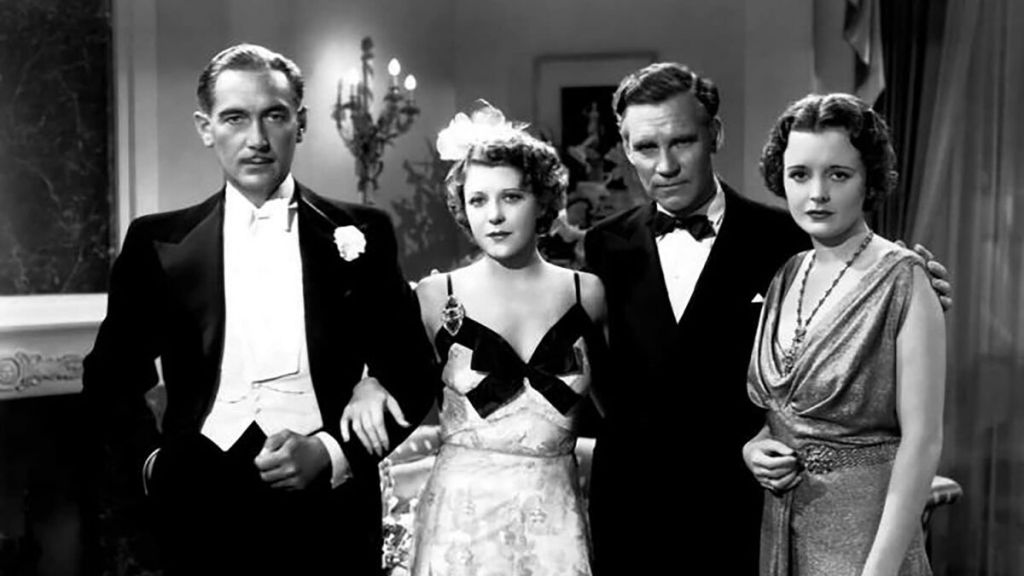
Cast: Walter Huston (Sam Dodsworth), Ruth Chatterton (Fran Dodsworth), Paul Lukas (Arnold Iselin), Mary Astor (Edith Cortright), David Niven (Captain Lockert), Gregory Gaye (Kurt von Obersdorf), Maria Ouspenskaya (Baroness von Oversdorf), Odette Myrtil (Renée de Penable), Spring Byrington (Matey Pearson), Harlan Briggs (Tubby Pearson), Kathryn Marlowe (Emily), John Payne (Harry)

Marriage is tricky. In the hustle and bustle of everyday life, bringing up a family, running a business and rushing between social events, what if you don’t notice you don’t have much left in common? That’s the theme of Dodsworth, one of the most strikingly modern of 1930s films, that tackles the breakdown of a marriage in a surprising subtle way, avoiding the sort of moral punishment and condemnation you’d expect from the production code. Combined with sharp writing, fine acting and some fluidly creative direction from William Wyler, and you have an overlooked classic.

Dodsworth kicks off with the retirement of car entrepreneur Sam Dodsworth (Walter Huston). Having sold his successful independent factory to a major business, Sam is now effectively retired and suggests that he and his wife Fran (Ruth Chatterton) take that trip to Europe they’d always discussed but never had time to do. The trip, however, starts to reveal fractures in their relationship. Fran isn’t ready to ‘rush towards old age’ like she feels Sam, with his touristy longings and interest in engineering mechanics is. She wants to be part of society and feel the excitement of flirtations (and more) with rakeish European types (from David Niven to Paul Lukas to Gregory Gaye), while Sam ticks off the sites and sits in cafés. Sam, it turns out, has far more in common with Naples-ex-pat Edith (Mary Astor) – but feels duty bound to do whatever he can to preserve his marriage with Fran.

It’s all adapted from Sinclair Lewis’ doorstop novel, skilfully boiled down into a clear dramatic journey by Sidney Howard, from his own theatre adaptation (which also starred Huston). It becomes both slightly sad, watching two people drift apart, while also offering rich vestiges of hope of what the future can hold if you dare to take a chance. It mixes this with dry wit, scenes of compelling narrative interest and an insightful look at two people effectively going through different types of life crisis during a ‘once in a lifetime’ journey. Because nothing can disrupt your thinking about your own life more than changing nearly everything about it in one swift barrage of events.

It’s assembled into a richly involving whole by William Wyler, who lands the film just the right side of melodrama. From the opening shot, tracking towards Sam’s back as he leans against a window looking out over the factory which gave his life meaning, there is a quiet air of its characters living in denial of their own melancholy. Part of Sam is already wondering what on earth he’s going to do without his factory – its why he immerses himself in the most banal details of the sights they will see in Europe, or the engineering of their cruise ship.

Sam feels his journey will give him new opportunities, but it often sees him uncertain and slightly adrift, from not knowing how to tip waiters to finding his mid-Western mindset unable to compute the sexually liberal rules of European high society. Fran claims the journey abroad will mean leaving behind the oppressive parade of the over familiar social scene in their small town. It quickly turns out, she’s only be bored of their small circle not the glamour of social events.

Sam is played with real skill and under-played grace by Walter Huston in one of his finest performances. He’s an overwhelmingly decent man, self-made, confident but hesitant and uncertain out of his element. There’s a fuddy-duddy quality to him you can understand Fran finding grating, but he’s also capable of genuine, unfiltered enthusiasm (watch his joyful spotting of a famous lighthouse during their journey – which hilariously he nearly misses while checking his watch – and the eagerness which he tries to share this with an irritated Fran and a politely bored Niven). What’s superb about Huston’s performance is the awkwardness, shyness and even timidity he brings to a successful man, the quiet air of confused anxiety behind Sam as his certainties melt away.

Both Sam and Fran are convinced everything between them is fine, constantly speaking (increasingly dutifully) about their love, as if trying to convince each other even as it starts to fall apart. Their home already feels invaded by their daughter and her husband, who absent-mindedly serves himself drinks from Sam’s cabinet. They’re in completely different mindsets. Fran is constantly embarrassed by her husband’s tendency to hickness. Sam feels Fran’s upper-class ‘friends’ wouldn’t look twice at her without the cash she can flash. Fran is horrified by Sam’s whimsical statement that they will soon ‘be a couple of old Grandparents’. She’s young at heart, being wooed and won’t give that up.

From a ship-bound flirtation with David Niven’s suave playboy where she seems shocked at his implication that they can take things further (Sam doesn’t help by telling her she only has herself to blame), she swiftly begins an all-but-open affair with Paul Lukas’ smooth gentleman (with Sam turning an embarrassed third-wheel blind eye) even sending Sam home to extend her holiday privately, while he fields awkward questions from their family and re-directs his inner fury at his public cuckolding into grumpy rants about other’s scrabble games covering his desk and fussily reaching for his Encyclopaedia to prove trivial discussion points.

By the time Ruth has convinced herself divorce will lead, inevitably, to a glorious new marriage with much younger aristocrat Gregory Gaye, she’s at the centre of an increasingly delusional mid-life crisis, full of false claims about her age and built on fantasies. Ruth Chatterton is very good, neatly bringing to life a woman who can’t face the idea of becoming old. The film (while siding with Sam) never fully condemns her for her behaviour – even if it maintains an American suspicion of her wealthy European upper classes. In fact, it’s very hard not to feel sorry for Fran when her lover’s mother (played by an imperiously shrewd Oscar-nominated Maria Ouspenskaya) punctures her delusions about the likely future of a relationship with her feckless son.

It’s all beautifully framed by Wyler. How can you not admire the lingering shot of Fran reading a telegram from Sam and letting Lukas’ Iselin set fire to it, the camera following the paper as the wind blows it across the balcony floor to disintegrate like the Dodsworth marriage? Dodsworth is full of such beautifully subtle moments, its imagery (and Oscar winning sets) wonderfully establishing a world in transit as much as the Dodsworths. Wyler also evens the score at points: Sam remains largely sympathetic, but its possible to be irritated by his naïve dullness, just while the frequently infuriating Fran is relatable in tragic fear that her life is behind her.

It’s this mature view of people drifting apart, making mistakes and not always being condemned that makes Dodsworth such a richly intelligent film. Sam would certainly by more happy with Edith (a very moving performance from Mary Astor), just as Fran would be better off without Sam. Dodsworth is largely refreshingly free of the sort of Puritan punishments other films dealing with similar themes would use under the Production Code. Instead Dodsworth is a superbly acted, directed and written melodrama with a serious tone that remains richly rewarding viewing.

Funny Girl (1968)

Funny Girl (1968)

A star-turn is the main interest in this grand-scale but so-so musical

Director: William Wyler

Cast: Barbra Streisand (Fanny Brice), Omar Sharif (Nicky Arnstein), Kay Medford (Rose Brice), Anne Francis (Georgia James), Walter Pidgeon (Florenz Ziegfeld), Lee Allen (Eddie Ryan), Mae Questel (Mrs Strakosh), Gerald Mohr (Branca), Frank Faylen (Keeney)

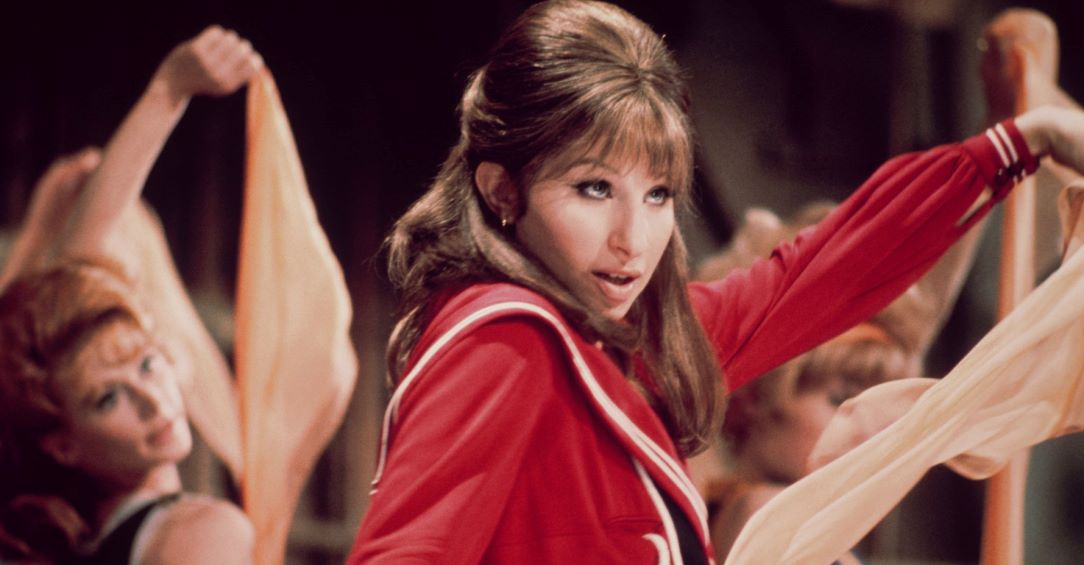
Fanny Brice was the major pre-war star of Broadway, the leading lights of the Ziegfeld Follies, the sort of all-singing, all-dancing spectaculars they just don’t make any more. A fictionalised version of her life became a Broadway smash, produced by her son-in-law Ray Stark. Hollywood came knocking, leading to this film version. Shepherded to the screen by William Wyler (his first ever musical, a genre he’s avoided due to being deaf in one ear) it would tell of Brice’s early success, her relationship with Ziegfeld (Walter Pidgeon) and her marriage to dodgy gambler Nicky Arnstein (Omar Sharif). And to play Brice? It could only be the woman who created the role, a young sensation called Barbra Streisand.

Funny Girl begins, ends and is exclusively about Barbra Streisand. Making her film debut, Streisand is, not to put too fine a point on it, absolutely sensational. This is charismatic, star-making stuff from an actress who knew exactly how to tailor the part (already basically written for her) to her strengths. Streisand is funny, kooky, witty but also vulnerable, shy, preoccupied with her low-opinion on her looks. She totally convinces as a charismatic figure who can dominate the room with cheek, won’t think twice at bluffing she can roller-skate to land a role or pigeon-hole Zeigfeld and argue against being asked to do something in performance. But she equally easily embodies a vulnerable woman, worried she is an unlovable ugly duckling, so certain she is destined to be alone she zeroes in on the first man who shows interest in her.

That’s not even mentioning the magnetism of Streisand. A truly confident, unique performer you couldn’t imagine anyone else so brilliantly mixing power-ballad notes with this sort of quirky character comedy. She can belt out Don’t Rain on My Parade or I’m the Greatest Stars with an awe-inspiring voice. She can add layers of pathos and tragedy to songs like People and Funny Girl. But few other performers could be both a diva and a pratfall artist on roller-stakes or mix arch-wit with low-comedy by stuffing a pillow up her dress in performance to turn her bride character pregnant in His Love Makes Me Beautiful, the Ziegfeld number she desperately doesn’t want to perform (because she can’t see herself as a beautiful bride).

Streisand is so central to Funny Girl’s success that I’m not sure that so much as three minutes go by without her appearing. It’s not a surprise as, subtract her from the mix, and Funny Girl is a fairly bland, unoriginal and at times slightly flat musical that struggles to do or say anything interesting. It’s had millions poured into its elaborate sets, it’s grandiose costumes and its vintage, sepia-tinged photography. But it’s an overlong, overblown, poorly paced film blessed with a star turn.

Wyler’s main strength as a director on mega-budget spectaculars like this was his professionalism and control, the gifts a producer likes. Visually though, Funny Girl frequently looks lost in widescreen, sets shot in a way that magnifies their emptiness and lacking the sort of affinity for timing and musicality that something like Minnelli, Donen and Kelly made look so natural (Most of the larger musical numbers were worked on by Herbert Ross). There is the odd strong shot – a showy helicopter shot pans down to Fanny on a tug steaming past the Statue of Liberty during Don’t Rain on my Parade or a sunset that pops up between the faces of Sharif and Streisand during a dockside embrace. But too many shots favour getting the money on the screen or struggle to frame two people interestingly in widescreen.

Mind you the story is a bit of a struggle. Fanny’s ascent to success is fast-paced and untroubled by conflict. Every gamble she takes pays-off, every cheeky trick goes unpunished. She can’t roller-skate when hired to do so? She sabotages the closing number of Ziegfeld’s show with her pregnancy flourish? Doesn’t matter – everyone loves it. She teeters for a few minutes on being fired, then jumps to promotion and glory. Ziegfeld – the sort of elite, New England aristocratic role perfect for Walter Pidgeon – just sighs and acknowledges talent gonna talent.

There are a few more clashes in her personal life. Her marriage to Nicky is the core emotional plotline of the film, but Nicky’s rough edges (in real life he was a conman and a swindler) are shaved off. Instead, he is played as a charming rogue, a professional gambler who bamboozles Fanny’s manager into giving her a stonking payrise and plays with honour and grace at the card table. When his business dealings go south, it’s never really his fault and he’s so noble he works to save Fanny’s honour by taking the rap for a collapsed business and arguing she should divorce him forthwith.

It doesn’t help that Nicky is played by Omar Sharif. Sharif, while a striking screen presence, had an acting range pretty much restricted to playing Sherif Ali. He’s unable to give the role any depth or interest, he can’t sing (thankfully he only tries once) and he’s overly reliant on his expressive eyes. He’s no match for Streisand, with whom he has less chemistry than rumour suggests was the case.

Streisand though was one-in-a-million here. Rumours abound she was a difficult and demanding presence, who fought tooth-and-nail with Wyler. She requested endless retakes to get her performance just right and “contributed” to script cuts (Anne Francis, playing a blousy Ziegfeld singer, was furious that her role effectively ended on the cutting room floor). Her perfectionism made her a controversial figure in Hollywood – but it’s also the brilliant fine-tuning of her own skill that won her the Oscar she shared with Katherine Hepburn. On a side note, Streisand had been controversially invited to join the Academy before she made a film, meaning the vote I assume she cast for herself was the one that guaranteed her the Oscar.

Funny Girl is large, overlong, largely visually and narratively uninteresting film that has a bright, shining, tour-de-force superstar in the lead who is in absolute, total control of her talent. Without Streisand it would be a tedious turkey – with her, it’s a strange landmark.

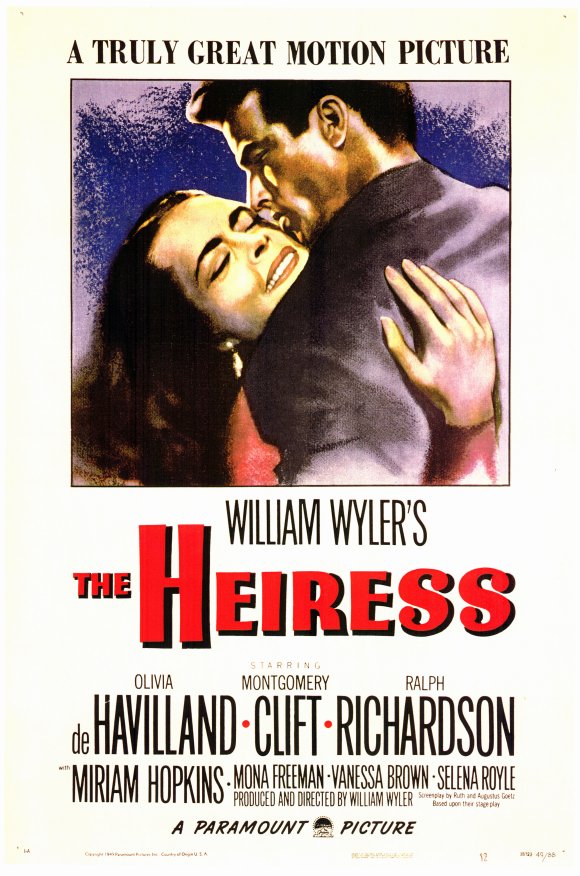
The Heiress (1949)

The Heiress (1949)

Is it love or is it avarice? Wyler’s sumptuous costume drama is a brilliant translation of Henry James to the screen

Director: William Wyler

Cast: Olivia de Havilland (Catherine Sloper), Montgomery Clift (Morris Townsend), Ralph Richardson (Dr Austin Sloper), Miriam Hopkins (Lavinia Penniman), Vanessa Brown (Maria), Betty Linley (Mrs Montgomery), Ray Collins (Jefferson Almond), Mona Freeman (Marian Almond), Selena Royle (Elizabeth Almond), Paul Lees (Arthur Townsend)

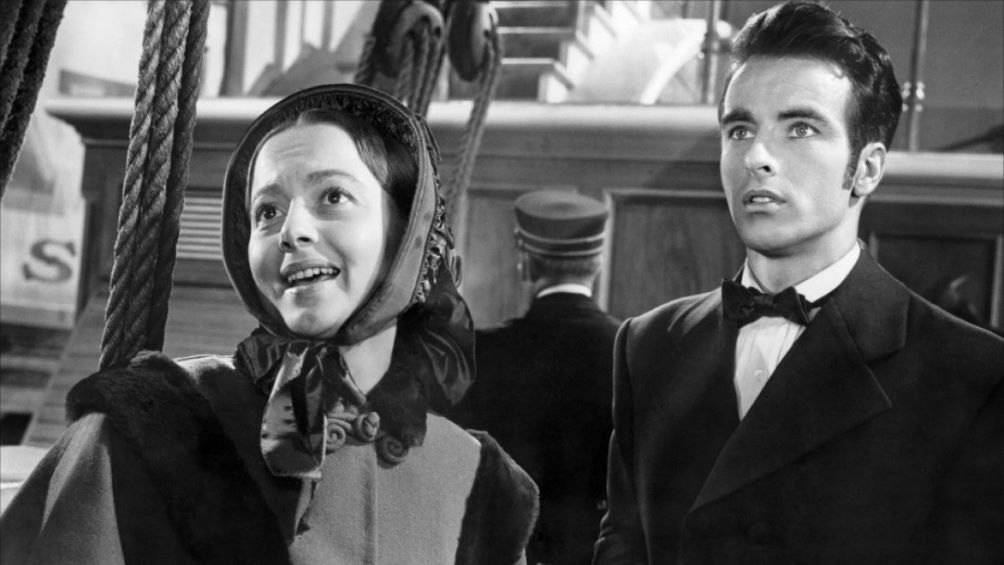
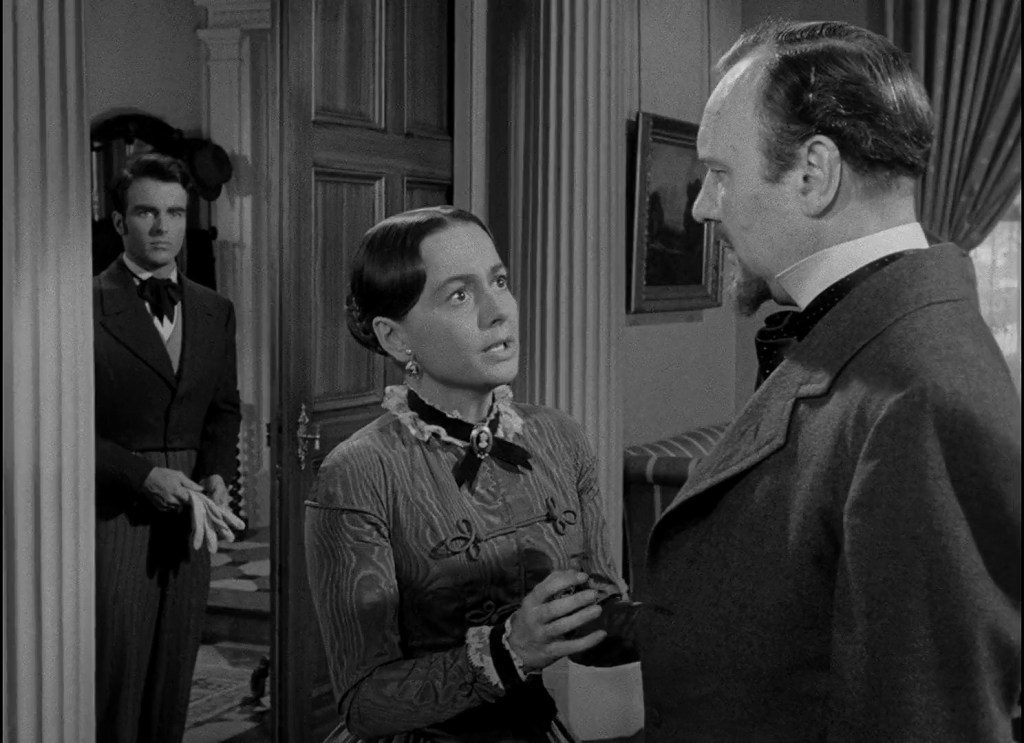
Pity poor Catherine Sloper (Olivia de Havilland). She’s seems destined forever to be the spinster, the last person anyone glances at during a party. Her father Dr Sloper (Ralph Richardson) can’t so much as walk into a room without gently telling how infinitely inferior she is to her mother. And when a man finally seems keen to court her, her father tells her that of course handsome Morris Townsend (Montgomery Clift) will only be interested in her inheritance. After all, there is nothing a young man could love in a forgettable, dull, second-rate woman like Catherine. He’s cruel, but is he right – is Morris a mercenary?

The Heiress was adapted from a play itself a version of Henry James’ Washington Square. It’s bought magnificently to the screen in a lush, sensational costume drama that comes closer than anyone else at capturing those uniquely Jamesian qualities of ambiguity and contradictory motives among the New American elites. Magnificently directed by William Wyler, it brilliantly turns a theatrical character piece into something that feels intensely cinematic, without once resorting to clumsy ‘opening up the play’ techniques. And it marshals brilliant performances at its heart.

Sumptuously costumed by Edith Head, whose costumes subtly change and develop along with its central character’s emotional state throughout the story, it’s largely set in a magnificently detailed Upper New York household, shot in deep focus perfection by Leo Tover, which soaks up both the reaction of every character and the rich, detailed perfection of decoration which may just be motivating some of the characters. Not that we can be sure about that, since the motives of Morris Townsend and his pursuit of Catherine remain cunningly unreadable: just as you convince yourself he’s genuine, he’ll show a flash of avarice – then he’ll seem so genuinely warm and loving, you’ll be sure he must be telling the truth or be the world’s greatest liar.

Catherine certainly wants it to be true – and believes it with a passion. The project was also a passion piece for de Havilland, and this is an extraordinary, Oscar-winning performance that delves deeply into the psyche of someone who has been (inadvertently perhaps) humiliated and belittled all her life and eventually reacts in ways you could not predict. Catherine is clumsy, naïve and lacking in any finesse. With her light, breathless voice and inability to find the right words, she’s a doormat for anyone. She even offers to carry the fishmonger’s wares into the house for him. At social functions, her empty dance card is studiously checked and her only skill seems to be cross-stitch.

She is an eternal disappointment to her father, who meets her every action and utterance with a weary smile and a throwaway, unthinking comment that cuts her to the quick. Richardson, funnelling his eccentric energy into tight control and casual cruelty, is magnificent here. In some ways he might be one of the biggest monsters in the movies. This is a man who has grown so accustomed to weighing his daughter against his deceased wife (and finding her wanting) that the implications of the impact of this on his daughter never crosses his mind.

Catherine is never allowed to forget that she is a dumpy dullard and a complete inadequate compared to the perfection of her mother. Richardson’s eyes glaze over with undying devotion when remembering this perfection of a woman, and mementoes of her around the house or places she visited (even a Parisian café table later in the film) are treated as Holy Relics. In case we are in any doubts, his words when she tries on a dress for a cousin’s engagement party sum it up. It’s red, her mother’s colour, and looks rather good on her although he sighs “your mother was fair: she dominated the colour”. Like Rebecca this paragon can never be lived up to.

So, it’s a life-changing event when handsome Morris Townsend enters her life. There was criticism at the time that Clift may have been too nice and too handsome to play a (possible) scoundrel. Quite the opposite: Clift’s earnestness, handsomeness and charm are perfect for the role, while his relaxed modernism as an actor translates neatly in this period setting into what could-be arrogant self-entitlement. Nevertheless, his attention and flirtation with Catherine at a party is a blast from the blue for this woman, caught mumbling her words, dropping her bag and fiddling nervously with her dance card (pretending its fuller than of course it is).

Her father, who sees no value in her, assumes it is not his tedious child Morris has his eyes on, but the $30k a year she stands to inherit. And maybe he knows because these two men have tastes in common, Morris even commenting “we like the same things” while starring round a house he all too clearly can imagine himself living in – by implication, they also have dislikes in common. (And who does Sloper dislike more, in a way, than Catherine?) Morris protests his affections so vehemently (and Sloper lays out his case with such matter-of-fact bluntness) that we want to believe him, even while we think someone who makes himself so at home in Sloper’s absence (helping himself to brandy and cigars) can’t be as genuine as he wants us to think.

As does Catherine. Part of the brilliance of de Havilland’s performance is how her performance physically alters and her mentality changes as events buffet her. A woman who starts the film mousey and barely able to look at herself in the mirror, ends it firm-backed and cold-eyed, her voice changing from a light, embarrassed breathlessness into something hard, deep and sharp. De Havilland in fact swallows Richardson’s characteristics, Sloper’s precision and inflexibility becoming her core characteristics. The wide-eyed woman at the ball is a memory by the film’s conclusion, Catherine becoming tough but making her own choices. As she says to her father, she has lived all her life with a man who doesn’t love her. If she spends the rest of it with another, at least that will be her choice.

Wyler assembles this superbly, with careful camera placement helping to draw out some gorgeous performances from the three leads – not to forgetting Miriam Hopkins as a spinster aunt, who seems as infatuated with Morris as Catherine is. The film is shaped, at key moments, around the house’s dominant staircase. Catherine runs up it in glee at the film’s start with her new dress, later sits on it watching eagerly as Morris asks (disastrously) for her hand. Later again, she will trudge up it in defeated misery and will end the film ascending it with unreadable certainty.

The Heiress is a magnificent family drama, faultlessly acted by the cast under pitch-perfect direction, that captures something subtly unreadable. We can believe that motives change, grow and even alter over time – and maybe that someone can love somebody and their money at the same time (perhaps). But we also understand the trauma of constant emotional pain and the hardening a lifetime of disappointment can have. It’s the best James adaption you’ll ever see.

The Big Country (1958)

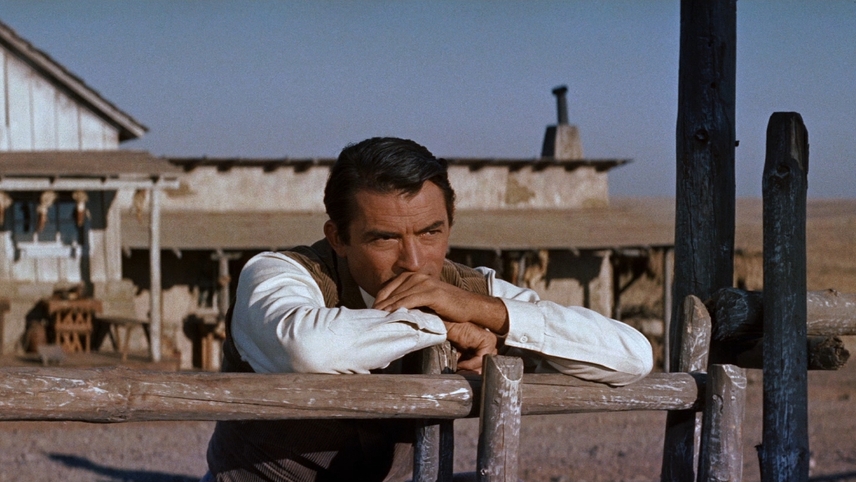
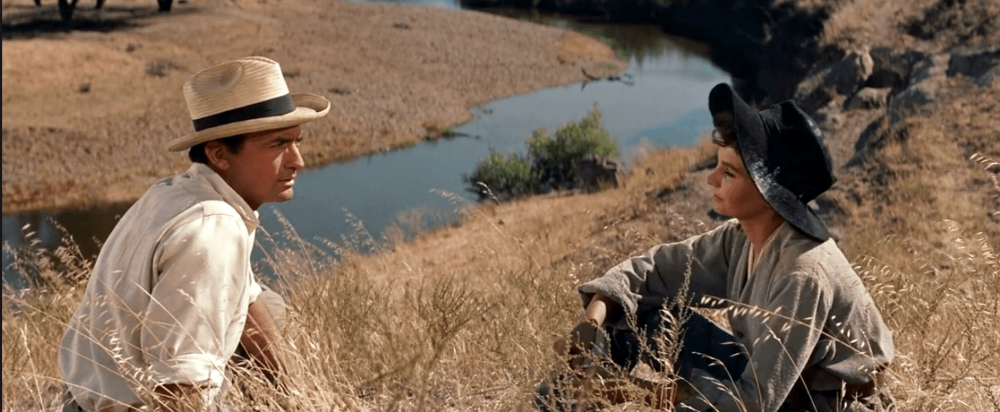
Gregory Peck rides into town in The Big Country

Director: William Wyler

Cast: Gregory Peck (James McKay), Jean Simmons (Julie Maragon), Carroll Baker (Patricia Terrill), Charlton Heston (Steve Leech), Burl Ives (Rufus Hannassey), Charles Bickford (Major Henry Terrill), Alfonso Bedoya (Ramon Gutierrez), Chuck Connors (Buck Hannassey), Chuck Hayward (Rafe Hannassey)

From the very first frame when that score kicks in, you know you are in safe hands. The Big Country is a big film, and big entertainment. When I re-watched it I hadn’t seen it for years. I loved it. It’s a slab of prime Hollywood entertainment, not perfect, but it’s one of those films that always delivers.

It’s the American West, and James McKay (Gregory Peck) arrives in town to marry Patricia Terrill (Carroll Baker), daughter of local landowner Major Henry Terrill (Charles Bickford) who is in the middle of a turf feud with patriarch of a cowboy clan, Rufus Hannassey (Burl Ives). This is a town where men-are-men and a harsh word is met with a sock to the mouth. It’s a world where McKay is out of step: a seasoned naval captain, with more experience than anyone, he couldn’t care less what people think of him and won’t be goaded into doing something foolish. His self-assurance and strength of character are interpreted as wimpy yellow-belly-ness by nearly everyone, including Patricia and Terrill’s macho foreman Steve (Charlton Heston). Only local schoolteacher Julie Maragon (Jean Simmons) understands him. But as events come to a head, only McKay has the strength of character to step up and try resolve things without mass bloodshed.

The Big Country is the classic set-up: a stranger in town, who has the guts to stand up. The only difference here, is that McKay has the guts to stand up and not conform to the macho bullshit being driven by the two feuding patriarchs. Both of these men are, of course, far more similar than they would admit, being perfectly contrasting personalities. Charles Bickford plays a genteel man with the principles of a thug, while Burl Ives plays a thug with the principles of a genteel man. No wonder they can’t get on, both see in each other qualities they most likely despise in themselves.

Compared to them, McKay looks like the very model of twentieth century liberal coalition building. Or at least McKay is a liberal who packs a punch, since it’s pretty clear Peck is probably the toughest son-of-a-bitch in the town. What’s glorious in McKay – and Peck’s sensational performance of reserved warmth and wry amusement, mixed with world-weary sufferance – is that you get a definite sense he’s seen way worse than this before. A man who has sailed around the world for decades, in the hardiest conditions, who has been keelhauled and saved men from sharks, recognises this for the slightly pathetic parochial dust-up it really is, and has no interest – or need – to put his life or the lives of others at risk to make crude points about his manliness.

If only, the film argues, we could all be as confident in our own skin. McKay keeps his cool in a way no-one in film, except perhaps Tracy in Bad Day at Black Rock, has managed so successfully. He laughs off his irritation at a hazing from the Hannassey’s – and makes clear, as the Terrill’s saddle up to fight back, that in doing so they are not acting in his name. He won’t make a fool of himself by trying to ride a wild horse in front of a crowd. He won’t rise to Steve’s provocation for a punch-up in front of the entire Terrill gang. McKay is a man who only needs to prove things to himself: so he’ll tame that horse in front of no crowd and swear the only witness to secrecy. He’s not one to brag.

And if it’s a fight that Steve wants, he’ll give him one on his own time and his own terms – those being a dusky morning in private. Wyler shoots one of the greatest fights of all time, an exhausting slugging match between Peck and Heston, played out mostly in long shot that soaks up the dawn Western atmosphere, as the two men fight themselves to an exhausted score-draw, with each punch landing with a punishing wallop. There is something very compelling about this unflashy, in-the-dust, clash of two alpha males, and the strange sense of respect that grows between them (as well as the dry wit of the script – “You certainly take your time to say goodbye”, Heston deadpans after this exhausting ‘I’m leaving but first this’ fight).

It also showcases how well Wyler uses sound (or the lack of it), the fight taking place often in a longshot silence that somehow makes the dusty scuffle even more effective. Silence also comes into play brilliantly to stress McKay’s isolation when first the Terrill men ride away to extract vengeance and then the disgusted Patricia closes the front door on him, leaving him standing in magnificent isolation on the porch. Silence will also come effectively into play during the late act ride of various characters through a white chalk lined gorge and to stress the danger that the kidnapped Julie is under when being held by the Hannassey’s.

The final act brings all the threats of danger and threat together into a brilliantly tense final confrontation. This sequence showcases, not only Peck’s granite principles and nobility, but also gives excellent opportunities for Ives to explore hidden depths in Old Hannassey (it surely helped him win the Oscar for Supporting Actor) and his dumb son Buck (excellently played with a swaggering arrogance by Chuck Connors) who is all mouth and no trousers.

Sure, at times the film overplays the anti-violence card. It’s particularly noticeable as it sometimes wants to have its cake and eat it, favouring probably a sort of gun-toting liberalism, of the “I could kill you but I want to make it so I don’t have to” variety. But then the film would be a heck of a less effective if we weren’t so convinced that Peck was as tough as they come and that his unwillingness to throw himself into events thoughtlessly is a mark of his unparalleled strength. Again, Wyler uses silence as effectively as sweeping camera movements and that brilliant score, to suggest moral strength.

There is probably very little tension about where the romantic plotlines are going, but both Carroll Baker and Jean Simmons are very good as two very different, but equally strong, women (although both women allegedly found Wyler’s perfectionist Kubrickian retakes on set extremely trying). But it still works a treat because of the strength of the acting, and its strongly scripted characterisation.

That and I’ve hardly mentioned the score, by Jerome Moross, which is powerful and famous you’ll instantly know it even if you’ve never seen the film. The Big Country is a Western where the hero has the strength to stick to his principles while still getting the job done. It’s superbly acted by Peck, with Simmons, Baker, Heston, Ives, Bickford and Connors all excellent in support. Wyler combines visual and a compelling story into a film that, while at points a little long, is still a bona fide classic. Again I’ll say: I loved it.

The Best Years of Our Lives (1946)

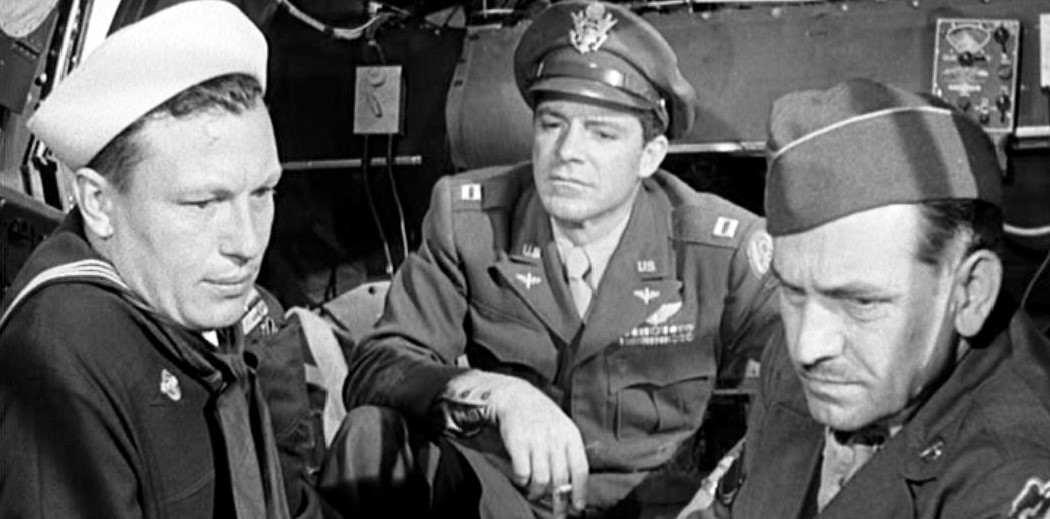
Harold Rusell, Dana Andrews and Fredric March find coming home can be as tough as war in The Best Years of Our Lives

Director: William Wyler

Cast: Myrna Loy (Milly Stephenson), Fredric March (Sgt Al Stephenson), Dana Andrews (Captain Fred Derry), Teresa Wright (Peggy Stephenson), Virginia Mayo (Marie Derry), Cathy O’Donnell (Wilma Cameron), Harold Russell (PO Homer Parish), Hoagy Carmichael (Butch Eagle), Gladys George (Hortense Derry), Roman Bohnen (Pat Derry), Ray Collins (Mr Milton)

Three men return from the Second World War. They’ve changed, but everything around them seems the same. How do they even begin to adjust when no one really understands what they’ve been through? The Best Years of Our Lives was a sensation when it was released, speaking to a whole country reeling from the shock of war. Many films focus on the gruelling experience of war, but few take on the struggle to find a place for veterans and help them reintegrate into normal life.

Our three veterans all meet at the airport, trying to home to the same small (fictional) city in the Midwest. Normally they would probably have never met: but war has given them a shared bond they will find hard to replicate back home. Al Stephenson (Fredric March) is a banker, who has developed something of a drinking problem to the surprise of his wife Milly (Myrna). Fred Derry (Dana Andrews) was a café worker who became an Air Force Captain – but finds that doesn’t interest employers back home. He also now has nothing in common with the flighty, flirty wife Marie (Virginia Mayo) he married before shipping out – and far more in common with Al’s thoughtful daughter Peggy (Teresa Wright). Homer Parish (Harold Russell) lost both his hands, replaced with mechanical hooks. Can he overcome the adjustments – and allow himself to be loved by Wilma (Cathy O’Donnell)?

What The Best Years of Our Lives explores brilliantly is how quick we are to praise heroes, but how slow we can be to offer them practical help and support. These problems aren’t just restricted to an unlucky one or two – the film goes out of its way to demonstrate the problem is universal. Our three leads are from different services, and radically different walks of life: an important businessman who served as a sergeant, a wash-out who found a purpose in the air force and an athletic sailor who returns without his hands. Rich or poor, it’s tough to find your place whoever you are.

Wyler shoots all this with a documentary realism, with extensive use of deep focus photography. It helps make this a frequently moving film. It sometimes feels like Wyler just captured real events. Flying home our heroes see “people playing golf like nothing happened”. They are all so nervous going home that both Al and Homer both suggest going for a drink rather than leave the cab they are sharing. Everyday problems about going to the office or looking for a job seem more affecting because we know they’ve come back from the war and don’t deserve knock-backs like this.

The heart of this film is Fred’s struggles to find some sort of purpose on civvie street. War offered more opportunities to him more than anyone else. He is a nobody who became a respected somebody. Now he can’t get a job in a department store. As a potential employer tells him, his CV is stuffed with irrelevant experience and his years out of the job market mean he’s fallen behind the rest. This is how a man with a chest full of medals, winds up serving ice cream and busting a gut trying to flog perfume to housewives who let their children run wild around his stand.

Dana Andrews is the heart of this film, giving a marvellous performance of great depth and sadness. Haunted by nightmares, Fred’s optimism drips away the longer he fails to find proper work. Perhaps most heart-breakingly of all, he increasingly makes himself the target of his dry wit. By the time he has surrounded to the indignity of taking back his old soda jerk job (and reporting to the spotty kid who used to be his assistant), Fred is disparagingly belittling his own wartime accomplishments.

If someone as matinee idol handsome, with a wonderful war record, as Fred can’t get ahead, what chance does anyone have? Fred’s wife (Virginia Mayo, marvellously smackable as this shallow girl) isn’t even interested in him, only the idea of him – begging him to wear his uniform (medals and all) for as long as possible so she can show him off like a new handbag. Fred is knocked back so many times, he comes to believe he deserves it. In a beautiful scene, late in the film, he walks through a field covered in old air force bombers. It’s a striking visual metaphor – one Fred is all too aware of – that he’s as much on the scrap heap as them.

The Best Years of Our Lives shows time and again how quick we are to forget. Al is hauled over the coals for offering a loan to a collateral-free GI who wants to start a farm. But Al feels a loyalty to men like this – and he recognises, unlike his superiors, there are qualities you just won’t find in a bank account. Homer is confronted at Fred’s workplace by an arrogant anti-Commie, who suggests the entire war was a waste of time, spent fighting the wrong foes. Calling Homer “a sucker” for losing his hands in the wrong war leads to a fight – and Fred losing his job for punching the guy out. Where is the sense of debt to these people?

Homer not only has to deal with disability – but also the metallic claws which get him all the wrong attention. The army trained him how to use the claws – but as Al observes, watching Homer’s awkward homecoming “couldn’t train him to put his arms round his girl”. They can solve the practical problem, but there is no support for actually coming to terms with the emotional impact.

Homer is played by real-life veteran paraplegic (and non-actor) Harold Russell, in a poignantly sincere, unstudied performance. It becomes even more heart-breaking, as his torment clearly rooted in Russell’s own experiences. When Homer demonstrates to Wilma how vulnerable he is without his hands –  if a door shuts, he’s trapped in a room, he can’t dress himself– it’s almost unbearably sad (O’Donnell is equally good in this scene). Russell’s simple, matter-of-factness is more moving than any histrionics.

The only plot that doesn’t get fully explored is Al’s implied drinking problem. He gets pissed the first night home (and his wife comments several times on his growing reliance). Everything to Al feels a little different – his kids are older, his bankwork seems stuffier. Today the film would dive more into Al’s probable survivor guilt. But Al makes a stand when others won’t to help his veterans – and March has a superb, low-key speech at a banquet in his honour where he vows to invest small loans into returning GIs. The film also gently probes – and in some ways leaves open – the ongoing problems he and Milly (warmly played by Myrna Loy) have had in their marriage, problems which Al’s absence and drinking have not helped solve.

Wyler pulls these threads together in a restrained style that largely avoids melodrama (though Hugo Freidhofer’s score is frequently overblown – Wyler apparently hated it). Instead, dilemmas are grounded in reality. Al might like Fred, but the last thing he wants is for Fred to get his daughter Peggy (Teresa Wright in a gentle, touching performance) caught up in a divorce. In a perfect example of Wyler’s restrained, documentary style, Al and Fred have a quiet man-to-man discussion, before Fred calls Peggy to see he can’t see her anymore. He does this in the back corner of the frame while the foreground shows Al listening to Homer and his uncle play the piano. It’s a perfect example of the way Wyler uses deep focus to give the film a fly-on-the-wall quality.

There is something extraordinarily modern about The Best Years of Our Lives. It feels calm and un-histrionic – and of course many veterans still struggle today. The camera feels observational and unobtrusive and the characters respond to situations in a very natural way. It’s also helped by the wonderfully natural acting. It all comes together in a film that is important without feeling like it’s trying to be important. An observant, sensitive exploration of the experience of veterans (made by a veteran), that never feels false and looks at our world with affection but realism.

Mrs Miniver (1942)

Greer Garson and Walter Pidgeon hold the homefront together in Mrs Miniver

Director: William Wyler

Cast: Greer Garson (Kay Miniver), Walter Pidgeon (Clem Miniver), Teresa Wright (Carol Beldon), Dame May Whitty (Lady Beldon), Reginald Owen (Foley), Henry Travers (Mr Ballard), Richard Ney (Vin Miniver), Henry Wilcoxon (Vicar), Christopher Severen (Toby Miniver), Brenda Forbes (Gladys), Clare Sanders (Judy Miniver), Helmut Dantine (German pilot)

Mrs Miniver was made when history was in flux: conceived at the height of the Blitz, shot and then parts re-shot either side of Pearl Harbor and released in 1942 after America had entered the war. A patriotic flag-waver, designed to build American sympathy for a Britain standing alone, it was a huge hit, won Best Picture and had a profound impact on Allied morale (Churchill called it more help to the War effort than a flotilla of battleships). It still carries an inspiring, cockle-warming charm and a hefty emotional punch, made even more affecting by the stoic determination (rather than hand-wringing emotion) every setback is met with.

In a small village just outside London, lives the Miniver family. Kay Miniver (Greer Garson) cares for her family in a large country house. She has three children with architect husband Clem (Walter Pidgeon). Their life is contented – and then war breaks out. Oldest son Vin (Richard Ney) joins the RAF – after falling in love with Carol (Teresa Wright), niece of the local grandee Lady Beldon (May Whitty). Clem joins the ships travelling to Dunkirk. Kay holds the domestic fort, protecting her family from air raids, facing down a German pilot and helping shepherd her small village through the trauma of air raids to something approaching a normal life.

Mrs Miniver is all about that stoic, British stiff-upper-lip attitude, of doing your duty uncomplainingly and quietly. As they said “Britain Can Take It”, and the film is a celebration of the nobility of perseverance. It’s designed to inspire and it does: it’s melodrama played with a low-key reserve, which is genuine and heart-felt. There is a reason Goebbels (and he would know) called this a “refined powerful propagandistic [tool]” – it makes you completely emphasise and relate to its characters. We share their moments of joy just as much as the profound tragedy of their losses.

And there is a lot of loss in Mrs Miniver – way more than you might expect, with the film’s final act throwing at least two painful gut punches you don’t expect. Tragedy touches all of us and war carries away the innocent and undeserving with as much eagerness as it does the militaristic. There seems to be no reason or justice to it – but instead the difficult acceptance of fate and the necessity of being part of a struggle larger than ourselves.

In a powerful speech that concludes the film, the vicar stands in the bombed-out ruins of his local church. It mirrors a scene near the beginning, as he regretfully but with quiet reserve announces the outbreak of war. Now he gives a rousing speech that this is war of all the people, against the tyranny that threatens us, where the dead our mourned but not forgotten. It’s a powerful speech (brilliantly delivered by Henry Wilcoxon), of the painful necessity of duty at the time of war that still stirs (it was distributed nationally by Roosevelt’s insistence).

The stoic, good-natured, supportive community, who protect each other and desperately try to maintain hope and nobility when death could strike at any time, contrasts firmly with the only German we see. A wounded pilot who gains entrance to Kay’s home at gunpoint. Kay calmly disarms him, feeds him and tends to his wounds (after all he is the same age as Vin) – he responds with a vicious speech of violent hate, bragging at the deaths the Luftwaffe have inflicted on Europe. It’s the only time her reserve really breaks, as she slaps him – and even for a moment seems to consider dispatching him. Her delayed shock is clear later when she casually smokes one of Clem’s cigarettes – a mixture of restrained shock, relief, horror and confusion across her face. It’s the closest direct danger comes – and the closest she comes to openly expressing rage and anger at the hand the world has dealt her.

The film revolves around Greer Garson’s (Oscar-winning) performance. Though it’s easy to see Kay as a sort of saint, that’s underestimating the huge burden Garson had: she effectively embodies an entire Homefront of scared people doing their duty. It’s a performance of stiff-upper-lipped warmth, her desperation, fear and protective nature clear in every beat. You can see it in her mix of distracted fear and pride when Vin announces he has joined the RAF, and the front of “everything will be alright” she puts on for the children during an air raid that tears her house apart.

Of course, that disaster is met with a “I always wanted to redo that dining room” fortitude by her husband, Clem. Pidgeon and Garson forged a partnership that would run through several movies here, and spark off each other wonderfully. Pidgeon gives a solid grounding to Garson, while she helps find warmth and humanity in an otherwise distant actor (Pidgeon lacks Peck’s – who he resembles in many ways – ability to convey warmth under reserved dignity). Pidgeon’s stirring sense of duty excels, not least during the Dunkirk sequence.

That sequence is very well executed, a small series of boats gradually growing in size until they fill the Thames. When duty calls, people respond with gusto and pride. Alongside this, normal life continues as much as possible: not even the war will stop the flower show. This remains a heart-warming centre piece – pinched for an episode of Downton Abbey – as Lady Beldon overrules the sycophantic judges and gives the prize to the deserving winner, local station manager Mr Ballard (Henry Travers, sweet but receiving a generous Oscar nomination).

The acting is pretty much spot on. Teresa Wright (Oscar winning) is endearingly genuine and vibrant as Vin’s wife to be (and Lady Beldon’s niece) Carol. May Whitty, channelling those grande-old-dames-with-hearts-of-gold, gets every beat right, from comedy to tragedy, Wilcoxon is marvellous. It’s all so heartfelt and earnest you can overlook the fact most of the (largely American and Canadian) cast go for cod-Brit accents or cliched working class vowels – just as you do the fact that neither the towns or countryside in the film looks particularly British (an opening sequence in London looks plain wrong in every sense).

And you can’t fail be stirred by its celebration of quiet determination and unshowy self-sacrifice. You can certainly argue that it’s not a work of art, like other films nominated that year for Best Picture. But, none of them would have (or continue to have) the emotional impact this has. Sure, it feeds off an American nostalgia for English-country-village life – but it does so with a noble cause. Well-acted, very well directed, it still inspires and continues to provoke pride today.

Ben-Hur (1959)

Charlton Heston fights for freedom in the large scale but strangely empty Ben-Hur

Director: William Wyler

Cast: Charlton Heston (Judah Ben-Hur), Jack Hawkins (Quintus Arrius), Haya Harareet (Esther), Stephen Boyd (Messala), Hugh Griffith (Sheik Ilderim), Martha Scott (Miriam), Cathy O’Donnell (Tirzah), Sam Jaffe (Simonides), Finlay Currie (Balthasar), Frank Thring (Pontius Pilate), Terence Longdon (Drusus), George Relph (Tiberius Caesar), Andre Morell (Sextus)

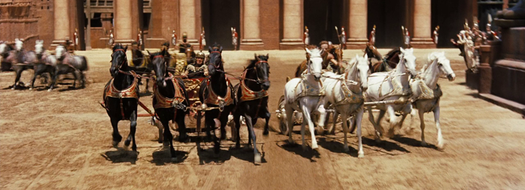
Ben-Hur is big. Hammering home its monumentalism, the poster features the colossal stone-carved title dwarfing the people below. It’s the sort of Hollywood epic where the numbers – 10,000 extras! 2,500 horses! Over a million props! 1.1 million feet of film! 11 Oscars! – are as much a part of what you are sitting down to watch as the characters and story. Ben-Hur sits at the apex of the Hollywood Biblical epic: three and a half hours long, the most expensive film ever made (at the time). Age hasn’t always treated it kindly, and its eleven Oscars give it a sort of classic status it’s very hard for the first-time viewer to reconcile with what you actually see on the screen. Fundamentally, Ben-Hur is part spectacle, part pageant: some striking sequences linked together by the twee and the forgettable. Entertainingly middle-brow and over honoured, it’s a classic mostly because of what it represents rather than what it is.

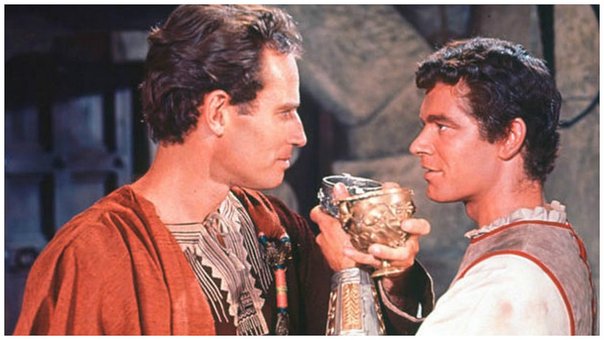
Adapted from General Lew Wallace’s best-selling doorstop (he basically invented the airport novel, decades before the first airport ever opened), the story follows the fortunes of Jewish prince Judah Ben-Hur (Charlton Heston) in the early years of the first millennium. Ben-Hur grew up regarding Roman officer Messala (Stephen Boyd) as a brother. But when Ben-Hur refuses to help Messala identify Jewish insurgents, their friendship comes to an end. Before we know it, Messala suses trumped up charges to send Ben-Hur in chains to a life rowing as a galley slave while his mother Miriam (Martha Scott) and sister Tirzah (Cathy O’Donnell) are imprisoned. Ben-Hur survives the galleys – even becoming the adopted son of Roman Consul Quintus Arrius (Jack Hawkins). When he returns to Jerusalem, will he take his revenge on Messala? Or will the teachings of the mysterious preacher spreading the word of God change his life?

For bursts of its (huge) run-time Ben-Hur is gripping, exciting stuff. The action when it comes is superbly done and some of the moments of high-emotion really hit the spot. But it’s impossible to avoid that, for large chunks of time in-between, Ben-Hur is ponderous, overlong, more than a bit self-important and a little twee. Frequently the film grinds to a halt to parade its numbers: after all we need a long intro to the chariot race so we can see all those extras and horses. Things like this frequently don’t drive forward the story, or help the pace: but Ben-Hur was at least as much about wowing the audience as it was about telling a story.

William Wyler was offered more money than any director in history to bring it to the screen. He produces a film as faultless in its professionalism, as it is impersonal. Wyler – a director who worked best with actor-led stories – struggled with the vastness of Hur: his visual compositions often an awkward attempt to mix the width of the frame with the intimacy of two characters talking. His style doesn’t help here: the heaviness of the cameras made them difficult to move, making many of the conversation scenes of the film rather flat and dull to look at. Wyler doesn’t put a foot wrong, but it feels more like a competent professional ticking boxes.

It’s the big set piece moments – of which there three – which really have stuck in people’s minds. Those would be: the early scenes with Messala/Ben-Hur, the naval battle sequence and the chariot race. Outside of those moments – which are all, in their own ways, very memorable – it’s amazing to me every time I watch it how much of the film I fail to remember. I certainly had forgotten how damn much of the movie is left post Chariot race (over 45 minutes!), the film dragging on through the Miriam/Tirzah leprosy sub-plot intercut with moments from the life of Jesus (often with dialogue of the “He’s giving a Sermon on that Mount” variety). There are several moments in the film where events play out at great length inversely proportional to their interest.

But those set-pieces are great. The chariot race alone probably made the film the success it is. It’s ten minutes of compelling drama, gripping stunts: a feast of tight editing, dynamic camera work and thundering sound effects. Shot by a second unit – although, to be fair, supervised in its planning and editing by Wyler – it’s the heart of the movie. Viscerally enjoyable, it perhaps stands out because it’s the most earthy, exciting, real thing in a movie that can be rather stagy and turgid.

Running it close is the naval battle sequence – show-casing a gravely Jack Hawkins – very well-done (and disguising its water tank shooting origins), particularly because Wyler keeps most of the focus on the slave rowers in the bowels of the ship. While fire and arrows fly up top, and boarding parties clash, it’s from the slaves perspective that we see a vessel approach to ram the ship – and their terror at drowning that we feel. It’s another fine use of the epic big-screen. With virtually no dialogue, it’s also a triumph of visual story-telling, communicating a host of emotions and actions with brilliant efficiency.

The Messala/Ben-Hur sequences have stuck in the mind for other reasons. Long-running debates exist about who actually wrote the script. The credit goes to Ken Turnberg, but Gore Vidal long claimed his fingerprints were on most of the dialogue. (Wyler and Heston disagreed, giving the credit to playwright Christopher Fry – Heston even thanked Fry in his Oscar acceptance speech.) Vidal liked to claim he directed Boyd to play these scenes as if Messala was a spurned lover of Ben-Hur – taking an equal delight in claiming Heston had no idea of this subtext. Wyler argued he had no memory of this, and denied any such direction to Boyd took place. The truth will never really be known, but to me the idea of the writer on a film like this taking creative control seems a stretch.

Anyway, it adds a frisson to the scenes – and its undeniable there is more than a touch of camp to them. To be honest I think a lot of this is due to Stephen Boyd’s OTT performance as Messala. He plays every single scene at a ludicrous pitch – throughout the chariot race he makes Dick Dastardly look the model of underplaying – and I can well imagine Vidal enjoyed taking advantage of his over-emphasis in these sequences to spin an amusing story of sneaking in a homo-erotic subtext.

The acting in general is fairly mundane – for all the film won two Oscars for its performers. Heston (in his only nomination) was named Best Actor. He’s a monumental actor, best used in roles that could have been chiselled from marble, but this is not his best (look to Khartoum, Agony and the Ecstasy or Planet of the Apes for starters). Much like Boyd he’s prone to over-emotionalism (most of the last 40 minutes feature him throwing his face into his hands), intermixed with moments of stony po-facedness. Hugh Griffith won the other Oscar (insanely generous considering he beat out Scott and O’Connell in Anatomy of a Murder) and his hammy, black-face is increasingly uncomfortable. Few of the other performers make much of an impact (although I enjoyed seeing an unbilled John Le Mesurier as a Roman doctor).

The one thing about Ben-Hur that lives up to its grandness is Miklos Rosza’s brilliant -and hugely influential – score. A brilliant mix of the inspiring epic, the grandiose and the deeply spiritual, you can hear its DNA throughout the works of John Williams and several others. It’s one of the longest scores of all time (three hours of music!) but it captures the tone of every scene perfectly, helping to build the overall effect.

It even manages to make some of the Jesus sequences work. The film is never more twee than when it touches on the Bible. Jesus is only ever shown from behind, but always as the classic long-haired, beatific figure, practically floating through the ether. Sequences that show the nativity, the sermon on the mount and the crucifixion have a Sunday School earnestness about them, largely free of drama and seem designed to be as inoffensive (and uninteresting) as possible. It’s when the film is as its most self-consciously earnest.

And Ben-Hur is a very earnest film. A professional job – with a director wrestling all those numbers – it’s got some striking sequences but even more flat, twee and forgettable moments. With acting that ranges from overly-earnest to just over the top, its classic status is more about what it is. The largest, most expensive, most honoured film of the Biblical epic genre. Its’ most famous for all those Oscars and the chariot race: in other words ten minutes of its screen time and garlands from a ceremony we often say honours the wrong films. Judged on film merits, Ben-Hur is not the best but not the worst. But it’s more about all its numbers, the vast array of things in it. It represents Big Studio investment: it’s about money. No wonder Hollywood garlanded it with so many Oscars.

The Collector (1965)

Samantha Eggar is held captive by Terence Stamp in the unsettling The Collector

Director: William Wyler

Cast: Terence Stamp (Freddie Clegg), Samantha Eggar (Miranda Grey), Mona Washbourne (Aunt Annie), Maurice Dallimore (Colonel Whitman)

A lonely butterfly collector wins the pools. He’s rich, he can have everything he wants – but he’s still an outsider who can’t get a girl. Surely if a woman would just get to know him he’d find love. So the easiest way of doing that is probably kidnapping the woman you had a crush on at school, locking her in a carefully furnished basement in your Tudor mansion house and just wait for her to fall in love with you. Sounds like a perfect plan right?

William Wyler’s adaptation of John Fowles’ best-selling literary first novel sees Terence Stamp as the maladjusted loner and Samantha Eggar as his victim. It’s fascinating reading about the film today and the attitudes and perceptions towards it. Today the film is chilling in the obsessive, dangerous, self-pitying self-justifications of Freddie Clegg. But in the mid-60s a number of reviewers commented on the pity they felt for the kidnapper, and even expressed that in many ways he was acting on fantasies every healthy man has had (they haven’t). Quite rightly the film comes across differently today, a far more unsettling and disturbing portrait than it did at the time.

Wyler’s direction is intimate and a fine mixture of the theatrical – with its often single locations and two-actor scenes – and cinematic, particularly in the way he subtly builds up a Hitchcockian level of tension around the possibility of discovery and escape for Miranda. Sure visually he is a little too much in love with the crash zoom on key items (chloroform for example in Freddie’s car), and devices that seem a little too obvious (like the use of black and white for the film’s only significant flashback) but he mounts the entire film with an unsettling claustrophobia that works very well.

Further he draws out two fantastic performances from the leads. Terence Stamp was not a natural choice for the shy, timid outsider turned abductor – he’s obviously way too handsome and physically assured for the role – but he marshals very well the blinded arrogance of a man who believes the whole world would march to his tune if it only stopped and listened. His Freddie Clegg is softly-spoken, polite and controlled – so much so you almost forget how insane he is. Stamp also does a remarkable physical performance, making himself seem shorter and less dynamic than he really is, his body language having more than the hint of the schoolboy about it. Domineering, controlling, bullying and totally incapable of internal analysis of his actions. 

You realise watching the films events unfold – and Freddie’s inability to analyse the emotional truth behind them – that he is alone because he fundamentally doesn’t understand human relationships. While many of the (male) film reviewers at the time found this strangely tragic, today it’s hard to feel anything but contempt for his cruel self-pity.

The more difficult role falls to Samantha Eggar as Miranda. Wyler’s attempt to get the best performance from here seems pretty kin to the abduction the character goes through in the film – she was kept in isolation on the film set, Stamp was instructed to not talk to her outside of shooting while Wyler constantly held the threat of dismissal over her. More than a few echoes of Hitchcock in that – and Wyler’s praise on the film’s completion for Eggar’s (Oscar nominated and Cannes Award winning) performance as more than a whiff of self-praise to it. But Eggar herself is superb as a woman who oscillates between panic, desperation, ingratiating kindness, anger, contempt and fear. Miranda is a woman who tries everything she can to get out of this situation, only to constantly butt heads against the twin devils of her countryside isolation and Freddie’s own lack of emotional and intellectual intelligence.

Because the film interestingly makes clear what a tedious and not-very-bright monomaniacal man Freddie is, compared with the educated and quick-witted Miranda. When she tries to engage him on a discussion about modern art, he is utterly incapable of beginning to appreciate artists such as Picasso (‘It doesn’t look real’), completely fails to grasp any of the ideas in The Catcher in the Rye (the book she suggests he reads) or their relation to him, and is drawn only towards the blandest, most traditional drawings that she creates while whiling away the time in captivity. He fanatically collects butterflies, rooms lined with framed specimens that he can discuss in detail but with no concept of their beauty. Every time Miranda tries to scratch the surface of Freddie to connect with him she constantly discovers he has no depths at all, he’s a little boy lost in the world who can’t understand why he can’t collect people with the ease he catches and kills butterflies.

Whether the film has some sympathy for Freddie is less clear. Maurice Jarre’s luscious score certainly seems to suggest we should feel something for this misguided guy, but today it’s almost impossible to do so. The film works just as well without those feelings of implied sympathy though, which is a tribute to Wyler’s even-handed and controlled direction. Certainly Miranda’s fear and oppression are easy to connect with.

Is this a Stockholm syndrome film? Miranda – an intelligent and cunning woman – quickly realises that while she is the victim, Freddie’s desire to be seen as sort of chivalric gentleman does give her some power over his treatment of her – he wants her to fall in love for real with him. How much does she start to feel sympathy for this misguided loner? Is there any hint of real feeling at any point in her eventual attempt to seduce him (I doubt it heavily watching the film, but I may be adding a modern perspective, as I suspect Wyler wants to leave a hint there – again the score supports this feeling a bit)? I’m not sure – but the film’s eventual ending does leave little doubt that Freddie is a dangerous man, and the world is a less save place with him in it.

The Collector isn’t perfect – and perhaps its attitudes have dated – but it still has a real skill to it, some wonderful scenes – and two terrific performances from its lead actors, who I think have never been better than they are here. Wyler’s last success – and you can see his debt to the later work of Michael Powell and Alfred Hitchcock in each frame, even while he fails to match either of them – it still makes for an unsettling, troubling and fascinating watch.

The Children's Hour (1961)

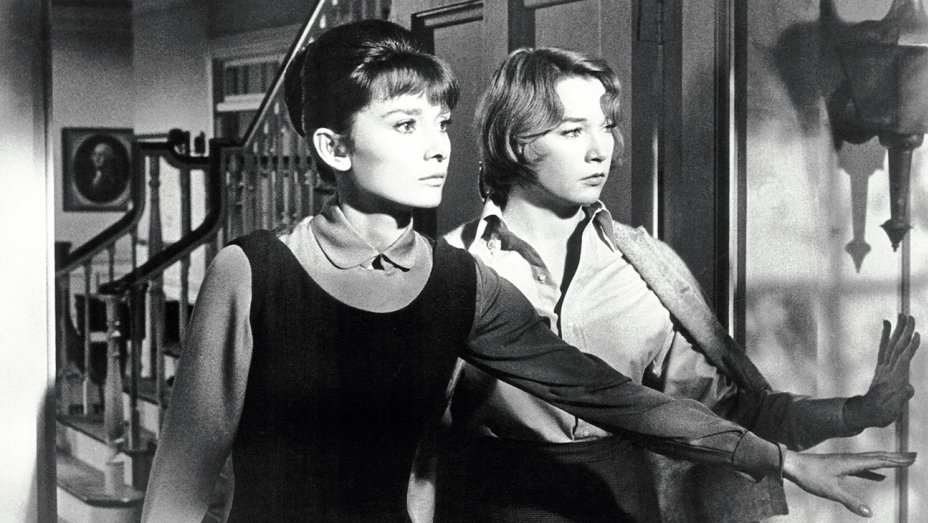
Audrey Hepburn and Shirley MacLaine are victims of scurrilous rumours in The Children’s Hour

Director: William Wyler

Cast: Shirley MacLaine (Martha Dobie), Audrey Hepburn (Karen Wright), James Garner (Dr Joe Cardin), Miriam Hopkins (Lily Mortar), Fay Bainter (Mrs Amelia Tilford), Karen Balkin (Mary Tilford), Veronica Cartwright (Rosalie Wells), Mimi Gibson (Evelyn), William Mims (Mr Burton)

The Children’s Hour was William Wyler’s second stab at directing an adaptation of Lilian Hellman’s play of the same name: a story about  two young teachers at a private girls’ school, and the destruction wreaked on their lives when a malicious pupil spreads rumours the two are in a secret lesbian relationship. His first attempt from 1936, These Three, kept as many of the themes as possible but carefully deleted every single reference to homosexuality in the script. This second film version restores this core theme in a carefully structured, well directed, respectful film adaptation that, with its careful analysis of the danger of rumours and snap judgements, still feels relevant today. 

Martha Dobie (Shirley MacLaine) and Karen Wright (Audrey Hepburn) run a private girls’ school. Karen is engaged to Dr Joe Cardin (James Garner), and this prolonged engagement is part of the arsenal used by a bitter, bullying student Mary (Karen Balkin) when she decides to start spreading innuendo about a scandalous relationship between the teachers, painting Martha as consumed by sexual envy. Mary’s story is believed whole-heartedly by her grandmother, doyen of the social scene and Joe’s aunt, Amelia Tilford (Fay Bainter). Thoughtless words from Martha’s aunt Lily Mortar (Miriam Hopkins) make things worse. In no time, the school is ruined, the children all gone and Martha and Karen face a desperate battle to prove that there is nothing to this but gossip.

Wyler’s film is a strange mixture at times, in part a commentary on prejudice, and also a scorching condemnation of jumping to judgements. The film plays out all this with calmness and a general careful avoidance of histrionics and lecturing. The removal of the children from the school is brutal and cowardly – with none of the parents having the guts to say why they are doing what they are doing until finally confronted by Karen. Amelia Tilford goes about her campaign of moral righteousness with a holier-than-thou superiority while constantly stressing that she takes no pleasure in this. In the latter half of the film, the abandoned school seems to be constantly surrounded by smirking men.

The film carefully outlines that this sort of moral judgement is inherently wrong, and it brings out some true moral judgement on many of the people involved. It draws out a brilliant Crucible-like indignation at the rigidity and hypocrisy of how those who are judged to be different are treated. The film’s finest sequence is at the centre of the film, where Martha and Karen make a (failed) attempt to nip the scandal in the bud by confronting Mary at her grandmother’s house. The scene zings with a burning sense of injustice, as Mary’s lies are believed, doubled down on and then confirmed by a blackmailed fellow student, all while the audience knows that everything that is being spun is florid, innuendo-filled rubbish.

Mary is a bitter, twisted, angry little girl whose face seems permanently screwed into a furious frown. She also has the sharpness and ruthlessness of the natural bully, successfully blackmailing a sensitive, kleptomaniac student to endorse all her lies at every turn. Wyler carefully demonstrates that she has a natural manipulator’s deviance and that half-facts and muttered comments carry more conviction and force than carefully stated arguments ever would.

But Mary’s actions partly stem from Karen’s own forceful treatment of her – and Karen’s moral inflexibility and personal certainty is just one of the many character flaws that this lie brings closer and closer to the surface. Well played by Audrey Hepburn, using her occasional slight imperiousness to great effect, Karen’s lack of compromise, her domineering personality and her own moral superiority help to make her both an unsympathetic victim to many, and a person who manages to drive wedges (inadvertently) between herself and her two closest friends, Joe and Martha.

That wedge spins out from the fact that the more sensitive Martha (a sensitively delicate performance from Shirley Maclaine) does have romantic and sexual feelings for Karen, feelings that she has carefully suppressed (or perhaps not even understood) and confesses to late on in a wave of guilt and shame, mixed with an almost unspoken hope that Karen might respond to this confession with more than silence and a quiet assurance that it won’t change anything. Neither of which is what Martha wants (or needs) to hear. 

MacLaine was critical of Wyler for removing from the film scenes that showed Martha’s love and affection for Karen in a romantic light. Perhaps Wyler was still slightly squeamish about the likelihood of America accepting a lesbian character presented honestly and sensitively. –But MacLaine has a point for, while the film does suggest it is reprehensible to  make judgements about other people’s private lives, it falls well short of suggesting that a lesbian relationship is as normal and valid as a straight one, or that Martha’s feelings for Karen are the equal of Karen’s for Joe. Karen will let the idea slide, but she is hardly thrilled by it, meanwhile Martha is made the more passive and hysterical of the two women, and her feelings for Karen are a source of tragedy in the story. While it’s of its time, the film still shies away from the idea that a lesbian relationship could ever be without a tinge of scandal. Unlike, say, Dirk Bogarde’s gay barrister in Victim, there is always something “not quite right even if we shouldn’t judge” about homosexuality in the film.

It’s why the film is at its strongest when showcasing its outrage for the many selfish and self-appointed moral guardians who ruin lives with sanctimonious self-regard. Miriam Hopkins is eminently smackable as Martha’s appalling aunt, whose love of gossip pours fuel on the fire. Fay Bainter is very good (and Oscar nominated) as Amelia, whose reluctance and unease about her self-appointed role as the moral police, only partly tempers her rigidity and inflexibility. Words of support and encouragement from others are noticeable by their absence, and even the long-standing loyalty of Joe (a rather charming James Garner) is eventually tinged (forever for Karen) by a moment of doubt. 

Rumours and innuendo are dangerous and cause real and lasting damage to people’s lives. It’s a fact the film enforces strongly – and it’s an idea that perhaps is even more relevant today at a time when social media sends moral judgements that ruin lives around the world even faster than Amelia Tilford’s phone can. A well-made film with moral force, that could have gone further, but still went further than many others dared at the time.

The Letter (1940)

Bette Davis plots doom and death in The Letter. Can she be caught?

Director: William Wyler

Cast: Bette Davis (Leslie Crosbie), Herbert Marshall (Robert Crosbie), James Stephenson (Howard Joyce), Frieda Inescort (Dorothy Joyce), Gale Sondergaard (Mrs Hammond), Bruce Lester (John Withers), Elizabeth Earl (Adele Ainsworth), Cecil Kellaway (Prescott), Sen Yung (Ong Chi Seng)

The “woman’s picture” was a popular genre of the 1940s, a catch-all for stories that centred around women dealing with domestic issues in the home or in relationships, with the lady herself the driving force of the narrative. There were several stars who excelled in this wide-ranging genre, but the best was perhaps Bette Davis. This melodrama is a superb example of exactly this sort of female-led narrative, focusing in on its heroine making catastrophic decisions that lead to terrible consequences.

On a plantation in Malaya, in the late 1930s, Leslie Crosbie (Bette Davis) the wife of gentle plantation owner Robert (Herbert Marshall) guns down a man, Geoff Hammond, who comes to visit her in her home alone. She insists to her husband, and their lawyer Howard Joyce (James Stephenson), that she was defending her honour. The trial for murder feels like a formality – until Joyce’s clerk Ong Chi Seng (Sen Yung) informs him that Hammond had a Eurasian wife (Gale Sondergaard) who has a letter from Leslie to the dead man which casts a very different light on the affair. Because “affair” is the right word: the letter implies Leslie invited the man to visit her while her husband was out. Mrs Hammond will hand the letters over to the authority – unless Leslie and Joyce cough up a huge sum of money to stop her.

The Letter is a film with two marvellous book-end scenes. The first is a beautifully shot and assembled murder sequence, where Wyler’s camera moodily pans through the sleeping native workers on the plantation – dappled by moonlight – until it finds itself drawn towards the steps of the plantation house by the sounds of gunfire. It’s a superbly marshalled sequence that mixes stillness and quiet from the start with a sudden explosion of noise, reflected in the shift in editing from slow camera movements to fast cuts. Nothing else in the film quite matches it until we reach the final sequence that mirrors it with Bette Davis heading back outside into the moonlight, where a terrible and violent surprise awaits her.

And you can enjoy that because no-one did these brutal, arrogant, high-society queens as well as Bette Davis. Davis is superb here, bringing just the right touch of melodrama to balance the intensity of Leslie’s selfish desperation to get away with what we immediately know is an act of murder. Leslie Crosbie is entitled, arch and a natural liar who carefully builds a series of alternative stories (each of them less believable than the one before) which she spins carefully with a mix of vulnerability and a dash of feminine weakness, to try and get away with murder. It’s a domineeringly strong performance that powers the entire film and Wyler draws a wonderful arch cruelty from her, just below the surface of her acceptable female hobbies of knitting and dinner planning. 

Wyler balances this with the two men around her, both of whom are under her spell to different degrees. Herbert Marshall is very good as her husband, a generous, loving, naïve soul who believes his wife without question until he later realises he shouldn’t. Marshall does an excellent job with making this hen-pecked weakling intriguing, not least in his later passive-aggressive response when discovering most of his fortune has been blown to save his wife from a certain death sentence.

The other man is her lawyer Howard Joyce, played with a patrician reserve by James Stephenson. Oscar-nominated for the role, Stephenson’s Joyce doubts everything he is told from the very start, but somehow allows himself to be dragged along with the cover-up that slowly develops. Whether this is out of pride, or whether this is because he is himself somehow under some sort of erotic spell that she emits is left open to question. Either way, Stephenson puts a wonderful growing aghast horror behind the role as his professional and moral scruples are challenged more and more.

The chicanery of Davis’ character in the film is of course helped by her being white and rich, and prejudices against Hammond (not to mention the reception his Eurasian wife expects to gets if she comes forward) are most of the mainstay of the case in her defence. Joyce basically speaks platitudes about professional integrity, while all but knowingly defending a murderer (he in fact goes out of his way to give himself plausible denial and avoids questions). The film manages to present the native workers on the plantation – and Joyce’s clerk – as something a bit more than this, as perhaps the only people in the film with actual integrity.

But of course Davis gets away with it, because she can pay to do so, but the film finds other ways to punish her (as these women’s pictures usually do for adultery). The film’s final sequences see Davis’ character slowly collapse from arrogant certainty into moral and mental torture, before almost willingly marching towards certain danger. Wyler’s film is a great vehicle for her, but it’s also superbly made and shot and captures the sweaty lack of justice in the British Empire with perfection.