Author: Alistair Nunn

Noah (2014)

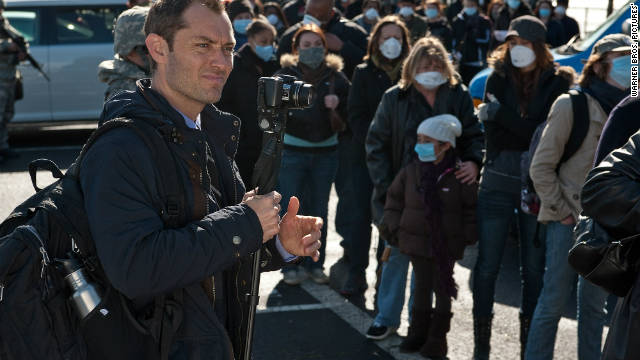
Russell Crowe is getting ready for action as the rains come to Noah

Director: Darren Aronofsky

Cast: Russell Crowe (Noah), Jennifer Connelly (Naameh), Emma Watson (Ila), Ray Winstone (Tubal-Cain), Logan Lerman (Ham), Douglas Booth (Shem), Anthony Hopkins (Methuselah), Marton Csorkas (Lamech), Nick Nolte (Samyaza), Frank Langella (Og)

Everyone kind of understands what they are going to get when watching a Biblical epic right? A lot of “thous” and “thees”, sandals and swords, priests with long beards, sweeping musical scores and an actor like Charlton Heston (ideally just Charlton Heston) at the centre, standing tall with the word of God behind him. Obviously Darren Aronofsky must have been unfamiliar with this formula as he put together Noah, without a shadow of a doubt the weirdest Biblical epic you are ever going to see.

Set at a time that could be thousands of years either in the future or the past (with a steam-punk aesthetic and timeless mix of ancient and medieval technology with hints at modern ruins), God has had enough of man wrecking the world. He sends a cryptic vision to Noah (Russell Crowe), last descendent of Abel, telling him that a flood will take out the world. Noah will build an ark to protect the animals – but Noah also becomes convinced that God’s will is that mankind will not survive the flood. After Noah and his children die that’s it. This fanaticism is met with concern by his family, but also with fury from the rest of mankind led by descendant of Cain, Tubal-Cain (Ray Winstone). 

And that’s only scratching the surface of the film’s trippy eccentricity. The story of the ark is familiar to generations of children, and the image of Noah as a jolly bearded fella saving the animals like some sort of nautical Doctor Doolittle is one we all share. Aronofsky remixes this into a more adult mood by reminding us that this bloke was also happy to stand by and watch the rest of mankind drown, and followed the word of God with a fanatical monomania. Noah is, for large chunks of this film, not a nice bloke. As he tells son Shem “He chose me because he knew I would finish the job”. No hugs on this boat.

It makes sense that Noah is embodied by Russell Crowe at his most gritty. Going through a series of haircuts that reflect his journey from nature lover to chosen man of God to fanatical cult leader through to reborn family man, Crowe gives the role a blunt determination and earthiness ­– so much so you half expect him to address everyone as “mate”. But it’s essential for Aronofsky’s reimagining of the role as part environmentalist part cult leader. Noah is uncompromising, unshakeable and totally certain that all his decisions come direct from God, ergo they are unquestionable. As he shows time and time again in the film, he is willing to commit actions that are at best morally questionable, at worst down right bad, to do what needs to be done.

He’s the man who is willing to watch his crapsack world burn (or rather drown) and feel that, yes, it is good. Aronofsky’s vision of this wasteland of a world fits this perfectly. Resources are low, mankind has turned (it is heavily implied) partly cannibal, industry has destroyed nature, the law of man has become the law of the strong. There is a clear modern parallel here with environmentalism, and Noah himself is strongly reimagined as a man with a deep respect for nature – and the balance mankind must make with it; and the danger of us burning through our resources with no regard for the future is a major theme throughout the film. 

Evil mankind is represented by Ray Winstone as Tubal-Cain. Greedy, selfish, ambitious and a demagogue, Winstone is at his most physically imposing and dangerous here, a fitting obstacle for this reimagined muscular Noah. Aronofsky does however acknowledge that, for all his faults – and his unashamed embracing of violence – Tubal-Cain does have a point: it’s not fair for all of mankind to be sentenced to oblivion with no chance to save itself, regardless of their personal morality.

This uncomfortable darkness behind the story of Noah – and the destruction of mankind by their creator – is one of many things that made some Christians uncomfortable with the film. The Creator (as he is referred to throughout the film) is noticeable by his silence, speaking only to Noah through dreams and everyone else, not at all. Noah’s hardline interpretation of God’s plans (extinction) is enforced by him with all the obsession of a fanatic (a large chunk of the second half of the film is given over to the danger of an expectant mother sharing a boat with a man who has stated his intention to end the race with his immediate family). Of course the film shows Noah eventually changing his mind (and getting royally pissed in self-disgust at his lack of will), but it’s a way darker tone to take for a story more familiar to people through children’s playsets.

Aronofsky places this film at a hinge point of what sort of race are we. It’s expressed in several scenes that mankind is still fighting the struggle between Cain and Abel. Is it violence and strength that wins out? Or are there better qualities in man that can end the cycle of destruction? What sort of world has man built – and what sort of world does Noah believe could emerge from the floods? Striking imagery accompanies this musing throughout, not least a flashback to Cain killing Abel in silhouette against a blue dappled starry night sky – an image that shifts and changes at one point to replace the brothers with antagonists from our entire history of warfare.

There are miracles and divine power in this film, but its actions seem to be based around inspiring fear and obedience rather than devotion. Forests spring from the ground for Noah to build from. Geysers of water take out mankind. Fires take out armies. There are moments of gentleness – a woman given back her ability to have children, rainbows etc. – but the Creator is a hard taskmaster. Noah is assisted by a gang of fallen angels – the Watchers – who, as punishment for siding with mankind when Adam and Eve were expelled from Eden, were thrown to the ground and encased in stone, turning them into freakish, gangly, giant rock monsters. Despite this, they retain their devotion to their creator – and their assistance is essential for the construction of the ark.

The inclusion of Giant Rock Monsters shows you again how far off the Biblical beaten track Aronofsky goes. This same embracing of unconventional oddness is seen throughout the film’s aesthetic – dirty clothes that have been cobbled together from several different eras, hints of metalwork and industrial ruins throughout Tubal-Cain’s kingdom, blasted wastelands – it’s miles away from The Ten Commandments. But it all sort of works because, regardless of his eccentricity, Aronofsky is a unique and intelligent director of visuals and his work is full of striking images and staging that draws inspirations from all over the shop, from old films to classical children’s story book images from Biblical tales.

Noah ain’t perfect. It’s overlong and its genre defying oddness occasionally feels a little too much. It suffers from the fact that the visuals and themes are so overwhelming that they crush most of the characters: Jennifer Connolly has little to do as Noah’s wife, while Emma Watson et al playing various Noah family members are left with just crusts to chew on. But embrace its bizarreness and the points it wants to make and you are left with a film that is quite unlike anything else you are likely to see. Aronofsky has made a Biblical epic unlike any that has ever, or will ever, be made. And that at least is worth some praise.

Moneyball (2011)

Brad Pitt and Jonah Hill take on maths and baseball (in that order) in Moneyball

Director: Bennett Miller

Cast: Brad Pitt (Billy Beane), Jonah Hill (Peter Brand), Philip Seymour Hoffman (Art Howe), Robin Wright (Sharon), Chris Pratt (Scott Hatteberg), Stephen Bishop (David Justice), Reed Diamond (Mark Shapiro), Brent Jennings (Ron Washington)

Chances are, if I tell you this is a film (a) about baseball and (b) also about sabermetric economics, I’ll lose a lot of you before a single second of the film has rolled. Which would be a shame in this case, as Moneyball is an entertaining, rather affecting yarn that manages to turn subjects that really feel like they should be impossibly dull into a sprightly against-the-odds drama.

In 2002, Oakland A’s general manager Billy Beane (Brad Pitt) has a problem. The As are struggling to pull together a competitive team for the new season, with their best players having been cherry picked away by the larger (and crucially richer) teams, and the money to buy replacements proving incredibly sparse. But after a chance meeting at the Cleveland Indians with young Harvard economics graduate Peter Brand (Jonah Hill), Beane stumbles across another way of building a team. Realising that if he tries to compete on finances with the bigger teams he will always lose, Beane is persuaded by Brand to research player statistics to unearth players undervalued by the big teams. By focusing on specific playing statistics – crucially their on-base percentage – rather than more showy skills, Beane starts to build a successful team, despite the push-back from the more conservative scouts and coaches at the club.

Yes it’s the backroom side of sports, the boardroom politics and business dealings, that come to the fore in this film. But rather than bore, it actually zings along very effectively due, in no small part, to some cracking trademark rat-a-tat dialogue from Aaron Sorkin (polishing a script by Steven Zallian), which elevates conversations about percentages and statistics into something so entertaining you don’t even notice you barely see any actual playing of baseball. 

But then the film comes into shape because who hasn’t wanted to be the visionary, to be the one who tells a stuffy room of old-timers that they are out of date and hell fire I don’t care what you say we’re going to do it the new way or be damned? Based on Michael Lewis’ book, written in heavy collaboration with Billy Beane, the film may well (as some have claimed) play up the conservative prejudices of the follow-your-gut scout and coaches (in particular its portrayal of coach Art Howe as some sort of lumbering dinosaur) but it does make for some damn fine scenes.

And there is a point in there that these coaches feel – perhaps slightly justifiably – that their experience is being disregarded in favour of burying your nose into an online almanac. Crucially, they are proved right (although the film plays it down) when they identify one of the Beane’s signings in advance as a party-hard troublemaker. The film also shows that, while numbers help recruit the players, what actually makes them perform is Beane’s reluctantly taking on the mantle of man-management: talking to the players, explaining what he is doing and motivating them personally. While it’s a film about pushing the boundaries, it also takes moments to show that we can’t junk everything that’s past to build our future.

Moneyball largely manages to make scenes like this dramatic, which is pretty damn good going

A lot of this comes out of Beane’s own personality. It’s a gift of a part for Brad Pitt, who is excellent, mining the deep vein of loneliness and isolation in Beane, whose past is littered with regrets and mistakes. His own baseball career flamed out after early promise, due to his inability to adapt to a higher level of play (Brand wins Beane’s trust by telling him that, based on statistics, he would have picked him very late in the draft not first). It’s an experience that gives Beane a ready-made scepticism for “gut instinct”, but also explains his own unwillingness to get to know the players who (if he needs to) he’ll need to trade in an instant for the good of the club.

Pitt gives Beane this inner sadness, but also a level of warmth fired by competitive zeal. He’s unable to watch the games (so driven is he to win) and he treats his negotiations with other teams and managers with the sort of no-holds barred testosterone that you’d expect he played with. He’s a passionate man who loses his temper and has no time for fools. But he has a deep love for his daughter (of course!), keeps on good terms with his ex-wife and understands deep down that making life decisions is based on a lot more than money.

This also adds a level of bravery to his decision to fly in the face of decades of baseball knowledge – get this wrong and his head will be on the block. This brings added tensions to heated discussions with scouts, frenzied phone calls to secure at the right price the most statistically advantageous players, and clashes with coaches about how to pick a team that has been selected for very specific skills. It adds a human element and guts to the drama.

With super dialogue, a fine performance from Brad Pitt and some good supporting work from Jonah Hill as the (semi-fictionalised) numbers-guy slowly building in confidence, Moneyball has more than enough to recommend it. Sure not much concession is made to baseball muggles, but there’s more than enough heart and drama here to overcome the lack of explanation of how baseball works and what these percentages actually mean – the fact is it works.

Captain Marvel (2019)

Brie Larsen is Captain Marvel – yah boo sucks Trolls!

Director: Anna Boden, Ryan Fleck

Cast: Brie Larson (Carol Danvers/Veers), Samuel L Jackson (Nick Fury), Jude Law (Yon-Rogg), Ben Mendelsohn (Talos/Keller), Djimon Hounsou (Korath), Lee Pace (Ronan the Accuser), Lashana Lynch (Maria Rambeau), Gemma Chan (Minn-Evra), Annette Bening (Supreme Intelligence/Mar-Vell/Dr Wendy Lawson), Clark Gregg (Phil Coulsen)

After almost 11 years, the big criticism of the Marvel Cinematic Universe has been that it had never made a film with a woman as the lead. Sure, we’d had various strong female characters, but never had one been trusted with headlining a movie. Well the studio has put that right with Captain Marvel, a hugely enjoyable, if not exactly groundbreaking, superhero origins story that can stand up with some of the best origin movies the studio has produced.

In the Kree civilisation, Veers (Brie Larson) is in training to take her proper place in the Star Force, under the tutelage of her mentor Yon-Rogg (Jude Law). But she’s struggling to control her immense powers, with her dreams plagued by strange visions and half memories of a planet that looks to us viewers a lot like Earth. After a Star Force mission goes wrong, Veers is captured by the shape-shifting Skrulls and their leader Talos (Ben Mendelsohn), her memory being searched for a time on Earth that she doesn’t remember. Escaping, she finds herself on Earth in 1995, and quickly allies with SHIELD operative Nick Fury (Samuel L Jackson, impressively digitally de-aged) to find out what the Skrulls want. But is everything as it appears? And what will happen as Veers starts to remember her true identity, as long-missing air-force test pilot Carol Danvers?

Captain Marvel I guess you could say is not an ambitious film. It largely sits pretty close to the well-established Marvel formula for introducing a new character, and it presents a series of visuals, fights and general tone mixing light-jokes with action beats extremely well. It’s a very professionally assembled product. However, what makes it work is the strain of emotional truth, and an interest in character as the driving force for events, that runs right through the centre of the film. It’s a testament to the imaginative and original direction from Boden and Fleck that at the centre of each clash we see, not the action and the pyrotechnics, but the emotion and character that give these things meaning.

They are also helped by an interesting plot, with some very decent twists, that throws the viewers into the deep end and carefully drip-feeds us information at the same pace as Carol picks it up. This also helps hugely for investing in Brie Larson’s Carol Danvers, a character who doesn’t know who she is and where she came from. Brie Larson does a terrific job, crafting a character “strong and determined”, but also witty, impulsive, brave, caring, decent and rather sweet with a strong moral compass that clearly, from the start, governs all her actions. It’s a fine performance and Larson is equally convincing in the film’s lighter, funnier moments as she is when banging heads together.

That helps keep the tone of the film pretty consistent as it heads through various twists and turns and rugpulls. Now I am sure some of these twists would be seen coming by anyone immersed in Marvel comicbook lore, but for us Muggles I appreciated the reveals about several characters defying expectations. The film also avoids false tension – a character is so obviously a shape-shifted replacement, it’s a relief that the film confirms this in minutes and the characters work it out shortly after. It’s a smart way for the film to fool you into thinking where it is going, while building towards more interesting reveals later on – particularly as it throws our expectations for several characters into the air.

And the action when it takes place is great fun, primary-coloured and accompanied by a great selection of 90s tracks. Because Boden and Fleck have spent so much time carefully developing the characters at its heart, these become action moments you can genuinely invest in, where people you care about are in peril, rather than the bangs and crashes without consequence that plague other films.

It’s also mixed extremely well with comedy. Samuel L Jackson in particular gets some great comic mileage out of a young Nick Fury, a man on his way to becoming the hard-as-nails guy we’ve seen in countless movies, but here still young, playful and (hilariously) besotted with a cat rather wittily called “Goose”. Ben Mendelsohn also gets some good moments from his mysterious shape shifter and Jude Law has a sort of put-upon charm as Carol’s mentor. There are also some lovely moments as Carol rediscovers her memories and rebuilds a relationship with her former best friend and fellow test pilot Maria Rambeau, well played by Lashana Lynch.

Captain Marvel is such good fun, such good old fashioned entertainment, that it seems to have defeated the efforts of the internet trolls to consign it to oblivion. It’s sad to say that, following in the footsteps of Black Panther, The Last Jedi, Star Trek: Discovery and Doctor Who, another “fan boy” franchise entry has seen its opening overshadowed by a bunch of sad wankers with key boards hammering into the internet (and whining into YouTube) about Disney and “the suits” forcing fans to watch stories about people who aren’t white males. Larsen and Captain Marvel got it in the neck for being sexist (it’s not about a man and Larsen dared to say she thought film critics were overwhelmingly white and male – guilty in this case), pushing a feminist agenda (because, like, it had a woman in it that wasn’t a damsel-in-distress or hooker-with-a-heart-of-gold) and not representing what the fans wanted to see in comic films (muscular men saving ladies and hitting things basically). Never mind that social commentary in the old days used to be what these fans bragged about their passions being so full of. Now any character who doesn’t fit a narrow set of racial and sexual criteria is an attempt by the PC brigade to push these pricks out of the fandom. Well to be honest we are better off without this turgid slime polluting fandom with their putrid stench. Put frankly, if films like Captain Marvel make some idiots decide they are going to boycott Marvel for ever more, well good – please fuck off and let the door slam you on your arse on the way out.

Anyway, rant over. Captain Marvel is great fun, Brie Larsen is great, the action is well done, the jokes are funny, the story is engaging and it’s all done and dusted in two hours. Go and see it.

Us (2019)

Lupita Nyong’o prepares to take on the dreaded Us

Director: Jordan Peele

Cast: Lupita Nyong’o (Adelaide Wilson), Winston Duke (Gabe Wilson), Shahadi Wright Joseph (Zora Wilson), Evan Alex (Jason Wilson), Elisabeth Moss (Kitty Tyler), Tim Heidecker (Rosh Tyler), Yahya Abdul-Mateen II (Russel Thomas), Anna Diop (Rayne Thomas), Madison Curry (Young Adelaide)

Jordan Peele’s Get Out is a tough film to follow. Smart, socially aware, funny, scary and haunting, it’s both one of the best horror films in years, and also one of the finest films made about modern America. It means his follow-up has some tough shoes to fill. Us perhaps doesn’t quite fill them as well, but judged on its own terms it’s another example of what a witty, skilled and intelligent film-maker Jordan Peele is and how skilfully he is able to both defy and define genre tropes.

The less you know about the plot the better, but Lupita Nyong’o plays Adelaide Wilson, a woman returning with her family to spend a holiday at Santa Cruz beach. While her husband Gabe (Winston Duke) and children Zora (Shahadi Wright Joseph) and Evan (Jason Wilson) are filled with excitement about the trip away, Adelaide fears returning to the location where she traumatically got lost one night in a hall of mirrors and encountered what felt like a doppelganger of herself. But as strange coincidences begin to mount up on their holiday, Adelaide begins to fear her whole family may in fact be in great danger…

Us mixes moments of unbearable tension with beats of almost slapstick humour. But, like Get Out, it’s also a film that leaves you grasping at the implications of its setting and ideas and opens up an ocean of possible interpretations and meanings. There is no chance at all Jordan Peele is a one-hit wonder, because this film is a blindingly good, brilliantly made chiller/thriller that stays with you once you leave the cinema. 

It has such an impact largely because Peele is such an immersive and mesmerising director. His mastery of the tricks and turns of the genre are obvious, but what really makes this go the extra mile in effectiveness is his brilliant understanding of cinema. The camera work here is superb: he knows exactly how long to let a shot linger, exactly how a slow zoom or pull out can build tension and fear to such excellent effect, how the right choice of music can give a scene anything from an ominous Omen­-like terror to a streak of black comedy (there is one musical choice that is so perfectly hilarious and yet bleakly dark that it will have you laughing out loud despite the horror of the scene it accompanies). Us is a superbly made film by a master movie-maker, with every moment giving some imaginative flourish or striking image.

Us is also a film that works because of its depth and the humanity of its characters. Each character is given establishing moments – big and small – that immediately ring true and allow you to understand and relate to that person in seconds. Peele’s horror comes not from blood and guts – which is present but never exploitative (this is a million miles away from a mindless slasher) – but from watching people we have grown to care for and like going through ghastly events. A prolonged home invasion sequence is almost unbearable to watch in the chilling hopelessness of the family caught up in it: and it works because the empathy we have built up for these people allows us to put ourselves immediately into their shoes. The film has a brilliant understanding of our universal fears, from not being safe in our homes to being powerless to protect our children, and uses these for great effect.

The second half of the film (thankfully!) doesn’t continue this unbearable, stomach pulling dread (if it did you wouldn’t be able to watch it) and probably segues more into science-fiction-thriller territory. Not that that’s a problem as the film remains gripping and compelling throughout. It also delves further into the fascinating themes that Peele is confident enough to place on the table without feeling the need to hammer home an interpretation or meaning for the viewer. There are questions here throughout about the underbelly of America, the unspoken questions of class that run through the country. “We are Americans” the ‘villains’ of the film proudly state at one point – and the more we learn about them, the more we understand about why they cling to this idea of belonging. And of course why they feel the way they feel about their country.

What is class in America? How is this nation divided by the haves and the have nots – and how does it affect the decisions people make about their lives? What impact does commercialisation and the need to both have things and to be part of something have on us? What in modern America can both bring us together and drive us further apart? These are questions that run throughout the film – without clear cut answers – but challenge you to think for yourself.

The performances in amongst all this are brilliant. Lupita Nyong’o probably won’t get the awards recognition she deserves here for an extraordinary performance of empathetic gentleness and distress hardening into a grim determination to do whatever is necessary to protect her family. Nyong’o has a double role in the film, and this second performance is equally wonderful, a triumph not only of physical acting but also of tortured psyche. Winston Duke is equally good as a lovable doofus of a husband, while Wright Joseph and Evan Alex give exceptional performances as their children. 

Peele throws in a late narrative twist – effectively signposted throughout – which challenges many of our assumptions about what we have been watching, but doesn’t distract from the social questions he has been tackling throughout the film in a subtle way. Once again his narrative control is flawless and the depth he can suggest behind horror tropes is staggering. Us is perhaps more of a fairground ride than Get Out, more about the terror of being chased and the black comedy of ordinary people fighting back with extreme violence, but it’s a damn entertaining one and leaves you with more to think about the longer you reflect on it.

Young Winston (1972)

Simon Ward as the Young Winston: episodic but fun look at the early life of the Greatest Briton

Director: Richard Attenborough

Cast: Simon Ward (Winston Churchill), Robert Shaw (Lord Randolph Churchill), Anne Bancroft (Lady Jennie Churchill), John Mills (Lord Kitchener), Jack Hawkins (James Welldon), Ian Holm (George Earle Buckle), Anthony Hopkins (David Lloyd George), Patrick Magee (General Sir Bindon Blood), Edward Woodward (Captain Aylmer Haldane), Pat Heywood (Elizabeth Ann Everest), Laurence Naismith (Lord Salisbury), Basil Dignam (Joseph Chamberlain), Robert Hardy (Headmaster)

Any poll of the Greatest Briton is bound to throw up, near the top, Winston Spencer Churchill. So famous is he, that his surname isn’t even required for Attenborough’s biography of the Great Man – just that name Winston gives you a pretty good idea of what you’re going to get. And you’d be right, because this film gives you a pretty straightforward rundown of Winston Churchill’s early years, in an episodic breakdown that gives us some small insight into what shaped the chap who went on to implore us to “fight them on the beaches”.

Simon Ward is the Young Winston, with Robert Shaw and Anne Bancroft as his parents Lord and Lady Churchill. Lord Randolph is the high-flying MP who throws away his career, catches syphilis, loses his mind and dies aged 37 – all the time disappointed with the son desperate for his approval. Lady Jennie is his loving, supportive but slightly distant mother. Winston himself? A bright lad, but a hopeless academic, struggles at school, needs umpteen attempts to scrap into Sandhurst for a career as a cavalry officer (a dunce’s career in the opinion of Randolph), serves in the Sudan under Kitchener (John Mills) and starts writing books and newspaper articles – because hopeless academic he might be, he’s still gifted with words. A career in Parliament is his dream – helped no end by his escaping captivity during the Boer War, making him a popular hero. 

You can probably tell from that plot summary that this is a somewhat episodic film. Although initially throwing us into a clash in North-West India between the 35th Sikhs regiment and Pashtun rebels – an action during which embedded journalist Churchill wins a mention in dispatches – the film quickly settles into a straight narrative run down of Churchill’s early life, filtered through the great man’s own writings. This makes for an episodic, at times rather dry, box ticking exercise of key moments in his life although it gets enlivened with some decent scenes and some good performances.

The one fact that comes out most strongly from the film is the wretchedly unhappy childhood of Winston himself. A borderline dunce, Churchill is a hopeless student from an early age. His school days are miserable, dispatched to some ghastly boarding school where thrashings from the headmaster (ironically played by later regular – and definitive – Churchill performer Robert Hardy) are handed out as regularly as dollops of gruel. There is a certain emotional impact throughout these scenes, with extensive quotations from the pre-teen Churchill’s letters barely concealing pleas for his parents to visit him (save him) under protestations of his happiness at school.

But this emotional connection doesn’t really last once we get into the adventures of the younger Churchill. This is despite an excellent performance from Simon Ward, who perfectly captures the mood and manner of the more famous older man while splicing in plenty of youthful exuberance and naivete. Ward does a terrific job of holding the film together – so well in fact you are left feeling slightly sorry that he never got a part as good as this ever again. His final speech is a perfect capturing of the speech-making prowess of the young statesman.

The film takes a mixed attitude to Churchill’s parents. It’s very open about the syphilis that afflicted Lord Randolph, and even before that makes clear his career is one governed by rashness and poor judgement. Robert Shaw is excellent as Churchill’s father – a stern taskmaster, constantly disappointed in his dullard, lazy son, but spicing it with enough small moments of affection to make you understand why Churchill worshipped this man whom he surpassed by every measurable factor. Shaw also makes a pre-illness Churchill, sharp, witty and strikingly intelligent: making his later descent into illness and unpredictability all the more affecting. Randolph’s final speech in the House – raddled by syphilis he looks awful and can barely remember his train of thought for longer than a few seconds – is remarkably moving.

The film takes far more of a conventional view of Lady Sarah, presenting her far more as the idealised mother figure she must have been for Churchill. Anne Bancroft is saddled with a rather dull part that never really comes to life, as the more interesting aspects of her colourful life are largely left on the cutting room floor.

Attenborough’s film does try to drill down into the personalities of these three people with a curious device where each character has a scene speaking (direct to the camera) to an unseen journalist asking them questions about themselves and the events around them. This interrogational style looks like a rather dated 1970s innovation today – look how we put the spotlight on these people! – but it does give a chance to see them from another perspective, and give the all-seeing author of the screenplay (Carl Foreman) a chance to ask questions viewers are probably asking. It’s on the nose, but still kind of works, even if the revelations we get barely seem to give us any shocks.

It’s about the only slight moment of invention anyway in a film that is another example of Attenborough’s excellence at marshalling a huge number of actors and locations into something very reassuringly safe and professional that is going to have a long lifespan on Sunday afternoon TV schedules. Young Winston is a decent, enjoyable mini-epic, but it’s not the film for those really wanting to either understand the times or understand the personalities involved.

At Eternity's Gate (2018)

Willem Dafoe is the great Van Gogh standing At Eternity’s Gate

Director: Julian Schnabel

Cast: Willem Dafoe (Vincent van Gogh), Rupert Friend (Theo van Gogh), Oscar Isaac (Paul Gauguin), Mads Mikkelsen (Priest), Mathieu Amalric (Dr Paul Gachet), Emmanuelle Seigner (Woman from Arles/Madame Ginoux), Niels Arestup (Madman), Vladimir Consigny (Dr Felix Ray), Amira Casar (Johanna von Gogh-Bonger)

Vincent van Gogh has a constant fascination for film-makers. Perhaps it’s because, as this film suggests, he sat permanently “at eternity’s gate”, painting for those yet to be born. It’s well known van Gogh only found success, fame and artistic recognition after his death. The sad tragedy of his life – he was a deeply troubled man, who struggled profoundly with depression – has been fuel for many films with van Gogh played by actors ranging from Kirk Douglas to Benedict Cumberbatch. Now Willem Dafoe – a very close physical match to the painter (even if he is almost 25 years older than van Gogh at his death) – takes the role on in artist Julian Schnabel’s film.

You’d expect Schnabel, a renowned artist and film-maker, to create a film that offers insight and even revelations on van Gogh and the process of art creation. It’s a shame then that At Eternity’s Gate doesn’t quite succeed in doing this. Schnabel stated in interviews that the existence of the Kirk Douglas/Vincente Minnelli Lust for Life (a far more conventional narrative retelling of van Gogh’s life spliced with melodrama) removed the need for him to worry about telling the clear facts of van Gogh’s life. While I guess it’s true that the basic litany of van Gogh’s final years (which the film focuses on) of Arles-Gauguin row-ear removal-asylum-Gachet-suicide is pretty familiar to many people (and I suspect everyone likely to see this film!), Schnabel’s film drains the drama from this.

Instead Schnabel offers up a film straining at complexity, but which feels rather slight and unsatisfactory. It only seems to scratch the surface of art and the thinking behind van Gogh’s creations. In fact, whenever the film actually tries to talk about art it largely comes across as stodgy and lumpen. Oscar Isaac in particular is saddled with several speeches and dialogue exchanges on art that fall lamely to the floor. Van Gogh gets a few more poetic contributions, but these are few and far between and essentially seem to sum up to a wistful love of nature and the beauty around us.

On top of this, I don’t feel like I get a real understanding or insight in this film into van Gogh’s inner life. In 2011 an episode of Doctor Who written by Richard Curtis made profound and moving material out of Van Gogh’s depression in the episode Vincent and the Doctor. The pain of inner turmoil, the volatility of depression, the way joy can switch to anger and suicidal self-loathing as if a switch has been flicked – it’s all there in that episode. It’s a side of van Gogh that seems missing in this film. The demons, for want of a better word, are missing. 

The film indeed averts its eyes from van Gogh’s bleakest moments. The arguments with Gauguin happen mostly off-screen – I guess the film is placing us in van Gogh’s shoes in that it’s as much a surprise to us that Gauguin announces he can’t bear it any more as it clearly was to van Gogh. The ear cutting is related to us by a calmer van Gogh days later. The film also follows the line of the recent 2011 biography of van Gogh in believing his death was not suicide but manslaughter, a theory that I’m not sure I can really support (since it seems to be founded on a lack of understanding about how the depressed can seem fine one day and then suicidal the next) so maybe this is all intentional.

What the film does do well is get a sense of van Gogh as a soulful and gentle man. Willem Dafoe, as well as being a remarkable physical match for van Gogh, is also an actor made for both suffering and imbalance. After a career of martyrs, the intense, the unhinged, the mutilated and Jesus Christ, his face seems lined already with the cares of the world. Dafoe is very good here, soulful and vulnerable but with a monomania for painting under the surface that guides all his actions. But he has a wistful, childlike tenderness to him and a sense of a gentle man adrift in a world he can’t understand.

It’s a shame the film doesn’t have slightly more to it. Visually it gets a good sense of van Gogh’s striking colours. But I was put off by Schnabel’s addiction to using a wild hand-held camera. Often sloshing woozily around the frame, the camerawork is clearly an attempt to capture the urgent brush strokes and movement of van Gogh’s painting in its visual style – like his paintings it never sits still. It’s also perhaps an attempt to capture the mania of van Gogh’s inner life: it’s noticeable the camera work only calms when van Gogh himself is calm (i.e. painting). But it’s still not exactly easy to watch – like reading a book on the upper deck of a ship during some particularly choppy seas.

At Eternity’s Gate feels like it should be a better film than it is. Irritating camera work aside, it is well made and it has a fine performance at its centre. There are some decent cameos from the other performers – best of all Mads Mikkelsen as a kindly priest who gently, and with great sadness, breaks it to van Gogh that his work is clearly rubbish – but it never really feels like it gives any real insight into either van Gogh or his artwork. For all its panache, it’s strangely empty.

Minority Report (2002)

Tom Cruise messes with fate and the future in Minority Report

Director: Steven Spielberg

Cast: Tom Cruise (Chief John Anderton), Max von Sydow (Director Lamar Burgess), Samantha Morton (Agatha), Colin Farrell (Danny Witwer), Neal McDonough (Detective Fletcher), Steve Harris (Jad), Patrick Kilpatrick (Knott), Jessica Capshaw (Evanna), Lois Smith (Dr Iris Hineman), Kathryn Morris (Lara Anderton), Peter Stormare (Dr Solomon P Eddie), Tim Blake Nelson (Gideon)

If you could see what lies ahead for you in your future would you change it? Or would you accept what fate has clearly already decided? It’s one of many questions that Minority Report, Spielberg’s bulky, brainy sci-fi chase movie slash film noir, tackles. And the answer it suggests is: everybody runs.

It’s the year 2054, and murder in the District of Columbia is a thing of the past thanks to the Pre-Crime Division. Using three psychics, known as “pre-cogs”, permanently hooked-up to a machine that can visualise their visions of violent deaths and murders that will occur, the Pre-Crime team led by Chief John Anderton (Tom Cruise) arrest and imprison murderers hours, minutes and seconds before they even commit their crimes. Anderton believes passionately in the system – but his belief is shaken when the next murderer to be identified is none other than himself. Anderton is due to kill in a complete stranger in 36 hours – and immediately goes on the run to work out who this man is, why he would wish to kill him, and if there is any truth in the rumour that the pre-cogs don’t always agree, and that the most powerful pre-cog Agatha (Samantha Morton) can produce a “minority report”: an alternative vision that shows a different future.

Spielberg’s film is one that mixes searching discussion on fate, choice and destiny with the pumping, fast-moving action of a chase movie and the gritty, hard-boiled cynicism and intrigue of a classic film-noir. He frames all this in a brilliantly constructed, dystopian future where adverts and government surveillance can read our eyes wherever we go and identify us immediately (throwing personalised ads in the faces of people everywhere they step) and, in the interests of safety, people who have technically not done anything yet are imprisoned for life on the basis of things it has been determined they will do.

It makes for a pretty heady cocktail, and one which will have you questioning how much of what we decide is our choice and how much is destiny. If Anderton knows his destiny, can he change his fate? Will he have the willpower or the ability to avert his destiny? Or does knowing what will happen and where it will take place only drive him towards his fate? Put simply, does knowing the future in advance give you a chance to change or it or does it make that future even more likely (or perhaps even inevitable)? Spielberg’s film delves intelligently into these questions, throwing paradoxes and causality loops at the viewer with a genuine lightness of touch.

This works because the film balances these more philosophical questions with plenty of adventure and excitement. Several chase sequences – which make imaginative use of various pieces of future tech like driverless cars and jet packs – keep you on the edge of your seat. Spielberg tentpoles the film throughout with some brilliant set pieces, from Alderton’s race against the clock to stop a killer at the start to his own escape from the clutches of his former colleagues. 

These set pieces also differ in styles. These more conventional action sequences are sandwiched between others that are a mix of darkness, comedy, horror and slapstick. In one sequence, Alderton must attempt to hide in a bath of icy water (Cruise holding his breath of course for a prolonged period on camera) to evade a series of body-heat seeking metallic spiders, with Alderton desperate to protect his freshly replaced eyes from being exposed too soon to daylight. Later, Alderton will evade the cops thanks to the advice of pre-cog Agatha whose simple instructions (Grab an umbrella! Stand still for five seconds behind the balloons! Drop coins for the tramp!) wittily use her fore-knowledge of events to guide Alderton through a gauntlet of perils.

The horror is in there as well from those creepy spiders, not to mention the ickyness of Cruise carrying out an operation to replace his eyes to evade that all-intrusive retinal scanning. The sequence – with Peter Storemare as a sinister doctor who delights in leaving unpleasant tricks for the temporarily blinded Alderton (rotten food and sour milk being the most gross) – is a brilliantly vile, uncomfortable piece of kooky surrealism in the middle of a wild chase. And also tees up the bizarre dark comedy of Cruise – attempting to use his old eyes to break back into his former office – dropping his eyes and desperately chasing them as they roll down a corridor towards a drain. 

There are also darker themes in Alderton’s tragic background. Saddled with a drug addiction and a broken home, we learn Alderton is still struggling with the grief of losing a son to kidnappers – a loss he clearly holds himself personally responsible for. Getting tanked up at home and interacting with old home movies of his lost son, Alderton carries within a deep sadness and grief. It’s a challenge that Cruise rises to really well, his ability to bring commitment and depth to pulpy characters perfect for making Alderton a character you really invest in.

It also gives Alderton the tragic backstory and self-destructive problems so beloved of grimy, gumshoe cops of old noir films. That’s certainly also the inspiration for the drained out, greying look of the film that Spielberg shoots, with colours bleached and the future looking a confusing mix of clean, sleek machines and dirty, rain sodden streets. Alderton’s hunting down of his future victim has all the shoe leather and bitterness of classic Chandler. Meanwhile Federal Agent Witwer (a decent performance from Colin Farrell) chases him down with the determination of an obsessed cop, while also showing more than a few of the quirks of the maverick PI himself.

Minority Report is so good in so many places, it’s a shame that the final act so flies off the rails from the tone of what we have seen before, eventually stapling a happy ending onto a film that tonally has been building towards something very different. On a re-watch, there is just enough in the film to allow you to interpret this ending as a sort of fantasy or dream, but you’ll want the film to end the first time it crashes to black (you’ll know the point I mean). I prefer to believe the ending is a sort of dream – although Spielberg drops no hints to this effect in the film visually at all, in the way something like Inception does so well, to leave you questioning reality – because with that thought that final act betrays everything you have seen before in its simplicity and embracing of binary rights and wrongs.

But with that massive caveat, Minority Report is a very impressive film – and for at least the first hour and fifty minutes probably one of Spielberg’s best. It gets lost in the final act – and I know I said this but please let that be a fantasy – but until then this is a brilliant mix of genres and intelligence and Hollywood thrills with Cruise at his best. It’s exciting and its emotionally involving. Ignore that ending and it’s great. When you re-watch it, pretend you can’t see that future.

The Four Feathers (1939)

John Clements jacks in the soldier’s life, then has to prove he’s not a coward in The Four Feathers

Director: Zoltan Korda

Cast: John Clements (Harry Faversham), Ralph Richardson (Captain John Durrance), C. Aubrey Smith (General Burroughs), June Duprez (Ethne Burroughs), Allan Jeayes (Geveral Faversham), Jack Allen (Lt Thomas Willoughby), Donald Gray (Peter Burroughs), Frederick Culley (Dr Sutton), John Laurie (Khalifa)

Who doesn’t love a sweeping boys own adventure? The Four Feathers is a prime example of a classic late Victorian adventure story by AEW Mason, where stiff-upper lipped British men do what must be done for honour, Queen and country in the face of hordes of dangerous ruthless natives. Okay, you can see typing that why some of these attitudes can be seen as “troubling today” – and the film’s occasional non-PC stumbles (John Laurie blacks up – as does every other actor playing a speaking African – as radical leader Khalifa, while his army is referred to by an on-screen caption as “fuzzy-wuzzies”). But it’s a product of its time, and its attitudes are really less racist, than the sort of patronising parental colonialism, where the Khalifa has to be stopped as much because he is a danger to his fellow natives as he is the British rulers.

Anyway, putting it’s “of its time” attitudes to one side, The Four Feathers is an endearing, enjoyable and wonderfully made adventure story. After the death of General Gordon (see Charlton Heston’s epic Khartoum) in 1885, war is declared on the Khalifa in the Sudan. However young Harry Faversham (John Clements) resigns his commission on the day of the announcement that his regiment will be shipped out, feeling his obligation to join the army has ended with his father’s death and worried that he will prove a coward. His friends Durrance (Ralph Richardson), Willoughby (Jack Allen), Burroughs (Donald Gray) and fiancée Ethne Burroughs (June Duprez) are singularly unimpressed and all send him white feathers of cowardice. Realising he has led down everyone, Faversham disguises himself as mute, Sangali native (including facial brand – ouch!) and heads out to the Sudan to help his friends and regain his honour: and do they need it, as Durrance is blinded and Willoughby and Burroughs captured by the Khalifa.

The Four Feathers was shot on a huge budget at the time, with extensive on-set location shooting, and it barrels along with an old-fashioned sense of adventure that is hard not to get a little bit swept in. Of course, it’s also easy to question some of the film’s colonialist, white-man’s burden attitudes and also its opinions on what constitutes bravery and nobility (leaving the army because you never wanted to be in it in the first place is seen as yellow-bellied nonsense, which I suppose makes sense for a film made just before World War Two). 

But take it as a product of its own time, and the film works extremely well – easily the best version of the many that have been made of AEW Mason’s book. While epic, it gives us a low-key, dignified lead character who it’s easy to admire and relate to. John Clements plays the role with an expected upper-class stiffness in places, but he’s also a man bursting with desires to be something more than a soldier, then plagued with guilt and self-loathing when he believes he has betrayed all those he is closest to. Clements’ performance anchors the film extremely well, and makes Faversham into an admirable, very human protagonist, pushing himself to insane levels of deprivation and suffering to redeem himself in his own eyes, as much as in his friends.

Those friends are also not painted as arrogant buffoons or cruel, knee-jerk bullies. Ralph Richardson mines a great deal of sympathy from Durrance, a man determined to do his best but (its implied ) living under a deep sense of inadequacy and fear himself, who knows he is second best in most things, especially in love, and who accepts the ill fortunes that befall him with an eventual stoic good-nature. The film’s most successful sequence, features a wordless disguised Faversham, guiding the blind Durrance not only back to the British troops, but also helping him to find some will to carry on living. Its sterling work from Richardson, and his physical intelligence – his initial blindness is almost comically blundering, before the character trains himself to move and act almost as if he still had his sight – makes for further emotional connection.

All this is set in a sweeping, marvellously entertaining, grand-scale by Zoltan Korda. No expense was clearly spared, and the large scale sequences of battles and attacks – as well as the shots of armies moving across the desert wasteland – carry a great deal of scale and impact. The film barrels along with an impressive force, throwing events and actions at us throughout, all while juggling the personal stories of its lead characters. The technicolour shooting of the film has a classic gorgeousness about it, and the film has more than its fair share of decent lines. The film highlights a number of rather stirring battle set pieces, as red coated Englishman fight against overwhelming odds, the sort of thing that we are meant to frown at today but actually remains rather gripping.

The Four Feathers may be dated in places, but as a piece of classic entertainment from its era it’s hard to beat. The action adventure is full of bangs, shots and stiff-upper lipped Brits overcoming trials and tribulations. Faversham is a grounded and relatable character, and his doubts and fears make him admirable, not least because of the great lengths he goes to in order to overcome them. The Four Feathers still entertains today because it feels like exactly the sort of classic Sunday afternoon adventure story that appeals to boys of all ages.

Les Enfants du Paradis (1945)

Jean Louis-Barrault mimes up a storm in French masterpiece Les Enfants du Paradis

Director: Marcel Carné

Cast: Arletty (Claire “Garance” Reine), Jean-Louis Barrault (Baptiste Deburau), Pierre Brasseur (Frédérick Lemaître), Marcel Herrand (Pierre-François Lacenaire), Pierre Renoir (Jéricho), María Casarès (Nathalie), Louis Salou (Comte Édouard de Montray), Gaston Modot (Fil de Soie), Fabien Loris (Avril), Marcel Pérès (Director of the Funambules), Pierre Palau (Stage manager)

Les Enfants du Paradis is France’s Gone with the Wind or Casablanca – a beloved classic that holds an unshakeable place in any list of great French films. And you can’t argue with that, this is the sort of gem of a film that should be watched and seen by anyone who loves movies. Carné’s magisterial epic hums with a mix of romance and drama, comedy and tragedy, hope and despair. It not only captures the magic of theatre, but also the different shades and variations of love and lust. A totemic expression of art and life, it opened immediately after the liberation and ran for 54 solid weeks in Paris.

Set in the Parisian theatre scene of 1820-1830, the film charts not only the early foundation of French theatre, but also four very different men who all share a love for one enchanting, elliptical and magnetic woman, the mysterious Garance (Arletty). These men (all fictionalised versions of real people, except de Montray) are pioneering mime artist Baptiste Deburau (Jean-Louis Barrault), aspiring classical actor Frédérick Lemaître (Pierre Brasseur), ruthless artiste and criminal Pierre-François Lacenaire (Marcel Herrand) and arrogant Comte Édouard de Montray (Louis Salou). The lives and feelings of these five characters clash and interweave over ten years.

In many ways, it’s a miracle that Carné’s film exists at all. It was shot on a high budget in occupied France. Filming was disrupted by the war and the peace – the actor originally playing small time hustler Jéricho was sentenced to death for collaboration and fled the country to be replaced by Pierre Renoir (son of the painter, brother to the director) – and its star Arletty was in prison for having an affair with a German Luftwaffe officer when the film was released. The film was split into two as Nazi rules prevented any films from being longer than 90 minutes. Half the vast number of extras were members of the Resistance using the film as cover. Its skilled art director Alexander Trauner and composer Joseph Kosma were secret Jews (Trauner was living under a false name with Carné). Filming delays struck the production time and time again. How did this get made?

Well it’s a wartime miracle, and a gift to any film-lover because Carné’s film is a magisterial achievement, a beautifully paced epic that mixes spectacle with human emotion. It looks simply sublime. Trauner’s set and design are astonishingly ambitious and real, beautifully bringing to life both the streets of Paris and the theatre of the early nineteenth century. The detail and costumes are sumptuous and the world it invokes all-consuming. You can see why the film was considered an almost unbelievable folly to mount during wartime. But it creates the perfect bustling, real life drama for Carné’s poetic story to be built around. 

Carné worked with Jacques Prevert, possibly France’s greatest screenwriter, on the script and crafted a romantic epic that manages to seem timeless. In its sweep and detail it shows every stratum of French society, and shows the same human emotions drive us all from high to low, no matter the background. On top of that, it mixes a romantic sweep with a real understanding of the selfishness, greed and flaws of humanity. Prevert’s script juggles the narrative balls of all these characters and uses each of them to show different facets of the passion and obsession of love. 

Carné’s camera works beautifully, exploring Trauner’s set brilliantly to recreate beautifully the beginnings of French modern theatre. He knows when to keep the camera simple, and when to use extravagant shots: his opening crane shots through the bustling streets of Paris are superb, as is the carefully static camera that captures Barrault’s early mime routine. He has a wonderful understanding of the backstage world of theatre: very few other films have captured the mood and atmosphere of life behind the scenes. He also is perfectly at home with Prevert’s literary and witty script, packed with good lines. There are superb scenes from start to finish – despite its length, everything feels essential and the pace never slackens, because each moment teaches us something about character or deepens our understanding of their relationships and the world of the film. This is possibly one of the paciest and leanest three-hour films you will ever see.

At the centre of all this is Arletty as the mesmerising Garrance. Arletty juggles a hugely difficult role: Garrance is, in some ways, with her desire for liberty, her strong will, her mysteriousness, her desire for independence clashing with her sense of being bent to the will of men, an expression of France herself, following in the footsteps of Delacroix’s Liberty or Joan of Arc. Arletty’s performance is fine, playing up to this legendary unknowability, although I will say she is (whisper it) at nearly 50 too old for the part (in high definition she looks noticeably older than most of the men courting her). I must confess re-watching it that I would have loved the astonishingly talented María Casarès to play the role (she is exceptionally heartfelt and tragic as Baptiste’s devoted but unloved wife-to-be), but it’s a very hard part, a role that has to be everything to all the men in the film, but also whose true desires (under the masks she must wear) are hard to know. 

Arletty’s slightly stagy and theatrical, mannered performance is perhaps shown up as well by the more genuine and enjoyable performances around her. As mentioned, Casarès is sublime as the tragic Nathalie. Pierre Brassuer is extraordinarily entertaining and larger-than-life as Lemaître, a bon-vivant with ambition but who is willing to accept that life moves on and relationships change. Marcel Herrand is wonderful as Lacenaire, a character of immense shades of grey, part ruthless crook, part bitter cynic, part romantic. Lacenaire’s actions defy characterisation but constantly feel true, and Herrand plays the role with a sly wit tinged with danger that I love.

Jean-Louis Barrault, himself a famous mime artist, is physically perfect as Baptiste – his mime sequences are extraordinary in their detail and grace – and he makes for a fascinating nominal lead. A romantic in some ways, a nervous young pup who idealises Garrance (while Lemaître sees her more as an equal partner, Lacenaire a kind of protégé, and the Comte as property who can be brought and sold) who turns down advances offers from Garrance due to his idealised view of her, his development is fascinating. Starting as our romantic lead, Prevert and Carné slowly reveal that the years turn him into someone approaching a selfish obsessive, barely able to function when Garrance is near, who jilts his wife and child in a heartbeat when he has the opportunity to see her, an obsessive who will sacrifice others without a thought to feed his fire. 

Does Garrance return this love? Perhaps yes, it’s one of the mysteries of the film. This is, after all, a world abounding with actors and liars, where people take on personalities all the time. A blind beggar gleefully shows his disability is a façade when someone buys him dinner. Pierre Renoir’s hustler Jéricho has as many nom-de-plumes as he does dodgy deals. Garrance perhaps recognises in Baptiste the only one of her potential lovers who has no desire to bend any part of her to his will – Lemaître will place his ambition first, Lacenaire would have her a partner in crime, the Comte would control her every move – and maybe this is what draws her to him. 

But the romance in the film is never that simple: instead it’s as likely to cause harm as happiness. Carné’s beautiful and wise film shows love is never simple and romance is never as harmless as we might like to think. The dialogue is perfectly assembled, the acting superb and every shot of the film is beautiful. Les Enfants du Paradis is a classic must for lovers of film, but also for lovers of theatre – its recreation of early nineteenth-century theatre is perfect – and a film that you can watch and enjoy time and time again.

The Driver (1978)

Isabella Adjani and Ryan O’Neal buckle up in The Driver

Director: Walter Hill

Cast: Ryan O’Neil (The Driver), Bruce Dern (The Detective), Isabella Adjani (The Player), Ronee Blakely (The Connection), Matt Clark (Red Plainclothesman), Felice Orlandi (Gold Plainclothesman), Joseph Walsh (Glasses), Rudy Ramon (Teeth)

The Driver was Walter Hill’s attempt at making a pure genre film. Characters? Who really needs ‘em – how about we just name every character after their function? Plot? Let’s keep it really simple – cops and robbers? Events? Let’s never take longer than 20 minutes to get from one action, car-chase set-up from another. The Driver is an alarmingly simple piece of genre film-making – which means you can see why it’s been so popular with a generation of film-makers who have admired its stripped down cool and sparse chill.

The Driver (Ryan O’Neal) is a supernaturally gifted escape car artist, who lives his life by an almost samurai code and rigid punctuality. The Detective (Bruce Dern) is the obsessed cop willing to bend the rules in order to catch this uncatchable man. The Detective hires a gang of criminals to hire The Driver to be part of a bank job – he’ll let them get away with the heist if they will help him catch The Driver. But things are never that simple.

The Driver barely has a plot at all really – it’s totally about the vibe of creating something so stripped down there is barely anything left. Like pure experience cinema. However, somehow, a piece of pulp cinema like this still manages to end up feeling very self-important and pleased with itself, for all its grimy realism. 

For starters, it’s hard not to feel slightly annoyed by none of the characters having names. On top of this they are all treated, to varying degrees, as unengaging ciphers, plot devices rather than human beings. When they speak they tend to stand and stare into the middle distance while doing so, or drop elliptical statements that feel important but are actually pretty empty. This isn’t helped by casting a selection of actors who are pretty balsawood in the first place: Ryan O’Neal is no one’s idea of Laurence Olivier, although at least his wooden delivery pretty much matches up well with a bland cipher like the Driver. Isabelle Adjani, in her first English language role, feels rather confused by the whole thing and goes for a dead-eyed inscrutability.

Perhaps, with the lack of energy coming from his co-stars, Bruce Dern goes all out as a character who, really, makes no sense at all as the lawman so obsessed with justice he’ll break the law to enforce it. Dern pretty much chews the scenery with wild-eyed intensity, even though in dialogue he also has too fall back on the same empty, metaphorical nonsense as the other two.

This all makes for a strange mixture of bizarre art installation and hard-boiled, super driving stunts. Everything that doesn’t take place behind the wheel of car is laced with a portentous self-importance. The driving in this film is, by the way, fabulous. The film has three major sequences of driving expertise which signpost each act, and each is shot and framed with an influential edginess by Hill. Using low angles, and strapping the camera onto the bonnet of the car, the film throws us into the middle of all the wheel-spinning action.

The opening sequence – a high speed escape from a robbery that narrowly falls behind the Driver’s tight schedule causing all sorts of problems – is a perfect entrée for what will come, neon lit cars burning down and through downtown LA, engaged in all sorts of fast turns and clever tricks to shake off tails. Hill follows this up with an entertaining sequence mid-movie, where the Driver proves his unquestionable skill by expertly manoeuvring at high speed around a car park, skilfully and deliberately knocking parts of the car off as he goes round. This all builds towards the final chase, which rips through a building estate and finally a factory as the Driver chases down the thieves who have fleeced him of his cash.

Ah yes, the cash. There is a complex sting operation going on here around some cash from a job being kept in a locker in a train station, but it hardly really matters (the film barely stops to explain it anyway). You only need to know it’s a trap but the Driver needs it as the results of this big job. Like the characters, events in the film matter only as far as their plot function requires. It makes for an odd viewing experience, but this has influenced so many films later – not least Drive which is a remake in all but name – that The Driver, for all it is a slightly frustrating watch at the time, is assured now of a classic status you wouldn’t have expected when it bombed at the box office on release.