Category: Agatha Christie film

A Haunting in Venice (2023)

A Haunting in Venice (2023)

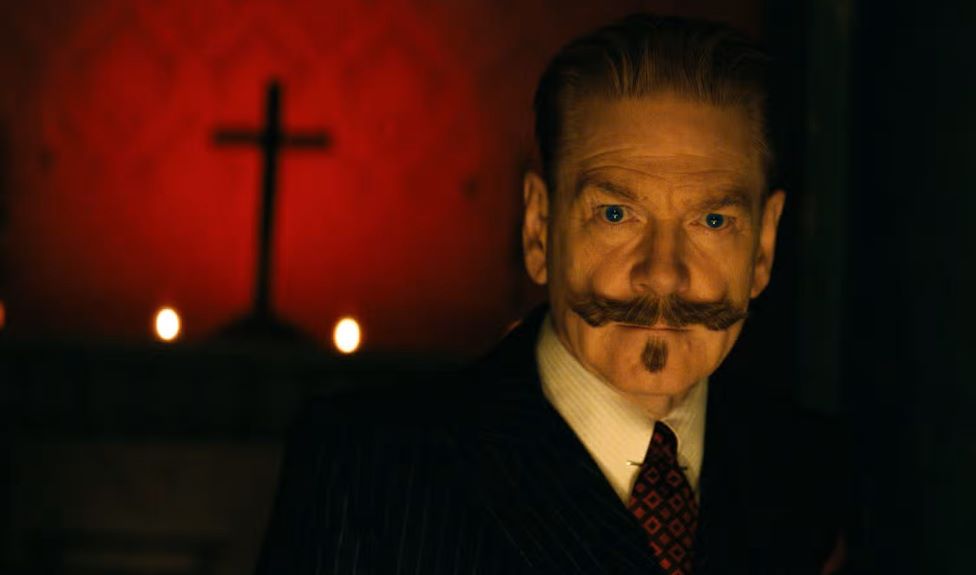
Branagh’s third Poirot outing lowers the scale but feels more real and involving than any others

Director: Kenneth Branagh

Cast: Kenneth Branagh (Hercule Poirot), Kyle Allen (Maxime Gerard), Camille Cottin (Olga Seminoff), Jamie Dornan (Dr Leslie Ferrier), Tina Fey (Ariadne Oliver), Jude Hill (Leopold Ferrier), Ali Khan (Nicholas Holland), Emma Laird (Desdemona Holland), Kelly Reilly (Rowena Drake), Riccardo Scamarcio (Vitale Portfoglio), Michelle Yeoh (Joyce Reynolds)
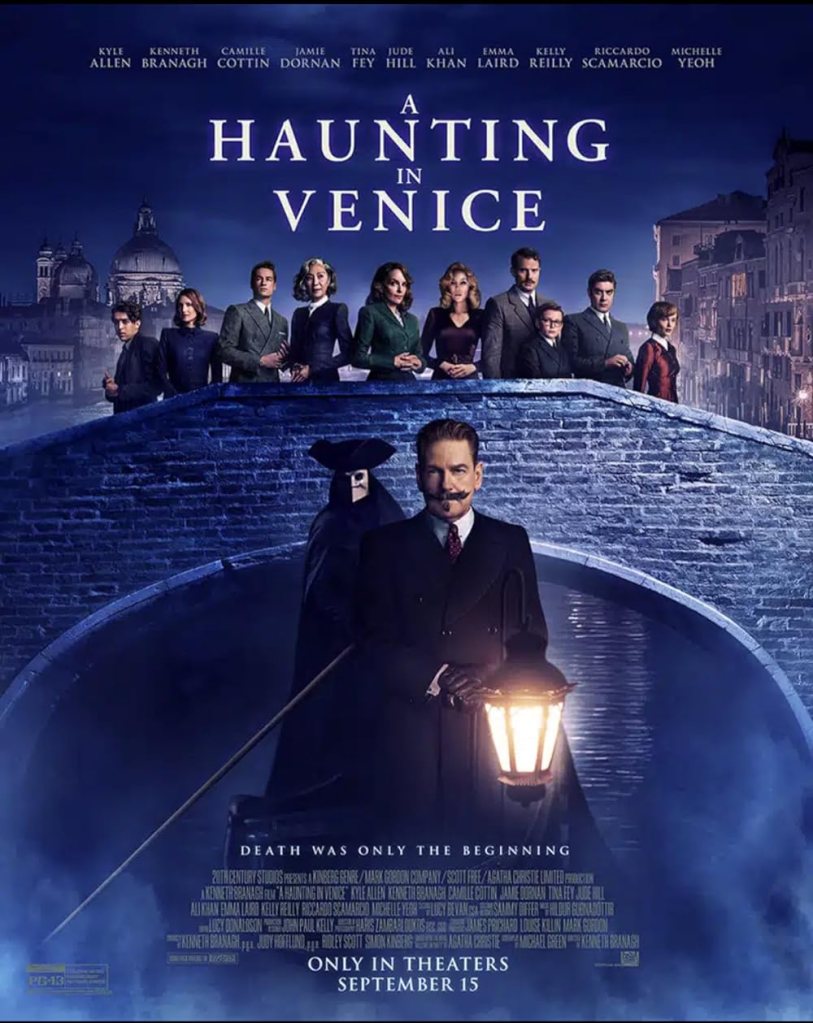
Branagh’s Poirot films have been a mixed bag. Big on starry cast and luscious locations, they’ve also succumbed too readily to bombast not to mention the sort-of tricksy directorial flourishes Branagh has such a weakness for. It’s a pleasant surprise then that A Haunting in Venice turns itself into the smallest-scale and tightest of his Poirot films and might just be the most successful of the lot.

It’s 1947 and a retired Hercule Poirot (Kenneth Branagh) lives as a recluse in Venice, studiously ignoring potential cases, his door firmly guarded by bodyguard (and retired policeman) Vitale Portfoglio (Riccardo Scamarcio). All this changes when he is visited by an old friend, crime novelist Ariadne Oliver (Tina Fey) who recruits Poirot to help debunk spiritualist Joyce Reynolds (Michelle Yeoh). Reynolds is conducting a séance for retired opera singer Rowena Drake (Kelly Reilly), still grieving the recent death of her daughter Alicia. With other guests including Alicia’s former fiancée Maxime (Kyle Allen), PTSD suffering Dr Ferrier (Jamie Dornan) and his precocious son Leopold (Jude Hill) and housekeeper Olga Seminoff (Camille Cotton), the stage is set when a storm and a murder all strike on the same night. Finally, Poirot takes up arms again.

A Haunting in Venice has a fair bit of latitude to work with since there is not an Agatha Christie Poirot mystery actually called that (or even set in Venice). Instead, this is a fast-and-loose adaptation of Hallowe’en Party (definitely one of the lesser-known books) which shifts its location, reshuffles the characters backgrounds, brings a few off-page murders very much “on page” and repackages the story to take place in a sadness-tinged, post-war misery which neatly reflects Poirot’s private grief and guilt at a life which has seen so much death.

This actually works rather well. Contrary to much of the publicity, which played up the horror elements, this is about a million miles away from The Exorcist (although Branagh clearly rewatched Don’t Look Now for Venice scares inspiration), offering instead a camp-fire spookiness and a couple of jump scares. A Haunting in Venice is actually the first Branagh Poirot that feels it would fit into the Suchet-Poirot mould: a slightly maudlin atmosphere mixed with gentle humour, a tight interview-based structure and a (thankful) reduction in gun-toting stand-offs.

A Haunting in Venice is predominantly set in one crumbling Venetian house over one night during a wild storm. The house is given a ghostly backstory of a medieval orphanage left walled-up to prevent a plague outbreak spreading – and there are suggestions of supernatural mischief (objects fall down seemingly on their own) at various points (most of which are swiftly debunked by Poirot). The film is shot and framed with a series of fish-eye lenses and some oblique angles (as per Branagh, the second shot of the film is a Dutch angle) to maximise the dimensions of the house but also at key points stress its claustrophobia, all of which works rather well. It’s moodily lit in a series of shadows (to maximise those spooky jump scares) but its horror elements are lite – a whirligig of screaming and bloodshot eyes at the séance are about as far as it goes.

Instead, it unfolds in a traditional manner, bookended by a prologue and epilogue that indulges the beauty of the location shooting (including a luscious final aerial shot over Venice). The film effectively uses its post-war setting to add emotional impact – after suffering through a war that claimed millions of lives, is it surprising that people are more susceptible to the attractions of taking to the dead? The impact of war blights several characters, from Jamie Dornan’s doctor (Dornan is very good in the role), forever scared by the sights he saw liberating Bergen Belsen to a pair of young Eastern European refugees who have fled the Nazis.

Poirot’s background as a soldier and his own traumatic familiarity with death are also rather neatly wrapped up in questions of his faith. In Branagh’s quiet, melancholic performance (where its clear moments of warmth are only covering deep regrets), it becomes clear his faith in God is as lost as his belief that the world can be improved by deduction. His rejection of spiritualism is pointedly based on a belief that there is nothing outside of the tangible.He fits in witha house awash with traumatised doctors, opera singers lost in grief, housemaids who feel their lives have no purpose and even a crime novelist who’s last three books were flops.

Tina Fey is very playful as this Agatha Christie self-portrait, bouncing effectively off Branagh’s more sombre Poirot. The cast is in fact uniformally strong – a reduced cast list from previous Branagh Poirot’s means each one feels slightly more developed. Yeoh bites into the juicy part of Joyce with movie-star confidence, Reilly is subtly fragile, Cottin and Scamarcio both effectively hiding secret depths. Jude Hill, fresh from playing the young Branagh in Belfast marks himself as a kid with a golden future with a stand-out turn as the mature, worldly-wise young Leopold, comforting and caring for his emotionally scarred Dad.

All of this is marshalled into a tight murder-mystery – we get a bit of Grand Guignal slaughter as well as an effective locked room mystery thrown on top (as well as a homage to the originals apple-bobbing murder) – with a Poirot who is unsettled and out of sorts (for reasons that I guessed but make perfect, secular sense when revealed). It even wraps up on a quietly affecting note of hope. By dialling down the flourishes, scale and action (even if Branagh can’t resist a snorricam shot of himself through the house), A Haunting in Venice actually becomes more rewarding than either of the previous films in the series – and Branagh’s Poirot remains a strong, very human interpretation of the character. Surprisingly, despite its playing with the supernatural, it feels more grounded and human and, despite effectively creating a new story, closer to Christie.
See How They Run (2022)

See How They Run (2022)

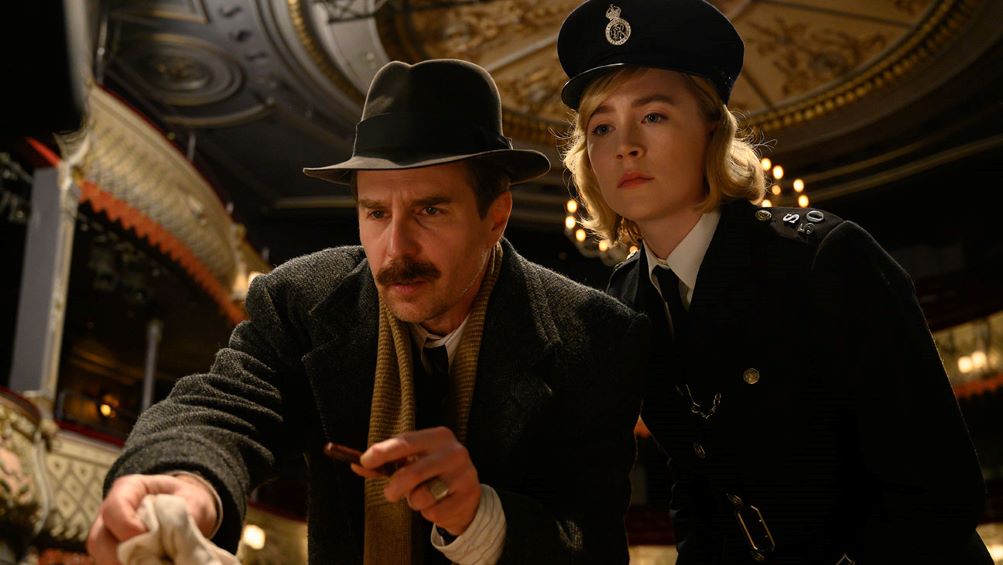
Smug, semi-spoof murder mystery which can’t decide whether it loves or scorns the genre

Director: Tom George

Cast: Sam Rockwell (Inspector Stoppard), Saoirse Ronan (Constable Stalker), Adrien Brody (Leo Köpernick), Ruth Wilson (Petula Spencer), Reece Shearsmith (John Woolf), Harris Dickinson (Richard Attenborough), David Oyelowo (Mervyn Crocker-Harris), Charlie Cooper (Dennis), Shirley Henderson (Agatha Christie), Pippa Bennett-Warner (Ann Saville), Pearl Chandra (Selia Sim), Paul Chahidi (Fellowes), Sian Clifford (Edana Romney), Lucian Msamati (Max Mallowan), Tim Key (Commissioner Harrold Scott), Jacob Fortune-Lloyd (Gio)

It’s the 100th performance of Agatha Christie’s The Mousetrap (“how much longer can it run”, the characters ask. If only they knew…) and producers are in talks for a big movie adaptation. At the party, boorish American film director Leo Köpernick (Adrien Brody) offends absolutely everyone – and promptly gets murdered. Not only are the cast (including Richard Attenborough – wittily impersonated by Harris Dickinson) suspect, but also the film producers which, contractually, can only go into production when the play closes. Investigating: dishevelled Inspector Stoppard (Sam Rockwell) and his super enthusiastic sidekick Constable Stalker (Saoirse Ronan).

See How They Run desperately wants to be a witty commentary on Agatha Christie style locked-room mysteries. It even opens with a voiceover from Brody’s Köpernick, full of scorn for the medium and its cliches before revealing, as per form, that as the least sympathetic character he himself is about to be knocked off. To be fair, there are one or two decent jokes. But the presence of Reece Shearsmith just made me think: Shearsmith and Steve Pemberton’s anthology dramady Inside No. 9 would have pulled off the same idea, but with far more wit and better understanding of Christie, in half an hour. And certainly with better jokes.

Instead See How They Run feels like it has only the most superficial understanding of Christie, based more on watching a few scenes of Poirot rather than reading the books. Rian Johnson’s Knives Out made a wittier, smarter and more enlightening commentary on Christie in its updating of the form, than this comedy ever manages. It’s never quite clear whether the makers want this to be a genuine Christie-style mystery or an inversion. Stoppard and Stalker go about their investigation in a traditional manner. The suspects all have motives of a sort. There is a definite mystery.

But it’s all lightweight and uninformed. Christie tropes are nudged and then ignored, as if the writers don’t understand them. What better opportunity could you have for Christie’s love for one mysterious character in the story turning out to be an actor in the group in disguise (invariably summarised by Poirot as “the performance of his/her life!”). There actually is a mysterious character here – but it turns out to be another person. Christie tropes around red herrings, secondary crimes, poison – all of them go unexplored.

The film ends with a deliberately counter-intuitive action sequence: but it’s not clear to me why. It’s neither particularly funny, nor does it feel like it has anything to say about the form other than offering an ending we might not expect. There is a nudge on the fourth wall (it’s the ending Köpernick wants) but what point is being made here? Is the action ending endorsing Köpernick’s belief that Christie-style mysteries are formulaic or boring, or is the shoot-out meant to look excessive and ridiculous? Is it implying everything we are watching is Köpernick’s dying fantasy? Is it a gag? I have no idea at all, and that sums up this tonal mess.

It’s a film that wants to have its cake and eat it. It tries to present a genuine murder mystery – and to be fair, when it does this, it does make for a good guessing game – but also wants to take potshots at the genre. It ends up doing neither particularly successfully. And there’s something a bit unlikeable about a film that wants to feed off the audience’s love of a Golden Age detective mystery, but also kinda wants to tell you how the thing you like is actually a bit stupid – and by extension so are you.

Its humour all too often feels a little studenty and obvious – the naming of Rockwell’s character as Stoppard being a case in point (although it does make for one good gag when Pearl Chandra’s charming Shelia Sim denounces another character as “a real hound, inspector”). It eventually feels like a rather smug film, which just goes to show how hard it is to make a Christie-style mystery.

If there is a decent joke in the thing, it’s that it manages to build a film where the plot of The Mousetrap is vital to the outcome, without ever revealing anything about what happens in The Mousetrap. (Presumably, the Christie estate would have had their guts for garters if they did.) Any moment where it looks like we might learn a major event in the play, a character interrupts or someone says “I already know”. These narrative gymnastics are the most inventive thing about it.

The other thing it’s got going for it is a performance of immense charm and comic likeability from Saoirse Ronan, who has rarely been as sweet, bubbly and adorkable as she is here. Ronan’s comic timing is excellent, and Stalker’s mixture of dogged determination and chronic over-enthusiasm provides virtually all the film’s highlights. Rockwell ambles through a (perhaps deliberately) under-written role, but most of the rest of the excellent cast feel under-utilised. Who casts Shearsmith and gives him not a single joke? Sian Clifford to deliver about three lines? David Oyelowo and Ruth Wilson do a lot with very little, but it’s telling that the final act appearance of Lucian Msamati and Paul Chahidi as a master-and-servant double act provides almost as much humour as the rest of the cast put together.

See How They Run passes the time – but that’s really about that. It doesn’t really have anything smart or funny to say about murder mysteries and it never offers anything truly unique or striking to justify itself (other than Ronan’s lovely performance). It’s straining as hard as it possibly can to ape the Coens or (most of all) the quirk of Wes Anderson, but totally lacks the skill and finesse of either. It feels like a film commissioned off the back of Knives Out success: but to be honest if you want to see something that brilliantly riffs off Christie while also being a bloody good mystery, just watch that instead.

Death on the Nile (2022)

Death on the Nile (2022)

Another all-star cast saddles up for one of Branagh’s overblown Christie adaptations

Director: Kenneth Branagh

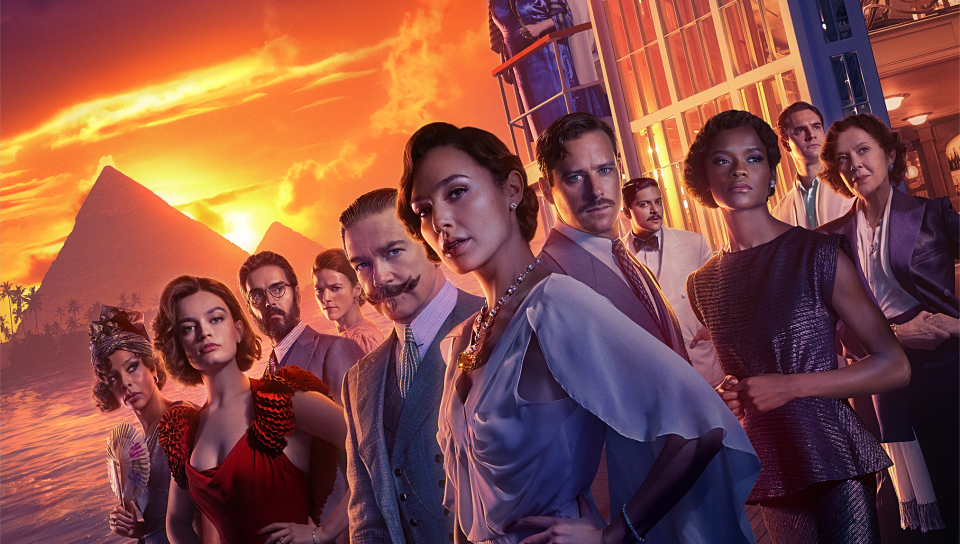
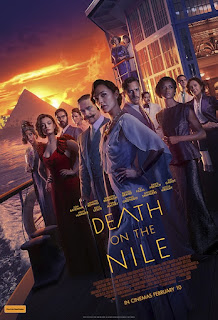
Cast: Kenneth Branagh (Hercule Poirot), Tom Bateman (Bouc), Annette Bening (Euphemia Bouc), Russell Brand (Linus Windlesham), Ali Fazal (Andrew Katchadurian), Dawn French (Mrs Bowers), Gal Gadot (Linnet Ridgeway-Doyle), Armie Hammer (Simon Doyle), Rose Leslie (Louise Bourget), Emma Mackey (Jacqueline de Bellefort), Sophie Okonedo (Salome Otterbourne), Jennifer Saunders (Marie van Schuyler), Letitia Wright (Rosalie Otterbourne)

The tradition of luscious, all-star Agatha Christie adaptations continues. Following his successful 2017 Murder on the Orient Express, Branagh’s Poirot follow-up Death on the Nile finally makes it to the screen. I say finally, because this film has been sitting on a Covid-related shelf for so long that Branagh conceived, wrote, shot, edited, released and won awards for Belfast in the meantime. Death on the Nile is a much less personal film than that one, but is still an interesting (if flawed) re-imagining of Christie’s Belgian detective.

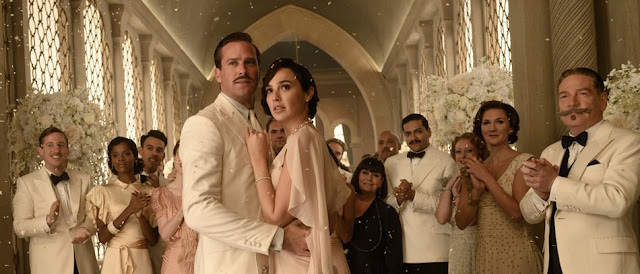
Linnet Ridgeway (Gal Gadot) and Simon Doyle (Armie Hammer) are getting married and honeymooning in Egypt. Problem is, six weeks earlier Simon was engaged to Linnet’s old friend Jacqueline de Belfort (Emma Mackey), who has not taken being jilted well and is stalking the couple throughout their honeymoon. Poirot (Kenneth Branagh) is invited to join the bash by old friend Bouc (Tom Bateman), one of a host of wedding guests on a private cruise down the Nile on luxury steamer The Karnak. But Jacqueline gatecrashes the cruise and murder strikes. With almost every passenger having a motive, will Poirot manage to unpick a case that becomes a painfully personal one?

Branagh’s Death on the Nile film has many of the same flaws and strengths of his previous Poirot epic. Shot on 70mm, it’s almost excessively beautiful. In fact, the film has such a chocolate box, Sunday-afternoon feel it frequently looks almost too perfect in its blisteringly blue skies and CGI Egyptian backdrop. It’s very clear that we’re expected to wallow as much in the costumes, sightseeing and 30s glamour as the mystery. In that way at least it’s pretty close to the 1978 Ustinov version.

Fortunately, the mystery is one of Christie’s finest and its execution is handled fairly deftly. The plot is pretty faithful, although most of the character traits of the passengers are reshuffled and reassigned to create interesting new set-ups. (For example, a rich kleptomaniac takes on instead the socialist passions of a secret nobleman who instead takes the medical qualifications of a third character. Elsewhere a character is split in two into Okonedo’s jazz singer and Bening’s rich amateur painter). The insertion of the Bouc character from Murder on the Orient Express carries across an relationship that the film richly develops to give the case a greater personal impact for Poirot.

But the film, like the first, is as much a Poirot-centric character study as it is a murder mystery. It’s easy to snigger at an opening sequence which, while handsomely done and including an impressively digitally de-aged Branagh, serves as a “moustache origins” story (Poirot grew it to hide his physical and emotional scars from WW1). But it’s a launching point for an interesting exploration of Poirot’s emotional hinterland and monk-like abstinence from attachment. A particularly rich opportunity, considering the murder’s roots are in exactly the sort of all-consuming love Poirot has denied himself. It also pays off in the film’s final sequence, with clear evidence that events have led to Poirot permanently re-evaluating and changing his character.

As in the previous film, Branagh plays this with a winning mix of comedy and larger-than-life prissiness but also manages to utilise his eyes very effectively to suggest the emotion and pain his Poirot keeps firmly under the surface. The later sections of the film see Branagh play a level of overt pain that we’ve not really seen other Poirots display in the past. Expanding the character still further beyond the focused, retentive, distanced detective of Christie’s original, this is also a Poirot who expresses shame, regret and (bashfully) a schoolboy-style crush.

Unfortunately, the rest of the cast is a more mixed bag – who would have thought Russell Brand would be not only one of the more restrained, but also one of the most quietly affecting? Tom Bateman is excellent as Bouc, full of joie de vivre and later wounded, pained innocence. Brit audiences can enjoy the joke of French and Saunders playing a pair of closeted ageing lesbians. Letitia Wright is fairly good as a headstrong young woman in love. Other members of the cast engage in a scenery chewing competition, roundly won by Sophie Okonedo as a rollingly accented blues singer with most of the best lines, while Bening and Fazal struggle to bring life to their characters.

For the principal love triangle, the film suffers under the unfortunate issue of Armie Hammer’s fall-from-grace (guess he’s never going to become that star I wrote once he was destined to become). Even without that, Hammer seems oddly constrained by his British accent and fails to bring any life or passion to the role, not helped by a complete lack of chemistry with Gal Gadot who seems hopelessly at sea, trapped in flat line readings and odd bits of business. Emma Mackey by far-and-away comes out best as a young woman dripping with danger and obsession.

It’s a shame Branagh’s film constantly seems to shoot itself in the foot. Must be easy to do, since the boat is awash with guns (everyone seems to have one!) – so much so the final reveal is bungled into a three-way Mexican stand-off that completely robs the book’s brilliant denouement of its impact. The whole film is a little like this at times: as a director Branagh can be a flashy show-off whose ambition isn’t always married with the sort of effortless grace great directors bring to cinema. So, the film is crammed with tricksy, attention-grabbing shots and loud, brash moments of drama that are as likely to raise sniggers as sighs of awe.

It’s a shame as, in many ways, this is actually a little better than Murder on the Orient Express. It’s tighter (even though it’s longer!) and it creates an emotional backstory for Poirot that not only feels much less forced but actually adds something to the original story. Many of the changes in the characters actually help to make something interesting and new. If only Branagh’s films could shake the idea that we need guns, fights and sweeping CGI to invest in a Poirot story. Because, despite some weaker performances, when the film focuses on emotion and story it’s actually a fairly engaging adaptation that, while never the best, is very far from the worst.

Witness for the Prosecution (1957)

Witness for the Prosecution (1957)

A court case hinges on a heck of a twist or two in Wilder’s well-mounted Christie adaptation

Director: Billy Wilder

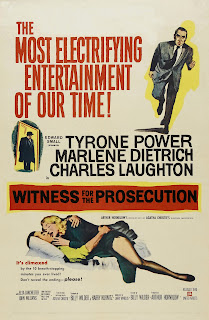
Cast: Tyrone Power (Leonard Vole), Marlene Dietrich (Christine Vole), Charles Laughton (Sir Wilfrid Robarts), Elsa Lanchester (Miss Plimsoll), John Williams (Mr Brogan-Moore), Henry Daniell (Mr Mayhew), Ian Wolfe (Carter), Torin Thatcher (Mr Myers QC), Norma Vaden (Emily Jane French), Una O’Connor (Janet McKenzie), Francis Compton (Justice Wainwright)

Agatha Christie is better known for detectives who unearth murderers, not lawyers defending those accused in court. But that doesn’t mean Witness for the Prosecution, a very effective courtroom drama, shirks on classic Christie flourishes. Witness has a single stonking twist that huge numbers of people never see coming (the end of the film comes with a sonorous warning entreating people not to spoil the surprises, the sort of anti-spoiler warning that would make Marvel proud).

Leonard Vole (an unlikely Tyrone Power) is the soldier and would be entrepreneur, who stands accused of the murder of a rich older woman (Norma Vaden) who conveniently left Vole her money. Defending Vole is richly-toned, highly-skilled barrister Sir Wilfrid Robarts (Charles Laughton), recovering from a heart attack and doing his very best to dodge the overly attentive concern of his private nurse Miss Plimsoll (Elsa Lanchester). Vole’s case looks difficult, with much circumstantial evidence stacked against him and worries about whether his German wife Christine (Marlene Dietrich) will stand by him or not?

Billy Wilder directs with a smooth professionalism – he later modestly claimed of his Oscar nomination, that it was like giving the crew that moved Michelangelo’s Pietá an award for best sculpture – but his real contribution (with fellow writer Harry Kurnitz) was sharpening the dialogue, expanding Christie’s characterisation (in particular adding much more shrewdness and eccentric pomposity to Robarts) and upping the zip of Christie’s original. It certainly met with the approval of the grandé dame of crime who listed this, and Lumet’s Murder on the Orient Express, as the only two adaptations of her work she liked.

The film is largely based around the courtroom dynamics, as witnesses are examined and cross examined and facts gently dragged into the light. There is plenty of quality theatrics, not least since Robarts and his opposition counsel Myers (a fearsome Torin Thatcher) are more than a little skilled at keeping things sparky for the jury. There is a hint of cynicism in Witness: Robarts needs to convinces himself of a client’s innocence, but there is a suggestion this is because it helps him work out how to effectively defend them, less because of any moral reasons. And certainly, the entire mechanics of the trial operates largely as a show, an entertainment with jokes and compelling stories offered by both sides.

There is of course no better showman than Robarts. Played by Charles Laughton in one of his last great – and possibly most enjoyable – performance, Robarts is an affectionate, witty performance of carefully studied eccentricity and barking bluffness. But there is also a vulnerability in him: Robarts needs to belief in his own legend and his ability to separate truth from lie (he even prides himself on his “monacle test”, using a reflection from it to shine in suspects eyes, believing a liar will get flustered and trip themselves up – needless to say it turns out to be faulty).

Wilder – with Laughton as a brilliant collaborator – transforms Robarts into a far more forceful and charismatic figure, making the late plot twists even more of a shock. If someone as professionally adept and plugged in as Robarts can be taken in, what chance do the rest of us have? Oscar-nominated, Laughton, a twinkle permanently in his eye, powers through moments of high court theatricality but also heartily enjoys the banter of real life, taking a real delight in his schoolboy mischief as he persists in having his own way.

A large part of that, is a running of dodging treatments and sticking to a diet of things that are bad with him. Wilder’s finest change from the original, in introducing Robart’s ill health and his love-hate relationship with his nurse Miss Plimsoll. Who is, of course, played by Elsa Lanchester, Laughton’s real-life wife. The chemistry between these two is spot-on, with Lanchester (also Oscar nominated – and unlucky to lose to Miyoski Umeshi in Sayonara) in particular playing the combination of world-weary exasperation and growing affection for Robarts perfectly.

Combined with those twists, it’s the interplay between these two that is the real highlight in the film – well that and the twists. Many of those twists are bound up with Marlene Dietrich’s character. Dietrich gives one of her most colourful and wide-ranging performances here. The secrecy of the film probably stopped her from landing an Oscar nomination (much to her regret – Wilder even apologised to her). Power is miscast – he lacks the required natural innocence and looks both too old and incongruously American – but fortunately spends most of the film in the dock.

The final twist is a doozy, perfectly delivered by the actors and Wilder. Wilder directs throughout with quiet authority – as well as fine sense of humour, in particular a stair lift scene that sees Robarts using the device as a tool to dodge being told what to do. Laughton and Lanchester in particular are wonderfully funny. It’s got some excellently handled courtroom tricks and you won’t forget how it turns out. It’s a solid example of Wilder’s skill behind the camera – but a very enjoyable film and a must for Christie fans.

Murder on the Orient Express (1974)

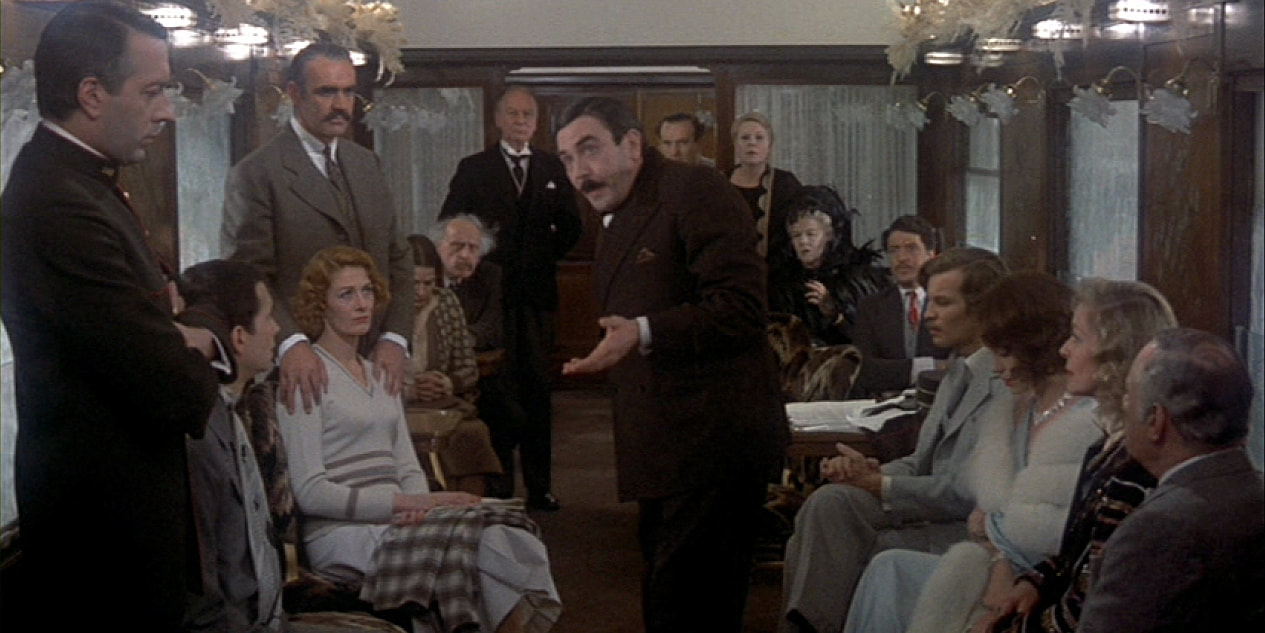
Albert Finney interrogates an all-star cast in Murder on the Orient Express

Director: Sidney Lumet

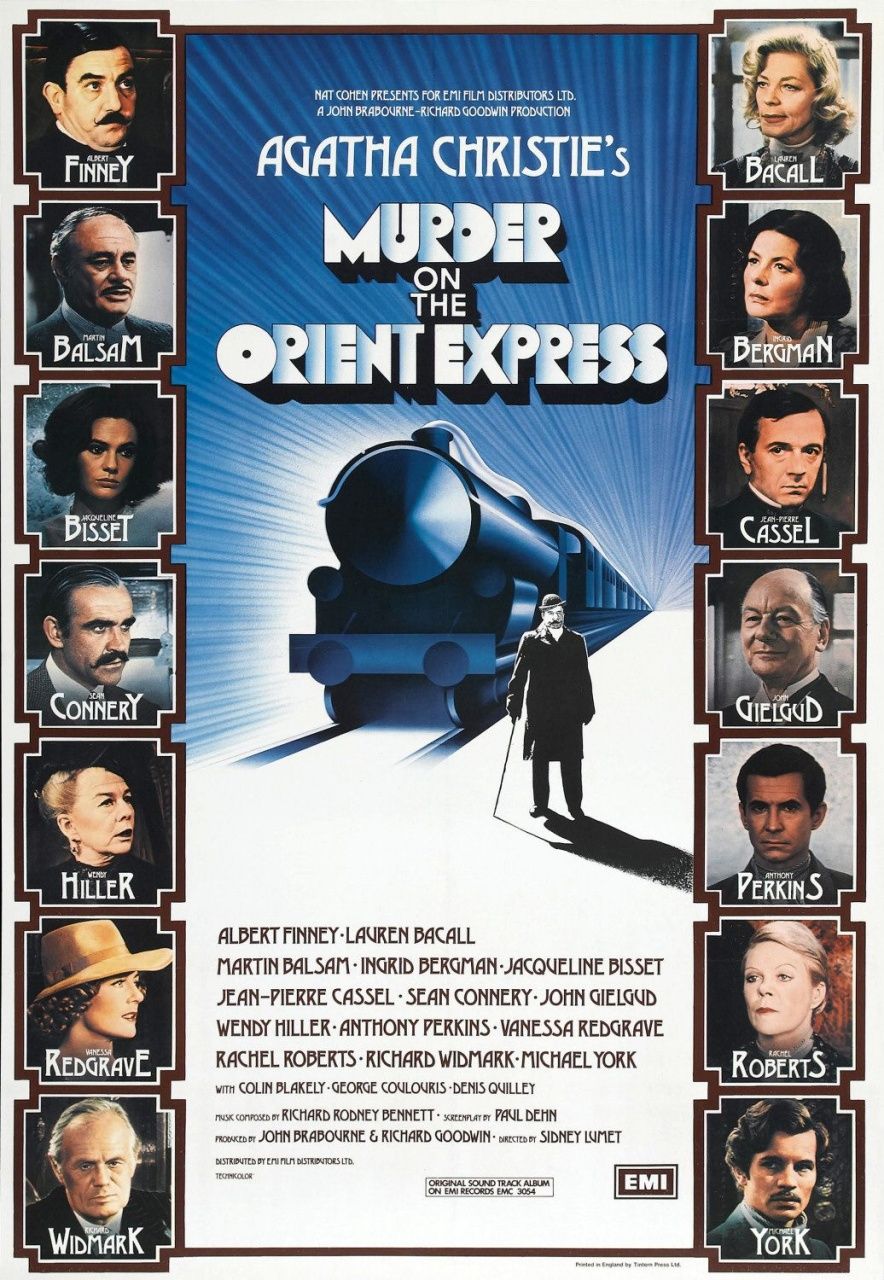
Cast: Albert Finney (Hercule Poirot), Lauren Bacall (Linda Arden), Martin Balsam (Signor Bianchi), Ingrid Bergman (Greta Ohlsson), Jacqueline Bisset (Countess Helena Andrenyi), Jean-Pierre Cassel (Pierre Paul Michel), Sean Connery (Colonel John Arbuthnot), John Gielgud (Edward Beddoes), Wendy Hiller (Princess Natalia Dragomiroff), Anthony Perkins (Hector McQueen), Vanessa Redgrave (Mary Debenham), Rachel Roberts (Hildegarde Schmidt), Richard Widmark (Ratchett), Michael York (Count Rudolf Andrenyi), Colin Blakely (Cyrus Hardman), George Coulouris (Dr Constantine), Denis Quilley (Antonio Foscarelli)

If there was a film that set the template for our expectations for an Agatha Christie adaptation, it was probably this one. A big starry cast. Luscious period detail. An engrossing plot with clues and double meanings in every corner. A healthy mix of the OTT and the chilling. Marshalled by Sidney Lumet, almost certainly the best director to take on a Christie mystery ever, this film was a massive hit then and remains a hugely enjoyable, rewarding treat now, the sort of masterclass in quality film-making and bravura acting that is guaranteed to leave a smile on your face.

You surely must know the plot by now right? Hercule Poirot (Albert Finney) returning from a successful case in the East hitches a ride on the Orient Express on the way home. During the journey he is asked by American businessman Ratchett (Richard Widmark) if he would take up the role of his bodyguard after threats against his life. Poirot turns him down – and sure enough the next morning Ratchett turns up dead in his compartment, with no less than a dozen knife wounds in his chest. With the train stranded in a snow drift, the killer must be one of the other twelve passengers in the carriage. And so the case begins…

Sidney Lumet’s superb, classy piece of murder mystery is a triumph of design and style. The train looks superb, the period detail is perfect, the costumes are luscious. But what Lumet brings to it all underneath all this Sunday afternoon splendour is a genuine sense of chilling menace. Helped a great deal by Richard Rodney Bennett’s haunting musical cues, this film never lets the viewer forget that the heartless destruction of an entire family is at the root of the crime itself, or that the desires for revenge we find in ourselves can take us to dark places. 

Lumet’s film opens with a brilliantly constructed series of newspaper stills, establishing the horrors of the Daisy Armstrong case that underpins the mystery, the kidnapping and murder of a young child (based on the Lindbergh kidnapping) that led to tragic consequences for an entire family. This chillingly sad and tragic back story is echoed throughout the film, and immediately establishes the stakes for all involved.

So we spend the film then trying to work out how all the suspects might fit it into this story. Lumet’s concept of bringing together an all-star cast was a brilliant idea, not only giving each of the suspects a quickly established personality (partly inspired by the actor’s body of work), but also assembling a group of such talented actors that they can sketch out a character within a few moments. Lumet’s first recruit for the cast was his old collaborator Sean Connery – and the agreement of Connery to take on a supporting role brought a host of actors to follow. It all adds to the fun, an enjoyable star-spotting exercise, and also an amusing game of watching sometime wildly competing acting styles.

Connery plays Arbuthnot with a stiff-upper lip English reserve, but then you also have a wonderfully arch (and very funny) John Gielgud, a dementedly twitchy Anthony Perkins (McQueen seems to have been adapted into a junior brother of Norman Bates), a show-boatingly larger-than-life Lauren Bacall (great fun), a Germanic stern Rachel Roberts and an inscrutable Vanessa Redgrave. That’s just a few of a terrific collection of actors, and arguably only Wendy Hiller’s overly imperious Princess Dragamiroff is a bit of a miss.

Lumet’s strength in depth allowed him to push his actors into demanding places – complex set-ups and, most especially, a series of long takes in his often confined performance spaces. The highlight – in fact it won her an Oscar – is Ingrid Bergman’s five-minute (practically only) scene where the camera slowly rotates around her across five minutes as she tells her story. Bergman’s shy, nervy, gentle and timid missionary comes across as achingly vulnerable. Bergman had been offered the larger role taken by Wendy Hillier, but wisely turned it down for this show-stopping moment.

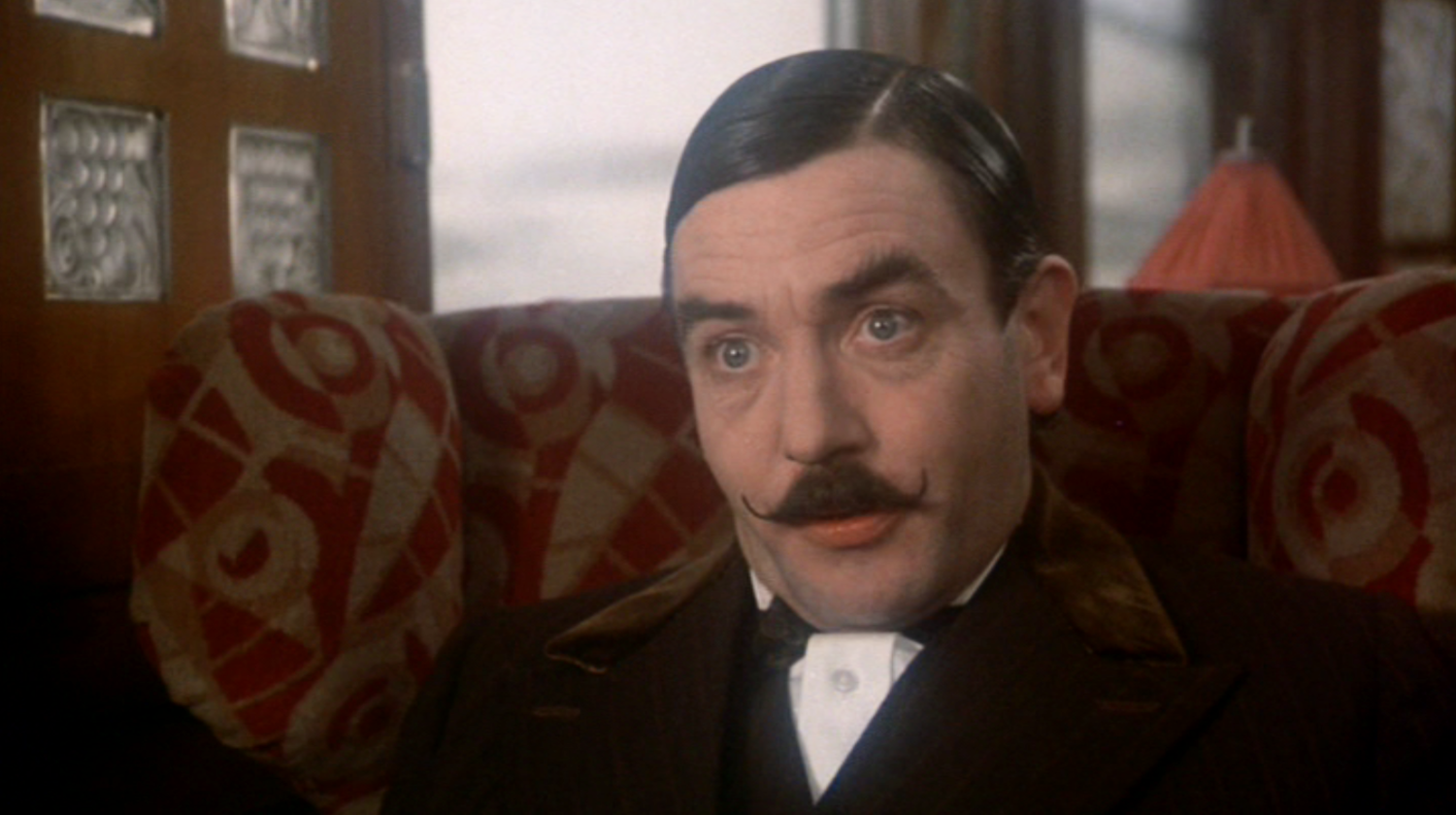
The advantage of having such accomplished actors was most clear in the burden placed on Finney as Poirot. Watching it now – familiar as we are with decades of David Suchet’s definitive performance – it’s easy to see Finney’s performance as a little too much. Covered with make-up and a fat-suit, his shoulders hunched around his neck, his hair plastered down with grease and his accent frequently heading way out over the top, Finney certainly leaves very little in the dressing room. His Poirot is an amiable showman, a man willing to adjust his personality and approach from suspect to suspect, but in the end a man with a well-being arrogance and a deep sense of personal morality as well as a profound sense of humanity.

Finney was a surprising Oscar nominee for Best Actor, but he almost certainly owed this to his final speech, an almost thirty-minute tour-de-force. Lumet, operating in small confines, determined that the best way of getting the most dramatic energy from the speech was to use long takes, elegant camera moves, and the minimum of cutting – to let Poirot cast his spell over the audience as much as he does over the suspect. As such Finney – in a tiny, crowded, set – performed the complete monologue several times (each time apparently flawlessly) so that the camera could be positioned in each point in the confined set at a time. The result is seen in the final sequence, which uses dizzying long takes and careful camera moves to draw us brilliantly into the reveals that come thick and fast.

Finney’s performance is magnetic in its theatricality and commitment, and Lumet’s directing decisions throughout the sequence really help to make this sequence as effective as it is. Lumet’s peppers this sequence with a series of brief flashbacks to earlier in the film, which skilfully present snippets of the characters testimonies represented at different camera angles, which is both eerie and also throws a new light on the scenes we have already seen. For all that Finney is a bit much at times, you can’t help but enjoy this piece of showmanship.

The final resolution remains justly famous, and it largely owes a lot to this film. Agatha Christie even was favourable to the film (one of only two films of her work she liked, the other being Billy Wilder’s adaptation of Witness for the Prosecution) although (in words I presume heard by Kenneth Branagh) she bemoaned the smallness of Finney’s moustache. There have been several film and TV adaptations that have followed, but only David Suchet’s version has challenged it for the title of the best. With its gorgeous settings, imaginative direction and wonderful cast I never tire of watching it.

Death on the Nile (1978)

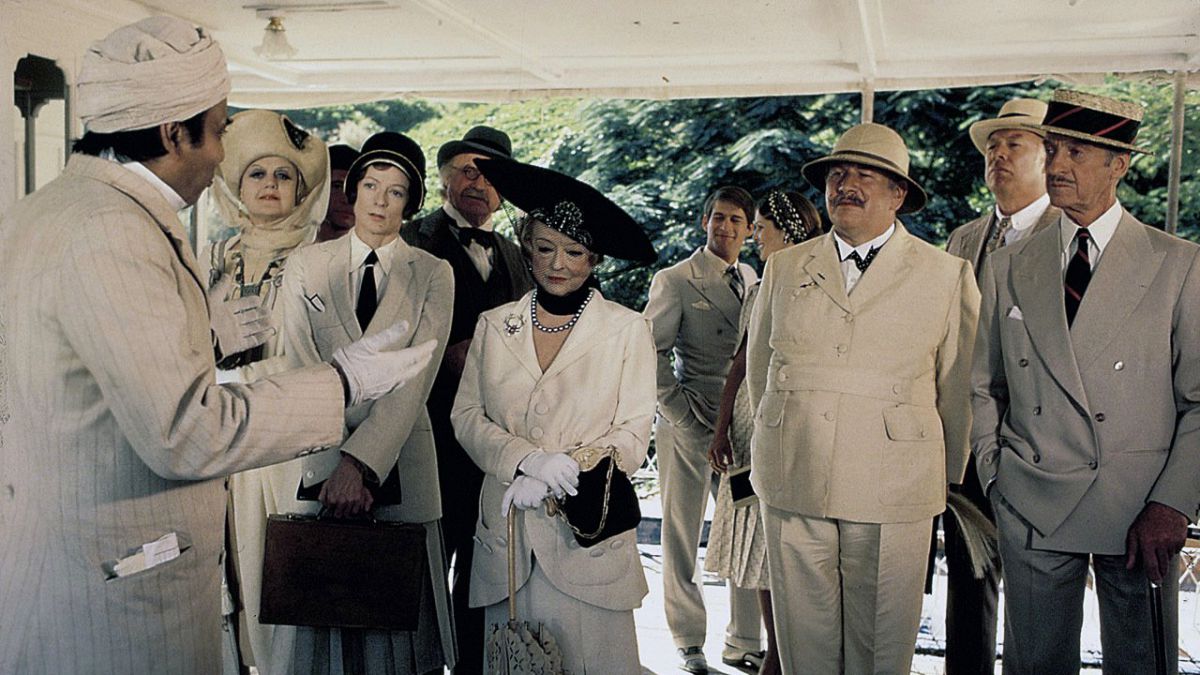
The all-star cast line-up for murder and mayhem in Death on the Nile

Director: John Guillermin

Cast: Peter Ustinov (Hercule Poirot), Jane Birkin (Louise Bourget), Lois Chiles (Linnet Ridgeway Doyle), Bette Davis (Marie van Schuyler), Mia Farrow (Jacqueline de Bellefort), Jon Finch (James Ferguson), Olivia Hussey (Rosalie Otterbourne), George Kennedy (Andrew Pennington), Angela Lansbury (Salome Otterbourne), Simon MacCorkindale (Simon Doyle), David Niven (Colonel Race), Maggie Smith (Miss Bowers), Jack Warden (Dr Bessner), IS Johar (Mr Choudhury), Harry Andrews (Barnstaple)

Is there anything more perfect for a Bank Holiday afternoon than an all-star Agatha Christie adaptation? Take a look at the TV schedules on those days and sure enough one of them will pop up. So on New Year’s Day, I took my place on the sofa for a welcome revisit to dastardly goings-on aboard a luxury cruise ship sailing down the Nile. 

Simon Doyle (Simon MacCorkindale) has jilted his lover Jacqueline de Bellefort (Mia Farrow) in order to marry the fabulously wealthy Linnet Ridgeway (Lois Chiles). It’s a tricky love triangle – so you can imagine the newly-married Doyles are far from pleased to find Jacqueline popping up on their Nile cruise holiday. Things eventually explode into a confrontation between Simon and Jacqueline that leaves him shot in the leg and her sedated. While they are both out of the picture, Linnet is murdered in her bed. With the two obvious suspects out of the picture, who among the (all-star) passenger line-up did the deed? Just as well Hercule Poirot (Peter Ustinov) is on the ship to solve the puzzle.

Following on the heels of the smash hit success of 1974’s Murder on the Orient Express, the producers of that film didn’t really shake up the formula too much. Hire a load of star actors, pick one of Agatha Christie’s most picturesque-set novels and then watch the money come pouring in. Albert Finney wasn’t available to come back (rumour had it he wasn’t keen in any case on the huge amount of make-up involved) so instead Peter Ustinov came on board and away we went.

Death on the Nile feels very much like a film following a formula. Perhaps it struggles to live up to the first film because it is a slightly less compelling mystery than the first film (although still a damn good puzzle with a real twist of a solution). Perhaps it was more difficult to recapture the magic? Or perhaps it’s because it lacks the quality of direction that Sidney Lumet brought to the first film. Lumet managed to create something that always felt more than a vehicle for star turns – the more plodding John Guillermin instead feels like the sort of guy brought in to manage the day-to-day realisation of a producer’s vision (essentially the same role he fulfilled on The Towering Inferno). Death on the Nile feels very comfortable on the television perhaps because it is filmed in a very straightforward, unobtrusive style with less visual panache than many of the David Suchet series Poirots (even the earlier ones).

But the film does a good job in hiring Peter Ustinov. Ustinov has the comedic chops – matched with the acting prowess – to walk a fine line between the drama and the slight air of comedy that underpins the film. The sort of performance that tells everyone that this is essentially a Christmas treat and shouldn’t be treated too seriously – but still conveys enough of the character’s humanistic shock and anger at violence and murder. Poirot can very easily become a slightly ridiculous character, and Ustinov is canny enough to realise that (relative) underplaying of the character actually works rather well to make him engaging and entertaining, but not too heavy.

Not that heavy is the film’s problem, as this is a pretty light soufflé. The all-star actors happily go through their paces, although you can pretty much tell most of them are in this for the free holiday and the pay cheque. Most of them have fun with their parts – none more so than Angela Lansbury who goes way way way over the top as a bohemian novelist – but they pretty much go through the motions. Shaffer’s decent screenplay doesn’t do much in any case to sketch these characters out – and you suspect much of the bitchy duelling between Bette Davis’ selfish rich widow and Maggie Smith’s put-upon companion was spun out post casting. 

Saying that, I was rather taken with Olivia Hussey’s performance as a fundamentally decent person in the middle of the madness, while Lois Chiles is good enough that you regret her career didn’t really go anywhere after this film. Simon MacCorkindale and Mia Farrow also do well with tricky parts. But it’s all pretty much paint-by-numbers stuff.

Visually the film looks lovely on the Nile. The costumes and designs are great – even if some of them look pretty much straight out of the 1970s rather than the 1930s – and you can tell that the money has been lavished on it to make a pure, old-fashioned entertainment. Shaffer’s script does a decent job of adapting one of Christie’s most twisty tales – even if it does give us what feels now a pretty racist portrait of the meek and crawling ship manager played by IS Johar.

But this is safe and comfortable entertainment – and it definitely is entertaining – rather than something that feels truly filmic. You could argue that this film more than any other set the tone for what we expect from an Agatha Christie adaptation – and its mixture of light comedy and grisly murder set in a lush 1930s location is pretty much de rigeur for everything else that follows. And you know what, I don’t think that’s a bad thing.

Murder on the Orient Express (2017)


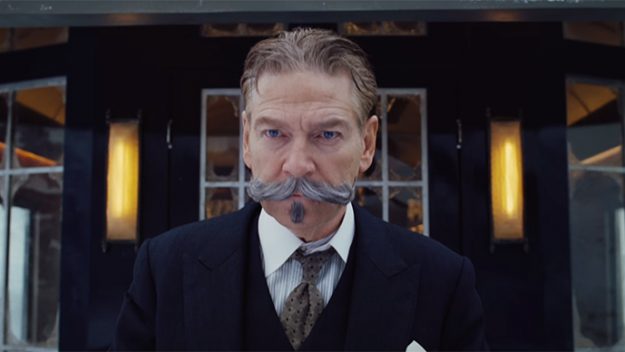
A dishevelled Kenneth Branagh (and tache) investigates a Murder on the Orient Express

Director: Kenneth Branagh

Cast: Kenneth Branagh (Hercule Poirot), Tom Bateman (Bouc), Penélope Cruz (Pilar Estravados), Willem Dafoe (Gerhard Hardman), Judi Dench (Princess Dragomiroff), Johnny Depp (Samuel Ratchett), Josh Gad (Hector MacQueen), Derek Jacobi (Edward Masterman), Leslie Odom Jnr (Dr Arbuthnot), Michelle Pfeiffer (Caroline Hubbard), Daisy Ridley (Mary Debenham), Marwan Kenzari (Pierre Michel), Olivia Colman (Hildegarde Schmidt), Lucy Boynton (Countess Elena Andrenyi), Manuel Garcia-Rulfo (Biniamino Marquez), Sergei Polunin (Count Rudolph Andrenyi), Miranda Raison (Sonia Armstrong)

Is there a murder mystery with a more widely known resolution than Murder on the Orient Express? Possibly not – if for no other reason that film and television versions of this story are as numerous as the suspects in the actual mystery. If that wasn’t a big enough challenge for Branagh to take on, he also joins a list of umpteen actors to play Poirot himself: following in the (very precise) footsteps of the big guns: Finney, Ustinov and of course, above all, David Suchet. How does his version of this most famous detective in his most famous adventure measure up? Well, with mixed results.

For those who don’t know, Hercule Poirot (Kenneth Branagh) is “possibly the world’s greatest detective”. Here, he is travelling back from Istanbul  on the Orient Express, a berth having being secured at the last minute by his friend Bouc (Tom Bateman) the director of the line. En route he is approached by the sinister Ratchett (Johnny Depp), who asks if he can serve as his bodyguard. Poirot refuses – only for Ratchett to be murdered that night. Bouc asks Poirot to investigate – and it soon becomes clear that the dozen other passengers in Ratchett’s carriage could all have had motives to kill him. But who is the killer?

Murder on the Orient Express is on the cusp of being a very good film. But, like the train itself, it gets bogged down too often in changes from the source material that add nothing, action scenes that feel toe-curlingly out of place, and bombastic filming that goes a little bit too far. In many ways it captures some of the faults of its director, my much-loved hero Kenneth Branagh – and I do love him, but as a director he has a tendency to make things too big, to wear his love of the complex shot on his sleeve; to basically try too hard. As a director, that’s what it feels like he’s doing here.

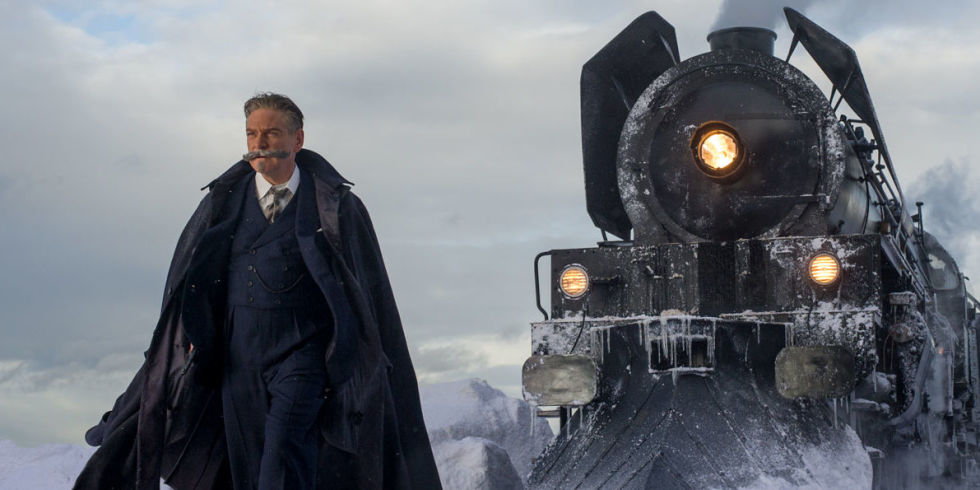
It’s filmed with a luscious, chocolate box, old-school Hollywood grandeur. The camera swoops and zooms over some gorgeous landscape as the train puffs through snowy mountain scenery. There are some loving travelogue tracking shots of Istanbul and Jerusalem. The film lingers with a loving eye on the luxury and class of the Orient Express itself (including some egregiously clunky product placement). The costumes look lovely.  But the end result of all this lavish filming is that it sometimes goes too far towards the reassuring, Boxing-Day-afternoon treat. 

Everything is a little too technicolour at points. It also means that some of Branagh’s more self-consciously tricksy camera work stands out a little too much. A “birds-eye” view of the discovery of the body (the camera above the heads of the actors looking straight down) is oddly disconnecting – it works a lot better when Poirot and Bouc examine the crime scene, giving the audience a god like view of the scene. Some overly complicated shots swoop up along the aqueduct where the train is stuck, past Poirot speaking to characters, then over the top of the train. It’s a rather too overblown and clumsy attempt to make a conversation seem cinematic – it feels a little forced.

It’s one of many points where the film feels like it is trying too hard to make the story edgier or more overtly cinematic. Not the least of these are sequences that up the action quotient. I feel very confident this is the first Poirot film you’ll ever see where the hero is involved in not one but two dynamic fights. One of these is a bizarre chase down the aqueduct with Poirot and another character. The second involves gunfire (an effective shock to be fair) and Poirot using his cane as a weapon in hand-to-hand combat. 

There is nothing wrong with making Poirot more active – Branagh’s character is very much the ex-soldier and policeman, busting open the door to Ratchett’s berth to investigate, walking over the train’s roof, brow-beating the odd suspect (at one point at gun point). It’s just all too much – what audience is this playing to? Who really goes to a Poirot film expecting a goddamn fight scene? Even Count Andrenyi is introduced ninja-kickboxing photographers (I’m not joking here) – is this really what Agatha Christie would have wanted?

There are some odd choices made to deepen Poirot’s character. He is given some sort of lost romantic interest – no less than four times in the film he is given scenes where he holds a photo and bemoans “mon cher Kat-a-rean”. In the opening sequence, Poirot’s love of symmetry is introduced by him accidentally stepping in a cow pat and then stepping in it with his other foot to make each equal. Not only does a “stepping in shit” joke seem wildly out of place, but I don’t believe someone as fastidious and observant as Poirot would even step in it in the first place, let alone choose to step into it twice.

The train doesn’t just stop, it’s nearly taken out by an avalanche. A knife isn’t just discovered, it’s literally found stabbed into a character’s back. Characters have been changed to allow a more diverse cast – which I applaud – but making Arbuthnot a soldier turned doctor is a change that makes very little sense. The claustrophobia of the original is lost by having workers turn up almost immediately to dig the train out. Several scenes are filmed outside, with workers surrounding the train digging it out. Some of these undermine the original or are a little silly.

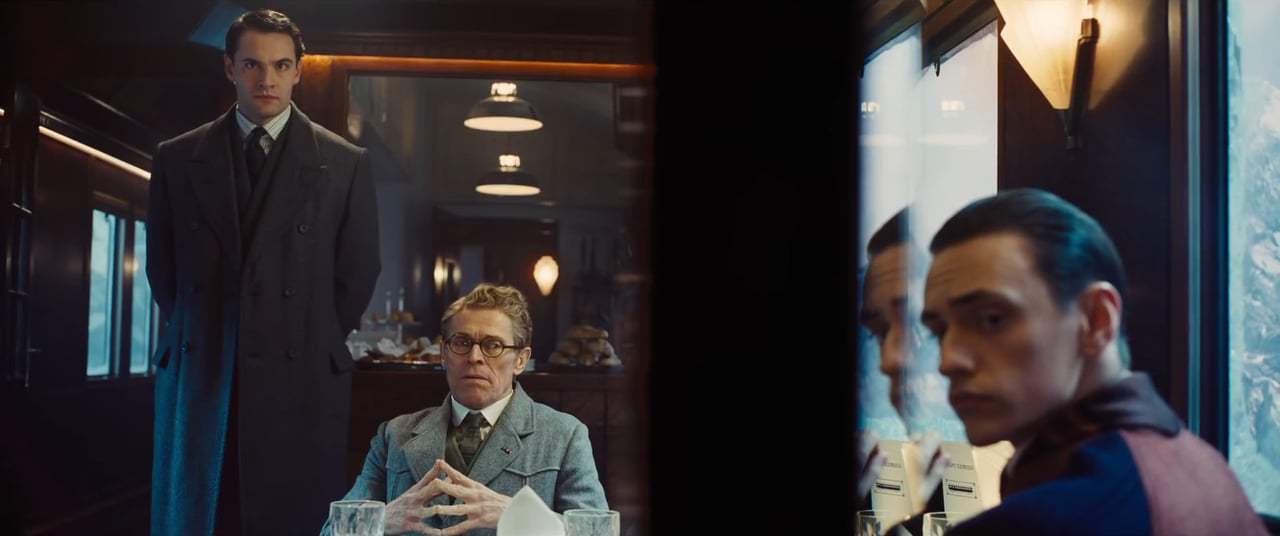
The suspect assemble

But I’m being really hard on this film because there are major flashes of promise here. Not least in Branagh’s performance as Poirot. I’m very confident in saying that, after David Suchet of course, this is the second best Poirot committed to film. The first thing anyone will notice is of course the moustache. Yes it looks absurd, but you attune to it quickly. It’s also a plot point: Poirot uses it, and his eccentricities, to lure people (Columbo style) into a false sense of security. When the film relaxes into just letting Poirot investigate (and hues closer to the original), Branagh gives Poirot a warm humanity and gentleness. His eyes are a wonder – intense disks of sadness. 

Branagh gives Poirot a love of order and justice that defines his world view – and the film introduces a moral conundrum for Poirot in the solution of the crime. I would say David Suchet’s TV version did this better – stressing Poirot’s Catholicism and belief in the rule of law as major factors that conflict him when confronted with the solution. But Branagh captures a real sense of Poirot’s conflict (even if the solution reveal is overplayed and overshot – right down to a “last supper” style tableaux in a railway tunnel) and his sadness, confusion and decency are really lovely – there is even a very neat touch with him forgetting to straight and smarten his appearance, as he deals with the ramifications of his solution to the murder. He looks like cartoon character, but he makes Poirot a real man. I would definitely like to see him do the role again.

The rest of the all-star cast rather struggle for crumbs, as the focus remains solidly on Poirot (largely because the film is intended as the possible first in a series). Tom Bateman is excellent as Bouc, charming and endearing but also given a character arc that sees him develop and change. Of the stars, Depp is suitably grimy as Ratchett, Pfeiffer imperiously stylish and skittish as Hubbard and Odum Jnr affecting as Arbuthnot. I was very taken with Daisy Ridley’s Mary Debenham, a young charm hiding steel underneath. Dafoe, Dench, Colman, Jacobi and the rest are given little to do but are reliably excellent when they are. Others like Cruz feel wasted. 

When the film focuses on Poirot simply investigating, it is very good. Each interrogation of the passengers is brilliantly played by Branagh – Poirot subtly adjusting his methods and approach depending on the person he is talking to. Poirot’s introduction sequence in Jerusalem has a playful Sherlock feel to it: Poirot solving a crime in seconds (having been dragged from his hotel, where he pickily demands eggs that are perfectly equal), including accurately predicting how the criminal will try and escape. There are lots of lovely moments – but just when you settle down to enjoy it, something wildly over-the-top or silly happens.

Murder on the Orient Express is by no stretch of the imagination a bad movie. In some places, it’s charming and a lot of fun. If it’s designed for watching on a bank holiday afternoon it works very well. But it’s, at best, the third best version of this story on film (after the 1974 Lumet film and the Suchet TV version). Do we really need to watch the third best version of an already familiar story? If we could transplant Branagh’s performance into Lumet’s film, now that would be something. But as it is, we’ve got a decent if flawed film that just tries too hard to do too much.