Category: Film about friendship

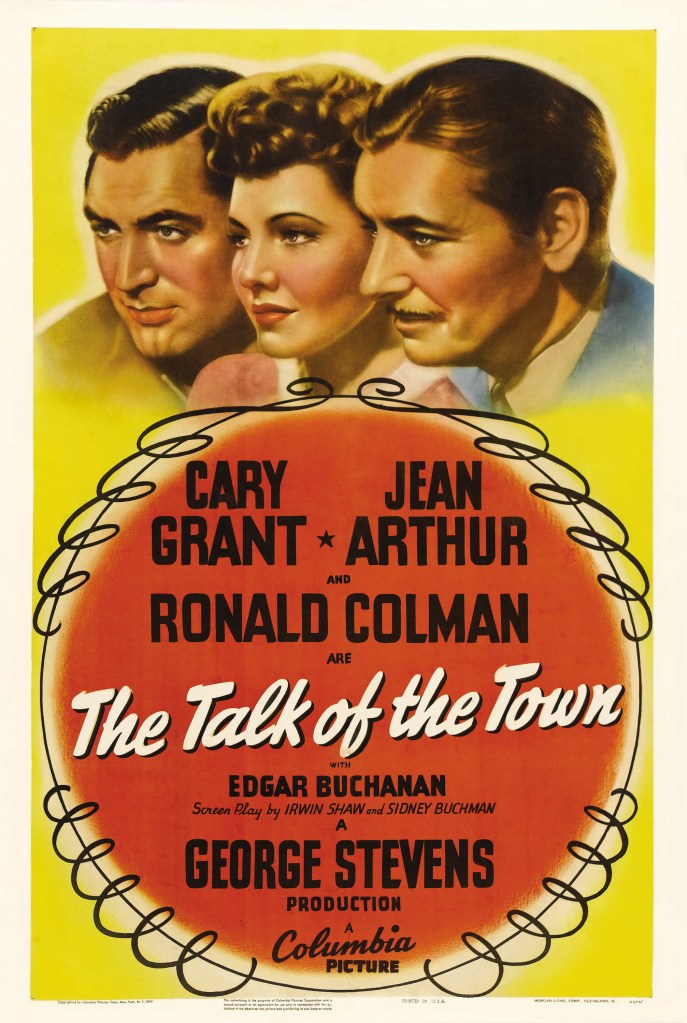
The Talk of the Town (1942)

The Talk of the Town (1942)

Overlooked but delightful comedy with three star actors at the absolutely charming top of their game

Director: George Cukor

Cast: Cary Grant (Leopold Dilg), Jean Arthur (Nora Shelley), Ronald Colman (Professor Michael Lightcap), Edgar Buchanan (Sam Yates), Glenda Farrell (Regina Bush), Charles Dingle (Andrew Holmes), Clyde Fillmore (Senator Boyd), Emma Dunn (Mrs Shelley), Rex Ingram (Tilney), Leonid Kinskey (Jan Pulaski)

Leopold Dilg (Cary Grant) is in a heck of a fix. A passionate campaigner for worker rights, all fingers point straight at him when a local factory burns down leaving an unpopular foreman dead. Dilg rather than wait in the slammer for an inevitably (fatal) sentence, he escapes and find refuge in the country cottage of former schoolmate Nora Shelley (Jean Arthur). Problem is Nora has sublet her cottage to straight-as-a-die legal professor Michael Lightbody (Ronald Colman), in the running for the Supreme Court. With Dilg passing himself off as a gardener, can he and Nora convince the ultra-serious Lightbody there has been a miscarriage of justice?

The Talk of the Town is a hugely enjoyable comedy with more than a pinch of social commentary, that gives three charismatic stars tailor-made roles under the assured hand of a skilled director. It’s a great mix of genres: it opens like a dark thriller, segues into an odd-couple-house-share comedy via a romantic-love-triangle, transforms again into a slightly zany detecting comedy with road-trip vibes and wraps up as courtroom drama with a Capraesque speech and happy ending. The fact all this hangs masterfully together makes The Talk of the Town stand out as a consistently surprising and enjoyable comedy, full of zip and smart, funny lines.

Stevens choreographs the film superbly, specifically in its initial set-up where the three lead characters weave in and out of each other’s lives in the house. Initially Grant hides in the attic – signalling from a window his desire for food (an excellent running gag is the amount Grant’s character enthusiastically eats), with Arthur going to acrobatic lengths to hide his presence from Colman. You can imagine other films getting an entire hour out of this: The Talk of the Town is brave enough to shake-up this set-up within twenty minutes, as Grant nonchalantly wanders downstairs to introduce himself, quick thinkingly introduced as a gardener by an as-surprised-as-us Arthur.

It’s a surprise, but a perfect one – after all it would be hard easy to consider Colman’s character a head-in-the-clouds dullard if he had been fooled for long by Arthur’s increasingly unusual behaviour. And The Talk of the Town needs us to like and respect all three of these characters, to root for all of them. What better way, but to get them rooting for each other?

The odd houseshare comedy that takes over Talk of the Town is all about its principles effectively falling in love with each other (there is a thruple version of Talk of the Town waiting to be made). Grant learns to respect Colman’s self-effacing, shy wit. Colman learns to enjoy Grant’s instinctive intelligence. Both of them find deeper feelings growing for Arthur’s feisty Nora, just as she finds herself drawn to the charm, good nature and honesty of the other two. Talk of the Town becomes delightful as we watch the three of them eat meals together, play chess and chat about the law late into the night. Few films have shown as skilfully friendships organically growing.

The tension that takes over is whether outside forces will tear this friendship apart. Namely, if Colman finds out Grant’s identity will he swop from buying Borscht for his friend (sweetly, Colman remembers a throwaway comment about exactly how much he likes it) to being duty bound to shopping him to the cops? Grant and Arthur are aware of the danger: they’ve been drop-feeding references to the unsound accusations against Grant throughout, all while desperately making sure he never sees Grant’s mugshot photo in the papers (right up to pouring eggs over the front page) – the way Colman eventually finds this out is a beautifully done reveal.

All of this entirely relies on three actors at the top of their game. Grant seems, at first, an odd choice for a worker’s rights campaigner, but this is one of his lightest, most overlooked performances: wry, knowing and playful. Arthur is excellent as the electric centre of this love triangle, energetically torn between two very different men and terrifically determined under the occasionally scatty surface. Colman is dapper, upper-class charm to a T, but full of egalitarian charm and surprisingly willing to begin to question his own views in conversation with others.

Colman’s initial rigidity is represented – in a plot point that’s slightly on-the-nose (literally) – by his goatee, which he wears as a metaphorical shield between him and the world (it’s also another neat running gag, as it garners endless unflattering comments). When Colman inevitably shaves it off (a moment so overplayed, his trusted valet breaks down in tears at the sight) it’s a sign that he has accepted there is more to the law than just its letter. It plays into the film’s final shift, as Colman fills the final act with a passionate speech to silence a crowded courtroom ready for a judicial lynching (hilariously littered with direct quotes from his Grant’s character).

Much to my surprise, the social commentary and democratic praise never outweighs the comedy. The film gives space to earnest debate, but still has time for a madcap chase that ends with Colman hiding up a tree from police dogs. Stevens successfully mixes styles, from Fritz Lang thriller to Preston Sturges comedy to a mix of Hitchcock and Capra. Stevens fuses all these together perfectly, making a film funny, exciting when it needs to be, but always engaging with characters you really root for.

The Talk of the Town is overlooked but a very well-made treat and an exceptional showcase to three charismatic, hugely engaging actors. It marries comedy and social commentary extremely well (it even has a Black character in Rex Ingram’s wise valet whose race is incidental to his personality, quite a thing in the 40s) and bowls along with a huge sense of fun. It’s definitely worth seeking out.

Sing Sing (2024)

Sing Sing (2024)

Highly emotional, beautifully made film about the power of theatre to change lives for the better

Director: Greg Kewdar

Csat: Colman Domingo (John “Divine G” Whitfield), Clarence “Divine Eye” Maclin (Himself), Paul Raci (Brent Buell), Sean San José (Mike Mike), David “Dap” Giraudy, Patrick “Preme” Griffin, Mosi Eagle, James “Big E” Williams, Sean “Dino” Johnson, Dario Peña, Miguel Valentin, Jon-Adrian “JJ” Velazquez, Pedro Cotto, Camillo “Carmine” Lovacco, Cornell “Nate” Alston

Prisons are designed to punish but also to reduce people to easy-to-control numbers, to shut them away from the joys of everyday life. What they are not designed to do is rehabilitate and change people’s lives. The opportunities of doing this in prison are rare, but one such is the Rehabilitation Through the Arts program in Sing Sing maximum security prison. Here prisoners are given the opportunity to explore their creative side in a supportive community, staging plays and taking part in theatrical workshops that encourages inner exploration. It has had extraordinary success in cutting re-offending rates and changed the lives of many of the men who have worked through it.

Sing Sing explores the life-changing impact of giving opportunities to explore new horizons to men society has written off as irredeemable. Sing Sing follows the production of one play and how the rehearsals provide a small slither of humanity to people eager to reform and change themselves for the better. It’s crucial message is that this programme is not so much about acting – but about coming to terms with who you are, and giving its members the tools to evaluate and be truthful about themselves and their crimes, a crucial first step towards rehabilitation. It is based on the personal experiences of John ‘Divine G’ Whitfield (played by Colman Domingo) and Clarence ‘Divine Eye’ Maclin (playing himself), who worked with Kewdar and producer Clint Bentley on the script.

The two men joined the programme at different times for very different reasons. The passionately artistic Divine G is a long-standing member, the group’s leading actor and playwright and its spiritual co-leader with programme director Brent (Paul Raci). Divine Eye is a surly, aggressive man whose initial contempt for performance hides his instinctive connection with poetry and the language of Shakespeare. Sing Sing covers their staging of Breakin’ the Mummy’s Cord, a bizarre mix of cowboys, Ancient Egypt, time travel, Robin Hood and Hamlet – but exactly the sort of light comedy rather than serious drama new member Divine Eye argues they should be doing.

What emerges in this beautifully played drama, shot with a poetic immediacy by Kewdar that embraces natural light (a light the prisoners can largely only experience by looking at it through windows) is a passionate, moving tribute to the power theatre and art can have in changing people. The proof is there in the pudding: along with Maclin’s beautifully honest and natural performance as himself, the cast is full of former programme members playing themselves. This gives a real emotional force to Sing Sing’s reflections on the burdens of incarceration and regrets at terrible life choices: when these men speak of pain, guilt and regret, the truth stares from their eyes. There is an extraordinary moment when Sean ‘Dino’ Johnson speaks about the programme as a place where the inmates can feel, just for a few hours, like they can do the small, beautiful things other people are free to do – and the pain in Johnson’s eyes hurts us all the more because of the truth behind it.

Theatre then can transform us, and we see it in the effect it has on Divine Eye. A combative man, touchy on everything from his masculinity in acting to instinctive anger when another actor walks behind him, at first he seems a dangerous recruit and certainly unlikely casting as Hamlet (the role Divine G had longed for). But he feels a deeper connection with Shakespeare that surprises him, and as the rehearsals proceed he allows himself to connect with his emotions (the core point of the process) to express himself truthfully – to show on the outside more traces of the man inside. Maclin’s performance is extraordinarily honest, not shirking on his bullying anger at the start but showing how learning to understand and communicate his emotions truthfully and without fear or shame changes him into both a passionately committed performer but also a kinder man.

It’s the power of acting and theatre to help people become richer, better versions of themselves – more in touch with, and able to express, their emotions and (even more importantly for criminals) to empathise with others – that Sing Sing makes a passionate case for. It also means we feel the injustice when others treat the programme with suspicion. At his parole hearing, Divine G is asked about whether his reasonable, polite, earnest manner is an example of him ‘acting’. After seeing how this programme has changed lives, the injustice of it being accused of effectively being a programme to build lying skills (not to mention that the programme is based on understanding and accepting the truth about yourself) stings us almost as much as it breaks Divine G’s heart.

As the sole fully professional actor, Colman Domingo gives a wonderful and inspiring performance. Domingo matches the rest of the cast’s truthfulness, showing Divine G has funnelled his pain at incarceration into a flurry of artistic expression: acting, writing plays and pouring his energy into supporting others through the programme. Domingo shows though that Divine G enjoys his standing in the programme: he struggles not to show his hurt and irritation when his offer of a self-written play is rejected in favour of a crazy comedy and there is a more than a little touch of envy when Divine Eye lands Hamlet, the role Divine G was desperate to play. But this comes from a man, falsely convicted, embracing the meaning he has left in his life. When his sense of self is challenged by tragic events, Domingo’s emotional vulnerability and raw pain pours out of him.

But the film is about the small triumphs of changing yourself for the better and it’s a massive tribute to the film that it largely avoids the sort of cliches of prison dramas, or expectations about ‘personal journey’ films that you are primed to expect as it begins. Sing Sing avoids manufactured drama or (in the most part) grandstanding, barnstorming speeches. Instead, its power lies in smaller, quieter moments, of honest reconciliations and small confessions of people working together to better their lives and embracing art and culture to enrich themselves. It’s a beautiful, hopefully and very moving film, the sort of film that offers us hope in a sometimes dark and depressing world.

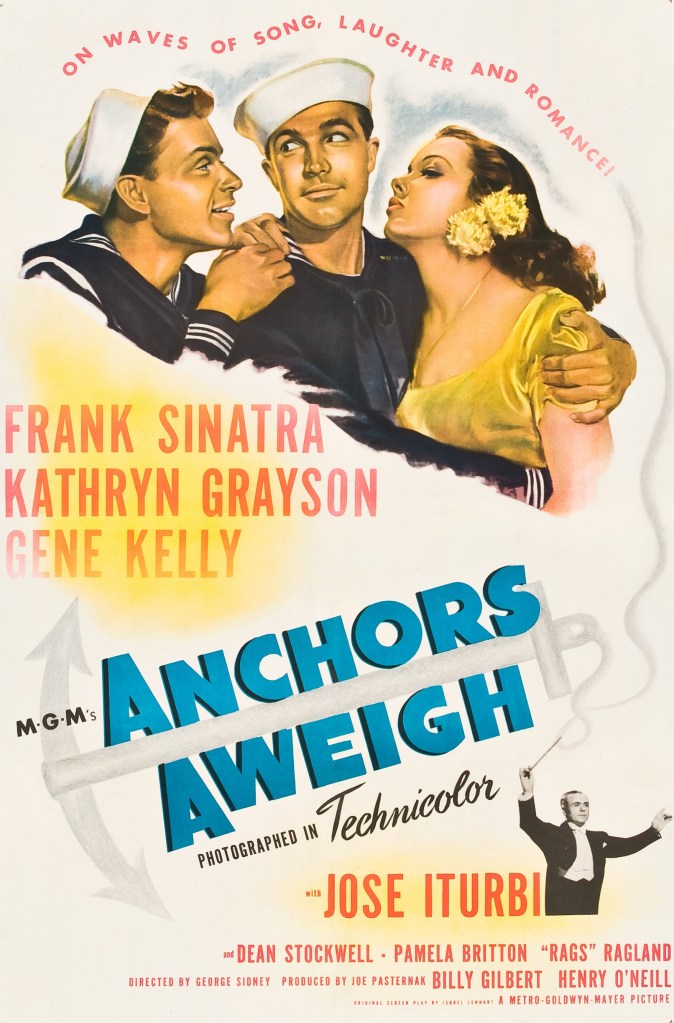
Anchors Aweigh (1945)

Anchors Aweigh (1945)

Classic musical frequently overlong and under-plotted with fun moments but dwarfed by later films

Director: George Sidney

Cast: Frank Sinatra (Clarence Doolittle), Kathryn Grayson (Susan Abbott), Gene Kelly (Joe Brady), José Iturbi (Himself), Dean Stockwell (Donald Martin), Pamela Britton (Brooklyn), “Rags” Ragland (Police sergeant), Bill Gilbert (Café manager), Henry O’Neill (Admiral Hammond)

US Navy sailors Clarence (Frank Sinatra) and Joe (Gene Kelly) win medals and shore leave all on the same day, and head to the streets of Hollywood looking for a good time. But, Cyrano-like, Joe finds himself helping Clarence court would-be Hollywood actress Susan Abbott (Kathryn Grayson), whom he secretly wouldn’t mind whispering sweet nothings to himself. Just as well the naïve, never-been-kissed Clarence finds an instant spark with café waitress Brooklyn (Pamela Britton). But can the boys deliver to Susan the audition they’ve promised with esteemed MGM musical director José Iturbi (playing himself)? And can true love find a way through?

It certainly can, but it takes a very, very long time for it to do so. Anchors Aweigh was a big hit, scooping several Oscar nominations (including Kelly’s only acting nomination). But today it feels like a self-indulgent pilot for far more successful (and considerably shorter) Freed musicals that followed. The concept of Sinatra and Kelly as shore leave sailors was recycled in On the Town while a peak behind Hollywood’s curtain was obviously used far more effectively in Singin’ in the Rain. Compared to these two, Anchors Aweigh feels bloated, massively over-staying its welcome while its incredibly flimsy plot is stretched out over two hours and twenty minutes (in that time you could watch most of both of its superior successors).

Anchors Aweigh is really a collection of short skits where the stars showcase what they do best: Kelly dances and Sinatra sings. Every so often they sing-and-dance together. The plot’s romantic shenanigans are solved easily and everyone ends with a beaming smile on their face. Instead, the film is almost exclusively remembered for its skits, most famously a very impressive fantasy sequence where Kelly dances with an animated Jerry (of Tom and Jerry fame). This five minutes or so of ingenious animation matched with Kelly’s charm and energy would make for a heck of a short film: which is what of course it really is, since it bears almost no connection with almost anything else in the film (Kelly is spinning a yarn about how he won his medal, suggesting he did it by teaching a lonely mouse king how to trip the light fantastic).

The finest points of this film are these sequences: but there are far too many of them, and many don’t match the same quality. On the positive side, we get some fine singing from Ol’ Blue Eyes, and Kelly and Sinatra dance two hugely enjoyable numbers together: We Hate to Leave where they tease their fellow sailors about all the great fun ahead for them on shore leave and I Begged Her a high-tempo number (which Sinatra took eight weeks to master) as the boys brag about all the wild-antics we know they didn’t actually get up to the night before. Kelly gets a showpiece paso-tinged tap dance themed around Zorro which provides the film’s most impressive athletic stunts. On the negative side, Iturbi is given the scope for too many classical concerto excepts which dramatically slows the action (such as it is) down.

Problem is there is no cement to hold these moments together. The central plot is so flimsy, slight and utterly unsurprising, so completely devoid of conflict or drama, it seems designed to lull you to sleep between the set pieces. It’s not helped by the general acting weakness of much of the cast. Sinatra at this time was a stunning singer and surprisingly competent dancer but a very mediocre actor – amusing as it is to see him play a timid virgin who can’t get a girl. Kathryn Grayson gives a solid but uninspired performance, hardly charismatic enough to make you believe both men would fall for her so swiftly. José Iturbi is wooden as himself. Pamela Britton is so low on charisma, you hardly notice the film doesn’t bother to give her character a name. In his first major role, Dean Stockwell actually shows promise, even if his character is the sort of melt-your-heart child many audiences secretly find nauseating.

The real star here is the third billed Kelly, who nails the persona that would carry him through many films: the charismatic, sometimes glib charmer with the knack for comedic facial reactions who hides hidden romantic depths under a smooth exterior. Kelly is the motor of the whole film, with just the right light comic touch to keep things going, not to mention throwing himself into the film’s most memorable sequences. Every scene showcases his ability to pull a parade of witty facial expressions from bemused to long suffering to sheepishly guilty to exasperated. He’s the finest thing in a mediocre film.

A mediocre film is what Anchors Aweigh is, assembled with the sort of bland competence that was George Sidney’s calling card (compare his work here to the imagination and energy that Stanley Donen bought to pretty much the same material). It’s chief amusement now is chuckling at how certain set-ups now come across: the completely innocent homoerotic undertones between Kelly and Sinatra (although the film winks at this, when Kelly’s attempt to teach Sinatra to woo a girl sees him drawing glances as he minces down the street imitating the girl-next-door); the fact that Kelly’s unseen girlfriend Lola really sounds like she might be a sex worker; the tone-deaf decision of the boys to discourage Susan’s older (and, to be fair, predatory) suitor by singing a song about how she is the equivalent of the town’s bike; how completely chill everyone is about letting two random sailors take a small boy home alone. To be honest giggling at how these particular mores have changed over time is more amusing than most of this otherwise over-long, under-plotted, thuddingly average film.

The Lives of a Bengal Lancer (1935)

The Lives of a Bengal Lancer (1935)

Old-school adventure mixes with some slightly dated Imperial attitudes in a film that’s still good fun

Director: Henry Hathaway

Cast: Gary Cooper (Lt McGregor), Franchot Tone (Lt Forsythe), Richard Cromwell (Lt Stone), Guy Standing (Colonel Stone), C. Aubrey Smith (Major Hamilton), Douglass Dumbrille (Mohammed Khan), Monte Blue (Hamzulla Khan), Kathleen Burke (Tania Volkanskaya), Colin Tapley (Lt Barrett), Akim Tamiroff (Emir), J Carroll Naish (Grand Vizier)

Tales of adventure and derring-do in the British Empire were meat and drink for generations of schoolboys. Few adventures were as well known as The Lives of a Bengal Lancer, a stirring tale of three lieutenants in the Bengal Lancers who become fast friends while defending Queen and country. We’ve got decent, impulsive but luckless McGregor (Gary Cooper), upper-class joker Forsythe (Franchot Tone) and eager-to-please Stone (Richard Cromwell), whose also the son of commanding officer Colonel Stone (Guy Standing). They go up against Oxford-educated Mohammed Khan (Douglass Drumbille), who schemes to seize an ammunition shipment. Can our heroes face down dastardly natives, exotic tortures and desperate escapes? All in a day’s work for a Bengal Lancer.

The Lives of a Bengal Lancer was a big hit on release, despite sharing nothing except the title, location and general theme with the semi-autobiographical novel from former-lancer Francis Yeats-Brown. It’s rollicking adventure and the boys-own mateyness of its leads, sparked a wave of spiritual follow-ups set everywhere from the Canadian mountains to the deserts of Africa. It scooped seven Oscar nominations and was celebrated as one of the greatest adventures on screen. Unfortunately, it’s not as fondly remembered now with its uncritical celebration of colonial India, spiritual links to Kipling’s White Man’s Burden and the fact Hitler of all people named it his one of his favourite film, loving its celebration of how a few white men could ‘protect’ (control) millions of natives.

It’s fair to say you have to close your eyes to some of this stuff when watching The Lives of a Bengal Lancer today. Otherwise you might flinch at our heroes threats to various squirming, cowardly Islamic rebels that if they don’t confess they’ll be sown inside a pig skin (even in 1935, outraged questions were raised about this in Parliament). You need to roll with Douglass Drumbille blacking-up as the well-spoken Mohammed Khan (not just him: nearly all the Indian characters are men-in-face-paint and for good measure our heroes also black-up to disguise themselves). There isn’t a second’s questioning about the morality of Empire and the implicit suggestion runs throughout that the Indian people should be grateful the British were there to run their country for them.

But put all that to one side, and The Lives of a Bengal Lancer is still rather fun. One of the factors making it easier to bench your misgivings is that, really, this film isn’t really interested in India or the themes of Empire anyway. For starters, all three of our heroes are played by Americans making no effort to hide their transatlantic accents (McGregor is suggested as being ‘Scotch Canadian’, but a few words of Cooper’s awful Scottish accent makes you relieved he didn’t bother to keep it up). Any insight into British-Indian relationships is extremely brief. The film is clearly shot in California, in locations identical to the sort of Westerns Hollywood was churning out. And a Western is what Bengal Lancer really is.

Our three heroes do feel more like cowboys shooting the breeze for large chunks of the film rather than army officers. Although there have been criticisms of the leads – Cooper in particular, probably because an actor so iconically American feels strange as an oddly accented Brit – all three of give entertaining, complementary, performances. Cooper is strongly charismatic, rather charming in his earnest attempts to do the right thing and his luckless incompetence at anything that isn’t soldiering (a running joke sees him building up increasing tab in a series of ill-considered bets with the good-at-everything Forsythe). But when action comes calling, McGregor is courageous, quick thinking and selfless. It’s immediately clear why Cooper essentially replayed versions of this relatable role several times. Franchot Tone is equally fine as the witty, smooth Forsythe who never takes anything seriously until things are really serious. Cromwell does sterling work as the naïve Stone.

Most of the film works because we end up liking these three characters – just as well since most of the first half is essentially watching them go about their daily tasks: riding, cleaning horses, heading out on patrol, shooting the breeze in the barracks. There is a small character-led crisis over whether the ram-rod Colonel Stone (a suitably dry Guy Standing) will accept his puppy of a son, but the biggest action drama in the first half is a wild boar hunt that nearly goes terribly wrong. If we didn’t enjoy Forsythe and McGregor deliberately rubbing each other up the wrong way, between teasing and taking a big-brother interest in Stone, we’d struggle to enjoy the rest of the film.

The second half is where the real action kicks in. During a dinner where our heroes dress up in native garb to make nice with a local Emir, Bengal Lancer throws in a bizarre Mata Hari figure, in the mysterious Russian Tania (Kathleen Burke). It’s not a remote surprise she ends up being no-good, or that the disillusioned Stone is swiftly honey-trapped into imprisonment by Dumbrille’s vaguely-motivated smooth-talking villain (it’s hilariously ironic that the villain is the most cut-glass Brit in the film). McGregor and Forsythe don Indian disguise – against orders naturally – to do what men do, which is stand by their friends.

A parade of exciting set-pieces follow thick-and fast, culminating in an impressively staged battle with towers toppling in explosives, machine gun fire spattering left-right-and-centre and our heroes literally coming to blows over who gets to make a heroic sacrifice. We get there via dastardly torture – Bengal Lancer coined the famous “We have ways of making men talk line” – as Mohammed Khan employs bamboo sticks under the fingernails (thankfully shown largely in shadow and Cooper’s stoic grimaces) to get information from our heroes. It’s all part of these men being forged by fire into exactly the sort of hardened men-of-combat we need to protect a frontier.

The Bengal Lancers ride in towards the end like the cavalry, and the air of a Western in Red Coats sticks with Lives of a Bengal Lancer throughout. Sure, it combines this with the stench of White Man’s Burden and an attitude of edgy distrust of foreigners, but The Lives of a Bengal Lancer is also riotous, old-fashioned fun, well shot and charismatically played. It might be a rather slight action-adventure fable, and sure its politics have not aged well, but it is still fun.

A Real Pain (2024)

A Real Pain (2024)

Delightful and enjoyable character study, slight but very well acted by well-cast leads

Director: Jesse Eisenberg

Cast: Jesse Eisenberg (David Kaplan), Kieran Culkin (Benji Kaplan), Will Sharpe (James), Jennifer Grey (Marcia), Kurt Egyiawan (Eloge), Liza Sadovy (Diane), Daniel Oreskes (Mark)

Life is tough. David (Jesse Eisenberg), a new father and successful seller of internet advertising space, finds social situations incredibly challenging. They aren’t a problem for his cousin Benji (Kieran Culkin), an impulsive, charming but troubled man who sits somewhere on an undiagnosed spectrum. The two were once as close as brothers, but growing up (as far as you can say Benji has) led to them drifting apart. After their death of their Holocaust-surviving grandmother – who Benji felt was closer to him than anyone – they travel to Poland, as part of a Holocaust-themed tour group, to commemorate her.

Eisenberg’s film is a witty, heartfelt, sharply scripted character study that’s slight on plot, but works very effectively as slice-of-life film-making. A Real Pain isn’t about solving problems, but acknowledging them (or not). It looks at how challenging and complex life, with its different ages and the changes those inflict on us and those around us, can be overwhelming. Above all, it’s an involving and engaging exploration of the relationship between two people who could not be more different, but are (or were once) held together by deep, unbreakable bonds.

This is despite sometimes finding the other person both loveable and deeply frustrating. That best sums up Benji, a charismatic man who feels things very, very deeply – and doesn’t see any reason to filter those feelings. In a fabulous, magnetic performance, Kieran Culkin makes him a guy who is fun personified until he isn’t. Benji connects with the tour group in a way David can’t: at their first meeting he absorbs details about them with a passionate interest, he ropes them into confidences and larking around for photos, he makes them laugh. He’s memorable, fun and lights up a room.

But he’s also deeply troubled. There is clearly some form of mental health issue with Benji – anything from Tourettes to autism via ADHD. Benji is scrupulously, passionately honest all the time. Which is fine when he is joking around: much more of a problem when he explodes in a furious tirade about the dark-irony of a Jewish Holocaust tour-group travelling first class on a Polish train. His explosions of passionate, vigorous outrage often showcase his failure to understand basic social norms (those rules that govern how far we go when we are annoyed), meaning he often ends up pushing things like a five-year-old who doesn’t realise the impact of his words.

He’s a man who always displays what he feels: after visiting a concentration camp he literally shakes with uncontrollable sobbing; when he wants a moment’s reflection in a graveyard from tour guide James (an excellently restrained, very funny Will Sharpe) he’ll launch into a massively critical tirade about James losing the ‘real people’ behind a blizzard of historical facts. But, strangely, during this passionately felt but excessive tirade (which is excruciatingly embarrassing), he’ll be as equally genuine when he praises James’ tour as he was when lambasting the picture-postcard view of the Holocaust he feels the tour can get lost in. And you can’t help but feel that he has a point, that the link between tourism box-ticking and real historical life-and-death is a bit uncomfortable. But you probably wouldn’t express it at such awkward, skin-crawling length as Benji does.

Culkin’s performance has echoes of his role in Succession – Benji shares Roman Roy’s impulse control, bouncy lack of focus and disregard for what people think about him (although, unlike Roman, that’s more because he genuinely can’t seem to understand people might respond to stuff differently to how he would). But Culkin also mines Benji’s vulnerability and desperation for affection. He’s a loud, bouncy man because he’s terribly, deeply lonely. He frequently wraps David in affectionate laddish embraces as if he’s scared he’ll run away. He clings to the memory of his bond with his grandmother and is distressed at a casual statement from David that suggests it might not have been as close as he believes. He constantly keeps on the go, seeking out new people and experiences, because he’s clearly deeply distressed at the idea of being alone with his own thoughts.

It makes him a fascinating contrast with David, who seems at first more nervous and anxious than Benji but turns out to be far better adjusted – just forgettable opposite the electric Benji. It’s a great performance by Eisenberg, nervous, twitchy and flummoxed by the world. David behaves like most of us would: nervous about Benji’s exhibitionism, worried about what people think about him and anxious about the people he loves. Sure, there’s a bit of Woody Allen-ish comedy to David (the sort of guy who leaves innumerable voicemails whenever there is the slightest change to his travel plans), but he feels like a real guy trying to make the general pressure of life work.

And a lot of that pressure comes from what a joy and a burden Benji can be. Benji can make him laugh but no-one else, but who (as he confesses in a stand out, single-take emotional speech by Eisenberg) he switches between wanting to be him (who wouldn’t want to make friends that easily?) and hating him (who wouldn’t be frustrated by a guy as unpredictable as that?). But, above all, he’s anxious and worried about a cousin who can’t look after himself and secretly struggles the daily turmoil of real life. It’s a whole extra burden he’s carrying, worrying about what this unpredictable, troubled man might do to himself.

Eisenberg’s leans into a thematic idea that the responsibility to life a happy, pain-free life is even more pressure-inducing for Jewish people living in the shadow of these unspeakable horror. There are teasing moments where this processing a traumatic legacy among the mundane burdens of life, looks like it might drop into place – from the second generation American immigrant couple who feels it’s their duty to live a good life, to the Rwandan convert Eloge (very well played by Kurt Egyiawan) who finds a peace in Judaism he’s never found elsewhere – but somehow it never quite clicks into focus. 

A Real Pain is a film stronger on the small details than thematic big pictures.  It wonderfully stages this very male relationship, where both men focus on shared memories and banter so they don’t need to talk about real feelings. And it gives plenty to celebrate in this delightful character study of two complex characters excellently played by Eisenberg and Culkin (Eisenberg has written two perfect roles for actors with very specific ranges). It’s a very intimate character study that makes you think about how each of us try to cope with everyday burdens, packed with moments that will make you both laugh and think. Eisenberg but just be an even better writer-director than he is actor.

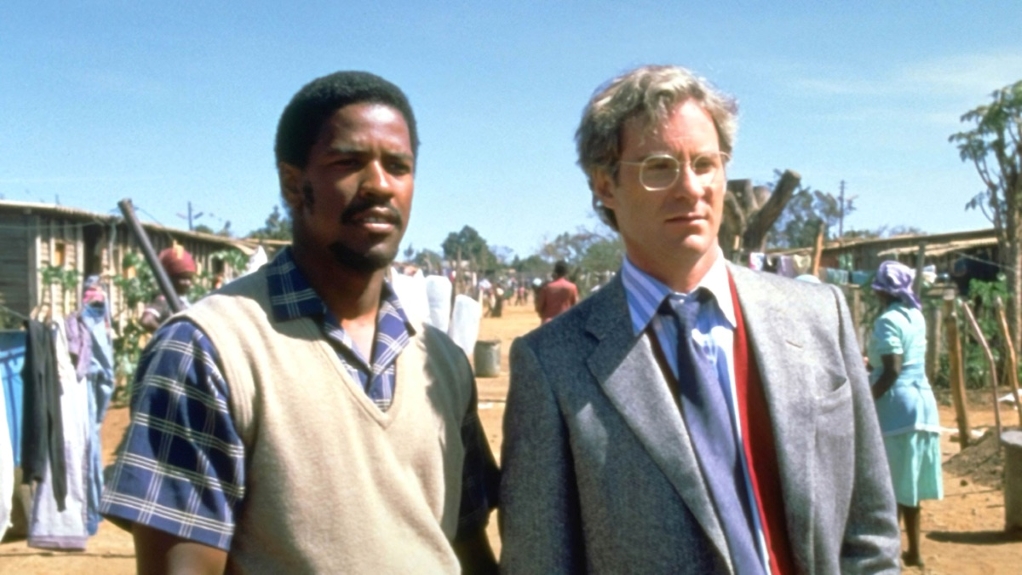
Cry Freedom (1987)

Cry Freedom (1987)

Highly earnest, well-meaning, but tragically mis-focused biopic that doesn’t have the impact it wants

Director: Richard Attenborough

Cast: Kevin Kline (Donald Woods), Denzel Washington (Steve Biko), Penelope Wilton (Wendy Woods), Alec McCowen (High Commissioner David Aubrey Scott), Kevin McNally (Ken Robertson), Ian Richardson (State Prosecutor), John Thaw (Jimmy Kruger), Timothy West (Captain De Wet), Josette Simon (Dr Mamphela Ramphele), John Hargreaves (Bruce Haigh), Zakes Mokae (Father Kani), John Matsikiza (Mapetla), Julian Glover (Don Card)

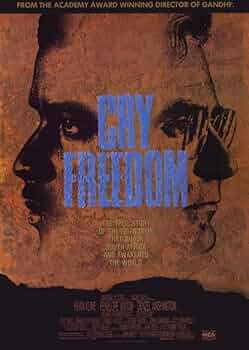
Steve Biko (Denzel Washington) was a leading anti-Apartheid campaigner, driving the Black Consciousness Movement in the repressive racist state of South Africa. Biko called for Black people to organise themselves and rejected the paternalistic concern of hand-wringing white liberals. Biko was ‘banned’ in 1970s by South Africa’s (in)justice department (meaning he could not be in physical proximity with more than one other person at a time) but didn’t let this stop him campaigning – until he was eventually arrested and murdered in custody in August 1977. His story came to international attention with the reporting Donald Woods (Kevin Kline), the white liberal newspaper editor who befriended Biko, later also banned and eventually fled in disguise from South Africa.

All of this makes very ripe ground for Richard Attenborough to make another socially conscious, unreservedly liberal film, very much in the style of Gandhi. Unfortunately, while Gandhi combined epic sweep and drama with its schoolboy history, Cry Freedom is a deathly serious film, straight-jacketed by recreating events as reverentially as possible and focuses itself in all the wrong places. Cry Freedom is the Biko biography in which Biko becomes a supporting character to exactly the sort of white liberal he rejected having African stories filtered through. Admirable as Donald Woods’ efforts to find justice for Biko was, does it feel like he deserved the focus of over half the film? It’s as if Attenborough had decided to frame Gandhi solely from the perspective of Martin Sheen’s journalist rather than the Father of India himself.

Following the trend of many films of the 80s and 90s, Cry Freedom believes that the only way the regular cinemagoer can relate to a minority group is through the filter of a complacent white person having their eyes opened to how unjust everything is. In carefully following this cliché, Cry Freedom does do a decent job. Woods is patronisingly certain of his liberal views, even while he sometimes fails to even acknowledge his live-in Black maid who unquestioningly calls him ‘master’.

Back-slapping himself on writing the odd sympathetic editorial and convinced one of the big problems of South Africa is the danger of anti-white racism, he’s exactly the sort of hero you get in this genre: the guy who assumes, because the system has always worked for him, it will work for everyone. When he resolves to support Biko, he immediately assumes a friendly pow-wow with Justice Minister Jimmy Kruger (a terrifyingly amorally, avuncular John Thaw) will sweep away all the problems (it, of course, makes things immeasurably worse for everyone).

Cry Freedom largely re-creates the oppressive policies of South Africa, through seeing a white character become a victim of the very persecution, bullying and terrorising the Black community has spent its whole life suffering. (With the big exception that Donald Woods never seems to be in danger of being dragged off the streets and beaten to death in a police cell). It feels like a tone-deaf way of exploring these issues. Particularly as Donald Woods’ eventual escape from South Africa is staged and filmed with a singular lack of energy over nearly an hour of screen time, with interest slowly drained out as Attenborough uninventively turns it into an identikit version of any number of bog-standard behind-the-lines Great Escape shenanigans you’ve seen done a million times better before.

Attenborough, to be fair, saves his energy for the re-staging of the brutal repression inflicted on the Black community. Cry Freedom’s opening and closing sequences – a brutal slum clearance in East London and a restaging of the shockingly violent crushing of the 16 June 1976 Soweto uprising (where indiscriminate police automatic weapons fire killed and injured hundreds of children) – are shot with exactly the sort of humanitarian outrage and cold-eyed recognition of the horrors of conflict that Attenborough bought to Gandhi and A Bridge too Far.

It’s not hard to wonder if this is more the sort of film Attenborough wanted to make, but that funding demanded a white lead so as not to panic mainstream cinema audiences. It makes large parts of the film feel like a missed opportunity. A real immersion in the actual day-to-day lives of Black South Africans – not just the beatings, but the unending, casual racism and oppression – would have created a film of even more power. (The fact the film suddenly ends with a flashback to Soweto – an event not central to the plot at all – makes you wonder if Attenborough suddenly realised that, without it, Cry Freedom would have barely shown a Black face for its last twenty minutes).

But too much of the rest of Cry Freedom feels too dry, reserved and lifeless. Even Biko himself falls into this trap. Denzel Washington delivers a very fine performance, full of the sort of effortless charisma and magnetic leadership that makes you believe that so many would follow him and using wit and moral certainty to stand up to the various bullying policeman he encounters. But too much of Biko’s dialogue with Woods is full of the sort of dialogue designed to inform and educate the audience, rather than create good story-telling. Too many scenes in Cry Freedom’s opening hour feel like a South African politics seminar, no matter how much energy Washington gives the dialogue.

It’s part of the feeling the whole film carries: a very serious political ethics class, mixed with an all-too familiar story of a white man learning first hand just how tough his Black friends have had it for years. Attenborough so clearly means well, it feels almost cruel to knock him and his film: but Cry Freedom feels like a film with a lot of blood, sweat and tears invested in it, which then fails to have the emotional heft it really needs and spends a lot of time telling the wrong person’s story.

Nickel Boys (2024)

Nickel Boys (2024)

Beautiful and emotional film, with a unique filming style, at times too overtly arty but truly striking

Director: RaMell Ross

Cast: Ethan Herisse (Elwood), Brandon Wilson (Turner), Aunjanue Ellis-Taylor (Hattie), Hamish Linklater (Spencer), Fred Hechinger (Harper), Jimmie Fails (Mr Hill), Daveed Diggs (Adult Eldwood)

In the Deep South of America in the 1960s, a Black American couldn’t afford a wrong-place-wrong-time situation. That’s what happens though to teenager Elwood (Ethan Herisse). A star student, who firmly believes in civil rights and the power of moral action, he accepts a lift to college in what turns out to be a stolen car and is sentenced to an indefinite time in a Louisiana reform school, the Nickel Academy. Despite its lofty claims, the school is a bastion of racism where the black ‘students’ are housed in shabby huts and subjected to beatings, violence and exploitation as slave labour with almost no chance of leaving. The desperate efforts of his grandmother (Aunjanue Ellis-Taylor) to get his release are doomed to failure and his only friend is cynical Turner (Brandon Wilson). Decades later, an adult Elwood (Daveed Diggs) reacts as shocking news reports of unmarked mass graves of Black inmates are found at the site of old Nickel Academy.

Nickel Boys is adapted by RaMell Ross (making his fiction debut) from a Pulitzer Prize winning novel by Colson Whitehead, itself a fictionalisation of a real-life scandal. Dealing with challenging, difficult subject matter, its remarkable what a poetic, sensitive and subtle film Ross has created. Nickel Boys is a sad, lyrical, deeply tragic film which immerses us in the POV of its lead characters, making us feel the same hopelessness and powerlessness they do in a system designed to make them suffer.

Ross shoots Nickel Boys almost exclusively in POV, initially solely from Elwood’s perspective then switching back-and-forth between him and Turner. The older Elwood is shot as if the camera is strapped to his back (like the weight of the world). Ross commits to an extraordinary degree to this unique look-and-feel, with the camera focusing with the same roaming as a head turn, sometimes frustrating us by looking at the ‘wrong’ thing. What it does, above all, is forces us into the shoes of these boys: we see the sights exactly as we see them, their abusers stare into our eyes, we are made to feel as trapped in this small world as they are.

Ross opens Nickel Boys with its most extraordinary and beautiful sequence – one so perfectly constructed, it’s worth the price of admission alone – as we watch through Elwood’s eyes his growing up through a series of vividly remembered memories, our only glance of him brief reflections. This is a parade of truly striking images: a sidesways horizon with an arm stretched out (Elwood lying on his side); tinsel sprinkling down at us from the tree his grandmother is decorating; hazy soft-focus as a half-asleep Elwood witnesses his parents last-night in town; segregated bus journeys; his first encounters with civil rights; the aggressive searching of himself and another boy by a police officer; and his unjust arrest and imprisonment. It’s a breath-taking sequence, a virtuoso and deeply moving exploration of childhood impressions and contrasting memories.

The rest of Nickel Boys doesn’t quite match this glorious opening, but Ross uses the POV to take a surprisingly brave side-swipe in what we see and don’t see. The film becomes a tour-de-force of half looking, with the horrors of the Nickel Academy largely off-screen and ripe for our interpretation. In that, Nickel Boys would make an astonishing companion piece to The Zone of Interest which similarly took an unusual perspective on atrocity, as something on the edge of our visual and aural perception. When Elwood is beaten, the camera pulls away and cuts to extreme close-ups of black-and-white photos of Nickel Academy students to a cacophony of disjointed sound from Elwood’s thrashing.

Ross turns Nickel Boys into a sensory experience, one of acutely captured sounds and gorgeous imagery. The world of our two protagonists drifts interminably on, from eeking out their labour for the family and friends of the Academy’s staff – and Ross’ film makes clear this is unpaid convict labour – to seeing their ‘education’ ignored. The Black boys are kept at the margins of the grounds, never touching the privileges of the white boys with their football games – the only sport available to them is boxing, and there the school’s Black champ is ordered to take a dive to fix the betting ring among the staff (and ‘disappears’ when he, possibly mistakenly, fails to do so).

In this world Elwood is clinging to the hope that he can make a difference: by keeping a detailed log of the abuses and crimes, he might be able to escape. Elwood is a firm believer in civil rights – in one of the film’s most striking moments he runs across a busy street because he (and us – the visual deception is uncanny) mistakes a cardboard cut-out of his hero Martin Luther King as the real thing. His hope is only dented by the growing despair of his grandmother (a deeply heartfelt performance by Ellis-Taylor) and their swindling by their crooked lawyer.

By contrast, Turner is coldly cynical, convinced they have no chance of escaping the Nick alive. Turner’s bitterness – at one point he holds back Elwood’s precious letters for reasons he barely understands, but linked perhaps to his jealousy at never having any himself – is a sharp counterpoint to Elwood’s optimism, the two finding their contrasting viewpoints draws them closer together.

The legacy of events continues to be felt years later, with Elwood still haunted by his memories, struggling to adjust with his survivor’s guilt. A beautifully judged scene in a bar sees the adult Elwood encounter a fellow survivor (an extremely striking performance by Craig Tate) which not only sees Elwood deeply uncomfortable at this vivid reminder of his past – Tate’s Chicken Pete is fragile, alcoholic and not-all-there – but deeply disconcerted to find Pete has almost no memory of foundational events in Elwood’s life. It’s an affecting reminder that we are seeing one experience, and that the memories of each survivor would be radically different.

Nickel Boys has its flaws. At nearly two hours and twenty minutes, its running time dilutes its impact. Despite fine performances by Ethan Herisse and Brandon Wilson, the POV shooting at times makes it harder to personally engage with their characters, so focused is the film on sharing their experience at the cost of their reactions (which, naturally, we rarely see). Ross is a little too in love of documentary-style montages, which slow the pace rather than enrich the experience and can dilute the impact. A tighter, less at-times wilfully artistic film might have actually carried more force.

But it’s also a film full of deep sensory impact, that builds towards a shocking and deeply affecting climax that causes us to re-interpret much of what we have seen. And for large chunks, the film’s unique filming style creates a movie full of poetic wonder that places us firmly into the experience of living in a racist, unjust system like this one. For that alone, Nickel Boys deserves to be commended as a thought-provoking, striking film, one that leaves a real impact on the viewer.

Scent of a Woman (1992)

Scent of a Woman (1992)

Pacino roars to Oscar-glory with an impressive turn in an enjoyable but predictable coming-of-age drama

Director: Martin Brest

Cast: Al Pacino (Lt Col Frank Slade), Chris O’Donnell (Charlie Simms), James Rebhorn (Mr Trask), Gabrielle Anwar (Donna), Philip Seymour Hoffman (George Willis Jnr), Ron Eldard (Officer Gore), Richard Venture (Willie Slade), Bradley Whitford (Randy), Nicholas Sadler (Harry Havemeyer)

Hoo-ha! It took eight nominations, but Pacino finally lifted the Oscar for his abrasive, damaged, charismatic turn as blind retired army Lt Colonel Frank Slade in Scent of a Woman. It’s not really a surprise: it’s a gift of a part, tailor-made for an actor as in love with bombast as Pacino to rip into, and rip he does. But he also manages to find the moments of gentleness, pathos, fear and self-loathing while expertly calibrating his internal acting dial to pings with explosive entertainment when the big show-stopping speeches come. It’s a million miles away from Michael Corleone’s bolted down, internalised rage – but it’s also a hell of a lot of fun to watch.

Pacino picks Scent of a Woman up and carries it single- handedly through enemy lines. Almost nothing will surprise you in this cosily familiar mix of coming-of-age posh-school drama and well-worn “odd couple” friendship, where an abrasive older guy toughens up a reluctant mild protégé. But, whaddya know, the kid also softens the old guy up. Charlie Sims (Chris O’Donnell), decent and polite scholarship kid at super-posh Baird school, faces expulsion because his principles won’t let him snitch on the spoilt, trust-fund, tosspot kids who played a prank on the school’s sanctimonious headmaster (James Rebhorn). Taking Thanksgiving to think about what to do, he accepts a job looking after Slade who promptly ropes him into a trip to New York, where the blind Slade plans on one final glorious weekend before blowing his brains out in a five-star hotel.

Of course, the film doesn’t end with Pacino’s little grey cells dripping down the side of the Waldorf’s no-expense-spared wallpaper. It will not surprise you at all that Martin Brest’s film heading where all feel-good films like this head: learned lessons, love of life re-embraced and a big speech from the big star solving all the problems. Scent of a Woman’s biggest flaw is it takes a very long time to hit all these familiar beats on the way towards its cookie-cutter capping of its coming-of-age/road trip set-up. Martin Brest was never a director to tell a story in a few sentences when a whole chapter would do, and Scent of a Woman is the last time he got the balance right between the length of the journey and the pleasure of being on it.

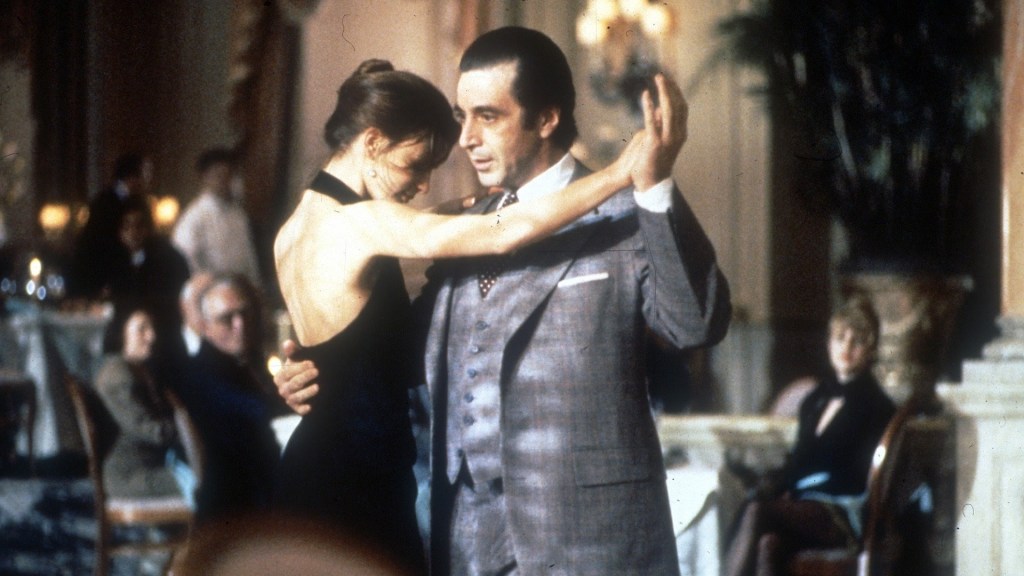
But then, as mentioned, a lion’s share of the credit belongs to Pacino. Surly but with just enough cheek. charm and biting wit, it’s a hugely entertaining role with big meaty speeches to chew on. Pacino makes it very funny, from his don’t-give-a-crap rudeness to his don’t-take-no-for-an-answer insistence on getting his own way. The film gives him a memorable set-piece moment pretty much every 15 minutes: his surly introduction, via a speech on the beautiful scents of women, the film’s iconic tango-dancing with Gabrielle Anwar, driving a Ferrari around the empty streets of the Bronx (and convincing a cop who pulls him over that he’s not blind), a thwarted suicide with the sort of barked refrain Pacino loves (“I’m in the DARK here!”) to a leave-no-prisoners final “courtroom” speech that’s one of the best of its kind. This is all meat and drink for Pacino.

But this is a more nuanced performance than just a star’s turn. Pacino makes Slade a deeply unhappy man, slowly realising he has been so most of his life. A man who uses anger, wit and cruelty as shields to drive people away and make himself look and feel tough. Blindness has become a constant reminder of his vulnerability and dependence, but also made the shell of isolation he has built around himself all consuming. He’s realising pretty much everyone he knows hates him, whose family (from youngest to oldest) want as little to do with him as possible, who has never had a meaningful relationship and clings to a war record he frequently garnishes to appear more important. Pacino manages to convey all this deep-down regret and self-loathing extremely well, matched with a physically dedicated performance of approximating blindness that is one of the best there is on film.

There’s a striking scene midway through where Slade crashes his brother’s Thanksgiving dinner. The family are less than happy to see him, but tolerate him at a table he dominates, first with garrulous (uninvited) army stories and then increasingly rude, sexual comments about his nephew’s wife. The nephew (Bradley Whitford) eventually tears him off a strip: in 1992 some felt sorry for this merciless puncturing of Slade’s self-mythologising, but today I can’t help but agree with Whitford’s takedown of Slade’s bullying. Slade’s eventual assault on his nephew is allegedly for calling Charlie “Chuck” once too often, but really feels like a desperate attempt to take revenge without feeling in the wrong. It’s a scene that actually cements what an awful negative force Slade has been, something he’s just starting to realise no end of whimsy can fix. This is a complex stuff among the Hoo-Ha.

Pacino’s helped by a very fine, generous performance from Chris O’Donnell as a young man who may be naïve and innocent but, in his own way, has more guts and integrity than the mercurial Slade ever did. While Slade is fundamentally selfish (and always has been), Charlie will make sacrifices for people he knows will never do the same for him and won’t flex his principles for any personal gain. O’Donnell also does some magnificent reacting throughout, frequently generously providing the dramatic context and crucial reaction points to make Pacino’s character work effectively.

Scent of a Woman’s posh-school drama provides a few more straight-forward figures of loathing: from James Rebhorn’s headmaster, via Philip Seymour Hoffman’s smug, gutless, entitled fellow student (a prototype of his role in The Talented Mr Ripley) who hangs Charlie out to dry, culminating in the three unbearably arrogant rich kids who carry out the prank. In some ways the plot here is far more engaging than Slade’s suicide run, even though nothing surprising really happens at all throughout it’s runtime. It also allows Brest to caps it off with such a dynamite speech from Pacino that it made the Oscar probably a foregone decision (even though Denzel Washington’s Malcolm X could feel rightly aggrieved at missing out on the little bald man).

That kind of sums the whole film up. Despite moments of complexity in its character study – forcefully delivered with depth and feeling by Pacino – Scent of a Woman is a film that offers virtually no surprises at all while expertly hitting every single beat you would expect to see while giving maximum entertainment factor along the way. It’s the sort of thing that Oscars are grown from.

Wicked (2024)

Wicked (2024)

Hugely enjoyable and electrically filmed (sung and danced) adaptation of the classic stage musical

Director: John M. Chu

Cast: Cynthia Erivo (Elphaba Thropp), Ariana Grande (Galinda Upland), Jonathan Bailey (Fiyero Tigellar), Michelle Yeoh (Madame Morrible), Jeff Goldblum (Wizard of Oz), Ethan Slater (Boq Woodsman), Bowen Young (Pfannee), Marissa Bode (Nessarose Thropp), Peter Dinklage (Dr Dillamond), Bronwyn James (Shenshen), Andy Nyman (Governor Thropp)

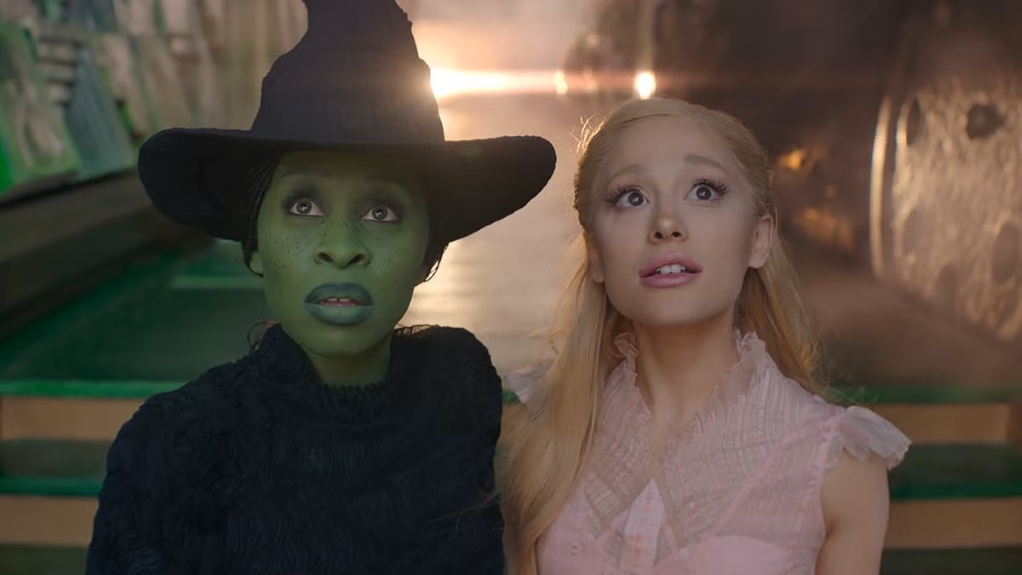
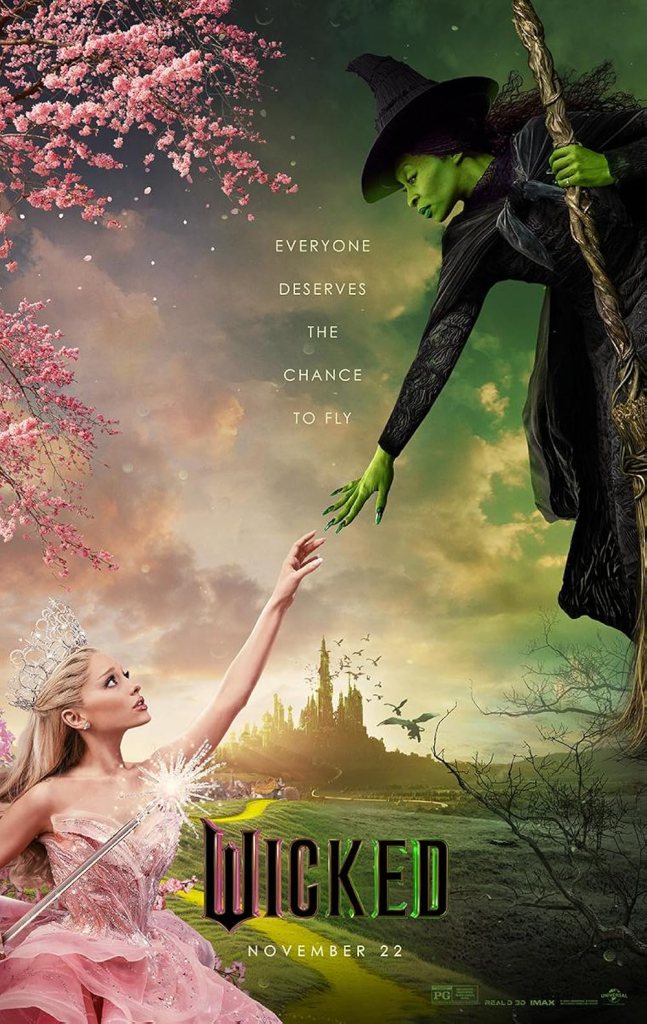
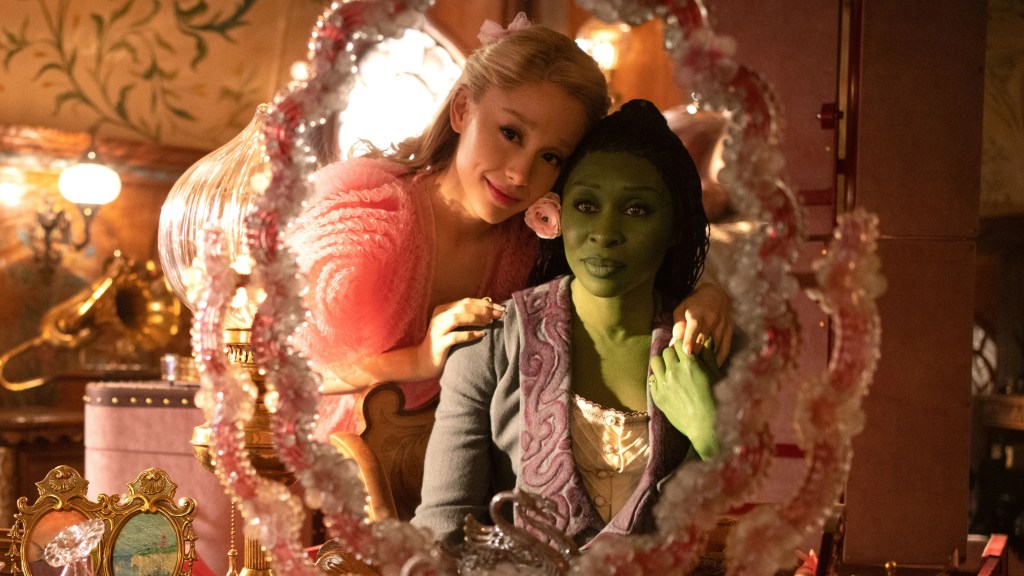
I might be the only person who missed the phenomenon of Wicked, a smash-hit musical that filled in the back story of The Wizard of Oz. Set long before the arrival of Dorothy and her march down that yellow brick road, it covers the meeting and eventual friendship of Elphaba (Cynthia Erivo) future Wicked Witch of the West and Galinda (Ariana Grande) future Glinda the Good, at Shiz University (a sort of Ozian Hogwarts). Wicked is a grand, visual spectacular crammed with memorable tunes and show-stopping dance numbers and it’s bought to cinematic life in vibrant, dynamic and highly enjoyable style by John M. Chu.

At Shiz, Elphaba is snubbed by all and sundry who can’t see past her green skin. Despised by her father (Andy Nyman) – who we know isn’t her true father (I wonder who it could be?) – she’s lived a life of defensive self-sufficiency. Galinda, in contrast, is effortlessly popular and has never found herself in any situation where she can’t get what she wants. But Elphaba has something Galinda wants – a natural talent for magic that makes her the protégé of Madame Morrible (Michelle Yeoh) – and circumstances end up with the two of them sharing rooms. Surprisingly, a friendship forms when these two opposites find common ground. But will this be challenged when Elphaba is called to the Emerald City to meet with the Wonderful Wizard of Oz (Jeff Goldblum)?

Wicked Part One covers (in almost two and half hours!) only the first act of Wicked, meaning the film culminates with the musical’s most famous number ’Defying Gravity’. The producers proudly stated this was to not compromise on character development by rushing – the more cynical might say they were motivated by double-dipping into mountains of box-office moolah. Despite this, Wicked Part 1 (despite taking pretty much as long to cover Act 1 as it takes theatres to stage the entire musical) feels surprisingly well-paced and the film itself is so energetic, charming and fun you quickly forget the fundamental financial cynicism behind it.

Wicked is directed with real verve and energy by John M. Chu – it’s easily the most purely enjoyable Hollywood musical since West Side Story and one of the most entertaining Broadway adaptations of this century. Wicked is expertly shot and very well edited, its camerawork making the many dance sequences both high-tempo and also easy to follow (Wicked avoids many musicals’ high-cutting failures that make choreography almost impossible to see). And it looks fabulous, the design embracing the bold colours and steam-punk magic of Oz.

It also perfectly casts its two leads, both of whom are gifted performers bringing passion and commitment. Cynthia Erivo’s voice is spectacular, and she taps into Elphaba’s loneliness and pain under her defensive, defiant outer core. It’s a fabulously sad-eyed performance of weary pain and Erivo beautifully conveys Elphaba’s moral outrage at the lies that underpin Oz. Just as fantastic is Ariana Grande. Grande says she had dreamed about playing Galinda since she was a kid (yup, that’s how old this musical is) – and it shows. It’s an electric, hilarious performance that embraces Galinda’s studied sweet physicality, her little bobs and flicks and blithe unawareness of her aching privilege and self-entitlement, but what Grande does stunningly well is really make you like Galinda no matter how misguidedly self-centred she is.

And she really is. Part of Wicked’s appeal is mixing Oz with Mean Girls with more than a dash of racial prejudice. Elphaba is immediately snubbed because she literally doesn’t look right (anti-green prejudice is an unspoken constant) compared to Galinda’s pink-coated, blond-haired perfectness. Galinda is Shiz’s queen bee, followed everywhere by two sycophantic acolytes (delightfully slappable performances from Bowen Young and Bronwyn James) who cheer everything she does and push Galinda to maximise her subtle hazing of the green-skinned outsider. After all, they see popularity as a zero-sum game: the more Elphaba might have, the less there must be to go around for them.

It’s not really a surprise that Elphaba has had a tough time. Oz is dripping with prejudice, racist assumptions and strict hierarchies. From the film’s opening number – ‘No one mourns the wicked’, where Munchkins wildly celebrate Elphaba’s future death – we are left in little doubt there is a culture of blaming those who are different for misfortunes. This sits alongside a purge of unwanted citizens: namely talking animals. Goat professor Dr Dillamond (a lovely vocal performance from Peter Dinklage) is subtly belittled for his goat-accent then dragged in disgrace from the school. A new professor extols the virtues of keeping frightened animals in cages. The casting of Jeff Goldblum helps with creating this genial but cruel world, his improvisational mumbling suggesting a man of arrogant, sociopathic distance under initial aw-shucks charm.

These secrets will impact the friendship between our leads. The extended runtime means it already takes a very long time for the ice between them to thaw (and, for me, their ballroom reconciliation doesn’t land with the cathartic force it needed for the transition from hostility to friendship to completely work), but the exceptional chemistry between Erivo and Grande helps sell it. What Wicked does very well though is show the fault-lines in this relationship. Galinda’s answer to all Elphaba’s problems is for her to be more like her, while Elphaba has clearly never had a real friend in her life and wants one more than anything. There is true kindness and love between them, but Elphaba remains an outsider with cause to be angry against the system while Galinda is the ultimate insider for whom the system has always worked. Wicked Part 1 does a very good job of never letting these facts escape your notice, for all the charm of an unexpected friendship.

Wicked Part 1 though is also a monstrously entertaining film. The song and dance numbers are spectacular – the pin-point choreography of ‘What Is This Feeling’ is superb, while the power ballad intensity if ‘The Wizard and I’ is perfectly nailed by Erivo. Jonathan Bailey comes close to stealing the limelight with a show-stopping turn as the charming, likeable but slightly rogueish Fiyero, his ‘Dancing Through Life’ routine in particular being a stunning display of athletic dancing matched with perfect vocals. Every number is given its own carefully judged tone, with wonderfully complementary photography and editing, to create a film that leaves you eagerly wanting more.

I didn’t really know the musical coming into it, but after Jon M Chu’s excellent production, I’m excited to see what happens in Part (Act) 2.

Benediction (2021)

Benediction (2021)

Davies’ final film is a beautifully made, deeply sad, exploration of the long-term impact of trauma

Director: Terence Davies

Cast: Jack Lowden (Siegfried Sassoon), Peter Capaldi (Older Siegfried Sassoon), Simon Russell Beale (Robbie Ross), Jeremy Irvine (Ivor Novello), Kate Phillips (Hester Gatty), Gemma Jones (Older Hester Gatty), Ben Daniels (Dr Rivers), Calam Lynch (Stephen Tennant), Anton Lesser (Older Stephen Tennant), Tom Blyth (Glen Byam Shaw), Matthew Tennyson (Wilfred Owen), Geraldine James (Theresa Thornycroft), Richard Goulding (George Sassoon), Lia Williams (Edith Sitwell), Julian Sands (Chief Medical Officer)

Few generations carried scars as deep as that which saw millions of their fellows mown down in the endless bloody slaughter of World War One. For us, whatever understanding of the horrors of that conflict we have is often filtered through the war poets, who fought in unimaginable conditions. Terence Davies’ final film explores the life of Siegfried Sassoon (Jack Lowden, ageing into Peter Capaldi) whose life never escaped the shadow of those terrible sights and awful losses.

Benediction is a sombre, mellow, deeply sad portrait of a man who spent a lifetime searching for something, anything to fill the void the war had left in him. Following Sassoon’s life in a series of tableaux-style scenes that mix poetry reading, period music, news footage with flash-forwards to the tetchy, weary older man he will become, it’s a sad, reflective work that presents memory as a sort of prison that consigns everyone to a life sentence. Davies catches this beautifully in his stately, melancholic film where survival guilt goes hand in hand with bitter regret at missed opportunities.

It opens with Sassoon’s protest against the war – denouncing its content from his first-hand experience. Saved from the possibility of a firing squad by influential friends (chief among them, Simon Russell Beale’s good-natured Robbie Ross) Sassoon is dispatched to an Edinburgh military hospital to “recuperate”. There he meets and falls in love with the sensitive, shy poet Wilfrid Owen (Matthew Tennyson), a love he is scared to confess. After Owen is killed, Sassoon commits himself to a series of romantic relationships with selfish, bitchy men including Ivor Novello (a marvellously supercilious Jeremy Irvine, whose eyes are stone cold) and the shallow, vain Stephen Tennent (Calam Lynch, full of Bright Young Thing smugness, turning into a lonely, tragic Anton Lesser). As an older man, he converts to Catholicism and struggles to understand his son George (Richard Goulding).

Davies’ film posits a Sassoon who never recovered from grief at the death of Wilfrid Owen and could never truly forgive himself for being too timid to express his feelings. Davies films Sassoon and Owen in scenes that sing of unspoken intimacy, from an overhead shot of a swimming pool dip that feels like a pirouette, to the matching body language they exhibit while sitting watching a variety show at the hospital. They laugh and dance together, but at parting Sassoon cannot move himself beyond a tightly clasped handshake and a whispered urge to stay a few minutes longer.

In discussions with his doctor and friend Rivers (a lovely tender cameo from Ben Daniels), Sassoon tearfully talks of his fear of expressing his own emotions. Perhaps this, coupled with his self-blame, is why Sassoon placed himself in so many relationships with such transparently flamboyant shits? Davies certainly seems to suggest so: Sassoon had less fear of “being himself” when he was with arrogantly confident men like Novello and Tennant. Did he also, the film suggests, feel so crippled with regret and survivor guilt, that he couldn’t believe himself worthy of the love of gentle, decent men, such as the Owen-like Glen Byam Shaw (Tom Blyth).

Sassoon becomes a man who can never fully escape the never-ending hurt of memories. Even as an older man, Davies shows Capaldi’s Sassoon sitting in his garden, the background replaced by news footage of slaughter in the trenches. It’s mixed in with the shame Sassoon felt at his “stand” against the war being, in the end, a moment that changed nothing. Davies further paints his poetry as declining post-war, as if parts of his creative life never survived the shocks he experienced.

And always he hopes something might make him whole again. Sassoon races through these false dawns during the film: relationships with men, marriage to Hetty (Kate Phillips as the younger Hetty is nearly as oppressed with unspoken sadness as Sassoon), the birth of his son – all fail to deliver. So as an older man – in a neat CGI transition during a 360 camera move – Davies transforms Lowden to Capaldi as he tries Catholicism (there is another wonderful cut that takes us from young Sassoon’s silver military cross being dropped into a river, that transitions into the grey-suited older Sassoon lying in a crucifix position on the floor of a church).

But the tragedy of Benediction – and there is no denying it’s a deeply sad and even slightly depressing film – is none of these attempts fill his soul. The older Sassoon – sharp, prickly and with a stare that goes on and on from Capaldi – snaps at things he doesn’t understand, cruelly dismisses the older Tennant and bitterly complains at the lack of recognition his later work received. He’s a man desperate for companionship, but comfortable only on his own.

It’s particularly sad having seen the brighter, passionate and warm man he was. Much of Benediction succeeds due to an exceptional performance by Jack Lowden. Lowden brilliantly conveys Sassoon’s lingering depression and loss under the surface of every interaction. The cheery wit that covers the self-loathing that leads him into destructive relationships and painful situations is as well captured as the self-deceiving optimism he had that everything could be different. Lowden ends the film with an extraordinary emotional moment – filmed in tight one-shot by Davies – where we see, one the last day of the war, his impossible burdens lead him to a single, quiet, emotional outburst of the vast reams of pain that then continued to burn inside him for the rest of his life.

Benediction is about guilt, loss, regret and denying yourself opportunities at happiness and joy through an internal determination that it is not for you. There is something profoundly personal in this – Sassoon’s life in this film, mirroring many of the regrets Davies spoke of in his own life – a fact increased by the heartfelt, gentle construction of the film with its melancholic air and rich sense of empathy for its subject. As a final work, it’s a fitting tribute to both the poet and its director.