Category: Films about grief

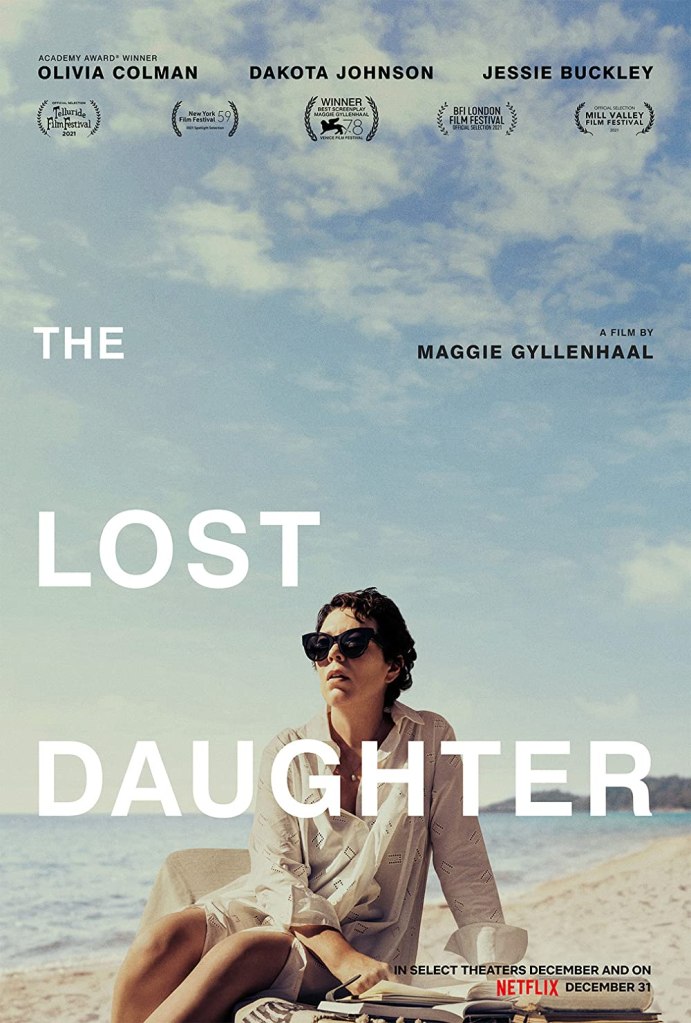
The Lost Daughter (2021)

The Lost Daughter (2021)

Motherhood, loss and guilt are at the heart of this over-extended drama that doesn’t feel like it focuses on the right things

Director: Maggie Gyllenhaal

Cast: Olivia Colman (Leda Caruso), Jessie Buckley (Young Leda Caruso), Dakota Johnson (Nina), Ed Harris (Lyle), Dagmara Dominczyk (Callie), Paul Mescal (Will), Peter Sarsgaard (Professor Hardy), Jack Farthing (Joe), Oliver Jackson-Cohen (Toni), Athena Martin (Elena), Robyn Elwell (Bianca), Ellie Blake (Martha)

Leda (Olivia Colman), a professor of Italian Literature, holidays in Greece. That holiday is disturbed by the arrival of a noisy, aggressive family from Queens. A member of that family, unhappy young mother Nina (Dakota Johnson) loses her daughter on a beach. Leda finds her, but it triggers her own unhappy memories of motherhood (Jessie Buckley plays the young Leda). She impulsively steals the child’s beloved doll, as her paranoia and mournful reflections grow.

Maggie Gyllenhaal’s directorial debut is a confident, assured piece of film-making, but I found it a cold and slightly unsatisfying film. There is a fascinating subject here, that the film fails to really tackle. One of life’s great unspoken expectations is that everyone should find being a parent – especially being a mother – hugely rewarding. This film studies a woman who didn’t, but still wants to reassure us of the love and happiness found in the bond with a child, no matter your mistakes as a parent. In doing so, it marginally ducks an important societal issue and reaches conclusions that feel predictable, for all the ambiguity the film ends with.

Colman’s expressive face and ability to suggest acres of unhappiness in a forced smile or gallons of frustration with a single intake of breath, are used to maximum effect. Leda is a woman comfortable with her own company, forced and uncomfortable in conversation, her eyes flicking away as if looking for an exit. She seems confused about how to respond to the quiet advances of handyman Lyle (a gentle Ed Harris) and increasingly resents the intrusion into her holiday of outsiders.

How much is this slightly misanthropic, isolated view of the world her natural personality, and how much has it grown from her choices in the past? Flashbacks reveal her struggles as a mother – and the strained relationship with her children today – and it’s clear Leda is a bubble of confused emotions, uncertain about what she thinks and feels.

That past, to me, is the real area of interest, rather than the distant, cold woman those choices have created. I’d argue a stronger film – and one that would feel like it was really making a unique point – would have focused on the younger Leda. Expertly played by an Oscar-nominated Jessie Buckley –brittle and growing in claustrophobic depression – she loves her two girls. But, most of the time, finds them overbearing, all-consuming and more than a little irritating. She’ll laugh at their jokes and be terrified when one of them gets lost, while still resenting their domineering impact on her life.

When she wants to work, they demand attention. When her daughter has a small cut on her finger, Leda is repeatedly asked to kiss it better like a broken record. Leda gives her other daughter her own childhood doll – and then throws it out of a window in fit of hurt fury when the daughter covers it in crayon and says she doesn’t like it. The kids get in the way of everything: be it work (she retreats behind headphones to focus), holidays, sex with her husband or even masturbation.

Her feelings go beyond post-natal depression. She is someone who genuinely loves her children, but can’t bear the idea of mothering them. This is the meat of the film, far more than the present-day narrative. Gyllenhaal sensitively tackles a rarely discussed topic: what can we do if we find parenthood was a mistake? Knuckle down or give up and run away? A film exploring this could have been compelling: but it only takes up a quarter of an over-extended film.

Instead, by focusing on the maladjusted present-day Leda, the film presents her motherhood difficulties as the root cause of her problems. Leda sees a potential kindred spirit in young mother Nina – a brash and exhausted Dakota Fanning – who seems equally frustrated by parenting. But Leda is so insular and self-obsessed, is she only seeing what she wants to see? If she thinks Nina is also failing as a mother, will that make her feel better about her own failures?

The Lost Daughter is an unreliable narrator film – and Gyllenhaal expertly suggests much of what we see are Leda’s perceptions rather than necessarily the truth. The menace from Nina’s loud and aggressive extended family is a constant presence: but is it real, or just Lena’s paranoia. Does the family really cover every tree with a missing poster for a child’s lost doll, or does it just that way to Leda? Does Nina share Leda’s own resentments with motherhood, or does Leda just want her to?

It’s a subtle ambiguity that continues until the film’s close. It leaves many questions unanswered and open to the viewers interpretation. Different viewers will take very different messages from it. But for me, the film wasn’t quite interesting enough – and shied away from exploring the questions of guilt and doubt about parenthood. At no point does Leda even voice the possibility that she regrets having kids – for all that she surely does – which feels odd. For me the film takes a long time to not quite say as much as I feel it could have done.

Sweeney Todd: The Demon Barber of Fleet Street (2007)

Sweeney Todd: The Demon Barber of Fleet Street (2007)

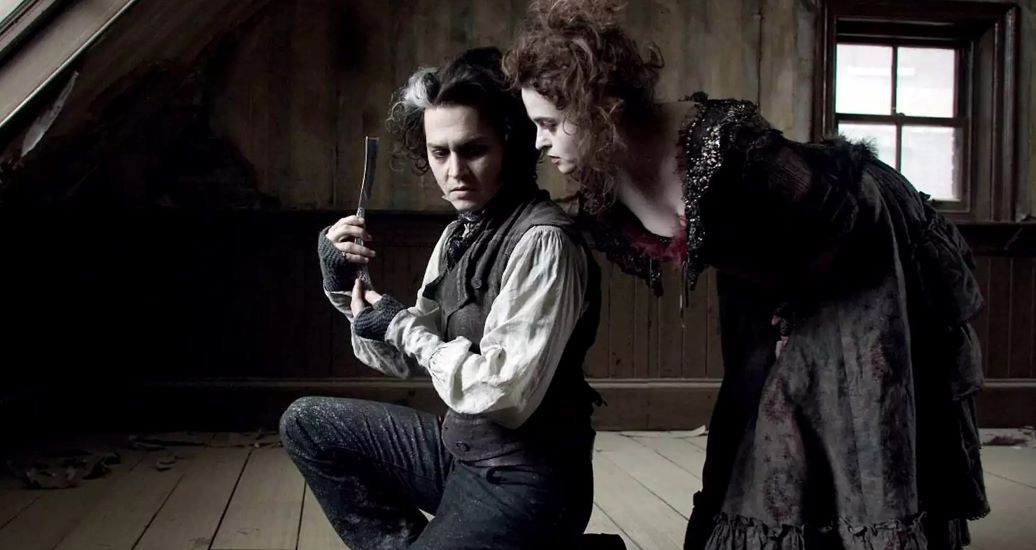
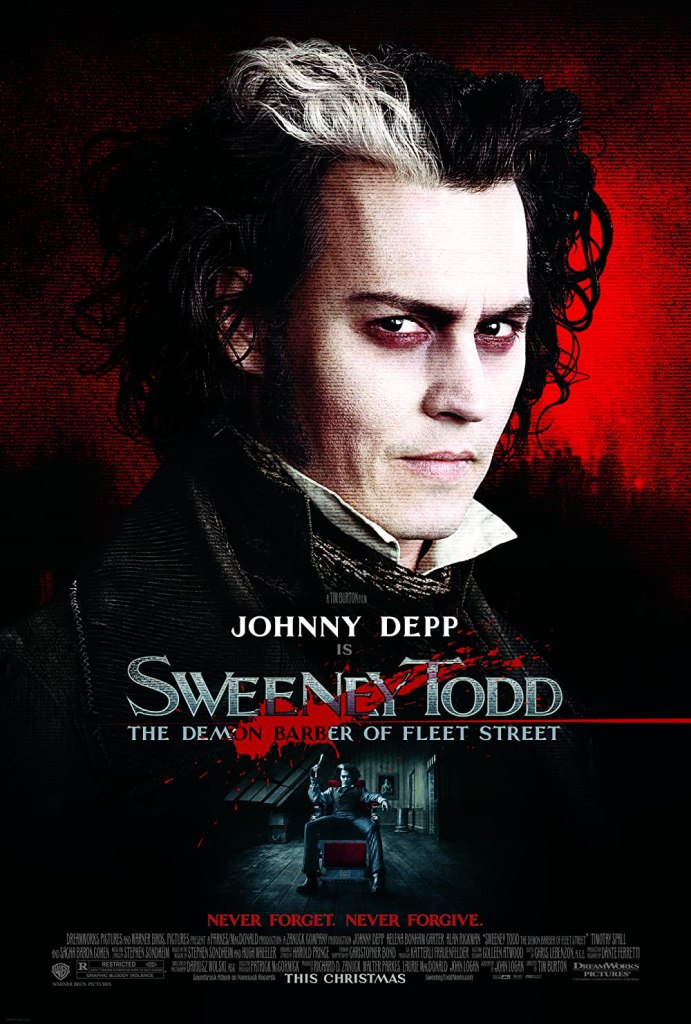
Blood, guts and gore in this horror-tinged, claret-dipped Burton adaptation of Sondheim’s musical

Director: Tim Burton

Cast: Johnny Depp (Sweeney Todd), Helena Bonham Carter (Mrs Lovett), Alan Rickman (Judge Turpin), Timothy Spall (Beadle Bamford), Jayne Wisener (Johanna Barker), Sacha Baron Cohen (Adolfo Pirelli), Laura Michelle Kelly (Lucy Barker/Beggar Woman), Jamie Campbell Bower (Anthony Hope), Ed Sanders (Toby Ragg)

Sondheim’s blood-soaked musical about the infamous serial-killing barber, intent on revenge against the judge who transported him to Australia and stole his late wife, took years to make it to screen. His intensely theatrical, intricate musical masterpieces don’t always translate to film – they lack that crowd-pleasing oomph. What with Todd slashing throats with misanthropic glee, aided by besotted neighbour Mrs Lovett baking the bodies into pies, and no wonder Sweeney was a difficult pitch.

However, it’s practically tailor-made for the High Priest of Gothic Oddity, Tim Burton. A lifelong Hammer horror fan, it’s no surprise Burton had loved the musical since first seeing it in 1980. He’s a perfect match for this stuff, and his film is a bleak, heavily desaturated, oppressively grim and strikingly optimism-free descent into a subterranean hell, with almost every scene accompanied by a free-flowing deluge of Shining-style levels of blood.

Sweeney Todd is a design triumph (Oscar-winning for its production design and nominated for its costumes). It’s London is like an Oliver! set run through a fevered nightmare slasher film. Everything is grandiose, filthy and above all cold, oppressive and unwelcoming. Most of the light comes from the reflection of moonlight on the blades of Todd’s razors, and the basement of his building is a gruesome horror show, with a pumping furnace and mangled body parts in a mincer.

The film shocked critics expecting a more traditional Broadway musical translation with the dark glee it embraces the gore. When throats are slashed – which occurs as regularly as clockwork – blood sprays over the actors, camera and virtually everything else. Sweeney’s chair drops his victims head-first into the cellar: each fall is seen in terrible detail, bodies landing with a sickening crunch, twisted out of shape and heads smashed open on the stone floor. There is little black comedy, the film embracing flat-out horror.

It also focuses on the black hate in Sweeney’s heart, his fixation on revenge at any costs and the lack of any trace of humanity within him. While Mrs Lovett longs to turn this “relationship” into something more intimate and loving – she even sings about it in By the Sea to the stony-faced indifference of Sweeney – to Sweeney she is little more than a convenient means to an end. Bravely, no real attempt is made to make us feel real sympathy for this brutal killer – and the visceral brutality of his killings only adds to this.

The film is dominated by its two leads, simplifying the musical down to something leaner, swifter and meaner. This is a dark revenge tragedy doubling as a character study of its two leads’ souls. These places a lot of pressure on Depp and Carter. Sweeney Todd was very much at the apex of a trend in musical film-making where stars were trained to sing, rather than casting skilled singers who can act. Sweeney Todd is an immensely complex musical, with deeply challenging lead parts. Even using the intimacy and immediacy of the camera to bring the scale down (they don’t need to hit the back row), it still must have been intimidating to sing with very little experience.

Depp and Carter however acquit themselves well. Working with a director they both trust implicitly, they give dark, twisted performances of unspoken longings. Depp, in one of his finest and most restrained performances (which says a lot about the irritating abandon of many of his other roles) that stresses Sweeney’s sociopathic coldness. He is a tortured man, turning his unhappiness and self-loathing into a weapon to slice open the world. Carter channels sociopathic eccentricity with a tenderness, vulnerability and desperation for love.

As singers however, they are competent rather than inspired. Depp goes for an earthy, Bowie-esque, Rex Harrison-paced growl that conveys the emotion but simplifies the songs and robs them of some of their impact. Carter’s more lively rendition carries more character, but in both cases you wonder what would have happened if the film had married its cinematic visuals with assured Broadway performers. The best singers by far are Jamie Campbell Bower (whose role as the would-be lover of Sweeney’s long-lost daughter is heavily cut) and Ed Sanders, who is excellent as the orphan taken under Mrs Lovett’s wing (West End-star Laura Michelle Kelly, perversely, barely sings a note).

The focus on Sweeney and Mrs Lovett leaves little room for the other actors. Rickman brings a subtle perversion to Judge Turpin – even though, bless him, he’s not the best singer – and Spall a creepy eccentricity to the Beadle. But this is the Sweeney show, a decision that robs the film of any trace of the more hopeful elements of the original, to zero in on the dark horrors.

The film pulls few punches, but never makes us care about Sweeney. For all the trims, it’s surprisingly poorly-paced (especially considering its short run-time). Such little importance is given to the supporting characters, time feels wasted when we are with them. The cuts also stress how little actual plot there is around Sweeney and Mrs Lovett (once they decide to embark on a life of crime, there is little that happens to sustain the film through its middle act).

The film is a Gothic slasher triumph, but it’s perhaps neither a great musical nor a truly engaging tragedy. A slice more humanity, in between the slashed throats, might have helped a great deal.

Wild Strawberries (1957)

Wild Strawberries (1957)

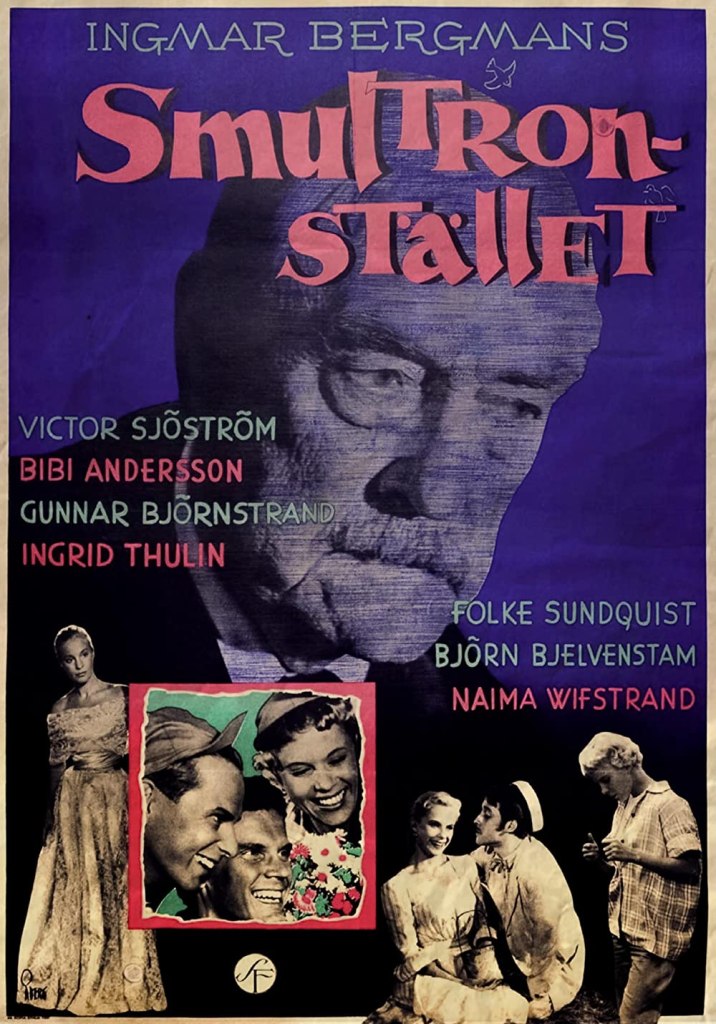
An aged doctor reflects on his past regrets and failures, in Bergman’s strangely optimistic masterpiece

Director: Ingmar Bergman

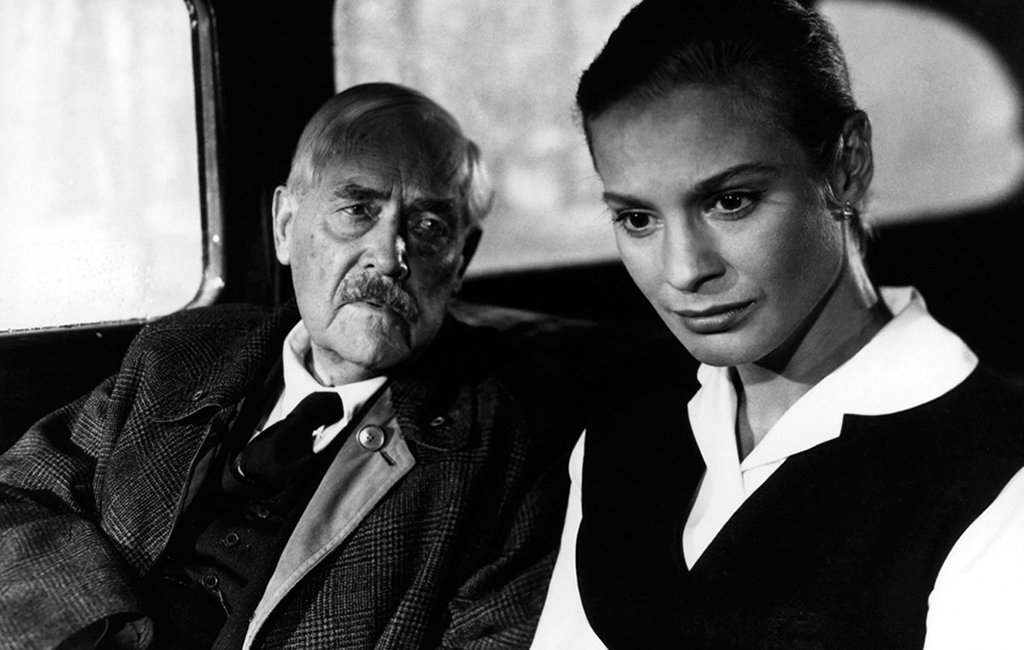
Cast: Victor Sjöström (Professor Isak Borg), Bibi Andersson (Sara/Sara Borg), Ingrid Thulin (Marianne Borg), Gunnar Björnstrand (Evald Borg), Jullan Kindahl (Mrs Agda), Folke Sundquist (Anders), Björn Bjelfvenstam (Viktor), Naima Wifstrand (Isak’s Mother), Gunnel Broström (Berit Alman), Gunnar Sjöberg (Sten Alman/Examiner), Max von Sydow (Henrik Åkerman), Ann-Marie Wiman (Eva Åkerman), Gertrud Fridh (Karin Borg), Åke Fridell (Karin’s lover), Per Sjöstrand (Sigfrid Borg)

Is anything in life more painful than regret? When we look back at our past mistakes, the things we wish had played out differently, the roads not taken, it’s difficult to accept there is nothing we can do about it. It’s the theme of Bergman’s beautiful, strangely optimistic Wild Strawberries (his third consecutive masterpiece, cementing him as one of the most distinctive, visionary directors in the world). Wild Strawberries is filmed with a virtuoso assurance, that still finds a genuine sense of optimism, despite the pain of the past.

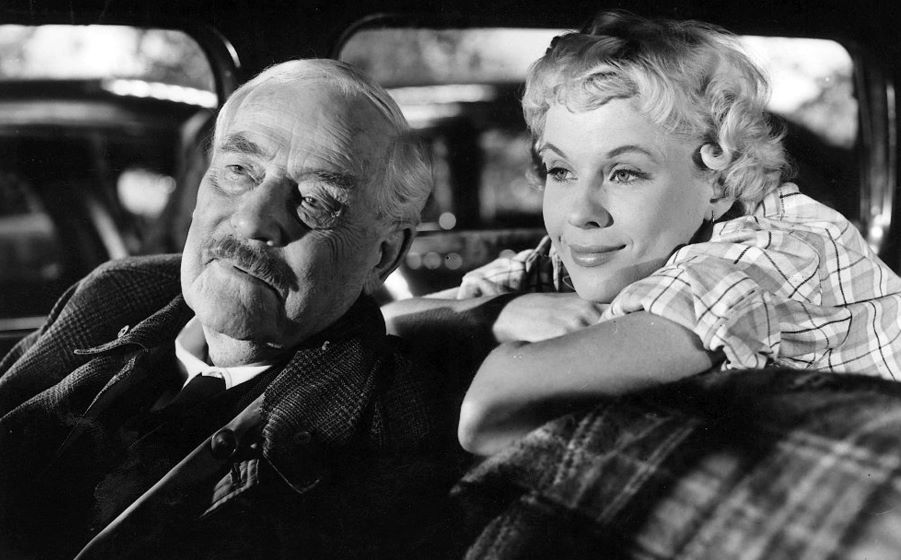
It’s about a long, single-day, road trip taken by famed, retired, medic Professor Isak Borg (Victor Sjöström, Sweden’s legendary father of cinema and Bergman’s idol) and his daughter-in-law Marianne (Ingrid Thulin). Isak is receiving an honorary doctorate in Lund but, after a bad dream, spontaneously decides to drive there. They drop by places with huge personal significance: the country chalet where he loved and lost his cousin Sara (Bibi Andersson) and the home of his mother (Naima Wifstand), who perhaps never really wanted him. Along they way they pick up a trio of young hitchhikers, one of whom, Sara (Bibi Andersson again), reminds him of his lost love. Will Isak come to terms with his regrets and failures?

The Wild Strawberries were collected by Sara on the birthday of her and Isak’s uncle. They are touch points in Isak’s memories, a reminder of the summer when Sara broke off her engagement with him to marry his more fun brother Sigfrid (Per Sjöstrand). Did that moment set Isak on the path of distant, judgmental coolness that defined his whole life? Or was he always bound to become who was, especially since his mother matches him for chilly distance? Is the cycle destined to continue, as Isak’s son Evald (Gunnar Björnstrand, full of cold nihilism) is just as austere as his father?

Bergman‘s radiant memory piece, explores all this without casting judgment. Wild Strawberries profoundly studies the regrets that come with facing your mortality. Isak becomes so lost in his memories, he literally becomes a silent witness in them. Sjöström’s beautifully expressive face lights up with a mixture of powerless pleasure, sadness and longing as he sees Sara once more – its implied the only woman (or indeed person) he has allowed himself to purely love.

What’s striking though, is that Isak’s memory of her – flirting with Sigfrid and then tearfully telling another cousin that Isak is so nice but… – is not a memory he can possibly have. He was never there: it can only be his supposition. It’s the same with the birthday party of his uncle (Bergman fills this with some great comedy, not least two gossipy pre-teens who talk simultaneously), an event he was not present at. Isak clings to these as memories, but they are imaginings. It’s not a card the film plays heavily: but Isak is, essentially, an unreliable narrator showing us his version of the past. It makes you wonder: are we all unreliable narrators of our own memories?

Is Wild Strawberries actually a dream piece? These recollections are daydreams, helping Isak accept his choices, and begin to find peace. The film opens with a striking surreal – and chillingly horror tinged – dream sequence that inspired hundreds of imitators: Isak walks an abandoned street, clocks lack hands, a faceless man collapses into water, a hearse overturns and when Isak investigates his own hand emerges to pull him in. (The unsettling artifice of this sequence is so masterful, it makes you realise Bergman could have become the king of terror if he’s wanted to).

A series of sequences take place halfway between dream and memory. In one he’s challenged by a cold and formal Examiner (a mirror of Isak himself?) with unanswerable questions, diagnosed with guilt and loneliness and then taken to witness his most vivid memory – watching his wife in the throws of passion with another man. The memory changes from reality to dream as Isak’s wife (an unsettling Gertrud Fridh) – who loathes him – sits up and dispassionately recounts their conversation later when she confessed/rubbed-his-face-in her infidelity. These aren’t straight memories.

Isak’s reminiscences creep up on him. It’s started by his daughter-in-law Marianne flatly telling him she can’t stand his aloofness and self-satisfied smugness. He seems unmoved: but does it prompt him to take her to the chalet of his childhood, to try and prove her wrong? Surely it can’t be a complete coincidence he awakes from a dream of Sara, by another Sara (Bibi Andersson brilliantly distinguishes between these two very different women, who both speak to repressed romantic yearnings in Isak) or asks for a lift? My private theory: I think Bergman is implying only Isak sees these two people as identical in appearance, like he plops past-Sara’s face on hitch-hiker-Sara’s body. It’s another walking semi-memory-dream.

Sara is one of several people prompting Isak’s reflection and changing our perceptions. Why did he become a man so detached he barely bats an eyelid when his daughter-in-law rubbishes him? A feuding couple the group pick up after a road accident – whose abuse of each other gets so personal and cruel, Marianne throws them out of the car – could almost be past versions of Isak and his wife. How miserable must his marriage have been? When Isak is feted as a doctor at a small village (a neat Max von Sydow cameo), how much does his sad observation that perhaps he should never have left further trigger his softening character?  As hiker-Sara talks about romance and opportunity, how much does this make Isak think about the staid, loveless respectability of his own life?

Our understanding of Isak is also partly filtered through Marianne’s perception of him. Ingrid Thulin is glorious as a woman whose marriage (to a knock-off prototype of his father) is on the rocks due to her husband’s callous loathing of the world. When she meets Isak’s mother, Thulin’s face radiates understanding of how this woman shaped Isak, who in turn shaped his son. As Isak begins to talk about his past and his fears, it prompts her own willingness to confide in him – something she would never have considered at the film’s start. As Marianne changes her perceptions, so do we.

Wild Strawberries benefits most of all from the wonderfully valedictory performance of Victor Sjöström. Bergman begged his mentor to take the role on, and it produces a cinematic wonder. Sjöström is in every scene and his face fills with such powerful emotion – from distraught regret to wistfulness to confusion to a peaceful radiance – that Bergman allows it to dominate the frame at key points. Its an unforced, gentle and underplayed performance with real emotional force.

Not least because, at heart, this is an optimistic film that tells us its never too late. Sure, we can regret mistakes and lost opportunities: but it shouldn’t close our hearts. Isak learns he has been wrong in closing his heart: there is life, warmth and happiness out there for the taking. It comes together in a final dream/memory, as Isak rediscovers a happy memory of his parents (all the more powerful for how few and far these must be) and Bergman’s camera (shot with majesty by Gunnar Fischer) trains one final time on Sjöström’s face and we understand that he has, at last, come to terms with his life. For a director famed as the master of misery, Wild Strawberries shows he could also frame a story of optimism, growth and understanding, making Wild Strawberries one of his most affecting movies.

Doctor Strange in the Multiverse of Madness (2022)

Doctor Strange in the Multiverse of Madness (2022)

Marvel opens up its infinite universes as it lays the groundwork for bringing back old characters with new faces in this corporate outing

Director: Sam Raimi

Cast: Benedict Cumberbatch (Dr Stephen Strange), Elizabeth Olsen (Wanda Maximoff/Scarlet Witch), Rachel McAdams (Dr Christine Palmer), Chiwetel Ejiofor (Karl Mordo), Benedict Wong (Wong), Xochitl Gomez (America Chavez), Michael Stuhlbarg (Dr Nicodemus West)

Spoilers: The main spoiler would be looking at the cast list. I won’t name the cameos are but I do mention a main plot development revealed within 15 minutes.

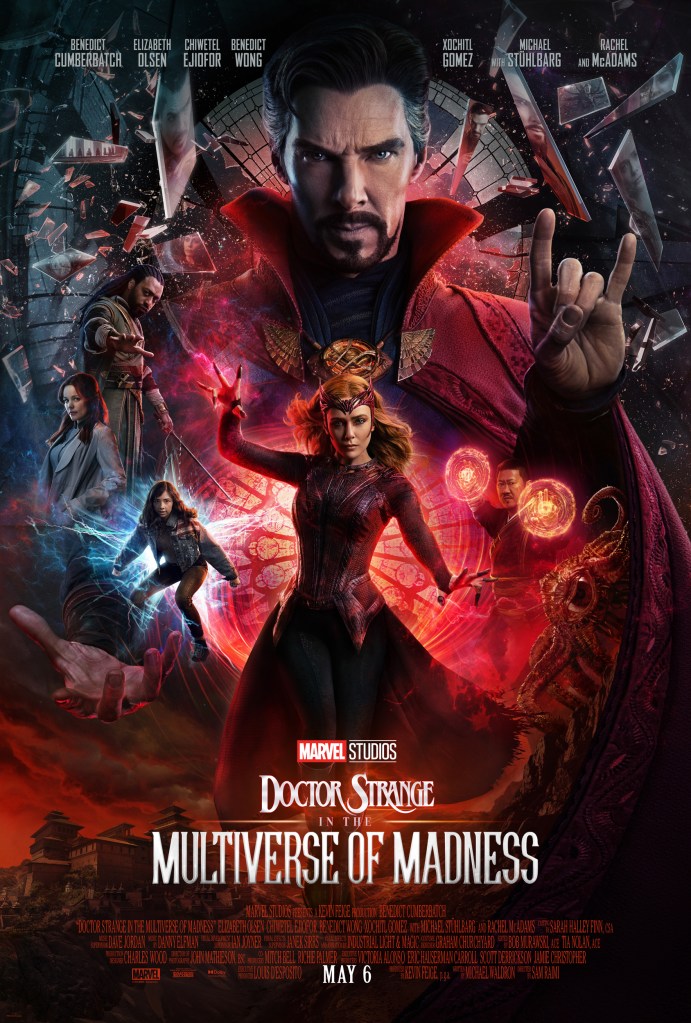
Parallel universes have infinite possibilities. These are largely not found in this lumpen, fan-service obsessed and (whisper it) slightly dull film that fails to follow-up on either the promise of the first film (to which it makes awkward call-backs) or its main concept. It allows Raimi scope to indulge his Evil Dead style visuals, but all within the confines of producing another entry in the series that feels like a bridge between chapters rather than an interesting story in its own right.

Dr Strange (Benedict Cumberbatch) attends the wedding of former girlfriend Christine Palmer (Rachel McAdams), when he’s torn away to fight a squid monster chasing a teenager, America Chavez (Xochitl Gomez). America has the power to travel between parallel universes – and is dragging behind her the dead body of a parallel Strange who failed to protect her from a mysterious foe trying to steal her power. Strange, Wong (Benedict Wong – the most engaging performance in the film from this under-rated actor) and the Sorcerers protect America – but Strange’s attempt to recruit Wanda Maximoff (Elizabeth Olsen) goes awry when it turns out its she hunting America, using dark magic in an attempt to find her parallel versions of her lost children.

DSITMOM has been called the MCU’s horror film: which by no means makes it The Exorcist. It’s a sort of very, very gentle entrée to the genre – like Cronenberg’s Videodrome was turned into a kid’s TV series or a comic-book version of Raimi’s The Evil Dead. It has a few flourishes, but none of this is allowed to get in the way of the corporate enterprise. It’s more interested in giving people what it feels they want and fitting itself into the timeline of a series.

In fact it sometimes feels like an attempt to mirror the success of Spider-Man: No Way Home (I wonder how many of the cameos were added after that film’s release?). It takes the elements of guest stars and parallel universes and presents them in ways that provide little insight or long-term reward. In No Way Home alternate versions of characters are used to explore how different events could have shaped our heroes. The returning stars aren’t just thrown in, they have arcs and emotional journeys. The whole is both fun and an engaging story but also nostalgic. Compare, as well, the TV series Loki (by the same writer) that brilliantly used parallel versions of its lead to deconstruct and develop his character.

DSITMOM does none of this. There are rich opportunities to see how Strange may have developed in different universes: after all this is the closest thing to an “ends justify the means” character in the MCU. Would different versions of him go more or less further – and how might it make our Strange reflect on his occasionally ruthless ‘big picture’ thinking (this is after all, as the film mentions, the guy who allowed half of all life to blink out of existence as part of a masterplan only he knew). We don’t get nearly enough of that. In fact, we get virtually none of it.

These opportunities are ignored in the two parallel universes we spend the most time in, where Strange is either a dead war hero or an insane hermit corrupted by dark magic. Neither of these characters is really contrasted effectively or interestingly with our version. A faint plotline of Strange learning trust from the mistakes of others is threaded through, but only lightly. Instead, the film focuses more attention on Strange’s lost love for Christine Palmer, an oddly unsatisfying focus since Strange has appeared in at least four films since his first solo effort six years ago, and the franchise has failed to mention this motivating loss once (not even a throwaway line in No Way Home to build it up).

Mind you it’s better than the development Wanda Maximoff gets. DSITMOM is pretty much impenetrable unless you’ve watched WandaVision. Even if you have, as I have, you’ll probably be a little annoyed at the ‘development’ she gets here. At the end of that series, Wanda had accepted the damaging consequences of her grief and started moving on. Here though, she’s a sociopathic monster defined solely by her motherly grief and her ruthless determination to tear universes apart to heal it. It feels retrograde to, essentially, be saying “women who suffer loss go axe-crazy” or to double down on her willingness to harm others to cling to a ‘normal life’ fantasy (as well as contrary to the hopeful tone the series ended on).

That’s not to mention the clumsy fan service peppering the film. The main outing to a parallel universe is basically an excuse for fan-pleasing cameos. These amount to nothing more than a series of actors popping up say “Hello I’m Y” and promptly suffering terrible fates (because it’s a parallel universe and your plot armour means nothing there). Like Yoda fighting Christopher Lee, it’s cool when you first see it but risks becoming less and less rewarding overtime because it’s utterly insubstantial.

DSITMOM is basically insubstantial. It drags on – it’s a chase film that largely lacks momentum – it has a series of slightly bored looking actors (Ejiofor wins, with a Mordo who seems to have become Strange’s nemesis in the interim between this and the first film despite never being mentioned in any other film since), gets absorbed in a MacGuffin filled plot (there are no less than two Magic Books of Wham-a-bam that are being hunted or fought over) and flattens down most of Raimi’s style into a corporate product with little heart (compare this to his Spider-Man films which look like Citizen Kane or Vertigo next to this).

There are about two moments of invention: a sequence when Strange plummets through a series of bizarre parallel universes (including one where he’s made of paint) and a battle between two Stranges that utilises musical notes as weapons. Everything else feels production flattened, as do the actors, and ends teeing you up for a third film with another “whoop” cameo. Flat, lumpen and failing to capitalise on its possibilities, this is a big disappointment, an empty lightshow with brief but shallow pleasures.

Vertigo (1958)

Vertigo (1958)

Obsession and grief come dangerously into play in one of the greatest films ever made

Director: Alfred Hitchcock

Cast: James Stewart (John “Scottie” Ferguson), Kim Novak (Madeline Elster/Judy Barton), Barbara Bel Geddes (Midge Wood), Tom Helmore (Gavin Elster), Henry John (Coroner), Raymond Bailey (Doctor), Ellen Corby (Hotel manager), Konstantin Shayne (Pop Leibel), Lee Patrick (Car owner)

Spoilers: Vertigo was controversial at the time for revealing its twist, three quarters of the way through the film. I might well do the same in the review – although this is possibly a richer film if you know the twist going in

In 2012 Vertigo dislodged Citizen Kane at the top of Sight and Sound’s decadal “Greatest Film” poll, after 50 uninterrupted years for Welles’ classic. It’s an astonishing turn-around for a film which was a box-office disappointment and first met with reviews that called it “long and slow” and complained that Hitchcock had “indulged in such farfetched nonsense”. (Welles also hated the film – bet he’s even more pissed off at it now.) This is partly because Vertigo is a fiercely, almost defiantly, complex and cold film that defies easy characterisation and flies in the face of the fast-paced watchability of most of Hitchcock’s popular films. But it’s still a haunting and fascinating masterpiece, which has its greatest impact when you reflect on it days after it has finished.

Its plot is both complex and slight. John “Scottie” Ferguson (James Stewart) is an ex-police detective, his career ended by crippling acrophobia bought on by powerlessly watching a fellow officer fall to his death. He’s hired by old college friend Gavin Elster (Tom Helmore) to follow Elster’s wife Madeline (Kim Novak). Madeline is in the grip of an idée fix that she is an incarnation of Carlotta Valdes, a woman who committed suicide in 1857. Scottie follows her – and develops an idée fix of his own for the beautiful Madeline. When his acrophobia prevents Scottie from saving Madeline from jumping to her death from a bell tower, he suffers a near-breakdown. Then he catches sight of Judy Barton (Kim Novak again) who has a chilling resemblance to Madeline. And Scottie tries to turn her into just that.

Vertigo is a dizzying film of monomania and obsession, something you are immediately plugged into with its beautiful Saul Bass opening (swirling spirals, reflecting the circular nature of the obsessive) and its hauntingly mesmeric and off-beat romantic theme from Bernard Herrmann (possibly his greatest work – and he also scored Kane!). More than any other Hitchcock film, Vertigo places us firmly into the POV of its lead character, who is in all but three scenes and whose perceptions and observations we not only share but which totally guide our understanding of everything we see in the film (until that twist, when suddenly we shift to knowing more than he does).

Hitchcock’s technique is truly masterful here. There isn’t the flash of something like North by Northwest, but the sort of chilling control that builds tension and unease that also marks out films like The Birds or, to a degree, Psycho (although that’s much more of a black joke, where Vertigo is terrifyingly serious). Hitchcock uses a huge number of POV shots, alternating with shots of Stewart’s reactions (at times these are disturbing in their fixed intensity) building a subtle momentum that reflects the character’s obsession and further filters everything we experience from his perspective.

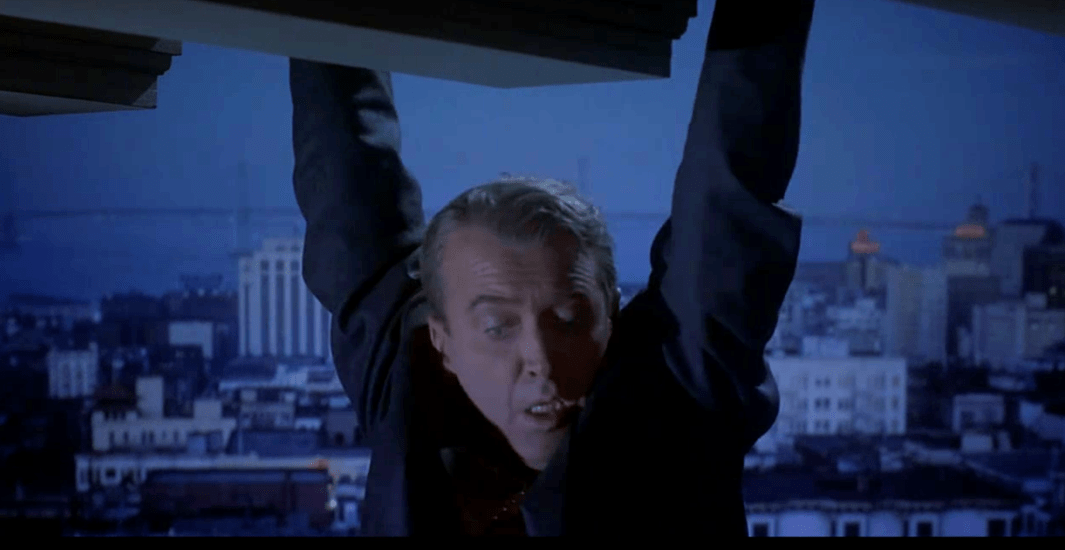
That would be the perspective of an ever-more obsessed man tipping steadily into stalkerish territory. Few films have so clearly drawn the link between the private eye and the voyeur. As Scottie silently prowls the streets of San Francisco, observing every inch of Madeline’s actions – and Vertigo has long, worldless stretches of what Hitchcock called “pure cinema” – the disturbing pleasure and control that following brings you becomes more and more clear. It’s certainly giving a sense of masculinity back to Scottie, introduced to us hanging helplessly from a ledge and then so hamstrung by his condition he can’t even climb a step ladder without collapsing.

Judged from this perspective, Scottie is one of the most darkly disturbing characters in film. Rescuing Madeline from the Golden Gate (where she has jumped in) he takes her home, undresses her and puts her in his bed – hardly normal behaviour. It’s not long from there before he surrenders to his romantic obsession (feelings Madeline perhaps returns), that eventually leads him again to be a powerless witness as Madeline plunges to her death right in front of him.

Catatonia and mental collapse follow – but really it’s perhaps just a continuation of the same obsession in another form. Because after a stay in a sanatorium, Scottie is back on the streets again, prowling for something – anything – that could make him feel closer to Madeline again. Which is how he spots Judy, the woman who reminds him of the woman he’s lost. Scottie doesn’t so much woo Judy as seemingly browbeat her into a bizarre (joyless and sexless) relationship and undertake a terrifyingly grotesque remodelling exercise, designed to make her into a carbon copy of Madeline.

This sequence is probably partly at the heart of the film’s fascination for critics and film historians – even more so since we’ve learned about Hitchcock’s manipulative, controlling relationship with his blonde female stars. Here we have Scottie instructing his love interest how to dress, walk and cut her hair – all while telling her it’s for her own good and she’ll like it – his voice with the breathless longing of a closeted pervert (that is when Scottie manages any sexual yearning to Judy, who he treats more like a treasured exhibit). This is Hitchcock dramatizing his own hang-ups, presenting them as creepy and dangerous, making Vertigo partly as well a fascinating psychological study of its director. Did Hitchcock know that his controlling relationship with women was wrong? And, in real life, could he not help himself or did he not care?

Vertigo is a perfect exploration of obsession. But it also pulls the rug out from us – and rewards constant reviewing as a result – because the film reveals there was a whole other level going on. Scottie may seem the Hitchcock substitute, but the in-film Hitch figure is actually the amiable Gavin Elster. Because the entire action of the film is carefully stage-managed by Elster to manipulate Scottie (and us!): Judy and Madeline (as Scottie has met her) are in fact the same woman, a doppelgänger for Elster’s wife. The real Madeline – who Scottie never sees or meets – is murdered by Elster at the top of that tower, and Judy/Madeline was helping build a backstory to have this murder written off as suicide, with Scottie’s acrophobia perfect to make him a powerless witness.

Here comes that pleasure for rewatching: because now when Scottie rescues “Madeline” from the river, then spends the next day with her, we thought at first he knew more than she. Now however, we understand he’s always been a patsy who knew less than anyone else. We’ve been manipulated by Elster, the master director, pulling the strings and building horrors for us. That’s Hitchcock.

The film reveals this in one of the few scenes told from Judy/Madeline’s perspective – and means we then watch Scottie actually craft a woman who actually is the woman he’s obsessed with into his memory of that very same woman. (Get your head around that!) And she allows it, because she seems as desperate as he to recapture the passion of those brief days together – but cannot tell him the thing that would help to do that. It all leads, of course, to Scottie’s destructive obsession leaving him once again to being a helpless witness as another victim plummets to their death.

Vertigo is effectively a two-hander, and most of the focus usually lands on Stewart. He is chillingly dead-eyed in this, his crazed hunting after something he doesn’t even understand capturing the controlling horror behind some romance. In many ways though, Kim Novak has the more complex part. She doesn’t speak for almost 45 minutes – she spends it mostly in long shot performing Elster’s play for Scottie (and us) of the mentally disturbed wife. But when Novak does take centre stage, this is a complex multi-layered performance, carefully modulated throughout to communicate (in advance) Judy’s vulnerability and love for Scottie, without ever letting us realise she is anything but the death-fixated “Madeline”. Novak marries two contradictory characters into one with a simple and convincing aplomb. Equally good is Barbara bel Geddes, in almost the only other named role, as Scottie’s one-time fiancée now best friend, all too aware that her feelings are not returned.

Vertigo will never match the likes of Casablanca or North By Northwest – on a list of films truly popular with audiences. It’s been described as the ultimate critic’s film: a cool, chilling, brilliantly filmed, psychological thriller that quietly exposes the mechanics of film, the manipulation of story-telling and the dark psyche of its director. In many ways initial reviews were right: on first impression, the film is cold and slow, with characters it’s hard to relate to. But it has a truly haunting quality few others can match. And it constantly presents us with a clear image, while never allowing us to guess we are seeing only part of the overall picture. It can leave us as dizzy as Scottie is, hanging from that ledge and staring down at doom, the camera zooming inside his head and showing us his terrifying POV. You need to work at it, but this is a film to value.

Million Dollar Baby (2004)

Million Dollar Baby (2004)

Oscar-winning sucker punch (literally) movie as a woman goes against the odds to make her boxing dreams come true

Director: Clint Eastwood

Cast: Clint Eastwood (Frankie Dunn), Hilary Swank (Maggie Fitzgerald), Morgan Freeman (Eddie “Scrap-Iron” Dupris), Jay Baruchel (Dangerous Dillard), Mike Colter (“Big” Willie Little), Lucia Rijker (Billie “The Blue Bear” Osterman), Brian F. O’Byrne (Father Horvak), Anthony Mackie (Shawrelle Berry), Margo Martindale (Earline Fitzgerald), Marcus Chait (JD Fitzgerald), Riki Lindhome (Mardell Fitzgerald), Michael Pena (Omar), Benito Martinez (Billie’s manager)

Spoilers: I thought the end of Million Dollar Baby was pretty well known, but when I watched it with my wife, I realised half-way through she had no idea where it was going. I’ll be discussing it, so consider yourself warned!

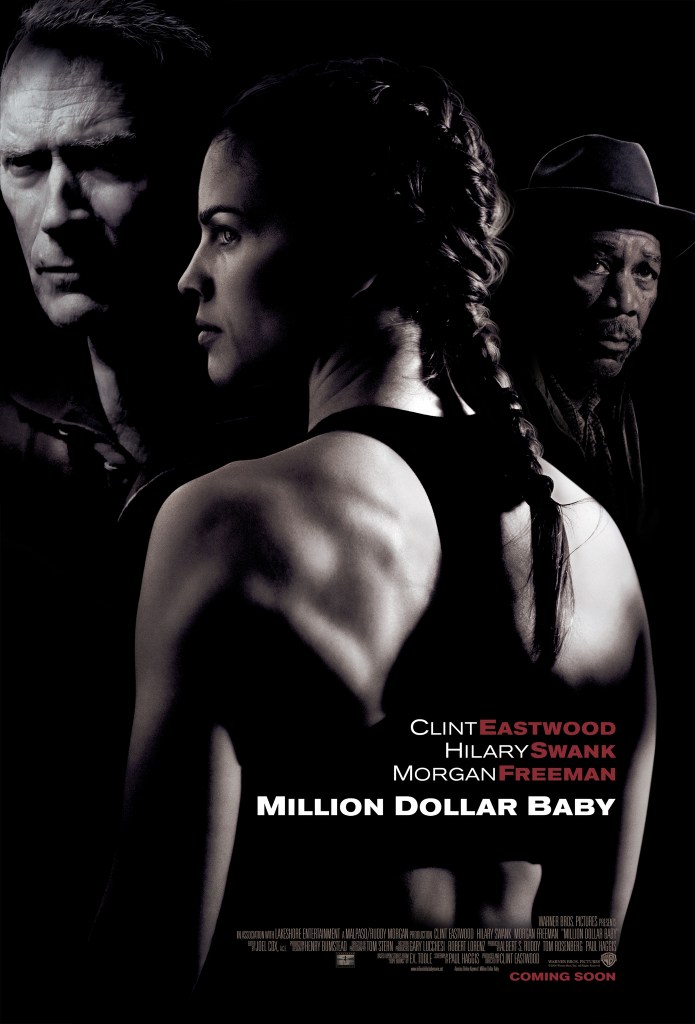
We know what to expect from most Sports stories don’t we? A plucky underdog fights the odds and emerges triumphant, winning the big match or going the distance when everyone doubted them. So it’s not a surprise Million Dollar Baby was marketed as a sort of female-Rocky. It had all the ingredients: Swank as a dreamer from the wrong-end-of-the-tracks, tough but humble and decent; Eastwood as the grizzled trainer; a working-class backdrop; a struggle to put their pasts behind them on the road to glory. Then, imagine what a sucker punch the final act of the film is when you suddenly realise you’ve not been watching a feel-good drama, but the entrée to a heart-wrenching euthanasia story.

Maggie Fitzgerald (Hilary Swank) has spent months persuading grouchy boxing trainer Frankie “I don’t train girls” Dunn (Clint Eastwood) to train her. Frankie suffers from a string of lifelong regrets, from the daughter that returns his letters unread to not ending a fight decades ago that saw best friend Eddie (Morgan Freeman) blinded in one eye. Frankie’s resistance is eventually worn down by Maggie’s persistence and the two form a close bond. Maggie is on fire in the ring – until a foul punch leads to a terrible fall leaving her paralysed from the neck down. With Maggie having lost everything that gave her life meaning, how will Frankie respond when she asks him to end her life?

Of course, the clues should be there earlier that we are not about to settle down for a triumphant Rocky II-style yarn. Eastwood’s (self-composed) maudlin score constantly works against the action, until we realise it is sub-consciously preparing us. Expectations are overturned: Frankie’s reluctance to let his fighter “Big” Willie (Mike Colter) go for a title shot – hesitation that lasts so long, eventually Willie hires a new manager – is shown to be misjudged when Willie wins. Dunn spends hours in church every day, plagued with guilt about misdeeds he can’t begin to put into words. Maggie’s family are not a supportive working-class bubble, but trailer-trash dole-scum who react to Maggie buying them with house with fury as it may affect their (unmerited) benefit cheques. We even get several shots of the stool that will eventually play a crucial role in crippling Maggie.

What the film is actually building to in its opening 90 minutes is not a story of triumph, but how a close relationship builds between a man who has lost his family and a woman whose family is a grasping horror story. Eastwood charts this with a carefully judged pace, delivering one of his finest performances as the guarded and grouchy Frankie, who uses his gruff exterior to protect himself from the possible hurt of emotional commitment. Because it’s clear Frankie actually cares very deeply, frequently going the extra mile to help people, even while complaining about it.

It’s that buried heart, that draws him towards the determined and good-natured Maggie. Rather like Frankie, Hilary Swank makes clear in her committed performance Maggie’s optimism and enthusiasm is as much of a shield as Frankie’s gruffness. She knows that she’s nothing to her family except a meal ticket and her entire life seems to have been one of loneliness, working dead-end jobs to funnel money to her mother at the cost of any life of her own. Switching away from her grinning enthusiasm leaves her in danger of staring at her own life and seeing what a mess it is.

With their two very different shields, these two characters are exactly what the other needs and one of the film’s principle delights is to see them slowly confiding in each other, sharing their vulnerabilities and filling the void their own families have left in their lives. This all takes place inside a conventional “sports movie” structure, which writer Paul Haggis almost deliberately doubles down on, as Maggie builds her skills, via training montages and Frankie starts to relax about sending people into the ring to have seven bells beaten out of them and dreams about one more shot.

This all means it hurts even more when that (literal) sucker punch comes. Eastwood’s film doesn’t shirk from the horrors of Maggie’s disability – re-enforced by the previous 90 minutes establishing how crucial movement and reflexes are to boxing, and how this element in particular helps give her life meaning. She’s covered with bed sores, can’t breathe without a respirator, it takes over an hour to lift her into a wheelchair (which she cannot operate) and eventually her infected leg is amputated. Her family visit only to get her to sign over her assets (she tells them where to get off). She is reduced to biting through her own tongue to try and bleed to death, meaning she is left sedated to prevent self-harm.

It’s all more for Frankie to feel guilty about. Although the film could have given even more time to exploring the complex issues – and moral clashes – around the right to die, it does make very clear the crushing burden of guilt and the impact his final decision will have on him. In fact, it would have benefited from spending more time on this and giving more time to O’Byrne’s priest (who quite clearly states that it’s wrong), to help give more definition to the arguments around assisted suicide (I wonder if Eastwood’s agnostic views came into play here).

Perhaps the film spends a little too long on its initial – even deliberately formulaic – rags-to-riches boxing story. In its boxing club vignettes, you can see the roots of the film in a series of short stories by former boxing trainer FX Toole. Mackie’s cocky boxy and Baruchel’s gentle intellectually disabled would-be boxer run through the film play like short story anecdotes. The narrative is linked together by narration from Morgan Freeman. It’s a natural fit for Freeman – essentially a semi-reprise of Red in Shawshank – and fits him like a glove (it was no surprise he won an Oscar). But trimming this content could have given more time to the films closing moral dilemma.

Which doesn’t change the impact it has. Eastwood’s low-key style – with its drained-out colours and piano chords – make a perfect fit, and its expertly played by himself and Swank (who also won an Oscar). Even on a second viewing, Million Dollar Baby still carries a real impact, particularly as you appreciate how subtly the sucker punch that floored so many viewers first time around is built up to.

The Duke (2022)

The Duke (2022)

An eccentric Brit pinches a priceless painting in this cozy tea-time drama

Director: Roger Michell

Cast: Jim Broadbent (Kempton Bunton), Helen Mirren (Dorothy Bunton), Fionn Whitehead (Jackie Bunton), Matthew Goode (Jeremy Hutchinson), Anna Maxwell Martin (Mrs Gowling), Aimée Kelly (Iree), Joshua McGuire (Eric Crowther), Charlotte Spencer (Pammy), John Heffernan (Nedie Cussen QC), Charles Edwards (Sir Joseph Simpson), Sian Clifford (Dr Unsworth)

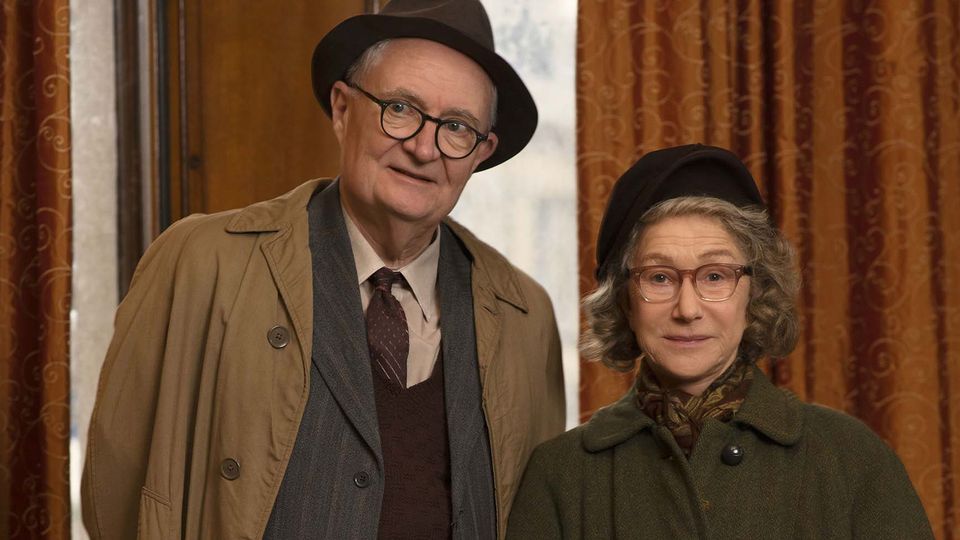
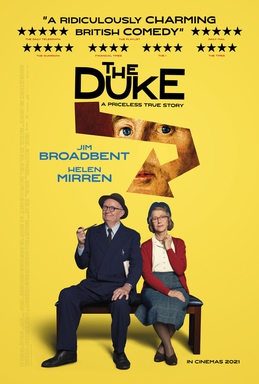
In 1961, a 60-year old working-class Geordie and social campaigner (in the “tilting at windmills” sense) Kempton Bunton (Jim Broadbent) made headlines. He went on trial, accused of stealing Francisco Goya’s Portrait of the Duke of Wellington from the National Gallery. Bunton was outraged that the British Government had spent £140k (about £3.3 million today) on preserving the painting for the public. Bunton believed the money would have been better spent paying for TV licences for veterans. When Bunton returned the painting, his trial became a media sensation.

Michell’s film (his final one, as he passed away before its Covid-delayed release) is an inoffensive, gentle, Sunday-afternoon cuddle fest, that never quite decides what it really wants to be. The tone frequently bubbles with a faint “caper”-like atmosphere, with its jazzy 60s score, split screen shooting and pops at the foolishness of the establishment, who never consider the painting could have been nabbed by a British eccentric from oop North (two sexist police officers rubbish a female handwriting expert who correctly identifies Bunton’s background). But it’s a slow, rather unfocused character study that has a melancholic grief at its heart. These elements never really fuse together.

Bunton is the quintessential plucky-British eccentric, railing against the system, that this country loves to love. He has a fixation on the injustice of the BBC licence fee (he even “fixes” his TV by removing the part of the cathode that receives the BBC signal, so that he can legitimately refuse to pay the licence), he’s a convinced class warrior. He’s fired as a taxi driver for (a) giving veterans and others free rides and (b) banging on endlessly about his political fixations to his passengers (even one of his charity rides begs him to shut up). He’s fired from a bakery for standing up for a Pakistani fellow worker in the face of racial discrimination. He sits in the rain vainly trying to get people to sign his anti-licence fee petition.

But he’s got no real idea how to use the painting to achieve his aims. While this lack of a plan fits his character, it does mean the central section of the film tends to drift, mostly taking some cheap shots at the British authorities‘ self-satisfied complacency, while Bunton tucks the painting in a cupboard and does nothing with it other than write the odd letter to the press, trying to leverage its return for support for his causes

The film has an odd, inverted snobbery about art throughout. It sees paintings as solely a preserve of the rich. A female journalist early in the film (who we are clearly meant to sympathise with) questions the money spent because of its small size (as if surface area was the best judge of Artistic value!) – and the director of the National Gallery is only allowed a vague defence of its quality in return (which we are clearly meant to sneer at). Bunton calls the painting “not very good” and disparages Goya as a “drunk Spaniard” (which feels rather like calling Turner a “blind idiot”), with the film offering no counter view. It never mentions that the picture was (a) placed in the National Gallery for all to see for free; or (b) that the government actually only put up £40k with the rest donated by a millionaire.

Instead, the film takes an odd angle that painting is the “wrong sort of art” to be spending so much money on – the writers and directors never mention that in the same year the Government spent £1 million on the National Theatre (25 times what they spent on the Goya). I’m pretty sure Bunton would have hated that as much, if not more (especially since no one could see a National Theatre show for free, unlike the Goya) but you can’t expect writers Richard Bean and Chris Coleman and director Michell to bite the theatre teat that fed them. The film ends with an odd caption stating the licence fee was made free for over-75s forty years later – but doesn’t explain that it was done in a way designed to hobble an institution loathed by the Conservative Government (and I doubt Bunton would have supported the action either!).

On top of this, there is a way more interesting film to be made here about grief. The loss of their daughter, aged 18, to a cycling accident hangs over everything the Buntons do. It’s the source of unspoken tension between Kempton and Dorothy. He visits the grave frequently and can’t understand why she won’t, and they can hardly bring themselves to talk about the loss or display her picture. While centring this would make for a more melancholic film, it feels like its heart.

But that would be a less crowd-pleasing film, and that’s what this film is trying to be. The final act is dedicated to the courtroom, and its mostly about watching Kenton and his lawyer (a lovely turn from Matthew Goode) running rings around the system. Of course every character in the film puts their differences aside to cheer on Bunton on the stand. It’s when the film gets a bit of the fizz back from the opening. Not enough for it to be anything more than passable entertainment – but it helps.

The lead performances are of course excellent, much better than the film deserves. Broadbent is absolutely perfect casting, playing this dedicated social-warrior to charming perfection. Mirren gives a performance way better than the thinly-written exasperated wife deserves. But they’re the main selling points of an otherwise fairly average movie. The film telescopes the events of four years into six months, but only rarely gives itself the sort of energy and fun it needs to be anything more than a something you can let pass before your eyes on a Bank Holiday.

The Remains of the Day (1993)

The Remains of the Day (1993)

Hopkins and Thompson are marvellous in this masterful adaptation from Merchant-Ivory

Director: James Ivory

Cast: Anthony Hopkins (Mr Stevens), Emma Thompson (Miss Kenton), James Fox (Lord Darlington), Christopher Reeve (Congressman Jack Lewis), Peter Vaughan (Mr Stevens Snr), Hugh Grant (Reginald Cardinal), Michael Lonsdale (Dupont D’Ivry), Tim Pigott-Smith (Mr Benn), Ben Chaplin (Charlie), Patrick Godfrey (Spencer), Lena Headey (Lizzie), Pip Torrens (Dr Carlisle), Paul Copley (Harry Smith) Rupert Vansittart (Sir Geoffrey Wren), Peter Eyre (Lord Halifax), Wolf Kahler (Ribbentrop)

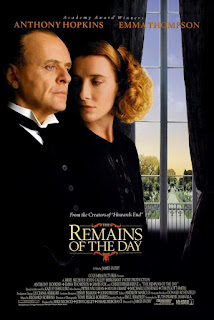
Kazou Ishiguro’s Booker-prize winning novel The Remains of the Day is one of my all-time favourites. So, it’s not a surprise I’m a huge fan of this masterful adaptation from the House of Merchant Ivory. I’m certain this is the apex of the team’s work. Mike Nichols had originally planned a film but, wisely, recognised when it came to making movies about repressed 1930s Brits, one team had a monopoly on how to do it best. Beautifully adapted by their regular screenwriter Ruth Prawer Jhabvala, The Remains of the Day is a wonderfully involving and deeply moving film.

Stevens (Anthony Hopkins) is a butler in a British country house purchased in 1956 by American Jack Lewis (Christopher Reeve). Keen to solve staffing problems (and for no other reason at all), Stevens journeys to the West Country to recruit the 1930s housekeeper, Mrs Benn nee Kenton (Emma Thompson). During the journey, he remembers his service for the previous owner, Lord Darlington (James Fox). An impeccable gentleman, Darlington dedicates himself to reconciliation between Nazi Germany and England, eventually tipping into an unwise dalliance with fascism and appeasement.

Stevens had no views on that though. In fact, he prides himself on his anonymity. The goal of his life is to maintain a dignified unobtrusiveness, ensuring the smooth operation of everything, leaving as little a mark as possible. Nothing can intrude on that: not his own feelings, the illness and death of his under-butler father (Peter Vaughan) and, above all, the unspoken romantic feelings between himself and Miss Kenton. The Remains of the Day is about duty and obsession and how a fixation on both can leave someone with little to show from a long life.

Stevens is living the lessons he learned from his father, an ageing powerhouse masterfully played by Peter Vaughan, who undergoes a physical collapse (from dripping nose to dropping trays) and bouts of forgetfulness, eventually dying on a night Stevens is too busy seeing to the sore feet of an illustrious French guest to spare a moment to visit him. It tells you everything about his character that this stiff-upper lipped commitment to duty is a source of pride to our hero.

There are few as curiously blank ‘heroes’ in literature than Stevens. The narrator of Ishiguro’s book is a dull, fussy, unbelievably cold man who has dedicated himself so fully to duty that he has let any emotional life wither and die on the vine – something he only realises far too late. It’s an immensely challenging role, bought to life masterfully by Hopkins. Hopkins astonishing skill here is to play all that repressed coldness on the surface, but also constantly let us see the emotion, longing and regret he is subconsciously crushing down play in his eyes and the corners of his mouth. Is Stevens even aware how much self-harm he is causing? It’s an astonishingly subtle performance.

So subtle in fact that the books conclusion – Steven’s tear-filled confession to a stranger late at night of all the mistakes he has made – was filmed but cut for being superfluous. Hopkins had done the lot, all the way through the movie, through acting skill. You can’t miss the struggle within him, not least the desperate, powerless longing he feels for Miss Kenton that, for oh-so-English reasons he can never admit to himself. Hopkins has the vocal and physical precision, but every gesture tremors with unspoken, barely understood longings. In fact, it’s a shock when he exclaims an angry “Blast” after dropping a bottle of wine (the real cause of his outburst being, of course, Miss Kenton’s announcement that she is getting married)

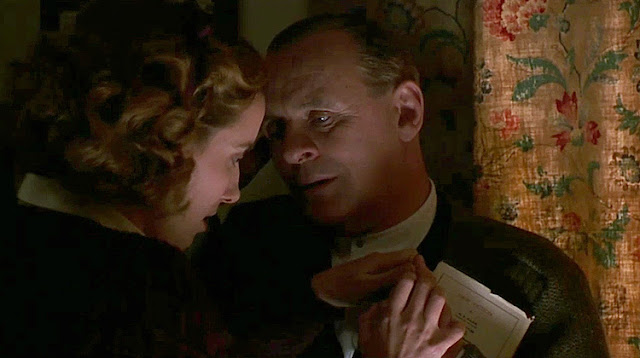
He and Miss Kenton conduct a professional relationship that blossoms into something like a friendship – but he consistently rejects her polite efforts to take it further. In the film’s most powerful scene, Miss Kenton enters his parlour and playfully tries to see the title of the novel he’s reading (a sappy romance). The playfulness tips into agonisingly awkward tenseness as Hopkins’ Stevens seems paralysed, his hand lingering inches from her hair but unable to bring himself to break decorum and fold her in an embrace – all while Miss Kenton continues her increasingly desperate semi-flirtatious banter. It of course ends with Stevens dismissing her: just as later he will take a snap of frustration as a signal to irrevocably cancel their late-night cups of cocoa together.

Emma Thompson is wonderful as a woman only marginally more in touch with her feelings and longings than Stevens is: aware that she, eventually, wants more from life, but unable to find the way of communicating the love she clearly feels for Stevens in a manner he can respond to. Instead, the two of them oscillate between a friendly, affectionate alliance and a discordant arguments (their only outlet for their passion), rooted in their inability to admit their feelings for each other. To further stress the point, both of them mentor young staffers (played by a very young Ben Chaplin and Lena Headey) who have the youthful “what the hell” to jack in all this for love.

Ivory’s wonderfully subtle film makes clear this is a turning point in history, the final hurrah for the this sort of deferential hierarchy. Stevens is the last of a generation of butlers, convinced that what their employers got up to had nothing to do with them – views not shared by Tim Piggot-Smith’s more grounded Benn, who chucks in his job working for a bullying blackshirt (who else but Rupert Vansittart?). Throughout the 1950s storyline, Stevens is constantly asked if he knew the infamous Lord Darlington (a sort of Lord Londonderry figure, hopelessly taken in by Hitler) – in fact, like Paul, he twice denies ever having known him.

And you can understand why, as the film has sympathy for Lord Darlington. As his decent, liberal god-son Reginald Cardinal (an excellent Hugh Grant) says, Darlington is a great asset for Germany precisely because he’s honest, well-meaning and motivated by a desire for peace. The fact that his leads him to consort with a host of Nazis, Blackshirts and the most appalling anti-democratic vestiges of the upper-classes (at one point, Stevens selflessly gives a performance of geopolitical ignorance so as to help demonstrate why men like him shouldn’t have the vote) is an unfortunate side-effect.

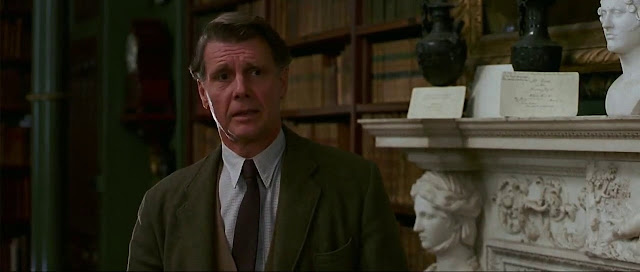
Played perfectly by James Fox, Darlington is misguided but genuine. As war approaches, he leads an increasingly hermit like life – camp-bed and paper-strewn, messy library – hosting conferences denounced by Jack Lewis (a fine Christopher Reeve) as a host of amateurs talking about a world they no longer understand. Beneath it all, Darlington is guided by fair play. So much so, it’s almost distressing to see him (under the influence of an attractive German countess) reading anti-Semitic pamphlets and sacking two refugee Jewish maids – an act he later regrets (far too late). This moment also reinforces Stevens’ compromised pig-headedness (not his place to judge!) and Miss Kenton’s fear to act (she’s horrified, but to scared of unemployment to hand in her notice).

All of this culminates in a series of scenes where emotions pour out of the actors, even while their words are banal and everyday memories and reflections. Ivory was never more confident and skilled behind the camera, and the film is a technical marvel, beautifully shot with a wonderful score from Richard Robbins. Hopkins is phenomenally good, simultaneously pitiable and smackable, Thompson is wonderful alongside him, Fox and Grant perfect – it’s a very well-acted piece. And a wonderfully perfect capturing of a classic modern British novel. No doubt: the best Merchant Ivory film.

Eternal Sunshine of the Spotless Mind (2004)

Eternal Sunshine of the Spotless Mind (2004)

An impulsive decision leads to a wild tour through mind and memory in this mind-bending, desperately romantic classic

Director: Michel Gondry

Cast: Jim Carrey (Joel Barish), Kate Winslet (Clementine Kruczynski), Kirsten Dunst (Mary Svevo), Mark Ruffalo (Stan Fink), Elijah Wood (Patrick Wertz), Tom Wilkinson (Dr Howard Mierzwiak), Jane Adams (Carrie Eakin), David Cross (Rob Eakin), Dierdre O’Connell (Hollis Mierzwiak)

What makes us who we are? If it’s anything, it might just be the sum total of our experiences. The events of our lives, and the emotions they cause in us, shape and define us. If we cut some of them away, what would we be? Is losing painful memories worth it, if we also cut away memories we cling to as treasured possessions? What makes us love someone: instinct or the sum total of our memories with them? Ideas around this and how love works are at the centre of Michel Gondry and Charlie Kaufman’s extraordinarily inventive, imaginative but also romantic and heartfelt Eternal Sunshine of the Spotless Mind, a truly original film crammed with rewarding moments.

Joel Barish (Jim Carrey) wants to make-up with his electric but troubled girlfriend Clementine Kruczynski (Kate Winslet). Imagine his pain when he goes to see her and she seems not to recognise him – and how much worse that might be when he discovers Clementine has erased him from her memory. An experimental surgery, Lacuna, run by Dr Howard Mierzwiak (Tom Wilkinson), offers its clients an unmatchable service: they will erase a person from your memory. Struggling to get over the loss of a partner, wife, friend, child or even dog? No problem, they’ll be gone from your mind and you never need worry about their memory causing you pain again.

Hurt and angry, Joel decides to undergo the same surgery to forget Clementine. While the procedure takes place over night – supervised by techs Stan (Mark Ruffalo) and Patrick (Elijah Wood) and Stan’s girlfriend (and Dr Mierzwiak hero-worshipper) Mary (Kirsten Dunst) – Joel comes to realise in his sub-conscious that he doesn’t want his memory stripped of Clementine. The cost of losing so many good memories isn’t worth it. In his sub conscious he tries to protect his memories – while in the real world the team battle to complete their contract and erase them.

Not many films like that are there? Gondry’s film could have been a slave to its concept. Instead though, it manages to juggle its deeper meanings with a truly heartfelt, winning and very sweet human story about two people who, for all their faults, become people you completely invest in. Kaufman’s script, as you would expect, triumphs as a complex and inventive magic tour but it’s also a wonderfully placed romance and heartfelt relationship story. Effectively the film manages to have something for everyone to invest in, from sci-fi nerds to lovers of romcoms to philosophy students.

It’s also a triumph of style. Set largely in Joel’s mind, the film reflects the fractured nature of the surgery as his memories are assaulted, deconstructed and destroyed. Lights fade, buildings disassemble and disappear, faces melt away from bodies and memories start to crash into each other. In his mind Joel walks through a door in a library to find himself on a beach, or rounds a corner to find himself back in his childhood memories. All of this is filmed with a series of stunning in-camera effects that make characters disappear, duplicate or seem to be in several places at once, all shot in a series of one-take effects that sees buildings disappear in front of us or fascinating memory loops. Visually the film is a feast, a tribute to Gondry’s playful imagination.

But it sticks with people because of the heart at the centre of it. Joel and Clementine become people we care about. We root for Joel to defy the odds and preserve some of his memory. Because, the film makes clear, being consciously aware of his memories being deleted is basically like going through the pain of losing her a second time – only this time knowing you won’t even be left with the parts you want to hold onto. In fact – re-enforced by the distress we see in Clementine when we see her undergoing the panic of being subconsciously aware of memory loss in the real world – Joel’s horror of what he has asked for is likely what all the other patients of Lacuna’s ‘brain damage for your own good’ surgery have gone through.

Superbly played by Jim Carrey and Kate Winslet in cast-well-against-type performances, Joel and Clementine might at times be selfish, frustrating, even irritating people – but it’s clear their love for each other is real. Jim Carrey, dialling down his gonzo mania to an unprecedented degree, is perfect as the shy and gentle Joel, bewitched by this explosive presence in his life. Winslet is electric – cranky, brittle, damaged but also caring and playful. Kaufman’s film shows they hurt and snap at each other, but also that they bring each other happiness they can’t get anywhere else.

So, it comes back to that question: do we accept that part of the price of loving and living is pain? That the people who we love the most, are the ones that may also hurt us the most. The film is also clear that love can’t be forced or replicated. In the ‘real world’ Clementine is being wooed by Elijah Wood’s creepily needy techie, using his records of her romantic memories of Joel to replicate their special moments. The falseness of this isn’t a remote match for the true emotion of the real event: and it’s a testament to the film’s commitment that you can’t forge or force love, and that eventually it might just find a way.

Because, even without our memories, will we still be drawn towards the same people? Can love in fact survive, even if you don’t know who the person who love is anymore? It’s another fascinating thread in this film. Romantic couples throughout find themselves drawn to each other continually, a subconscious emotion surviving the purging of actual memories. It adds even more to the horrific trauma of seeing what’s happening to Joel here. His obvious distress as he realises the implications of what he rashly asked for – and there is plenty of suggestion Clementine feels the same – gets worse and worse as he realises he has signed away his own rights to decide who he loves.

Those ethical questions – is it even possible to make an informed decision here about lobotomizing your memory – mix with those philosophical questions of what makes us what we are. Will Joel and Clementine be the same people or not after this operation? How will they adjust to losing such a hugely important part of their histories? Especially as they won’t even know that they have. Kaufman’s script explores this all carefully, but never once losing track of the emotional story driving it.

So Eternal Sunshine becomes a touching love story, about two people going to huge ends against impossible odds to stay together. That, I think, is what lies behind its appeal. What makes it one of the most lasting films of the 00s is the invention and flair the story is told with – Gondry’s direction and its non-linear structure all only add to the fabulous script from Kaufman and Gondry – and the way it very lightly tackles a whole host of fascinating ideas while never losing track of its nature as an entertainment. It’s a brilliant film.

Amour (2012)

Amour (2012)

A couple struggle with an unbearable burden in Haneke’s extraordinary and moving film

Director: Michael Haneke

Cast: Jean-Louis Trintignant (Georges Laurent), Emmanuelle Riva (Anne Laurent), Isabelle Huppert (Eva Laurent), Alexandre Tharaud (Alexandre), Rita Blanco (Concierge), Carole Franck (Nurse), Dinara Droukarova (Nurse), William Shimell (Geoff)

Think of Haneke, and you tend to a picture a rather cold philosopher, starring at humanity through a microscope. Some of his best works are chilling explorations of man’s capacity for inhumanity and cruelty. But Haneke’s work is based on a brilliant understanding of what makes people tick, and that insight applies as much to love as it does to cruelty. Amour is Haneke’s searching exploration of what love can be like, and how it can make us behave, in the worst situation possible: one where we are helpless to ease the suffering of someone we love.

Georges (Jean-Louis Trintignant) an Anne (Emmanuelle Riva) are retired piano teachers, married for almost forty years. The life is one of relaxing calm, enjoying the success of former pupils. All that changes when Anne has a silent stroke, the effects of which leave her paralysed on her left side. Georges resolves to care for her, dedicating himself to seeing to her every need, even as Anne’s body and mind (and desire to keep living) swiftly decline and a second stroke brings on even greater helplessness and dementia.

We know it won’t have a happy ending. It’s told in flashback, the film opening with the door to Georges and Anne’s apartment being broken down by the police, discovering Anne’s body laid out on the bed, surrounded by flowers. We know from the moment of Anne’s first stroke, where this story is heading. And none of it should be a surprise. Haneke based the story on an experience in his own family, where he was left helplessly watching a person he loved suffer, powerless to do anything other than offer brief comforts. Amour asks if there can be anything harder for to bear than being unable to help (or even, in the end, really communicate) with someone we love?

Georges devotion to Anne is clear. He obeys to the letter one of her first wishes when returning from the hospital: she does not wish to leave her home. So, they stay in their apartment (the film leaves this apartment only once, in our introduction to the leads) and Georges cuts up her food, helps her in and out of bed, fetches and carries and helps her get dressed. Steadily Anne’s ability to do things independently declines; and after her second stroke evaporates entirely. She’s incontinent (reliant on a nappy), delirious and incapable of coherent speech, unable to leave the bed and getting her to eat her mashed-up food and water is a daily struggle. Slowly, any trace of the real Anne only exists in Georges memories, which he clings to tightly.

In some ways, this is a horror film: the horror of powerlessness as someone literally wilts away in front of us, a new part of their personality disappearing every day. It frequently plays out in an austere silence – tellingly for two people whose whole life has been music, there is precious little of it in the film. The Anne at the film’s end – frightened, childlike, tempestuous and able to utter only a few words (like “Hurts”) over and over again in an incoherent refrain – bares no resemblance to the intelligent, witty and engaging woman at the film’s start. In every line of Trintignant’s face there is the weary, numbed pain of a man unable to do anything other than gently try to apply the brakes.

But it’s love that keeps him refusing to give-up, and the film is an exploration of the never-ending lengths we will go to for those who mean the most to us. Georges entire life becomes Anne – by the end there is a barely a waking hour that isn’t consumed with her needs. From the start, even the smallest tasks are challenging for Anne: we see her struggle to put on her glasses and turn the pages of a heavy book one-handed in bed. This only gets worse – and the loss of dignity a person feels as they become incapable of controlling any part of their body, including their bladder, is presented by Haneke with a horrific matter-of-factness.

But, what I think is particularly interesting about Amour– and I think Haneke’s stroke of genius – is the flip side of love. Because it also makes us selfish: and you can argue it makes both Anne and Georges selfish. Georges, in particular, begins to horde Anne, as if he was so desperate to keep some vestige of his life with her alive, that he wants to keep her all to himself. He consistently turns down offers of help. He reacts with anger to their daughter Eva (a sensitive Isabella Huppert), telling her that he and Anne should be left to their own privacy. He takes a perverse pride of taking on an impossible burden and refuses to consider any suggestions to reduce his burden (with only great reluctance does he hire a day nurse). Love has made him greedy, to keep Anne to himself.

Part of this comes from his desire to preserve Anne’s dignity: he even locks Anne’s bedroom during one of Eva’s visits as he feels Anne wouldn’t want her daughter to see her like this. Georges dismisses one nurse as he feels she is mistreating Anne. This is fascinating scene: we see no evidence of this – all we see is the nurse showering Anne like a child and later combing her hair and showing Anne her reflection (and she’s furious at Georges accusation). The film suggests, perhaps what Georges can’t bear is the nurse’s infantilising of Anne in her dementia. It can’t be squared with his own desperate attempt to keep some of his memory of her unaffected by what she has become.

Anne knows early where this is going. When Georges returns early from a funeral, he finds her sitting outside an open window. Nothing is said in the following conversation, but it’s clear that Anne was in the midst of attempting suicide. Later she talks bitterly about the point of carrying on. In her later dementia state, she frequently refuses food and water as if determined to try and bring her own life to an end. It’s a cry Georges isn’t interested in hearing: he bolts it away in his mind and battles to the end to try and preserve what life she is, even once striking her with frustration after she spits out her food once again.

Amour can be seen as a pro-Euthanasia film. But I think it’s more complex than that. It’s about love, and how it can drive us to undertake super-human efforts for another person that are also, in a way, about ourselves. That’s what Georges does: a burden that damages his own health and well-being, which he takes on because he will not let go and whatever small parts of Anne are left, he doesn’t want to share with anyone else (not even their daughter). When he takes his fateful decision – and one we’ve been expecting from the film’s first frame – it’s as horrifying as anything Haneke has filmed, both on Georges’ despair and Anne’s instinctive terror.

Amour is blessed with two stunning performances. Emmanuelle Riva won a BAFTA and an Oscar-nomination for her superb performance, a technical masterclass combined with huge emotional depth as Anne moves through fear, anger, self-loathing and finally into a deep, dark well where her understanding of what is happening to her slowly fades away in a babble of incoherent words. Jean-Louis Trintignant, lured out of semi-retirement, is sensational: a shambling, devoted, cantankerous, heart-broken, stubborn man dealing with a profound, never-ending grief and loss.

Haneke films it with a stately calmness and leaves a myriad of possible interpretations open to the viewer. But above all, he invests the film with a humanity, warmth and compassion that will speak to anyone who has had a loved one succumb to the infirmity and fear of old age. Amour is deeply moving, profoundly insightful and achingly beautiful.