Category: Films about theatre

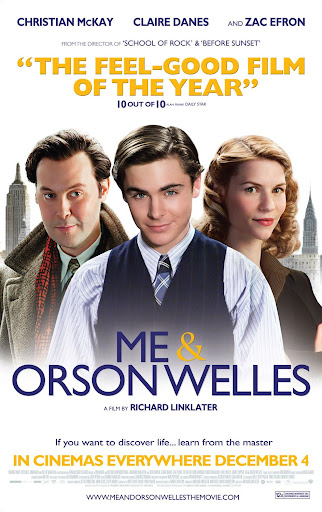
Me and Orson Welles (2008)

Me and Orson Welles (2008)

A star-turn from McKay and a brilliant theatrical reconstruction makes a charming comedy

Director: Richard Linklater

Cast: Zac Efron (Richard Samuels), Claire Danes (Sonja Jones), Christian McKay (Orson Welles), Ben Chaplin (George Coulouris), James Tupper (Joseph Cotton), Eddie Marsan (John Houseman), Leo Bill (Norman Lloyd), Kelly Reilly (Muriel Brassler), Patrick Kennedy (Grover Burgess), Travis Oliver (John Hoyt), Zoe Kazan (Gretta Adler)

In the 1930s Orson Welles was the Great Man of American theatre, a genius blessed with Midas’ skill to turn everything he touched to Gold. He had conquered the stage and his success on radio transmitted his fame into households across America. All this and he was not even thirty. On top of his boundless charisma, creativity and magnetic leadership qualities, he was also vain, selfish, boundlessly ambitious and self-obsessed, seeing other people as little more than extras in his drama. It’s an exploration of the man central to Linklater’s Me and Orson Welles, combined with the film’s wonderfully fond exploration of that magical world behind the curtain in the theatre.

Me and Orson Welles charts Welles’ landmark Broadway production of Julius Caesar: a modern-dress marvel (‘the fascist Caesar’) that reimagined a sharply cut, pacey production set in a world of jackboots, black shirts and Nuremberg-esque beams of light. Welles (Christian McKay) was, of course, front-and-centre as Brutus with his Mercury theatre players (nearly all of whom followed him to Hollywood for Citizen Kane) all around him. Newest to the cast is 17-year-old Richard Samuels (Zac Efron), away from school, dreaming of being an actor and falling in love with older production manager Sonja Jones (Claire Danes). As the production stumbles towards the stage under Welles’ mercurial hand, Richard worships Welles and loves Sonja – but will his hero-worship survive sustained contact with Welles?

Linklater’s film is set in a gorgeous recreation of 1930s Broadway theatre, full of love for the greasepaint, backstage gossip and theatrical tricks that create a world on stage. It also features an astonishingly accurate recreation of this seminal production, staged and lit to perfection, which gets as close as we can to capturing some sense of the astonishing experience the first night audience had watching the sort of Shakespeare production they had never seen before (Dick Pope, harnessing his experience of recreation Gilbert and Sullivan in Topsy-Turvy deserves major credit for his cinematography here, perfectly capturing Welles’ pioneering use of light).

Welles’ flaws are slowly discovered by Richard Samuels – a charming, deceptively light and winning performance by Zac Efron. Samuels is at first bowled over by Welles charisma – and Welles enjoys the ego-trip of taking a star-struck young man under his wing, who he can tutor and mould (who, after all, doesn’t love having a disciple). What Me and Orson Welles interestingly does is to have its young lead slowly work out that Welles may be a genius – but he’s also a fundamentally, principle-free shit who never means what he says, doesn’t think twice about dropping people when they have served their purpose and largely sees conversation as a one-way street where Welles monologues and the other person listens (and certainly never, ever, contradicts – Welles never forgives correction).

But Welles dominates the film, like he dominated life. He’s brilliantly portrayed by Christian McKay in his first major film role. McKay, an unknown, was selected after Linklater was wowed by his one-man show about the Great Man. (Linklater refused calls from the producers to replace him with a more famous actor). McKay dominates the film in what is not only a superb capturing of Welles vocal and physical mannerisms, but also a capturing of his mix of utter charisma, God-given talent and overwhelmingly selfish egotism. McKay roars through every scene with the same force-of-character you imagine Welles had, bowling over everyone around him and shaping the world into what he wishes it to be. Problems of money, timing and people are waved away (or left to be fixed by Eddie Marsan’s put-upon version of John Houseman) and McKay’s Welles uses sheer force of will to turn every event, outcome and single moment into an intended triumph (whether it is or not). Me and Orson Welles brilliantly captures Welles ability to shape his world.

We see the way he overwhelms the personalities of those around him. People like Joseph Cotton (a superbly captured performance by James Tupper) both love him and know that’s he’s a selfish, arrogant git who doesn’t seem to care about anyone but himself. Others, like Ben Chaplin’s tortured George Coulouris, allow themselves to be mothered by Welles, even though they know his motivations are more for the show itself (and the glory that shall be Welles’). Welles is the guy who gives the same heartfelt pep-talk to multiple actors, and writes identical jovial thank-you cards to all on opening night. The guy who uses nicknames for those around him because it’s a way to subtly assert control. Linklater’s film recognises his genius, makes him overwhelmingly attractive in his gung-ho confidence, but – and this is the brilliant thing about McKay’s stunning performance – also exposes his deep character flaws.

It superbly captures his vanity, selfishness and self-occupation. Welles cares little for anyone, assuming he can brow-beat or overwhelm them to fulfil his wishes. That could be a set designer, furious at Welles hogging credit for his work in the programme (Welles promises this will be amended, forgets about it and then later – when it’s too late to do anything about it – bluntly says he has no intention of not taking credit). It could be the radio show he turns up to record, clearly having not read the script, walking in seconds before live broadcast and promptly improvising a superb monologue (based on The Magnificent Ambersons) which at first puzzles, frustrates and then stuns into fawning admiration his fellow actors. What’s clear is that this is the sort of behaviour you can only get away with when you are flying high and all is perfect – Welles after all would self-destruct like few others in the next few years, never again able to yield such charismatic power again.

Me and Orson Welles uses a familiar structure – a love triangle of sorts – to bring this to life. Claire Danes gives a marvellously winning performance as an ambitious and super-confident woman, trying to make her way in a male world, perhaps drawn towards young Richard because he’s more thoughtful than the rest of the men around her. (Me and Orson Welles makes clear we live in a world where the actors of the company feel comfortable taking bets on who can bed Sonja, while she is also accepts that Welles can use the women of the company like a room-service menu). Both she and Richard are perhaps the forerunners of those who will finally be pushed too far by Welles, that would leave him a perpetual outsider.

This is a fun musing on the personality of one of the greatest film-makers of all time, brilliantly set in a luxurious recreation of classic Broadway. Directed with pace and wit by Linklater, with a fine cast giving it their all (and a career-defining turn from McKay), Me and Orson Welles is light, frothy but fascinating work.

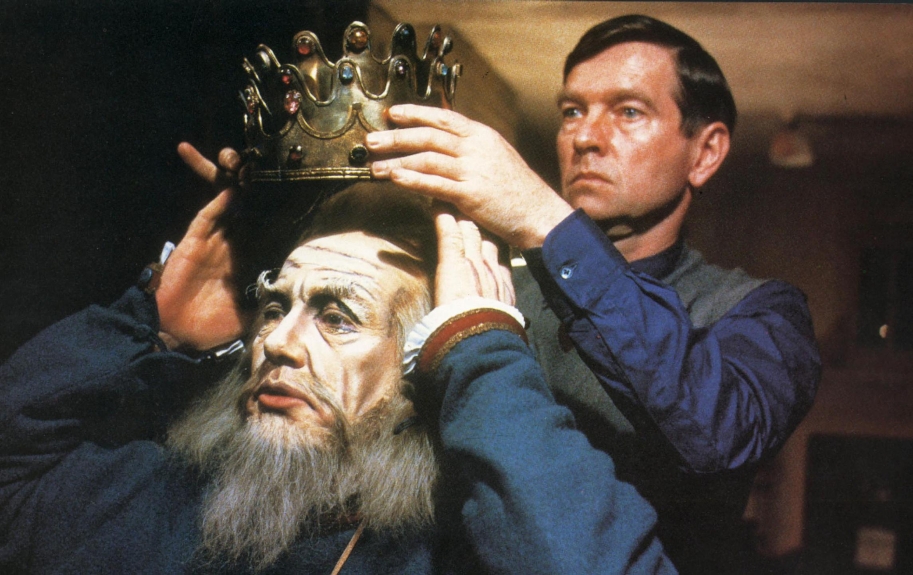
The Dresser (1983)

The Dresser (1983)

One of the best films about the magic and trauma of theatre, with two powerhouse lead performances

Director: Peter Yates

Cast: Albert Finney (Sir), Tom Courtenay (Norman), Edward Fox (Oxenby), Zena Walker (Her Ladyship), Eileen Atkins (Madge), Michael Gough (Frank Carrington), Lockwood West (Geoffrey Thornton), Cathryn Harrison (Irene), Betty Marsden (Violet Manning), Shelia Reid (Lydia Gibson), Donald Eccles (Godstone), Llewellyn Rees (Brown)

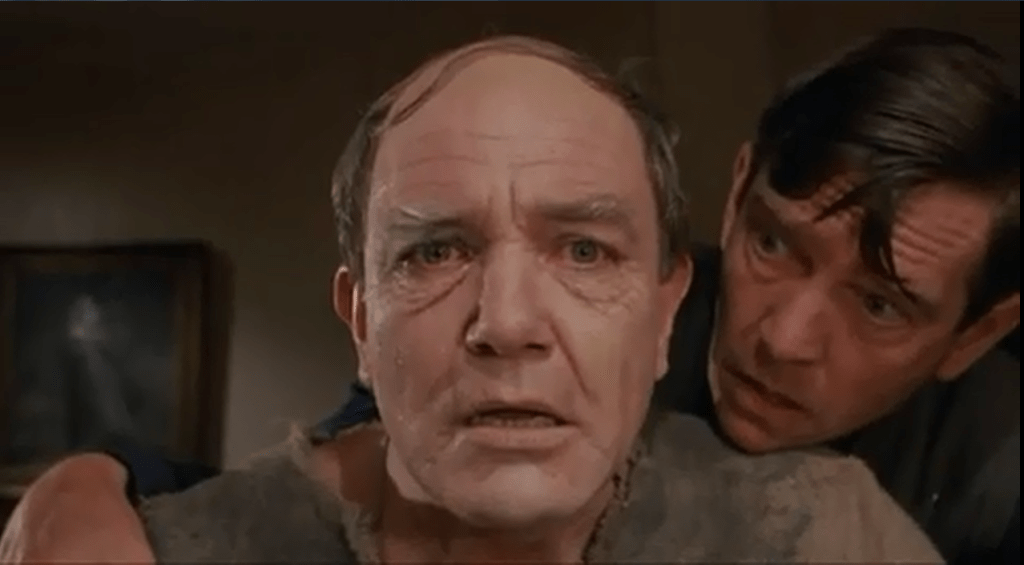
For centuries British theatre was run by Actor-Managers. Stars with complete control of their companies, where they (and their wives) played the best roles – sometimes years past the point where it was still suitable – until the next generation emerged to build their own companies. The Dresser shows this world’s dying days, at the height of the war, when Sir (Albert Finney) a legendary actor is shepherding an aged company around the provinces to perform, while his health and mental sharpness teeter, Lear-like, on the edge of the abyss.

If Sir is Lear, his Fool is Norman (Tom Courtenay) his dresser. A waspishly camp man whose entire life revolves around every inch of Sir’s whims, shepherding, coaxing and bullying the man onto the stage, somewhere between a valet, son and nursemaid. Sir remains a force-of-nature, toweringly bombastic egotist and man of magnetic charisma, with an all-consuming, obsessive love for the theatre. The Dresser takes place in January 1942 in Bradford, largely during a performance of King Lear which Sir’s declining health has placed on a knife-edge. Can Norman hold Sir together to give life to Shakespeare’s greatest tragedy for the 227th time?

The Dresser is based on Ronald Harwood’s play, which was semi-based on Harwood’s experiences as dresser then business manager to Donald Wolfit, one of the final breed of the old-school actor-managers Sir represents. (Harwood hastened to add, neither he nor Wolfit were portraits of Norman or Sir). While it’s a sometimes acidic look at the backstage politics and egos of touring theatre, it also richly celebrates the power of theatre and the momentary (and the film is unsentimental enough to show it is momentary) sense of family that can develop in theatre, that can end with that final curtain. In other words, The Dresser understands the brief, bright flame of theatre can be – and what a transformative feeling and dizzy drug it can be.

Both Sir and Norman are addicted to the grease-paint, their whole lives revolving around theatre and that elusive search for perfection. Even if Sir’s health is failing and sanity is crumbling – pre-show, Norman finds him raging in the streets of Bradford like Lear in the storm, only barely aware of who he is – ‘Dr Greasepaint’ can still briefly restore him to the man he was, spouting Shakespeare, bemoaning and relishing the huge weight of bringing art to life night-after-night. Norman is equally consumed by theatre: he can barely speak to others (such as train manager or a baker) without his conversation being littered with impenetrable theatre-speak. He’s as well-versed in Shakespeare as Sir is and flings himself into his backstage tasks with the same gusto Sir tackles a soliloquy.

These two have a symbiotic relationship: Sir for the support and dedication Norman exerts to get him on stage, Norman for the glorious world (and purpose) Sir gives him access to. Yates uses mirrors, framing and shared reflections to frequently frame these characters together, visually linking them in a Bergmanesque way as elements of the same personality. But, the relationship is never as straightforward as that, complicated by underlying feelings on both sides. Norman’s homosexuality – over-looked in a world where such feelings are a crime (another member of the company has recently been fired for what sounds like cottaging) – complicates his obsession with Sir, while Sir’s affection for Norman always has the hint of a Lord’s affection for his valet: a man he will confide in, but would never imagine inviting to dinner.

This complex interplay of both characters urgently needing the other, but with an underlying imbalance in their level of true emotional engagement is a subtle dance brilliantly handled throughout Yates’ and Harwood’s film: so much so, it is a surprise to many audiences that Sir utterly fails to mention Norman at all in his draft autobiography even though it’s about as likely as Churchill name-checking his butler in his. Sir and Norman may be partners in the same task – creating theatre – but Norman’s mistake is to see himself as an equal, something Sir never truly believes he is.

There is, however, no doubt about the partnership between the two actors. Tom Courtenay, who had played Norman on stage, is extraordinary. With his flamboyant hands and a voice divided between camp, whiny and ingratiating, constantly reaching for the bottle to power through the stress, Norman is as loyal, dutiful and comforting and he can be waspish, bitter, selfish, possessive and cruel. Courtenay can switch from coaxing Sir like a recalcitrant child, to throwing a potential rival for Sir’s attention to the wall and threatening all manner of damnation. It’s an astonishingly multi-layered performance, with Courtenay shrewd and brave enough to avoid making Norman a fully sympathetic figure but someone so soaking in desperation that even at his most self-pitying you feel for his desolation and emptiness.

Alongside him, Albert Finney is imperiously brilliant as Sir (playing a role almost 25 years older than him). Finney’s Sir is magnetic (they may grumble about him, but in person the company treat him with awe) and charismatic (his booming voice carries such power, it can even stop a departing train). But he’s also selfish, cruel, childish and intensely vulnerable. He’s got all the egotism of the actor (“The footlights are mine and mine alone. You must find what light you can.”), the productions revolve around him (he even continues to direct mid-performance, muttering instructions from Othello’s death bed). But he’s teetering, his mind crumbling, constantly looking to Norman for assurance, Finney living Sir’s fear at the approaching undiscovered country.

Both actors are extraordinary in a play that understands the addictive power of theatre. The Dresser avoids the trap of making Sir an Old Ham: in fact, the production we see (for all its old fashioned air) contains a performance of real power from Sir, rousing himself to touch something transcendent. Of all his 227 Lear’s this might be finest. Cynical technicians and wounded pilots weep openly. Thornton (Lockwood West), an ageing second-rate actor hastily promoted to Fool, talks of how the part has made him hungry for more. Oxenby (a marvellously louche Edward Fox), the youngest company member, clearly is ready for the new era (he carries a script full of bad language he longs to stage) but even he (after an initial point-blank refusal) throws himself into the backstage effort to create the storm. For all the rivalries, when the play is on, everyone briefly feels part of the same team working towards the same goal.

It’s a film with a melancholic feeling of an era coming to a close. It’s also one that punctures the character’s illusions. Sir is a star, but there are greater stars (with real knighthoods) in London; Norman may feel like his relationship with Sir is special, but Sir’s relationship with Madge (a brilliant Eileen Atkins, unflappably loyal and deeply pained under her professionalism) predates his and is more genuine. But it’s also one that understands the transformative power of live theatre. With stunning performances by Finney and Courtenay, backed by a marvellous, faultless cast it’s one of the finest films about theatre ever made.

42nd Street (1933)

42nd Street (1933)

Less a musical, more about a musical – but a delightful love letter to the joy of theatre

Director: Lloyd Bacon

Cast: Warner Baxter (Julian Marsh), Bebe Daniels (Dorothy Brock), George Brent (Pat Denning), Ruby Keeler (Peggy Sawyer), Guy Kibbee (Abner Dillon), Dick Powell (Billy Lawler), Una Merkel (Lorraine Fleming), Ginger Rogers (Anytime Annie), George E Stone (Andy Lee), Ned Sparks (Barry), Robert McWade (Jones), Allen Jenkins (MacElroy)

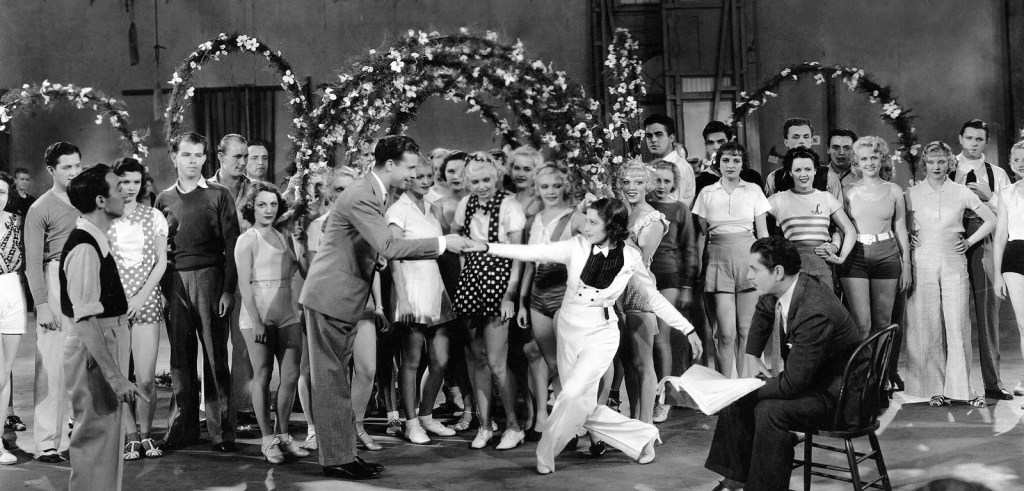
Jones and Barry are putting on a show! The cry lights up Broadway (in an impressively staged series of quick-cuts, cross fades and super-impositions of the excited souls). And 42nd Street is all about the creation of that show, from the signing of the contracts to the opening night and the spontaneous making of a star. If it feels, watching 42nd Street that it’s made up of nothing but theatrical cliches… then it’s because most of them became cliches from excessive re-use after 42nd Street showed they worked so well – and made such a hugely entertaining film along the way.

The show is Pretty Lady, to be directed by Julian Marsh (Warner Baxter), the finest director (and friendliest tyrant) on Broadway who needs the money after losing a packet in the Crash. He’s not the only one struggling in Depression-era America: the competition to land a job as chorus girl is fierce. So, it’s a lucky chance that debutante Peggy Sawyer (Ruby Keeler) lands a gig. The star is Dorothy Brock (Bebe Daniels), a vaudeville veteran trying to make it as a serious Broadway actor and currently the squeeze of the shows’ wealthy financier Abner Dillon (Guy Kibbee) – although she is still seeing her old partner Pat Denning (George Brent). But will Dorothy make it through the drama to opening night – or will Peggy need to step up to save the day?

It’s not a surprise that of course she does, but then Julian’s final words to her (“You’re going out a youngster, but you’ve got to come back a star!”) is the film’s most famous moment. As well as launching a thousand backstage dramas, 42nd Street is remembered as a musical. But there is actually precious little music in it. We have to wait almost 45 minutes before the first song (Dorothy’s rendition of ‘You’re Getting to Be a Habit with Me’) and the final fifteen until we see the bulk of Busby Berkeley’s choreography. Other than that, this is very entertaining soapy, backstage drama with romantic entanglements. It’s a more film about the stressful theatrical alchemy involved in making a musical, rather than a musical itself – there is no ‘putting my feelings into song’ here.

And it’s taking place in Depression-era desperation. Everyone needs a job – that’s why they are so excited about hearing there is a show in town. That plays into the family atmosphere behind the scenes. After all everyone needs the show to be a success, and if that means roping in a few gangsters to get a wayward star back into line so be it. Much like, in fact, 42nd Street itself, coming to the screen after a glut of musical flops (perhaps that’s why there is so little actual musical content in it). The film zeroes in refreshingly and lovingly on the hard work, dedication and family atmosphere that can grow up in theatre, where everyone is working towards a common goal – and why I, a veteran of more than my share of putting a show on, felt a real soft spot for it growing.

And there is support, for all the bitchy moaning behind the scenes. Julian Marsh may tyrannically insist on absolute perfection – rehearsing through the night, waking the piano player when needed – but, it’s all to service a common goal. When emergency hits, the company flocks around and support each other. When one of their number triumphs there will be more congratulations than there are jealousies: even Dorothy will lay aside any personal feelings to support the new star. 42nd Street really captures the sense that behind the curtain in the theatre a little world of its own is created, one which can be very loving in its own unique way.

It’s also a world, with more than a few sexual escapades, something hard to overlook in a film as full of chorus girl’s legs as this (the chorus girls are largely hired on the basis of how good those legs look). Dorothy is effectively trading her favours for a career leg-up from the clueless Dillner, while sticking with true love Denning. Denning, jealous, conducts his own speculative flirtation with Peggy (in a fun sequence, her landlady throws her out for daring to bring Pat home for a coffee – while behind her another chorus girl smuggles out her lover with an illicit kiss). Anytime Annie didn’t get her nickname for her dancing, Lorraine is happy to leverage her relationship with dance director Andy Lee and Lee himself (it’s implied) is the willing subject of Julian’s attentions.

In the midst of this, poor Peggy feels rather naïve. Sure, she may be bouncing between unlooked for attentions from a young member of the company and leading young man Dick Powell, but a passing possibility of romance with George Brent’s cuckolded partner (in every sense) to Bebe Daniel’s star leaves her flustered. Brent’s intentions may well be noble, but left alone with him in his apartment, Peggy is sweetly nervous and locks her door after she is chivalrously conveyed to the spare bedroom by Brent, as if scared she may give into temptation. Hilariously they are only in his apartment, after his calling on her is mistaken for a dalliance by her landlady, who throws them both out while boasting she never misses a trick – all while, in the back of the shot, another tenant quietly ushes her beau out of the door.

All of this gives some lovely opportunity to its actors, and there are several delightful turns in 42nd Street. Not least in the chorus, where Una Merkel has a wonderfully playful flirtatiousness and Ginger Rogers gives her monocle-clad Anytime Annie a rogueish sexiness. Guy Kibbee’s moronically uncultivated sugar daddy gets several good laughs at his boorish cluelessness. If Ruby Keeler at times seem a bit unnuanced as the lead (there has long been some rather mixed feelings about her slightly heavy-footed dancing) and Dick Powell is eminently forgettable as her love interest, there is more than enough class from Baxter’s stressed out director, George Brent is very fine and Bebe Daniels invests Dorothy Brock with just enough vulnerability under the diva exterior to always leave you rooting for her (she is, after all, just as desperate for work as the meanest chorus girl).

It’s a film put together with flair – the early montage is pacily and flashily assembled – and a great deal of wit (producer Darryl F Zanuck and Berkely often gain the lion’s share of the credit for its pace, wit and zip although I feel some credit must go to experienced director-for-hire Lloyd Bacon). The final dance numbers are expertly done and very well filmed by Berkely, including a point where the camera glides under a parade of leg arches. But above all, it’s a heart-warming and witty tale that pulls back the romantic curtain of theatre to reveal – well an equally romantic view of the camaraderie and magic that brings a show to the stage. But it would be a hard heart that could not find something to smile at here.

Sing Sing (2024)

Sing Sing (2024)

Highly emotional, beautifully made film about the power of theatre to change lives for the better

Director: Greg Kewdar

Csat: Colman Domingo (John “Divine G” Whitfield), Clarence “Divine Eye” Maclin (Himself), Paul Raci (Brent Buell), Sean San José (Mike Mike), David “Dap” Giraudy, Patrick “Preme” Griffin, Mosi Eagle, James “Big E” Williams, Sean “Dino” Johnson, Dario Peña, Miguel Valentin, Jon-Adrian “JJ” Velazquez, Pedro Cotto, Camillo “Carmine” Lovacco, Cornell “Nate” Alston

Prisons are designed to punish but also to reduce people to easy-to-control numbers, to shut them away from the joys of everyday life. What they are not designed to do is rehabilitate and change people’s lives. The opportunities of doing this in prison are rare, but one such is the Rehabilitation Through the Arts program in Sing Sing maximum security prison. Here prisoners are given the opportunity to explore their creative side in a supportive community, staging plays and taking part in theatrical workshops that encourages inner exploration. It has had extraordinary success in cutting re-offending rates and changed the lives of many of the men who have worked through it.

Sing Sing explores the life-changing impact of giving opportunities to explore new horizons to men society has written off as irredeemable. Sing Sing follows the production of one play and how the rehearsals provide a small slither of humanity to people eager to reform and change themselves for the better. It’s crucial message is that this programme is not so much about acting – but about coming to terms with who you are, and giving its members the tools to evaluate and be truthful about themselves and their crimes, a crucial first step towards rehabilitation. It is based on the personal experiences of John ‘Divine G’ Whitfield (played by Colman Domingo) and Clarence ‘Divine Eye’ Maclin (playing himself), who worked with Kewdar and producer Clint Bentley on the script.

The two men joined the programme at different times for very different reasons. The passionately artistic Divine G is a long-standing member, the group’s leading actor and playwright and its spiritual co-leader with programme director Brent (Paul Raci). Divine Eye is a surly, aggressive man whose initial contempt for performance hides his instinctive connection with poetry and the language of Shakespeare. Sing Sing covers their staging of Breakin’ the Mummy’s Cord, a bizarre mix of cowboys, Ancient Egypt, time travel, Robin Hood and Hamlet – but exactly the sort of light comedy rather than serious drama new member Divine Eye argues they should be doing.

What emerges in this beautifully played drama, shot with a poetic immediacy by Kewdar that embraces natural light (a light the prisoners can largely only experience by looking at it through windows) is a passionate, moving tribute to the power theatre and art can have in changing people. The proof is there in the pudding: along with Maclin’s beautifully honest and natural performance as himself, the cast is full of former programme members playing themselves. This gives a real emotional force to Sing Sing’s reflections on the burdens of incarceration and regrets at terrible life choices: when these men speak of pain, guilt and regret, the truth stares from their eyes. There is an extraordinary moment when Sean ‘Dino’ Johnson speaks about the programme as a place where the inmates can feel, just for a few hours, like they can do the small, beautiful things other people are free to do – and the pain in Johnson’s eyes hurts us all the more because of the truth behind it.

Theatre then can transform us, and we see it in the effect it has on Divine Eye. A combative man, touchy on everything from his masculinity in acting to instinctive anger when another actor walks behind him, at first he seems a dangerous recruit and certainly unlikely casting as Hamlet (the role Divine G had longed for). But he feels a deeper connection with Shakespeare that surprises him, and as the rehearsals proceed he allows himself to connect with his emotions (the core point of the process) to express himself truthfully – to show on the outside more traces of the man inside. Maclin’s performance is extraordinarily honest, not shirking on his bullying anger at the start but showing how learning to understand and communicate his emotions truthfully and without fear or shame changes him into both a passionately committed performer but also a kinder man.

It’s the power of acting and theatre to help people become richer, better versions of themselves – more in touch with, and able to express, their emotions and (even more importantly for criminals) to empathise with others – that Sing Sing makes a passionate case for. It also means we feel the injustice when others treat the programme with suspicion. At his parole hearing, Divine G is asked about whether his reasonable, polite, earnest manner is an example of him ‘acting’. After seeing how this programme has changed lives, the injustice of it being accused of effectively being a programme to build lying skills (not to mention that the programme is based on understanding and accepting the truth about yourself) stings us almost as much as it breaks Divine G’s heart.

As the sole fully professional actor, Colman Domingo gives a wonderful and inspiring performance. Domingo matches the rest of the cast’s truthfulness, showing Divine G has funnelled his pain at incarceration into a flurry of artistic expression: acting, writing plays and pouring his energy into supporting others through the programme. Domingo shows though that Divine G enjoys his standing in the programme: he struggles not to show his hurt and irritation when his offer of a self-written play is rejected in favour of a crazy comedy and there is a more than a little touch of envy when Divine Eye lands Hamlet, the role Divine G was desperate to play. But this comes from a man, falsely convicted, embracing the meaning he has left in his life. When his sense of self is challenged by tragic events, Domingo’s emotional vulnerability and raw pain pours out of him.

But the film is about the small triumphs of changing yourself for the better and it’s a massive tribute to the film that it largely avoids the sort of cliches of prison dramas, or expectations about ‘personal journey’ films that you are primed to expect as it begins. Sing Sing avoids manufactured drama or (in the most part) grandstanding, barnstorming speeches. Instead, its power lies in smaller, quieter moments, of honest reconciliations and small confessions of people working together to better their lives and embracing art and culture to enrich themselves. It’s a beautiful, hopefully and very moving film, the sort of film that offers us hope in a sometimes dark and depressing world.

To Be or Not To Be (1942)

To Be or Not To Be (1942)

Hilarious Lubitsch comedy that walks a fine line between the dark horrors and absurdities of Fascism

Director: Ernst Lubitsch

Cast: Carole Lombard (Maria Tura), Jack Benny (Joseph Tura), Robert Stack (Lt Stanislav Sobinski), Felix Bressart (Greenberg), Lionel Atwill (Rawitch), Stanley Ridges (Professor Alexander Siletsky), Sig Rumann (Colonel Erhardt), Tom Dugan (Bronski), Charles Halton (Dobosh), George Lynn (Actor Schultz), Henry Victor (Captain Schultz)

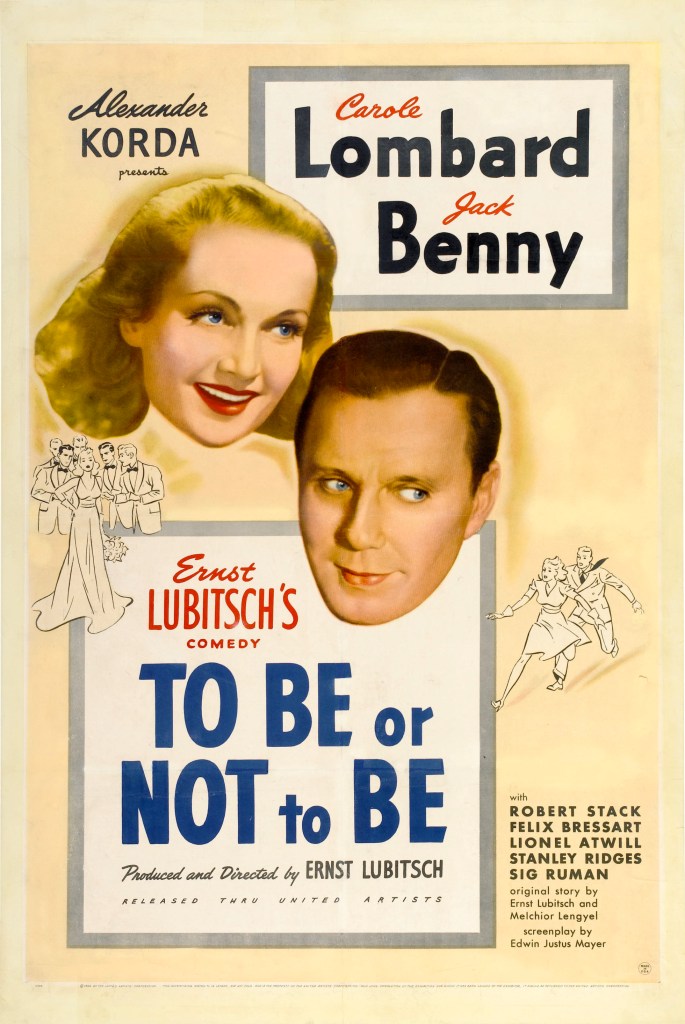
Is there a setting less likely for the famous Lubitsch Touch than war-torn Warsaw? To Be or Not To Be is a farce set at the most serious of times, sharp-paced, smooth and very funny. But it’s also about how the sort of playful, civilised class of eccentric free-spirits that Lubitsch excelled at can win through, even at the most dreadful of times against barely-sane bullies. What To Be or Not To Be does best – as well as make you laugh – is give you hope there is some light at the end of the tunnel.

The Turas – husband and wife Joseph (Jack Benny) and Maria (Carole Lombard) – are the (self-proclaimed) most famous actors in Poland. But the season 1939 is tough: their latest play Gestapo (a piss-take of course) is canned because the government is worried it might upset Hitler. Joseph revives his Hamlet and Maria uses the start of his ‘To Be or Not To Be’ soliloquy as the perfect time to entertain her current lover Lt Sobinski (Robert Stack) in her dressing room. Flirtations like this get left behind after the Germans invade, Sobinski flees to join the RAF and the theatre is shuttered.

For most of that, To Be or Not To Be fits neatly into the Lubitsch Touch. The Tura’s – with their fast-talking wit and casual attitude to sexual fidelity – are not a million miles from Trouble in Paradise’s con artists. Joseph’s principal concern isn’t that his wife might be walking out with someone else, but that someone is walking out of his performance (the worst fate imaginable!). The company are a parade of theatrical hams (Lionel Atwill’s grandiose Rawich can never resist padding his role) or spear-carrying dreamers, like Felix Bressart’s Greenberg (dreaming of Shylock). These are all denizens of Lubitsch Land, and it’s all wonderfully funny, soaked in Lubitsch’s love for actors and theatre.

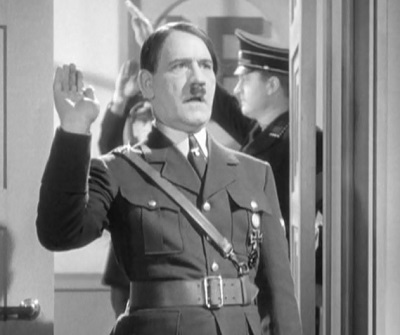
But the world they are about to step into is entirely different. Lubitsch opens the film with a hilarious misdirection: first it seems Hitler (Tom Dugan) himself is walking around Warsaw, before cutting to Jack Benny in Nazi uniform (a sight so shocking to Benny’s Jewish Polish Dad, he walked out and had to be coaxed by his son back in to finish watching it). But the conversation we hear – with its parade of nervous ‘Heil Hitlers’, ridiculous bribing of a small child with a toy tank – is slightly too absurd and, by the time Dugan’s Hitler enters with a proud ‘Heil myself!’ it becomes clear we’re watching rehearsals for Gestapo (at the end of which Dugan’s Bronski heads out into Warsaw to prove he can pass as Hitler).

It’s a fabulous lead into what we can expect for the rest of the film, which sees the actors swopping identities and character with desperate abandon as they get trapped into an espionage plot. In Britain Sobinski is rightly suspicious of Polish exile Professor Siletsky (Stanley Ridges), largely because he’s never heard of Maria Tura. With Siletsky carrying information to Warsaw that could shatter the resistance, Sobinski smuggles himself back into Poland and loops the actors –especially Joseph – into a complex, improvised deception scheme to get the deadly information back, save the resistance and dodge the real Gestapo under ruthless but desperate Colonel Erhadt (Sig Ruman).

To Be or Not To Be ups its gear into one of the wildest, riskiest and outrageous farces of all time. Jack Benny is front-and-centre as the vain-but-decent Tura, roped into impersonating first Erhardt to Siletsky, then Siletsky to Erhardt, with the help and hindrance of the company (many of whom, especially Rawitch, still instinctively take every chance to expand their roles). Benny’s comic timing throughout is exquisite, using every inch of his gift for comic vanity, brilliantly bouncing from assurance to barely concealed panic (usually when his pre-prepared lines run out). While working overtime to do the right thing, neither he – nor Carole Lombard’s beautifully performed Maria – step to far from the sort of flirtatious, catty banter that wouldn’t be amiss in a Noel Coward comedy.

Lubitsch’s film is in-love with actors, showing them as instinctively decent and brave, while also being squabbling, competitive misfits either pre-occupied with themselves (from Joseph unable to imagine anything worse than a bored audience, to a rehearsing Rawich not even noticing he has walked into a light backstage) or dreaming of glories to come. Sure, he has fun with their reliance on a script – Joseph runs out of lines so quickly as Erhadt he is hilariously reduced to simply saying over and over again “So they call me Concentration Camp Erhadt”, inevitable raising the suspicions of Siletsky – but at the same time in this crazy, dangerous world, the theatre is a bastion of civilisation.

Civilisation is of course in danger from the worst of the worst. Lubitsch is the comic director, par excellence but he is not afraid to dramatically shift tone and style throughout. The war action, as shells rain up towards Sobinski’s plane, would not look out of place in an action film. Sobinski’s attempt to contact the resistance could be dropped in from a Hitchcock thriller. When a Fritz Lang-inspired chase of Siletsky through a dark theatre is called for, Lubitsch goes entirely straight. The subtle threats behind Siletsky’s attempted seduction of Maria are quietly chilling if you stop to listen (Siletsky is the only character neither funny or on some level ridiculous, as if he has walked in from a serious thriller). There are moments in To Be or Not To Be that are surprisingly tense: when guns are pulled, we know having seen them used earlier that lives are at risk.

The most controversial element of To Be or Not To Be is whether Nazi occupied Poland is a suitable topic for comedy – and lines from Edwin Justus Mayer’s exceptional script like “What [Joseph] did to Shakespeare, we are now doing to Poland” feel close to the bone today. Lubitsch was of course not to know that plans were already being formed forthe Holocaust. But he had been the literal face of Hollywood Jewish corruption in the Nazi’s deplorable The Eternal Jew and the vileness of Nazism was familiar to him. He acknowledged it with Siletsky, the dogmatic, obsessed Nazi (who even dies with the word Heil on his lips). Erhardt brags about the powers of life and death he holds and casually talks of torture and executions. To Be or Not To Be couldn’t picture the evils of mechanised death, but Lubitsch knew the people he was dealing with.

He also knew nothing punctures evil like mockery – and, like most bullies, many Nazis were small, pathetic people. Erhadt – superbly played as a wide-eyed, panicked middle-manager and deadly dispenser of punishments by Sig Rumann – might be dangerous, but he’s also a twitchy, clueless idiot, blaming his subordinate for all his mistake (it’s part of the film’s joke that Joseph’s suave Erhardt feels more convincing than the bug-eyed ignoramus himself). The Nazis are small-minded bullies, with their continued parroting of Heil Hitler and kneejerk obedience to orders (up to jumping out of a plane). Lubitsch treats Nazism seriously while showing how ludicrously puffed-up and stupid it is.

It’s a fine tight rope walk, which echoesThe Great Dictator – but without Chaplin’s heartfelt, fourth-wall plea for peace and understanding. To Be or Not To Be manages to make identity switching farce a sort of commentary on how the Nazis are incapable of questioning the reality they are ordered to accept. Lubitsch shows Nazism as a cult diametrically opposite to the more libertine, bickering and free-minded actors. As such, it’s a valuable reminder in war time that we can prick the pomposity of tyrants by hitting them where it hurts them most: in their pride.

The Critic (2023)

The Critic (2023)

McKellen’s familiar star turn is the only life in an otherwise unremarkable film

Director: Anand Tucker

Cast: Ian McKellen (Jimmy Erskine), Gemma Arterton (Nina Land), Mark Strong (David Brooke), Lesley Manville (Annabel Lord), Romola Garai (Cora Wyler), Ben Barnes (Stephen Wyley), Alfred Enoch (Tom Tunner), Nikesh Patel (Ferdy Harwood), Claire Skinner (Mary Brooke), Ron Cook (Hugh Morris)

The murky streets of 1930s West End London are the kingdom of Daily Chronicle theatre critic Jimmy Erskine (Ian McKellen), famous for his poison-inked, vitriolic reviews of the many shows that fall beneath his high standards. But the times they are-a-changing, not least at the Chronicle where the former owner (a Rothermere-like bully who loved Jimmy’s take-no-prisoners prose bullying) is replaced by his son David Brooke (Mark Strong), a softly-spoken liberal who wants to take the paper in a new direction. With the arrogant Erskine on a knife-edge (not helped by his risk-taking penchant for rough-trade sex encounters with gentlemen in the park), Brooke is about to unknowingly discover how far the famed critic will go to cling onto his job and reputation – and how easily he will embroil an ambitious young actress, Nina Land (Gemma Arterton), in his schemes.

The Critic starts far more interestingly when it ends. It’s easy criticism, but you can well imagine it falling foul of Erskine’s fury if he had seen it unfold before him in a West End theatre on a Tuesday night. Despite the best efforts of all involved, it all too quickly becomes the sort of routine revenge-murder-conspiracy potboiler that relies a little too much on contrivance and coincidence, the stench of familiarity all over it. Atmospheric as it is – set in a dimly-lit, fog-bound London and in the plush retiring rooms of the rich and famous – and well-selected as its selection of faux theatrical memorabilia that litters Erskine’s home is, the actual story becomes all too predictable.

The main thing it has going for it is a fine performance by Ian McKellen, even if the part plays so neatly to his strengths you feel he could play it standing on his head. McKellen has long mastered mixing the twinkle of the bon vivant with the vicious, cold-eyed cruelty of the sociopath, even having recently done the same thing in The Good Liar. Erskine is selfish, demanding, cruel with a self-destructive streak (both financially – living a ruinous life well beyond his means – and his frequent drunken pride and stubbornness). He bitterly believes himself to deserve acclaim and standing (denied to his failed acting career) and treats almost everyone around him with contempt hidden behind a raised eyebrow or pursed lip. His primary motivation, to the very end, is that his theatrical writing should become a collected volume in every home cementing him as a sort of Wildean wit.

The Critic toys with a more interesting view of Erskine as not entirely unsympathetic. His homosexuality – and the abuse and persecution it has bought him – shows him fall foul of encounters with the police and sees him challenging preening National Front blackshirts. He’s disgusted by Fascism and despises racism, promoting his young Black lover, secretary and amanuensis Tom Tunner (a fine performance of mixed loyalty and Stockholm-syndrome-like support from Alfred Enoch). He’s genuinely touched when Nina Lane – who has lambasted for years in print – tells him his writing made her want to act. But these shades of grey get largely ditched for as the film focuses on darkening his shadow as the plot descends into conspiracy, blackmail and murder.

McKellen does provide the film’s best entertainment. He knows how to deliver a line, how a splutter can communicate outrage, how an intake of breath can communicate fury, how the eyes can turn any smile insincere. He’s long since mastered Iagos and if The Critic doesn’t ask him to do anything he hasn’t done before, he can still do it like an absolute pro. There are other decent performances. Mark Strong plays against type as a man as (surprisingly) decent and kind as he seems. Gemma Arterton expertly plays both “bad” and “good” acting as would-be theatrical giant Nina Lane, while mixing desperation and self-loathing in her off-stage persona. On the other hand, the film wastes Romola Garai as Brooke’s Nazi-sympathising daughter and Lesley Manville as Nina’s chatterbox mother.

The Critic builds up a contrived (and inadvertently creepy) plotline that links both Brooke and Nina – most convenient for Erskine’s improvised blackmail scheme – and that melodrama eventually suppresses The Critic’s more interesting moments. A film that looked at Erskine’s character having been formed in a world where his sexuality was a persecuted crime might have made for a more intriguing storyline. Or which explored how Erskine settled for being court jester to powerful, clubbing homophobes – so much so he actively resents the more liberal Brooke. Or looked at the creeping onset of fascist sympathy in the upper classes. Or one which took a more expanded look at Tom’s struggles in a defiantly non-diverse 30s London (instead the significance of Tom’s skin colour fluctuates according to plot requirements and its awkward uniqueness is undermined by the fact the theatre director is played by Nikesh Patel). It avoids all this for all too familiar tropes.

In most ways The Critic has its moments but fundamentally fails to deliver. And, perhaps worst of all, it does so in a way that doesn’t even really raise the critical heckles. Instead, you’re overwhelming feeling when this sub-Christie drama comes to its close is that it was okay. The sort of film Jimmy Erskine would have dismissed in a few short sentences.

Fanny and Alexander (1982)

Fanny and Alexander (1982)

Bergman’s gorgeous final film, a sublime family saga, that leaves you thinking for days

Director: Ingmar Bergman

Cast: Bertil Guve (Alexander Ekdahl), Pernilla Allwin (Fanny Ekdahl), Ewa Fröling (Emilie Ekdahl), Jan Malmsjö (Bishop Edvard Vergérus), Gunn Wållgren (Helena Ekdahl), Erland Josephson (Isak Jacobi), Jarl Kulle (Gustav Adolf Ekdahl), Allan Edwall (Oscar Ekdahl), Pernilla August (Maj), Mona Malm (Alma Ekdahl), Börje Ahlstedt (Carl Ekdahl), Christina Schollin (Lydia Ekdahl), Harriet Andersson (Justina), Stina Ekblad (Ismael Retzinsky), Mats Bergman (Aron Retzinsky), Gunnar Björnstrand (Filip Landahl)

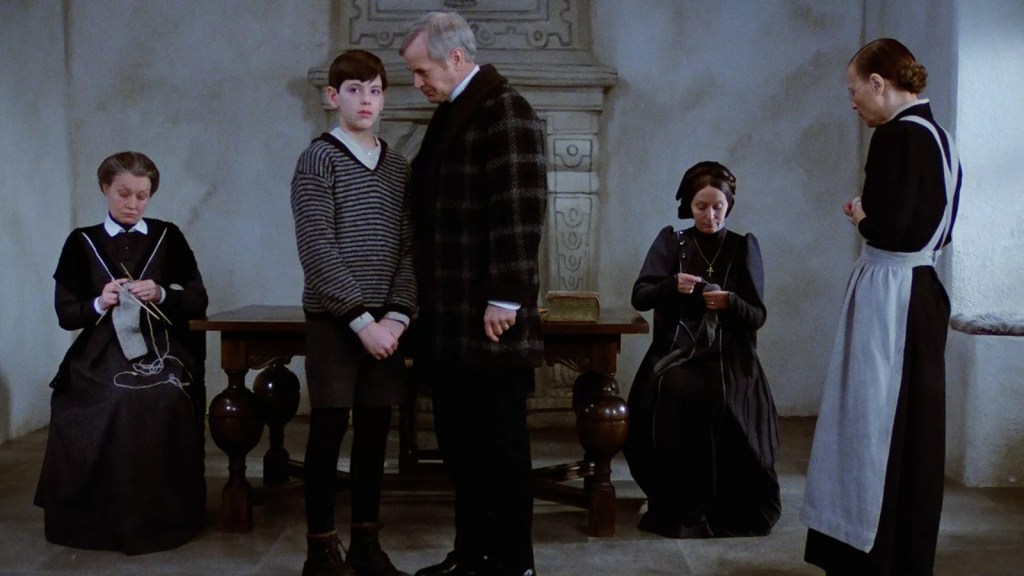
After many years (and masterpieces) Bergman wanted to move on from film: but before he went, there was time for one more magnum opus, a sprawling family saga that would throw a host of his interests (death, family, sexual openness, God, theatre, infidelity, the unknowable) onto one grand, sprawling canvas. Fanny and Alexander would be a truly personal film, featuring a young protagonist with more than a passing resemblance to Bergman himself. Despite this it’s an irony Bergman might like that the finest version of this film we have is actually a five-hour recut for television (the limits of run-time from distributors being one of many things Bergman was tired of). That version is a beautiful, life-affirming, gorgeous piece of film-making, an extraordinarily humane story tinged with the supernatural told on a luscious, Visconti-like scale. It’s a fitting sign-off from a master.

In 1907, the wealthy Ekdahl family live in a luxurious apartment block, their rooms filled with the rich detail of their love of art and culture. Ten-year-old Alexander’s (Bertil Guve) father Oscar (Allan Edwall) and mother Emilie (Ewa Fröling) run the Ekhdal theatre, where his wealthy grandmother Helena (Gunn Wållgren) once performed. After a fabulous Christmas celebration, Oscar dies after a stroke while rehearsing the role of the Ghost in Hamlet. After a period of mourning, Emilie remarries to the older Bishop Edvard Vergérus (Jan Malmsjö), who turns out to be a domestic tyrant, obsessed with the letter of religious and family law. Will Alexander, his younger sister Fanny (Pernilla Allwin) and their mother escape from Vergérus’ controlling clutches?

What really strikes you first and foremost about Fanny and Alexander is its gorgeous warmth – hardly the first quality you traditionally associate with Bergman. It opens with a prolonged (over an hour) Christmas celebration, with the family and their servants eating, laughing, telling stories and dancing through their gorgeously furnished apartment. It should feel indulgent (and I suppose it is), but this warm reconstruction of an at-times-flawed, but fundamentally loving and vibrant family is actually deeply moving and heart-warming.

The Ekdahls have a bohemian freedom, with their love of theatre and art (only Uncle Carl, a manic depressive businessman, feels slightly out-of-place and even he takes the children to one-side during the festivities to entertain them by blowing out candles with his farts). Their house is charmingly egalitarian, with the servants treated as part of the family, loyalty they return. The theatre troupe (led by Bergman regular Gunnar Björnstrand in his final, small, role) – are equally part of this extended family, the theatre a second magical home where the children take small roles in various productions and delight in the stagecraft and costumes behind-the-scenes.

Fitting a Bergman family (and the Ekdahl’s share some elements with parts of Bergman’s family) they are extremely forward-looking in their morality. Uncle Gustav Adolf (played with bombastic, gentle charm by Jarl Kulle) is a notorious ladies man, but goes about it with such innocence and near-childish openness his patient wife Alma (Mona Malm) indulges him because in all other respects he’s a loving husband and father, and his overall fidelity to her is never in doubt. Alma restricts herself to a single slap of his new lover, maid Maj, but otherwise treats her like a sister. Pernilla August is hugely endearing as this caring young woman, swiftly absorbed into the wider Ekdahl family who value her care for others. The Ekdahl’s have no time for conventional morality, led from the front by matriarch Helena (Gunn Wållgren is fantastic as this wordly-wise, ideal grandmother figure) who has lived a life of sexual openness with her husband and values people not societal conventions.

Oscar, their father (wonderfully played by Allan Edwall as a bashfully mediocre actor and a quietly shy but warm man) takes his role as the leader of this company very seriously, but with a light touch (modestly bemoaning his lack of statue compared to his father). Bergman uses a myriad of small moments to make this father an ideal parent, not least a late-night fantastical story he improvises for the children, spun around their nursery room chair, one of the most tender moments of parent-child bonding in the movies. (This despite hints that Oscar, who has allowed the younger, more sensual Emilie to conduct her own affairs, might not be their true father).

The stunning production and costume design (which won Oscars for Anna Asp and Marik Vos-Lundh) are essential for creating this immersive, rich and vibrant life: one which will be exploded in Dickensian tragedy by the death of Oscar and the arrival of the Murdstone-like Edvard Vergérus (played with chilling, smug hypocrisy by Jan Malmsjö under a fake smile) who is everything the Ekdahls are not. Where they are warm and egalitarian, he is cool and elitist, he is a prude with no regard for art and his home is in bleached-out puritan stone, devoid of personal touches – it literally looks like a different world to that we’ve spent the first few hours in, full of untrustworthy people (like Vergérus’ maid played by a wonderfully two-faced Harriet Andersson).

Vergérus is all about control, something we suspect from the start with his aggressively tender manhandling of Alexander, his hand slamming into the back of his neck. He worms his way into the affections of Emilie – a woman who, with her earth-shattering wails over the body of Oscar, is clearly vulnerable in her raw grief (Ewa Fröling is extraordinary as this gentle figure, prone to appalling judgement and unexpected strength of character) – and then sets out their marriage terms with controlling agendas, not least that in arriving in his house, she and her children must shed every inch of their previous life, from personal connections to the knick-knacks they have grown to love. He’s a poor advert for a God Alexander is already cursing for taking his father (his attic, filled with crumbling religious symbols, feels of a part of Bergman’s world where God is at best a passive observer, at worst a near malicious presence).

Bergman makes clear Vergérus is a man who genuinely believes he is doing the best for his family and that the moral lessons he hands out, at the end of a cane, to Alexander are essential. A weak man who mistakes bullying for strength. In many ways the fact he is not vindictive just weak and convinced of his own moral certainty (re-enforced by his fawning family, who treat him like a sort of prophet). Sure, he’s capable of anger, anti-Semitic slurs and little acts of cruelty, but Malmsjö shows him as a man who is trying, in his own wrong-headed way, to win the love of his adopted wife and children and can’t understand why he is not met with gratitude and love.

Perhaps it’s this sudden dropping into a cold world (one not dissimilar from Bergman’s own troubled relationship with his priest father – in fact you leave Fanny and Alexander wondering if Bergman hated his own father as much as Alexander who literally prays for his death) that so sparks Alexander’s own links to a mystic world around him. There is a rich vein of something other throughout Fanny and Alexander, from the statues Alexander watches move in the opening sequence (not to mention the haunting spectre of Death he witnesses in the same moment), to Oscar constantly appearing to Alexander like Hamlet’s Ghost. Is this haunting Alexander’s guilt at this failure to face his dying father on his deathbed, or a link to a world beyond our understanding?

After all Oscar’s Ghost greets Helena at one point, the two entering into a loving conversation. And he’s not the only supernatural touch around Fanny and Alexander. Family friend (and Helena’s lover) the Jew Isak (a rich performance by Bergman regular Erland Josephson) lives in a house full of mystic puppets that might be able to breath and walk. Isak perhaps uses magic to help smuggle the children out of Vergérus’ house (making them appear in two places at once), while his androgenous son Ismael (played by a woman, Stina Ekbad) is implied to having the spiritual power to channel Alexander’s hatred of Vergérus into actual supernatural revenge in the real world (another classic literary touch, that plays on spirituality and the Mad Woman in the Attic in Jane Eyre).

Fanny and Alexander is an extraordinary film, I feel I have only begun to scratch its surface here. It’s both a Dickensian family fable and a semi-benevolent Ghost story. It’s a family saga and a careful look at a particular time and place. It’s funny and moving. It really feels like one final mighty effort from a master.

The Producers (1968)

The Producers (1968)

A funny gag sits at the heart of a film that’s more cheeky than really funny or clever

Director: Mel Brooks

Cast: Zero Mostel (Max Bialystock), Gene Wilder (Leo Bloom), Dick Shawn (Lorenzo St. DuBois (L.S.D.), Estelle Winwood (“Hold Me! Touch Me!”), Christopher Hewett (Roger De Bris), Kenneth Mars (Franz Liebkind), Lee Meredith (Ulla), Renée Taylor (Eva Braun), Andreas Voutsinas (Carmen Ghia)

“Don’t be silly, be a smartie/Come and join the Nazi Party!” The cheek of a knockabout musical Hitler musical is the sort of stroke of genius only Mel Brooks might have come up with (and got away with). It’s the saving grace of The Producers, an otherwise rather pleased with itself, slight film whose cheeky gags look like they are taking a pop at sacred shibboleths but actually conform rather neatly with common (at the time) perceptions of women, homosexuals and randy old people. So much so, the film looks more braver and cheekier today when its relatively innocent sexism and homophobia comes across as cheeky tasteless fun rather than pretty much being par-for-the-course.

Max Bialystock (Zero Mostel) is the least successful producer on Broadway. But perhaps he can turn that to his advantage when neurotic accountant Leo Bloom (Gene Wilder) points out that overselling shares of a guaranteed flop can make way more money than a hit. They just need a play that will definitely bomb: what better choice than Springtime For Hitler, a ludicrous musical tribute to Hitler written by dim Nazi Franz Liebkind (Kenneth Mars). Just to make sure they get the bomb they need, the duo hire talentless camp director Roger de Bris (Christopher Hewett) and stoned hippie lead (Dick Shawn). What could possibly go wrong? Or, rather, right?

There is a wild comic zaniness to The Producers epitomised by Zero Mostel’s manic energy as Max, a sleazy, sweaty mass of greed and self-obsessed vanity, totally devoid of any sense of shame. The Producers gets away with a lot because, like Max, its utterly shameless and frankly doesn’t give a damn what you think. Whether you find it hilarious or not depends on how much you are taken by provocative humour and scattergun cheekiness. There is an end-of-the-pier quality at the heart of The Producers (in the UK it would have been Carry On Up Broadway). Brooks doesn’t miss an opportunity for smutty postcard humour. It’s all so naughty he gets away with the ridiculousness of a Hitler musical.

A Hitler musical that wisely satirises the Nazi’s Riefenstahl showmanship via ludicrous Broadway choreography (including tap dancing stormtroopers forming themselves into dancing swastikas). Of course, Brooks is clever enough to keep the actual content of the musical purely on a surface level (no talk about what the Nazis actually did beyond aggressive militarism) – combined with Hitler portrayed as a bumbling Hippie full of the streetwise slang of pony-tailed sixties counter-culture. At heart, Springtime For Hitler doesn’t really do anything really more shocking or provocative than put blackshirts into 42nd Street. It also carefully distances itself from the antisemitic elephant-in-the-room by having Bialystock and Bloom rip off the swastika armbands they agreed to wear while wooing Liebkind, throwing them in a bin and spitting on them. It’s a neat balance that allows the film to get away with as much as it does, while never touching the nightmareish darkness of the regime.

Of course, it helps that Brooks is one of Hollywood’s most famous Jews – and that Mostel and Wilder delight in leaning into a very Jewish comedy about a couple of shmucks enjoying being rogues. Wilder in particular is fantastic. While Mostel is at times be a bit much, Wilder’s hilarious snivelling childish timidity (he’s obsessed with a comfort blanket, the loss of which turns him into a mass of bleating despair) ‘blooms’ into the delight of an eternal good-boy finally allowed to be naughty. Wilder gets the balance just right between something larger-than-life and something real and when he talks about Bialystock being his first and only friend, it’s strangely moving.

Wilder, alongside the scenes taken from Springtime For Hitler, provides most of the humour. I’ll be brutally honest – I’ve never found much of the rest of The Producers funny. Nearly every other joke in the film relies on smut and cheek. Bialystock makes what money he does from pimping himself to randy octogenarians (never men obviously, that would be too risqué), and The Producers buys heavily into the idea that the sex lives of anyone over the age 60 is hilarious. It’s a cheap and rather repetitive joke, made over-and-over that Zero Mostel just about manages to sell because he embraces Bialystock’s utter lack of restraint. But it’s a one-note joke that outstays its welcome.

The Producers similarly makes rather obvious, one-note, jokes about all its female and gay characters. (Again, at the time much of this would not have been out-of-the-ordinary, so it actually looks more bizarrely more boundary pushing today). Ulla, Bialystock’s Swedish secretary, is a blonde sex-bomb whose recurring joke is her oblivious sexiness and willingness to burst into erotic dancing at the drop of a hat. She’s explicitly hired by Bialystock as a glamourous piece of eye candy ‘toy’ as a reward for his self-pimping and it’s not particularly funny. Also not particularly funny is the play’s director, a cross-dressing, mincing figure of camp satire played by Christopher Hewett, the main joke being he is a ridiculously overblown queer who wears a dress. Kenneth Mars’ Franz Liebkind – a ridiculous relic of the Reich, incompetent at pretty much everything he attempts – is slightly more amusing, if only because he’s utterly oblivious to his complete uselessness.

Brooks’ film is, you suddenly realise, rather slight. At around 80 minutes, it’s heavily reliant on its show-stopping glimpses of the Nazi musical (and even in that Dick Shawn’s Hipster swagger isn’t as funny as the Broadway parody) and aside from that relies on predictable farce, cheek and smut. Only Gene Wilder really transcends the material with a perfectly timed, strangely touching performance. Other than that, it feels like a film trying very, very hard to be a little bit-naughty, like an over-extended student revue sketch. But “Don’t be silly be a smartie/Come and join the Nazi party”? That is funny.

Maestro (2023)

Maestro (2023)

Well filmed and acted Bernstein biopic, that doesn’t really get to the heart of its subject

Director: Bradley Cooper

Cast: Carey Mulligan (Felicia Montealegre), Bradley Cooper (Leonard Bernstein), Sarah Silverman (Shirley Bernstein), Gideon Glick (Tommy Cothran), Maya Hawke (Jamie Bernstein), Matt Bomer (David Oppenheim), Vincenzo Amato (Bruco Zirato), Michael Urie (Jerry Robbins), Brian Klugman (Aaron Copland), Zachary Booth (Mendy Wager)

You can’t fault his ambition. In bringing the family life of legendary composer, conductor and cultural icon Leonard Bernstein to the screen, Bradley Cooper pulls out all the stops in a medley of inventive staging mixed with single shot trust in actors. Maestro is, in many ways, a perfect capturing of Bernstein: dazzling, giddy film-making that never lets you really peek into its subject’s soul. It’s a hugely impressive sophomore effort, but not quite fully satisfying as a film.

It opens with the life-changing night in 1943 when a 25-year-old Leonard Bernstein (Bradley Cooper) stands in (with no rehearsal) to conduct the New York Philharmonic at Carnegie Hall for a packed crowd and millions listening on the radio. From there, Bernstein never stops his ascent, becoming one of the world’s leading conductors and a composer who triumphs in every genre. He also marries successful actress Felicia Montealegre (Carey Mulligan), in a marriage full of mutual love and support. But Bernstein is the epicentre of his own fame, whose primary sexual attraction is to men. Over the decades, his marriage bends, fractures and reforms as Bernstein’s numerous affairs and party-filled lifestyle increasingly alienate the loyal Felicia.

Maestro is shot with all the zest and energy Bernstein himself was full of. Cooper keeps the pace the brisk and frequently transitions between scenes with a bravura trust that we can keep up. We see Bernstein receive the phone call for that fateful stand-in performance in his apartment: jubilant, he runs out the door (stopping only to playfully slap the bottom of his lover David en route), the camera taking an angle above to watch the pyjama-clad Bernstein run through a series of halls and emerge into the auditorium of Carnegie Hall.

It’s one of several transitions that mix reality and fantasy. Felicia will turn around from Leonard, during a flirty date in an empty theatre, to stride forward to applause from a packed audience. Felicia and Leonard run from a snobby garden party straight into a theatre (again with an overhead shot tracking them in a single smooth cut) where dancers from On the Town pirouette on stage as a visual representation of Bernstein explaining his work, the dancers eventually luring Leonard, Felicia and several other characters into an impromptu ballet. It’s a playful mix of reality and fantasy. At other times, the film skips years in seconds, successes dizzyingly referenced in throwaway lines.

The film’s focus is Leonard and Felicia’s complex, multi-layered marriage. Two people, in many ways soulmates, deeply stress-tested by Leonard’s frequent selfishness. Cooper, in a remarkable physical transformation (his capturing of Bernstein’s voice, mannerisms and conducting style is faultless) makes the composer a force of nature, high on his own genius: garrulously charming, a man who can focus all his attention on one person as easily as he can absent-mindedly drop another. The sort of man who excitedly introduces his fiancée to his lover David (a sensitive Matt Bomer) and then abashedly apologises immediately after for springing the news on him.

It’s part of the message of that On the Town ballet: living with Bernstein is a never-ending, dizzying pile of social engagements that doesn’t stop ever. Felicia feels she is ready for that: but the drift of Bernstein’s primary emotional commitment away from her and towards protégé Timothy Cothran (Gideon Glick) deeply hurts her. It’s part of Bernstein’s increasing lack of care to at least pretend to keep his promiscuity under semi-wraps, including awkwardly dismissing unspecified “rumours” that have distressed his daughter Jamie (Maya Hawke, very good) as nothing more than “jealousies”.

As Felicia, Carey Mulligan delivers what might just be a career best performance. Luminous, she makes Felicia savvy, loving but realistic about the “sacrifices” loving Bernstein involves. It’s a marriage where she is often in Bernstein’s shadow – at one point literally so, a shot showing Bernstein’s giant conducting shadow dwarfing Felicia in the wings. Mulligan’s performance mines deep emotional depths, Cooper frequently showcasing these in long, still takes. Most strikingly, a dynamite argument in New York after the opening of Bernstein’s Mass plays out in one visceral shot as Mulligan conveys the release of years of tension, in angry home truths. She is also heart-breaking during the film’s affecting chronicle of Felicia’s cancer, another striking single-shot scene showcasing Mulligan’s skill at letting all pain play behind her eyes while talking to visiting friends.

Maestro is about the underlying strength between these two who always turn to each other at hours of need or emotional triumph. Felicia’s successes on stage are shared with Bernstein, while it’s she who accompanies him (after their unofficial split) to his ground-breaking Mahler concert in Ely (another virtuoso sequence, directed and acted by Cooper with aplomb). Bernstein abandons his career – and all other relationships – to nurse Felicia, their bond finally something that could not be shaken by his thoughtlessness.

However, Maestro fails at times to really show how this relationship buckled. The giddying speed with which it moves through events means the middle act and, in particular, the sense of Bernstein’s numerous affairs gets lost. When Felicia finally does erupt, it’s easy to think it’s due to one late night and Bernstein holding his lover’s hand during the Mass premiere, rather than years of slow emotional distancing. It’s one time when a montage, stressing the repetitive nature of Bernstein’s self-obsession, would have really made a positive impact.

It’s also a film that focuses so much on the relationship, it leaves Bernstein himself a curious enigma. Strangely, despite sampling Bernstein compositions throughout the film, its almost as dismissive of his musical theatre work as it implies Bernstein himself was. West Side Story gets barely a passing mention, On the Waterfront is bundled up with “film scores” and almost nothing of the rest of his work is placed in any form of context. The epic Mahler concert in Ely is brilliantly restaged, but its artistic importance never explained and it’s easy to come out of the film not really appreciating either Bernstein’s cultural or musical impact.

Instead, Bernstein remains somewhat of an enigma, a charismatic figure who, for all the excellence of Cooper’s performance, remains a showman we never get to really know, someone capable of great care and intimacy (he’s extraordinarily tactile) for people, but also keeps them (and us) at a distance. The affairs have a veil tastefully drawn over them. There is very little overtly gay content in Maestro, which feels a conservative choice.

It’s hard not to think at times Cooper is more focused in Maestro on demonstrating his own directorial invention and pushing himself to never go for the obvious shot. Maestro is a dazzling dive into the playbox of film technique – it changes in aspect ratio and colour stock to reflect the cinematic era (though an odd decision for a film about a composer, that never explores his connection to cinema) and offers a host of interesting visual compositions and daring long-takes. Cooper and especially Mulligan are superb, but it’s a film that perhaps leaves more questions in the mind. A dazzling piece of film-making, but not always a dazzling piece of story-telling.

The Band Wagon (1953)

The Band Wagon (1953)

The delights of putting on a show come to life in a hugely enjoyable Freed musical

Director: Vincente Minnelli

Cast: Fred Astaire (Tony Hunter), Cyd Charisse (Gabrielle Gerard), Oscar Levant (Lester Marton), Nanette Fabray (Lily Marton), Jack Buchanan (Jeffrey Cordova), James Mitchell (Paul Byrd), Robert Gist (Hal Benton), Ava Gardner (Herself)

Tony Hunter (Fred Astaire) has a glorious career behind him. Famed for top-hat-and-tails dance numbers (hang on, this is ringing some bells…), he can now ride the train unknown and contemplates retirement. But he leaps at the chance to perform on Broadway with a new script by husband-and-wife writing team Lester (Oscar Levant) and Lily Marton (Nanette Fabray) – themselves self-parodies of non-married writing team Betty Comden and Adolph Green. He’ll co-star with ballet dancing sensation Gabrielle Gerard (Cyd Charisse) and the show will be produced, directed and co-star British impresario Jeffrey Cordova (Jack Buchanan). Problem is Jeffrey wants to turn their light musical into a heavy-handed, over-produced Faust drama. Will audiences say ‘That’s Entertainment’ or will they prefer the musical? And will Tony and Gabrielle’s mutual hostility turn to love?

If you have any doubt about the answer to either of those questions, then I have to ask “where have you been and have you never seen a movie before?” The Band Wagon is the Arthur Freed machine at its peak. You get the sense that, by this point, it really was as smooth as getting the guys back together and throwing on a show. It’s what lies behind the immense charm of the film: for the majority of its run-time it’s basically people who really know what they are talking about chronicling the backstage friendships and rivalries, technical hiccups and clashes of vision when passionate, talented people get together to put on a show.

In fact, everything in The Band Wagon wants you to relax and to make sure you don’t worry or be anxious that everything isn’t going to turn out okay. It’s kind, decent and zeroes in on the glorious camaraderie of theatre. For starters, Tony Hunter is a thoroughly good-egg. Played with glorious charm and a wonderful light-tough by Astaire, he’s patient, relaxed about his declining fame and a very willing collaborator. His (very gentle) arguments with Gabrielle are based around their mutual intimidation at each other. He always feels like a regular Joe who has become a star but would be just as happy in the chorus line.

Around Astaire, a bank of cool, calm talent is called on. Minnelli was already an absolute pro at pulling spectacles like this together and The Band Wagon mixes together the deceptive simplicity of his compositional eye with a host of wonderfully designed sets. The script is full of great gags and beautiful one-liners and, while the story is effectively a remix of elements from half-a-dozen Freed movies prior to this one, it demonstrates aptly that if ain’t broke, don’t fix it. The bright and breezy fun stretches over the good-natured kindness of the script. There are no real villains: Jeffrey is over-ambitious and a touch pretentious, but when push comes to shove he does what’s best for the show. Even Gabrielle’s choreographer boyfriend is an honest professional whose main offence (other than not being Fred Astaire) is being snobby rather than mean.

The Band Wagon gets a great deal of comic mileage out of the over-blown ideas of Jeffrey Cordova. Hilariously played by Jack Buchanan with a burst-out-of-the box enthusiasm, his conversation is full of grandiose bombast, spraying ideas around and re-shaping everything in the play to match his own impressions of high art. A gentle egotist – the poster for his Broadway production of Oedipus Rex credits him no less than four times (producer, director, adapter and star) and Sophocles not at all – he is the sort of force-of-nature who wins over backers for the production by acting out the entire play in a drawing room, playing all the parts and supplying the sound effects.

The production he shapes allows Minnelli to gently parody some of the excesses of his own productions. The set is a hydraulic nightmare, with multiple platforms rising up and down from scene to scene. Needless to say, at the tech rehearsal, this turns into an obstacle course that leaves Jeffrey dangling from the ceiling by a microphone cord. At one point in rehearsal, Tony and Gabrielle have to perform a ballet (he as Faust) while endless pyrotechnics explode around them, constantly forcing them to jump out of the way. Every inch of the dialogue is re-written and (in one hilarious rehearsal scene) Tony is pushed into performing a mundane scene with ridiculous over-emphasis.

Parallel to this, we have of course the romance. Rather sportingly, the age difference between Tony and Gabrielle is not only acknowledged, it becomes a focus of their initial discomfort. Comdon and Green script a particularly juicy exchange between the two, that riffs on the subject culminating in Gabrielle bluntly telling Tony he should audition her grandmother as co-lead because “She’d be just about right for you”. Astaire actually takes a great deal of good-natured ribbing here for being past it and over-the-hill (“times have changed and you have not changed with them” Jeffrey tells him in the height of misguided enthusiasm), but there is a charming decency as he declares himself not Nijinsky or Brando but “Mrs Hunter’s little boy, song and dance man”.

And that he is. Astaire and Charisse get several show-stopping numbers, the finest being a graceful, gorgeous balletic number in the park as they ice finally melts between them, a perfect, beautifully choreographed number that sees their bodies in perfect unison. The dancing is of course flawless throughout: Astaire early tap number on getting his shoes shined is charming and when we see snippets of their professional work on stage it’s deeply impressive.

If The Band Wagon has a flaw, it is that the last twenty minutes – which shows snippets of the final show being staged across the country – has a bitty, disjointed quality to it. It’s very hard not to notice that the plot has been completed and what we are left with are a series of non-too-catchy numbers and non-too-memorable set-pieces (except for the sight of Astaire, Fabray and Buchanan as adult babies which to be honest I wish I could forget). The final film-noir spoof ballet that ends the ‘show within the show’ (and God knows what that show, a bizarre, disjointed cabaret night as far as I can see is even about) is well-staged but lacks spark.

But The Band Wagon is still enjoyable, charming and above all fun – and if you can watch it without a smile breaking across your face (particularly if you love the theatre) then there is something wrong with you.